


Spoiler Warning: Minor spoilers are present for some early missions in Starfield.
A strange feeling hit me yesterday. I’d taken a break from Starfield for a few days after writing up my first impressions of the game, but I booted it up again to give it another shot at getting me immersed in its sci-fi world. This was, after all, a game I’d been excited to play and had been looking forward to. But while I was playing Starfield and feeling underwhelmed by some of its basic quests and unimpressive exploration… I realised that I’d rather be playing Baldur’s Gate 3. I was planning out character ideas in my head, thinking about how to approach some early-game quests and encounters that I was unprepared for the first time around, and I even found myself more interested in writing about that game than I was in actually playing Starfield.
This got me thinking about Bethesda, and in particular the way in which the company’s game design and creation feels… well, stagnant. Starfield, while an impressive technical achievement in many ways, also feels like a game whose core mechanics and systems haven’t really improved or moved on in more than two decades – and while that’s clearly sitting right with a lot of Bethesda fans and giving them a ton of enjoyment, it feels disappointing to me.

Starfield is a Bethesda game. It’s “Skyrim in space.” And those two expressions simultaneously encompass everything Starfield fans love about the game… and everything that critics dislike about it. For the first time since I played Morrowind more than twenty years ago, I find myself wrangling with a difficult question: do I actually like Bethesda games? Or to be more accurate: are Bethesda games still enjoyable twenty years later when the formula, designs, and core gameplay mechanics haven’t really changed?
See, Starfield isn’t just “Skyrim in space.” It’s also “Oblivion in space,” “Fallout 3 in space,” and even “Morrowind in space.” Although more than twenty years have passed since we were first sitting down to play Morrowind, not a lot has changed in terms of the way a Bethesda game feels. And that’s a double-edged sword, because that familiarity is clearly something that fans adore. That style of gameplay has its audience – and it’s a big one. How else do we explain Skyrim still being popular almost twelve years later?
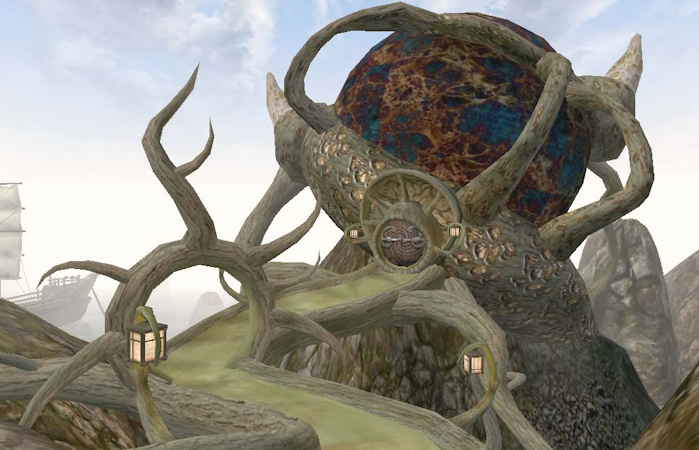
But that familiarity is, at least for me, the beginning of Starfield’s undoing. The structure of a Bethesda game – with an optional main quest and plenty of side-missions to get stuck into – felt incredibly innovative in 2002, but doesn’t any more. And when many of those quests are incredibly basic, offering little if any choice of how to approach them, again it feels like Bethesda’s game design has become stagnant. Quests in Starfield operate in functionally the same way as quests did in Morrowind – and every other mainline Bethesda game since. You have two basic variants: go to place, press button to collect/interact with item, the end. Or: go to place full of enemies, kill enemies, the end.
During an early-game mission in Starfield, I found myself at a facility teeming with nameless “spacers.” This base felt no different from the dozen or so other bases I’d cleared out earlier in my playthrough, and even though it was a named quest location, it felt incredibly samey in terms of its design and its loot. Stealth was an option – but not an especially good one, as taking down one enemy would alert all the others in the vicinity. There were no real puzzles to solve, aside from picking a couple of locks, and after exploring the entire place, listening to a couple of audio logs, and talking to one NPC, I’d claimed my prize and was blasting off to the next place.
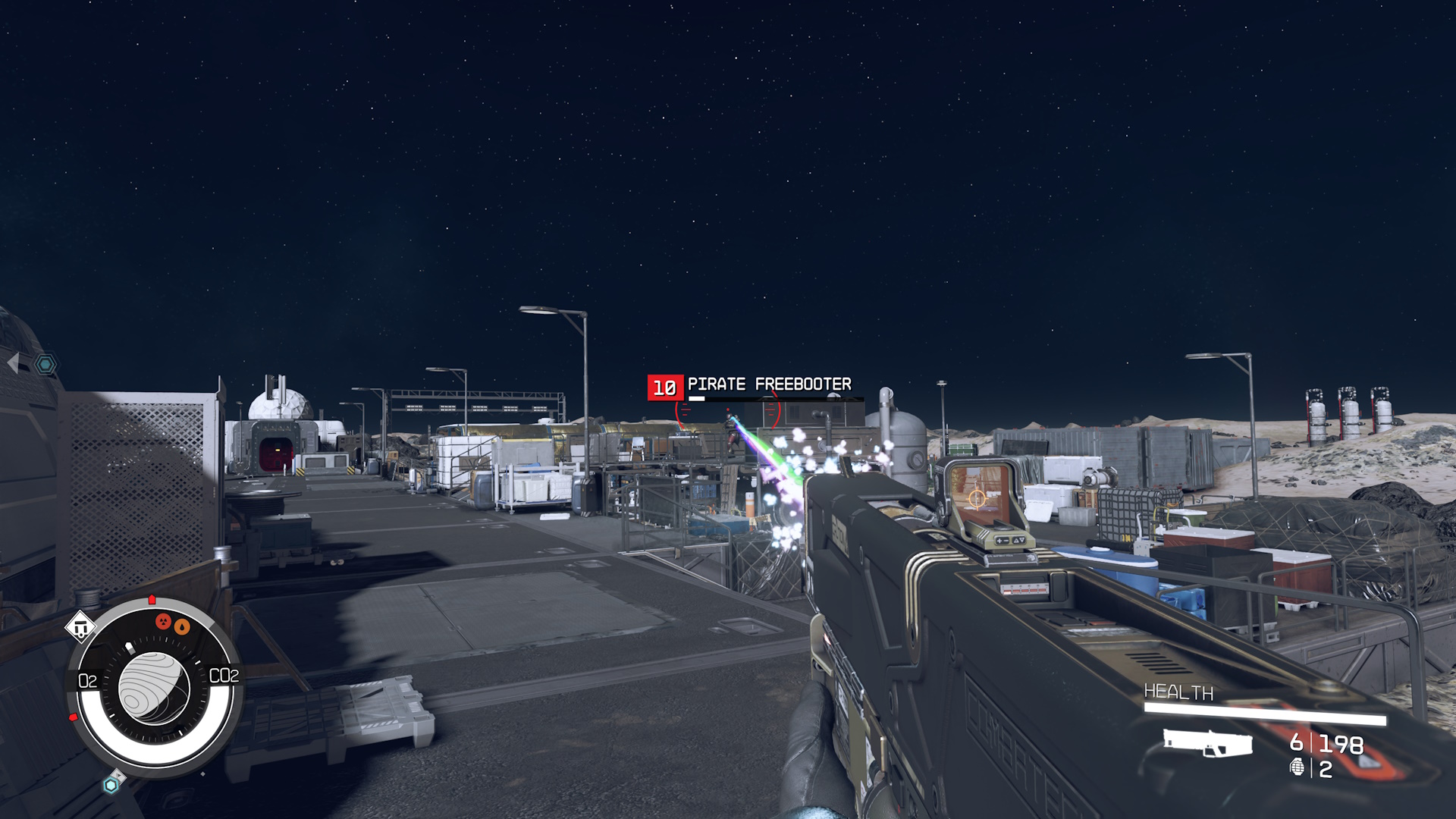
As I explored the facility that I was infiltrating (alright, attacking) I kept encountering interesting-looking items that I just couldn’t interact with at all. Computers that couldn’t be powered on. Gauges and switches that couldn’t be spun or flicked. Buttons that couldn’t be pressed. There was no environmental storytelling nor any way to use the environment to my advantage. I couldn’t, for example, hack into the base’s computers and set turrets to target the spacers. I couldn’t vent toxic gas into a room to knock them out. There wasn’t an alternate route to the clearly-marked destination that I could have used to sneak past the guards. In short: it was a Bethesda quest from a Bethesda game.
And I remember this exact criticism from the Morrowind days. “You’ll come across a fishing rod that you can’t use to fish,” said one reviewer at the time, using that example as a way to call out the superficial world that Morrowind offered. Because I got so hooked in by the story, the characters, the lore, and the world-building… I always felt such criticisms were silly. The world was rich and deep in story terms, even if mechanically and in terms of gameplay it wasn’t. That was good enough for me in 2002 – but it doesn’t feel good enough any more in 2023.

A lot of folks are playing and loving Starfield. A friend of mine, who was even more hyped for the game than I was, seems to be having a whale of a time – and I’m genuinely thrilled for them and for everyone else who’s enjoying it. But I feel like I’m watching a New Year’s Eve party through the window while standing on the cold street outside; everyone else is having fun, but I’m not.
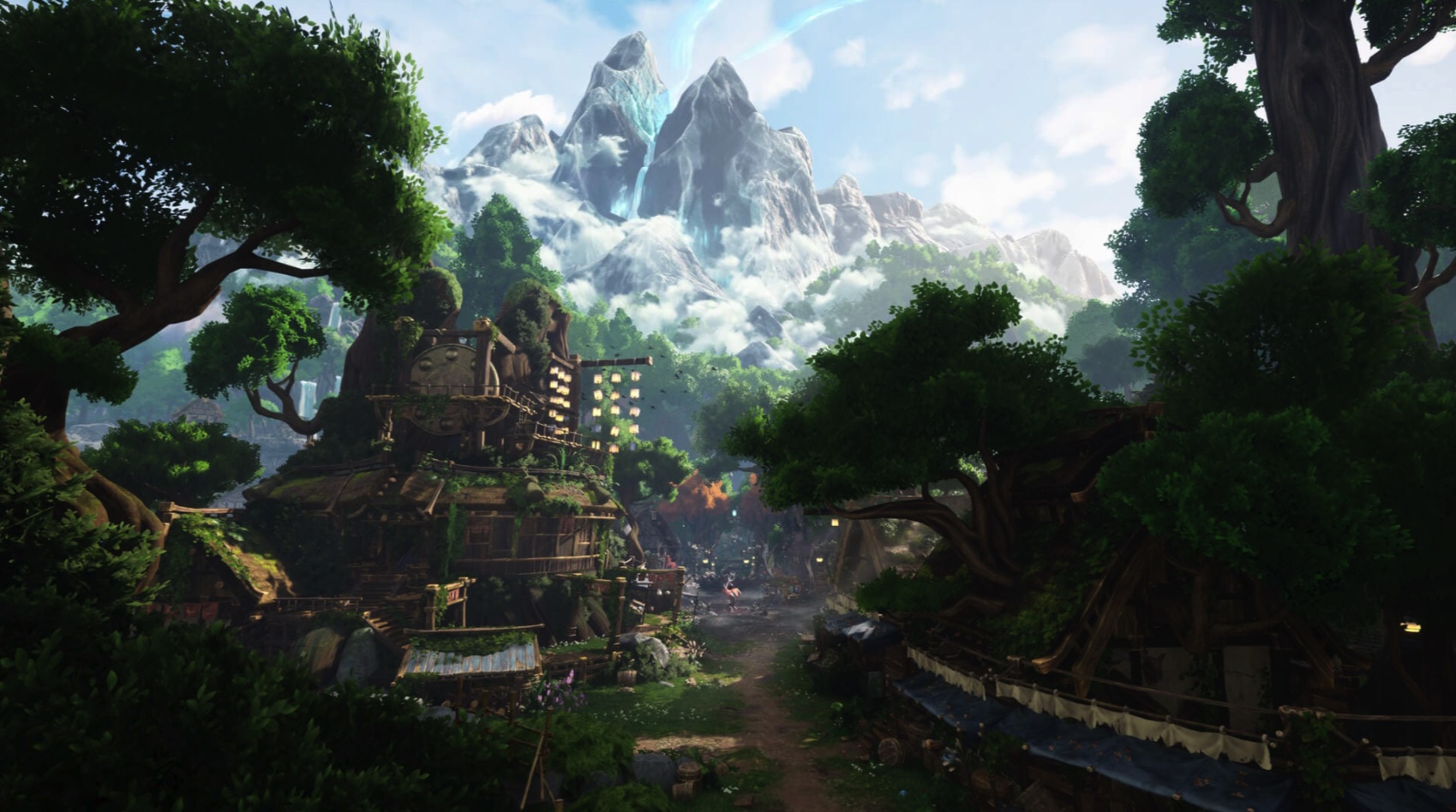
I keep waiting for Starfield to “click.” I keep waiting for that moment where I’ll think “oh, I get it now,” and the fun can actually begin. But almost twenty-five hours in, it hasn’t. There are whole games that are shorter than that, games that get going from the very first moment and tell a wonderful story in a relatively short span of time. My pick for 2021’s game of the year was Kena: Bridge of Spirits, an indie title that was visually beautiful, emotional, and a ton of fun to play. But my playthrough of that game lasted barely twelve hours, and in that time I explored the game world, fell in love with its characters, and dragged it out as much as possible because I just didn’t want the experience to end.
I’ve heard other critics and commentators say that Starfield doesn’t “get good” until around the six-hour mark, the twelve-hour mark, or even beyond that. But… if it takes that long for the game to get going, I don’t really consider that to be a selling-point. It’s often true that a game gets more interesting to play as the campaign goes on; your character levels up and gains more skills and abilities, giving you more options in some cases. But the basic gameplay still has to be balanced and enjoyable during those first few hours! That’s crucial to player retention. If the reason I’m not enjoying Starfield after twenty-five hours and bringing my character up to level 18 is because the game “doesn’t get good” until later… well, how much longer am I going to have to wait to have a good time?
I don’t really think that’s the issue, though. Levelling up my character and doing those basic looting and fetching activities just don’t hold the appeal they once did. The real reason for that, I fear, is that game design has moved beyond what Bethesda and its Creation Engine are capable of.
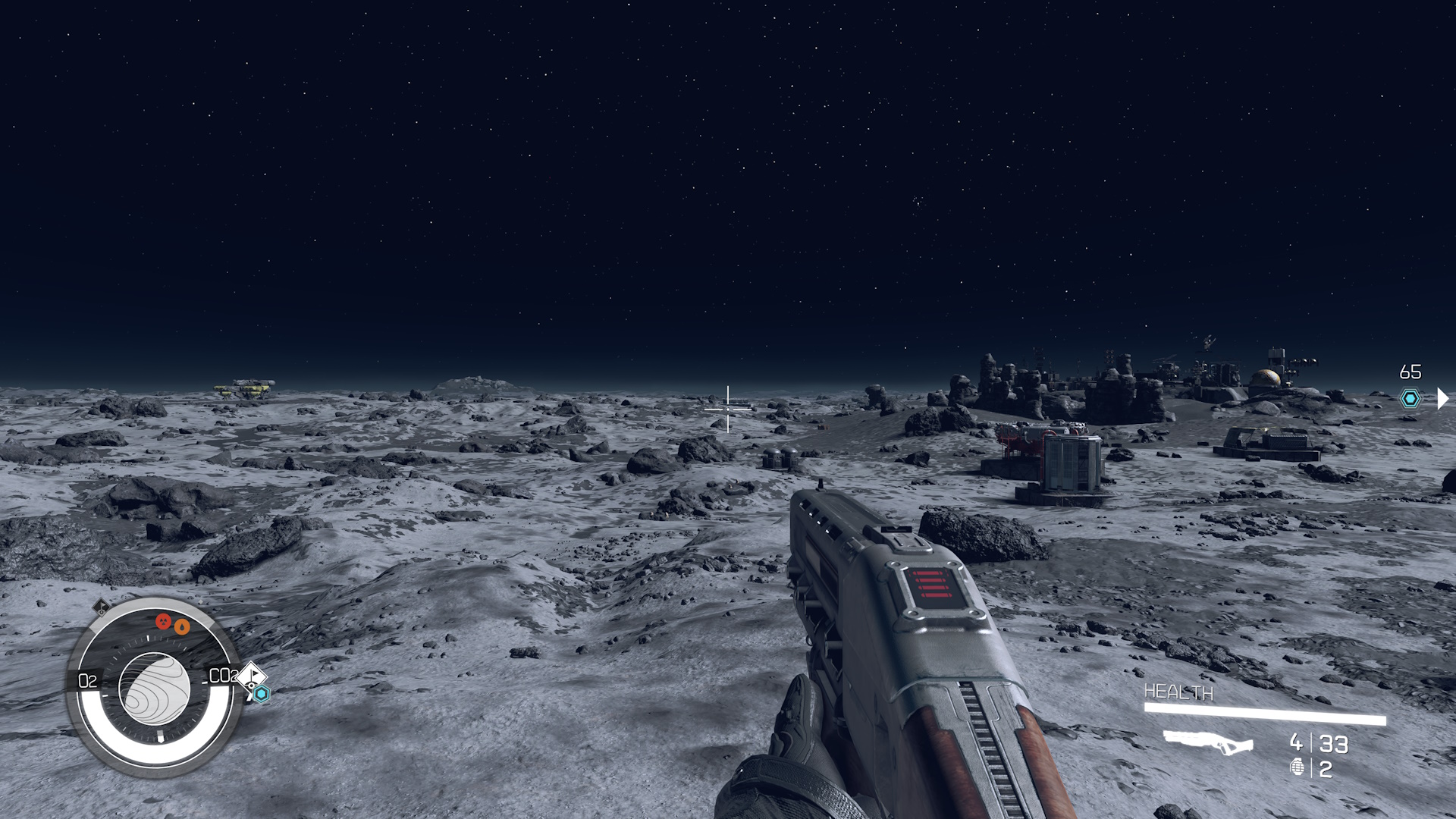
The world of Starfield feels regressive and, to me, more akin to Morrowind than Fallout 4 or Skyrim. Shops never close, even when it’s the middle of the night, and their NPC proprietors stand or sit behind their counters 24/7. When I aim the first-person camera down to the ground, I can’t see my character’s feet or body; I’m just a floating camera orb. Enemies and NPCs don’t feel reactive – you can run away from them and they’ll just forget you existed two minutes later, even if you’ve murdered all their companions and shot them in the face.
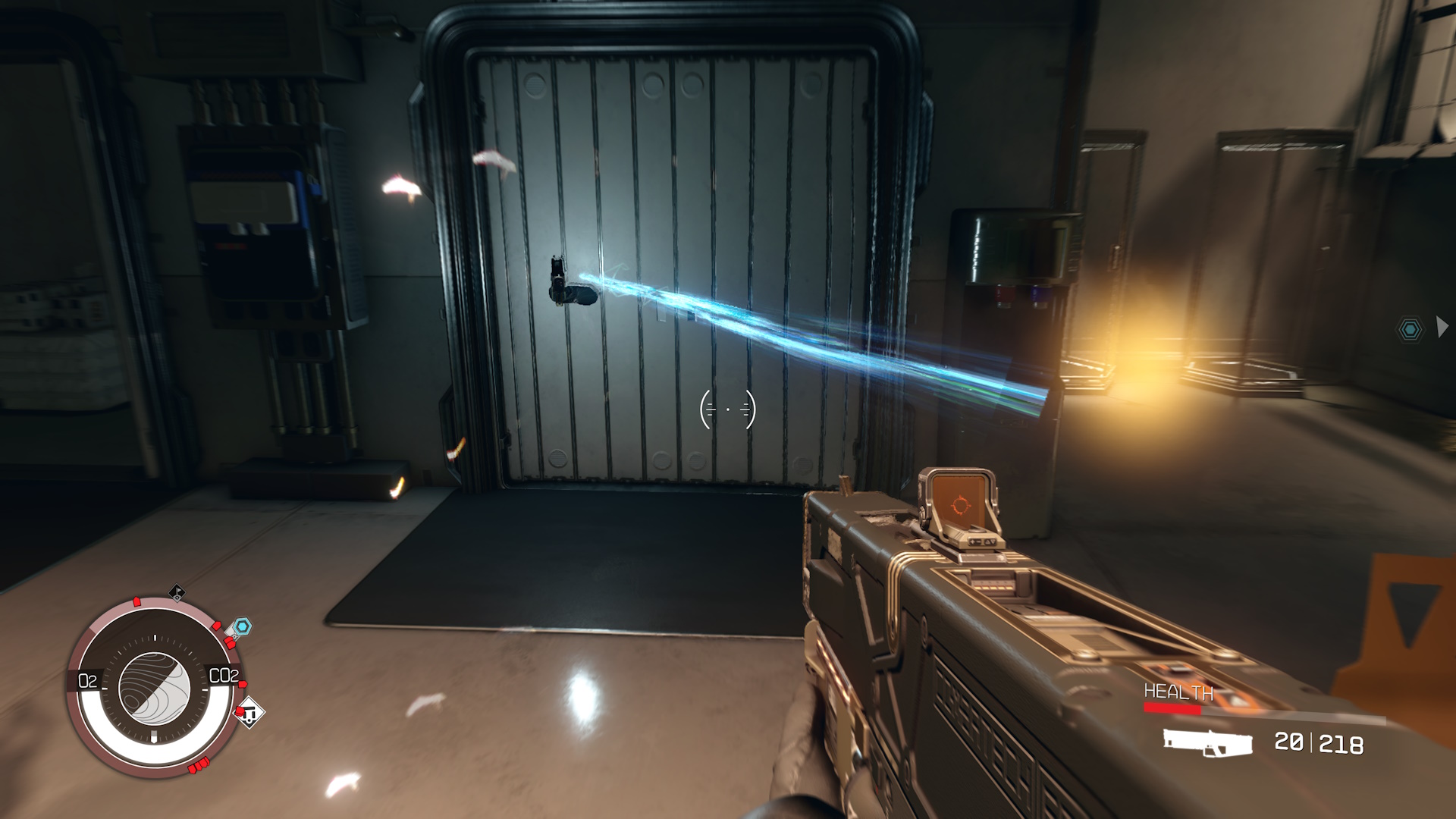
And the bugs. Oh god, the bugs. Starfield probably is Bethesda’s “least-buggy release ever,” as has been repeatedly claimed. But “least-buggy” doesn’t mean “there are zero bugs,” and claiming to be the least-buggy Bethesda game is like claiming to be the sewer with the fewest turds. I’ve seen dozens of bugs across my playthrough, including enemies able to shoot through doors and walls, NPCs clipping through solid objects, characters levitating, and items disappearing through the environment or floating away. There’s one particularly annoying bug where I’ll be piloting my spaceship but every crew member on board will repeatedly spout the same handful of lines of dialogue – as if the game thinks I just walked up to them.
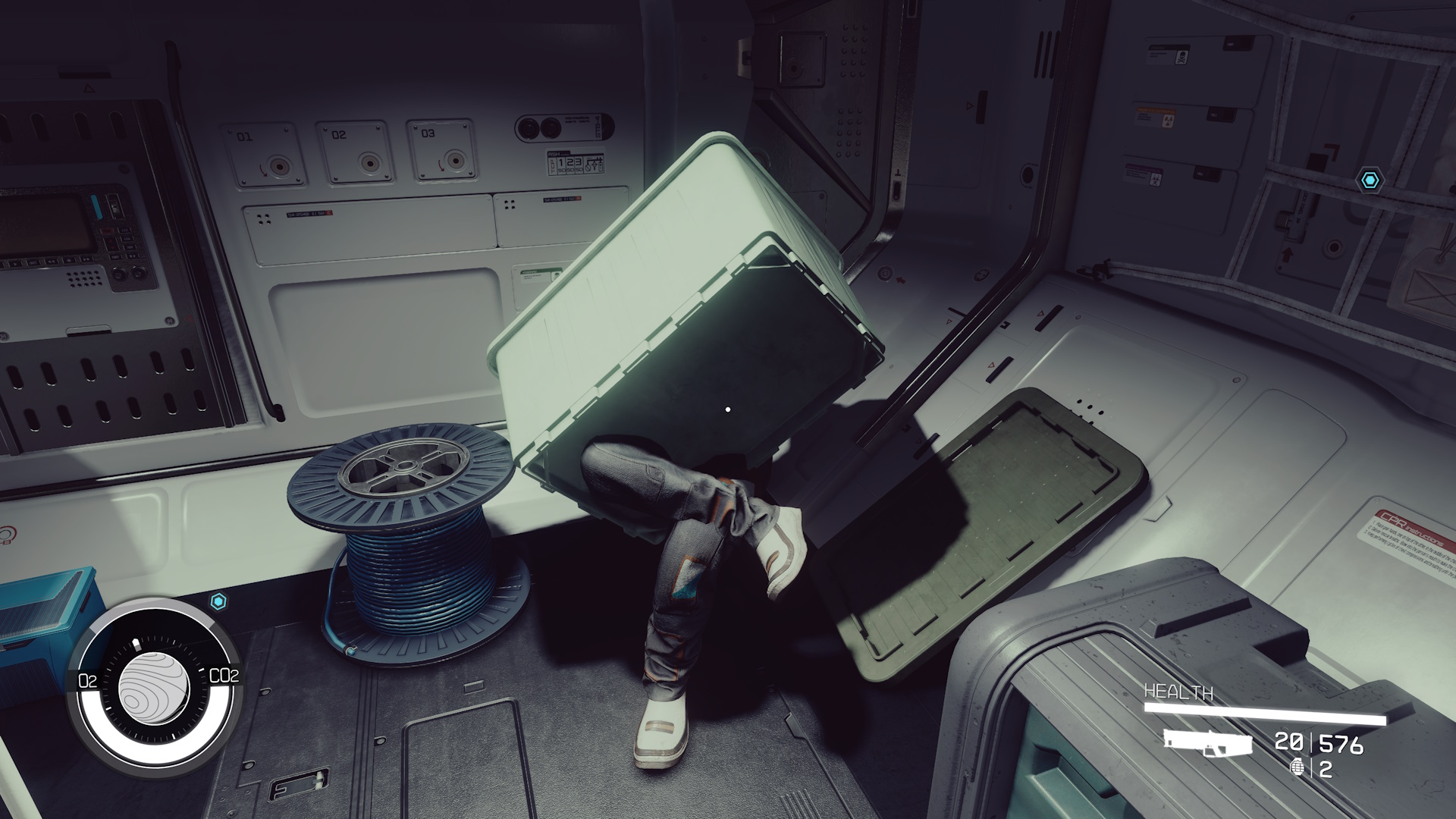
Every time Starfield has a chance at getting me to feel a crumb of immersion in its sci-fi future, something comes along that rips it away again. Maybe it’s walking into a cabin on my ship to see one of my crew members clipping through a box. Maybe it’s realising that a shopkeeper doesn’t have a life outside of the few seconds I spend in his always-open shop. Maybe it’s landing on a supposedly “unexplored” planet or moon only to find two spacer bases, a mining outpost, and another spaceship landing right next to me. But I can’t go more than a few minutes without something in Starfield reminding me that I’m playing a video game – and a video game that feels years out of date.
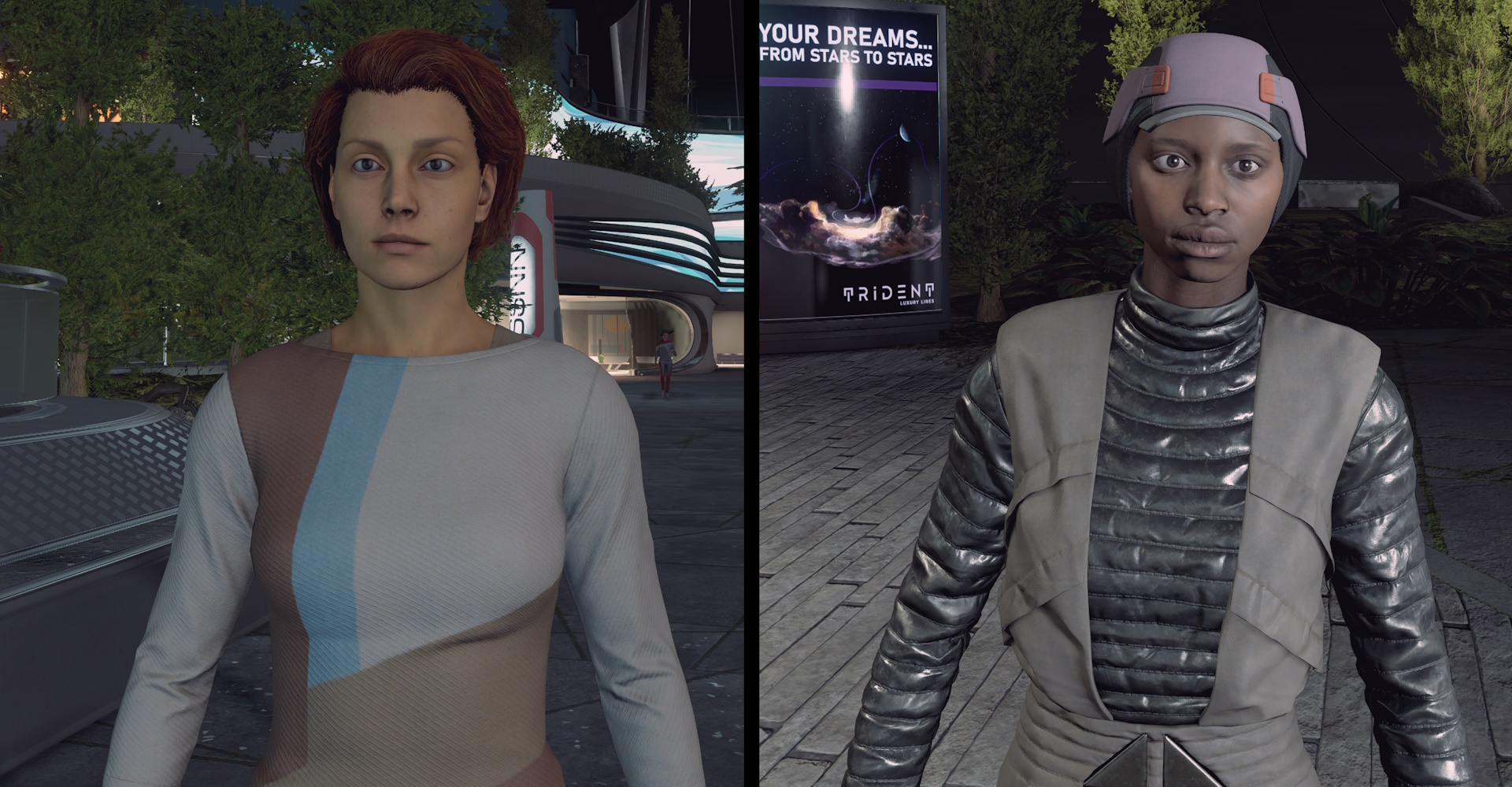
After taking part in yet another quest that didn’t seem to be any different from any of the others I’ve tried, I kind of felt myself hit the wall. Should I keep pressing on, following one uninspiring story after another in an empty world that I couldn’t give a shit about? Should I keep trying to pretend that these last-gen, waxy-skinned Madame Tussauds rejects are “people,” even as their dead eyes and ridiculous faces break what little immersion I can find? Should I keep waiting for Starfield to “get good?”
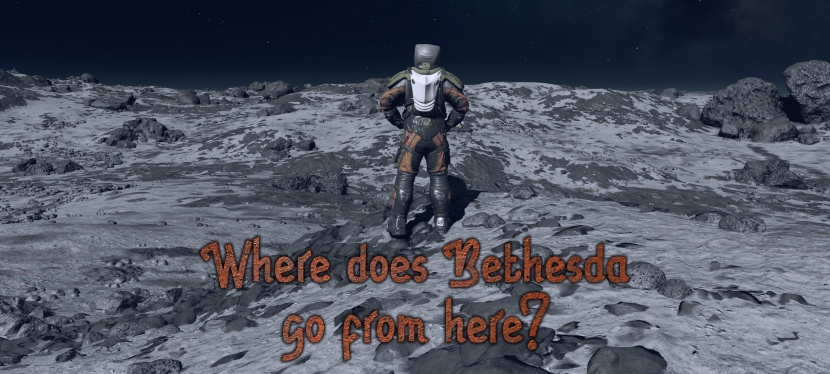
Setting my own feelings aside, I wonder what lessons can be learned from Starfield from Bethesda’s point of view. As the company begins to develop new entries in The Elder Scrolls and Fallout series, as well as potential DLC for Starfield, what should the key takeaways be? As I asked at the beginning: where does Bethesda go from here?
Despite how I feel – and how you may feel, too, if you happen to agree with me – Starfield has been well-received by Bethesda fans. The game had six million players shortly after launch, making it the biggest Bethesda release ever. And it’s racked up decent reviews on platforms like Steam and Metacritic, with the positive reviews outweighing the negative ones from both professional critics and players alike. There’s a market for this kind of game, then… so Bethesda doesn’t need to change anything. Right?

I look at Starfield – and by extension, Bethesda games in general – the same way I’ve looked at Nintendo games since the mid-2000s. Nintendo threw in the towel and gave up on trying to compete with PlayStation and Xbox on power and graphics, focusing instead on carving out its own niche. Nintendo games rarely if ever compete with other studios in terms of things like visuals or scale, and yet it’s found success with 2D games, retro games, kids’ games, smaller and more simplistic games, and so on. The company has gone from strength to strength with the Wii and the Switch – with a bit of a blip during the short-lived Wii U era!
Bethesda may just be going down a similar path. Instead of trying to keep up with open-world developers like Rockstar or role-playing studios like Larian, Bethesda is sticking to what’s worked in the past. Instead of developing new technologies and innovating, the company is doubling- and tripling-down on its existing technology, knowing that its fanbase will forgive a degree of bugginess and jankiness. Instead of learning from what other companies have done with tech like procedural generation, Bethesda is content to muddle through and do things its own way.
And who am I to say that’s a bad thing? I don’t like every Nintendo game that comes out, but their heavy-hitters are still worth turning up for. Whether it’s Animal Crossing: New Horizons, Super Mario Odyssey, or Mario Kart 8 Deluxe, Nintendo knows what its fans want and serves them just enough of it to keep them coming back. Are those games innovative masterpieces that push boundaries and drive gaming forward? No… but do they need to be?
Did Starfield need to be?
I bought into too much of the excitement for Starfield and internalised too much of the hype. That one’s on me, and after playing games for more than thirty years I should’ve known better than to place any new release on such a pedestal. But there’s also a lesson here for Bethesda – one that the company should have learned already from similar experiences in the past! Over-hyping a game and being frightened of telling players “no” can lead to excessively high expectations and ultimately disappointment. That’s part of the Starfield problem. The Starfield showcase earlier this year was great, but what came after it should have shut down speculation, explained clearly the boundaries that would be present, and done more to lower sky-high expectations. Over-selling a game might lead to a temporary boost in sales, but it’s almost never worth it in the long-run.

Beyond just marketing, though, there are questions for Bethesda in terms of the fundamentals of development and game design. Does the company have both the ability and the desire to keep up with its competitors? If so… why didn’t we see that in Starfield?
Procedural generation has been able to create massive, expansive worlds for a long time. So why are Starfield’s planets restricted to tiny, non-contiguous landing zones? Minecraft generated massive worlds with varied biomes more than a decade ago, and No Man’s Sky took procedural generation to space all the way back in 2016. The same for spaceflight: why can’t I fly my ship from one planet to the next in the same solar system?

Look at open-world games like Grand Theft Auto V – which is now a decade old. That game’s linear missions at least offered some variety in terms of the way they played. Why does every quest in Starfield feel functionally the same? Where’s the diversity of items to at least make the looting side of the game feel worthwhile?
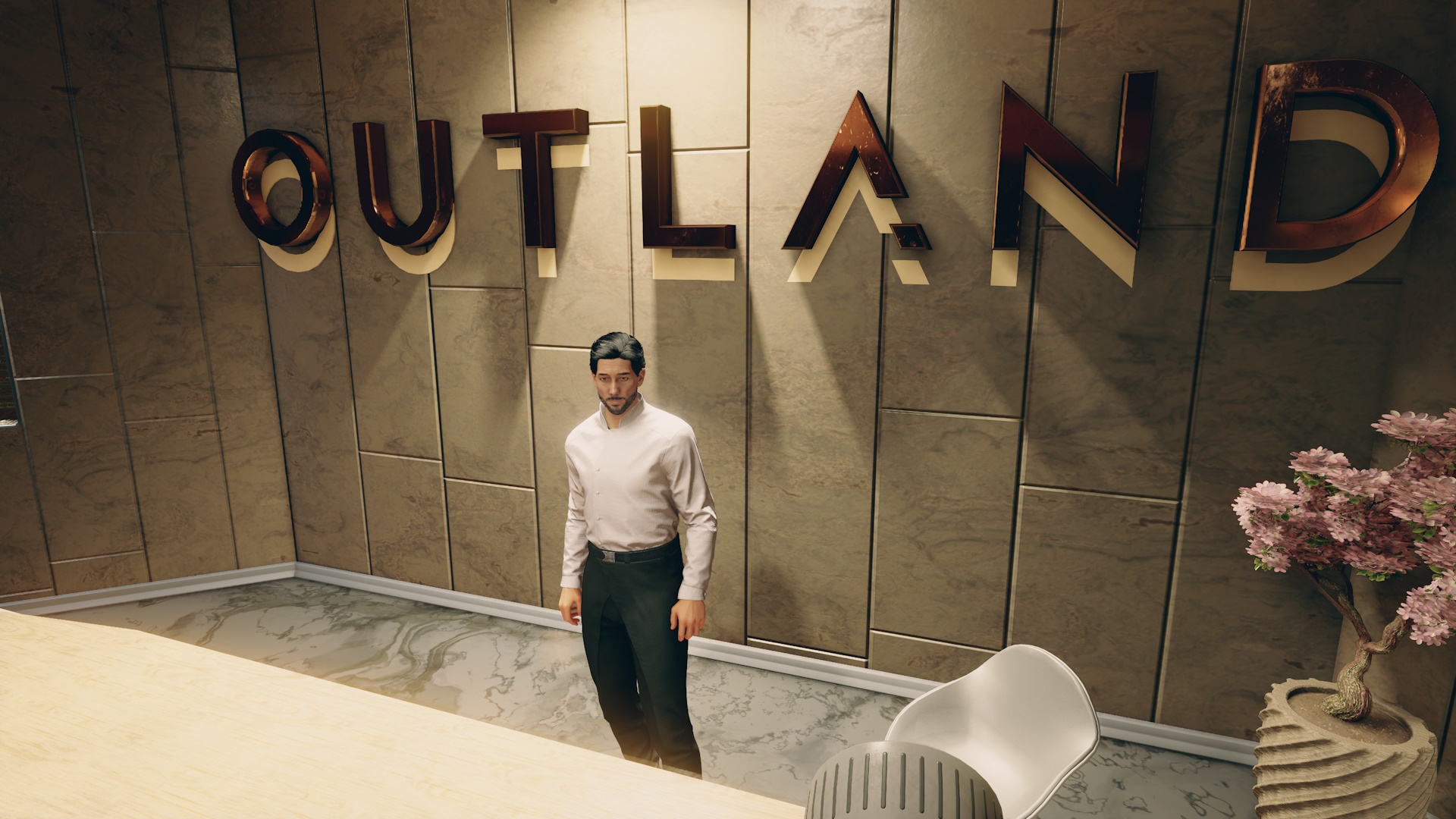
When I explore a city in Starfield that’s supposedly the capital of humanity’s extrasolar colonies, why does it feel so lifeless and empty? For all its problems – and my god were there problems – Cyberpunk 2077 at least managed to create the feel of a bustling city, replete with skyscrapers, traffic, and countless individual NPCs.
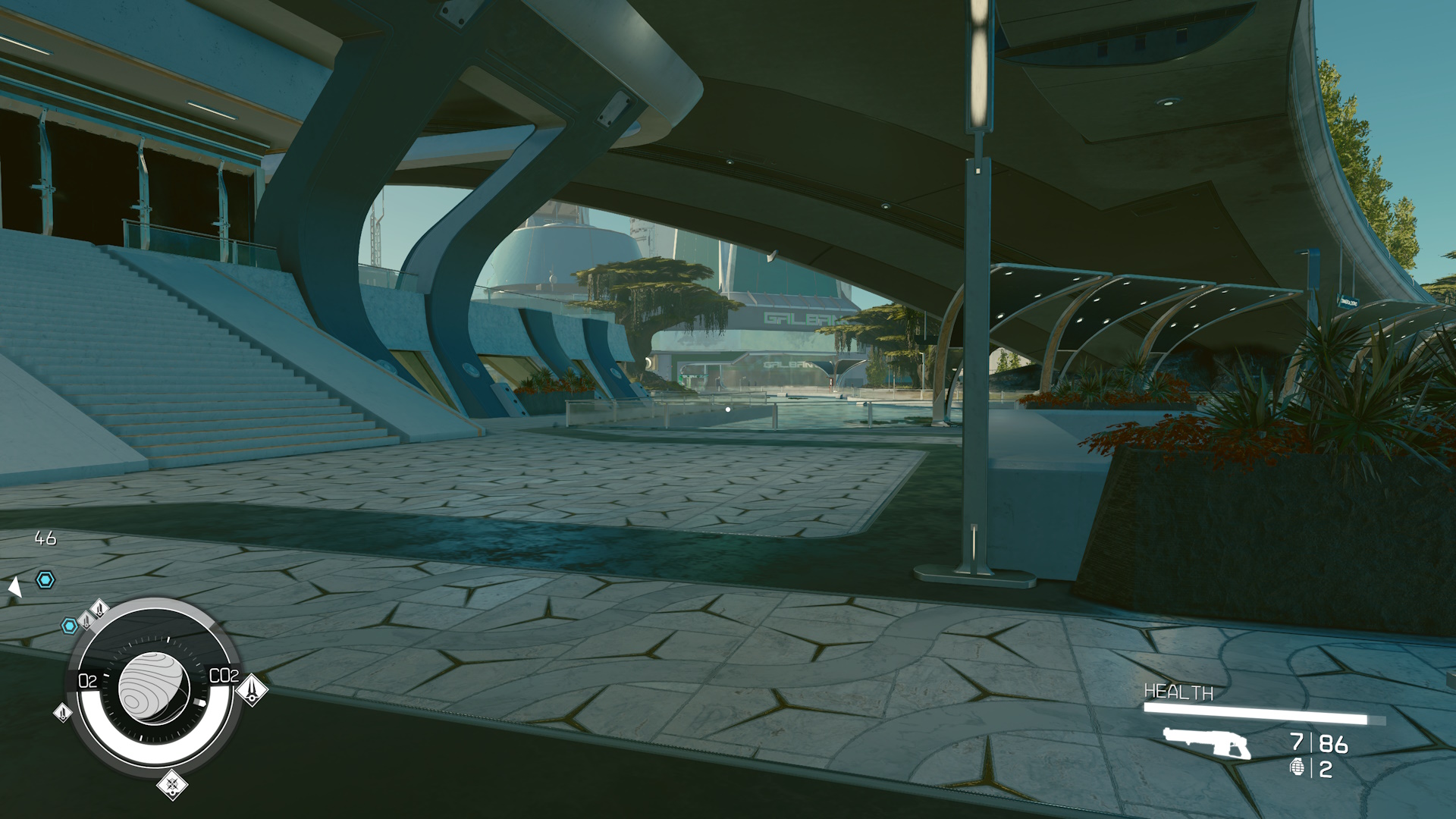
These are just some of the areas where Starfield feels deficient. And my question isn’t “how will Bethesda fix them?” but rather… does Bethesda even consider these things problems that need to be fixed? Or is the company content to take this formula and repeat it yet again in its next title? If so, will that be good enough for Bethesda fans when The Elder Scrolls VI rolls around in 2028? Or when Fallout 5 graces our screens in the 2030s?
The answer is a solid “maybe.”
So where does Bethesda go from here? The way I see it, there are two paths open to the company. One sees it continuing to double-down on its existing technology and design philosophy, becoming “the Nintendo of role-playing games,” where graphical fidelity, quest design, characters, and more are all a couple of generations behind. Abandoning innovation in this way will probably lead to The Elder Scrolls VI being referred to as “Starfield in a fantasy setting,” whenever that game is ready!
Alternatively, Bethesda could recognise the deficiencies in its technologies and processes, look around at what other games in the action/adventure, open-world, and role-playing spaces have been doing over the past few years, and try to catch up. Realistically this almost certainly means dumping the Creation Engine in order to create or license something more powerful that can really stand up to the rigours of modern game development.
After trying to give Starfield a fair shot but finding it came up short, I know what I’d rather see. But given Starfield’s critical and commercial success, perhaps I’m in the minority here. It seems that millions of players are absolutely fine with playing “just another Bethesda game” in a different setting, and if that’s the case in 2023, who’s to say it will change by the time the next Bethesda title is ready? Like Nintendo, the company clearly has a dedicated fanbase who are willing to overlook and even embrace its flaws. I thought I was one of those fans… but Starfield has shown me that I’m not.
Starfield is out now for PC and Xbox Series S & X consoles. Starfield is the copyright of Bethesda Game Studios, Bethesda Softworks, Xbox Game Studios, and/or Microsoft. Some promo images and screenshots used above courtesy of Bethesda. This article contains the thoughts and opinions of one person only and is not intended to cause any offence.
 Trekking with Dennis