

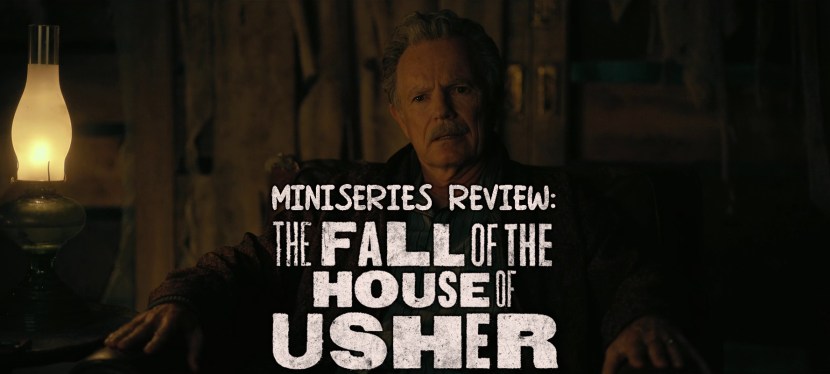

Spoiler Warning: Minor spoilers are present for The Fall of the House of Usher.
Over the weekend I binge-watched Netflix’s The Fall of the House of Usher. The miniseries is based loosely on the works of American author and poet Edgar Allan Poe, and it seemed like an appropriate watch for the spookiest month of the year. Although I’m by no means a horror aficionado, I enjoyed what this new adaptation had to offer.
Edgar Allan Poe may be well-known in the United States, but he isn’t an author that I’m especially familiar with. Poe’s works aren’t on the curriculum in British schools – or at least they weren’t in the ’80s and ’90s when I was at school. The first time I became aware of anything to do with Poe, in fact, was when an adaptation of his poem The Raven made it into The Simpsons episode Treehouse of Horror! So I’m by no means an expert on the source material for The Fall of the House of Usher.
The first thing to say is that The Fall of the House of Usher is not a straight adaptation of the short story of the same name. Rather, the series is an amalgamation of several of Poe’s poems and stories, bringing different works and characters together. The miniseries also abandons the 19th Century for a modern-day setting, and incorporates modern plot points and themes along with those lifted from Poe’s work.
I’m in two minds about this kind of “not-an-adaptation.” On the one hand, as The Fall of the House of Usher proves, taking a story or body of work as the basis for something new can lead to a perfectly enjoyable and entertaining story. On the other hand, though, taking such liberties with the source material basically makes The Fall of the House of Usher its own distinct story – so why did it need to use Poe’s name and characters? It’s a strange thing, in a way – this is a story that could, under the right circumstances, have stood on its own two feet. At its core, The Fall of the House of Usher is kind of like Succession meets Final Destination – a slasher movie in which the family members of a wealthy businessman are picked off one by one.
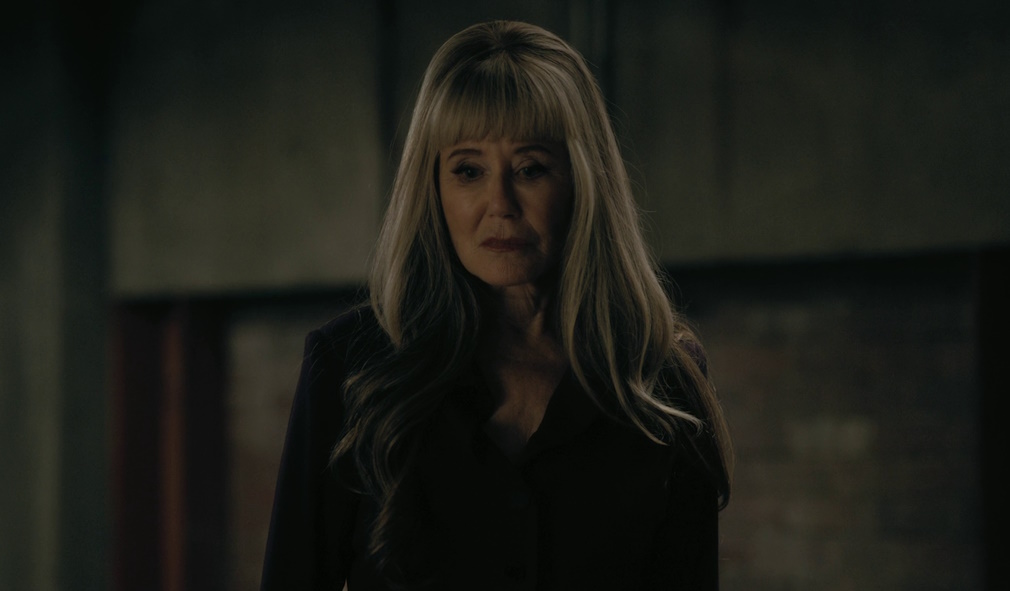
Despite its modern setting taking The Fall of the House of Usher far away from Poe’s original works, I did feel a distinctly Poe-like atmosphere throughout the miniseries. Poe is renowned for creating tension, and the way in which the miniseries built towards its characters’ grisly deaths definitely hit the right notes in that regard. The downside of that is that these deaths – and even the manner in which they would happen – was telegraphed ahead of time, robbing the climax of each episode of at least some of its drama and fear factor.
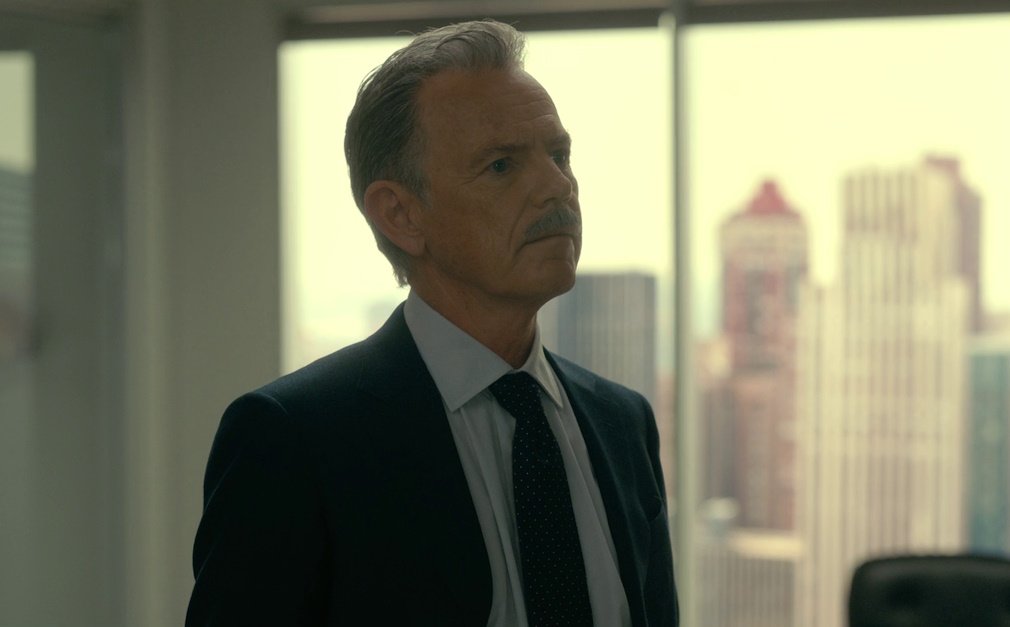
The Fall of the House of Usher had a compelling main character in Roderick Usher, and Bruce Greenwood’s performance is to be commended, as is that of Zach Gilford, who played the character in flashback sequences. The Usher twins both made for entertaining characters, in fact; villains whose schemes were slowly revealed over the course of the story. The same can’t be said for all of the other characters, however, including several of the Usher children.
Part of the theme of the miniseries was to show how wealth, extravagance, and privilege lead to a twisted and self-centred worldview. But with six Usher descendants to create, each of which seemed to embody a different aspect of priviliged debauchery, there wasn’t a lot of time for subtlety in all of these characters. Several of them felt pretty flat and one-dimensional, present to serve a narrative function rather than to be interesting and well-rounded characters in their own right. The characters who were snuffed out in the first couple of episodes in particular fell victim to this, in part because there really wasn’t much time to build up any sense of personality before they had to be killed off.
At the heart of the story was the idea of a “deal with the devil,” an ancient morality tale that has become a trope of the fantasy and horror genres in modern times. This part of the story was one I found a little confusing, though – and it’s quite possible that I’m just not getting it or that I missed something. But, without getting too deep into spoiler territory, by the time the main characters have made their Faustian bargain, they had already committed to going down a dark path.
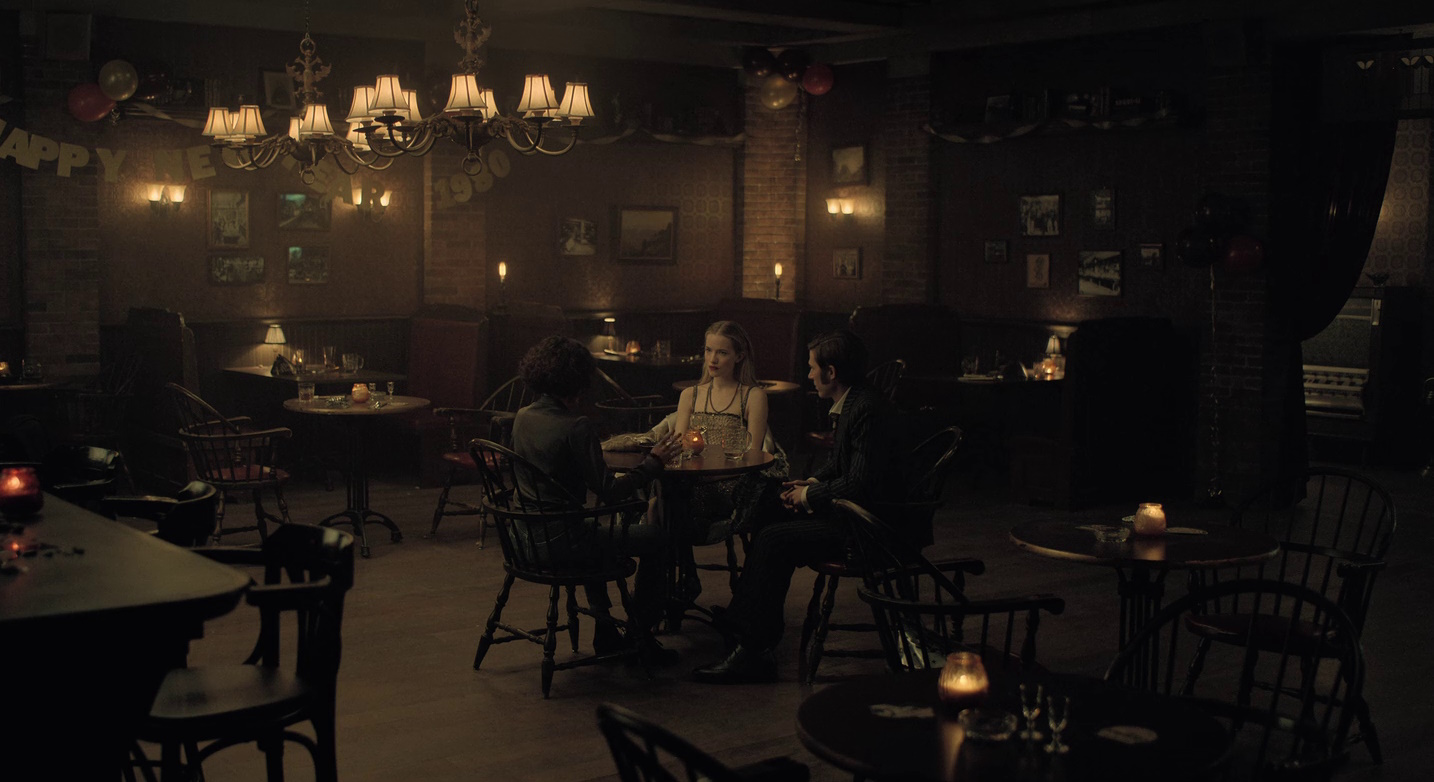
Verna, the entity responsible for cutting the deal and coming to collect over the course of the story, spoke multiple times about an “alternate” life that the twins and their families might’ve led. But it seems to me that by the time she got to them and made her deal, they’d already betrayed a friend, committed a crime, and taken too many steps down a dark path to possibly turn back. Her bargain may have shielded them from consequences – but did it alter their paths so much?
You’ll have to see what you think after watching The Fall of the House of Usher, but for me, that point certainly left me feeling confused as the credits rolled on the final episode!
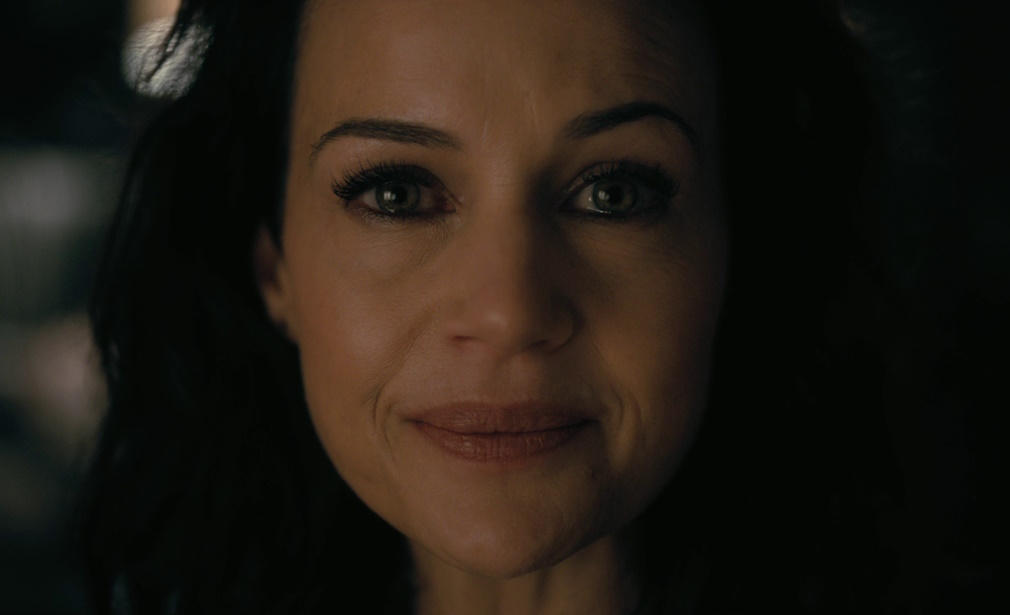
In terms of production values, The Fall of the House of Usher is on par with what you’d expect from a flagship streaming project in 2023. There were a handful of moments across the miniseries’ eight episodes where I felt either CGI or practical effects weren’t quite reaching the level I’d want to see, but they were few and far between. By and large, it was a good-looking series.
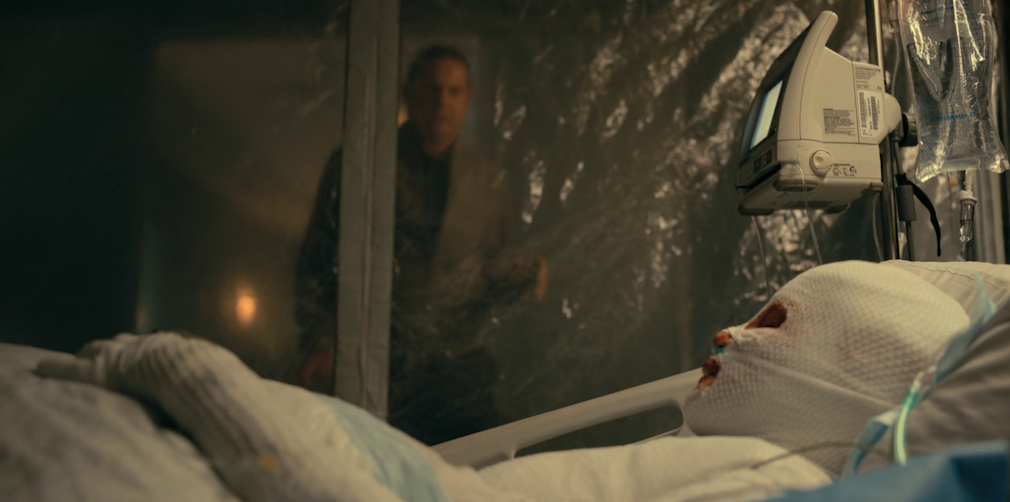
There were some digital and practical effects for gory moments and deaths that looked genuinely agonising, and with these moments tending to be the climactic points of each episode, it was important for The Fall of the House of Usher to get them right. I don’t think it’s unfair to compare the brutality of some of the deaths to a film like Final Destination, and several of them had a kind of twisted theme of poetic “justice,” as Verna used a character’s own traits, skills, or sins against them.
I was surprised to see Mark Hamill outside of the Star Wars franchise – but he did a great job as the shadowy and dangerous lawyer Arthur Pym. Along with the twins and Verna, who was played by actress Carla Gugino, Pym was perhaps the character who felt most lifelike. Many stories – real and fictional – incorporate someone like Pym, and Hamill did a great job at breathing life into someone so fearsome and shady.
As the United States continues to wrangle with an epidemic of opioid addiction, I think we’re going to see more works of fiction that aim to have something to say about the subject. For my money, this aspect of The Fall of the House of Usher wasn’t its strongest suit. It could feel, at points, that the Usher family’s unethical pharmaceutical company and its responsibility for addictive opiate medication was a mere backdrop for other events to play out in front of. Given the severity of the issue, and its lack of prominence in the news in general, this wasn’t great.
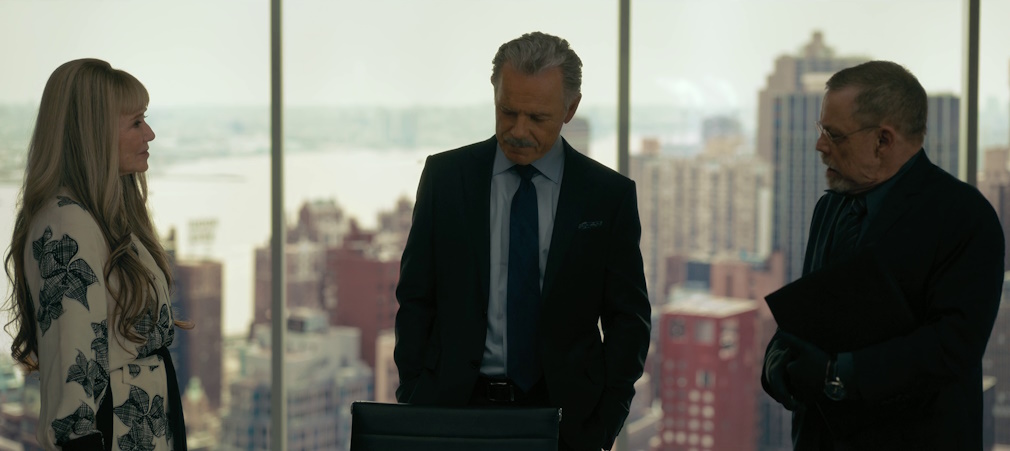
I didn’t feel that The Fall of the House of Usher had a point to make about opioid addiction that hasn’t already been made. People who have followed the story know that certain drug companies are absolutely responsible – and are continuing to get away with it. The miniseries brings this up, thinking itself to have made a profound statement… but doesn’t really go anywhere with it except to kill off the characters it deems most responsible. There’s something satisfying about that in a kind of anti-billionaire way, but it’s surface-level storytelling without a lot of depth.
Although Poe’s poetry was present throughout the miniseries – and was well-recited and incorporated into the story – there were a couple of places where characters spoke lines written by (or heavily adapted from) Poe’s original work. These moments stuck out to me, and I felt the lines in question were just a bit clunky. The poetic language of the 19th Century clashes with the modern American vernacular used for the majority of the script, so these handful of lines felt out-of-place.
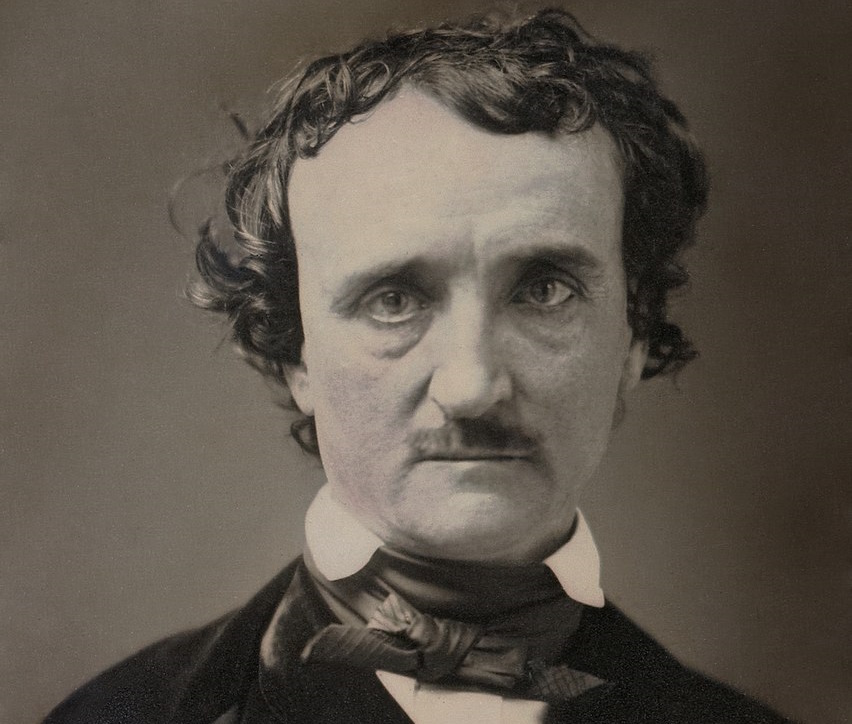
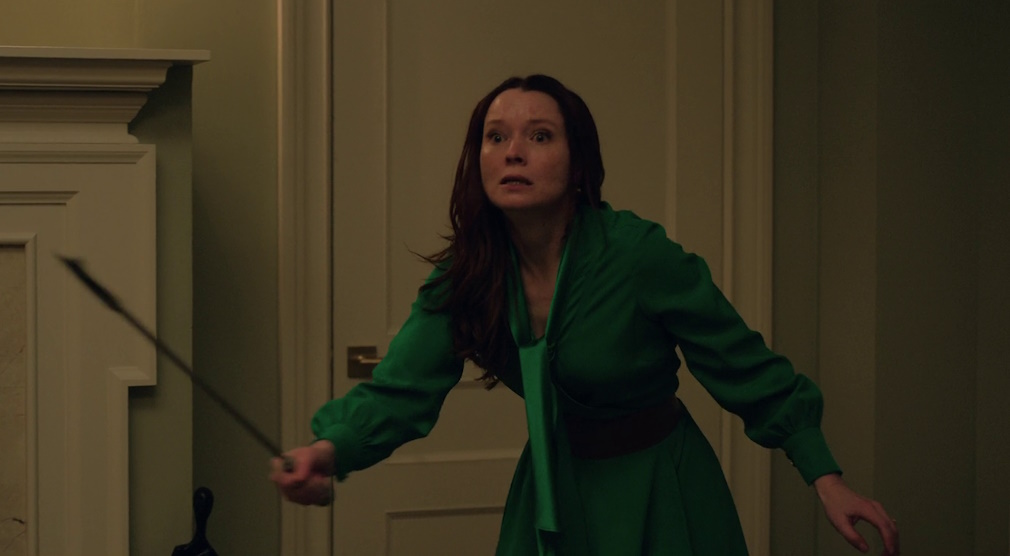
I’m someone who’s not a big fan of horror – and of jumpscares in particular. Jumpscares always manage to get me, even when I know they’re coming, and I’ve never enjoyed that feeling. The Fall of the House of Usher has several prominent jumpscares – but they were few enough in number across the eight episodes that I didn’t feel they got in the way of my enjoyment. The slower buildup of tension and the dramatic turns in the story were more my style, and I had a good time with that side of the miniseries.
For a fan of horror who’s seeking something fast-paced and with a lot of adrenaline rushes, maybe The Fall of the House of Usher would feel a little too slow. That’s definitely not my take – but I can absolutely see it being a fair point of criticism for someone whose tastes are different from my own.
So let’s wrap things up!
The Fall of the House of Usher was an entertaining horror-drama well-suited to this time of year. In an era of franchises and spin-offs, I’m glad that Netflix was able to be convinced to put money into a one-and-done miniseries instead of trying to pad things out and push for a second season. For me, the pacing of the miniseries as a whole was spot-on, and trying to stretch it out too much would’ve been to its detriment.
There was a wonderful musical score backing up solid visual effects and some fine acting performances from both familiar faces and newcomers. And at its core, The Fall of the House of Usher was atmospheric, capturing the essence of Edgar Allan Poe’s work – even as it stepped away from its source material to carve its own path. It perhaps wasn’t as clever as it aimed to be, particularly with its core messages about decadence, billionaires, and the pharmaceutical industry – but not every TV show has to come with a morality play and a message. I enjoyed The Fall of the House of Usher for what it was, and I’m happy to recommend it to anyone looking for something a little bit supernatural and spooky as Halloween draws near.
The Fall of the House of Usher is available to stream now on Netflix. The Fall of the House of Usher is the copyright of Intrepid Pictures and/or Netflix, and the works of Edgar Allan Poe are now in the public domain. This article contains the thoughts and opinions of one person only and is not intended to cause any offence.
 Trekking with Dennis