

Spoiler Warning: There are spoilers ahead for Star Trek: Section 31 and the following Star Trek productions: The Next Generation Season 3, Discovery Seasons 1-3, and Prodigy Season 2.
You can find my spoiler-free thoughts on Section 31 by clicking or tapping here.
A brand-new Star Trek film is always going to be an exciting occasion! It’s been almost a decade since Beyond was in cinemas, and in that time it’s fair to say that a lot has happened for the franchise. But at the same time, there are similarities between Star Trek’s most recent trip to the cinema and this made-for-TV movie – not least in terms of how I’d rate the quality of both films!
We are going to be talking about plot spoilers for Star Trek: Section 31 this time, so if you haven’t seen the film yet this is your final opportunity to jump ship. I’d encourage you to check out my spoiler-free review of Section 31 – you can find it by clicking or tapping here.
If you’ve already read my spoiler-free review, you’ll know that I thought Section 31 was okay for what it was. It’s a fairly average action/sci-fi film which has little to do with the rest of the franchise. I don’t think it achieves its objective of being a good “first contact” for new, younger viewers… but I didn’t dislike Section 31 on the whole. I’m considering writing up an updated version of my Star Trek films ranked list – and I guess if I had to give Section 31 a grade, it would get a C. Not great, not terrible; a film I don’t need to think too hard about that doesn’t demand much from me. Background viewing that I can dip in and out of with ease.
Those words may sound negative or even harsh, but I really don’t intend them to be. Taken on its own merits, Section 31 is a perfectly entertaining action film with some sci-fi trappings. It isn’t hard to separate it from the rest of Star Trek, as it has so few connections to anything else in the franchise outside of a few name-drops, so I don’t think Section 31 is in any way bad for Star Trek or the fan community. I don’t think it achieved its objective of expanding the fan community and bringing a new audience on board – which is definitely a mark against it.
Alright, summary over! It’s time to get into the plot.
When is Section 31 set? Because I still genuinely don’t know. At the beginning of the film we see “Stardate 1292.4” prominently displayed – and if we assume lower-value stardates are earlier than higher-value ones, it would tentatively place Section 31 in between Discovery’s departure from the 23rd Century (approximately Stardate 1201.7) and The Original Series (the earliest Stardate given, in Where No Man Has Gone Before, was 1312.4). But is that correct? It seems to conflict with at least one other piece of information we have.
Rachel Garrett – who is a Lieutenant during the events of Section 31, and therefore isn’t a fresh-faced Academy graduate – is someone we’re familiar with from The Next Generation episode Yesterday’s Enterprise. In that episode, Garrett is in command of the Enterprise-C in the 2340s… but if Section 31 takes place in between Discovery and The Original Series and Garrett is already in her late twenties or early thirties, that would mean she’d have to be over 100 years old by the time we see her again in Yesterday’s Enterprise. The Federation has great medical and life-extension technology, but is that a good enough explanation? Or have we found our first issue with Section 31 already?
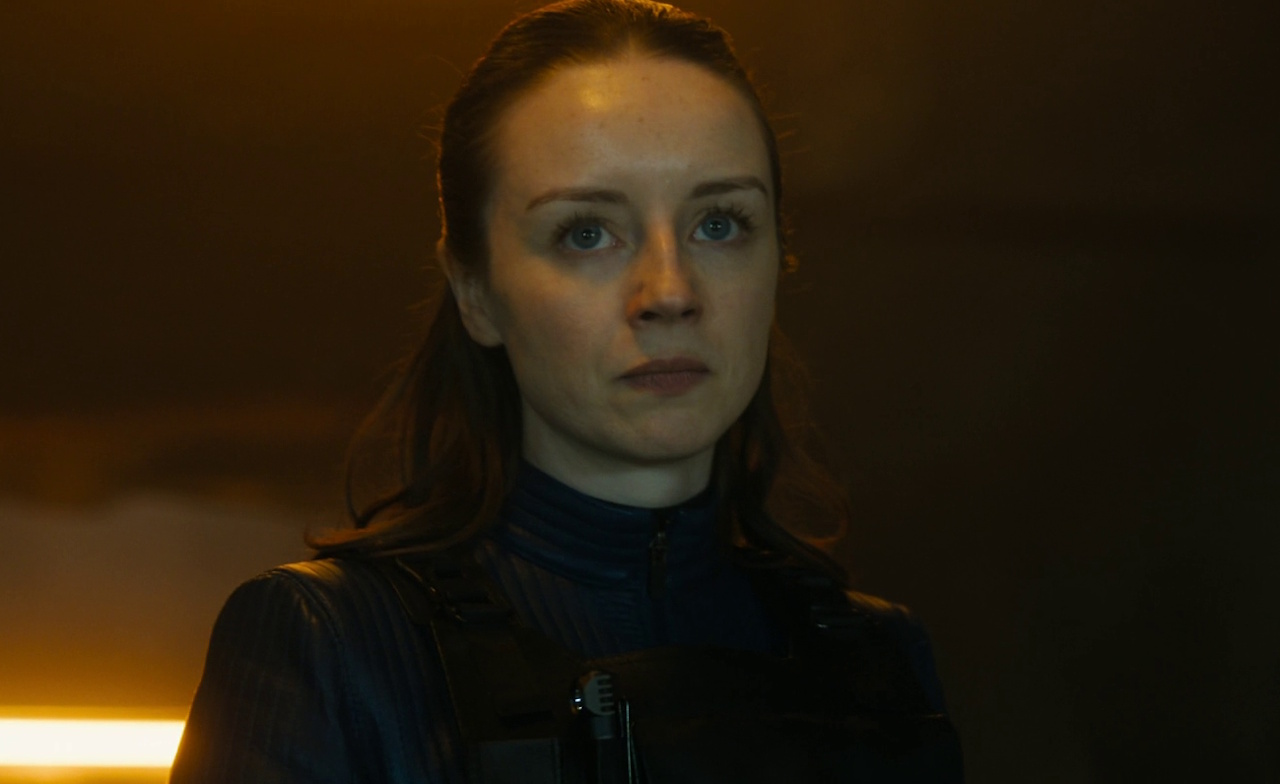
I get it: this is a nitpick. But as I’ve said before: as Trekkies, we want the world of Star Trek to make sense and feel consistent, and that means that new projects have to at least try to fit in with what’s come before. There were two exceptionally easy fixes to this issue: firstly, the film could’ve been more obviously set later in time. It’s possible that this was the writers’ intention – but with no frame of reference (familiar uniform designs, starships, etc) it’s hard to tell. Secondly, the Rachel Garrett character could’ve been renamed either to another legacy character more suited to the era or to someone brand-new.
I genuinely enjoyed Kacey Rohl’s take on Rachel Garrett. But this character was pretty much a blank slate; if you haven’t seen Yesterday’s Enterprise in a while, could you even tell me much about Captain Garrett? It’s not like she had a particularly memorable catch-phrase or a unique design. She was an upstanding Starfleet officer, sure, but so are dozens of other single-appearance characters. Given the confusion this inclusion adds to the timeline, maybe other choices could’ve been made.
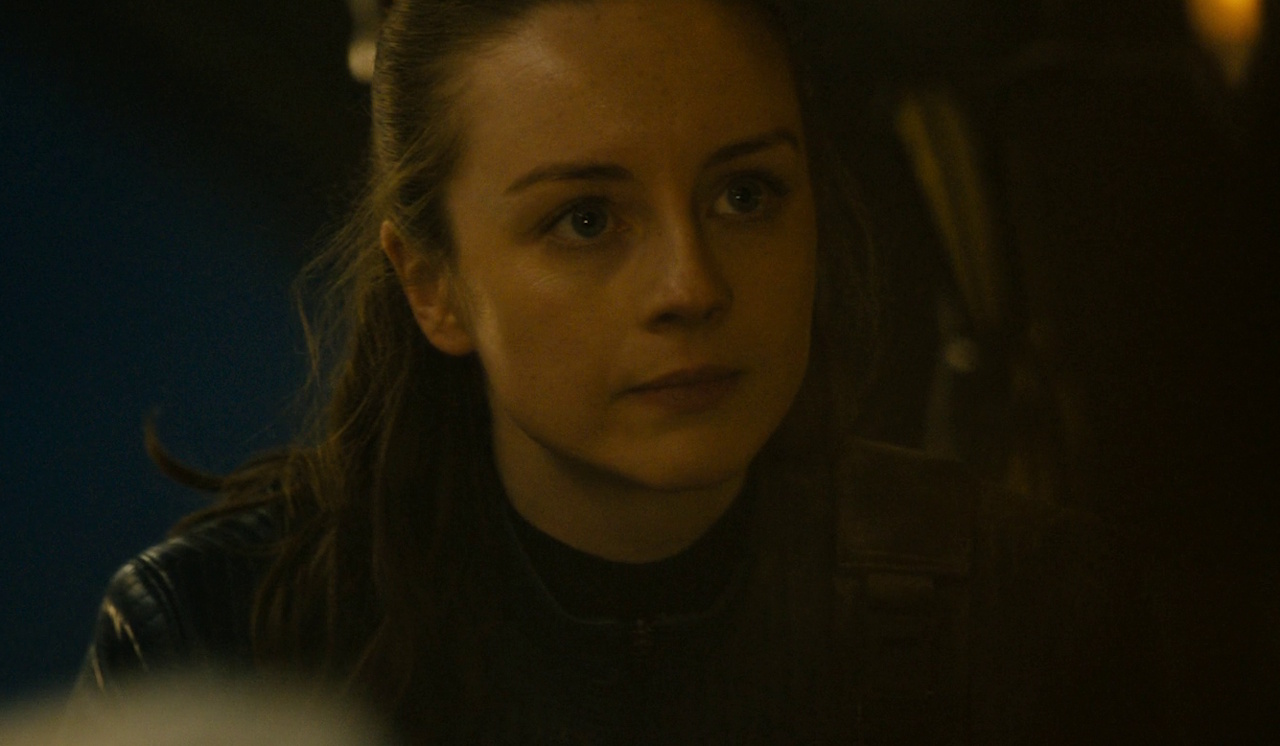
One final point on the timeline: if Section 31 is meant to be set after the events of The Original Series – as Rachel Garrett’s inclusion arguably hints at – then… isn’t the Terran Empire meant to be in decline or even defeated in this era? After the events of Mirror, Mirror, Spock ascended to a high rank in the Empire and attempted to reform it. Those reforms weakened the Empire, leading to its defeat by the early or mid-24th Century. So if we’re going to say Section 31 takes place in the late 23rd Century, that would coincide with a period of decline – which doesn’t line up with the film’s plot of stopping the Terran Empire breaking through the portal between universes and invading.
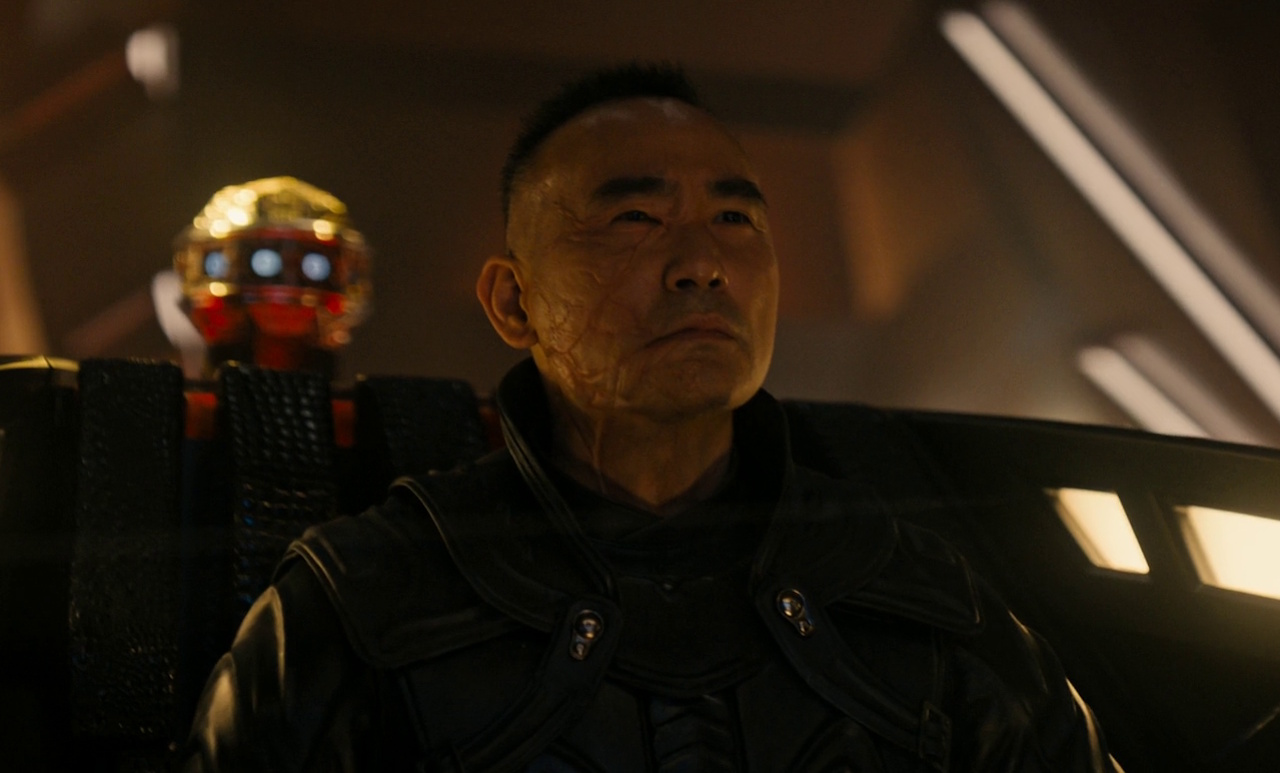
San’s survival also means that Section 31 can’t be set too long after the events of Discovery – he’s roughly the same age as Georgiou, and there didn’t seem to be a noticeable difference between them when they reunited.
Okay, okay. Enough timeline nitpicking for now!
Let’s talk about the Terran Empire.
The Original Series wasn’t explicit about the Emperor or how one might ascend to that position – though it was certainly clear that advancement in the Imperial military was by assassination. However, Enterprise’s excellent Mirror Universe episode – In A Mirror, Darkly – strongly implied that the path to becoming Emperor was similar to how it is in many dictatorships and authoritarian powers: whoever has the most guns and can kill their rivals wins the “game of thrones.” That Emperor will hold power only until they can’t – I mean, this was basically Captain Lorca’s plan in Discovery’s first season. He wanted to overthrow and kill Empress Georgiou so he could rule the Terran Empire instead.
Having established the Terran Empire as being ruled by the strongest, most brutal dictators… does it really make sense that the Terrans would stage a Squid Game-style contest to decide who should be their next ruler? Technically nothing we saw of the Terran Empire in Section 31 explicitly contradicts what we know of the Empire from past iterations of Star Trek… but it doesn’t make a lot of sense to me that the Empire’s leader would be decided in this fashion. Most real-world monarchies are hereditary, and in most dictatorships, power is held by whomever can wield the most military force. This idea of a contest to anoint a new Emperor doesn’t sit right with me.
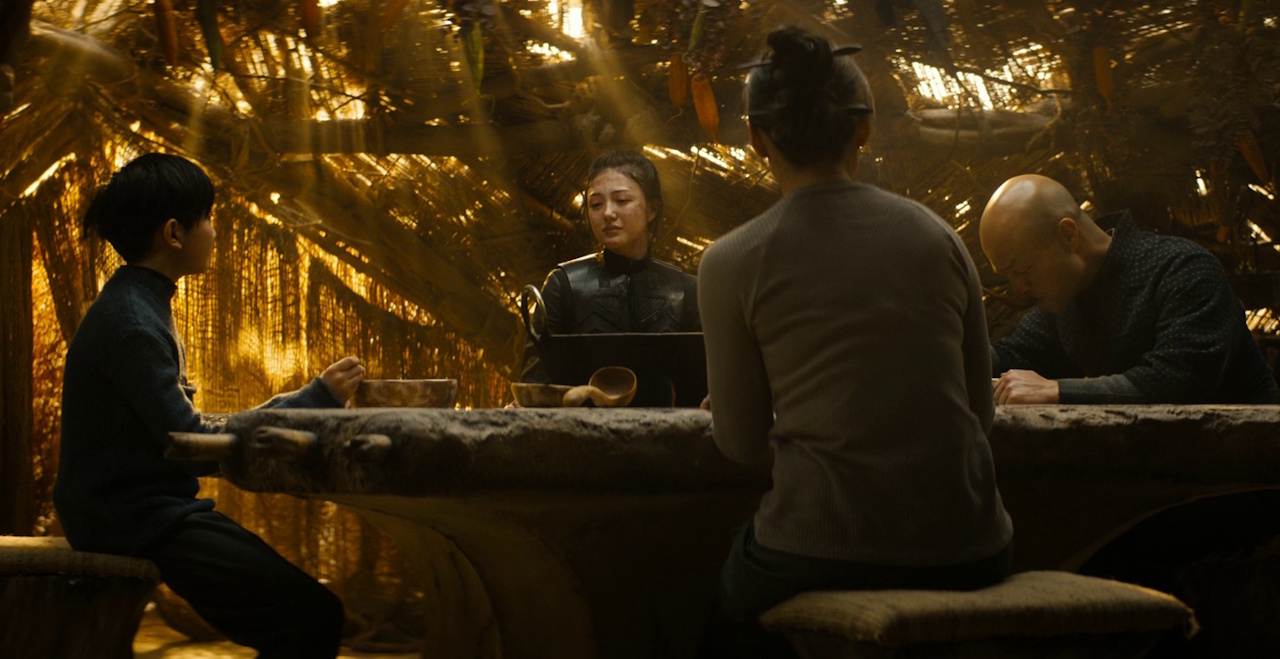
Then there were the depictions of San, Georgiou’s family, and Georgiou herself. Don’t get me wrong: I’m glad, in some ways, that Star Trek is moving away from incredibly one-dimensional Terrans who only care about murder, torture, and power. That’s great… but it’s also a pretty big reversal from the way Terrans are usually depicted. Showing Georgiou and San so emotional and loving made both characters feel distinctly un-Terran… which kind of got in the way of the Mirror Universe plot.
I wish I understood why modern Star Trek writers love the Mirror Universe so fucking much. Between Section 31, Discovery’s first and third seasons, Picard’s second season with its “Confederation of Earth,” and a recent episode of Prodigy, the Mirror Universe is everywhere in the franchise’s recent stories. It could be a fun setting to dip into for a single episode back when Star Trek was a wholly episodic franchise, but basing entire story arcs around Terrans and the Mirror Universe has been to the franchise’s detriment in recent years. I hope that Section 31 will be the final appearance of the Mirror Universe for a good long while.
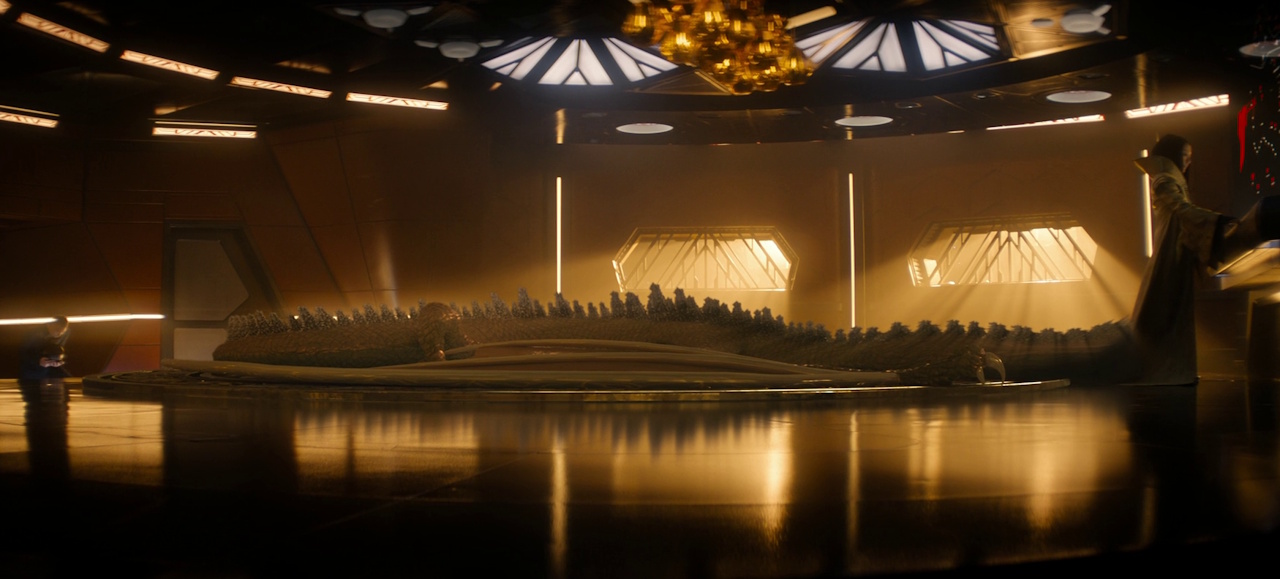
I felt that seeing a young Georgiou with her family and San in the Mirror Universe also muddled her character arc – particularly the growth we saw in Discovery’s third season. Part of what made that story work for Georgiou was that she was discovering a new way of seeing the world. But we’ve just learned that she had a family, she cared about people, and she was even capable of falling in love… decades before Burnham and the crew of the USS Discovery helped her to discover that side of herself. I guess we could frame Georgiou’s softening as a “rediscovery” of those feelings… but it does seem to undermine her growth somewhat, finding out that she came from a caring family and had already known love.
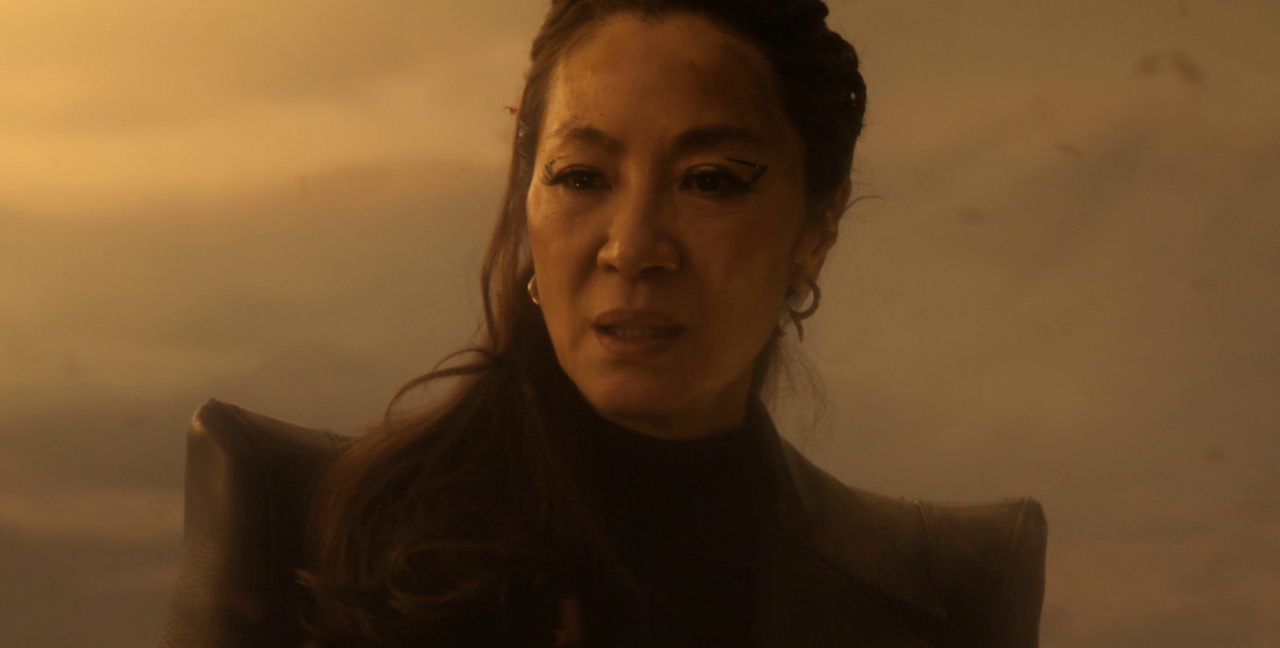
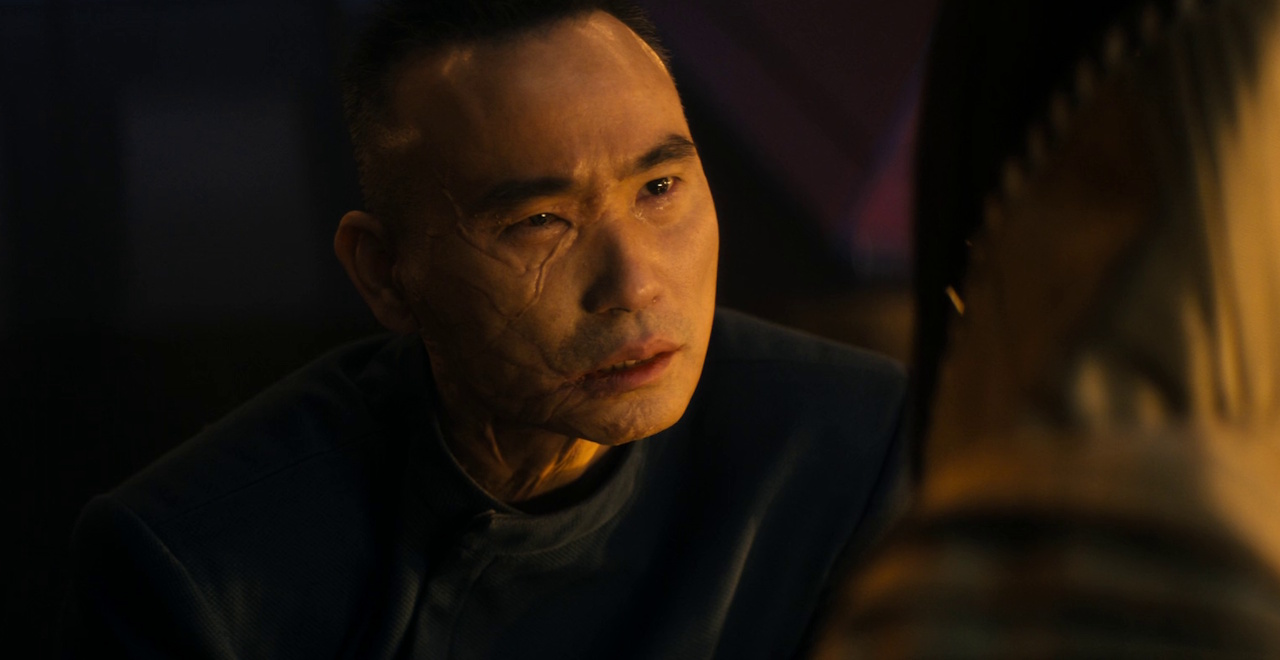
While we’re talking about San, it seemed pretty obvious to me from the moment Georgiou betrayed and wounded him in the film’s prologue that he was going to survive and turn out to be one of the villains. His survival wasn’t the “shocking twist” that Section 31 wanted it to be, and while I guess that’s not necessarily a huge problem, I think it’s worth saying that this narrative element was pretty basic and the twist didn’t land for me. Georgiou’s reaction to it – wonderfully emoted by Michelle Yeoh – definitely gave San’s return some emotional weight. But I felt it was a pretty obvious outcome from almost the first moment.
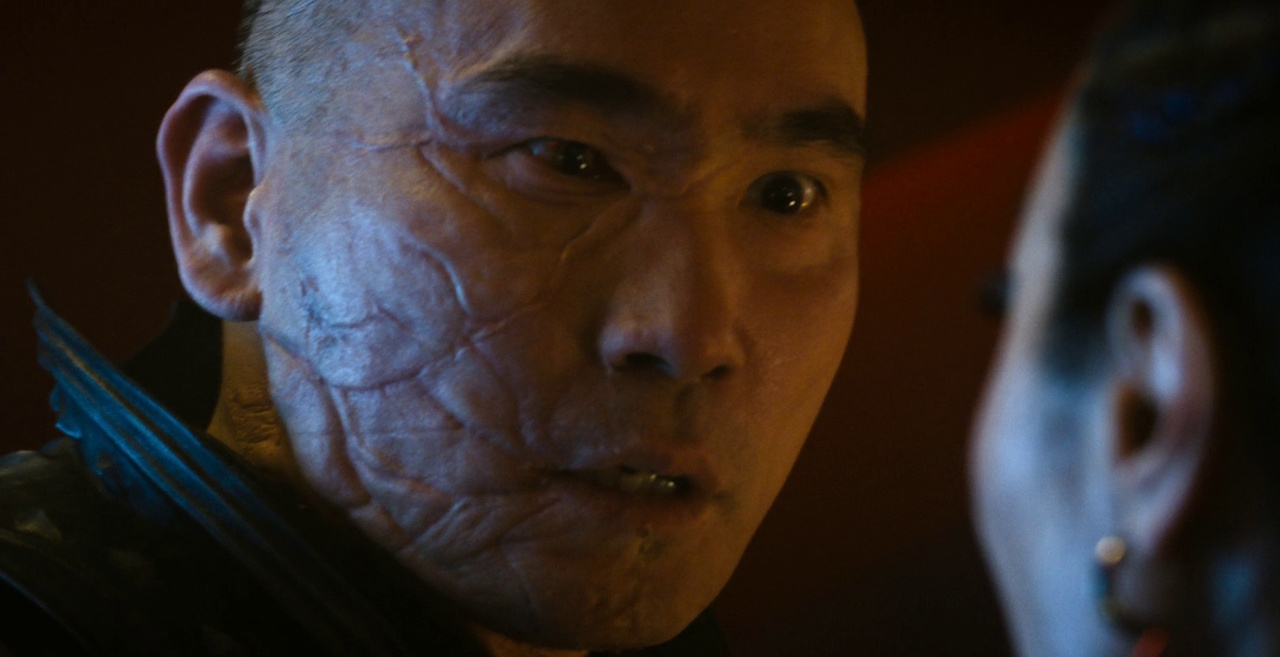
I could buy San and Georgiou’s emotional connection – both Michelle Yeoh and James Hiroyuki Liao sold me on that pretty well. But what I struggled with was San’s apparently convoluted and dumb “evil scheme.” He hated Georgiou for her betrayal and how she changed to become nasty and dictatorial after she beat him in Takeshi’s Castle or whatever that Terran competition was. So… to get back at her, he: stole a genocidal super-weapon, found a way to cross over to the prime timeline – where he had no idea Georgiou resided – and planned to detonate it, then return to the Terran Empire, tell them he’d found them a new galaxy to conquer, and… what? He’d be some kind of hero? Even though the weapon was so over-powered that Georgiou said whoever survived it would only have “ashes” left to rule over? Have I missed something? It just seems… I dunno. Overkill in one sense, convoluted and stupid in another.
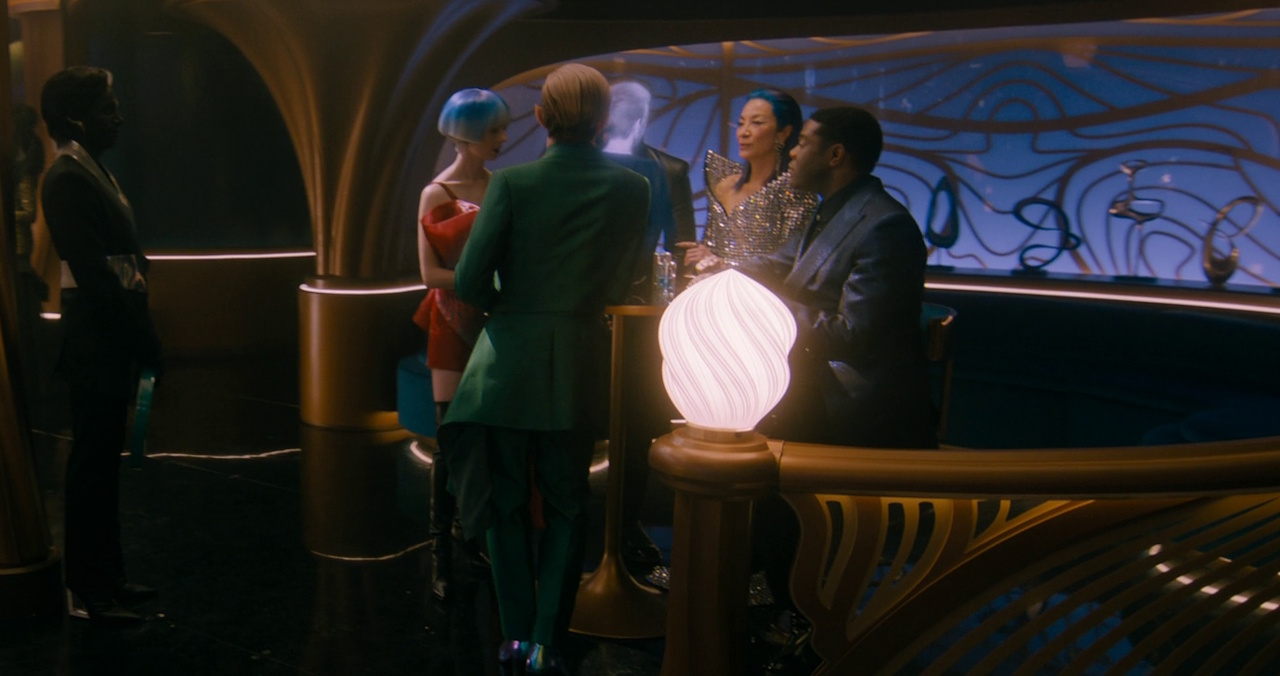
And while we’re talking about convoluted and dumb schemes: why would Section 31 infiltrate Georgiou’s space station in such a stupid way? All they needed to do was distract Georgiou long enough to beam Dada Noe to their ship – but they had a massively complicated plot involving all of the Section 31 characters… that instantly failed anyway. There were some interesting ideas here – and I actually enjoyed the fantasy/flash-forward sequence, typical of heist/spy films, in which the plan succeeded. That was creative and cool. But as core narrative threads that we’re meant to take at least somewhat seriously, both Section 31’s plan and San’s evil scheme don’t really work for me.
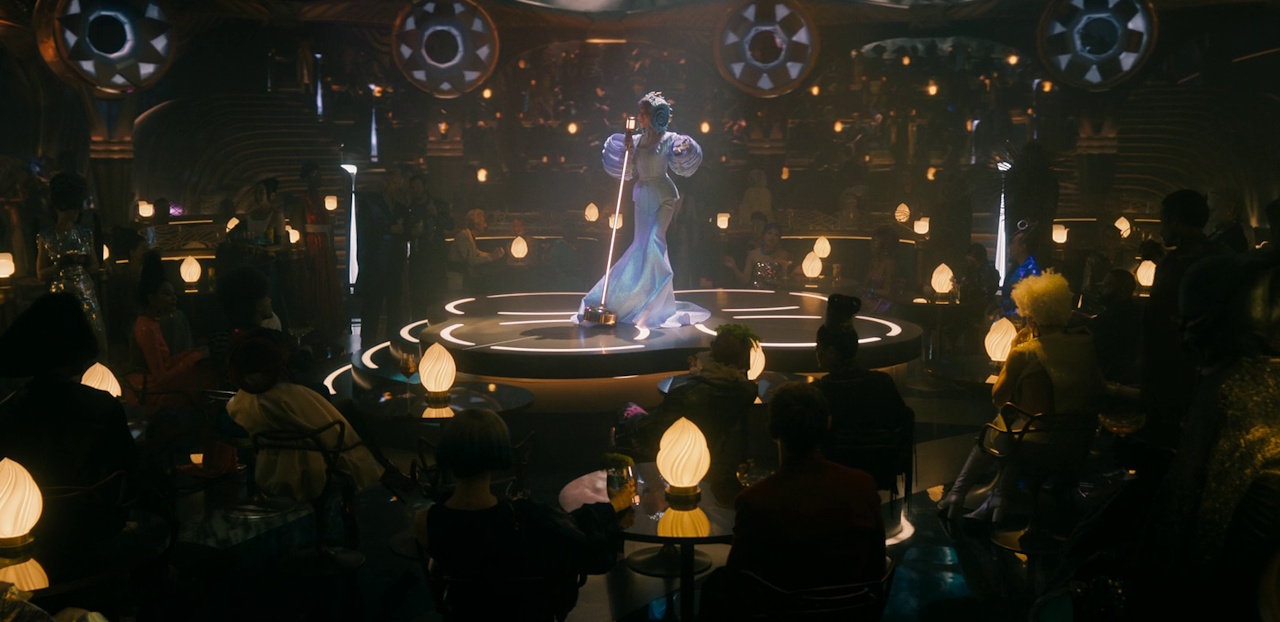
Then we come to the sheer randomness of Georgiou’s role in the story. It was presented as pure coincidence that the one mission Section 31 chose to recruit Georgiou for – after apparently knowing about her return to the 23rd/24th Century for some time – just happened, by accident, to involve her ex-lover, her own super-weapon, and the Empire that she formerly led. There wasn’t even a last-second twist saying that Control or Section 31 knew it all along, this was just totally by accident.
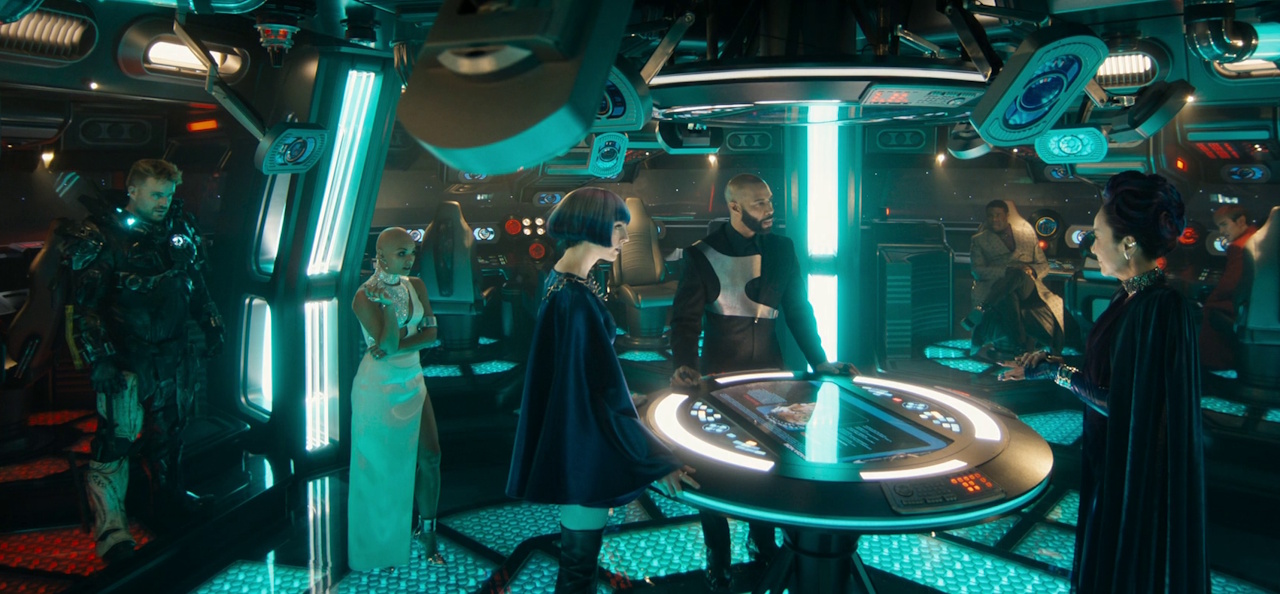
There was an obvious route to making this part of the story feel less random and disconnected. The briefing from Control – which I generally liked, it was a creative framing device and it did actually feel pretty immersive – could’ve had a little bit more detail on Dada Noe’s weapon. If Control knew that this weapon originated in the Mirror Universe, that could’ve been a smooth narrative reason for Section 31 to turn to Georgiou. It wouldn’t have blown any big surprises further along the story, and Georgiou would’ve had a better, more solid, and more believable reason for joining Sahar’s team than “c’mon, man.”
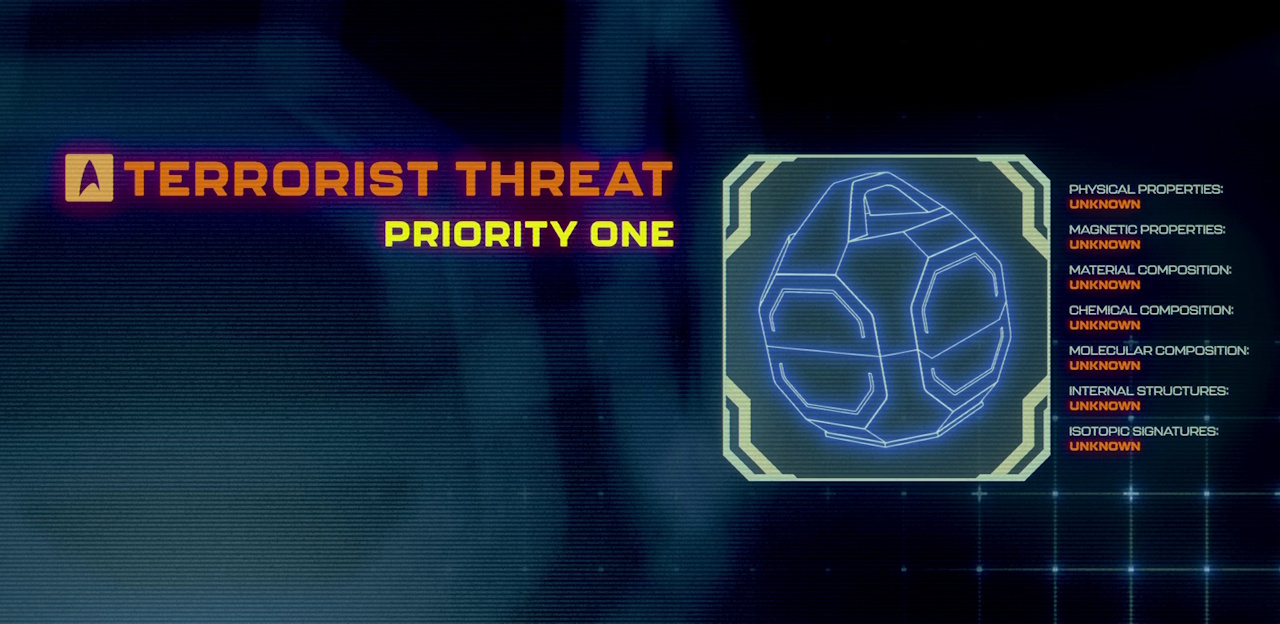
I was a little surprised to see that the Section 31 of this era uses something named “Control” to dish out information and orders, in light of the events of Discovery’s second season. Again, the lack of a definitive moment in time for the film’s setting could arguably cover this, but if we assume that Section 31 takes place after the events of Discovery Season 2 then the Control AI should’ve been defeated and shut down.
So how do you interpret the holographic “Control” figure that we saw at the end of the film? Is she a real person, an AI, or do her cybernetic implants perhaps imply she’s a mix of both? This scene already felt a bit weird; “Control’s” appearance was treated by the director as if it was some huge revelation… but actress Jamie Lee Curtis is brand-new to Star Trek, and doesn’t seem to be playing a familiar character or even a member of a species we’ve seen before. I guess the point of this big reveal was that Curtis is a big star, and she’d also worked with Michelle Yeoh on Everything Everywhere All At Once. But it didn’t really work for me in the moment, and showing off this version of “Control” leaves me with far more questions than answers. Perhaps a head-canon explanation will have to be that “Control” is simply a designation or title that Section 31 of the 23rd Century uses for its leaders?

In my spoiler-free review I talked about the visual language of Star Trek – and how Section 31 basically ignores all of it. Rachel Garrett doesn’t wear a typical Starfleet uniform; the closest comparison to what she’s wearing would be Discovery’s away team armour that we saw in the first couple of seasons. There wasn’t a single character using a combadge or communicator, and the familiar Starfleet delta only showed up as a graphic during Control’s briefing. None of the starships – even those only briefly glimpsed in orbit of Georgiou’s space station – conformed to familiar Star Trek designs, either.
For me, this was a little disappointing. There has to have been a way for at least one starship to have had the familiar saucer section and nacelles design, or for a single character to use a Starfleet combadge or wear a familiar uniform – even if only for just one scene. Part of the point of Section 31 was to draw in new fans… but the lack of obvious visual connections to anything else in Star Trek makes the film feel especially disconnected.
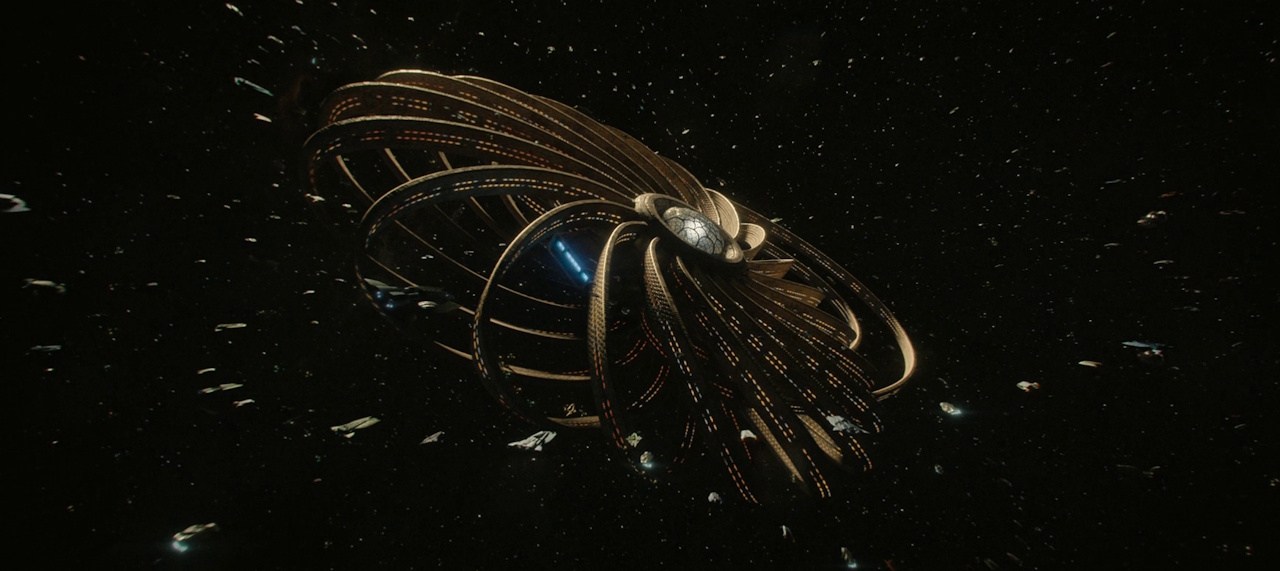
Then we come to sets and props. I can’t be certain, but I felt that parts of both the Section 31 starship and San’s ship looked familiar – maybe recycling parts of the sets made for Picard’s La Sirena or Discovery’s 32nd Century vessel. This wasn’t necessarily a problem, but I thought it was worth pointing out. Generally, the sets used for the planet where most of the action took place, Georgiou’s station, and the garbage scow were pretty good – I liked how the planet and the scow gave off an “abandoned ruin” kind of vibe.
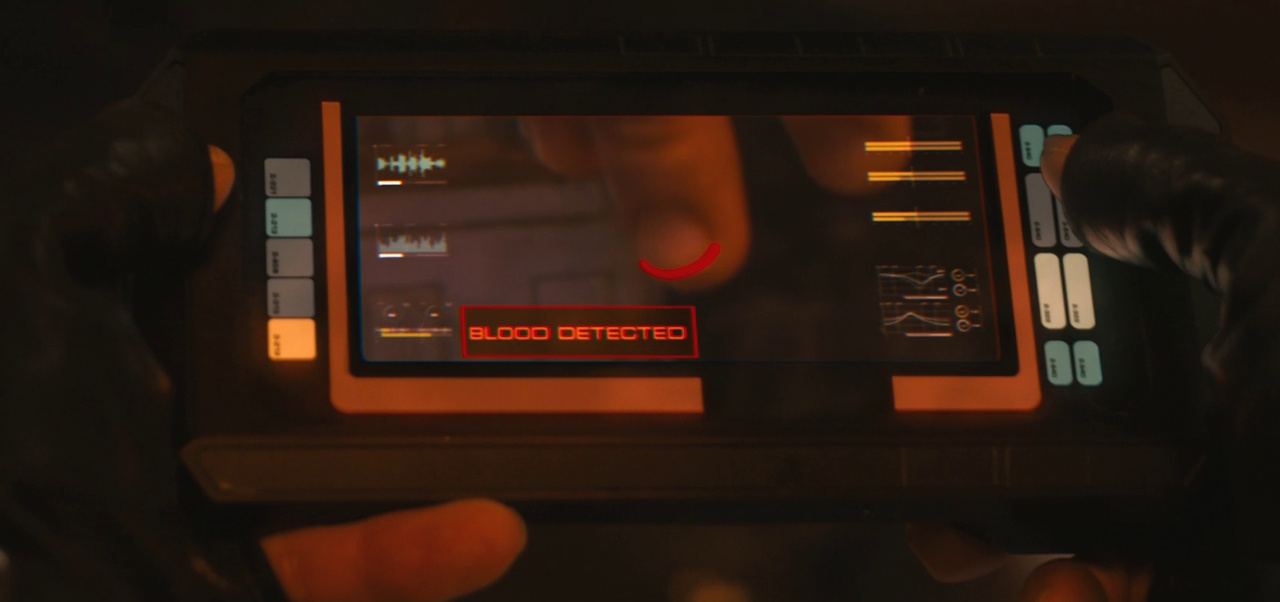
Props, though, left something to be desired in Section 31. The phaser pistols were mostly okay, though they didn’t look exceptional and didn’t seem to draw inspiration from phasers seen elsewhere in Star Trek. But the tricorder? I mean, you couldn’t have made it more obvious that it was a fucking iPhone if you tried. It was a pathetic visual effect that looked incredibly cheap; akin to something I’d expect to see in a low-budget fan film, not the Star Trek franchise’s flagship streaming project. How much extra work would it really have been to make a basic tricorder prop? You can literally buy prop replicas from the official Star Trek shop that would’ve done a better job than an iPhone in a chunky case.
Here’s a philosophical question for you: are some people – and, by extension, some fictional characters – so far gone that they’re irredeemable? Because parts of Georgiou’s story in Section 31 (and Discovery’s third season, too) are effectively a redemption arc. Georgiou has to confront what she did to San, and also stop the super-weapon that she had commissioned – these two represent her past, and she has to demonstrate how far she’s come as she tries to defeat San.
Some Trekkies have taken to derisively using the term “space Hitler” to describe Georgiou. I don’t particularly care for that expression, so let’s pick another point of comparison from the world of fiction. Georgiou is comparable to Star Wars’ Emperor Palpatine in terms of how she ruled her Empire with an iron fist, and there are even echoes of Palpatine’s scorched-earth approach to his death – glimpsed briefly in canon – in Georgiou’s super-weapon. But would a Star Wars film shot from Palpatine’s point of view, in which he is “redeemed” and teams up with a rag-tag gang of rebels to stop a villain, work as intended? Or are characters like that too far gone to be turned into protagonists?
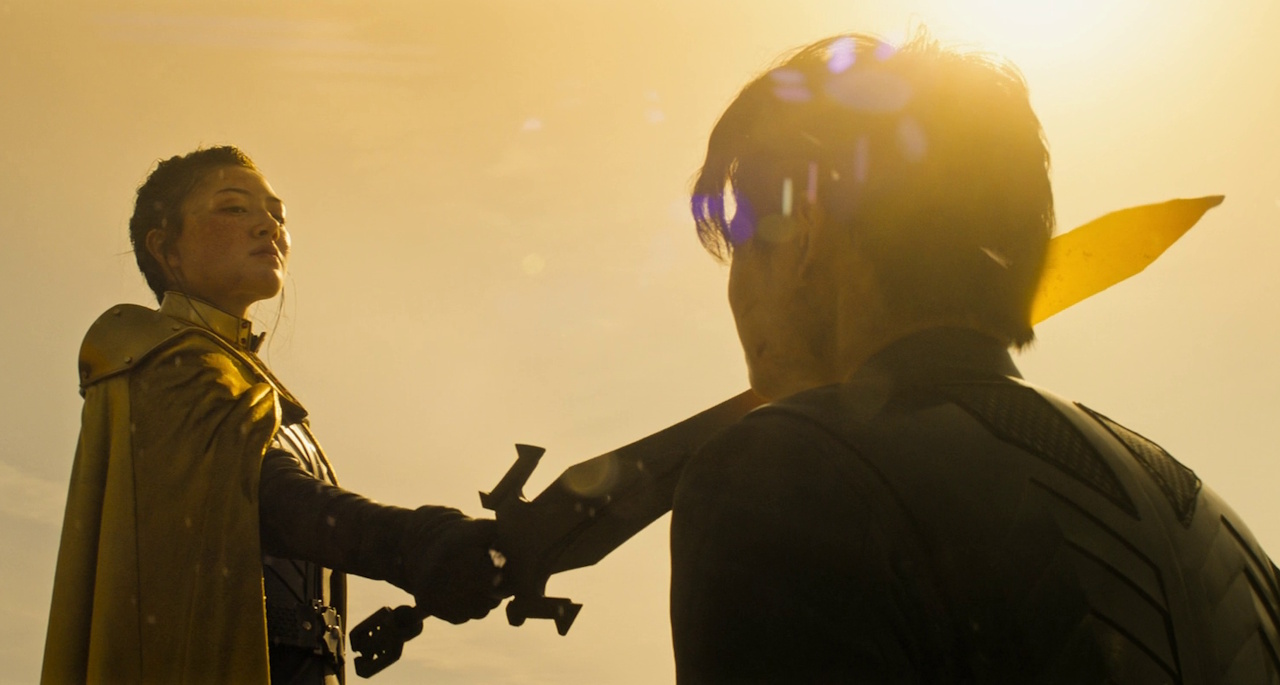
As far as Section 31 itself is concerned, we don’t see many crimes or atrocities committed by Georgiou on screen. There’s the murder of her family during the Jim Davidson’s Generation Game part of the prologue, and the way she deliberately scars San with a red hot sword. But we don’t get much context outside of Control’s briefing for her more massive crimes: slavery, genocide, and the like.
But viewers of Discovery – particularly the show’s first season – have seen at least some of those things. In one particularly gruesome sequence, Georgiou ate Kelpien meat – Kelpiens are sentient humanoids in Star Trek’s galaxy. We also learned of how she defeated the Klingons of the Mirror Universe – by destroying their planet and committing genocide against them. Georgiou kept slaves, tortured people for fun, and we saw more than just glimpses of the extent of her tyranny. So… is a character like that possibly redeemable? Can we ignore that context and go on a fun, silly romp with Georgiou and her new crew?
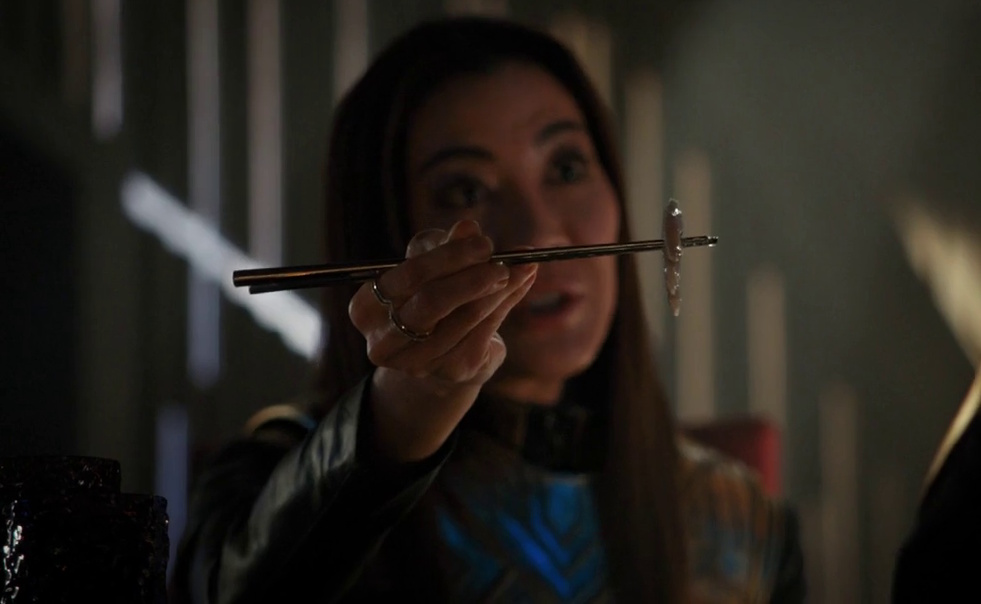
This was always a hurdle that Section 31 had to find a way to surmount, but perhaps condensing the story – and Georgiou’s arc in particular – into a single film instead of playing out over the span of a dozen or more episodes kind of highlights it for me. If we take this version of Georgiou out of context, then yeah, as I said at the beginning: Section 31 is a big, dumb action film that makes for entertaining enough popcorn fare. But knowing what we know of Georgiou and having seen her at her worst… it raises the question of whether redemption for this character is something we should even want, let alone whether it’s possible.
And I don’t really know what the answer to that question is, to be honest with you. I can separate Section 31 from the rest of Star Trek pretty easily, and taken on its own, I think Georgiou’s story works well enough. She’s anchored more to San than to the crimes and genocides of the Terran Empire – which, while mentioned more than once, feel relatively distant. And her arc brings her back to San as she confronts the super-weapon she commissioned during her reign. But the more I think about it, and the more I reflect on Georgiou’s time as Emperor that we saw parts of in Discovery… the more uncomfortable I feel, and the less confident I am that a spin-off focusing on this character was the right call. It’s the Palpatine problem: could a Palpatine redemption movie, padded out with wacky side-characters, work in Star Wars? Or would fans feel his redemption was a bridge too far?
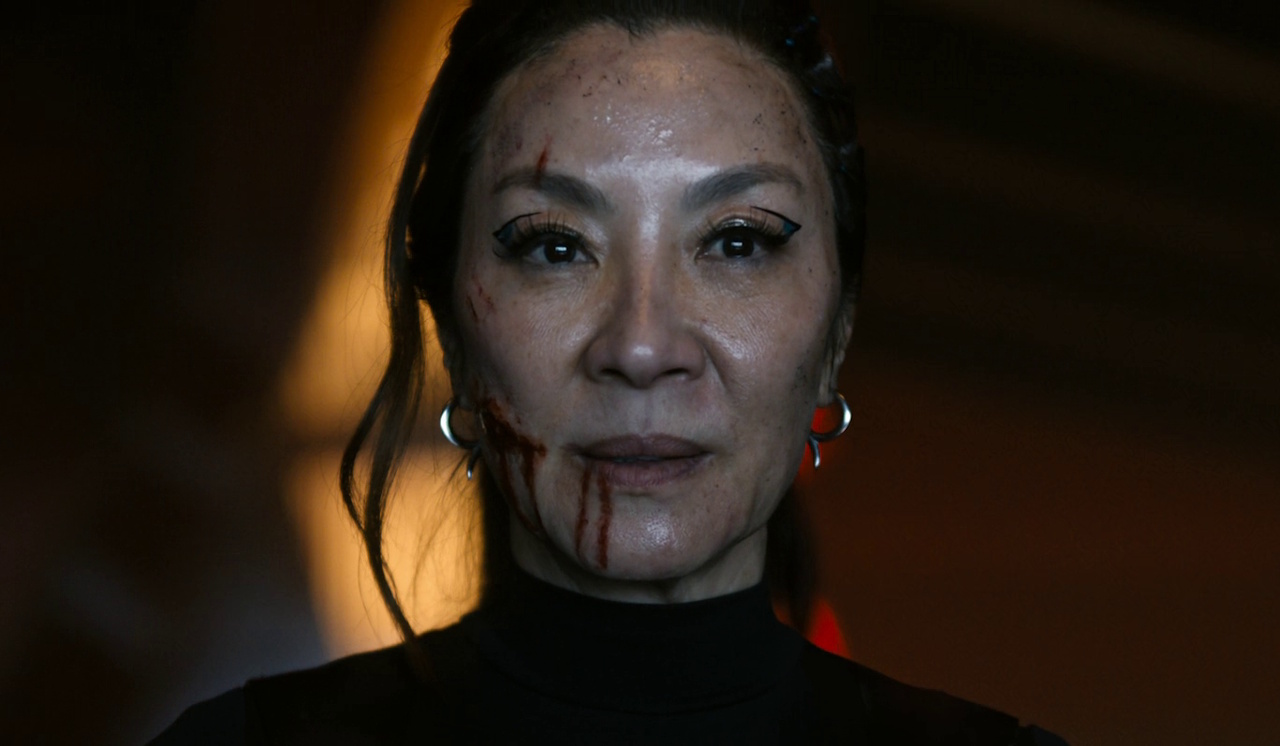
Speaking of wacky side-characters… I have some thoughts on Section 31′s roster!
Obviously we have to keep in mind that Section 31 was originally pitched as a TV series – one that could, in theory, have run for multiple seasons. Several of these characters had potential in that kind of format… potential that was, unfortunately, squandered in a single film. Melle stands out as perhaps the most obvious of these, though given modern Star Trek’s tendency to “Flanderise” characters and whole alien races, I wasn’t particularly wild about seeing what the writers might’ve done with the famously hyper-sexual Deltans. We caught a glimpse of that before Melle was unceremoniously killed off, and that was more than enough for me.
Zeph also feels like wasted potential, though at least he stuck around a little longer and found time to deliver a couple of funny lines. Robert Kazinsky, who played the role, did a great job, and in the pre-release interviews on the publicity circuit for the film he seemed to be genuine and passionate about Star Trek. Obviously Zeph won’t be returning, but I’d like to think Kazinsky could one day.
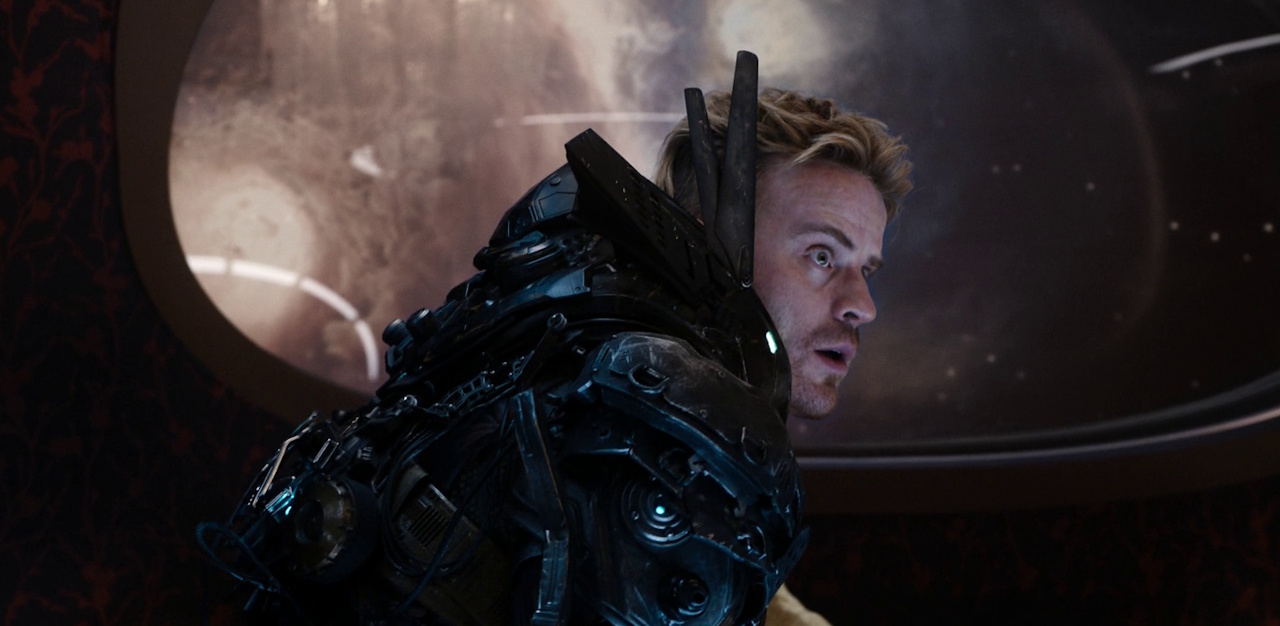
I would’ve liked to have learned a bit more about Zeph’s mechanical suit. The suit was really there to serve a narrative function: it enabled Fuzz to remain undetected as the “mole” for a little longer. But given that this kind of armour or tool is rare in Star Trek, learning a bit more about how it works and why someone would choose to use it would’ve been fun. Again, this is the kind of thing I’d expect a longer series to have found time for – but obviously there wasn’t that possibility in a single film.
Although I wasn’t expecting it, I held out a dim hope that we might’ve learned a little more about Quasi’s people – the Chameloids. Aside from a single appearance in The Undiscovered Country, this race of shape-shifters is completely unexplored. I liked the visual effect used when Quasi switched between forms, as well as the line about no one knowing a Chameloid’s true appearance. That differentiates the Chameloids from the likes of the Founders, whose liquid form has been seen many times across Deep Space Nine’s run.
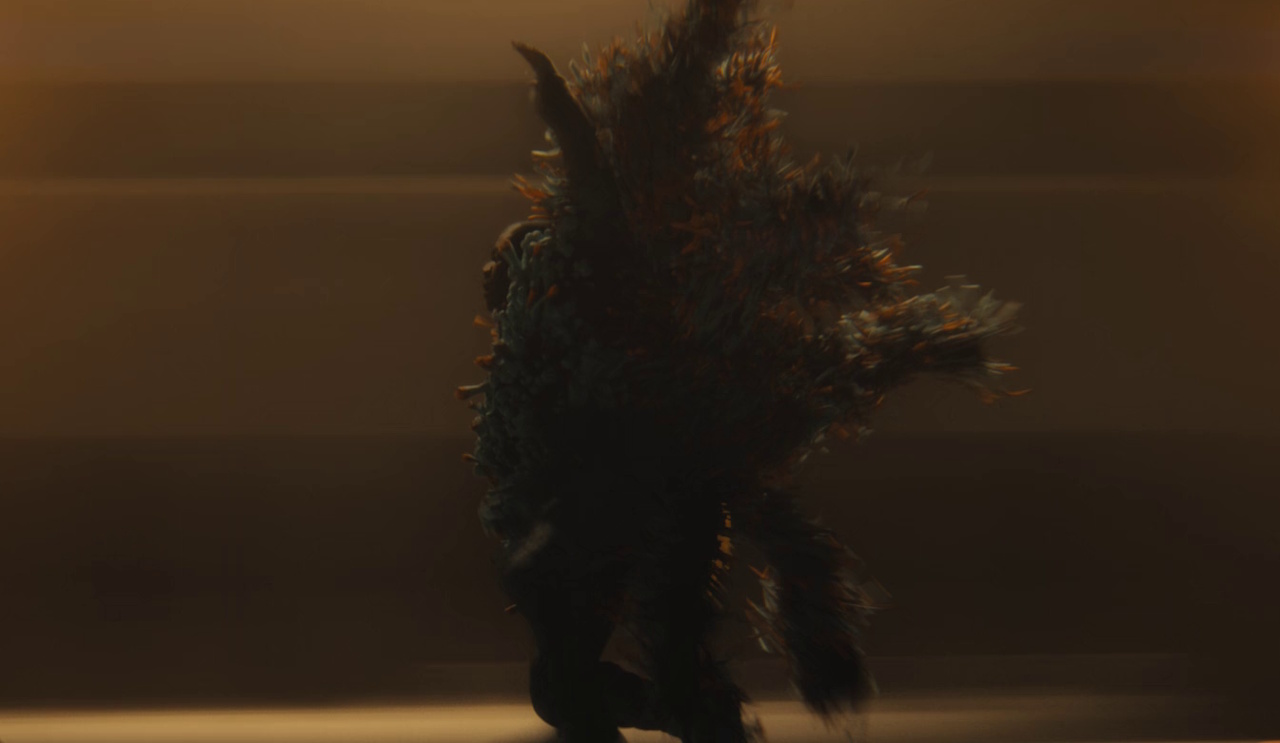
Quasi himself, though, was a bit of a non-entity for me. Sam Richardson put in a stellar performance with the material he had to work with, but I just didn’t really feel much of anything for the character. Quasi’s scientific prowess was mentioned a few times, but never really came to the fore in a big way – that role ultimately fell to Garrett at the film’s climax. Quasi was just sort of… there. A presence, but not an especially memorable one.
One thing Star Trek hasn’t always been great at is depicting very “alien-feeling” alien races. Most Star Trek aliens are in the “forehead or nose” brigade; humanoids with prosthetic noses or foreheads to represent different races. With that in mind, the Nanokins – Fuzz’s race – felt like something new and genuinely unique. Sure, the Nanokins aren’t the first non-humanoid race we’ve ever seen, nor even the first microscopic race, either, but it was a fun and unexpected direction for the film to take.
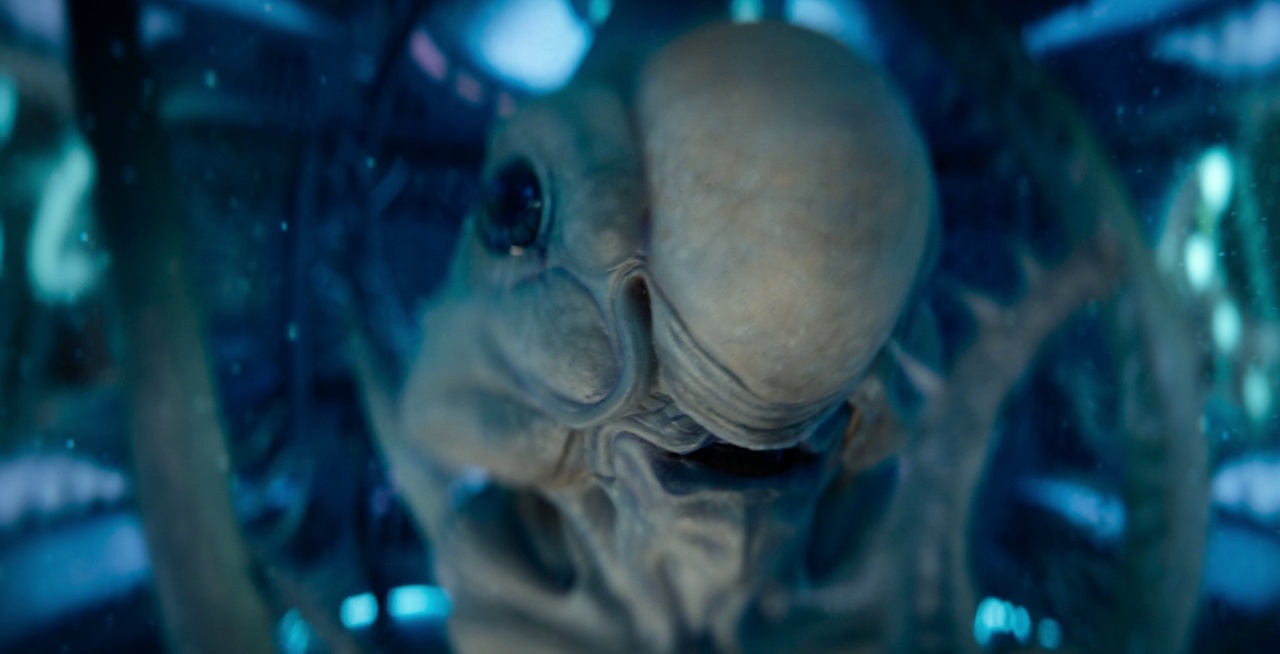
On the flip side, Fuzz’s small stature combined with his eccentric personality made him stand out – and, unfortunately, I don’t really mean that as a positive. Rather than coming across as wacky and funny, almost from the first moment he just felt… odd. When the group decided (a little too quickly and without considering any other options) that there was a traitor in their midst, Fuzz was the obvious candidate. In fact, he was pretty much the only candidate.
Think about it: the mole obviously isn’t Georgiou, and it wasn’t going to be Sahar, the team leader. Zeph is an adorable idiot, but he clearly didn’t have the intellect or the motivation to betray the group. It wouldn’t be Starfleet officer Garrett, either – if for no other reason than we know her career would continue for decades after this moment. That only left Quasi, the shapeshifter, and Fuzz. Quasi was a character that we hadn’t really gotten to know at this point in the story, outside of a barebones introduction, and what we had seen of him showed him to be passionate about his work and friendly. So there really was only one serious contender for the mole – or at least it seemed that way to me!
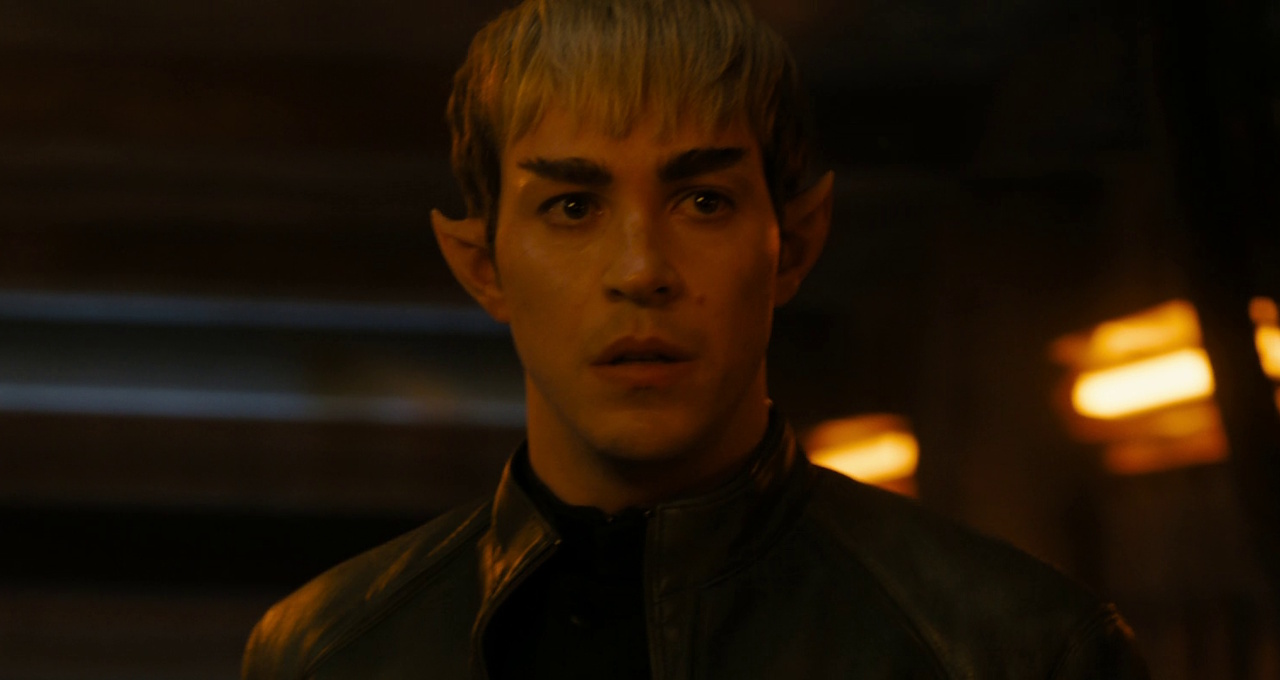
Section 31 already had a pretty basic story: rag-tag team of misfits have to stop the villain from using the magical macguffin or it’s going to destroy the galaxy. Not only is that the plot of countless sci-fi movies, it’s also pretty similar to the Star Trek franchise’s recent output – see Picard, Prodigy, and Discovery for that. So when the few opportunities for a plot twist or a subversive moment come along… they really ought to be handled a bit better and not telegraphed so far in advance. Fuzz’s villainous turn, as well as San’s survival and reappearance, were both treated in the story as if they were massive shocking twists… but they weren’t.
As above with San, part of what makes moments like this impactful is how the characters respond. And even though a plot point may seem obvious, a strong emotional reaction can make even the most impotent narrative beat feel better. We got some of that with San and Georgiou, but arguably less of it with Fuzz and Sahar.
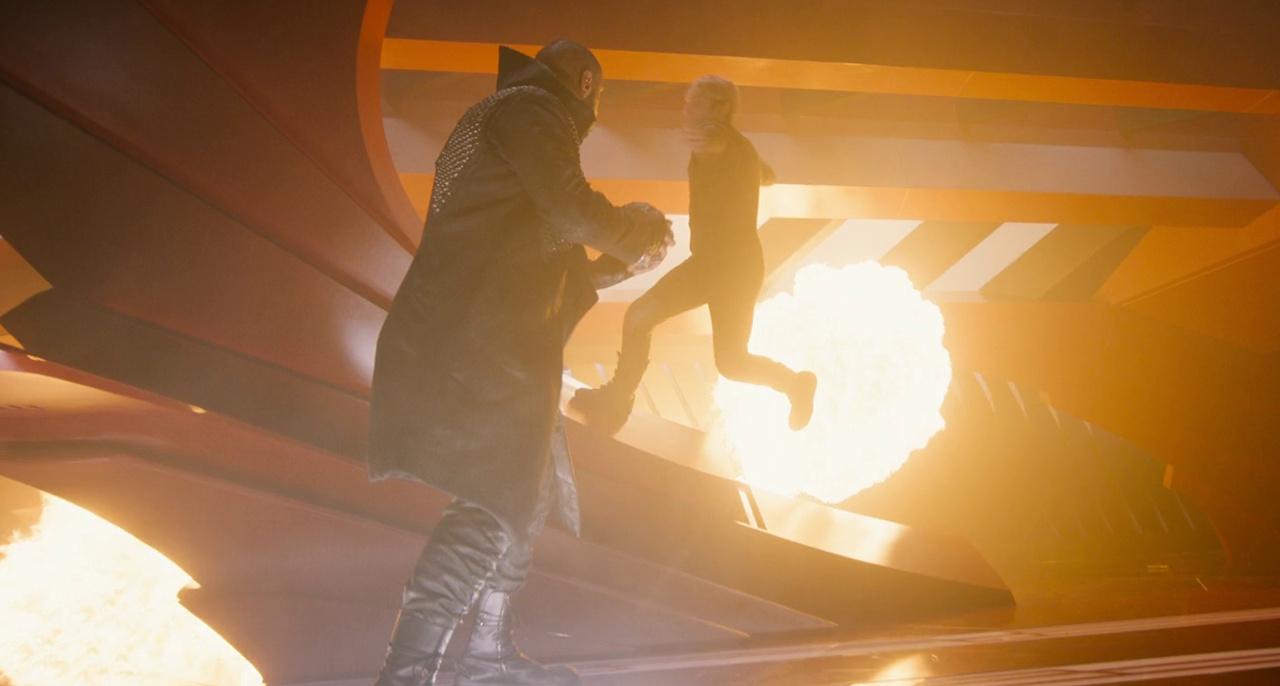
Again, I feel the ramifications of a full season or multi-episode arc being condensed and cut down. Had we met Fuzz earlier, or had a flashback to his first meeting with Sahar – like we got in the prologue with San and Georgiou – maybe there’d have been more of a foundation to build on, making the revelation of his betrayal feel more impactful. Without some of that context, and not having spent very much time with Sahar, Fuzz, or really any of the others, the betrayal didn’t feel as powerful as the film’s writers wanted it to. It’s simply one more slightly chaotic element in an already chaotic, fast-paced film. It wasn’t bad per se, it just didn’t have much weight to it.
The same is true of Melle’s death – though I’d argue this was at least a genuine shock in the moment. Melle had been introduced to us moments earlier and seemed like she was going to be a big part of the team… but she died relatively early in the film, having delivered only a couple of lines and without contributing to the story in any way. Perhaps this is because I’d been paying attention to the film’s marketing campaign – in which Melle’s actress, Humberly González, was featured – but I expected her to be a bigger part of the story. In that sense, her early death was certainly a shock.
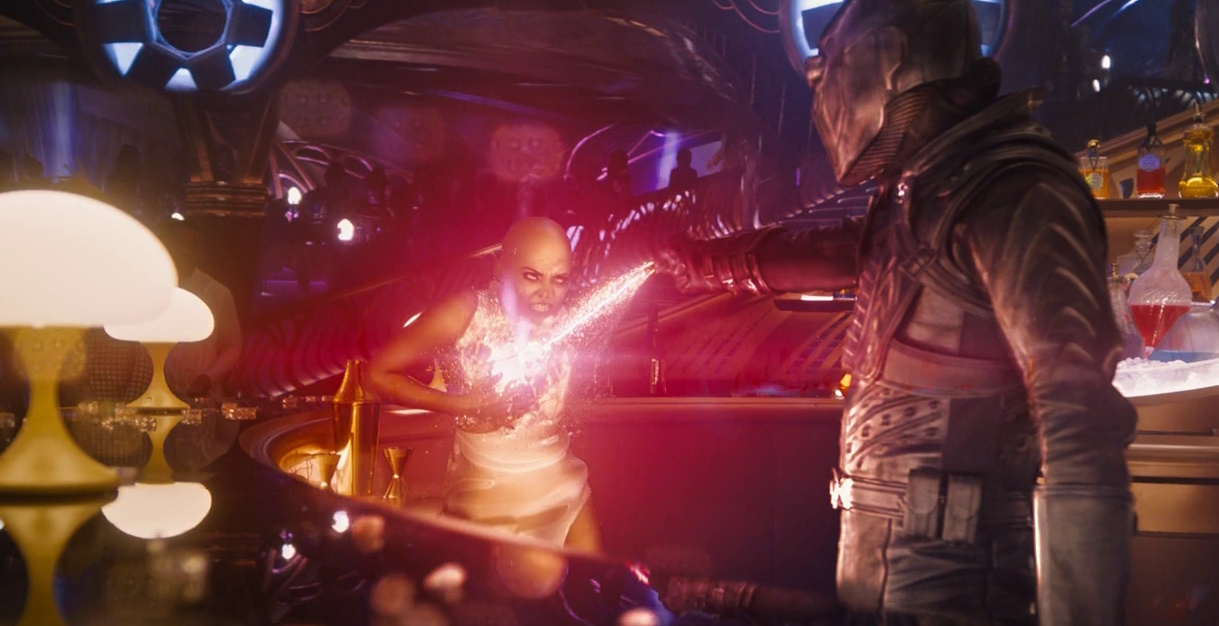
It’s worth noting, by the way, that this is the second film in which a Deltan has been a main character. It’s also the second film in which the Deltan character has been killed off at an early stage – and the second time where a television series pitch being condensed down to fit the runtime of a single film is the reason why! If you’re familiar with the early production history of The Motion Picture, you’ll know it was originally pitched as Phase II – a new Star Trek television series. Ilia, the first Deltan seen in Star Trek, was originally intended to be a main character on the show, but when the series was adapted into a feature film, Ilia was killed off.
Okay, random trivia over – let’s get back to the review!
Sahar was perhaps the most fleshed-out of the Section 31 characters. We got to learn a little of his backstory – he’s a veteran of the Eugenics Wars, and survived to the 23rd Century in stasis. This story obviously harkened back to Khan’s in Space Seed, and I’m a little surprised that Khan wasn’t name-dropped at this point. That’s not to say it would’ve improved the story – but given how little time we spent talking about Sahar’s past and his Augment tormentor, it wouldn’t have really changed much, either.
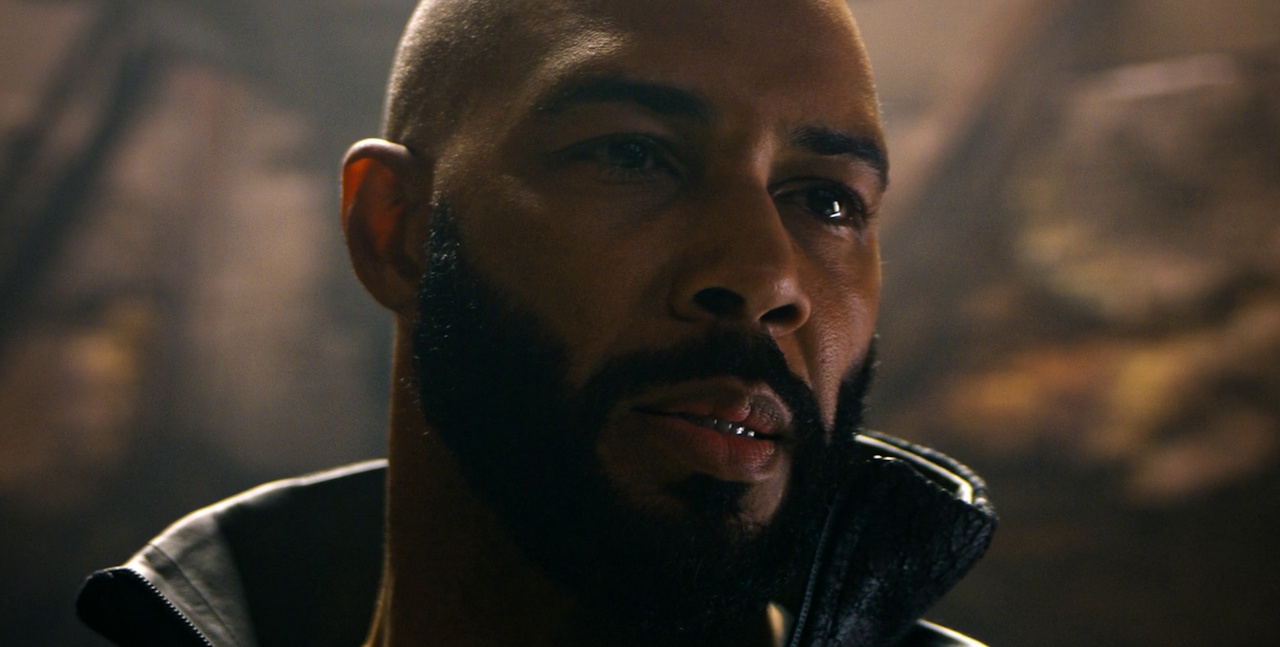
Sahar is, yet again, a character who’s suffering as a result of Section 31 being crushed down from a full TV show to a film. I have to imagine that, if the original TV series had gone ahead, this revelation about his history would’ve come further into the story, and probably would’ve been the subject of a secondary storyline if not an entire episode. I found what we got to be interesting – enough to pique my curiosity and to give Sahar more than just a generic background. But at the same time, Section 31 didn’t really do a lot with the revelation of his augmentations or his 20th Century origin. With a sequel almost certainly not happening, I doubt Sahar will be revisited, leaving this interesting background feeling rather underdeveloped.
Having nitpicked Section 31 seemingly to the brink of death – from its confusing place in the timeline to the status of the Terran Empire, and whether Georgiou’s redemption arc was repetitive, possible, or neither – how can I sit here and say that I didn’t dislike it? That’s a fair question, right? Because the truth is that, for what it is, Section 31 is fine. It’s not gonna win any awards, and I can see some Trekkies absolutely despising it (particularly folks who didn’t like Discovery and the Kelvin films), but speaking for myself… I can’t say I didn’t enjoy Section 31 on its own terms as a standalone film.

Photo Credit: IMDB
If the intention was to create a competitor to The Wrath of Khan or First Contact for the title of “best Star Trek film,” then obviously Section 31 doesn’t succeed. It’s narratively, structurally, and even visually weaker than those illustrious titles. And as a “first contact” – a new and easy way for viewers to get started with a complicated franchise – well, I don’t think it achieves that objective either.
But there is a place in entertainment – and, I would argue, in the Star Trek franchise, too – for the kind of action-heavy story that you don’t need to think too hard about. And that’s how I see the film, at the end of the day. It’s basically a B-movie, putting together a bog-standard story centred around a single familiar character, cropping out a lot of the visual and narrative hallmarks of Star Trek. I don’t think it’s really a Star Trek film in that sense; it’s an action film trying to dress itself up in a Star Trek outfit. But I don’t hate that, and with such a cookie-cutter plot and some over-the-top characters, it’s hard to really complain about Section 31 once you open your eyes to what it is.
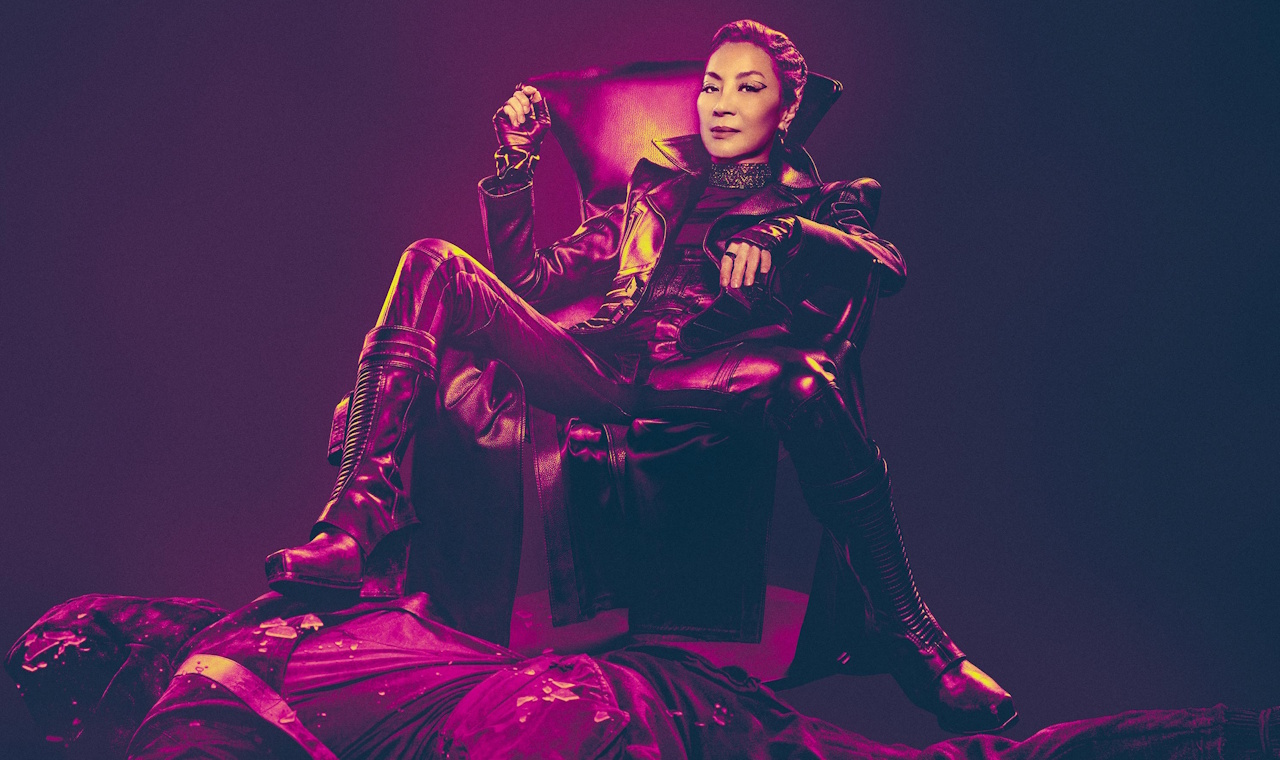
That doesn’t mean that I don’t think Paramount can and should do more with Star Trek. There’s a version of Section 31 floating around out there, somewhere, that’s significantly better, has a stronger plot, and genuinely succeeds at bringing in new fans. This version is a cynical attempt to cash in on Michelle Yeoh’s name while she’s still a box office draw. It’s also a cheap way to recycle some of the work that had already been done on the original Section 31 TV series – which officially entered pre-production almost six years ago. Recouping some of that initial investment seems to have been a priority for Paramount, otherwise I have to believe that a story and a cast of characters better-suited to a single one-off film could have been written.
But I don’t hate action-heavy B-movies, and as soon as I realised that’s what I was watching, I just kind of… went with it. The film genuinely seemed to fly by, which is something that doesn’t happen for me if I’m not having at least somewhat of a nice time! I was actually quite surprised when I glanced down at the time and realised I was already halfway through. Section 31 kept my interest, kept me entertained, and as the credits rolled I can honestly say that I wasn’t disappointed in the film or the story I’d seen unfold. I didn’t love it, and I’m not in a mad rush to re-watch it. But there’s definitely a place for a project like this in an expanded Star Trek franchise.
There absolutely were weaknesses in the story that prevent Section 31 from being a top-tier film. And if I spend too long thinking about Georgiou, her pretty regressive and repetitive character arc, the film’s confusing time period, the status of the Terran Empire, and more… yeah. I can understand why a Trekkie would feel disappointed with some of those things. But Section 31 feels, to me, like the kind of film that you really shouldn’t spend too long thinking about. It’s Star Trek’s version of, say, Transformers or The Fast and Furious insofar as it has a basic plot, plenty of mindless action, some quirky characters, and a smattering of amusing dialogue. I don’t know about you, but I’m okay with a film like that.
The flip side, of course, is that Paramount spent a decent amount of money on Section 31 – so to churn out a film so “mid” after working on this project since 2018… that’s not great. And for the Star Trek franchise, a film that ultimately underwhelms and will probably not do great numbers for Paramount+ could ultimately prove damaging. There may be some in the Paramount or Skydance boardrooms who look at the reception to Section 31, and the numbers of subscribers it pulls in, and feel disappointed. That could prove detrimental to Star Trek’s future prospects, whether we’re talking about a new feature film, another made-for-TV movie, or a brand-new series. That isn’t what I hoped for heading into Section 31.
As I said last time, it’s hard not to recommend the film to fans of Star Trek: Discovery and existing subscribers to Paramount+ in particular. But I don’t think it’s going to win the Star Trek franchise a lot of new fans, nor will it convert haters of “nu-Trek.” I’m also concerned that, if it does ultimately prove a disappointment for Paramount in financial and subscriber terms, there might be less willingness to commit to more one-off stories, made-for-TV movies, and streaming projects in the future.
But for my part, despite its issues and narrative flaws, I enjoyed Section 31 for what it was. Taken on its own terms, and trying not to think too hard about some of the broader implications of its story for the Star Trek universe… it’s fine. It’s an action film with the loosest of ties to Star Trek, existing off to one side in its own little box. There’s definitely a place for projects like that in the franchise, and I’m sure I’ll revisit Section 31 in the future.
Stay tuned, because I have a couple of other pieces in the pipeline connected to Section 31! I’m planning to write up a few suggestions for potential new fans who are just getting started with Star Trek, offering some suggestions for episodes and films to turn to next. And I’m also planning to re-do my Star Trek films ranked list to add Section 31. I might even do it using the internet-friendly tier list format! So I hope you’ll join me for that – and plenty more coverage of the Star Trek franchise. I’ve still got a couple of episodes of Strange New Worlds to watch before Season 3 premieres!
Until then, I hope this has been interesting. I’m going to check out some other reviews of the film from professional critics and Star Trek fans to see if my impressions of Section 31 are shared more widely!
Live Long and Prosper!
Star Trek: Section 31 is available to stream now on Paramount+ in countries and territories where the platform is available. The Star Trek franchise – including Section 31, Discovery, and all other properties discussed above – is the copyright of Paramount Global. This article contains the thoughts and opinions of one person only and is not intended to cause any offence.
 Trekking with Dennis