

I did something I never usually do: I pre-ordered a game. Violating yet another of my own game-buying rules, I paid extra for the “founder’s edition,” which – among other things – granted me access to Civilization VII on its actual release date instead of five days later. Do I detest myself for succumbing to that? Just a little. Was it worth the £120 (that I put on the credit card and plan to spread over a few months)? Well… read on to find out, I guess.
This piece is my “first impressions” of Civilization VII, and I suppose I should first define that term so we’re all on the same page! A game as massive and varied as Civilization VII will take days – weeks, even – to fully get a handle on. Having only played the game for around six hours (split into two sessions) and completed a single game, I can’t in good conscience call this a “review.” I’ve had an opportunity to jump in, played around with some of the settings, and completed what was basically a tutorial game. That’s enough to give me a taste of a game this massive, but not enough for an article that I could reasonably title a “review.” So in this piece I’m going to share my immediate thoughts and feelings about the game – and later in the year, perhaps when there have been one or two updates, patches, and pieces of additional content, I’ll return and share some further thoughts.

If that’s not what you’re looking for, that’s totally okay. I won’t be offended if you jump out and read someone else’s review instead! But if you like the sound of what I’m doing today, I hope you’ll read on.
For some context, I came late to the Civilization series. I think I played either the first game in the series or Civilization II in the mid-1990s, but only briefly on a friend’s computer. When I started getting into strategy games around that time, it was real-time strategy titles like Command and Conquer, Red Alert, and Age of Empires that I enjoyed the most. Turn-based strategy didn’t hold much appeal to me… not until Civilization VI came along twenty years later!
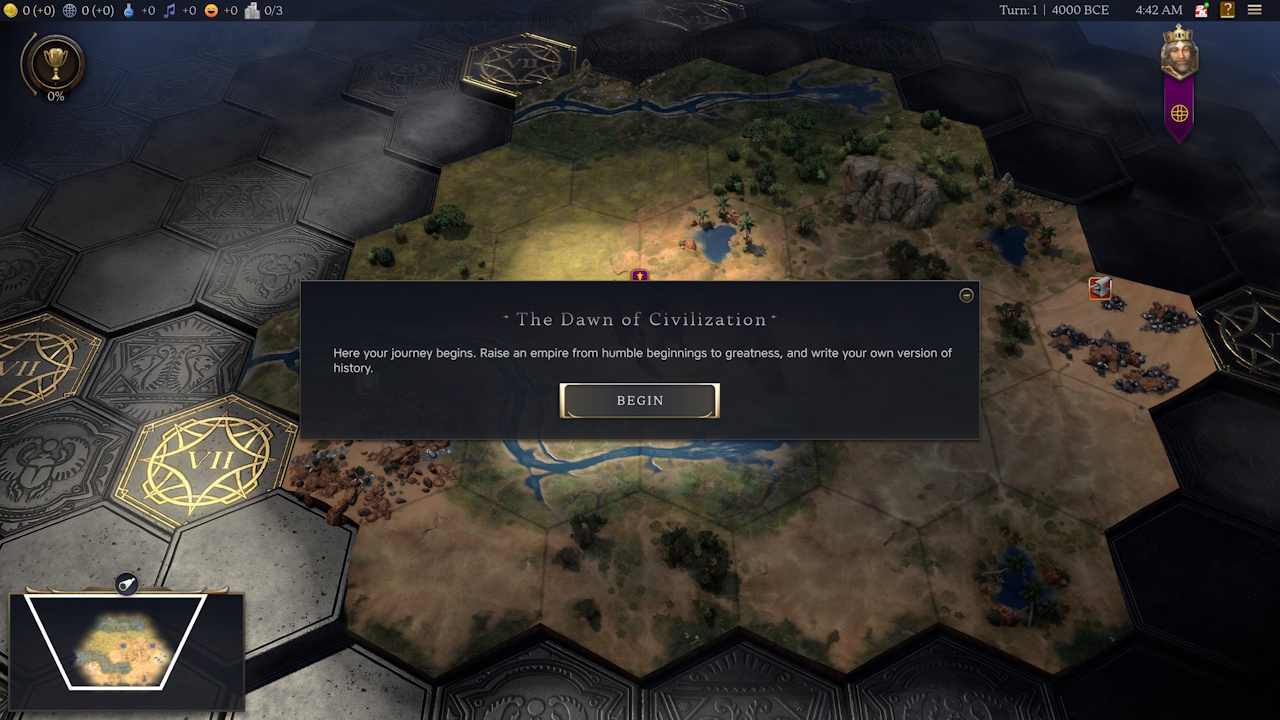
I’ve sunk well over 1,000 hours into Civilization VI since it launched in 2016, and it quickly became one of my favourite strategy titles of all-time. I’ve bought every single piece of DLC for it, played a bunch of scenarios and special campaigns, and I’ve had an absolute blast. When Civilization VII was announced last year, it shot right to the top of my “must-play” list, leading to me pre-ordering it so I could pre-install it and play it as soon as it was available! There are very, very few games for which I’d break my “never pre-order or pay for expensive premium editions” rules – so I hope Sid Meier, Firaxis, and Take-Two are especially grateful today!
If you just want the headline, I’ll say this: Civilization VII is already a lot of fun, and I only encountered one bug in my first six hours of playing. However, there are missing features that have been part of the series going all the way back, paywalling content at launch – including entire civilizations and leaders – is pretty scummy, and while the base game feels solid… it’s incomplete. There will undoubtedly be DLC packs over the next few months and years that add in a lot of the missing content and features, but all that will do is push up the price of a game that I’ve already paid a lot of money for. If you’re a Civilization VI fan ready to move on to a new challenge, Civilization VII feels like a no-brainer, and just getting started with the game and understanding all of the changes will take time. But if you’re brand-new to the series and looking to get started with a game that’s already complete… pick up the complete edition of Civilization VI when it’s on sale!
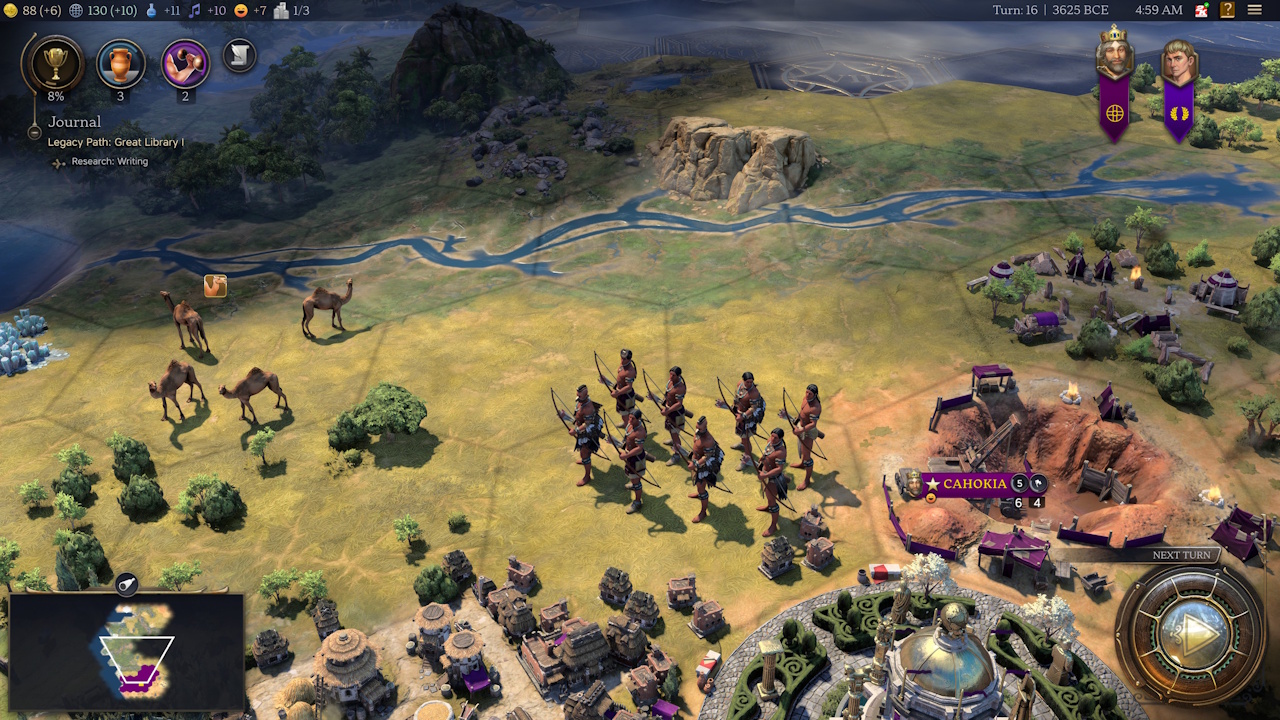
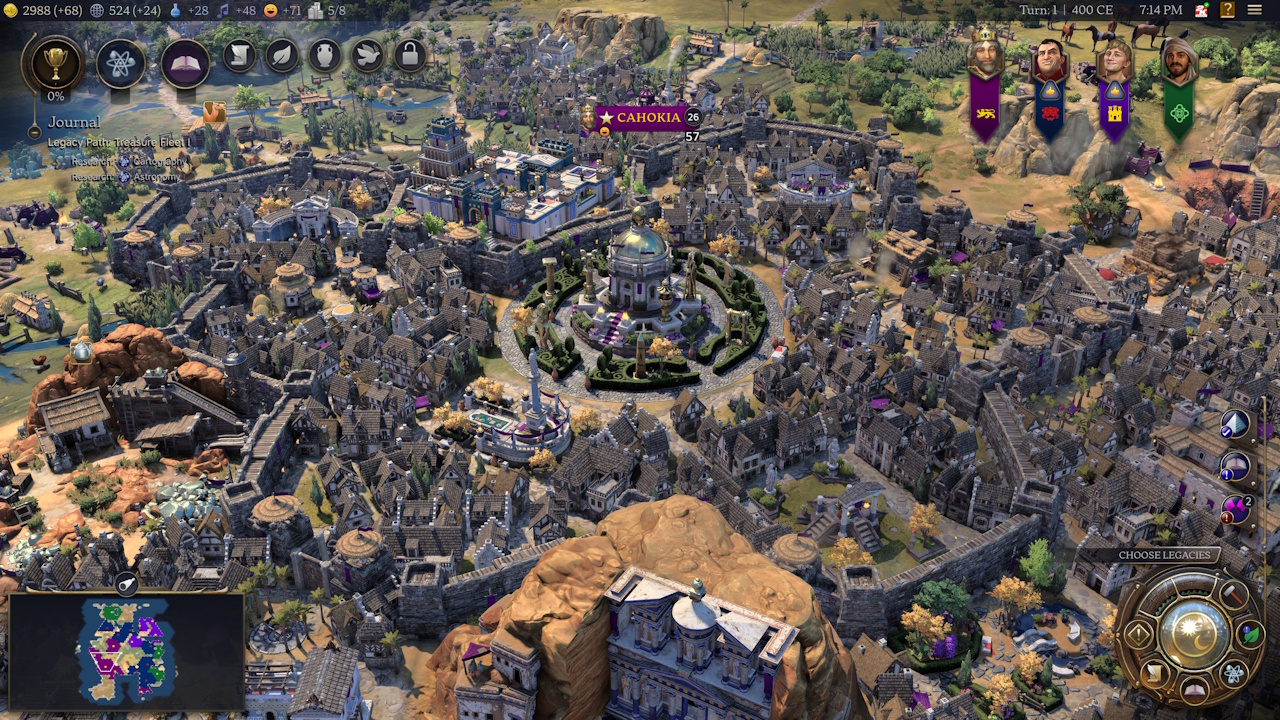
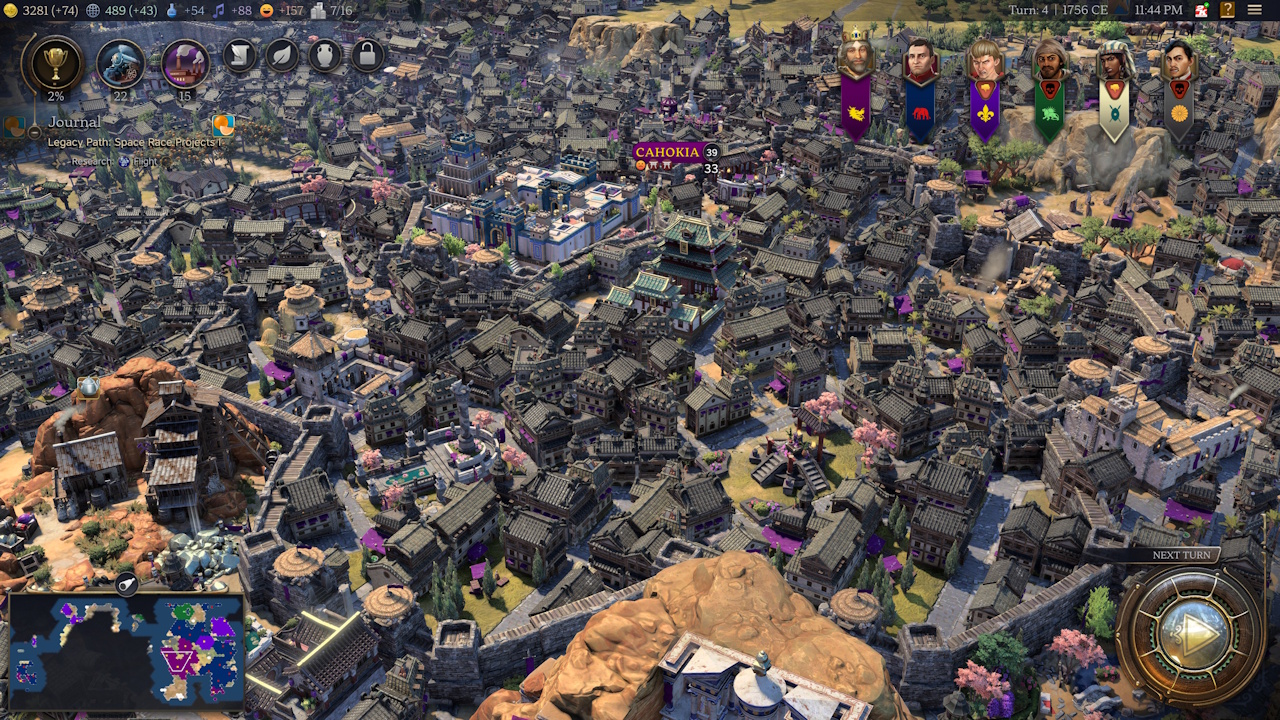
Visually, Civilization VII is stunning. I was surprised to see just how graphically impressive the game is considering its relatively small install size (Civilization VII takes up about 15GB of disc space) and that it’s a game that also has to function on the Nintendo Switch. I played the PC version, just so you’re aware of that. Units all have smooth animations for movement and combat, and there’s a ton of variety in the way units and buildings look depending on what era you’re in and which faction you’re playing as. There also seem to be more unique military units – each of the three civs I played as had at least one, which is noticeable coming from Civilization VI.
Environments look stunning, too. Mountains, deserts, and grassland all looked great – but where I was most impressed was in looking at coastal waters, rivers, and forests. These places feel genuinely alive in a way that they just didn’t in Civilization VI, and sending a unit marching into dense jungle or forest had a different feel to it as a result. Water looks great in the game, too, which is something some titles can struggle with. And the addition of navigable rivers adds a whole new challenge to exploration and combat.
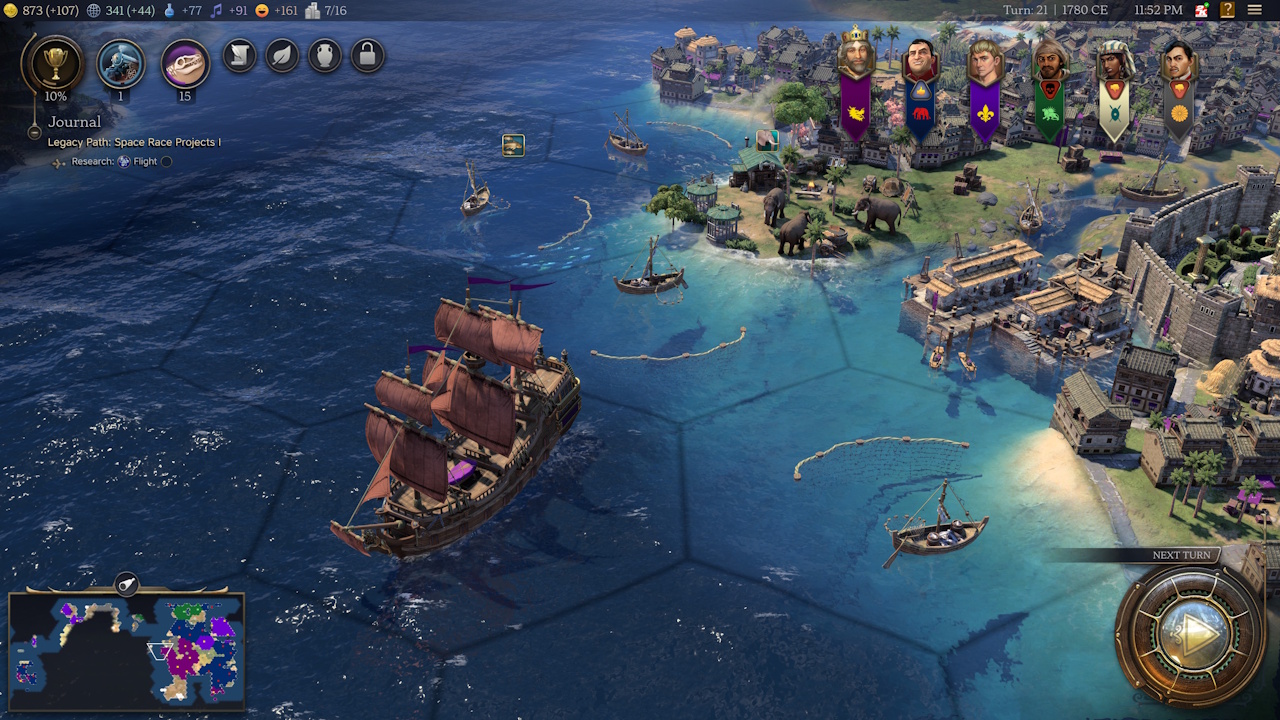
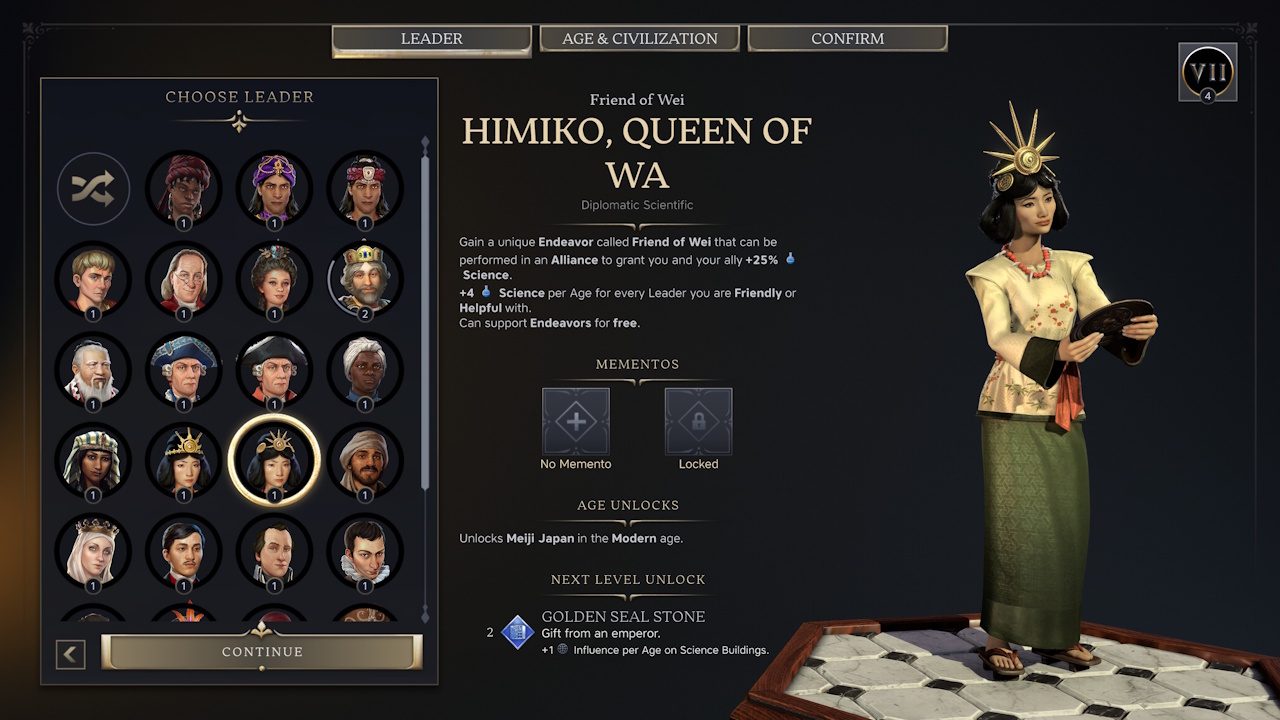
Let’s talk about Civilization VII’s biggest and most-discussed new feature: choosing leaders and factions separately from one another. This was a big part of the game’s marketing and one of the main ways Civilization VII stands apart not only from Civ VI but from other entries in the series, too. This isn’t a totally unique thing to Civilization VII, as choosing a new faction in each era was also a big part of the turn-based strategy game Humankind a couple of years ago – and I think that’s worth keeping in mind. But as to how it works in Civilization VII… I have to admit that I’m still on the fence.
On the surface, picking one leader and then being able to choose up to three different factions (one per age) as the game progresses is interesting. Not only that, but it means the number of potential combinations of leaders + civs is huge! Someone smarter than me will have to crunch the numbers on that, but if we assume new leaders and factions will be added periodically, the sheer variety on offer should mean that games never get old or feel repetitive. But is that really how it’s going to work?
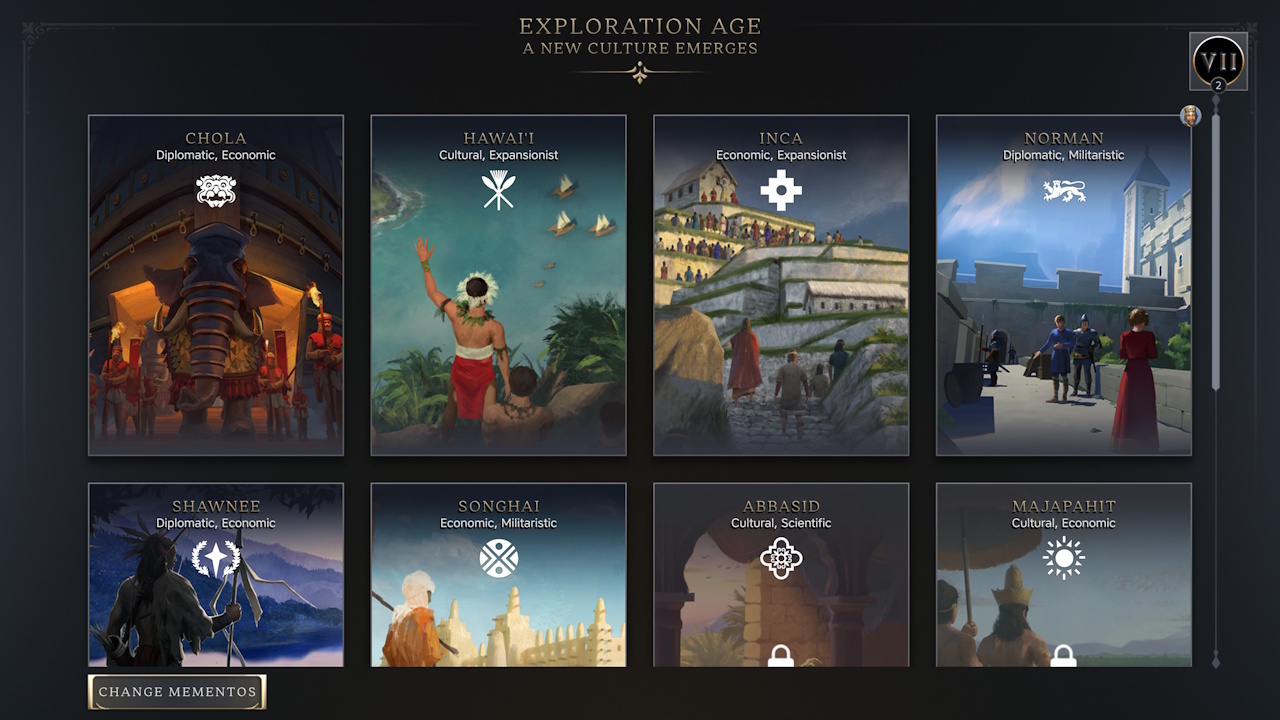
Two things. Firstly, it seems to me that, in order to make sure every combination of leader + faction is competitive or at least functionally playable, some of the most different – and outstanding – unique features have to be toned down. A faction like Civilization VI’s Polynesians – whose unique traits were that they started with a ship at sea and could navigate ocean tiles from the start of the game – could never work with Civ VII’s random leaders and heavy focus on the middle age being one of maritime exploration.
It’s also clear that the developers want to prevent players from accidentally screwing themselves over by picking a leader whose traits make them somehow incompatible with a particular civilisation, or whose bonuses would be completely useless. As another example from Civilization VI, Canadian leader Wilfrid Laurier is granted bonuses for building on snow and tundra, while the Brazilian civ gets bonuses from rainforest tiles – which don’t spawn anywhere near snow and tundra. In order to avoid these problems and counteract them, Civilization VII’s leader bonuses and civilisation-specific bonuses feel a little bit more restricted. That isn’t to say they’re bad, it’s just they’re arguably toned-down from what they might’ve been if leaders and civs were joined at the hip as in past titles.
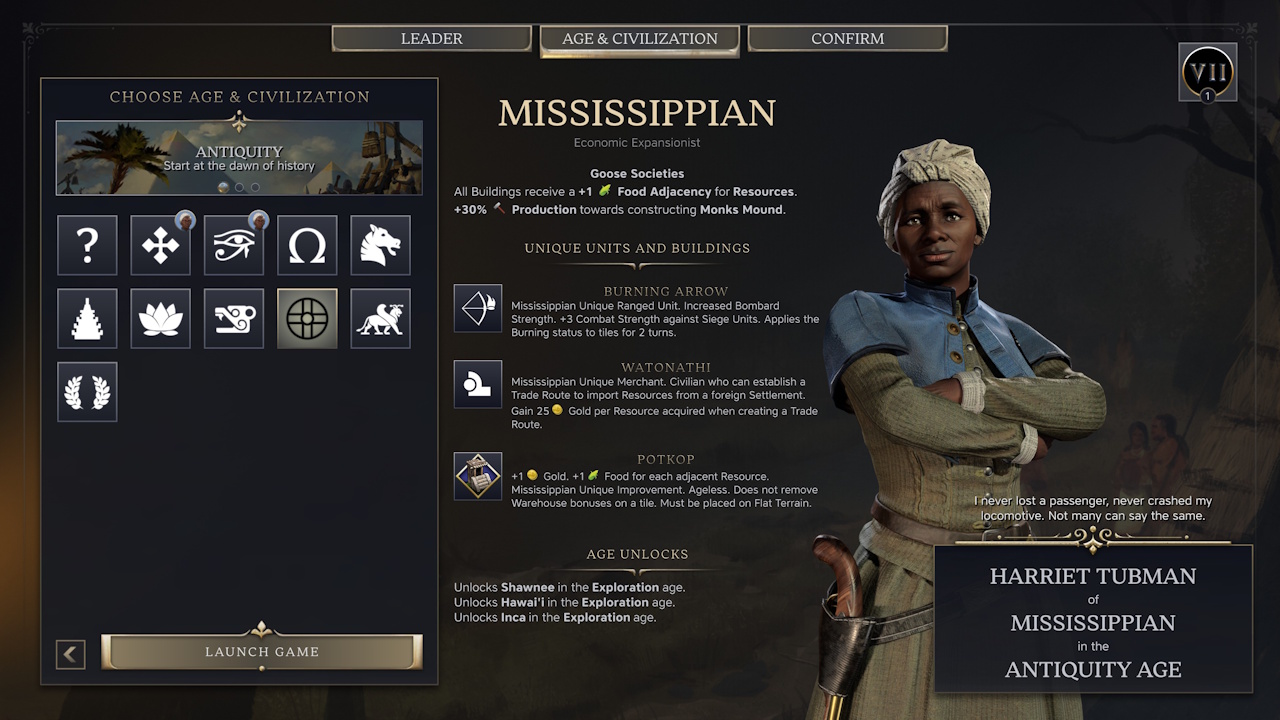
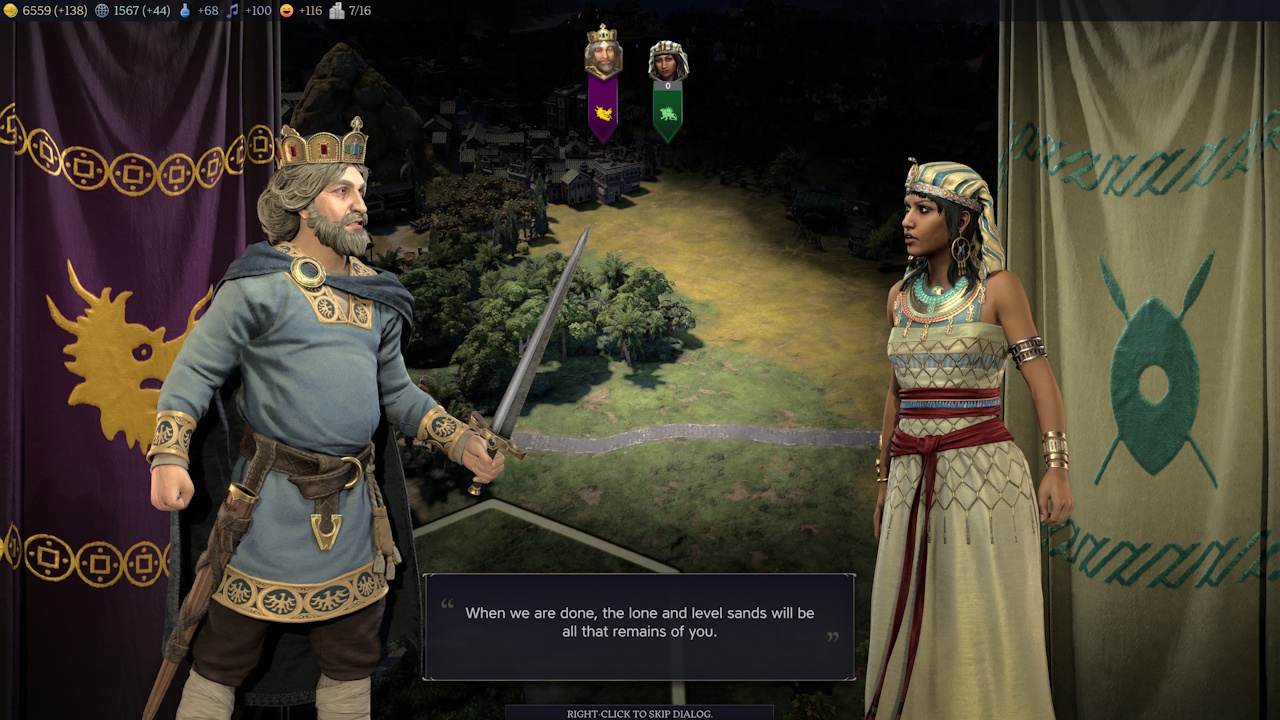
This isn’t always a comfortable topic, but the Civilization series – and many other historical and strategy games, too – come in for criticism sometimes for being historically inaccurate or insensitive. Because of the way it breaks leaders and factions apart, it’s possible in Civilization VII for Napoleon to take charge of Egypt or Harriet Tubman to lead Prussia. While Civilization VII veers away from any truly controversial picks (there’s no Hitler or Chairman Mao, for example) some of the combinations are odd at best. The AI, for its part, doesn’t seem to really care which leaders and civs it chooses, so expect some truly random ones if, like me, you mostly play against the computer.
For all the criticism of past Civilization games for being western-centric, not reflecting real history, and so on… at least they could claim to attempt to fictionalise real-world empires and historical factions. This disconnect between leader and civ is going to take some getting used to on my end – which is to be expected, I admit – but something about it also feels a bit… I don’t know. Uncomfortable in a sense, perhaps. Maybe it’s because I was a student of history (it’s the subject I studied at university) but something about breaking leaders and their civs apart is something I don’t feel thrilled about.
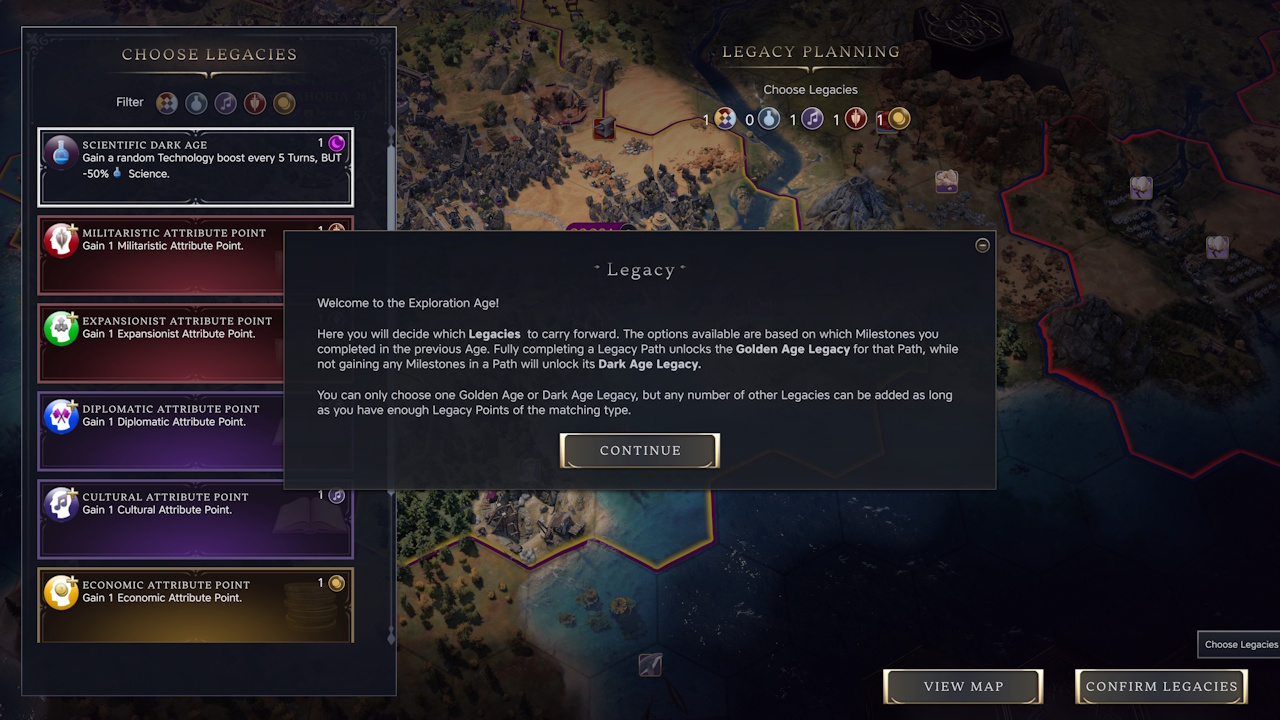
Mechanically, this separation also leads to one of Civilization VII’s biggest weaknesses: there are only three eras. In Civ VI, there were eight at launch, with a ninth added later. Not only that, but eras in that game were expanded to add “golden” and “dark” ages, giving new policies and other effects. There are a few “golden” and “dark” age elements in Civilization VII, but they don’t seem anywhere near as impactful. And to be fair, how could they be? If there are only three eras, who wants to spend at least one-third of the game in a dark age with all of the drawbacks that could bring? But to me, that highlights the difference between the two titles… and I’m not sure it’s an improvement.
What arguably is an improvement, though, is that every player in every age should be playing a civ with era-specific advantages. In Civilization VI, if you were playing a faction like Egypt, the majority of your bonuses and your only unique units were only any use in the early game. And if you played Germany or the United States, you’d have to wait until the late game to take advantage of your bonuses and unique advantages… if you could last that long. Civilization VII feels more balanced in that respect, with each civ having bonuses and advantages – based on real history – that make sense and work in their eras.
I was a little disappointed to see so few options when starting a new game. There are only a handful of map types – and they’re all pretty basic. As someone who prefers longer, slower games over short, fast-paced ones, there don’t seem to be a lot of options to play on a “massive” map over a longer time frame, which is also a bit of a letdown. Most leaders and factions are also locked until certain gameplay requirements are met to unlock them… which might be fun for you if you like the challenge that comes with unlocking things. For me, I’d usually rather everyone was available to play straight away, with those challenges and unlocks saved for things like achievements.
I’m also disappointed that, for some reason, it isn’t possible to re-name cities and towns. This is something I always like doing in any strategy game, and it was possible in Civ VI so I have no idea why it hasn’t been implemented here. There’s a petition on the Civilization forums to add city re-naming to Civilization VII, so I have to imagine it will be implemented sooner or later, but why couldn’t it be part of the game at launch? That doesn’t make a lot of sense to me.
While we’re nitpicking and talking about relatively small things: why can’t I quit to the desktop from the in-game pause menu? That was possible in Civilization VI, and it’s silly to force me to go back to the menu only to have to quit to the desktop from there. A minor annoyance, sure, but a pretty basic thing to resolve that someone should’ve picked up on before Civilization VII launched!
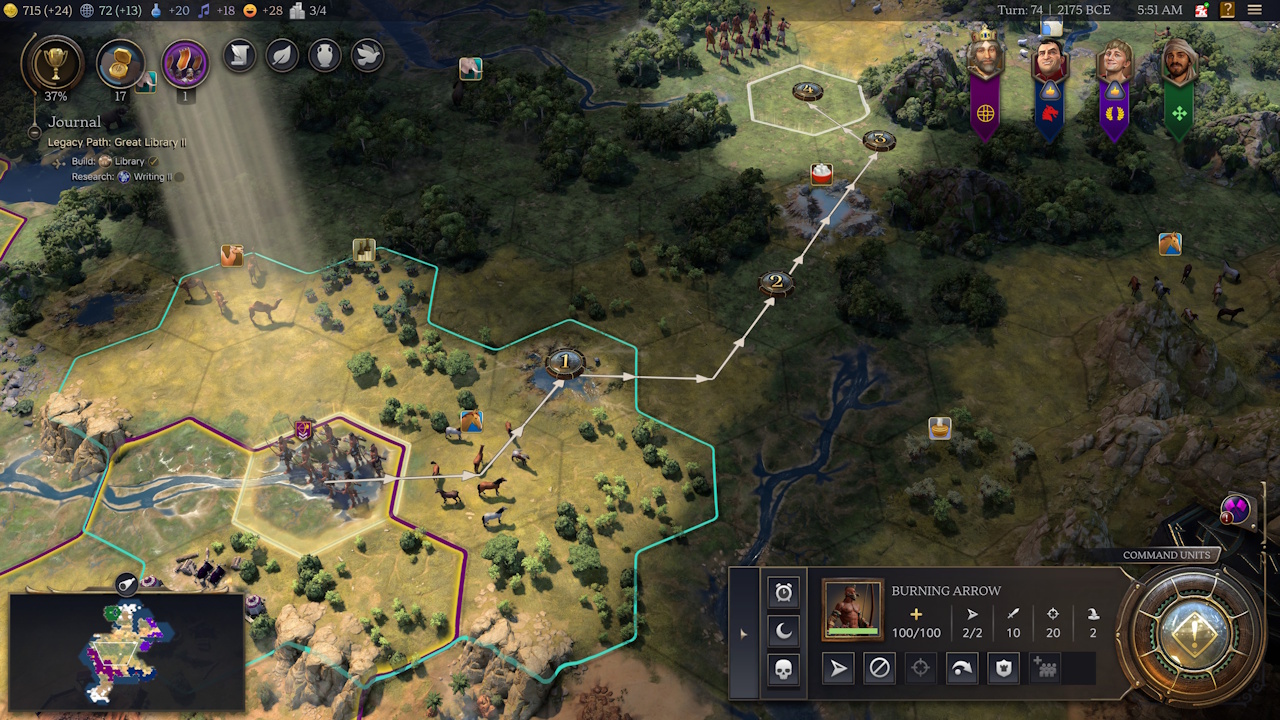
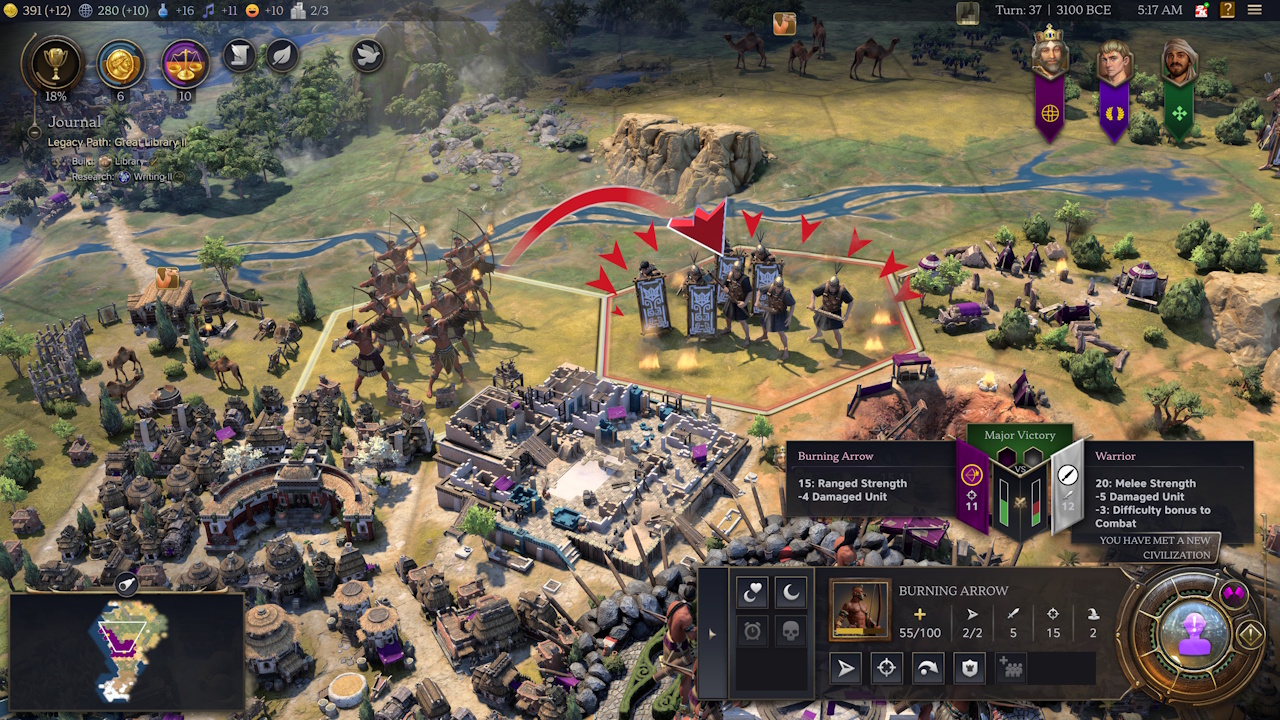
In terms of gameplay, I found some AI units seemed to occasionally take a very circuitous route before attacking, which didn’t really make a lot of sense to me. While standing one tile away, you’d think they’d move to the next tile and attack. Instead, some AI units seemed to walk the longest route around before starting their attacks – and there wasn’t an obvious reason why. As far as I could tell they weren’t doing this to avoid terrain disadvantages or to link up with allied units; it was just a quirk of the game’s pathfinding or AI.
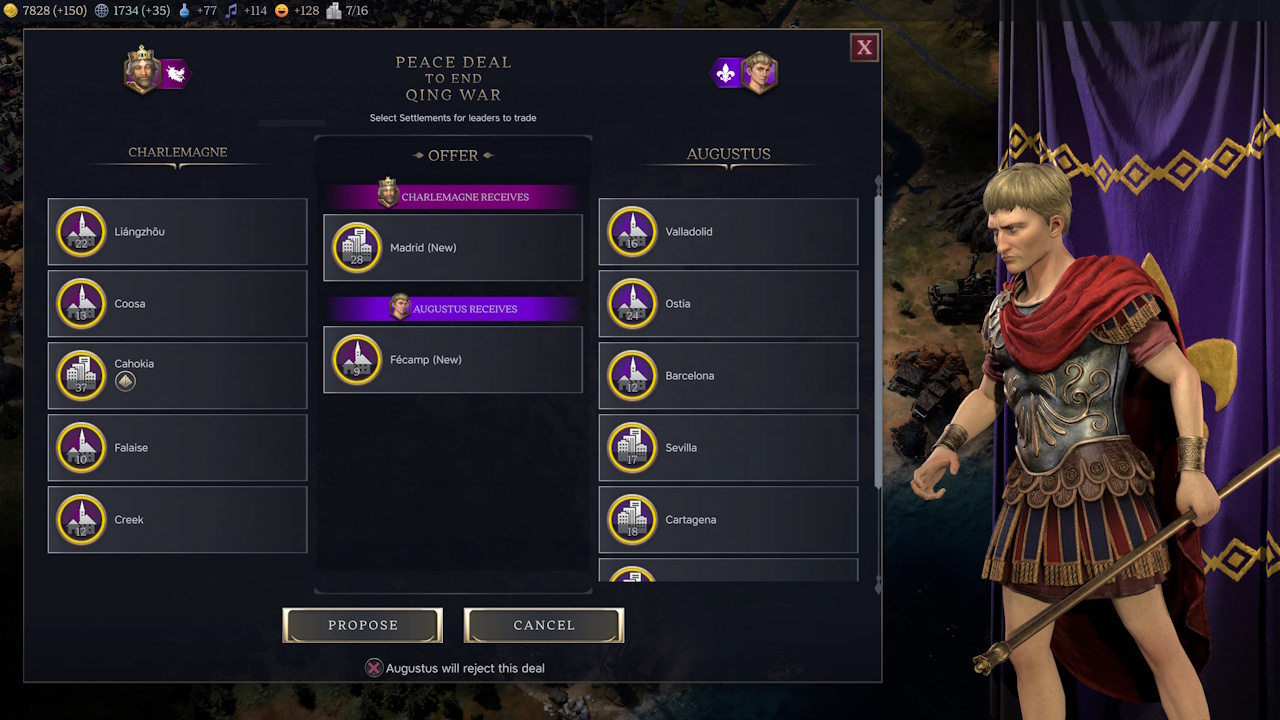
Diplomacy leaves something to be desired, unfortunately. Making friends and alliances with another faction works well enough, and while the system is different from Civilization VI it’s something I daresay I’ll get used to in time! But when a war comes to an end, it’s very odd – and very limiting – that there are so few options for making peace. In Civ VI, to end a war you could offer or demand money, great works, rare resources, and so on. In Civ VII, the only options on the table when trying to end a war are cities – and in some cases, it seems like an enemy won’t accept a peace offer if you refuse to give up a city – even if they haven’t conquered any of your cities or even killed a single unit in combat.
This really limits the way war works, and unless it’s addressed it’s going to be a weight around the game’s neck. There are occasions where, after capturing a city, I’ll want to keep it or sell it back as part of a peace treaty. But that’s far and away not the only way I want to make peace – in fact, in Civ VI cities were usually the bottom of my list when negotiating. The fact that some war-hungry powers won’t make peace very easily makes the game feel unbalanced, and it means war and combat – two of the most important features in a 4X strategy game – are less useful. Starting a war is always going to be a risk, but if I know that making peace is painfully difficult in some cases, it makes me far less interested in even attempting to play the game that way. Again, this is limiting.
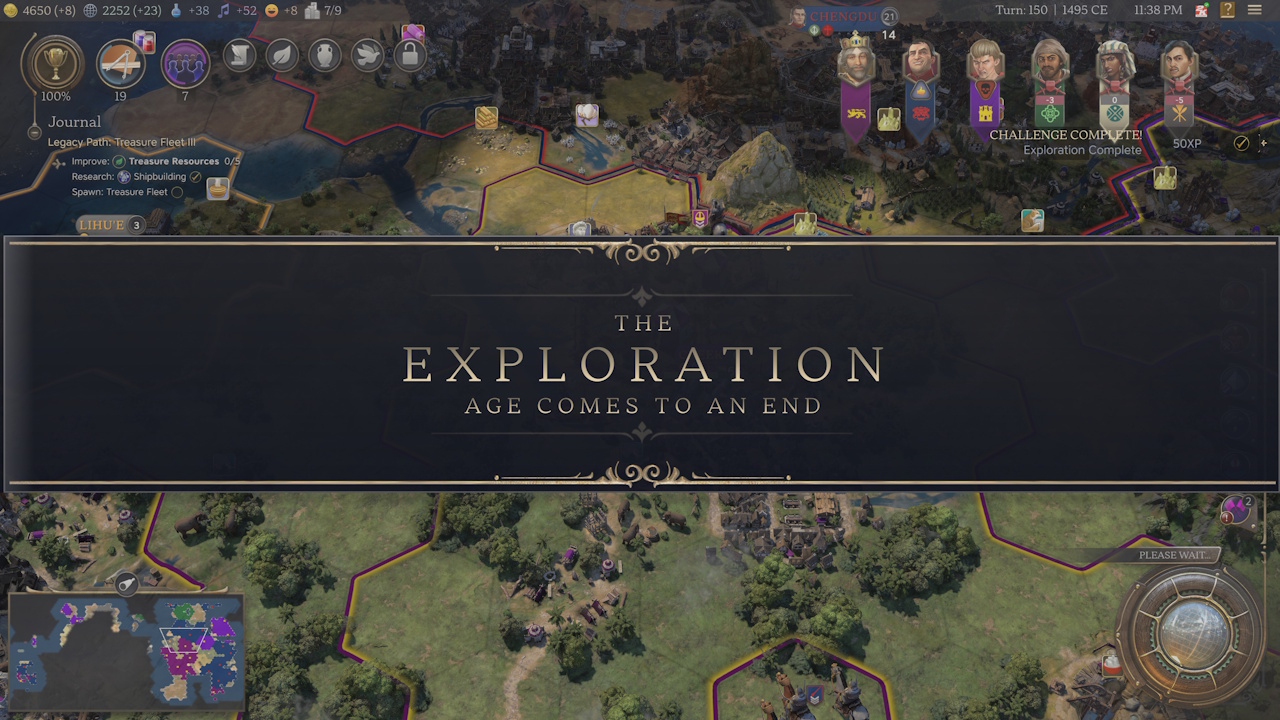
Weirdly, declarations of war don’t seem to survive the transition from one era to another. In short, if you’re at war with someone when the age ends, you won’t be when the new age begins. Since we were speaking of things that limit the warfare and combat system… that’s another.
Think about it: if you’re running out of time in the ancient or exploration ages, why would you start a war that you’d be unlikely to finish in time? I’m kind of hoping this is a bug or something that will be changed, because automatically ending a war just because the clock rolled over feels like something that really puts the brakes on that side of the game. Eras can be long, sure, but by the time you’ve got research and unit upgrades done, there might not always be time for a full-blown conquest. Now, the flip side is that this adds another level of strategic planning to the game, which some folks might appreciate. But in Civilization VI, if you were at war in one age you’d remain at war when the next one rolled around.
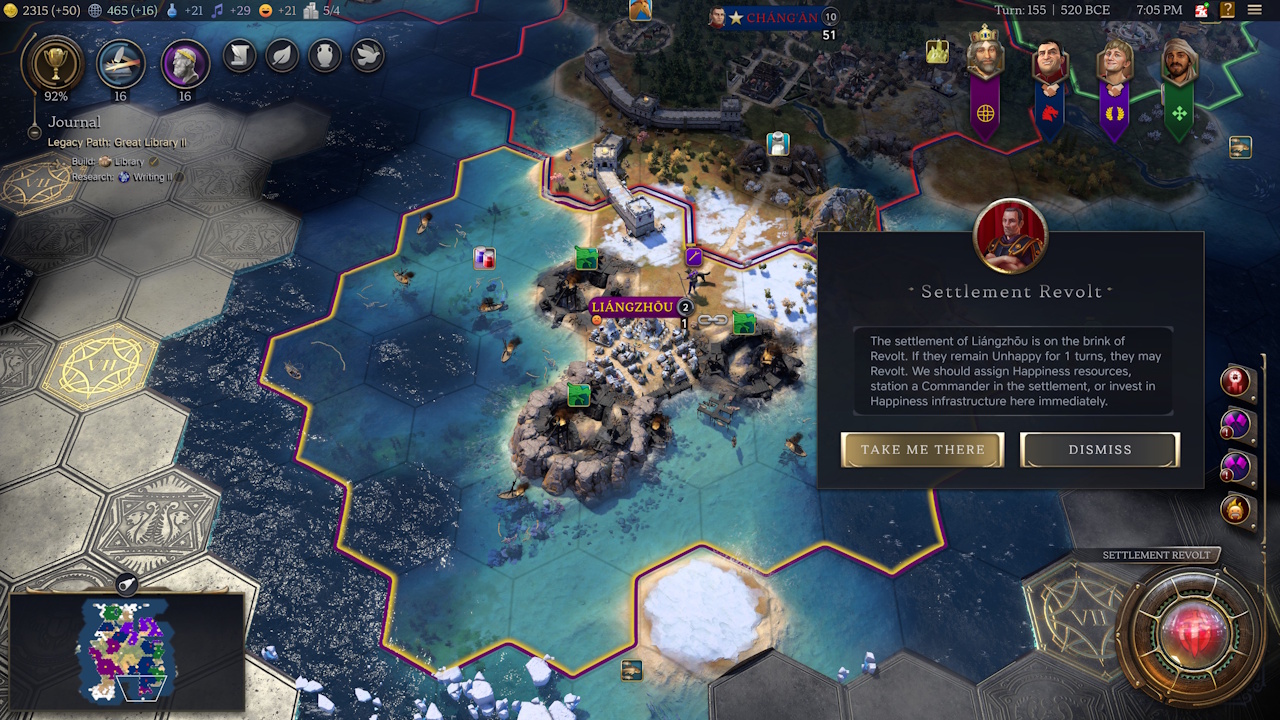
I struggled with cities and towns rebelling – but not in the way you might think! Relatively early in my game, one nearby city rebelled from its founder and asked to join my empire (who wouldn’t want to be part of the great Empire of Dennis, after all?) This city then spent the rest of the game threatening to rebel against me… but without ever doing so. I don’t know why it never went into full-blown revolt; I had a military unit stationed there, but that was all. It became annoying to keep seeing these pop-ups warning me of an imminent rebellion, when no rebellion ever came.
It’s great, though, that cities can revolt if certain conditions are met. I just wish I knew what the conditions were so I could either trigger them in enemies or avoid them in my own settlements! This feels like an evolution of the way it worked in Civ VI, and it’s definitely something I want to dig into more in my next game.
Gwendoline Christie has taken over the role of narrator for Civilization VII. She has a wonderful voice, and particularly in the opening cinematic I think she did a good job. But… there… are… some… sentences… that… she… reads… with… a… lot… of… unnecessary… pauses… in… between… words… and… clauses. It’s almost like she’s doing a William Shatner impression – which, unfortunately, I don’t mean as a compliment. She also seems to have a tendency toward over-enunciating certain words, which I definitely picked up on. It’s not the worst thing in the world, sure, and I’ll get used to it. These lines can be skipped, too, with a simple click of the mouse. But I thought it was worth noting.
As in any new game, there are changes to the rules that can feel a little arbitrary. But given enough time, I’ll get used to all of them. I didn’t do spectacularly well in my first game, but I feel like I learned a lot and I’m starting to understand how some of the changes work. Civilization VII feels like a solid start, with plenty to build on in the months and years ahead.
One of the biggest changes for me was the lack of a builder unit. Builders in past Civilization games have played different roles, but I think I’m right in saying they’ve always been present in some form. Civilization VII doesn’t use builders, with buildings and occupied tiles being handled from the city menu. That’s definitely gonna take some getting used to!
Cities being different from towns is also a big change. Towns can’t construct wonders and can only purchase buildings and units with gold, but can also specialise and focus on one thing – food, happiness, gold, etc. – adding more of the chosen resource to your civilisation’s total. Again, this is something I’ll need to spend more time with to really get the hang of, but I think it’s at least an interesting change.
Civilization VI introduced several gameplay mechanics revolving around climate change – and these have been removed from Civ VII. I will concede that the implementation of sea level rise and climate mitigation in the previous game was imperfect, but it added a lot to the late game in particular – as well as forcing players to consider how they use resources earlier in the game, too. It made for a lot of calculations like whether I could risk waiting for the technology to do nuclear power and renewables or whether I’d have to industrialise and use coal and oil, then try to clean up the mess later! It was a creative inclusion, and one that I’m sure could’ve been adapted this time.
I wonder if things like climate change and sea levels will be added as DLC somewhere down the line. These mechanics weren’t part of the launch version of Civilization VI, so maybe the plan is to see how they could be implemented once Civ VII gets going. If so, I guess I can get on board with that.
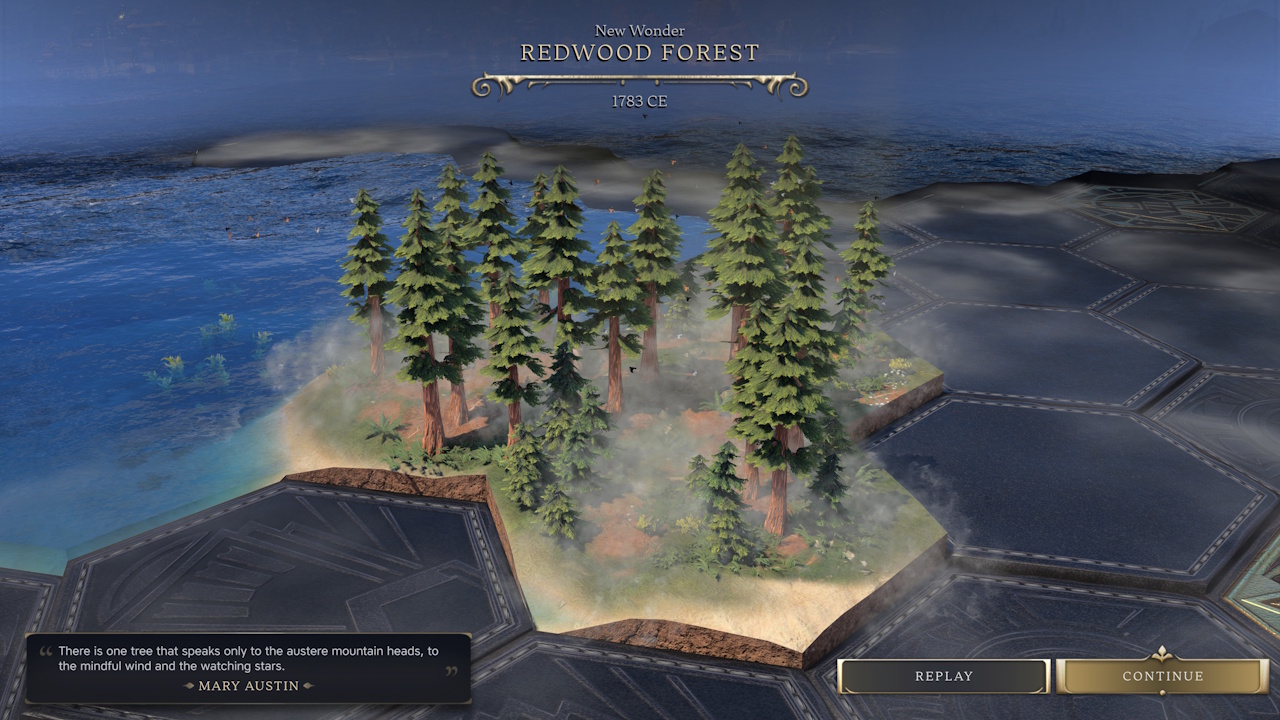
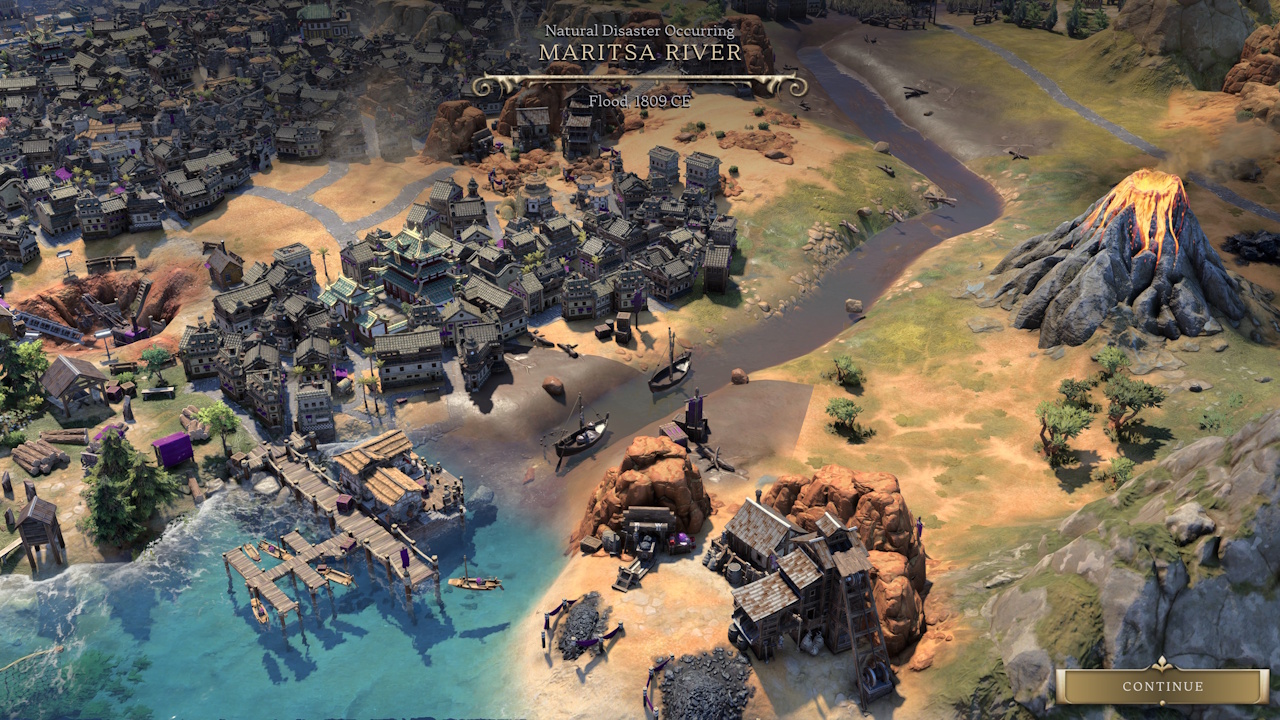
One element from Civ VI that its sequel retains, though, is natural disasters. In my first game I encountered a storm at sea, a blizzard, tornado outbreaks… and so many river floods. Seriously, there’s gotta be a way to tone down the frequency of some of these natural disasters, because when the same river has flooded for the twelfth time in a single playthrough… it starts to get annoying!
There also didn’t seem to be an easy way to ask for aid – in Civ VI, after suffering a natural disaster, players could request help in the form of gold. This added another layer to the game’s diplomacy, but it seems to be absent here. If natural disasters (floods especially) were less frequent, maybe I wouldn’t have even noticed!
So I think that’s everything I had in my notes.
Civilization VII has a lot of potential to be a fantastic strategy game, one I can already see myself playing for hour after hour. There are a lot of changes from Civ VI – some of which feel rather arbitrary – and some weaknesses compared to that game, too. For me, I think the biggest weakness right now is that there are only three ages (or eras) to play through. While these are different, and arguably bigger and better than they have been in the past, it makes Civilization VII feel… smaller.
I’m also not fully sold on the separate leader and civ mechanic – at least, not yet. I like that different factions in different eras all feel tailored to those eras, avoiding the problems that could come from playing a civ with bonuses that only worked in one part of a longer game. But in order to keep things relatively fair, I can’t help but feel some of the most unique and interesting leader and civ bonuses and abilities have had to be toned down.
All that being said, my six hours flew by and I had a lot of fun getting into my first Civilization VII game. I tried my hand at exploration, diplomacy, war, combat, trading, and I even founded my own religion. There are a lot of fun-sounding civs to try out, including plenty that aren’t western or European, which is great to see. And as always, Civilization VII has a fantastic soundtrack!
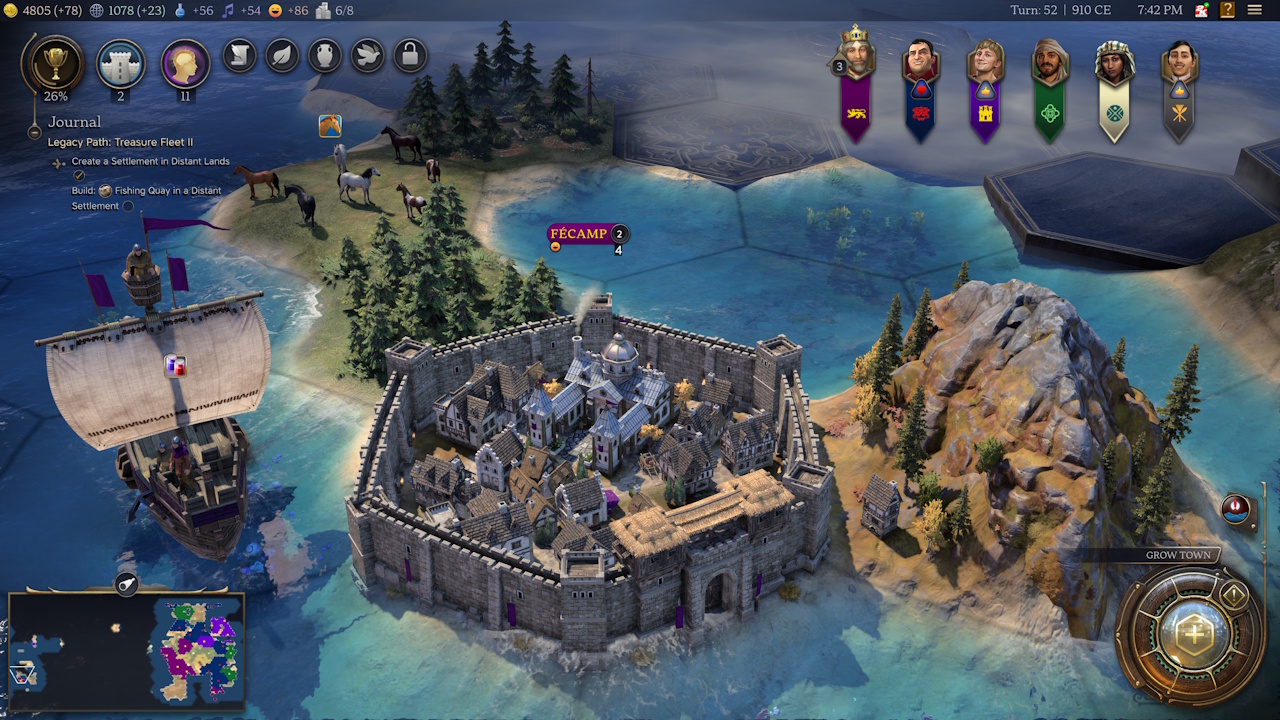
Visually, the game shines. Animations look great, the landscape looks beautiful, and there are plenty of unique features in every civ in terms of the way units and buildings look. This definitely keeps things interesting and gives the game a ton of variety. I would say that, compared to Civ VI, Civilization VII is leaning more toward “realism” and going for a less cartoonish or board game-inspired look. Whether that’s your preference or not is going to be subject to personal taste!
I hope this has been interesting and informative. I tried to hit all of the big points from my first Civilization VII game so I could share my first impressions fairly, but there’s a lot more to this game that I need to explore. Later in the year, perhaps after some of the first patches, updates, and pieces of DLC have been released, I’ll definitely have more to say.
Now that I’m done writing this… I’m gonna jump back into Civilization VII, pick a new leader, and go around again. And if that isn’t a ringing endorsement (or a desperate cope from someone who spent £120 on this game) then I don’t know what is!
Seriously, though, unless you’re some kind of super-fan… just get the base game. I was silly to reward Firaxis and Take-Two for their shitty business practices, and I’m not pleased with myself for wasting extra money on in-game silliness that I didn’t need.
Civilization VII is out now for PC, Mac, Linux, PlayStation 4, PlayStation 5, Nintendo Switch, Xbox One, and Xbox Series S/X consoles. Civilization VII is the copyright of Firaxis and/or Take-Two Interactive. This article contains the thoughts and opinions of one person only and is not intended to cause any offence.
 Trekking with Dennis