

Spoiler Warning: Beware spoilers for the following Star Trek productions: The Original Series, The Next Generation, Deep Space Nine, Voyager, Enterprise, the Kelvin films, Discovery, Picard, and Strange New Worlds.
A few days ago, I wrote a piece about more than a dozen narrative clichés in the Star Trek franchise. That article was inspired by a post on Tumblr (which had been re-posted by a Star Trek fan page on Facebook, where I saw it) and it really got me thinking! Star Trek has its own tropes and little sub-genres; many episodes and storylines can be characterised as “another Borg episode,” “a holodeck story,” and so on. In addition to the eleven clichés presented by the original poll, I added a few of my own – but it turns out that I barely scratched the surface!
So, just like last time, we’re going to take a look at a few more potential “clichés,” and ask a simple question: is it time for them to be retired? Or, to put it another way, has Star Trek taken these story concepts as far as they can reasonably be stretched? Should any of these stick around if more Star Trek is produced in the years ahead?
Thanks to Tumblr user “quasi-normalcy” for coming up with the original poll (which I’ve linked to below). And thanks to the Star Trek fan page on Facebook for dropping it onto my timeline! This idea has been a lot of fun, and a great way to spend a bit more time thinking about the franchise.
I always like to give the same caveat whenever we’re about to jump into some potentially controversial Star Trek opinions: everything we’re talking about here today is subjective, not objective! If you hate all of my ideas, think I’ve totally got the wrong end of the stick, or just vehemently disagree with me about what makes for a good or bad Star Trek cliché, that’s okay! The Star Trek franchise is massive, and fans can and will disagree about what the best and worst episodes are. That’s the way it should be – we can still enjoy Star Trek, and remain friends, even if we don’t always agree about everything. I share this piece with the fan community in that spirit.
I’ll go through each cliché (or potential cliché) one by one, then give my verdict on whether it should stick around as part of the Star Trek franchise.
If you want to see my first piece on this topic, which contains the original eleven clichés from the Tumblr poll (and a few of my own), you can find it by clicking or tapping here. And this is your final chance to nope out if you don’t wanna read some potentially controversial Star Trek opinions!
Cliché #1:
Vulcans (or Androids) Are Invulnerable to the Problem-of-the-Week
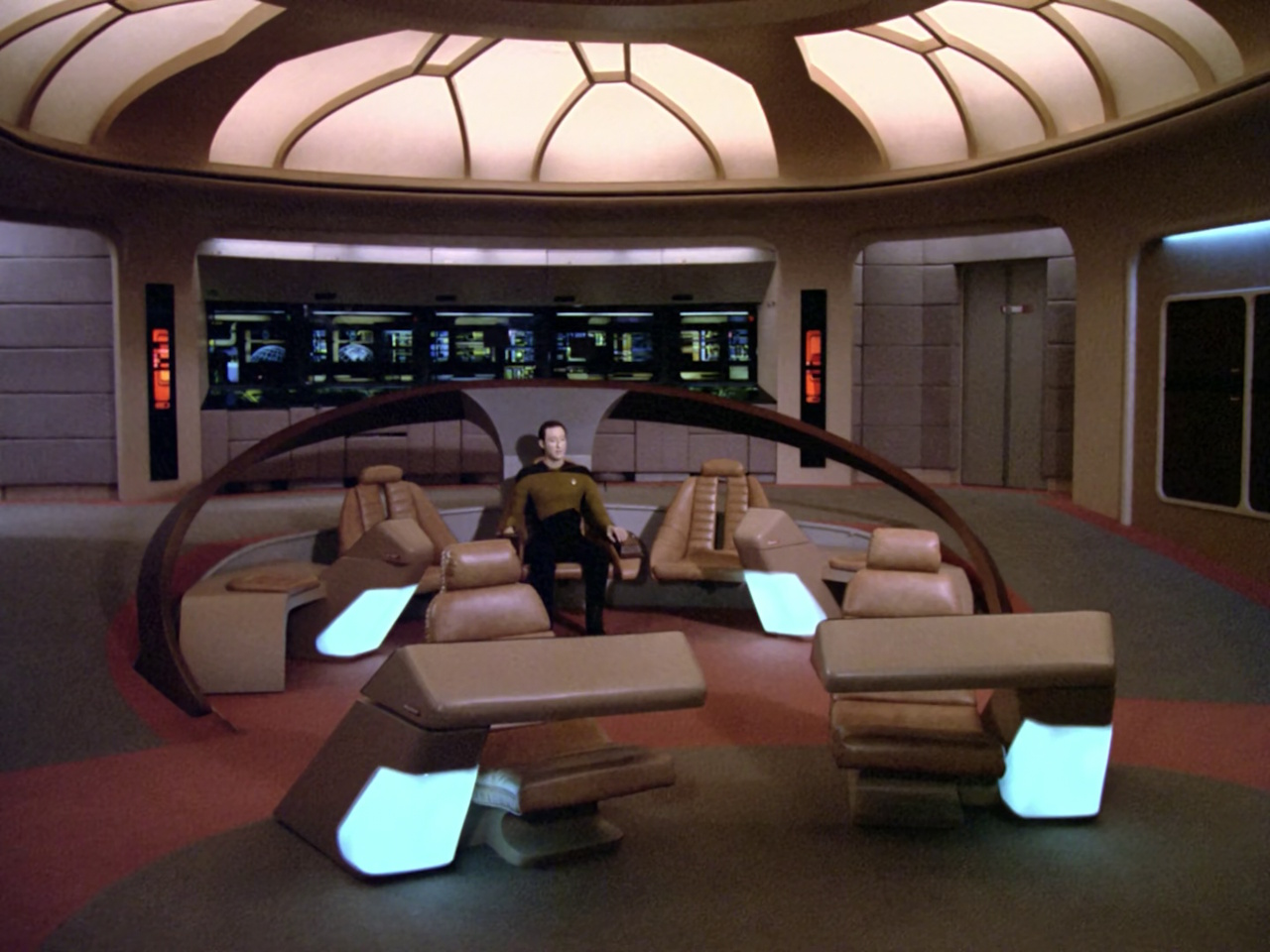
Everyone aboard the Enterprise catches a disease – except for Spock, whose Vulcan physiology makes him immune. The crew is being targeted by a salt-siphoning “vampire” – except for Spock, who, as a Vulcan, doesn’t have enough salt in his system for the creature to feed. Aboard the Enterprise-D, the crew’s DNA is changing – except for Data, who has no DNA. Everyone is rendered unconscious by aliens who want to remain hidden – except for Data, who, as an artificial life-form, can’t be knocked out by their technology. And on it goes!
Especially in The Original Series and The Next Generation, writers would find ways for Spock and Data to be invulnerable to whatever was going on. Additionally, they were depicted as being physically stronger, smarter, and with quicker reflexes than the rest of the crew – making them pretty overpowered from a storytelling point of view. This could work exceptionally well, but sometimes it could feel like the writers were pulling yet another technobabble excuse out of nowhere or lazily throwing together a deus ex machina ending to a story. When Spock or Data (and later Tuvok and T’Pol, too) would suddenly have a never-before-referenced magical ability that made them invulnerable to whatever was happening aboard the ship, it could start to feel stale. *Especially* if that trait or ability was never mentioned again.
My Verdict: Vaporise It With A Disruptor!
Cliché #2:
Vasquez Rocks (and the Toronto Quarry)
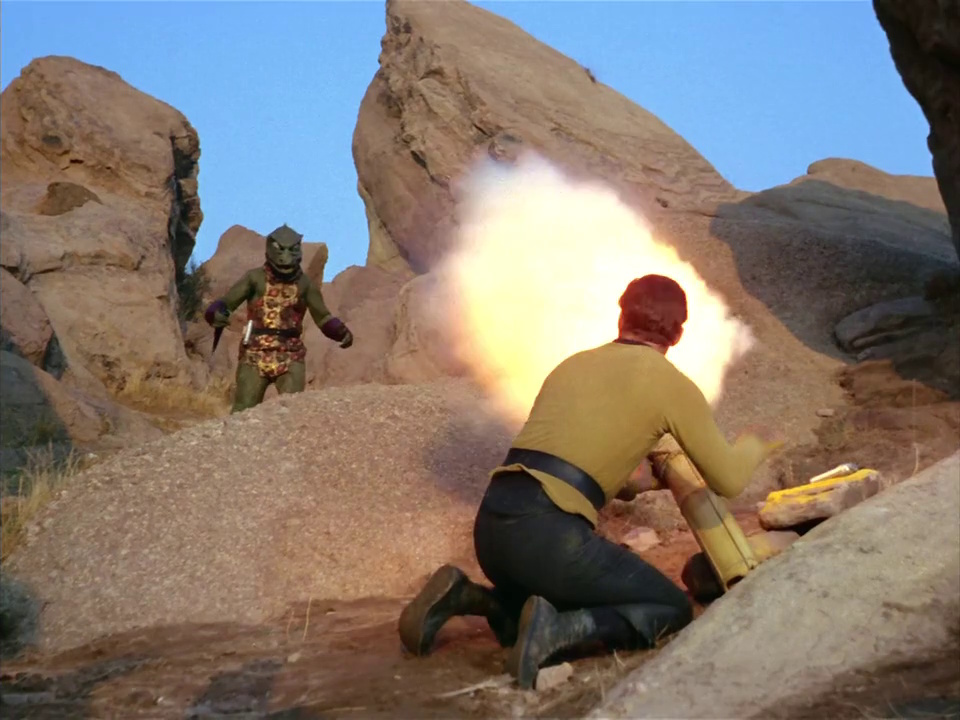
I think I’m right in saying that Vasquez Rocks – a national park in California, relatively close to Los Angeles – has appeared in five Star Trek TV shows and three films. Perhaps its most iconic appearance is still Arena, but it’s also stood in for the planet Vulcan, including in the Kelvin timeline, and as Raffi’s home in Picard’s first season. Since production moved to Canada when Discovery was commissioned, there’s a quarry somewhere in the Toronto area which has likewise appeared multiple times in that series and Strange New Worlds. And… after a while, it becomes kinda obvious, doesn’t it?
I said this a lot during Picard’s first season, but there’s nothing wrong at all with using a sound stage – or Paramount’s new AR wall – to create alien landscapes. Outdoor filming shoots can be great, and can convey a sense of scale that indoor sound stages lack. But if you go back to the same location over and over again, pretending it’s a different place or a different planet each time, viewers can and do pick up on that. Kirk’s fight against the Gorn captain is iconic – but the only time Star Trek should return there is if we’re getting another episode set on that same planet. The same applies to the Toronto quarry: decide what planet it represents and stick with that. Then, either use sound stages or different outdoor locations to depict other settings.
My Verdict: Vaporise It With A Disruptor!
Cliché #3:
The “Badmiral”

The “badmiral” – a portmanteau of the words “bad” and “admiral” – has become a stock villain in the Star Trek franchise. The typical badmiral is a high-ranking Starfleet flag officer who has an ulterior motive, is selfish, or simply doesn’t reveal everything they know, coming across as a roadblock for our heroes. There are some more nuanced badmirals – look at Layton in DS9, for instance – but others can fall into the trap of being pretty flat and one-note.
At this point, you’d be forgiven for thinking that *every* Starfleet admiral has fallen to the dark side, since it seems to happen so often! In fact, “good” admirals – like DS9′s Ross or Discovery’s Vance – are less commonly seen in the franchise than the bad ones! Because badmirals (and bad captains and commodores) can effectively pull rank and force our heroes to comply, there’s something a bit different about them when contrasted with a non-Federation enemy like the Klingons. In a lot of stories, this works exceptionally well. While I wouldn’t want Star Trek to lose the “badmiral” stock character, with today’s shows running to four or five relatively short seasons at the most, I think this kind of character has to be handled carefully and not over-used.
My Verdict: Keep It!
Cliché #4:
“We’re the Only Ship in Range!”
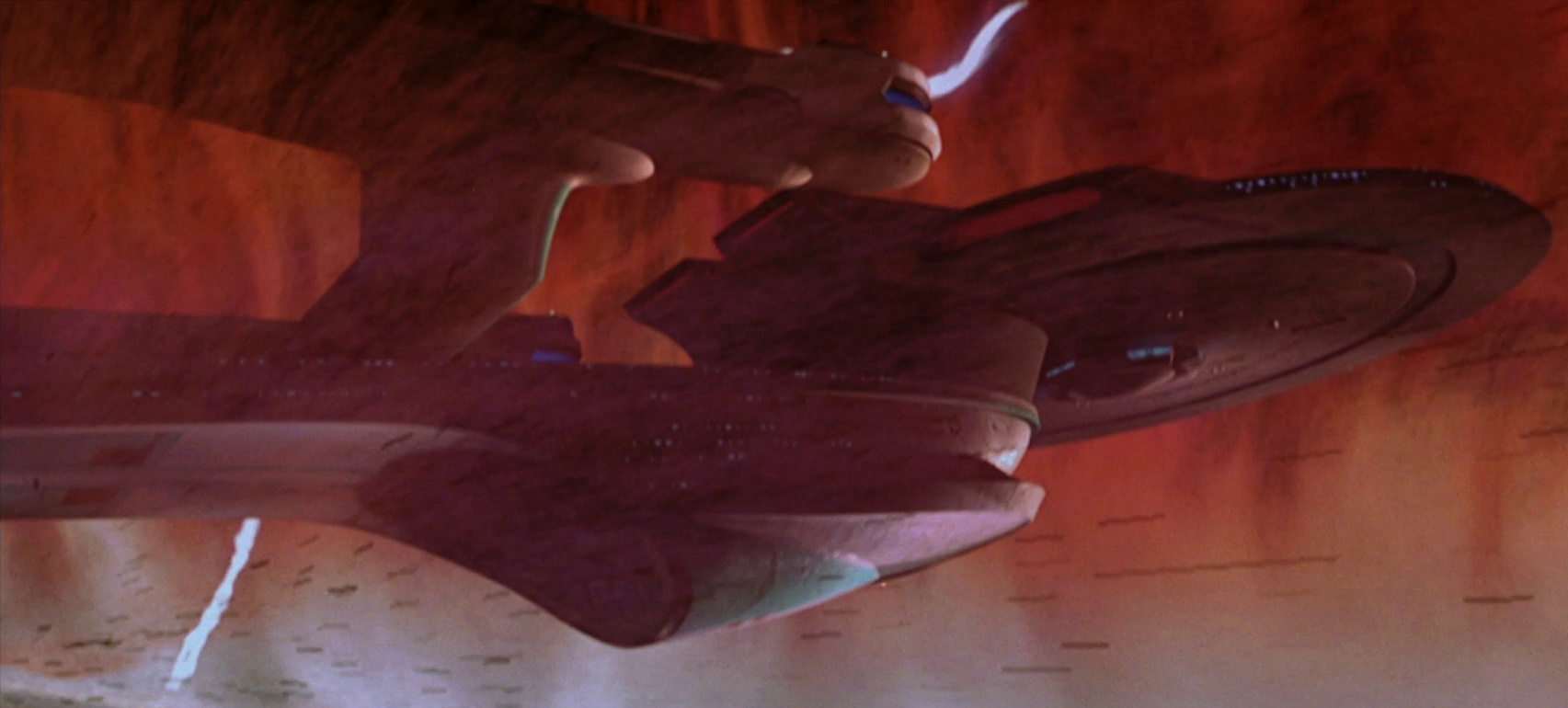
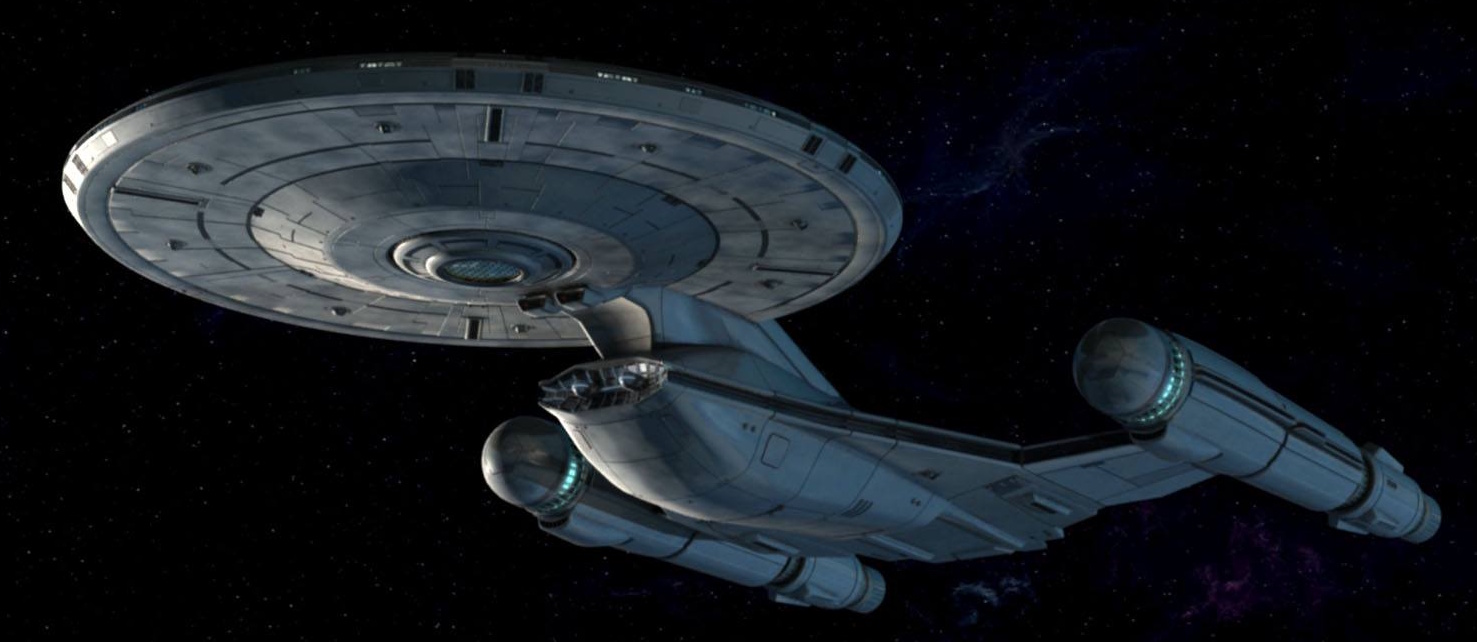
How many times has some variant of this line been used? For a state as massive as the Federation… they sure don’t seem to have very many ships! Perhaps the most egregious example of this is Generations (depicted above), where the brand-new Enterprise-B – which doesn’t even have weapons systems or a tractor beam – is literally the *only* starship within several light-years of Earth. How does something like that even happen? Imagine if the only military unit within a hundred miles of Washington DC was a single tank without its gun barrel.
Again, I get it: this line can set up a tense and exciting story with heroism, desperate last stands, rescue missions, and so on. There are some really fun stories that being “the only ship in range” has set up over the years. But it’s also true that it’s become a trope of the franchise. As with any cliché, over-use is the problem, and reducing the number of times it gets used in the future wouldn’t be a bad thing. I don’t think it’s strictly necessary to say it should be outright banned from all future episodes, but I could stand to see less of it!
My Verdict: Keep It!
Cliché #5:
Sole Survivors
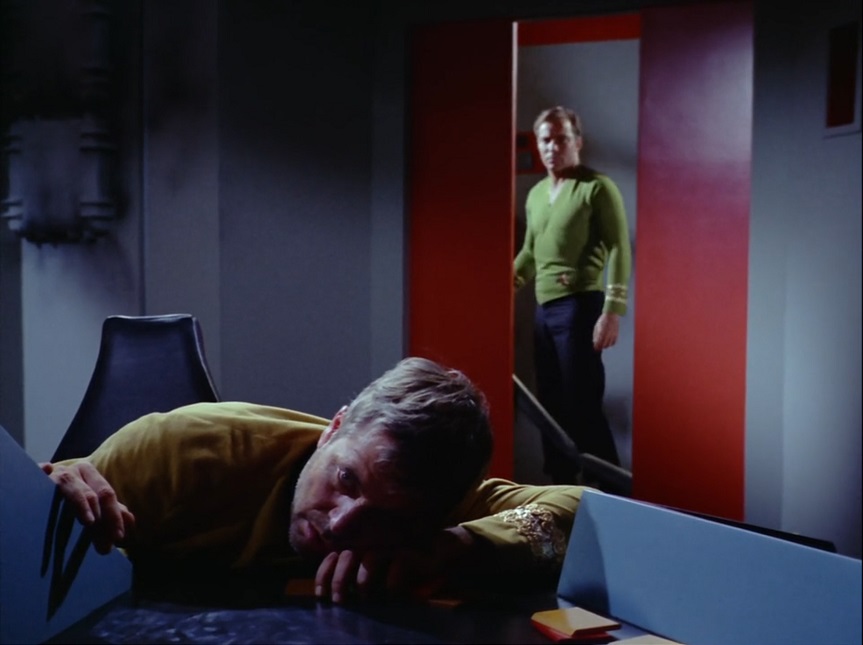
A starship has been destroyed by a planet-killing superweapon. Another ship has been swarmed by the Gorn and crashed. An unknown assailant is destroying space stations one by one. A research vessel flies into a gravitational wave. What do all of these (and more) have in common? Afterwards, there was one single survivor to tell the story. This one leans on tropes way older than the Star Trek franchise – the marooned or shipwrecked sailor has been a part of fiction for centuries. But it is undeniably a cliché, and when you’re talking about starships, space stations, and entire planets, sometimes, having one sole survivor of a cataclysm can feel like it’s stretching my suspension of disbelief.
That being said, I can’t really pick out any examples where a “sole survivor” story has been out-and-out *bad* in the Star Trek franchise. Conversely, quite a lot of these are handled really well, with the survivor conveying what happened to our heroes in an interesting way. And who could forget the incredible Commodore Decker – one of The Original Series’ best one-off characters? He was a sole survivor, and yet I’d rank The Doomsday Machine as one of the best episodes of the entire show. So there’s room for sole survivors… sometimes.
My Verdict: Keep It!
Cliché #6:
Artificial Gravity Never Fails
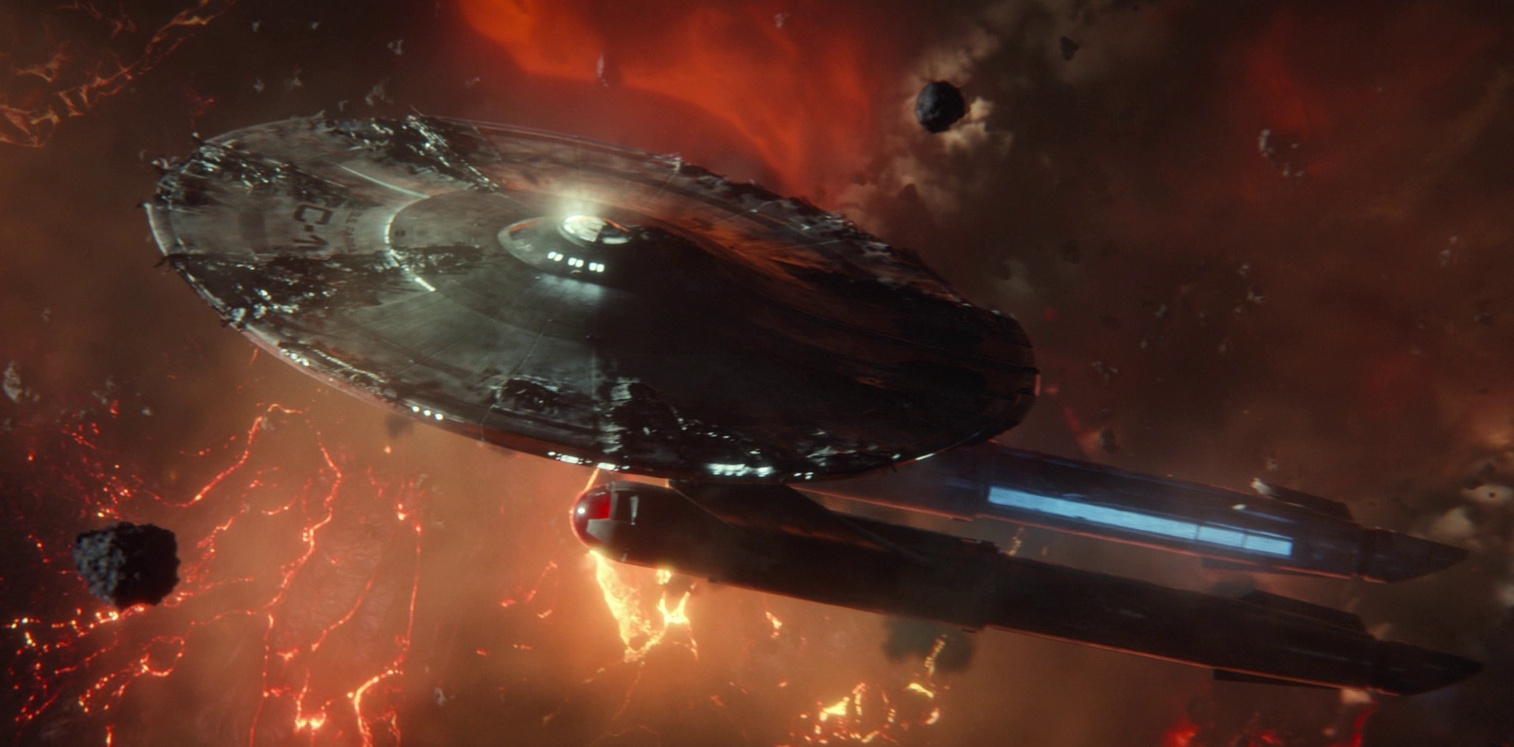
No matter how badly damaged a starship or space station gets, artificial gravity always seems to be the last system standing. Ships will lose life support – literally breathable air and a survivable temperature – before they lose artificial gravity! There are only two or three times I can call to mind where a damaged ship saw its artificial gravity fail, and pretty much the only time it was plot-relevant was in The Undiscovered Country. So… how come artificial gravity is the most robust system on a ship, surpassing even life support?
I know there’s a production-side reason for this one: it would be prohibitively expensive to wire up everyone on the cast and all of their props and have them floating around. Especially in The Original Series, when budgets were tight, that kind of thing was off the table. But it’s pretty silly, if you think about it, when you see ships take a real battering, losing key systems, with their hulls buckling and broken… but everyone can still walk and run around like nothing had happened. Given the advances in technology, and modern Trek’s higher budgets, maybe we could see a few more stories where a ship loses its gravity, and where that becomes a story point.
My Verdict: Vaporise It With A Disruptor!
Cliché #7:
God-like Aliens Who Become Obsessed with One Random Human
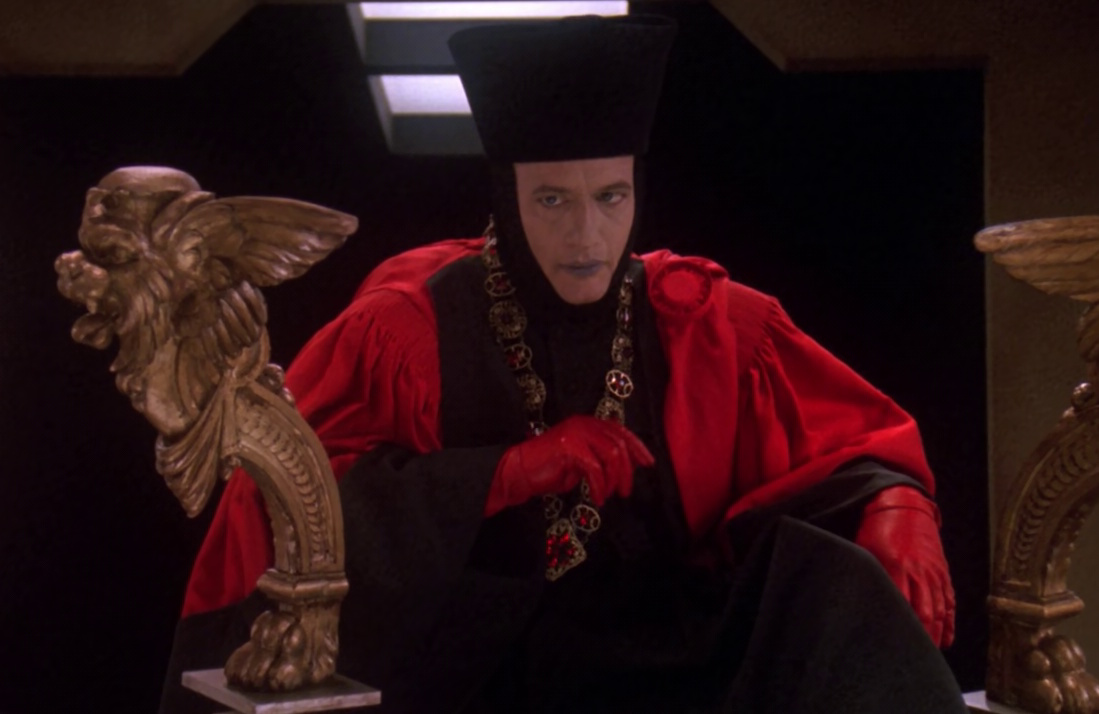
Q has literally all of time and space to explore and play around in. Yet he becomes fixated on Jean-Luc Picard – a random 24th Century human. The Borg Queen has trillions of drones under her sway, controls thousands of star systems, and can assimilate whole populations at the drop of a hat. Yet she’s weirdly obsessed with Seven of Nine – another random human from the 24th Century – as well as Picard. When someone like Trelane came along, it was clear that Kirk and the crew were just his latest playthings. But Q, the Borg Queen, the Douwd known as “Kevin,” and others either fall in love with or become obsessed over one of our heroes. Which doesn’t really make a lot of sense, if you think about it.
Imagine having a favourite ant in your back garden. There are thousands of them living in an anthill, but you decide that *one* is special. That’s not a million miles away from what it’s like for the Borg Queen or Q when they decide to fangirl over their favourite humans. Star Trek can, from time to time, tell interesting stories this way, and the idea of Q in particular setting puzzles and “testing” Picard was used well most of the time. But it’s definitely become a cliché at this point, and I think it’s probably been taken as far as it can be.
My Verdict: Vaporise It With A Disruptor!
Cliché #8:
Everyone Breaks the Temporal Prime Directive
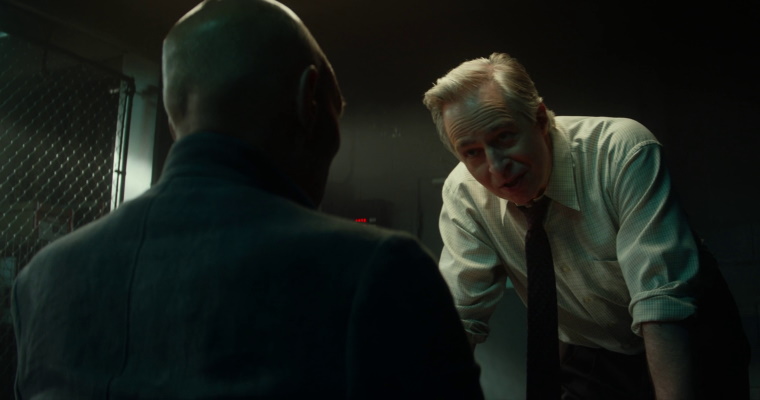
In practically *every* story involving time travel, someone breaks the Temporal Prime Directive! The general order from Starfleet says that no one should interfere with any historical events, and must maintain the integrity of the timeline. But even those who claim to be dedicated to this cause – like Enterprise’s Crewman Daniels – routinely violate the Temporal Prime Directive, and often without good reason.
Time travel stories aren’t usually my favourites in Star Trek (especially if they involve visiting modern-day Earth), but even in the episodes I happen to really enjoy, there are countless violations of what is supposed to be one of the guiding principles of the Federation. Often, our heroes are on the side of preserving the timeline as much as possible – and that’s good. But even when that’s their stated aim, they don’t go about it in a stealthy way! How many times have characters befriended (or even fallen in love with) people from a different time period? And how often have they exposed themselves, telling people about the future? Giving characters an “unbreakable” rule, then forcing them to work around it, can make for a tense and engaging story. But when the same so-called rule is broken time and again (pun intended), it can lose some of its impact.
My Verdict: Keep It!
Cliché #9:
Conveniently-Situated M-class Planets
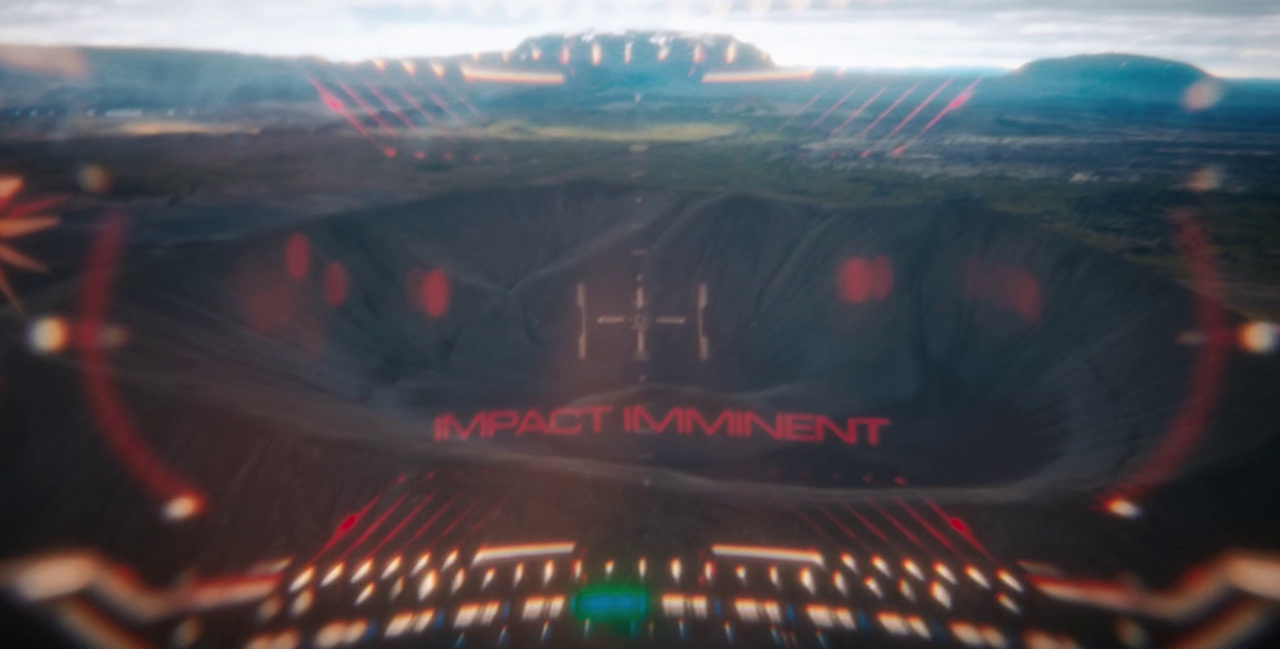
Michael Burnham arrives in the 32nd Century, but loses control of her suit and crash-lands. Where? Not on a barren rock, an asteroid, or into the corona of a star. But on one of Star Trek’s abundant conveniently-situated M-class planets! Almost any time a ship malfunctions, a shuttle crashes, or a transporter beam goes awry, our heroes find themselves on such a world. Just travelled through a wormhole to a mysterious location? Convenient M-class planet. Warp drive failing? Convenient M-class planet. Shuttle is spiralling out of control and about to crash? Convenient M-class planet!
Space is pretty big, actually. And if you think about it, most of the time our heroes spend on their ships won’t be in star systems – let alone in the habitable zone, where M-class planets can form. Most of the time they’ll be in deep space, and if they happen to be in a solar system, there are going to be way more uninhabitable rocks and gas giants than planets with breathable atmospheres and liquid water. I know M-class planets (and similar inhabitable words) are and always will be a core part of Star Trek. But once in a while it would be genuinely interesting to see a shuttle crash onto a lifeless moon, a ship caught in the gravity well of a gas giant, or something like that.
My Verdict: Keep It!
Cliché #10:
Caves and Caverns
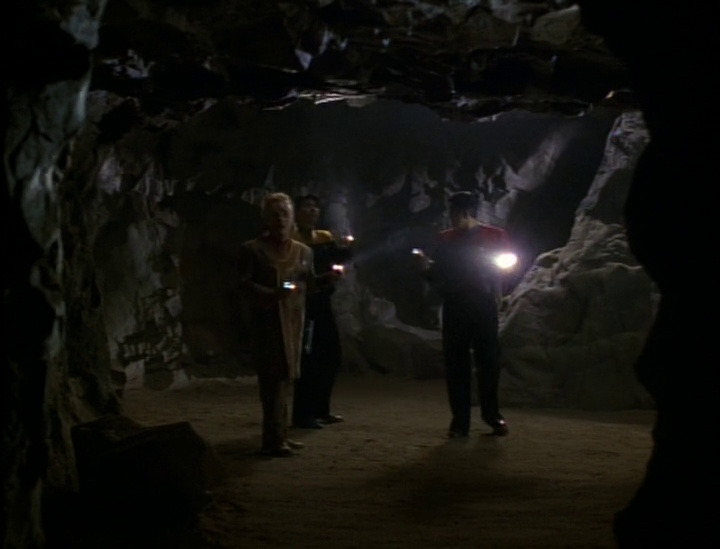
During The Next Generation era, Paramount must’ve used and re-used the same “cavern” set dozens of times! So many different alien locales were depicted using this same set, from the Romulan homeworld to the nameless planetoid AR-558. In The Original Series, too, there were many different cave or cavern locations visited. Thankfully, since Enterprise, the cavern set has been retired, and modern Star Trek stories don’t visit caves anywhere near as often.
Perhaps it’s because modern Star Trek doesn’t spend much time in caverns, but this could be a rare cliché that I’d actually be happy to see *more* of going forwards! There’s something just a little nostalgic, perhaps, about an away mission set in a cave, bringing up fond memories of older Star Trek shows. Even with that caveat, though, I think they have to be used sparingly – and if we were only talking about Star Trek shows from before the turn of the millennium, I’d absolutely say that caves and caverns have to go!
My Verdict: Keep It!
Cliché #11:
“It Was Only Trying to Communicate!!1!”
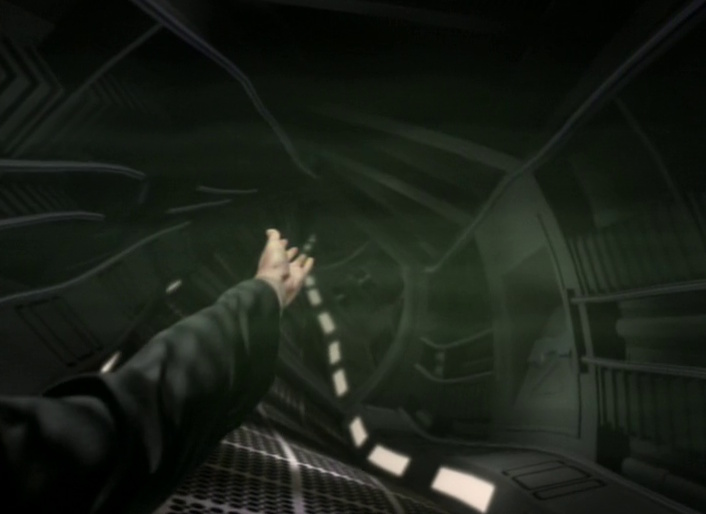
A strange life-form (or alien monster) attacks the ship, hurts or threatens our heroes, drains the power, and then… in a shocking turn of events, it’s revealed that they weren’t *really* being aggressive, nor are they actually dangerous! Say it with me, folks: “They were only trying to communicate!” Perhaps they wanted to warn Starfleet of some imminent threat, or maybe our heroes had accidentally encroached on their territory. In any case, once everyone understands what’s going on, the threat dissolves, and we can all go on our merry way. How many Star Trek episodes play out exactly like that?
One thing Star Trek has been justifiably criticised for is that too many alien races fall into the “nose or forehead brigade,” and the franchise isn’t always great at creating alien races that feel truly otherworldly. This cliché – and it *is* a cliché – often comes up in episodes where writers and designers have genuinely tried to create a totally different, non-humanoid type of alien. It can work well, though the “big reveal” that the supposed aggressor or monster just wanted to have a chat or share some useful information has been seen often enough as to be predictable. As with a few entries above, it’s something that future Star Trek projects don’t need to totally abandon, but should use sparingly from this point on.
My Verdict: Keep It!
Cliché #12:
Ancient Aliens Visiting Earth
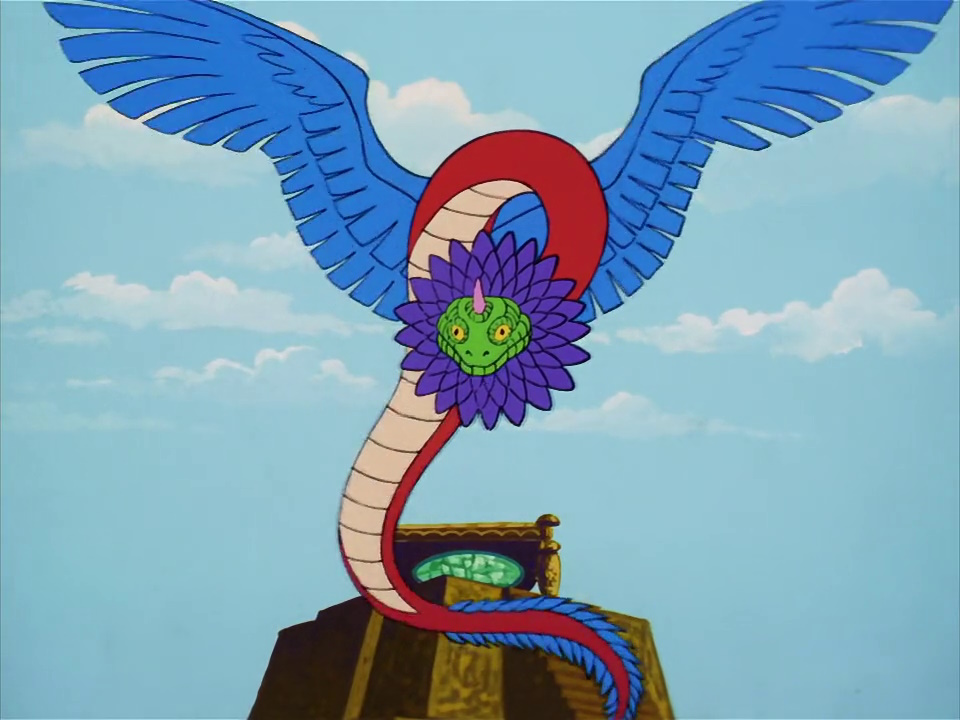
Chakotay’s “Sky Spirits.” Kukulkan from The Animated Series. Q. The Skagarans. The El-Aurians. The Borg. The whale probe. The Briori. The Vulcans (multiple times). The Devidians. The aliens who pretended to be the gods of Ancient Greece. What do all of these – and many more – have in common? They visited Earth in the past, prior to the establishment of the Federation. At this point, there’s hardly a single period in Earth’s history where aliens *weren’t* visiting us! Perhaps I should look out of the window… maybe there’ll be a Cardassian, or something.
I think the problem here is that Star Trek has been running for such a long time that this “ancient aliens” trope has kind of gone beyond what’s plausible. Each of the individual cases above made for an interesting one-off episode or story, but if we’re to take Star Trek as a coherent, lived-in world… it begins to stretch my suspension of disbelief when there are just *so many* of these extraterrestrial visitors in humanity’s past. As individual stories, these kinds of things can work well, and some have been genuinely interesting explorations of the line between religion or mythology and real history, for example, or showing how far humanity has come in Star Trek’s optimistic vision of the future. But I can’t help but feel this trope has been taken as far as it can go, and adding yet more ancient alien visitors would be too much.
My Verdict: Vaporise It With A Disruptor!
Cliché #13:
The Infalibility of the Universal Translator
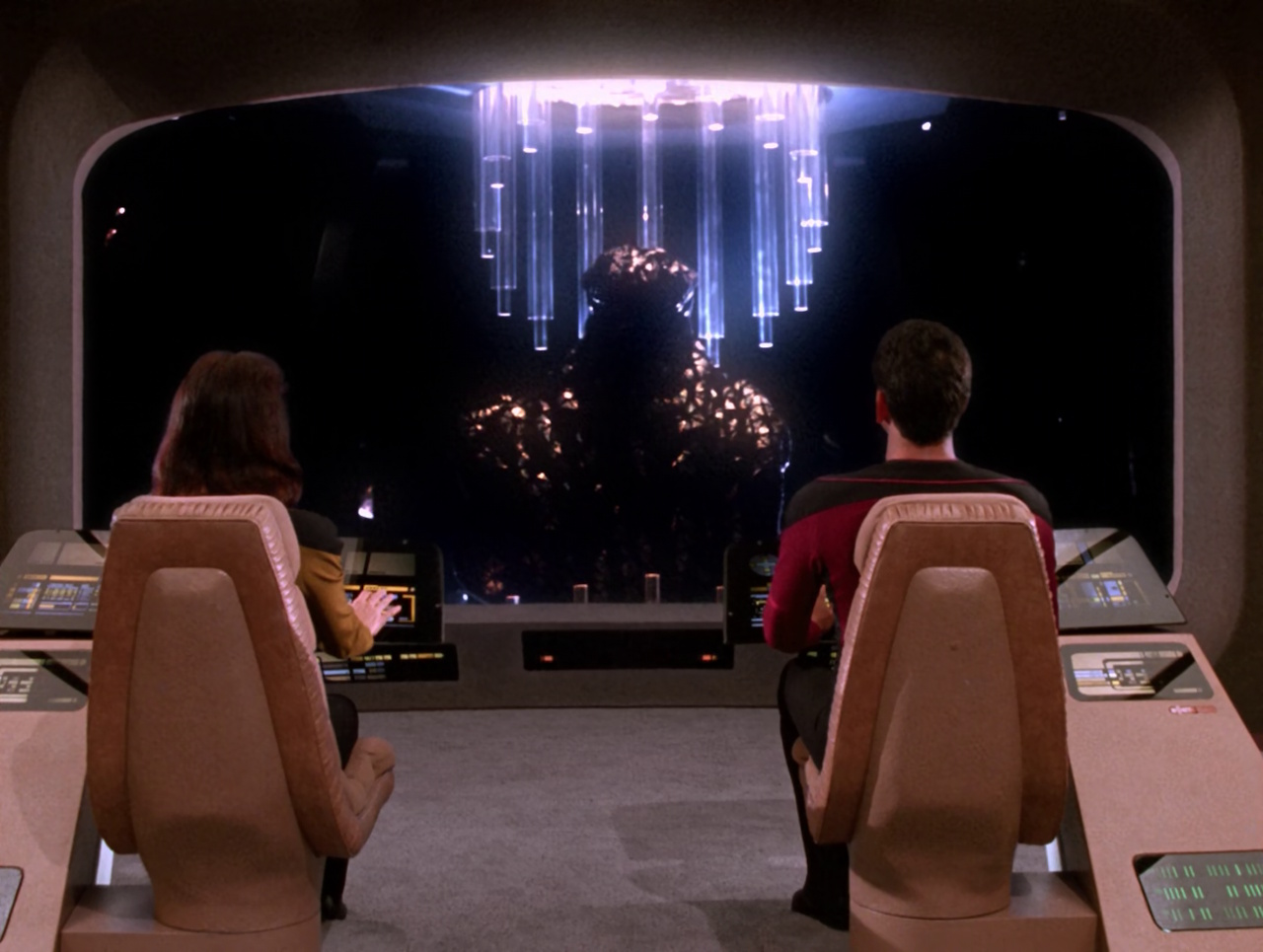
Wherever Starfleet goes – the Alpha, Beta, Gamma, or Delta Quadrants, or even beyond the galaxy – everyone can understand each other. The universal translator is presented as basically akin to magic, able to instantly translate brand-new languages it’s never been exposed to before. And that’s great… if you don’t think about it too much! But the universal translator is almost too good to be believable, sometimes, and it could be fun if – just for once, or on rare occasions – it *didn’t* work. Perhaps the universal translator just straight-up can’t interpret an alien language, leaving the crew to try to translate it the old-fashioned way. Or, as a more interesting idea, perhaps the universal translator is damaged or stops working, leaving the crew to realise they all speak different native languages and have to find ways to communicate and work together. Either of those could make for wonderful stories.
The universal translator is one of those “don’t think about it too hard” pieces of magical tech that facilitates other Star Trek stories. It wouldn’t be very interesting, for instance, if every episode started with the crew having to piece together an alien language before the rest of the story could get going! But there were some genuinely interesting moments in Enterprise with Hoshi as the ship’s communications officer/linguist, and I think we could get occasional episodes or plot points where the universal translator doesn’t work as intended.
My Verdict: Keep It!
Cliché #14:
Breaking Out of the Brig
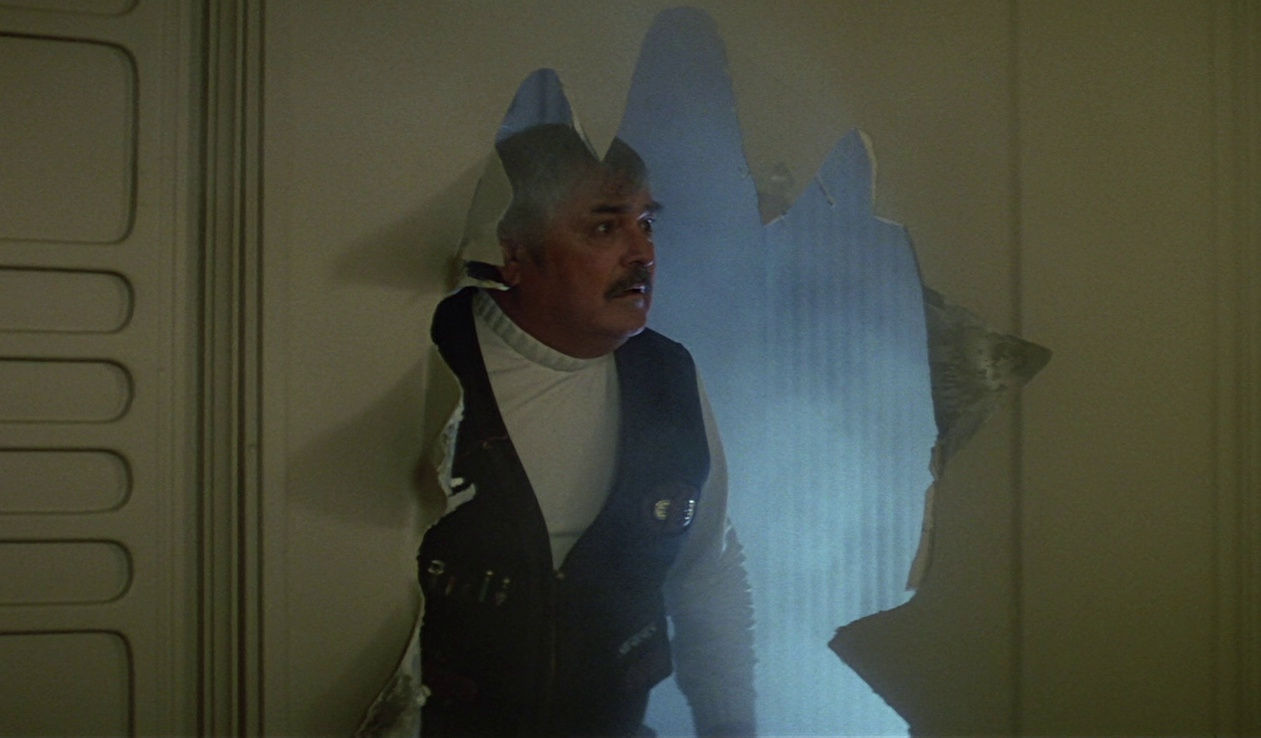
Whether it’s a main character wrongly imprisoned or a villainous rascal who’s been caught in the act, one thing is all but guaranteed: if they’re in a Starfleet brig, they’re gonna break out! In a recent Strange New Worlds episode, we saw Gamble/the Vezda escaping from the brig with ease. In The Final Frontier, Scotty famously helped Kirk, Spock, and Dr McCoy escape the Enterprise-A’s brig. Thanks to the Battle at the Binary Stars, Burnham was able to break out of the Shenzhou’s brig. And the list goes on!
A “prison break” story, or a story about hunting down an escaped villain, can be fun – and Star Trek has used this concept pretty well over the years. Because “escaping from the brig” can go in a lot of different directions depending on what kind of story we’re talking about, I don’t think I’d say it should *never* be re-used in Star Trek again. But it is undeniably a bit of a trope at this point, to such an extent that whenever a character is confined to the brig… you’re never sure if they’ll still be there a few minutes later!
My Verdict: Keep It!
Cliché #15:
Hitting the Self-Destruct Button
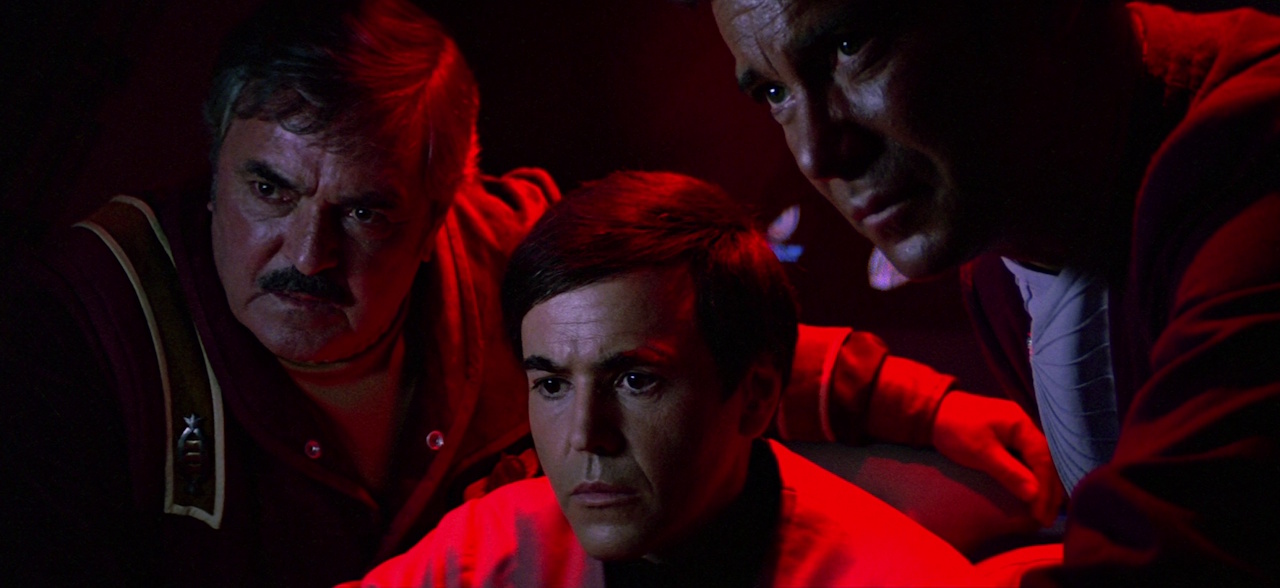
Starfleet captains sure do order their ships to self-destruct a lot, huh? To be fair, *most* of the self-destructs that we see captains ordering in Star Trek don’t actually take place, and the order can sometimes be given as a feint or ruse to catch an enemy off-guard. But ever since it was first used in The Search for Spock, we’ve seen captains setting the auto-destruct sequence on quite a few occasions.
As a mechanism of last resort, automated self-destruction makes a lot of sense in-universe. Starfleet wouldn’t want their advanced vessels falling into enemy hands, and there are some instances where setting a ship to destroy itself can be used as a weapon or to make a last stand. These have usually happened at tense moments in dramatic stories – Kirk’s destruction of the Enterprise, for instance, or Picard ordering the Enterprise-E or Stargazer to self-destruct when faced with what seemed to be imminent assimilation by the Borg. All of these, in their individual stories, make sense and work well. As above, this is something Star Trek mustn’t over-use, though!
My Verdict: Keep It!
Cliché #16:
Aliens Being Indistinguishable from Humans

Betazoids, El-Aurians, Kwejian, Betans, Iotians, Onlies, Kelvans, and many more. What do they all have in common? Despite supposedly being “aliens,” they’re physically indistinguishable from humans. Even the Klingons in The Original Series were like that, before they finally got prosthetic makeup beginning in The Motion Picture. As a limitation of 1960s budgets and prosthetics, it wasn’t really noticeable at first. But as time goes by, it becomes more and more obvious that the galaxy is populated with these identical species.
I have a pet theory which says that many of these supposed “aliens” – the Betans, Onlies, Iotians, and so on – are actually lost human colonies from the early days of pre-Federation human spaceflight. But that’s not how most of these planets and their inhabitants are presented on screen, and we’re meant to take at face value that they are, in fact, alien races. I don’t buy it! And frankly, given advances in technology, in terms of physical makeup, puppets, and now CGI, there’s no excuse for modern Star Trek creating a race like the Kwejian any more. We really ought to see more “alien-looking” aliens from this point on.
My Verdict: Vaporise It With A Disruptor!
Cliché #17:
Tiny Fleets

I know I’m not the first person to point this out, but almost every time we see a fleet of ships in Star Trek… it’s too small. Think about it: there are around ten billion people just on Earth in Star Trek’s 24th Century, and the Federation spans hundreds of planets and colonies. Yet, when threatened by the Borg, the most Starfleet can muster is 40 starships, some of which were old and no longer in service. Even during the Dominion War, which saw some of the franchise’s best fleet battles, the scale of the Federation Alliance and Dominion/Cardassian fleets felt way too small compared to the interstellar empires they’re drawn from.
There are good explanations for this, of course. At first it was a budget thing – making physical models of hundreds of ships, then filming them in motion, was prohibitively expensive. And then there’s the complexity that massive fleets would add to a story for the audience; just keeping track of a spaceship battle involving thousands of vessels would be confusing. But I still feel that Star Trek could do more with larger fleets, and that some of the fleets we’ve seen on screen don’t line up with what we know of the Federation and other interstellar empires. To be blunt, they need more ships!
My Verdict: Vaporise It With A Disruptor!
Cliché #18:
Easily-Hacked Alien Computers/Tech
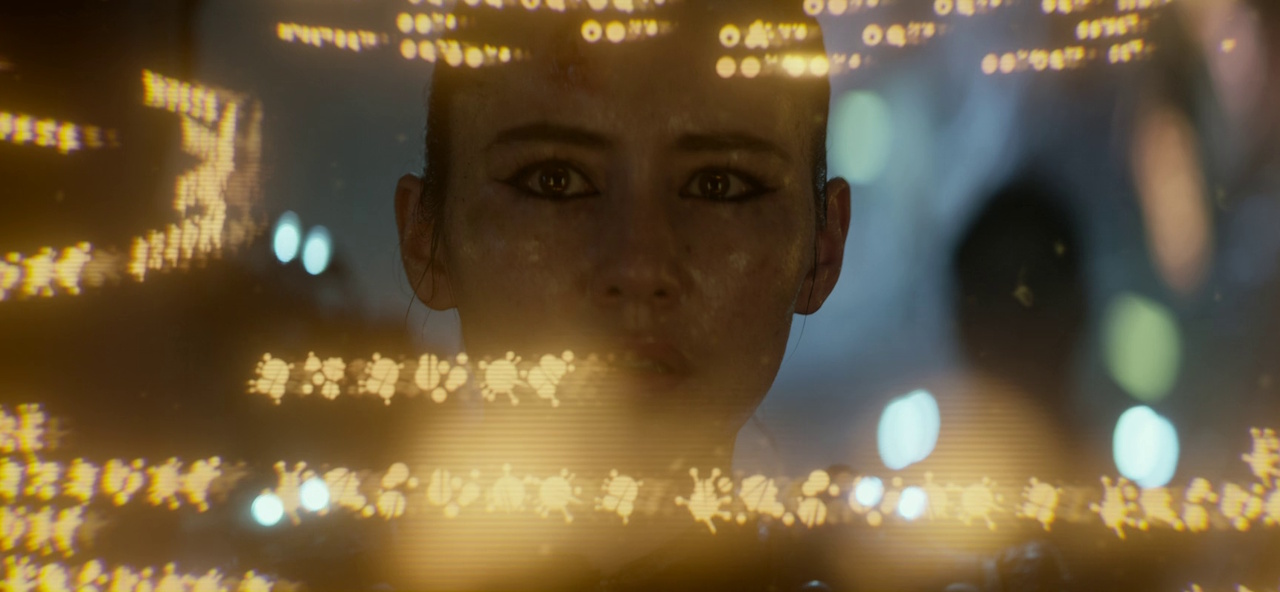
I know that Starfleet officers are well-trained. But if you’ve never been aboard an alien vessel before, don’t know their language/writing system, and have limited or no experience using their computer interfaces… you shouldn’t be able to just tap a couple of buttons and seize control of their ship! Maybe someone like Data can get away with this, because of his inhuman abilities, but we often see human characters performing these seemingly miraculous feats. As I’ve said before, even if they just took an extra few seconds, sometimes, to acknowledge the difficulty of interfacing with a brand-new type of technology… that would at least be *something*.
Because deciphering an alien computer system isn’t usually the focus of the story, these moments tend to be raced through to allow other narrative beats to play out. And that can be okay… if you don’t stop to think about it for too long, I guess. Perhaps this is a bit of a nitpick, and you could certainly make the case that Starfleet trains its officers well, and that perhaps the basic way computers function is consistent across most alien races in the 23rd/24th Centuries. But even so… sometimes, I’d like to see someone struggling with this!
My Verdict: Vaporise It With A Disruptor!
Cliché #19:
Transported to the Other Side of the Universe (but Back Home in Time for Tea)
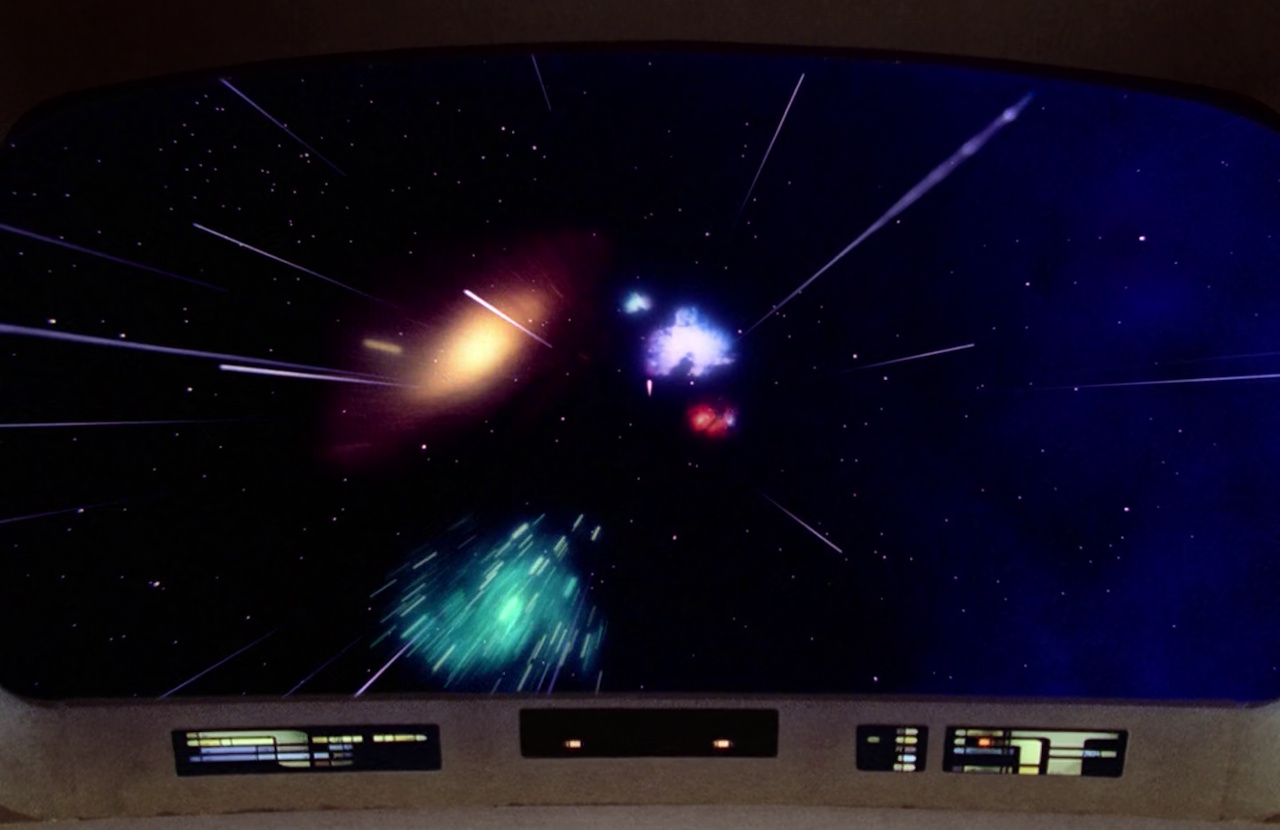
In many different stories, our heroes find themselves accelerated far beyond warp 10, teleported to a far-flung star system, or even in a whole different galaxy. But then, forty-five minutes later, they’re back home again! The only real exception to this is Voyager, which took this trope of the franchise and asked the obvious question: “what if there wasn’t a fast way home?” I really liked that idea!
Because some of these stories play out quite differently from each other (The Final Frontier is radically different from Where No One Has Gone Before, for example), I guess it doesn’t feel like a particularly egregious or overdone cliché in the way that some of the other entries above do. But it is still a bit of a trope of the Star Trek franchise to see our heroes transported to a faraway place… only to make it home before the credits roll.
My Verdict: Keep It!
Cliché #20:
The “Friendly” Visitor with a Dark Secret…
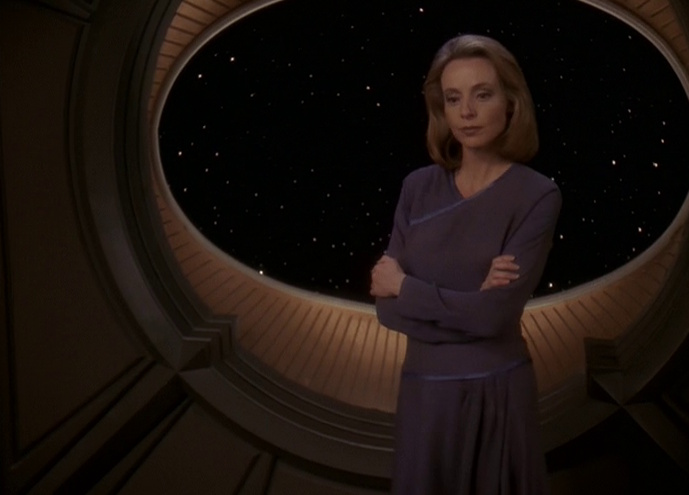
How many seemingly friendly characters show up, only for it to be revealed that they’re harbouring some kind of dark secret? I know that this one isn’t just a Star Trek thing; we see countless examples of this kind of stock character throughout all of fiction, really, and especially on episodic television. But just because it isn’t unique to Star Trek, that doesn’t make it any less of a cliché!
Because these kinds of stories can feel very different, depending on which show we’re talking about and even which individual characters are involved in the story, I’m inclined to give it a pass. There’s a big difference between, say, The Next Generation’s Man of the People and Voyager’s Ex Post Facto, which both feature apparently friendly characters who have some kind of secret. So there are ways to keep this kind of story feeling fresh and engaging, even while using the same basic character archetype.
My Verdict: Keep It!
So that’s it!
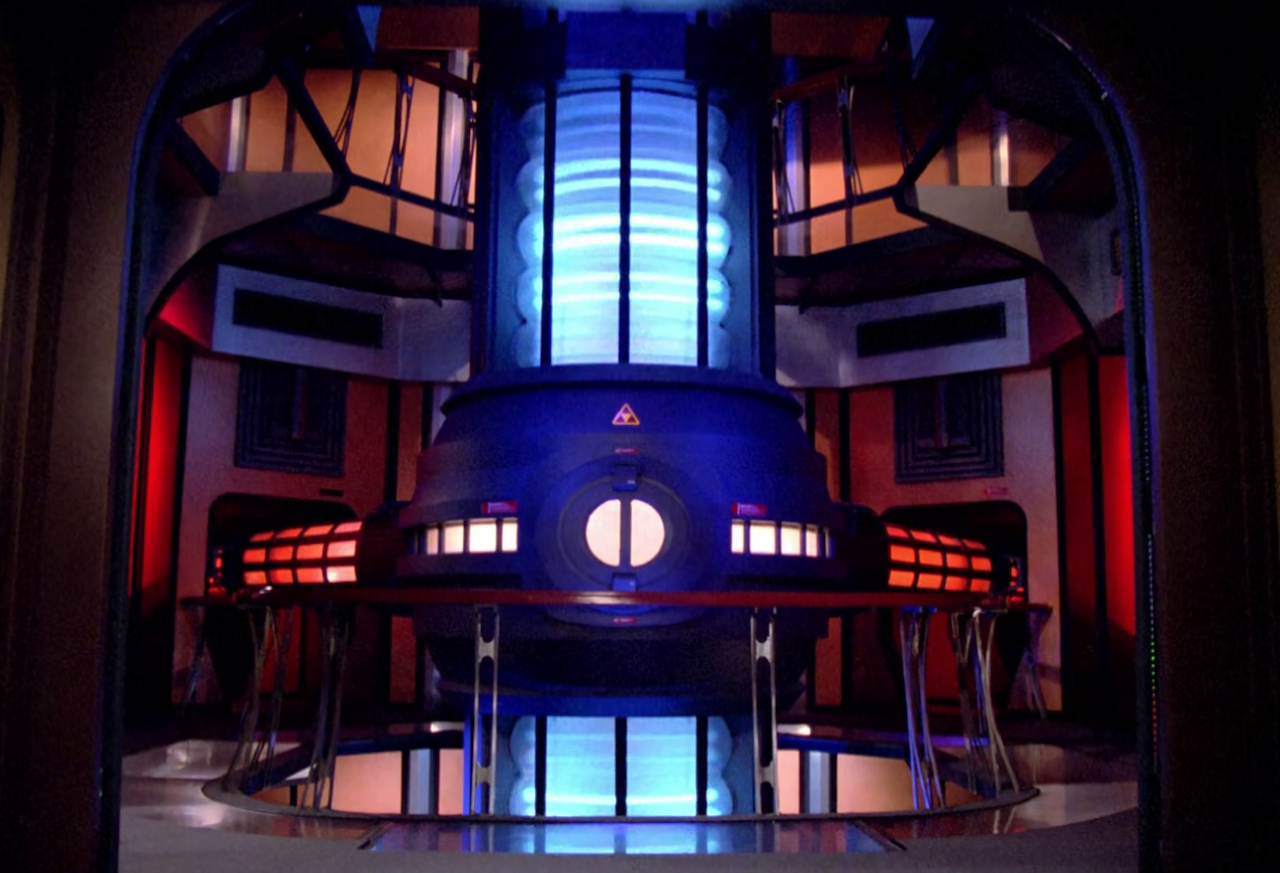
We’ve taken a look at some more of Star Trek’s narrative clichés, and decided whether or not they should be allowed to stick around in the future!
I hope this has been a bit of fun, or at least interesting. The original Tumblr poll (linked below) really hit me and gave me a ton of ideas. There may be more “clichés” to talk about in the future, too, but I think two long pieces on the topic is sufficient for now! But watch this space, because I might revisit this in the future, either with more potential clichés or to dive deeply into some of the ones we’ve already discussed. There are a few that could definitely be the subject of a longer article or essay one day!
Thanks for checking out my thoughts on all of these… and Live Long and Prosper!
You can find the original Tumblr poll (which has since closed) by clicking or tapping here, and my first piece on this subject by clicking or tapping here.
Most of the Star Trek franchise – including films and television series discussed above – is available to stream on Paramount+ in countries and territories where the platform is available, and is also available on DVD and/or Blu-ray. The Star Trek franchise – including all properties discussed above – is the copyright of Skydance/Paramount. This article contains the thoughts and opinions of one person only and is not intended to cause any offence.
 Trekking with Dennis