

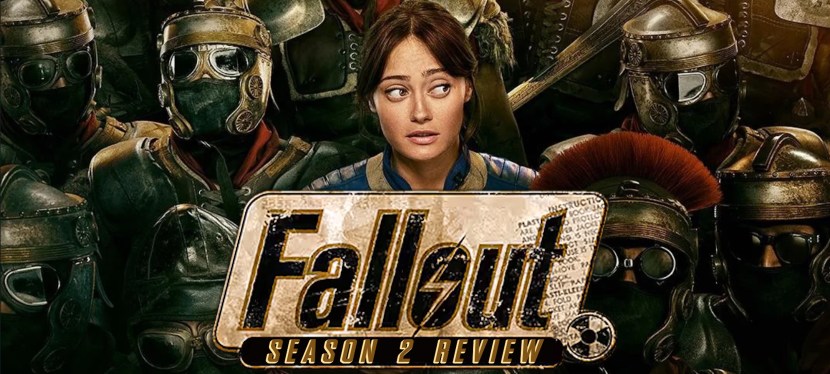

Spoiler Warning: Beware of spoilers for Fallout Seasons 1 & 2, as well as multiple games in the Fallout franchise.
I just finished watching the second season of Amazon and Bethesda’s Fallout series. A couple of years ago, you might remember me writing here on the website that Season 1 had been okay, but not exceptional, and I don’t remember Fallout even getting close to being in contention for one of my End-of-Year Awards in 2024. In fact, I was one of the rare dissenters back in Season 1, which seemed to be winning praise almost across the board, from long-time fans of the franchise to new viewers and beyond.
So… was Season 2 more of the same, an improvement, or does it represent a decline in the show’s quality? Let’s get into all of that today.
As always, I like to give a little caveat. Everything we’re going to discuss in this review is the *subjective, not objective* opinion of just one critic. If you adore Fallout and think it’s the best thing you’ve ever seen, if you despise it and think it’s unworthy of its source material, or if you just don’t agree with some or all of the points I raise… that’s totally okay. There ought to be enough room in the fan community for differences of opinion and polite disagreement without resorting to name-calling or (radioactive) toxicity!
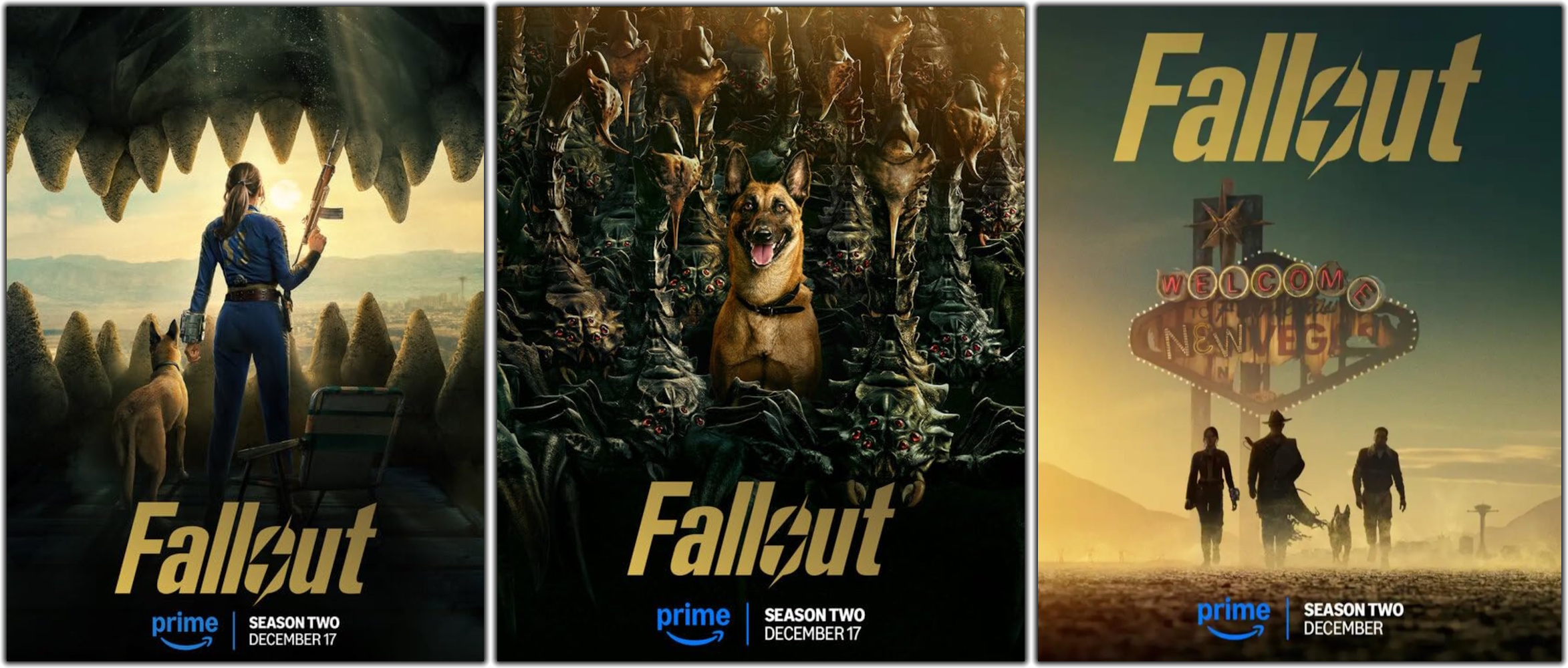
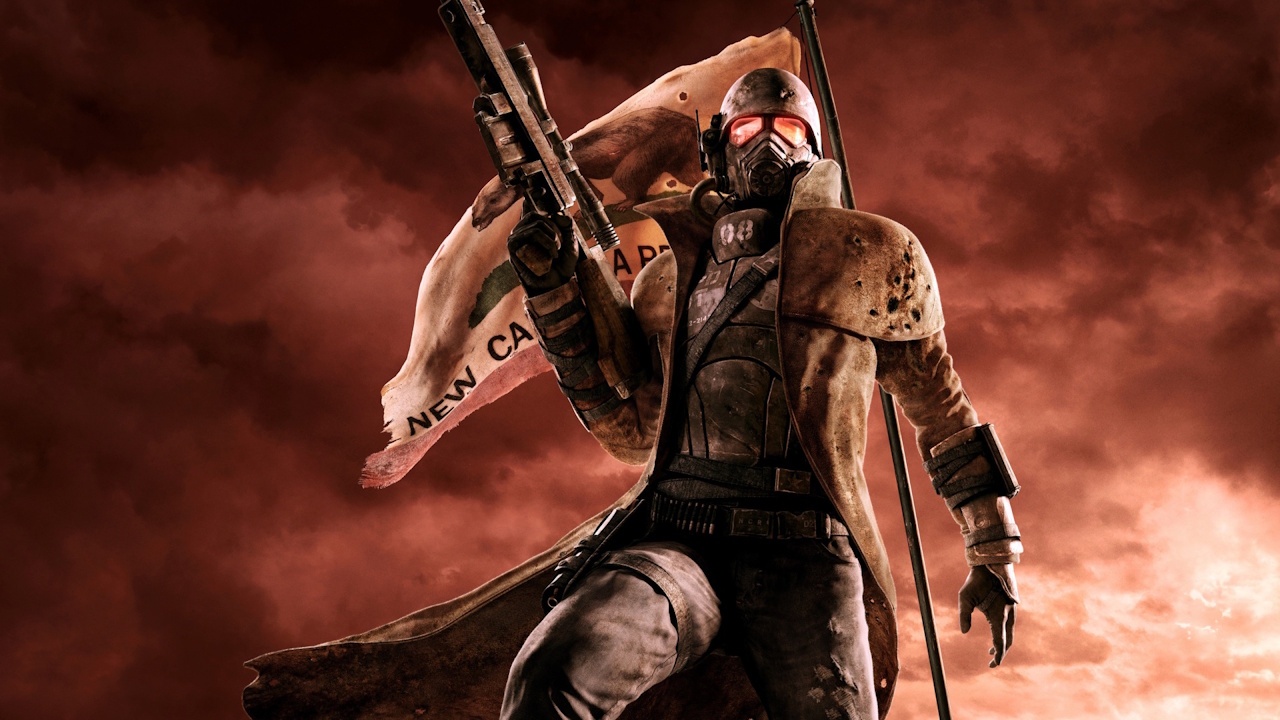
Secondly, I think you should be aware of a couple of things before we get into the meat of this review. I always like to explain my background with a long-running franchise before diving into any kind of critique, simply to explain how experienced or inexperienced I am with what can be complicated and detailed worlds, backstories, and lore. In this case, I have seen Fallout Season 1, I’ve played Fallout 3 and all of its DLC, and I’ve played the main campaign and some of the side-quests in Fallout 4. But I am not familiar with the first two games in the Fallout series, from before Bethesda Softworks’ acquisition of the IP, nor have I played Fallout: New Vegas.
With both Fallout 1 and Fallout: New Vegas having an impact on the story of the TV adaptation’s second season, I thought I should be up-front about that – either so you know where I’m coming from, or in case you decide that my opinion is invalid and you choose not to read any further. No hard feelings, if that’s the case! I’m by no means the world’s biggest Fallout fan, though I would consider it to be a franchise I generally enjoy. I just think it’s important to be clear about such things.
As a final note before we talk about the TV show’s story: I’m generally content to consider adaptations and spin-offs on their own merit. That is to say, despite Bethesda Game Studios’ insistence that the Fallout TV series is “canon” and coexists in the same universe as the games… I’m not really interested in that, as I’m not someone who obsesses over this franchise’s lore and history. If you are, and if the TV series changes or reworks some elements of Fallout canon that you disapprove of… that’s fine, but it’s not really what I’m going to focus on in this piece. I want Fallout to be internally consistent within itself; if it contradicts one of the games, I’m content to give the series room to explore such a story point, and judge it on its own merit at the end. Again, if that’s not something you’re interested in, or you want a review that goes hard on the minutiae and lore of the wider franchise… no hard feelings if you choose to stop reading!
Okay, with all of that out of the way… what’s the headline?
Like Season 1, Fallout Season 2 was fine… but far from great. It held my attention well enough most of the time, and some storylines and characters were stronger than others. But there were some *incredibly* cringeworthy moments that I absolutely detested, some confusing or convoluted story points, totally disconnected sets of characters whose storylines barely intersected at all, and a whole lot of padding, wheel-spinning, and unnecessary diversions for a main storyline that had, at most, three episodes’ worth of actual narrative content.
Let’s begin with a big-picture critique of one of the main storylines.
I don’t think that Fallout is well-served by delving deeply into the questions of “who launched the nukes and why?” Often, the point of stories set in a post-war or post-nuclear setting is that the whos and whys don’t matter – because no matter who started it or what their goals may have been, *everyone* lost out when the world as they knew it came to an end. By putting several of its core characters right in the middle of this shadowy, world-ending conspiracy, Fallout is jumping head-first into a question that has simply never needed to be answered.
In my review of Season 1, I said that it was great fun to catch a glimpse of the world of Fallout prior to the bombs dropping, and I stand by that. Seeing what the world looked like, and what was lost when the bombs fell, remains an interesting element for the series to explore – and because of the nature of video games as a medium, these kinds of flashbacks to the pre-war world aren’t usually possible, or at least not to the same extent. But there are ways to explore the world before it became the Wasteland without following the stories of people who were major players in what was to come.
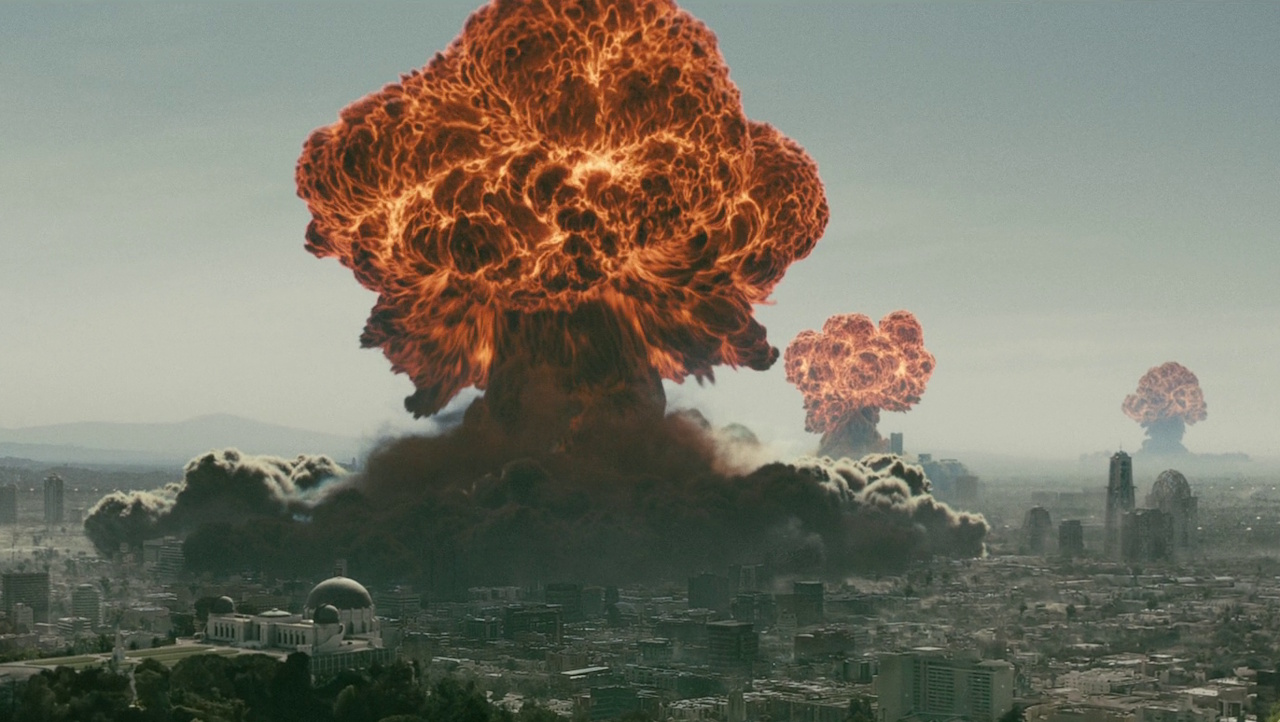
Cooper Howard’s character worked well when he was a man willing to do anything to find his family, desperately hoping they were still alive and sealed in a vault somewhere. But when he became a kind of double- and then triple-agent for various pre-war factions who were all squabbling over the show’s magical macguffin… far from elevating his character into a Bethesda Games-style “chosen one,” I felt it actually detracted from who he was in a major way.
Not every character in a story like Fallout can or should be someone incredibly important. And we don’t need to know why the bombs fell – two centuries in the past from the perspectives of most of the residents of this world – to understand that the Wasteland is a dangerous place and that desperate people are willing to do some pretty messed-up things. By putting Cooper so close to the conspiracy, rubbing shoulders with some of the people who schemed and plotted to launch the nukes and end the world… Fallout lost something from its post-apocalyptic setting. And there’s a real risk that, in overexplaining what happened, who did it, and why, Fallout will be unable to come up with a satisfying explanation to a mystery that’s now almost thirty years old. Some things are genuinely better left unexplored, and I fear that the conspiracy surrounding the nuclear exchange that created the Wasteland will turn out to be one of them.
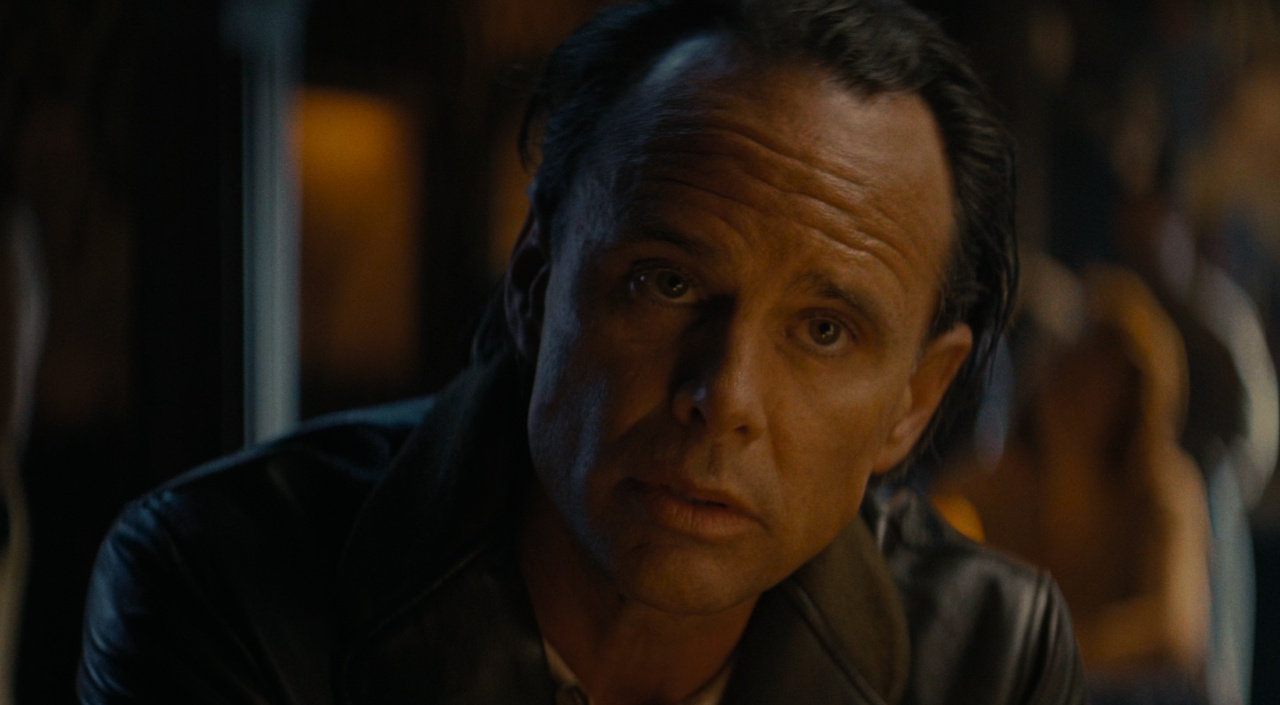
We’ll stick with Cooper for now, since he was part of two major storylines in Season 2.
In the show’s present day, Cooper – as the Ghoul – accompanied Lucy to Las Vegas, hoping that Hank would lead him to his family. This story had its moments, but in a season that seemed to spin its wheels in places or get sidetracked with relatively unimportant stuff, the Ghoul’s decision to turn Lucy over to Hank – and his subsequent injury – felt pretty rushed.
It was always obvious that the Ghoul had his own reasons for going with Lucy, and even when they seemed to be getting to know each other and even working well together, his agenda would always lead him to turn on her if it suited his purposes. But that moment has to make sense in-universe, and there was nothing we saw from Hank’s indoctrinated assistant in the scene leading up to the conflict with Lucy that convinced me that the Ghoul was ready to give up or give in. What did Hank say to him? How did he *prove* that his family was in the vault, and under threat – especially in light of revelations in the final episode? I’d rather have spent half an episode on that conversation than on Lucy and the Ghoul fighting scorpion-monsters in an abandoned hospital.
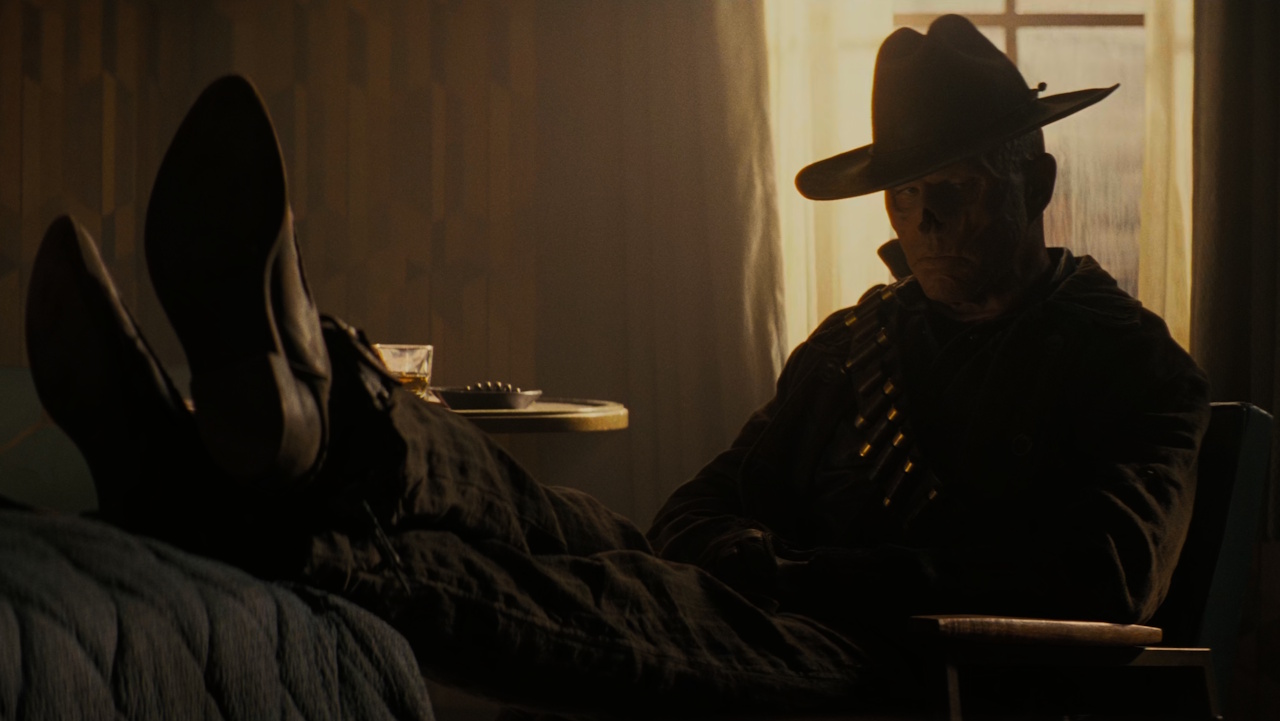
Despite my feelings on whether a story about the pre-war conspiracy was either necessary or a good idea, Cooper’s moments within that story were quite well done. The idea of someone who’s generally a decent person struggling to do the right thing under tremendous pressure is a common enough story outline, but it was executed well – for the most part. As an actor, Cooper made for an interesting choice of someone to send undercover; celebrity status granted him access to people and places that others wouldn’t be able to reach, and a skillset from being on screen allowed him to both blend in and deceive.
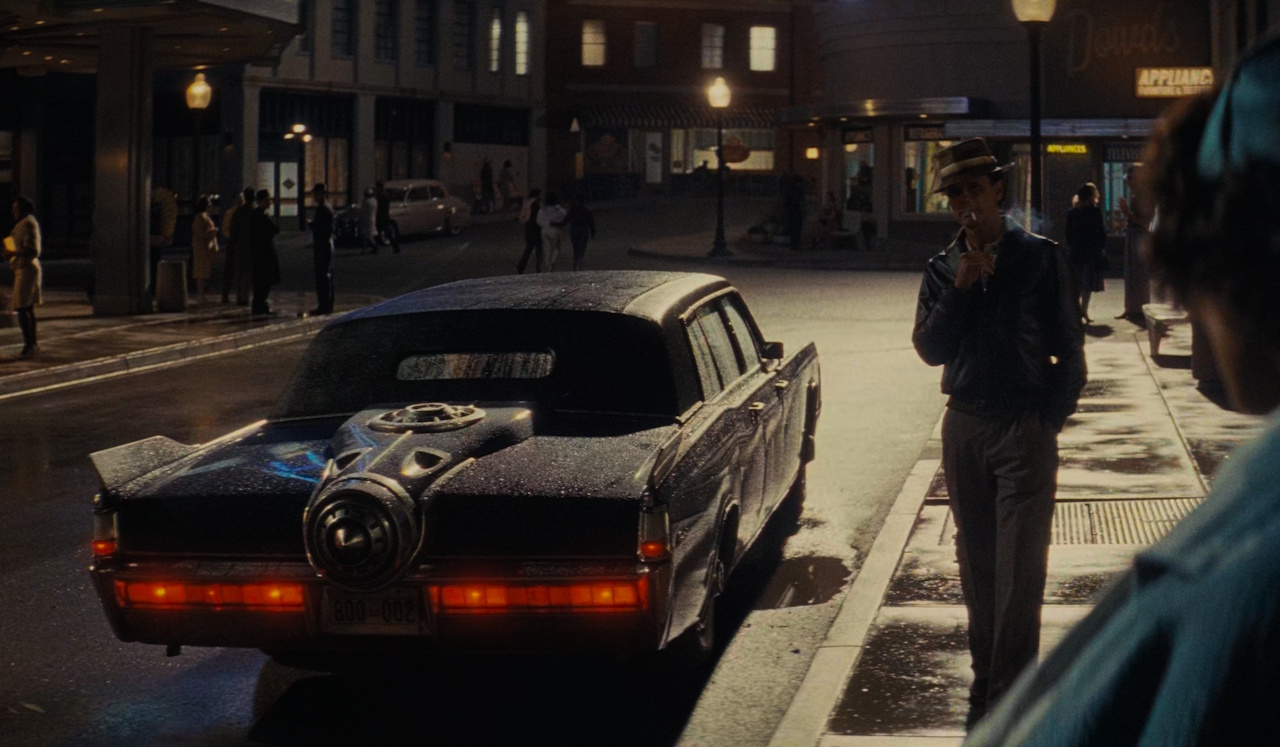
There were moments where Fallout seemed to wander into an almost film noir presentation, in some of these pre-war segments, with smoke-filled rooms, body doubles, and the constant sense that there was more going on than meets the eye. Even while I was questioning the overarching storyline, I couldn’t deny that it was being brought to the screen pretty well, and I found myself getting caught up in Cooper’s undercover adventures and going along for the ride.
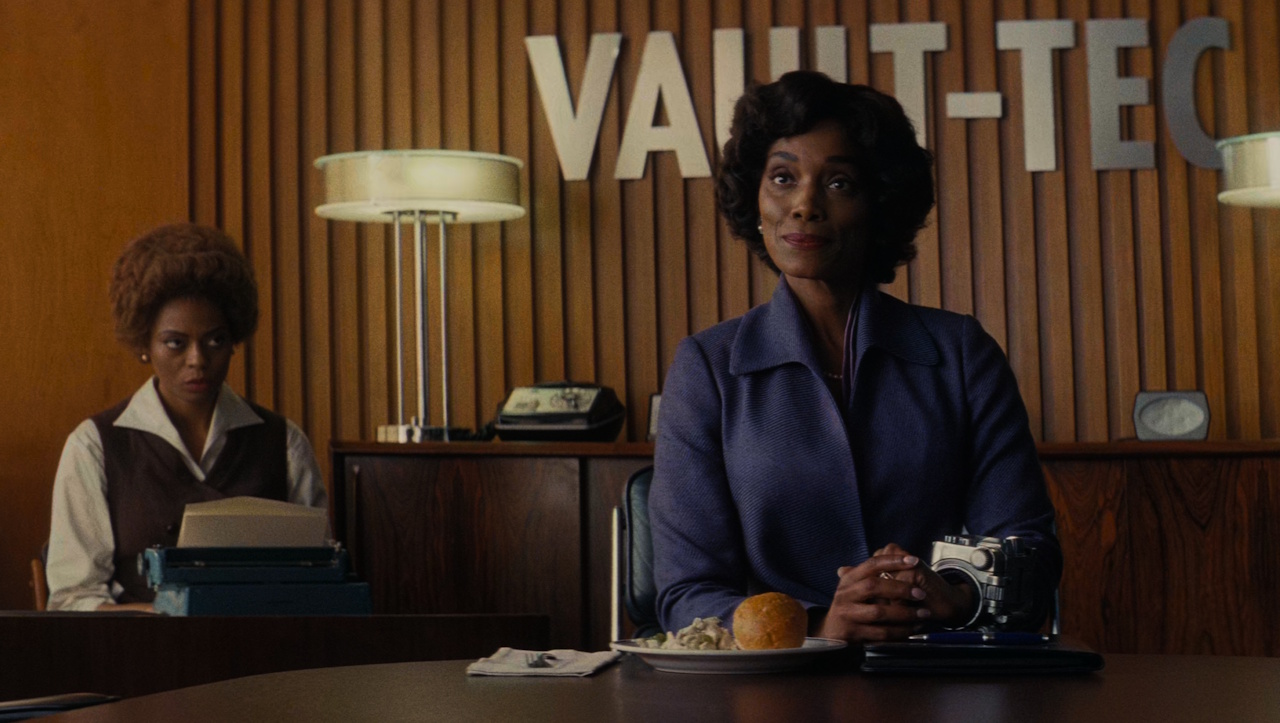
We can’t talk about Cooper without also talking about Barbara. In Season 1, Barb seemed like a villainous schemer who’d fully bought into Vault-Tec’s conspiracy. I’m glad that this presentation didn’t last, and that it was revealed that, far from being a high-ranking villain bent on maximising shareholder value through mass murder, Barb was just as out of her depth as Cooper. This cemented their relationship in a genuinely positive way for the series, adding to our understanding of the Ghoul’s pre- and post-war lives, and his quest to find his family.
But – and you knew a “but” had to be coming – in a season that spent *ages* on meaningless waffle and dead-end side-quests, this revelation was catastrophically rushed. As above with Cooper, Hank, and Lucy, I could’ve happily spent half an episode or more on this revealtion, with Barb explaining through an extended flashback sequence how she gradually became uncomfortable with Vault-Tec’s plans, how she tried to learn more, how she was horrified, and ultimately threatened and scared into silence. This pivotal moment that switched up her characterisation, literally taking her from one of the show’s worst villains to a genuine hero, was communicated very poorly in a sequence that was just too short.
If other storylines in Season 2 had been stronger, I might be lamenting that we didn’t get “just one more episode” to better explore some of these narrative beats and ideas. But when the season wasted time, got sidetracked, and spent entire episodes on what feels like absolutely nothing of consequence? It’s even worse that we didn’t get that time back to spend on these far more important narrative and character moments.
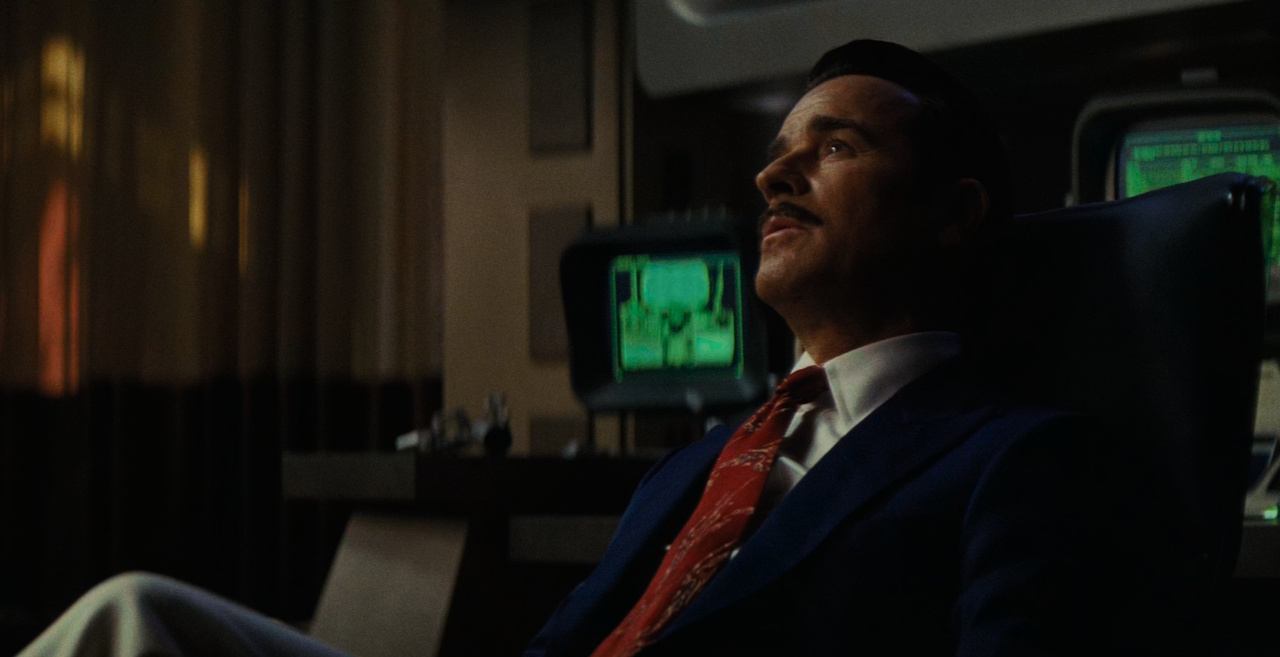
Barb’s story hammers home the deviousness of Vault-Tec’s investors – who, I think it’s safe to say, we all assume will be revealed to be the Enclave, right? What I will say for this pre-war storyline was that I liked its unpredictability. When it seemed like you figured out who Mr House was, it turned out to be a body double. When you thought you knew who was going to press the button and drop the bombs, it changed – then changed again. And when you thought someone was going to do the right thing… that got ripped away from them, too. It made for an intriguing, if imperfect, noir-style conspiracy story. And I generally enjoyed it for what it was, despite its flaws.
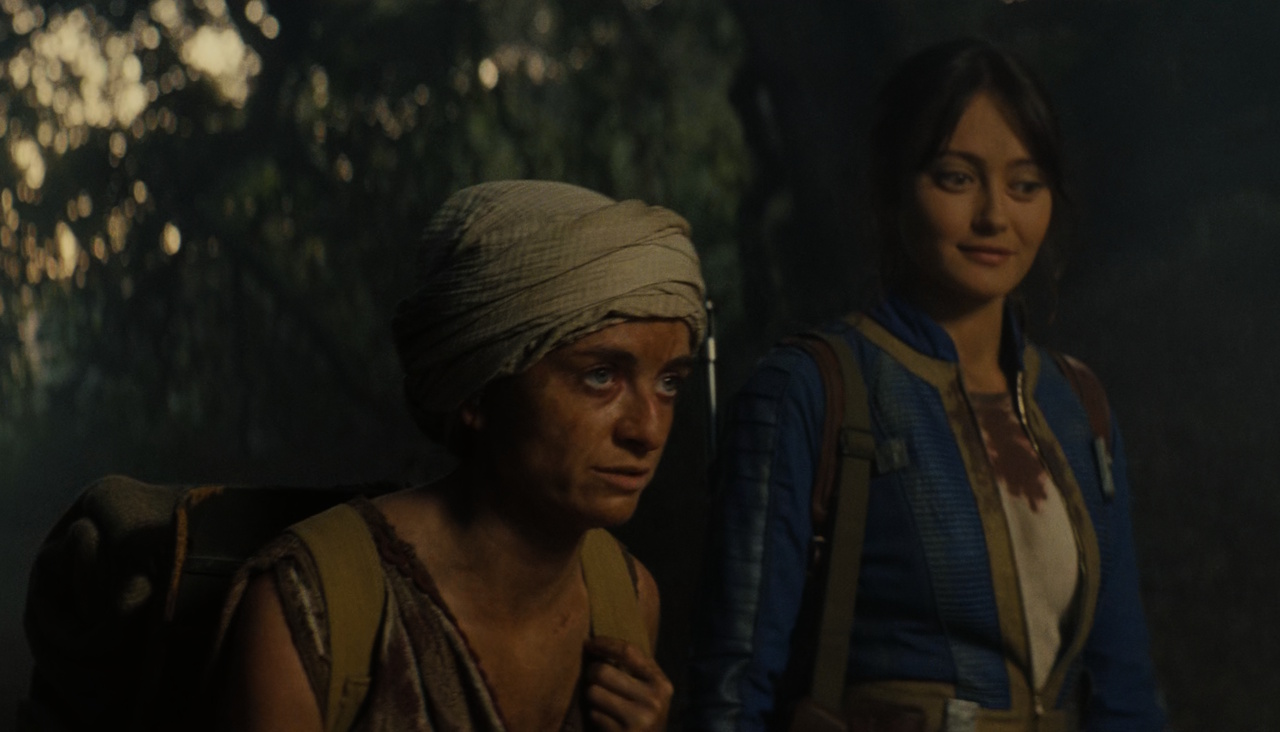
Lucy annoyed me, especially in the first half of Season 2. Her entire arc last time saw her retain her humanity while learning how the Wasteland operates – and what’s necessary to survive in this new environment. But Lucy seemed to undergo the absolute worst kind of character regression this time, taking her back to being the naïve “vaultie” that we first encountered right at the beginning of the story. Lucy made genuinely moronic decisions when fighting the Khan group, at the hospital, and when dealing with the Legion, to name three examples – and she almost got herself and the Ghoul killed on multiple occasions.
Giving a character an arc is great. Fantastic, even. But it’s like Fallout’s writers forgot that they’d already given Lucy that exact same arc the last time around; this was a regression that led to a repetition of what we’d already seen. If some of the storylines that Lucy got caught up in in those early episodes had been particularly strong, I think I’d have still felt this regression was a disappointment – but a solid story could’ve blunted some of that. But the hospital diversion achieved absolutely nothing and wasn’t so much as mentioned thereafter. Nor was the fight against the Khans. And while there is still more to come from the Legion, as we’ll discuss, it wasn’t exactly the season’s highlight for me.
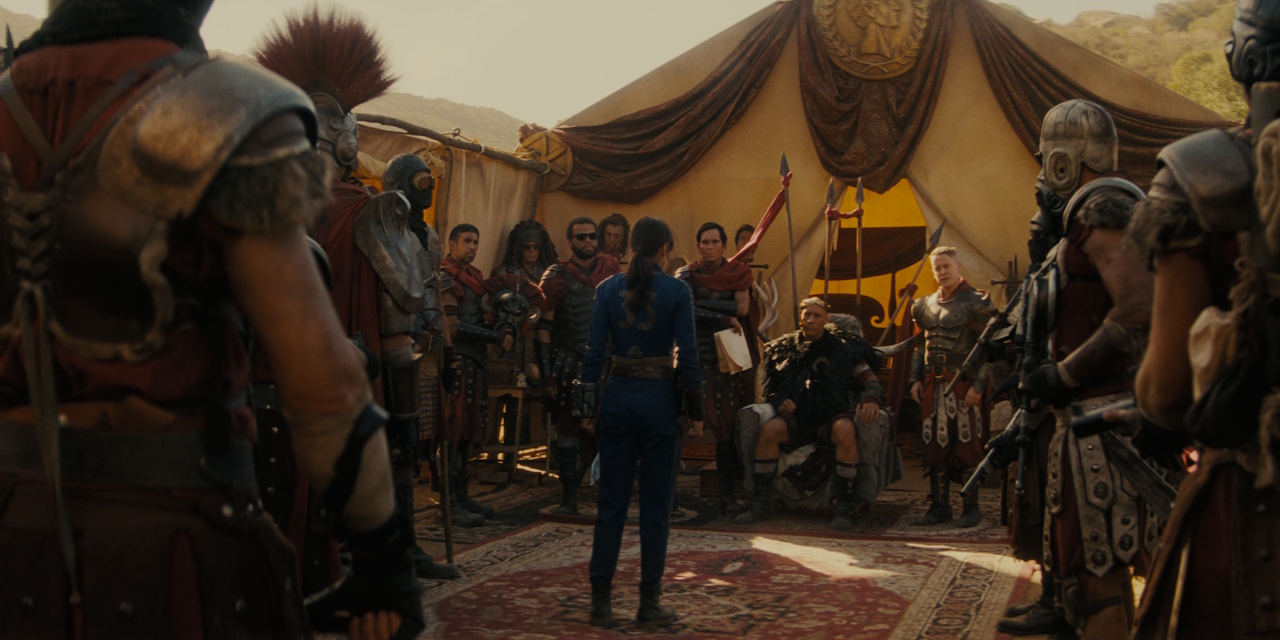
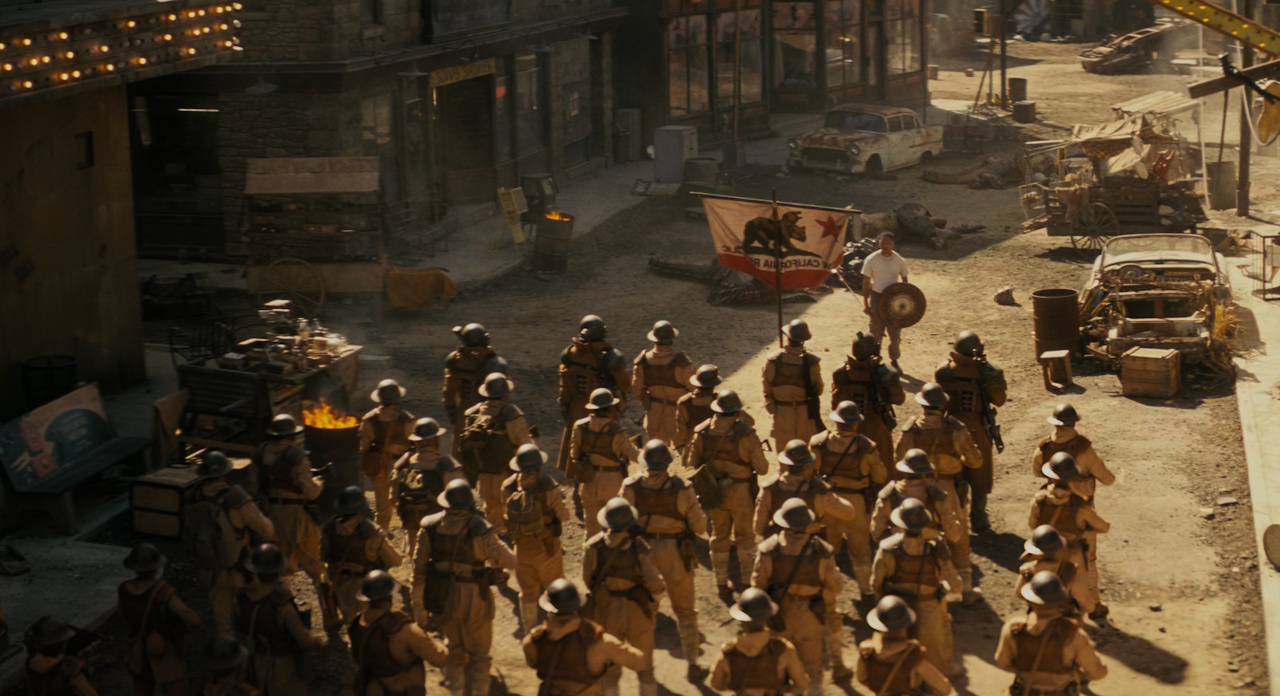
The Fallout franchise is not exactly subtle with the way it portrays many aspects of its post-apocalypse, so the Legion – the way they come across in this series, at any rate – didn’t feel out-of-place. There’s a metaphor in there about war, and how two apparently identical factions can be squabbling over something that seems utterly insignificant or ridiculous from the outside, as depicted through the Legion’s competing encampments and the corpse of their deceased Caesar. And I like the Legion’s style and what it says about how groups cling to elements of the familiar, even when those things have lost all meaning, centuries later. The Legion styles itself on a very uninformed vision of Ancient Rome, complete with Roman-inspired costumes, and again I found that to be both interesting and fun.
This extended to the Legion’s treatment of Lucy – literally trying to crucify her, at one point, before the Ghoul’s intervention. But after the Ghoul set off an explosion at the Legion encampment, the faction seemed to disappear from the story… only to re-emerge right at the end as a threat on a scale not at all comparable to what we saw. By making the Legion out to be so ridiculous (and by making the scale of their encampment seem so small), Fallout left me with the impression that this faction wasn’t going to be important. Yet by the end, Hank is holding them up as a “boogeyman” to frighten Lucy, Lucy herself says the Legion is going to massacre everyone in New Vegas, and the Legion seems to have spawned an entire army out of nowhere, immediately after its own bloody civil war.
Huh?
In the same vein, we have the New California Republic. The NCR, which Lucy and the Ghoul encountered on their journey, seemed to have been decimated after the attack on its capital of Shady Sands, and it was strongly implied that the few soldiers we met were the very final holdouts of a long-dead faction – the Ghoul even said so to their faces. So… where did all of the NCR soldiers come from in the final act of the final episode? Army ex machina is one way to solve New Vegas’ Deathclaw epidemic, I guess… but not a very interesting one, nor one that made sense in the context of the story.
Am I going bonkers? Did I miss something, somewhere, that showed us that both of these factions are bigger (and more alive, in the NCR’s case) than I thought? Because one army showing up out of nowhere is bad enough, but *two*? I know I watched every second of every episode… but maybe it’s my old brain playing tricks on me, or something. I just found it hard to understand how and where both of these factions – who are presumably going to be important in at least the first part of Season 3 – got so many soldiers from.
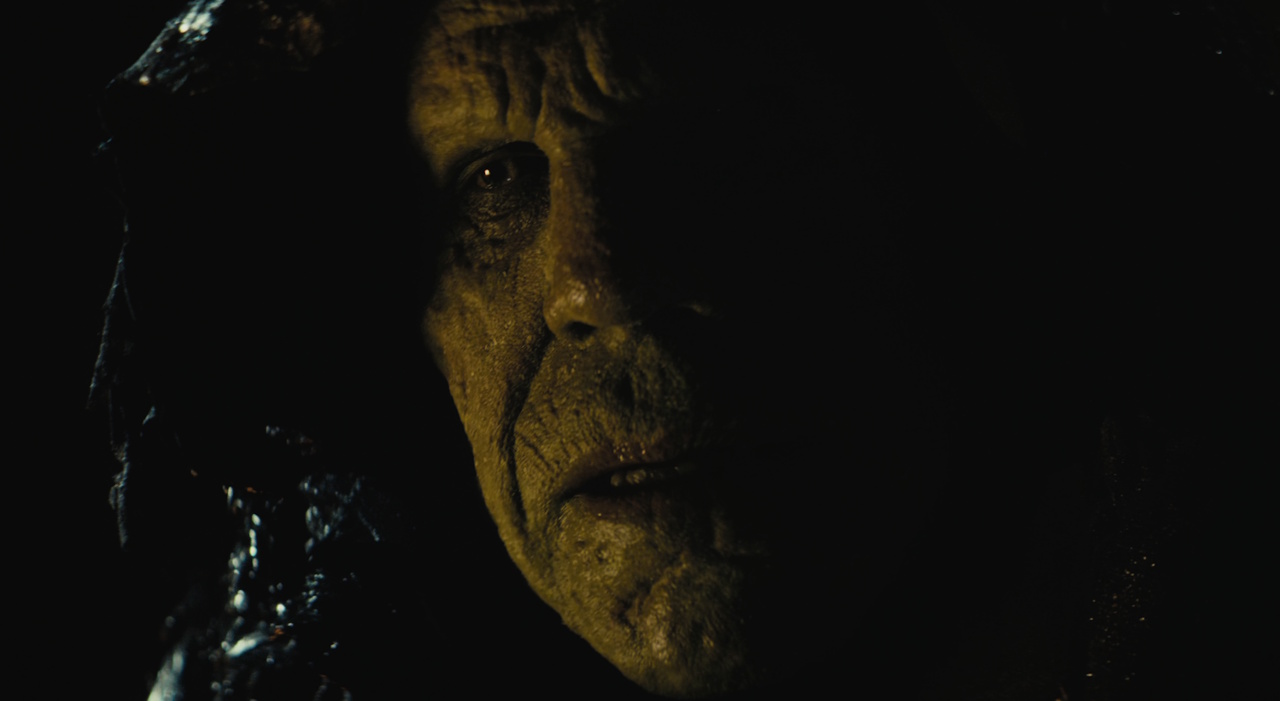
If Fallout’s iconic Supermutants are going to be important in a future season or episode… why not do more with them this time? The Ghoul was injured, dragged away by a Supermutant, healed, and then dragged back to Vegas again for… reasons? It felt like padding; something to do to fill the time on screen because the rest of the story wasn’t quite ready for the Ghoul to arrive at the Vault-Tec facility yet. I get that it was meant to be a tease of something to come – at least, I hope that’s what it was, and not just raw nostalgia bait for fans – but even so, it felt like a total waste. Either commit to having the Supermutant present for more than a single scene, or skip this unnecessary diversion and spend longer on some of the rushed pre-war stuff that we just talked about.
As long as there’s a good narrative reason for their inclusion, I think bringing the Supermutants into Fallout makes a lot of sense – as I said, they’re an iconic part of this world. But this introduction just felt like a complete bag of nothing, and even if it’s meant to be setting up something bigger to come in the future, there’s no getting away from the fact that it felt like a waste of time in the moment.
Hank (Lucy’s father) ran an intriguing operation out of the Vault-Tec facility. At first, I thought it was meant to be an above-ground building, and I wrote in my notes that it didn’t make sense that such a building could’ve survived intact for so long. But this was, I belatedly learned, meant to be an underground facility, which makes a lot more sense. Hank used that facility to hone House’s mind-control tech, and this was an interesting angle for his character and certainly gave him a new direction.
I have a bunch of unanswered questions about Hank, though, and I think the success (or otherwise) of this storyline will have to be assessed when we know more. Hank seemed to have perfected the mind control tech… but why did he wait decades after his un-freezing to even try? Why did Hank and Steph (who are revealed to be married) not remain married in the vaults, nor even emerge from cryo-sleep at the same time? Did Hank genuinely wipe his own memory at the end… or is it all a ruse? My money’s on “ruse,” by the way, but you never can tell!
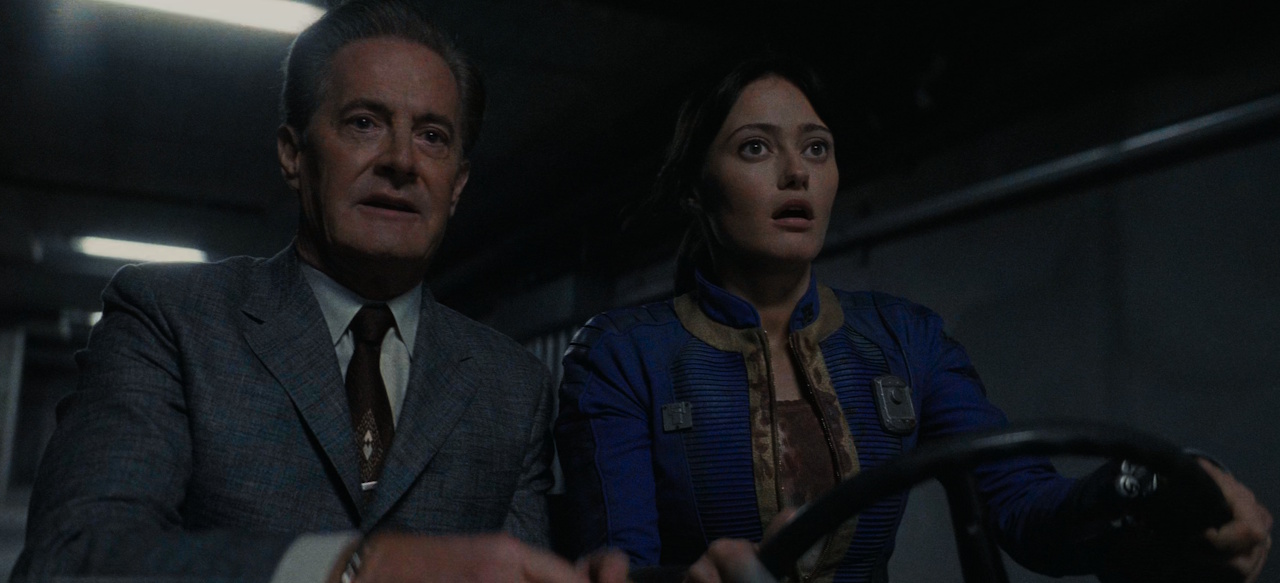
My point is that there’s a lot we still don’t know, and I don’t want to rush to judgement about Hank’s story until we have a more clear picture. I generally found Hank an interesting antagonist – he’s more than just “evil for the sake of it,” even though his exact plans are still unclear. And I kind of like the idea that Vault-Tec and/or the Enclave would be looking to find ways of enforcing peace, even if that peace comes on their very strict terms. It adds depth to what could’ve been a pretty bland villain.
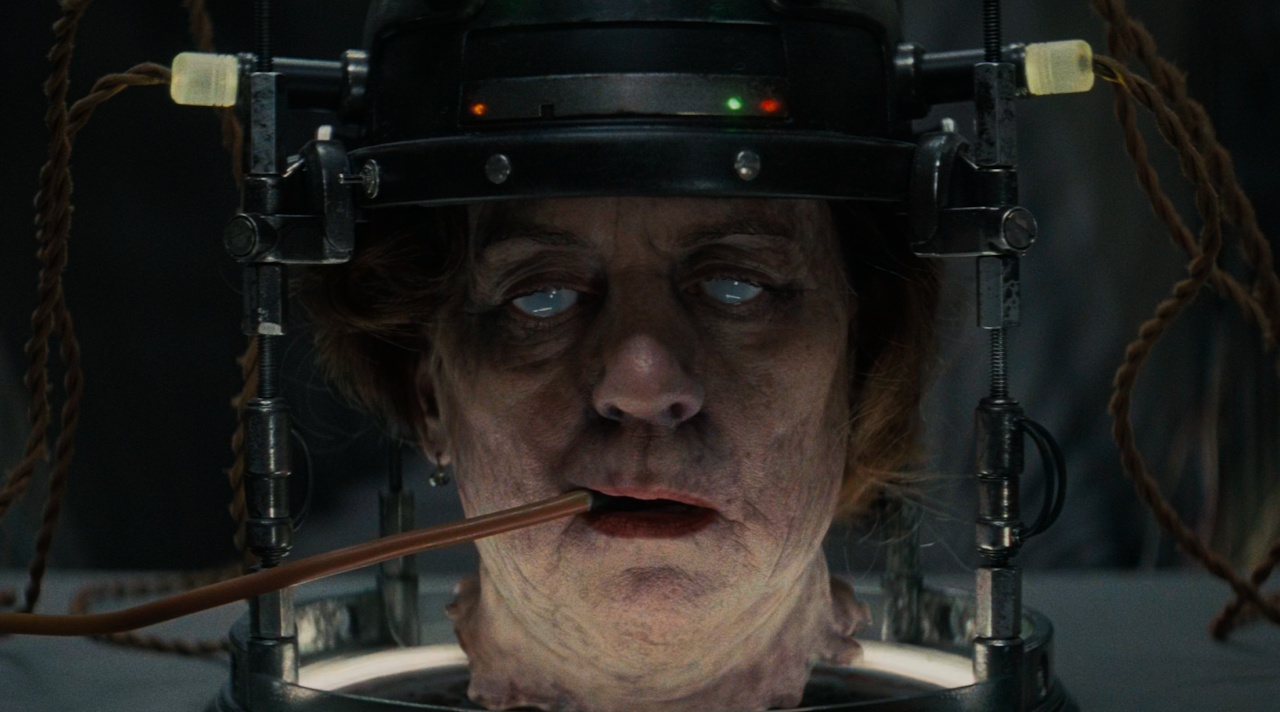
Lucy’s reunion with Hank was intense and emotional, and we went on a bit of a rollercoaster as Lucy seemed to be at least open to the possibility that Hank was doing something for the right reasons. And the scene of Hank teaching Lucy to drive the golf cart was simultaneously haunting and kinda cute. The revelation of the Congresswoman’s severed head is another story point that I felt wasn’t suitably explained, though – if she was the “computer” controlling or pacifying all of the chipped Wastelanders, why didn’t they react when the head was destroyed?
In terms of visuals, Fallout continues to be a pretty well-done and good-looking show. I like the physical props, representing iconic gadgets like the Pip-Boy, and big, room-sized computers with screens reminiscent of old television sets. The TV adaptation has done well, generally speaking, to recapture that “alt history” angle; the ’50s that never ended. Power armour looked a lot better this time around than it had in Season 1, in my opinion, especially the final NCR power armour that Thaddeus used toward the end of the season.
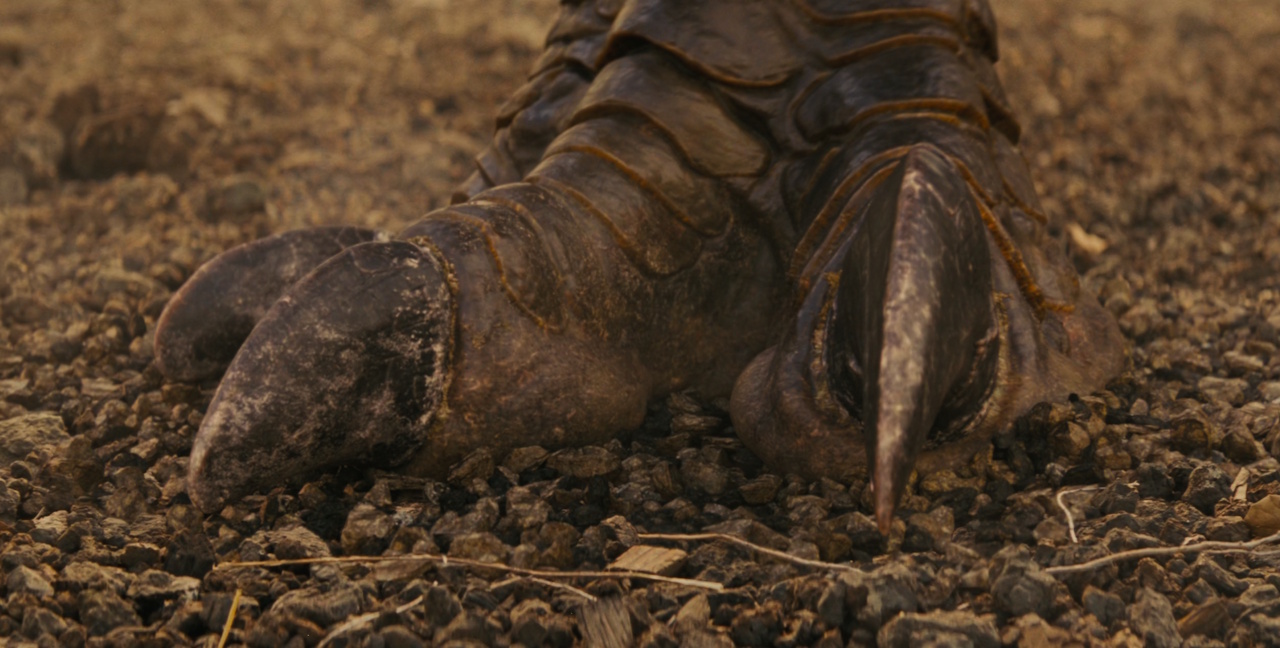
One CGI misfire that I can call to mind involved the Deathclaws. At one point in the final episode, the Deathclaw “steps” onto gravel – and the intersection of real-world set and CGI monster just didn’t look quite right; the Deathclaw felt hollow and weightless, rather than the dinosaur-esque giant lizard it was meant to be. Not the end of the world, though, if that’s really the worst CGI moment I can call to mind.
Toward the end of the season, several characters spent time in the town of Freeside – part of the broader Vegas area. And there are a couple of points I wanted to bring up, as I felt these kind of detracted from the setting and, to a lesser extent, the story. Firstly, this town was clearly meant to have a “Wild West” feel to it, which is okay – but did that need to extend to costuming, too? The Legion, for instance, clearly have a reason to dress up in Roman costumes, but why do the folks in Freeside all seem to be cosplaying as 19th Century civilians? When most of the rest of the world retains at least some of Fallout’s signature ’50s-inspired aesthetic, this town stood out all the more.
Secondly, given how strong and powerful the Deathclaws are, Freeside’s “barricade,” for want of a better term, hardly seems good enough to keep them out. You have an entire town full of people living next to a pen occupied by giant lizard monsters, and the best they can do to keep themselves safe is a few bits of sheet metal and a chain. When Thaddeus was sent crashing through the barricade, it just made me wonder how it had held out for so long to begin with.
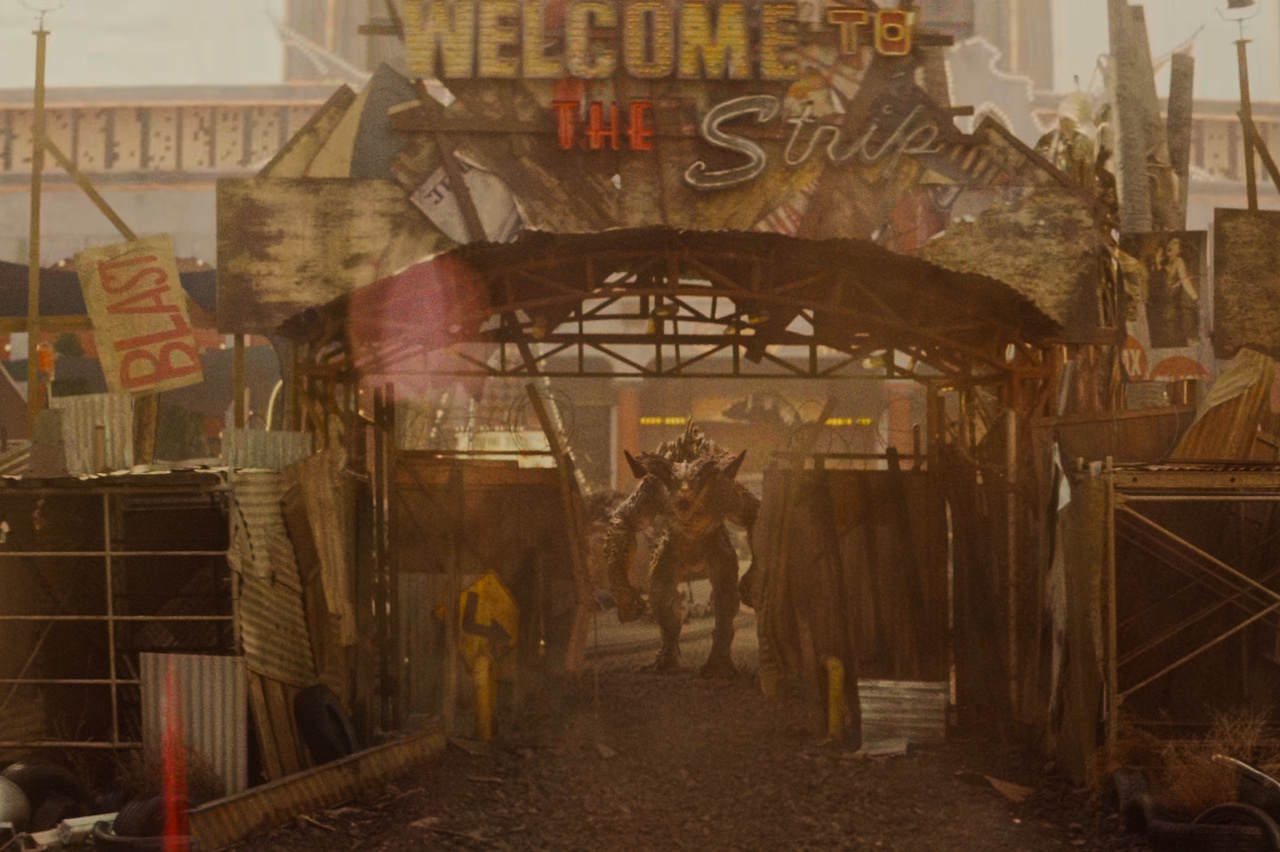
Sticking with the Deathclaws for a moment, the Ghoul and Lucy’s encounter with them felt *very* jumpy. When the pair arrived at the New Vegas strip, they were fighting feral ghouls in daylight. Then, moments later, they were approaching the Lucky 38 casino after dark. But after almost being killed by the Deathclaws (and kicking off a convoluted story about needing to get back to a place they’d just been), it was daytime again when they stood outside of the Deathclaw enclosure. Did I miss something? Why was this shot/edited in such a jumpy way?
That sequence is the only one in the season (that I can call to mind, anyway) to have had this kind of issue – which just makes it all the more noticeable. And, even if I’m being generous to Fallout, saying that maybe there was meant to be a day or two in between each of the three parts, it still comes back to the same point: this season spent too long elsewhere, spinning its wheels. If this night/day changeup isn’t a total goof and there’s meant to be time passing in between the arrival at Vegas, the escape from the Deathclaws, and the arrival at Freeside… where was any indication of the passage of time? In a better story, this would still stick out, but when Fallout really had the opportunity to cut plenty of extraneous fluff, there’s no excusing it, in my opinion. Having the Deathclaw encounter take place after dark was a stylistic choice, and one that could’ve worked, heightening the tension. But when the very next scene clearly takes place in the daytime, a stone’s throw away… it detracted from it.
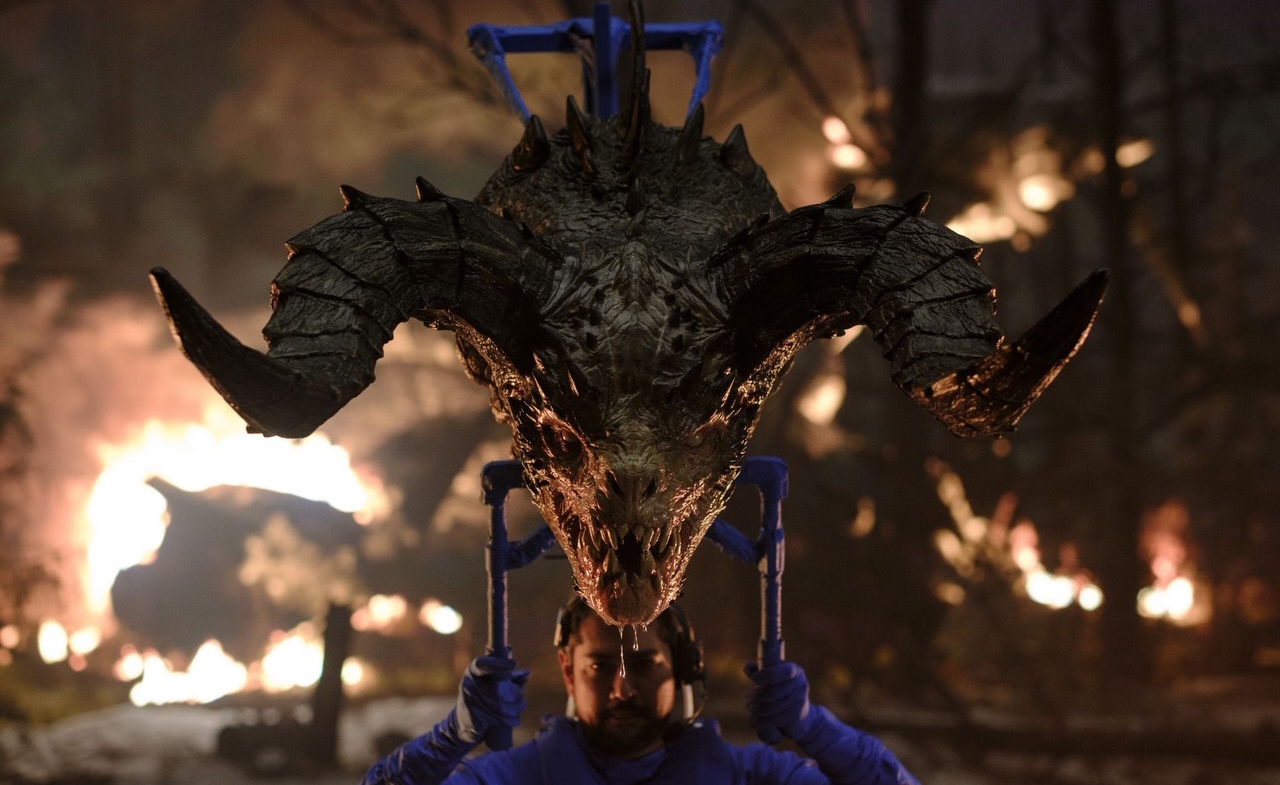
It can be hard to judge middle seasons of television stories, sometimes. There’s clearly more to come from Fallout, and how we ultimately feel about key storylines may shift depending on how they’re ultimately resolved. So I’m trying to keep that in mind as I say… what the heck was going on in Vaults 31, 32, and 33? It looks like Fallout is pushing towards a Supermutant storyline for at least one of the vaults, which could be entertaining, but after Norm’s discovery in Vault 31 last time… I kind of expected more from that side of the story.
For me, Norm (and later, the Vault-Tec survivors) felt like they were being written out of the main story – pushed aside so as not to tread on the toes of other storylines. Far from the natural-feeling, slow burn of this storyline in Season 1 – which was generally pretty interesting last time around – this story felt concocted and artificial, as if Norm and the Vault-Tec staff were acting at the behest of a room full of TV writers. If it was too soon for Norm to reveal what he’d discovered in Vault 31, why not sideline him this season? Show us a few clips of him trying to get out of the Vault and back home, but keep him trapped there, instead of sending him out on an ultimately fruitless and circular story that seems to be bringing him right back home anyway. It wouldn’t have been great, perhaps… but it might’ve been less bad.
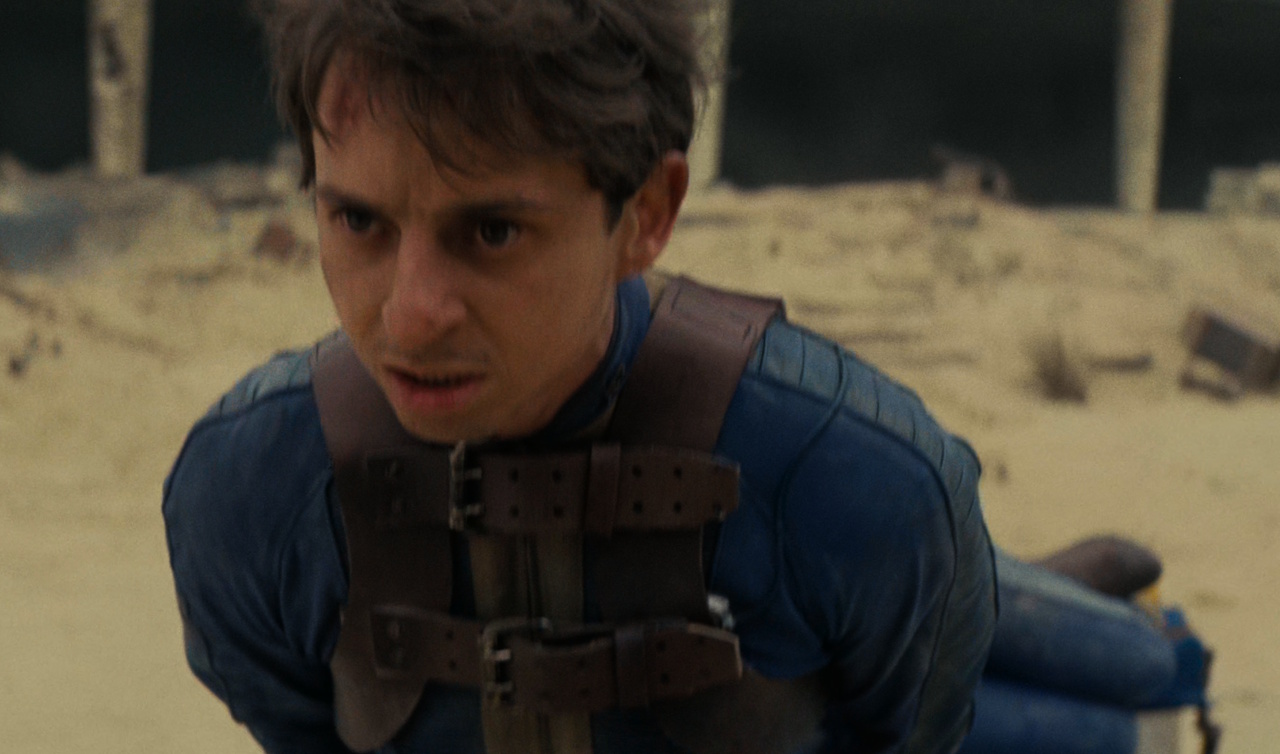
That said, I did really enjoy Moisés Arias’ performance as Norm once again. Arias had been one of the absolute highlights of Season 1 for me, and even when I wasn’t wild about some of the narrative choices on his side of the story this time, I felt he did an absolutely exceptional job. Norm’s story kept me on the edge of my seat, and as a character who feels weaker and less capable than Lucy, throwing Norm into the midst of this Vault-Tec conspiracy – and then dragging him to the surface – made for an interesting turn of events in some ways. Arias rose to the challenge wonderfully.
Norm getting a new friend (or possible love interest?) in Claudia was interesting, too, and I generally enjoyed this new character. Claudia wasn’t like the other Vault-Tec executives, as an apparent newcomer to the role, and bonded well with Norm across their adventure together. Unlike Lucy and Maximus or Lucy and the Ghoul, Norm and Claudia were on comparable terms when entering the Wasteland, and explored it together – albeit in different ways. Claudia was the only one of the Vault-Tec employees to express any kind of grief over the war and the loss she was experiencing, which added a lot of depth to her character and went a long way to humanising her.
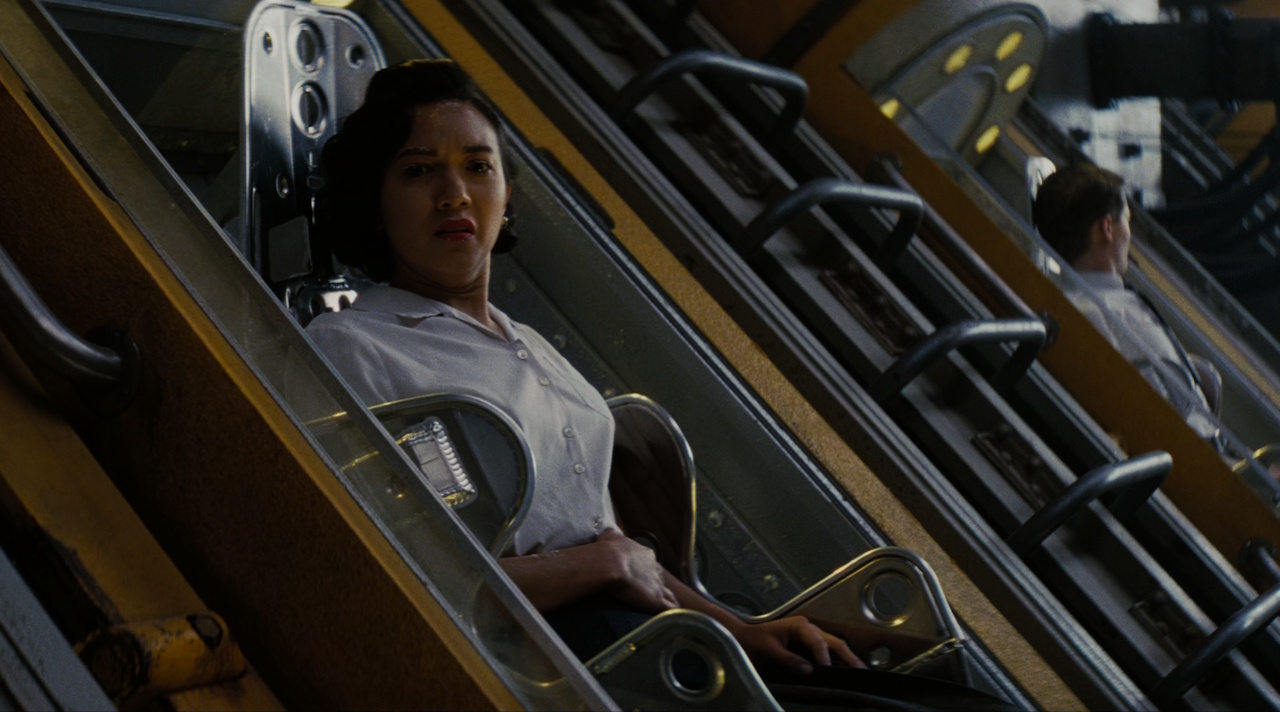
Maximus has a lot of potential to be an interesting character, and I’m still rooting for him. But my god, were his and Thaddeus’ storylines so unbearably cringeworthy – for the second season in a row. Maximus has his “fish out of water” thing with the Brotherhood, which is interesting, and the arrival of an envoy from the Commonwealth could have given him a totally new story arc as the pair worked together to prevent a war. But having gone to the trouble of setting that up, Fallout paired up Maximus with the ghoulified (or proto-Supermutant?) Thaddeus, and the result was more of the worst kind of American cringe humour that I personally just cannot stand.
We got a “Weekend at Bernie’s” story, as Thaddeus tried to impersonate the dead Commonwealth envoy – in full power armour. We got Maximus’ abortive attempt to kill the leader of his Brotherhood chapter. And then the two ran away, on a quest to save the magical macguffin that would ultimately lead them to the Ghoul and Lucy. There were interesting elements in the mix – like what’s going on with Thaddeus, and the Brotherhood’s unwavering indoctrination that only Maximus and a couple of others seem to be able to break. But the way much of this story and both of these characters were presented? It takes so much away from those points of interest to the point where I literally had to fast-forward some of the most cringeworthy parts.
In my review of Season 1, I said that it was beyond ironic that a criticism of the unchecked power of mega-corporations was coming from Amazon and Bethesda – a subsidiary of Microsoft. Fallout seemed to be sticking to its video game origins and highlighting the dangers of corporations being left to their own devices, having too much power, and really acting as a metaphor for the world we live in today. That metaphor, I argued, was at best muddled by who was producing and creating this series, but present nevertheless.
This time… that’s gone. The message of Fallout Season 2, if you boil it down, seems to be “corporations good, government bad,” or at least that corporations are inherently less evil than the United States government is. Think about it: the *real* villains are the ones involved in the conspiracy to launch the nukes, end the world, and run these unethical experiments. And the ultimate responsibility for all of that seems to lie with the Enclave – a.k.a. the American government. Or perhaps it’s better to say that the Enclave is a Trumpian “deep state;” a shadow government pulling the strings from within? Given Amazon and Microsoft’s recent moves to support Trump – the money they’re “donating” to build his ballroom, the Melania movie being funded by Amazon, their extensive investments in A.I., and of course, Bill Gates and Donald Trump apparently having a mutual friend with a private island… maybe that kind of messaging is to be expected? It’s certainly a point of note, at any rate.
So hypocrisy and irony are out… Trumpian conspiracies are in? Is that… an improvement? There’s ample room to criticise the United States government, of course, and I don’t begrudge any artist or creator wanting to make a point about, let’s say, unchecked presidential power. But the way Fallout seems to have shifted, painting the government as worse than the corporations, and even suggesting that people like Robert House are somewhat on the “less bad” side of things? It was a surprise, let’s leave it at that.
What I think we’re learning from Fallout as a TV adaptation of a video game is simply this: some of what works in an interactive format is less enjoyable – or not enjoyable at all – when you change to a new medium. Getting sidetracked on the way to your destination by random in-game events, new factions, and the like might be fun when you’re *playing* an open-world adventure game, but it’s not something that makes for entertaining viewing without that interactive component. If we use Lucy as our stand-in for the player character in this new Fallout adventure, she got into some scrapes, met some wacky characters, and had an adventure that felt, in some ways, like it came right out of the video games. But… it didn’t actually make for a cohesive or enjoyable story much of the time.
Fallout is simultaneously an ambitious project and a copycat production that fits the post-Game of Thrones streaming TV mould. Disconnected character groups? Check. Intersecting storylines? Check. A fully serialised story? Check. Cringeworthy humorous side characters? Check. World-ending, existential threat (and a conspiracy to boot)? Check. For all of the money Amazon has spent, and for all of the genuine successes at recreating the look and feel of Fallout’s Wasteland… the actual story the writers are telling in this world feels unoriginal, derivative, and small. And right now, I can’t shake the feeling that, were this not called “Fallout” and based on a game series I have a passing familiarity with… I’d have switched off by now.
So that was Fallout Season 2.
There are interesting ideas and elements in the mix, but they continue to be paired with storylines and characters that feel directionless, fake, or both. And for every genuine success Fallout manages to have with a narrative point, there’s at least one more disappointment to cancel it out.
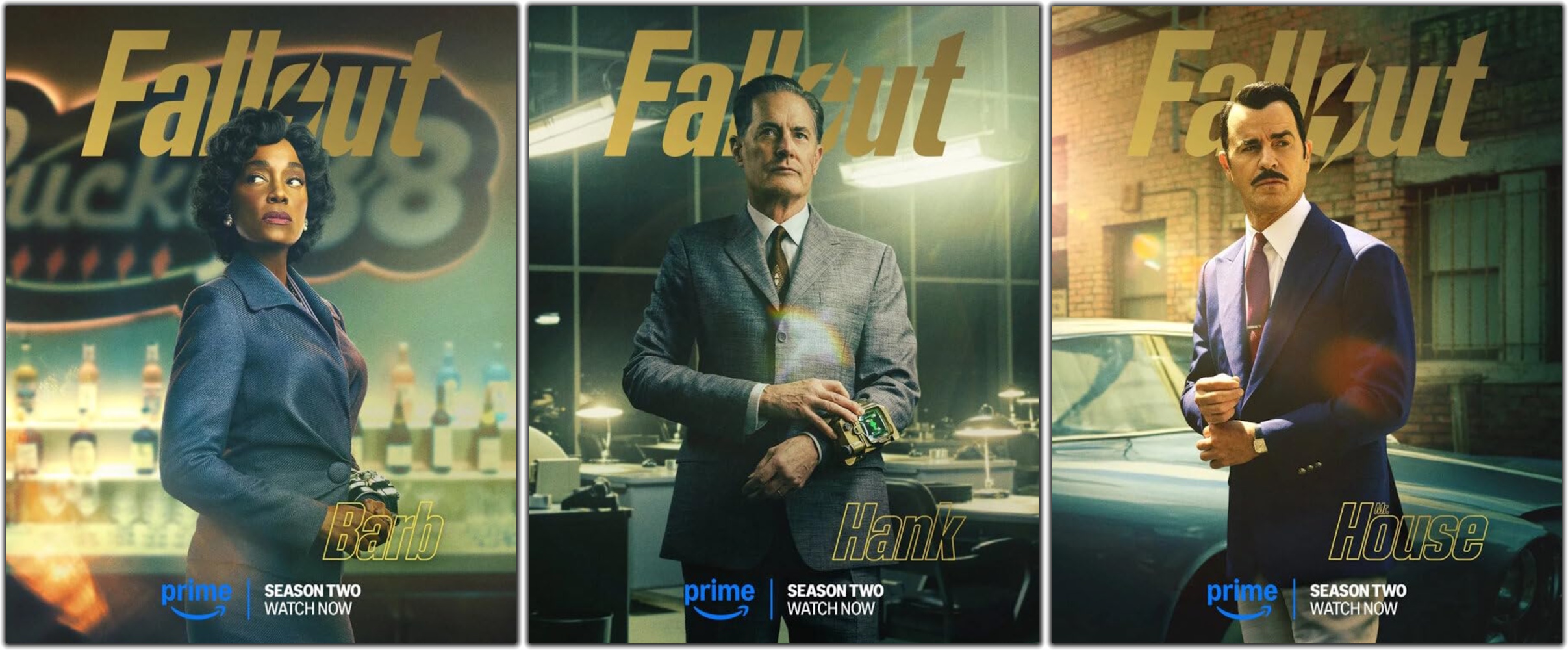
That being said, I stuck with Fallout to the end, and I daresay I will watch Season 3 when it’s ready – in 2028, perhaps, or beyond. The successful moments and enjoyable characters are worth sticking around for, even if they’re only one part of a show that can feel like a bit of a mixed bag. Fallout isn’t going to win any awards – at least, not from yours truly – but it’s clearly a successful project for Amazon and Bethesda, bringing new eyes to this pretty unique setting. If only there’d been a new Fallout video game in the last decade that I could actually recommend people play! Still, fingers crossed for that Fallout 3 remake, eh?
I hope this review has been interesting. If you stuck with me to the end, thank you! I had quite a few points that I wanted to hit this time, so I know this has been quite a long read. If you’re new to the world of Fallout and curious about where to go next, I guess the obvious suggestion from fans of the series would be Fallout: New Vegas, though as it’s not a game I’m familiar with it’s not one I can personally recommend. But hey, maybe 2026 will finally be the year I fire up the game and try it out for myself. Never say never, I guess!
At the start of the year, I put together a short list of films, games, and TV shows I’m looking forward to in 2026 – click or tap here to check it out. There will be other TV and movie reviews in the weeks and months ahead, so I hope you’ll stay tuned. Star Trek: Starfleet Academy is definitely getting a review in a few weeks’ time, after its first season wraps up, and I have plans to check out a few other programmes, too. I hope you’ll join me for some of that as 2026 rolls along. Until then… stay safe out there in the Wasteland!
Fallout Seasons 1 & 2 are available to stream now on Amazon Prime Video. Season 1 is also available on DVD/Blu-ray. Some images/photos courtesy of Amazon/Amazon MGM Studios. The Fallout TV series is the copyright of Amazon and Bethesda Game Studios; the Fallout license is held by Bethesda Game Studios. This review contains the thoughts and opinions of one person only and is not intended to cause any offence.
 Trekking with Dennis