

The first part of this review is free from major story spoilers. The end of the spoiler-free section is clearly marked.
I know what you’re thinking: Trekking with Dennis reviewing a horror film?! And it isn’t even October! What’s going on?
Well, I’ll let you in on a secret: 28 Days Later is one of my favourite horror films of all-time, and I enjoyed 28 Weeks Later, too. So when Danny Boyle announced there’d finally be a sequel to this genre-redefining zombie story a few years ago, I was immediately interested. Horror may not be my thing a lot of the time, but every now and then I don’t mind a good scare.
This is also my second zombie story in the span of a week! A few days ago, I watched Star Trek: Strange New Worlds’ zombie episode, so after this I think I’m gonna need a bit of a break from zombies for a while.
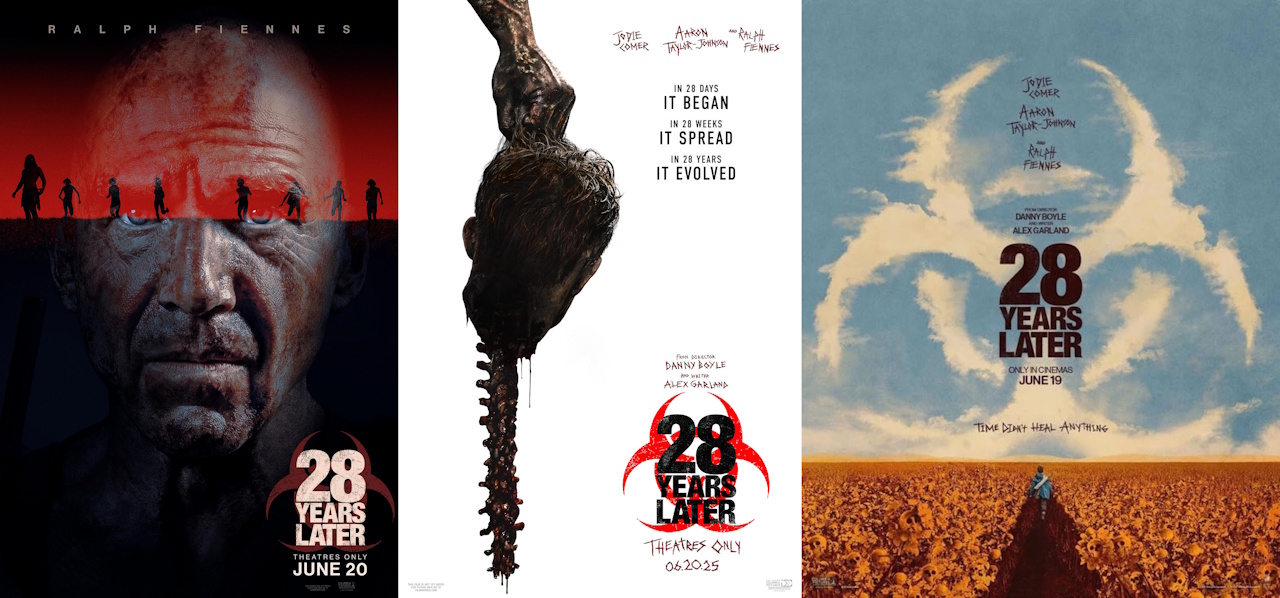
28 Years Later was… interesting. But I’ll be honest: it wasn’t really what I expected. Less a horror film than a coming-of-age family drama with a zombie backdrop, 28 Years Later leaned on its post-apocalyptic setting to tell a story focused on a handful of characters. Spike, the main protagonist, got most of the film’s attention, and that was certainly an interesting – and potentially controversial – choice.
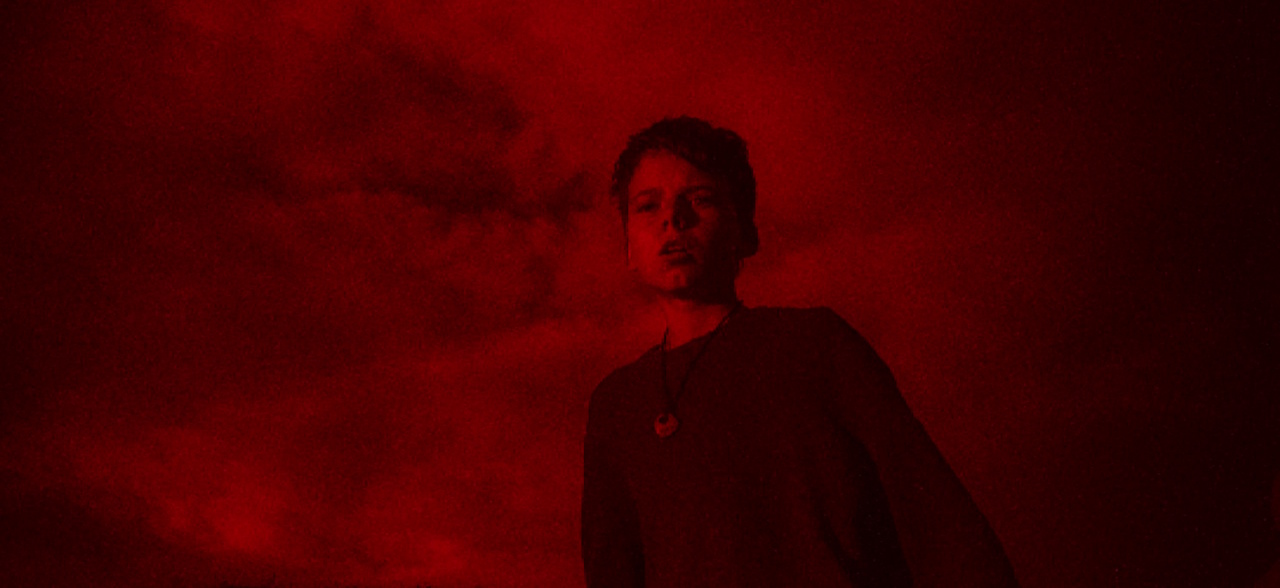
There was some fantastically creative cinematography in 28 Years Later. The film cut sequences from its post-apocalyptic present-day with imagery from war films and historical re-enactments, drawing parallels between those situations. The “Boots” refrain, heard in the trailer, surprised me by being an integral part of the film, not just a marketing stunt, and it was suitably haunting to hear that recitation atop imagery of zombies going feral. 28 Years Later was also creative with its use of colour; blood-red scenes were used for emphasis at key points in the story.
If you know me, you’ll know I’m a scaredy-cat. And 28 Days Later is up there as one of the most frightening films I’ve seen; its depiction of sprinting infected redefined what zombies could be and made them genuinely terrifying. For me, 28 Years Later just… wasn’t all that scary. It was gruesome when it wanted to be, sure; blood, guts, and other viscera are almost omnipresent in its world. But its jump-scares felt rather predictable – I could sense that something was coming, even when the film wasn’t trying to signal it. And while these sprinting zombies retain some of their fear factor, I suspect that two-plus decades of other horror films – many of which were inspired, directly or indirectly, by Danny Boyle’s work – have kind of… lessened that, a little.
I put off watching 28 Years Later until I felt I was in a good frame of mind for horror… but I really didn’t need to. There were tense moments, without a doubt. And the film is not bereft of new ideas; special categories of infected, who are bigger and stronger than your “standard” sprinting zombies added a new danger. But when I think back to that first viewing of 28 Days Later, and how I could scarcely bring myself to walk into the kitchen the next morning when it was still dark… nothing in this film really came close to recapturing that level of horror.
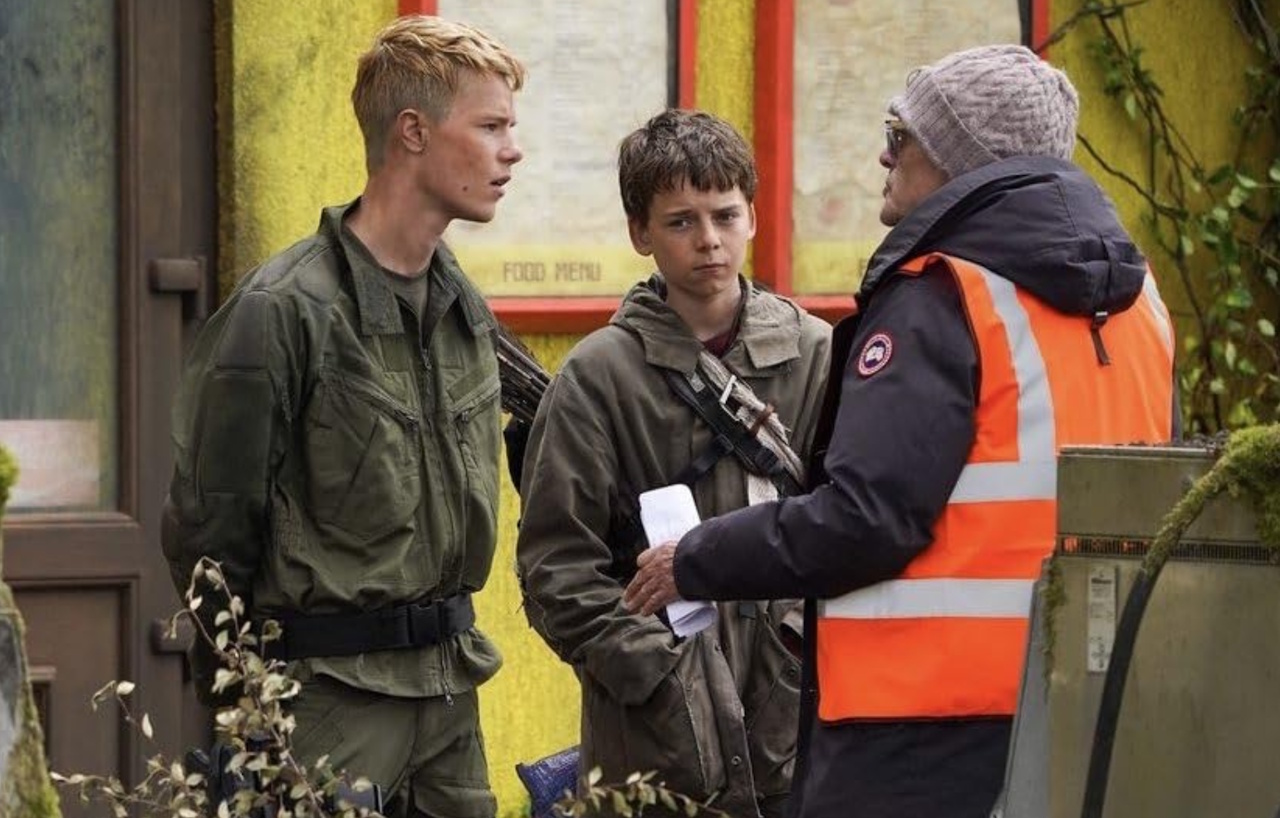
Photo Credit: IMDB
I don’t mind that, by the way. In fact, after the intervening years have not been too kind to my own mental health, I think I prefer a film like this! But I do think it’s worth noting that the belated follow-up to one of the most horrifying depictions of zombies ever brought to screen – and a film that had a massive impact on the zombie genre – wasn’t actually as scary as I expected. And if a big old scaredy-cat like me can make it all the way to the end without wetting their pants, then maybe some folks with a greater appetite for horror than I might even find 28 Years Later to be… tame.
All that being said, this is still a film I’d happily recommend. If you enjoyed 28 Days Later and want to know what happened next, or if you just enjoy a good zombie flick, there’s a lot to appreciate and enjoy. Some of it is a bit more artsy and a bit less gory than some of the more mindless films in the zombie genre, but whether that’s offputting or something to celebrate just boils down to personal taste! Speaking for myself, I think 28 Years Later was about right. It struck a good balance without leaning too much into gory horror, and even though some of its character moments could feel a bit clichéd, I still rooted for young Spike and wanted to see him succeed on his adventure.
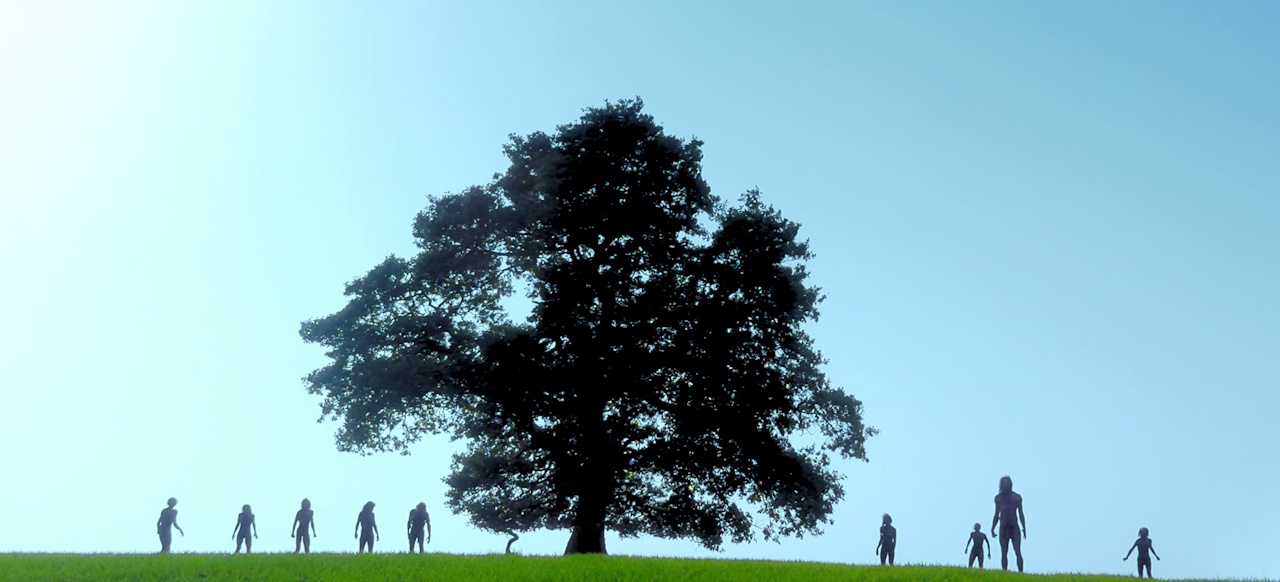
It was also interesting to catch a glimpse of post-apocalyptic life many years into the rage virus outbreak. Seeing how new communities formed, how people have to find new roles, and how some people just… seem to lose themselves. That was all interesting stuff.
So even if 28 Years Later wasn’t the scare-fest I’d been expecting, I generally enjoyed it for what it was. Up next, we’ll get into the narrative in a bit more detail – so if you don’t want to see spoilers for the film’s plot, this is your opportunity to jump ship! But I hope you’ll come back after you’ve seen 28 Years Later to get my take on the film’s story.

This is the end of the spoiler-free section. There are story spoilers for 28 Years Later (as well as 28 Days Later and 28 Weeks Later) from here on out.
I really did not expect 28 Years Later to be a coming-of-age story mixed in with family drama. Spike’s quest to help his mother was relatable and sweet, and all credit to young Alfie Williams, who took on a challenging role and rose to the occasion.
What I’d say, though, is that there were some pretty big clichés on this side of the story. Spike catching his dad cheating on his mum, and their subsequent confrontation… it played out like something from a low-budget soap, not the highly-anticipated sequel to a film that redefined a genre. It wasn’t poor, but it wasn’t great… and I don’t even think it was wholly necessary to jump-start Spike’s quest. His mother’s illness, and the knowledge of a doctor on the mainland, was enough.
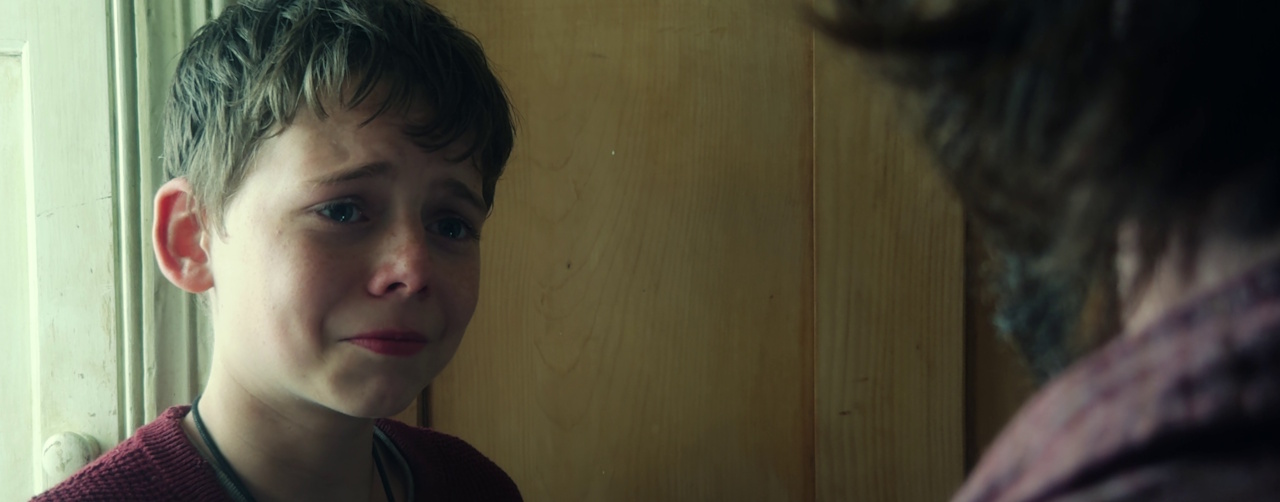
I also struggled to buy Spike’s rapid acceptance of his mother’s death. We got a bit of protest as Dr Kelson explained that her condition was terminal, but the film went pretty quickly from that moment to Kelson giving Isla her coup de grace, and Spike just kind of… went with it. Yes, he was drugged in the beginning, but after she died – at Dr Kelson’s hand – he didn’t really react. He placed her bleached skull atop the pile and that was that. On to the next quest – to bring the baby back to the village.
This had been Spike’s driving force for basically the entire film – his mum’s ill, he wants to help. He undertakes a very dangerous and deadly quest to help her, and when she can’t be helped he goes from grief and devastation to acceptance in basically an afternoon. Maybe you could read into that, something about the harsh realities of post-apocalyptic life making people more hardy… but it didn’t come across that way for me. It just felt either rushed or underdeveloped.
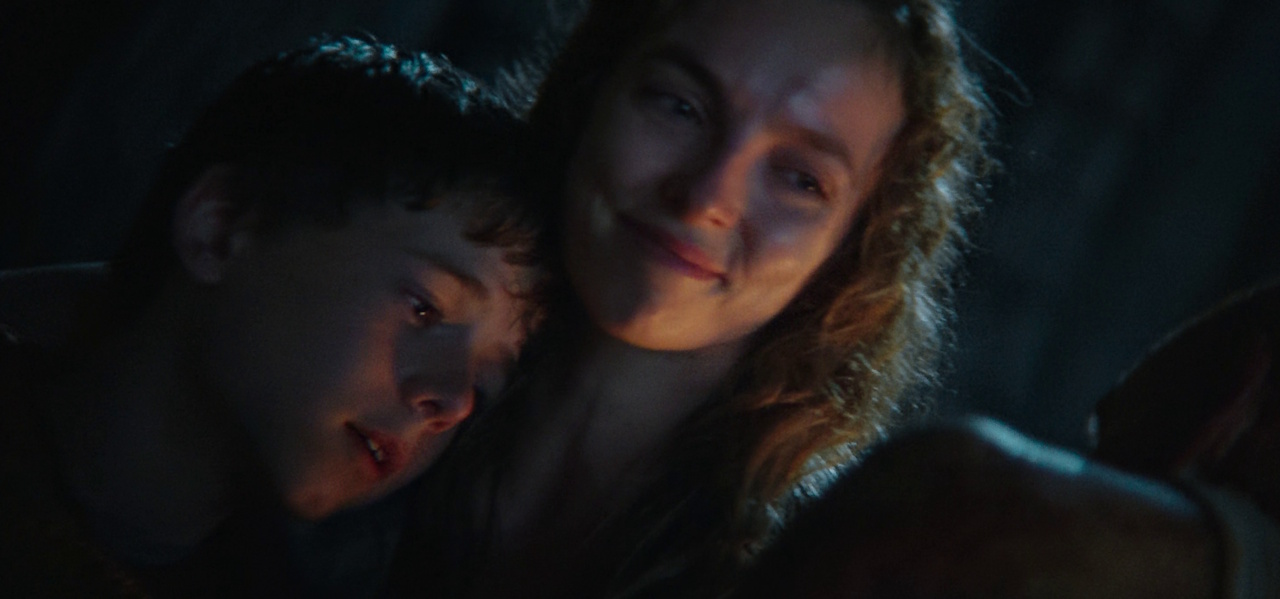
Many great horror films use their supernatural settings to take their characters on this kind of journey of growth, and I don’t think 28 Years Later was wrong to want to tell that kind of story. The apocalypse – zombie-related or otherwise – can make a great backdrop for character arcs, personal conflicts, and drama of all kinds. Spike had an understandable motivation, and Dr Kelson also felt like a real person – someone who’s been living in this world, figuring out how to survive for such a long time that he seems “crazy” to outsiders.
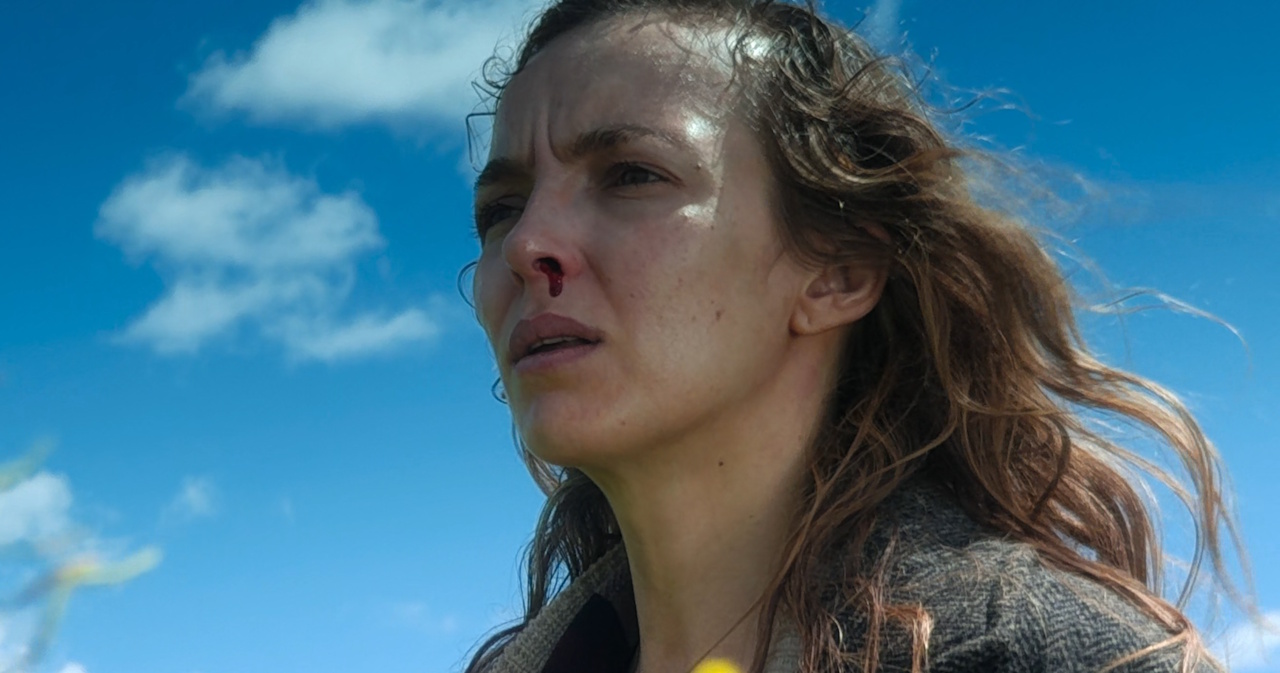
But that’s where the real characterisation seemed to stop. Erik, Jamie, the other villagers, and even Isla all felt pretty flat; less fleshed-out people than archetypes or caricatures, serving a narrative function, yes, but often in a shallow or obvious way. If you know me, you’ll know I’m always an advocate for stories that delve into themes of mental health, and Isla’s story in 28 Years Later definitely touched on that. But how she presented during her “episodes” was pretty tropey, and the way she’d snap out of it when the story demanded it – showing lucidity at key moments to have conversations or advance storylines – was pretty basic.
Can we nitpick? I like to nitpick. How did Dr Kelson – some 28 years after the collapse of civilisation in the UK – manage to maintain a stockpile of medications like morphine and iodine? I mean, he was practically bathing in the stuff, and he’d need to re-apply his iodine defence any time he ventured beyond his skull island home, so… how much iodine must that be after almost thirty years? I think Kelson was probably the film’s second-most-interesting character after Spike… but as I say, I like to nitpick!
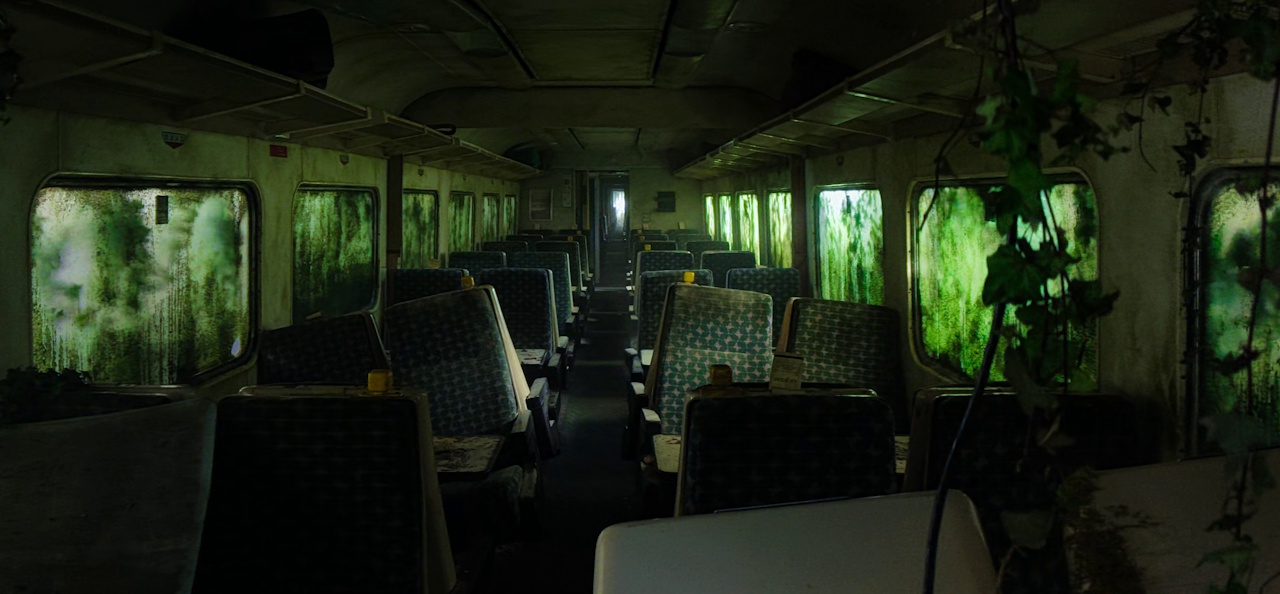
Those questions aside, I really liked 28 Years Later’s take on a post-apocalyptic world. The abandoned train was probably one of my favourite settings – not least because I’m a bit of a train fanatic! But catching glimpses of overgrown towns, the gas-filled petrol station, and decaying buildings and infrastructure was all interesting stuff. It really felt like a world that had been left to decay and collapse for 28 years.
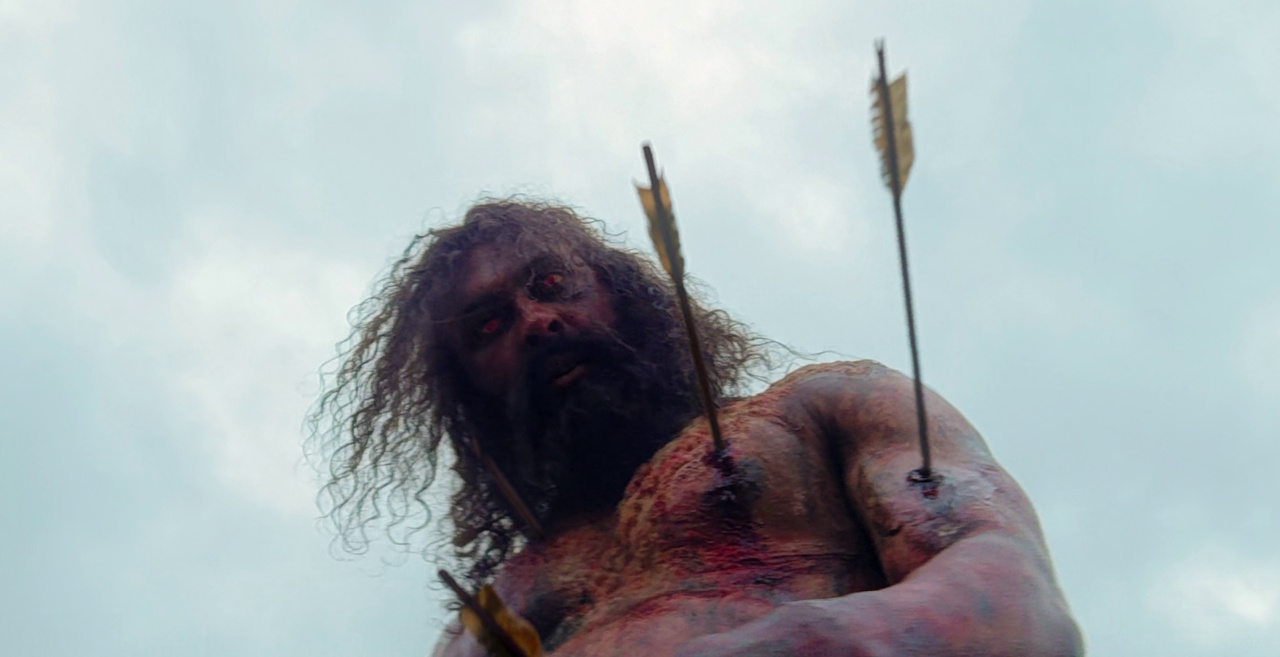
28 Years Later raised several questions that I hope next year’s sequel, The Bone Temple, can answer. How are the infected – which the first two films depicted as dying off en masse after a month or so – still alive in such great numbers this long after the virus broke out? The first two films made it pretty clear that the infected didn’t eat and would just die out, but 28 Years Later establishes that tribes of infected roam around, feeding on wildlife, and apparently breeding with one another, too. It’s a big change from the depiction of the infected in those first films, and it warrants an explanation.
There were echoes of I Am Legend in this presentation of “alpha” infected. The idea that some infected could display greater intelligence, assuming some kind of leadership role in their group, reminded me of that film. It also reminded me of the Resident Evil video games, and how there could be “special” categories of zombies – usually serving as bosses! In that sense, I didn’t feel that the alpha was a particularly original creation, but still – it’s something that should be explained. Assuming, of course, that an explanation has been written.
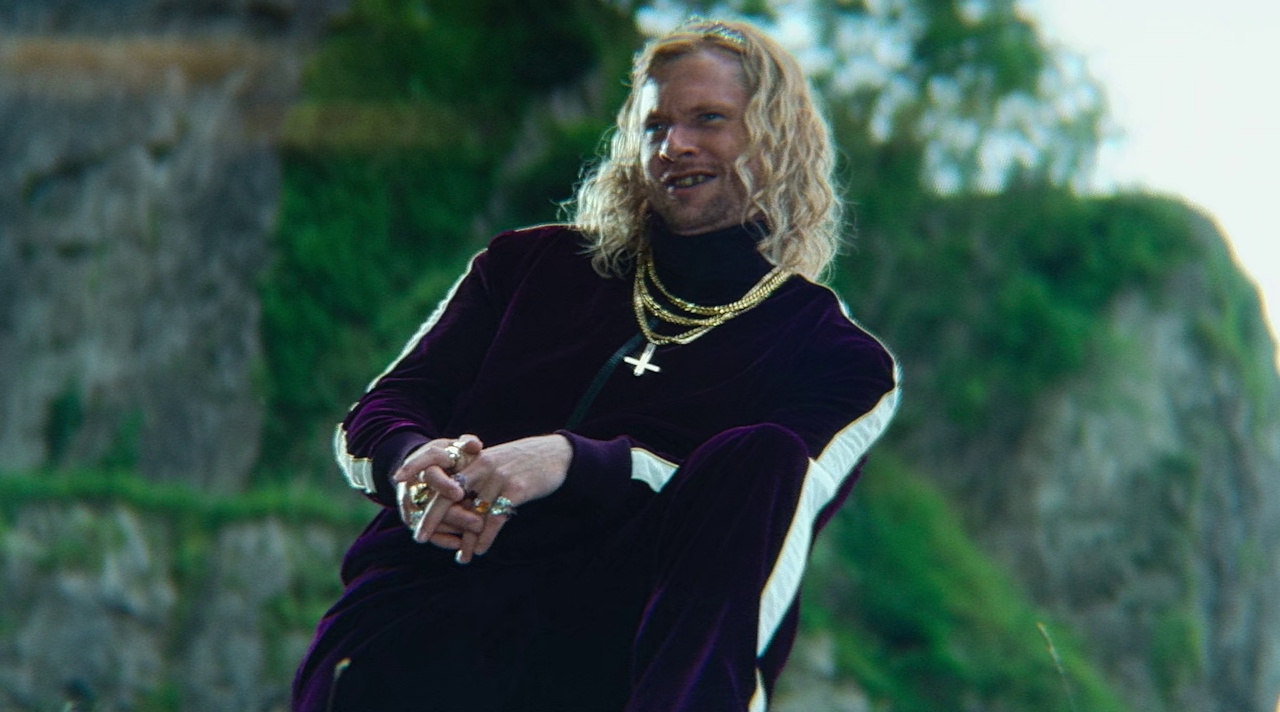
What do we make of the “Jimmy Savile” gang? I can’t help but feel that was done purely for shock value; Jimmy Savile being such a thoroughly vile person whose high-profile crimes shocked the entire country. In the film’s universe I guess it makes sense: Savile’s crimes weren’t uncovered until 2011, whereas in the universe of 28 Years Later, society collapsed in 2002. I remember watching Jim’ll Fix It as a kid in the ’80s, and the scale of what went on at the BBC with Savile is… even all these years later, words fail me.
But in the context of 28 Years Later, I hope – truly hope – that there’ll be more to this than just a cheap stunt to end this half of the story. Jimmy – the child from the beginning of the film – seems to have grown up to lead this gang of Savile impersonators… but why? Is it some attempt to cling to part of the world that they lost? Is it just a cult? Whatever it is, I hope there’s more to it than just an attempt to shock and offend, because otherwise it’s in pretty poor taste. I will reserve judgement, though, until I’ve seen The Bone Temple.
So I think I’m all zombie-ed out for a while!
I hope this has been interesting. I can’t shake the feeling that a film I’d waited more than twenty years to see wasn’t as impactful as I’d expected, even though it was solid and entertaining in its own way. But I don’t dislike 28 Years Later, and I’d certainly recommend it to fans of the original films, horror fans, and even to folks like myself who aren’t horror aficionados but just want to check out some of 2025’s big releases.
I will await The Bone Temple and the continuation of this story with some trepidation. A good ending could reframe parts of 28 Years Later, making them feel better in hindsight. But equally, a poor ending or a lack of a suitable explanation for some of the film’s narrative beats could make both pictures feel… underwhelming. I guess we’ll see next year.
28 Years Later is available to stream now on Amazon Prime Video, and will be released on DVD, Blu-Ray, and other streaming platforms in the months ahead. 28 Years Later is the copyright of Columbia Pictures and/or Sony Pictures. This review contains the thoughts and opinions of one person only and is not intended to cause any offence.
 Trekking with Dennis