More Star Trek Narrative Clichés: Which Ones Should Stick Around?

A Christmassy spoiler warning.

Spoiler Warning: Beware spoilers for the following Star Trek productions: The Original Series, The Next Generation, Deep Space Nine, Voyager, Enterprise, the Kelvin films, Discovery, Picard, and Strange New Worlds.

A few days ago, I wrote a piece about more than a dozen narrative clichés in the Star Trek franchise. That article was inspired by a post on Tumblr (which had been re-posted by a Star Trek fan page on Facebook, where I saw it) and it really got me thinking! Star Trek has its own tropes and little sub-genres; many episodes and storylines can be characterised as “another Borg episode,” “a holodeck story,” and so on. In addition to the eleven clichés presented by the original poll, I added a few of my own – but it turns out that I barely scratched the surface!

So, just like last time, we’re going to take a look at a few more potential “clichés,” and ask a simple question: is it time for them to be retired? Or, to put it another way, has Star Trek taken these story concepts as far as they can reasonably be stretched? Should any of these stick around if more Star Trek is produced in the years ahead?

Thanks to Tumblr user “quasi-normalcy” for coming up with the original poll (which I’ve linked to below). And thanks to the Star Trek fan page on Facebook for dropping it onto my timeline! This idea has been a lot of fun, and a great way to spend a bit more time thinking about the franchise.
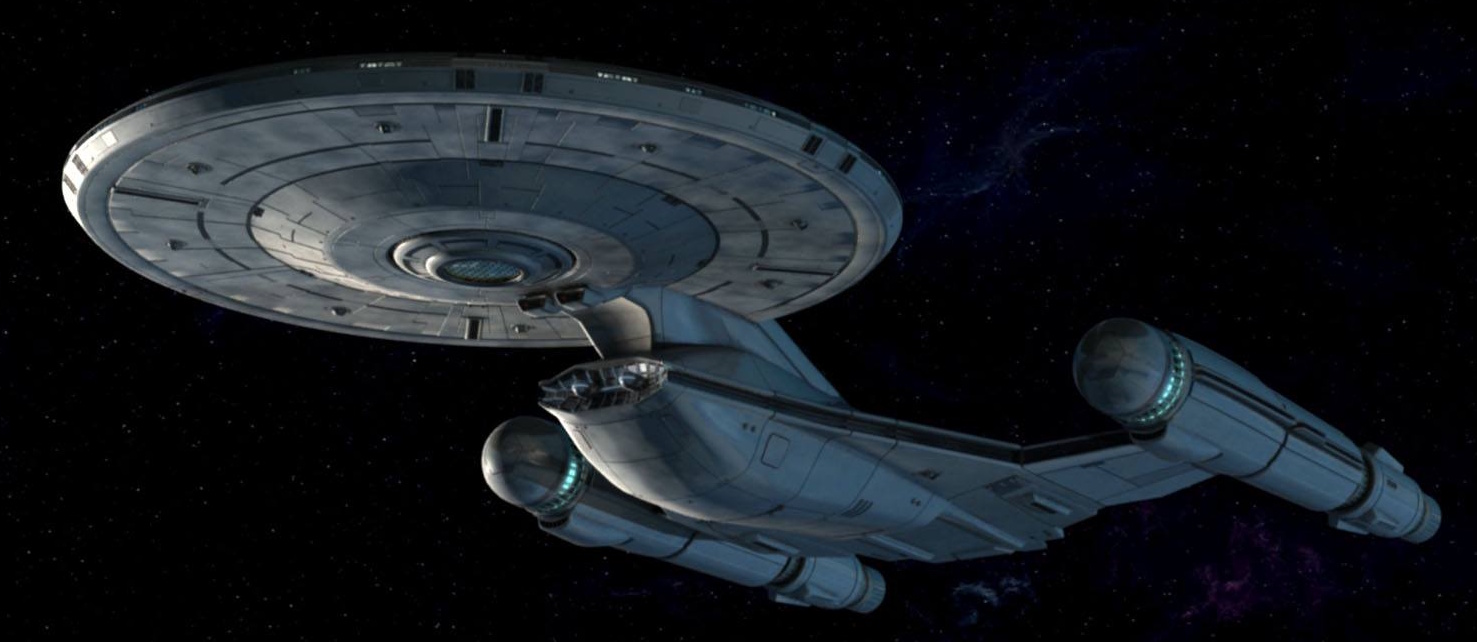
Early concept art of the USS Discovery from Star Trek: Discovery.
Early concept art of the USS Discovery.

I always like to give the same caveat whenever we’re about to jump into some potentially controversial Star Trek opinions: everything we’re talking about here today is subjective, not objective! If you hate all of my ideas, think I’ve totally got the wrong end of the stick, or just vehemently disagree with me about what makes for a good or bad Star Trek cliché, that’s okay! The Star Trek franchise is massive, and fans can and will disagree about what the best and worst episodes are. That’s the way it should be – we can still enjoy Star Trek, and remain friends, even if we don’t always agree about everything. I share this piece with the fan community in that spirit.

I’ll go through each cliché (or potential cliché) one by one, then give my verdict on whether it should stick around as part of the Star Trek franchise.

If you want to see my first piece on this topic, which contains the original eleven clichés from the Tumblr poll (and a few of my own), you can find it by clicking or tapping here. And this is your final chance to nope out if you don’t wanna read some potentially controversial Star Trek opinions!

Cliché #1:
Vulcans (or Androids) Are Invulnerable to the Problem-of-the-Week
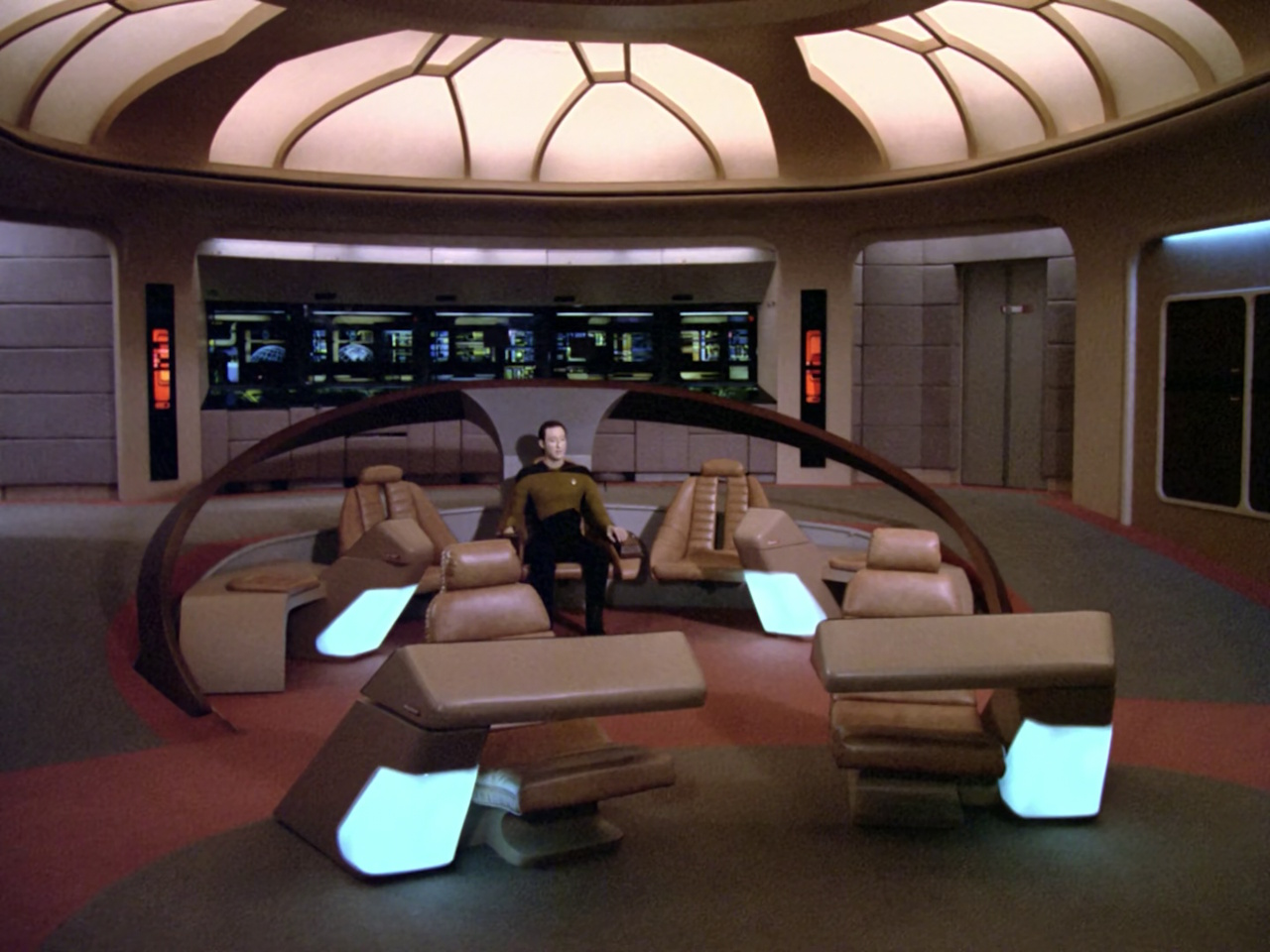
Still frame from Star Trek: The Next Generation showing Data on the bridge.
Data, alone on the bridge.

Everyone aboard the Enterprise catches a disease – except for Spock, whose Vulcan physiology makes him immune. The crew is being targeted by a salt-siphoning “vampire” – except for Spock, who, as a Vulcan, doesn’t have enough salt in his system for the creature to feed. Aboard the Enterprise-D, the crew’s DNA is changing – except for Data, who has no DNA. Everyone is rendered unconscious by aliens who want to remain hidden – except for Data, who, as an artificial life-form, can’t be knocked out by their technology. And on it goes!

Especially in The Original Series and The Next Generation, writers would find ways for Spock and Data to be invulnerable to whatever was going on. Additionally, they were depicted as being physically stronger, smarter, and with quicker reflexes than the rest of the crew – making them pretty overpowered from a storytelling point of view. This could work exceptionally well, but sometimes it could feel like the writers were pulling yet another technobabble excuse out of nowhere or lazily throwing together a deus ex machina ending to a story. When Spock or Data (and later Tuvok and T’Pol, too) would suddenly have a never-before-referenced magical ability that made them invulnerable to whatever was happening aboard the ship, it could start to feel stale. *Especially* if that trait or ability was never mentioned again.

My Verdict: Vaporise It With A Disruptor!

Cliché #2:
Vasquez Rocks (and the Toronto Quarry)
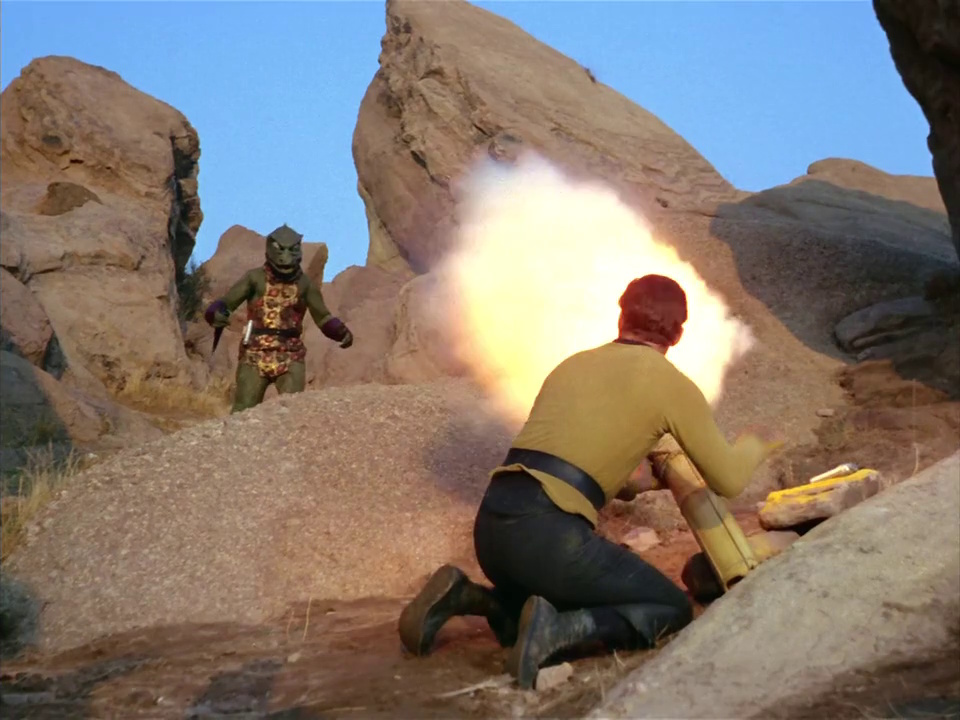
Still frame from Star Trek: The Original Series showing Kirk and the Gorn.
Vasquez Rocks was where Arena was filmed.

I think I’m right in saying that Vasquez Rocks – a national park in California, relatively close to Los Angeles – has appeared in five Star Trek TV shows and three films. Perhaps its most iconic appearance is still Arena, but it’s also stood in for the planet Vulcan, including in the Kelvin timeline, and as Raffi’s home in Picard’s first season. Since production moved to Canada when Discovery was commissioned, there’s a quarry somewhere in the Toronto area which has likewise appeared multiple times in that series and Strange New Worlds. And… after a while, it becomes kinda obvious, doesn’t it?

I said this a lot during Picard’s first season, but there’s nothing wrong at all with using a sound stage – or Paramount’s new AR wall – to create alien landscapes. Outdoor filming shoots can be great, and can convey a sense of scale that indoor sound stages lack. But if you go back to the same location over and over again, pretending it’s a different place or a different planet each time, viewers can and do pick up on that. Kirk’s fight against the Gorn captain is iconic – but the only time Star Trek should return there is if we’re getting another episode set on that same planet. The same applies to the Toronto quarry: decide what planet it represents and stick with that. Then, either use sound stages or different outdoor locations to depict other settings.

My Verdict: Vaporise It With A Disruptor!

Cliché #3:
The “Badmiral”
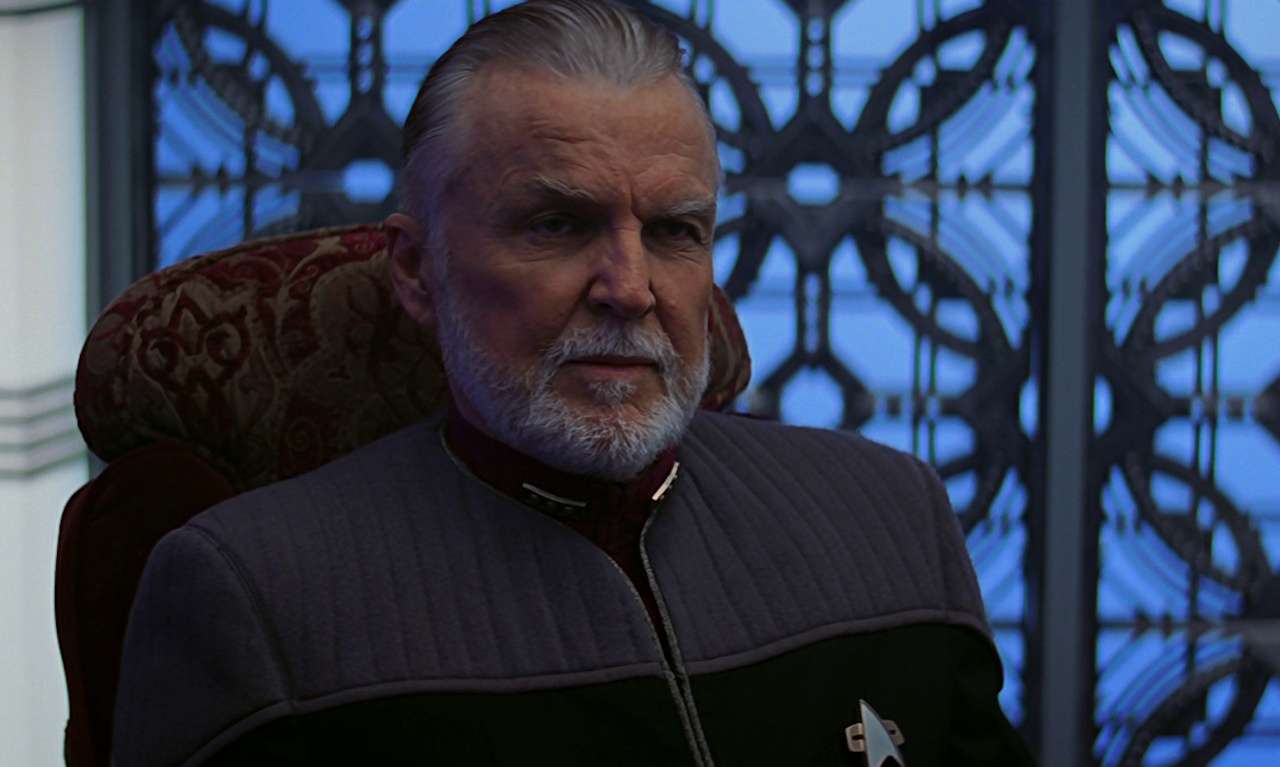
Still frame from Star Trek: Insurrection showing the admiral.
A “badmiral.”

The “badmiral” – a portmanteau of the words “bad” and “admiral” – has become a stock villain in the Star Trek franchise. The typical badmiral is a high-ranking Starfleet flag officer who has an ulterior motive, is selfish, or simply doesn’t reveal everything they know, coming across as a roadblock for our heroes. There are some more nuanced badmirals – look at Layton in DS9, for instance – but others can fall into the trap of being pretty flat and one-note.

At this point, you’d be forgiven for thinking that *every* Starfleet admiral has fallen to the dark side, since it seems to happen so often! In fact, “good” admirals – like DS9′s Ross or Discovery’s Vance – are less commonly seen in the franchise than the bad ones! Because badmirals (and bad captains and commodores) can effectively pull rank and force our heroes to comply, there’s something a bit different about them when contrasted with a non-Federation enemy like the Klingons. In a lot of stories, this works exceptionally well. While I wouldn’t want Star Trek to lose the “badmiral” stock character, with today’s shows running to four or five relatively short seasons at the most, I think this kind of character has to be handled carefully and not over-used.

My Verdict: Keep It!

Cliché #4:
“We’re the Only Ship in Range!”
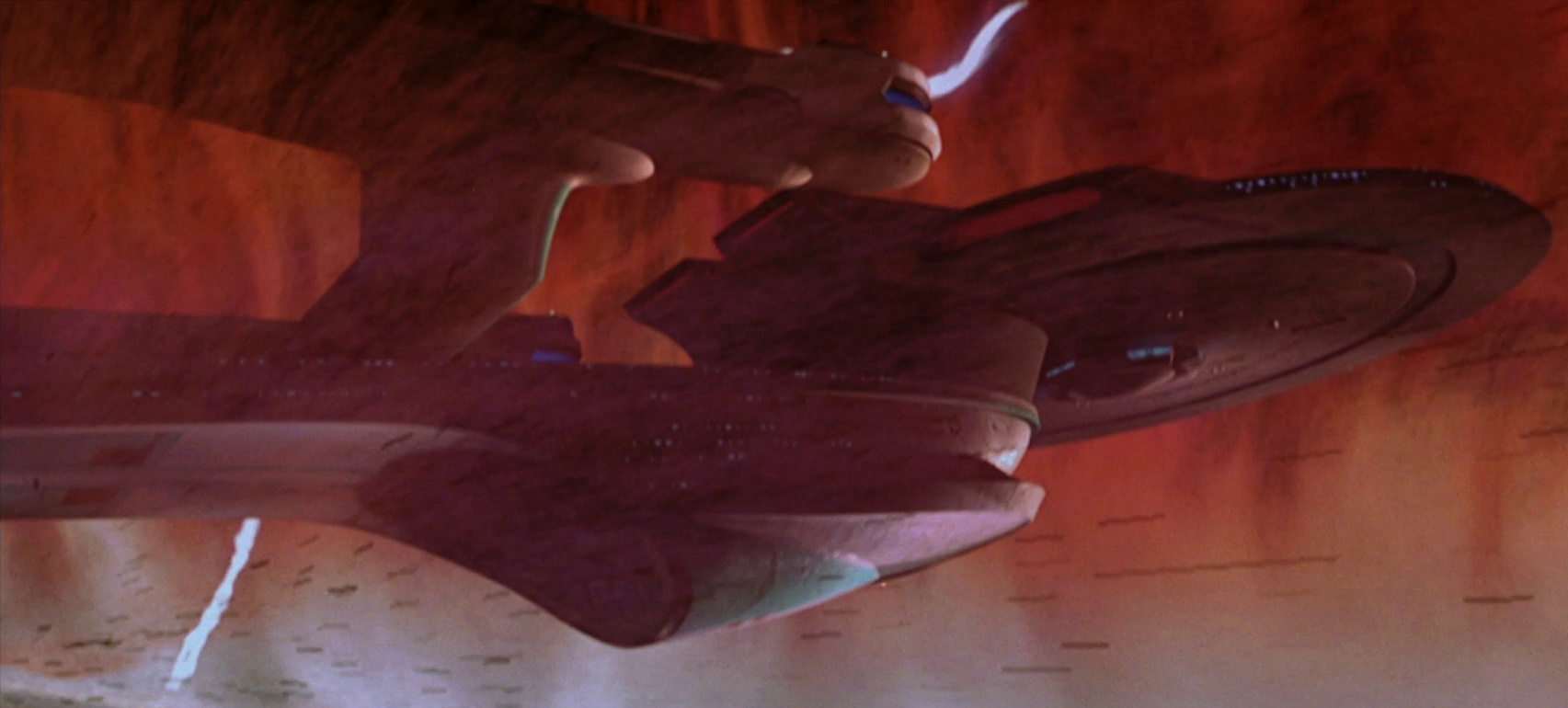
Still frame from Star Trek: Generations showing the Enterprise-B.
The Enterprise-B encounters the Nexus.

How many times has some variant of this line been used? For a state as massive as the Federation… they sure don’t seem to have very many ships! Perhaps the most egregious example of this is Generations (depicted above), where the brand-new Enterprise-B – which doesn’t even have weapons systems or a tractor beam – is literally the *only* starship within several light-years of Earth. How does something like that even happen? Imagine if the only military unit within a hundred miles of Washington DC was a single tank without its gun barrel.

Again, I get it: this line can set up a tense and exciting story with heroism, desperate last stands, rescue missions, and so on. There are some really fun stories that being “the only ship in range” has set up over the years. But it’s also true that it’s become a trope of the franchise. As with any cliché, over-use is the problem, and reducing the number of times it gets used in the future wouldn’t be a bad thing. I don’t think it’s strictly necessary to say it should be outright banned from all future episodes, but I could stand to see less of it!

My Verdict: Keep It!

Cliché #5:
Sole Survivors
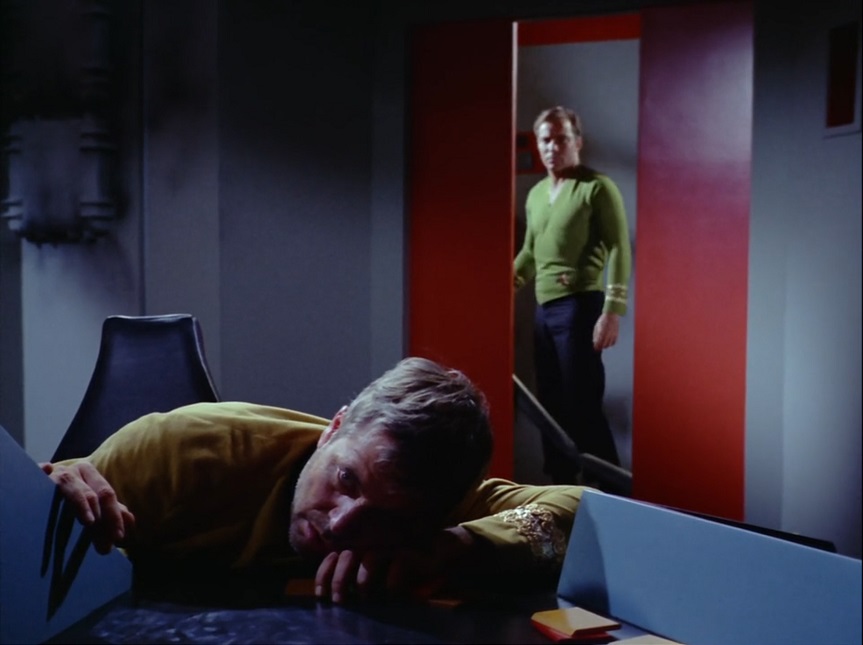
Still frame from Star Trek: The Original Series showing Kirk discovering Decker.
Commodore Decker.

A starship has been destroyed by a planet-killing superweapon. Another ship has been swarmed by the Gorn and crashed. An unknown assailant is destroying space stations one by one. A research vessel flies into a gravitational wave. What do all of these (and more) have in common? Afterwards, there was one single survivor to tell the story. This one leans on tropes way older than the Star Trek franchise – the marooned or shipwrecked sailor has been a part of fiction for centuries. But it is undeniably a cliché, and when you’re talking about starships, space stations, and entire planets, sometimes, having one sole survivor of a cataclysm can feel like it’s stretching my suspension of disbelief.

That being said, I can’t really pick out any examples where a “sole survivor” story has been out-and-out *bad* in the Star Trek franchise. Conversely, quite a lot of these are handled really well, with the survivor conveying what happened to our heroes in an interesting way. And who could forget the incredible Commodore Decker – one of The Original Series’ best one-off characters? He was a sole survivor, and yet I’d rank The Doomsday Machine as one of the best episodes of the entire show. So there’s room for sole survivors… sometimes.

My Verdict: Keep It!

Cliché #6:
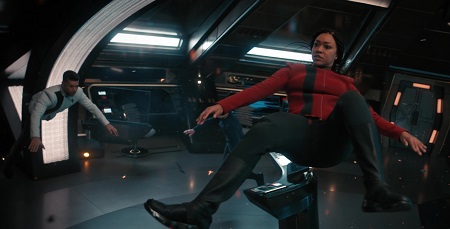
Artificial Gravity Never Fails
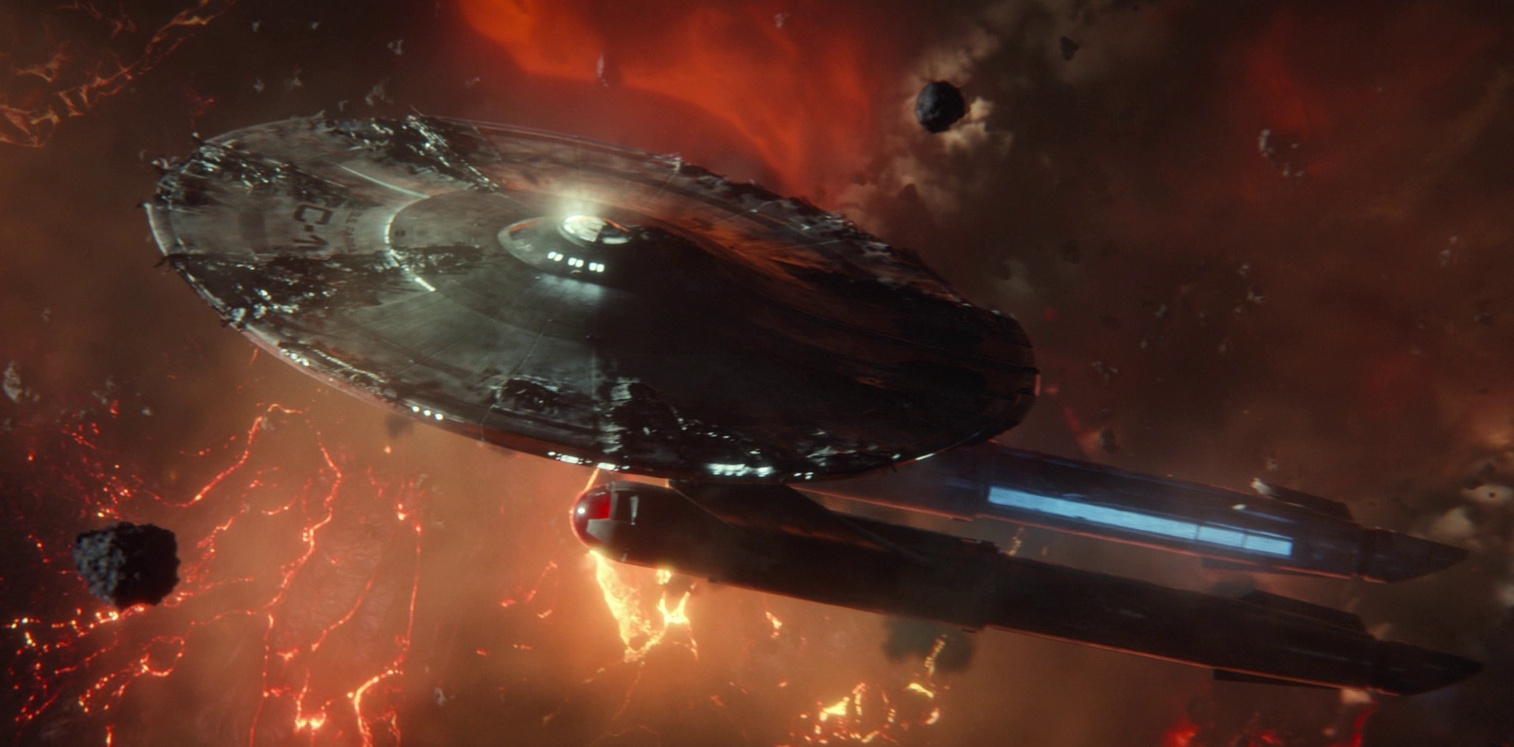
Still frame from Star Trek: Strange New Worlds showing the badly-damaged USS Farragut.
The badly-damaged USS Farragut.

No matter how badly damaged a starship or space station gets, artificial gravity always seems to be the last system standing. Ships will lose life support – literally breathable air and a survivable temperature – before they lose artificial gravity! There are only two or three times I can call to mind where a damaged ship saw its artificial gravity fail, and pretty much the only time it was plot-relevant was in The Undiscovered Country. So… how come artificial gravity is the most robust system on a ship, surpassing even life support?

I know there’s a production-side reason for this one: it would be prohibitively expensive to wire up everyone on the cast and all of their props and have them floating around. Especially in The Original Series, when budgets were tight, that kind of thing was off the table. But it’s pretty silly, if you think about it, when you see ships take a real battering, losing key systems, with their hulls buckling and broken… but everyone can still walk and run around like nothing had happened. Given the advances in technology, and modern Trek’s higher budgets, maybe we could see a few more stories where a ship loses its gravity, and where that becomes a story point.

My Verdict: Vaporise It With A Disruptor!

Cliché #7:
God-like Aliens Who Become Obsessed with One Random Human
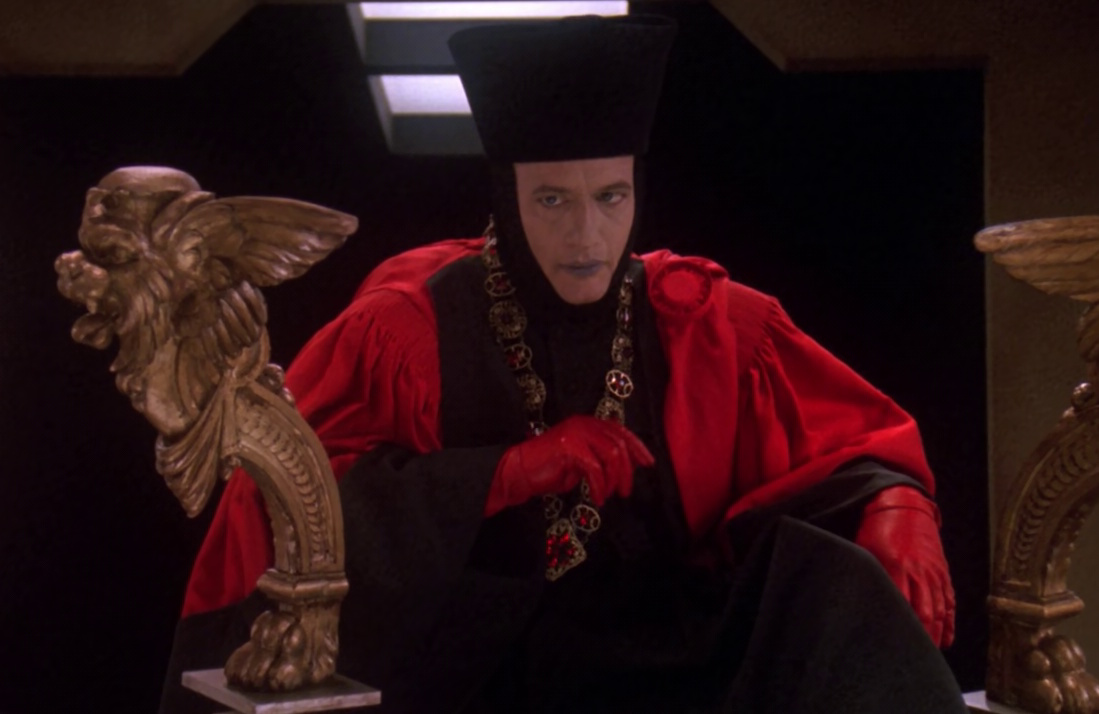
Still frame from Star Trek: The Next Generation showing Q.
Q.

Q has literally all of time and space to explore and play around in. Yet he becomes fixated on Jean-Luc Picard – a random 24th Century human. The Borg Queen has trillions of drones under her sway, controls thousands of star systems, and can assimilate whole populations at the drop of a hat. Yet she’s weirdly obsessed with Seven of Nine – another random human from the 24th Century – as well as Picard. When someone like Trelane came along, it was clear that Kirk and the crew were just his latest playthings. But Q, the Borg Queen, the Douwd known as “Kevin,” and others either fall in love with or become obsessed over one of our heroes. Which doesn’t really make a lot of sense, if you think about it.

Imagine having a favourite ant in your back garden. There are thousands of them living in an anthill, but you decide that *one* is special. That’s not a million miles away from what it’s like for the Borg Queen or Q when they decide to fangirl over their favourite humans. Star Trek can, from time to time, tell interesting stories this way, and the idea of Q in particular setting puzzles and “testing” Picard was used well most of the time. But it’s definitely become a cliché at this point, and I think it’s probably been taken as far as it can be.

My Verdict: Vaporise It With A Disruptor!

Cliché #8:
Everyone Breaks the Temporal Prime Directive
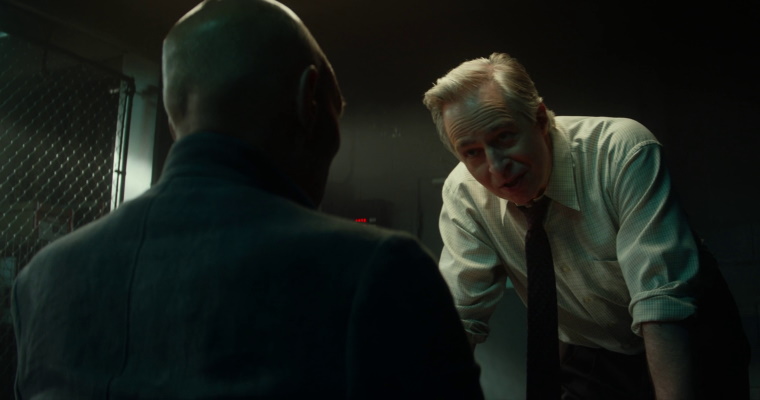
Still frame from Star Trek: Picard showing Picard and Agent Wells.
Picard breaking the Temporal Prime Directive.

In practically *every* story involving time travel, someone breaks the Temporal Prime Directive! The general order from Starfleet says that no one should interfere with any historical events, and must maintain the integrity of the timeline. But even those who claim to be dedicated to this cause – like Enterprise’s Crewman Daniels – routinely violate the Temporal Prime Directive, and often without good reason.

Time travel stories aren’t usually my favourites in Star Trek (especially if they involve visiting modern-day Earth), but even in the episodes I happen to really enjoy, there are countless violations of what is supposed to be one of the guiding principles of the Federation. Often, our heroes are on the side of preserving the timeline as much as possible – and that’s good. But even when that’s their stated aim, they don’t go about it in a stealthy way! How many times have characters befriended (or even fallen in love with) people from a different time period? And how often have they exposed themselves, telling people about the future? Giving characters an “unbreakable” rule, then forcing them to work around it, can make for a tense and engaging story. But when the same so-called rule is broken time and again (pun intended), it can lose some of its impact.

My Verdict: Keep It!

Cliché #9:
Conveniently-Situated M-class Planets
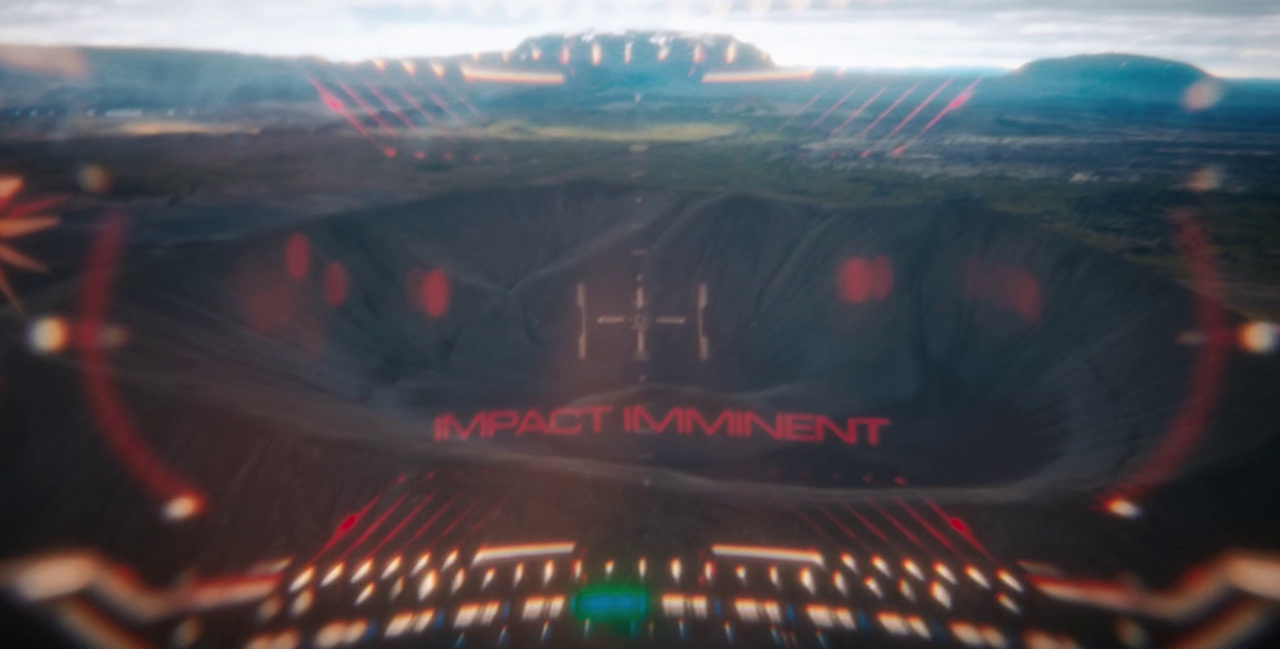
Still frame from Star Trek: Discovery showing a first-person view of Burnham crash-landing.
Impact imminent!

Michael Burnham arrives in the 32nd Century, but loses control of her suit and crash-lands. Where? Not on a barren rock, an asteroid, or into the corona of a star. But on one of Star Trek’s abundant conveniently-situated M-class planets! Almost any time a ship malfunctions, a shuttle crashes, or a transporter beam goes awry, our heroes find themselves on such a world. Just travelled through a wormhole to a mysterious location? Convenient M-class planet. Warp drive failing? Convenient M-class planet. Shuttle is spiralling out of control and about to crash? Convenient M-class planet!

Space is pretty big, actually. And if you think about it, most of the time our heroes spend on their ships won’t be in star systems – let alone in the habitable zone, where M-class planets can form. Most of the time they’ll be in deep space, and if they happen to be in a solar system, there are going to be way more uninhabitable rocks and gas giants than planets with breathable atmospheres and liquid water. I know M-class planets (and similar inhabitable words) are and always will be a core part of Star Trek. But once in a while it would be genuinely interesting to see a shuttle crash onto a lifeless moon, a ship caught in the gravity well of a gas giant, or something like that.

My Verdict: Keep It!

Cliché #10:
Caves and Caverns
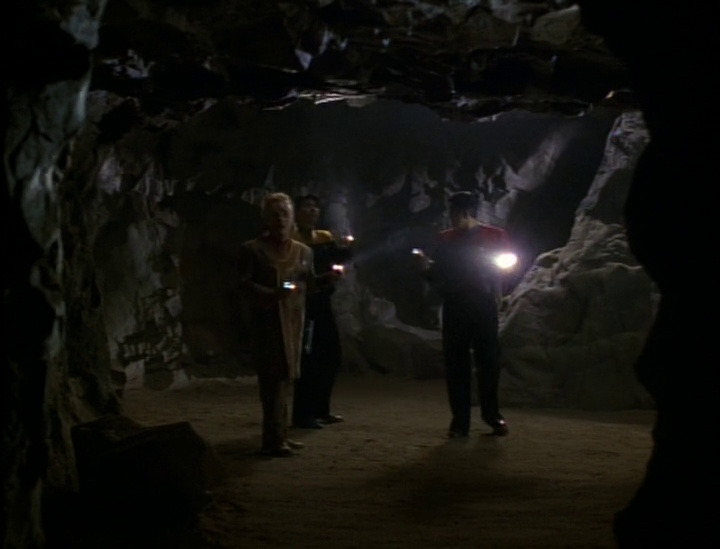
Still frame from Star Trek: Voyager showing an away mission to a cave.
Oh look, they’re in a cavern.

During The Next Generation era, Paramount must’ve used and re-used the same “cavern” set dozens of times! So many different alien locales were depicted using this same set, from the Romulan homeworld to the nameless planetoid AR-558. In The Original Series, too, there were many different cave or cavern locations visited. Thankfully, since Enterprise, the cavern set has been retired, and modern Star Trek stories don’t visit caves anywhere near as often.

Perhaps it’s because modern Star Trek doesn’t spend much time in caverns, but this could be a rare cliché that I’d actually be happy to see *more* of going forwards! There’s something just a little nostalgic, perhaps, about an away mission set in a cave, bringing up fond memories of older Star Trek shows. Even with that caveat, though, I think they have to be used sparingly – and if we were only talking about Star Trek shows from before the turn of the millennium, I’d absolutely say that caves and caverns have to go!

My Verdict: Keep It!

Cliché #11:
“It Was Only Trying to Communicate!!1!”
Still frame from Star Trek: Voyager showing a spacial distortion.
Twisted from Voyager’s second season.

A strange life-form (or alien monster) attacks the ship, hurts or threatens our heroes, drains the power, and then… in a shocking turn of events, it’s revealed that they weren’t *really* being aggressive, nor are they actually dangerous! Say it with me, folks: “They were only trying to communicate!” Perhaps they wanted to warn Starfleet of some imminent threat, or maybe our heroes had accidentally encroached on their territory. In any case, once everyone understands what’s going on, the threat dissolves, and we can all go on our merry way. How many Star Trek episodes play out exactly like that?

One thing Star Trek has been justifiably criticised for is that too many alien races fall into the “nose or forehead brigade,” and the franchise isn’t always great at creating alien races that feel truly otherworldly. This cliché – and it *is* a cliché – often comes up in episodes where writers and designers have genuinely tried to create a totally different, non-humanoid type of alien. It can work well, though the “big reveal” that the supposed aggressor or monster just wanted to have a chat or share some useful information has been seen often enough as to be predictable. As with a few entries above, it’s something that future Star Trek projects don’t need to totally abandon, but should use sparingly from this point on.

My Verdict: Keep It!

Cliché #12:
Ancient Aliens Visiting Earth
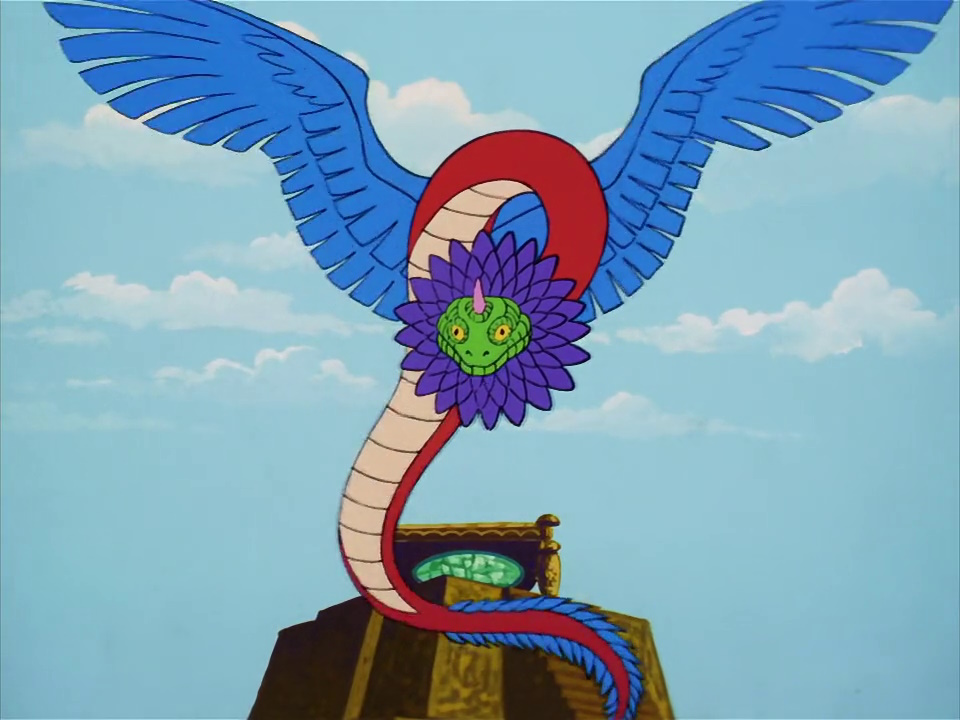
Still frame from Star Trek: The Animated Series showing Kukulkan.
Kukulkan.

Chakotay’s “Sky Spirits.” Kukulkan from The Animated Series. Q. The Skagarans. The El-Aurians. The Borg. The whale probe. The Briori. The Vulcans (multiple times). The Devidians. The aliens who pretended to be the gods of Ancient Greece. What do all of these – and many more – have in common? They visited Earth in the past, prior to the establishment of the Federation. At this point, there’s hardly a single period in Earth’s history where aliens *weren’t* visiting us! Perhaps I should look out of the window… maybe there’ll be a Cardassian, or something.

I think the problem here is that Star Trek has been running for such a long time that this “ancient aliens” trope has kind of gone beyond what’s plausible. Each of the individual cases above made for an interesting one-off episode or story, but if we’re to take Star Trek as a coherent, lived-in world… it begins to stretch my suspension of disbelief when there are just *so many* of these extraterrestrial visitors in humanity’s past. As individual stories, these kinds of things can work well, and some have been genuinely interesting explorations of the line between religion or mythology and real history, for example, or showing how far humanity has come in Star Trek’s optimistic vision of the future. But I can’t help but feel this trope has been taken as far as it can go, and adding yet more ancient alien visitors would be too much.

My Verdict: Vaporise It With A Disruptor!

Cliché #13:
The Infalibility of the Universal Translator
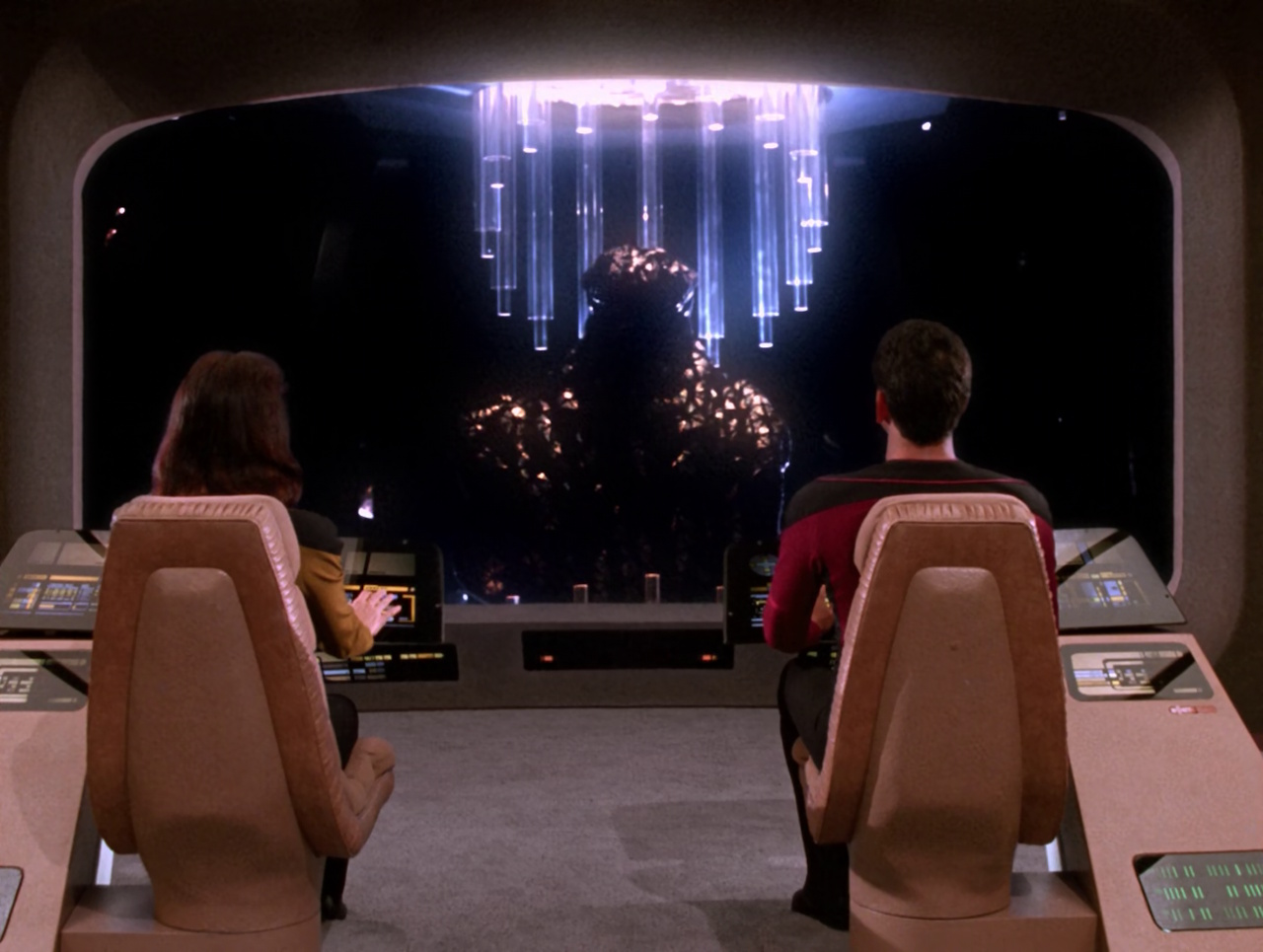
Still frame from Star Trek: The Next Generation showing two bridge consoles and a Sheliak on the viewscreen.
Communicating with an alien.

Wherever Starfleet goes – the Alpha, Beta, Gamma, or Delta Quadrants, or even beyond the galaxy – everyone can understand each other. The universal translator is presented as basically akin to magic, able to instantly translate brand-new languages it’s never been exposed to before. And that’s great… if you don’t think about it too much! But the universal translator is almost too good to be believable, sometimes, and it could be fun if – just for once, or on rare occasions – it *didn’t* work. Perhaps the universal translator just straight-up can’t interpret an alien language, leaving the crew to try to translate it the old-fashioned way. Or, as a more interesting idea, perhaps the universal translator is damaged or stops working, leaving the crew to realise they all speak different native languages and have to find ways to communicate and work together. Either of those could make for wonderful stories.

The universal translator is one of those “don’t think about it too hard” pieces of magical tech that facilitates other Star Trek stories. It wouldn’t be very interesting, for instance, if every episode started with the crew having to piece together an alien language before the rest of the story could get going! But there were some genuinely interesting moments in Enterprise with Hoshi as the ship’s communications officer/linguist, and I think we could get occasional episodes or plot points where the universal translator doesn’t work as intended.

My Verdict: Keep It!

Cliché #14:
Breaking Out of the Brig
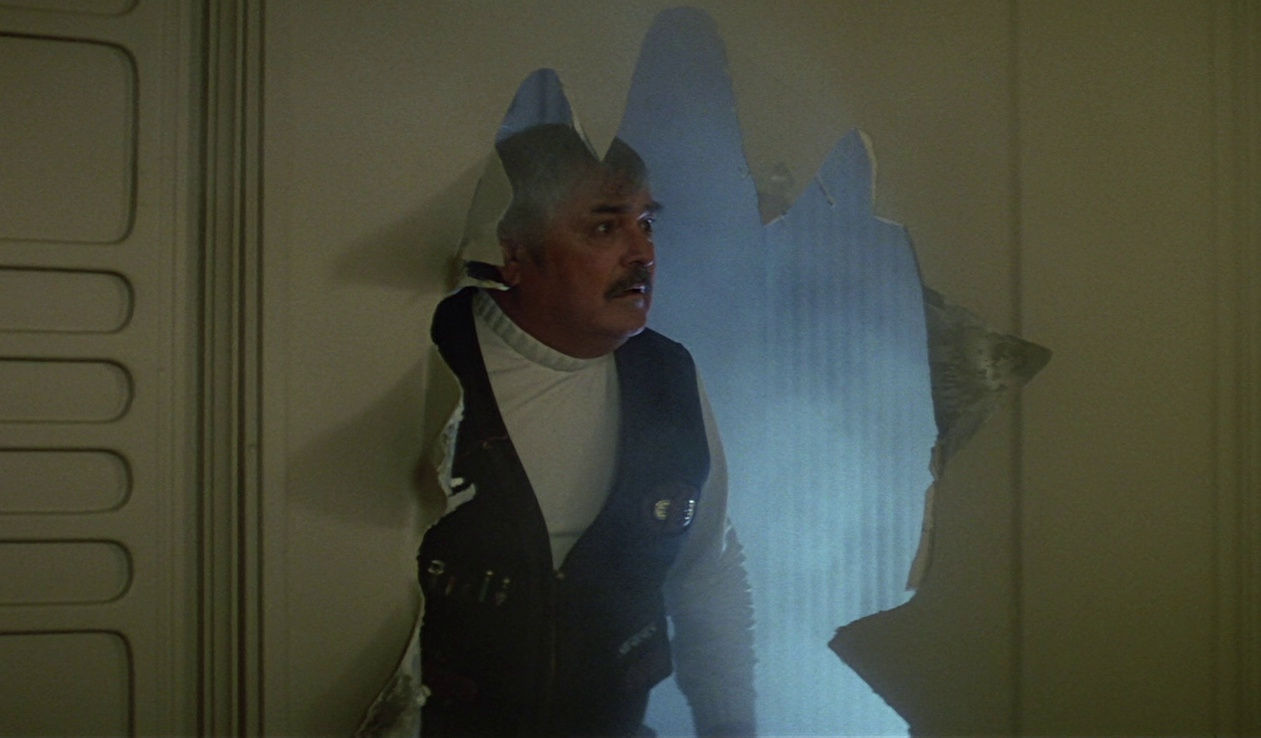
Still frame from Star Trek V showing Scotty breaking into the brig.
“Do you not know a jail break when you see one?!”

Whether it’s a main character wrongly imprisoned or a villainous rascal who’s been caught in the act, one thing is all but guaranteed: if they’re in a Starfleet brig, they’re gonna break out! In a recent Strange New Worlds episode, we saw Gamble/the Vezda escaping from the brig with ease. In The Final Frontier, Scotty famously helped Kirk, Spock, and Dr McCoy escape the Enterprise-A’s brig. Thanks to the Battle at the Binary Stars, Burnham was able to break out of the Shenzhou’s brig. And the list goes on!

A “prison break” story, or a story about hunting down an escaped villain, can be fun – and Star Trek has used this concept pretty well over the years. Because “escaping from the brig” can go in a lot of different directions depending on what kind of story we’re talking about, I don’t think I’d say it should *never* be re-used in Star Trek again. But it is undeniably a bit of a trope at this point, to such an extent that whenever a character is confined to the brig… you’re never sure if they’ll still be there a few minutes later!

My Verdict: Keep It!

Cliché #15:
Hitting the Self-Destruct Button
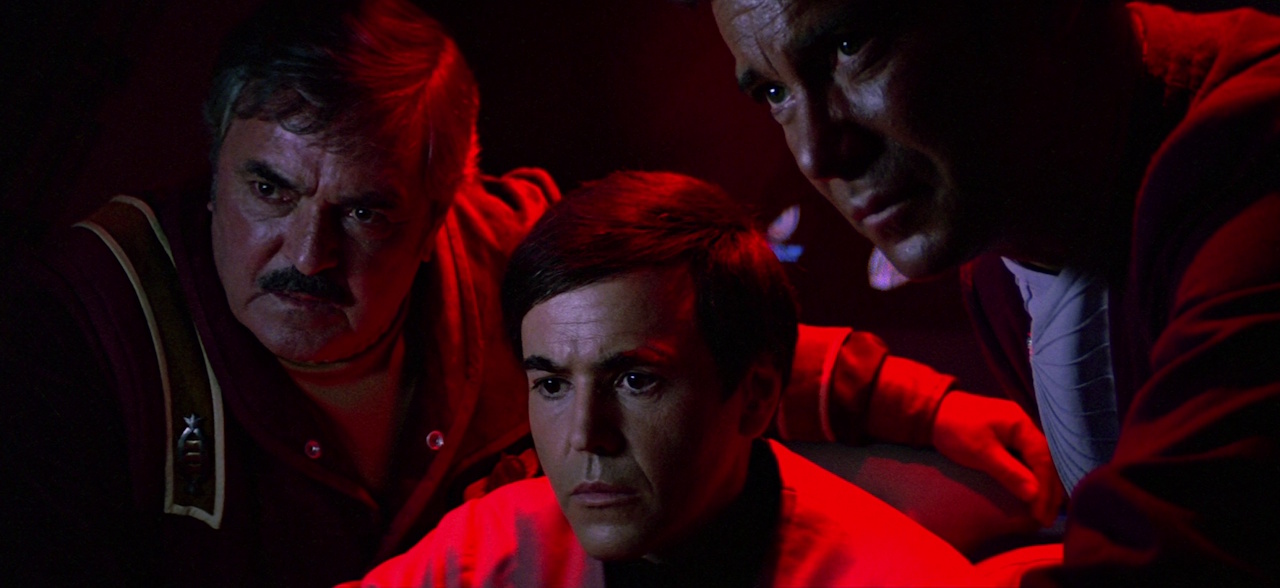
Still frame from Star Trek III showing Scotty, Chekov, and Kirk activating the self-destruct sequence.
Activating the Enterprise’s auto-destruct sequence.

Starfleet captains sure do order their ships to self-destruct a lot, huh? To be fair, *most* of the self-destructs that we see captains ordering in Star Trek don’t actually take place, and the order can sometimes be given as a feint or ruse to catch an enemy off-guard. But ever since it was first used in The Search for Spock, we’ve seen captains setting the auto-destruct sequence on quite a few occasions.

As a mechanism of last resort, automated self-destruction makes a lot of sense in-universe. Starfleet wouldn’t want their advanced vessels falling into enemy hands, and there are some instances where setting a ship to destroy itself can be used as a weapon or to make a last stand. These have usually happened at tense moments in dramatic stories – Kirk’s destruction of the Enterprise, for instance, or Picard ordering the Enterprise-E or Stargazer to self-destruct when faced with what seemed to be imminent assimilation by the Borg. All of these, in their individual stories, make sense and work well. As above, this is something Star Trek mustn’t over-use, though!

My Verdict: Keep It!

Cliché #16:
Aliens Being Indistinguishable from Humans
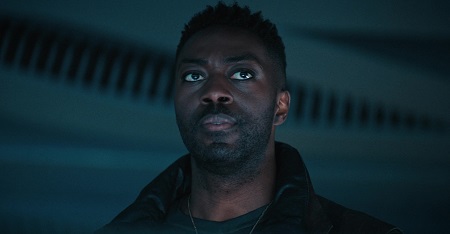
Still frame from Star Trek: Discovery showing Cleveland Booker.
Booker, a Kwejian.

Betazoids, El-Aurians, Kwejian, Betans, Iotians, Onlies, Kelvans, and many more. What do they all have in common? Despite supposedly being “aliens,” they’re physically indistinguishable from humans. Even the Klingons in The Original Series were like that, before they finally got prosthetic makeup beginning in The Motion Picture. As a limitation of 1960s budgets and prosthetics, it wasn’t really noticeable at first. But as time goes by, it becomes more and more obvious that the galaxy is populated with these identical species.

I have a pet theory which says that many of these supposed “aliens” – the Betans, Onlies, Iotians, and so on – are actually lost human colonies from the early days of pre-Federation human spaceflight. But that’s not how most of these planets and their inhabitants are presented on screen, and we’re meant to take at face value that they are, in fact, alien races. I don’t buy it! And frankly, given advances in technology, in terms of physical makeup, puppets, and now CGI, there’s no excuse for modern Star Trek creating a race like the Kwejian any more. We really ought to see more “alien-looking” aliens from this point on.

My Verdict: Vaporise It With A Disruptor!

Cliché #17:
Tiny Fleets

Still frame from Star Trek: Picard showing a fleet.
A Federation fleet in Picard Season 2.

I know I’m not the first person to point this out, but almost every time we see a fleet of ships in Star Trek… it’s too small. Think about it: there are around ten billion people just on Earth in Star Trek’s 24th Century, and the Federation spans hundreds of planets and colonies. Yet, when threatened by the Borg, the most Starfleet can muster is 40 starships, some of which were old and no longer in service. Even during the Dominion War, which saw some of the franchise’s best fleet battles, the scale of the Federation Alliance and Dominion/Cardassian fleets felt way too small compared to the interstellar empires they’re drawn from.

There are good explanations for this, of course. At first it was a budget thing – making physical models of hundreds of ships, then filming them in motion, was prohibitively expensive. And then there’s the complexity that massive fleets would add to a story for the audience; just keeping track of a spaceship battle involving thousands of vessels would be confusing. But I still feel that Star Trek could do more with larger fleets, and that some of the fleets we’ve seen on screen don’t line up with what we know of the Federation and other interstellar empires. To be blunt, they need more ships!

My Verdict: Vaporise It With A Disruptor!

Cliché #18:
Easily-Hacked Alien Computers/Tech
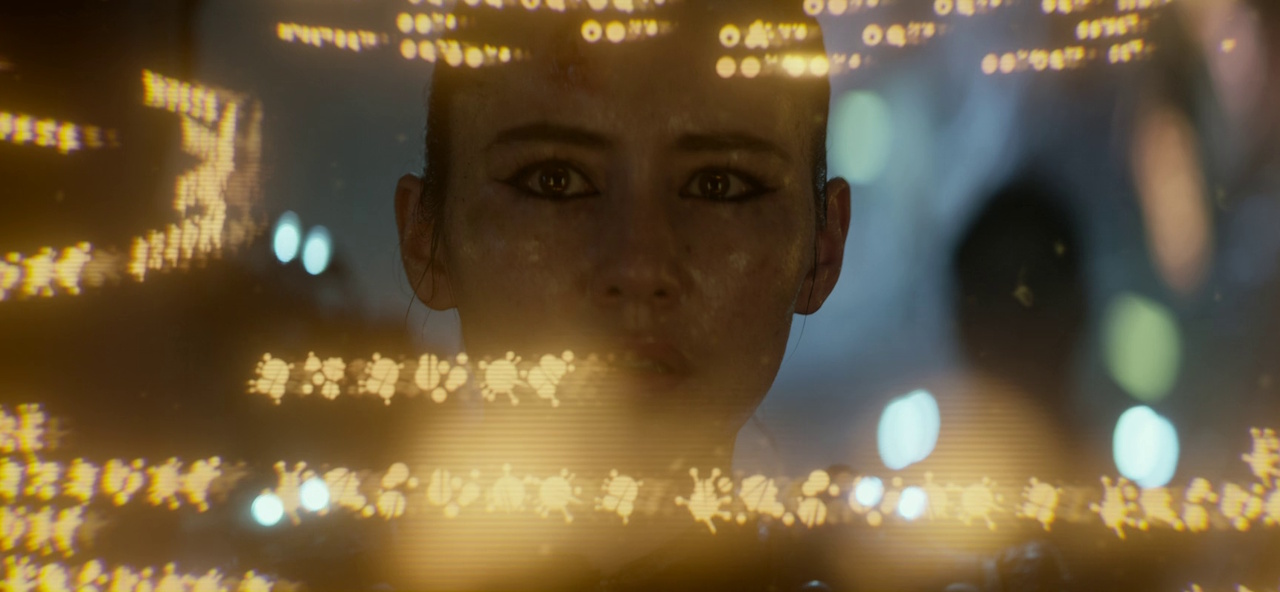
Still frame from Star Trek: Strange New Worlds showing La'an using a Gorn computer.
La’an hacking a Gorn computer.

I know that Starfleet officers are well-trained. But if you’ve never been aboard an alien vessel before, don’t know their language/writing system, and have limited or no experience using their computer interfaces… you shouldn’t be able to just tap a couple of buttons and seize control of their ship! Maybe someone like Data can get away with this, because of his inhuman abilities, but we often see human characters performing these seemingly miraculous feats. As I’ve said before, even if they just took an extra few seconds, sometimes, to acknowledge the difficulty of interfacing with a brand-new type of technology… that would at least be *something*.

Because deciphering an alien computer system isn’t usually the focus of the story, these moments tend to be raced through to allow other narrative beats to play out. And that can be okay… if you don’t stop to think about it for too long, I guess. Perhaps this is a bit of a nitpick, and you could certainly make the case that Starfleet trains its officers well, and that perhaps the basic way computers function is consistent across most alien races in the 23rd/24th Centuries. But even so… sometimes, I’d like to see someone struggling with this!

My Verdict: Vaporise It With A Disruptor!

Cliché #19:
Transported to the Other Side of the Universe (but Back Home in Time for Tea)
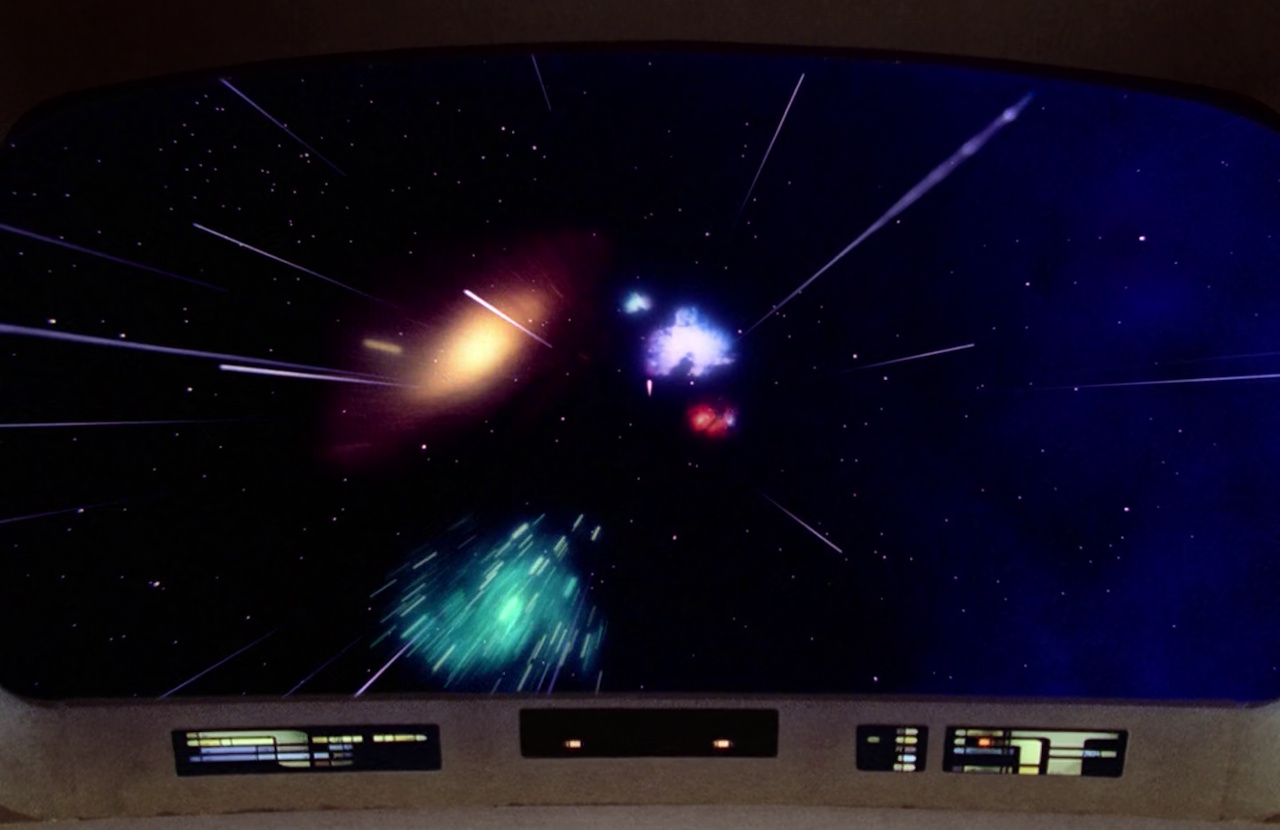
Still frame from Star Trek: The Next Generation showing the viewscreen and galaxies.
Flying past galaxies…

In many different stories, our heroes find themselves accelerated far beyond warp 10, teleported to a far-flung star system, or even in a whole different galaxy. But then, forty-five minutes later, they’re back home again! The only real exception to this is Voyager, which took this trope of the franchise and asked the obvious question: “what if there wasn’t a fast way home?” I really liked that idea!

Because some of these stories play out quite differently from each other (The Final Frontier is radically different from Where No One Has Gone Before, for example), I guess it doesn’t feel like a particularly egregious or overdone cliché in the way that some of the other entries above do. But it is still a bit of a trope of the Star Trek franchise to see our heroes transported to a faraway place… only to make it home before the credits roll.

My Verdict: Keep It!

Cliché #20:
The “Friendly” Visitor with a Dark Secret…
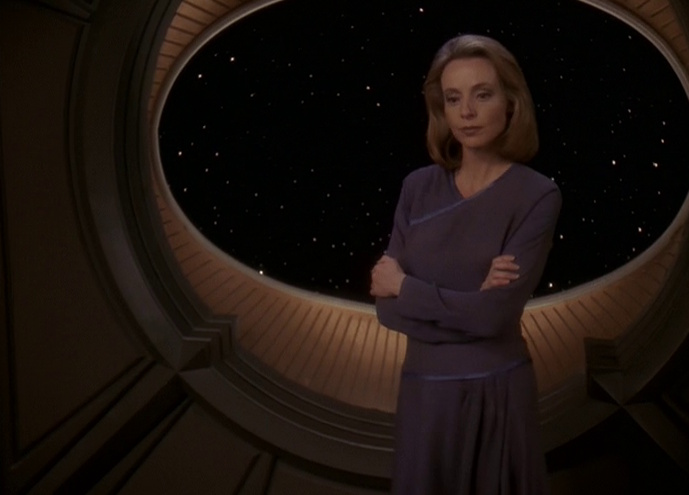
Still frame from Star Trek: DS9 showing Arissa.
Who could this be?

How many seemingly friendly characters show up, only for it to be revealed that they’re harbouring some kind of dark secret? I know that this one isn’t just a Star Trek thing; we see countless examples of this kind of stock character throughout all of fiction, really, and especially on episodic television. But just because it isn’t unique to Star Trek, that doesn’t make it any less of a cliché!

Because these kinds of stories can feel very different, depending on which show we’re talking about and even which individual characters are involved in the story, I’m inclined to give it a pass. There’s a big difference between, say, The Next Generation’s Man of the People and Voyager’s Ex Post Facto, which both feature apparently friendly characters who have some kind of secret. So there are ways to keep this kind of story feeling fresh and engaging, even while using the same basic character archetype.

My Verdict: Keep It!

So that’s it!
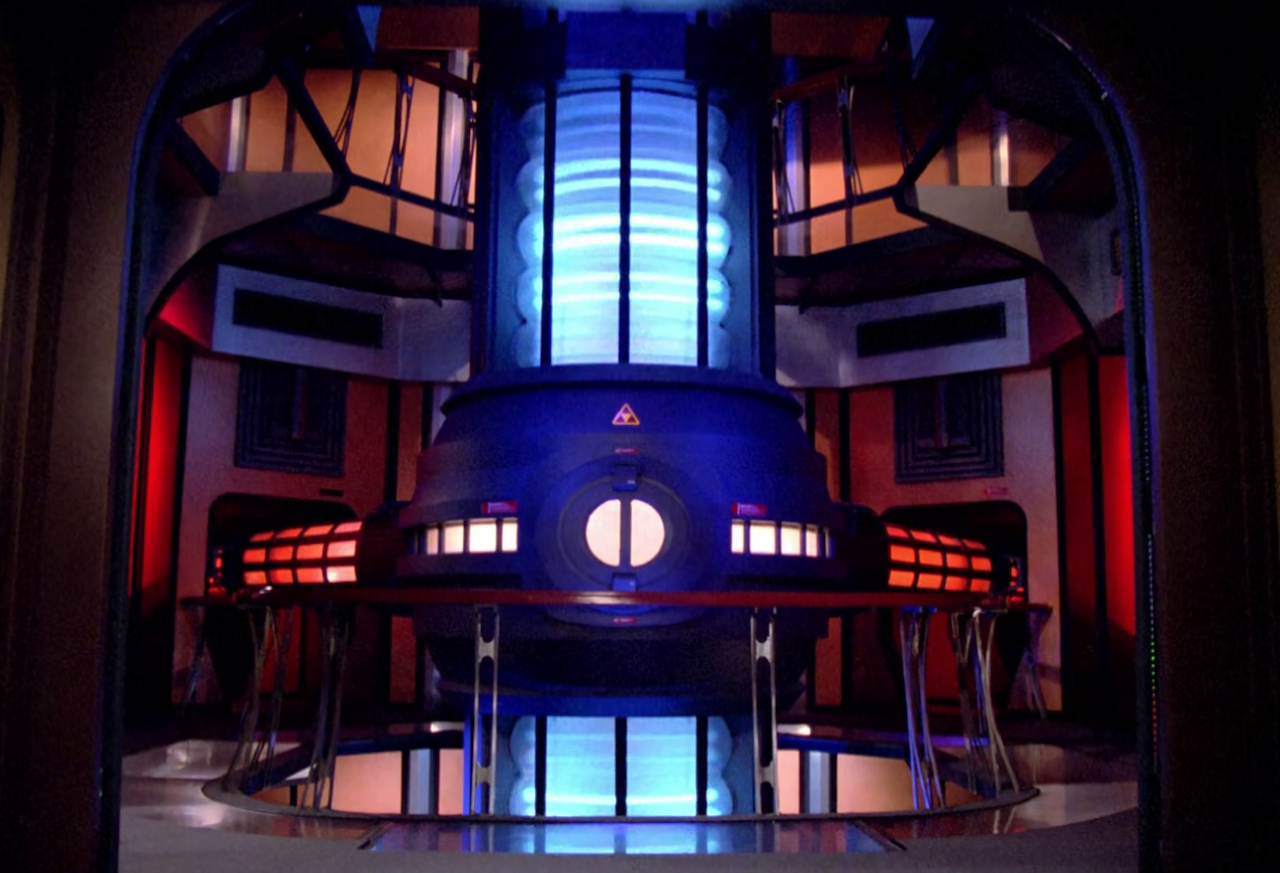
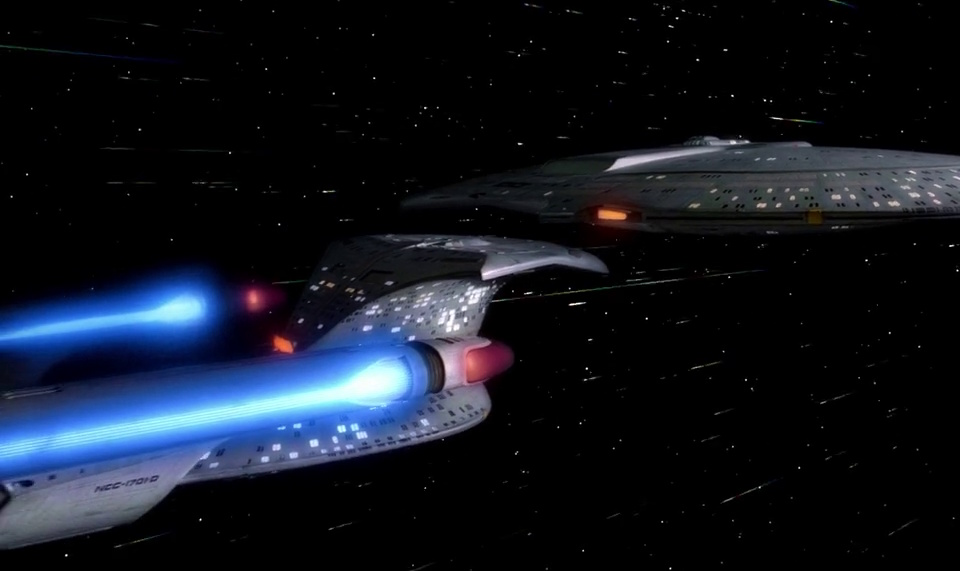
Still frame from Star Trek: The Next Generation showing the warp core.
The Enterprise-D’s warp core.

We’ve taken a look at some more of Star Trek’s narrative clichés, and decided whether or not they should be allowed to stick around in the future!

I hope this has been a bit of fun, or at least interesting. The original Tumblr poll (linked below) really hit me and gave me a ton of ideas. There may be more “clichés” to talk about in the future, too, but I think two long pieces on the topic is sufficient for now! But watch this space, because I might revisit this in the future, either with more potential clichés or to dive deeply into some of the ones we’ve already discussed. There are a few that could definitely be the subject of a longer article or essay one day!

Thanks for checking out my thoughts on all of these… and Live Long and Prosper!


You can find the original Tumblr poll (which has since closed) by clicking or tapping here, and my first piece on this subject by clicking or tapping here.

Most of the Star Trek franchise – including films and television series discussed above – is available to stream on Paramount+ in countries and territories where the platform is available, and is also available on DVD and/or Blu-ray. The Star Trek franchise – including all properties discussed above – is the copyright of Skydance/Paramount. This article contains the thoughts and opinions of one person only and is not intended to cause any offence.
Ten More Things That Have Always Bugged Me In Star Trek

A Star Trek-themed spoiler warning graphic.

Spoiler Warning: There are spoilers ahead for the following Star Trek productions: The Original Series Seasons 1 & 3, The Wrath of Khan, The Next Generation Season 1, The Undiscovered Country, Enterprise Seasons 2 & 3, Star Trek 2009, Discovery Seasons 2 & 4, Strange New Worlds Season 1, and Section 31.

Last year, I wrote up a tongue-in-cheek list of some of the little things that have always bugged me in Star Trek! Today, I thought we could have a little bit more fun at the franchise’s expense by talking about a few more. These are incredibly small things that don’t even rise to the level of “nitpicks,” but every time I see or hear them in their respective stories, they bug me! I know none of them will ever be explained in canon – nor do they really need to be – but I hope you’ll forgive an old Trekkie for airing their thoughts!

Star Trek fans have a bit of a reputation – especially on fan sites like this one – for nitpicking and being sticklers for canon and internal consistency, and I’m acutely aware that that’s how this list could come across. For me, this is written with tongue firmly embedded in cheek – it’s not meant to be taken completely seriously. While I do concede that all of these things “bug me,” as the title says, none of them ruined my enjoyment of any film or episode. These are minor things that aren’t worth arguing about or getting upset over – and I share this piece with the fan community in that spirit.

Promotional photo of several main characters from Star Trek: Enterprise, circa 2001.
Several main characters from Star Trek: Enterprise.

A couple of important caveats before we go any further. All of this is the entirely subjective opinion of a single Star Trek fan. If I raise points you vehemently disagree with, if none of these things bothered you, if you think I’ve misunderstood something, or if you feel I’m overreacting… that’s okay! There’s room enough in the Star Trek fandom for polite discussion and differences of opinion. And as I said above, none of this really matters anyway as these are all exceptionally minor points.

Finally, I’m not counting out-of-universe explanations. “It’s just a story,” or “because the writer/director wanted to do things that way” do not count! Sometimes, in order to tell a more entertaining story, the minutiae of canon or some element of internal consistency has to get pushed aside – that’s the way it goes in the world of entertainment. But that’s not what we’re here to talk about on this occasion.

Phew. With all of that out of the way, let’s jump into the list.

Number 1:
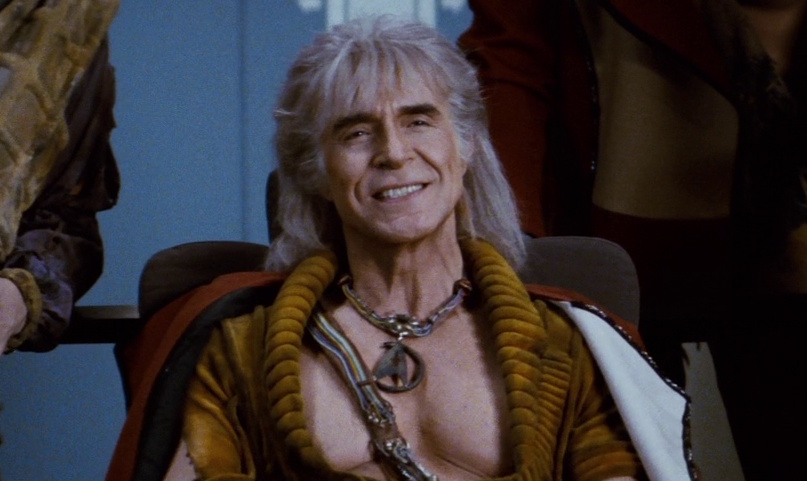
Why did Khan have a Motion Picture/Wrath of Khan-era Starfleet badge? Where did he even get it?
Star Trek II: The Wrath of Khan

Still frame from Star Trek II: The Wrath of Khan showing a close-up of Khan aboard the USS Reliant.
Khan sporting his famous necklace.

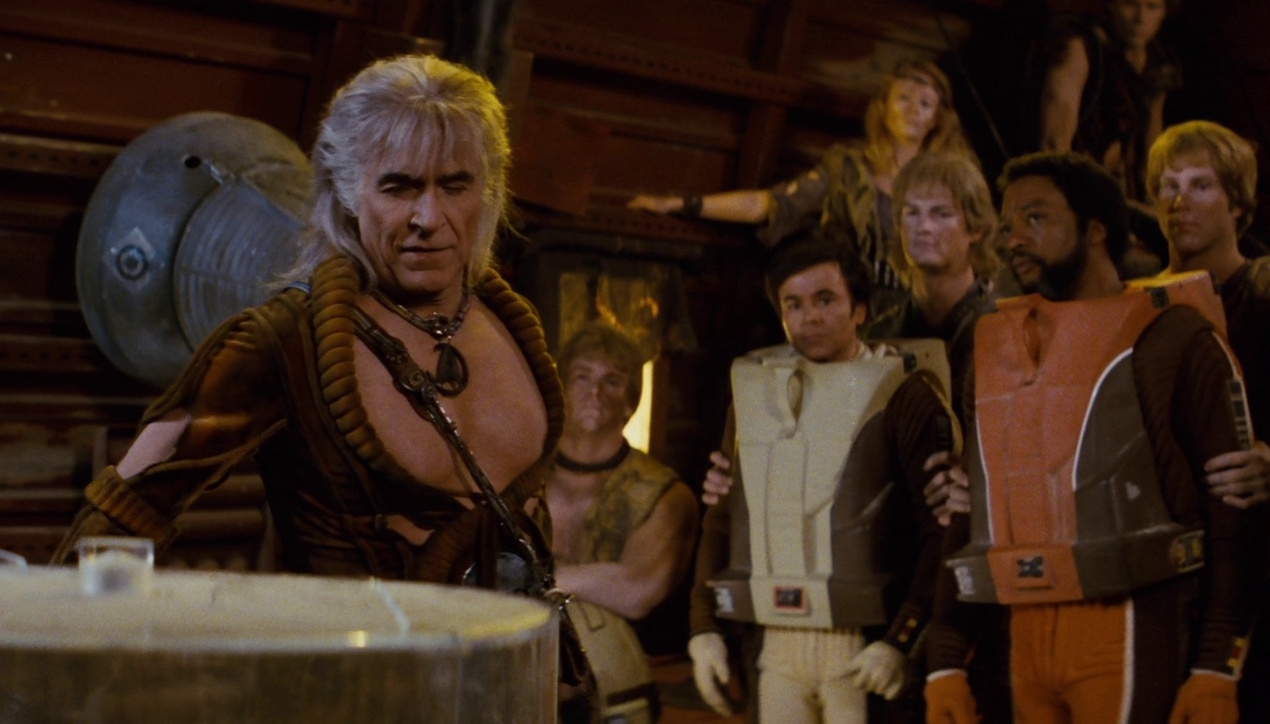
Look at Khan’s outfit when Chekov and Captain Terrell encounter him and his surviving crewmates on Ceti Alpha V. After he takes off his overcoat, Khan is wearing a necklace which appears to be made from a damaged Motion Picture-era Starfleet badge – or a monster maroon belt buckle, perhaps. But how did he acquire this item? Khan and his people have been marooned on the planet since the time of The Original Series – years before either of those uniform styles were in use.

If Khan was wearing a piece of a Starfleet uniform, surely he should be wearing one of the gold, red, or blue shirts that we’re familiar with from The Original Series – or perhaps a pair of Starfleet boots from that era! It’s always stood out to me as a bit of an oddity of apparel; when you look at his necklace more closely, it’s clearly worn and weathered indicating it’s something he’s kept for years – perhaps as a symbol of his quest for vengeance against Kirk and Starfleet. But given that no Starfleet ships visited the Ceti Alpha system in between the events of Space Seed and The Wrath of Khan, it’s an item he simply shouldn’t have had access to.

Still frame from Star Trek II: The Wrath of Khan showing Khan, Chekov, Captain Terrell, and several augments aboard the derelict Botany Bay.
Khan was already wearing the necklace when Chekov and Terrell arrived.

If Khan started wearing the necklace after his encounter with Chekov, I’d say that he took the piece from him or from someone else on Reliant’s crew. But he clearly converted part of a Starfleet uniform into this necklace during his time on the planet, before his meeting with the crew of the Reliant – so that explanation doesn’t work.

There’s no getting around the simple fact that Khan shouldn’t have this badge or belt buckle. Nothing like it was seen in The Original Series, and even if we extend our search to other 23rd Century shows like Discovery or Strange New Worlds, very generously assuming that another Starfleet vessel visited Ceti Alpha V before the destruction of Ceti Alpha VI, there are still no comparable badges, buckles, or anything with a Starfleet delta of the right shape and size for Khan to convert into a necklace. Unless he used his people’s very limited resources to smelt a perfect Starfleet delta the exact same shape and size… I don’t know where he got it from!

Number 2:
Aren’t the Cherons (or Cheronians) extinct?
Star Trek: Section 31

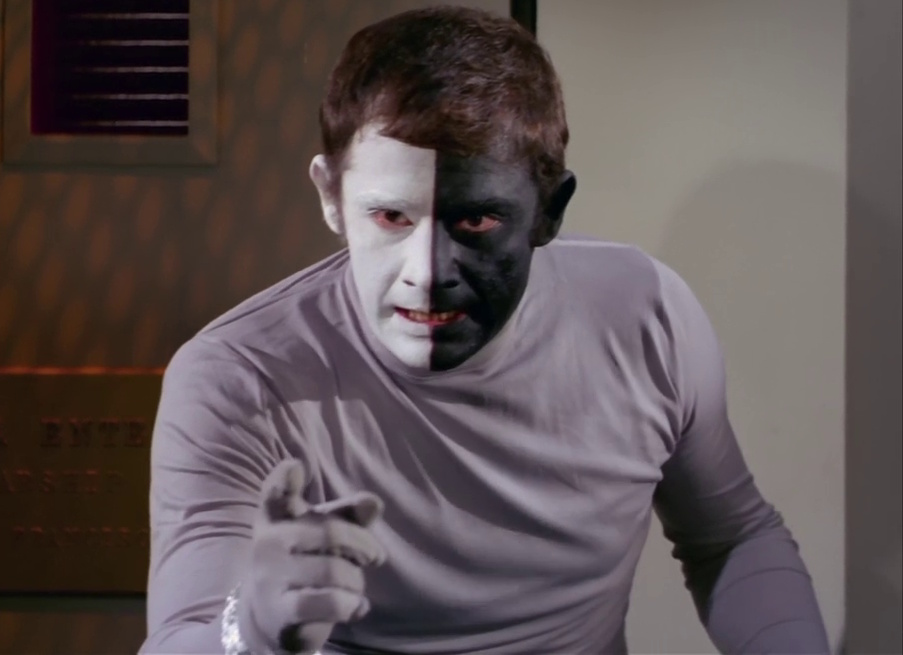
Still frame from Star Trek: The Original Series Season 3 showing Lokai, a black-and-white alien from the planet Cheron.
Lokai, one of the last surviving members of his race.

In the recent Section 31 TV movie (which you can read a review of by clicking or tapping here) we meet a character aboard Georgiou’s space station who looks very similar to a Cheron/Cheronian. The Cherons were encountered in the iconic episode Let That Be Your Last Battlefield – where the final two members of the species met Kirk and the crew of the Enterprise.

I like Let That Be Your Last Battlefield, and it’s an episode with a disappointingly timeless message about how racism and division will eventually lead to conflict, war, and extinction. The entire point of the story was that the Cherons wiped themselves out because they couldn’t get over their hatred of one another – even though, to us, they appeared to be the same species. It’s a message that was poignant at the time it was written – with the American civil rights movement ongoing – and has remained so to this day.

Still frame from Star Trek: Section 31 showing the character of Virgil.
Is Virgil from Section 31 meant to be a Cheron?

Section 31 confused me with its Stardate and therefore its place in the timeline – but no matter whether it was meant to be set in the mid-23rd Century or the early 24th Century, there simply shouldn’t be any surviving Cherons left. If Section 31 takes place before Let That Be Your Last Battlefield, then I guess technically two members of the species remain. But if, as the producers have told us, the film takes place in between The Undiscovered Country and The Next Generation, then the entire species is extinct – wiped out because they couldn’t overcome their hatred for one another.

Of all the things modern Star Trek could’ve chosen to retcon… the survival of the Cherons isn’t one I’d have wanted to see. It serves no purpose to bring in a character like that as a one-off campy joke, and furthermore, it undermines the powerful message of a classic story. My personal head-canon (which I really should write up one day) is that this character at Georgiou’s bar wasn’t actually a real Cheron, but someone basically cosplaying as one. I think that’s actually the least-bad spin I can put on the matter!

Number 3:
Does the Enterprise-D’s saucer section have warp drive or not?
Star Trek: The Next Generation

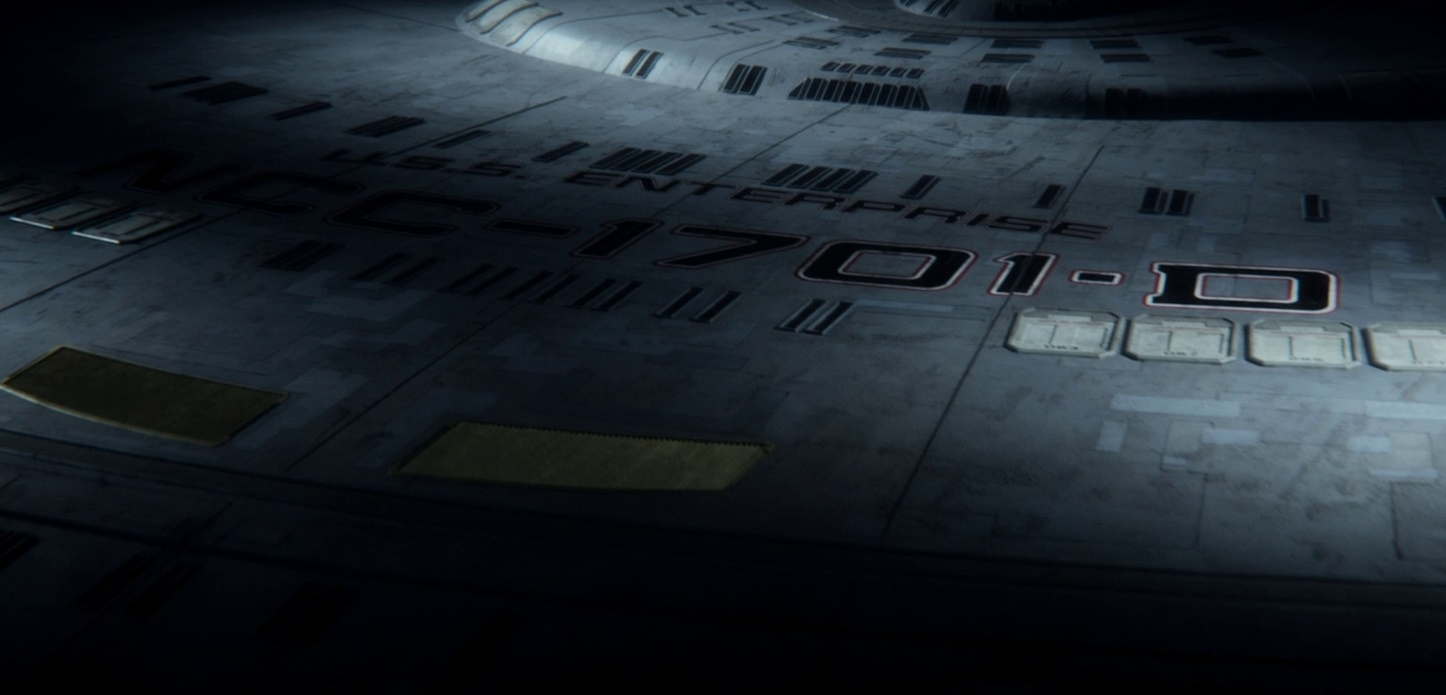
Still frame from Star Trek: Picard Season 3 showing a close-up of the Enterprise-D's saucer.
Close-up of the Enterprise-D’s saucer section.

According to most sources I can find – including in episodes where saucer separation occurs or is mentioned – the Enterprise-D’s saucer section has impulse engines only. Impulse engines allow for travel at speeds below warp one – i.e. below the speed of light. But this seems to contradict not only what we see on screen in episodes like Encounter at Farpoint… but the entire point of saucer separation as it’s explained in the show.

Except for situations like a warp core breach, where the destruction of the ship is imminent, what’s the main purpose of saucer separation? As stated in Encounter at Farpoint, The Best of Both Worlds, and other episodes, the star-drive section is where most of the Enterprise-D’s heavy armaments are – so the point of saucer separation is to evacuate civilians, scientists, and other non-combatants. The saucer section can be commanded by a junior officer with orders to set course for the nearest safe system or starbase, getting families and scientists out of the danger zone or battlefield. The star-drive section is then free to engage the enemy.

Still frame from Star Trek: The Next Generation Season 1 showing the Enterprise-D initiating a saucer separation.
Saucer separation in progress.

But at sub-light speeds, this won’t work. Any enemy ship could easily catch up to and overtake a fleeing saucer section travelling at impulse, or hit it with a torpedo or disruptor blast while it’s still in range. And at impulse speeds the saucer section would be decades away from help even if it was relatively close to a friendly base or star system. That’s not to mention that, in Encounter at Farpoint, the saucer section travels an apparently sizeable distance under its own power to reach Deneb IV after the encounter with Q. The Enterprise-D was at warp – apparently not in the Deneb system – yet the saucer was able to travel all that way, either at warp or at faster-than-light speeds, which seems to contradict what we know of the Enterprise-D and its capabilities.

So does the saucer section have warp engines? Or if saucer separation happens at warp, can the saucer cruise at warp for a while before slowing down? I think that contradicts what we know of how warp drive works and how warp bubbles are generated and sustained by warp cores… but there’s at least a degree of ambiguity there, I guess. What still doesn’t make sense, though, is how launching the saucer section at sub-light speeds is supposed to help the ship’s civilian crew escape from danger in a galaxy populated by warp-capable villains.

Number 4:
Why can’t the crew of the USS Reliant count to six?
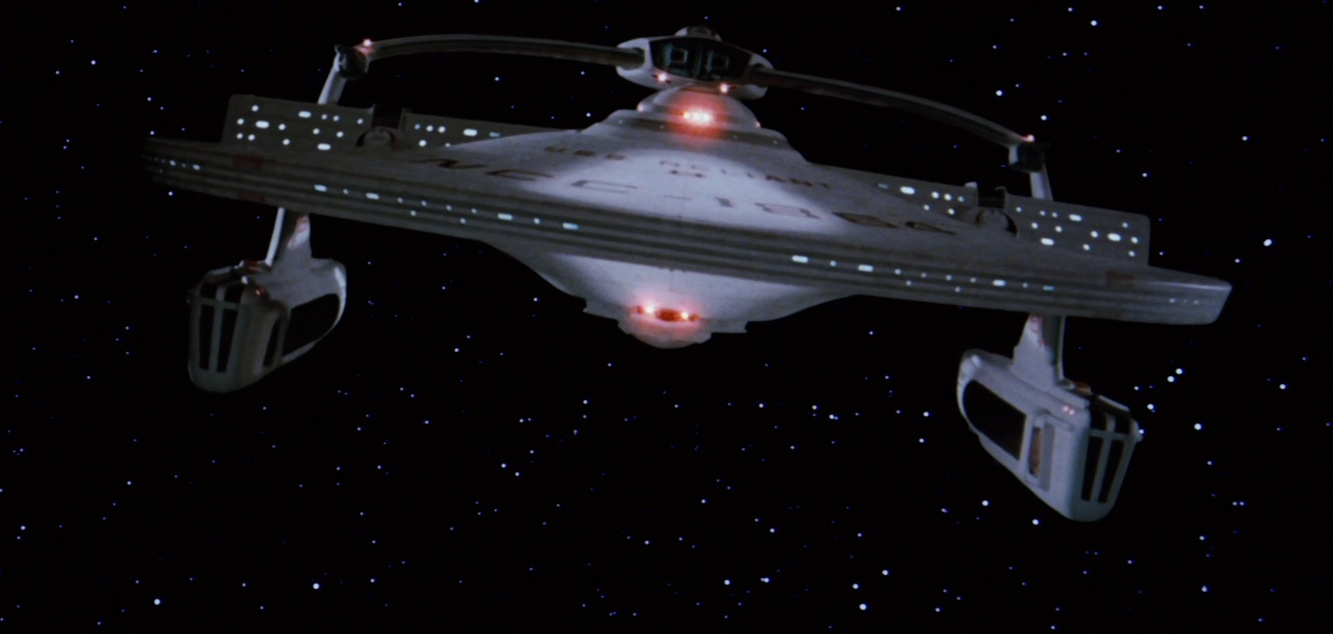
Star Trek II: The Wrath of Khan

Still frame from Star Trek II: The Wrath of Khan showing the USS Reliant head-on.
The Miranda-class USS Reliant.

I know, I know: we’ve done The Wrath of Khan already! But this one really is dumb if you stop to think about it, so it’s definitely making the list. When the USS Reliant was scouting for planets as part of the Genesis project, it entered the Ceti Alpha system – a system that Starfleet has visited at least once before. The crew knew that there were supposed to be six planets… but no-one aboard can count, apparently.

Somehow – and I have no idea how this could’ve happened in the 23rd Century with all the technology aboard the USS Reliant – the crew mistook Ceti Alpha V for the destroyed Ceti Alpha VI, leading to them running into Khan and his band of augments. But there’s no way a mistake this glaringly obvious should’ve been able to happen at all.

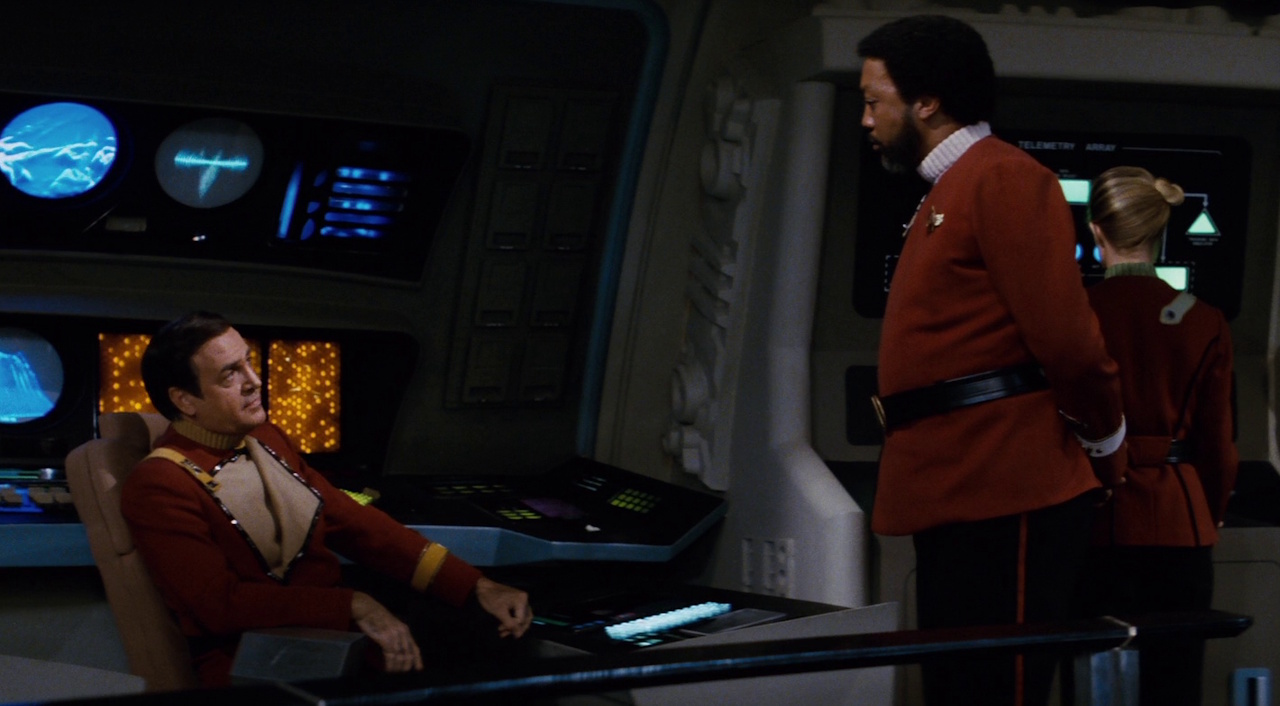
Still frame from Star Trek II: The Wrath of Khan showing Captain Terrell, Commander Beach, and another officer on the bridge of the USS Reliant.
Three senior officers on the bridge of the USS Reliant.

Upon entering the system – or hours ahead of arriving, using long-range sensors – Reliant’s crew should’ve noticed that, y’know, an entire planet is missing. If nothing else, the debris or dust cloud left behind by the explosion of Ceti Alpha VI – which is unlikely to have dissipated fully in a few short years – should’ve been a dead giveaway. But even if some kind of solar wind blew all the dust and rocks far outside the system, there were still only five planets where there should’ve been six! You’d think someone would’ve noticed this and at least mentioned it to the captain.

That’s to say nothing of Starfleet’s apparent lack of record-keeping. The Ceti Alpha system should’ve been flagged up as containing a dangerous colony of criminals: the augments. We know, thanks to the likes of Strange New Worlds, that Khan and his people were still notorious centuries after they tried to rule all of Earth, so surely Starfleet would want to prevent unwitting starships from stumbling upon their colony. The Talos system is restricted by Starfleet for much the same reason, as we saw in The Cage. But even if Kirk conveniently forgot to record that mission or tell Starfleet what became of Khan… why couldn’t anyone on the USS Reliant count to six?!

Number 5:
Can’t ships just fly over or under the Galactic Barrier?
Star Trek: The Original Series, Star Trek: Discovery

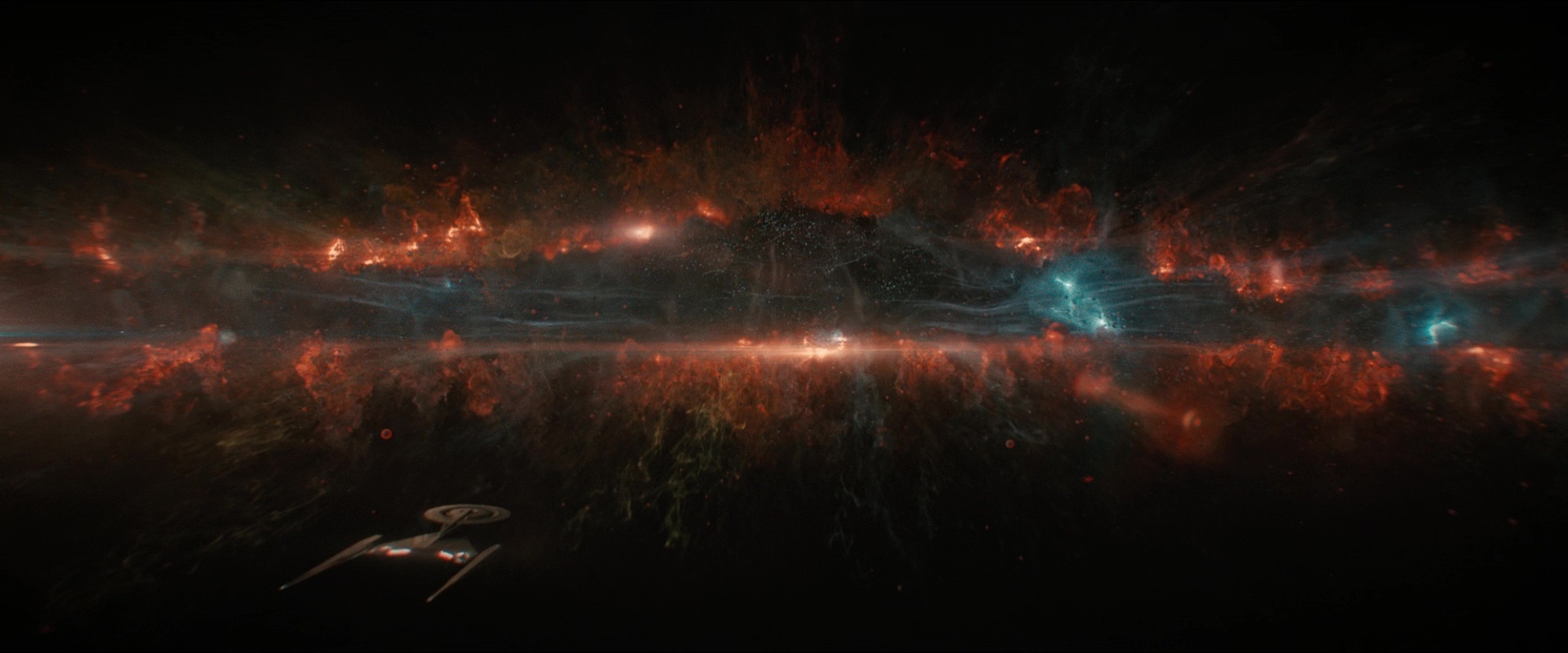
Still frame from Star Trek: Discovery Season 4 showing the USS Discovery at the Galactic Barrier.
The Barrier at it appeared in Discovery.

Star Trek has, on occasion, exhibited what Mr Spock might call “two-dimensional thinking.” By that I mean that many ships and objects in space appear as if they’re on a perfectly flat plane – but space is three-dimensional. One example of this appears to be the Galactic Barrier – the forcefield-like object that apparently surrounds the edge of the galaxy, preventing spacecraft from leaving.

Even in Discovery, though, which is the Galactic Barrier’s most significant appearance to date, the phenomenon (which doesn’t exist in real life) appears to be a mostly two-dimensional ring around the edge of the galaxy rather than a three-dimensional bubble. Which raises a simple question: why not simply fly over or under it? Starships are obviously capable of manoeuvring in three dimensions, so why fly through something you could easily fly around?

Still frame from Star Trek: The Original Series Season 1 showing the USS Enterprise approaching the Galactic Barrier.
The USS Enterprise approaches the Galactic Barrier.

Unless the Barrier is meant to surround the entire galaxy from all possible angles, there’s not really a good explanation for this. The way it’s been depicted on screen makes it seem like it’s something any starship could easily get around, even if doing so would take a bit longer. If this was a one-off visual effect from The Original Series I might be tempted to let it lie, but Discovery brought back the Galactic Barrier in its fourth season, presenting it as a pretty significant hurdle for Captain Burnham and the crew to overcome.

As an aside, I’m not sure that was a great idea! There are some elements of The Original Series, The Animated Series, and even from early in The Next Generation that just about work in context… but wouldn’t really translate well to a story made today. For me, as I think I said at the time of Discovery’s fourth season, the Galactic Barrier is one of them. And the way it’s presented and visualised on screen just kind of hammers home how two-dimensional some of the franchise’s space sequences can feel.

Number 6:
Why is artificial gravity always the last system to fail when a ship is damaged?
Star Trek VI: The Undiscovered Country et al.

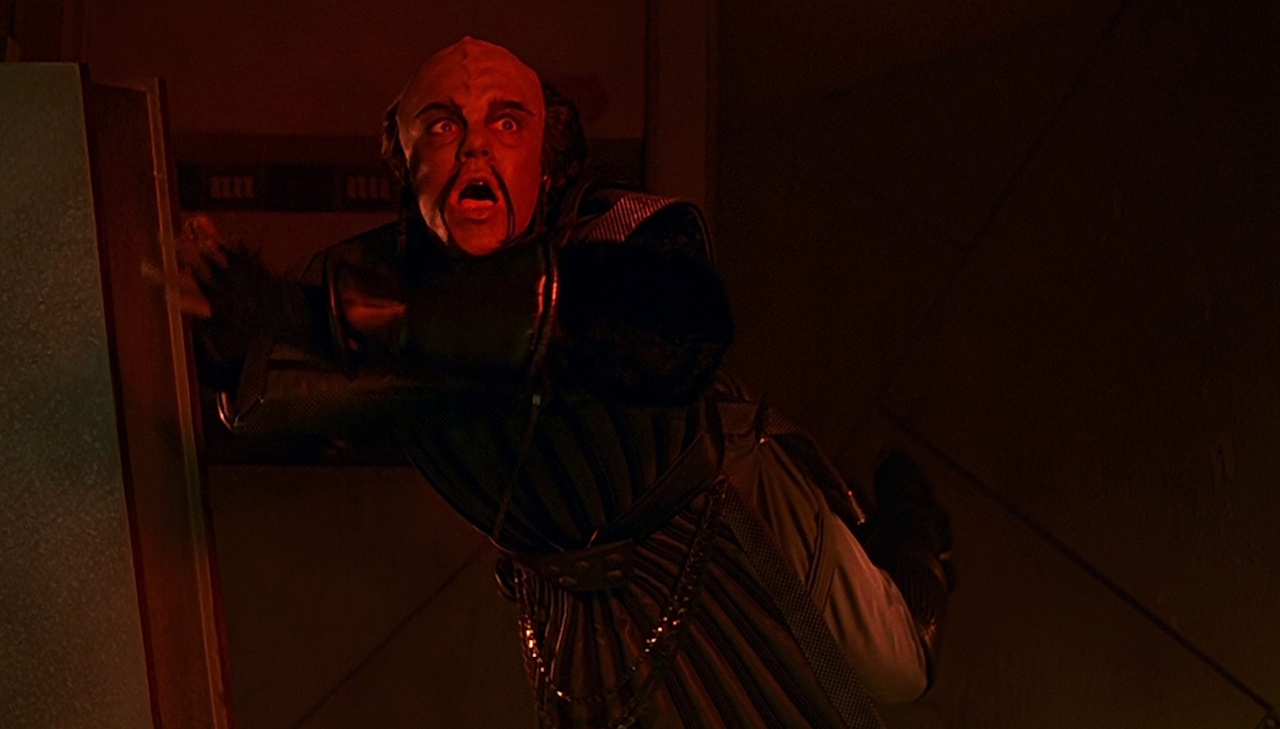
Still frame from Star Trek VI: The Undiscovered Country showing a Klingon floating helplessly.
A Klingon officer floating after his ship’s artificial gravity was knocked offline.

I think I can count on one hand the number of times a starship’s artificial gravity has been damaged in Star Trek. The only time it was plot-relevant was in The Undiscovered Country, where the damage to the artificial gravity on the Klingon ship Kronos One was instrumental to the plot to assassinate Chancellor Gorkon. But aside from that… can you think of a single time in the franchise’s 950 episodes and films where a ship has lost gravity?

We’ve seen starships take a real beating sometimes: the Enterprise in The Wrath of Khan, Voyager in Year of Hell, the NX-01 in Damage, and even non-Starfleet ships like the Cardassian vessel in The Wounded, or the Romulan warbird in Balance of Terror, but none of them ever lost their artificial gravity. This system appears to be more robust even than life-support, which we’ve seen fail on a number of occasions while artificial gravity was still operational.

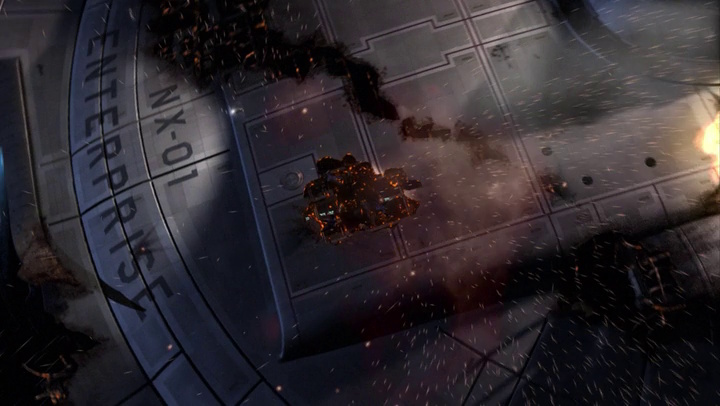
Still frame from Star Trek: Enterprise Season 3 showing the NX-01 Enterprise heavily damaged.
Even serious damage, such as to the NX-01 Enterprise pictured here, doesn’t usually stop artificial gravity from functioning.

You’d think prioritising something like breathable air and a survivable temperature would take precedence over artificial gravity, with ships being designed in such a way that life-support would be the most resilient and sturdy system. I know there’s some ambiguity in the way these technologies work in Star Trek, but artificial gravity must require some amount of power to function – and even if it’s powered by a wholly separate system, anything that disables the entire ship should deactivate artificial gravity. It would also make a logical target during ship-to-ship combat, as knocking out an opponent’s gravity would cripple their ability to operate the ship.

There are even times where disabling artificial gravity would be to the advantage of a crew trying to defend their ship. Perhaps the best example of this is the Borg attack on the Enterprise-E in First Contact, but there are other times where a boarding party, raiders, or pirates could have been at least slowed down and hampered if the crew deactivated artificial gravity on one or two decks. I suppose it’s good for Star Trek that the way artificial gravity works is deliberately vague, and it’s one of those “you’ve just gotta suspend your disbelief” things. But from an in-universe point of view, the apparently indestructible nature of this system, and the overlooked tactical advantages of trying to disable an adversary’s artificial gravity, don’t make a lot of sense.

Number 7:
Shouldn’t Starfleet have persevered with the Spore Drive?
Star Trek: Discovery

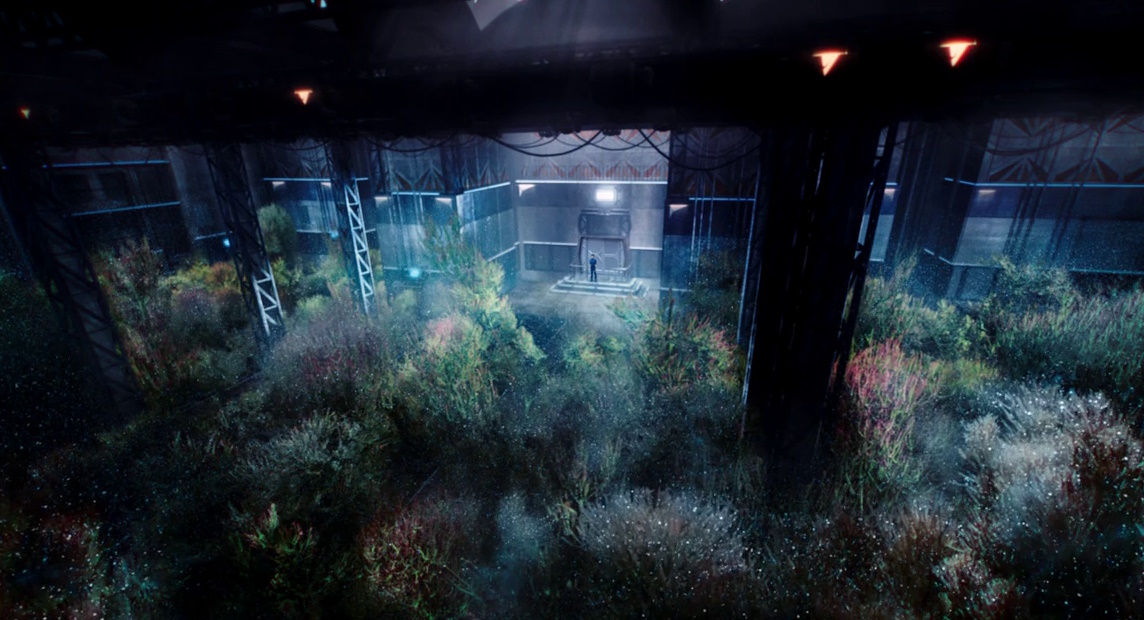
Still frame from Star Trek: Discovery Season 1 showing the mushroom cultivation area aboard the ship.
The cultivation bay aboard the USS Discovery.

After the loss of the USS Glenn and the apparent destruction of the USS Discovery, we’re led to believe that Starfleet abandoned its Spore Drive programme – even though the technology was proven to work and would be beyond useful to the organisation. For Starfleet, with its dual military and scientific missions, the Spore Drive was a phenomenal leap forward with so many applications. I genuinely cannot believe that they’d just abandon it after a few setbacks – especially after the Klingon Empire had come to learn of its existence.

We would later see, in Discovery’s third season, that basically any empathic race could – in theory – interface with the Spore Drive. That doesn’t seem like such a huge leap that Starfleet couldn’t have figured it out over time, especially with races like the Betazoids and Vulcans on hand. But even if using an empath as a navigator wasn’t possible, it still seems like such a ridiculously overpowered and useful piece of kit that Starfleet – and Section 31 in particular – would want to continue to develop it.

Four still frames from Star Trek: Discovery Season 1 depicting the USS Discovery at the Battle of Pahvo.
The Battle of Pahvo (pictured) proved the Spore Drive’s worth as a military tool.

Look at the Spore Drive’s capabilities. Two of its biggest achievements were cracking the Klingons’ cloaking device – becoming basically invulnerable to attacks in the process – and leaping tens of thousands of light-years across the galaxy to the planet Terralysium. For Starfleet’s military, the Spore Drive’s ability to jump so fast that attacks from disruptors and torpedos are ineffective is huge – it could redefine starship combat in the Alpha Quadrant. And for the organisation’s mission of exploration, being able to jump to literally anywhere in the galaxy renders warp drive obsolete and would mean Starfleet can investigate any interesting-looking phenomena with ease – while still being back home in time for tea.

The Spore Drive is an example of a “prequel problem;” if Discovery had been set years or decades after Nemesis – in the same period as Picard, for example – then it wouldn’t be an issue. We could simply say that the Spore Drive would become Starfleet’s new method of travel. But because Discovery was set before The Original Series, I don’t think there’s any way to create a satisfactory explanation for why Starfleet, Section 31, or other factions didn’t continue to develop and refine it.

Number 8:
Why would the Xindi fire a small weapon at Earth months ahead of their main attack?
Star Trek: Enterprise

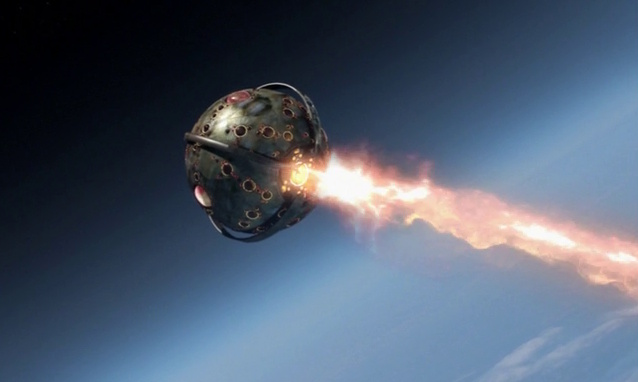
Still frame from Star Trek: Enterprise Season 2 showing a small spherical Xindi weapon firing.
The Xindi’s first weapon.

Sun Tzu, the legendary Chinese general, wrote two-and-a-half thousand years ago that a good commander should “always mystify, mislead, and surprise the enemy if possible.” And throughout history – from the ancient world to the Second World War and beyond – surprise attacks and misdirection have been incredibly powerful tools that successful generals and strategists have employed. So why would the Xindi – backed up by a faction from the far future, no less – launch a minor attack that alerted Earth and humanity to their much larger upcoming attack?

If the Xindi needed to test the range and abilities of their weapon, they could pick another target in a different system. This target would be a comparable distance away from where they planned to launch their weapon, and could also be a planet of roughly the same size and mass as Earth. This would give their scientists and engineers the data they needed without compromising the secrecy of their operation. All they achieved by targeting Earth with their initial, much smaller weapon was alerting humanity and Starfleet to their existence – which ultimately set the stage for their defeat.

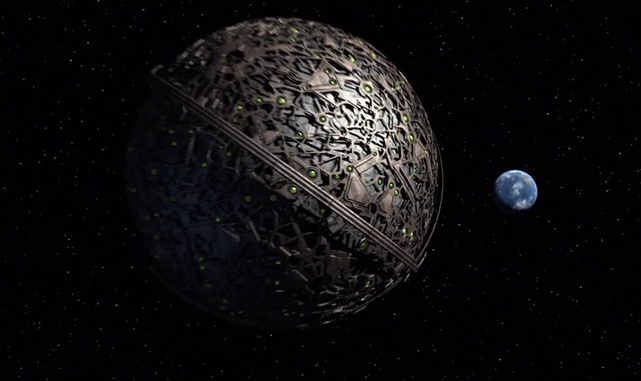
Still frame from Star Trek: Enterprise Season 3 showing the Xindi weapon arriving at Earth.
The much larger second Xindi weapon approaches Earth.

This is a military blunder so exceptionally basic that, if I were the Sphere-Builders, I’d have cut all contact with the Xindi and written off the entire operation. The miniature version of the weapon wasn’t designed to deal the kind of damage that the larger version was, but it was still damaging enough to put all of humanity and Starfleet on full alert – kick-starting a chain of events that led to Captain Archer confronting and stopping the Xindi and their Sphere-Builder allies.

All the Xindi would’ve had to do was pick a different target for their weapons testing. A planet the same size as Earth in a system roughly the same distance away would be ideal – or an unarmed probe sent to Earth if scouting that route was deemed necessary. Even if the Xindi and Sphere-Builders were so cocky and arrogant that they considered themselves to be unstoppable, it was still a catastrophic, primary school-level mistake to send the small weapon directly to Earth months before the larger weapon was ready.

Number 9:
How did Nero’s trip back in time create an alternate reality instead of changing the prime timeline?
Star Trek (2009)

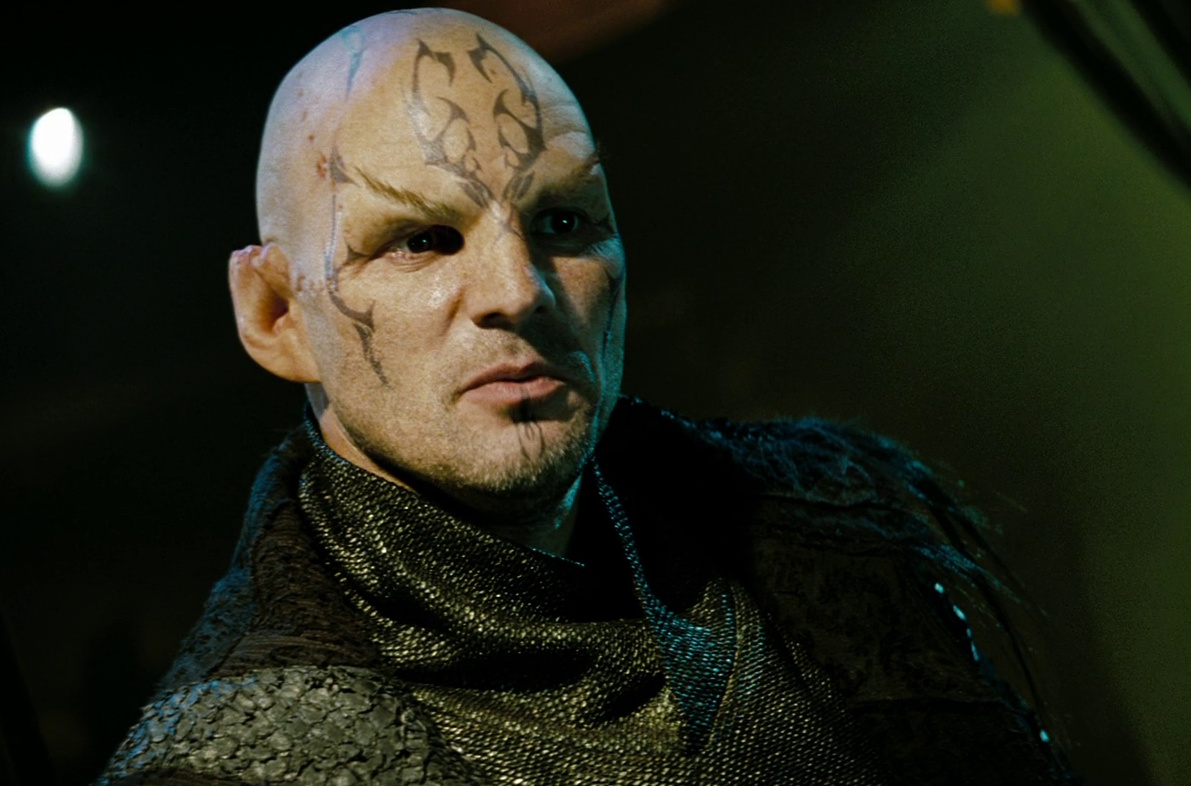
Still frame from Star Trek (2009) showing a close-up of Nero.
Nero.

The way it’s explained on screen in Star Trek, Nero travelled back in time from 2387 to 2233 via an artificial black hole created by Red Matter. Somehow, though, the changes Nero and later Spock would go on to make to the past didn’t overwrite the events of the prime timeline, but exist in their own separate universe. This doesn’t seem to gel with what we know of time travel and temporal paradoxes in Star Trek.

Starfleet vessels have encountered all kinds of temporal phenomena over the years, none of which led to the creation of a parallel universe. Even in cases where ships got caught up in time-travel shenanigans, the end result was either a permanently altered timeline – as in stories like The Voyage Home or Past Tense – or overwritten events that no-one remembered – as in stories like Cause and Effect or Year of Hell. None of these led to the creation of a permanent alternate reality that persisted after the phenomenon that created it had been dealt with – so why did the Red Matter black hole do so?

Still frame from Star Trek (2009) showing the Narada emerging from a black hole.
Nero’s ship, the Narada, arrives in the 23rd Century.

The best explanation I can come up with is this: Star Trek exists in a multiverse. Along with to the prime timeline, the Mirror Universe, and others that we’ve seen, there must be multiple additional parallel universes – some of which are identical to or indistinguishable from the prime timeline. Somehow, Red Matter creates a portal between universes, allowing for travel from one to another. Nero and Spock entered a parallel universe identical to the prime timeline – but it’s a parallel universe that already existed before they arrived.

That’s a pretty convoluted explanation, and it isn’t explained that way on screen. Instead, the alterations to the timeline that Nero perpetrated – from the destruction of the USS Kelvin to the attack on Vulcan and beyond – should have permanently altered the prime timeline based on what the characters told us and what we already know from other iterations of Star Trek.

Number 10:
Couldn’t Captain Pike just retire and live as a hermit?
Star Trek: Strange New Worlds

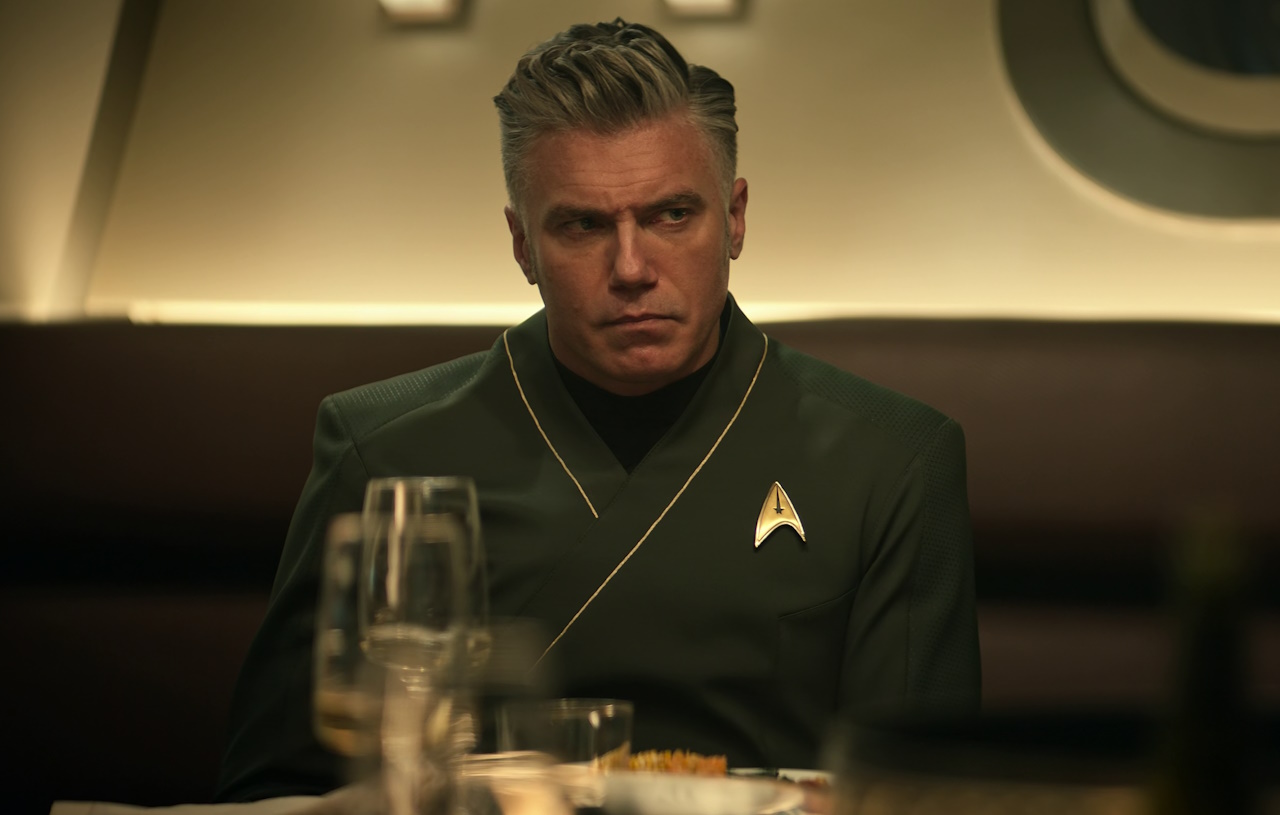
Still frame from Star Trek: Strange New Worlds Season 2 showing Captain Pike at a diplomatic dinner.
Captain Christopher Pike.

I found Pike’s arc in Discovery and the first season of Strange New Worlds to be interesting and relatable. I’ve been in a similar position to Captain Pike: being told that my health was going to get dramatically worse and knowing that it’s inevitable. It made Pike an incredibly sympathetic character, and one whose story brought a tear to my eye more than once. But… is Pike’s devastating accident and disability genuinely unavoidable?

The more Pike comes to learn about the future, the more he seems to uncover ways to avoid his supposedly-inevitable fate. In the fantastic Season 1 episode A Quality of Mercy, Pike learned – thanks to a time-travelling version of himself – that if he avoided his fate but remained in Starfleet, he’d accidentally trigger a chain of events that led to a devastating war between the Federation and Romulans. This conflict was something only Kirk and Spock could prevent, but Pike’s place on the bridge and Spock’s serious injury would keep the war going and prevent any hope for peace in the future. This seemed to strengthen Pike’s resolve and set him back on course for the accident that would leave him disabled.

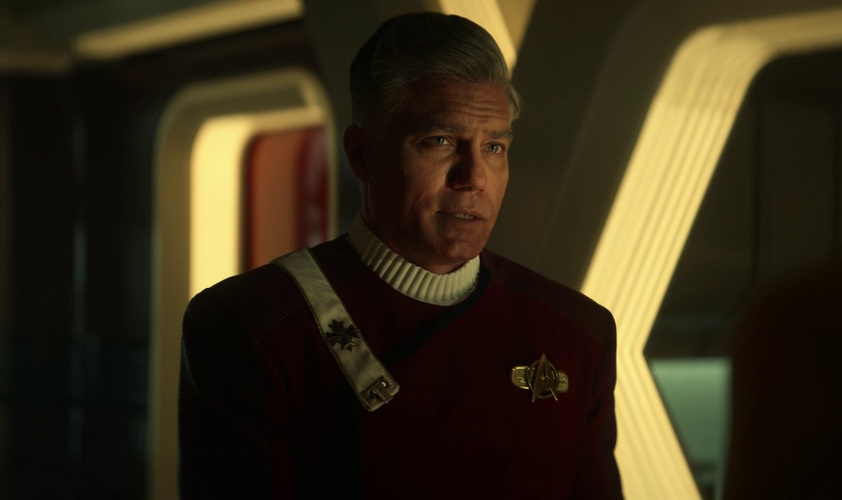
Still frame from Star Trek: Strange New Worlds Season 1 showing a future Captain Pike in a 'monster maroon' uniform.
Pike in an alternate future.

But… couldn’t he choose a radically different path? Sure, remaining in Starfleet after he was supposed to suffer the accident led to a horrible alternate future. But if Pike resigned his commission the day before the accident and went to live in a cave somewhere, what would change? Nothing, right? Pike could remain alive and relatively healthy, enjoying a well-earned retirement without the need for Talosian mind-games, and the rest of the galaxy could continue unaffected.

Maybe we’ll find out, in Seasons 3, 4, or beyond, why that kind of scenario couldn’t work. But it seems to me that, as long as Pike kept his head down and stayed away from Starfleet and galactic affairs, there wouldn’t be any harmful side-effects. Furthermore, knowing what he knew of the Romulan incursion, he could’ve even reacted differently in that situation to prevent the conflict from escalating. I guess the point of A Quality of Mercy was to hammer home that there’s no way to predict how any changes to the timeline could affect the Federation – and that’s a fair point, I suppose. But on a personal level, I could forgive Pike for trying to wrest back control of his destiny from the Klingon time crystal that doomed him.

So that’s it… for now!

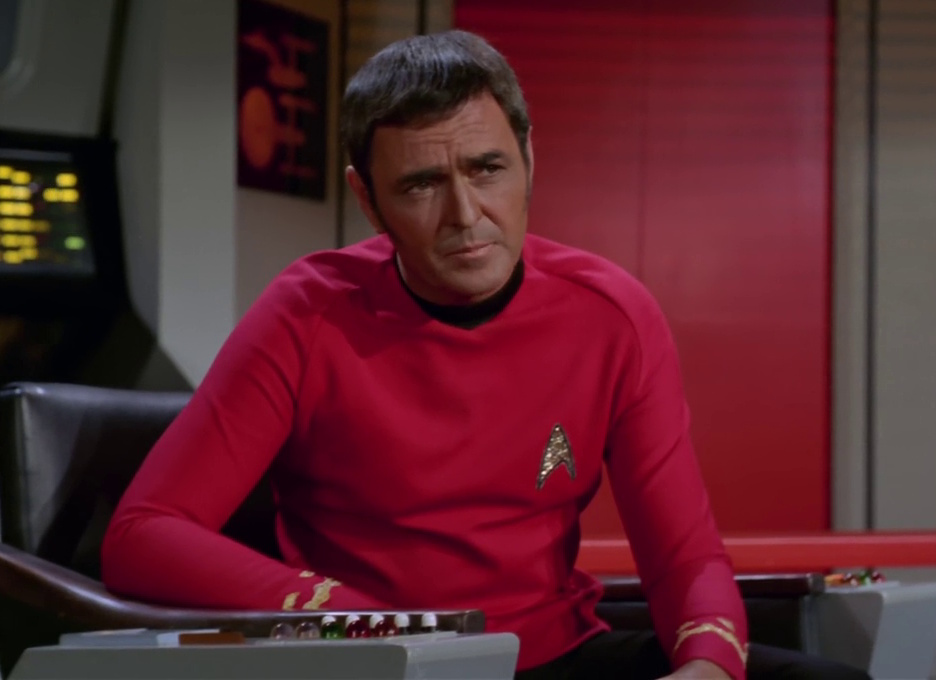
Still frame from Star Trek: The Original Series Season 3 showing Commander Scott in the captain's chair of the Enterprise.
It’s Scotty!

I hope this has been a bit of fun! Some of these things are more irritating than others, but to be honest with you, none of them are really that big of a deal. They only matter to folks like you and I – people who spend a bit too long thinking about Star Trek!

This might be a subject I’ll revisit in the future, so if your favourite little inconsistency or goof didn’t make the list this time, it’s possible I’ll get to it on another occasion. And if you want to check out my earlier list to read about ten other little things that bug me in Star Trek, you can find it by clicking or tapping here.

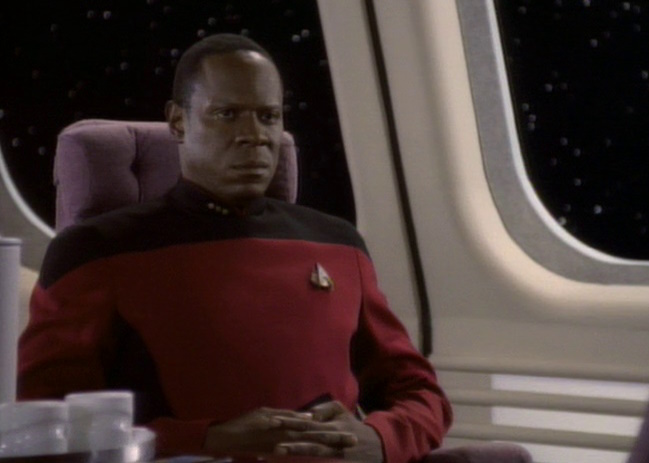
Still frame from Star Trek: Deep Space Nine Season 1 showing Commander Sisko aboard the Enterprise-D.
Commander Sisko looks rather grumpy…

Stay tuned, because there’s more Star Trek content to come here on the website as 2025 gets underway. Later this year we’ve got a new season of Strange New Worlds to look forward to, and if you missed my review of Section 31 you can find it by clicking or tapping here. I also wrote up my recollections of Voyager to mark the series’ thirtieth anniversary, and you can find that by clicking or tapping here.

Until next time… see you out there!


Most of the Star Trek shows, films, and episodes referenced above can be streamed now on Paramount+ in countries and territories where the platform is available, and may also be available on DVD and/or Blu-ray. The Star Trek franchise – including all shows, films, episodes, characters, and other properties discussed above – is the copyright of Paramount Global. This article contains the thoughts and opinions of one person only and is not intended to cause any offence.

Star Trek: Discovery review – Season 4, Episodes 1-2

Spoiler Warning: There are spoilers ahead for Star Trek: Discovery Seasons 1-4. Spoilers are also present for Star Trek: Picard Season 1 and Star Trek: The Next Generation.

Ahhh… it feels so good to write these words! Star Trek: Discovery is finally available in Latin America, Western Europe, Australia, and a few other countries and territories via a patchwork of different streaming services, television channels, and other digital distribution methods. Significant numbers of Trekkies in Africa, Asia, and elsewhere still can’t access Discovery Season 4 (by conventional methods, at least) but it feels like a victory for fan activism nevertheless. It’s my sincere hope that ViacomCBS will continue to try to bring Discovery Season 4 – and the rest of Star Trek – to regions and territories where it isn’t yet available, and I’ll keep bringing up the issue at every opportunity.

Following the positive news the other day that Discovery is going to be available to watch, I have taken the decision to resume my reviews and theories for the duration of the season. I felt it was necessary to criticise ViacomCBS, Paramount+, and the rest of the corporate side of Star Trek following their poor decision to withdraw the show, but equally I feel it’s important for all of us to support Star Trek if it is available. That means watching it on Pluto TV, purchasing episodes on platforms like iTunes/Amazon, or watching on Paramount+.

Pluto TV is the current home of Star Trek: Discovery here in the UK – and in much of the rest of western Europe.

This isn’t a one-way street, and when corporations make positive decisions – especially following a significant fan campaign – I think we need to go out of our way to support the franchises we love and show companies like ViacomCBS that listening to fan feedback pays off. It’s not good enough to criticise the company for their nonsense, but fail to acknowledge and respond positively when they reverse course or take good decisions.

The “victory” is bittersweet because I know that there are fans in other parts of the world who can’t watch Discovery. If I still lived in South Africa, for example, I’d be continuing my one-person Discovery review blackout! But because the show is now available here in the UK, I will be resuming my reviews. That doesn’t mean I don’t support fans in other parts of the world, and I will continue to do what I can in my own small way here on the website to call on ViacomCBS to make Discovery and the rest of Star Trek available.

Having dedicated close to 10,000 words and a week of my time to Discovery Season 4 and the international distribution situation, I think that’s more than enough on that for now! So let’s get back on track with a double-header review of the first two episodes: Kobayashi Maru and Anomaly.

The first shot of the new season.

Kobayashi Maru kicked off with a neat CGI sequence showing the USS Discovery arriving from a Spore Drive jump, then Book’s ship departing the shuttlebay. The special effects work across both episodes was outstanding, and the animators and artists deserve a lot of credit – even more so when you consider that much of the work was done remotely due to the pandemic. In particular I’d point to shots of Book’s ship in flight, the USS Discovery’s Spore Drive jumps, and the anti-gravity sequences that we’ll look at in a moment.

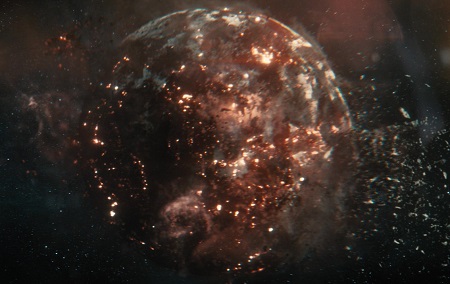
The one criticism that I have of Kobayashi Maru is related to CGI, though. It isn’t what you think – none of the effects themselves were bad! But as a consequence of the somewhat rapid, occasionally chaotic way that the episode was cut together, edited, and paced, at a couple of crucial moments, CGI sequences were nowhere near as long as they needed to be to properly communicate what was happening. At both points where Book was looking at the impact of the gravitational anomaly, first on Kwejian’s moon from the console of his ship and later at Kwejian itself from the bridge of Discovery, the CGI shots of the anomaly and the remains of the planet were barely shown for a scant few seconds – not long enough, in my opinion at least, to have the impact they were intended to have.

This CGI shot of the remains of Kwejian was only visible for a few seconds.

In the first case I think we can excuse the pacing. Book blacked out as the anomaly hit, and the structure of the scene was enough to show that the proverbial “something bad” was happening, but also the short cut kept it mysterious enough that we didn’t see everything – and were left wanting to know more. But as Book stood on the bridge of Discovery, we caught a glimpse of Kwejian that began somewhat blurry and obscured by the ship’s viewscreen, then lingered for mere seconds before cutting back to Book and the crew to see their reactions. A few extra seconds, perhaps, might’ve helped this moment.

As it is, we know what happened to Kwejian. And since we’re already talking about the premiere’s biggest single moment, let’s jump into the “should Kwejian have been destroyed” conversation! In my view, the season premiere needed something big to sufficiently communicate the stakes. A character death could’ve accomplished this, but considering that the anomaly is being presented as this kind of galaxy-ending threat, the destruction of an entire planet – especially one we’re familiar with and from which a main character originates – succeeds in this objective.

Book’s immediate reaction to the loss of his homeworld.

Objections to the Kwejian storyline seem to stem from a much broader point of contention – that Discovery shouldn’t be running this kind of apocalyptic storyline for the third (or arguably fourth) season in a row. Taking a break from saving the galaxy would’ve allowed the show to tell different kinds of stories – stories that could be just as exciting and dramatic, but smaller in scope and more character-oriented. That’s not a bad argument, but it’s been apparent since we got the first teaser trailer for the season at First Contact Day in April that this was going to be the direction of travel. In the context of this kind of story, the destruction of Kwejian works; it succeeds as a story point.

Obviously this hurts Book, and represents a change for his character that’s at least as substantial as Saru’s Season 2 vahar’ai transformation. Two episodes in, we don’t really know what the outcome of this will be for Book. He could follow the path of Kelvin-timeline Spock, recommitting himself to his work. He could draw on the loss of Kwejian at a key moment later in the story, perhaps spurring him on as he knows he’s one of the last remaining Kwejian natives. Or he could fall deeper into a depression that lasts all season and from which he struggles to recover. One thing is certain, though: Book won’t be the same after the destruction of his home planet and the loss of his family.

Book being comforted by Burnham in Anomaly.

President Rillak manages to simultaneously embody the “bad admiral” character archetype from past iterations of the franchise (where Starfleet admirals would often be depicted as adversarial if not outright evil) while also feeling like a character with nuance and depth. It would’ve been easy for Rillak to fall into a fairly flat villain trope given that Kobayashi Maru deliberately pitted her against Captain Burnham right from the start. But her reasons for seeking an evaluation of Burnham, her level-headed rebuke and assessment of Burnham’s captaincy, and the impressive way she stepped in to disarm the situation aboard the space station all work in her favour.

However, I would be remiss not to point out that her noisy interventions on the bridge of a starship while it was engaged in a dangerous and highly time-sensitive assignment ended up causing a lot of problems. Had Captain Burnham not been delayed by those crucical seconds, the outcome of the mission could have been very different – and someone who lost their life might’ve survived. There is a time and place for someone in a position of authority to question or criticise, and in the heat of the moment is not that time.

President Rillak interrupted Captain Burnham at the wrong moment.

I’m glad that President Rillak has been brought on board, though. The only other authority figure we’ve met within Starfleet is Admiral Vance – and I can’t imagine him being so adversarial and harsh toward Captain Burnham. I was worried before the season premiered that storylines which could’ve been Vance’s will end up going to President Rillak, but I’m actually glad in this case that he gets to remain on friendly terms with Discovery’s captain, and that we don’t have to see him as an obstacle for her to overcome.

The “butterfly aliens” had a neat, unique design, and it played into the story of repairing their non-functional satellite network well. My only criticism of this sequence would be that it felt rushed. The intention was to show Captain Burnham and the crew working together, knowing each other’s strengths and using them to solve a puzzle. But Kobayashi Maru as a whole felt very rapidly-paced, and this sequence – which in past iterations of Star Trek might’ve been a whole episode – felt undeniably rushed, lasting only a few minutes. The episode wanted to get into the meat of the story, and the “butterfly aliens” and their satellites were elbowed out of the way in relatively short order to make that happen.

The butterfly aliens up close.

I get the sense that Book and Burnham’s mission to deliver dilithium to the “butterfly aliens” might be all that we get to see of the Federation being rebuilt this season. Some of this seems to have happened off-screen, and it feels like the rebuilding, expanding Federation is basically going to be a backdrop to the main event – the story of the gravitational anomaly.

Considering how big and devastating the Burn had been, I think I’d have liked to see more of this rebuilding work. It makes a good backdrop, don’t get me wrong, and it gives the crew something to fight for and defend as they step up their efforts to defend against the anomaly. But when you think back to how fractured and small the Federation felt in Season 3, particularly in the first half of the season, there’s a bit of a risk that we’re rushing past something meaningful; a story worth telling.

Fixing the satellites for the butterfly aliens was a short moment designed to be a microcosm of Captain Burnham’s and the USS Discovery’s work prior to the main anomaly storyline.

Frankly, I could have happily entertained the idea of an entire season’s worth of “rebuilding” stories. Seeing Captain Burnham and the crew traveling the length and breadth of the rump Federation, bringing help and hope to familiar and new races would have been really interesting to see. It would’ve allowed for a season-long story, but one comprised much more of individual elements – rebuilding work on one planet or in one system, then moving on to a different area to face a different challenge. It was nice to get a taste of this rebuilding work – which is presumably something Captain Burnham and the crew have been doing a lot of off-screen – but there was absolutely scope to do a lot more with this idea.

Though only on screen for a brief moment, it was wonderful to see Admiral Vance’s family. He’d mentioned them in Season 3, but it was implied that his work meant he couldn’t spend as much time with them as he wanted. To see him able to welcome them to Starfleet Academy and show them around was really touching.

Admiral Vance with his wife and daughter.

One moment in Kobayashi Maru had me tearing up – and I bet you can guess which one! As President Rillak introduced the assembled cadets and officers to Starfleet’s new Archer Space Dock, Archer’s Theme from the end credits of Star Trek: Enterprise was heard. The USS Voyager-J was docked, and for a brief moment I got very emotional! Star Trek has done this to me before: seeing the refit USS Enterprise for the first time in The Motion Picture, accompanied by another beautiful piece of music, is another sequence that turns on the water works! This scene was very similar, and was truly a beautiful homage to Enterprise. More than a millennium after his voyages of exploration, it’s incredibly sweet to see the Federation remembering Captain Archer.

As Kobayashi Maru drew to a close, pretty much everything we’d seen across the episode’s fifty-minute runtime had ceased to feel important. The revelation of Kwejian’s destruction overruled everything else, and the conflict between Captain Burnham and President Rillak felt petty in comparison. Tackling the anomaly would mean they’d have to pull together – any interpersonal conflict or rivalries now needed to be set aside. As I sat down to watch Anomaly, the direction of travel for the season felt set.

This moment, accompanied by a familiar musical sting, was beautiful

That doesn’t mean that Kobayashi Maru was some kind of waste. It told an exciting and engaging story in its own right, one which laid the groundwork for what’s to come in two key ways: firstly by showing off how far the Federation has come, giving Captain Burnham and the crew something to fight for, and secondly by introducing the gravitational anomaly and its devastating destructive power.

So that brings us to Anomaly.

Despite its subject matter, Anomaly ended up being a much more intimate, personal, and emotional episode than I initially expected. Several different characters got cathartic, emotional storylines that really showed off how well Discovery can do these smaller, personal moments even in the midst of a galactic-scale story.

Captain Burnham in Anomaly.

Book and Stamets made an amazing, underrated pair in Anomaly, and their central conflict was handled incredibly well. In the run-up to the season I had asked what Book’s ability to control the Spore Drive could mean for Starfleet, and we got part of an answer to that in Kobayashi Maru, with President Rillak explaining that a “next-generation” Spore Drive was in development. But naturally, a proud person like Stamets would be impacted by the reveal too.

I liked the way this was handled. It wasn’t presented as mere jealousy – though perhaps Stamets’ ego did play a role in the conflict between himself and Book – but more a feeling of helplessness. Having to rely on other people, feeling unable to help and having to watch from the sidelines as Stamets did in the Season 3 finale, is never a nice feeling. As someone who’s disabled and who has to rely on help more often than I’d like, this is definitely something very relatable. Everyone wants to feel independent and in control of their life and their situation – Stamets lost that control, and having already lost his husband once before was already emotionally vulnerable to this kind of situation. He appears to have redirected some of those feelings onto Book, but he recognised that and tried to make amends.

Stamets and Book made a great pair.

David Ajala and Anthony Rapp played off one another beautifully in their scenes together, and it makes me want more Book and Stamets! They’re an unlikely team in so many ways, but it’s fantastic to see Discovery stepping out of its comfort zone and pairing up different character duos. This is something I hope to see more of as the season rumbles on.

One character pairing that came together beautifully at the beginning of Season 3 last year was Saru and Tilly, and seeing them reunited in Anomaly was fantastic. Saru is a calming influence on Tilly, who can be excitable and emotion-driven, and their contrasting personalities make for truly fun viewing. Tilly has come a long way since Season 1, but she still needs the occasional support of someone like Saru.

Tilly was glad to have Saru back!

Speaking of Saru, he’s now back aboard Discovery – albeit in a less-than-permanent capacity. What I liked about Saru’s reunion with Captain Burnham was the agency he was given over his role after returning to Starfleet. It would have been easy for the writers to have Burnham be the one to ask Saru to remain aboard the ship, but for Saru himself to make the offer to serve as first officer was an outstanding choice. I got genuinely emotional seeing Burnham accept his offer.
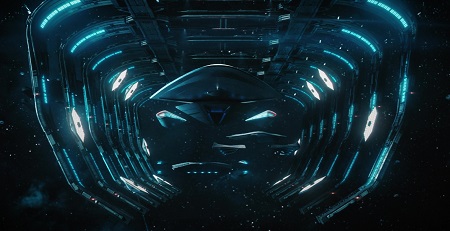
This might irritate the Discovery haters, but Captain Burnham and first officer Saru mirror Kirk and Spock in more ways than one; echoes of Star Trek’s first main character pairing are present. Burnham is younger, quicker to act, and more of a risk-taker. Saru is older, more experienced, and slower and more deliberate when considering his moves. He’s the perfect first officer to serve someone like Captain Burnham. She needs that kind of XO just like Kirk needed Spock – and while we’re talking about contrasting pairs, just like the calmer, level-headed Picard needed someone like Riker.

Captain Burnham arguably needs a first officer with the temperament of Saru.

I’m glad that Saru didn’t have to be demoted in order to take up his new role (like poor Decker was in The Motion Picture!) Starfleet ships have been depicted with two officers who both hold the rank of captain on several occasions; Kirk and Spock were both captains during the events of The Final Frontier and The Undiscovered Country, for example. So I don’t think it presents any kind of in-universe problem to see Saru occupy the role of first officer.
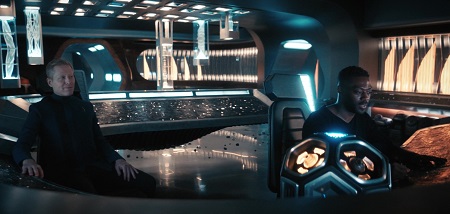
It would’ve been potentially interesting to see a secondary character promoted to occupy that role. Nilsson, Rhys, Bryce, or even Linus were possible contenders, and it wasn’t really clear who served in that role before Saru came aboard – Discovery has been flying around for months, after all. But on the whole, I think the role suits Saru perfectly. I’d even go so far as to say it suits him better than the captain’s chair ever did. His style is well suited to being the person to present multiple options, to consider the possibilities, but to leave the decision-making to someone else. I just hope that his presence on the ship won’t end up causing Captain Burnham any problems; I don’t think the writers would go down that road, but you never can tell!

There were other prospective first officer candidates – such as Rhys, who appeared to have the conn for a time in Kobayashi Maru.

Speaking of Captain Burnham, we see two distinct aspects of her command style on display across the first two episodes of the season. In Kobayashi Maru, particularly during the fast-paced opening sequence, we see her at her most self-assured, confident not only in her own abilities but in those of the crew under her command. In Anomaly, we see her willing to listen to the advice of members of her crew – relying on Tilly, Adira, Bryce, and particularly Saru at several key moments across the episode.

Critics of Michael Burnham’s characterisation would be well-advised to watch her in Anomaly in particular. I don’t think it’s fair to say she’s “changed” in Anomaly compared to how she’s usually been portrayed, but some of the criticisms of Burnham in past seasons stem from a sense of selfishness or self-centeredness that arguably are more to do with the way Discovery as a whole is written than the way Burnham herself is. But in Anomaly we see firsthand how she’s relying on others – and from the production side of things, how Discovery is willing to allow other characters far more agency over the way the story unfolds.

Anomaly was a great episode for Captain Burnham.

Someone like Bryce is a relative “blank slate” – despite being a longstanding member of the bridge crew. We don’t know a lot about him, his background, or his hobbies, so in that sense making him the one to figure out a solution to the dangerous situation makes sense. It’s quite believable that Bryce might enjoy kite-surfing – far more so than if it was suddenly a hobby ascribed to Burnham, Saru, or Tilly for the first time. It’s a contrivance, for sure, but Star Trek’s history is littered with those – many of which are far more egregious!

David Ajala put in his best and most emotional performance of the series so far in Anomaly, communicating the incredible, almost unimaginable pain of someone who feels like he’s lost everything. Mixed in with loss is regret – Book had spent most of the last few years away from Kwejian, prior to the events of Season 3’s episode Sanctuary, and in light of the loss of the world and his family, regrets those lost years all the more.

Book lost almost everything and everyone he had cared about – and David Ajala’s performance captured that pitch-perfectly.

The standoff between Captain Burnham and Book was riveting to watch in Anomaly, as the latter insisted on helming a dangerous mission into the anomaly. It reminded me of The Next Generation Season 6 episode Lessons, where Captain Picard struggles with the similar conundrum of ordering someone he cares about to undertake a dangerous mission. Lessons is a fantastic episode, but I think in retrospect it’s limited by the fact that Nella Darren – Picard’s love interest – is a new, one-off character. Book and Burnham’s relationship has been well-established over the course of Season 3 and into Season 4, so the conundrum she faces as he insists on going on the mission is something we as the audience are far more invested in.

Star Trek has, on more than one occasion, depicted people at moments of severe depression, willing to end their lives or to give up. Book is in that position in Anomaly – not actively trying to die, but so uncaring about his life in the wake of everything that’s happened that he’s willing to take risks, put himself in harm’s way, and give up rather than fight to survive. But Anomaly showed Book that Burnham is in his corner, willing to fight when he isn’t, and pushing him to find the strength to try.

Burnham was there for Book when he needed her most.

Anomaly shows us, through a variety of different character pairings, how people can help one another through difficult circumstances. Whether it’s Tilly complimenting Adira for their hard work, Saru telling Burnham to be a partner, not a captain, Dr Culber talking to Gray through Adira as he works on his new synthetic body, or Stamets reaching out to Book, the theme of the episode is connection.

I loved the Picard reference in the scene with Adira, Gray, and Dr Culber. It was an interesting revelation that the “Soong process” for transferring minds was ultimately unsuccessful in most cases – I wonder what impact that will have on future Picard stories. The character it might impact most is Dr Soong himself, as he had planned to transfer his own consciousness into a synthetic body. But perhaps we should leave that speculation for another time! I think the intention here was to pre-emptively close a potential plot hole – by saying that the Soong process is basically unlikely to succeed, it gets around potential questions in future about why it wasn’t possible to save characters by transferring them into synthetic bodies when they’re near death. I’m not sure it was necessarily something that needed to be wrapped up in this fashion, but then again we Trekkies can be a pedantic bunch!

Dr Culber connected Gray’s story to Star Trek: Picard Season 1.

As someone who has struggled for a long time with my own gender identity, the scene with Gray “customising” his new body was very emotional. For a long time, I lacked the confidence to change anything about my appearance – especially when going out in public – to better match my own gender identity, so to see Gray talking about making cosmetic changes in order to be more comfortable in his own skin – literally – was a deeply emotional moment.

There’s power in representation, and even though Gray wasn’t the main focus of Anomaly, the main scene he had with Dr Culber and Adira was one of the best, and perhaps most underrated, in the entire episode for me.

Gray had the opportunity to customise his new body.

One of the big questions facing Season 4 at the moment is the nature of the gravitational anomaly. It always felt that the characters’ first guesses as to what it could be wouldn’t pan out, but I kind of liked the idea of a rogue black hole – or pair of black holes, in this case. Facing a purely natural phenomenon could be a story that brings with it all kinds of real-world parallels as we struggle with the climate emergency, for example.

However, it seems from the ending of Anomaly that Stamets, Tilly, and co. weren’t correct with their binary black hole theory, once again opening up the story to a completely unknowable next phase. Keeping the mystery going is good; had the anomaly been all figured out within a couple of episodes it might’ve been less exciting going into the rest of the season! It was interesting, though, to see Tilly in the closing moments of Anomaly presenting this as a defeat.

The nature of the anomaly is still uncertain.

Tilly seemed to be suggesting that the fact that the anomaly’s path remains unpredictable means that the mission to scan it was somehow unsuccessful, but I’m not sure that’s the best way to present this revelation. Scanning the anomaly up close yielded a treasure trove of information for the crew to scour, and was an absolutely necessary step in understanding the danger it poses. Maybe its path is still impossible to predict – for now. But that doesn’t make the mission a failure. And considering no lives were lost and the damage to the ship seems repairable, I guess I just don’t really get why the closing moments of Anomaly chose to present the results of the data in such a negative way. Obviously it’s bad news that the path of the anomaly is still unpredictable – but that’s no one’s fault and it doesn’t mean that the mission failed.

The visual effect of the crew lifted out of their seats as artificial gravity failed was incredibly impactful; one of the most powerful visuals in the first two episodes. I can see why clips of that were chosen for the trailers! Star Trek rarely depicts artificial gravity failures – doing so has historically been prohibitively expensive. A couple of behind-the-scenes photos have shown the cast suspended in harnesses and on wires, and it seems clear that those sequences will have been difficult to film. It was worth the effort, though, and the finished effect is fantastic. Not only that, but I think it’s made substantially more impactful because artificial gravity failures are so uncommon in Star Trek.

Dr Culber and Captain Burnham float free as Discovery’s artificial gravity fails.

So that was Season 4’s opening pair of episodes. It took fans a lot of hard work to ensure the episodes would be available to more folks, so I hope everyone has found a way to tune in and watch via official channels – where such channels are available, of course. I think the season got off to a rocky start with all of the international mess, but the episodes themselves were fabulous, setting up a suitably engrossing mystery that feels very open right now. The story could go down any one of many different, utterly unpredictable routes – just like the anomaly itself!

Discovery is always at its best with moments of intimate characterisation, and there were many, many moments across both episodes that showed off the characters at their best – and gave the actors some fantastic material to work with. There were amazing performances from David Ajala, Sonequa Martin-Green, Doug Jones, Ian Alexander, and Chelah Horsdal in particular, and I’m sure I’m leaving too many folks out. The visual effects are once again amazing, an improvement on Season 3 – something I didn’t think would’ve been possible.

As the credits rolled on Anomaly I was left wanting to know more – and not wanting to have to wait a week! That’s the mark of a good story in my book, leaving fans clamouring for more, wanting to figure out the show’s mysteries. I’m eagerly awaiting next week’s episode, Choose To Live. Stay tuned for my weekly list of theories in the days ahead, and a review of Choose To Live next week!

Star Trek: Discovery Season 4 is available to stream now on Paramount+ in the United States, Scandinavia, Latin America, and Australia. The show is on Pluto TV in the UK, France, Germany, Italy, and other parts of Western Europe at 9pm on Fridays and Saturdays. Individual episodes or the full season can be purchased on iTunes, Amazon Video, and possibly other platforms in the UK, parts of Europe, and select other countries. The Star Trek franchise – including Discovery and all other properties mentioned above – is the copyright of ViacomCBS. This article contains the thoughts and opinions of one person only and is not intended to cause any offence.