

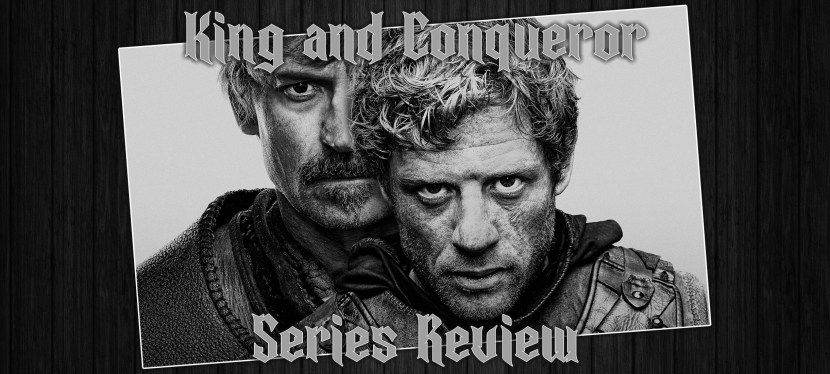
Spoiler Warning: Beware spoilers for King & Conqueror.
King & Conqueror was one of my most highly-anticipated TV shows of the year. I think every British schoolkid learns about 1066 and the Battle of Hastings in school; I certainly have vivid memories of sitting in a drafty history classroom, surrounded by bored kids passing notes, while a teacher tried to whip up some enthusiasm for the battle between William and Harold! And, as Brits, I think we have an appreciation for the losing side in (some) historical settings – Richard III, Bonnie Prince Charlie, and, of course, Harold Godwinson – whose defeat at the Battle of Hastings marked the end of Anglo-Saxon rule in England, and the beginning of the Norman period.
These events have never – to my knowledge, anyway – been dramatised like this. King & Conqueror was a joint production between the BBC here in the UK, CBS Studios from the United States, and Iceland’s RVK. I can’t find an exact per-episode figure floating around, but it’s by far the most money anyone has ever spent to dramatise the events leading to the Norman Conquest.
So it’s a shame, then, that I really didn’t like King & Conqueror.
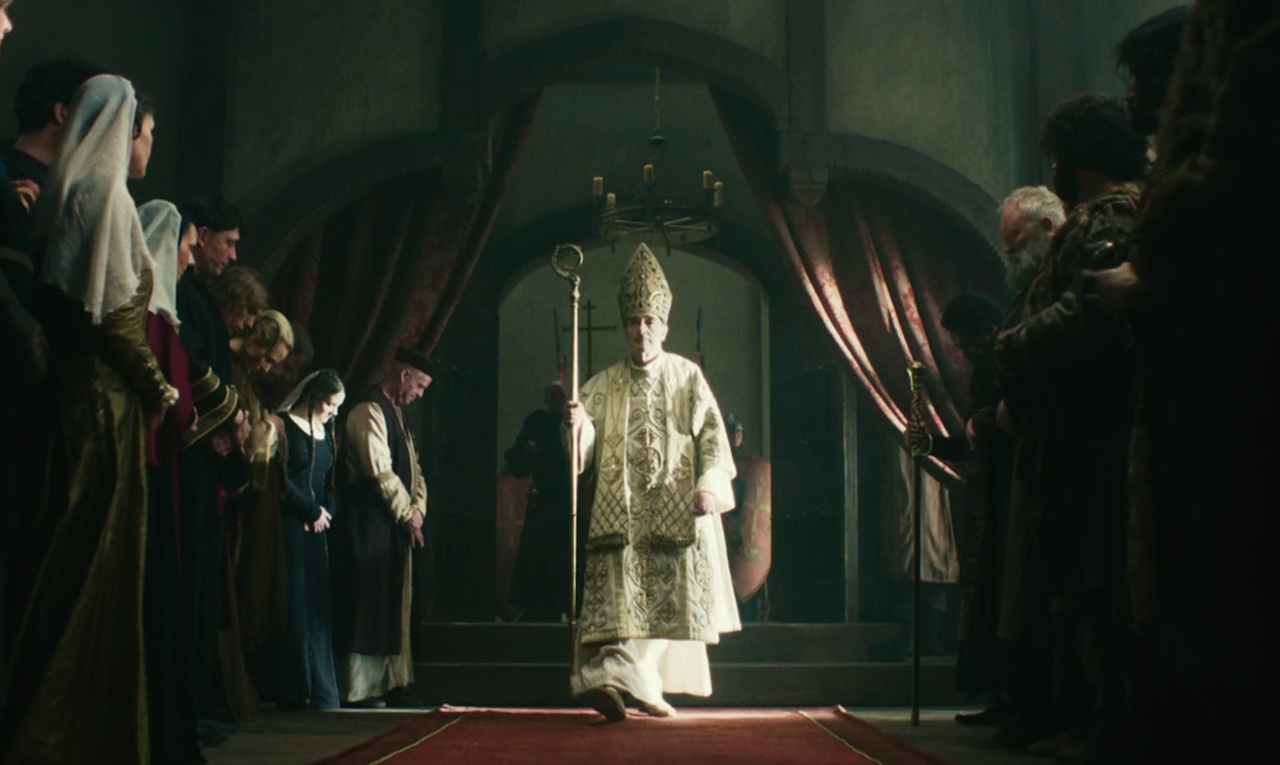
Any time real history is adapted – be that as a novel, a film, or for television, as in this case – some liberties are taken. King & Conqueror is not a documentary; it’s a fictionalised account of events. And, to be fair to the production team, records from this era are not great, so there’s a lot of ambiguity and plenty of wiggle-room for getting creative. We don’t know how Godwin of Wessex spoke to Harold and his brothers, nor what Edward the Confessor may have thought about the succession to the throne in his final years of life. There’s plenty of room in those gaps to tell an engaging story.
King & Conqueror suffers, in my view, from two major issues. The first is that it changes established historical events without good reason, to the point where the story it ultimately tells is too far-removed from what we know actually happened. And the second is that it’s drawing too heavily from the likes of Game of Thrones for some of its dramatic storylines.

It’s this “Game of Thrones-ification” that, for me, really ruined King & Conqueror. In order to ramp up the drama to levels akin to these kinds of big-budget shows, King & Conqueror’s writers had to completely invent scenes and storylines that have absolutely no basis in historical fact. In another series, maybe they’d have worked. But if you have to change the story you’re trying to tell so extensively that it no longer resembles the truth… why not do what George R R Martin did and make up something new? Because that’s what King & Conqueror is, at the end of the day: it’s not a “re-telling” of the events leading up to the Norman Conquest. It’s fiction wrapped up in a threadbare cloak of history.
It’s hard to pick the most egregiously wrong moment in King & Conqueror that would best embody this “Thrones-ification” of history. Several examples come to mind, and we’ll go through them in turn.
Firstly, Tostig – Harold’s younger brother – was not a weakling nor a child, but a capable military commander in his own right who’d won battles in wars against Wales. His wife didn’t die in childbirth; Judith of Flanders lived for almost thirty years after Tostig’s death in 1066, remarried the Duke of Bavaria, and left England. Tostig’s conflict with Harold didn’t come about from personal hatred surrounding his wife’s demise, but rather because Harold conceded to rebel demands after the Northumbrians rose up against his rule. Harold and King Edward exiled Tostig, who eventually formed an alliance with Harald Hardraada in Norway.

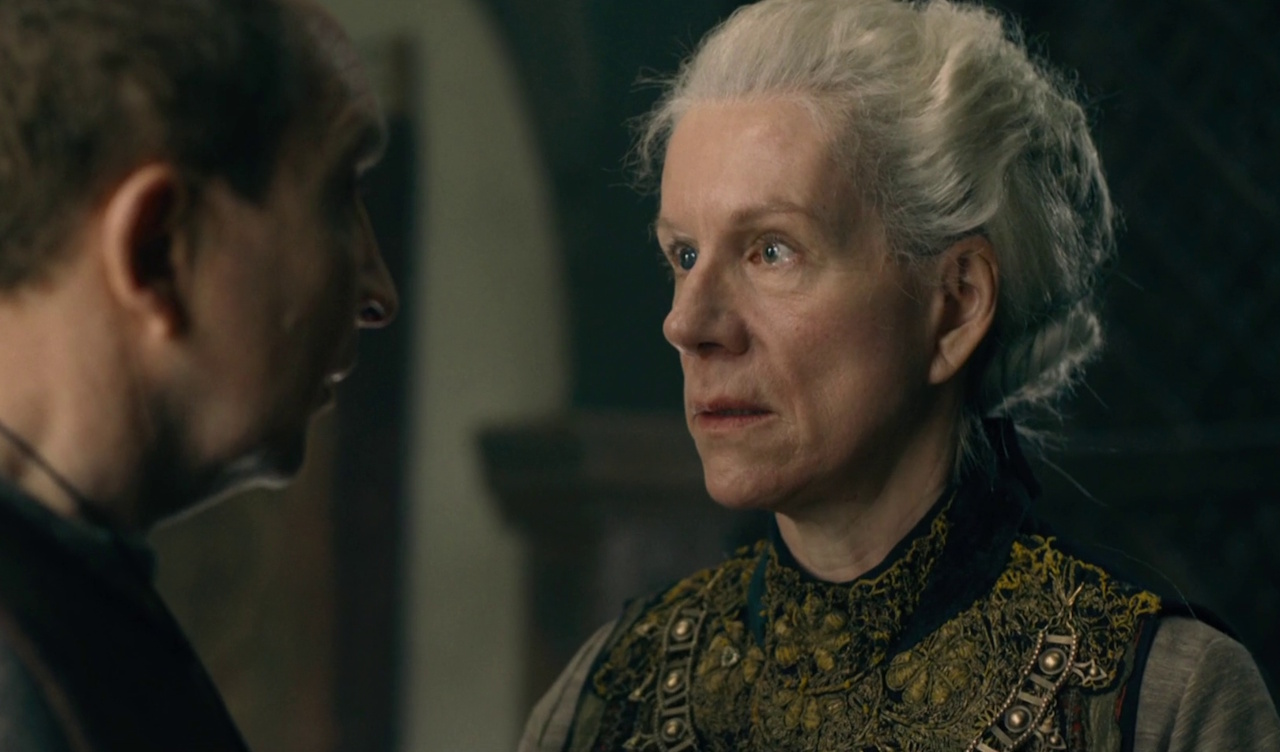
Then there’s the whole presentation of Edward the Confessor. What’s the one thing every schoolkid knows about Edward? He had a long white beard! But more importantly, Edward was not a weak-willed “mummy’s boy,” dominated by his mother. And he certainly didn’t beat her to death with his crown. Edward’s contemporaries described him as dignified and pious, hence his moniker. Of all the characters in King & Conqueror, Edward felt the least like the historical figure I remember learning about.
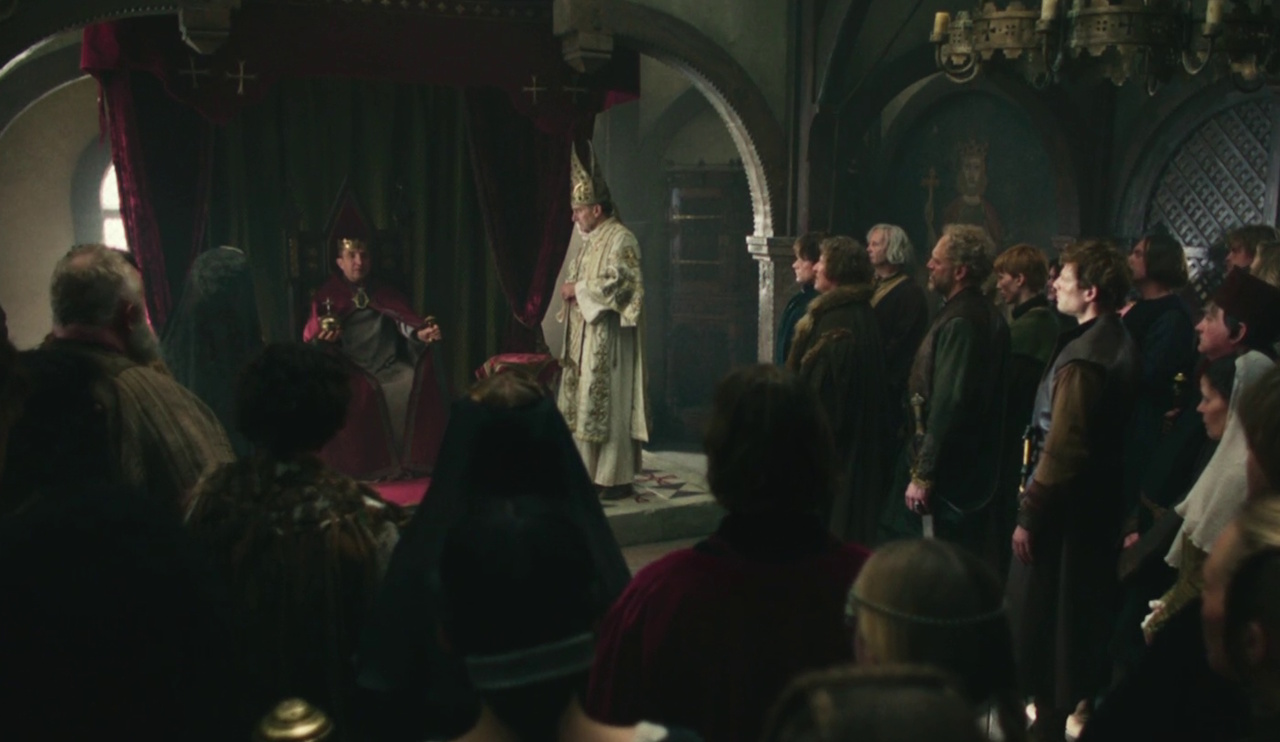
Edward’s coronation wasn’t just wrong, it was the total opposite of what we know actually happened. Edward’s wife was, as King & Conqueror depicts, the daughter of Earl Godwin. But, in a move that was rare for the 11th Century, she was actually crowned as queen in her own right. Why King & Conqueror would try to make a plot point out of the polar opposite is beyond me. Not to mention that William and Harold weren’t present – and the Godwin family didn’t cause a scene.
Most significantly, we have the relationship between William and Harold. Which, to the best of my knowledge, King & Conqueror completely invented. There’s no evidence William and Harold ever met before 1065 – a year before the Battle of Hastings. And William certainly wasn’t informed of his place in the line of succession by Harold, in a storyline so contrived and so artificial that it felt like it came from a cheap soap opera.
Harold never saved William’s life, they never wrestled half-naked in the mud, and while both of them were clearly scheming to get their hands on the crown of England… it didn’t remotely happen like King & Conqueror depicts. As I said above, there’s enough gaps in what we know about these events for some creative inventions. But for me, the series went too far into fictional territory, crossing a line that I didn’t even know I had when it comes to depictions of the past.
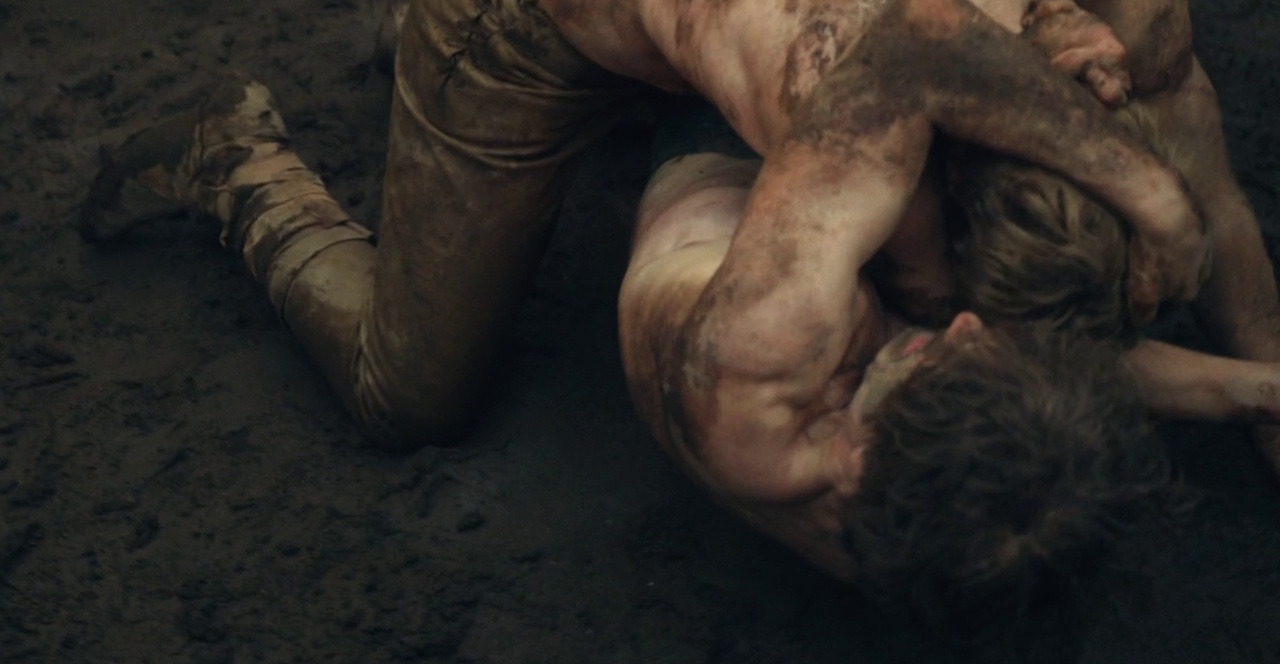
Sticking with Harold and William, while I respect and admire King & Conqueror’s attempt to present both sides of its story, the way it was handled made both of its central characters feel pretty samey. “A landowner who loves his wife, is concerned for the survival of his people, can be ruthless when necessary, and has a family connection to Edward the Confessor, is scheming to make himself king.” Who am I describing? Both men are, in the context of the series, functionally the same character archetype… and that’s just not very interesting. Not when there were so many different ways to depict them.
Let’s talk about a few things that I did like, because despite my overall feelings and sense of disappointment… it wasn’t all bad.
Juliet Stevenson was fantastic as Emma, the King’s mother. Even though I didn’t like the way Edward and Emma were written, you could hardly have got a better performance of the kind of scheming, manoeuvring, power-driven woman. When she was on screen, Stevenson put in an exceptional performance that transcended the sketchy writing and poor revisionism to really excel.
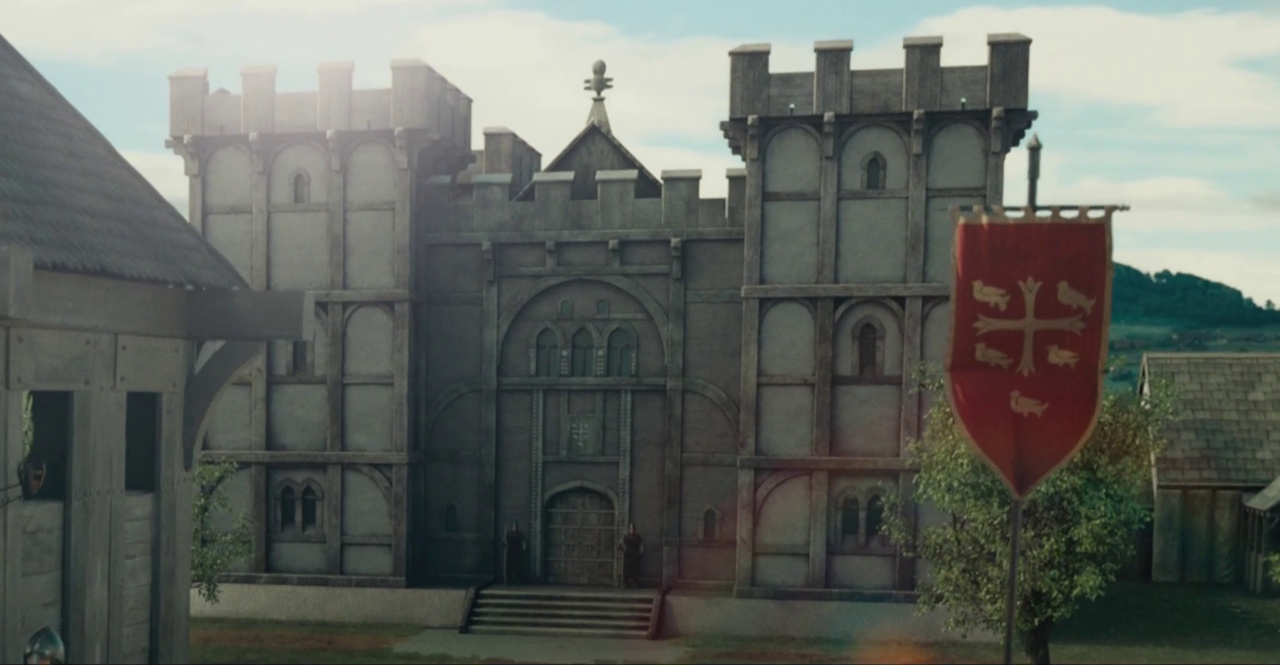
King & Conqueror, thanks to its high budget, had some great sets, props, and costumes. I’m not sure how accurate all of it was to the 11th Century, but the Godwin family’s great hall (or whatever it was called; the main building in Wessex) really felt like an Anglo-Saxon lord’s hall to me. Shields looked great, weapons looked fantastic, and I liked that there were spears and axes alongside the usual swords and bows. Axes in particular were used by Harold’s housecarls at the Battle of Hastings, and they were also used by the Vikings and their descendants, particularly in the north of England. A lot of historical stories romanticise knights with swords and shields, and while these were important, spears and axes in this era were probably used even more.
Costumes were likewise solid. Again, there might be some clothing historians who could nitpick, but for me, the costumes succeeded at capturing the feel of the 11th Century, and particularly of the upper classes in that time period. I would say it was a bit of a shame that William and Harold didn’t have more distinctive attire, particularly by the time of the battle; some way to tell their forces apart at a glance, perhaps. But overall, I’d say sets, props, costumes, and really all of the practical effects used to bring the world of the 11th Century to life were great.
Although I criticised the series for its “Game of Thrones-ification,” there were some parts of that which worked better than others. I particularly liked Count Baldwin, and how he seemed determined to play all sides of the conflict in an attempt to benefit himself and his family. The performance, by German actor Oliver Masucci, was masterful, too. Perhaps there’s something about the actor, but I was reminded of Mads Mikkelsen’s take on Dr Lecter in the series Hannibal in this “outwardly-friendly-but-watch-your-back” presentation of the Count of Flanders.
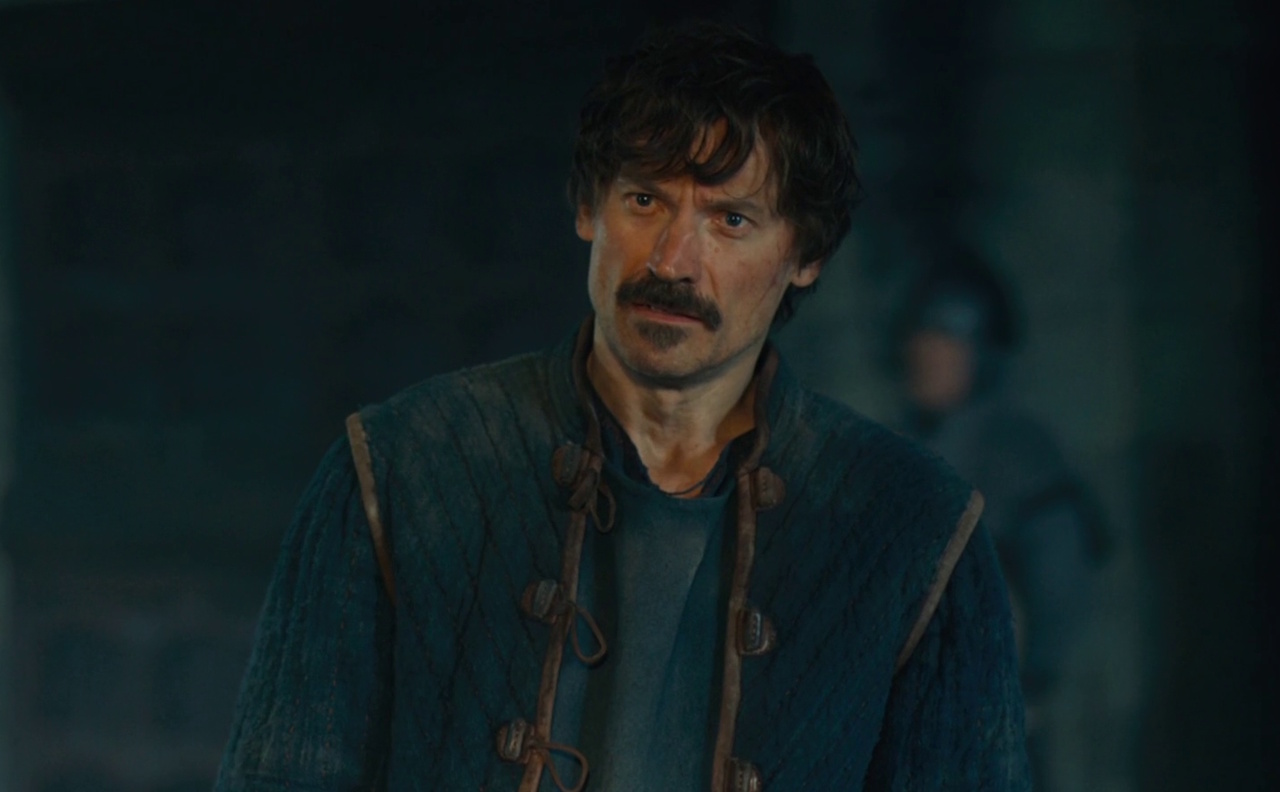
Both James Norton as Harold and Nikolaj Coster-Waldau as William did well, too, and while I didn’t like that Harold and William were becoming friends in the years before 1066, the performances both actors put in did get me invested in their “bromance.” This side of the series seemed to reach its climax quite quickly, with William and Harold going from their first meeting to friends to frenemies to rivals to fighting in a relatively short span of time. We’ll talk more about pacing in a moment, but suffice to say I have mixed feelings about this side of the story overall.
Some parts of the Harold-William relationship are undeniably silly. I mean, wrestling in the mud? Really? I get what the storyline was going for, and I genuinely did feel the chemistry between Coster-Waldau and Norton; they played off each other exceptionally well. But because both characters felt samey, and because we know basically none of that actually happened… even the best moments of the bromance were knocked down a peg. And while I could’ve accepted, I think, seeing Harold and William fighting bandits together in Brittany or meeting in London when visiting the King, some of the more outlandish escapades – the mud-wrestling, saving each other’s lives, and so on – felt gratuitous and forced, even when it was being portrayed exceptionally well.
Harold seemed, from the outset, determined to make a name for himself. In that context, his desire to become king makes sense. He was ruthless in dealing with his brother, cutting deals left and right, and basically doing anything he could to advance his position – justified, to himself perhaps, in the name of family. William, however, seemed completely uninterested in the crown of England, and I wasn’t really sold on his desire to become king – it seemed to come from nowhere. William was concerned first and foremost with Normandy and with his wife and son, then later with the conflict against Henry of France (who the real William didn’t murder while out hunting, but who’s keeping score of these changes any more?)

Harold’s transformation took him from being the overlooked second son to the Earl of Wessex, and then saw him craving the crown. It seemed to flow naturally and made sense for his character based on how King & Conqueror depicted him. William’s desire to make himself king, in contrast, didn’t have that same organic nature, and in that sense it felt more forced. Again, credit to Nikolaj Coster-Waldau for his performance, but the way William was written left his motivation kind of up in the air for me. I mean, on the one hand I get it: you’re offered this incredible gift of power… who wouldn’t want it? But on the other, based on the way William was written and what we knew about him from the show… it left me feeling like he changed his mind on the question of the throne basically out of nowhere.
This is all a consequence of the “Thrones-ification” of the 1066 story. In order for the writers and producers to get the kind of drama they wanted, they needed to set up Harold and William as friends first, then rivals, then enemies. And because the series also wanted to take a relatively neutral stance between the two sides, both men had to have similar claims to the throne, similar reasons for wanting it, and had to proceed in a similar way. It’s a kind of deliberate ambiguity, perhaps, on the part of the writers. But for me, again this just didn’t work very well. Partly I’m put out by the story making so many changes to established history, and partly it just feels a bit… weak. Two men who used to be friends, both competing for something important in a zero-sum game, sounds great on paper – but you have to nail the execution. For me, King & Conqueror didn’t.
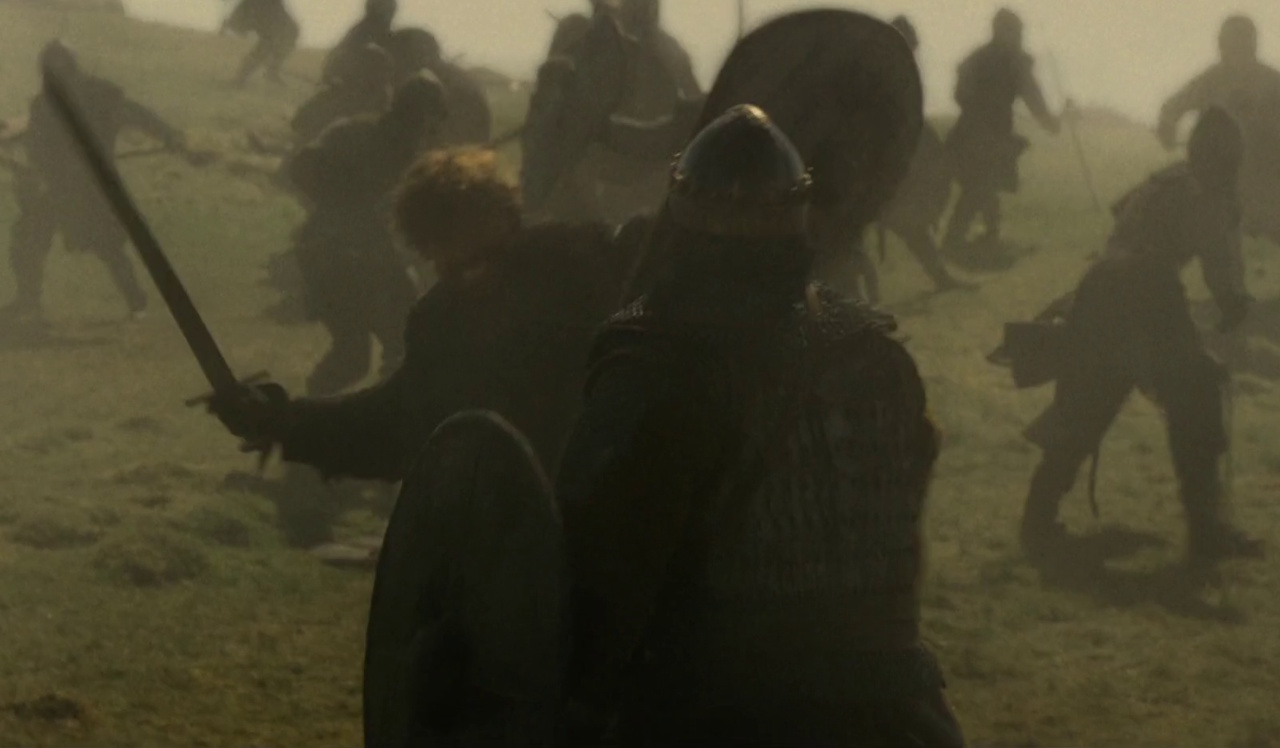
I didn’t like the way King & Conqueror was paced. Each of the first four or five episodes seemed to start with a confusing time-jump, leaving me to think I’d missed something or even that I was somehow watching the series out of order. There was, confusingly, no effort made to de-age or age up actors to represent the passage of time, even though there were 24 years between Edward’s coronation and the Battle of Hastings. There weren’t even any costume changes or anything to signify the passage of time, and that could feel confusing. Even if we accept the show is playing fast and loose with its timeline, condensing the events of Edward’s reign, there still should’ve been more done to indicate how much time had passed.
Pacing also hurt some episodes and even individual scenes. One thing the early seasons of Game of Thrones did incredibly well was show how long it could take, using medieval technology, to travel from place to place. Harold and William, in contrast, seem to zip across the English Channel at will, as well as race from Wessex to Northumbria and back not at a reasonable pace, but to cater to the needs of the story. Even something as simple as showing Tostig leaving Wessex in the winter and arriving in Northumbria in spring would’ve communicated this a whole lot better.

The dangers of crossing the English Channel were also not acknowledged… until it became convenient for the story to do so. In the 11th Century, sea voyages of any kind were incredibly difficult and challenging, and while I didn’t expect to see a ton of that in King & Conqueror (despite William’s fleet being a massive undertaking) it seemed for most of the series as if characters could just nip across the Channel for an afternoon then be back home in time for supper. The pacing of this, combined with the lack of acknowledgement of how challenging it could be, came together to make for a pretty weak and muddled presentation. The English Channel was a huge barrier for anyone in those days to overcome, but it didn’t seem to matter most of the time.
So that’s it, really. I’d been very excited to see this re-telling of the 1066 story… and I came away pretty disappointed.
King & Conqueror would have been a reasonably entertaining story were it not supposed to be adapting real historical events. I still think some of its issues with pacing and characterisation would’ve been stumbling blocks, but if it had been a totally fictitious account of two characters trying to lay claim to a make-believe throne… I think I might’ve actually liked it more. For me, there were too many revisions to real history, some of which were utterly silly and done to lean into the Game of Thrones-style presentation that the producers were clearly aiming for. Maybe I’m being too much of a stickler… but is it wrong to say that a production which is based on a true story should try, at every turn, to remain true to that story? How you answer that question will, perhaps, dictate how much you enjoy King & Conqueror.
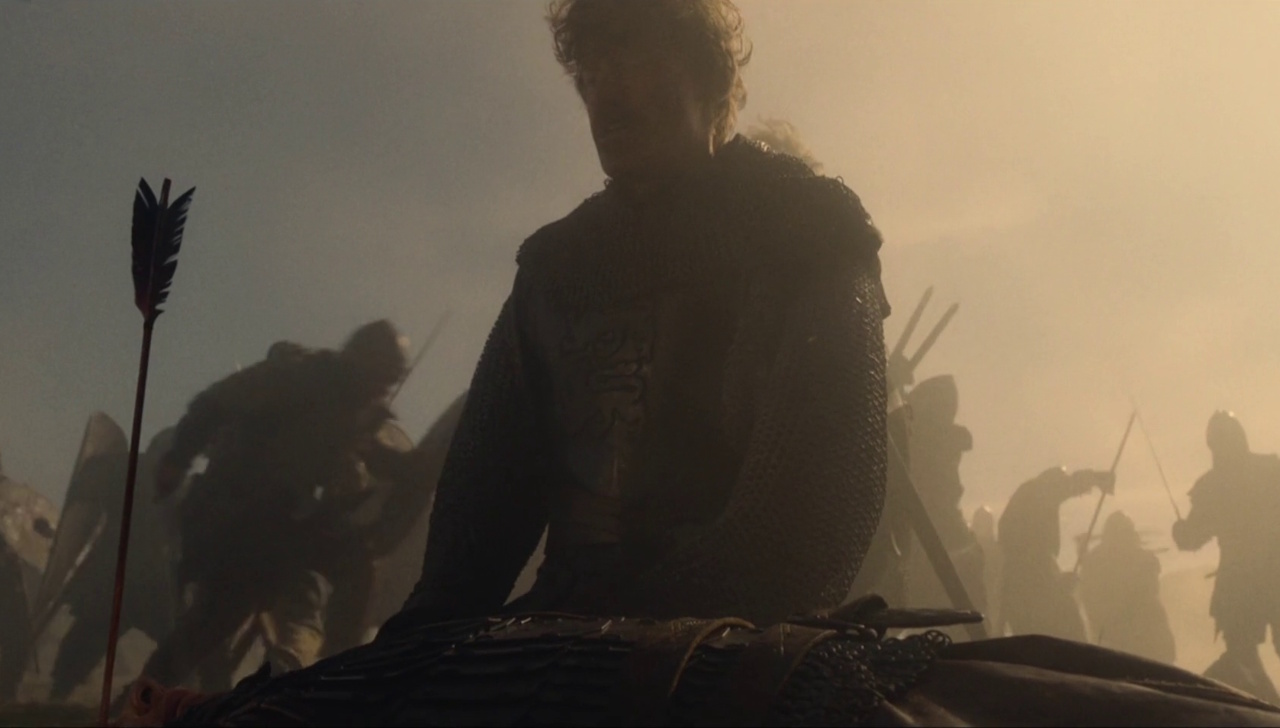
I can’t help but feel let down, though. As a Brit, I always want to see big-budget productions from the UK succeed, and there really was a pathway for King & Conqueror to have been an excellent series. There were fantastic performances. Great sets, costumes, and props. A high budget. Some solid battle scenes. And above all, it’s based on a genuinely fascinating story – one of the inflection points on which the history of England turned. I just wish the series’ producers, writers, and creative team had leaned into the real story more, and resisted the urge to embellish and change so many things.
It should go without saying, but this review is the entirely subjective, not objective, opinion of just one critic. There are bound to be a range of views on King & Conqueror, so I encourage you to seek out other reviews – and, of course, to check out the series for yourself. I don’t think it’s worth spending a lot of money on, either as a subscription or when it becomes available on Blu-ray, but if you’re already signed up for Amazon, or if you can get it on iPlayer in the UK, you’ve got nothing to lose by checking out the first couple of episodes. Maybe you’ll have a better time with King & Conqueror than I did.
King & Conqueror is available to stream now on Amazon Prime Video in most of the world, and on iPlayer in the UK. King & Conqueror is the copyright of the BBC and/or CBS Television Studios. This review contains the thoughts and opinions of one person only and is not intended to cause any offence.





 Trekking with Dennis