Spoiler Warning: Beware of minor spoilers for some of the entries on this list.
Every year, I like to share a few of my recommendations when PC games go on sale. With only a few days left until Christmas, Steam, GOG, and Epic Games have all kick-started their annual holiday sales – and there are some great games available at a discount.
These sales are great for gamers – and they help make up for the fact that PC gaming can be more expensive to get started with when compared with a home console. Or at least, that feels like a good rationalisation when buying expensive PC components! The fact that many titles can be discounted even within just a few months of release makes PC gaming feel like a good deal – and the best platform for enjoying interactive media!
Some powerful hardware!
So as I do every year, I’m going to pull out a few games that I think are worth your attention now that they’re discounted. If you missed any of these titles when they were new, or if you’ve been hanging around hoping they’d go on sale, now could be a great time to pick them up – either as an early Christmas treat for yourself or as a gift for someone else.
Now for the important bit! All prices below were correct at time of writing and are in pounds sterling as I’m based in the UK. Prices may vary by region and/or currency, and will no longer be accurate as of January when the sales end. It’s up to you to check with the store and make sure you’re happy with the price as well as any other terms and conditions that may apply; I’m just a random person on the internet making a list of games!
Ready to play some games on… the ultimate computer?
As always, everything we’re gonna talk about is the wholly subjective opinion of just one person – so if you hate all of my recommendations or I exclude one of your personal favourites… that’s okay. There’s plenty of room in the community for differences of opinion and disagreements. I share this list in the spirit of the holiday season, and to hopefully draw your attention to a game or two that you may not have considered.
Let’s jump into the deals!
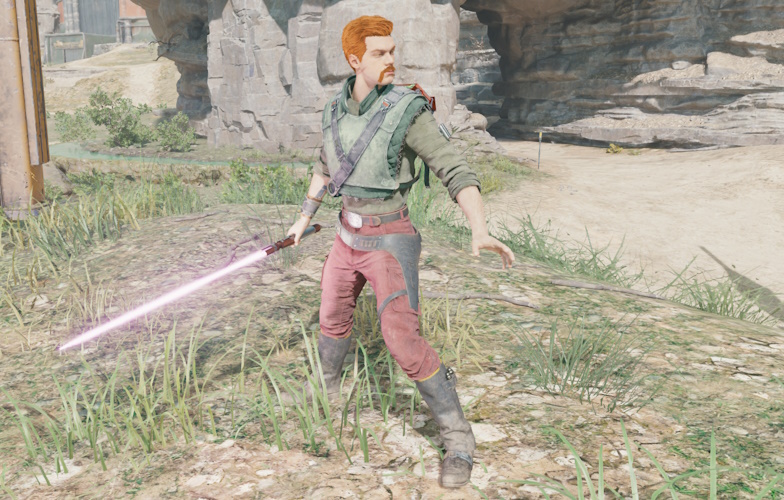
Deal #1: Star Wars Jedi: Survivor Steam: 75% discount, £14.99
Truth be told, I didn’t enjoy Jedi: Survivor anywhere near as much as its predecessor. Jedi: Fallen Order was fantastic – and its sequel didn’t do enough, for me anyway, to live up to that. However, with the game being so heavily discounted, it’s an easy recommendation for either Star Wars fans, fans of the first game, or just players who enjoy a single-player action/adventure title.
There are still bugs left over from a rocky launch, but your mileage may vary with the game’s narrative – and if you enjoy Cal’s adventure more than I did, you might look back at this one as being a steal! With a sequel in the works, it’s worth sticking with Jedi: Survivor… if only in the hopes that a better continuation of the story is right around the corner.
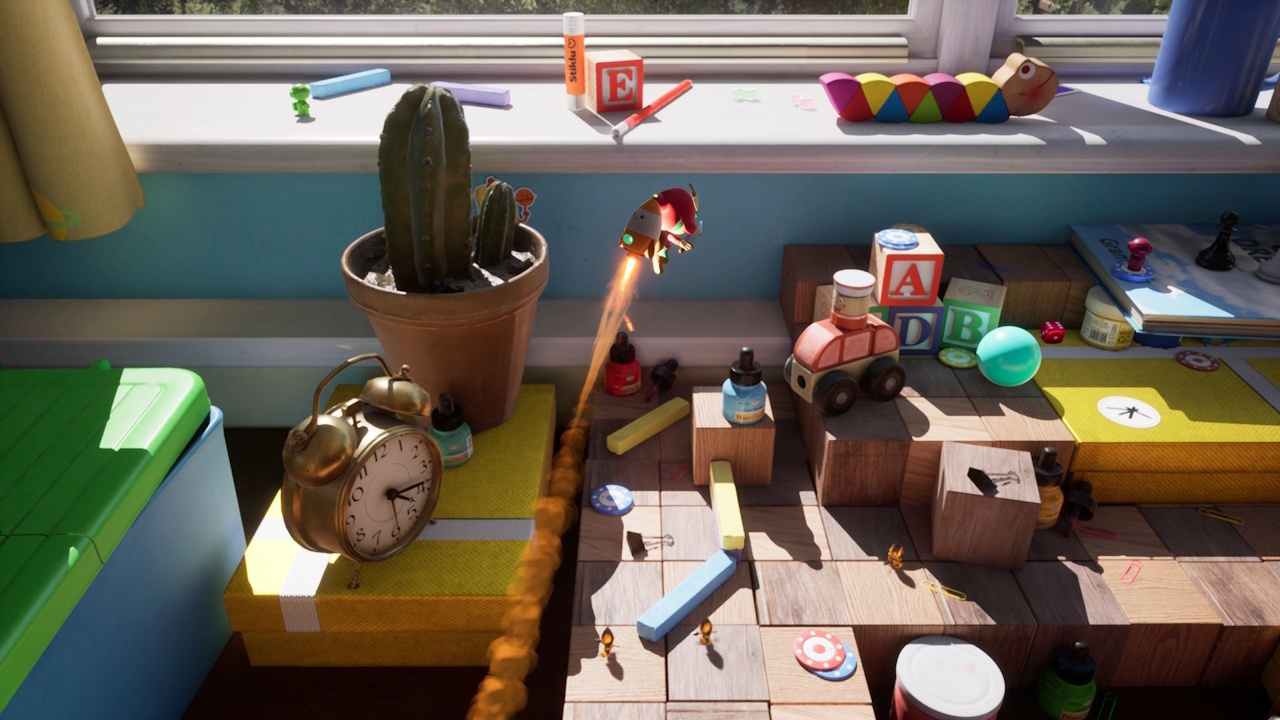
Deal #2: The Plucky Squire Steam: 25% discount, £18.74
Spoiler alert for later this month, but The Plucky Squire is one of my favourite games of 2024. I adore the art style, the cute characters, and the incredibly fun and creative approach to gameplay. There’s a lot going on in this relatively short experience, and this is the type of game you can play through in an afternoon or two – it’s not something that requires a huge time commitment.
Considering it only released in September, and it’s been getting rave reviews, a 25% discount at this stage feels generous! If you missed The Plucky Squire this autumn, though, I really do think you’ll enjoy it if you give it a shot. There’s a lot to love here.
Deal #3: Ghost of Tsushima Steam: 20% discount, £39.99
Ghost of Tsushima had been on my radar for a while, and I’m glad to have finally picked it up. The game is, by all accounts, one of the best open-world action games of the last few years, and the samurai/ninja warrior game we all used to fantasise about when we were kids! There’s a beautiful, realistic open world set on the Japanese island of Tsushima to explore, and the Mongolian horde to defeat.
I’d been looking forward to the PC port of Ghost of Tsushima for a while, so I’m glad to finally have the chance to jump in. There are so many glowing reviews out there that it’s impossible not to recommend Ghost of Tsushima while it’s on sale.
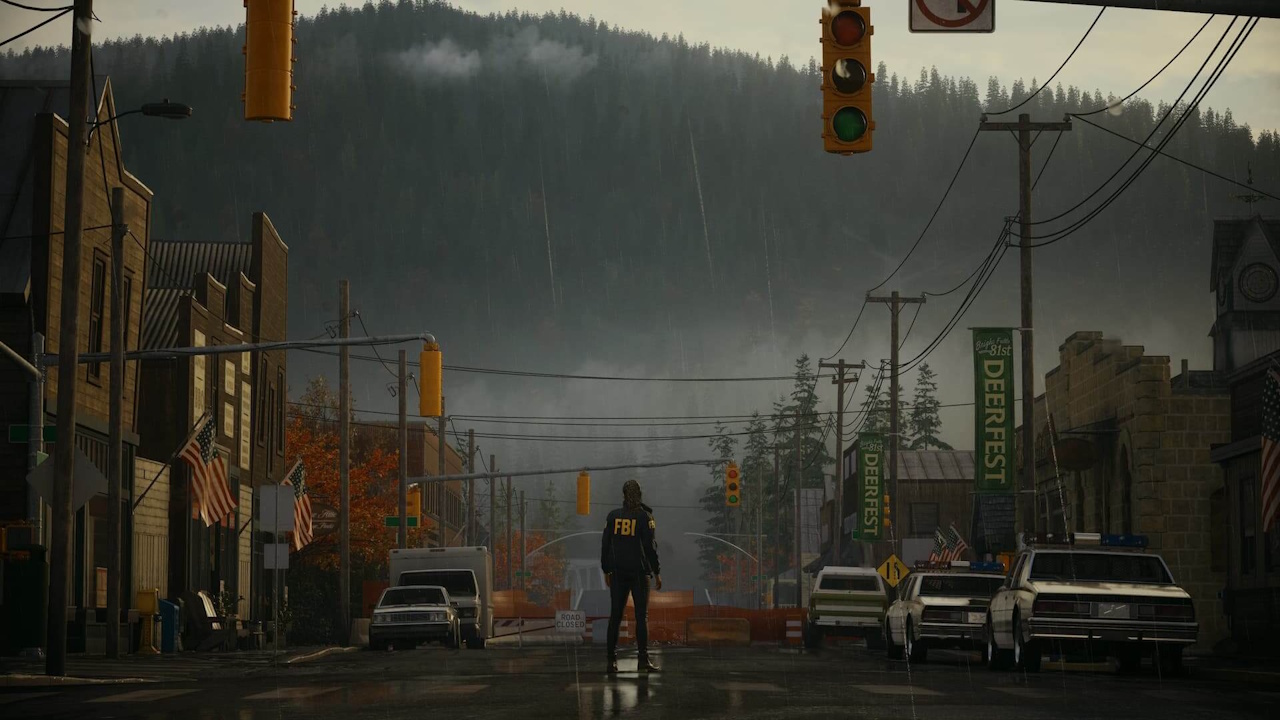
Deal #4: Alan Wake 2 Epic Games: 50% discount, £19.99
I played and adored Remedy Entertainment’s Control a few years ago, and although I didn’t know it at the time, there were some subtle story connections to their earlier title Alan Wake. Alan Wake 2 came out just over a year ago, and was well-received by critics – though with many noting that the game’s tone has shifted in more of a survival horror direction.
I’m not usually a horror fan, but I enjoy the mysterious worlds that Remedy have been able to create. There’s something otherworldly about their stories, but at the same time, having everyday people with understandable motivations at the centre helps keep things grounded. At half price, who could say no? And while you’re at it, the remastered version of the original game is less than £7.
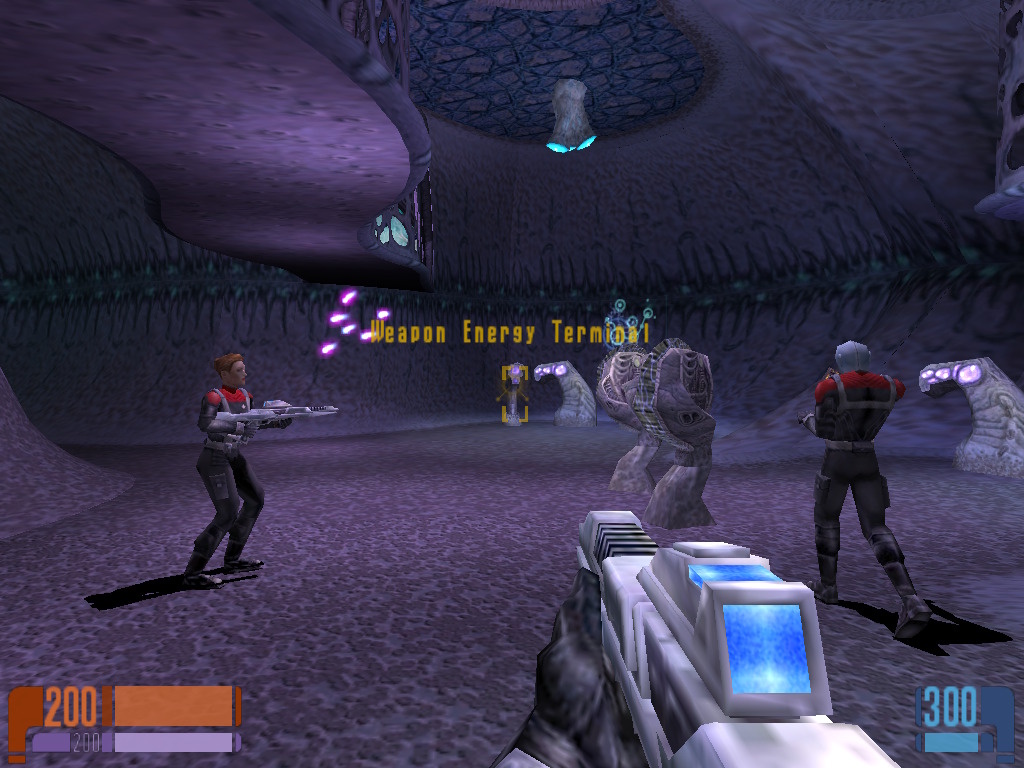
Deal #5: Star Trek: Voyager – Elite Force GOG: 25% discount, £6.29
Elite Force is one of the rare Star Trek games to have genuinely crossed over and picked up players outside of the Trekkie community! Shortly after its release (which is now almost a quarter of a century ago; I’m ancient) the game’s multiplayer scene was buzzing. In the days of LAN parties and the beginning of online multiplayer titles, Elite Force put in a creditable showing.
There’s also a fun and engaging single-player campaign that Trekkies will appreciate. It’s true that the game’s graphics look outdated by today’s standards, but most of the Voyager cast reprise their roles in voiceover, and there’s a strong story for players and Trekkies able to look past the game’s visual presentation. Elite Force feels like playing through an extended episode of the series.
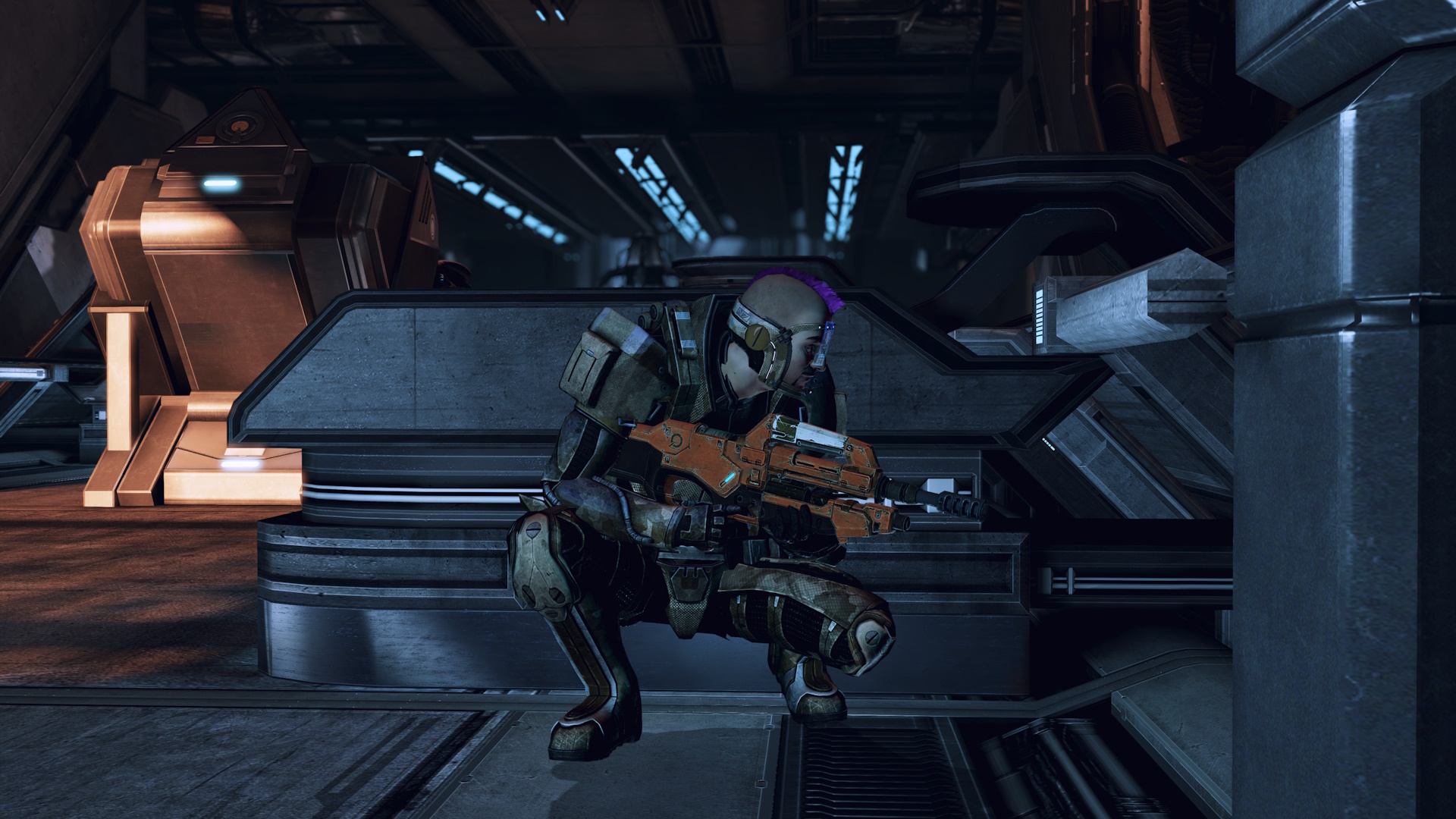
Deal #6: Mass Effect: Legendary Edition Steam: 92% discount, £3.99
You basically have no excuse not to pick this up. I mean, three of the best single-player sci-fi action-RPGs ever made for the price of a coffee? How could anyone pass that up? Jokes aside, while I have some major gripes with the laziness of BioWare’s “remaster” of the Mass Effect trilogy, getting all three games and all of their DLC in one package is a great way to either get the games for the first time or re-acquire them on PC… and for such a low price it seems like a fantastic opportunity.
The world of Mass Effect is rich and detailed, and the story the trilogy tells is intense, action-packed, and emotional. Anyone who missed the games during the Xbox 360 era should definitely give them a shot, and while Legendary Edition isn’t all it could be, it’s by far the best way to get started with Mass Effect.
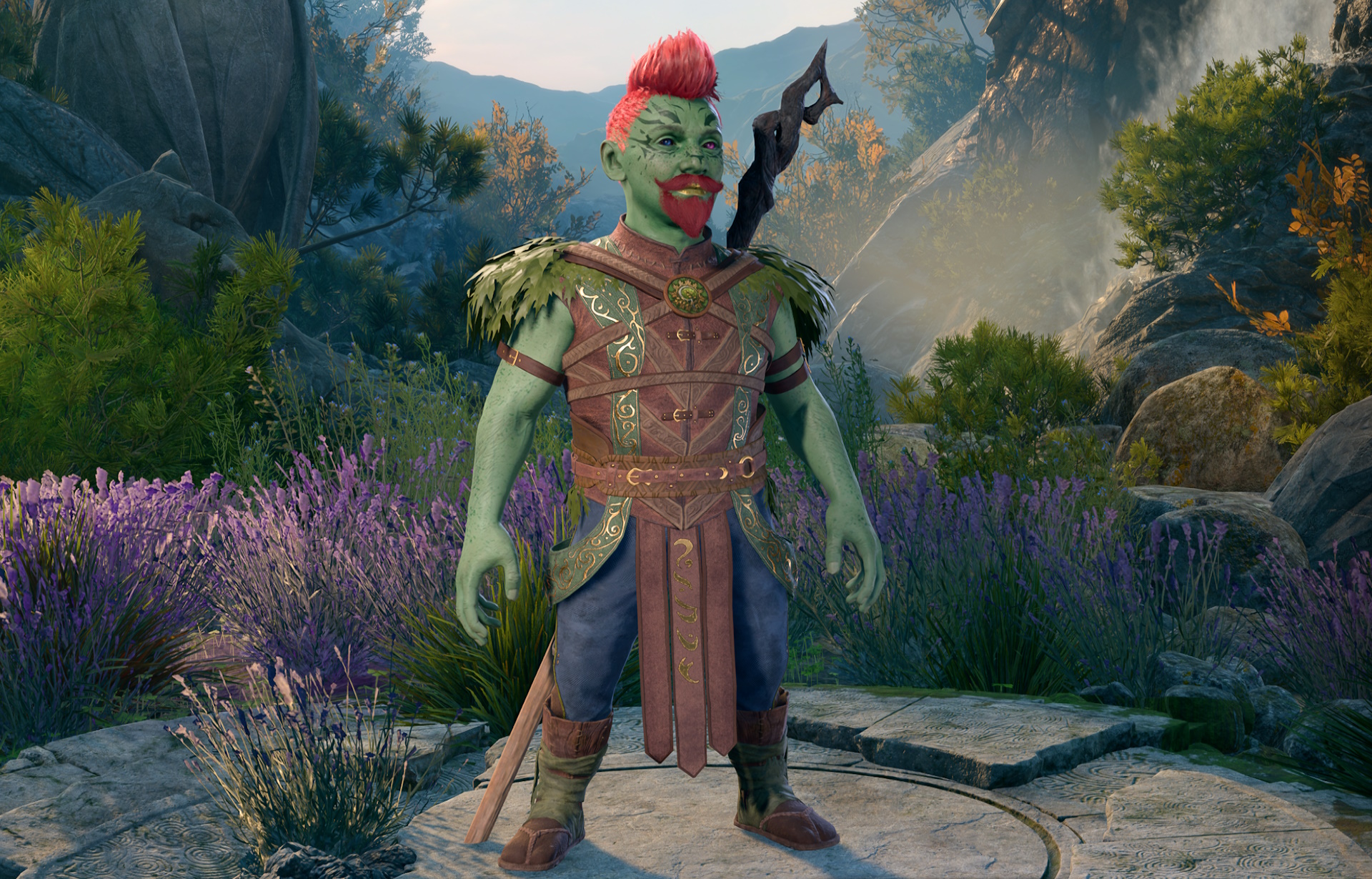
I think I’m going to be recommending Baldur’s Gate 3 to everyone I meet for as long as I live! The game is an absolute masterpiece in every sense of the word; a role-playing game with genuine roles to play that are distinct and different from one another. In many games, it doesn’t really make much difference what class or background you choose when making your character – but in Baldur’s Gate 3 it can impact everything from gameplay to character interactions and more.
There are so many ways to play Baldur’s Gate 3 that the game feels like a completely different experience on a second or third playthrough. There are incredibly in-depth systems for magic spells, combat, persuasion, and more – and the ever-present dice rolls help spice things up, too! It’s one of the best games I’ve ever played – and if that’s not a good enough endorsement, then I don’t know what’ll convince you to check this out!
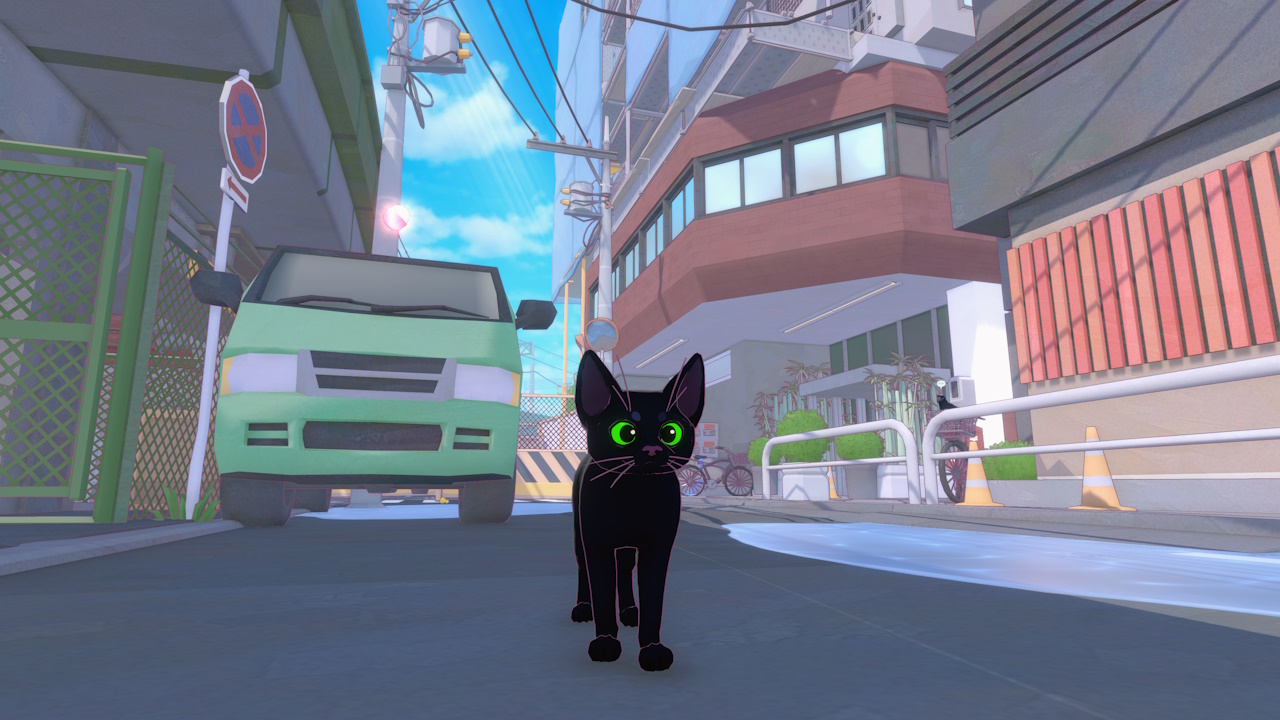
Deal #8: Little Kitty, Big City Steam: 30% discount, £14.69
Another spoiler alert, but Little Kitty, Big City is another of my favourite titles of 2024! I absolutely adored roaming the streets of a Japanese city as an adorable black cat, meeting other animal critters, and generally causing mischief. I’m a cat lover, so a game like this was always going to be fun for me, but I was genuinely impressed at how well-built Little Kitty, Big City was.
I know it sounds silly, but I actually felt like a cat while playing this game. The scale of the world compared to the small cat, the jumping and pouncing abilities that had such cute animation work… the whole thing came together to really hit me with that sensation in a way I wasn’t expecting. It’s an adorable game, a cute, sweet, and fun experience – and one I cannot recommend highly enough!
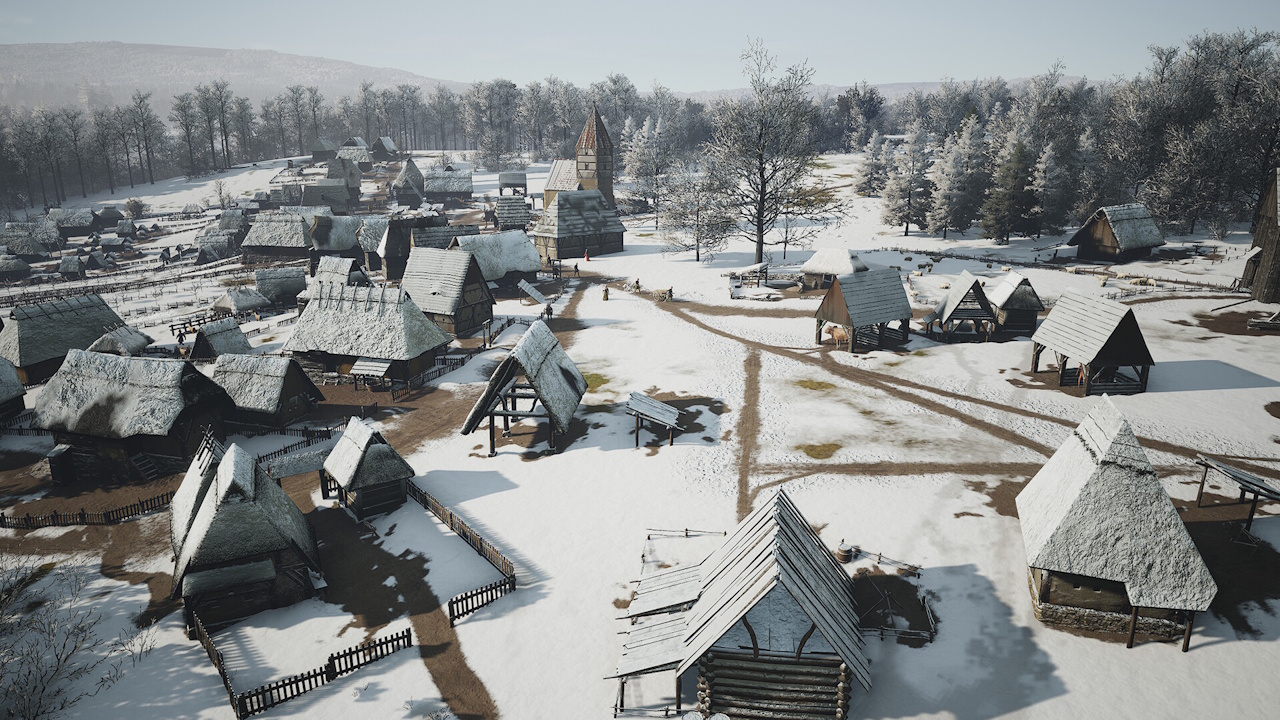
I haven’t played as much of Manor Lords as I should’ve this year… but the game is fantastic. If you’re familiar with the likes of Banished (which is a game I also recommend, especially when it’s on sale for £7.49) then you’ll know the basics of Manor Lords. But this game goes beyond Banished, with a region map of areas that can be colonised, more types of crops, buildings, and professions, and other additions, too.
Manor Lords feels like a game that might take a little while to get the hang of – but when you know what you’re doing and get started, there’s a huge variety of options for your little medieval settlement! Balancing villagers’ needs isn’t easy, nor is acquiring and storing all of the resources you’ll need to get through the winter. But there’s a ton of fun to be had here, so if building and simulation are your thing, don’t sleep on Manor Lords… even though it’s technically still in early access!
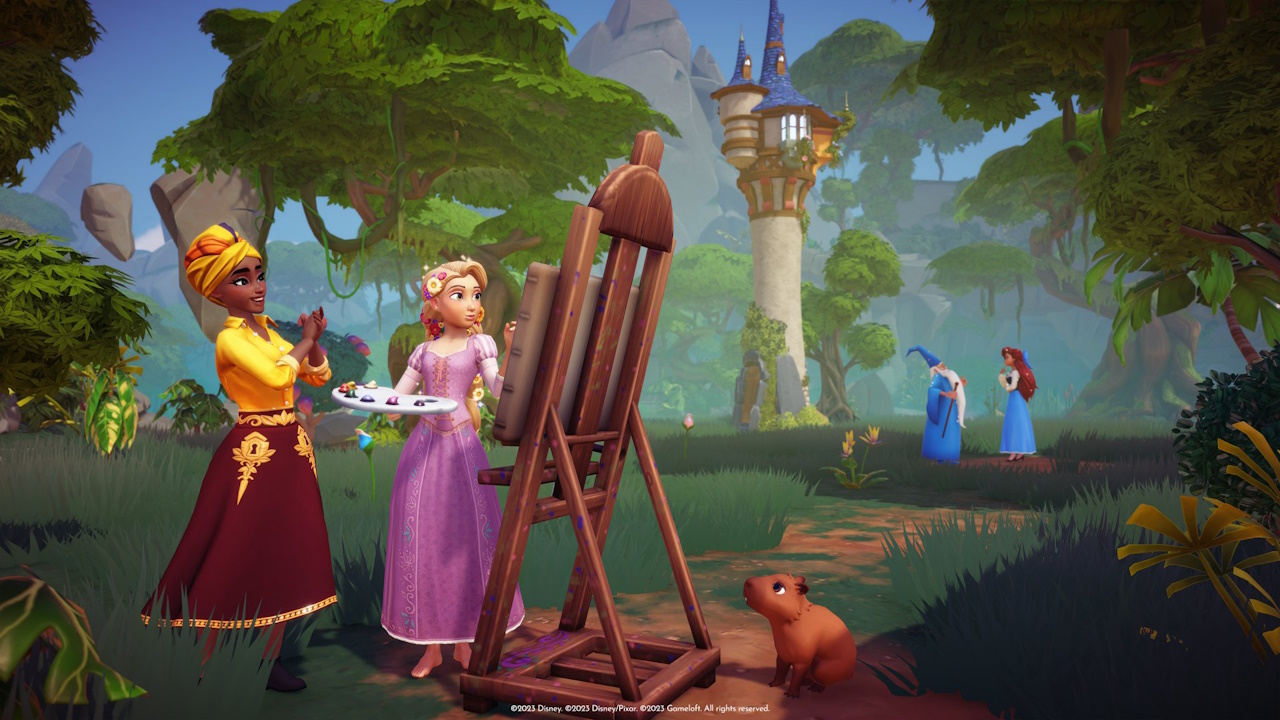
Deal #10: Disney Dreamlight Valley Steam: 25% discount, £25.11
Be careful with Disney Dreamlight Valley – my earlier recommendation of the game from a couple of years ago now comes with the caveat that there’s a lot more monetisation in play. But if you can look past that, there’s a really cute and fun Animal Crossing-esque experience here. In fact, I’d argue that Disney Dreamlight Valley has completely eclipsed the Animal Crossing series – and should give Nintendo a serious kick up the backside!
All of your favourite Disney characters are here, living together in a beautiful little valley. Each character has their own house, and there are character quests and a main quest to get stuck into – uncovering the mysteries of the valley! There are also many different cosmetic items and pieces of furniture to both dress up your character and decorate their home. New content is added all the time – though some of it is either wholly or partially paywalled. I still love Disney Dreamlight Valley, but just remember to turn on parental controls if you have little ones!
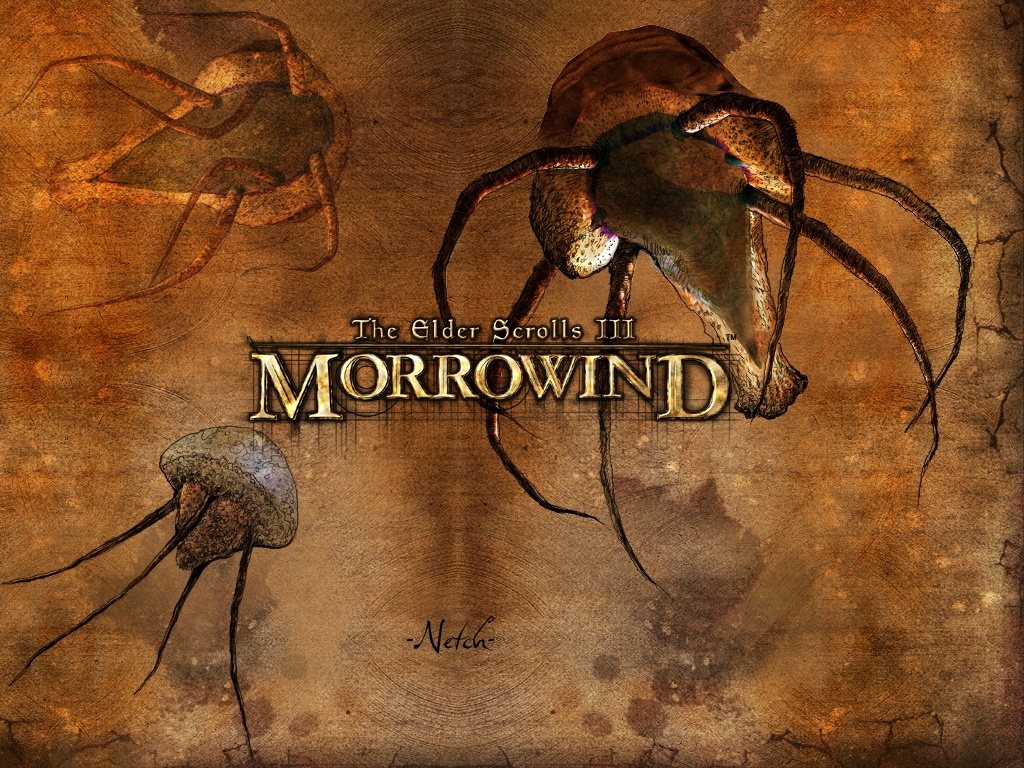
If you’re burned out on Bethesda’s latest game – Starfield – but still craving something similar to play, why not step back to Morrowind? Most people have played Skyrim by now, but Morrowind – which was released on PC and Xbox back in 2002 – may have been too early for some of you young’ins! With some modern graphics mods, though, the game doesn’t need to look like a twenty-year-old title.
Here’s why Morrowind remains, for me, Bethesda’s high-water mark and the title to which I compare all of their subsequent games: there’s so much to do. There are literally quests in Morrowind that I haven’t played twenty years later. There are more weapon types, magical spells, and characters to interact with than in either Oblivion or Skyrim, and the game has a world that’s so rich, so detailed, and so different and alien in the way parts of it feel that it really is possible to get lost there, or just spend hours walking around, soaking it all in.
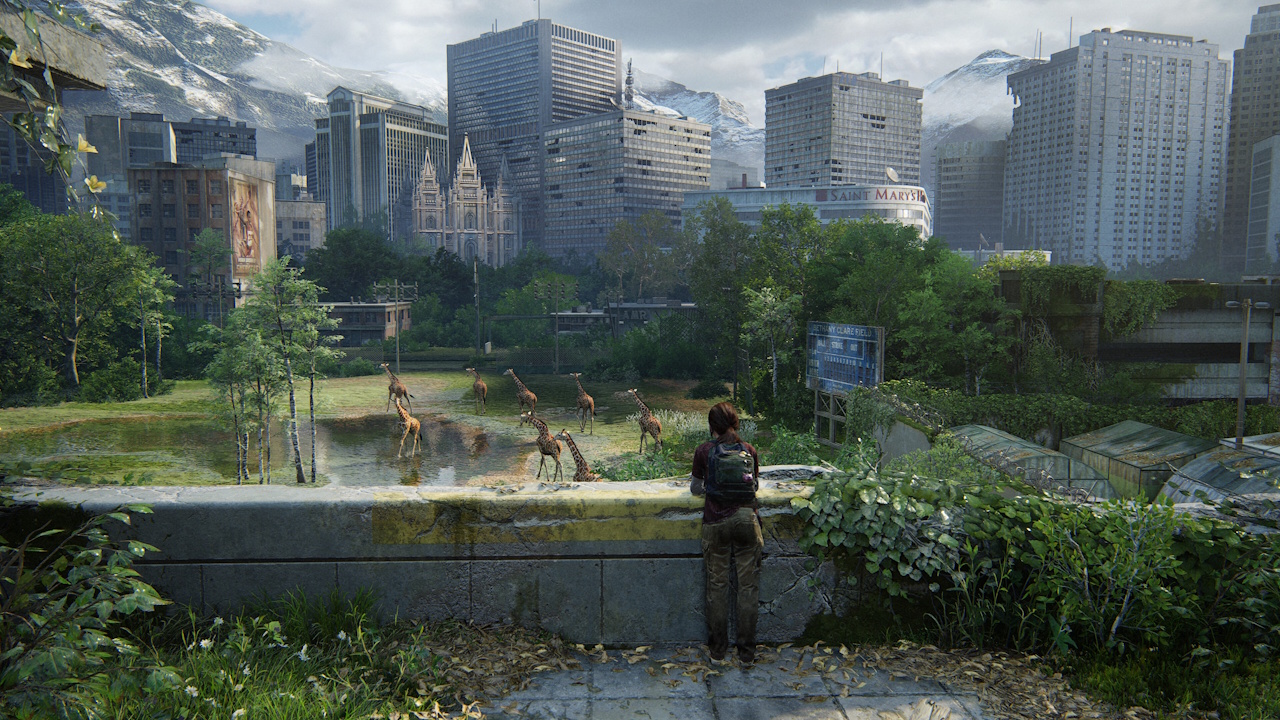
Deal #12: The Last Of Us Part 1 Steam/Epic: 50% discount, £24.99
The Last Of Us Part 2 is coming to PC next year – so it could be a great time to catch up on or re-play the first entry in the series. A mushroom apocalypse might sound weird at first, but the game is beautifully-written and incredibly well-paced, with intense moments of action as Joel and Ellie navigate a road-trip across a post-apocalyptic United States.
I adored The Last Of Us on the PlayStation 3, and while I don’t think it needed a remaster or a remake – and it certainly didn’t need two – there’s no denying that the game looks fantastic on PC when you crank the settings up! There’s some great gameplay here, but what makes The Last Of Us truly special are its story and characters.
So that’s it!
Let’s play some games!
We’ve picked out a few deals from the various sales that are going on in the PC gaming space at this time of year. For 2024, I seem to have almost entirely chosen third-person, single-player action/adventure games and RPGs… that wasn’t intentional, but those are just the kinds of games I’ve enjoyed playing, I guess!
Do keep in mind that not every game is on sale (or given the same discount) in every digital shop; several examples just on this list are discounted in one place but not in another, so it’s always worth double-checking to make sure you’re getting the best discount and the best deal.
If I’ve helped even one person find one new game to play this holiday season, I reckon I’ve done a good job!
All titles listed above are the copyright of their respective studio, developer, and/or publisher. Some screenshots and promotional artwork courtesy of IGDB. This article contains the thoughts and opinions of one person only and is not intended to cause any offence.
Spoiler Warning: There are spoilers ahead for Baldur’s Gate 3 – including its ending.
This piece is a follow-up to my spoiler-free review of Baldur’s Gate 3. If you haven’t read that, it provides a bit of background to some of the things we’re going to talk about here, and also goes into detail about some of the mechanics of Baldur’s Gate 3 and what I enjoyed about it from a gameplay perspective. It should also go without saying that we’re going to talk about some specific story points today, including the ending of the game and several character questlines. If you haven’t completed the game and don’t want to see spoilers, this is your opportunity to nope out!
Baldur’s Gate 3 had a strong story that roped me in almost from the first moment. It also told a story with plenty of variety, with companion questlines that went in interesting and unexpected directions, and side-quests that were just as engaging and impactful as the main quest. I adore the experience that I had, and I can’t wait to jump in for a second run and try to do some things differently – so everything we’re going to discuss today has to be seen through that lens. So to repeat: I thoroughly enjoyed the story of Baldur’s Gate 3!
You know there has to be a “but” coming after that, though… right?
Box art of Baldur’s Gate 3.
But I have some notes! Firstly, Baldur’s Gate 3 makes no apologies for being a dense story, and for really throwing players in the deep end from the very first moment. The wall of content that you experience upon booting up the game for the first time – in which I’m including the intro cinematic, the opening level, and the character creator – throws a lot at you all at once. For someone who didn’t play the original Baldur’s Gate and who’s unfamiliar with Dungeons and Dragons… it can be a lot to take in.
I made a lot of mistakes during my first few hours with Baldur’s Gate 3, and the game doesn’t hold players’ hands. For some folks, that’s a huge positive! But for me, I have mixed feelings. I’m no stranger to this phenomenon – I cut my teeth playing games in the late ’80s and early ’90s, when games didn’t have more than a manual in the box to help you out. But there’s a reason why most modern games offer more by way of tutorials and do more to ease players into the story! Baldur’s Gate 3 begins by throwing up a metaphorical brick wall that has no obvious way around or over it – and it’s up to you as a player to either muddle through or hop online to find a strategy guide.
Creating a custom character.
My unfamiliarity with Dungeons and Dragons was a hurdle – one that I have no doubt impacted my experience with the game. It’s to the writers’ credit, more so than anything else, that I continued to play the game and kept coming back to it when I ran into something I didn’t understand or a problem I wasn’t sure how to solve. Although the story has huge stakes, particularly as it gets into its second and third acts and talk turns to the “Dead Three” and their chosen, at its core in those early moments it’s a story of survival. One person – the player character – is infected by a parasite and has to find a cure. That’s the driving force, and that’s what leads you to your allies and companions, and sets the stage for this story.
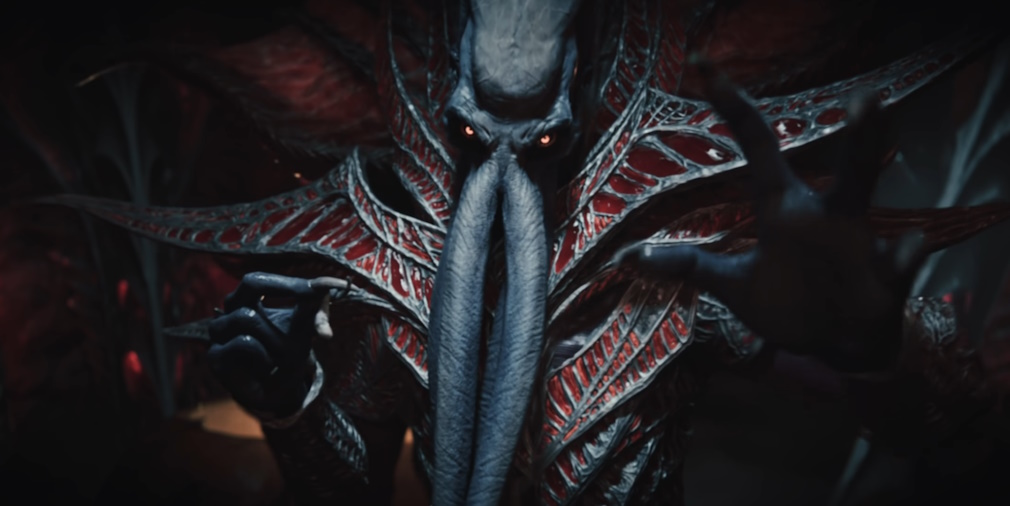
That character-centred story, with high personal stakes, is what roped me in during those crucial first moments. Even as I had no clue what mind-flayers, githyanki, or nautiloids were, there was a sense of urgency and a basic, innate survival instinct at the heart of the story that begged me to keep going. The writing to bring this to life and to get me instantly invested in this vast, dense world when I had no real frame of reference is truly world-class – there’s no other way to describe it. When people say that video games can be just as engaging, entertaining, and emotional as books or films, it’s stories like Baldur’s Gate 3 that they can point to!
The adventure begins…
Despite what you may have heard, Baldur’s Gate 3 does not have “17,000 endings.” There are a few basic ending options, which can be modified depending on player choice – and random dice rolls throughout the game. If a companion died, for example, or was never recruited, they don’t show up at the end. Likewise for allies – if an ally was never recruited, they aren’t available in the endgame. This adds variety, and means that it’s worth making multiple runs through the game to see different things and experience some of these different ending options. But I feel that the “17,000” claim is rather overstating what’s actually on offer. Don’t get me wrong: there’s far more variety and more ending options than in something like Mass Effect 3! But just not perhaps as much variety as has been claimed.
The ending I experienced during my first playthrough felt like the “best” possibility based on the way I’d played the game and which characters I had on my side. But other players might find that other options or pathways could have led to an even better outcome, which is absolutely part of the fun!
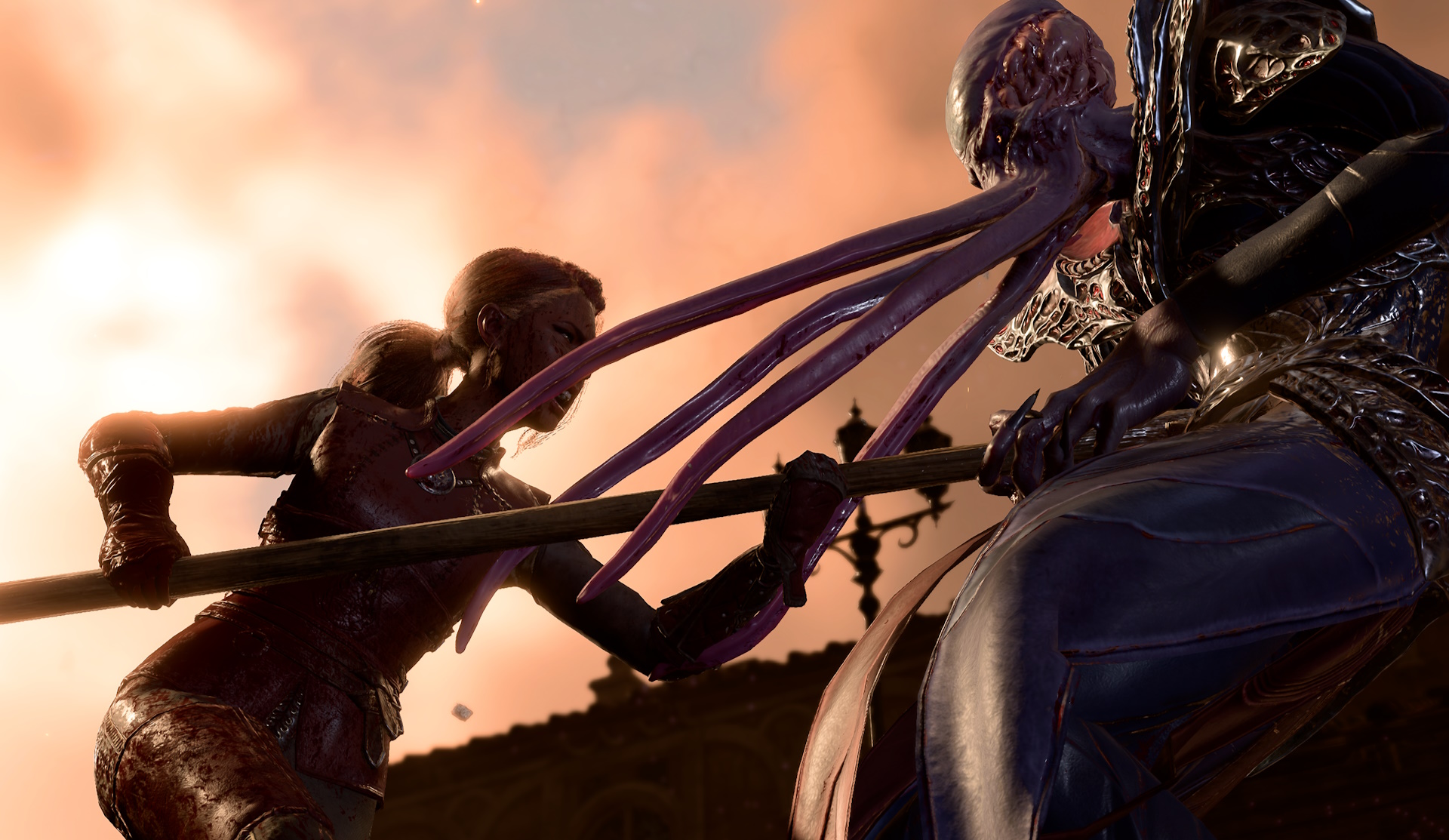
One of the citizens of Baldur’s Gate takes down a mind-flayer.
One thing that I liked about Baldur’s Gate 3 was the feeling of “impossible” choices. There are multiple points at which the road forks and you have to choose between one ally and another – betraying one in order to side with someone else. I kind of “cheesed” part of this by placing a companion on the back burner and largely ignoring her, allowing me to more easily side with one ally over another when doing so threatened to tread on the toes of her storyline. But it wasn’t the easiest thing to do – showing, I think, just how much the story had grabbed me and how much I’d come to care about these characters. I never like upsetting an NPC in a video game, but the friends and allies I’d made in Baldur’s Gate 3 felt like real people, so the idea of going against their wishes or even betraying them… I couldn’t do it!
Obviously Baldur’s Gate 3 is a sequel – so I expected some callbacks to earlier games. But I was surprised at how heavily Baldur’s Gate 3 seemed to lean on those two older titles, especially as the second and third acts of the game rolled around. I’m not familiar with those stories having never played the games, but there was enough exposition dumped to make it clear that some characters and storylines were basically direct continuations of the events of those games. That’s a creative decision, and one that fans of Baldur’s Gate 1 and 2 will surely have appreciated. For me, I could have done without that, and at a few points this sequel-itis felt quite in-your-face.
The character of Vicona DeVir is one of several who return from earlier games.
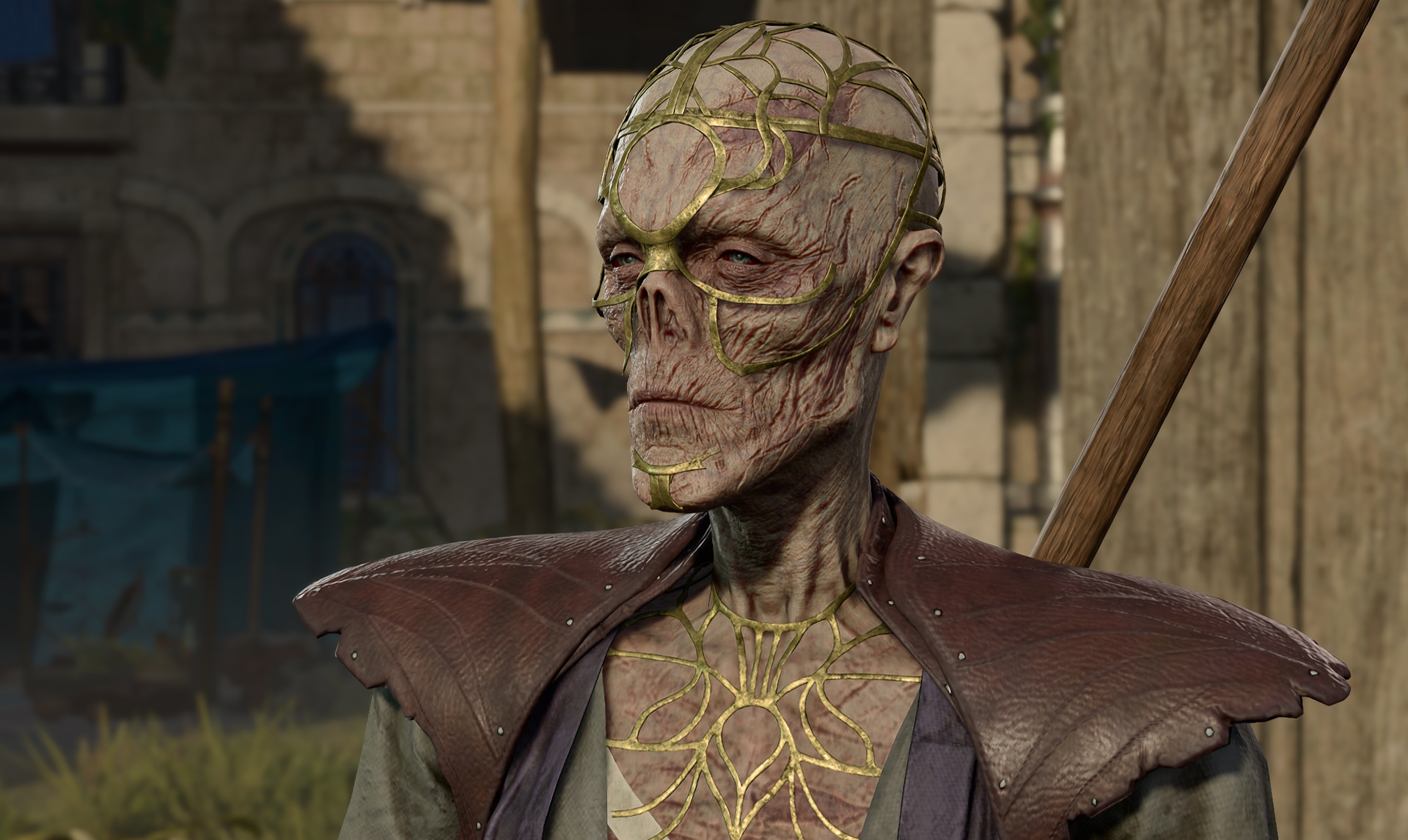
Let’s talk a bit about companions. There are ten potential companions in Baldur’s Gate 3 – two of whom appear to be mutually-exclusive, meaning you have to choose one over the other for a maximum of nine potential companions per playthrough. There are also hirelings who can be purchased to round out the party if you feel you’re missing a particular class or skill – but these characters are less interactive, have few if any unique dialogue options, and I personally felt didn’t serve a lot of purpose. You’re limited to four characters in your party at any one time – your main character plus three others – and hirelings count toward that limit. So unless there’s a problem with your main companions, the need for hirelings feels quite diminished.
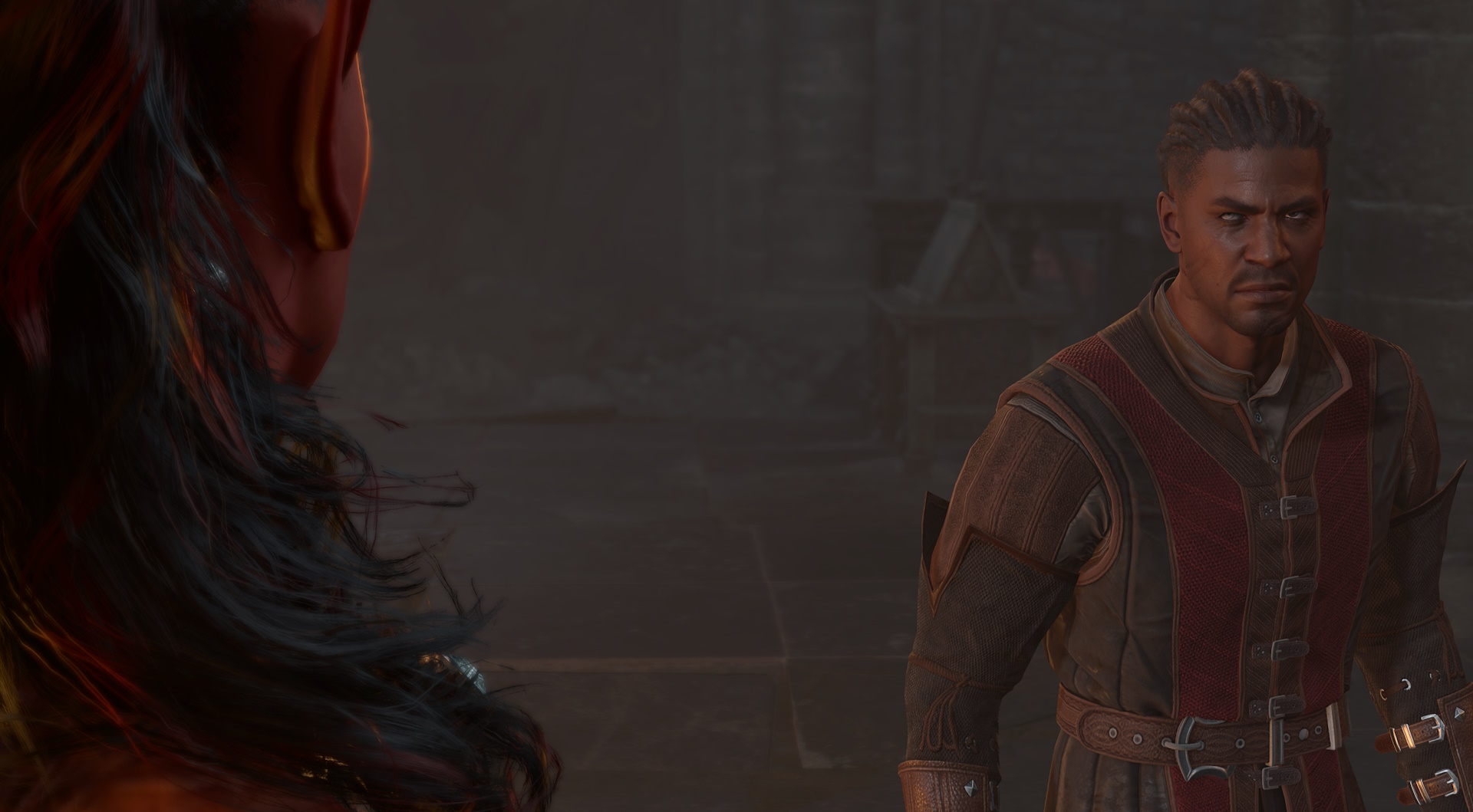
In terms of variety, replayability, and player choice, I felt that the game offered a lot of pathways to bringing your party together – but many of these pathways led to the same end point. You could choose in what order to recruit party members – even if, at the time of my first playthrough, I wasn’t aware that I was doing so(!) – but for the most part, even if you deliberately shun a character that the game deems to be important, one way or another they’ll find their way back to you. In my case, the character of Wyll literally showed up at my camp toward the end of Act 1.
Wyll confronted Karlach at my campsite.
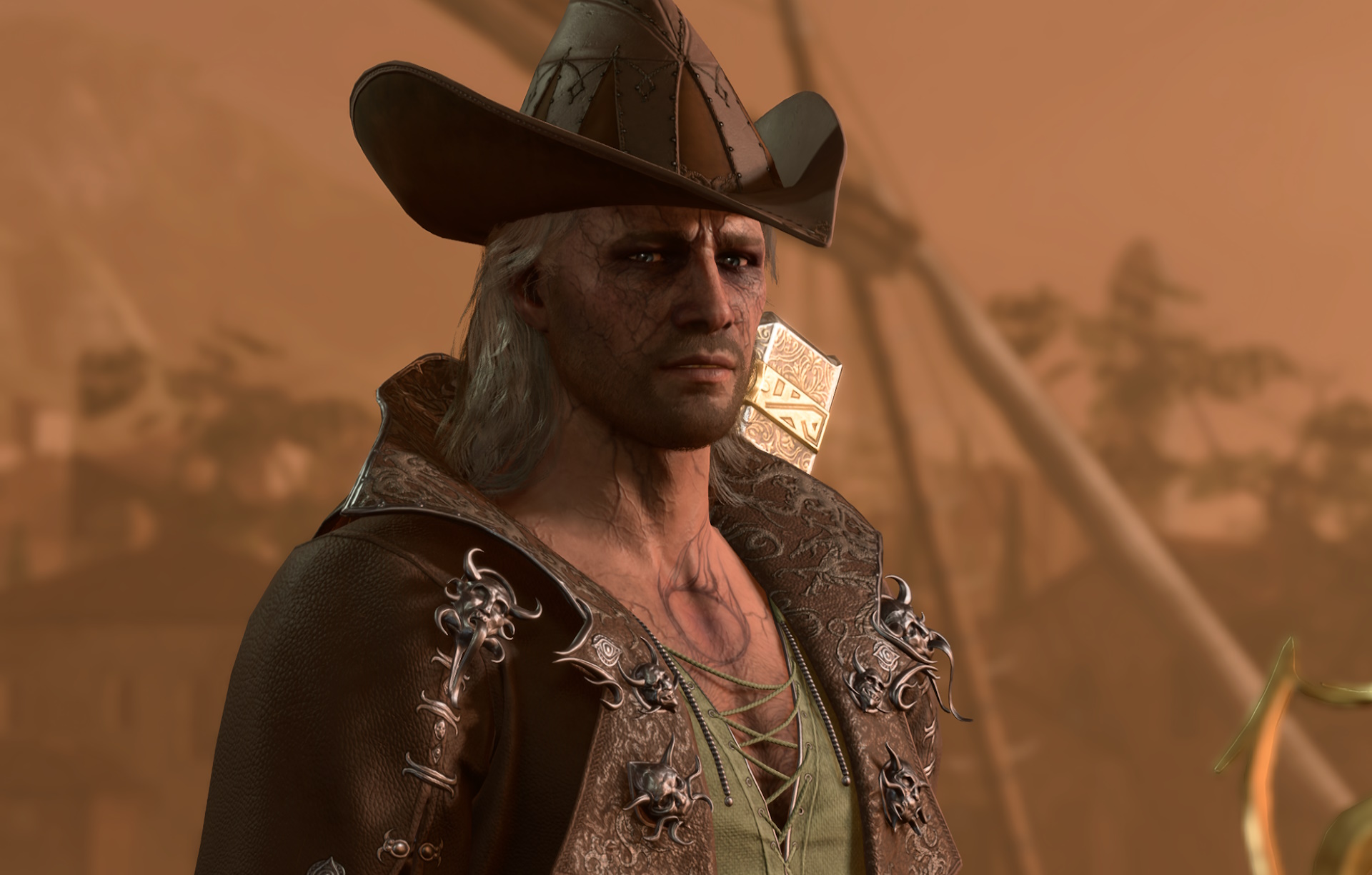
I’d seen Wyll briefly during one of the first fights in the game, but after that encounter I lost track of him and didn’t recruit him. I could’ve gone through the entire game not even realising I’d missed a prospective companion, but Wyll later showed up at my camp to confront Karlach – before being talked into joining the party. It kind of felt like this interaction was less organic and natural than others, and that Wyll was almost forced upon me, with Baldur’s Gate 3′s developers insisting that I take him along for the journey.
I’m not upset about the outcome – Wyll’s story was one of the most interesting in the game in more ways than one, and having him in the party led to some incredible moments in all three of the game’s main acts. But this is very much a case of the ends justifying the means, with a rare misstep in the way the game’s narrative came close to breaking the fourth wall leading to better and more engaging story beats later on.
Wyll proved to be a great companion character across the rest of the game.
I recently saw a spoiler-y video online, unfortunately, which confirms that the same thing also happens with the companion character Shadowheart. Players have to go a bit more out of their way to avoid Shadowheart, actively pushing her away and insisting she doesn’t join the party, but even if this path is chosen, Shadowheart makes her way back to the party partway through Act 1. And from what I saw in the video – which, admittedly, was not the entire storyline or sequence – it also felt like a very forceful way that the game pushed her into the party.
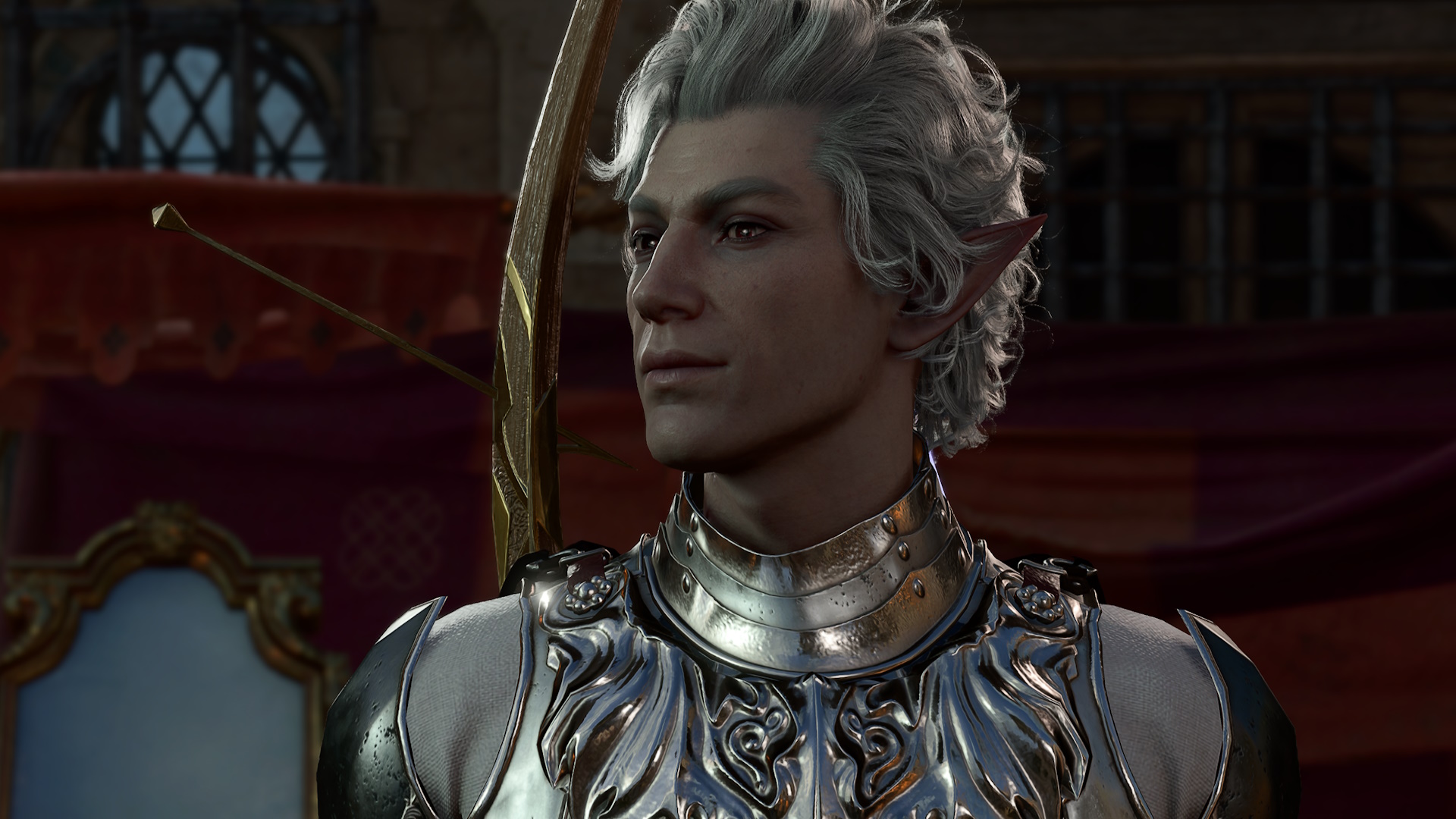
I’m not sure how true this is of all the other companions, but the main “tadpoled” characters of Astarion, Karlach, and Gale could well fall into this category too, showing up uninvited even if rebuffed by the player. And having played and enjoyed all of their arcs across the game, I think it’s not unfair to say that players would be missing out if they chose not to engage with these characters at least once. But in a game that sells itself in part on the fact that it offers players endless choices, the way some of these characters are basically forced into the party leads to a strange kind of disconnect between the game’s ambition on that front and the way it actually plays.
If ignored or rebuffed earlier in the game, Shadowheart shows up at the goblins’ camp in Act 1.
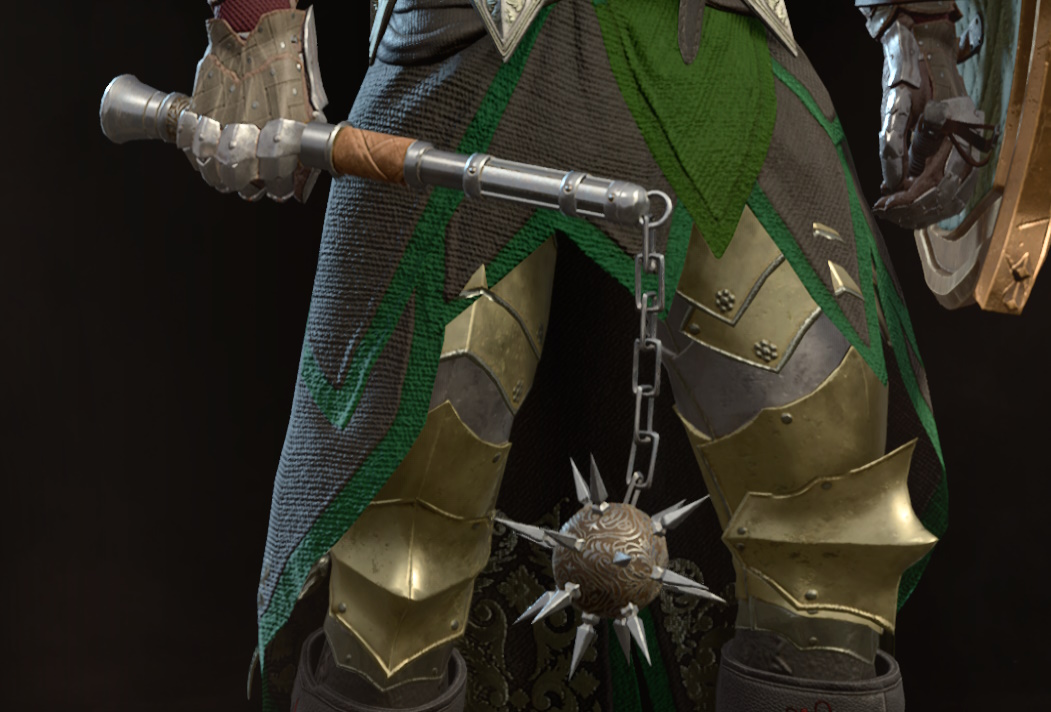
Some elements of Baldur’s Gate 3′s role-playing felt a little constrained by the mechanics of the game. To give one example from my own playthrough: I wanted my character to wield a flail – you know, the medieval weapon that’s basically a spiky ball attached to a chain. There wasn’t any real reason for this other than that I thought it looked neat on my character, a drow druid. But through my entire playthrough, I didn’t encounter any decent flails for my character to use.
There were swords aplenty, as well as axes, bows, and even staffs and clubs. But if I’d chosen to equip my character with a flail – after specifically choosing to make them proficient with that weapon type – I would have sacrificed a lot. Not only were there no unique or enchanted flails, offering additional bonuses like fire or ice damage, but the only ones I came across were pretty weak. They were easily outmatched by even the most basic swords and rapiers, leaving me with little choice but to equip a weapon I wasn’t wild about just to get the best stats. That’s part of gaming, in a way, but I would have liked to have seen more options on the weapon front. Baldur’s Gate 3 has plenty of weapon types on the surface, and uses that as part of its “play the game however you want” selling-point. But if some of these weapons are basically non-viable, especially later in the game when coming up against higher-level enemies, it kind of renders the whole thing redundant.
A flail.
That’s a specific complaint because I couldn’t find a flail that was as good (or almost as good) as many of the swords and other weapons that I encountered. But I will give the game credit for offering a variety of unique weapons, and for making it so that most characters can experiment with different ranged and melee weapon types. My druid, for example, was able to gain proficiencies with swords and crossbows at a relatively early point in the campaign, and it completely transformed them from a pure spellcaster into a much more well-rounded character who had multiple options when engaged in combat.
I didn’t choose to re-spec my character during my playthrough, nor change my class. I just didn’t feel that was necessary – but again, it’s nice that the game offers that option. I could absolutely see a scenario in which changing class would be worthwhile, and actually for a druid – which was my class – perhaps that’s even more relevant! Of the ten companions you can recruit, two are druids – so I can see a situation in which some players might want to change class to avoid having too many of the same character types in their party.
Talking to Withers at camp allows you to change your class, if desired.
Let’s talk about romance, because I feel this was one area where Baldur’s Gate 3 strayed from being a deeply engaging story into one that was very – for want of a better term – “video-gamey.” The basic problem is this: no matter who you are, what choices you made, what your background is, or what actions you take… everyone falls in love with you. That includes members of your party as well as important allies – and it just felt too easy to go down these romantic paths. It got to a point where I felt I had to basically avoid interacting with some characters after accidentally ending up in a romantic entanglement, and I just felt that this side of the story was clumsily handled.
It’s great that Baldur’s Gate 3 offers so many romantic options, don’t get me wrong, and that there are options for players to be gay, bi, straight, and so on. But it’s also a bit odd that every character so easily falls for the player – even if they take actions that they claim to disapprove of, or even after the player is already in a committed relationship with another NPC. I also find it a little odd that every NPC is able to be romanced regardless of whether the player character is male, female, or non-binary. Is everyone in Faerûn pansexual? Doing what games like Mass Effect do and restricting some romantic encounters by gender wouldn’t be a bad thing necessarily – if it was right for the character in question.
Some companions fall in love with the player character a little too easily!
Jumping ahead to the end of the game, while I had a fantastic time with the story and the way it brought together different characters that I’d encountered across my many hours of playtime, there are a couple of things to say.
Firstly, the fact that so many characters can be present as allies in the endgame is fantastic – and I absolutely love this kind of “everyone pitching in to save the day” story. It felt great, it was emotional, and I was genuinely surprised to see some characters turning up to offer their aid as Baldur’s Gate was besieged by the mind-flayers!
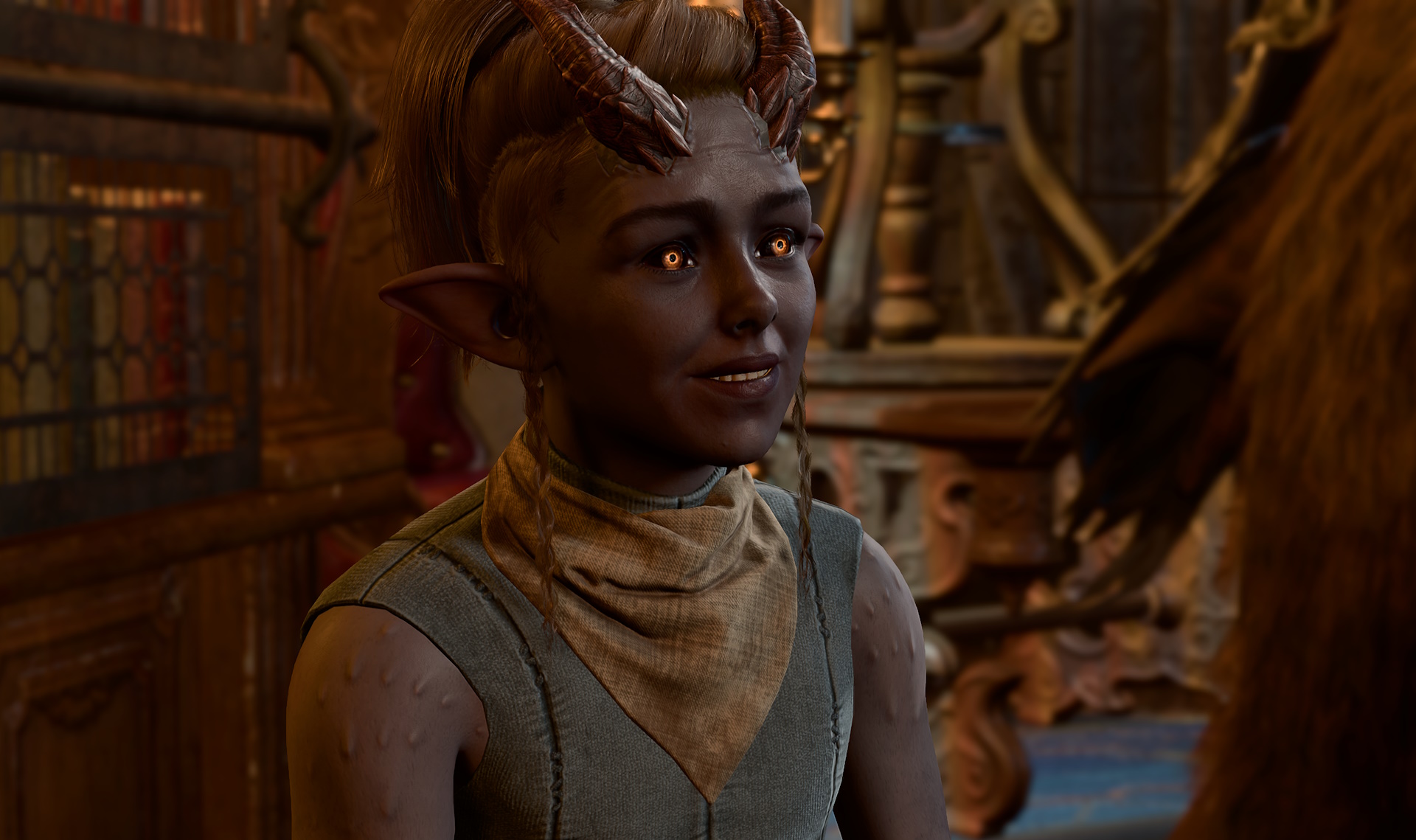
But – and you knew there was another “but” coming – the way this happens completely reframes many of these character encounters earlier in the game. Instead of helping little Arabella because it’s the right thing to do or because it feels like something your character would do, on a repeat playthrough you’re going to be acutely aware that saving her has a positive outcome in the endgame. Likewise the owlbear cub, Councillor Florrick, or Inspector Valeria. There are at least a dozen characters who can play a role here – and that knowledge completely changes how I’d approach their encounters and quests on a second playthrough.
Saving Arabella in Act 1 (and helping her again in Acts 2 and 3) has positive repercussions as the climactic battle rages.
This is kind of a trend you’ll see with Baldur’s Gate 3: while there are, in theory, many options for how to progress through the game, and the game is very adaptable if an NPC or even party member is killed, there are clearly some choices that lead to better outcomes, especially as the story reaches its climax. If you killed a bunch of NPCs, failed to save others, or just straight-up ignored whole questlines – which is easy to do, as some encounters have quite specific requirements – you’ll have fewer allies for the final fight against the Elder Brain, potentially giving you a tougher fight or a less-enjoyable time.
If your desire is to play as an “evil” character, I think this would affect you the most. Baldur’s Gate 3 tries to offset some of this, to its credit, by giving the “evil” options some positive endgame outcomes and alliances – such as if you betray Nightsong and turn her over to Lorroakan. But even then, I think you’re going to be left with fewer allies for the final fight. Maybe that’s okay – and narratively, if it makes sense for your character and your play style, that’s fine. But it may mean that, in terms of the mechanics of how the game works, you’ll end up having a worse or harder time.
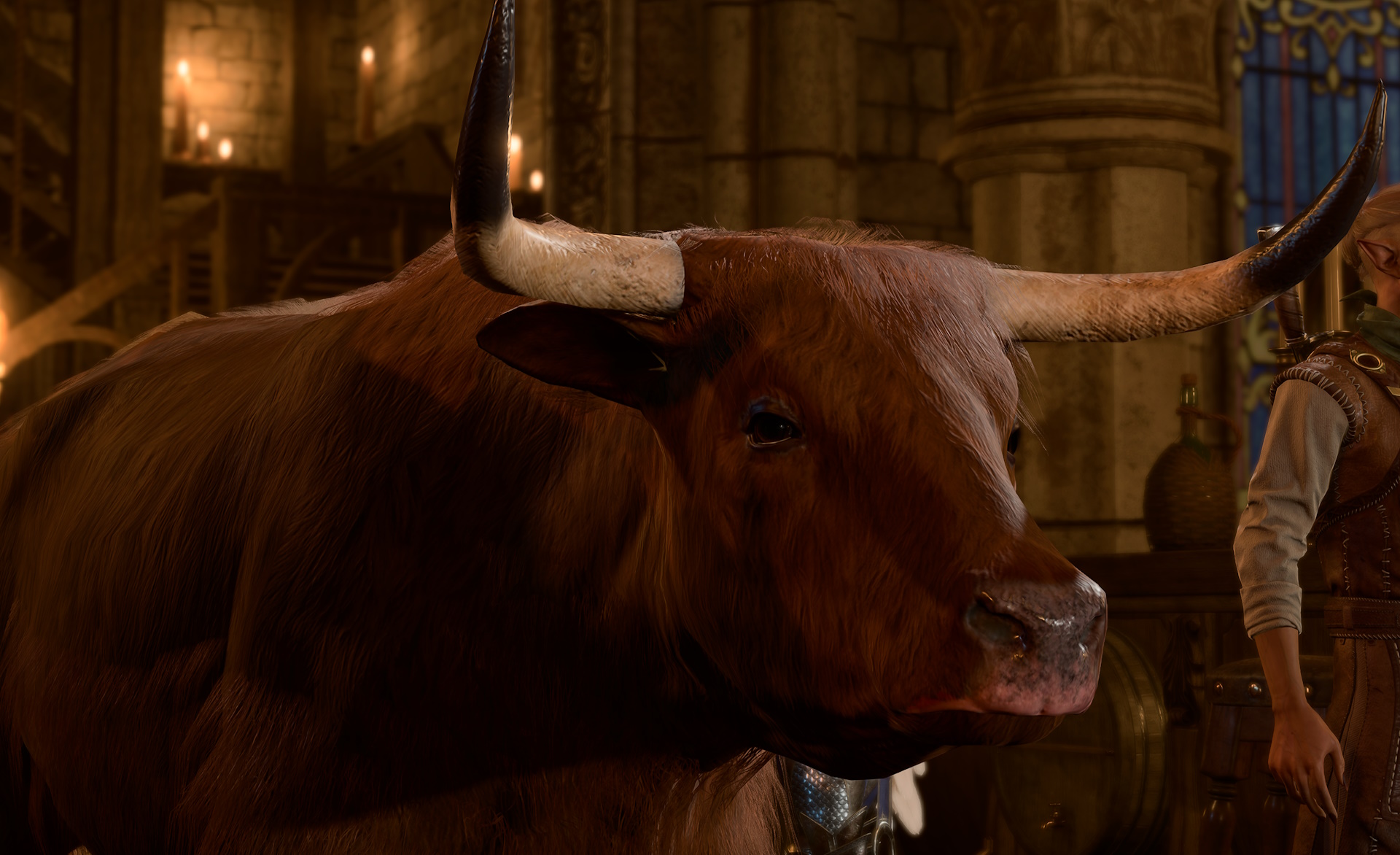
Choosing to help the strange ox – which I did for no other reason than it seemed like a bit of silly fun – ended up making a difference.
Sticking with the ending of the game, after a beautiful coming-together of friends and allies – which, in spite of the criticisms above, felt amazing on that first playthrough – and the climactic battle against the Elder Brain, things just sort of… ended. There was a brief epilogue showing some of the surviving party members, but they soon went their separate ways. Depending on choices you may have made, the macguffin at the heart of the story – the Crown of Karsus – may be lost in the sea off the coast of Baldur’s Gate. And depending on promises you may have made to certain characters… it feels like the story didn’t actually end at that point, in spite of the credits rolling!
For me, I’d chosen to pledge the Crown of Karsus to Gale, who in turn planned to return it to the goddess Mystra. As my character and Gale stared wistfully out to sea, I couldn’t help but feel that another chapter of the story was yet to be told. Maybe that will be Baldur’s Gate 4… but I’m not so sure of that!
Gale at the end of the game. His story didn’t feel complete.
The same feeling hit me with Wyll and Karlach. Karlach’s questline involved getting her infernal mechanical heart back into working order, but she learned toward the end of that story that the only long-term solution that could save her life involved returning to Avernus. Karlach seemed ready to die – and everything I’ve read about this quest says that there’s no “happy ending” for her, unfortunately. That’s a creative choice that I respect, and being with Karlach as she went out on her terms was a fitting, if bittersweet, end to her story.
At the last second, though, Wyll intervened and promised to stay with her in Avernus, saving her life but condemning both of them to one of the nine hells. This moment could have worked better if more time had been dedicated to it; it felt rushed, and because it was such a twist on what the game seemed to have been building up to with Karlach, I don’t think it worked as well as it could have. We also didn’t get to see Wyll and Karlach depart – the sequence just came to an abrupt end.
Karlach’s story seemed to come to an abrupt end.
Although my character got a moment during the epilogue with their romantic partner, other characters were either only seen briefly or were notable by their absence. The Emperor (who I chose to save instead of freeing Orpheus) very quickly shuffled off-screen, as did Lae’zel and Shadowheart. Jaheira, Minsc, and Halsin didn’t have much to say during the epilogue, despite being party members and surviving the fight. Other allies who fought alongside me during the climactic battle were entirely absent.
I get that making an overly-long epilogue could be offputting for some people, but this is the end point of what was, for me, a story that had lasted more than eighty-five hours over the span of an entire month, so getting a few extra minutes to see what happened to some of my companions and friends would have felt great. Even just a picture and a block of text explaining where they went next would have been something; it didn’t need to be a fully-animated and voiced sequence if that was prohibitively expensive.
Halsin at the end of the game.
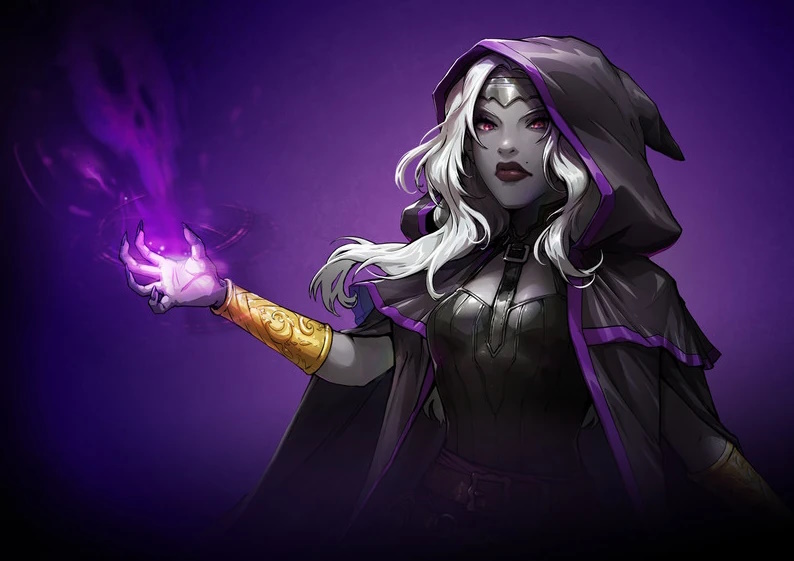
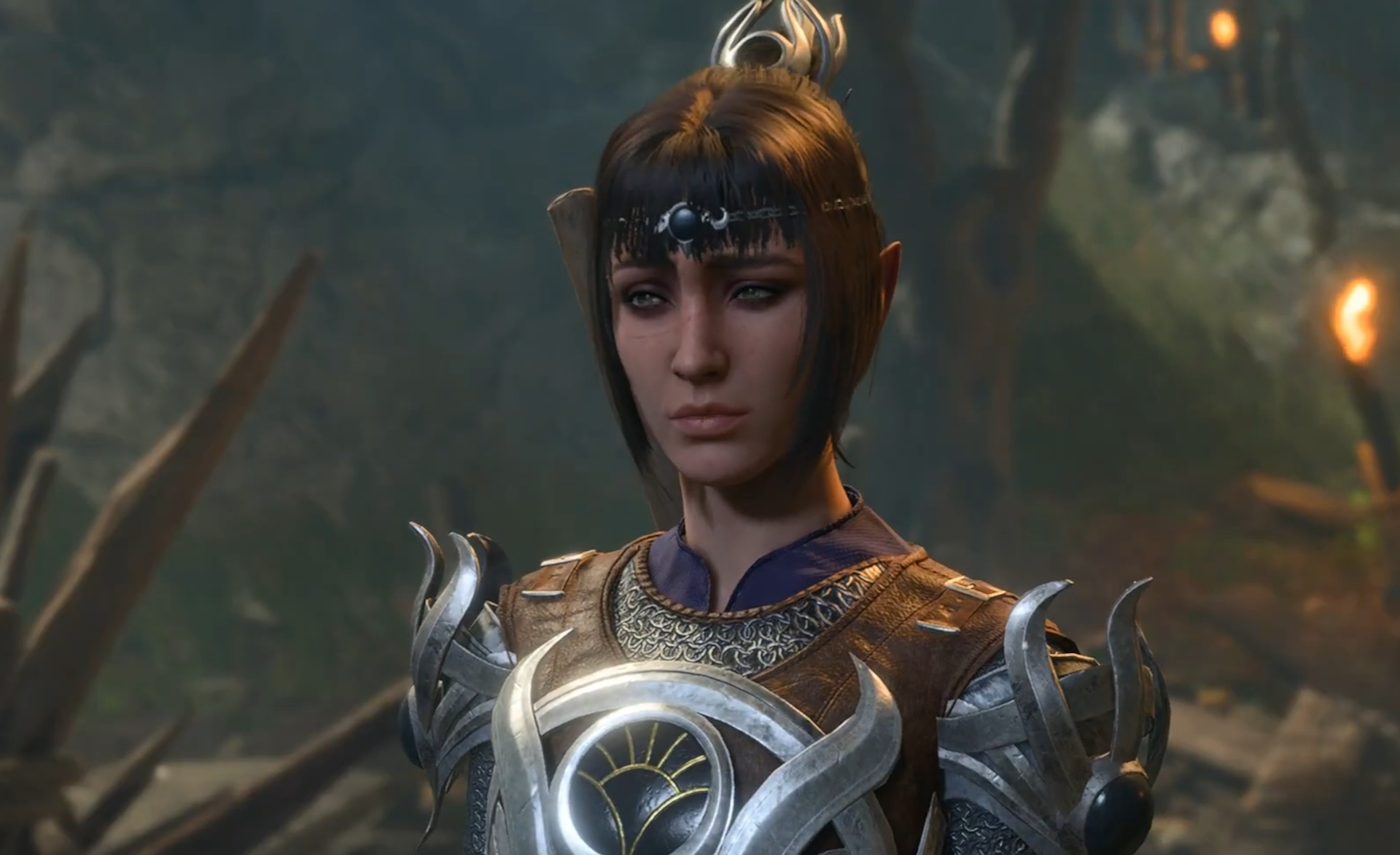
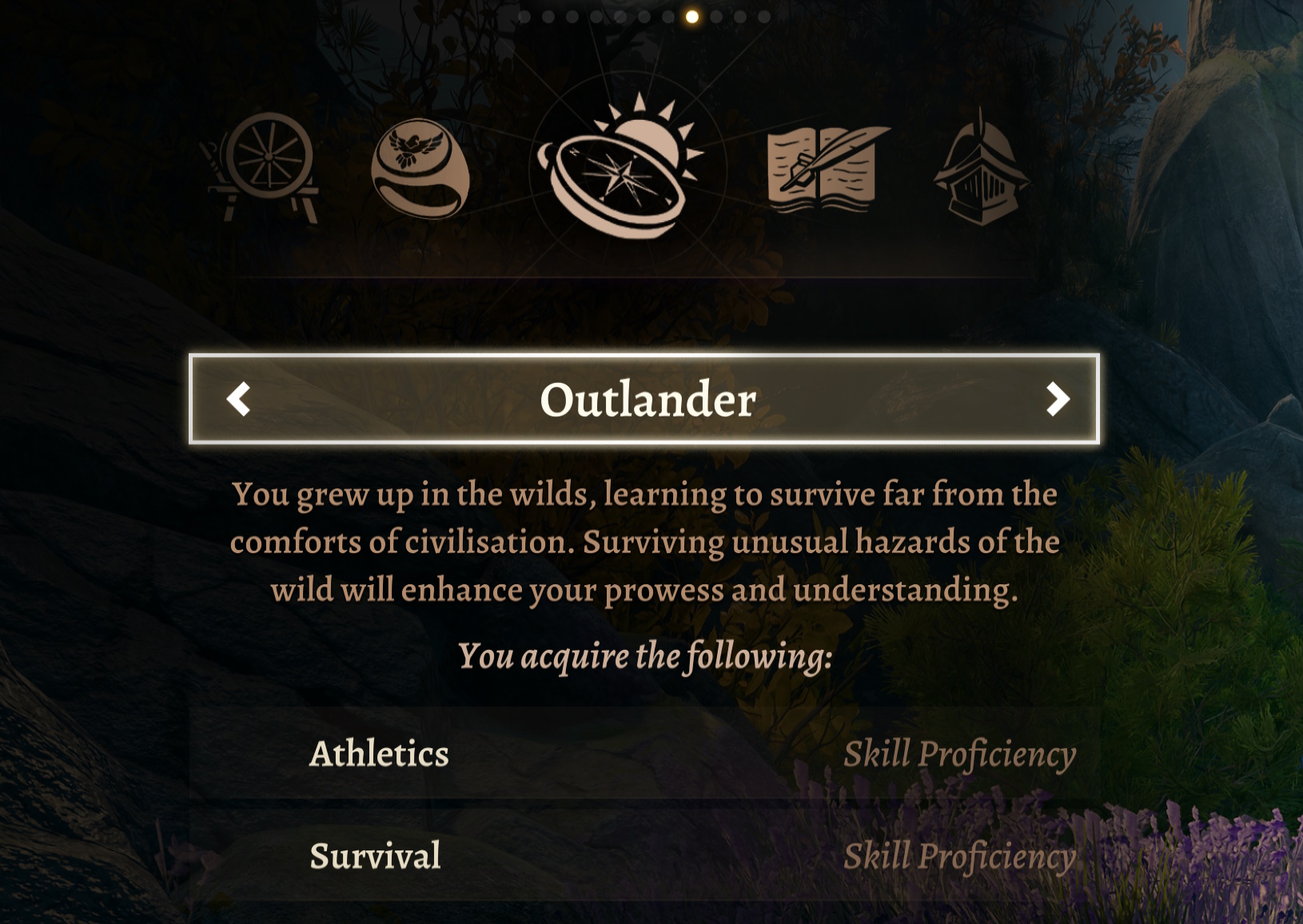
I mentioned earlier that I chose to play as a drow (dark elf) druid during my playthrough, and based on that I have a few thoughts about how well races, backgrounds, and classes are implemented in the game. During my spoiler-free review I mentioned this, so forgive me for repeating myself! But I didn’t feel that there were very many places in the game where being either a drow or a druid actually made much difference in terms of role-playing and conversations. And backgrounds were all but forgotten; I had to go back and check which one I even picked, because I don’t think it ever came up.
Obviously classes matter in Baldur’s Gate 3 – they matter a great deal, as they impact what kind of spells you can cast, what weapons you’re able to proficiently wield, how easy things like picking locks or sneaking will be, and some even give you advantages in conversations or when trying to persuade NPCs. All of that has a profound impact on the way Baldur’s Gate 3 plays – and one of the reasons why I’m so keen to start a second run through the game is to pick a different class and try things differently.
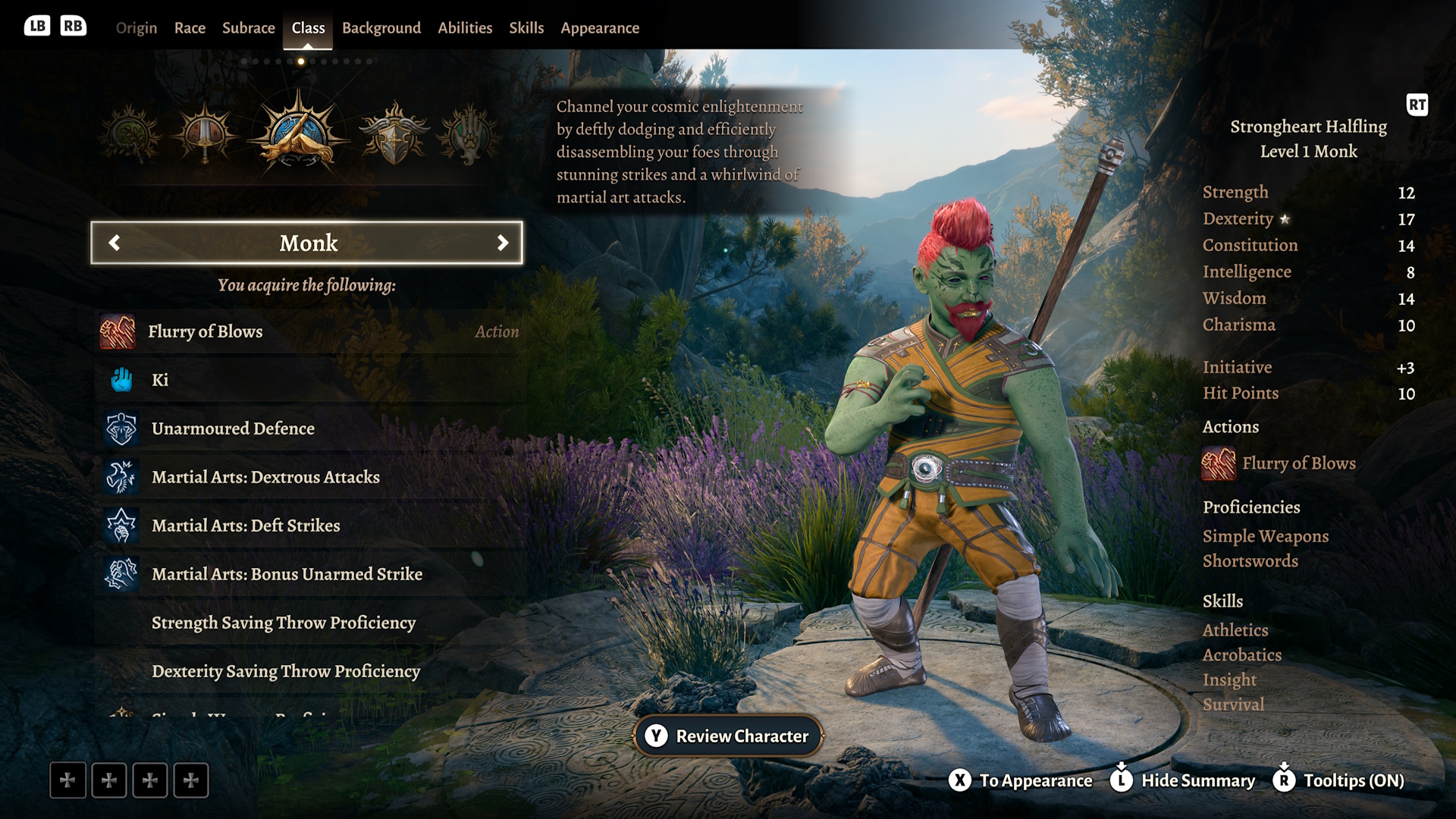
Perhaps I should play as a halfling monk next time?
But in terms of the game world and characters therein, I didn’t feel that my choices (at the character creation stage) made much of a difference. A few characters remarked on my being a drow when I first met them, but immediately moved on and it was never mentioned again. I think I saw about half a dozen drow conversation prompts during my playthrough, most of which related to darkness, seeing in the dark, or visiting the underdark (which I now know is where drows live!) And half a dozen lines of unique dialogue isn’t bad per se… but in a playthrough that lasted eighty-five hours, it’s not like I felt that being a drow was affecting every conversation or having a big impact on how most people saw my character.
The same was true of being a druid. A handful of lines of dialogue about nature or the natural world were available, and especially toward the beginning of the game in the druids’ grove I felt optimistic that my choice was going to have a bigger impact on the way my character engaged with NPCs. But as the game wore on, it became clear that the grove was a bit of an outlier, and that the number of these unique dialogue options were few and far between.
One of the druids near the beginning of the game.
There was no point at which I felt, as a druid, a unique pathway opened up for me to engage with a character, resolve a situation, or perhaps even start a quest that other classes wouldn’t have access to. Baldur’s Gate 3 seems to go out of its way to make sure that all races and classes have access to all of the quests and missions – which is a double-edged sword, really. On the positive side, it means that everyone can enjoy what’s on offer, but on the negative side… it kind of detracts from that wonderful character creation process, and leaves some of those choices feeling less important or just flat-out unimportant.
This is a bad example, as the missions in question were piss-poor and incredibly basic, but it’s the only one that springs to mind right now so it’ll have to do! But in Cyberpunk 2077, each of the three life paths (i.e. backgrounds) that were on offer led to a unique prologue and one unique in-game mission. Although in Cyberpunk these missions were lacklustre, at least there was an attempt to add to the role-playing experience by throwing a bone to players, making those early choices feel a bit more special and impactful. It also goes without saying that unique missions for each class or background add to any game’s replayability.
The choice of background doesn’t seem to matter.
Even if class-locked quests were off the table, it would still have been nice to see unique ways to progress through different parts of the game that were only available to certain classes or character types. To draw on another example, in the Omega DLC for Mass Effect 3, players who chose the “engineer” class get a class-exclusive opportunity that really impacts the mission and that makes perfect narrative sense. I didn’t see any of this in Baldur’s Gate 3. Maybe other classes or backgrounds have moments like this – but drow druids don’t, at least not from what I saw.
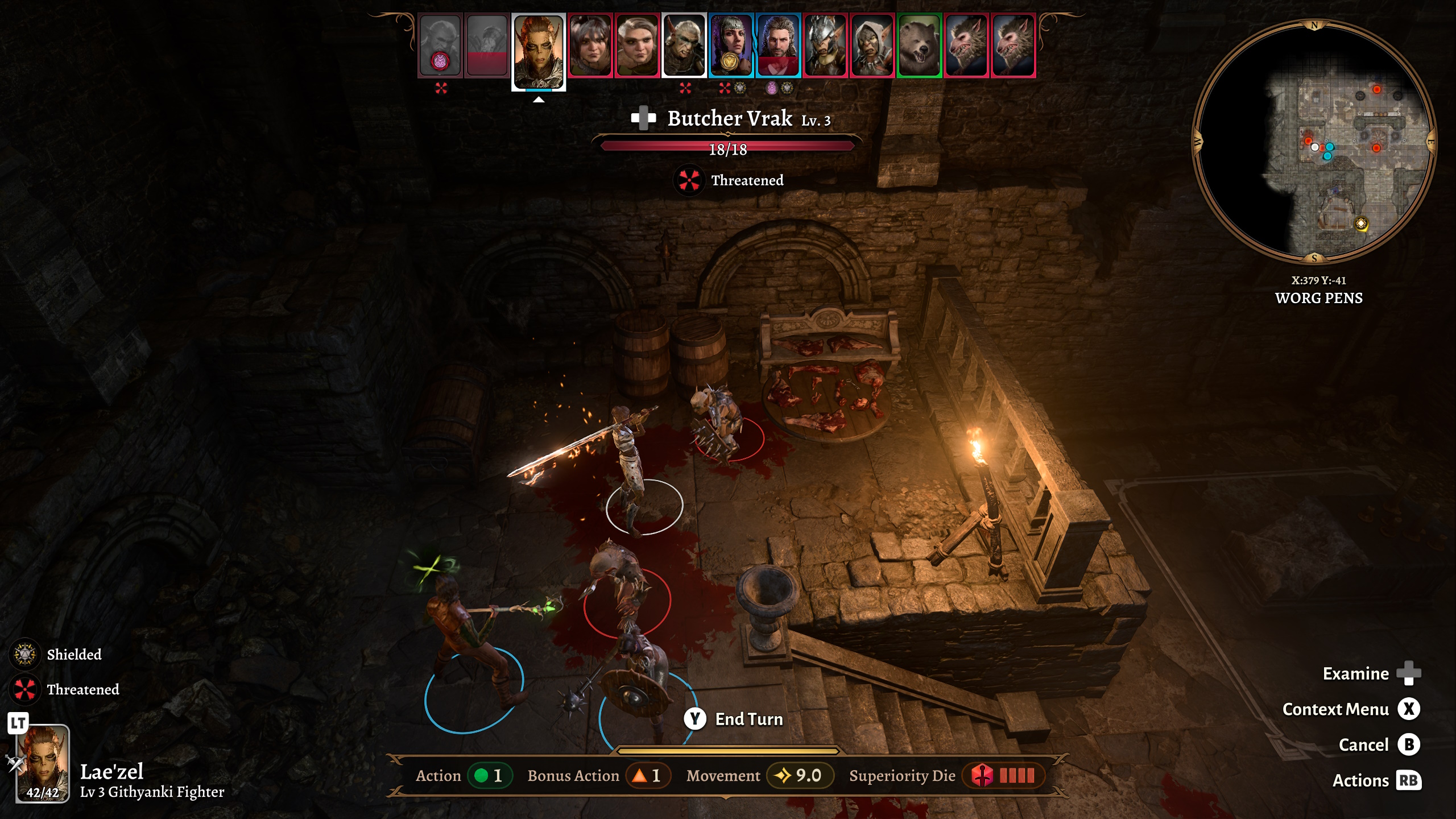
Every single combat encounter is going to be different depending on both the player’s class and the combination of classes of party members – be they the in-game companions or other people if playing co-operatively. And that’s great – it means that there’s a real strategic element to the game when it comes to deciding who to bring along and how to approach different moments. Getting a good combination of ranged, melee, and magical characters is a good starting point – but some encounters may need more heavy hitters, a healer, or a stealthy character, just to give three basic examples.
A combat encounter.
And that variety is a huge part of the fun. The different challenges posed by Baldur’s Gate 3′s huge variety of enemies makes practically every encounter feel unique. Even when facing off against the same basic enemy faction – goblins, for instance – there can still be this variety. A single boss goblin feels very different from a small group, and the strategies for defeating the small group are completely different from those needed to defeat a whole horde! I loved this aspect of the game, as it wasn’t possible to just pick a favourite party and stick with it the whole time; Baldur’s Gate 3 goes out of its way to encourage party-swapping and companion variety.
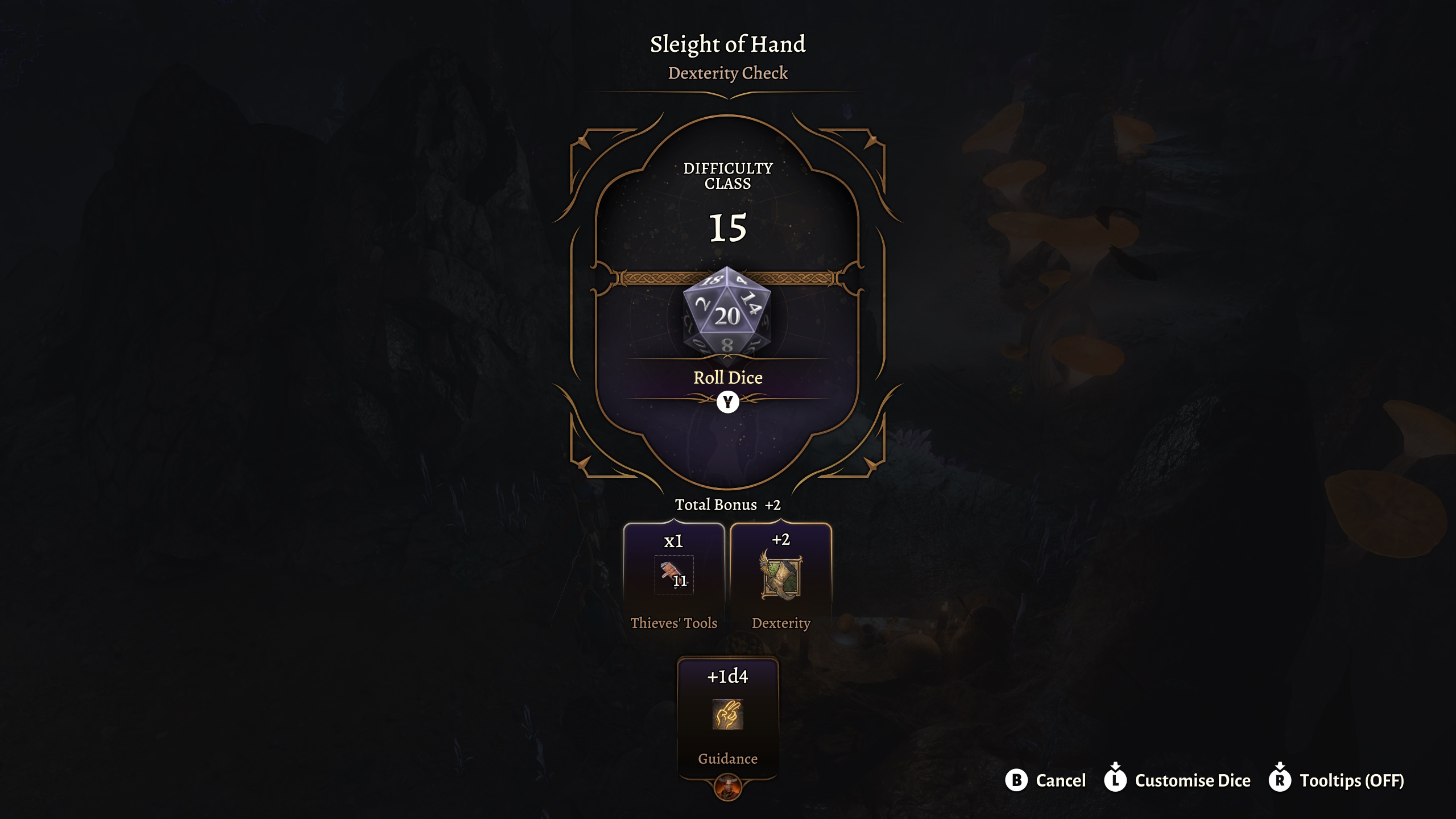
Exploration also feels like it has some of this variety. Having a character who’s adept at lockpicking in the party is a good rule of thumb, but characters who are perceptive or who have other bonuses also come in handy!
Some characters have an easier time than others when it comes to lockpicking, among other activities.
I just felt that, again, the way I created my custom character didn’t offer as much of that outside of combat. As either a drow or a druid, I didn’t find any unique ways to complete quests, any unique character encounters, or really any conversations or questlines that felt like they were really taking my character’s unique attributes into account. By the time I’d got stuck into the game and buffed up my character’s martial skills, giving me a mix of magic and weapon abilities, I felt that I had different ways to approach many encounters – but none of that felt like it was truly unique to who my character was.
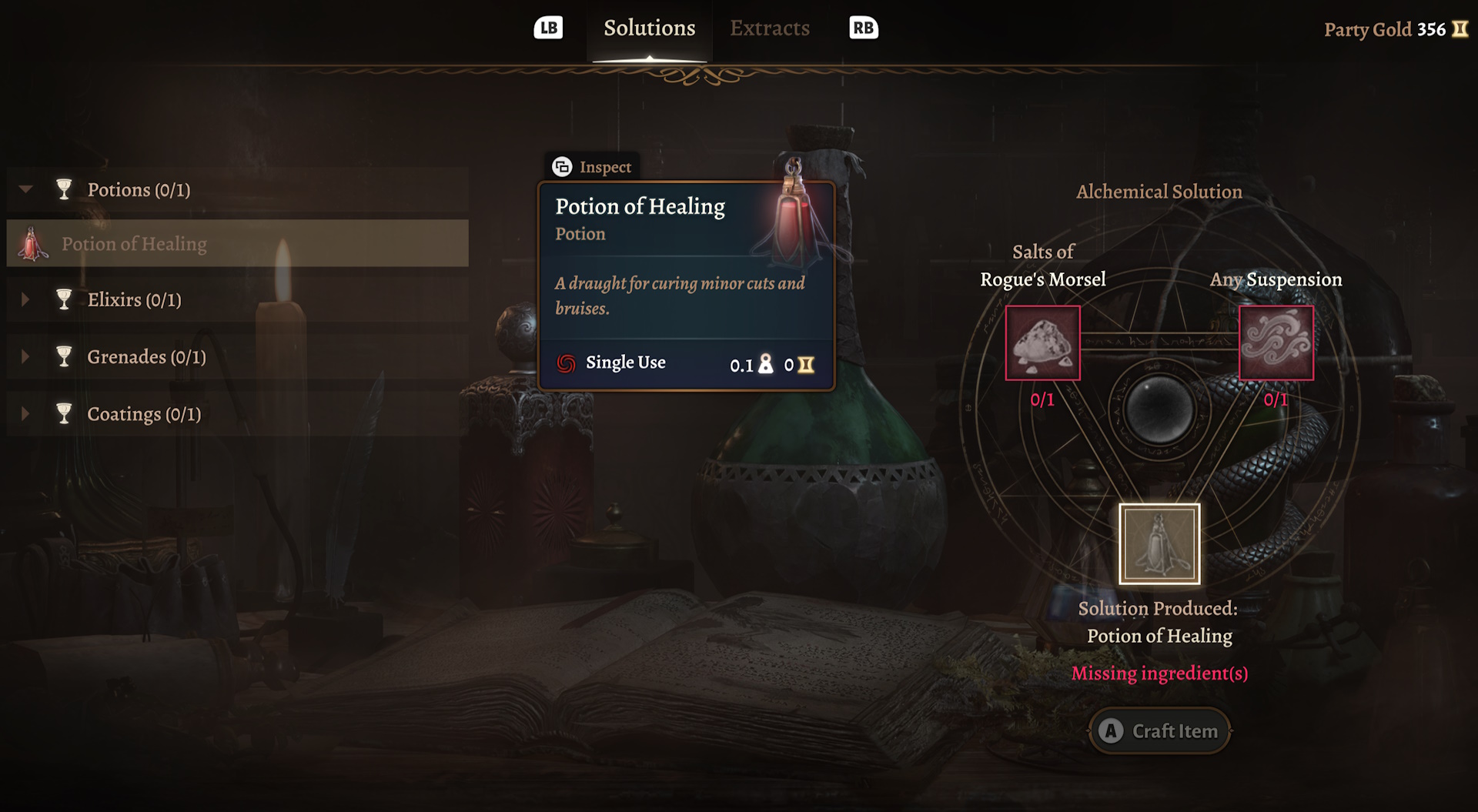
There were also a few parts of the game that I felt were either not well-integrated or easy to overlook. For example, I didn’t create a single potion during my entire run. I didn’t even know potion-making was an option until I was well into Act 1, and I found that I was easily able to acquire enough health potions out in the wild such that making my own just never seemed like something I needed to do.
I didn’t actually do any alchemy.
Perhaps it’s more to do with the way I played the game, but I felt that potions and scrolls were less useful than spells and weapons – and I only used a handful across my run. Maybe there are things I missed out on because of that, and when I jump back in for a second playthrough I’d love to take more advantage of alchemy and scrolls. I’ll have to see whether and to what extent that makes a difference! But in my first run, I felt that neither were essential and both were easily overlooked.
While I feel you’d almost have to go out of your way to get into potion-making in Baldur’s Gate 3, and I feel the feature would benefit from an in-game introduction and tutorial, I like that it’s an option for players who want to role-play that kind of magical character. Potions are a big deal in fantasy settings, and it would feel like something’s missing if potion-making wasn’t present at all. I just feel it could be made more prominent in the game as things stand.
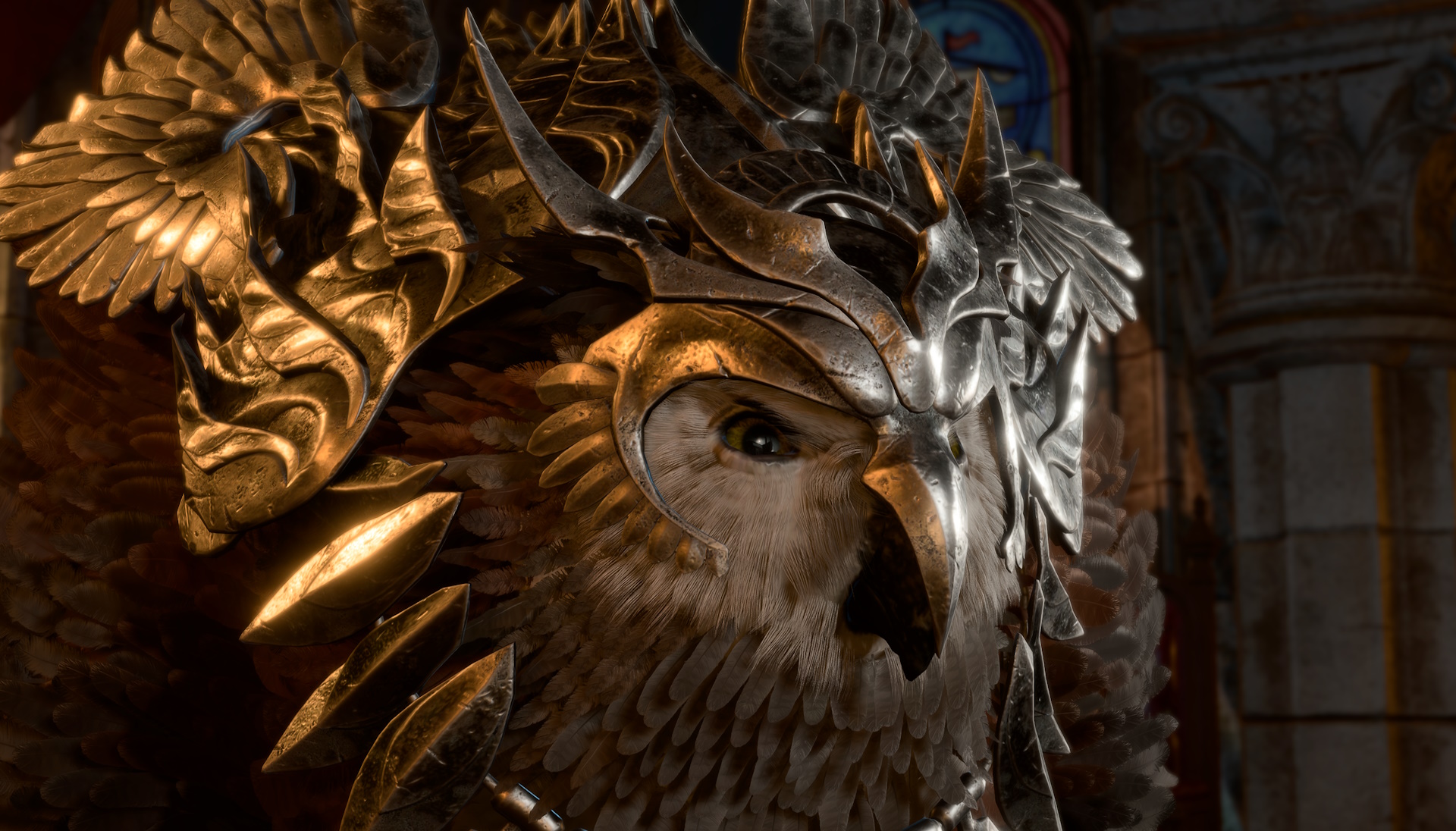
An armoured owlbear, ready for battle!
There’s one specific quest that I want to single out for criticism, and I’m picking on it not because I didn’t enjoy it – I think it’s one of the best and most interesting in the entire game – but because of how weirdly finicky it was to play, and how it had some very exacting requirements. For someone just playing the game, as I was, without a guide, it feels too easy to accidentally encounter this quest and then have it pretty significantly and negatively impact much of Act 3. I’m talking about the quest that involves rescuing the hostages from the Iron Throne – an underwater prison.
I first stumbled upon this quest by picking a lock in the city of Baldur’s Gate, then exploring what seemed to be a random warehouse. In the depths of the warehouse was a submarine that could ferry my party to this prison – but starting this quest before talking to other characters, including Gortash, Orin, one of the gnomes at the Steel Watch facility, and Wyll’s devil patron Mizora causes problems. Doing this in the “wrong” order leads to the quest having a much worse outcome, with Wyll’s father dead and the gnome rebellion at the Steel Watch not triggering properly. For a game that prides itself on letting players loose to freely explore, and on offering multiple branching paths… the way in which this particular quest was handled didn’t feel great, and it sticks up as an outlier. Despite that, when I managed to play it the “right” way, it ended up being one of my favourites in the game. It’s just a shame that it’s so exacting in its requirements, and that there aren’t any real ways around that.
This quest was very convoluted if you wanted to do it properly.
So I think we’d better wrap things up!
As I said last time, Baldur’s Gate 3 is the best game I’ve played so far this year. I adored the time I spent in Faerûn – my first ever venture into this particular fantasy realm – and I’m already chomping at the bit to start a second run through the game! I’m trying to restrain myself, as I feel jumping back in so soon after beating the game for the first time would diminish the experience, and I want to get as much out of my next go around as possible. But I daren’t wait too long, and I suspect I’ll give in and start that second playthrough before Christmas.
Though there were a few places where things could’ve been improved, and some quests that felt very particular with their requirements, overall I had a wonderful time with Baldur’s Gate 3. From the very first moment I felt gripped by what was simultaneously a small-scale, personal story and one that had world-ending repercussions. That’s in spite of having essentially zero background knowledge about the world of Dungeons and Dragons. The writing and gameplay were both outstanding, and kept me coming back for more.
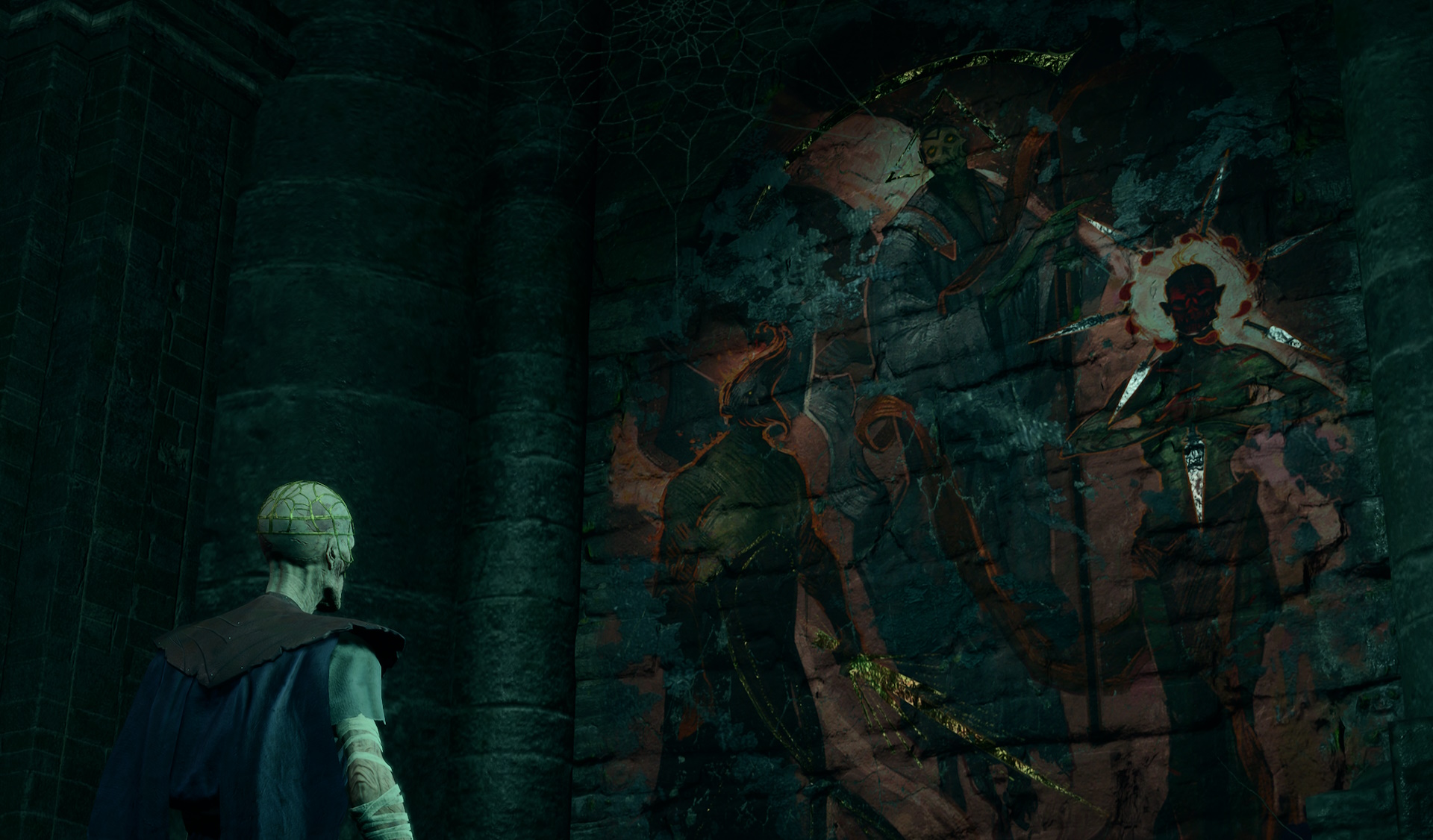
Withers addressing the Dead Three.
I hope this has been interesting. There are bound to be many different perspectives on Baldur’s Gate 3, as it’s a game that encourages players to take different paths through its story. I already know that I haven’t seen all that the game has to offer – including an entire area of the map, many NPCs, one companion character, and I have no doubt multiple questlines, too. Now that I know what to expect, I’ll make a few changes to the way I play next time in order to check off some of those missing experiences! But I’ll try to save a few for another run, too.
Although I’ve found a few things to pick on in terms of Baldur’s Gate 3′s narrative and role-playing, none of those things prevented me from thoroughly enjoying a game that’s sure to be, for many folks, the game of the year. Baldur’s Gate 3 came out of nowhere this year – it hadn’t been on my radar at all. Both in terms of story and gameplay, I was stunned. I had an amazing time, and I can’t wait to go around again.
Baldur’s Gate 3 is out now for PC and PlayStation 5, and will be released on Xbox Series consoles in 2024. Baldur’s Gate 3 is the copyright of Larian Studios, and is based on Dungeons and Dragons which is owned by Wizards of the Coast and Hasbro. Some screenshots and promo art used above courtesy of Larian Studios and/or IGDB. This article contains the thoughts and opinions of one person only and is not intended to cause any offence.










 Trekking with Dennis