Star Trek: Discovery – Season 5 Review

A spoiler warning graphic.

Spoiler Warning: There are spoilers ahead for Star Trek: Discovery Seasons 1-5 and Star Trek: The Next Generation Season 6.

So this is it, then! Star Trek: Discovery’s fifth and final season has come and gone, and its finale really does feel like the end of a chapter for the Star Trek franchise.

Two points before we get into the meat of this review. Firstly, this full season review is taking the place of the individual episode reviews that I did for Seasons 3 and 4. I didn’t pick up Paramount+ to watch Discovery week-to-week, and I didn’t really have the energy to spend on writing ten full episode reviews like I did for the past couple of seasons. If that’s something you really wanted to see, well… sorry. I may revisit individual episodes from Season 5 in the future.

Secondly, now that Season 5 has wrapped up, I would like to do a deep dive into Discovery as a whole; a kind of “post-mortem” for the series. But that isn’t the objective of this review, and this time around I’ll try to stick to Season 5, its story, and its characters. That doesn’t mean I won’t talk about plot points from earlier seasons or other parts of Star Trek where necessary (and spoiler alert: it will be necessary to do that) but rather that this review is meant to be about Season 5 first and foremost. I will be taking a look at Discovery as a whole in a future article – so stay tuned for that!
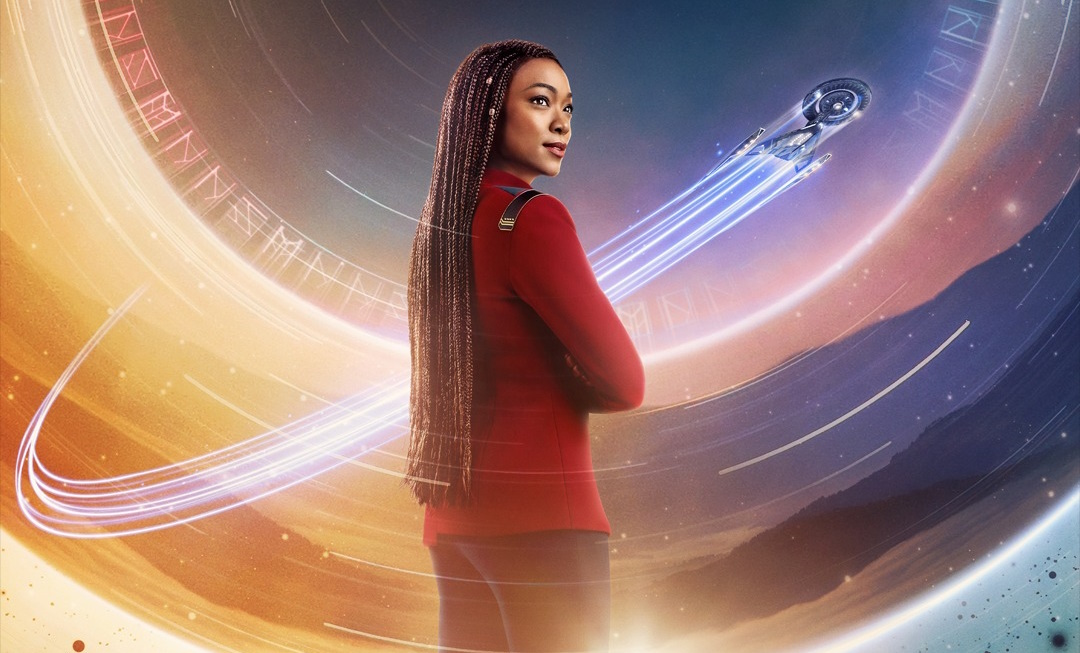
Cropped promotional poster for Discovery Season 5.
Michael Burnham on a promotional poster for Season 5.

I’d like to start with an observation that might set the tone for the rest of this review. Often when I’m binge-watching a series I can hardly wait to start the next episode. There’ll be a sense of excitement as I get ready to watch the next chapter of the story… and sometimes I even let the chores pile up because I just don’t want to wait or put the next episode on hold! When I get into a story and I’m in “the zone” I don’t want to break out. That didn’t happen for me with Discovery this time around.

Even though I could’ve binged Season 5 over the course of a couple of evenings… I didn’t want to. I took breaks of several days in between episodes, sometimes – and I was running down the clock on my single-month subscription to Paramount+ with a couple of episodes still to go. This time around, I don’t feel that Discovery grabbed me in the way it has in the past, even though there were some genuinely interesting storylines. Probably this is more an issue on my end than with the show itself – I’ve talked in recent months about how I’ve come to feel rather burned out on Star Trek as a whole, so perhaps I jumped back in before I was ready. But I think it’s worth noting that Discovery didn’t really succeed at pulling me back in.
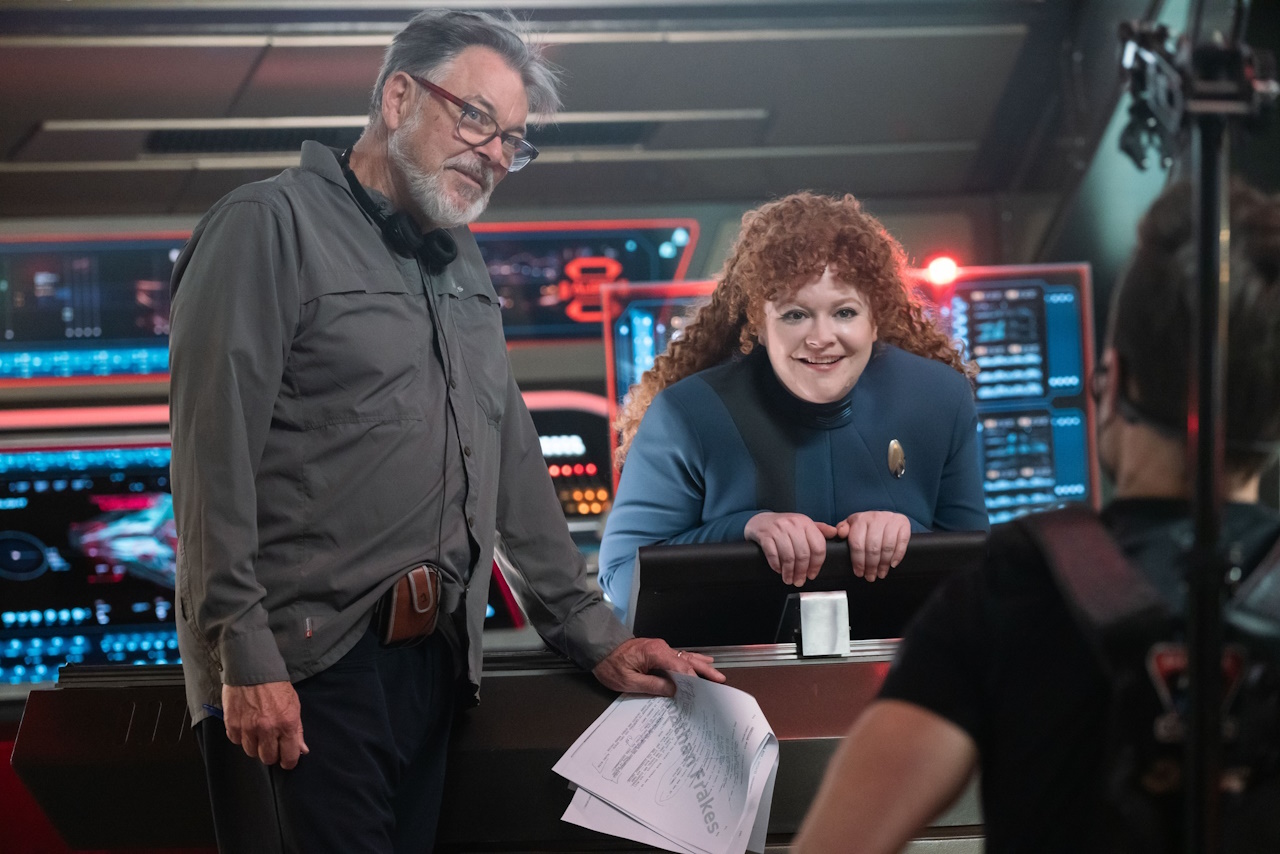
Behind-the-scenes photo showing Jonathan Frakes and Mary Wiseman.
Director Jonathan Frakes and Tilly actress Mary Wiseman in a behind-the-scenes photograph.

Although I had a specific concern about the series finale, I went into Discovery’s fifth season feeling somewhat optimistic about the direction of the story as a whole. It seemed – based on the season’s marketing material – as if Discovery was finally ready to give up on the whole “the entire galaxy is in danger and only Michael Burnham, the Chosen One, can save it!!!” story outline that the show had recycled, in some form, across its first four seasons. And I was excited about that; seeing what Discovery and its characters might be able to do with a completely different style of narrative held a lot of appeal. Even if that change had come too late to save the series from cancellation, I still would’ve liked to see the writers giving Burnham and the crew a new challenge and a fundamentally different kind of adventure – one that might’ve been smaller in scale but still interesting and entertaining.

But as you probably know by now, Season 5 recycled that same story outline yet again. There was a mystery at the centre of the narrative, and an adventure to follow as Burnham and the crew followed the trail. But there was also a “catastrophic galactic threat” underpinning it all, and villains intent on wreaking havoc who had to be stopped. Discovery had one final chance to try something genuinely different – a style of storytelling that might’ve better suited the show and its cast of characters. But instead, we got a story that felt derivative. Like in every season before, Michael Burnham and the crew faced a threat that could wipe out the Federation and all life in the galaxy. Like in every season before, they had to follow a trail of clues to uncover the threat. And like in every season before, there were villainous rascals trying to stop them. If this is the only kind of story that the show’s writers wanted to tell or were capable of telling… then I think I’m glad to see the back of Discovery. One or two of these kinds of stories might’ve been okay… but five in a row? Too many.
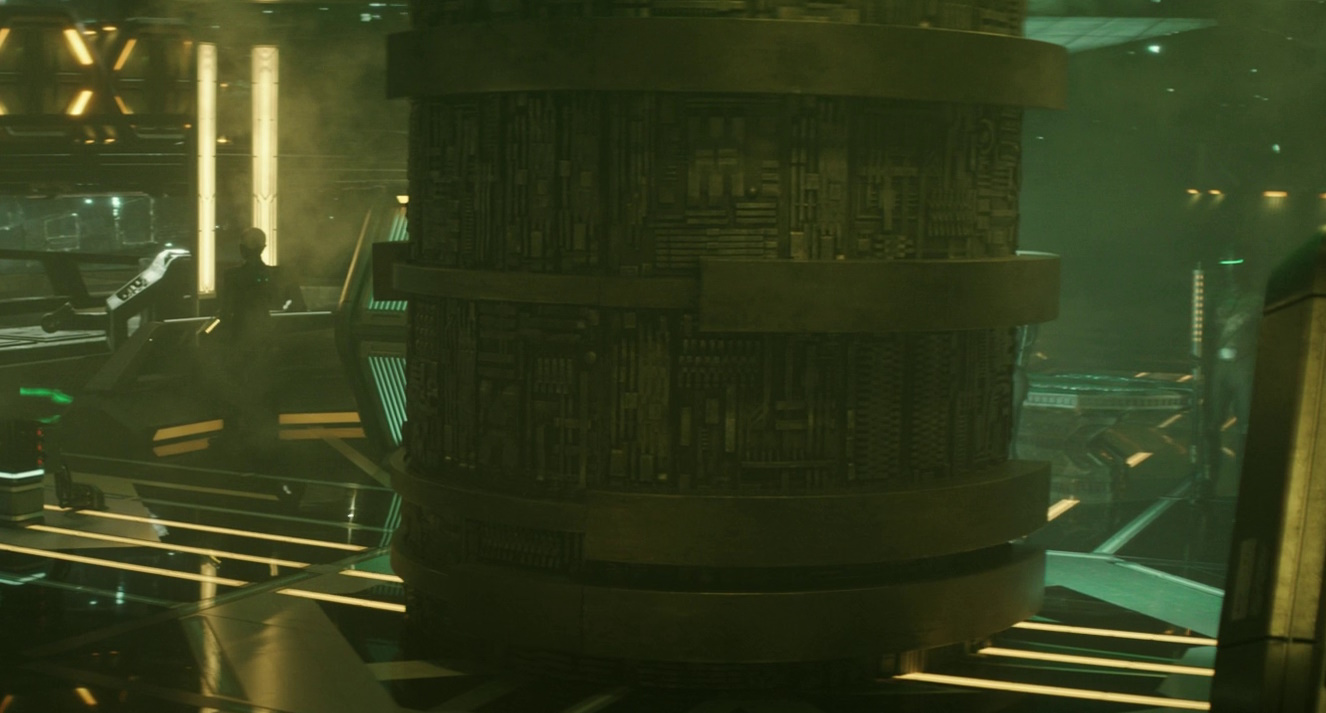
Still frame from Star Trek: Discovery Season 5 (2024) showing the Progenitors' device.
The Progenitors’ device.

It wasn’t only the main storyline that felt recycled. Book’s story of feeling alone and looking to reach out to someone he considered “family” felt pretty repetitive, as did his interactions with Dr Culber. Tilly went back and forth with her characterisation, bouncing between caring about her cadets as she did last season and seemingly forgetting they existed a moment later. Despite being brand-new, Commander Rayner was given a typical Discovery “traumatic background” that, naturally, became critical to advancing the main story. And then we come to the dreaded Burnham Relationship Drama™.

Book and Burnham broke up in the season premiere – setting the tone for a season where one of the themes involved other characters also going their separate ways. Later, Burnham’s conflict with Book over how to approach Moll and what to do with her – giving her to the Breen to prevent a war and save lives – felt incredibly similar to the arguments the pair had about the DMA just last season. So not only did Season 5 curse us with more Burnham Relationship Drama™, but the story wasn’t even an original one.
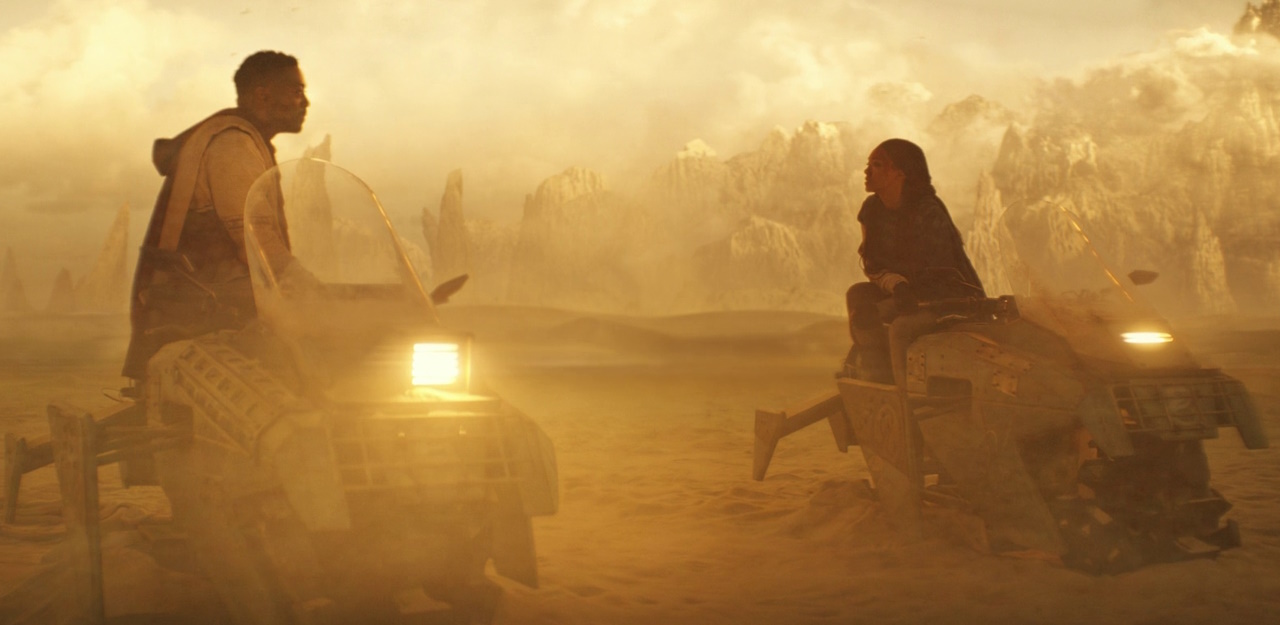
Still frame from Star Trek: Discovery Season 5 (2024) showing Booker and Burnham.
Booker and Burnham’s bike-based break-up.

Discovery is arguably Star Trek’s first series to have a singular protagonist instead of either a trio or an ensemble. And I would have loved it if that protagonist could have had just one season – just one out of five – in which she wasn’t at the centre of a soap opera story involving her love interest(s). We got it in Seasons 1 and 2 with her on/off relationship with Tyler. And we had it again in Seasons 3, 4, and 5 with Book. Discovery’s writers have been completely unwilling to let Burnham settle, and even as she’s developed, grown, and matured in other ways – like her relationship with Starfleet, her friendships with members of the crew, and so on – her romantic life has been a constant mess. If it served some greater narrative purpose, maybe it wouldn’t feel so repetitive and annoying. But after watching her and Book at loggerheads for much of Season 4 before belatedly reconciling, I’d hoped that we’d finally seen the last of the Burnham Relationship Drama™.

This repetitiveness was present throughout the season, both in the main story, side-stories, and moments of characterisation. The Archive that Book and Burnham visited felt no different from Season 3’s seed vault, for example, and it’s hard to view the Progenitor’s technology and the race to protect it as being much different from the Control AI battling to seize the Sphere data in Season 2. The Breen, while a returning faction from Star Trek’s past, filled a role that the Klingons had in Season 1 and the Emerald Chain did in Season 3. Moll and L’ak were the villainous duo who needed to be stopped, but who had a connection to one of the main characters – just like Book and Tarka in Season 4 or Voq in Season 1. The trail of clues that the crew followed also felt just like the ones that led them to the cause of the Burn in Season 3 and the DMA/Species 10-C in Season 4.
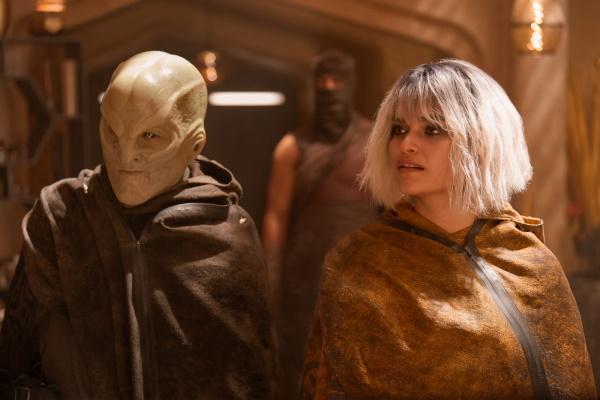
Still frame from Star Trek: Discovery Season 5 (2024) showing L'ak and Moll.
The story turned out to be repetitive.

With Discovery’s writers unwilling or unable to write a genuinely different kind of story – one without a “massive galaxy-ending threat,” Burnham Relationship Drama™, and all of the other repetitions we’ve noted – then I come back to something I said at the beginning: it was probably the right time for the series to end. I don’t think I’d have wanted to see a sixth or seventh season if both the main story and many side-stories were just going to be recycled once again. Season 5 may not have been the strong send-off that I’d hoped for, but at least we can say that Discovery went out on its own terms. Which is something… right?

This isn’t to say the season was universally terrible. There were some highlights, both for the main story and in individual episodes, as well as some of that often-elusive sense of “Star Trek-ness” that’s made the franchise so enjoyable to me for more than thirty years. Practically all of the episodes had something that made me smile, laugh, or feel some of the emotions that the story was reaching for. I just wish that those moments hadn’t come in a repetitive story that, once again, saw all of the drama turned up to eleven. And perhaps if I were being brutally honest, I’d say that I wish those enjoyable moments hadn’t been so few and far between.
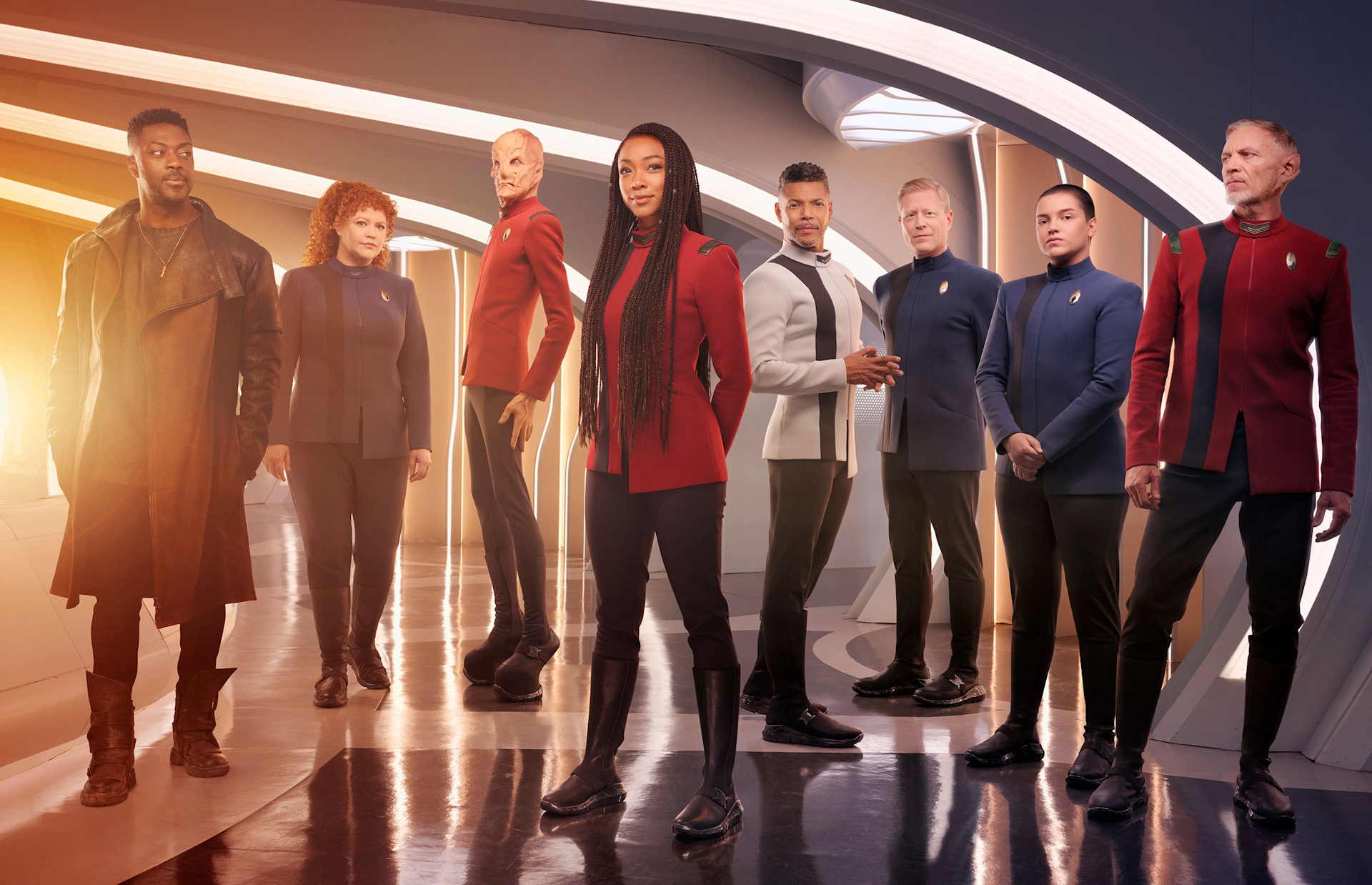
Promo photo for Season 5 showing the main cast.
The main cast of Season 5.

I was a little surprised that the duo of bridge characters who’ve been part of the series since Season 1 – Owosekun and Detmer – weren’t included in a big way this time around. They had a couple of lines each, mostly in a flashback sequence, but otherwise seemed to have been replaced by a couple of other characters whose names I didn’t even catch. I don’t know why this was – was there some reason why the actors couldn’t take part in the full season? It seems odd to me that these familiar faces were effectively written out of the show; there wasn’t really a reason given.

Other members of the bridge crew – Rhys, Linus, and co. – got about as much attention as they ever had. These secondary characters have never been Discovery’s focus, and while I felt that the series had the potential to expand its roster in a kind of Deep Space Nine-inspired way, utilising a broader cast of secondary characters, that never happened. At this point I wasn’t expecting it to, but at least we didn’t get any completely shallow, contrived story moments involving these characters like we had in past seasons. Giving a secondary character one scene’s worth of “development” in a single episode either to force an emotional reaction at their death or to nakedly add to the main story is something Discovery has done more than once and it seldom works well.
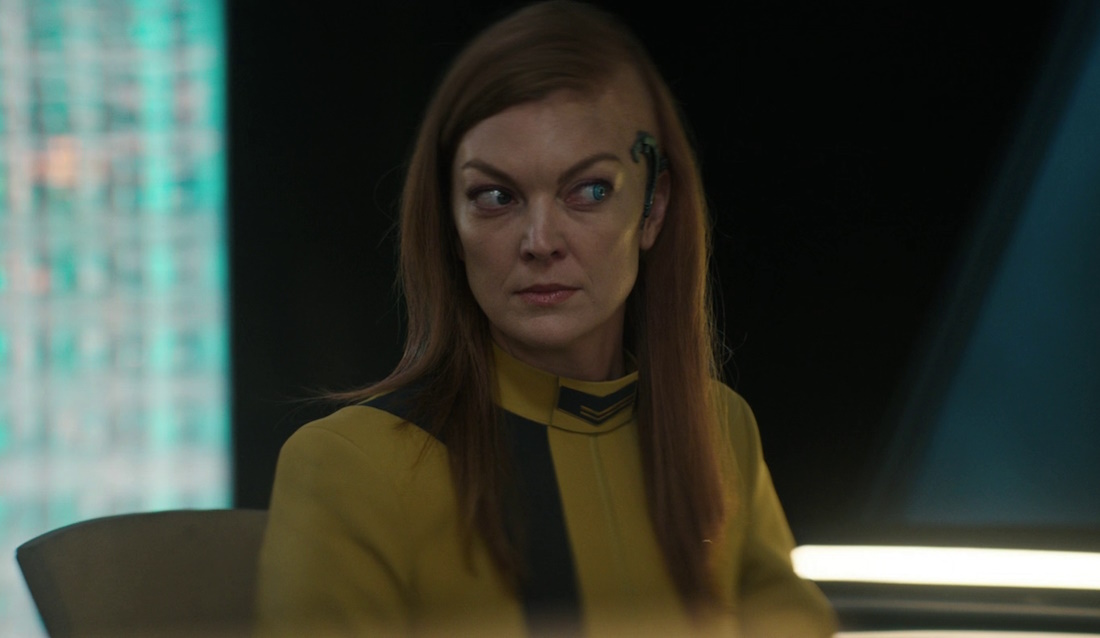
Still frame from Star Trek: Discovery Season 5 (2024) showing Detmer.
Detmer and Owosekun – mainstays on the bridge since Season 1 – abruptly disappeared this time.

On the main character front, aside from Burnham the only two to get much screen time and proper storylines were Dr Culber and Book. Tilly seemed to abandon her post at the Academy for no reason, and her role there was only sporadically brought up. Stamets was, for me, the least-well-developed main character this season. His story of wanting to find a new scientific legacy had a poor setup, was only referenced once or twice, and then was blitzed through right at the end. It ended up being a bit of a nothing-burger, and I feel Stamets would’ve been better used in a supporting role for Culber and Adira; those moments were far and away his best of the season.

Not for the first time with Discovery, I find myself saying this: this narrative concept wasn’t bad in principle, but the writers and producers clearly had their attention elsewhere, so it didn’t get enough time on screen to fully play out. There’s potential in the story of someone coming to terms with their life’s work being shut down (and that could’ve been more than a little therapeutic for Discovery’s writers, given what happened to the series), as well as in someone desperately reaching for some kind of “legacy” as a way to find meaning in their life or metaphorical immortality. Stamets’ storyline flirted with these ideas, but the series didn’t commit to them – because its energies were, as always, being spent elsewhere. The result was that the curtain fell on yet another underwhelming season for Stamets.
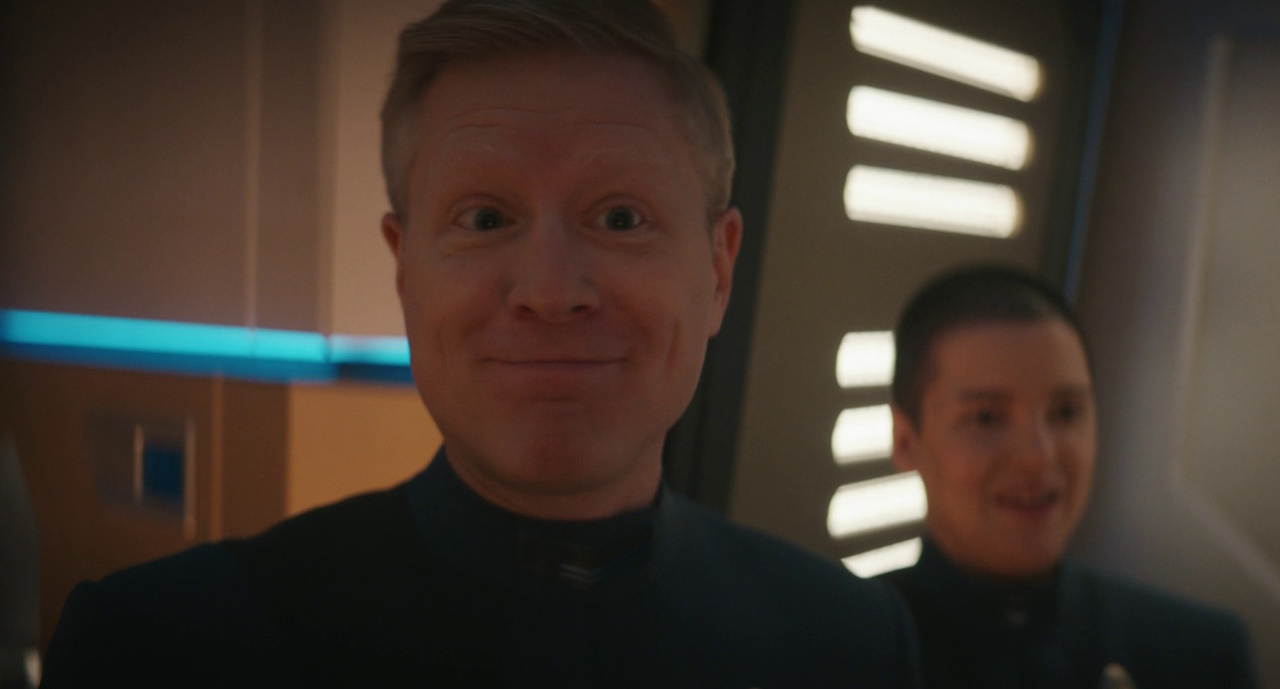
Still frame from Star Trek: Discovery Season 5 (2024) showing Stamets with Adira in the background.
Not a great season for Stamets… again.

Saru got what was by far the most optimistic individual character storyline – as Discovery set up his marriage to T’Rina. There were a few sitcom-style bumps in the road, because of course Discovery is that kind of show, but by and large I liked what we got. Saru and T’Rina had an understated chemistry together, and at a time when tensions and dangers were rising, having two characters “back home” planning their wedding was a bit of a change of pace. I wish it didn’t have to happen at the expense of Saru having a major role in the show, though – his presence on the bridge was missed.

Speaking as we were of underdeveloped storylines: T’Rina’s complex political situation was mentioned once, in a single episode, then seemed to instantly disappear without her suffering any repercussions. This idea of “Vulcan purists” being upset at her engagement to a non-Vulcan was, again, interesting in theory… but went nowhere. Being generous we might say that this was something the writers hoped to explore more of in a potential sixth season, but I’m not convinced of that. It feels like a throwaway idea designed to create a bit of forced tension in Saru’s relationship, and nothing more.
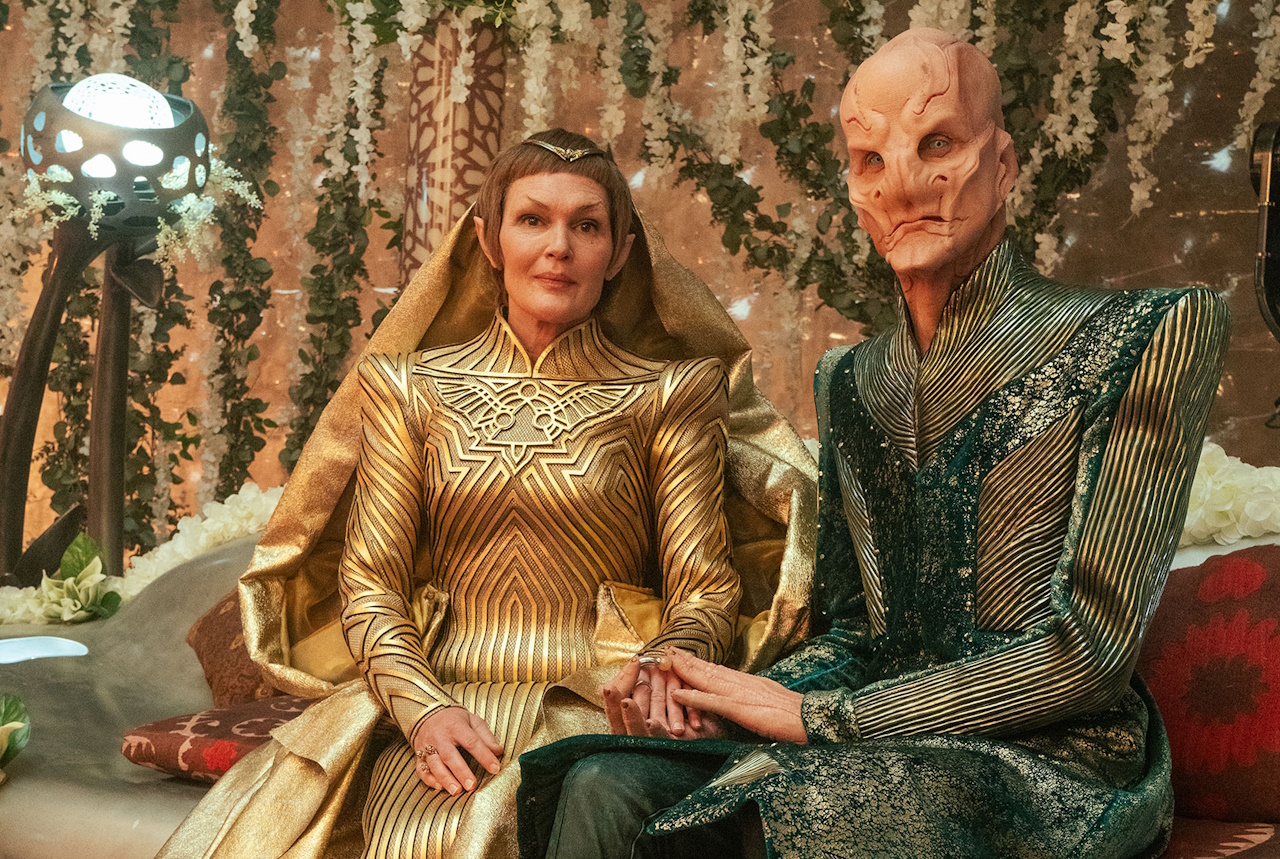
Promo photo for Season 5 showing T'Rina and Saru at their wedding.
T’Rina and Saru at their wedding.

“Subtlety” has never really been a word that Discovery’s writers seem familiar with, and in Season 5 we saw that trend continue. After explaining his tragic backstory, we saw Rayner go from crotchety a-hole to inspiring leader who cares about his crew almost in a heartbeat. It reminded me of the change that Saru underwent with his vahar’ai – a change that took him from cowardly to aggressive predator also in a split-second. For me, this abrupt character switch didn’t really stick the landing, and while Rayner is still an interesting character whose forceful personality left a stamp on the series, there’s something to be said for making these kinds of changes a more gradual affair.

I was disappointed that we didn’t get to see more of Admiral Vance and President Rillak – two characters who had been pretty enjoyable in Seasons 3 and 4. Both had moments on screen, but their roles felt diminished compared with the last couple of seasons. In a story with profound in-universe consequences (something we’ll talk about more in a moment), there was scope to see the Federation’s president and Starfleet’s top admiral wrangling with the fallout of Burnham’s mission and the “Red Directive.”
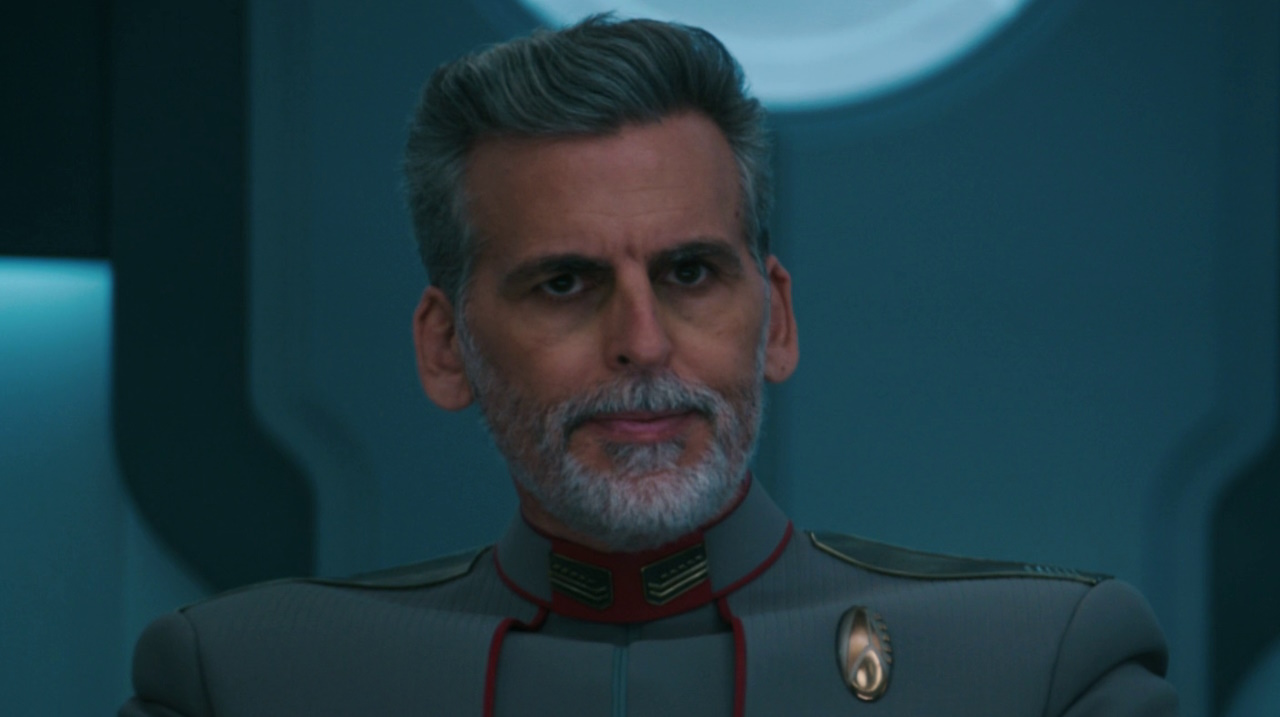
Still frame from Star Trek: Discovery Season 5 (2024) showing Admiral Vance.
Admiral Vance had less of a role this time around.

Dr Kovich is a character who has been an enigma since Discovery shot forward to this time period. I’d speculated that perhaps he was the head of this era’s Section 31, but this season we got the explanation we’d been waiting for… and it wasn’t what anyone had been expecting. The reason for that is simple: this explanation is dumb. Kovich is, somehow, an older Crewman/Agent Daniels: you know, the secondary character from Enterprise? The time-traveler who messed up Archer’s mission. Crewman Daniels.

Sorry, but this really was a stupid idea – one that was in no way set up by anything else in the series. It feels like Discovery’s writers came in late one day, weren’t really feeling like doing much work, and just threw out this idea as a cheap way to connect the series to something else in Star Trek. Why Daniels? Why not Captain Braxton – the time-traveling character from Voyager? Why not Wesley Crusher? Why not any one of a hundred other totally random characters? They’d make no less sense than Daniels. In a way, I admire the writers’ attempt to link events in Discovery’s otherwise disconnected 32nd Century to other parts of Star Trek. But this one was just so random with absolutely no setup that it fell flat on its face. I didn’t think this was possible – and it shouldn’t have been – but this revelation makes Kovich as a character feel less interesting and less important in retrospect.
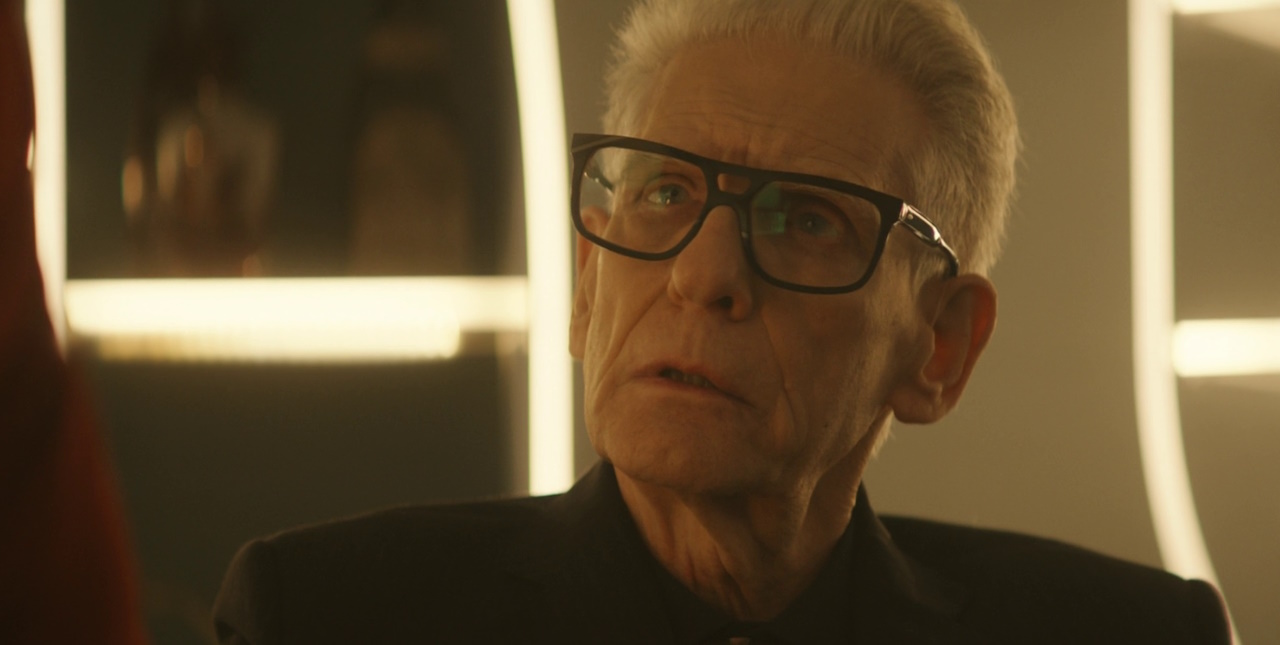
Still frame from Star Trek: Discovery Season 5 (2024) showing Kovich/Daniels at the end of the story.
Dr Kovich… a.k.a. Agent Daniels.

The season’s villains – Moll and L’ak – had potential as a kind of “Bonnie and Clyde” outlaw couple, and there were moments where they came close to achieving that status. But the connection between Moll and Book put a downer on things, and I felt like screaming at Discovery’s producers that not everyone in the galaxy needs to know or be related to everyone else! Characters can meet for the first time and form connections; villains don’t have to be someone’s daughter, uncle-in-law, or ex-boyfriend in order to be interesting, entertaining, and impactful.

As mentioned, I liked that we got a closer look at the Breen. The Breen had been part of what is probably still my favourite Star Trek story arc: the Dominion War. And in Deep Space Nine we never got to see them or even hear their language translated. Learning more about the Breen and particularly their biology was genuinely interesting, and it didn’t tread on the toes of anything that had been set up in Deep Space Nine or elsewhere – which is a low bar, perhaps, but one that modern Star Trek has occasionally tripped over!
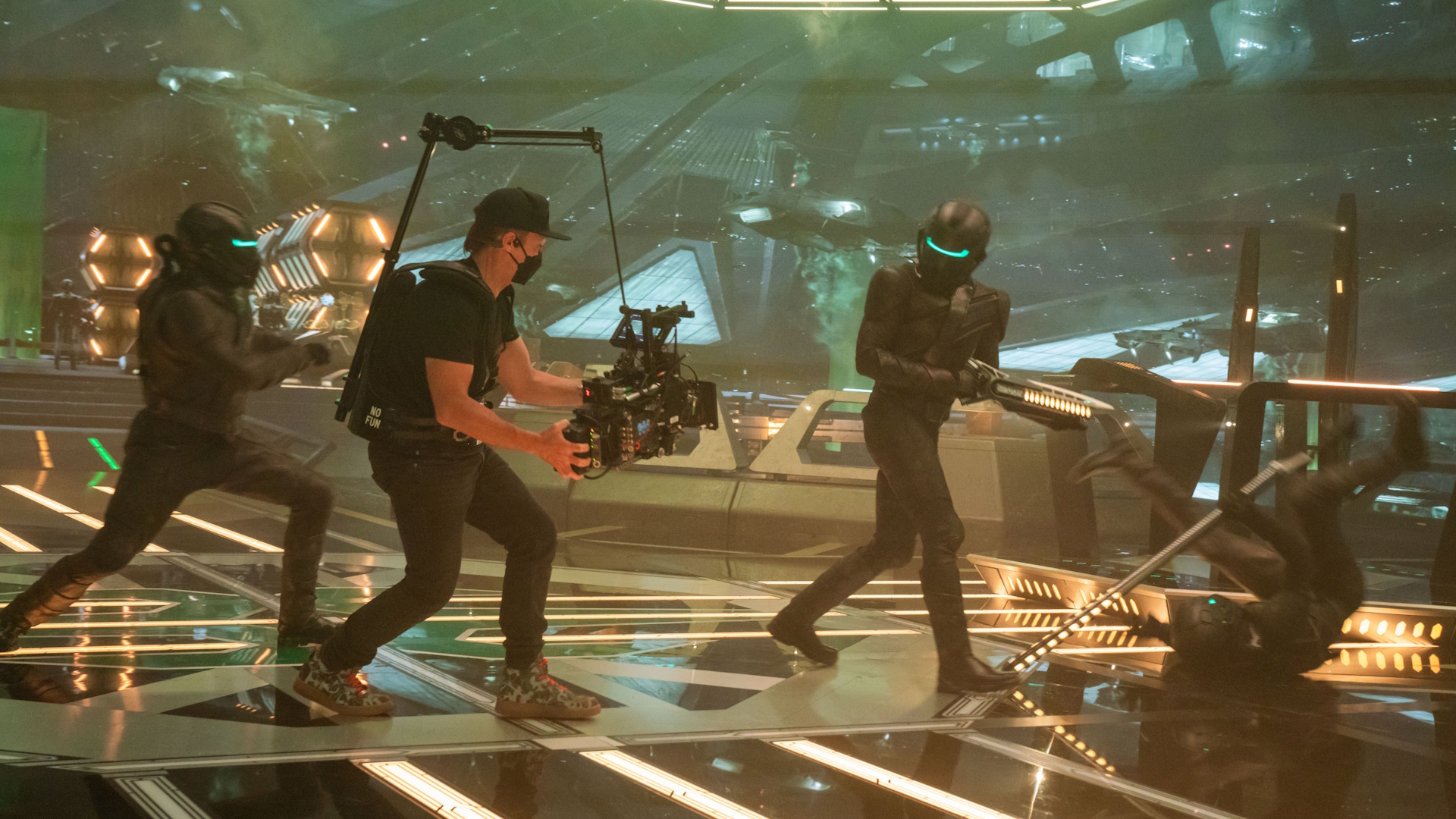
Behind-the-scenes on Discovery Season 5 showing a camera operator and several characters in costume.
Behind-the-scenes photo showing one of the Breen scenes being shot.

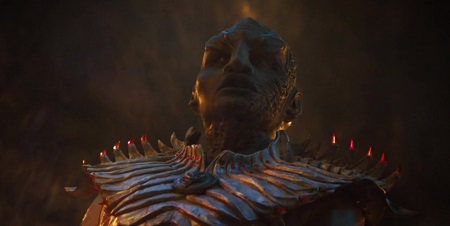
The Breen seemed more or less in line with their earlier appearances – but I would say that, in a story that aimed to be a bit more nuanced and modern, the two Breen leaders that we met both felt pretty one-dimensional. L’ak was an interesting character, and I liked the idea of the rebellious human-lover running away from his strict military upbringing and family. But the pair of Breen primarchs that we met – Ruhn and Tahal – felt like your bog-standard “evil for the sake of it” power-hungry villains. I wasn’t expecting a lot from either character, and I think they kind of work in the context of a brutal militaristic power, but neither felt especially interesting.

Discovery also came close to being written into a corner with this season’s Breen conflict. L’ak was supposedly incredibly important to Ruhn in particular, as he needed him to press his claim to the throne. But when L’ak died – in Starfleet custody, no less – Ruhn simply walked away without exacting his revenge. When it had been established that the Breen – with their Warhammer 40K-inspired massive warships – were more than capable of wiping out Starfleet… I don’t know. It didn’t feel right for this hardliner to just place his trust in Moll and walk away without retaliating.
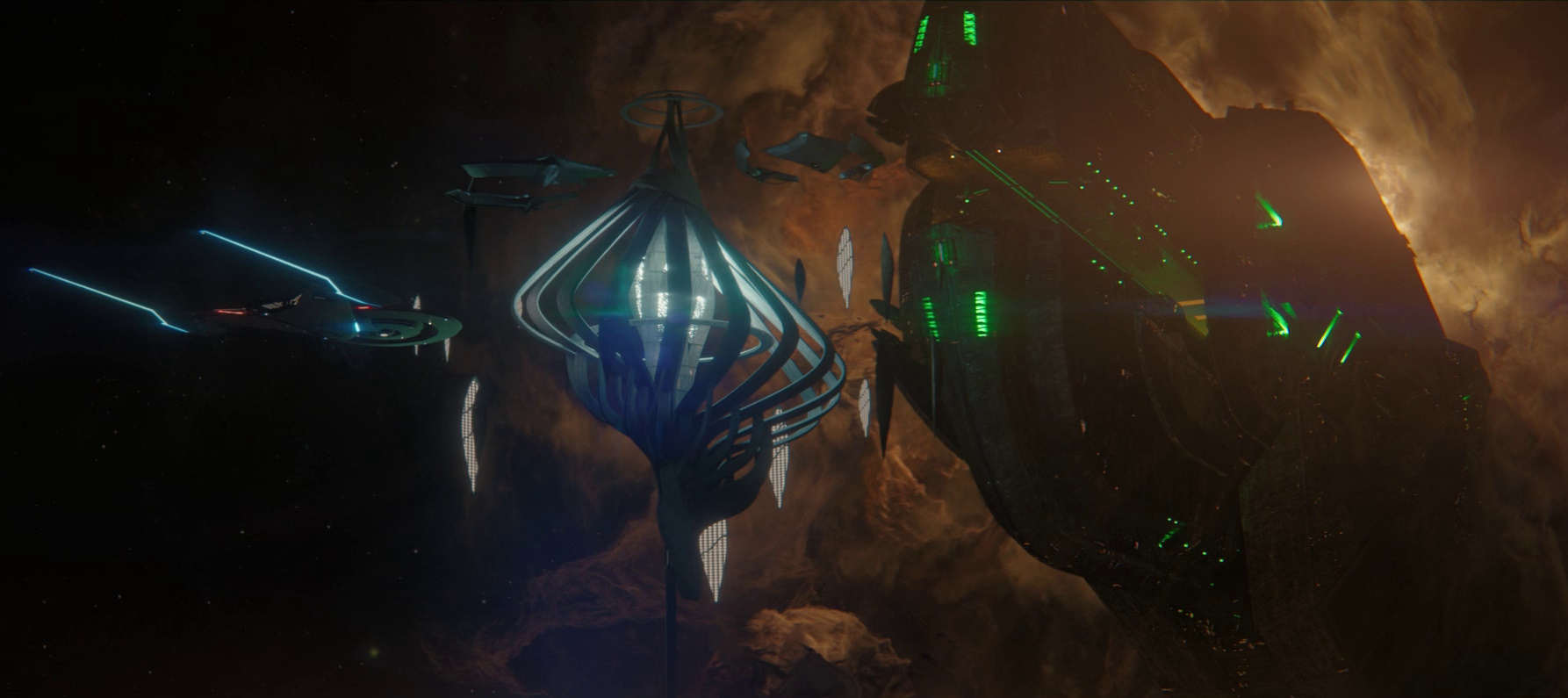
Still frame from Star Trek: Discovery Season 5 (2024) showing a Breen warship.
The Breen warship dwarfed both the USS Discovery and Federation HQ – and would have made short work of both, if the shooting started!

Speaking of starship designs, I liked the massive Breen warships – though, as mentioned, I noted a definite influence from Warhammer 40K and other sci-fi properties! We didn’t really see many other new ships or vehicles this time around; Rayner’s Starfleet ship was okay but nothing special. I didn’t really like the first episode’s hover-bikes, though – they seem completely superfluous in a setting where everyone has a personal transporter built into their combadges and where spore drives can hop across the entire galaxy in an instant! The sequence was pretty tense and exciting, though.

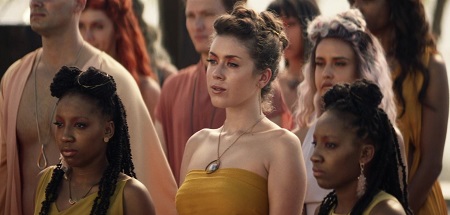
Let’s talk about the main thrust of the story. Discovery surprised me by returning to a race called the Progenitors – ancient humanoid aliens who only appeared once in The Next Generation. And… to be blunt, I think there’s a reason why this storyline hadn’t been picked up or even so much as mentioned since then.
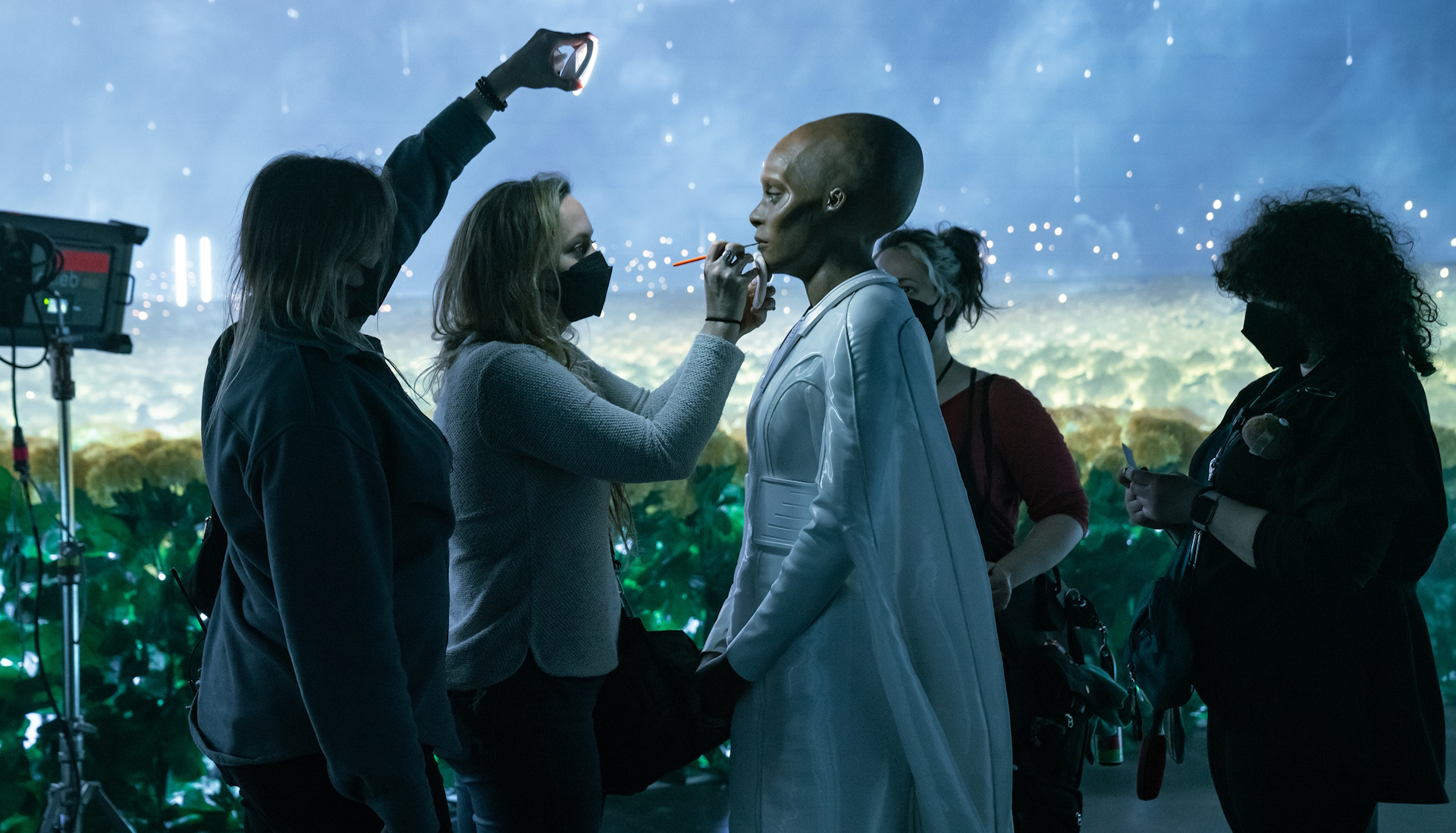
Behind-the-scenes on Discovery Season 5 showing makeup being applied to an actor playing a Progenitor.
Behind-the-scenes with one of the Progenitors.

Some stories in Star Trek – even ones that seem to be transformational for our understanding of certain factions or characters – don’t work as intended or just reach a natural end point, and for me, the ancient humanoids from The Chase are in that category. Star Trek didn’t need this fundamental explanation for why many alien races are humanoid, and while The Chase wasn’t a bad episode per se, its ending and the way it wrapped up wasn’t great. For me, this kind of in-universe explanation was never needed, and as a result I was content to leave The Chase and its ancient humanoids on the back burner. They were never written into the franchise in a big way, and every subsequent story – even those focused on history – never returned to this pretty convoluted story.

So why did Discovery dig up these aliens – now named the Progenitors?

I would be genuinely curious to learn why the show’s writers and producers decided to go down this narrative path, to be honest! While the story we got expanded our knowledge of the Progenitors a little, it didn’t tell us a lot about the galaxy, the other races that the Progenitors may have seeded, and it ended with more questions unanswered than answered. We didn’t even get a technobabble explanation for how they did what they did or how their tech worked. The result was an unsatisfying feeling that was compounded by Burnham’s decision to conceal the Progenitors’ device and not even allow Stamets or someone else at Starfleet HQ to examine it.
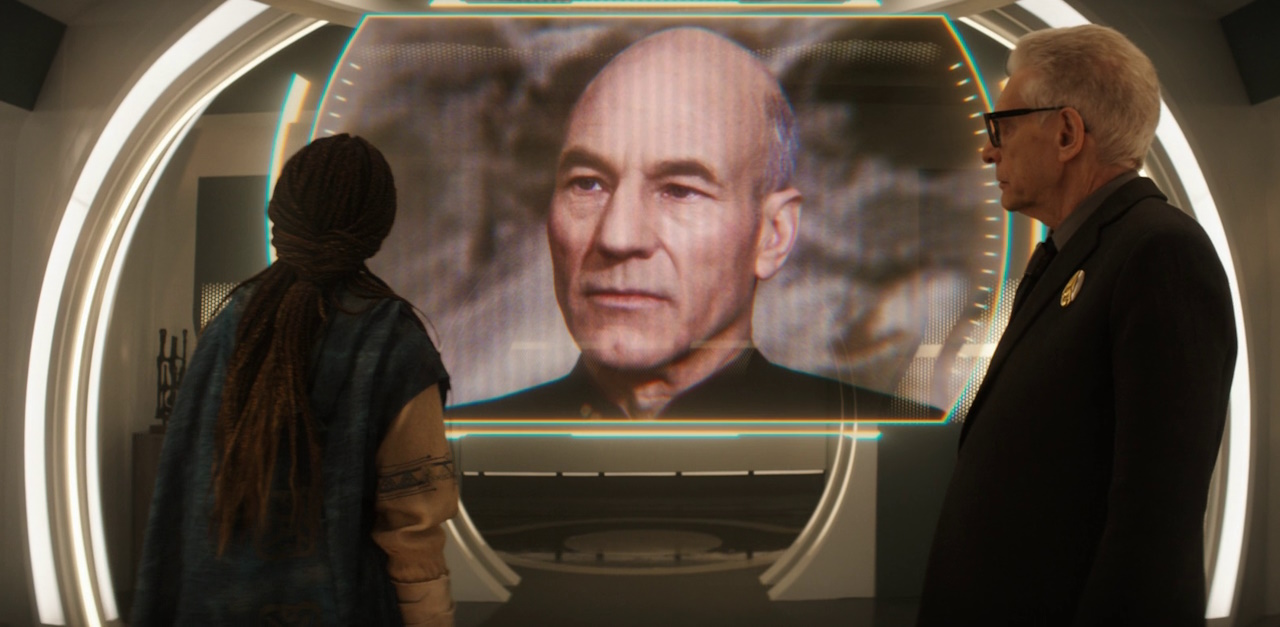
Still frame from Star Trek: Discovery Season 5 (2024) showing Burnham and Kovich looking at a holographic image of Captain Picard.
Season 5 revisited The Chase – an episode from The Next Generation.

The ending of the story – with Burnham declaring that the Progenitors’ desire to create a diverse galaxy teeming with life had been accomplished – was great, and I liked the feeling that came from that. But as with many things in Discovery, it was an end point that was pretty rushed, that needed a bit more time on screen, and that came at the end of a season that spun its wheels in places and spent too long dealing with relatively minor or unimportant things.

I could have happily spent an entire episode just on the debate Burnham was having with other characters about what to do with the Progenitors’ technology. For instance, no one even suggested that it could have incredibly useful applications in a galaxy still recovering from the effects of the Burn. Discovery’s 32nd Century is still, in many ways, post-apocalyptic, and if the Federation had access to what is basically an infinitely more powerful Genesis Device, with the ability to create life from nothing… isn’t that a power worth having and using for the common good? Even if the end of the story was still the same, with the technology being deemed too powerful and ultimately unnecessary, couldn’t we have still had that conversation?
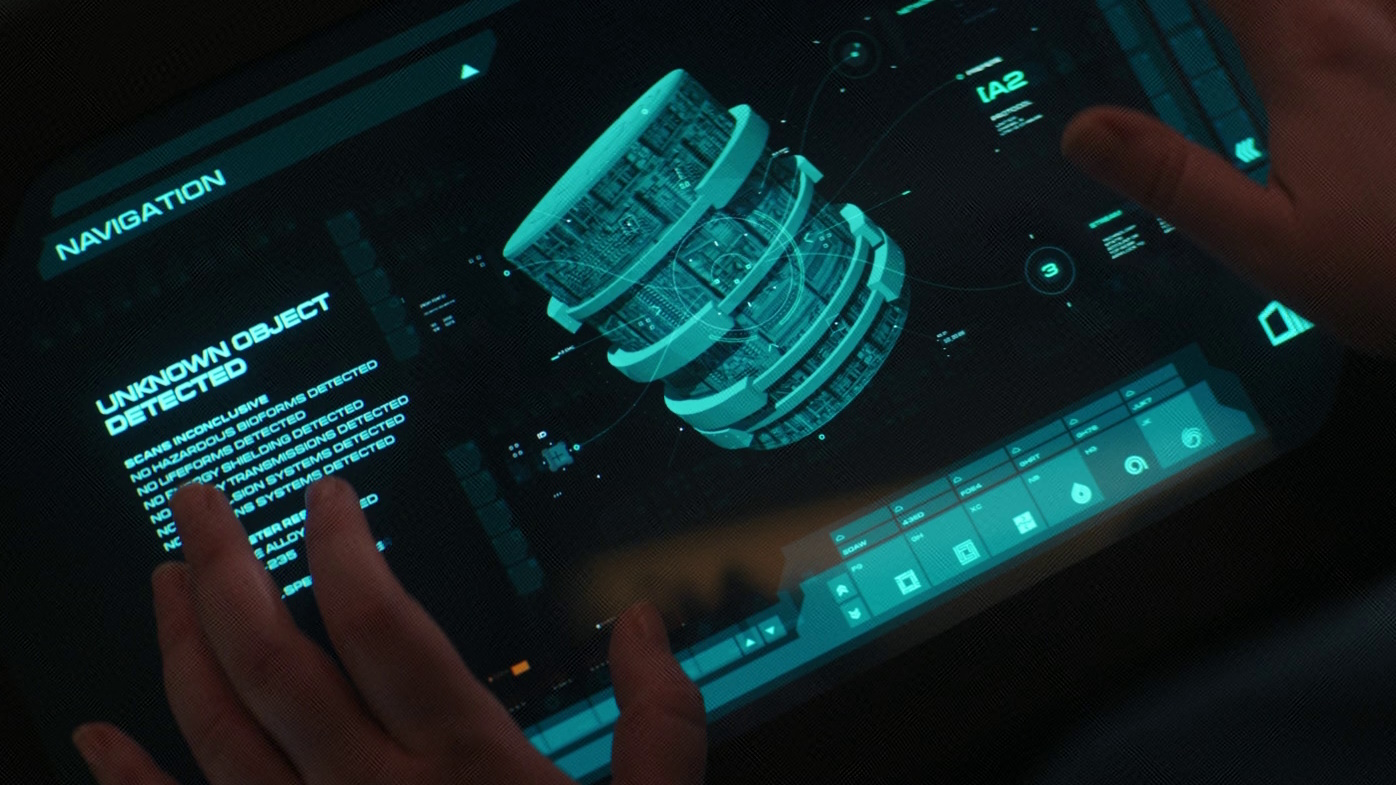
Still frame from Star Trek: Discovery Season 5 (2024) showing the Progenitors' tech on a screen.
I could have spent an entire episode just debating the pros and cons of using and studying the Progenitors’ technology.

For me, this deep cut to a single episode of The Next Generation was a bold move that didn’t really pay off. I love that Discovery’s writers have tried to tie into the lore and history of Star Trek in different ways, but for me, the decision to revisit this faction of ancient aliens was a mistake. I’d rather have seen a brand-new race – like last season’s Species 10-C – that could’ve filled the role of the creators of this technology, simply because I don’t think Star Trek as a whole benefits from this kind of story.

Part of the appeal of going out into space – and thus the appeal of Star Trek and other space-based fiction – is that we don’t know all of the answers and we don’t know what’s out there. Part of the human condition is that sense of not knowing – we don’t know for a fact how or why we came to be, where consciousness came from, whether there’s a greater meaning or purpose. When a story comes along and says “well here’s exactly what happened, here’s who created you, and here’s why and how they did it…” I think we lose something from this fictional setting. The thrill of Star Trek is in the unknown, and answering too many of these questions just doesn’t sit right. That’s why I was never a fan of the end of The Chase and why I’ve been pleased that, for more than thirty years, generations of Star Trek writers have basically ignored it. Discovery revisited it in a big way… and I don’t think the payoff was worth it.
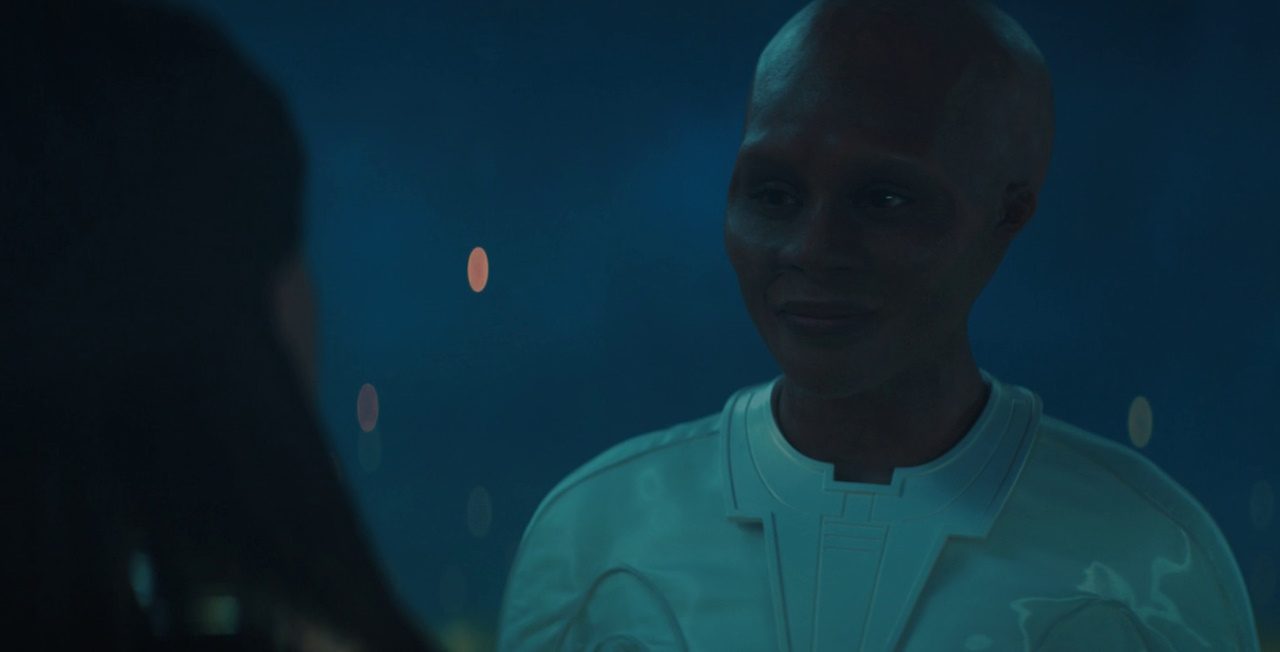
Still frame from Star Trek: Discovery Season 5 (2024) showing Captain Burnham with a Progenitor.
Captain Burnham with one of the Progenitors.

When I look at Star Trek’s history and I think of storylines and factions that I would’ve wanted to see brought back… again, I can’t find a justification for this return to The Chase – not for what was a glorified macguffin that Discovery didn’t actually do anything with. We might as well have said that the Tzenkethi or the magic-wielding aliens from that one episode of The Animated Series had created something powerful, or that Khan secretly replicated a second Genesis Device. The story could’ve unfolded in pretty much the same way without bringing up a piece of Star Trek’s past that has just… never worked.

I don’t want to go to extremes and say that the Progenitors “ruin” Star Trek. But the very concept of these ancient aliens essentially creating humans and a bunch of other races is a story point so profound that it absolutely changes everything for the characters in that world. If the entire Star Trek franchise had been built around a reveal like that, with the Progenitors being conceived from the start and every season and story slowly building up to this massive revelation, then maybe it could’ve worked. But in what was a one-off, throwaway episode we got this big reveal that Star Trek has never really known what to do with. Like other story beats that didn’t hit the mark, it should have been left alone. For Discovery’s writers to build an entire story around this faction… I’m afraid it doesn’t work for me.
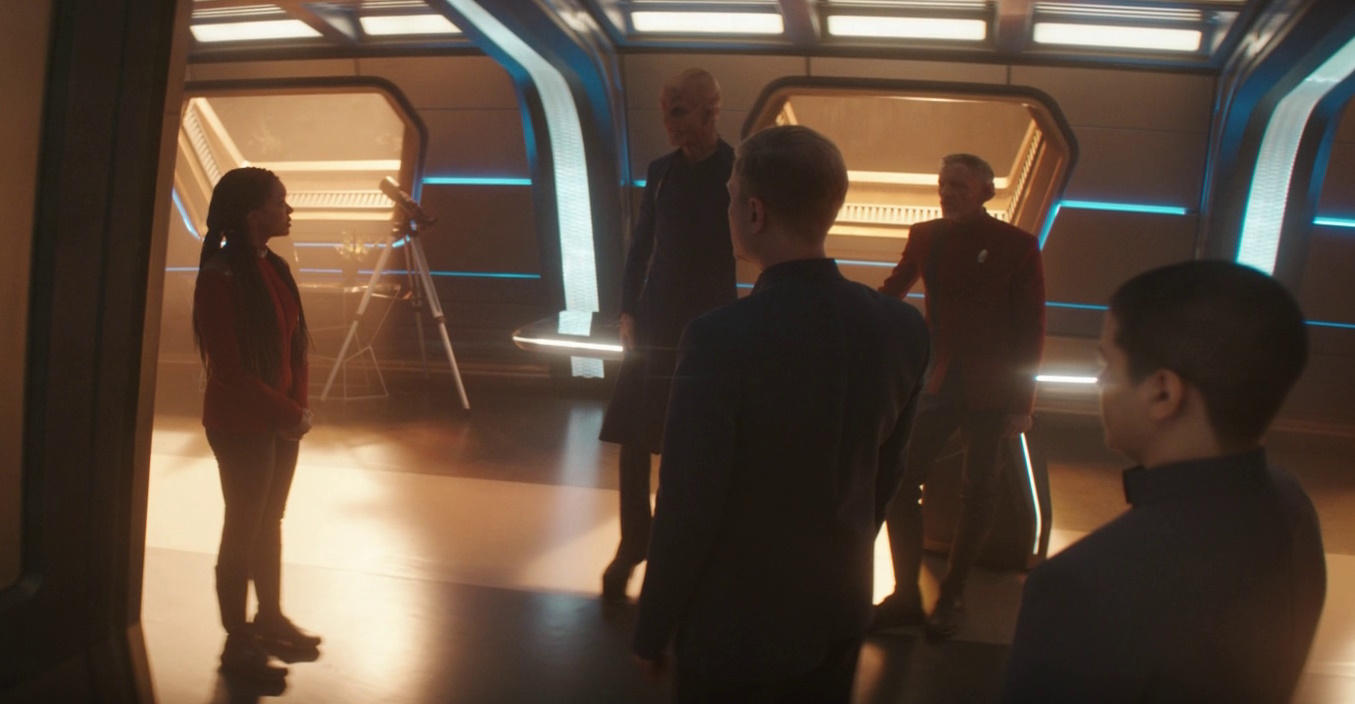
Still frame from Star Trek: Discovery Season 5 (2024) showing Burnham, Saru, Stamets, Rayner, and Adira in the ready-room.
Burnham and the crew at the end of the story.

More than a year ago we learned that the decision to cancel Discovery came after Season 5 had already been written and filmed, and that work had to be done after the main production had already wrapped up in order to “make the finale into the finale,” as director Jonathan Frakes put it. Alarm bells started ringing when I heard that, as I was worried that the pick-up shots would be incredibly obvious and that the story wouldn’t be able to come to a proper end. More so than any other Star Trek series to date, Discovery – with its serialised storylines and characters who changed and developed over the course of sixty-five episodes – needed some kind of definitive end.

Although it was incredibly obvious where the season would have originally ended and where the last-second additions were made, I don’t think that turned out to be a problem in the end. The decision to have the epilogue set decades after the events of Season 5 was a good one – perhaps the least-bad option available, but still – and it worked well. After all the issues noted above with Burnham Relationship Drama™, it was pretty cathartic to see her settled with Book, in a home they shared, enjoying her semi-retirement.
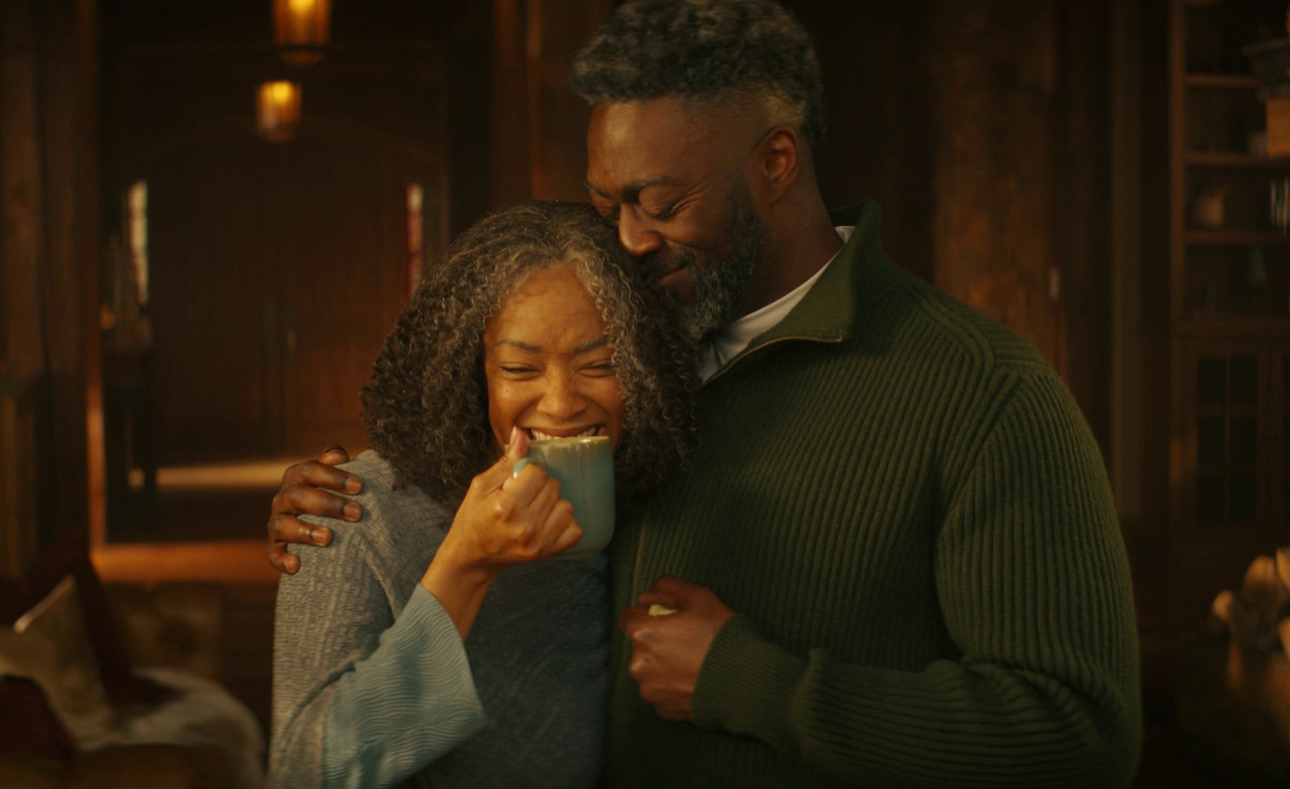
Still frame from Star Trek: Discovery Season 5 (2024) showing Burnham and Booker in the epilogue.
It took a long, meandering route to get Burnham and Book to this point… but they made it in the end.

It might’ve been nice to see one or two of the show’s other principal characters in the epilogue rather than just having them be mentioned, but all things considered I think Discovery got a pretty solid send-off. It wasn’t as spectacular as it could’ve been if the entire story had been written with a definite end point in mind, perhaps… but there’s something to be said for an understated, un-dramatic epilogue to a series that has constantly tried to inject as much drama as possible into its stories. Had cancellation been known ahead of Season 5 entering production, I would’ve half-expected the season finale to end with three-quarters of the crew dead and the ship blowing up!

In terms of production values, I’m still disappointed that Paramount+ doesn’t offer Discovery in 4K. 1080p HD is fine, but it’s not spectacular, and I would’ve liked to watch the series in that higher resolution. Most other streaming platforms offer this for their flagship shows, and it’s disappointing that Paramount+ still doesn’t – at least on the standard price plan here in the UK.
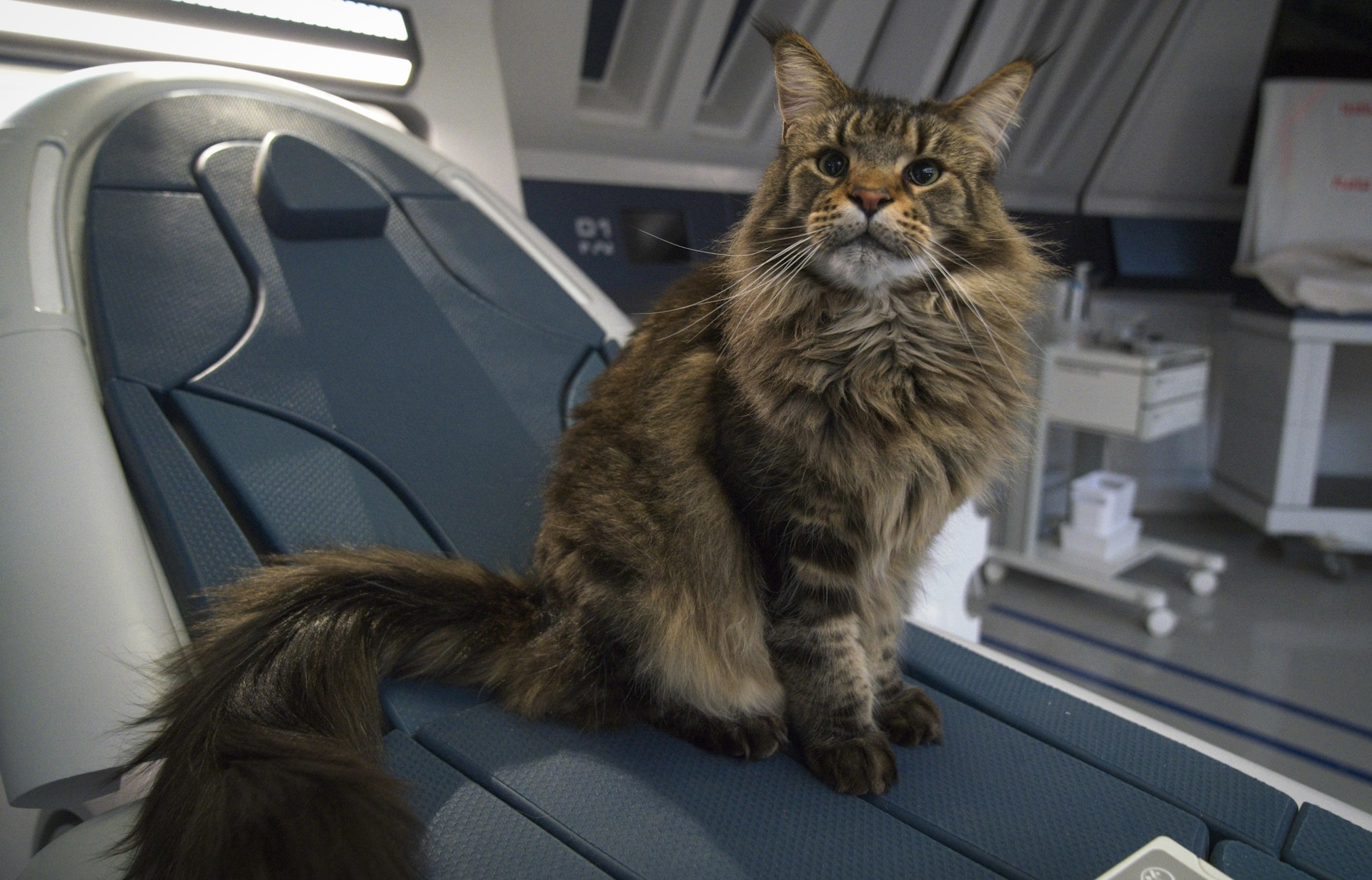
Promo photo for Discovery Season 4 showing Grudge the cat.
Grudge the kitty cat!

Discovery’s music has always been pretty good, and that was the same in Season 5, really. My rule of thumb for any movie/TV soundtrack is “do no harm;” i.e. a good soundtrack should be unobtrusive most of the time, and Discovery happily clears that admittedly low bar. The show’s title sequence has always been fun to watch, though its title theme has always felt a little understated for my taste.

Was anyone else playing a game of “spot the AR wall?” Because I definitely was – and at too many points I felt the AR wall was noticeable. Star Trek worked hard to escape its reputation for low-budget special effects and sub-par set design, but the AR wall – and some of the camera angles used during AR-heavy scenes – are in danger of bringing it back! On both the Breen warship and the Progenitors’ pocket dimension, I felt the AR wall was not at all well-integrated with the physical sets and props around it, and the end result was that this incredibly expensive piece of kit that Paramount paid a lot of money for created a visual effect that looked… cheap.
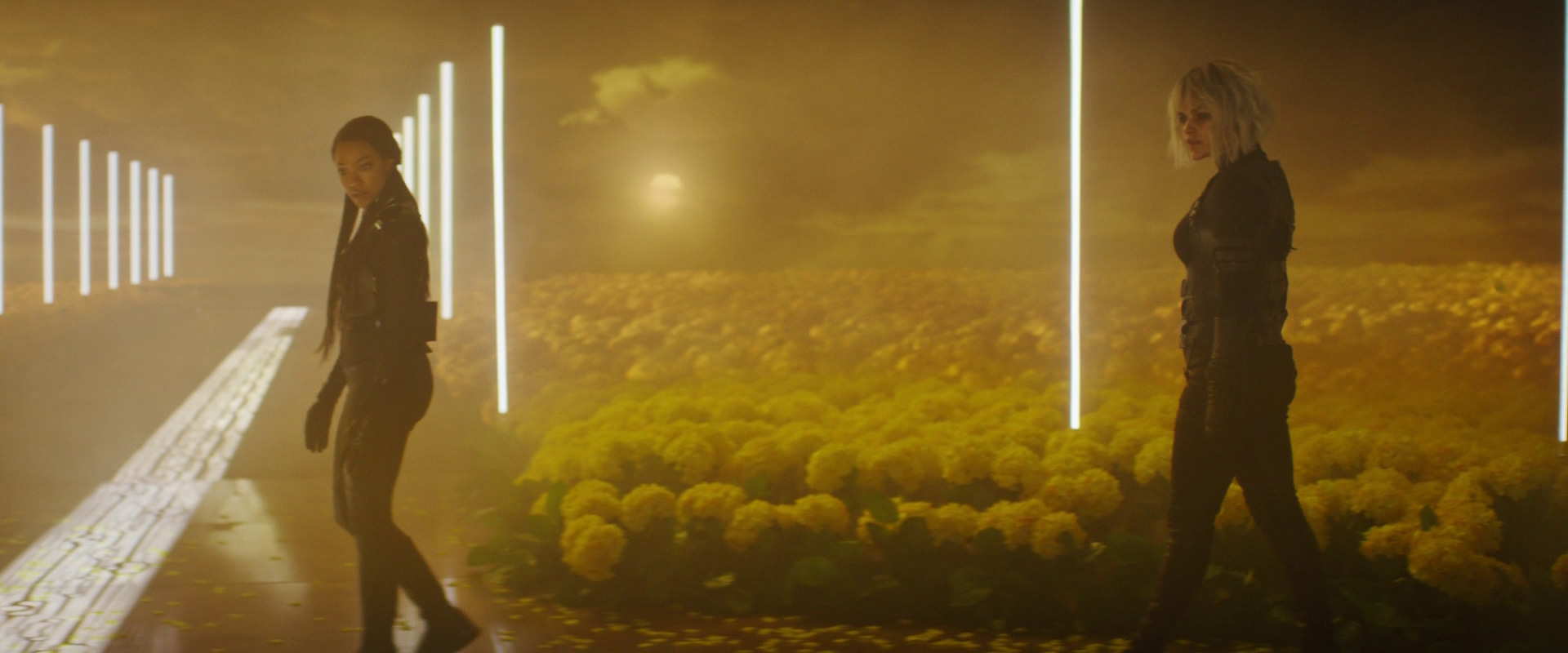
Still frame from Star Trek: Discovery Season 5 (2024) showing Burnham and Moll at the Progenitor base.
Spot the AR wall…

There are good ways to use an AR wall and bad ways… and Paramount/the Star Trek franchise needs to do better. Simply having this massive screen and projecting a background onto it isn’t good enough; designers and producers need to get much more creative with how the AR wall is used and how it blends in with what’s in front of it. Discovery is over now, but with other Star Trek projects still in production… I hope more can be done in future. Some of the AR wall scenes in Season 5 felt like those in Season 3, when the AR wall was brand-new. By now, designers, producers, and cinematographers should have a better idea of what to do with it!

So that was Discovery’s swansong. The show’s final season doubled-down on many of the mistakes that have been present since the beginning, and told a cookie-cutter story that was basically the same as all the others. There was a lot of potential in the historical mystery-adventure idea, but Discovery’s writers and producers couldn’t take advantage. They retreated to the same overtrodden ground as before, and the result was a disappointment.
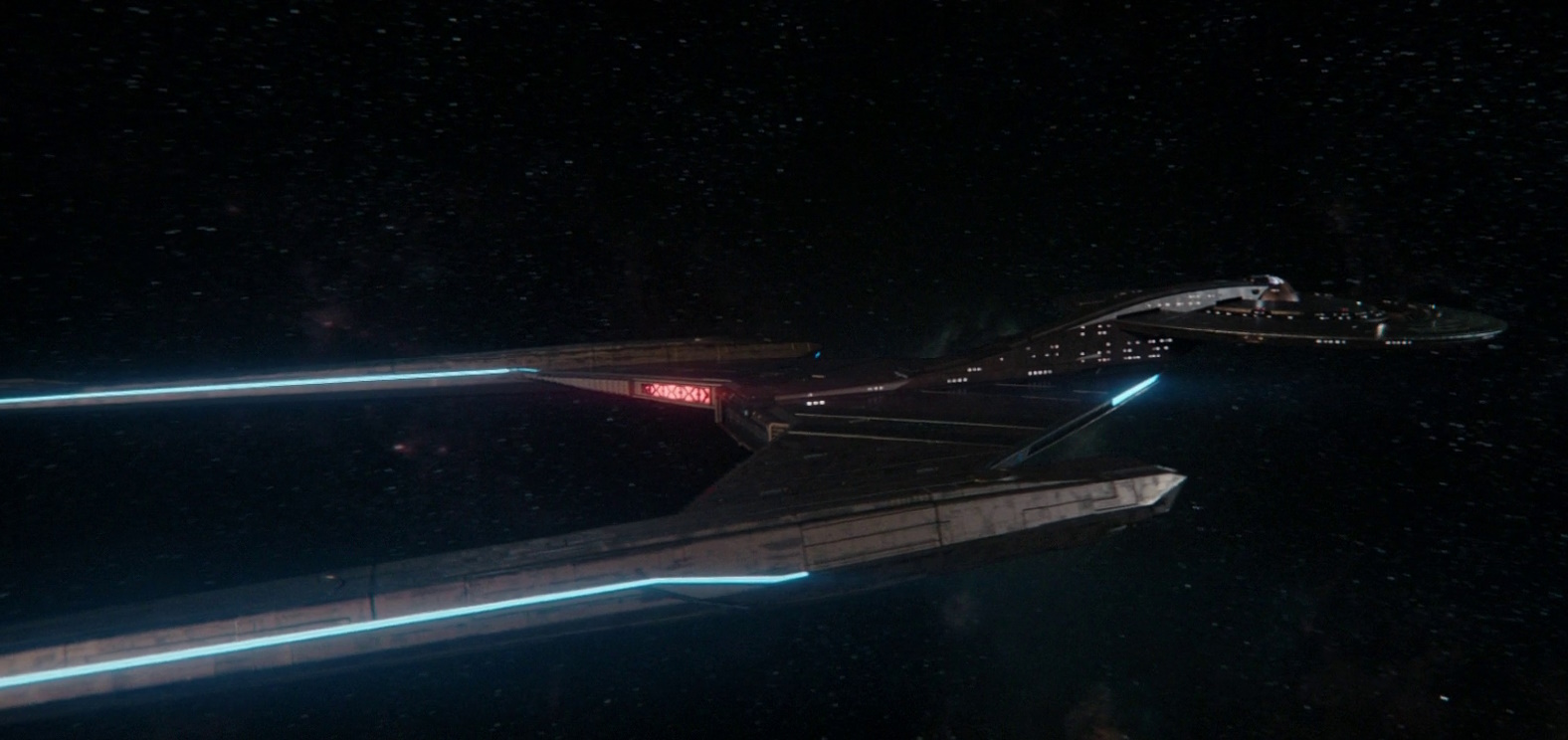
Still frame from Star Trek: Discovery Season 5 (2024) showing the USS Discovery.
The final shot of the USS Discovery as she embarks on one last mission.

There was too much repetitiveness in Season 5, and that leads me to one inescapable conclusion: Discovery had run out of steam. With a production team incapable of trying something smaller-scale and genuinely different, with Burnham’s soap-opera rocky relationship, and with another “galaxy-ending threat” to defeat, Season 5 felt no different from Seasons 1 through 4, albeit with a new coat of paint and a deep cut to a random episode of The Next Generation that was better left forgotten. There were some interesting ideas in the mix, some fun new locales to visit, and some creative moments… but they came in a bland, overused, repetitive story that demonstrated to me why it was the right time for Discovery to be cancelled.

I’m pleased that Paramount allowed the show’s production team to go back and craft an epilogue – even if it wasn’t perfect. Getting some kind of closure on Burnham’s story and the series as a whole was important, and with Discovery having been part of our lives for seven years at this point, I’m glad that it got an epilogue to bring closure to her character and the story – as well as a cheeky tie-in with the Short Treks episode Calypso!
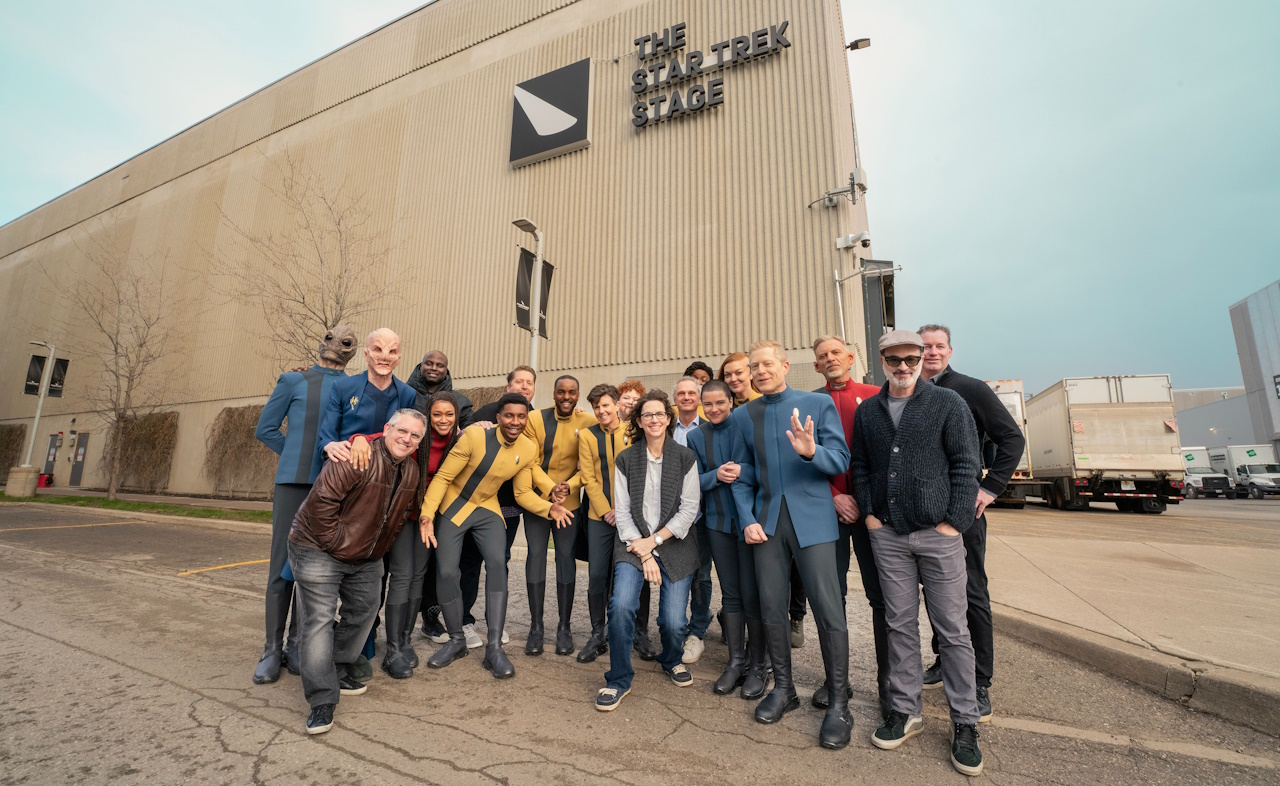
Promo photo for Star Trek: Discovery showing the main cast at the opening of "The Star Trek Stage" at Paramount.
The Discovery cast – plus Alex Kurtzman, Rod Roddenberry, and others – at the dedication of Paramount’s “Star Trek Stage.”

In the weeks or months ahead I will take a broader, big-picture look at Discovery as a whole. That piece will consider what the show got right, where it went wrong, and what we should consider its legacy to be as a piece of the Star Trek franchise. So I hope you’ll stay tuned for that! It’s possible that I’ll revisit Season 5, its storylines, or some of its individual episodes in the future, too.

For now, I hope this has been interesting! While I wasn’t impressed with Season 5 on the whole, there were definitely highlights in practically every episode; moments that made me crack a smile, roll my eyes, feel anxious, or just that kept me entertained and enjoying the ride. The season was nowhere near as bad as, say, Picard Season 2 – and while that may be a low bar, it’s one that Discovery cleared on this occasion! I’ll be curious to see what comes next for Admiral Vance, Tilly, and Reno – who will be jumping ship and joining the cast of Starfleet Academy. And I’ll keep my ear to the ground for any more news about upcoming Star Trek productions that could tie in with Discovery. But until then, this is the end.

Farewell, Discovery. I think we can be grateful to the series and its creative team for keeping Star Trek alive and bringing it back to its small screen home.


Star Trek: Discovery Seasons 1-5 are available to stream now on Paramount+ in countries and territories where the platform is available. The Star Trek franchise – including Discovery, The Next Generation, and all other properties discussed above – is the copyright of Paramount Global. This review contains the thoughts and opinions of one person only and is not intended to cause any offence.
Star Trek: Discovery Season 4: Factions of the far future

Spoiler Warning: There are spoilers ahead for Star Trek: Discovery Seasons 1-3 and the teaser for Season 4. There are further spoilers for the following: Star Trek: The Original Series, Star Trek: Deep Space Nine, Star Trek: Voyager, Star Trek: Enterprise, Star Trek: Lower Decks, and Star Trek: Picard.

Now that we’ve seen the first teaser for Star Trek: Discovery’s upcoming fourth season, and learned that a release later this year is on the cards, I thought it could be a bit of fun to consider some of the factions from past iterations of Star Trek that may – or may not – still be around in the 32nd Century! We know that at least part of the story of Season 4 will look at some kind of gravitational anomaly, and if you want to check out a few of my theories on that you can do so by clicking or tapping here. Even if the gravitational anomaly is the overarching season-long story, Discovery is likely to still find at least some opportunities to step away and spend a bit more time exploring the 32nd Century.

Season 3 was our first introduction to this time period in all of Star Trek, and as such we as the audience were learning about the state of the galaxy as Burnham, Saru, and the rest of the crew had their adventures. We met a couple of major factions outside of the rump Federation, but many familiar factions and races from past iterations of Star Trek were entirely absent – including some that might prove interesting from a story perspective. So in this article I’m going to take a look at a few of my favourites and speculate about where they might be in the 32nd Century.

The USS Discovery in the Season 4 teaser.

With Burnham and the crew having originated in the 23rd Century, they’ve missed most of what happened in past iterations of Star Trek! Major events like the V’Ger cloud’s arrival at Earth, two Borg incursions, and the Dominion War will all be unfamiliar to them, and there’s storytelling potential in re-introducing a faction from Star Trek’s past to a character or group of characters who are entirely unaware of their existence. Such a story could be interesting and fun, as well as providing new Trekkies – those who haven’t seen much of “classic” Trek – with an easy introduction to an older faction.

My usual caveat applies: I have no “insider information.” I’m not suggesting that any of these factions will definitely show up, or even be mentioned, in Discovery Season 4. This is simply a chance to have a bit of fun and speculate about the future of some of the factions we’re familiar with from past iterations of Star Trek by imagining where they could be by the 32nd Century.

With that out of the way, let’s jump into the list!

Number 1: The Bajorans

Kai Winn, the Bajoran spiritual leader in the 2370s.

We’re going in alphabetical order, so the Bajorans are up first! Even though they weren’t a Federation member, a number of Bajorans were known to have served in Starfleet in the mid-late 24th Century, including Ro Laren, Sito Jaxa, and Lieutenant Shaxs. The Bajorans were in the process of applying to join the Federation when the Dominion War broke out; it has long been assumed by many fans that they would ultimately be successful, perhaps even becoming a fully-fledged member by the time of Picard Season 1.

Bajorans were familiar to the Federation in the 31st Century at least, because Dr Issa programmed a Bajoran physical appearance into the holoprogramme she made for her son, Su’Kal, aboard their crashed ship in the Verubin Nebula. It seems very likely that the Bajorans were a Federation member in the years before the Burn – whether they remained in touch with the rump Federation afterwards is unknown, but if they did they may very well be welcomed back into the fold following the discovery of a huge dilithium cache.

It’s also worth pointing out that Bajor is at a very strategic location – the Bajoran wormhole connects the Alpha and Gamma Quadrants. Whether that will matter quite so much with the advent of new, faster methods of travel is unclear, but Bajor could very well still be an important location.

Number 2: The Borg Collective

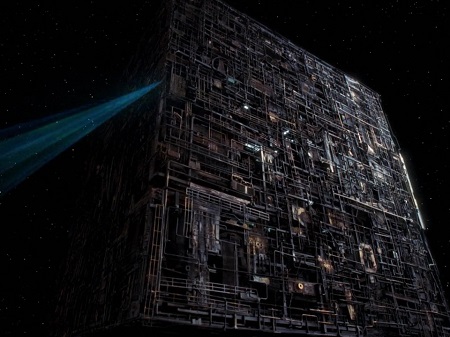
A Borg Cube seen in The Best of Both Worlds.

Since their official first contact with the Federation – which came in either the 2350s or 2360s depending on how we consider such things – the Borg have attempted to invade Earth twice. Though a time-travelling Admiral Janeway did some damage to the Collective in the late 2370s, I never felt convinced that the events of Endgame would have led to the complete destruction of the Borg.

With the Federation – or at least humanity – firmly in their sights, would the Borg have simply given up? It stands to reason that they made subsequent attempts to attack the Federation, taking advantage of their superior technology and greater numbers. However, the existence of the Federation in the 32nd Century means that any such attempts were met with failure! Perhaps the Collective is no longer around, having been decisively defeated.

The Burn would have presented an ideal opportunity for a faction like the Borg to attack the shattered Federation – yet they don’t appear to have done so. Could that mean that they have already been defeated, or could they be waiting just beyond Federation sensor range for Burnham and Discovery? Maybe the Spore Drive is something they want to acquire – and they could even be responsible for the gravitational anomaly seen in the Season 4 teaser!

Number 3: The Breen

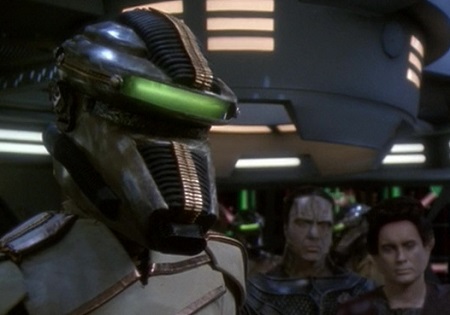
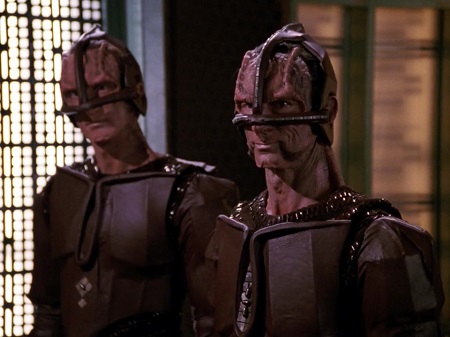
Thot Gor, a Breen commander.

The Breen were initially thought up as an unseen faction, able to be referenced without ever making an on-screen appearance. That changed toward the end of Deep Space Nine, when they joined the Cardassian-Dominion alliance and came close to turning the tide against the Federation in the Dominion War.

Following the war’s end, we know nothing of the Breen. The peace treaty that they signed after their final defeat over Cardassia may have seen a loss of territory for them, or it may simply have seen them retreat to their own borders. Regardless, the Breen were a major power in the Alpha Quadrant in the mid-late 24th Century, with technology capable of matching and even outpacing the Federation. Their defeat in the Dominion War was a setback, but with their homeworld untouched by the conflict it stands to reason they were able to recover quickly.

Would they have pursued peace with the Federation in the decades and centuries after? Would their technology have continued to keep up? Did the expanding Federation come into conflict with the Breen again? Any and all of these things are possible, but as we didn’t see or hear of the Breen in Season 3, perhaps we will never know.

Number 4: The Cardassian Union

Gul Evek and his aide – two of the first Cardassians ever seen in Star Trek.

Discovery’s first Season 3 trailer tricked us last year! By showing off a Cardassian among a group of what we now know to be Emerald Chain guards, a lot of Trekkies wondered what sort of role the Cardassians might play. The answer, of course, was “none at all!” However, there was a second Cardassian seen in Season 3 – a blink-and-you’ll-miss-it appearance in the episode Scavengers. This is arguably the most interesting post-Deep Space Nine Cardassian appearance to date, as the individual in question was a senior Starfleet officer, perhaps even a captain.

As noted above with the Bajorans, non-Federation members were eligible to join Starfleet under certain circumstances, and the post-Burn Federation was hardly in a position to turn away qualified candidates! But the existence of a Cardassian in what seems to be such a senior capacity suggests that they may have been a Federation member in the years before the Burn.

In a way, despite what happened during Dominion War, this makes a lot of sense. The Federation were in a position to offer help to the Cardassians as they rebuilt following the Dominion occupation of their world, and perhaps that help turned into an alliance over time, culminating in their joining the Federation.

Number 5: The Coppelius synths

A group of Coppelius synths seen in Star Trek: Picard Season 1.

The (relatively) short lifespan of humans and other organics means that, barring time travel shenanigans or being put in stasis, no one we met in the 23rd or 24th Centuries could reasonably have survived to the 32nd Century. However, synths don’t have such limitations, and as such it’s possible that some or all of the Coppelius synths from Picard Season 1 are still alive in this era.

What happened to them after the events of Picard Season 1 is not clear, and it may be something that Discovery’s sister show plans to revisit. If that’s the case we may not see anything of the synths in Season 4. However, if Picard Season 2 is going in a different direction – as its teaser indicated it might – there could be scope to pick up the synths’ story in Discovery.

The Coppelius synths were under Federation protection by the end of Picard Season 1. But with the Romulans hell-bent on exterminating them, they still appeared to be in danger. It would be very depressing to learn that a subsequent Romulan attack wiped them out, especially after Picard and Soji worked so hard to help them. So I hope that the synths are still around – even if they had to relocate to a new homeworld. They could have joined the Federation by this time, too.

Number 6: The Denobulans

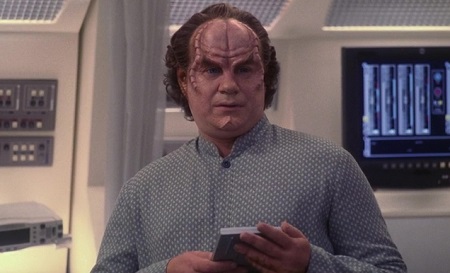
Dr Phlox, a 22nd Century Denobulan.

The Denobulans have thus far only appeared in Star Trek: Enterprise, where main character Dr Phlox was a member of the species. Though friendly toward humanity by the mid-22nd Century, the Denobulans were not strictly “allies,” nor were they a founding member of the Federation – which consisted of Andorians, humans, Tellarites, and Vulcans in its original incarnation.

However, the Denobulan homeworld must have been in relatively close proximity to Earth and Vulcan, and with the Federation coalescing and growing it seems at least plausible that they joined up at some point, especially given their friendly history. If Federation HQ relocates back to Earth in Season 4, perhaps we’ll see more of the Denobulans, who might still be in the vicinity.

Number 7: The Dominion

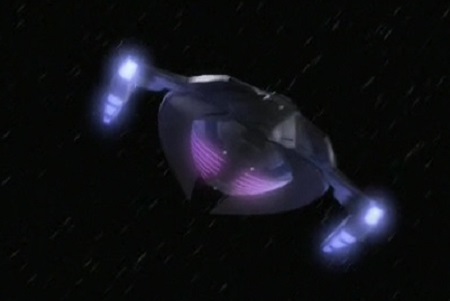
A Jem’Hadar ship.

The Dominion were the dominant power in at least part of the Gamma Quadrant, and according to their own history, had been so for over two millennia as of the mid-24th Century. After a years-long cold war between the Dominion and Federation following first contact, armed conflict broke out in the 2370s. The Dominion War was arguably the most significant event of the latter part of the 24th Century from the Federation’s point of view, proving far more devastating than incursions by the Borg or earlier wars with the Klingons and Romulans.

Following their failed attempt to invade the Alpha Quadrant, the Dominion agreed to return to their own space beyond the Bajoran wormhole. Odo, a Founder who had lived among Bajorans and humans for decades, reunited with his people, hoping to communicate to them that the Federation would not try to wipe them out nor conquer them. If Odo was successful, this could have set the Dominion on the path to peace.

We simply don’t know what became of the Dominion. The Guardian of Forever was seen in Discovery Season 3, and had relocated to a planet near the Gamma Quadrant. Admiral Vance didn’t mention the Dominion when Burnham and Saru planned to travel there, so perhaps we can infer from that that the two powers are at peace. However, the Burn may have disrupted that peace, especially if it resulted in serious damage to the Dominion – might they hold the Federation responsible for that disaster?

Number 8: The Ferengi Alliance

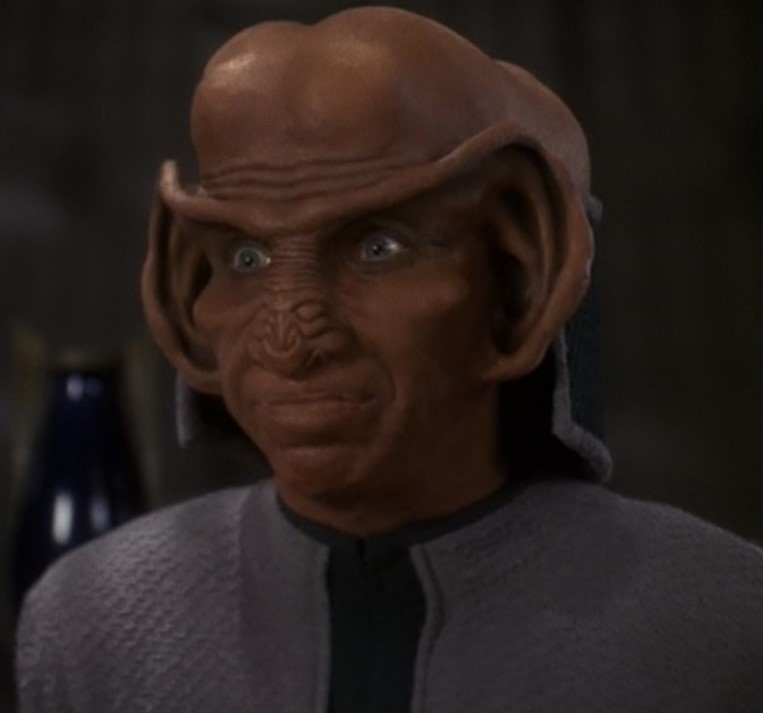
Rom became Grand Nagus of the Ferengi Alliance in 2375.

The Ferengi initially appeared to be antagonistic toward the Federation following (official) first contact in the mid-24th Century, but they soon revealed their true nature: hardcore capitalists for whom war was simply not worth participating in as it was usually unprofitable. Ferengi society was strictly segregated, with men participating in business while women were expected to remain at home and raise their families.

There were seeds of change in the 2370s, with women’s rights issues coming to the fore in Ferengi society. There were also moves away from unregulated capitalism, with some Ferengi even forming unions and advocating for more rights and welfare. Though such changes surely led to pushback from conservative Ferengi, the appointment of Rom as Grand Nagus may have cemented at least some of these reforms.

Though hardly allies of the Federation, at least one Ferengi – Nog – would serve in Starfleet in this era, bringing a different perspective to the organisation and perhaps bringing the factions closer together. The existence of a USS Nog in the 32nd Century – while intended to be a tribute to actor Aron Eisenberg – could also be seen as an indication of continued warm relations in this time period.

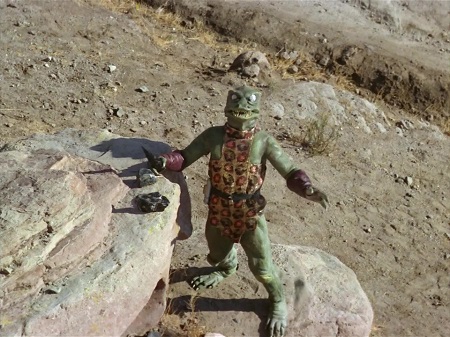
Number 9: The Gorn

A 23rd Century Gorn captain.

The Gorn were neighbours of the Federation by the 23rd Century, and may have been involved in border disputes and skirmishes. There was no indication that they ever joined or even considered joining the Federation, and appeared to maintain a closed-border policy well into the 24th Century.

In the Lower Decks episode Veritas, Ensign Rutherford’s arrival at a Gorn wedding led to him coming under immediate attack by the Gorn who were present, and while this was (of course) part of an extended joke, it certainly suggests that the Gorn were not in any way friendly toward the Federation by the 2380s.

In That Hope Is You, the Discovery Season 3 premiere, Book told Michael Burnham that the Gorn had “destroyed subspace” somewhere in the vicinity of Hima. Perhaps that indicates that they were not allied to the Emerald Chain, nor the Federation – retaining their status as an independent power.

Number 10: Holograms

Index, a hologram seen in Star Trek: Picard.

We saw a number of holograms in Discovery’s third season, confirming that the technology is still in use in the 32nd Century. At least one of these holograms appeared to be intelligent, perhaps even sentient, but that was never confirmed.

In the late 24th Century, the Doctor – the USS Voyager’s Chief Medical Officer – was involved in a court case regarding his ownership over a work of fiction he had created. The court case was resolved in his favour in the episode Author, Author, and Captain Janeway suggested that he might have “struck the first blow for the rights of holograms.” There were other sentient holograms in the 24th Century as well, including a holographic version of Sherlock Holmes’ nemesis Professor Moriarty. What became of them is unclear!

As with the Coppelius synths, there’s no reason why holograms from the 24th Century couldn’t have survived this long, and one of my most popular theories here on the website has been that Voyager’s Doctor – or rather, a backup copy of him – will make an appearance in Discovery.

Number 11: The Iconians

An Iconian Gateway – one of the few surviving relics of their civilisation by the 24th Century.

Iconian civilisation flourished more than 200,000 years ago, and by the 24th Century they were believed to be extinct. However, their powerful technology utilised “gateways” to travel vast distances, and it was implied by the extent of the archaeological evidence that they maintained outposts or colonies on many other planets.

The destruction of their homeworld by an alliance of their enemies may have rendered the majority of Iconians extinct, but such a widespread civilisation could have avoided total annihilation, perhaps. The reason the Iconians are on this list is because of their popularity in non-canon works, particularly the video game Star Trek Online. Some elements from non-canon Star Trek publications have ended up crossing over to the main series, so perhaps the intervening centuries saw some kind of re-emergence of the Iconians.

Number 12: The various Kazon sects

Maje Culluh, a Kazon leader in the 2370s.

Discovery Season 3 didn’t establish whether the Federation were able to travel to the Delta Quadrant, nor if they had ever revisited the region since the USS Voyager’s transit in the late 24th Century. Given that warp drive was still the main way of travel, and that maximum warp speeds (as understood in a 24th Century context) meant that the Delta Quadrant would take decades to reach, perhaps they never did.

So we may not find out what became of the Kazon! Similar in some ways to a less technological, less organised Klingons, the Kazon were major antagonists across the first couple of seasons of Voyager. We know that the Borg considered them “unworthy” of assimilation – the only species we know of that the Borg couldn’t be bothered with!

It seems unlikely that the Kazon will have had much impact on the Federation given their distance. However, if they ever succeeded in unifying their disparate sects, perhaps they could have become a regional power in the Delta Quadrant. The USS Discovery’s Spore Drive could take the ship anywhere – even 70,000 light-years away. So maybe if they’re able to travel there, we’ll find out!

Number 13: The Kelvan Empire

Rojan, a 23rd Century Kelvan leader.

The Kelvans are an interesting – and potentially alarming – faction. Extragalactic aliens from the Andromeda galaxy, their technology was far superior to the 23rd Century Federation, and arguably to anything the Federation subsequently developed! They only appeared once, in The Original Series Season 2 episode By Any Other Name, but that shouldn’t stop them making a comeback.

The Kelvan Empire’s home galaxy was facing an extinction event due to rising radiation levels, and they sent out scouting parties to look for new homes. One of these parties encountered the USS Enterprise upon arriving in the Milky Way. Though initially interested in conquest, Kirk was able to convince the Kelvans to consider an alternative proposal, allowing the Federation to help them find new worlds to settle.

If the Federation’s proposal was accepted, perhaps there are millions of Kelvans living somewhere in the Milky Way in this era. Or if it was rejected… perhaps the Kelvan Empire is about to descend upon the Federation en masse!

Number 14: The Klingon Empire

Klingon Chancellor L’Rell.

The Klingons, despite having made so many appearances in Star Trek already, are perhaps the most interesting faction to see return in Discovery. Burnham and the crew are veterans of the Federation-Klingon war, and while I wouldn’t say any of them “hate” Klingons, they certainly would be distrustful of them. How would they react to learning that the Klingons had been allies with the Federation – or even Federation members – for centuries?

I think there’s a lot of potential for conflict, drama, and for Star Trek to do what it’s always done best: use its sci-fi setting to examine real-world issues, in this case, the way we can be guilty of judging groups of people. Characters like Culber, who was “murdered” by Voq, or Stamets, who had to deal with the fallout from that loss, could be front-and-centre in such a story, and it would be absolutely fascinating to see it unfold.

Rather than Discovery making the Klingons antagonists again, like in Season 1, it would be great to learn that the alliance of the 24th Century continued, and that if the Klingons remain an independent power – which they may well be – they’re at least on friendly terms with the Federation.

Number 15: The Maquis

Chakotay, a Maquis commander.

Although Maquis forces were said to have been almost entirely wiped out by the Cardassian-Dominion alliance during the early stages of the Dominion War, at least some Maquis were known to have survived the initial attack. In addition, the USS Voyager returned to the Alpha Quadrant with a contingent of 40-ish Maquis, including Chakotay and B’Elanna Torres.

It’s at least possible that the Maquis, who were breakaway colonists attempting to secede from the Federation, recreated their society in the aftermath of the Dominion War. While their soldiers may have been killed, we saw no confirmation of the fate of other Maquis colonists. If they survived the war, even in captivity, perhaps they attempted to continue their quest for independence afterwards.

If so, the Maquis colonies may have been independent of the Federation for centuries by the 32nd Century. What kind of society they might’ve developed in that time is not known.

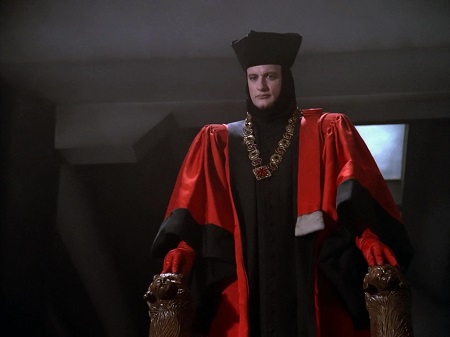
Number 16: The Q Continuum

Q, a member of the Q Continuum.

The Q Continuum are returning in Season 2 of Picard – or at least, their most well-known member is. Perhaps that means we won’t see or hear anything about them in Discovery, nor learn what became of them in the far future. But it’s possible!

The Q are as close to immortal as any faction we’ve seen in Star Trek, so they should certainly still be in existence by this time. Their incredible powers are, as a famous quotation puts it, “indistinguishable from magic,” and Q suggested that the Continuum has existed for at least as long as the universe itself.

The Q seemed to view humanity and the Federation with curiosity rather than animosity, with Q even trying to help Captain Picard to solve puzzles that required different ways of thinking. If this kind of intervention continued, and humans continued to develop their reasoning skills, perhaps they might be on friendly terms with the Q by this time. However, if the Q are able to create matter, they would have been very useful friends to have as the Federation began to run out of dilithium! Perhaps the Q have instead stepped back from actively intervening in Federation affairs, content to watch from the outside.

Number 17: The Romulan Star Empire

Romulans, Vulcans, and Romulo-Vulcans in Season 3.

The existence of Romulans on Ni’Var – the planet formerly known as Vulcan – suggests that the Romulan Empire has disbanded following reunification. It was certainly implied heavily in the episode Unification III that reunification involved all Romulans and Vulcans. But it’s possible that a breakaway faction exists in some form; a “New Romulan Empire” claiming the mantle of the disbanded one.

We’ve already seen what was perhaps the biggest possible reveal for Burnham and the crew – learning that the Romulans are an offshoot of the Vulcans. However, with Ni’Var seemingly on the verge of rejoining the Federation, perhaps there is scope to see more from them. The Romulans remained a distinct group on Ni’Var, with full integration with the Vulcans having not occurred, and there are clearly internal tensions between the three main groups. This could be a story thread that Season 4 picks up.

Number 18: The super-synths

The super-synths almost arrived in the Milky Way… but their portal was closed at the last second.

We know practically nothing about this faction, despite them playing a major role in the conclusion to the story of Picard Season 1. They don’t even have a proper name! Claiming to be “an alliance of synthetic life” existing beyond the Milky Way, this faction offered to come to the aid of any synthetics who needed them. It was not clear if this offer was genuine or part of an elaborate trap.

I suggested in the run-up to Season 3 that the super-synths could have been involved with the Burn, but that turned out not to be the case. However, if they became aware of the Federation following the events of Picard Season 1, they could still be planning to travel to the Milky Way – perhaps with conquest on their minds.

The super-synths could thus be responsible for Season 4’s gravitational anomaly – perhaps it’s a weapon; an artillery barrage to soften up the Federation before the troops arrive! It would be fantastic for the creative team in charge of Star Trek to find a major way to tie Picard and Discovery together. Whether this is the right way to do it is certainly up for debate, but in principle I like it.

Number 19: The Talaxians

Neelix, a Talaxian chef.

Although the Talaxians are native to the Delta Quadrant, there was at least one Talaxian colony in or near the Beta Quadrant, significantly closer to Federation space. This seems to increase the likelihood that the Federation would have been able to remain in contact with them at least in the late 24th Century.

The Talaxian homeworld had been conquered sometime in the mid-24th Century by the Haakonian Order. Perhaps the Federation, if they remained on friendly terms with the Talaxians, would have wanted to aid them in liberating their homeworld. If the Federation developed the ability to travel to and from the Delta Quadrant at some point in the future, perhaps the Talaxians even joined the Federation!

Number 20: The Talosians

Talosians in Season 2 of Discovery.

The Talosians were a very dangerous people whose telepathic powers were able to trick humans, Vulcans, and other known races into seeing things that weren’t there. As a result of their attempt to kidnap Captain Pike and other Enterprise officers, Talos IV was declared off-limits to Starfleet personnel and the Federation.

The events of The Menagerie, in which the Talosians welcomed Captain Pike back to their world, as well as their general helpfulness toward Spock and Michael Burnham in Discovery Season 2, however, may suggest that General Order 7 – the section of Starfleet’s rules banning travel to Talos IV – may have been reassessed, although no in-universe evidence for that exists.

The surviving Talosians lived underground after their planet was devastated by war, and lost their ability to control their technology, focusing instead on refining their mental powers. In the 23rd Century, Talosian leaders believed their race was doomed to extinction – but maybe the Federation found a way to aid them? If not, perhaps Talos IV is uninhabited by this time period.

Number 21: The Tholians

A 23rd Century Tholian commander.

The Tholians have only made a couple of appearances in Star Trek – once in The Original Series and once in Enterprise. However, they’ve been mentioned on a number of occasions, and despite being antagonistic in the 23rd Century, some kind of diplomatic relations clearly existed a hundred years later.

As one of the few non-humanoid sentient species, it would be really interesting to see the Tholians make a return. An area of space that they claimed as their own seemed to have some kind of gateway to the Mirror Universe – if Discovery were to revisit that setting, perhaps the Tholians could be included.

As to where they might be or what they might be doing by the 32nd Century, that isn’t clear. In the aftermath of the Burn, they could have expanded to conquer border worlds, or they might’ve been a peaceful neighbour or even ally of the Federation in this era.

Number 22: The Vidiians

A trio of Vidiians form a boarding party in the 24th Century.

Another Delta Quadrant faction whose reappearance will depend on the Federation’s ability to travel, the Vidiians were an antagonist during the USS Voyager’s journey – but only because a disease known as the Phage was afflicting their society.

In the episode Think Tank, a group of “problem-solving” aliens claimed to have cured the Phage, and if this was true – that was left rather ambiguous due to the way the story progressed – perhaps the Vidiians would have been more peaceful and willing to establish a dialogue with the Federation, especially if they were visiting the Delta Quadrant regularly. Or, due to their relative proximity to the Borg, the Vidiians may have been assimilated!

That may seem like a harsh fate, but in the Picard Season 1 episode The Impossible Box the Borg were revealed to have assimilated at least some members of the Sikarian species, making use of their spatial trajector technology. The Sikarians were present in the same region of space as the Vidiians, so perhaps the expansion of the Borg in the late 24th Century was a problem for them.

Number 23: The Xindi

A Xindi-Aquatic in the 22nd Century.

I recently took a look at the possibility of the Xindi returning – along with fellow Enterprise antagonists the Suliban. Neither faction has been seen since Enterprise went off the air, and their absence suggests that, at least in the 23rd and 24th Centuries, they may have pursued a policy of isolationism.

The Xindi had joined the Federation, however, by the 26th Century, with at least one Xindi serving aboard the Enterprise-J. Whether they remained members in the years after the Burn is not known, and with 90% of Federation members either leaving or being out of contact it seems likely that they would have had to fend for themselves for a while.

So that’s it. A few factions from Star Trek’s past that may be around – in some form – in the 32nd Century!

Captain Burnham in the Season 4 teaser.

This was a long list, so credit to you for making it to the end. Truthfully I can think of at least half a dozen more factions that could have made it, but it was already getting far too long! We don’t know at this stage where Discovery Season 4 is going to go, and thus which factions may or may not be included.

What I would say, though, is that Season 3 had some pleasant surprises, bringing back elements from Star Trek’s past that I genuinely would not have expected. With that in mind, I think there’s potential for any of the factions above to play a role – minor or major – in the upcoming season.

If Discovery Season 4 remains on course, we’ll see it before the end of the year. With Lower Decks Season 2 scheduled to arrive in mid-August and run for ten weeks, we might even see Discovery before Halloween, just like we did in 2020. Time will tell, but I hope you’ll stay tuned for more Discovery news and, when the season is ready, reviews of every episode… and perhaps a bit of theory-crafting!

Star Trek: Discovery Season 4 is scheduled to premiere on Paramount+ in the United States (and other territories where the service is available) before the end of 2021. The series will arrive on Netflix in the United Kingdom and elsewhere. The Star Trek franchise – including Discovery and all other properties mentioned above – is the copyright of ViacomCBS. This article contains the thoughts and opinions of one person only and is not intended to cause any offence.