

I have a longer piece in the pipeline about a document titled A.I. 2027, which you may have seen doing the rounds. I’ll save most of my thoughts on A.I. and its future disruptive potential for that, so be sure to check back. But today, I wanted to tackle a more specific use for artificial intelligence, and how we could see a change in the way we engage with and consume entertainment in the not-so-distant future.
This was prompted, in part, by a conversation I was having with a friend about A.I. 2027. Spoiler alert for my longer piece, but I compared the possibility of a “do-everything” general A.I. system to things like 3D televisions, Google Glass, and the Concorde supersonic jet. All three are examples of technologies that seemed to be on the cusp of revolutionising various aspects of our lives… but didn’t. I can’t help but feel that future predictions of general or super-intelligent A.I. – either as a horseman of the apocalypse or as a revolutionary technology about to deliver some kind of utopia – are, at best, far-fetched! But generative A.I. models, which are more limited in scope, do have the potential to play a huge role in the future of entertainment.
And that’s what I want to address today.
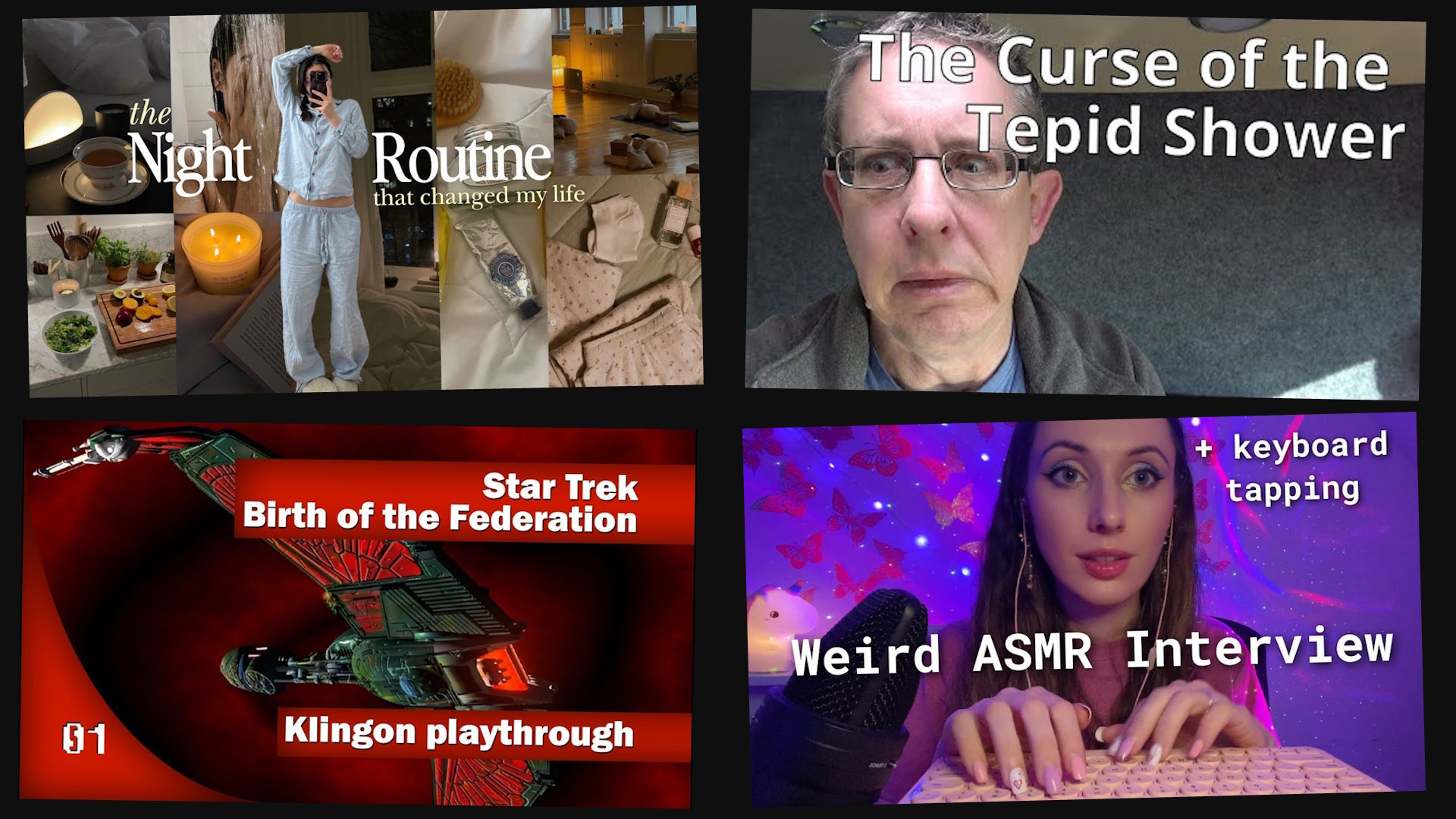
If you’d asked me in 2005 what the future of entertainment would look like, I would not have been able to predict user-generated content on platforms like YouTube and TikTok becoming massive, popular, and hugely profitable. But in 2025, barely 24 hours go by for me without watching at least one video on YouTube or spending a little time scrolling TikTok. The widespread adoption of broadband internet, social media, and smartphones with built-in connectivity and cameras facilitated this transformation in the way literally billions of people engage with entertainment.
It’s not a stretch to say that there are people today – adults as well as kids – who don’t care much for television, films, or even video games. Their primary sources of entertainment come from social media – and from user-generated content specifically. It turns out that a lot of people enjoy watching things no media executive could’ve ever dreamed of: vlogs, workout routines, makeup tutorials, video game “let’s plays,” and even ASMR. If you’d told me in 2005 what some of the most popular YouTube and TikTok pages would look like twenty years later, I’d have struggled to believe it!
All of this is to say that a revolution in how we engage with media is nothing new. It’s already happened over the past fifteen to twenty years – and that came after a century of changes as we went from live music and theatre productions to the cinema, television, video recording, video games, and so on. Nothing in the entertainment sector stays still for very long, so there are definitely changes coming. Whether my prediction is right… well, if I’m still here in a decade or two, we can revisit this piece and see!
So what is my prediction, exactly? What is this big, revolutionary, A.I.-driven change that I foresee?
In short: user-controlled movies, TV shows, and perhaps even video games. All monetised by big corporations, all licensed and based on subscription models, and all generated by A.I.
Imagine Star Trek’s holodeck, where you can tell the computer what you want to see, but on a flat screen. The biggest names in entertainment at the time will have either developed or bought out A.I. systems to power this content, and you’ll see celebrities, actors, and anyone famous copyrighting or trademarking their likeness and voice, ready to be licensed out. Some performers will be contracted solely to one big entertainment powerhouse, others might be “jobbing it” wherever they can make a buck. “Traditional” – i.e. human-created – films, TV shows, and games will still be made, and social media likely won’t go away, either. But A.I.-generated, customisable, tailored entertainment is going to be a big deal very soon.
You can already see the beginnings of this. Google’s Veo software is just one example of text-to-video A.I., and people are already using it to make their own videos of all kinds of things. The real revolution in the implementation of this technology won’t actually be its development, but its monetisation; how big companies can extract the most money possible for their service will determine how it’s used going forward. Right now, if I ask one of these programmes to generate me a video of Darth Vader in a hot tub, it’ll do it without question – but LucasFilm and Disney won’t be happy about that. As soon as there’s a viable method for monetising these things, we’ll see A.I. models go the way of film and TV streamers – walling off their own intellectual property, and licensing it out for a fee.

Maybe one of the big names in entertainment today – Netflix, for example – will buy out one of the big A.I. companies, using their software exclusively on their platform. Or conversely, maybe one of the big A.I. companies will buy out someone like Disney or Netflix, in a not dissimilar way to how Amazon was able to purchase the venerable MGM Studios a few years ago. Both of those seem possible – but the end result will be the same: content and IP locked behind a paywall, available only to those willing and able to pay.
But for those lucky folks, a world of possibilities opens up.
You’ll sign into your new A.I.-Netflix hybrid, and along with the pre-made programmes and perhaps other user-generated content, there’ll be a simple prompt: “What would you like to watch today?”
From there, your only limit will be your imagination. “I want to see a film that’s about two hours long, starring John Wayne as a mercenary in outer space, with Kate Mara as his love interest, and a pink robot voiced by Brent Spiner as the villain. They should pilot a spaceship called the R.M.S. Wombat, there should be a soundtrack by Bon Jovi, and the entire story should be a metaphor for the dangers of secondhand smoking.” A split-second later… and bang! You’re watching your fantasy film with whatever parameters you’ve given the A.I. It’ll be capable of pulling off shocking twists, bringing long-dead actors back to life, and even generating brand-new stories in established fictional universes.
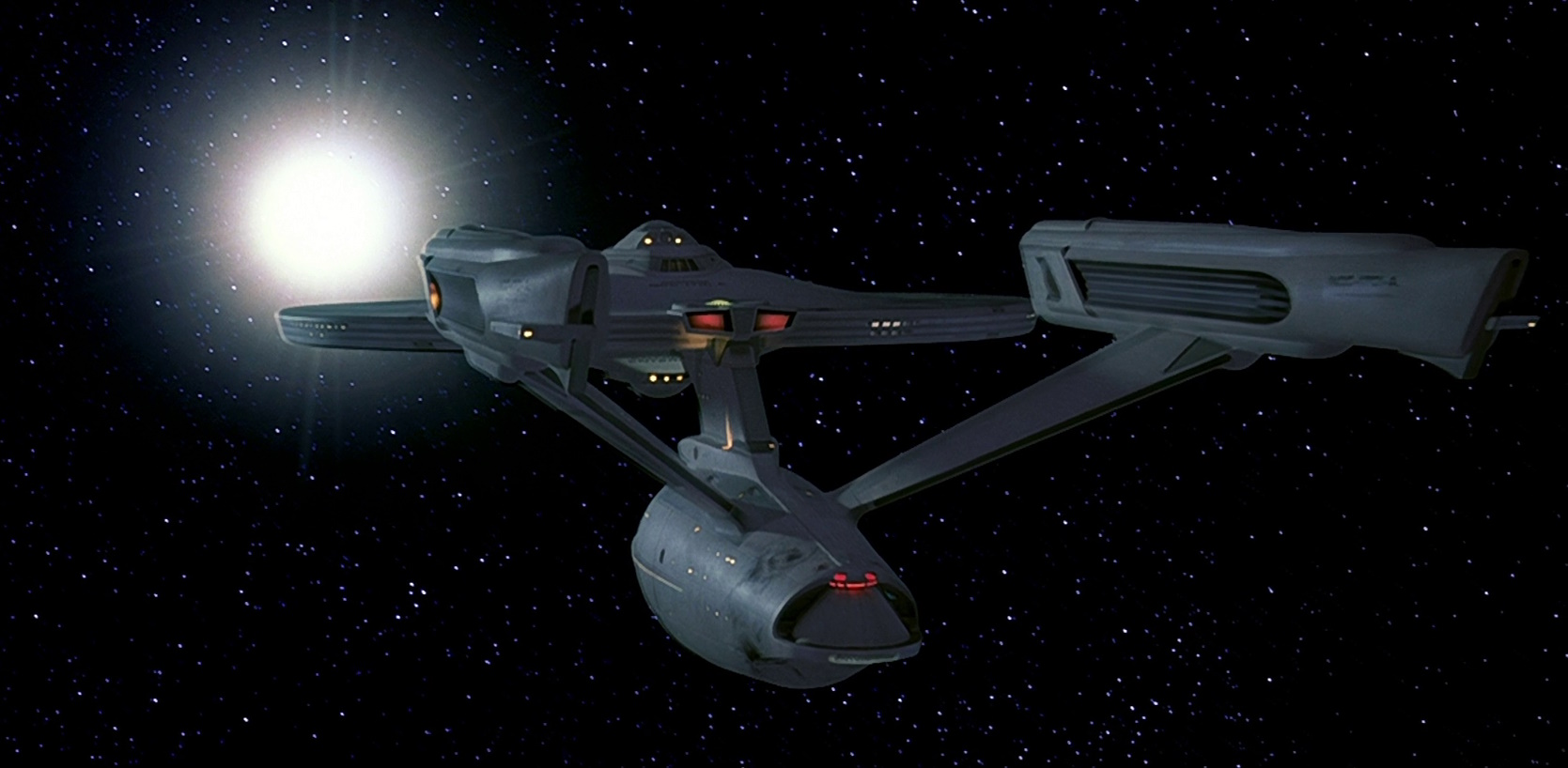
Imagine being able to fire up Paramount’s A.I. (or, let’s be realistic, the A.I. company that owns whatever remains of Paramount by that point) and generate brand-new Star Trek stories. Maybe you’ve always wanted to know what would’ve happened if Captain Picard died after his assimilation by the Borg, or what might’ve happened if the USS Voyager was destroyed, with a handful of survivors being taken in by Chakotay and his Maquis crew. Or perhaps you want to see an expanded look at an existing story, potentially filling in some of the blanks in between established events. You could even look at a story from the other side, like seeing the Dominion War from the Cardassian perspective. All of those things feel plausible with A.I. integration.
As A.I. technology gets better, its ability to retain information will improve. This means that, the more you use an A.I. programme, the more it gets to “know” you – or at least it gets better at predicting your reactions, your likes, and your dislikes. This means that our hypothetical A.I.-Netflix hybrid will very quickly get to know what kinds of stories you like, what generates the best responses from you, and will be able to use that information to fine-tune and personalise the content it generates for you.
It’ll be kind of like having your own personal film studio. As the A.I. retains all of the information and storylines it’s generated, it’ll be able to make sequels, prequels, and expand on certain story points. If you really liked a character in an A.I.-generated film, it’ll be able to make a spin-off, just for you, tailored to what you liked about the character and the kinds of stories it knows you responded well to elsewhere. Heck, it could even generate a casual vlog-style series based on your favourite celebrity or character, kind of like how we see A.I. chat bots based on fictional characters today.

By now, you’ve heard the criticisms of A.I. Its supercomputers use more energy than entire countries. It’s stealing people’s art, writing, and more. It’s capable of “lying” or “hallucinating” falsehoods, spreading misinformation. It’s going to put millions of people out of work. And I don’t dispute any of those things, nor am I “championing” the use of A.I. in the entertainment space. This prediction is based on what I’ve seen from my limited engagement with the world of A.I. so far. I don’t actively use A.I. myself; I don’t really have a place in my life for an A.I. chat bot, and I’ve never needed to use A.I. to generate anything. But I see people using it more and more, and to me, the scenario outlined above feels like a plausible next step for the technology as it currently exists.
The big things from the corporate side are how to lock down their A.I. models and monetise them, as well as how to prevent competing A.I. systems from “trawling” their content and using intellectual property that they claim ownership of. After all, it’d be no good to offer your service for sale if a free competitor could do the exact same thing without the price tag! But if there’s one thing I can say with certainty after more than forty years of existing in this capitalist economy, it’s that you should never underestimate the ability of corporations to find a way to monetise… everything.

Twenty years ago, I wouldn’t have been able to predict the rise of social media, user-generated content, and subscription services. All of those things seemed to come out of nowhere, catching me off-guard. The idea that people would spend hours each day watching what are basically other people’s home videos… that would’ve seemed positively ludicrous, even in 2005. But some people did see that potential, and more importantly, were able to get in early and monetise the heck out of it.
With generative A.I. being the current trend, it’s easy to write it off as a flash in the pan; another 3D television or MiniDisc. And maybe that’s still going to be the case; I haven’t watched a 3D movie in years, and my MiniDisc player has been gathering dust in the attic since the mid-2000s. But right now, with the amount of money being thrown at generative A.I. software, it feels at least plausible to me that, a few years from now, we could all be generating our own high-quality films, TV programmes, and perhaps even video games from simple prompts, with the only limitations being our imagination… and our wallets.

I don’t know if that’s the kind of future I want… but I gotta be honest: part of me feels intrigued by the possibilities A.I. could offer. Being able to get tailor-made, fully customisable movies… there’s genuine appeal there, and whoever gets it right first stands to make a ton of money. I don’t think such a marketplace means that films, TV shows, and video games created by human beings will disappear; there will still be a place for creativity, imagination, and innovation. But there could be far, far fewer of those types of films, TV shows, and games being created if the big corporations go all-in on generative A.I. in the way I’ve outlined above. As with all things A.I., that basically means a ton of people are gonna be out of work. That undeniably taints the finished product; A.I. will come with an obvious, and pretty devastating, cost.
But for a lot of people… well, we already know that the cost to human lives doesn’t matter if they enjoy the finished product. Video games are still frequently created under “crunch” conditions, an exploitative practice I saw firsthand when I worked in the video games industry. Batteries rely on cobalt and lithium, mined by underpaid or even enslaved workers in horrible conditions. People pay for cheap clothes and shoes made in sweatshops. The list goes on… and my point is simple: don’t expect some kind of moral crusade against A.I. to change a lot of minds if it hasn’t in the cases we just mentioned.
Whether A.I. is here to stay, and whether I’m even close to being right about its potential future role in entertainment remains to be seen. I don’t know how much time I’ve got left, but if I’m still here in a decade or two, let’s revisit this piece together. Perhaps we’ll share a chuckle about how wrong I was, and how I exaggerated a flash in the pan technological fad way beyond its capabilities. Or not.
All brands and properties mentioned above are the copyright or trademark of their respective studio, distributor, broadcaster, etc. This article contains the thoughts and opinions of one person only and is not intended to cause any offence.
 Trekking with Dennis