The Mass Effect TV Series Has Been Announced (Again)

A spoiler warning graphic.

Spoiler Warning: Beware of spoilers for the Mass Effect trilogy.

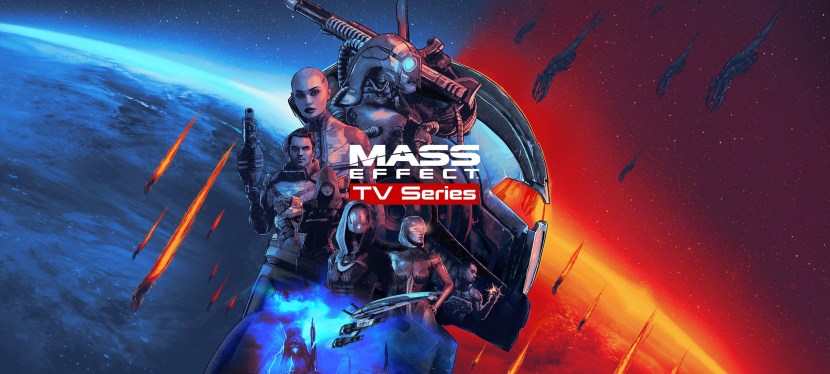
I think it was back in 2020 or 2021 when I first covered the news that Amazon’s television studio had picked up the rights to Mass Effect. Since then we’ve heard next to nothing about the project, even as the triolgy’s Legendary Edition came and went, and I kind of assumed that it was either stuck in development hell or that Amazon’s executives had passed on whatever had been pitched. Not so, it seems!

Although details are still pretty sparse, we’ve recently heard from Amazon and game developer BioWare that the Mass Effect TV series is still happening, so today I wanted to talk a little about it and consider what the show might eventually look like. We’re going to talk spoilers for all three mainline Mass Effect games, so if you haven’t played the trilogy and want to go into it un-spoiled, this is your last chance to jump ship!
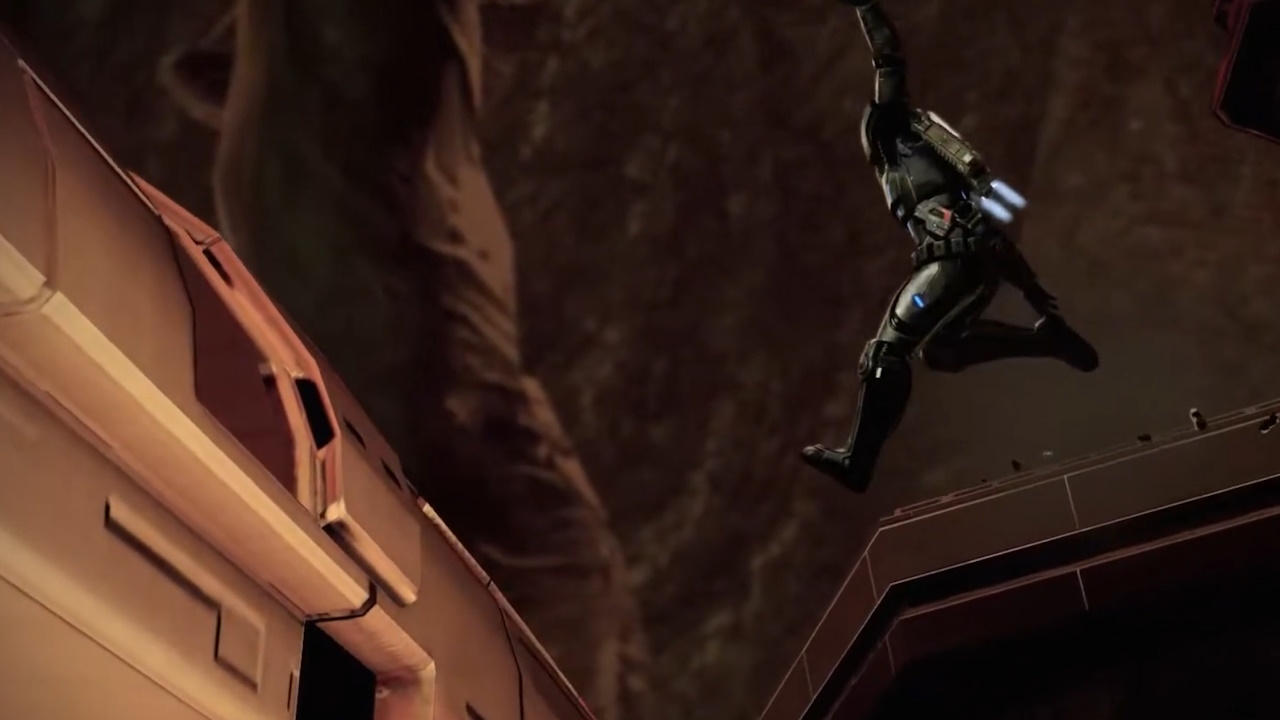
Screenshot of Mass Effect 2 showing Commander Shepard jumping aboard the Normandy.
Jumping ship… get it?

A couple of caveats before we get started. Firstly, I have no “insider information” from BioWare, Amazon, or any of the other studios that may or may not be attached to this project. I’m speculating based on publicly available information and sharing my own thoughts and opinions on the potential series – which may never even see the light of day given how early in its pre-production it seems to be!

Secondly, this is just the subjective opinion of one Mass Effect fan. If you don’t agree with my take on where the TV series could or might go, or if I ignore some aspect of the games that seems important to you… that’s okay! There ought to be enough room in the Mass Effect fan community for differences of opinion and polite discussion. Nothing we’re going to talk about today is in any way official or confirmed in any case.

With all of that out of the way, let’s talk about what a Mass Effect television series could look like.
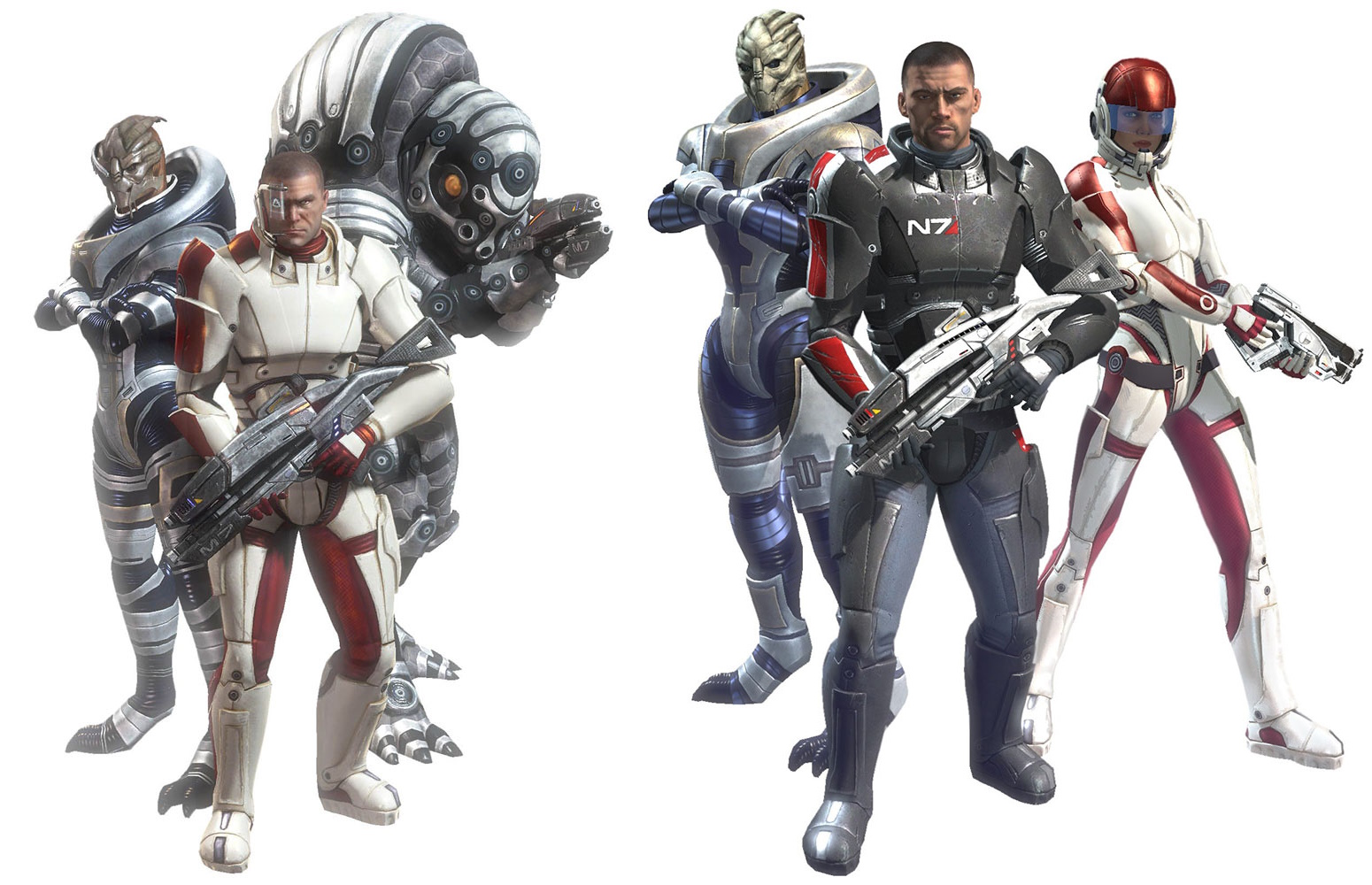
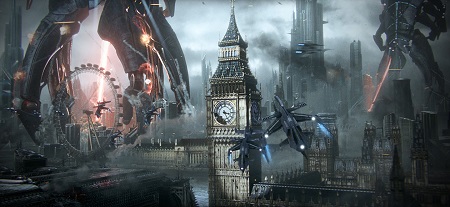
Concept art from Mass Effect 1.
Concept art of the main characters from Mass Effect 1.

The first thing to say is this: Amazon has a crap ton of money! And as we’ve seen from the corporation’s investment in titles like The Expanse, Fallout, The Boys, and The Rings of Power… Amazon doesn’t mind splashing the cash when it comes to making scripted TV shows. On the surface, this bodes well for a Mass Effect series, as Amazon has the resources to give the show a decently high budget.

This matters because creating a sci-fi galaxy from scratch is going to be expensive. Sets will have to be built for spaceships, location shoots will be necessary to capture the look and feel of visiting wildly different planets, and the combination of practical and digital effects necessary to create some of Mass Effect’s non-humanoid aliens will take a lot of time and money.
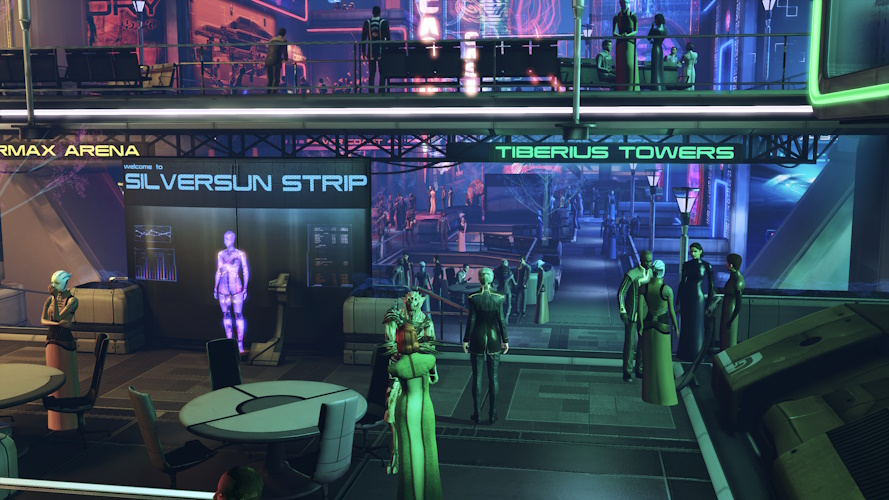
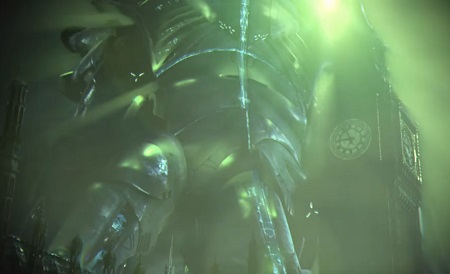
Screenshot of Mass Effect 3 showing the Silversun Strip from the Citadel DLC.
Part of the Citadel – the capital of the Mass Effect galaxy.

On that last point, one of the things I like about the Mass Effect games is how they introduce several very “alien-feeling” alien races. The likes of the Krogan, Hanar, and Volus all feel much less human and much more extraterrestrial than many races from comparable sci-fi stories. BioWare was initially able to create these non-humanoid aliens because the world of Mass Effect was created for a video game; there were no constraints in terms of prosthetics or make-up that have forced the likes of Star Trek and Star Wars to rely primarily on humanoid life-forms.

Transitioning some of these races to the small screen will be a challenge, but it’s one that should be surmountable. I’d love to see a combination of practical special effects and prosthetic makeup with CGI, instead of relying entirely on animation to breathe life into the likes of the Krogan and Turians. In recent years we’ve seen this from other sci-fi franchises like Star Trek, so I really think it’s achievable to use a combination of puppets, prosthetics, and practical special effects alongside CGI.
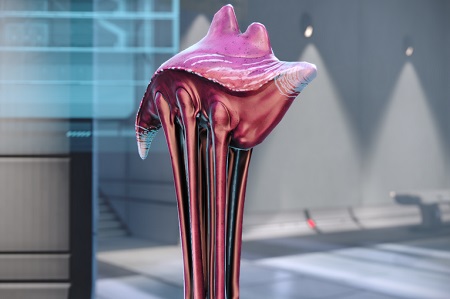
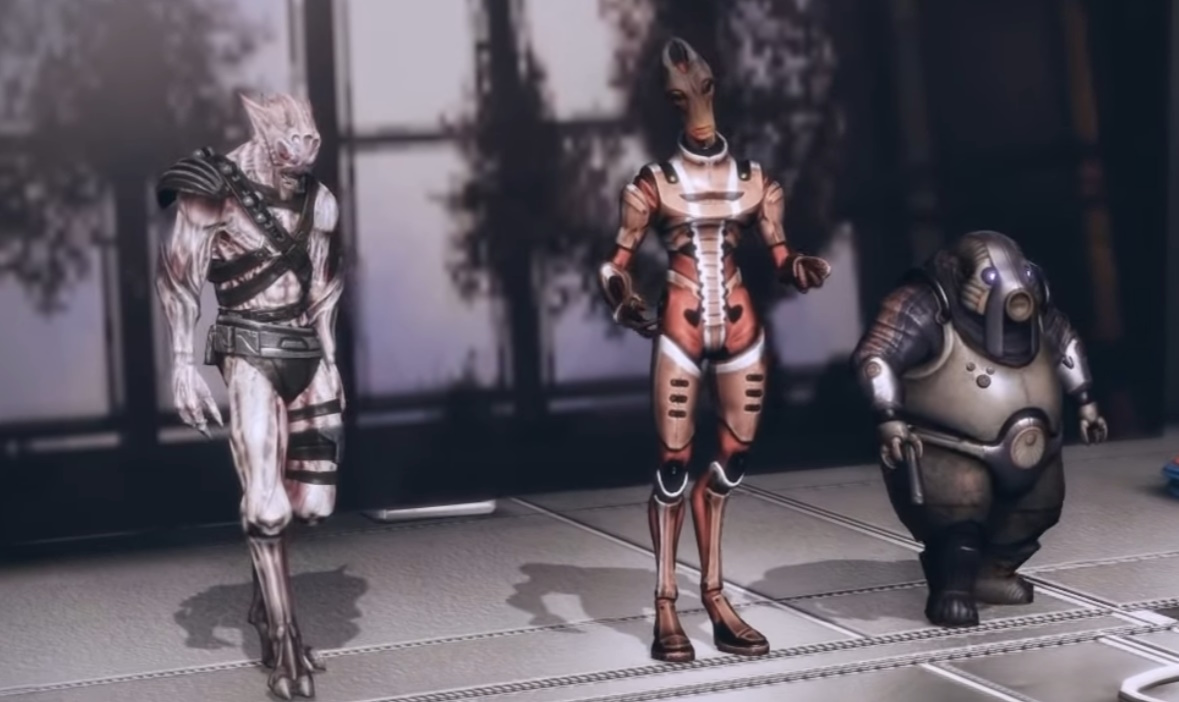
Screenshot of Mass Effect 1 showing a Hanar character.
Bringing non-humanoid races like the Hanar to the small screen may prove challenging!

I don’t want to get into the minutia of things like filming locations or casting; there’s plenty of time to think about who should play some of the franchise’s iconic roles! It would be great if the likes of Jennifer Hale and Mark Meer could be involved in some way – the duo voiced the female and male versions of Commander Shepard respectively, and could at the very least be offered cameo roles in the show.

But that leads into my next point: is this (and should this be) a direct adaptation of the story of the Mass Effect games?
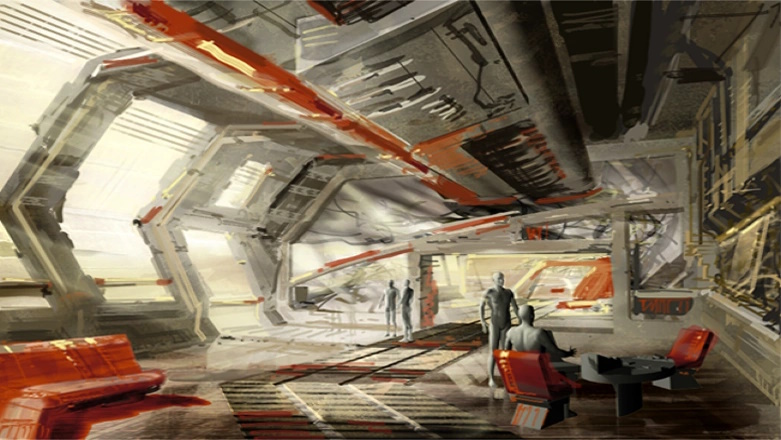
Concept art for Mass Effect 1 showing several characters in a sci-fi city.
Concept art for Mass Effect 1.

My inclination at this stage is that re-telling the Mass Effect story in a new format is a great idea, so I’d be happy to see the trilogy’s story adapted as a TV show. I think it’s a strong story with a great cast of characters, and while it would be an adjustment to get used to some different portrayals in those key roles… I think the story of the Mass Effect trilogy offers the show the best chance of success when compared to trying to tell a brand-new story set in the same world.

We have a couple of examples to point to. The TV adaptation of The Last of Us was a more or less straight adaptation of the video game it was based on. The Halo TV series took the barest bones of the Halo story but made significant changes. One was critically and commercially successful, the other was recently cancelled after just two seasons. There are counter-examples: Amazon’s own Fallout adaptation is a new story set in the same world, for example. But for my money, the story of the Mass Effect trilogy was so strong, so powerful, and such a singular event in its setting that trying to re-make it from the ground up or stepping away from it to do something completely different just doesn’t seem like a good idea. Why go to all the trouble of licensing a successful story if you aren’t going to adapt that story, after all?
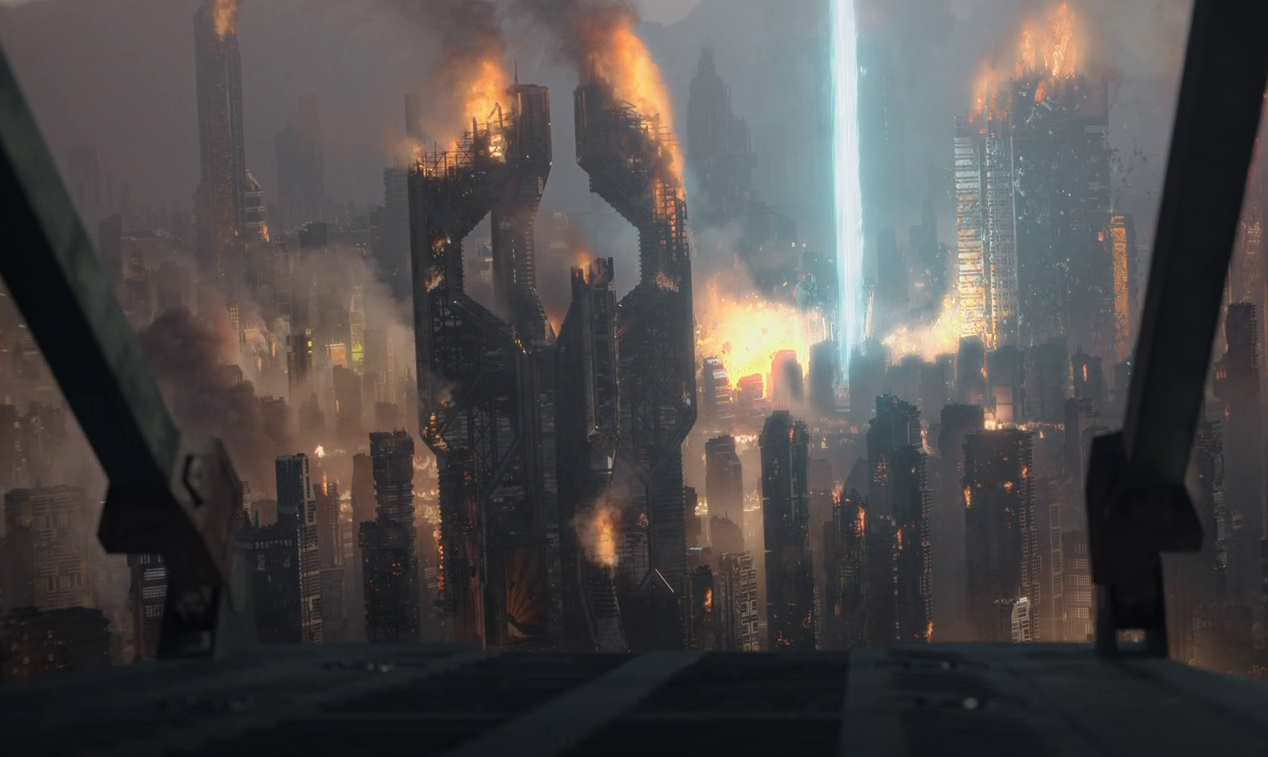
Still frame from Halo Season 2 showing the Fall of Reach.
The Fall of Reach played out very differently in the Halo TV series compared to the games.

Is it possible that a Mass Effect TV show will start somewhere else, like humanity’s first encounter with a Mass Relay or the war between humans and Turians? Sure. It’s possible. But would that be the strongest foundation to take this rich and wonderful sci-fi universe to a new audience and a new medium? I’m not convinced – and I think the struggles of the likes of not only the Halo series but also Amazon’s The Rings of Power (which has diverged from its source material in a way that has upset some fans of Tolkien’s Middle-earth) show the pitfalls in that approach.

Every writer and producer wants to put their own unique stamp on the projects they work on – and I get that. But when you’re taking a successful, much-loved story and adapting it, fans have certain expectations for what they want to see. I’m sure there are some Mass Effect fans who’d love to see a story about humanity’s first forays into space or how humans came to be accepted by the other Citadel races. But I’m not sure that such a story would be strong enough to carry Mass Effect to a wider audience – and when there’s a fantastic, deep, and emotional story populated by a stellar cast of characters just sitting there, it almost seems like malpractice to ignore it or make radical changes to it.
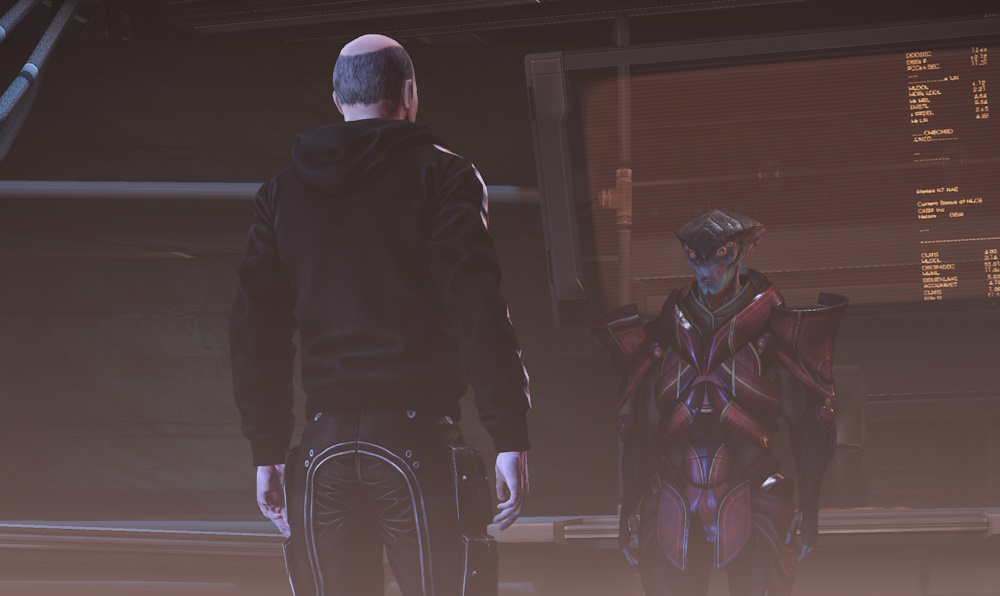
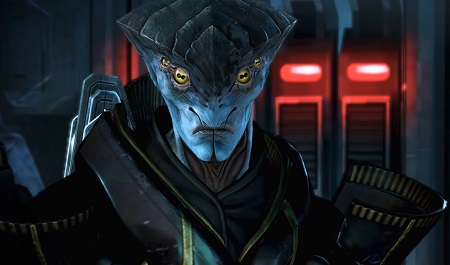
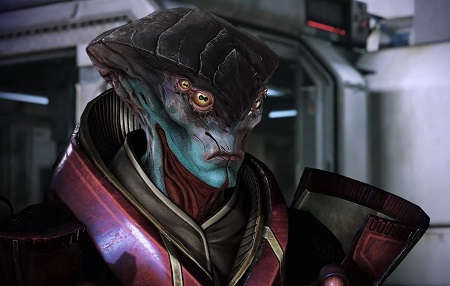
Screenshot of Mass Effect 3 showing Shepard and Javik.
Commander Shepard with Javik in Mass Effect 3.

If we assume, then, that the Mass Effect TV series will be a straight adaptation of the original Mass Effect trilogy, that raises some questions of its own! Firstly, a big part of the Mass Effect games – the first two, anyway – was that players had a lot of freedom to make narrative-altering choices. In the first game, for example, whole companions could be ignored and never recruited, and in Mass Effect 2 practically everyone on Shepard’s squad could die in the game’s climactic final act. Mass Effect 3 arguably failed to do enough to give many of these choices the impact they should’ve had, but even in that game there were hugely consequential choices that players could make.

So if the Mass Effect TV show is going to adapt the story of the Mass Effect trilogy, here’s my question: which story, exactly? There are dozens of inflection points in the games, places where the story can branch in different directions. Helping one character could lead to conflict with another, main characters can die, new characters can appear to take over their roles, and even Shepard can be a radically different person depending on the choices players make. No TV show could reasonably take into account all of these choices – producers would have to pick one route through the story and follow it to its conclusion.
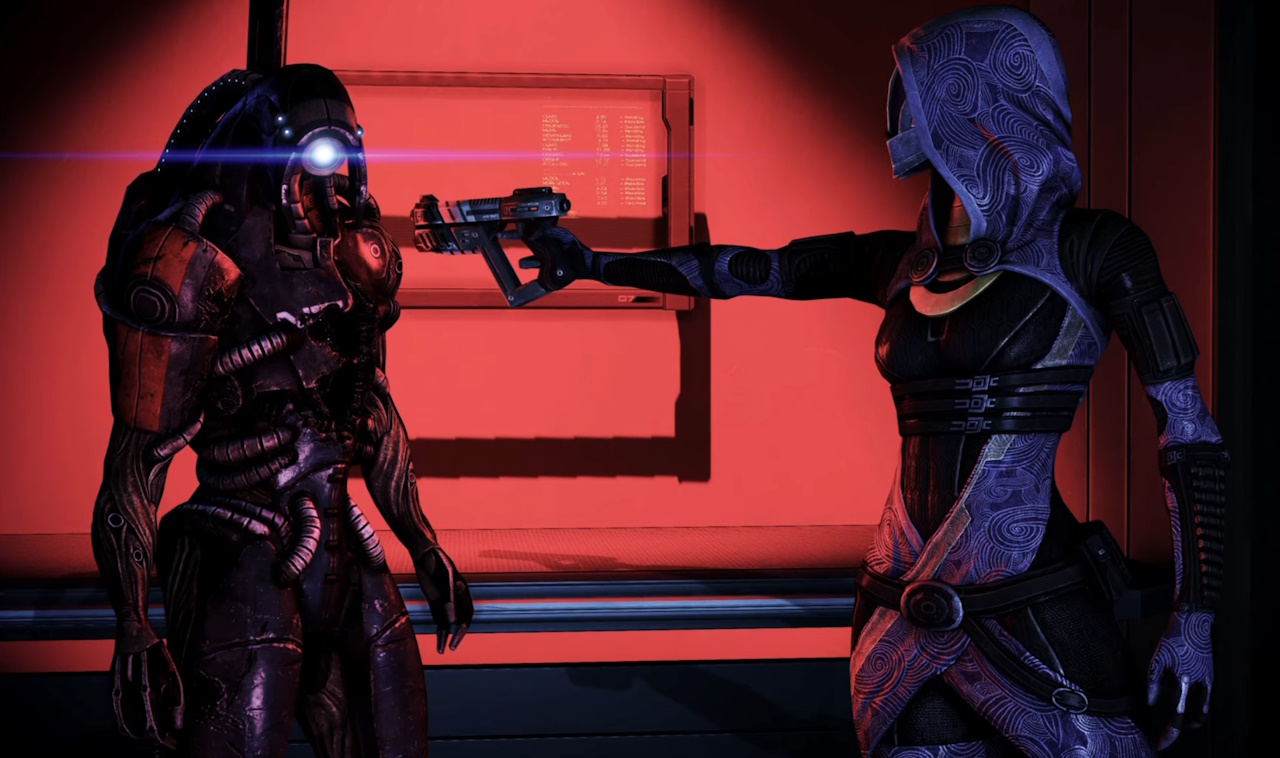
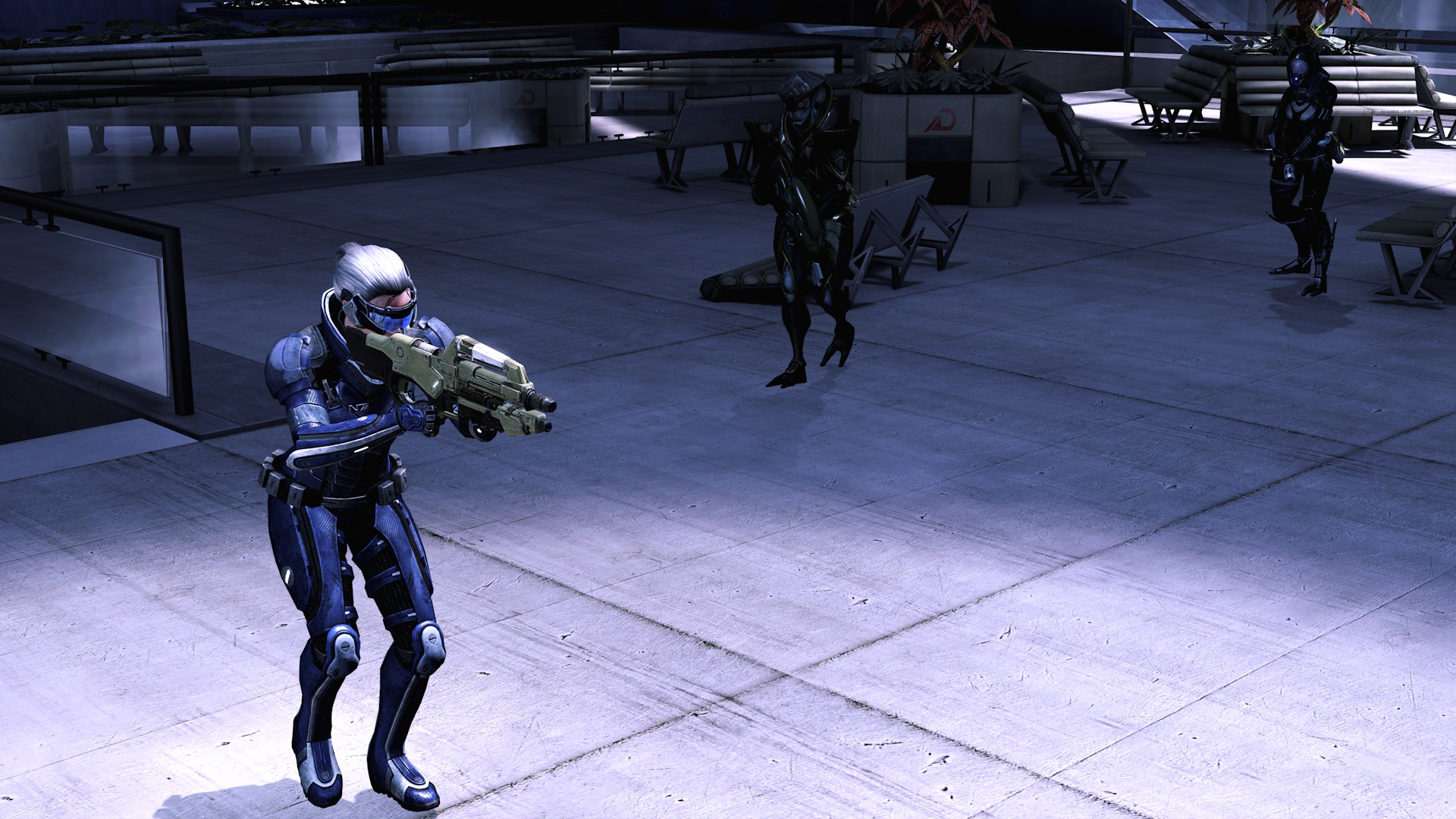
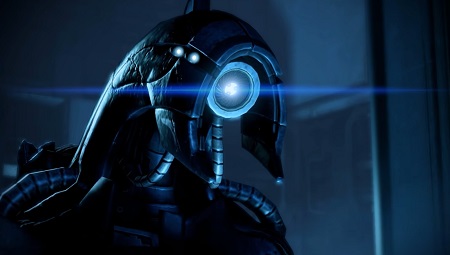
Screenshot of Mass Effect 2 showing Tali pointing a weapon at Legion.
All three games have moments where players have to make decisions.

It seems pretty obvious to me that for the TV series to be entertaining, Shepard will have to mostly fall on the paragon side of things. Nuanced and complex characters are great, and there’s still scope for a paragon Shepard to make renegade-leaning decisions from time to time. But setting up the character to be quick to anger, rude, and excessively violent… it would make Shepard into a difficult protagonist to root for. So a paragon Shepard who occasionally makes renegade decisions seems like the least-bad option here.

But would Commander Shepard be a man or woman? When writing about Mass Effect I usually use “they/them” when referring to Shepard; the character can be male or female depending on the player’s choice. Given that a Mass Effect TV series would only have room for one Commander Shepard, a decision will have to be taken as to which option to go with. And no, I don’t think a non-binary or genderfluid Shepard is on the cards… as much as some people might want that!
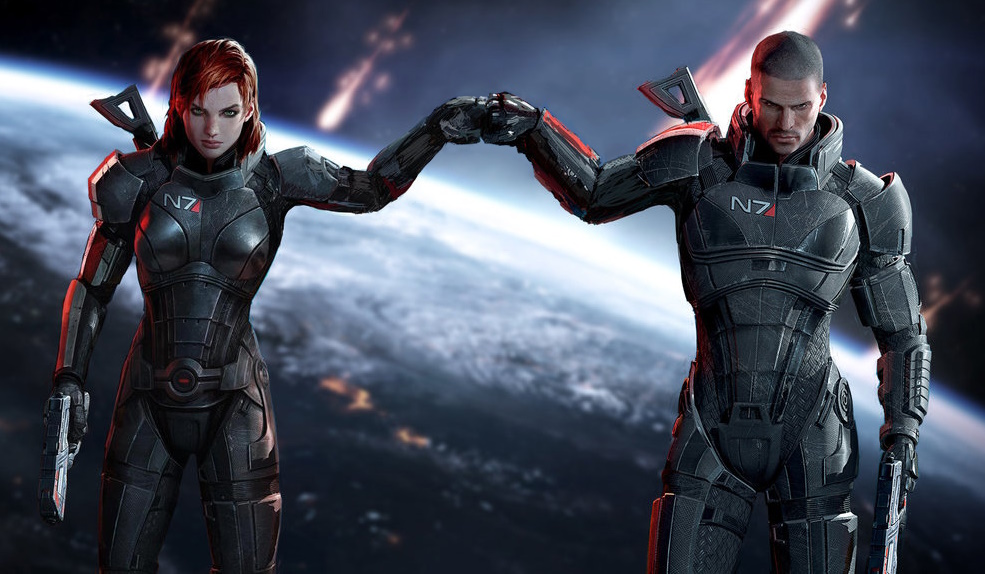
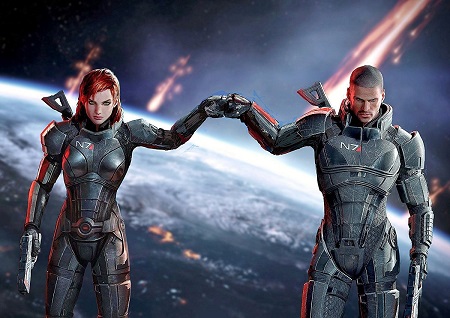
Concept art for Mass Effect 3 showing two different versions of Commander Shepard.
Should the Mass Effect TV show cast a male or female performer as Commander Shepard?

I genuinely don’t know which way the show’s writers and producers would go. There are pros and cons whichever way you look at it, and I can see the casting choice for Commander Shepard being controversial no matter how it’s handled. I don’t think it would really be possible to split the role in two, either – having twin Shepards (like the Ryder twins from Andromeda) or even giving Shepard a second-in-command. A huge part of what made Mass Effect work was Commander Shepard, so if the TV show adapts this story, getting the right performer in the lead role will be incredibly important.

Unfortunately, I see this as a likely point of contention. If Commander Shepard is cast as a woman or person of colour, I can see the “anti-woke” crowd attacking the series and trying to get it cancelled before a single episode has aired. Look at the reaction to “black dwarves” in The Rings of Power or the triggering power the mere presence of a non-binary character had in Dragon Age: The Veilguard. It’s a shame that discussion of media and entertainment online so quickly descends into these dark places… but it’s something that the producers of the Mass Effect TV show will have to contend with one way or another. The original games featured a pretty diverse cast, but cries of race- or gender-bending will be hurled at the series if any of these characters’ fundamentals are altered.
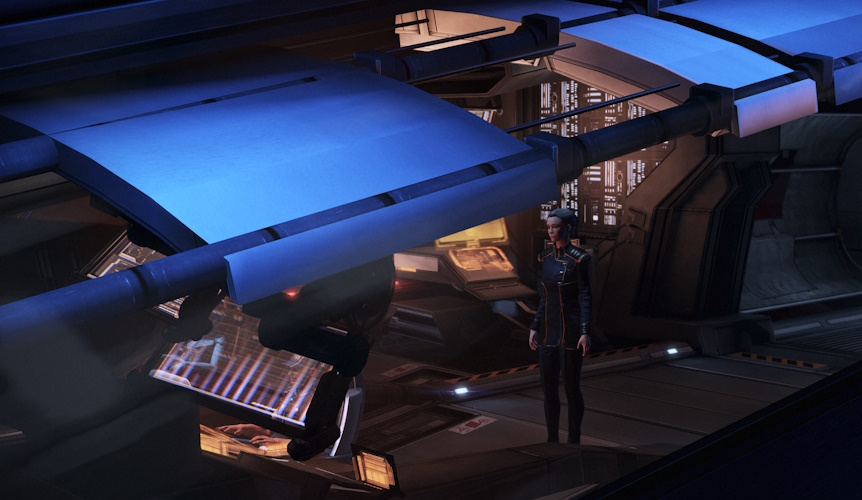
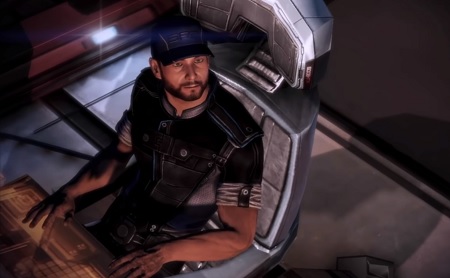
Screenshot of Mass Effect 3 showing Shepard in the Normandy's cockpit.
Commander Shepard on the bridge of her ship.

I think most fans would accept a female Commander Shepard. Female-led shows and films from Alien and Star Trek: Voyager to Fallout and Everything Everywhere All At Once have been well-received, and with “femShep” having been a part of Mass Effect since the beginning, critics would really have very little to complain about. Adding a new female-led sci-fi show to the lineup would, in my view, be a positive thing. The casting needs to be right first and foremost, and I’m not saying Mass Effect needs a woman in its lead role. But why not? It could be great to see a female Commander Shepard taking the fight to the Reapers!

Let’s try to set that aside for now! I hope that whoever is cast in the lead role will do a great job, and will end up making any criticisms from the “anti-woke” crowd seem even sillier than usual.
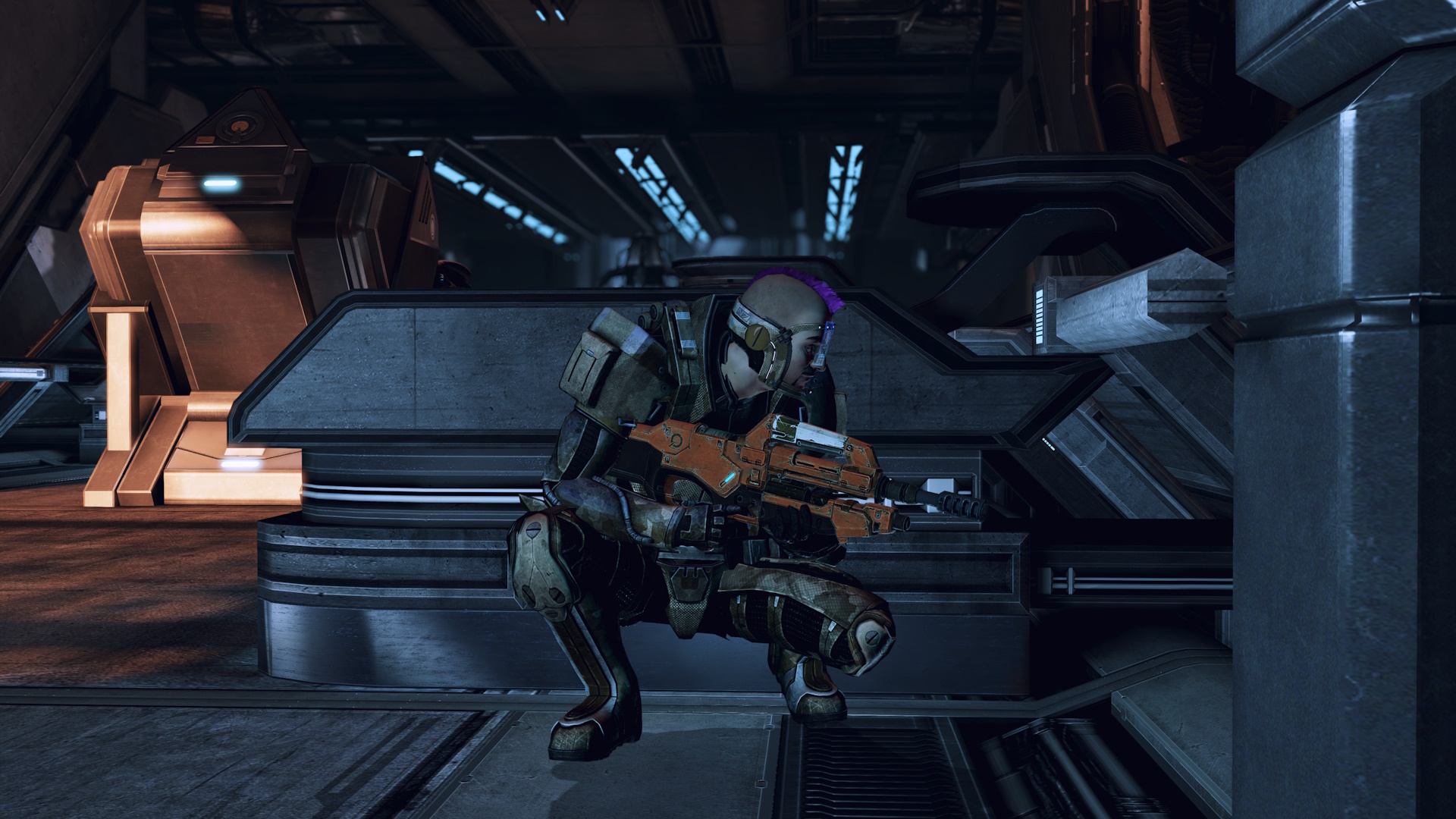
Screenshot of Mass Effect 3 showing Shepard crouching behind a wall.
A male Commander Shepard taking cover.

I’d like to talk next about the potential structure of a Mass Effect television series – because there really are interesting ways to adapt the games’ side-missions and secondary storylines.

One thing I love about television compared to film is how much more time there is to spend with characters, and how much richer and deeper their stories can be as a result. The same is true of video games, and the Mass Effect trilogy is a fantastic example of interactive storytelling. Characters grow and change over the course of their adventures, and the bonds between them strengthen as they get to know and trust each other. There are themes of bridging racial and social divides that could be incredibly relevant, and character arcs and pairings that are just beautiful to watch unfold. All of these things could – and should – be part of a Mass Effect TV series, as its the characters that make the story into something special.
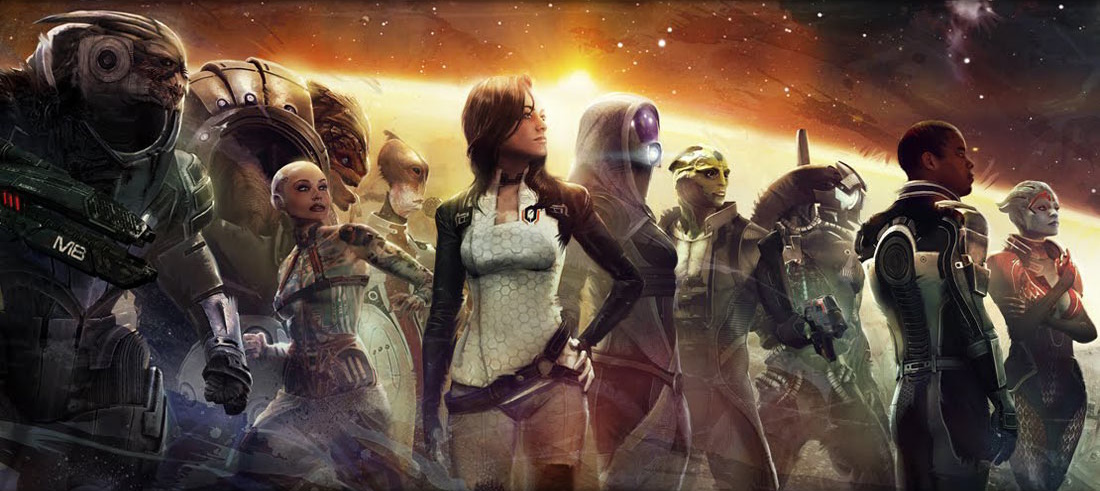
Concept art for Mass Effect 2 showing the main companions.
Most of the main companions from Mass Effect 2.

As someone who loved shows like Star Trek: The Next Generation, Space Precinct, and Buffy the Vampire Slayer in the ’90s, believe me when I say that I love episodic storytelling. Any Mass Effect TV series would be a wholly serialised affair, in the mold of recent hits like Game of Thrones. But that doesn’t mean there isn’t room for some degree of episodic storytelling – and that’s where the aforementioned side-missions and quests come in.

Again, for the purposes of this argument we’re assuming that the TV show will be based on the original Mass Effect trilogy. Those games all had side-quests, lower-priority missions, and storylines focusing on individual companion characters. It would be tempting for a serialised show to skip all of that and focus on Shepard and the Reapers… but I think that would be a mistake. Not only do these missions have some of the best storytelling and most emotional moments in the entire series, but they add so much to the world of Mass Effect and to Shepard as a leader.
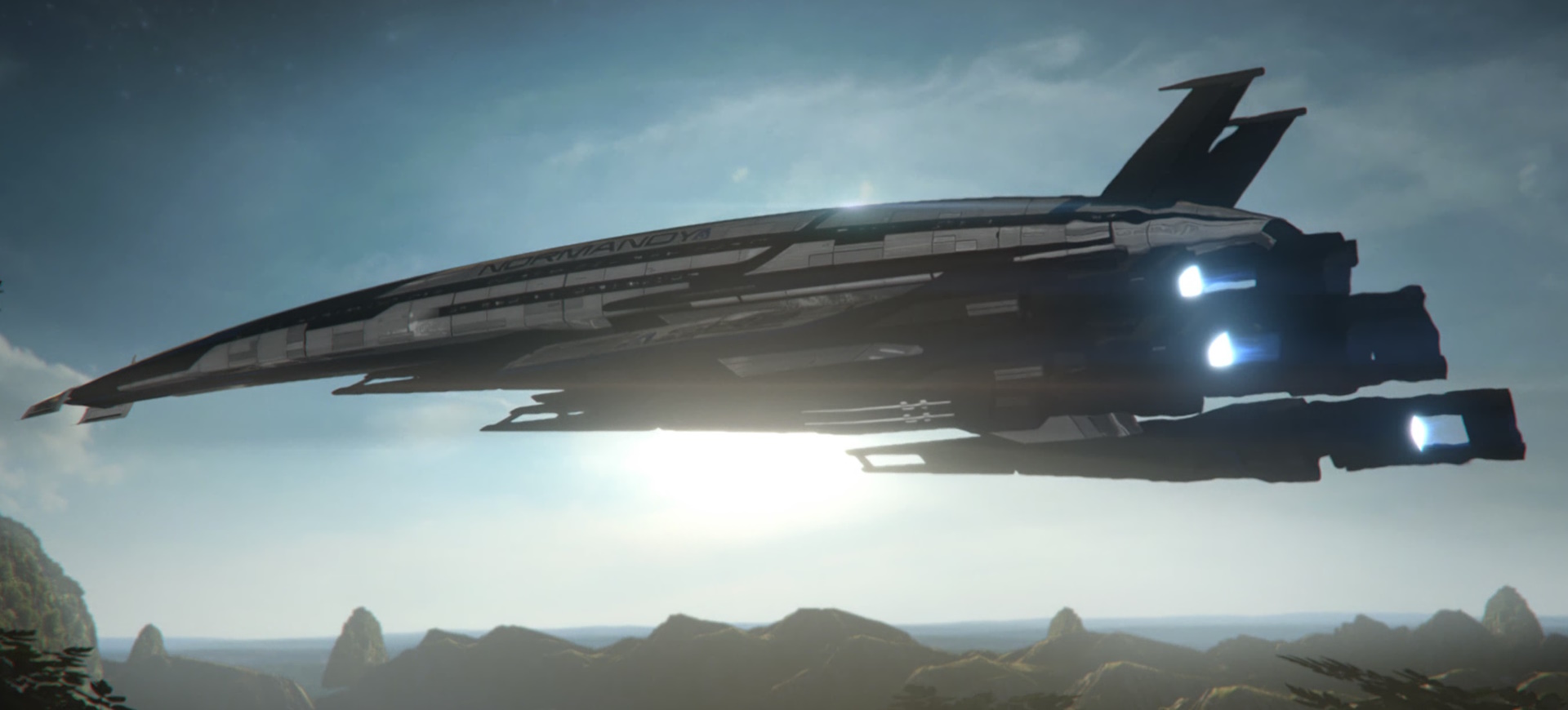
Screenshot of Mass Effect 3 showing the SSV Normandy taking off from a planet.
The Normandy.

There are ways to mix episodic storytelling with multi-season narrative arcs. Look at Star Trek: Strange New Worlds as a great example of this; the show follows its characters as they take part in a wide range of missions and stories, but they retain their growth and development from one episode to the next, even when those episodes are completely different in story, structure, and tone. There are season-long storylines running in the background, too, even when the focus of one episode is mostly elsewhere.

In short, a Mass Effect TV show wouldn’t need to skip over the likes of the Rogue VI mission from Mass Effect 1, or the character loyalty missions from Mass Effect 2 – these could be integral parts of the show, while also breaking up the main plot to take Shepard and their companions to different places. Some of the side-missions cement Shepard’s relationships with characters who will be among their closest friends for the entire story, and without including missions like “Find Dr Saleon” or “Family Armor” from Mass Effect 1 Shepard’s relationships with Garrus and Wrex might feel… less impactful.
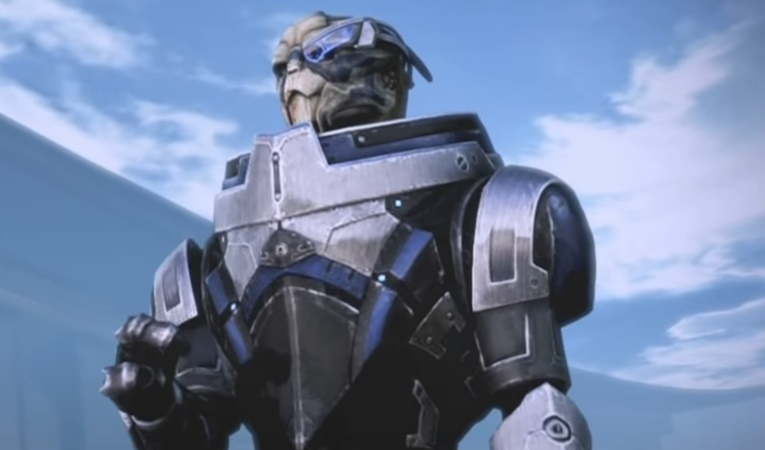
Screenshot of Mass Effect 3 showing Garrus on the Citadel.
Garrus Vakarian: Shepard’s BFF.

I’m not saying that the Mass Effect TV show should recreate every single side-mission. But there’s something to be said for a series that doesn’t always do the same thing, and changes in style, tone, and which characters are in focus can break things up and make for a more interesting presentation. Not only that, but some of the missions that are nominally optional in the games can have a big impact on other storylines.

Take the “Rogue VI” mission from Mass Effect 1 as an example. I hated playing through this; it’s a boring slog of a mission which involves using the Mako (barf) to visit four identical outposts at which Shepard and co. have to fight through generic enemies and push a button to shut down an advanced computer that’s gotten out of control. But you later learn, in Mass Effect 3, that the out-of-control VI was the source of EDI’s programming and personality – completely reframing the mission and tying it into one of the game’s main characters. It was a great bit of storytelling that made re-playing an otherwise bland side-mission feel a lot better on repeat playthroughs.
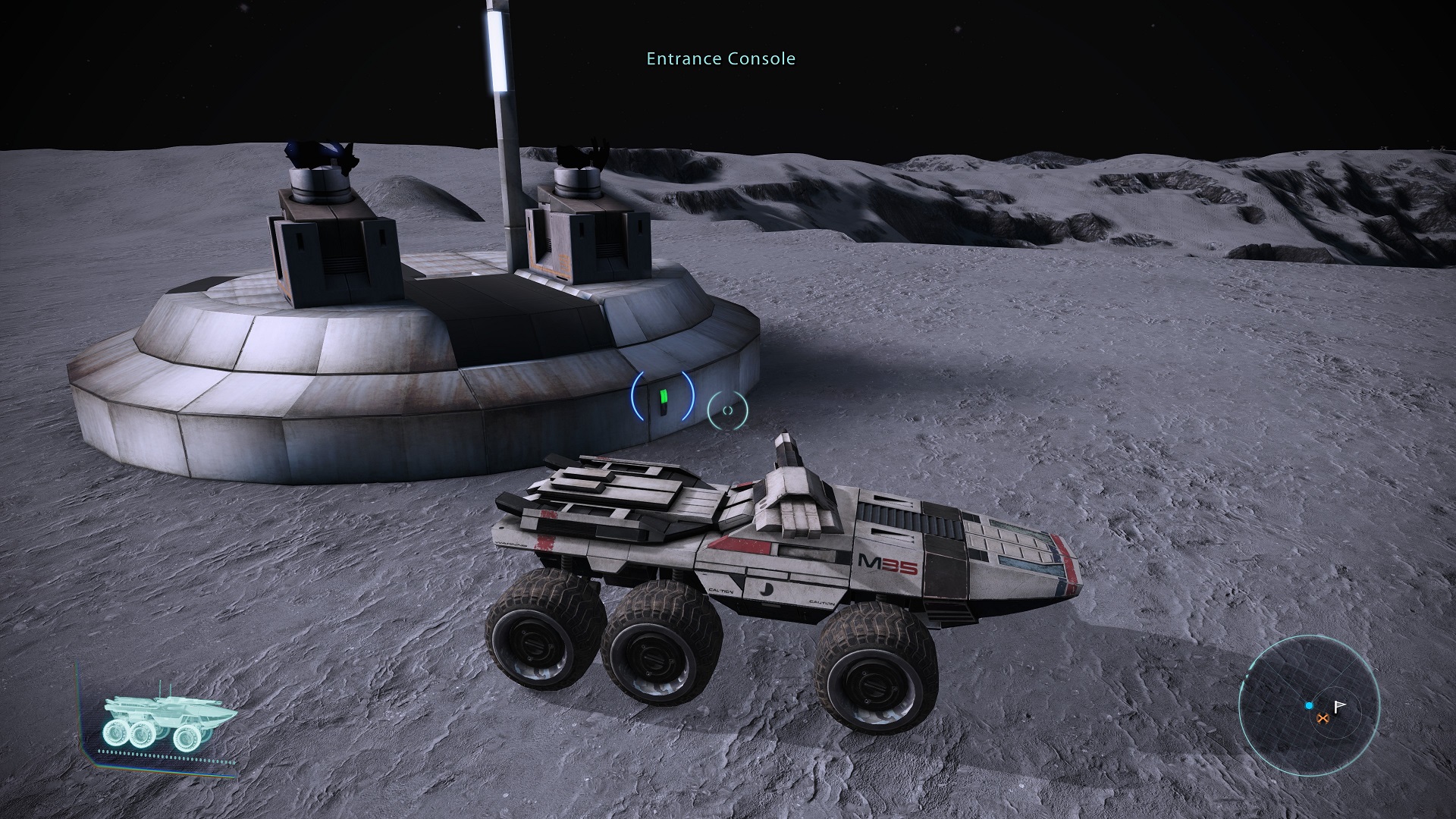
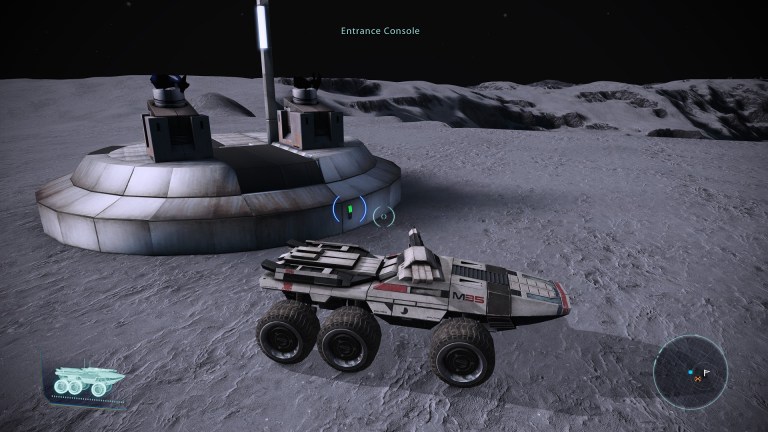
Screenshot of Mass Effect 1 showing the Mako on Luna.
The “Rogue VI” mission.

There are also some great moments of characterisation in the Mass Effect 2 loyalty missions. Jack uncovers the truth behind her shocking childhood at the facility she escaped from. Jacob reunites with his estranged father – but in the worst possible way. And Shepard ends up in serious danger while helping Samara track down her daugher… who’s a serial killer. These missions vary in terms of location, but they also vary wildly in tone, with some being light-hearted and even fun while others are intense and violent. There’s a lot to be said for finding ways to include as many as possible.

According to the website HowLongToBeat, playthroughs of the Mass Effect trilogy can take anywhere from 60-140 hours. This varies a lot depending on things like the difficulty setting and how much of the side-content players engage with. My own estimate would be somewhere around 90 hours; that’s how long my most recent playthrough of the trilogy took. So this is a long story – and one that’s going to take multiple seasons of television in order to tell.
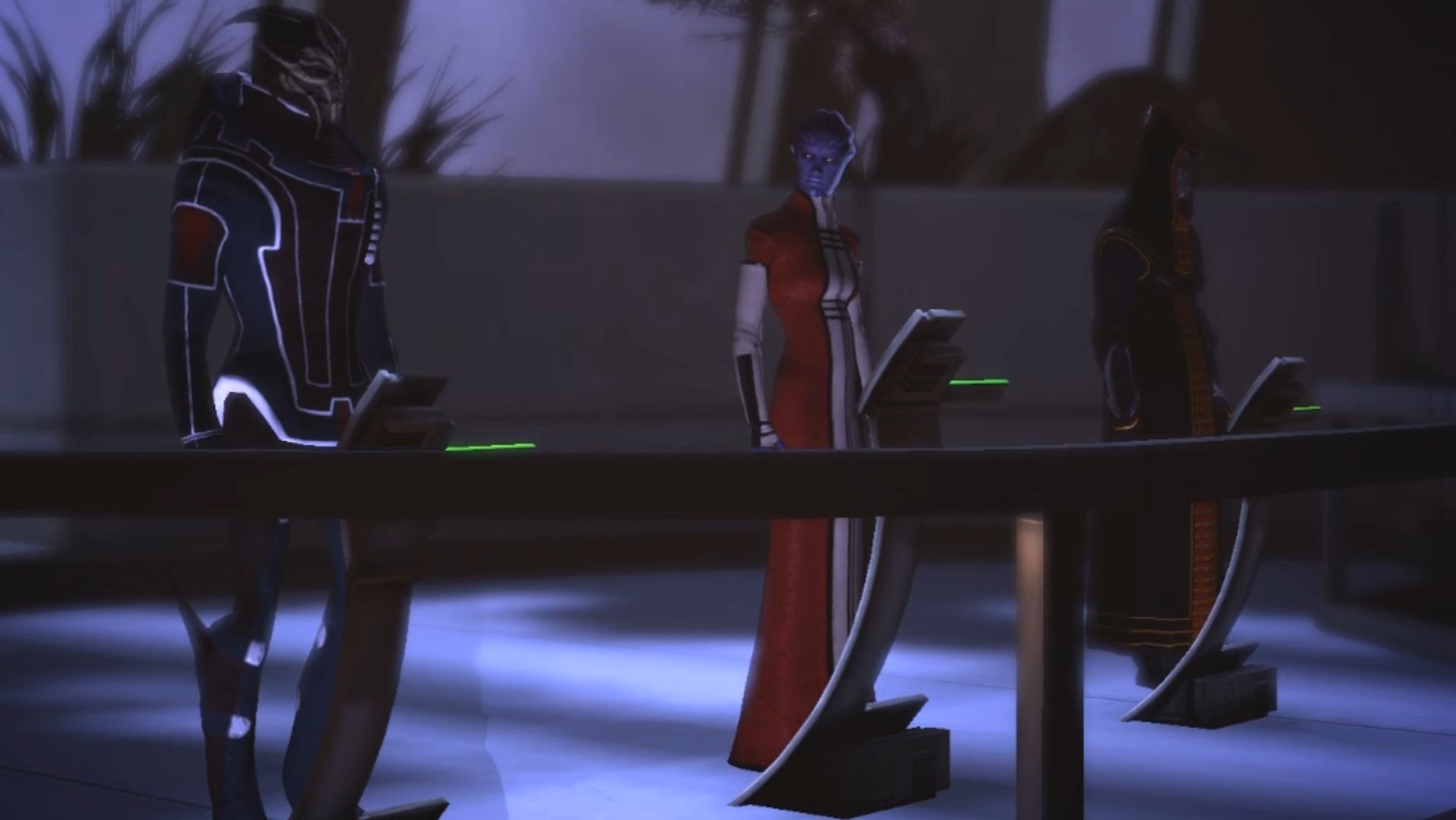
Screenshot of Mass Effect 1 showing the Council.
The Citadel Council.

There are things from the games that can be cut out. Some levels are deliberately padded out with generic enemies to stomp just to give the player something to do; a mission that might’ve taken an hour to play doesn’t necessarily need to be an entire episode of TV on its own. But we’re still talking about a show that would need to be at least five seasons – assuming eight to ten episodes per season, as is common nowadays. I don’t think three seasons (one per game) would be enough to really get to grips with how deep the world of Mass Effect really is, especially when you consider that a new audience is going to need an introduction to this brand-new universe.

In 2012, Mass Effect 3 came in for a lot of criticism, particularly of its ending. I wasn’t wild about the “pick a colour” ending, but I felt that wasn’t actually the worst part. Where I felt most let down by the game was how different choices – or combinations of multiple choices across the trilogy – just didn’t seem to matter and weren’t even mentioned as the story reached its crescendo. The example I’ve given before is this: through careful choices across all three games, it’s possible at a crucial moment in Mass Effect 3 to save the Quarians and Geth when it looks like it should only be possible to save one. This is not easy to pull off… but after the mission is over, there’s basically no impact at all apart from a few static images in the war assets menu.
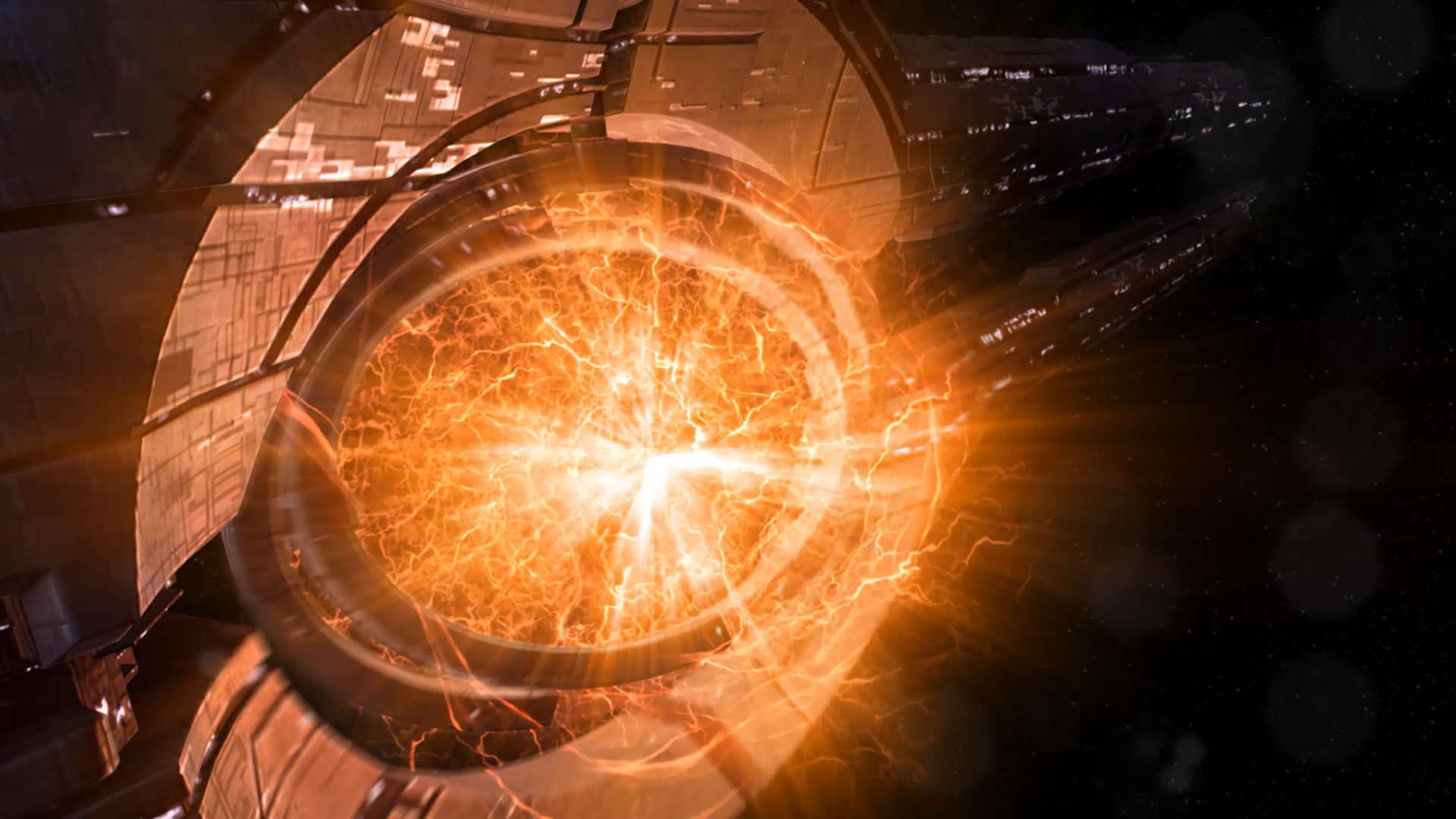
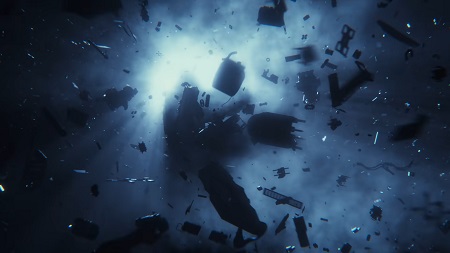
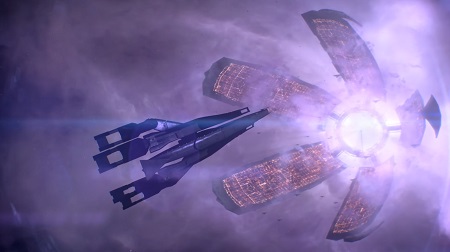
Screenshot of Mass Effect 3 showing a Mass Relay detonating.
The final third of Mass Effect 3 needed work.

Long story short, I think a Mass Effect television series could do more with some of these storylines than the games did – and by choosing a single outcome to include in the series, there’d be more freedom to tailor the story to fit. If the TV show kills off Wrex, for instance, there’d be no need to have Urdnot Wreav behave quite the same as he does in the games where he’s basically a stand-in for the missing Wrex; he could be his own character. And much more could be made of the Quarians and Geth coming together to achieve peace. By cutting out different narrative outcomes, we could get a much more detailed look at some of the choices that I felt weren’t properly acknowledged in the original games.

Finally, there’s the elephant in the room: Mass Effect 4… or whatever we’re calling the next game in the series. At time of writing, BioWare is working on a new Mass Effect game, and based on the very brief tease that was shown off a couple of years ago, it will feature at least one main character from the original trilogy. Would BioWare, EA, and Amazon want to create a TV show that’s based on or directly connected to the new game? Given how early in development both projects are, could there be an attempt to get them to release at more or less the same time?
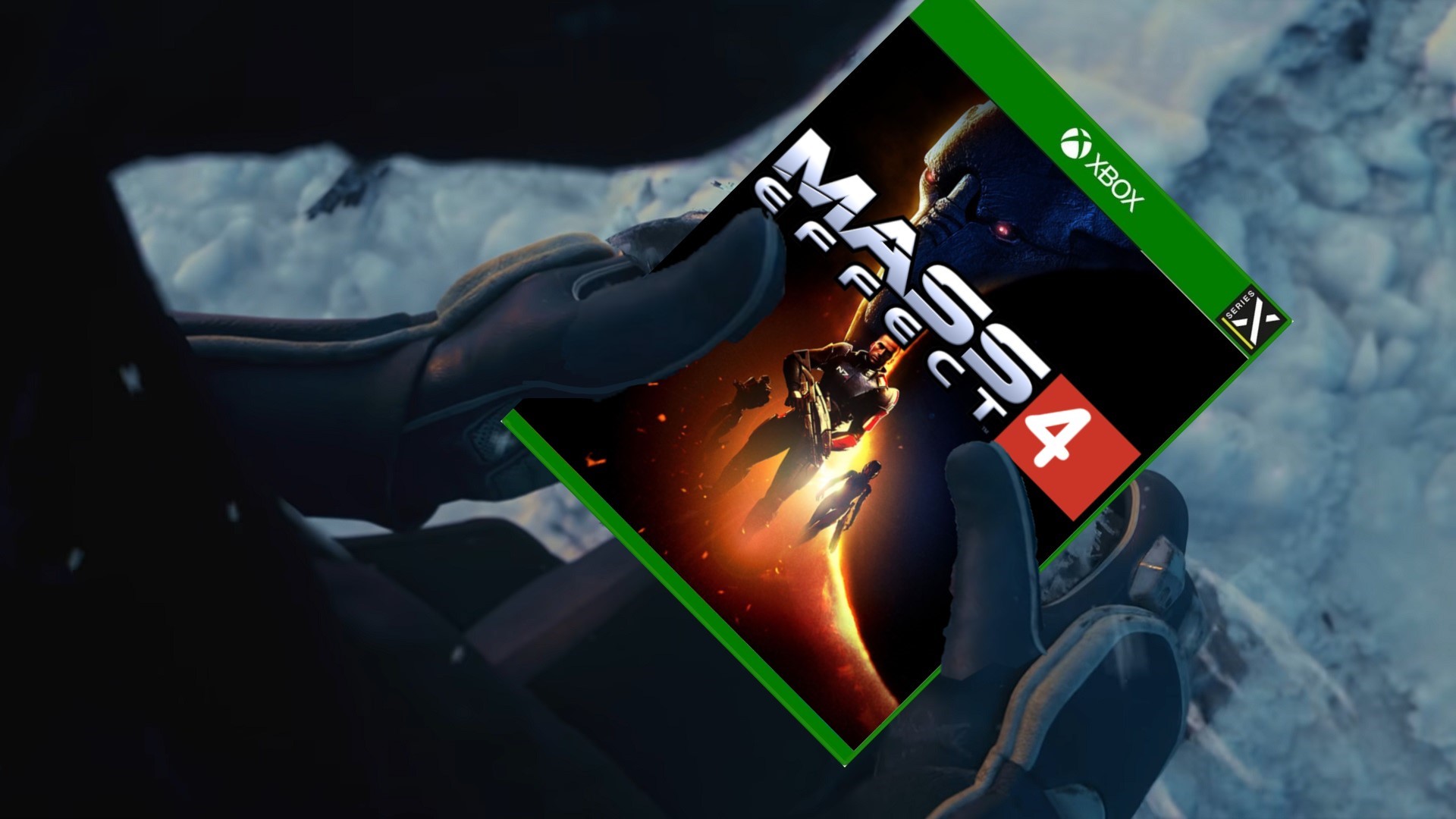
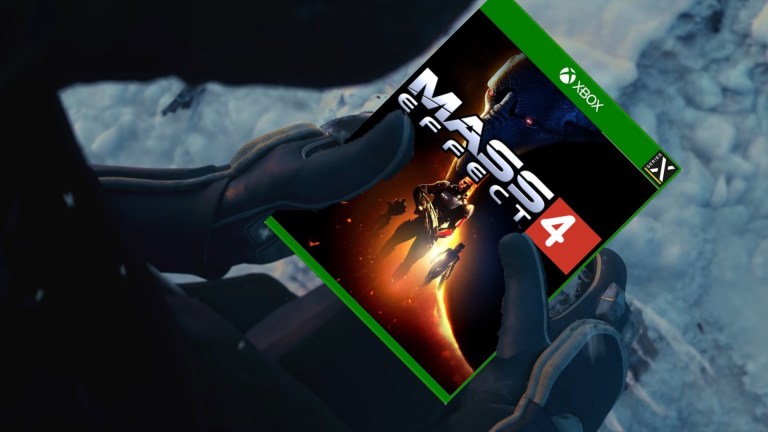
Graphic based on the Mass Effect teaser trailer showing a mock-up of a Mass Effect 4 box.
Will the TV show tie in with Mass Effect 4 in some way?

If so, does that mean that a re-telling of the original trilogy is off the cards? While I can understand the temptation of making a game and TV show that are connected, I wonder if that’s the right approach. If Mass Effect 4 is going to be a direct sequel to the original trilogy, not a spin-off or prequel, having the TV show re-tell that story could actually work really well. It could give fans who might be turned off by playing older games an easy route into the story just in time to pick up the newest entry in the series.

Of course, that might not be the route BioWare and Amazon want to go down. And there are points in favour of setting the TV series in the same timeline as the new game. Doing so could draw a line under the original Mass Effect story, setting the stage for something brand-new. The concern I’ll have, if that’s the way things go, is whether the new story will be as good as the original one, or whether this iteration of Mass Effect can live up to what came before.
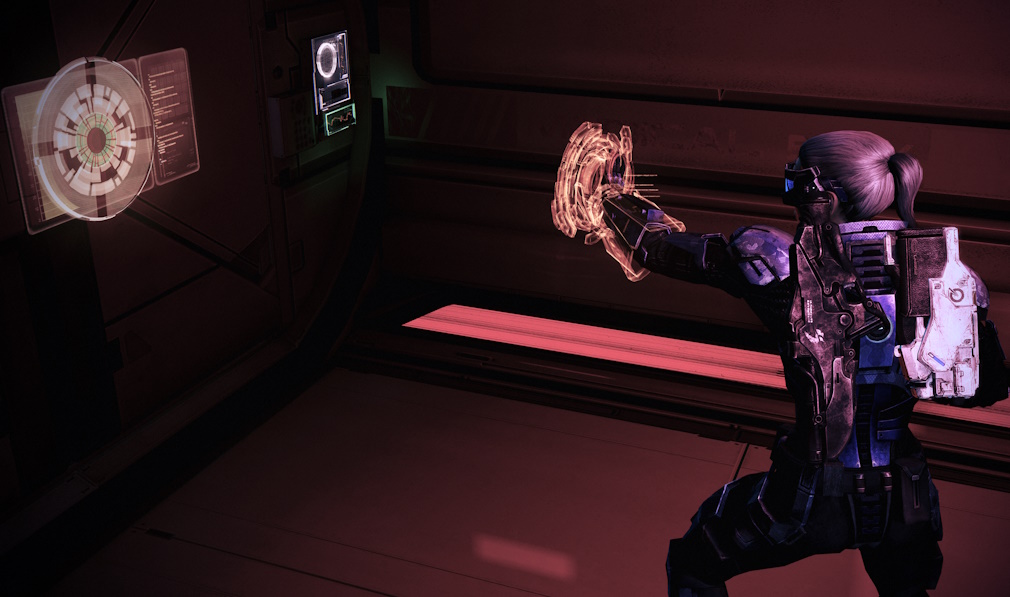
Screenshot of Mass Effect 3 showing Shepard opening a door.
Hacking a locked door.

So I think that’s everything I had in my notes. It goes without saying that the Mass Effect television series is several years away at least – and that it could be delayed again or even cancelled outright. The show seems to be in a very early stage of development, and while I welcome Amazon’s re-commitment to it, until we get more concrete information, part of me will remain sceptical about whether I’ll ever get to see it! I’m not getting any younger (or healthier) after all!

The Mass Effect games built up a rich, detailed, lived-in world that feels ripe for exploration in a different way. As much fun as it was to play through those games, I’m genuinely thrilled at the prospect of being able to enjoy the story all over again in a different way. It won’t be the same – and it will be an adjustment getting used to different performers in key roles and perhaps slightly different designs and aesthetic choices. But I don’t think it’s an exaggeration to call Mass Effect one of my favourite sci-fi stories… ever. If and when it makes it to the small screen, I’m really hopeful that it will be an exciting and enjoyable ride.
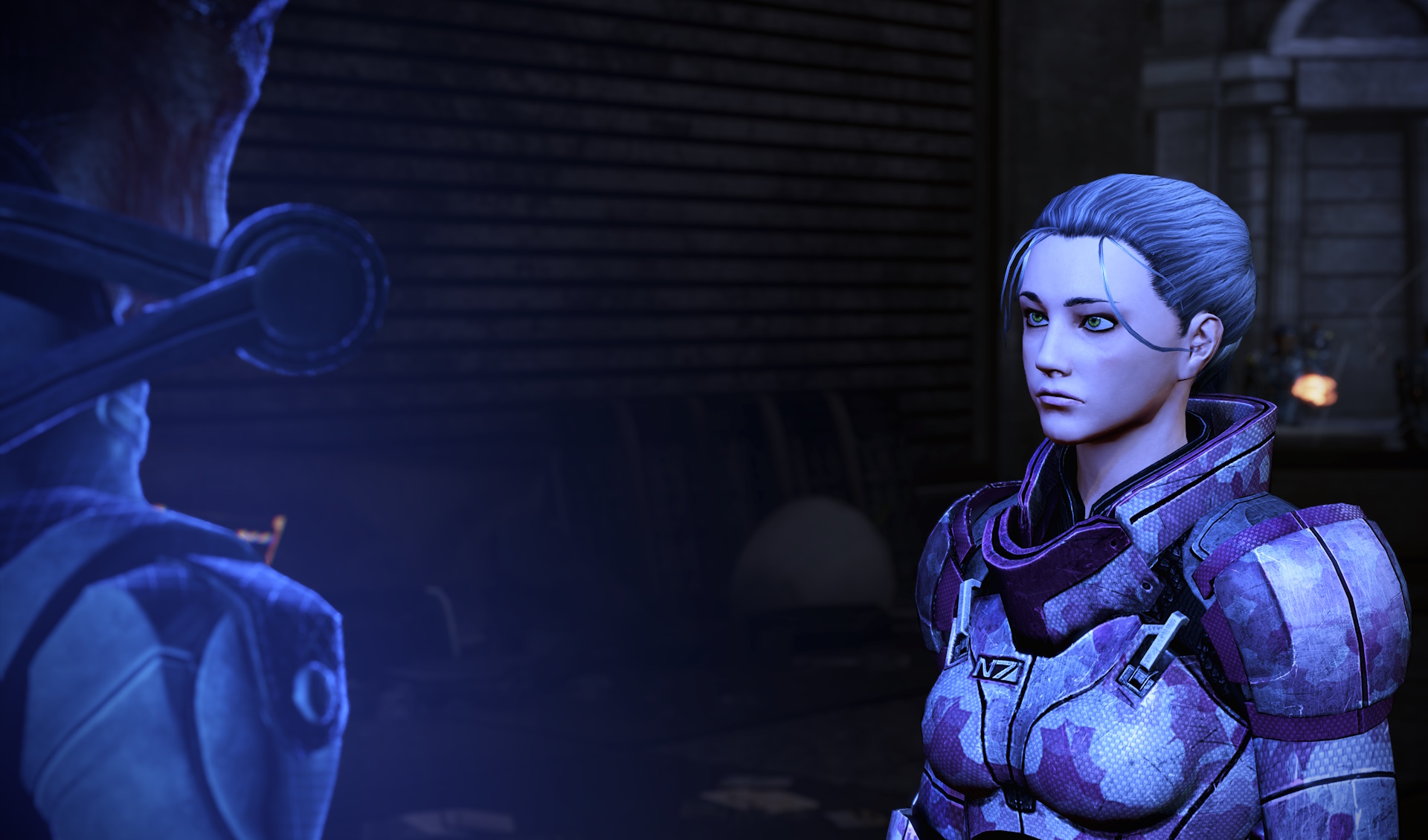
Screenshot of Mass Effect 3 showing Shepard speaking with Mordin via a holo-communicator.
Here’s hoping we’ll get an excellent adaptaion!

I hope this has been interesting. I know we got into wildly speculative territory, but there was a surprising amount to say about a TV series that’s still in early production! I could be wrong about re-telling the story of the original games, and I’ll try not to be too disappointed if the show ultimately tells a story that ties in with Mass Effect 4 or shoots off to the Andromeda galaxy!

I haven’t played Mass Effect in a while, so maybe it’s time to re-install Legendary Edition and go round again!


The Mass Effect video games – including Legendary Edition – are the copyright of BioWare and Electronic Arts. The Mass Effect television series (currently untitled) may be the copyright of Amazon Studios, Amazon Prime Video, and/or Electronic Arts. This article contains the thoughts and opinions of one person only and is not intended to cause any offence.
Questions that Mass Effect 4 will almost certainly need to answer

Spoiler Warning: There are spoilers ahead for the Mass Effect trilogy (including Legendary Edition).

It’s been a while since we last talked about the next entry in the Mass Effect series, but to celebrate my dedicated Mass Effect webpage finally going live here on the website, I thought it could be interesting to consider a handful of big questions that the team at BioWare will need to answer before a new story can be written. If you missed it, I now have a brand-new webpage dedicated to the Mass Effect series, and you can find all of my Mass Effect commentary, theories, and articles there. You can find this page by using the drop-down menu at the top of every page or post here on the website – or you can click or tap here to head there directly!

There hasn’t been much by way of news about the next Mass Effect game for a couple of years. BioWare released a brief CGI teaser all the way back in December 2020 confirming that the game is in pre-production, but since then, updates have been few and far between. BioWare provided a brief update in November 2022, saying that pre-production is “proceeding very well,” which sounded positive. In August 2023, however, BioWare announced that there were going to be job losses at the company. With production currently focused on Dragon Age: Dreadwolf, and with these cuts taking place, the next Mass Effect game is unlikely to see the light of day before 2026 or 2027 at the earliest.

Commander Shepard in the Normandy’s cockpit.

But that doesn’t mean there aren’t things to talk about! We may not see the game I’m tentatively calling Mass Effect 4 for a long time, but the studio will have already taken a number of big decisions about the game, its setting, its characters, and its key storylines. Today, I’m giving my two cents on what some of those decisions may be – and there are some absolutely massive ones that have serious implications for the state of the Mass Effect galaxy.

As I’ve said before, there are questions about the Mass Effect galaxy that BioWare simply can’t ignore forever. Maybe a single game with a focused story could sidestep one or two of these questions, but if Mass Effect is to survive long-term with new games (and perhaps even a TV series) being produced… sooner or later answers will have to come. What that means is that some of the biggest decisions open to players in the original Mass Effect trilogy will need to be given a canon outcome, one that Mass Effect 4 can build upon. To players who were adamantly opposed to playing the game a certain way, that could lead to hurt feelings and disappointment – but I see no way around it. Some of these points are too big, and the implications too diverse, for a new story to be written that could take so many different outcomes into account.

Bypassing a locked door in Mass Effect 3.

Some Commander Shepards died at the end of Mass Effect 2. That game’s suicide mission could, under the right (or should that be wrong?) circumstances lead to Shepard’s death, and that meant that players had to either restart from an earlier save or start a new campaign in order to play Mass Effect 3. The third entry in the trilogy was able to take into account a lot of decisions from earlier games – but Shepard’s death was a bridge too far.

I bring this up because the Mass Effect series has taken big decisions like this in the past. Mass Effect 3 couldn’t happen without Shepard being alive, meaning players whose characters died at the end of Mass Effect 2 didn’t get to see their decisions carried forward. The same will have to happen in Mass Effect 4 – albeit on a grander scale.

So let’s try to look ahead to Mass Effect 4, and – assuming the game will be the sequel we’re all hoping for – pick out some of the biggest questions that will need to be answered.

Question #1:
What colour were the explosions?

An exploding Mass Relay.

This is a deliberately facetious way of asking the biggest question that any sequel to Mass Effect 3 cannot ignore: which ending was chosen? It simply isn’t going to be possible for the game to try to account for all three possibilities; the differences between them are too vast for a single story to encompass wildly divergent states of the galaxy. So one ending will have to be declared “official” – and if I had to place a bet, I’d say that the “destroy” ending is going to be the one that’s picked.

All of the endings of Mass Effect 3 have points in their favour from a narrative standpoint, but “destroy” was the one that Shepard had been working towards across the entire trilogy. Not only that, but it’s the only ending in which it’s even remotely possible – based on what we saw on screen – that Shepard could have survived. “Destroy” is, according to stats about Mass Effect: Legendary Edition that were released by BioWare, also the most popular choice that players made. So there are a lot of points in favour of making “destroy” the canonical ending to Mass Effect 3.

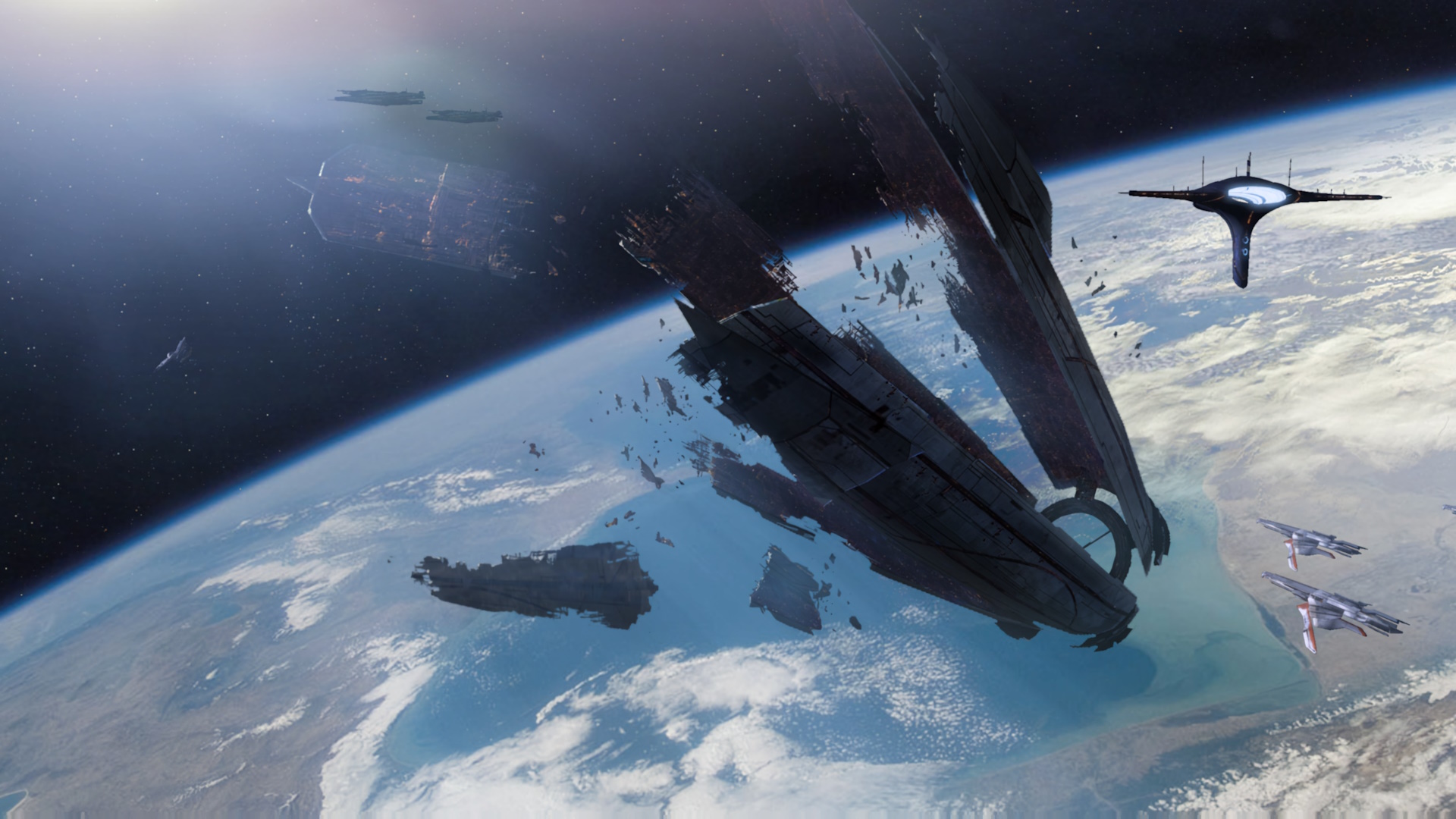
The damaged Citadel in orbit of Earth.

The state of the galaxy is going to be profoundly altered by whichever ending to Mass Effect 3 was chosen, and I just don’t see how a new game could possibly take that diversity and variety into account. Mass Effect 4 would essentially need to be three games in one in order to accomplish that – and that just doesn’t seem likely. If Mass Effect 4 is to continue the series, perhaps laying the groundwork for a new trilogy or series of games, that divergence will only grow over the course of its story. So there has to be a single starting point chosen – even if that means disappointing some players who were particularly attached to one of the other ending variants.

I felt that Mass Effect 3′s final chapter was trying to present “synthesis” as the better option. That was the one that was hardest to unlock, and in the epilogue, EDI seems to suggest that “synthesis” led to a kind of technological paradise, with the galaxy’s races living in harmony… but I always took umbrage with that idea. Not only was it literally the goal of the Reapers as stated by the AI that controls them, it was a completely different outcome to what Shepard had been fighting for. It was also not Shepard’s place to inflict such a radical change on the entire galaxy without anyone’s consent – and without even listening to a single other opinion on the matter! But more than that, “synthesis” doesn’t seem like it would lead to an interesting or relatable narrative. With human characters merged with AI, and with everyone living in a utopia… how could we as the audience get invested in the people or the world?

Question #2:
Did Shepard side with the Geth or the Quarians – or find a route to make peace?

Tali, Shepard, and Legion in Mass Effect 2.

The Geth-Quarian conflict was one of the most interesting in Mass Effect, and the way in which it came to a head in the final chapter was incredible. It was disappointing, however, that after the mission to Rannoch, the Geth and Quarians weren’t really mentioned much, and that all of the hard work involved in getting one or both of them to join the war effort was relegated to a couple of JPEG images in the war assets menu! But enough about the rushed end to Mass Effect 3!

There are galactic repercussions that will reverberate from the Geth-Quarian conflict, and how it was resolved will have a huge impact on the state of the galaxy in Mass Effect 4. If Shepard chose to side with the Geth, then chose the “destroy” ending… both races could be extinct. Or if Shepard found the pathway to peace and then chose either “synthesis” or “control,” both races could still be around and working together. Whichever outcome it is, whether the Geth, Quarians, or both are present in the galaxy is going to be a big deal.

Quarians in the Mass Effect 3 epilogue.

Here’s my pet theory: one way or another, BioWare will include both the Geth and Quarians in Mass Effect 4 – even if that means ignoring one of the consequences of the “destroy” ending. Depending on how much time may have passed in-universe, the new game could claim that the Quarians rebuilt the Geth after they were destroyed – or perhaps the Catalyst either lied about the Crucible destroying all synthetic life or simply got it wrong.

I think that given the popularity of both the Quarians and Geth – thanks in large part to their squadmate representatives, Tali and Legion – BioWare won’t want to throw either away. If we stick to a literal interpretation of the Catalyst’s warning in Mass Effect 3 and assume that “destroy” will be chosen as the canon ending, then perhaps the Geth will be absent. But I wouldn’t bet on that, and I think a technobabble explanation for their survival or resurrection is plausible and could be made to fit.

Question #3:
Did Shepard survive?

Does this moment represent Shepard’s survival?

This is the big one! While not as galaxy-altering as the way in which the Crucible was used or the literal survival of entire races… from a character point of view, Commander Shepard is the player’s avatar in the Mass Effect world. If there’s even a slim chance that they might’ve survived, at the very least we should find out!

I can’t decide right now whether Mass Effect 4 will go down the route of making Shepard the player character once again. After the disappointment of Andromeda, there will surely be a temptation to “stick with what works” in the Mass Effect universe – and Shepard is clearly a big part of that. That being said, I think there’s absolutely scope to create a new player character and to expand Mass Effect beyond Shepard and the crew of the Normandy. If the franchise is to continue long-term, that will have to happen sooner or later.

A male Commander Shepard aboard the Normandy.

But regardless, news of Shepard’s fate should reach us at some point during the game – even if it’s only to confirm that they died centuries earlier. One thing that a lot of folks found frustrating about Andromeda was that the outcome of the Reaper War was left entirely unresolved, and I don’t think that the next Mass Effect game could get away with repeating that mistake.

After everything Shepard went through to defeat the Reapers, they have definitely earned their retirement! But if the galaxy is in danger once more – and surely, somehow, it will be – they could be the person that has to step up once again and lead a new fight.

Question #4:
What became of the Rachni?

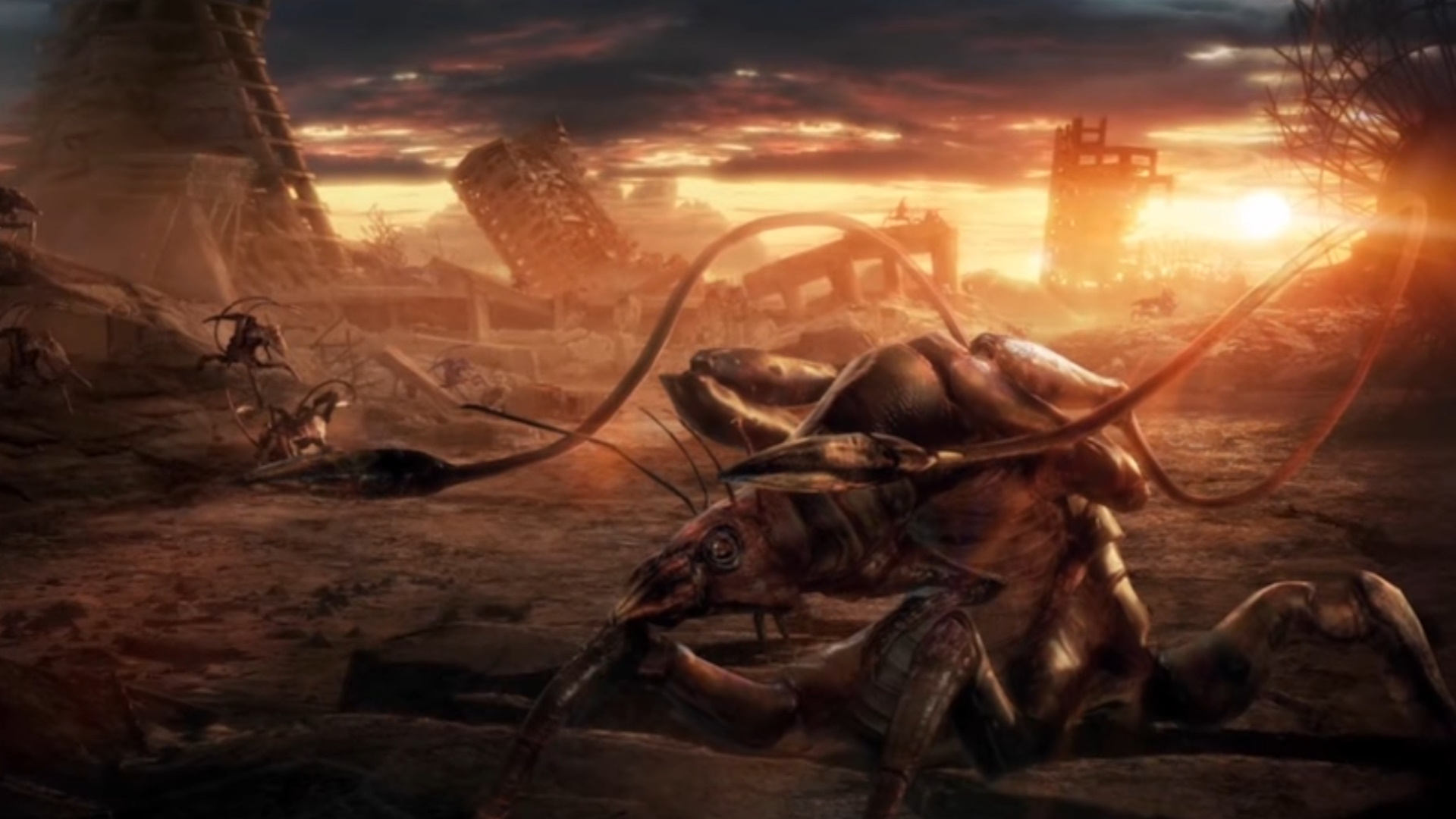
The Rachni in one possible epilogue scene.

Depending on choices made in both Mass Effect 1 and Mass Effect 3, it’s possible that the Rachni may have survived. The Rachni were an insectoid race that threatened to overwhelm the galaxy centuries before the events of the games – and were believed to be extinct. Shepard was given the option to save the last known Rachni queen on two occasions – and the presence or absence of the Rachni could have wider implications for the state of the galaxy.

If the Rachni queen was saved, Rachni workers join up with Admiral Hackett’s fleet and contribute to the Crucible project. Given the scale of the Crucible, I don’t think the Rachni’s survival could be hidden in the aftermath of the war, so any hope for a return to hiding away on an obscure planet seems to be out of the question.

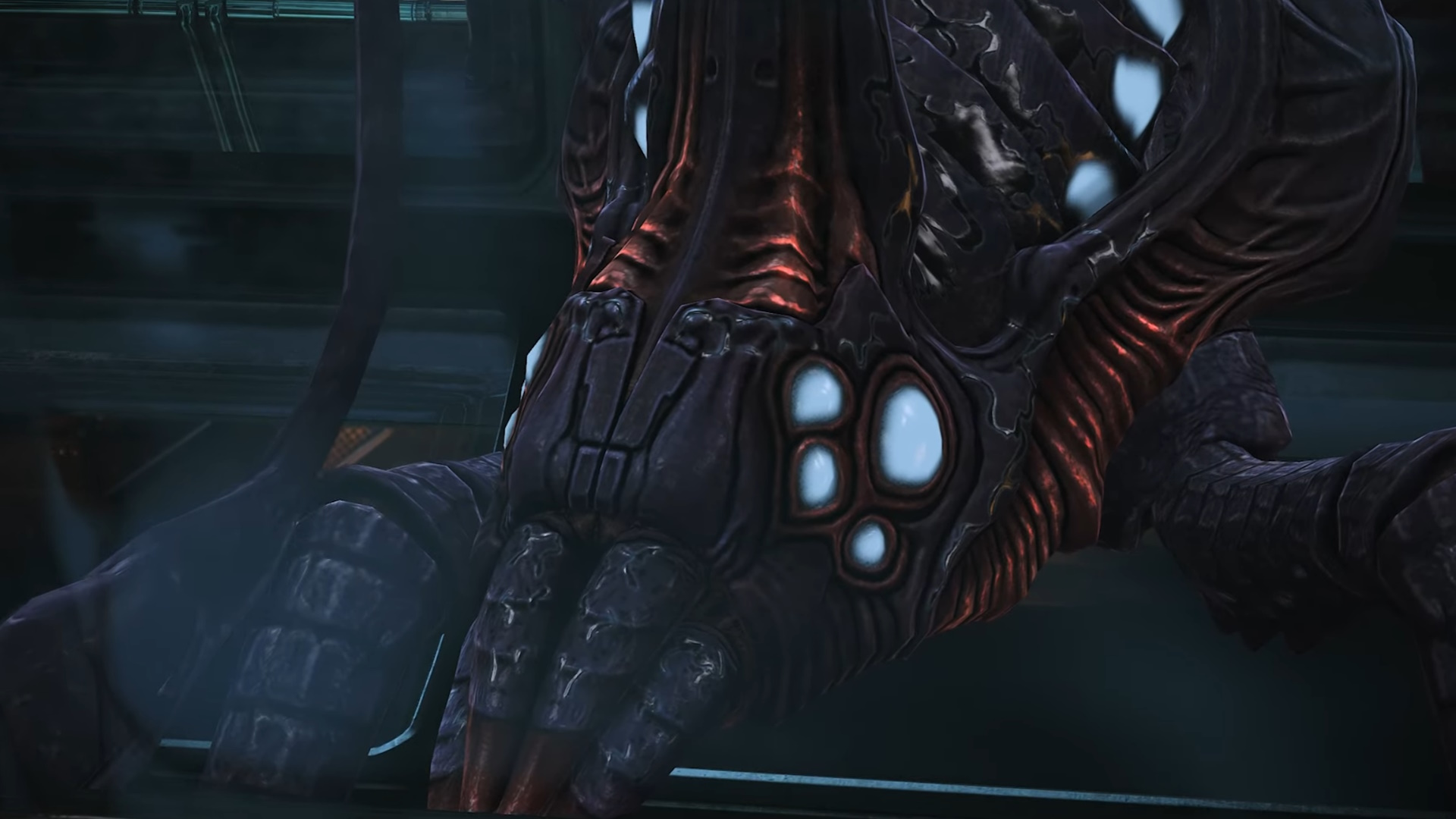
The last surviving Rachni queen.

But not everyone would be thrilled about the Rachni’s return. The Krogan still view the Rachni as a kind of ancient ancestral enemy, and there may be Krogan and Asari who still remember the aftermath of the Rachni Wars. Even if the Rachni’s contribution to the success of the Crucible was public knowledge, there are many in the galaxy who would be wary – and some who might view them as a threat. Could an attack on the Rachni be the first sign of the Reaper War alliances breaking down?

Alternatively, it’s possible that the Rachni were never saved by Shepard and thus went extinct with the defeat of the Reapers. This would preclude their presence in the story as either a friend or foe – unless they could be revived, once again, by technobabble!

Question #5:
Did the Leviathans join the war effort?

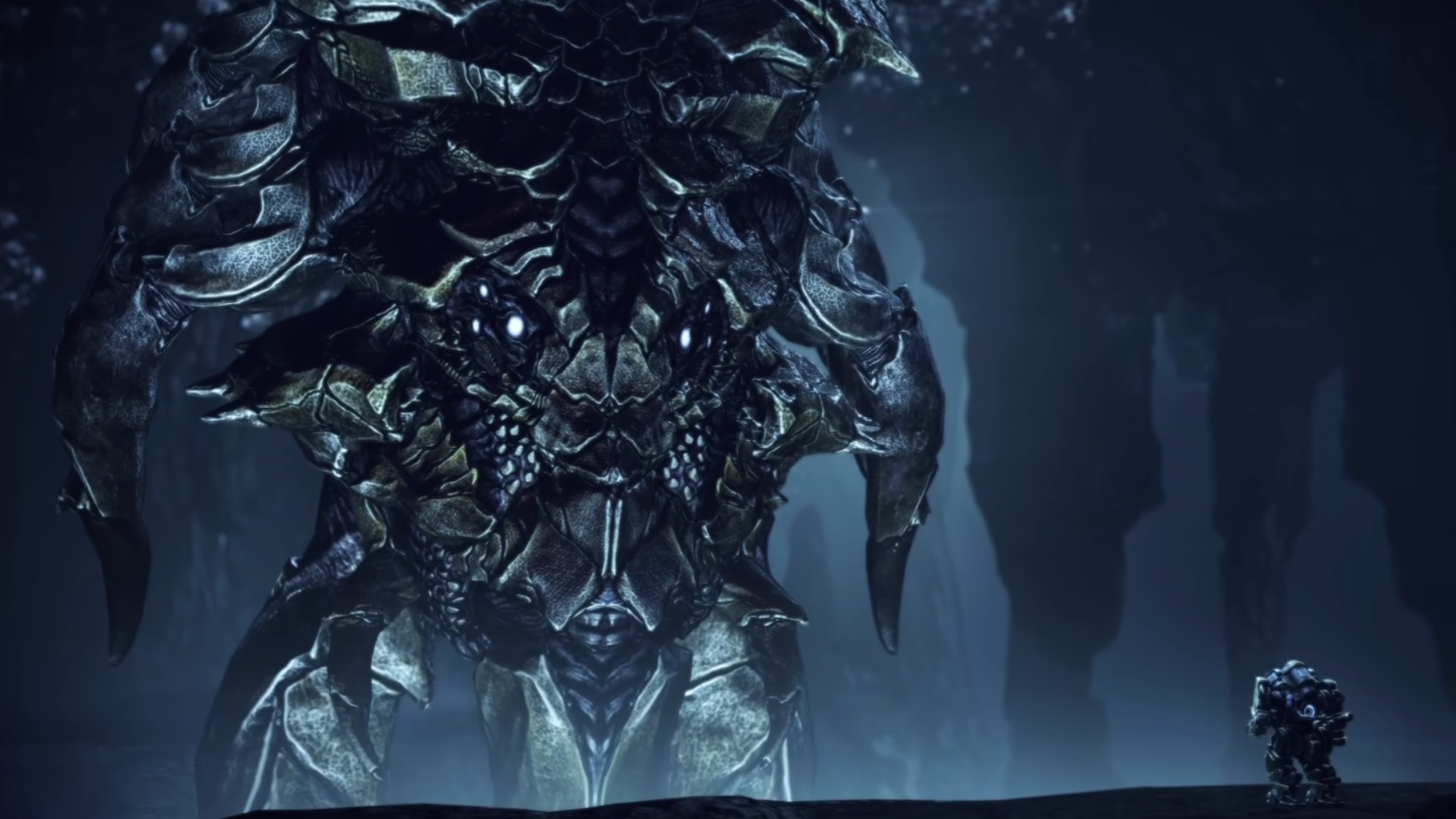
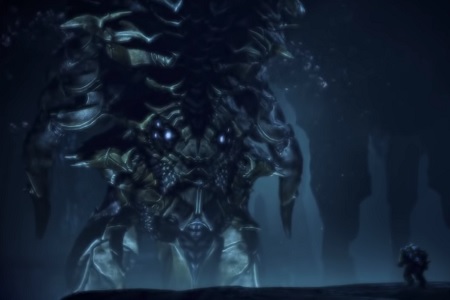
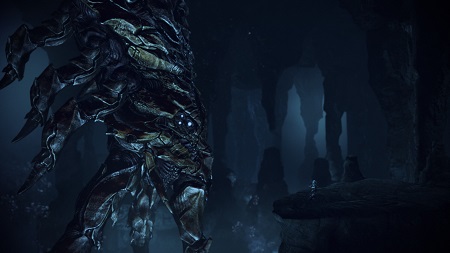
The Leviathans were eventually tracked to their base.

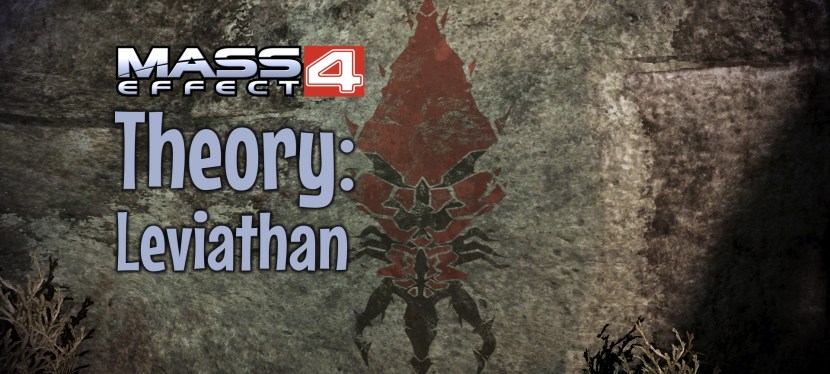
Another pet theory of mine is that the Leviathans – who were originally DLC for Mass Effect 3 – will return as the “big bad” in a new story, seeking to reclaim a galaxy that they view as “theirs.” You can read more on that by clicking or tapping here, by the way. But for our purposes today, the question is whether they joined the war at all – or whether they were able to remain hidden.

Following the Leviathan story to its conclusion is not an essential part of Mass Effect 3, but it’s one that has far-reaching implications. The discovery of the Leviathans explains the origin of the Reapers, but it also introduces us to a very alien race – one that ruled the galaxy and enthralled other races aeons ago. Despite their defeat at the hands of the Reapers and the passage of tens of millions of years, the Leviathans seem to have lost none of their arrogant sense of superiority – so how they could possibly be integrated into a multi-racial galaxy is an open question.

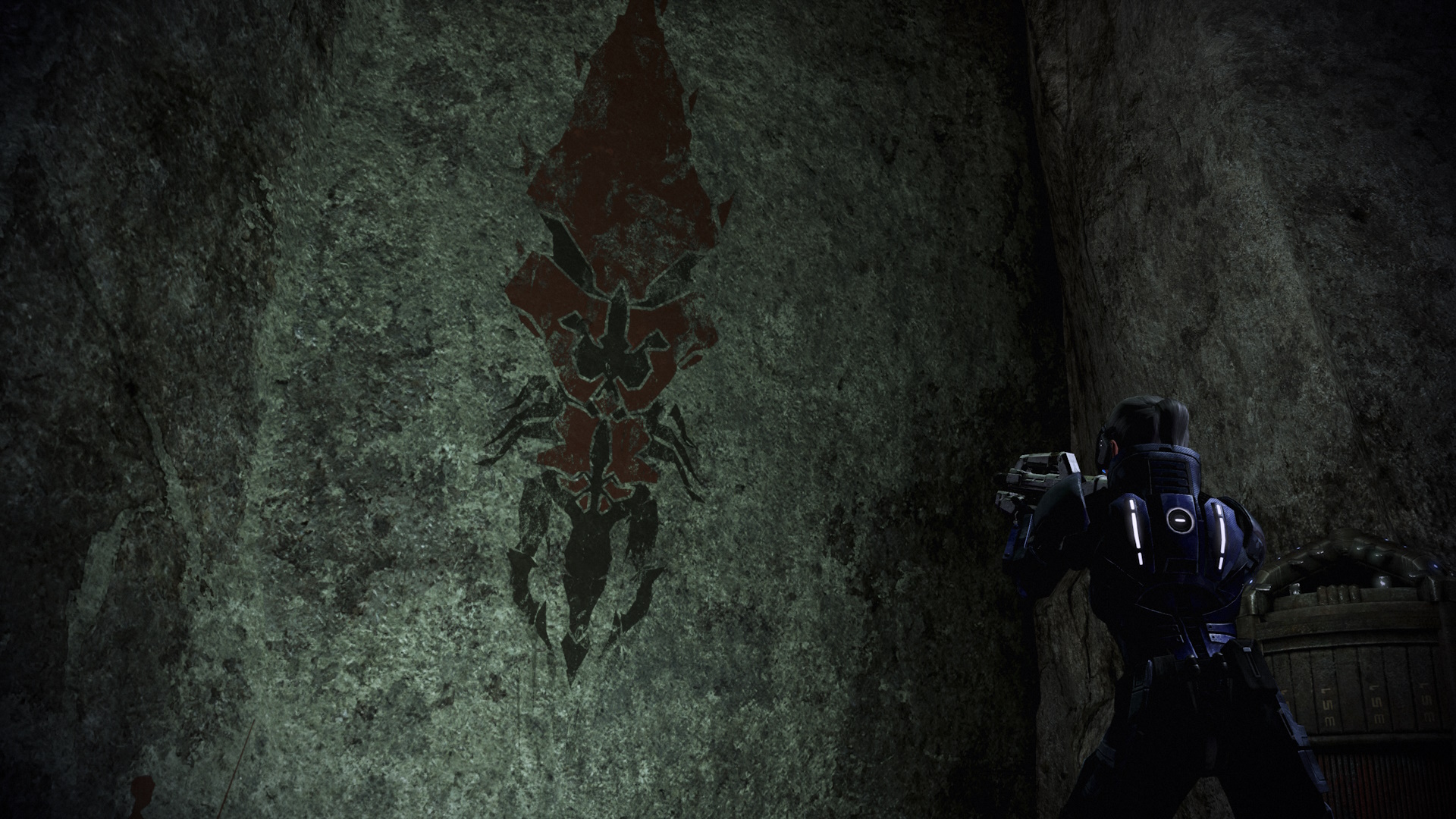
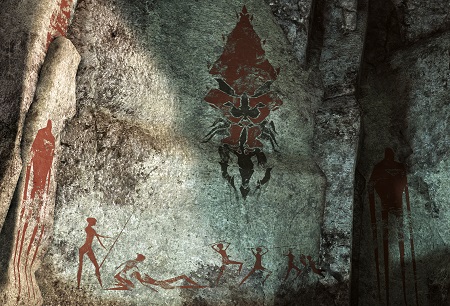
Commander Shepard inspecting a Leviathan cave painting.

Regardless of whether they end up as the new game’s villains, though, I don’t think Mass Effect 4 could just ignore the Leviathans. Their numbers may be small, but with the Reaper threat gone it’s not inconceivable that the Leviathans would want to expand, leaving behind their watery planet. The consequences of this for the rest of the galaxy could be extreme – or not! But either way, the Leviathans will be a presence.

Players will want to know what happened after the Reaper War – and realistically Mass Effect 4 will have to at least pay lip service to all of the races and factions that were involved, telling us what became of them… or where they were last spotted. The Leviathans also have a lot to answer for, in a way, as the original creators of the Reapers!

Question #6:
Which of Shepard’s companions survived?

Concept art featuring Shepard’s crew from Mass Effect 2.

Across the Mass Effect trilogy, Shepard teamed up with nineteen main crewmates – and there were also a handful of others who served in that role on a temporary basis. Even if Mass Effect 4 doesn’t feature all of them, it would still be nice to get news of their fates. During the final battle of the Reaper War, it’s possible that not all of them would have survived, and Shepard had the opportunity to say goodbye to many of them before the final act of Mass Effect 3 got underway.

As of right now, we can safely assume that Liara survived! She was shown in the CGI teaser for Mass Effect 4 back in 2020, so it seems all but certain that she’ll make an appearance – somehow – in the new game. That doesn’t mean she’ll be a squadmate or playable character, but she could play a significant role. She could even be a kind of narrator for the game.

Liara as glimpsed in the 2020 teaser trailer.

Characters who were aboard the Normandy at the end of Mass Effect 3 seem to survive the end of the game – or at least most of them do, depending on the choices players made and how strong their war assets were going into the final clash. We can safely assume that the likes of Joker, Garrus, and Javik survived the immediate aftermath of the war, at least.

But that still leaves us with most of the folks from Mass Effect 2 – characters like Miranda, Samara, and Jack. All of them could have died before the endgame, but assuming they were alive going into the final fight… we don’t know what happened to them. If Mass Effect 4 is set many years later, discovering their fates could be spread across the game, and players could learn what happened to them without necessarily having them all make an appearance.

Question #7:
Was the Genophage cured?

A vision of Tuchanka if the Genophage cure was sabotaged.

Commander Shepard has the opportunity in Mass Effect 3 to cure the Genophage – or sabotage the cure. The Genophage was an artificial sterility plague that had been inflicted upon the Krogan by the Turians and Salarians, and there will be galactic-scale consequences depending on Shepard’s actions here.

One day we’ll have to talk about this storyline in more detail – because I find it one of the most interesting and morally dubious storylines in the entire Mass Effect trilogy! But for today, suffice to say that curing the Genophage, or refusing to cure it, will have major ramifications for the whole galaxy.

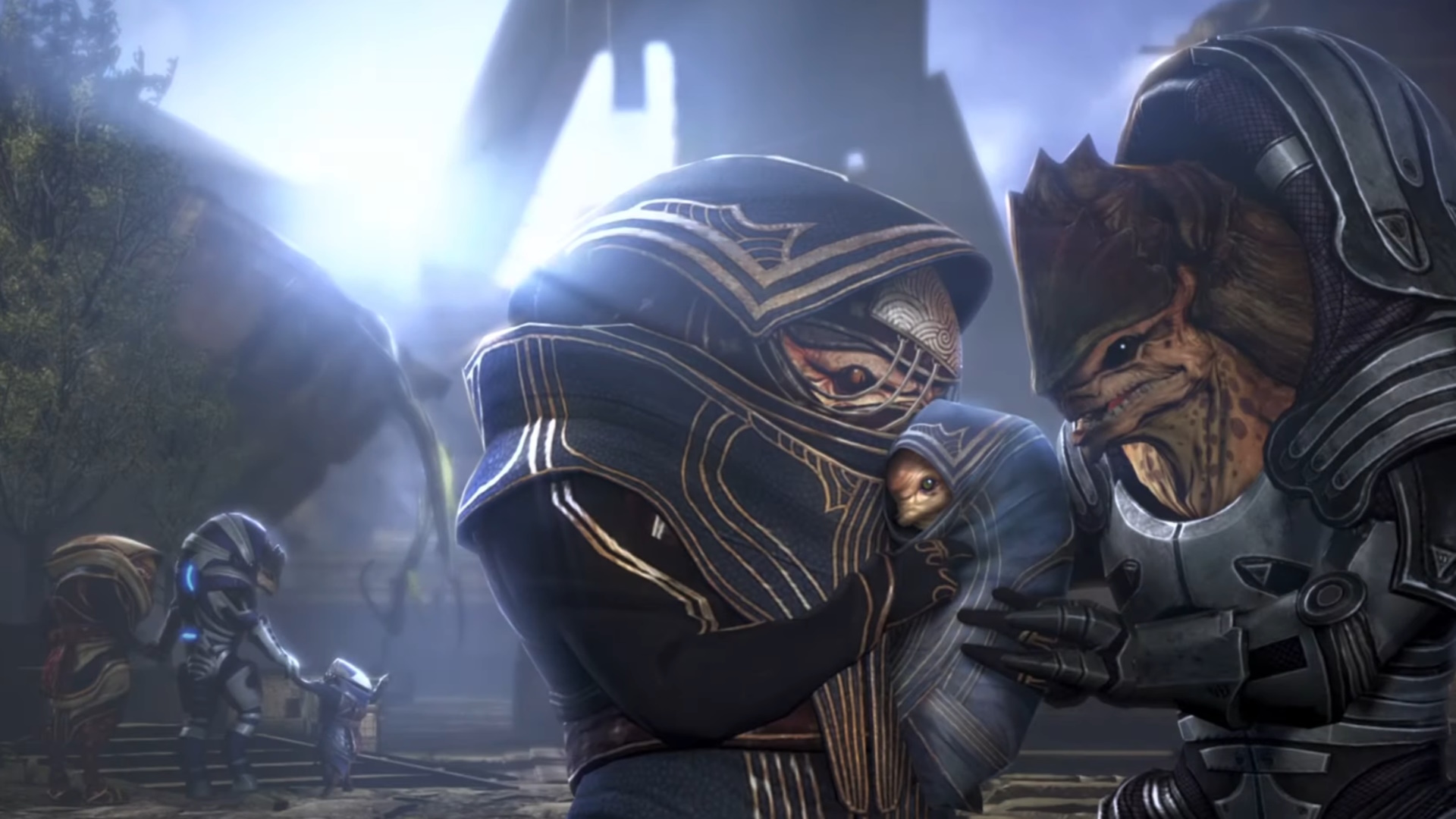
Happy Krogan families – if the Genophage was cured.

If the Genophage was cured, there will be a lot more Krogan around – but they should be friendly, right? I mean, Shepard cured the Krogan people, and if Wrex and Eve survived to lead the Krogan, that knowledge will be passed down and celebrated. But there are some potential issues here! Even Wrex seemed to suggest that Krogan expansion was on the agenda – and centuries ago, Krogan expansionism led to war.

On the other hand, if the Genophage cure was sabotaged, the remaining Krogan will likely feel betrayed and could launch a new rebellion. At the very least, Krogan will be hostile and unfriendly if the Genophage wasn’t cured. Having spent a lot of time with Krogan characters across the trilogy, I think it would be hard to pull off turning them into villains next time around, even if there’s a narrative pathway that makes sense in-universe. But a story could be crafted in which, no matter what decision Shepard made, the cure was ultimately sabotaged and doomed to failure.

Question #8:
Who gets to be on the Council?

The Council in Mass Effect 1.

More broadly, we can even ask whether there’s a Council at all in the aftermath of the Reaper War – but somehow, I suspect there will be. In the Mass Effect trilogy, humanity’s rapid ascent from newly-encountered species to full Council membership was a contentious issue with some of the other races, and after everything that happened with the Reapers, a shake-up of the galactic order could be on the agenda.

From our own history, we can point to how World War II led to the creation of the United Nations, and how the pre-war order was transformed in the aftermath of the conflict. Something similar could happen in the Mass Effect galaxy, with races like the Krogan, Quarians, Batarians, or even the Rachni and Geth all being potential members of a broader, more diverse and democratic Council.

A Vorcha, Salarian, and Volus served on the Council… in the movie Blasto!

If several races were invited to join, those who were snubbed might feel particularly stung! And others, like the Leviathans, for example, may not wish to join a power-sharing arrangement – they might prefer to seek conquest and total power for themselves. But there are many who’d happily join the Council.

The pre-war order of the Salarians, Turians, and Asari being the dominant forces in galactic politics could be at an end – but will they be okay with that? Will the Salarians genuinely listen to Krogan input, and will the Asari really be willing to see the Quarians as equals? Will there be arguments about how to direct the resources necessary to rebuild? There could be a lot of points of tension!

So that’s it!

Shepard, Javik, and Tali.

We’ve looked at a few questions that the next Mass Effect game – or a future sequel to Mass Effect 3 if that game turns out to be something different – will have to address. Some of these points could be bigger and more important than others depending on what kind of story the new game aims to tell, but sooner or later there are big questions about the state of the galaxy that will have to be tackled.

Andromeda tried to sidestep these questions and do its own thing – which was probably not a bad idea in 2017, coming so soon after the trilogy had wrapped up. But there were other problems with Andromeda that meant the game didn’t stick the landing – and when it was already feeling like an overblown side-quest, some fans were left disappointed when it didn’t address any of the big questions facing the Mass Effect galaxy.

Take cover!

There’s an opportunity for the next game in the series to not only answer some of these big questions, but to use the answers to set the stage for a brand-new adventure. Taking what happened with the Leviathans, for example, and expanding on that story to create a new villain is one possibility that I think is worth keeping an eye on!

So I hope this has been a bit of fun, or at least interesting. There are definitely other story points that a new game could address that I didn’t include here; it’s by no means an exhaustive list. And we may return to some of these questions and ideas in the future to talk more about them or give them a longer write-up. I had fun thinking about where the next Mass Effect game could go, at any rate!

Earlier this summer I replayed the Mass Effect trilogy, and that was part of what prompted me to create a proper webpage for the franchise here on the website. Although I don’t talk about Mass Effect all the time, it’s a series I’ve enjoyed and I am certainly looking forward to seeing what comes next.

Don’t forget to swing by my new Mass Effect webpage. You can find it by clicking or tapping here.

The next Mass Effect game is in early development and most likely won’t be released for several years. Mass Effect: Legendary Edition is out now for PC, PlayStation 4, PlayStation 5, Xbox One, and Xbox Series S/X. The Mass Effect series – including all properties mentioned above – is the copyright of BioWare and Electronic Arts. This article contains the thoughts and opinions of one person only and is not intended to cause any offence.
Thoughts on a potential Mass Effect television series

Spoiler Warning: There are minor spoilers present for the Mass Effect trilogy.

Have you heard the latest rumour? Amazon is apparently very close to securing a deal to make a television series based on the Mass Effect video game franchise. I thought it could be fun to discuss this rumour – given that it seems to be close to being officially confirmed – as well as the merits of big-budget television shows in general.

Many film adaptations of video game properties have proven to be disappointing. There are a number of reasons why that’s the case, and it varies from project to project, but one thing absolutely worth considering is the fundamental, irreconcilable difference between how long the average film lasts and how long the average video game lasts.

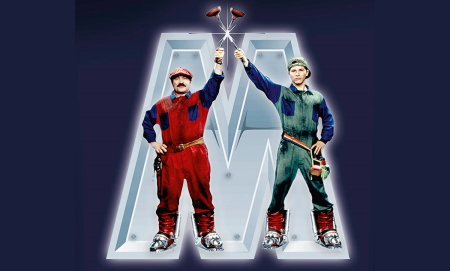
1993’s Super Mario Bros. is an… interesting film.

Many video games – especially those with strong stories, like the Mass Effect series has – can require many, many hours of playtime. Despite what I said a moment ago, there really isn’t such a thing as an “average” video game length; it can vary from a couple of hours all the way to dozens or even more than a hundred. But most video games that have seen disappointing film adaptations in recent years have been these kinds of long, story-driven titles – and condensing a whole video game’s worth of story into a two-hour film is difficult to get right.

This is also the problem a lot of novel adaptations face, so much so that “the book was better than the film” has become an overused cliché! Even adaptations that have been widely praised overall – like the Harry Potter series, for instance – had to make significant story cuts to squeeze an entire book’s worth of plot into a standard cinematic runtime. Exceptions exist, of course, and the Lord of the Rings films from a few years ago are an example. But in that case, the extended editions of the films are widely considered to be superior to the shorter theatrical cuts, and the extended edition of the trilogy clocks in at well over eleven hours long.

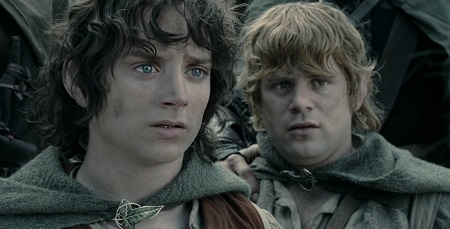
The Lord of the Rings films are an exception to the rule!

What I’m trying to say is that a story like Mass Effect will be far better served by a television series adaptation than it would’ve been by a film adaptation. If it’s true that this is the route Amazon wants to go down, I’ll be very interested to see what will become of the project in the months and years ahead.

In the aftermath of big serialised shows like Lost and Game of Thrones, audiences have become used to story arcs that run across multiple seasons, something that would be a perfect fit for a long story like the one seen in the Mass Effect games. Even just the original story of Mass Effect 1 could itself be two seasons’ worth of television without feeling padded or bloated, so there’s potential in this project to really bring the Mass Effect galaxy to life.

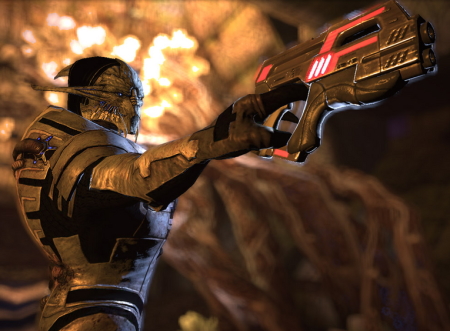
Saren, the main villain of Mass Effect 1.

Amazon is still a relative newcomer to the television series game, but the company has already got an impressive track record. Shows like The Man in the High Castle and Jack Ryan were great, The Wheel of Time, which debuted just last week, is off to a fabulous start, and the company also picked up The Expanse following its cancellation, putting out two amazing seasons of the show so far. Amazon has also played host to Star Trek: Picard and Star Trek: Lower Decks, giving Prime Video a solid lineup in the sci-fi and fantasy genres. And we haven’t even mentioned the upcoming Lord of the Rings series!

Projects like The Lord of the Rings have demonstrated Amazon’s willingness to spend vast sums of money on their television shows, and if they do pursue a Mass Effect series, I would hope they’d be willing to invest there too. One of the great things about the Mass Effect galaxy is how “alien-feeling” some of its non-human races are. Races like the volus, hanar, and krogan were able to be created for the video game series because the animators weren’t limited by the need to use human actors – and recreating those races for the small screen will be a challenge.

Bringing a hanar to the screen in a live-action series will be a challenge!

I don’t like to speak ill of Star Trek, but in that respect I think Mass Effect actually gives the franchise a run for its money! Many alien races in Star Trek – and other live-action sci-fi shows and films too – are naturally limited by using human actors. There have been some very different-looking aliens, of course, but the majority of the main cast are humanoid, something that’s also true of Star Wars. Mass Effect shook that up with races like the krogan being part of the player’s crew from the very first game, and I’d be curious to see how well that would work in a live-action production.

The story of the Mass Effect trilogy, with Commander Shepard on a quest to save the galaxy from the Reapers, would be absolutely fascinating to see retold as a television show! It would definitely need multiple seasons to do justice to such a long story (my playthrough earlier in the year of Mass Effect: Legendary Edition clocked in at almost 80 hours) but I think it could be done exceptionally well.

I recently replayed the Mass Effect trilogy.

Some fans have expressed concern about retelling the story of the Mass Effect trilogy. Not only would doing so mean recasting characters that fans have come to know and love, but it would also mean setting in stone a number of key decisions which form the core of the games’ role-playing and branching storylines.

On the first point, I think that we’ve seen so many franchises recast key characters over the years that I’m not particularly worried. In Star Trek we’ve had characters like Spock go through three iterations at this point, and while many fans have a favourite portrayal, I don’t think anyone disagrees that all three versions of the character work as intended in their various stories. Just like many actors have played roles like Hamlet or Richard III over the years, there’s room for more than one actor to play Commander Shepard. Heck, the original Mass Effect games already have two Commander Shepards – a male and female version of the character!

There are already different Commander Shepards…

On the second point, the Mass Effect galaxy absolutely feels like a vast setting in which different stories could be told. The story of the Reaper War is exciting and I think would make for engrossing television, but equally a Mass Effect television show could tell an original story in the same setting. Amazon is doing precisely this with its Lord of the Rings adaptation – the new show won’t be a retelling of the books nor a remake of the films, but a prequel set millennia earlier.

There’s huge potential in a Mass Effect television series, and there are many different ways to jump into the setting and tell stories. It wouldn’t have to be a straight adaptation of the video games and Commander Shepard’s story, because there are so many other stories out there in the Mass Effect galaxy. But at the same time, why not? The Reaper War is one of the best sci-fi stories I’ve seen in many years, and even though its rushed and imperfect final act did put a downer on things, that’s something that a television series could actually fix. An adaptation doesn’t have to be a like-for-like copy, so there’s scope to go back into the story and fix things that didn’t go to plan in the original games.

So watch this space! The rumour mill suggests that an announcement may be imminent, and while I don’t have “sources” of my own, I’m picking up this story from a number of different outlets – some of which are more reliable than others! For my two cents, I think a series like Mass Effect would work far better as a television series than a film, so I’m keeping my fingers crossed. If and when we get any major news be sure to check back as I may have more to say.

The Mass Effect series is the copyright of Electronic Arts and BioWare. This article contains the thoughts and opinions of one person only and is not intended to cause any offence.
Mass Effect 4 theory: Leviathan

Spoiler Warning: There are spoilers ahead for Mass Effect: Legendary Edition and its ending.

Though the release of the underwhelming Mass Effect: Legendary Edition earlier this year was partly a money-making ploy on the part of BioWare and Electronic Arts, there is another significant factor in the development of what we’ll generously call a “remaster.” Legendary Edition had the task of rehabilitating the series’ reputation following the disappointment of Mass Effect: Andromeda, and was also tasked with bringing in new fans – as well as getting existing fans hyped up – in time for the upcoming release of Mass Effect 4. In that sense, Legendary Edition does seem to have largely succeeded, as excitement for the next entry in the series is higher than it’s ever been.

No details have yet been announced for Mass Effect 4, and we’ve only had the tiniest of teases in the form of a CGI teaser trailer, so any details of the game’s story are complete unknowns. But based on what we know about the Mass Effect galaxy, perhaps it isn’t too early to speculate about what might come next for Commander Shepard and their crew… assuming Shepard is coming back, of course!

Mass Effect 4 is coming!

One of the key things Mass Effect 4 will have to balance is the scale of its story. Whether we get to play as Shepard or not, Mass Effect 4 will almost certainly be picking up the story in the aftermath of the Reaper War. This conflict saw the whole galaxy – led by Shepard – fighting for its very survival against a seemingly unstoppable foe, so from a narrative point of view that kind of epic tale can be hard to top.

This was the fundamental problem that befell Mass Effect: Andromeda. Even if that game had been launched in a better condition, without the bugs and visual glitches that would go on to define it for many players, the underlying story still felt anticlimactic. I’ve described Andromeda in the past as a game that feels like an overblown side-quest, and partly this is because of the story that came immediately before it. Andromeda was an attempt to branch out, to take Mass Effect away from Commander Shepard and spin it out into a larger franchise. But it failed not because of its bugs and other technical issues – though those were catastrophic in their own right – but because it told a story that many players simply weren’t interested in.

My face is tired.

Coming on the heels of the Reaper War, Mass Effect 4 has to avoid feeling anticlimactic in the way Andromeda did. But it has to balance that against telling a story that’s too derivative or repetitive; another galactic-scale threat caused by invaders from beyond the galaxy would feel like a cheap knock-off of what came before. Look to Star Wars’ old Expanded Universe for countless examples of this, as fan-fiction versions of Luke Skywalker, Han Solo, and Princess Leia battled clone after clone of Palpatine and fought dozens of bland, derivative Sith Lords and Imperial wannabes.

What comes next for the Mass Effect galaxy has to feel consistent, too, with what we already know about the setting. After Shepard succeeded at uniting the forces of practically every major faction in the galaxy, having one of them turn on the others and become an antagonist wouldn’t only be difficult to pull off narratively, it would risk upsetting fans and coming across as annoying.

The next Mass Effect game has to tell a story that follows on from the Reaper War.

So I think we can rule out stories like a krogan or turian uprising, or the sudden return of the long-dead Protheans looking to conquer the galaxy! Those kinds of stories might seem interesting – and perhaps the game will ultimately try to go down a similar path – but for the reasons mentioned I think they’d be too difficult to execute in a satisfying way.

Instead I want to focus on a faction from Mass Effect 3′s DLC – the Leviathans. The Leviathan DLC is integrated into Mass Effect: Legendary Edition (albeit not especially well; there are some issues which arise from the timing of its insertion into the story) so I think we can safely assume that it’s fully canon and that most Mass Effect fans will have played it. Leviathan introduced Commander Shepard to the titular Leviathans – ancient lifeforms with the power to control minds.

Commander Shepard meets with one of the surviving Leviathans in Mass Effect 3.

The Leviathans revealed to Commander Shepard that their species created the Reapers; much like the way the quarians created the geth, the Reapers were artificial intelligences designed to aid the Leviathans. Of course, they soon betrayed their masters, having interpreted their directive to “preserve” all life in an apocalyptic manner.

Commander Shepard encountered a handful of Leviathans hiding deep below the surface of an uncharted ocean world. These were the survivors – or more likely the descendants of survivors – of a race whose empire once spanned the entire galaxy. The Leviathans were unapologetic for their dominance of other “lesser” races, who they forced to worship them as gods. The survivor who spoke with Commander Shepard had little regard for humans or other races, and seemed only willing to act in the Reaper War out of self-interest.

The Leviathans wanted other races to worship them and pay tribute to them.

Despite being in hiding for millions of years – perhaps longer – the Leviathans’ sense of self-importance was undimmed. They regard themselves as the galaxy’s “apex race,” and used their mind control powers to attack or kill anyone they perceived as even a minor threat.

The Leviathans seem to regard the entire Milky Way galaxy as their own personal fiefdom; their domain. Sharing power or joining a broader galactic community is simply not on their agenda, and with the destruction or removal of the Reapers, it seems at least plausible that they might seize the opportunity to emerge from hiding to reclaim the empire they had lost in the distant past.

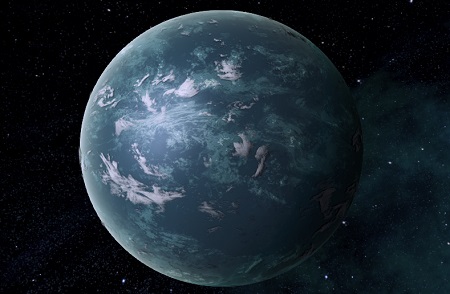
The planet 2181 Despoina was the Leviathans’ hiding place.

On a much smaller scale, this was the Protheans’ idea. At least two Prothean facilities – on Eden Prime and Ilos – were designed to host hundreds of thousands of Protheans in hibernation, to emerge after the Reaper threat had passed. The Protheans failed in their goal – though a single individual did survive – but the Leviathans didn’t. They managed to sustain a viable population at the bottom of the ocean on an uncharted world, and although we only saw a few individuals it’s possible that there are hundreds, thousands, or even more Leviathans. They may even have populations on other worlds.

Of the three endings offered to the player at the conclusion of Mass Effect 3, a Leviathan return works best with the “destroy” ending. If Shepard opted to take control of the Reapers, it stands to reason that the Leviathans would still consider them to be a threat, whereas if Shepard chose the “synthesis” ending then presumably the fusing of organic and synthetic DNA across the galaxy would also have affected the Leviathans.

The “synthesis” ending would surely have affected the Leviathans as well as everyone else.

But if the Reapers were destroyed – the most popular ending choice – suddenly the Leviathans could find themselves in a galaxy where their biggest foe has been vanquished. Not only that, but with the Mass Relay network critically damaged and the combined fleets and forces of the galaxy all massed around Earth (and feeling a lot worse for wear after months of conflict, no doubt), the Milky Way might appear to them to be practically undefended – and ripe for the taking.

Striking out from their hidden undersea base, the Leviathans could use similar tactics to the Reapers to gain control of key worlds – using their mind control abilities to sway military and political leaders and bring them into the fold. From there, Leviathans could abandon their base, taking up residence at key locations around the galaxy before the survivors of the battle for Earth even realise what’s happened.

Amidst the wreckage of the Citadel and the ruins of Earth, it might be a long time before anyone realised the Leviathans were attacking.

Repairing the Mass Relays will take time – if the assembled scientific minds can even figure out how to do so – and with communications and travel disrupted across the galaxy on account of the long war, the Leviathans could establish a commanding position even if they didn’t make their move immediately.

A power vacuum on this scale is chaotic – and many war-weary citizens and refugees might even welcome Leviathan rule if it were accompanied by stability, and if the Leviathans could provide them with basic supplies like food and shelter. By the time the Council races realise what’s happened, large swathes of the galaxy could already be under Leviathan control – perhaps even including three of the four Council homeworlds.

The Leviathans could be the next threat for Commander Shepard and the rest of the galaxy.

Fighting the Leviathans would be similar, in some ways, to fighting the Reapers – their armies would largely consist of enthralled mind controlled victims of the galaxy’s races. The difference might be that taking on an actual Leviathan would be comparatively rare – unlike the Reapers, the Leviathans don’t seem like they’d want to get involved on the front lines, preferring instead to sit back (or hide) and let their enthralled victims do their dirty work.

So that’s the extent of this theory, really. To summarise it in a single sentence: with the Reapers defeated, the Leviathans finally emerge from hiding, intent on reclaiming a galaxy they’ve always considered to be “theirs.” Commander Shepard may be pressed back into action to save the galaxy all over again, or maybe we’ll take on the role of a new character when Mass Effect 4 is ready. Please keep in mind that, as always, I don’t have any “insider information.” This is nothing more than a fan theory – and it may very well be completely wrong!

Despite how I felt about Legendary Edition, I do like the Mass Effect series. In fact, the reason I was upset at BioWare for the sloppy work and unimpressive upgrades that Legendary Edition offered was because the games are so enjoyable – the series has the potential to be so much more than Legendary Edition made of it. I’m hopeful that Mass Effect 4 will be a game worth getting excited about – but there’s no rush. If BioWare and Electronic Arts have learned anything from recent releases, it should be to take their time!

Mass Effect: Legendary Edition is out now for PC, PlayStation 4, PlayStation 5, Xbox One, and Xbox Series S/X. A new Mass Effect game – referred to above as Mass Effect 4 – is currently in development, but no release date has been announced. The Mass Effect series – including all properties mentioned above – is the copyright of BioWare and Electronic Arts. This article contains the thoughts and opinions of one person only and is not intended to cause any offence.
The Mass Effect trilogy – ranking Shepard’s squadmates

Spoiler Warning: There are spoilers ahead for the Mass Effect trilogy.

With Mass Effect: Legendary Edition on the horizon I thought it could be fun to go back to the Mass Effect trilogy and look at Commander Shepard’s comrades. Though I have no immediate plans to buy Legendary Edition – it looks like a pretty unimpressive upgrade, in my opinion – its existence has nevertheless prompted me to look back at its three constituent games. There were some absolutely wonderful characters who were well-written in all three parts of the Mass Effect trilogy. Without these characters to interact with, the world of Mass Effect would feel smaller and far less immersive.

However, there were also a handful of major characters who were less interesting, bland, useless in combat, or who got too little screen time for us to really get to know them. So there’s plenty of ammunition to put them into an internet-friendly numbered list! I’m excluding the squadmates from Andromeda, because that game was less fun across the board, and I’m also excluding the two characters who were only playable for a short time during the Omega DLC for Mass Effect 3. Otherwise all characters from the first three games are here – including those who were only available as DLC when the games were new. Legendary Edition will have all of them, so I’m happy to feature them all here.

Legendary Edition is coming soon.

As I always say, these things are subjective. If you don’t agree with how I regard a certain character, that’s okay! One of the great things about games like the Mass Effect trilogy is that they allow for player choice and different ways to play. We don’t need to fight or argue over which character is best!

With that out of the way, let’s jump into the list!

Number 19: Zaeed Massani

Somebody has to be in last place, and unfortunately for me it’s Zaeed. There are a couple of reasons why that’s the case, but it boils down to him feeling like an afterthought for most of Mass Effect 2. He doesn’t have any especially interesting dialogue or banter, either with Shepard or with anyone else on the team. When you approach him in the cargo hold of the Normandy (where he spends his down time) the “conversations” you can trigger with him aren’t even full cut-scenes, they’re just lines of dialogue heard over the top of gameplay.

Zaeed’s loyalty mission was okay, but it almost always required players to take the renegade path in order to be sure of winning his loyalty. There is a possible way to get through it with a 100% paragon outcome, but the required conversation check is so high that I’ve never been able to manage it. This cuts into the short mission’s replay value and leaves it feeling pretty bland. Like everything else involving Zaeed, the loyalty mission feels like it was thrown together as an afterthought.

For a DLC character, Zaeed is not well-integrated into the main game. Other DLC characters and missions flow naturally into the games they’re part of, but Zaeed and his loyalty mission feel tacked-on. He had the potential to be a fun character; a gruff mercenary veteran who’s seen it all. But that potential feels rather wasted.

Number 18: Liara T’Soni

Sacrilegious though it may be to some Liara superfans, I’ve never really liked the Mass Effect trilogy’s main asari character. In Mass Effect 1 she was perhaps at her best, but even then managed to feel less interesting and less relevant to the mission at hand than other squadmates. But her strange turnaround in Mass Effect 2 from mild-mannered student of history to hard-nosed information dealer just felt out of place. And as much as I enjoyed the Lair of the Shadow Broker DLC from a gameplay perspective, making Liara the new Shadow Broker is something which again felt wrong for her character.

There’s such a disconnect between the Liara we get to know and the shady world of information broking that she inhabits beginning in Mass Effect 2, and while I admire the creative decision to try to do something consequential with a character who otherwise felt like unnecessary fluff, for me it didn’t work and actually made matters worse.

As a biotic squadmate, Liara was most useful in Mass Effect 1, where only Kaidan was also able to use some biotic powers. By the second two games, though, her biotics felt less impressive – especially having seen what Jack and Samara can do! I don’t hate Liara, but a combination of some odd character decisions and the existence of other, more interesting squadmates means she ranks pretty low down on my list.

Number 17: Grunt

If we’re talking about Grunt’s overall story, perhaps I could rank him higher on the list. His role in Mass Effect 3 was certainly more interesting, as he led a team of krogan warriors to hunt for the rachni. But looking at him purely as a squadmate in Mass Effect 2, which is his only appearance in that capacity, he’s just not the most interesting character.

His backstory is certainly different, and perhaps was a way for the writers to try to differentiate him from Wrex. But there’s no getting around the fact that, for me at least, Grunt never manages to step out of that shadow; he always feels like a generic stand-in for Wrex. That said, I enjoyed Grunt’s loyalty mission in Mass Effect 2, as battling against a giant worm-monster was a ton of fun!

Number 16: James Vega

I feel a little bad for James Vega, who was voiced by established actor Freddie Prinze Jr. Vega came late to the party, and I think part of the reason for the negative reaction some fans had to him in Mass Effect 3 is that they were hoping for the return of more characters from Mass Effect 2 instead of someone new.

Despite that, however, James Vega was okay. For new players picking up the series for the first time, his newness may have helped them find their footing in an established, ongoing story, and characters playing that kind of role do serve a purpose. The Citadel DLC fleshed James out more and gave him a bit more to do than the base game, which was certainly to his overall benefit, but despite that he still isn’t an especially memorable character.

Most other characters in the trilogy elicit some kind of reaction from me, even though it’s been probably five years or so since I last played the games. But James Vega really doesn’t. He’s just… there. A background character. And there’s nothing wrong with him at all, unlike those lower down this list he isn’t bad. He’s just… forgettable.

Number 15: Ashley Williams

I don’t particularly dislike Ashley – though I would usually choose Kaidan at that moment in Mass Effect 1 – and on my first playthrough as male Shepard I think I chose her for Shepard’s romance option. She’s fine as a character, but is a bit limited as a squadmate because she can’t really do much beyond shoot.

Most squadmates have some kind of truly useful ability beyond their weapons that can make a difference in combat. Late in Mass Effect 1 Ashley can unlock “First Aid,” which, as you might expect, allows her to heal Shepard. But this uses medi-gel, which is a consumable item that isn’t unlimited in supply, rendering a potentially-interesting ability far less useful. This skill is also gone if Ashley survives to Mass Effect 3, where she can just shoot and throw grenades. If you’re going up against a heavily-armoured boss she can be useful – but most of the time I’m looking for a squad with a broader range of talents.

That’s more to do with the way I play the games than a criticism of Ashley herself, I suppose!

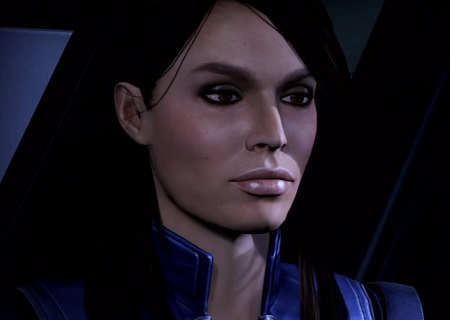
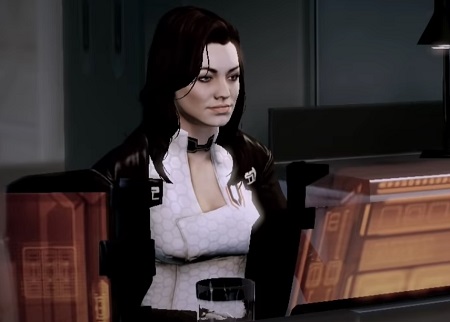
Number 14: Miranda Lawson

Though I have nothing against Miranda, it really isn’t until Mass Effect 3 where her story truly pays off – and by then she’s no longer a squadmate. She fills an interesting story role in Mass Effect 2, overseeing Shepard’s mission on behalf of the Illusive Man and Cerberus, but because of both her station on the Normandy and her natural disposition, she and Shepard tend to keep one another at arm’s length – even after her loyalty mission to save her sister.

The loyalty mission is one of the better ones, I think, and Miranda is a multitalented squadmate, capable of using both tech and biotic powers. During the Suicide Mission, Miranda is one of the possible candidates to lead the second squad at the beginning of the assault on the Collector base (assuming she remains loyal) and thus she’s a versatile all-rounder as a squadmate.

Miranda is at her best in Mass Effect 3, though, and that game goes a long way to paying off her character arc – both with her family and with Shepard.

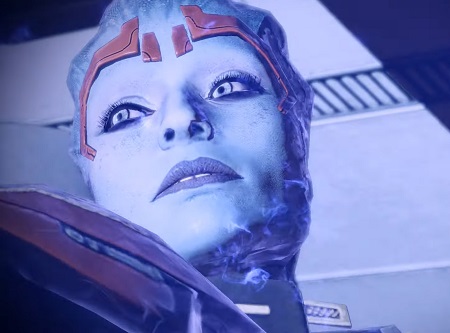
Number 13: Samara

I love Samara’s “Reave” ability, which can be unlocked after securing her loyalty. It’s one of the most powerful biotic powers in the entire game, and can be incredibly useful when on the back foot. Samara also has one of the more interesting loyalty missions in Mass Effect 2, one which is largely nonviolent. In an action-RPG that may seem odd, but these quieter, story-driven moments make the Mass Effect series what it is, at least in my opinion.

Samara also proves invaluable during the Suicide Mission, as one of only two biotics (the other being a fully-upgraded Jack) capable of safely escorting Shepard’s squad through a dangerous part of the base. The only reason I wouldn’t put her higher up the list is because she’s a character recruited well into the second half of Mass Effect 2, and thus has fewer options to join Shepard on missions.

Her story of chasing down her rebellious daughter, and then trying desperately to save her other daughters during the Reaper war, is one of the trilogy’s most interesting – and tragic.

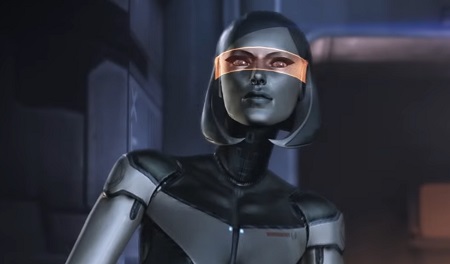
Number 12: EDI

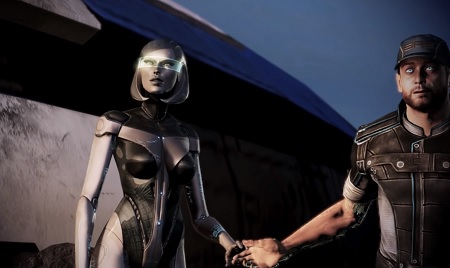
The Normandy’s AI is able to acquire a body and thus becomes a potential squadmate early into Mass Effect 3. EDI was already fun thanks to her dynamic with Joker, the Normandy’s pilot, but being able to take her on missions added an extra dimension to her – as did her dialogue during downtime on the Citadel.

As with Samara’s “Reave,” EDI’s “Defense Matrix” ability can be a lifesaver when the chips are down and you’re facing a difficult battle! The “best” possible ending to Mass Effect 3 sees the destruction of the Reapers – but along with them all other forms of artificial life. EDI almost certainly doesn’t survive in such a scenario, and that adds an extra level of complexity to the endgame given that players have spent two full games with her by that point.

Number 11: Jacob Taylor

Jacob is all business during his time on the Normandy, and I think some fans were put off by that in Mass Effect 2. Unlike other main squadmates, large parts of Jacob’s backstory are told not in the main trilogy but in Mass Effect Galaxy (a mobile game released in between the first and second titles) as well as in comic books. Perhaps that’s part of why he can feel a little barebones in the main game.

However, Jacob provides Mass Effect 2 with one of the best loyalty missions, tracking his father’s crashed starship to a remote planet. Not only is the setting beautiful and the wreck of the ship fun to explore, but the story of a man who kept the safe food for himself while allowing others to suffer is shocking. The Mass Effect series doesn’t shy away from grotesque characters like Jacob’s dad, and these kinds of characters give the story a dose of realism.

Jacob is also a proficient squadmate in his own right, and the “Incendiary Ammo” ability that he brings can be very useful in combat.

Number 10: Jack

We’re into the top ten now, and up first is Jack. The “psychotic biotic” has a truly satisfying character arc across Mass Effect 2 and Mass Effect 3, genuinely growing and taking on responsibilities after being a violent loner when Shepard first encounters her.

Jack’s backstory is one of the most tragic in the series, as she was experimented upon mercilessly for her powerful biotic abilities by Cerberus. She’s also headstrong and one of the few characters who doesn’t worship the ground Shepard walks on – slapping them and telling them they were an idiot for trusting Cerberus in Mass Effect 3.

During the Suicide Mission, Jack is the only other character besides Samara capable of putting up a powerful enough biotic barrier to safely escort Shepard and his team through a dangerous part of the base.

Number 9: Kasumi Goto

When it came to Zaeed, I mentioned that he felt entirely tacked-on and separate from the other characters in Mass Effect 2. Kasumi, despite being another DLC character, doesn’t feel that way at all – perhaps because her entire persona is constructed around being someone who works in the shadows.

Her loyalty mission is one which requires a fair amount of nonviolent stealth, and putting Shepard in a fancy suit at a high society party was fun to see! In combat she is one of the weaker squadmates – but her “Shadow Strike” ability, when fully upgraded, is unstoppable and incredibly powerful. Her appearance in Mass Effect 3 also potentially saves the hanar from a Reaper attack – and the hanar are one of my favourite Mass Effect races!

Number 8: Urdnot Wrex

Wrex is the first krogan squadmate Shepard can recruit, and after being playable for Mass Effect 1 also rejoins Shepard during the Citadel DLC. I adore Wrex – he’s plenty of fun and great in a fight. Wrex has so much more personality than Grunt, which makes sense as he’s much older. But that personality makes him a more complex and enjoyable character, and someone who can usually be relied upon for some fun banter with both Shepard and other members of the team.

Wrex’s big moment came during the mission to Virmire, where Shepard intended to destroy a cure for the genophage – a disease which sterilised most krogan. Despite being a rough-and-ready mercenary, Wrex genuinely cares about his tribe and his race, something which comes through in Mass Effect 2 and 3. The krogan are, in some ways, comparable to the Klingons, and there’s room in every sci-fi series for that kind of violent warrior race!

Number 7: Thane Krios

Despite being an assassin for hire, Thane is remarkably sweet. As he comes to the end of his life he’s clearly spent a lot of time thinking about some of the things he did wrong, and at the top of his list is patching up his relationship with his son – which ultimately becomes the focus of his loyalty mission in Mass Effect 2.

The loyalty mission is another one that involves a fair amount of sneaking around, and trying to successfully trail a target atop the Citadel’s catwalks can be confusing – and a tad frustrating at points. But it’s a unique experience in the game! As a sniper, Thane can be useful in combat, though his abilities are fairly run-of-the-mill and don’t help him stand out. His sacrifice in Mass Effect 3 packs a real emotional punch, and is one of the few major character deaths in the entire trilogy that can’t be avoided.

Number 6: Tali’Zorah

Tali is very cute. The first time I played through Mass Effect 2 as male Shepard she was my romance option of choice! She’s a competent fighter, and when she first joins the mission that may come as a bit of a surprise. The quarian storyline is one of the series’ most interesting, and as the main quarian character we get to know, Tali is front-and-centre in helping us understand their plight.

The quarians created a race of AI – the geth – to serve as their servants. But when the geth became fully sentient the quarians attempted to shut them down, resulting in the loss of their homeworld. Ever since, quarians like Tali have been looked down on and mistreated – an analogy for many different minority groups in modern times.

Tali is a squadmate in all three games, and her combat drone – an ability she gains beginning with Mass Effect 2 – is one of the most useful powers any squadmate can have, as it provides an extra target for enemies to shoot at as well as an additional semi-squadmate, able to perform limited attacks of its own for a short period.

Number 5: Kaidan Alenko

When it comes to Kaidan, comparisons with Ashley are inescapable! As mentioned above, she’s okay. A by-the-book soldier who’s good at shooting but not much else. Kaidan, in comparison, oozes personality, and the experiences he has with Shepard take an emotional toll on him. If allowed to survive across the trilogy, Kaidan’s character arc is one of my favourites to see play out.

Raphael Sbarge, who voices the character, had previously voiced Carth Onasi in an earlier BioWare game – Star Wars: Knights of the Old Republic. As I’d played that game at least four or five times before Mass Effect 1 that was odd for me at first, but Sbarge brings a raw emotional tone to the character of Kaidan that I quickly came to love.

In Mass Effect 3 Kaidan can be a romance option for male Shepard – one of only two same-sex romance options for male Shepard in the entire trilogy (both in Mass Effect 3, by the way). Kaidan’s vulnerability and the emotional portrayal won me over, but as a squadmate he’s a perfectly capable biotic with the usual biotic abilities.

Number 4: Mordin Solus

Mordin singing Gilbert and Sullivan – twice – has to be one of the most random things in the entire series! He’s a fun character, in some respects a somewhat stereotypical “mad scientist,” but as he proves on many occasions, he has heart. The complexity in his story comes from regretting his actions on repairing the genophage – the disease which prevents most krogan from having children.

Though he remains proud of his work from a technical point of view, he comes to see what he did as morally wrong, and would ultimately die putting it right – a death which can only be avoided under very specific (and rare) circumstances, meaning it’s an inevitability in most playthroughs. His death hits hard in Mass Effect 3, but he did what he believed to be right.

As a squadmate he’s surprisingly strong and good with a gun, which characters like this typically aren’t! He also has plenty of fun dialogue throughout Mass Effect 2, both with Shepard and others, and is another great character with real personality.

Number 3: Javik

It was an absolute crime to make Javik only accessible via paid DLC. The series’ first and only prothean character had a huge impact on Mass Effect 3, and it was patently obvious that the game and story were built with his presence in mind. He’s seamlessly integrated into the plot – which, coupled with the fact that he was launch-day DLC, seems to confirm that he was cut from the main game to be sold for more money.

Scummy business practices aside, Javik is awesome. He brings a totally different perspective to the Reaper war, and his very existence is proof that there are ways to defeat and outmanoeuvre what seems to be an unstoppable foe – something Shepard points out to him in a very moving moment on the Citadel.

Javik is a strong, decent fighter, and while his “Dark Channel” ability wasn’t unique (Shepard could also use it) it was very useful in a fight.

Number 2: Legion

I adore Legion. Having spent much of Mass Effect 1 and parts of Mass Effect 2 fighting the geth, Legion wanting to form an alliance could have felt like too much of a stretch – but the way it was written, and the performance by voice actor DC Douglas that brought Legion to life, were fantastic. Legion’s story of an internal geth conflict elevated the synthetic race from one-dimensional bad guys to something more complex, a theme that carried over to Mass Effect 3 where we’d learn more about their origin and goals.

Resolving the quarian-geth conflict is one of my absolute favourite moments in the entire series, and Legion plays a key role in it. Their death is the only other inevitable squadmate death in the series (along with Thane’s) and as such packs a serious emotional punch. Though we don’t usually get to spend as much time with Legion as I’d want (due to when they’re able to join the squad) he made an immediate and lasting impact on the story.

Legion is also a solid fighter, useful during the Suicide Mission, and both their shield and “AI Hacking” abilities can be incredibly useful.

Number 1: Garrus Vakarian

How could it possibly be anyone else at the top of this list?! Garrus is Commander Shepard’s BFF whether they’re male or female, and that relationship is one of the core storylines across the entire trilogy. Seeing Garrus and Shepard’s friendship play out across the games is what makes them worth playing, and even if all of the other squadmates and characters were boring one-dimensional cardboard cut-outs, Garrus alone would save the Mass Effect trilogy!

He has plenty of fun banter with both Shepard and everyone else on the various teams that come together across the three titles, and his storyline takes him from frustrated cop to anti-mercenary vigilante – learning from Shepard that sometimes you have to go around the rules! Almost every playthrough I would end up picking Garrus for the majority of missions, because he’s just such great fun.

It helps, of course, that Garrus is a competent fighter, able to use powerful weapons and with different ammo at his disposal. If you’re heading into a heavy firefight or about to stare down an imposing boss, Garrus should be at the top of the list for squadmates to join you.

So that’s it! We’ve put all of Commander Shepard’s squadmates in ranked order.

One good thing about the upcoming Legendary Edition is that all three games, plus all of their DLC, will be available in one place. I don’t think that alone justifies the price – especially if you own the games and DLC already – but having everything in one package is good, and means that there will be none of the nonsense of DLC-only characters and missions any more. I was lucky at the time the Mass Effect trilogy was out to be able to afford to pick up the DLC, but I know of people who missed out on some of these characters and missions because they only had the base game, and that’s awfully sad. I hope this practice of cutting content to sell later – or even on day one – goes away soon.

A scene from the Legendary Edition trailer.

Even the characters that I ranked at the lower end of this list have their moments and were generally well-written. There are very few characters across the Mass Effect trilogy that I felt were actually written badly or served no real purpose, even when considering NPCs who aren’t able to join the squad. Some are perhaps rather barebones, but all serve a purpose in the story and pad out the world of Mass Effect – making it feel real and immersive. In fact I’d say that Mass Effect is one of the best and most interesting sci-fi settings that I’ve had the opportunity to get to know, and while some aspects of it are certainly unoriginal it’s a well-constructed world populated with a diverse, fun set of characters.

I hope this was a bit of fun, and for me it was a chance to jump back into Mass Effect for the first time in a while. Though I’ve written on a couple of occasions about the impending Legendary Edition it’s been several years since I last played through the trilogy. Perhaps I’ll have to dust off my Xbox 360 and go around again.

Mass Effect: Legendary Edition will be released in May 2021 for Xbox One, PlayStation 4, and PC. The Mass Effect series – including all titles and characters listed above – is the copyright of Electronic Arts and BioWare. This article contains the thoughts and opinions of one person only and is not intended to cause any offence.
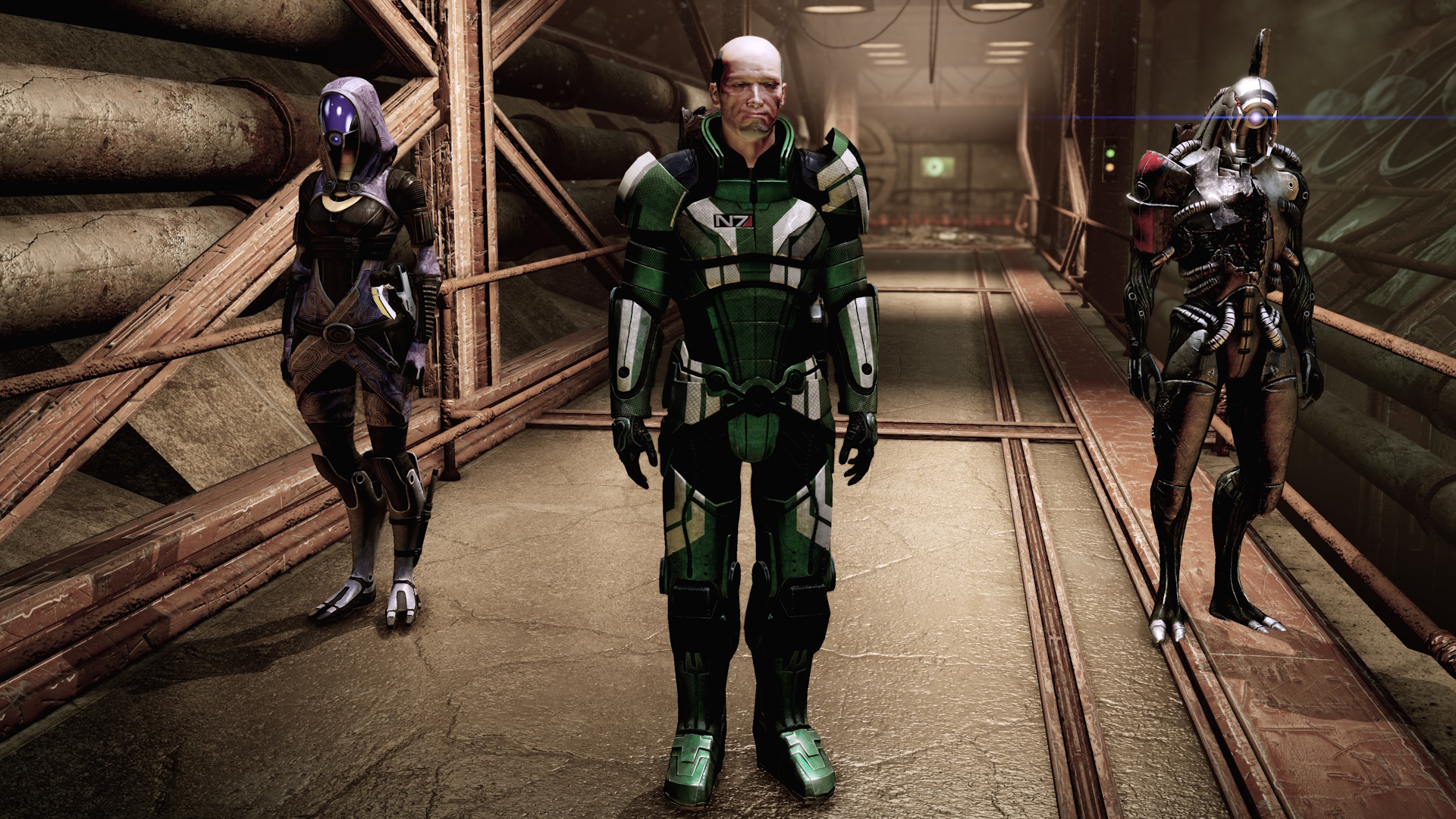
Mass Effect: Legendary Edition details announced

Spoiler Warning: There are spoilers ahead for the Mass Effect series.

Rumours swirled for much of 2020 that the Mass Effect trilogy was to be remastered. The project was confirmed a couple of months ago – Mass Effect: Legendary Edition will be coming to PC, Xbox, and PlayStation in May. I didn’t cover the initial announcement, though, because there really wasn’t much to say. Electronic Arts and BioWare saw fit to publish only a brief teaser, and from that there was very little to gleam.

After a couple of months of waiting, however, we now finally have some details about Mass Effect: Legendary Edition, so I wanted to take a look at some of them and give my thoughts. Some games journalists were invited to a digital event for Mass Effect: Legendary Edition in which they were able to speak with developers and managers at BioWare, so in addition to the official trailer and announcement we also have some more details to look at. My invitation to that event must’ve got lost in the post!

The logo for Legendary Edition.

Prior to the official announcement of Mass Effect: Legendary Edition, I wrote up a wishlist of things I’d like a remaster of the trilogy to include. Obviously not everything I hoped to see has been included, but some key things will be. I would reiterate a point I made in that article, though: it’s only been a few years since the trilogy wrapped up. The Mass Effect trilogy was released during the Xbox 360/PlayStation 3 era, and, like many games from that generation, they still look pretty good today. I questioned the need for a remaster so soon, given that there hasn’t been that much of an increase in computing power and graphics technology in the intervening nine years.

And on that point, which is arguably the single biggest reason to remaster any game, I have to say that I’m not especially impressed with what I’ve seen of Mass Effect: Legendary Edition so far. There are some improvements, of course, and it can be hard to properly convey the scale of the changes made when dealing with compressed digital video on platforms like YouTube. But I have a decent 4K monitor, and when I looked at a number of scenes from the official trailer as well as high-resolution screenshots provided by BioWare, it was hard to see a significant improvement, especially when looking at scenes from Mass Effect 2 and Mass Effect 3.

When Capcom remastered Resident Evil 2 and Resident Evil 3 over the last couple of years, both games saw a colossal improvement from a visual standpoint. In fact I think it’s arguable that the remade versions of those games told their stories in a much better and more immersive way – except, of course, for the cut content from Resident Evil 3. Both titles were beloved by gamers of a certain age, but bringing them up-to-date allowed a whole new generation of players to experience the horror and excitement of Raccoon City. That won’t be the case with Mass Effect: Legendary Edition. Aside from the fact that the games have all been available on Xbox One, PlayStation 4, and even the Wii U, there just isn’t such a noticeable change in the way the games look, and while there have been tweaks and adjustments to gameplay, none of the games have seen a huge overhaul in the way the Resident Evil titles did.

Resident Evil 2 was in need of an update. The Mass Effect series? Not so much.

So I come back to my original question from my first piece on the subject: is now the right time to remaster the Mass Effect trilogy? Although it seems mad to think ahead to the PlayStation 6 when we’ve literally just had the PlayStation 5’s launch, I would argue that waiting another five to ten years and another console generation would have allowed the Mass Effect trilogy to see much more of an improvement. The original games are good enough – especially the second and third titles – to stand on their own two feet. A re-release or a repackaging of all three titles would have been sufficient, and I don’t really see a significant advantage to what EA and BioWare are billing as a “remaster.”

This is not, by the way, a problem unique to the Mass Effect series. Call of Duty 4: Modern Warfare was remastered in 2016, less than a decade after its release, and was similarly underwhelming. Partly this is psychological – we have a tendency to remember games looking better than they actually did. But in the case of many modern titles it’s also due to the fact that visuals and graphics have not improved in a huge way over the last decade when compared to earlier decades. So while Mass Effect: Legendary Edition looks decent, it’s not always easy to see – at least from the footage shown so far – that it’s substantially better than the original versions of its three constituent games.

Debatable.

The second point of criticism I have is that no action has been taken to change the story. As I wrote last time, I didn’t expect the ending of Mass Effect 3 to fundamentally change. That would require far too much effort for a project of this nature. The “pick-a-colour” ending of Mass Effect 3 is arguably the weakest part of the entire trilogy, and while it would be great to have seen that changed I knew it wouldn’t happen. So that isn’t what’s disappointing!

What is disappointing, though, is that the final third of Mass Effect 3 appears to be left unchanged. For me, the “pick-a-colour” ending was only one part of what let the game down; countless smaller decisions taken across the whole trilogy that should have mattered were either entirely ignored or only given the barest lip service in the story’s climactic final act. The most egregious example is that of the Quarians and Geth. To make a long story short, if players follow a specific path across all three games, it’s possible to save both the Geth and Quarians at a decisive moment where it looks as though it should only be possible to save one. This choice should matter; having both powerful fleets on side should be hugely impactful in the final battle against the Reapers. Yet it isn’t. Aside from a couple of seconds of cut-scene where both fleets warp in, and one line of dialogue, this massive choice fails to make any impact.

That may be the worst example; it’s certainly the one which stuck with me. But there are dozens of others, and the final third or so of Mass Effect 3 was undeniably rushed. Revisiting the project should have been an opportunity to right some of these wrongs, and to at the very least make a conscious effort to pay off, in a meaningful way, more of the player’s choices and efforts as the story reaches its conclusion.

The Quarian-Geth conflict can be peacefully resolved… but that never really felt like it mattered as the game entered its final act.

The lack of payoff to some of these choices will be even more noticeable in Mass Effect: Legendary Edition than it was when we played Mass Effect 3 back in 2012. This is for the simple reason that Legendary Edition is actively inviting players to play all three titles back-to-back as one continuous story – a story whose lacklustre ending and underwhelming acknowledgement of significant moments will be all the more recognisable for it.

I do understand the argument that there wasn’t enough material left on the cutting room floor to reincorporate into the game. But unlike in cinema, video games use voice acting and with practically all of the principal voice actors from across the trilogy still alive, there’s no reason I can see why bringing some of them back into the studio to record new dialogue should have been impossible. The final act of Mass Effect 3 would be massively improved by as little as fifteen minutes’ worth of extra dialogue and cut-scenes, and while the Extended Edition DLC will be included in Legendary Edition, even that could stand to be improved.

Omega as seen in the trailer.

So I think that covers my main criticisms of the project based on what I’ve seen and read. Now let’s get into the good points!

We’ll look at specific overhauls and changes in a moment, but first I wanted to acknowledge that, despite their reputation as a money-grubbing company, Electronic Arts is releasing Mass Effect: Legendary Edition as a single package. All three games, plus all of their DLC, are included. It doesn’t look like there are any pre-order exclusives, special editions, or anything of the sort, and while some critics will say that such behaviour should be the bare minimum, the reality is in this industry that it isn’t – so it is worthy of praise when companies do behave themselves! EA could have easily tried to split the project up and sell different parts of it, so the fact that the entire trilogy and all its DLC are part of one package for one price is great. I would argue that perhaps full price (£55 here in the UK, at least on PC) is a bit steep for games from 2007, 2010, and 2012, but I guess for the remastered version of all three I can’t really complain about that too much.

If you recall, Mass Effect 2 and Mass Effect 3 were early pioneers of cut-content DLC. Mass Effect 2 had a couple of its characters peeled off to be sold separately, and Mass Effect 3 had Javik, the series’ only Prothean character, sold as day-one DLC. So the series is no stranger to courting controversy with the way its games are sold, which is another reason to heap praise upon the decision not to do so with this version!

Javik was originally only available to players who paid extra.

Now into some specifics. The character creator has been overhauled, and while we don’t know exactly what’s changed, BioWare have promised new hairstyles, faces, and customisation options for Commander Shepard. Even by Mass Effect 2, the limitations of the original character creator were becoming apparent, so this is one area that needed work. I’m glad to hear that changes have been made in this area, as a role-playing game needs a decent amount of customisation. Making Commander Shepard feel like a unique and personal character is part of the appeal of games like the Mass Effect series.

Mass Effect 1 is seeing a number of gameplay changes and tweaks in order to bring the experience more in line with the second and third entries. Of the three games, Mass Effect 1 is the only one which felt even close to being “outdated” in 2021, and considering the substantial gameplay improvements which debuted in Mass Effect 2, I’m glad to see EA and BioWare updating it.

The Normandy approaches the Citadel.

Specifically BioWare mentioned changes to the heads-up display, the way the Mako vehicle handled, the hacking/slicing mini-games, the removal of class-based weapon loadouts (i.e. players will be allowed to use any of the game’s guns regardless of their character’s stats), changes to aiming to make lock-on better, the ability to skip the lift (elevator) scenes, as these were only in the game to begin with to hide loading times when transitioning between areas, and a higher level cap.

All of these sound good, and will update Mass Effect 1. However, BioWare has not mentioned weapon overheating, which was a difficult mechanic to get the hang of in the first game. Overheating was dropped in Mass Effect 2 in favour of “thermal clips,” which was just technobabble for ammo, and I’m surprised in a way that ammo isn’t coming to Mass Effect 1. Also unchanged is the game’s inventory system, which could be complicated and would quickly fill up with dozens of different tiers and categories of weapon upgrades and ammo options.

There will be other tweaks and rebalances across the three games, including to enemy and boss AI. The games will all run in 4K at 60fps, which is really the bare minimum that we should have expected from any AAA remaster in 2021! Finally, there are some PC-specific changes, including keyboard and mouse options and support for ultrawide monitors.

The Reapers are coming!

So that’s it. Mass Effect: Legendary Edition will bring some aesthetic changes to the table and some gameplay tweaks that will hopefully make the experience smoother and more enjoyable… but I’m still left with a sense best summed up thus: “what’s the point?” The second and third games are perfectly playable in their current form without being upgraded, and the offered upgrades seem minor, even from a visual standpoint.

Packaging all three titles together, along with their DLC, is admirable, but it would have been just as easy to re-release the trilogy with its DLC and spare the effort of “remastering” some of these already-decent looking scenes. It isn’t like any of the three Mass Effect games looked bad by today’s standards, and I can think of a lot of recent games that have been less impressive.

There was an opportunity to expand Mass Effect: Legendary Edition. By bringing back some of the original voice actors and adding a few extra scenes, particularly toward the end of Mass Effect 3, the remaster could have taken the story to new heights and genuinely improved the worst part of all three games. Even without a major rewrite of the ending, by adding more context and better paying off more choices and combinations of choices, Legendary Edition would have at least felt worthwhile. At the moment, it kind of doesn’t.

This fire effect from the remaster doesn’t look like it’s been improved much.

Bringing games from 2007-12 “up to date” is unnecessary. Maybe in another ten years we could argue that enough time had passed and enough technological improvements had been made that the games would feel new again, but everything I saw in the trailers has left me with the belief that they won’t feel new. A shiny coat of paint and throwing the entire story together in one package is really all you’ll get.

If you’ve never played the Mass Effect trilogy, go for it. Wait for Legendary Edition, which is due out in three months or so, and give it a try. The games are great, and while the ending is a bit of a let-down, if you go into the games with your expectations set you will at least know what you’re letting yourself in for. But if you’ve already played all three games, I feel like this is a hard sell. I was genuinely interested in Legendary Edition when it was announced, but having heard what’s included and seen the minor changes for myself, I’m probably going to give it a pass, especially for £55. Maybe if it goes on sale in a couple of years I’ll pick it up then.

Mass Effect: Legendary Edition will be released in May for PC, Xbox One, Xbox Series S/X, PlayStation 4, and PlayStation 5. The Mass Effect series is the copyright of Electronic Arts and BioWare. This article contains the thoughts and opinions of one person only and is not intended to cause any offence.
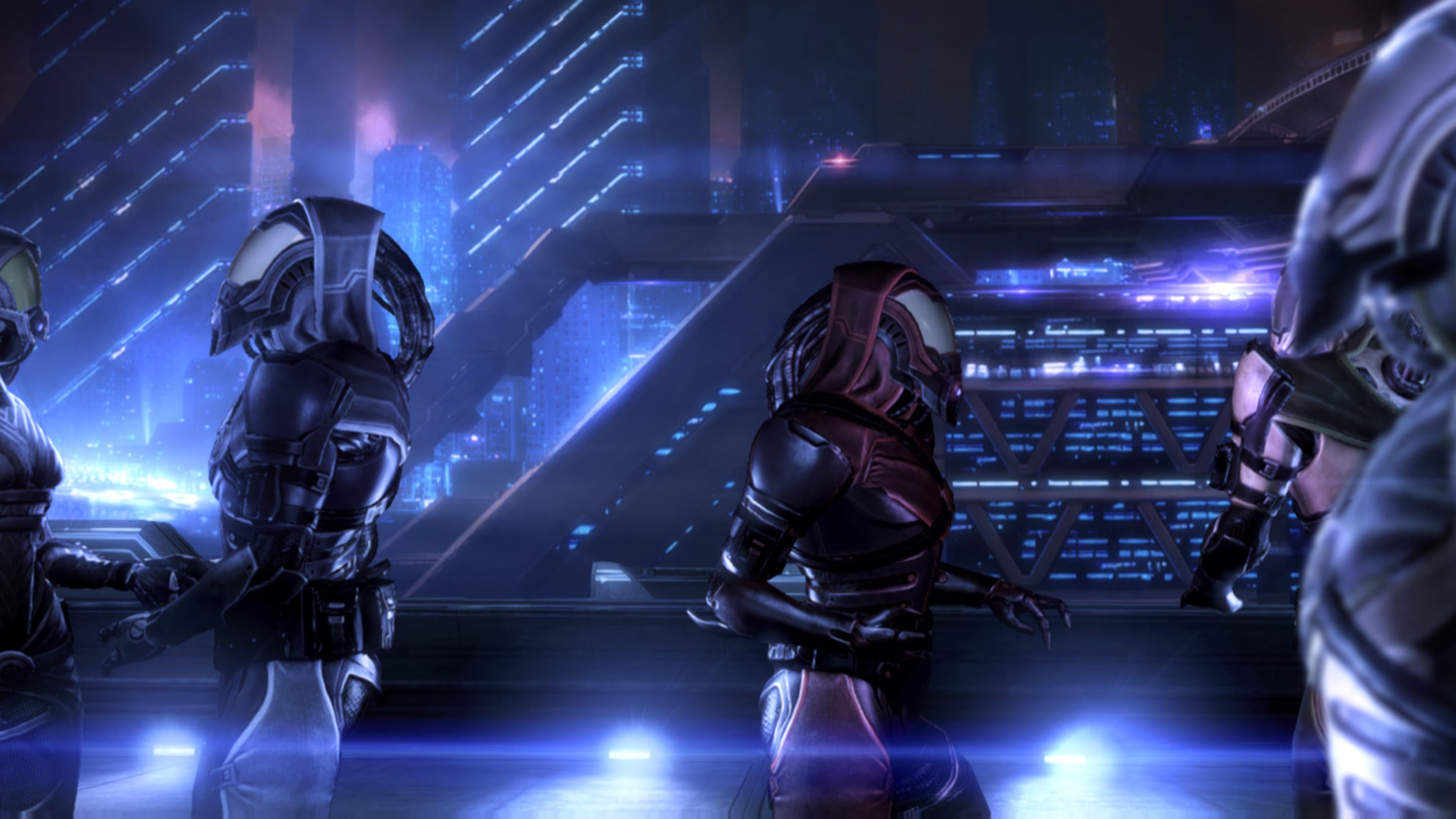
A Mass Effect remastered wishlist

Spoiler Warning: There are spoilers ahead for the Mass Effect series.

It’s been eight-and-a-half years since Mass Effect 3 was released, rounding out the original trilogy of Mass Effect games. Since then, the franchise has put out a single new title – Mass Effect: Andromeda – which was underwhelming to say the least. For the last six months or more, rumours have been floating around of an impending Mass Effect remaster, and while I was disappointed not to hear any official mention of it at June’s EA Play event, the rumours haven’t subsided. Is something going on with the Mass Effect series?

I have absolutely no idea. But that doesn’t make it any less fun to speculate and fantasise!

Promo artwork for Mass Effect 2.

After Andromeda’s weak launch led to mediocre reviews, memes, and poor sales, EA put the franchise “on hiatus” and Bioware moved on, focusing on the ultimately unsuccessful Anthem. To many of us that sounded ominous – especially given EA’s history of shutting down game studios and killing brands – but if it’s true that a remaster really is in the works, I have a wishlist of things I’d like to see included.

For the record, because I know people like to get excited: I have no idea if a Mass Effect remaster is even being worked on, let alone if any of these ideas or concepts will be included. This is a wishlist from a fan, not “insider information”. If anyone tells you they know something for sure about an unannounced or unreleased project, take it with a grain of salt. With that caveat out of the way, let’s look at my wishlist, which is in no particular order.

Number 1: Delay the project if necessary.

“My face is tired…”

This may seem like an odd one – why talk about a delay to a game that hasn’t even been announced? Well there are two reasons: Anthem and Mass Effect: Andromeda. Bioware’s two most recent titles launched before they were properly finished and polished, resulting in lacklustre sales, mediocre review scores, and online mockery. I’ve said it before, but the memes hurt Mass Effect: Andromeda’s sales far more than review scores. It’s a shame, because the most egregious visual bugs and glitches were fixed in a patch within days, but by then it was too late – the damage had been done.
Andomeda’s development was difficult, and the final build of the game was – at least according to reports – put together in mere months, despite the game having been in development for five years. The reason why I’m saying to EA and Bioware that one of the things I want from any potential Mass Effect remaster is a delay, if necessary, is because I want them to learn from that mistake. The “release now, fix later” concept doesn’t work, and if the game launches to mockery, memes, and mediocrity as Andromeda did, there’ll be no salvaging it – or the franchise, quite frankly.

Number 2: 4K resolution and 60 frames-per-second.

The whole point of remastering a game is to improve its graphics and the way it looks using newer and better technology than was available to the original development team. But the second and third Mass Effect titles in particular still look decent today, and as I keep saying, graphical improvements get smaller and smaller with each new generation.

One thing that has improved in the last few years, however, is the frame rate games can run at. 30fps was commonplace in the Xbox 360 era, when Mass Effect debuted, but now we have 60fps as standard, and on higher-end machines we can push frame rates way further. The bare minimum for a big-budget game in 2020 is 4K resolution at 60fps. If the Mass Effect remaster can’t manage that, a lot of people will wonder what the point of it is.

Number 3: Rework Mass Effect 1 to use Mass Effect 2 and 3′s gameplay.

Mass Effect 2 offered massive gameplay improvements over its predecessor. Gunplay was faster and more fluid, the complicated inventory system was streamlined, and many more quality-of-life improvements made the second game way better than the first. If a Mass Effect remaster is going back to the drawing board to rebuild the games from the ground up, it would be a great opportunity to update the first game to be in line with the second and third.

Aside from making the first game more enjoyable to play, this would also standardise the remastered trilogy, making it an easier experience to go from one game to the next, especially for new players. Mass Effect 2 and 3 don’t really need much improving from a gameplay point of view, but the first title could do with an update.

Number 4: Include all three games – plus all of their DLC – in one package.

No special editions. No deluxe editions. No console exclusive characters or missions. No paid DLC for a thirteen-year-old game. All of the content for all three games should be available in one package. While I’d prefer to see the full trilogy released all at once, one possible option is to follow the trail blazed by Halo: The Master Chief Collection on PC and release the first game, then the second, then the third. But regardless, one price should get players all three games plus all of the DLC.

The Mass Effect series has been poor in this regard. Both Mass Effect 2 and Mass Effect 3 had day-one DLC – which is industry slang for cut content that they could sell separately for more money. Some of the expansions were great, but others added what felt like content that should have been part of the main game, or felt like small additions for the asking price – like adding a single character. Javik, the series’ first Prothean character, was only available as DLC – despite the fact that he played a pivotal role in Mass Effect 3. It’s a good opportunity for the series to put all of that behind it and release the entire story in one package.

Number 5: If the game needs microtransactions, save them for multiplayer.

Mass Effect 3 and Mass Effect: Andromeda had multiplayer modes. I only knew about Mass Effect 3′s multiplayer because failure to participate had an impact on your “war score” or “galactic readiness” during the single-player campaign, which was incredibly annoying. But both games enjoyed moderate success with their multiplayer modes, so I wouldn’t be surprised if EA crams multiplayer in to a Mass Effect remaster too.

If there is a multiplayer mode, this is the place to dump DLC and microtransactions, not in the already-complete single-player story. As someone who doesn’t play a lot of multiplayer, having DLC and microtransactions here will have no impact on my enjoyment of the campaign. If EA has to include in-game monetisation, the least they could do is keep it away from the story.

Number 6: Tweak Mass Effect 3 to at least pay lip service to more player choices.

This was a huge moment in Mass Effect 3 that seemed to go unrecognised afterwards.

I’m not asking for Mass Effect 3′s ending to be fundamentally rewritten; that will never happen. What I think could be done to massively improve the final third of that game is to add in some more cut-scenes, animations, and lines of dialogue recognising the choices players made across all three titles. One of the most disappointing things about Mass Effect 3 for me was that during the climactic final act, many accomplishments from earlier in the game and in the series went completely unacknowledged.

To give an example I’ve used before: if players followed a specific path across all three titles, it’s possible to save both the Geth and Quarian species when it looks like it would only be possible to save one or the other. Having both powerful fleets instead of just one feels like it should have a huge impact on the war against the Reapers… but it didn’t. A few extra “war score points” and two words of dialogue confirming that both fleets had arrived for the final battle was literally all you got for all that effort, and it just felt so hollow and disappointing. That was almost worse than the actual pick-a-colour ending.

Bringing back a few of the voice actors to record a few extra lines, creating some new animations to represent different combinations of fleets, soldiers, and survivors, and overall just tweaking and adjusting the final portion of Mass Effect 3 would go a long way to negating this issue, and if the game is being massively overhauled anyway, why not put in the extra effort? Fans may still be disappointed in the ultimate finale, but if the journey there were improved, it would be a better experience as a whole.

Number 7: Set the stage for a potential Mass Effect 4?

One of the possible endings to the trilogy.

I don’t know if this is really something I want – hence the question mark. But I can only assume that a Mass Effect remaster would be seen by EA and Bioware as a stepping stone to a potential new entry in the franchise, and after the disappointment of Andromeda, surely the only way that could happen would be a fourth mainline entry in the series.

Andromeda’s fundamental problem, beyond the animations and glitches and bland characters, was that it felt like an overblown side-quest. The entire game felt like the B-plot of a better story, and I think that feeling would have persisted regardless of how well-built it might have been. So how could a fourth Mass Effect game work? That’s a huge question, because the ending of Mass Effect 3 was simultaneously so final yet so transformative.

An idea I’ve been kicking around for a while is this: in the aftermath of the Reapers being defeated, a past race that had survived a Reaper harvest re-emerges or returns to the galaxy, looking to reclaim what they see as “theirs”. Shepard comes out of retirement, perhaps fifteen or twenty years after the end of Mass Effect 3 (which would allow time for the galaxy to have rebuilt). The new enemy would be tough and would be just as much an existential threat as the Reapers had been – keeping the stakes high and avoiding the sense of the new fight being anticlimactic.

The Leviathans featured in DLC for Mass Effect 3 and are exactly the kind of faction I’m thinking about with this concept.

But that’s just one fan concept, and there are myriad ideas for how a fourth mainline game could work. However it may happen, the Mass Effect remaster will have to set the stage for a potential fourth game – perhaps by adding an epilogue.

As we’ve recently seen with The Last of Us Part II, some stories don’t need sequels, and when a decision is made to make one anyway, what results can be disappointing to fans. There’s definitely an argument to be made that the Mass Effect trilogy was so special and unique that a sequel is unnecessary – or even unwanted.

Number 8: More customisation options and a better character creator.

The character creation screen in Mass Effect 1.

For a game that released in 2007, Mass Effect’s character creator was okay. But even by the time Mass Effect 2 and 3 were released, the limitations of the original game’s character creator were apparent. Games today can offer so much more in terms of building a unique face for a player character – from hairstyles to tattoos to beards and so much more. The Mass Effect trilogy is jam-packed with cut-scenes which show off Shepard, so making him or her look good is important! The default faces are fine, but a roleplaying game needs some degree of customisation, and the outdated character creator definitely needs an overhaul.

And while we’re at it, let’s have more cosmetic options for armour and weapons. The first game was noticeably lacking in this department, but the second and third titles did have pretty solid armour and weapon customisation. I’d like to see this expanded with a variety of cosmetic options for customising Shepard’s appearance and outfits, including his uniform when not in armour as well as individual weapons. While it may be tempting to turn this feature into a microtransaction marketplace, as mentioned above let’s try to keep that just for multiplayer!

So that’s it. A few things I’d like to see from a potential – but still unconfirmed – Mass Effect remaster.

Fans of Star Trek: Picard who haven’t played through this fun sci-fi game series will note some similarities in the broad strokes of the plot: an ancient race left behind a beacon, warning of the dangers of a race of synthetics who will come to wipe out all sentient life in the galaxy. Sounds familiar, right? While Star Trek: Picard took a very different approach to this story outline, the similarity in premise is something I thought at the time was noteworthy – I even referred to the unnamed faction of super-synths in that show as the “Mass Effect Reapers”.

Remember this faction from Star Trek: Picard?

Is it the right time for a Mass Effect remaster? That’s a good question. The stink of Andromeda is still pretty fresh for a lot of gamers, and the trilogy only ended in 2012. I could absolutely entertain the argument that it’s something best saved for five or ten years’ time rather than something the gaming world needs in 2020 – but I’m not the one making those decisions! If there is a remaster this year or next, I have no doubt I’ll take a look to see what it has to offer. I’ll be curious to stack up a remastered version of Mass Effect 2 or Mass Effect 3 against the original to see how much better it could really look. As I’ve said before, in a lot of ways I’d be happy with a game that has Mass Effect 2′s visual effects even if it were released today, so any remaster will have to go above and beyond to wow me with the way it looks.

Still, I’ll take any excuse to revisit a beloved series. In December I put Mass Effect 3′s ending on my list of entertainment disappointments of the decade, and I stand by that. It was a let-down then. But time is a great healer! Although I’ve replayed the trilogy several times I haven’t touched it in five or six years, so it will definitely be nice to jump back in – assuming the rumours are true and there really is a remaster in the works!

I hope you’ll check back soon for more sci-fi and gaming articles!

The Mass Effect series – including all titles discussed above, as well as potential new titles – is the copyright of Electronic Arts and Bioware. Some screenshots and promotional artwork courtesy of press kits on IGDB. This article contains the thoughts and opinions of one person only and is not intended to cause any offence.