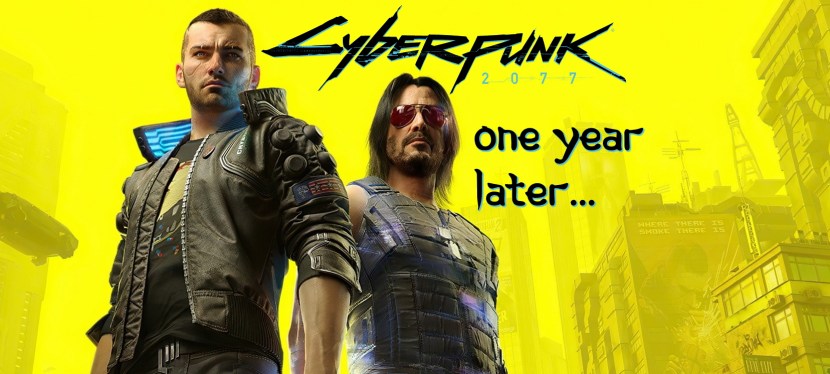
Cyberpunk 2077 – one year later

It’s been exactly a year since Cyberpunk 2077 launched to critical derision, so I thought it would be a good opportunity to take a look at the game’s progress, lack of progress, and future prospects. On the 10th of December 2020, after several delays, Cyberpunk 2077 was released by CD Projekt Red – but that really isn’t the beginning of the story, and we should briefly step back and consider the absolutely ridiculous hype bubble that had grown around the game.

Here’s my two cents: no matter what state Cyberpunk 2077 had been in a year ago today, an awful lot of players would still have found it to be a disappointing experience. CD Projekt Red’s marketing team didn’t just passively sit by and allow the game’s hype to get out of control in the weeks and months before its launch, but they actively contributed to the problem.
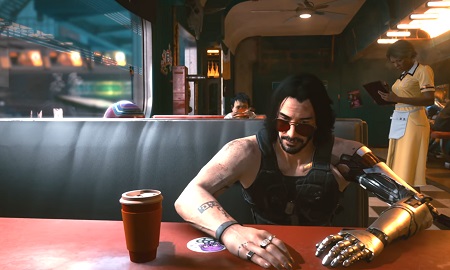
How is Cyberpunk 2077 doing one year on?

For a bit of background, I worked for a time in the video games industry, specifically on the marketing side of things. While it’s natural for a publisher to want to see excitement around a title, care must be taken at an early stage not to allow the hype to get out of control. In the case of Cyberpunk 2077, CD Projekt Red’s marketing team seemed incapable of saying “no” – they weren’t doing a good job of managing players’ expectations, and the result was that many players built up a vision in their minds of a once-in-a-lifetime experience; a “perfect” video game. Cyberpunk 2077 was never going to live up to the hype that had been built up, no matter how good it might’ve been. At the end of the day, it’s just another video game.

I could see this hype bubble inflating, growing ever larger and slipping far out of CD Projekt Red’s control. In October 2020, a couple of months before the game’s launch, I wrote an article here on the website titled Cyberpunk 2077 and the dangers of hype in which I expressed exactly this opinion. No matter how good the game might ultimately be, I argued, CD Projekt Red had allowed the game’s hype bubble to get far too big. By allowing prospective players to set incredibly high expectations and refusing to lift a finger to rein in those expectations, the game’s publisher was setting up players for disappointment – as well as setting up the game for negative reviews.
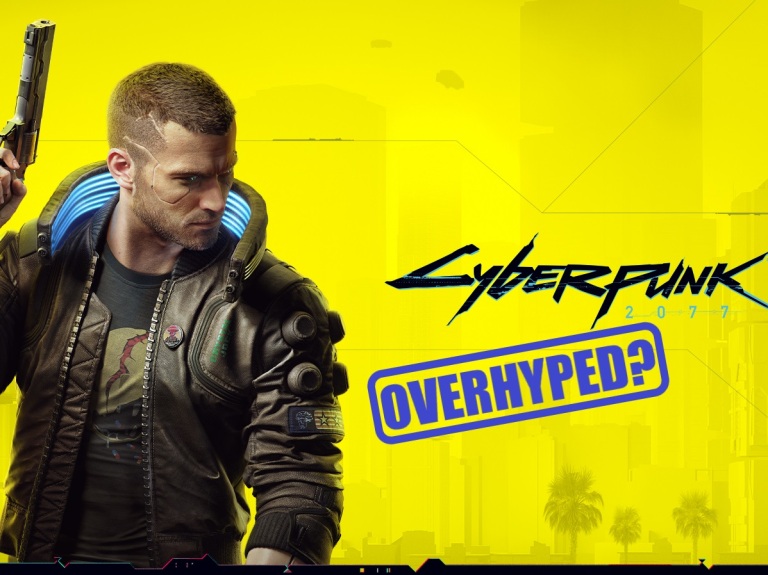
I wrote this article back in October 2020 – before the game’s disastrous launch.

I couldn’t have known then, of course, how bad Cyberpunk 2077 was lining up to be. A last-second delay from November to December should’ve rung alarm bells, but with the pandemic causing all kinds of disruptions last year it wasn’t a huge shock. CD Projekt Red had a great reputation as being a player-friendly company, so if they said they needed a few extra weeks to give the game a final spit and polish, most players were willing to believe that that’s all it was.

Despite my scepticism of Cyberpunk 2077 being everything it was hyped up to be, I was still expecting to see a decent game in December 2020. When the dust settled, I felt sure there’d be a rock-solid role-playing first-person shooter under the hood, even if the game’s loftier promises of redefining what a single-player game could look like didn’t come to pass. To say that I was stunned by the state of the game at launch, and the reaction to it from players, would be an understatement!

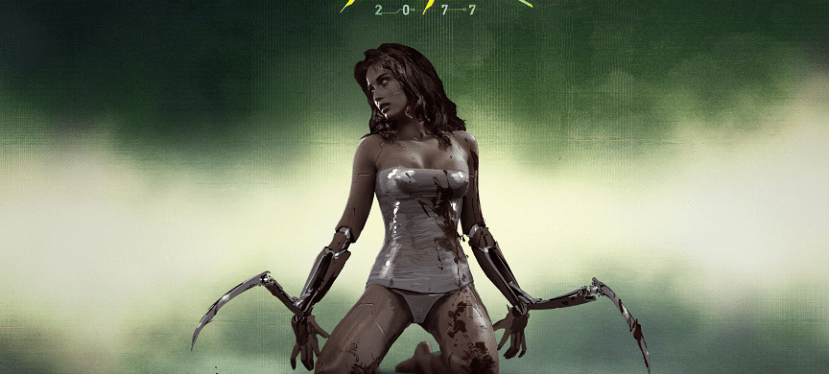
Pre-release promotional artwork.

In early December 2020, CD Projekt Red could do no wrong in the eyes of players. The Polish studio’s previous title had been the critically-acclaimed The Witcher 3 in 2015, a game widely hailed as one of the best titles of the generation. With policies and practices that many folks felt were player-friendly, and a good social media team to boot, the company had one of the best reputations in the industry. That evaporated overnight, and a year later the company’s reputation remains in the toilet.

Players will put up with a lot of things – many scandals in the games industry, even very serious ones, usually end up disappearing without a trace by the time a publisher has the next AAA title ready to go. But one thing players can’t abide is being lied to – and CD Projekt Red lied about Cyberpunk 2077.
CD Projekt Red – developer and publisher of Cyberpunk 2077.

The game was not fit for purpose on Xbox One and PlayStation 4 – and even today, a full year later, it still performs far worse on those machines than it does on high-end PCs and the newer generation of consoles. CD Projekt Red knew this – because at some point during Cyberpunk 2077′s development, a decision was clearly made to prioritise next-gen consoles over what were then the current-generation machines.

CD Projekt Red had a choice during development: scrap the current-gen version and go all-in on next-gen and PC, or scale the game back so that performance on older hardware would improve. They chose to do neither, doggedly (and stupidly) pushing ahead with a plan to release the game on hardware that, even under the best possible conditions, can’t really handle it. This problem has been lessened by the extra year of development time since release, but it hasn’t gone away. Bugs and glitches remain on Xbox One and PlayStation 4, and actions taken to mitigate the game’s performance issues have meant that players see things like fewer pedestrians, less traffic, and get shorter draw distances. Xbox One and PlayStation 4 players have ended up with a worse version of the game no matter how you look at things.
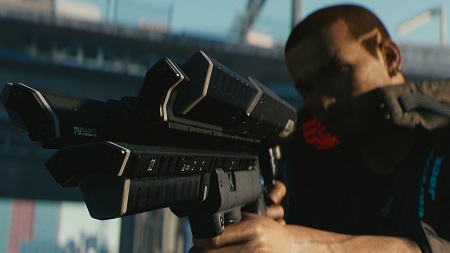
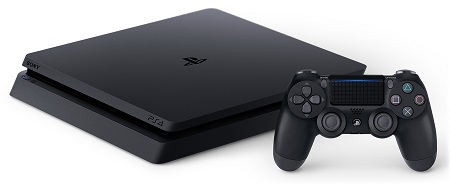
Cyberpunk 2077 was almost unplayable on PlayStation 4 and Xbox One when it was released.

I don’t believe for a second that CD Projekt Red’s management was blissfully unaware of the game’s impending problems this time last year. Their excuse that most developers were working on PCs so no one knew about the bugs and performance issues on home consoles is ludicrous in the extreme – and if anyone out there believes it, I’ve got a bridge to sell you. No, they knew full well that the game was not in a fit state for launch, but they went ahead and launched it anyway. And then, when things understandably went sideways, instead of coming clean and admitting they made a mistake, CD Projekt Red lied about it.

Cyberpunk 2077 is barely ready for release today, let alone a year ago. It needed many more months of development time to even get to this point, and I would argue that if it had been released today it would still have received criticism for its bugs, glitches, and other issues – especially on those older consoles. Not to mention that the overinflated hype bubble we discussed would have burst as players came to find a game that has some decidedly mediocre gameplay elements; things that other titles did better years ago.
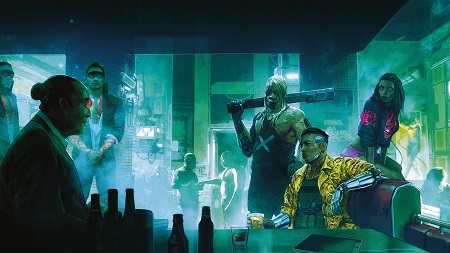
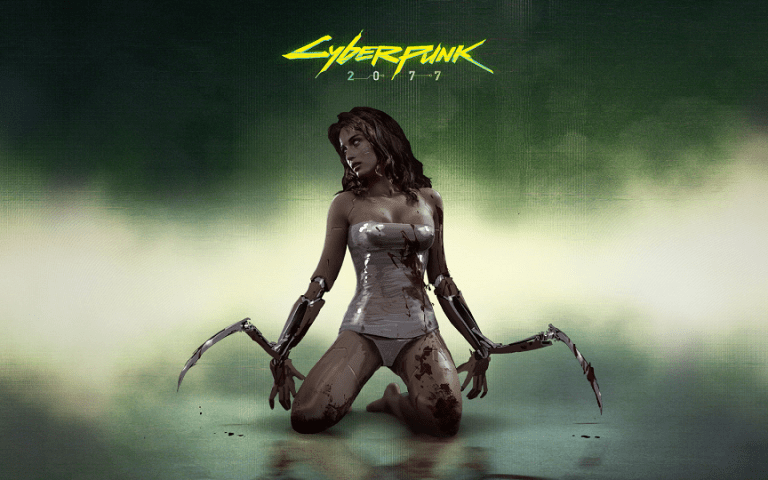
Pre-release concept art.

To me, that’s Cyberpunk 2077′s most egregious fault. Sure, the lies on the corporate side of things are pretty crappy. It was definitely an overhyped game, too. And the bugs and glitches will forever define Cyberpunk 2077 for a great many people. But for me, I see so many gameplay elements and features underneath the bugs, performance issues, and scandals surrounding the game that just aren’t that good, or aren’t handled well within the game world. Despite its ambitions, Cyberpunk 2077 is, even on its very best day, an okay video game.

An engrossing, exciting story holds players’ interest, and I fully agree that a good story can redeem even the most mediocre of titles. But underneath that story is a game that just isn’t all that good. Its first-person shooting is okay… but hardly spectacular. I can point to many modern titles that do shooting better and in more fun ways than Cyberpunk 2077: Doom Eternal and Halo: The Master Chief Collection are two just within the single-player realm.
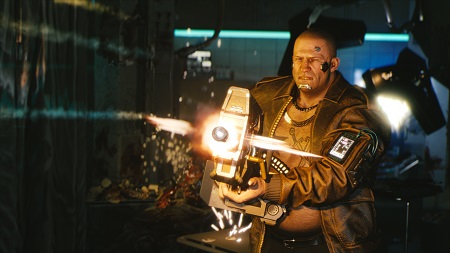
Shooting is a big part of Cyberpunk 2077 – and it’s an aspect of gameplay that many other titles do better.

Open-world gameplay is likewise something other titles do better. Grand Theft Auto V is still the definitive city-based open world game, and it gets so many things right that Cyberpunk 2077 gets wrong: driving, traffic, pedestrian/civilian NPC behaviour, traffic AI, mini-map/radar, police… the list goes on. Some of Cyberpunk 2077′s open-world elements feel so incredibly outdated when compared even to lesser games in a similar space – police AI and police spawning, for example, work far better and feel more intuitive in games like Saints Row 2, which came out in 2008.

I’d argue that the bugs, glitches, and performance issues actually ended up shielding Cyberpunk 2077 from some serious gripes about the way the game really works. The overnight bursting of the hype bubble surrounding the game a year ago mostly came about as a result of the bugs and the lies – players wanted to play the game they’d built up in their heads, and were angry with CD Projekt Red for releasing it before it was ready. It’s only as the game’s development continued that we’ve come to see how Cyberpunk 2077 might’ve looked had it been launched in a better state – and for a lot of folks, these gameplay elements just aren’t particularly well-made or fun. They’re certainly not innovative, meaning that despite bold claims in the run-up to the game’s release, Cyberpunk 2077 was never going to be the once-in-a-lifetime experience that many players had hoped for.
Cyberpunk 2077 has experienced quite the fall from grace.

Now that we’ve had a year to see the game in all its glory, it’s my firm belief that Cyberpunk 2077′s problems don’t begin and end with its incredibly bad launch. That launch will, justifiably, go on to define the game for the rest of its days. Very few titles before or since have seen such a spectacular implosion, and CD Projekt Red will be scrambling for years to recover from this self-inflicted wound. But as the dust settled and as the game’s development has continued, with bug fixes and patches having been rolled out over the course of this first year, we’ve seen what Cyberpunk 2077 could have been – or at least we’ve seen glimpses of that.

A strong, engaging story with some well-written dialogue and clever world-building keeps Cyberpunk 2077 interesting. Had it not been for the bugs and glitches, that might’ve been good enough to see it pick up better-than-average reviews: seven or seven-and-a-half out of ten, that kind of thing. But underneath that story, gameplay remains shallow. The game is comprised entirely of systems that other titles have done before – and in many cases have done far better. There was never anything new or innovative about Cyberpunk 2077, and the things that could’ve made it seem better than it was – such as its densely-packed open world or sense of scale – were completely ruined by the bugs and launch issues.

It’s possible that 2022 will see more updates for Cyberpunk 2077 that start to change the narrative. A next-gen console version is already on the cards for the first half of next year, for example, and there are more free updates to come in the months ahead. But as things stand, I can’t see a way to turn Cyberpunk 2077 into the game that CD Projekt Red spent eight years hyping to oblivion. It has the potential, once all the bugs are fixed, to be a decent game. But it will never be a great one.

Cyberpunk 2077 is out now for PC, PlayStation 4, PlayStation 5, Xbox One, and Xbox Series S/X. Cyberpunk 2077 is the copyright of CD Projekt Red. Some promotional artwork courtesy of IGDB. This article contains the thoughts and opinions of one person only and is not intended to cause any offence.
So Cyberpunk 2077 doesn’t work…

Oh dear. The launch of Cyberpunk 2077 has not gone well for a lot of players. The lucky few who managed to acquire a next-gen PlayStation 5 or Xbox Series X seem to be managing to have a decent enough time, as do PC players with an above-average machine. But anyone who picked up the game on PlayStation 4 or Xbox One has encountered a bug-riddled mess that many have described as “unplayable.”

CD Projekt Red is now receiving a lot of criticism, not only for releasing the game in a broken state, but for trying to cover that up. Reviewers who received copies of the game prior to release were only given access to the PC version – the version of the game which seems to run best – and were prohibited from using in-game footage they took themselves; launch day reviews were only allowed to use footage of the game provided by the developers. These things add up to a company trying to shield their game from well-earned criticism – and, as usual, the gaming press fell for it.

Welcome to Cyberpunk 2077!

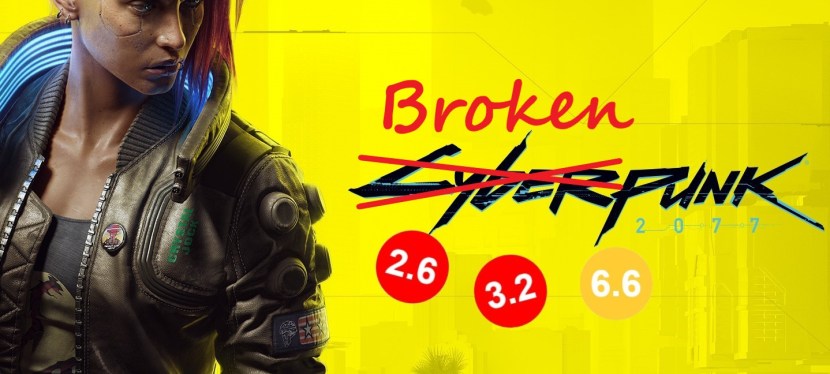
There is once again a disconnect between reviews from professional games journalists and reviews from the general public. On Metacritic – which is usually a decent aggregator of both professional and amateur opinion – Cyberpunk 2077 is sitting at a 90 from professionals, but even on PC it’s only getting a 6.6 from regular players. On consoles the average score dips massively – 3.2 on Xbox One and 2.6 on PlayStation 4 respectively.* There’s a degree of review-bombing, with many players giving the game 0/10. And if the experience is so bad it’s “unplayable,” I can quite understand why.

On a normal Xbox One or PlayStation 4 – i.e. not an Xbox One X or PlayStation 4 Pro – frame-rates for the game routinely dip below 20fps, textures are massively downgraded, there are fewer cars on the road, fewer NPCs on the street, and the game suffers from a strange haze effect that makes it look blurry. And that’s before we get into a single bug – such as hard crashes, broken missions, and so many different graphical issues that it makes Mass Effect: Andromeda look good by comparison.

Keanu Reeves stars as Johnny Silverhand in Cyberpunk 2077.

The overwhelming consensus is that the game should not have been released on Xbox One and PlayStation 4. At some point during the development of Cyberpunk 2077 – which began in earnest in 2015 having been in pre-production since 2012 – the decision was made to prioritise higher-end PCs and next-gen consoles over current-gen machines. However, the game remained in development for older hardware and has clearly been unable to adapt. It’s possible that patches may be rolled out in the coming weeks that blunt the edge of some of these issues, but if the game is fundamentally built with better hardware in mind, it’s hard to see how that’s something that can be patched out.

Even if patches are coming, though, many players are asking themselves a perfectly reasonable question: why wasn’t the game delayed? Cyberpunk 2077 was delayed twice: from its initial April release to November, and again from November to December. With the game clearly in such a state, how on earth did CD Projekt Red decide to go ahead with the release? Surely they anticipated this reaction – otherwise they’d have allowed reviewers access to the console version of the game. Knowingly launching a broken game is something we’ve seen become all too common in the last few years, and as I’ve said before: it almost never works.

Driving is one aspect of Cyberpunk 2077.

Players have trusted CD Projekt Red as one of the few “good” games companies out there. Compared with the likes of Electronic Arts and Ubisoft, CD Projekt Red have a good reputation, largely because they’re considered pro-consumer. That reputation is in tatters right now, and the trust they’ve broken with millions of players will be very difficult to rebuild.

We’ve seen games launch in a bad state many times, and often it’s a killer blow. A few titles like No Man’s Sky manage to partially rehabilitate their reputation over time, but I know people today who still refuse to play that game because of the “lies” and broken promises at launch. And of course there are many games that simply fail because of the reputational damage suffered by a buggy, broken launch. Mass Effect: Andromeda is a good example; its planned expansions were cancelled and the entire franchise put on hiatus after its disastrous release.

Cyberpunk 2077′s poor console performance is doing serious harm to the reputation of CD Projekt Red.

Even if Cyberpunk 2077 can be reworked on Xbox One and PlayStation 4 to be basically playable, the damage to the game’s reputation has been done. As many commenters have said: it doesn’t matter how good the game might be if it doesn’t work on the console they have. Pretending Cyberpunk 2077 is a PlayStation 4 and Xbox One game was a mistake. CD Projekt Red have clearly known for some time that current-gen consoles are not capable of running the game in any meaningful way, and a decision should have been taken a long time ago to either make significant changes and scale back some of the next-gen elements, or to make it a next-gen exclusive.

Had such a decision been taken a year or more ago, Cyberpunk 2077 would be in a better place today. It could have been one of the launch titles for the new generation of consoles, hailed as a great advertisement for what players can expect in the years ahead. Instead it’s being attacked and ridiculed for being such a mess.

Cyberpunk 2077 is broken on PlayStation 4 (pictured) and Xbox One.

We haven’t even touched on an issue I brought up last time I wrote about Cyberpunk 2077 – the insane level of hype that has surrounded the project. I said then that many players, having built up in their heads an idea of what the perfect game could be, will come crashing down to earth when they realise it’s just a game. A good game, perhaps, but just a game. I didn’t anticipate this, though. For players who’ve been eagerly awaiting this game for eight years, this must feel absolutely awful.

Far from being the spectacle they wanted, the game doesn’t even work. Anecdotally I’ve heard from players who literally can’t get past the main menu, hard crashes that make any meaningful progress impossible, and the framerate being so low that at key points the game cannot be played. Players have crashed their cars or been unable to survive a firefight because the framerate tanked at the wrong moment. The sheer frustration that must lead to is unparalleled.

Promo art for Cyberpunk 2077.

The most important lesson we’ve learned here is this: DO NOT PRE-ORDER GAMES! Don’t even buy them on launch day! Wait! Slow down, jump off the hype train, and be patient. Wait for the game to be properly looked-over by professional and amateur critics before making a decision, no matter how much you think the game looks amazing or that the developer can be trusted.

On the developers’ side, the lesson they need to learn is that exaggeration and false advertising always comes back to bite you. The marketing team at CD Projekt Red allowed the hype for Cyberpunk 2077 to get wildly out of control, and now that players have their hands on the buggy, barely-functional game, all of that criticism is their fault. They took the No Man’s Sky approach of failing to rein in the hype when they had the chance, of over-promising, exaggerating what the game would be like on current-gen hardware, and all the problems and low scores are their own fault. I have very little sympathy for the marketers, and as someone who worked for several years in video game marketing, I understand fully the environment they’re in.

It’s possible that Cyberpunk 2077 will eventually be made to run better on current-gen machines, but I wouldn’t bet on it looking anywhere near as good as advertised prior to launch. If you were planning on picking it up, wait. Either wait till you have a next-gen console or a PC, or keep checking to see if the issues have been fixed. For such a highly-anticipated game, I get that it won’t be easy to do so, and I sympathise. But paying £50/$60 for it today will only lead to disappointment.

Shameless plug time: I wrote a list of ten games you could play instead, and you can find it by clicking or tapping here.

*All review scores were correct at time of publication.

Cyberpunk 2077 is out now for PC, PlayStation 4, and Xbox One. PlayStation 4 and Xbox One versions may be used on PlayStation 5 and Xbox Series X respectively. Cyberpunk 2077 is the copyright of CD Projekt Red. This article contains the thoughts and opinions of one person only and is not intended to cause any offence.

Cyberpunk 2077 and the pros and cons of delayed releases

Cyberpunk 2077 is going to be the latest release from popular games developer CD Projekt Red. The studio is famous for The Witcher games series – The Witcher 3 in particular was one of the most highly-rated single-player games of the last decade. And I still haven’t got around to playing it, but that’s another story!

For a number of reasons, Cyberpunk 2077 has been on my radar as a game I’m looking forward to, and one of several recent and upcoming titles for which I’m currently in the process of upgrading/rebuilding my PC. It had been due for release in April, but that has now been pushed back to mid-September – a delay of around five months.

This got me thinking about what some of the pros and cons are when delaying a game.

Promo artwork for the delayed Cyberpunk 2077.

The biggest drawback should be obvious, and is especially relevant for a studio which only releases a small number of titles. It is of course money – is there enough in the coffers to keep the lights on and work continuing until the game can be released? Will additional sources of finance be required? Etc. For a large company with a turnover in the hundreds of millions or more, a delay can usually be absorbed – even if it’s done so grudgingly. But for a small company that may only put out one game at a time, several years apart, there’s a legitimate question of how sustainable delays can be, especially long delays of six months, a year, or longer.

For some companies, this can mean there’s an absolute limit. If funding dries up on a particular date, their title absolutely has to be on shelves on or before that date otherwise they may well go out of business. And that means that even with the best intentions, if a project suffers complications there can be a stark choice between releasing it in the state it’s in or not releasing it at all.

For a small company, or even a large company that’s been struggling, this might be understandable. But what we’ve seen happen on too many occasions recently is big companies forcing games out to meet arbitrary deadlines – like the end of the financial year – when there was no real need to do so. And the end result in many cases has been a seriously underwhelming title that never got off the ground because of its state at launch. The few days before and after a game’s release date are crucial – this is when reviewers get their hands on copies and the first player feedback comes in.

Mass Effect: Andromeda launched to mass ridicule for its graphical glitches in particular.

Two of BioWare’s recent titles spring to mind as examples – Mass Effect: Andromeda and Anthem. Both were pushed out too early, unfinished, unpolished, and suffering from too many bugs and glitches, and as a result, both titles failed to achieve either review score targets or sales targets. Mass Effect: Andromeda saw all its post-launch DLC – which would have added to its story – cancelled, and the entire franchise was put on hiatus. Anthem, planned as a “ten year” live service, saw its roadmap scrapped. While Anthem is limping on, it doesn’t seem long for this world and I doubt any major updates are coming as its remaining players jump ship to other, newer titles.

And there are plenty of other examples of games being forced out the door too soon by greedy publishers. The Assassin’s Creed series almost fell apart after attempts to launch more than one title per year in the mid-2010s led to several of them being essentially unplayable on launch due to the severity of bugs and graphical glitches. And Fallout 76 – which made my list of the most disappointing titles of the last decade – was also inexplicably launched before the game was in a basically playable state. The 2013 Star Trek video game was so buggy when it was released – timed to tie in with Star Trek Into Darkness – that JJ Abrams went on record saying that it hurt that film’s reception. And having played that game for myself, I can attest to how bad of an experience it was.

Spock on a promo screenshot for 2013’s Star Trek.

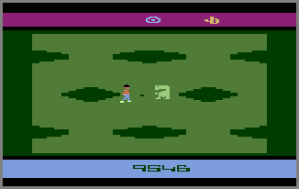
This problem even goes all the way back to the early days of video gaming. 1982’s E.T. the Extra-Terrestrial was so bad it was one of the causes of the 1983 video game “crash” in North America, and hundreds of thousands of unsold copies ended up being famously buried in a New Mexico landfill. That game was put together in a mere five weeks in order to cash in on the film’s popularity as the Christmas season approached.

In all of the above cases – and countless more – extra development time would have resulted in an improved game at the very least. Maybe some of these failures could have even become good games, the kind people are excited to go back and play even years later. But because decisions were taken by business executives who needed to tick boxes and conform to arbitrary deadlines, the end result was failure.

Screenshot of the infamous 1982 game E.T. the Extra-Terrestrial.

There’s a famous quotation from Nintendo’s Shigeru Miyamoto – “a delayed game is eventually good, a bad game is bad forever.” And that couldn’t be more true. If a project needs more time, then I’m firmly in the camp that says give it the time it needs. Unless it’s completely impossible, it’s always going to be better to be late than bad.

A bad game – which reviewers and early adopters will pick up on immediately – is going to get bad reviews and bad feedback. In the days of YouTube, Twitch, and other social media, gamers will know right away – and even on launch day people could be put off picking up a copy if reviews are bad. A game plagued by glitches, bugs, and other issues is always going to sell fewer copies than a game that works as intended if for no other reason than review scores and word-of-mouth.

Some particularly bad games can even lead to studio closures or franchises being shut down.

There’s always a butting of heads when the artistic side of game development meets the business reality. And in every case, there’s a point at which development becomes too costly to ever realistically hope to make its money back. We could do a whole article on how Star Citizen has blitzed through more than $100m in crowdfunding money and is still nowhere near release, even after close to a decade in development. So there does come a point, somewhere, at which a decision has to be made about release, and from a business point of view it’s possible to understand why – at least in some cases.

So where does this leave CD Projekt Red, whose delay prompted this article? They’re going to be fine, of course, and the extra development time should mean Cyberpunk 2077 ends up being a better and more polished game at the end of the day.

Most players recognise that simple fact, and the response from the community when any game is delayed is almost always overwhelmingly positive. Gamers have been here too many times before, and practically everyone who’s been playing for a while will have been burned at least once by a disappointing title that was forced to release too early. The vast majority of gamers, while they may be disappointed on a personal level, understand the logic and reasoning behind delays. It’s better for a studio to take its time and launch a good game, after all.

2015’s The Witcher 3 was delayed, only to receive universal acclaim when it finally released.

Some titles end up being delayed for years, only to release to critical acclaim. And at the end of the day, that’s far better than hitting some arbitrary launch date, receiving justifiably bad reviews, and being a failure. CD Projekt Red’s last title, The Witcher 3, was delayed, and many people regard that game as one of the finest of the last decade.

I’m happy to wait longer for any game I’m looking forward to if it means the experience will be better for it.

All titles mentioned above are the copyright of their respective studios, developers, and/or publishers. Screenshots and artwork are all taken from IGDB press kits. This article contains the thoughts and opinions of one person only and is not intended to cause any offence.