Raya and the Last Dragon – a review

The first part of this review contains no major spoilers for Raya and the Last Dragon. The second part does, however, and the end of the spoiler-free section is clearly marked.

Raya and the Last Dragon is an expensive film right now, available only via Disney’s “premiere access” feature on Disney+ for £20 in the UK or $30 in the United States. My review of the film has to be seen through that lens, because it’s not simply a title you can watch as part of your regular Disney+ subscription – though it will surely become available on Disney+ in the coming months. If Raya and the Last Dragon follows the same path as last year’s Mulan, it may be available to stream as part of Disney+ in the summer.

So the big question is this: can I recommend it for £20? Or is Raya and the Last Dragon a title that you’re better off waiting for?
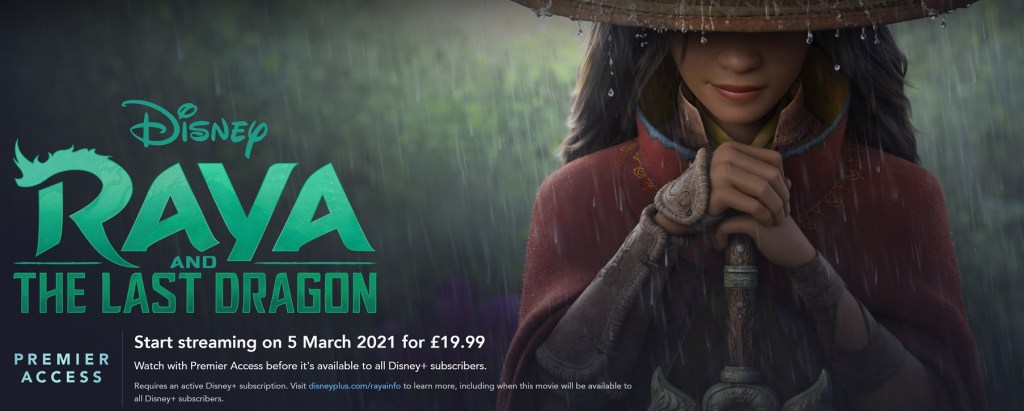
I’m kind of an impatient person! And because Raya and the Last Dragon was one of the titles I was most looking forward to this year, for me it was unquestionably worth it. Raya and the Last Dragon is a great animated film that easily hits the highs of other recent Disney projects. I don’t mind paying a little extra for that under the circumstances – it’s about the price of two or three cinema tickets, so if you consider it from that point of view, it doesn’t seem too bad.

But there’s no getting away from this price discussion, and I want to briefly add my two cents. On the one hand, it can seem unreasonable for Disney to insist on an additional £20 on top of the monthly fee for Disney+. If it were an either/or case it would perhaps sit better with folks, but being asked to either pay £20 on top of your £8 a month, or to have to sign up at £8 on top of the £20 to see Raya and the Last Dragon certainly feels anti-consumer, and I get why folks feel that way.

Raya and the Last Dragon was originally supposed to get a theatrical release.

I’m sick to the back teeth of companies using the pandemic as an excuse for everything, and there’s no denying that Disney could simply have waited and released Raya and the Last Dragon in cinemas either later this year or next year if needs be. That’s the approach taken by Eon and MGM for the upcoming James Bond film No Time To Die, which has been delayed for well over a year. However, despite all of that, I like this method of distribution, and I think we’re seeing the beginnings of a shift away from theatrical releases in favour of streaming.

My health and disability means that I can no longer go to the cinema, so from my selfish perspective I love the idea of bringing more titles straight to streaming platforms, and on an occasional basis for a big release that I’m very keen to see, paying a little extra to watch it is no big deal. As television screens get better (and bigger) the so-called “cinema experience” offers less and less value anyway, and being able to watch a film on one’s own schedule, with the ability to pause, rewind, take breaks, etc. is so much nicer than going to the cinema in many ways. So in my opinion, bringing Raya and the Last Dragon to Disney+ for a fee is acceptable. Would I have preferred it to be included in the price? Of course. But these projects are hugely expensive, and recouping some of that money is going to be necessary for Disney, so I understand why they’ve done it this way. It feels like a compromise – not one that everyone will love, but one I find acceptable.
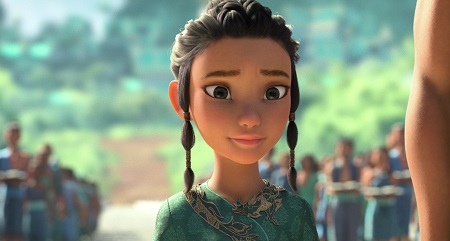
Young Raya during the film’s opening moments.

Before we get into the main section of the review, here are my spoiler-free thoughts.

I would describe the animation as competent. Nothing blew me away with how amazingly detailed it was – like the snow in Frozen or the oceans in Moana did – but there was nothing wrong with it and it was in line with other modern Disney films from the last decade or so. Considering a significant portion of the work on Raya and the Last Dragon was done remotely, that’s pretty good in my opinion.

The story was surprisingly heavy and emotional for a kids’ film, and it was thoroughly enjoyable. In the first few minutes it was perhaps a little fast-paced for my liking, dropping quite a few characters, locations, and themes all at once. But after that fast beginning it settled in, and followed Raya on her quest at a reasonable pace that wasn’t overwhelming. There were light-hearted and comedic moments, plenty of different environments for Raya and her friends to explore that were all based on different parts of southeast Asia, and the vocal performances were outstanding. Aside from the credits there weren’t any musical numbers, and that was something I wasn’t expecting. The score was great, and had an Asian-inspired theme to it, but after the likes of Moana and Frozen in recent years saw huge success with their songs, I was expecting at least a couple.

So that’s my non-spoiler summary.

This is the end of the spoiler-free section of the review. Expect spoilers from here on out!

Raya and the Last Dragon began with an immediate dump of exposition, explaining the backstory of the broken land of Kumandra – based loosely on southeast Asia. As indicated above, this opening section of the film was quite fast-paced, almost rushed, and introduced characters, themes, magic, locations, and backstory all at once. As I sat through those opening minutes I was hoping that the rest of the film would slow down, and luckily it did after a few minutes. That makes the opening, unfortunately, the weakest part of the film overall.

Raya and the Last Dragon follows the titular Raya as she seeks to save the fractured world of Kumandra, whose people have split up into five competing, squabbling, and warring lands in the aftermath of the disappearance of the dragons. But saving the world is just a side-quest for Raya, whose real objective for much of the film is to save her “ba” – her father, and the chief of her people. Yes, that makes Raya a Disney Princess!

Chief Benja, Raya’s father.

The story takes Raya to all five of the different lands, and each was based on a different area of southeast Asia. We spent just enough time in each land to take in the setting, but I think that taking a few minutes more to really get a feel for each – or perhaps the film including one fewer land – might’ve improved things. This is really the only point of criticism, because each of the lands was unique and richly detailed. At first I wasn’t sold on using English names for these places: Fang, Heart, Spine, Tail, and Talon. However, the metaphor made the ultimate payoff to the film’s story more easily understood, especially for younger viewers. The point of these names was to hammer home, at every opportunity, that the people of Kumandra were artificially divided; that the resolution to their problems would be in learning to trust one another and come together. Like the parts of an animal can’t function independently, neither can the peoples of Kumandra. Each land, represented by a piece of the dragon, brings something that the others lack, and working together is the only way.

This theme carried over into the film’s climactic final battle, as each of the friends Raya had made along the way – each from a different land – stood together and used the last of the dragon gem’s magic to help the people of Fang. This metaphor was certainly omnipresent, but didn’t feel laboured. The film knew, from the very beginning when Chief Benja introduced us to the idea of reunifying the fractured land, that this was the direction of the story. The names of the lands fed into that, as did the way Raya assembled her motley crew from different places.
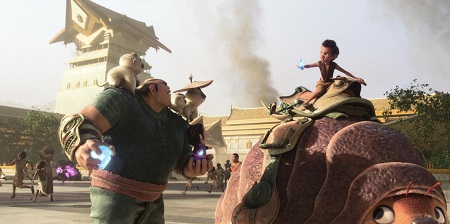
Raya’s friends work together to help the people of Fang.

At time of writing, there’s a renewed focus on anti-Asian hate and hate crimes in the United States. I’m not an American, but I’d like to offer my perspective on how a film like Raya and the Last Dragon fits at this moment. We often hear criticism of Disney for taking legends and stories and twisting them, “Disney-fying” them to sanitise them for a western audience. And you know what? Raya and the Last Dragon, just like other Disney films based on folklore and legend, is Disney-fied. But there’s incredible value in representation, even in this simplified style, and with Disney’s unique reach that extends across borders, cultures, and ages, Raya and the Last Dragon offers representation to an under-represented group of people in cinema, animation, and the cultural mainstream.

We could devote an entire essay to debunking the argument that “representation and diversity for their own sakes are negative things,” but in the context of this film, coming at this particular moment, let me just say that positive representation is important. It’s important that people of all backgrounds feel included, and being depicted positively in mainstream entertainment – particularly in something as significant as a Disney animated film – is an historic moment. Raya and the Last Dragon draws on the mythology and folklore of southeast Asia in the same way as Moana drew on Polynesian legend, and it’s a net positive for people of Asian heritage to see such representation.

Raya and the Last Dragon presents a positive depiction of Asia and Asian people at an important moment.

Kelly Marie Tran is also uniquely positioned at this moment. Tran suffered horrible racist and sexist abuse online in late 2017 through 2018, and I’m so pleased to see her back in such an inspiring role. Raya and the Last Dragon is a story about bringing people together, learning to trust and overcome hatred, and as someone who has, sadly, experienced hatred firsthand, there’s something even more powerful in knowing who it is bringing Raya to life through an outstanding voice performance.

I don’t like to get “political,” but the release of Raya and the Last Dragon happened to coincide with a significant moment for people of Asian heritage in the United States, and I felt it important to at least acknowledge that.

Kelly Marie Tran voices the character of Raya.
Picture Credit: Jimmy Kimmel Live via YouTube.

In the west, we usually associate dragons with fire. Fire-breathing dragons are both a part of European folklore and have gone on to become a trope in fantasy fiction, so it was very interesting – and more than a little unusual – to see a water dragon as the main focus in a dragon-themed film. This is, of course, a reflection of the film’s Asian-inspired story, as was the design of Sisu herself.

Continuing the theme of breaking with common western depictions of dragons, Sisu is presented in an Asian style – a long body, no wings, and covered in fur. Sisu’s design is a Disney take on that concept, blunting its sharp edges and making it child-friendly. And it worked. I daresay Sisu toys and teddies will become a major part of Disney’s merchandise this year and beyond!

Sisu had a great design, inspired by Asian folklore but with a Disney twist.

The other character with a cute design was Tuk Tuk, and right from the opening moments of the film it was clear he’d been designed to be the cute animal sidekick that so many Disney protagonists have. Tuk Tuk worked best in the film’s prologue, after which he’d grown large and basically served as a form of transportation for Raya and Sisu, though the design remained largely the same.

With Tuk Tuk I think we can point to one of the few examples of Raya and the Last Dragon stumbling, at least somewhat. Aside from having a cute (and merchandisable) design, Tuk Tuk was clearly set up for some light-heartedness; some comic relief. Yet the introduction of Noi (the baby) and her three monkeys largely switches the comic relief focus away from him. It’s not a case of “too many characters,” but rather that the film didn’t really know what to do with two sets of comic relief characters. There was less for Tuk Tuk to do as a result.
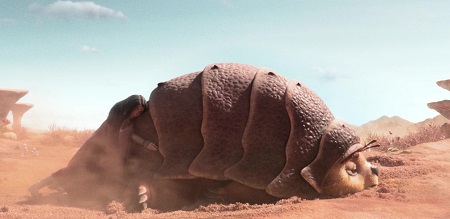
Raya and Tuk Tuk near the beginning of the film.

The only other point of criticism I have comes at one of the film’s climactic moments. Raya and her friend-turned-nemesis Namaari are involved in a standoff. Namaari planned to take Sisu and the dragon gem pieces back to Fang on her mother’s orders, and Raya drew her sword to stop her. As Namaari points her crossbow at Sisu, Sisu asks Raya to trust that she knows what she’s doing – but Raya doesn’t, and the result is that Namaari’s crossbow fires, killing Sisu.

This moment was meant to show that Raya is the one who bears most responsibility for Sisu’s death; that if she had trusted Sisu, as Sisu asked her to, Namaari was about to stand down. But it simply wasn’t clear that that was the case, and it would be easy for a casual viewer – or a child, and this is a children’s film, after all – to simply see this moment as Namaari shooting Sisu.
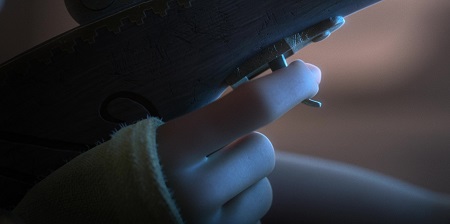
Who was really responsible for pulling the trigger?

For such an important moment, I think it needed to be clearer that Raya is the one to blame. This is her character arc across the film’s final act: learning to trust, and being willing to make the first step to establish trust. If we as the audience see this moment as the culmination of Raya’s failings – an unwillingness to trust either Sisu or Namaari – then the rest of her actions and her arc make sense. If we miss that crucial context and simply see this moment as Namaari the betrayer shooting Sisu, what Raya does later on – giving up her pieces of the dragon gem to signify her willingness to trust – doesn’t make as much sense in context.

Namaari’s words to Raya during their epic final fight also ring hollow when the film is seen in this way. Instead of a heartbroken Namaari laying a harsh truth on Raya, it could be interpreted as another attempt by a liar and trickster to get under Raya’s skin. The moment with the crossbow was set up perfectly, but it was too easy to miss that it was Raya, not Namaari, who was really to blame for what happened, and as the rest of the plot turned on this moment I think that should have been much clearer.
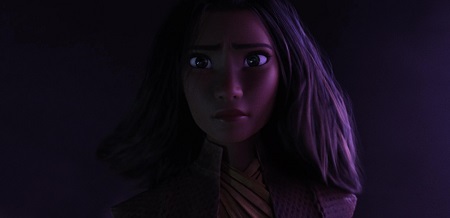
Raya chose to trust Namaari at the film’s climax.

We could also talk about how easy it seems to be to slay a dragon in this film’s lore! It seems like an unimportant point, and perhaps I’m the only one who cares or feels this way, but the way the film treated dragons across the first hour or more made it seem as though they’re magical, almost god-like creatures. The way the film’s human characters worship Sisu – and the other dragons – represents this well. Yet all it took to kill Sisu was a single crossbow shot, and I guess what I’m trying to say is that it doesn’t seem to gel. On the one hand we have the film establishing dragons as magical creatures that provided for humans, bringing water and literally giving life to the world, being worshipped and deified centuries after the last of them were wiped out. Yet on the other hand, they’re no different from any other animal and a single crossbow bolt can kill them.

Perhaps this is my western perspective, thinking about dragons not in the context of Asia but in the context of JRR Tolkien and other works of high fantasy. In western dragon lore going all the way back to the legends of Saint George and King Arthur, slaying a dragon is considered an incredibly difficult task worthy of song and celebration. In the world of Raya and the Last Dragon it seems to be something any competent soldier could do. Who knows, maybe that’s why the other dragons went extinct!

Namaari the dragon-slayer!

Raya and the Last Dragon features a cast whose major characters are all female, with male characters in secondary supporting roles. This is something new to Disney, as even past female-led films like Moana, Frozen, or Mulan have included major male characters. The creative choice to have both the main hero and villain both be female actually works really well, and Raya manages to have a closer relationship with Namaari as a result.

Namaari being a redeemable villain – and the film essentially having no overall “big bad” who has to be killed to be stopped – was also a great choice, one that fit perfectly with the theme of overcoming hate and coming together. The whole story of Raya and the Last Dragon was about learning to trust one another, setting aside differences in order to work together for the common good. This theme would have been completely undermined if the final act required Raya to kill Namaari or even her mother, so making both characters redeemable was essential to the story.
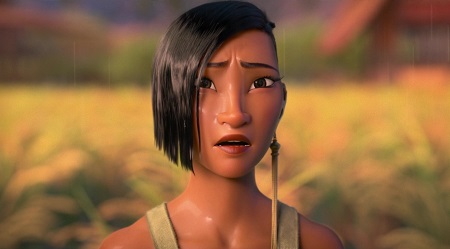
Namaari needed to be a redeemable villain for the story to work as intended.

The real villains of the piece were the non-human Druun, depicted as a non-sentient force of nature rather than a character or faction. The design of the Druun managed to strike a balance between being intimidating but not scary and offputting for young children, and I would think that all but the most sensitive children would be able to watch Raya and the Last Dragon without feeling frightened by these crackling clouds of dark purple energy.

More could have been made of the Druun’s relationship with humans. At one point it was suggested by Sisu that the Druun are an embodiment of the arguments and lack of trust between humans, yet this wasn’t really developed further. It’s not clear whether humans directly caused the Druun to appear, whether they came from someplace else to feed on this mistrust and hatred, or what their precise origins are. If the world of 500+ years ago was populated by humans and dragons and was united, with no mistrust and no hatred, how the Druun even arrived in Kumandra is not clear. Perhaps that’s something a future title will explore in more detail, because I think it’s potentially interesting to say that humanity is responsible for giving strength to this powerful foe.
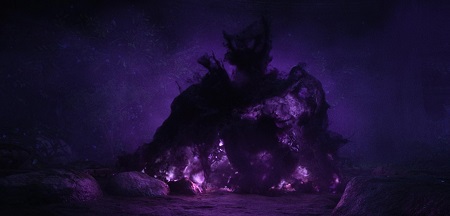
The Druun were the main adversary for Raya and her friends to overcome.

So I think that’s about all I have to say. Raya and the Last Dragon was a thoroughly enjoyable film and a worthy successor to the likes of Frozen and Moana. Disney has been on a roll for almost a decade now, since the release of Frozen in 2013, and the hits keep coming. In the very short term I doubt that Raya and the Last Dragon will catch fire in the way Frozen did, largely because of the cost of accessing it on Disney+ via the “premiere access” feature. However, once the film becomes generally available that should change. In a few months’ time, when it arrives for all Disney+ subscribers, it should see a significant boost.

Unlike Frozen and Moana, the choice not to include musical numbers means that there can’t be a breakout song. Let It Go and, to a lesser extent, You’re Welcome and Shiny went on to not only define the films in which they featured, but arguably bring in more viewers. By “going viral” in a sense, the songs drew more attention to their respective films, and this is something Raya and the Last Dragon won’t have.
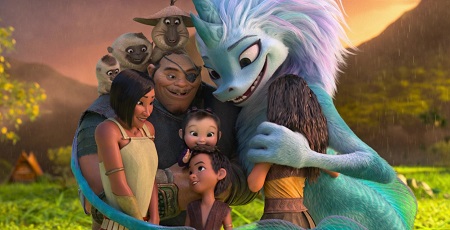
The main characters at the end of the film.

I had a great time with Raya and the Last Dragon. I can’t tell you whether you’ll get £20 or $30 worth of entertainment and enjoyment from the film, because such things depend on your budget and your perception of value. But this time, as a one-off and as something I won’t repeat for the rest of the year, I didn’t mind spending the extra money. I didn’t spend money on last year’s Mulan remake, and having seen the film subsequently I think that was the right call. But this time, for the latest Disney animated film, I think it was worth it. Raya and the Last Dragon was funny, emotional, and clever, and told a story about people coming together that is timeless. Its Asian roots shone through, and though some will surely argue that it was a dumbed-down version of Asian traditions, that’s Disney’s trademark style.

If you enjoyed previous Disney animated films, especially recent ones, I daresay you’ll have a good time with Raya and the Last Dragon.

Raya and the Last Dragon is available to stream now on Disney+ via the “premiere access” feature for an additional fee. Raya and the Last Dragon is the copyright of Disney Animation Studios and the Walt Disney Company. This article contains the thoughts and opinions of one person only and is not intended to cause any offence.
Is the decision to bring Mulan straight to Disney+ a good one?

I’ve made no secret here on the website that I consider Disney’s live-action remakes of some of its classics to be very much lesser versions of those films. That’s for a variety of reasons, and I’m sure is at least partially influenced by the nostalgic feelings I have for some titles. 1998’s Mulan is an interesting film in many ways, but it’s always felt like a second-tier member of the Disney Renaissance, not quite reaching the same heights as The Lion King, Aladdin, or even Pocahontas. So its remake, which had been scheduled to premiere earlier this year, is a project I’ve been anticipating with muted excitement at best.

That was before the coronavirus pandemic disrupted everything. After abortive attempts to release the film in cinemas in March, then July, then finally August, Disney decided to try something they haven’t done before: bring a major release directly to their streaming service, Disney+. But Mulan won’t arrive on Disney+ ready to watch like any other title, instead it’s going to be paywalled with customers being asked to stump up an extra $30 on top of their regular Disney+ subscription fee in order to access it when it releases next month.

Mulan (1998) is getting a live-action remake.

On a purely mathematical level, I can understand the charge. Films are expensive to make, and Disney wants to recoup as much of that money as possible. $30 is around the price you might pay for 3-4 cinema tickets, so if you think that it’s the same money as a family going to see the film at the cinema, Disney obviously feels that it’s a fair price. But of course watching a film on streaming isn’t the same as going to the cinema, and I have to confess I was taken aback by how steep the cost of seeing Mulan is. As a single person, $30 (or whatever its equivalent in GBP will be) is excessive for seeing one film! That’s the equivalent of more than four months’ subscription to the streaming platform, and I have no doubt many will be as put off as I was.

My big question is this: why can’t Disney just be patient? It isn’t just film releases that have been disrupted, film production has been massively affected too. Disney has already postponed the release dates of many other titles that are currently in production as a result of the pandemic, and surely Mulan could have taken any one of those release slots once the disruption finally ends. Sitting on the film costs Disney very little – releasing it too soon could backfire and cost them massively.

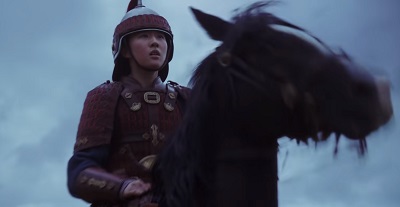
Liu Yifei in the 2020 remake of Mulan.

Ever since broadband internet made it possible to stream and download large files, piracy has been a problem for big entertainment companies. Streaming services like Disney+ are able to survive in part because most people like to follow the rules, but also at least in part because they make it easy and affordable to do so. Who would even notice £4.99 a month – that’s how much Disney+ costs in the UK. Hardly anyone would, of course, and that’s how the service survives. But a sudden turnaround to charge more than $30 for a single film and suddenly a lot of people will be looking for other options.

Piracy is incredibly easy. A simple online search leads to dozens of websites that allow users to stream up-to-date films, and within hours of a film or television series going live, it’s been recorded and reuploaded countless times. When Mulan releases behind a paywall, it will very quickly be uploaded to pirate websites where people will be able to watch it or download it for free.

No, not that kind of piracy…

While Mulan’s release on streaming will almost certainly be lacklustre, it could have the unintended side-effect of harming Disney+ as a brand. Disney+ already is worse than its competitors in that the most recent seasons of its television series aren’t uploaded until months or even years after they debut on television, but if the service gets a reputation for paywalling content, many people will wonder what the point of paying for it is and will unsubscribe. Partly that’s on principle, and partly it’s because the cost of accessing Mulan is incredibly high.

Disney has also harmed its relationship with cinemas and distributors. The cinema industry is suffering greatly from months of closure, and here in the UK, while cinemas have been allowed to reopen since early July, many haven’t. Regular readers will know that disability precludes me going to the cinema these days, but in the past when I was able to, I favoured an independently-owned cinema in a nearby town – one of the few left in the UK. Its fortunes hang in the balance right now, and one thing that could have helped is a big release like Mulan to tempt people back. By cutting cinemas out of the equation and going direct to streaming, Disney has upset the apple cart. Why should cinemas go out of their way to show other Disney films in future?

Cinema owners will protest this decision vehemently.

At least one cinema chain – Odeon, which is owned by AMC – has stated that they will no longer show any films by Universal Pictures as a result of that company making a similar decision. Universal chose to release Trolls World Tour digitally as a result of the pandemic, and AMC and Odeon reacted swiftly, banning Universal films in their cinemas, of which there are many in the UK; Odeon is a big chain. Disney could end up in a similar situation, and if several big chains were to band together, they could effectively prevent Disney films being released almost anywhere. Any company, even a giant like Disney, needs to tread very carefully.

Disney has chosen to prioritise making as much money as possible as soon as possible ahead of all other concerns. And with the company losing money – Disney lost $4.7 billion in just three months this year – perhaps the higher-ups decided they needed to do as much as possible to offset that. Indeed, the decision to reopen as many of the company’s theme parks as they’re allowed to is also part of that – the losses made by having the parks open are clearly less than the losses made by keeping them shut. Evidently Disney has made the calculation that the short-term harm of releasing Mulan digitally is less than the harm of sitting on it for an unknown length of time.

For those willing to pay, Mulan will be available next month on Disney+.

The coronavirus pandemic has been hard to predict, but many medical experts and analysts are anticipating a renewed increase in cases as we move into the autumn and winter here in the northern hemisphere. Disney may have interpreted such statements to mean that regional lockdowns may not be going away any time soon, and even if the rules are relaxed, the general nervousness of the public about the disease – and the looming recession it’s triggered – may put people off going to the cinema anyway. With the USA, which is Disney’s biggest market, being much more seriously affected than the rest of the world, even if everywhere else were to get back to some degree of normality, it may take a lot longer before American cinemas will all be able to reopen.

All of these issues and more have fed into the decision, and I can understand it on a corporate level. But I think one of the key problems is that many higher-ups don’t appreciate just how much they’re asking people to pay to see a single film in their living rooms – or even on a phone screen. $30 is a lot of money to a lot of people, and while it may not be to someone who’s making megabucks at the top of a huge company, out here in the real world it is. $30 could be the back-to-school supplies for a child, a big takeaway meal for a family, or as already mentioned, more than four months of Disney+. People could do a lot with that money, and while many are happy to pay extra for a treat like a visit to the cinema, far fewer will be willing to cough up cinema-ticket prices for a film they’re watching in their living room or on their phone. Disney+ has been inoffensively priced until now, and that has won it many supporters and subscribers. Mulan is not inoffensively priced. In fact it’s priced in such a way as to be downright offensive to many people.

Disney evidently sees this as the least-bad option right now.

Speaking purely anecdotally, I haven’t found anyone willing to pay for Mulan. One person I asked suggested that if it were a better film, they might be willing to consider it, but definitely not for a remake of a B-tier film like Mulan. That was the closest I got to a “yes” out of everyone I spoke to. While there will be a market for it, as some people will desperately want to see this reimagining and others will be pestered into it by their kids, it won’t be enough for the film to break even and I have no doubt Mulan will have a seriously disappointing launch.

But even a serious disappointment may be good enough for Disney as they look for ways to slow their financial haemorrhaging. Mulan will undeniably bring in more money for the company than the precisely $0 it would if it remained unreleased. As long as it covers the costs of streaming it worldwide – which, given Disney+ already exists, it almost certainly will – it may be seen as a success. At the very least it will be something Disney can show to investors and shareholders to demonstrate that they’re trying new and creative ways to get through what could be many more difficult months that lie ahead.

Mulan and Disney+ are the copyright of the Walt Disney Company. This article contains the thoughts and opinions of one person only and is not intended to cause any offence.
Frozen II – Disney’s best sequel?

Spoiler Warning: There will be spoilers ahead for both Frozen and Frozen II.

Disney doesn’t have a good track record when producing sequels to its animated hits. There have been a number of attempts over the years to follow up a successful title with a sequel, but usually the main focus of the studio was elsewhere, with the best writers and animators working on the next big title. The result has been that almost every sequel attempt has ended up as a direct-to-video affair, with an expected drop in quality. There have been some gems hidden amongst these titles – The Return of Jafar, the 1994 sequel to Aladdin, being one example – but generally speaking, Disney prefers to direct its attention to projects other than direct sequels.

Frozen II is something altogether different. With the exception of Fantasia 2000, a sequel to 1940’s Fantasia, and a couple of films in the Winnie-the-Pooh series, Disney hasn’t attempted a big-screen sequel that required anywhere close to the effort put in to Frozen II. The first Frozen, which I picked as one of my top ten films of the 2010s, was a runaway hit even by Disney’s standards. In 2013-14 Frozen merchandise was inescapable, and the film had as big of an impact – or bigger – as 1989’s The Little Mermaid, which kicked off the era known as the “Disney Renaissance”. The value of Frozen as a brand was phenomenally high, and cashing in on that success – especially in an era of cinema so dominated by sequels and franchises – was too tempting for the studio to resist!

The relationship between Elsa and Anna is the core of Frozen II.

Because I was living overseas in 2013 I missed practically all of the pre-release marketing for Frozen. It was only when browsing local cinema listing for English-language titles that I first heard of it, and while I had high hopes as I’d always been a Disney fan, I was absolutely blown away by just how amazing that film was. In my opinion at least, the “Disney Renaissance” can be stretched to include 2002’s Lilo and Stitch, but after that the quality of the studio’s output seemed to dip, and while there were still some enjoyable titles in the decade after, Frozen was on a completely different level.

Idina Menzel, who voices the co-lead role of Elsa, is someone I was quite familiar with before Frozen. I’d been lucky enough to see her on stage in the London production of Wicked – a musical about the Wicked Witch of the West from the Oz series. She’d also released three albums by the mid-late 2000s, all of which I owned, and as a big fan of Wicked I was used to hearing her belt out the show’s big hits like The Wizard and I, Popular, and of course Defying Gravity from the show’s soundtrack album. Menzel also had a co-starring role in 2007’s Enchanted, which is a fun parody of some of Disney’s tropes – made by Disney itself. She seemed like a great fit for a starring role in a Disney film, and I wasn’t disappointed by her performance; I’d always felt she was quite an underrated performer.

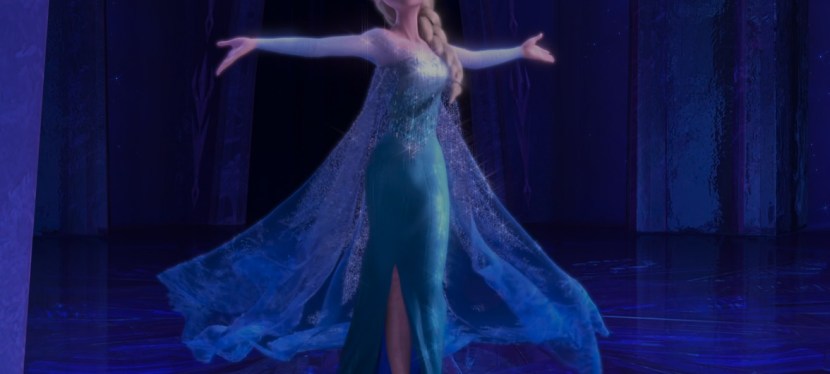
I guess we can admit – as Frozen II hints at itself – that the song Let It Go may have been played a little too often in the aftermath of the first film’s success, but nevertheless the Frozen soundtrack has to be one of Disney’s best. Robert Lopez and Kristen Anderson-Lopez returned for Frozen II, and the sequel benefits greatly from their involvement. The songs and music have always been a huge part of any Disney title, so getting that right is incredibly important!

Elsa’s reaction to Let It Go was pretty funny.

Elsa’s ballad from early in the film, Into the Unknown, was Frozen II’s answer to Let It Go from the first film. Music is, of course, something very subjective, and comparing two powerful ballads by the same composer sung by the same singer really boils down to “which did I like better?” While I obviously have to concede that my opinion is influenced by having heard Let It Go many more times, I think I prefer it over Into the Unknown. But that’s really just a subjective opinion.

The other two standout songs for me were Lost in the Woods and Some Things Never Change, which was played close to the beginning of the film.

The song Some Things Never Change from Frozen II.

Frozen II picks up the story a few years after the events of the first film. My initial concern on hearing a second film was in development is how it would get around the usual Disney sequel problem, which I can summarise thus: how do you tell a dramatic, engaging, and interesting story after the “happily ever after” moment in the original title? This isn’t a question exclusive to Disney; many sequels can falter when it comes to answering, but because Disney films like Frozen have self-contained stories that are wrapped up by the end, it’s something ever-present and noticeable in practically every Disney sequel. Frozen’s ending answered the question of Elsa’s magic, fixed the relationships between Elsa and Anna, and Anna and Kristoff, and saw the newly-crowned Elsa open up the kingdom of Arendelle and her castle, no longer feeling the need to isolate herself. Any sequel would have to find a way to get around these finalities.

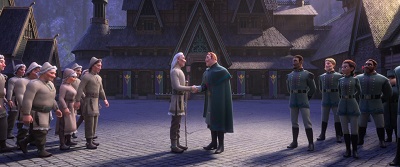
In the film’s early scenes, we’re reintroduced to Elsa and Anna’s parents, who tell the young girls a story of a battle between Arendelle and their northern neighbours near an enchanted forest in a flashback sequence. The Northuldra tribe are evidently based on the Sámi (or Laplander) people who inhabit northern Scandinavia, and I believe Disney consulted Sámi leaders and historians to enhance the tribe’s appearance and portrayal in the film. The cause of the battle between the Northuldra and Arendelle forces is unknown, but as a result the enchanted forest has sealed itself off, shrouded in an impenetrable fog bank.

Frozen dedicated a lot of time and effort to getting its animated snow to look and behave just right in 2013, and that has carried over to this film too. But I want to also acknowledge at this point the fog effect, which is something that can be difficult to get right in computer animation. Frozen II absolutely nailed the way this fog looks and behaves – and as something that does get a fair amount of screen time, it ended up looking amazing and fit right in with the aesthetic of Frozen II’s world.

The fog in Frozen II was beautifully created and animated.

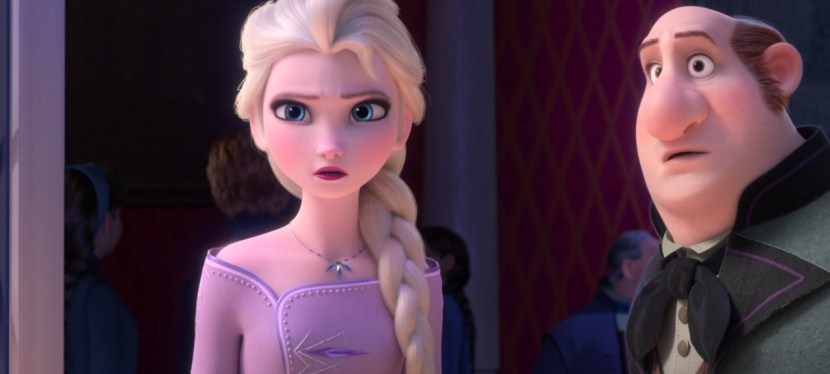
To get back to the plot, the basic premise that the princesses’ grandfather and the rulers of Arendelle were the “bad guys” who instigated the fight with the Northuldra wasn’t well-disguised – but it gets a pass for that as a kids’ film. I’m sure all of the under-tens in the audience were shocked at that revelation! However, it does draw comparisons to the big twist in the first film: that Anna’s fiancé, Prince Hans, was evil and the film’s villain. That twist caught everyone off-guard, simply because Disney had never pulled a stunt quite like it. There may have been some pressure on Frozen II to follow suit and throw in a twist or curveball, and while it was a success as a story point, it wasn’t a shock in the way the Prince Hans twist had been.

The second point to make from this twist is that it leans very strongly into the “white people bad, natives good” storyline that we’ve seen a lot of in recent years. The portrayal of the Northuldra tribe overall definitely veered toward a common trope in fiction called the “noble savage”, which is where native/indigenous peoples are portrayed as being peaceful, in touch with nature, and so on. Neither of these points need to be taken as criticism; we could spend years arguing the history of European colonialism and its lasting impact on the world and get nowhere. The fact that we’re dealing with a couple of tropes that, by 2019, have been used so often that they’re becoming clichéd doesn’t actually detract from the plot of Frozen II, nor make the film worse. But it is worth noting their inclusion.

The Northuldra tribespeople meet with the King of Arendelle and his guards.

In that sense, the way King Runeard is presented, and the way relations between the Northuldra and people of Arendelle unfold is comparable to another Disney classic from a few years ago: Pocahontas. Swap out King Runeard for Governor Ratcliffe, King Agnarr and Queen Iduna for John Smith and Pocahontas, Arendelle and the Northuldra for the English and Powhatan/Algonquian tribe and you have a similar setup and a comparable situation. In recent years Pocahontas has come in for some criticism for its portrayal of Native Americans, and we’ve seen Disney use films like Moana to try to broaden the viewpoints of its heroines to include more non-white and indigenous peoples. While Frozen II doesn’t give us native protagonists it does continue this trend of using fictional settings to at least give some of these aspects of history a cursory glance. And yes, I am aware that Elsa and Anna are revealed partway through the film to be of half-Northuldra descent, but it doesn’t really become a major point for either of their characters until the film’s final moments.

Frozen was a film which broke some of Disney’s self-imposed boundaries, and in particular threw away the idea of princesses as damsels in distress or characters without agency, who do nothing besides waiting for their handsome prince. Not only through the reveal of Prince Hans as a villain, but by making the film’s one great act of true love an act of sisterly love, Frozen placed Elsa and Anna firmly at the centre of the story. Kristoff, Anna’s boyfriend, actually takes on a role in Frozen II not unlike some Disney Princesses of the past – pining for and chasing after Anna. Some films and television shows receive criticism for the way they handle female characters because those characters spend all of their time talking to or about men. Kristoff’s entire storyline in Frozen II is about his relationship with Anna and trying to figure out the best way to propose to her. His big song midway through the film, Lost in the Woods, is one that in years gone by we might’ve expected a film’s female lead to be singing! Turning this trope on its head was fantastic, and it kept Elsa and Anna as the two main protagonists while still including Kristoff in a way that made sense.

Kristoff’s storyline in Frozen II is all about Anna.

The first Frozen took on almost a Christmas vibe due to its wintry setting and heavy use of snow. Elsa’s ice magic is still prominent, but there was certainly less by way of snow and that wintertime, holiday theme than had been present in the first title. The woods – where a large part of the film takes place – have more of an autumnal vibe, and early in the film we see what seems to be a harvest festival taking place. The setting is clearly the late autumn, but we haven’t quite arrived at winter. That’s really neither here nor there, but I thought it worth mentioning.

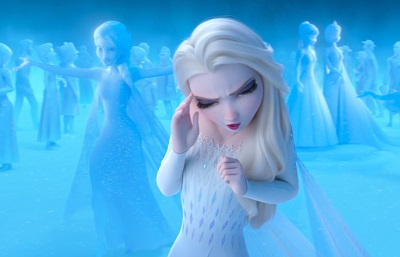
There are two fake-out character deaths in Frozen II – Olaf and Elsa both appear to succumb to the limitations of magic. Where the first film had clearly established that a “frozen heart” was something terribly damaging, thus explaining why Anna appeared to freeze solid at the film’s climax, the in-universe rules governing how ice magic works in Frozen II seem a little more lax. There was a vague warning about not diving too deep, but nothing that would explicitly mean Elsa should have frozen in the way she did. Olaf’s disintegration makes more sense, given that his existence was tied to Elsa, though. Despite this pretty small nitpick, both Elsa becoming frozen and Olaf evaporating into snow were truly emotional moments, not spoilt in any way by thoughts of why or how. Perhaps it’s best in a Disney film not to question such things anyway!

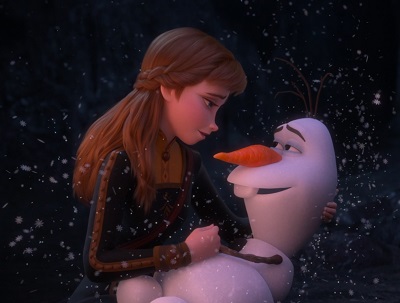
Olaf’s “death” was an emotional moment in Frozen II.

The climax of the story sees a dam which the princesses’ grandfather had constructed being torn down. The dam, far from being a peace offering to the Northuldra, was in fact a nefarious plot to control their land and water supply, and Elsa realises that the only way to fix things with the spirits and the Northuldra is to destroy it. Elsa and Anna realise why the people of Arendelle were forced to leave town earlier in the film – breaching the dam will release a flood, destroying Arendelle. Despite this enormous sacrifice, they go ahead with the plan and destroy the dam. But Disney could never let a whole city – and the princesses’ castle – be destroyed! Elsa’s return from the ice magic/spirit world means she’s able to use her magic to turn some of the water to ice, saving the town and everyone’s homes.

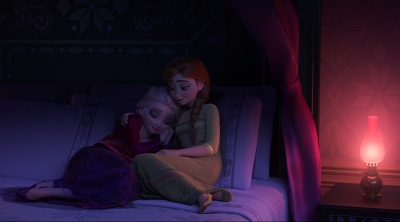
The reunion between Elsa and Anna, as well as the resurrection of Olaf, was an incredibly emotional moment, and is the heart of the film. Frozen II really succeeded in getting me invested in these characters. As a sequel, part of that is because they’re familiar from the previous film. But as we’ve seen many times, a bad sequel can take once-important characters and rob their stories of any emotional weight. Frozen II is at least on par with the first title when it comes to the emotional stakes – Anna and Elsa’s reunion, and Olaf being restored, parallels the moment in the first film where the one great act of love restored Anna’s frozen heart.

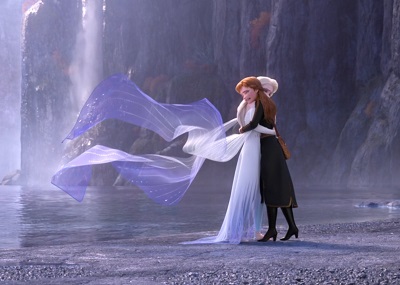
Elsa and Anna are reunited in Frozen II’s final act.

Both Elsa and Anna have very satisfying arcs in Frozen II, despite my initial concerns that they’d already accomplished so much in the first title. Elsa learns the true nature and source of her powers, and their presence in her life is finally explained. Anna learns to step out of Elsa’s shadow and truly become her own person, which sets the stage for her coronation at the end of the film when Elsa chooses to remain with the Northuldra. Cue Frozen III, perhaps?

Far from being the typical Disney sequel I was fearing, with a convoluted and tacked-on plot, Frozen II delivered an experience on par with its predecessor, and managed to tell an interesting, tense, and emotional story where the princesses remained the stars. The introduction of the Northuldra expands our knowledge of Frozen’s setting without feeling out of place, and the Scandinavian theme from the first title continued to be treated respectfully.

While a couple of the story points were a little more obvious than the Prince Hans moment in the first film, I don’t feel that really detracted from the story. And for many of the film’s young viewers, those moments would have been just as surprising. It was great to see the characters from the first film make their returns, as well as meet a handful of newbies.

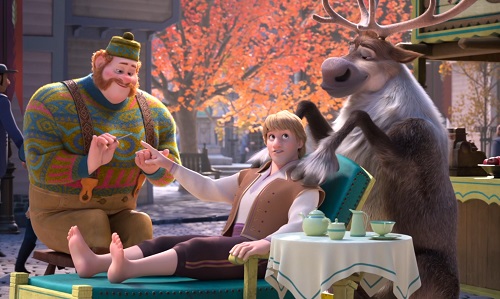
The relationship between Kristoff and Sven was a great source of fun.

Some of the smaller moments that I liked that I haven’t had a chance to mention yet were: Olaf’s line directly to the camera saying: “you all look a little bit older”. At my age that starts to feel like an attack(!) but for the film’s younger viewers who are returning from the first title, it was a cute acknowledgement that they’re growing up. I’m sure it was appreciated. I liked how one of the girls in the village asks Elsa to make her a sextant from ice in one scene. I liked the uniforms used for the Arendelle soldiers. I liked that there were some hints of newer technology in Arendelle – such as gas lamps and railways – showing that the world is not stagnant or medieval, and that modernity is creeping in. Finally, I liked how Olaf retained his status as the film’s comic relief; he’s great in that role and Josh Gad’s performance was pitch-perfect.

The story of Frozen II was clever, and it didn’t feel like a tacked-on sequel, nor one that disrupted the princesses’ “happily ever after” for no reason. There was a story worth telling at the film’s core, one that had heart and that was entertaining. Compared to Disney’s past attempts at sequels – as well as memorable flops in other franchises – Frozen II is outstanding, and I had a great time with it from beginning to end.

Frozen II is available to stream on Disney+ in the USA, and will be available on Disney+ in the UK from the 3rd of July 2020. The film is also available on DVD and Blu-Ray. Frozen II is the copyright of Disney. This article contains the thoughts and opinions of one person only and is not intended to cause any offence.
Ten of my favourite Disney films

Spoiler Warning: There will be spoilers for the Disney films on this list.

Disney+ finally reached the UK in March, several months after its US release. I was actually already a subscriber to a different Disney streaming service, Disney Life, and had been for a while, but Disney+ is better-organised, sharper, and does offer more content. Given that you may find yourself with some time on your hands at the moment, it could be a good moment to check out this streaming platform – and I believe it’s free to try for seven days.

I don’t intend for this to be a review of Disney+, but just to discuss it in a little more detail, the service delivers what it promises. Disney’s library of films – including from brands now under the Disney umbrella like Marvel and Star Wars – and Disney Channel original television shows. There’s also a limited amount of content from National Geographic, including some documentaries made specifically for Disney+. I hope to see them add more to this in future, as I love a good documentary. There are also a couple of original shows, including the first live-action Star Wars show, The Mandalorian. But save yourself time on that one because I’ve honestly not seen such a boring series in a long time.

As a childless adult fast approaching middle-age, I admit I still feel a certain embarrassment at admitting I’m a huge Disney fan. Perhaps that’s a product of the time and place I grew up, as nowadays it seems far more acceptable! Disney has created some of the best animated feature films of all time, and even today, almost a century on from when Walt and Roy founded the company, Disney sets the bar that other animation studios wish they could reach. In the last couple of decades, the company has greatly expanded both its content and the brands it owns, growing to become one of the biggest and most powerful entertainment companies in the world.

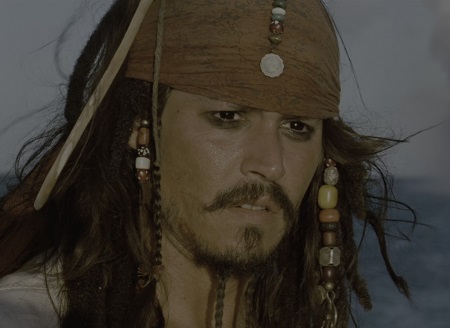
For this list, I’ll be picking ten of my favourite Disney animated films. This isn’t a “Top Ten” ranked list; instead these are just ten films I really enjoy and I’ll be listing them in order of release. All of them are available to watch on Disney+ if you’re lucky enough to live in a part of the world where the service is already live. If not, I daresay you can find copies on DVD, Blu-ray, or by, shall we say, other means… matey.

So without further ado, let’s jump into the list. Please be aware that spoilers may be present, and that a couple of the entries on this list may have scenes that are outdated and/or insensitive.

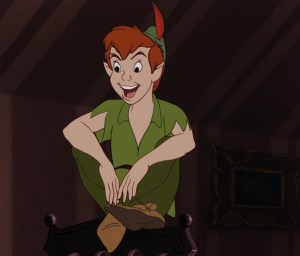
Number 1: Peter Pan (1953)

The titular Peter Pan.

There’s a ride at Disney World – and I believe at other Disney parks too – based on 1953’s Peter Pan called Peter Pan’s Flight. If you ever find yourself at the Magic Kingdom I highly recommend it; it’s one of my favourite rides there.

By 1953 Disney was already well-established as the best studio in town for animation. Peter Pan retells – faithfully, at least by Disney standards – the JM Barrie story, which had been a play in 1904 and a novel in 1911. You know the story, of course: Peter Pan lives in Neverland, a place where children never grow up, and has adventures with the Lost Boys while trying to stay one step ahead of his pirate nemesis, Captain Hook. It’s a story which has become a classic, in fact it already was a classic when it was given the Disney treatment. Disney films have been incredibly successful using this formula – taking a classic story and presenting it in a child-friendly manner. In 1953 that explanation described a good portion of Disney’s back catalogue, as indeed it still does today.

Peter Pan introduces a number of characters who would become Disney favourites, including Captain Hook, who is, in some respects, the archetypal film pirate even today (though the “pirate accent” is based on another film of the 1950s, Treasure Island). Tinker Bell, Peter’s fairy friend whose magical dust allows him and the children to fly, also debuts here. Tinker Bell has become a legend in her own right in the wider Disney universe, and is the subject of numerous spin-offs including her own film series.

One thing that always surprises me about older Disney films is how good the animation is – even rendered in full HD on a big-screen television. I was downright shocked to learn, in my youth, that Snow White and the Seven Dwarfs was as old as it was; it still holds up today. As does Peter Pan – the animation, which was all hand-drawn and hand-painted, looks amazing and hasn’t aged a day. Unlike some computer-animated titles, Peter Pan and other hand-drawn films are timeless.

The story is a pure-hearted swashbuckling adventure, as Peter and Wendy lead the Lost Boys to victory against the nefarious Captain Hook. Some of the scenes and references are undeniably dated by today’s standards – I’m thinking in particular of the way Wendy’s leadership is only seen as something maternal, and of course the now-infamous portrayal of Tiger Lily and the Native American tribe. I don’t believe, however, that either of those things are reason to hide Peter Pan or try to pretend it doesn’t exist.

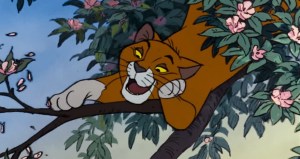
Number 2: The Aristocats (1970)

Abraham de Lacey Giuseppe Casey Thomas O’Malley… O’Malley the Alley Cat!

Often overlooked, as it came out only three years after the incredibly-successful The Jungle Book, The Aristocats is nevertheless a brilliant and fun film with some great musical numbers. Production began shortly before Walt’s death in 1966, and thus The Aristocats is the last film he actively worked on and approved before passing away.

1961’s 101 Dalmations had proven a great success as an adventure story with animal protagonists and human villains, and that basic formula was reused for The Aristocats too. When a rich older lady decides to leave her fortune to her cats – instead of to her butler – he schemes to get rid of them to get his hands on her money. Taking the cats far away from their home, they meet a fun and eclectic cast of characters on their journey home.

As someone with several cats of my own, I do enjoy a good cat-themed story! And while The Aristocats doesn’t do anything radically different or new in terms of its animation style or story – both of which are comparable to Disney’s earlier output – it’s a sweet film that’s greatly enjoyable. Its music celebrates the jazz era of its 1910s-20s setting, and there’s a distinctly old-fashioned feel throughout – but not in a negative way.

There are some great musical numbers, all of which fit into that jazz/swing theme, as the cats make their way home. Marie, one of the kittens, has become a permanent fixture on Disney merchandise, though many of the younger people picking up those items haven’t seen The Aristocats in full! If that applies to you or your little ones, I definitely recommend sitting down to watch the film.

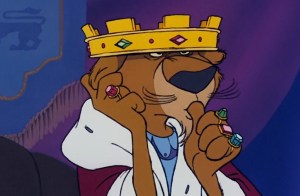
Number 3: Robin Hood (1973)

The Lion King! Oh wait, wrong film.

I mentioned at the beginning that this list doesn’t rank the films in order of how much I like them, but if it did, Robin Hood would be the undisputed number one. It’s my all-time favourite Disney film. Purely from a subjective point of view, of course!

Disney’s output between the “classic” era of the 1930s-50s and the “Renaissance” of the late 1980s-90s that we’ll look at in a moment is often ignored by fans today, and I think that’s a great shame. Perhaps it’s because I grew up on titles like Robin Hood, but I think that it has a lot to offer.

The hand-drawn animation retains much of the Disney charm of years gone by, and though it doesn’t necessarily bring anything new to the table compared to earlier titles, it still looks fantastic today – and don’t let anyone tell you otherwise! There was some recycling present in the film’s animation – most notably in the character of Little John, which is a copy of Baloo, the bear from 1967’s The Jungle Book. In fact, both characters are actually voiced by the same actor – Phil Harris, who also voiced Thomas O’Malley in The Aristocats – which further drives home the point. Even this recycling was actually Disney being cutting-edge; the process used to make exact copies of drawings was an early precursor to photocopying.

Robin Hood is a classic story, an old-world legend of a bandit who steals only to turn around and give away his money to the poor people in the community. In Disney’s adaptation, all of the characters are anthropomorphic animals, but otherwise the story doesn’t really stray too far from the confines of its source material. The inept Prince John – represented by a cowardly thumb-sucking lion, which as a kid I found to be absolutely hilarious – and his evil cohort are outsmarted by Robin and his brave Merry Men. Disney has always been great at using animals perfectly – portraying the Prince’s adviser as a sneaky snake, and the Sheriff’s men as wolves and vultures is definitely a great example of that!

The opening of Robin Hood introduces one of my favourite Disney songs, too – the beautiful Oo-De-Lally.

Number 4: Beauty and the Beast (1991)

The Beast!

After The Little Mermaid revived both the fortunes and reputation of Disney animation in 1989, a period known as the “Disney Renaissance” kicked off, in which the studio churned out a series of films which were both critical and commercial hits. Beauty and the Beast is the second of these films, and it’s amazing.

One of the first animated feature films to use CGI, Beauty and the Beast is groundbreaking in that regard, and the lessons Disney learned about computer animation would bear fruit later in the decade with releases like Toy Story. In that sense, Beauty and the Beast is a very important moment in the history not just of Disney, but of animated films and indeed all of cinema – as CGI has gone on to be massively important in all kinds of titles.

Beauty and the Beast managed to tell an engrossing story that was tense and dramatic, as a cursed prince learns to love for the first time. After a spell was put on him, a prince and his household staff (which seems a tad unfair to them!) were cursed to live as non-human objects, with the prince himself turned into a monster. Belle, a social outcast in her village, falls for him while in captivity.

By making Belle the protagonist, Disney has changed up its traditional princess formula. Belle is a “commoner”; a girl from the village as opposed to aristocratic or royal by birth. She’s disliked and gossiped about for enjoying reading and being intelligent, and with these points Beauty and the Beast says that it’s okay to be smart, and that any girl can be a princess – being a princess is less about where you come from than about being a good person, a theme which has carried through other Disney titles in some ways.

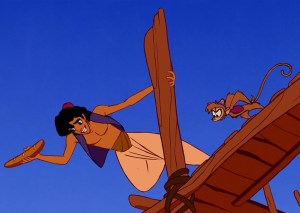
Number 5: Aladdin (1992)

Aladdin and Abu.

Aladdin marked Disney’s first real attempt to make a major film based on a non-European or American legend. It’s a title which marked a change in the way Disney operated, and a risk which could have backfired. It’s a title which is now famous for the Genie – voiced by Robin Williams close to the peak of his career – who has gone on to be a major character in Disney’s merchandise empire.

The story of Aladdin was perhaps uniquely suited to get the Disney treatment as a non-European legend, as it was quite well-known even in Europe and North America, and had been for many years. I remember, as a child, seeing a pantomime version of Aladdin before the film came out. It was probably one of the very few stories from “elsewhere” that Disney could have readily adapted, at least at the time. Nowadays, with the exception of those people who want to screech “cultural appropriation!” at everything, making stories from all across the world into Disney films is something we’ve come to expect and would be fine with; in 1992 it was something different and its success was less than certain. In that sense, Aladdin paved the way for future titles – like Mulan and Moana.

Following The Little Mermaid and Beauty and the Beast, Aladdin kept the “Renaissance” going, winning critical and commercial acclaim for its fun characters, great musical numbers, and exciting storyline. The Genie was, of course, the breakout star – though apparently Williams and Disney didn’t see eye-to-eye on a lot of things during the film’s production and marketing. It would also win two Oscars, and became the highest-earning film of 1992.

There would be two direct-to-video sequels to Aladdin – the first of which, The Return of Jafar, is a rare example of one of these Disney sequels being a success (at least in my opinion!) The film would be remade in 2019 in a live-action format, and while it lacks much of the character of the original, it remains probably the most watchable of the live-action remakes.

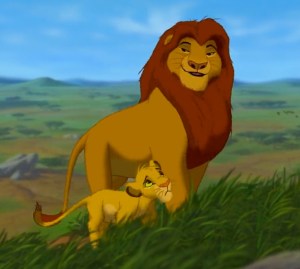
Number 6: The Lion King (1994)

Simba and Mufasa in The Lion King.

For many people, The Lion King’s 1994 release was the high-water mark of the Disney Renaissance, and while there will always be a debate on that front, what shouldn’t be contentious is that this film is fantastic. A star-studded cast, including James Earl Jones, bring the characters to life, and Elton John provided an incredible soundtrack, resulting in The Lion King being spun-off to create a long-running West End and Broadway musical.

There was, at the time, some degree of controversy regarding how similar The Lion King was to a Japanese series called Kimba the White Lion, with some fans of the manga/anime franchise going so far as to accuse Disney of ripping off a significant amount of material. Whether you believe this was intentional or not, it’s worth noting that there are similarities in terms of plot and certain characters – I’ll leave the final judgement on that up to you.

The Lion King billed itself as the first ever Disney film to be a wholly original story. Setting aside the Kimba controversy, this marked a change in the way Disney would approach writing stories for its major motion pictures, and while the studio would return many times to legends, history, and existing works of fiction, The Lion King laid the groundwork for future original stories.

The cast included Jeremy Irons, Rowan Atkinson, and Whoopi Goldberg among other stars, and while The Lion King is Simba’s story, the whole main cast gets a turn in the spotlight, including being able to sing. Many of the film’s songs have become well-known classics, often heard on playlists and CDs representing the best of Disney music.

Number 7: Pocahontas (1995)

Colors of the Wind is the best-remembered song from Pocahontas.

Pocahontas remains an outlier in the Disney canon. Other films are based on folklore, legends, and other published works, but the characters in Pocahontas were all real people – people whose lives are surprisingly well-documented. As you may know if you’re a regular, I’m somewhat of a history buff, and the early 1600s – the period in which Pocahontas is set – is really when record-keeping in England had begun to vastly improve in quality. Records of England’s first colony in mainland North America were meticulous, and while some information has been lost over time, for the most part we know a lot about John Smith, Pocahontas, and others who lived at the time.

The film takes a lot of liberties with the real-life story, which is always a contentious topic in historical fiction. But if we can set that argument aside, what Disney created is a film that tries very hard to celebrate Native American culture, recognising that they were the victims in Europe’s rush to colonise North America.

Compared to earlier depictions of Native Americans – like the one we talked about in Peter Pan a moment ago – Pocahontas represents them in a much fairer and less stereotypical manner. There is definitely a case of the “noble savage” – the presentation of Native Americans (and other indigenous peoples in other works) as being “better off” without contact, living peaceful, natural lives that were disrupted. Stereotypes like this aren’t always true, and while the song Savages in particular has sometimes been criticised for portraying the conflict between English settlers and Native Americans as if both were equally in the wrong, it’s worth recognising that Native American tribes, like all groups of people everywhere for all of history, could be violent. I feel like I have to justify some of these aspects of Pocahontas, as the film has recently come in for criticism, so I apologise for going off on a tangent.

Following up The Lion King was always going to be tough, and I think for that reason some of the things Pocahontas did very well, in terms of its animation and music to name but two examples, were overshadowed, especially at the time it was released.

Number 8: Lilo and Stitch (2002)

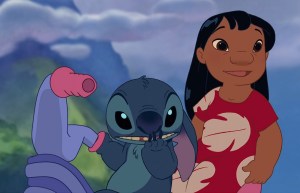
The titular characters.

After seeing Lilo and Stitch in 2002, it was one of the first films I ever bought on DVD. I was so keen to be able to rewatch it that I even bought a DVD-player kit for my Xbox (it was cheaper than buying an actual DVD player at the time) to be able to watch it! I would go on to collect many other DVDs – before the rise of HD and streaming made the whole collection redundant.

The widely-accepted definition of the Disney Renaissance I mentioned earlier puts 1999’s Tarzan as the final film, but I’d absolutely include Lilo and Stitch alongside titles of that era. Unlike the other films of the Renaissance, Lilo and Stitch tells a wholly original story and introduces new characters to the Disney canon. Release of the film was delayed due to the 11th of September attacks in the United States in 2001, with one section of the film’s climax being reworked to avoid comparisons to that atrocity.

Lilo and Stitch steers away from the often-sanitised world of prior Disney titles, showing Lilo and her sister Nani as a dysfunctional family, with Lilo on the cusp of being taken into care by the state. By Disney standards, this was something radical and different, taking a look at the “real” world in a way no prior film really had. This is complemented by the film’s present-day setting. Lilo herself is a misfit – but someone who refuses to change or conform to fit in. The message she sends is that it’s okay for kids to be themselves, and even that it’s okay to be weird – something I wholly embrace!

Stitch is adorable, but also naughty in a way that undoubtedly appeals to kids. As the film progresses, he has a chance to show his good nature and big heart, in a story that tells the audience that genetics and how you’re born doesn’t matter – what matters is being a good person and making the choice to do the right thing. Stitch overcomes his innate badness – the desire to misbehave instilled in him by his creator – thanks to the time he spends with Lilo and her family, choosing at the end to remain with her on Earth.

The film’s soundtrack definitely deserves a mention. While there are a couple of great original songs inspired by the music of Hawaii (where Lilo and Stitch is set), the soundtrack also features several of Elvis Presley’s greatest hits, including greats like Devil in Disguise and Burning Love. As an Elvis fan, I couldn’t be happier about this, and introducing more than one new generation of kids to the music of the King is definitely something great that Lilo and Stitch has done.

Number 9: Frozen (2013)

Anna and her friends meet Olaf for the first time.

When Frozen was released in 2013 I was living overseas for work. While browsing local cinema listings for English-language titles, I spotted Frozen, and it was the first I’d heard of it! Having missed all of the marketing I had no idea what to expect – and I was absolutely blown away.

I’m a big Christmas fan, and being released a few weeks before Christmas and with such a wintry setting, Frozen was absolutely perfect for that time of year. It was the first Disney film I’d seen in years that I felt was on par with some of the studio’s offerings in the 1990s – the height of the “Renaisannce” we’ve already mentioned.

Focusing on two sisters instead of the traditional prince and princess, Frozen shakes up the traditional Disney fairytale formula while keeping things royal for the sake of its Disney Princess brand. It was a change that absolutely worked, and the film’s “one true act of love” being sisterly love instead of romantic love was beautiful.

The big twist that Anna’s beloved Hans is in fact a villain and not the heroic prince charming she thought he was was shocking – and I can still remember the audible gasp from the audience at the cinema at that moment! By Disney standards, this was absolutely stunning, and tied in perfectly to the level-headed reasoning Elsa had shown earlier in the film when she forbade Anna to marry him. Indeed in many ways, Frozen is a film of its time, just as earlier titles were films of theirs. Acutely aware of the fact that its princesses are often seen as role models by young girls, the need to be socially responsible within the story definitely led to some of these decisions.

Frozen also has the best soundtrack of any modern Disney title – with several memorable songs like Do You Want to Build a Snowman, Love is an Open Door, Fixer Upper, and of course Let It Go, which remains an amazing song despite how frequently it was heard for at least a year afterwards… but perhaps parents of young girls would disagree on that point!

I picked Frozen for one of my top ten films of the 2010s when I made a list back in December – you can find the full list by clicking or tapping here.

Number 10: Moana (2016)

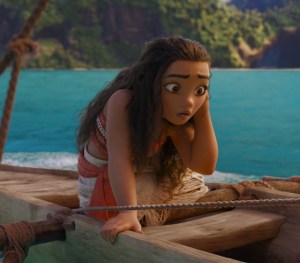
Moana aboard her canoe.

In 2016, when it was released, at least some of the hype surrounding Moana was lost due to the release six months earlier of Zootopia – which was retitled, for some stupid and inexplicable reason, Zootropolis in the UK. We’d been used to only seeing one Disney film a year, at most, so this meant that some of the pre-release marketing surrounding Moana didn’t get as much attention as it otherwise might’ve. Zootopia was a big hit, but of the two films released in 2016, Moana was by far the more enjoyable title.

Disney had begun to diversify away from Old-World European fairytales and folklore for its inspiration as far back as Aladdin and Mulan, and had brought in other non-European protagonists and princesses in films like The Princess and the Frog and even Pocahontas, but Moana was the first foray into a lesser-known culture – lesser-known, that is, from the point of view of Disney’s western audience.

The history of Polynesian peoples is long, diverse, and fascinating, with a blurred line between history and legend due to stories being passed down orally. It’s also something most people in the west have never encountered; scattered across small and remote Pacific islands, most Polynesian legends stayed within their own communities or were recorded by academics and anthropologists and never made it into the cultural mainstream. Moana looks at one of these legends and spins it into a Disney tale for the modern age.

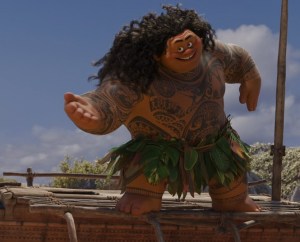
Moana is adamant that she isn’t a princess, even reacting angrily when Māui says she is. Where Frozen had finally told a Disney Princess story in which the princesses are the heroines and have genuine agency as characters, Moana amplifies that trend by having just a single protagonist. Her bravery and determination to overcome the obstacles in front of her drives the story forward, and eventually her courage leads her to stand up in the face of a terrifying foe. Moana had help, but ultimately she had to make those decisions and fight those battles – thus out of all the princesses in Disney’s canon, Moana is the bravest and most determined, which is a great message for the film to have.

The film also has a great soundtrack, with several hit tunes such as You’re Welcome going on to be played time and again.

So that’s it. The list doesn’t include live-action Disney films like the Pirates of the Caribbean series, so perhaps we’ll have to come to live-action Disney films on another occasion. However, several of the titles on this list have had live-action remakes – and in my opinion at least, not one of them has managed to live up to the original work. A couple of them are well worth a watch – Aladdin, in particular, was at least a decent film – but none of them come close to recapturing the Disney animation magic, at least not for me.

There are more films on the horizon, with Raya and the Last Dragon being the only one with a title so far, scheduled for release in 2021. Disney+ has, in some respects, changed the way Disney approaches its films and back catalogue. Gone are the days of the “Disney vault”, with titles given only limited home video releases. Instead, the company plans to leave all of its films available all the time, and in some cases will even be experimenting with simultaneous releases in cinemas and on streaming. That has the potential to really shake up the way films are released. From a selfish point of view, as someone who can’t go to the cinema in person any more, I think it’s a positive change. But whether it will work as intended is anyone’s guess.

Several generations of people have now grown up with Disney films – even my parents’ generation, people born in the 1940s and who are now well into their 70s, remember with fondness the Disney films of their childhoods. Which titles someone may prefer is probably, at least in part, dependent on when they grew up and which ones they saw at that time. But each “era” of titles, whether we’re talking about those made before Walt Disney’s death, the “Renaissance” of the 1990s, or the modern films like Frozen all have merit, and while the way they’re made may have changed through the years, the effort and attention to detail has not. Disney remains the market leader in animation because each film is meticulously created. There may be some flops and failures, but broadly speaking, the studio’s output has been phenomenal. The fact that they’re still around and still making films after such a long time is testament to that.

It was great fun making this list, and if it helped you decide what to watch on Disney+, then as Māui said… you’re welcome!

What can I say except “you’re welcome!”