

Spoiler Warning: Beware of minor spoilers for Star Trek: Enterprise.
I’m a few days late (my cat needed an emergency trip to the vet; she’s fine now, don’t worry!) but the 13th of May was the twentieth anniversary of Enterprise’s final episode. These Are The Voyages saw the controversial series end in similarly controversial fashion, with what many fans continue to believe is one of the least-impressive finales in the franchise’s history. But this piece isn’t about These Are The Voyages. Instead, I thought it would be interesting to step back in time to those dark days in 2005 and think about how far Star Trek had fallen – and the franchise’s seemingly-impossible resurrection barely four years later.
I’ll let you in on a little secret – a secret which, for someone who runs a website partly themed around Star Trek, might seem shocking! I wasn’t a regular Enterprise viewer during the show’s original run. Here in the UK, Enterprise was broadcast on Channel 4 in the first half of the 2000s, and while I still considered myself a Trekkie at the time, I just found myself less interested in the show and what it was trying to do. It coincided with a busy period in my life, too, which probably didn’t help!
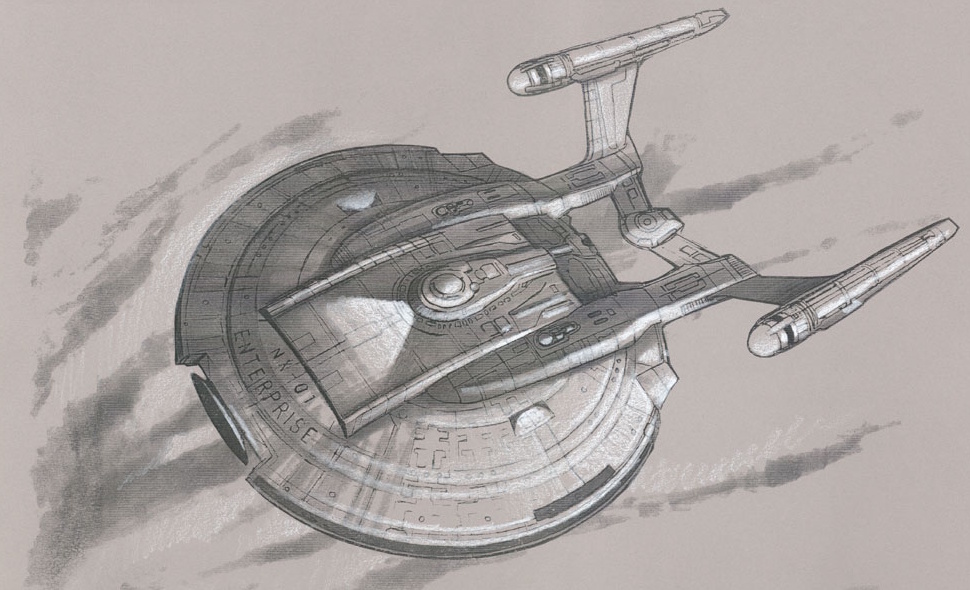
It wasn’t until years later, after Enterprise had gone off the air, that I bought the DVD box sets and watched the series in full. I’ve said it before and I’ll say it again: I misjudged Enterprise when it was in production, and I regret not watching the show and doing more to support it during its original run. For me, Enterprise has become a great counter-argument to an expression one hears all the time in online fan communities and the wider discourse around media in general: “no one asked for this/who’s asking for this?” In 2001, I don’t think many Trekkies were asking for a prequel series like Enterprise. But twenty years later the series’ reputation has been rehabilitated for a lot of those folks, with Enterprise routinely being held up alongside the shows of The Next Generation era and included in Star Trek’s “golden age.”
I first came to hear of Enterprise’s announcement on the radio sometime around the turn of the millennium, and I can vividly remember thinking that I didn’t want a Star Trek prequel. The franchise had always been about looking ahead to the future, so stepping back in time for a kind of navel-gazing series about its own fictional history – which would have to be heavily constrained by the weight of hundreds of episodes dictating what could and couldn’t be introduced – just seemed wrong for Star Trek. And all of this was happening at a time when another infamous prequel – The Phantom Menace over in the Star Wars franchise – had been received incredibly poorly. I tuned in for Enterprise’s premiere in late 2001, but after that I only watched the series sporadically until I picked up those DVDs.

But as I said: this isn’t meant to be all about Enterprise!
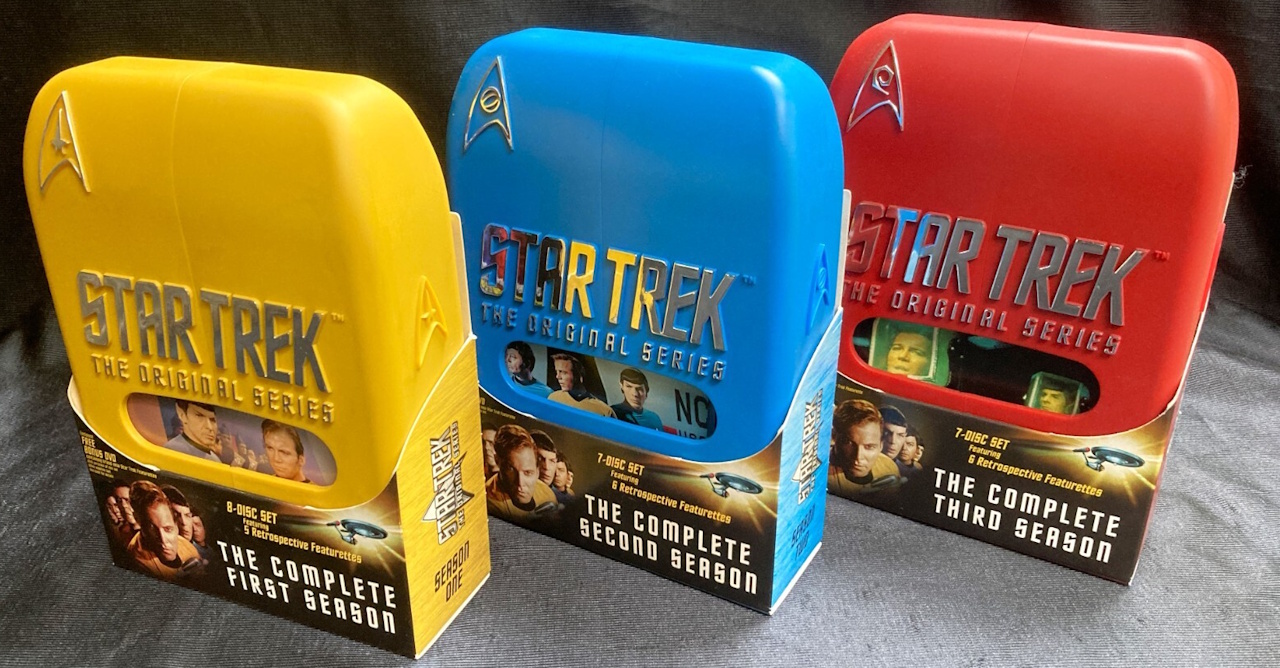
In 2005, although I hadn’t been a regular viewer of Enterprise, I was still bitterly disappointed to learn that no more Star Trek was being made. Ever since I’d first found my way into the fan community almost fifteen years earlier, Star Trek had been a mainstay on our TV screens. I’d bought most of the films and a few episodes on VHS, I was starting to collect The Original Series and The Next Generation on DVD (remember those big chunky plastic boxes the first sets of DVDs came in?) and I had action figures, video games, and other merch, too. Star Trek’s apparent cancellation felt… personal. It felt like I was losing a part of myself – and a connection to my childhood/adolescence.
By 2005, I was done with school and university and I was working full-time. When we’re in our late teens and early twenties, life can feel like it’s changing fast, and that was the case for me, too. I’d moved out, first to a shared flat at university, then all the way across the Atlantic for a year-long exchange programme, and then again to a large city for work. I was in what I thought was my “forever” relationship and was working toward an engagement, and juggling all of these changes while balancing my fragile mental health. One of the few consistent things in my life was Star Trek, and even though I wasn’t particularly bothered about Enterprise at the time, I just expected the franchise would continue indefinitely. I guess you could say I was taking Star Trek for granted, unable to conceive of the idea that there’d be no new films or episodes being produced.
I was also far less aware of behind-the-scenes events in those days – or perhaps I just didn’t do the legwork to find out! I was dimly aware of the fact that Enterprise and Nemesis hadn’t been well-received in some quarters of the fan community and hadn’t been financially successful, but what that really meant for Star Trek was kind of over my head. The idea that the franchise might disappear entirely due to this lack of support – and an inability to turn enough of a profit – was something that didn’t really click for me until it happened.
If you’d asked me in the days after Nemesis but before Enterprise’s cancellation what I thought the future held for Star Trek, I’d have said that I’d expect Enterprise to run to the “standard” seven seasons, and toward the end of its run there’d be at least one new series announced. On the Star Trek forums and fansites of the time, rumours abounded of pitches for new shows! Two that we know were actively worked on included one set on the USS Titan with Troi and Riker, and another titled Star Trek: Federation, which would’ve been set hundreds of years after The Next Generation era. Ironically, both of these ideas would be seen on screen – albeit in very different ways from how they were originally pitched – in the rebooted Star Trek franchise after 2017!
All of this is to say that Enterprise’s cancellation, and the fact that Viacom/Paramount weren’t interested in commissioning a new series, came as a huge shock in 2005 – and a bitter personal blow. Star Trek had been a big part of my life, especially in the 1990s as I navigated school, social life, adolescence, and all of the drama and nonsense that comes with that! It had been an escape from the real world sometimes, a chance to feel like I was part of a better world, and even a way to connect with people around me – especially at university. It took a while for the idea of Star Trek’s cancellation to sink in – and I’d be lying if I said it wasn’t a depressing idea and something I struggled with.
I was far from the only person to have been left disappointed by a television show being cancelled, of course. And I’m sure we all have our examples of single-season shows that didn’t get the love and attention we feel they deserved! Two of mine, by the way, would be Space Precinct and Terra Nova – but those are stories for another time, I guess! To get back on track, Enterprise’s cancellation was – as I say in the title of this piece – the “end of an era.” The series had come to an end, but so had Star Trek itself. That was difficult for me to really wrap my head around, and I spent several days in a bit of a tailspin, frequenting Star Trek forums and fansites, desperate for any news of a new show or some kind of last-second reprieve. Obviously nothing was forthcoming.
Taking stock of Star Trek as a whole felt incredibly bittersweet. There had been some fantastic adventures with all of the different crews of Deep Space Nine, Voyager, and the various Starships Enterprise – but I still wanted more. After feeling lonely and isolated as the only Trekkie in the small rural area where I grew up, I’d gone on a journey with the franchise as it grew in popularity, finding new friends who shared at least some of my passion for Star Trek. I’d even tried to introduce my then-girlfriend to the franchise – though she wasn’t particularly interested, despite my best efforts!
I could appreciate the good times I’d had with Star Trek: classic stories like The Best of Both Worlds, the intrigue of tales like In The Pale Moonlight, and Voyager’s epic seven-year journey home. With the franchise being converted to DVD, and re-runs still happening on television, I didn’t feel like I was in danger of never seeing Star Trek again… but I still wanted more. This property that had been so big in the ’90s, so omnipresent on our television screens, and just so damn good couldn’t possibly be over. I was left feeling dejected.
For the franchise to have fallen so far in such a short span of time was stunning. The second half of the ’90s saw three Star Trek shows on the air pretty much continuously here in the UK: The Next Generation, Deep Space Nine, and Voyager were on television three nights a week, and when new seasons weren’t airing re-runs of older episodes would take their place. Star Trek books, action figures, and other products were in shops, even in the small towns around where I grew up. Star Trek versus Star Wars was the nerdiest argument you could have… and it just seemed as if the franchise was on top of the world. Star Trek had made it – so how did it all go so wrong so quickly?
In 1996 and 1998, there’d been three Star Trek projects in the span of a single calendar year: seasons of Deep Space Nine and Voyager, and the films First Contact and Insurrection. It seemed like you couldn’t move for Star Trek, and as the Trekkie in my friend group, I was finding myself being asked more and more often about the franchise and which episodes were best. Star Trek’s growth just seemed… unassailable.

By early 2005, rumours of Enterprise’s struggles were all over fansites and forums. But even so, I genuinely expected a reprieve for the franchise as a whole. Enterprise could be written off as an unsuccessful experiment, and Star Trek could get back to producing another show like The Next Generation or Deep Space Nine. That was how I felt, and even when I saw people discussing cancellation and talking about the failures of Nemesis and Enterprise together, I guess I was just in denial about the severity of the problem.
When the news broke, it was a shock. And it really felt like the end of an era; we’d soon come to see Star Trek as this complete package – ten films, five shows, and that’s it. The recent arrival of the DVD box set meant that Star Trek would never be too far away, and I planned to finish my collection and acquire every single episode! But when it seemed as if Star Trek was really over… I was upset.
It wouldn’t be too long, though, before a new rumour hit the internet! A Star Trek revival was being planned, helmed by the incredibly successful J J Abrams – creator of Alias and Lost and the director of Mission: Impossible III. To go from the dejection of Enterprise’s cancellation and Star Trek’s apparent end to this reboot within a year or so was wild; the mid-2000s were a strange time to be a Trekkie, that’s for sure! This film would ultimately turn out to be Star Trek ’09, the reboot that kicked off the Kelvin timeline trilogy.
So what’s the point of revisiting 2005 twenty years later? Why drag up those old feelings and memories now that Star Trek is back on our screens in a new streaming landscape?
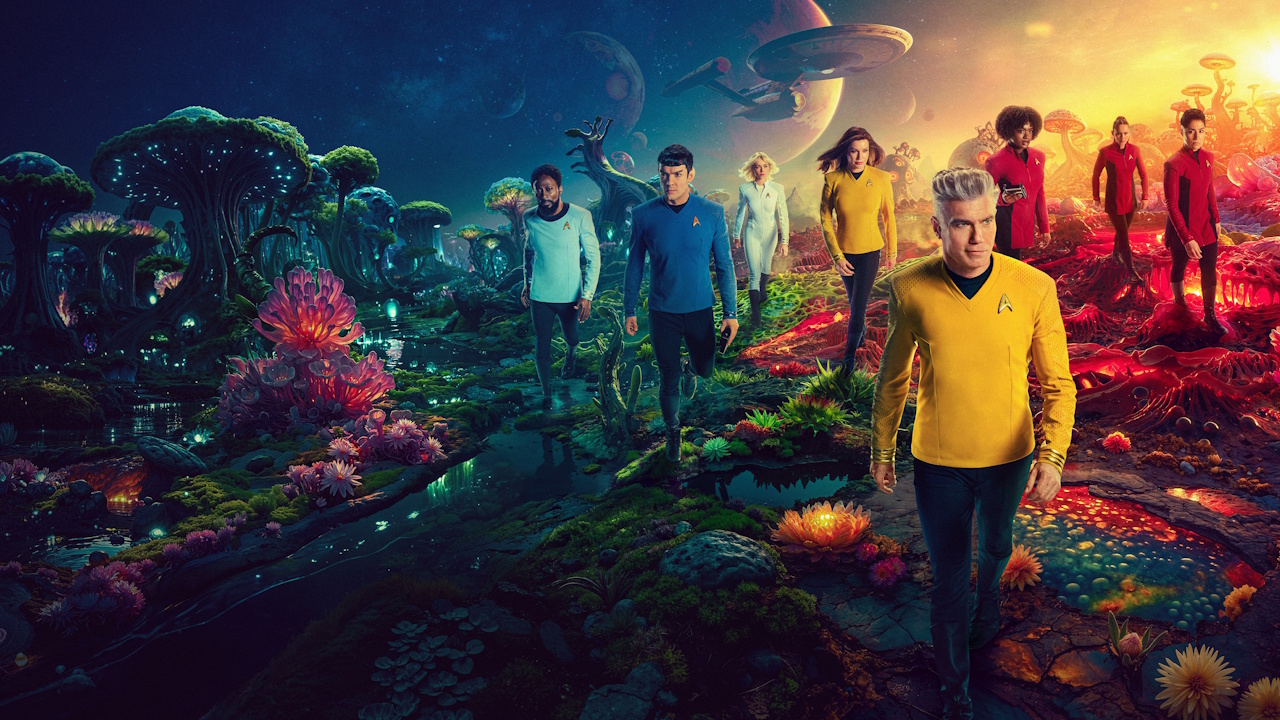
The truth is… I feel echoes of 2005 right now. If you’re a regular reader, you might remember my essay 2022: A Great and Terrible Year for Star Trek, in which I took Paramount and the franchise’s producers to task for the many missteps and mistakes they’d been making. The worst problem, at least as far as I see it, is franchise fatigue. Star Trek has quickly become oversaturated in the first half of the 2020s, and it’s genuinely difficult to keep up with everything, even as a big fan and as someone who literally runs a Star Trek website.
Moreover, Star Trek’s fan community doesn’t seem to be adding a lot of new members, despite some valiant attempts by writers and creative folks. Projects like Prodidy, Strange New Worlds, and Section 31 should’ve been rolling out the welcome mat to untold numbers of new viewers and fans, but mismanagement by Paramount has squandered many of those opportunities. At time of writing, I think Star Trek is maybe a year away, two at the most, from another 2005.
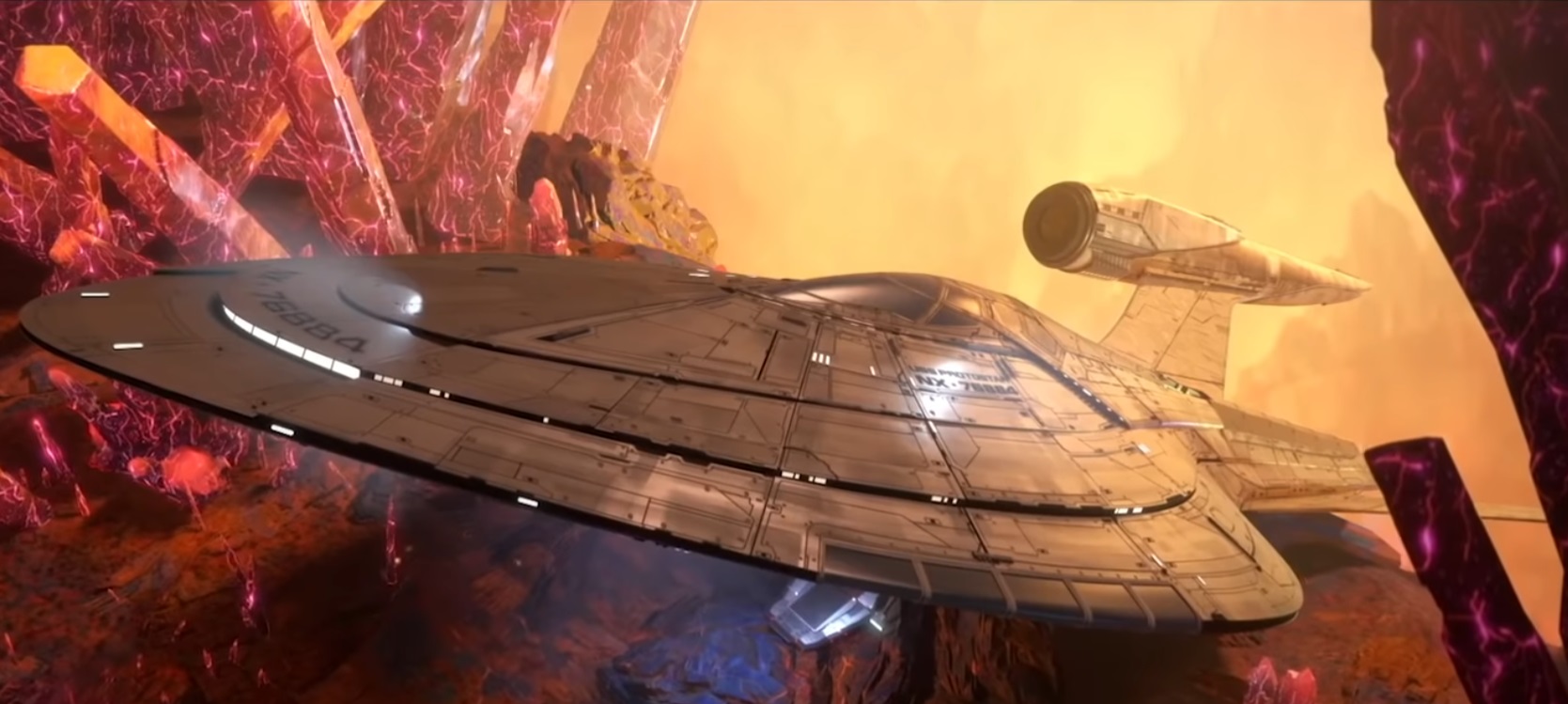
And I don’t want that to happen. There are still lessons that Paramount hasn’t learned from 2005 that need to be applied. And there are new challenges that the franchise faces in a transformed media landscape that Paramount has utterly failed to get to grips with. As I’ve said before: 20th Century thinking is desperately failing to keep Paramount afloat in the 21st Century.
I love Star Trek. I loved it in 2005 and I love it today. I want to see Star Trek continue because I want as many people as possible to fall in love with this incredible universe and the wonderful characters who inhabit it. But as Paramount is caught up in a complicated buyout/merger, and as its streaming platform continues to struggle, I don’t see a bright future for Star Trek. I hope that I’m wrong, and I hope the franchise’s name still has the power to bring in curious viewers. But as I look around at cancellations, mismanaged projects, franchise fatigue, and more… I definitely feel echoes of 2005 all over again. I hope the next couple of years won’t also turn out to be the end of an era.
Star Trek: Enterprise and most other Star Trek films and shows discussed above can be streamed on Paramount+ in countries and territories where the platform is available, and may also be available on DVD and/or Blu-ray. The Star Trek franchise – including all properties discussed above – is the copyright of Paramount Global. This article contains the thoughts and opinions of one person only and is not intended to cause any offence.
 Trekking with Dennis