


Spoiler Warning: There are minor spoilers ahead for Star Trek: Lower Decks Season 1, Star Trek: Discovery Season 3, and for other iterations of the Star Trek franchise.
In the early days of the website I put together a short list of ideas for future Star Trek projects. The list was, naturally, pure fantasy – I’m highly unlikely to ever be in the position of making a single episode of television, let alone working on Star Trek! But it was fun to write out some of these concepts and ideas that have been rolling around my head – in some cases for decades! So this time I’m going to update and expand upon that original list, and give you five of my Star Trek fantasies!
Wait, that sounds inappropriate.
There’s been a fair amount of talk over the last couple of years about potential Star Trek projects. Some have made it into production – like the “Captain Pike series,” a.k.a. Strange New Worlds! Others, like a sequel to Star Trek Beyond and a couple of other feature film projects appear to have been shelved. And some, like the Ceti Alpha V miniseries that I covered recently, are supposedly ready-to-go but languishing in development hell. This time it’s my turn to churn out some Star Trek ideas!

Though this is just a bit of fun – and a total fantasy, as there’s no way any of these projects will ever be made – I think there’s something valuable for any critic or commentator in thinking creatively. I spend a lot of time discussing Star Trek from the point of view of an independent critic, but many people have put in a ton of hard work to create the television shows, films, and games that I write about. Creative writing and criticism are very different tasks in many ways, and it’s no bad thing for a critic to try their hand, on occasion, at being creative.
Before we get started, two of my usual caveats apply. First, I have no “insider information.” I’m not claiming any of these projects are being secretly worked on over at ViacomCBS; this is pure fan-fiction. Second, these are projects that I feel would be fun in my subjective opinion. If you disagree and think they’d be awful, that’s fine. You’re entitled to your opinion!
With that out of the way, let’s get started!
Number 1: Colony World

The original premise of Deep Space Nine was that it should be akin to a town in old Western stories – Commander Sisko as the “sheriff,” the Bajorans as “natives,” Quark’s Bar as the “saloon,” and so on. That concept can be seen at points early in the show’s run, but I’d argue that it had evaporated at least somewhat when the decision was made to make the Bajoran wormhole so important. The railroad came early to Star Trek’s frontier town!
Deep Space Nine largely moved away from being an isolated frontier station, and the huge amount of traffic that ran through the wormhole and the Bajoran system turned it into an important trading and diplomatic post. Thus we’ve never really seen what life is like out in the wilds, far away from the nearest Starbase. And that’s where my Colony World concept comes in.

This series wouldn’t be set on a starship or even a space station. It would be set on a remote colony, perhaps a brand-new one that’s just beginning to get established. There would be a small Starfleet outpost – perhaps a command officer and a couple of security personnel. The sheriff and his deputies, to use the analogy above! But the rest of the main cast would be Federation civilians, and there’d be scope in a series with a static setting to bring in a number of secondary recurring characters. Being set primarily in one location would potentially keep costs down, too, and without needing to spend a lot of money on expensive special effects the series might be inexpensive to make.
We could explore the motivations Federation citizens have to colonise the frontier. Why leave behind the paradise that is 24th Century Earth? Perhaps someone among the group has a past they’re looking to escape, and this could be a source of drama. And we could examine something Commander Sisko briefly confronted in the Deep Space Nine premiere – being assigned to an awful, unwanted posting. Because of the importance of DS9 and his role as the Emissary, Sisko only really had to deal with that for one episode, but we could see our Starfleet officers spending whole seasons coming to terms with being assigned to a post that they don’t want because of its remoteness.

Colony World presents an opportunity to look at the reasons for colonisation in a general sense. In the 21st Century, almost all of us live in established settlements; no one really goes anywhere new and just builds an entire town from scratch. So we could look at the environmental impact of doing so, both to be an historical parallel and to comment on future plans to colonise the moon and Mars. Taking an unspoilt wilderness and building on it, even with 24th Century technology, will contaminate the environment and change it; what does the Federation do to mitigate that?
Finally, the series could consider territorial disputes. Perhaps the planet targeted for colonisation is claimed by some other faction, or once had other occupants who left. There are so many contemporary parallels for land claims and arguments over territory that the series could touch on, and this could be a way for Star Trek to use its sci-fi lens to examine real-world issues.
Number 2: Borg Invasion
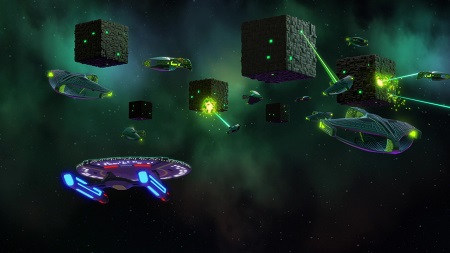
On both occasions where the Borg attacked Earth they came in one single ship, and on both occasions they were defeated by Starfleet – albeit at great cost! But what would it be like if the Borg actually put real effort into assimilating the Federation? In The Next Generation Season 7 episode Parallels, we got a brief glimpse when a dimension-crossing Worf encounters a parallel universe Enterprise-D. The Federation put up a fight, but seem to have been overwhelmed.
The Borg have genuine horror series potential, and a Borg Invasion story could definitely cross over into the horror genre, playing on themes from zombie fiction like The Walking Dead. If you read my essay on the Borg a few months ago, you may remember that zombies are such a good analogy because in both cases, everyone the heroes lose can potentially be turned into another enemy to fight. That’s a terrifying concept, as is losing one’s sense of self-identity through assimilation; a fate worse than death.

This wouldn’t make for a good film, it would really need to be a series. And not only that, but a limited series with a planned story from the beginning. If it were to run for, say, three seasons, Season 1 would start as normal with the Federation doing its thing, with a huge Borg attack in episodes 1-2. The remainder of Season 1 would see Federation losses mount, akin to Seasons 5-6 of Deep Space Nine when they had the Dominion War. Season 2 would look at attempts to recruit allies, perhaps restoring broken alliances with the Klingons or Romulans. Season 3 would see the development of some kind of Borg-killing weapon that would finally turn the tide, and the series finale would end in victory, driving the Borg from Earth.
The question of timeframe arises, especially with Discovery establishing the 32nd Century Federation and the Temporal War. Perhaps I’d put it in the 26th or 27th Centuries; far removed from established Star Trek in both directions.

Finally, and perhaps most controversially, this would be the Borg’s swansong; their final Star Trek appearance – at least for many, many years. A villain that is beaten too often becomes boring, and the Borg were certainly in danger of becoming stale toward the end of Voyager’s run. If the Star Trek franchise were to dedicate an entire series to the Borg Invasion, I would have it end with the Borg’s total and utter defeat, ending the faction permanently. It would be possible, of course, for future Star Trek projects to go back and do Borg-focused prequels, but for me this would be the end of the Borg – going out with a bang! Some factions, by their nature, are suited to one-off stories, and although the Borg are absolutely iconic within Star Trek, I don’t believe the franchise can keep doing Borg stories indefinitely. So this would be their end!
Aside from the obvious horror vibe, with elements from classic sci-fi horror films like Alien or The Terminator, there would be scope for such a series to tell dark and gritty war stories like we saw in episodes of Deep Space Nine such as The Siege of AR-558. Borg Invasion would be one of the darkest Star Trek shows ever put to screen. Whether that’s something you’re into will be a matter of personal taste, of course, but I think it could work exceptionally well.
Number 3: Hospital Ship

This is the concept that I’ve been kicking around for the longest time! I first started thinking about this idea in the mid-90s when The Next Generation and Deep Space Nine were still on the air. In short, this series would be “ER in space.” A hospital ship – something like the USS Pasteur from The Next Generation’s finale – would travel to places suffering from diseases and disasters to lend its expertise.
In my original (’90s) version of this idea, I thought it could be fun to bring back characters like Dr Pulaski and Dr Bashir; a crossover of some of my favourite medical officers from the 24th Century! That’s obviously not going to happen now, but the underlying concept remains valid. Not every episode would focus on some horrible plague or catastrophe, and there would be quieter stories in between to allow for character arcs and development.

Some of the ship’s activities would be routine, such as transporting medical equipment to a new colony, but other times they would be called upon to fight hard to cure a truly awful disease that had broken out on a starship or base, and seeing the medical crew race against time to save lives would be incredibly tense and dramatic – just like it is in other medical drama series.
The ship could also be sent to the aftermath of battles, triaging wounded officers and using its facilities to save as many lives as possible. If you can think of a concept done in a show like ER or even House, this series could put a sci-fi spin on it.

While most of the main cast would be medical staff – and I would probably put the chief medical officer as the main protagonist – there would also have to be other crewmen and officers on board; a captain, bridge crew, engineers, and so on, and some of these could be side characters or recurring characters. Perhaps in a true disaster situation some of them would be tasked with helping out in the hospital!
I loved ER when it was running in the ’90s and 2000s, and there are a number of other fun medical shows too. Star Trek could do justice to this concept, and without being constrained by real-world diseases and conditions that affect humans, there’s almost unlimited scope for creativity in the health issues suffered by both human and alien patients. As the world of entertainment begins to wrangle with the coronavirus pandemic, this series could be a way for Star Trek to use its sci-fi setting to take a look at one of the biggest events of recent years.
Number 4: The Federation Government

If the series above is “ER in space,” then this concept is akin to “The West Wing in space!” Except it’s not in space. It would be in Paris, or perhaps at some other location where the Federation Council is situated. Aside from the Deep Space Nine two-part story Homefront and Paradise Lost, we’ve never really spent any time with the leaders of the Federation. It’s implied that there’s a USA-like power structure, with a President as the executive branch, the Federation Council as some kind of deliberative or legislative body, and a federalist structure with semi-independent worlds under the Federation umbrella. But the specifics of how any of it works has been kept vague for all of Star Trek’s history.
This series would change that, and would explore how the Federation is governed. Exploration appears to be a priority for the Federation, at least in the 23rd and 24th Centuries, but beyond that we don’t know what objectives the Federation government may have. The Federation is usually presented as a post-scarcity society, one in which everyone’s survival needs are met and in which accumulation of wealth and possessions is not a concern. But someone still has to be in charge, ensuring that every Federation member world and every citizen can access things like replicators.
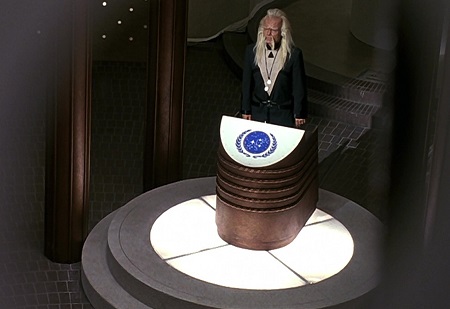
The Federation President is an elected role, and it’s assumed that members of its legislative body would be elected as well, but whether there are political parties, factions, etc. is not known, and the series could explore that. There are surely lots of people who would have the ambition of becoming President, and many more who would seek to use the position to change the Federation in some way.
Shows like The West Wing and even comedies like Yes, Minister looked not only at the politicians, but also at the civil servants who managed day-to-day government operations, and this series would look at those people as well. Who really holds power inside the Federation government, and are they all as altruistic as they seem?

In addition, we could look at diplomats and thus the Federation’s relationships with other factions. Deep Space Nine saw the building of relations with the Klingons, Romulans, and others, and if the series were set after the Dominion War it would also be interesting to see how relations progressed with both the Cardassians and the Dominion. The admission of a new Federation member – such as Bajor – could be a major storyline in the show as the characters make the necessary preparations.
Finally, the series might look at the relationship between Starfleet and the Federation government. We tend to see the command structure within Starfleet as absolute, because from the point of view of most Star Trek characters, the head of Starfleet has the final say! But in any democratic society, the military – which Starfleet partly is, at least – should not have total leeway to do whatever it chooses. The head of Starfleet must surely take their orders from the Federation government, and setting policies which impact Starfleet could be an ongoing theme in the show.
Number 5: Galactic Wildlife
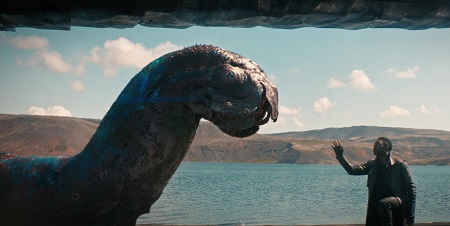
Styled as a pseudo-documentary, this series would hop from planet to planet looking at some of the wild animals that live in the Milky Way. Just like real documentaries that follow the lives of animals, we’d spend time following the lives and routines of some of the terrestrial, marine, and even spacefaring creatures that have been shown in Star Trek.
Every Star Trek series to date has looked at animals and non-sentient critters at some point, but rarely has an episode done so in any real depth. Thus, many of Star Trek’s animals are open to a closer look, and there’s plenty of room for creativity even within the confines of previously-established species.

While I’d want to keep the focus of this series on the animals themselves, there’s the potential to expand it a little, to spend some time with the narrator or even the science team who are following the animals. Again, though, I’d want to keep the documentary-style format going, so perhaps this would be done in the form of recorded logs.
Special effects and CGI continue to improve, so gone are the days when an “alien animal” would be a dog with a horn tied to its head! But the focus on the animals would mean the series would need a pretty high CGI budget, as it would need to look as convincing as possible. The 2019 remake of The Lion King pulled off photorealistic animation, though, so in theory I think it could be made to work – especially as technology continues to improve.

Among the creatures we could spend time with are famous ones like the tribbles or the Ceti Alpha V eel, as well as new creatures from recent shows like the gormagander (a.k.a. the “space whale”) or Book’s trance worms. Then there are critters like the Klingon targ, the Vulcan sehlat, the Cardassian vole, or even the gagh worms that Klingons eat.
Star Trek has shown or referenced a huge number of animals over the course of its 800+ stories, and it could be great fun to dive back into the franchise’s history, pull out a lesser-known species like the Regalian fleaspider, and take an in-depth look at the fictional critter. Maybe this, out of all the show ideas I’ve pitched today, is the most nerdy, niche concept of them all! But people like animal documentaries, and a series like this, which looks entirely at fictional creatures, has never been attempted as far as I’m aware. It would be wholly unique, not only within Star Trek but in the entire entertainment realm!
So that’s it. Five pitches for Star Trek shows… that will never be made!
This was a lot of fun to put together, and I have other Star Trek ideas that I’ve been kicking around that I might talk about on a future occasion. As I said at the beginning, this is pure fan-fantasy, and none of these projects will ever be produced – despite the fact that I think they’d be neat. There are many interesting ideas that fans have come up with over the years, some of which ultimately take the form of fan-fiction or even fan-made films. Trekkies are an incredibly creative bunch!
I hope you enjoyed this look at a few of my Star Trek ideas. Perhaps you like some of them as much as I do… or perhaps this list will exist as a reminder of why Alex Kurtzman, not Trekking with Dennis, is in charge of the franchise over at ViacomCBS!
The Star Trek franchise, including all series and films mentioned above, is the copyright of ViacomCBS. This article contains the thoughts and opinions of one person only and is not intended to cause any offence.





 Trekking with Dennis