


Update 2022: Unfortunately the video that I’m referring to has been set to “private” since I wrote this article.
I sporadically check in with fan project Star Trek Axanar. After Tim Russ’ and Walter Koenig’s Star Trek Renegades, Axanar was the fan film I was most interested in seeing when it was announced a few years ago. I was surprised to see Alec Peters – the creator and star of Axanar – had released a video titled In Defense of Alex Kurtzman – Why Star Trek is going to be OK on the fan film’s official YouTube channel a few days ago, and while I don’t normally do “responses,” I thought it was very interesting and worth drawing your attention to.
If you aren’t familiar with the development of Axanar, here’s a quick recap – and it should explain why the aforementioned video came as a bit of a surprise. In 2014, a fan film titled Prelude to Axanar was released. Produced by Alec Peters, the film served as a prologue to a longer crowd-funded fan film he and his team hoped to create. Star Trek Axanar would look at Garth of Izar, the famed Starfleet captain who was encountered by Kirk and co. in The Original Series’ third season episode Whom Gods Destroy. Fleet Captain Garth was the hero of an event known as the Battle of Axanar, and Peters intended to depict the events surrounding the battle in this fan film, which would feature a number of Star Trek actors.
However, CBS took exception to Axanar and ended up suing Peters and the team behind the fan film. The details of the lawsuit are complicated, but suffice to say CBS went after the production on copyright grounds, and the end result was a set of rules handed down that all fan films would be expected to follow. In addition, the Axanar team lost a lot of time and money that had been originally intended for the film.

All of this took place in the run-up to the first season of Star Trek: Discovery, and proved incredibly divisive for the fan community. Many folks backed Peters and Axanar, feeling that CBS was being unfair and attacking Star Trek’s most passionate fans. Others suggested that the motivation behind the lawsuit was that CBS was concerned that Axanar would be better than Discovery. Though it wasn’t the main reason why some Trekkies aren’t fans of Discovery and other modern Star Trek productions, the real-life battle over Axanar was certainly a factor.
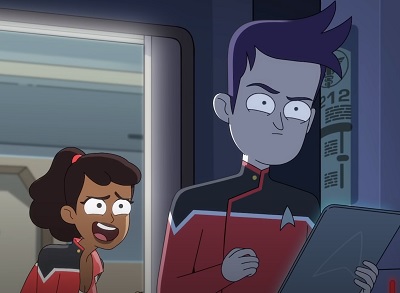
CBS – now ViacomCBS – has certainly been tone-deaf when it comes to the fandom on occasion. I’ve talked at length about the decision to broadcast Lower Decks in North America only, and we can also point to things like the forced shutdown of fan project Stage 9 at a time when ViacomCBS doesn’t seem to be making any Star Trek games or comparable interactive experiences. So I can certainly understand the position of fans who took an anti-CBS position in the wake of the Axanar lawsuit.
I’ve written previously about divisions within the Star Trek fandom, and how people often present it as “old” Star Trek versus “new” Star Trek. Since 2017 Star Trek has been, in many respects, different from how it was in the 1960s or even the 1990s. And as I always say, individual tastes are subjective – we like different things, even within a single franchise. Some fans love The Wrath of Khan, others like The Motion Picture, just to give a single example. As the Star Trek franchise approaches its fifty-fifth anniversary and its 800th episode, it’s no wonder there are debates about which series or style of storytelling are the best!

What I was so pleased to see from Alec Peters and Axanar in this video was a respect for what ViacomCBS and the Star Trek franchise are doing. Alex Kurtzman’s leadership has seen three new Star Trek shows premiere, with at least four others in the pipeline. It looks certain that the franchise will live to see its sixtieth anniversary in 2026 with new episodes still being broadcast, and as we enter the 2020s the franchise is, perhaps, on the cusp of a new era that could rival its 1990s heyday.
There is room within a fandom like Star Trek for Discovery and Axanar to coexist. We aren’t gatekeepers, telling other Trekkies that they aren’t “real fans” because the show or film they like best isn’t “real Star Trek.” That has never been what the franchise is all about, and anyone saying such nonsense has missed the point. Sometimes it’s hard to see the forest for the trees; to get so bogged down in the minutia and detail that we miss the big picture.
The Star Trek fandom has always been a welcoming community. I remember my first visit to a Star Trek fan meetup in England in the mid-1990s, and as a younger guy I was welcomed by other fans to their event. This would have been sometime after Star Trek: Generations has been in cinemas, and while I was a huge fan of The Next Generation and Deep Space Nine, I wasn’t fully caught up on The Original Series outside of its films. Despite that, fans of The Original Series who I met didn’t tell me that I wasn’t a “real fan” or that I had never seen “real Star Trek.” They were incredibly welcoming, and most people seemed thrilled that the franchise was still alive and kicking.

The Next Generation was controversial when it premiered in 1987. People who entered the fandom in the 1990s or later – as I did – missed that controversy, but it happened. Deep Space Nine was controversial too, with its static setting and darker tone. I know some Trekkies who utterly hated the Dominion War arc, feeling it went counter to the franchise’s optimistic tone.
The point is that we all have things within the franchise that we like and things that we aren’t keen on. But we would never dream of telling someone who’s a fan of The Next Generation and Voyager but dislikes Deep Space Nine that they somehow aren’t a “real fan.” And the same is true of the Star Trek projects of today. Discovery, Picard, and Lower Decks are “real” Star Trek, just as much as any other series or film. It’s okay to disagree about every aspect of those productions, and people will always do so. But they are part of the franchise, and just because they aren’t to some people’s taste doesn’t make them invalid.
Alec Peters and the team behind Axanar have largely avoided commenting on Discovery, Picard, and Lower Decks. I was pleasantly surprised to see them do so this time, and even more so to learn that Peters is a fan of Picard. There is a lot to like in modern Star Trek, and a lot to like in past Star Trek too. And Axanar still looks like an interesting proposition, one I will certainly tune in to see when the final version of the film (or episodes) are released.

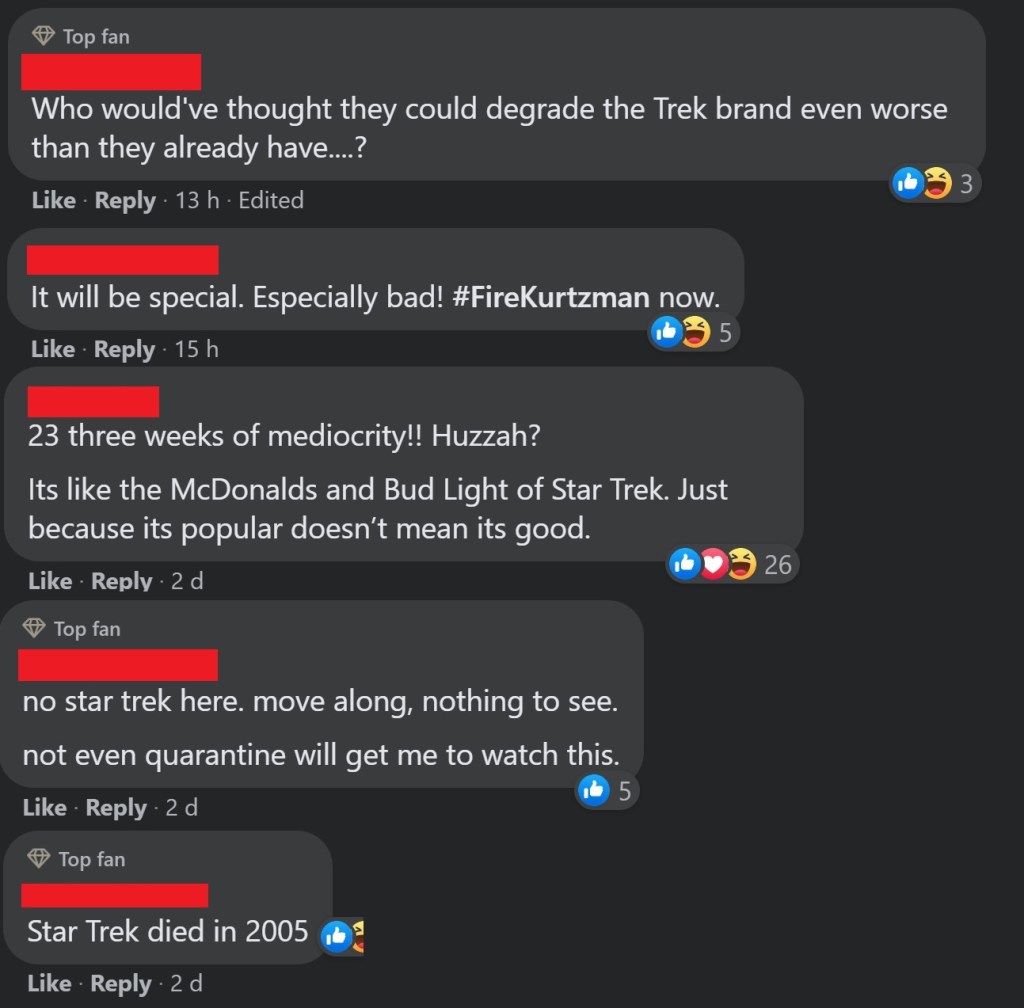
There are so many things in the modern world to divide us. But I would argue that, as Trekkies, we have much more in common with one another than we do with, for example, fans of celebrity reality television shows! There are, sadly, people who have begun to make money cashing in on this division, widening the gap between different groups of fans and trying to convince their audiences that only one kind of Star Trek fan is a “real fan.” I’m glad to see that Axanar isn’t on board with that, because there is room in the franchise for all of us. We can be passionate about what we like and dislike, and everyone is entitled to their own opinions about what makes for a good Star Trek story. But there’s no need to get nasty or aggressive toward someone who expresses a different opinion.
Watching the video I was struck by how mature Peters was in his tone. Axanar may have been controversial, but there’s no denying that he – and the team he built to bring the project to fruition – are deeply passionate Star Trek fans. What I took away from his video, though, was that he can appreciate that Alex Kurtzman is a fan too. Kurtzman and Peters may have very different attitudes to Star Trek and storytelling, but to express respect across that divide is something I believe many fans needed to see.
I liked what he had to say about giving Kurtzman time, too. Though I don’t necessarily agree that every Star Trek show’s first two seasons “suck,” as Peters put it, we certainly should give the new team at ViacomCBS time to tell more of the stories that they want to tell. For a lot of younger fans, Star Trek has always been a complete product. Every episode was available on DVD or streaming, and it’s easy for someone younger to look back at the franchise as a single entity, not appreciating the decades of work that went into it. Star Trek developed gradually, over a long period of time, in order to become the franchise it was in the 1990s. For fans who didn’t see any part of that process, for whom Star Trek has always existed in its current form, it’s perhaps easier to criticise modern productions as they find their feet and grow.

We are certainly in a new era of television storytelling, and this is another point Peters brought up. Star Trek – like any franchise – has to adapt to meet audience expectations in the 2020s; many episodes and stories that we look back on fondly would struggle if made today. As Trekkies, we’re a tiny portion of Star Trek’s audience. The franchise has to have broad appeal to a wider audience beyond this niche if it’s going to survive, and someone like Alex Kurtzman was brought on board because the people at ViacomCBS believe he has the creative vision to help the franchise grow. It’s never nice to be told “this wasn’t made for you,” but in a sense it’s true – and always has been. Even The Original Series was produced with a wider audience in mind, and we can trace the franchise’s move away from ethereal sci-fi toward more action-oriented stories to at least 1982’s The Wrath of Khan.
The point is, Star Trek has always been evolving. It’s a franchise that has tried many different things over the years, and the current era is no different. As Alec Peters pointed out, Kurtzman and his team are listening. That’s why we got Strange New Worlds, that’s why some of the storytelling decisions were made in Discovery, and even while Kurtzman and his team focus on bringing Star Trek to new fans and a wider audience, they are trying to balance that with feedback from fans.
It’s not up to Alec Peters or myself to defend Alex Kurtzman and his vision for the franchise, at the end of the day. It’s okay to dislike Discovery, Picard, or any other Star Trek project that you feel didn’t appeal to you or didn’t work very well. But I think we could all agree that the fandom would be a nicer place for everyone if we didn’t try to play gatekeeper and tell genuine Trekkies that they aren’t welcome because they like the “wrong” show or film. It’s a big galaxy, and there’s room for all of us.
You can find Alec Peters’ video embedded below.
The Star Trek franchise – including all properties mentioned above – is the copyright of ViacomCBS. Star Trek Axanar, Prelude to Axanar, and the Axanar logos were created by fans. The video above is hosted on YouTube, and merely embedded (linked) here on Trekking with Dennis. This article contains the thoughts and opinions of one person only and is not intended to cause any offence.


 Trekking with Dennis