


Spoiler Warning: There are minor spoilers ahead for the titles on this list.
One of the most annoying trends in the games industry over the last few years has been the “release now, fix later” approach taken by companies. I’ve looked at this problem before, but suffice to say that the internet and digital distribution have led publishers and studios to release their games in an unfinished state, with a plan to roll out patches and fixes after release.
A few years ago – even as recently as the Xbox 360/PlayStation 3 generation – this wouldn’t have worked. But with so many people buying games digitally nowadays, companies seem to think that they can get away with it. However, there are many examples over the last few years of games that failed to live up to their potential – or failed entirely – because of this attitude.
The few days either side of a game’s release are incredibly important. Reviewers get their hands on a copy and play through the game, getting their reviews ready in time for launch. Then players who pre-ordered and those who got the game on day one get to play the game for themselves, and within hours of release a game’s reputation is pretty much set. It takes a lot of hard work to change anyone’s first impression – so if the game was in a bad, unfinished state, that will be the headline. And once that becomes the prevailing opinion, it’s very difficult to change minds and convince people to give it a second look.
As a result, releasing a game too early can kill it – even if subsequent patches and hotfixes bring it up to code.
Let’s look at five games that fell victim to this “release now, fix later” phenomenon.
Number 1:
Destiny (2014)
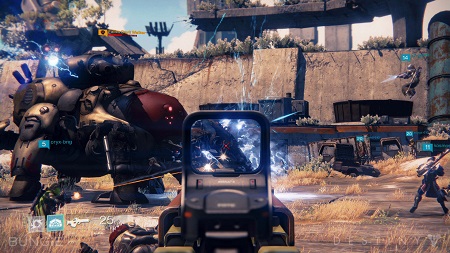
One of the first big games to suffer because of this was Bungie’s Destiny. After departing the Halo series following 2010’s Halo: Reach, Bungie struck out on their own to make what they promised would be a “ten-year experience” called Destiny. Less than three years after Destiny’s 2014 release, though, Destiny 2 would launch.
There was a lot of interest in Bungie on the back of the success of the Halo series. Halo: Reach had been hailed as the best entry so far, and there was nothing to suggest that Destiny would be anything other than fantastic. In a way we can call this a case of overhyping, but Bungie actually did a reasonable job of setting appropriate expectations for what Destiny would be. The finished game was just not very interesting to many players, and after beating the main campaign, most didn’t stick around.
If Destiny had been released in a complete state instead of promising updates and expansions, perhaps more players would have stuck with it. But this is precisely the problem with games that go down this route – an underwhelming experience puts players off. Why would they bother coming back to Destiny to see the latest update(s) when the game was only okay the first time around? Games need to be good when they release – not average with the promise of becoming good later, and that, in a nutshell, was Destiny’s problem.
Number 2:
No Man’s Sky (2016)
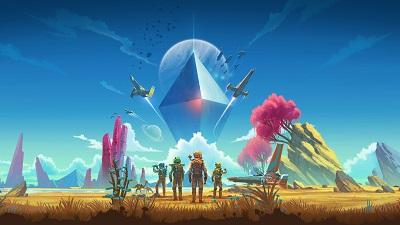
No game is more synonymous with “release now, fix later” than 2016’s No Man’s Sky. I actually felt that, for what it was, the game was decent even at launch, but I hadn’t bought into the hype and went into the game with moderate expectations! There’s no denying that No Man’s Sky was missing many promised features at launch, and while it wasn’t plagued by bugs or glitches in the way some games on this list were, it felt threadbare to many players.
No Man’s Sky is a classic example of overhyping. Studio Hello Games and its head Sean Murray seemed incapable of saying “no,” promising players that No Man’s Sky would be an infinitely pleasurable sandbox in which they could do just about anything they wanted. A key part of marketing in the games industry is reining in hype and knowing when and how to set accurate expectations – something that Hello Games completely messed up.
Hello Games put in a lot of hard work to bring promised features to No Man’s Sky in the years after its release, and in 2021 the game actually does meet many of those lofty expectations. But even so, many players who were burned in 2016 have not returned, and the game’s reputation is still in the gutter in many people’s minds. There’s even a sense that Hello Games should not be “rewarded” for fixing the game after its release, and I know folks who refuse to buy it on principle.
Number 3:
Fallout 76 (2018)
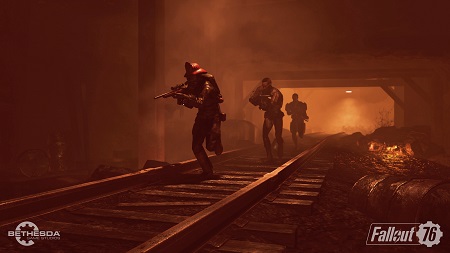
Fallout 76 may be the worst game on this list. It was certainly the most disappointing to me personally. Not only did it launch in a crappy, broken state riddled with bugs, but it was also threadbare. A double-whammy, if you will.
The heart of any role-playing game comes from great, memorable characters. And the Fallout series has always provided plenty of interesting people to engage with, triggering quests and storylines that are easy to get invested in. Fallout 76 had precisely zero non-player characters at launch, making its world feel empty and its quests uninspired and meaningless. Aside from wandering around, looking at the pretty (if decidedly last-gen) environment and battling a few buggy monsters, there was literally nothing to do in the game.
There were other problems which don’t stem from the game being forced out the door too soon, such as Bethesda’s reliance on a massively out-of-date game engine and a crappy shooting mechanic that single-player Fallout games had managed to cover up with the VATs system. But the core of Fallout 76′s problems came from being released in an unfinished state. The game’s reputation tanked and has not recovered, and Bethesda, which had already been on a downward trajectory, is now held in especially low regard.
Number 4:
Anthem (2019)
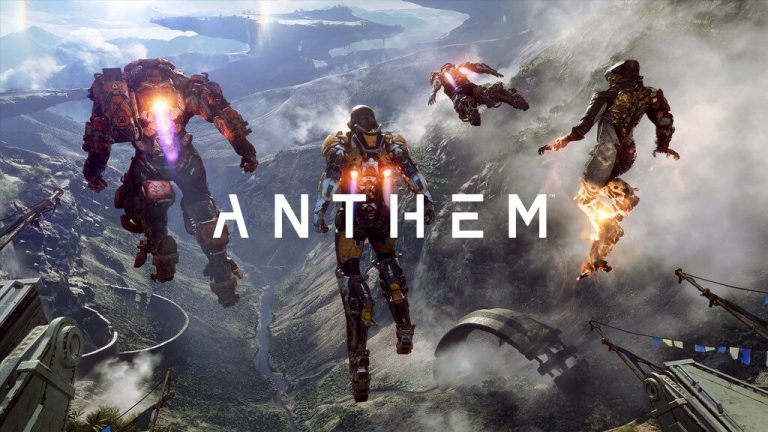
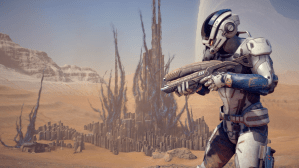
BioWare released two games in a row in the mid/late 2010s which both suffered this exact issue. After Mass Effect: Andromeda was ridiculed on release for being a buggy mess, Anthem likewise had issues at launch. Though there were fewer bugs than in Andromeda – or at least, fewer egregious ones – Anthem was nevertheless unfinished.
For a live service title, Anthem was missing a lot. There were few customisation options, not enough interesting loot, and the final act of the game, which is the most important part as it’s where players will spend most of their time, was described as being just plain boring. In addition, the enemies were repetitive, the story – something BioWare is usually good at – was lacklustre and uninspired, and the game was just mediocre.
Mediocrity is not good enough when there are so many other competing titles to play, and Anthem soon lost the small number of players it initially picked up, dropping more than 90% of its playerbase within a few weeks of launch. What happened next is typical of underperforming live services: its “roadmap” of planned updates was cancelled. Though Anthem technically limps on and its servers are still active, in reality everyone knows it’s dead.
Number 5:
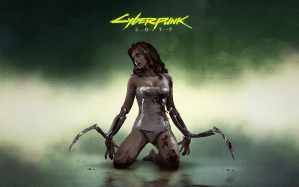
Cyberpunk 2077 (2020)
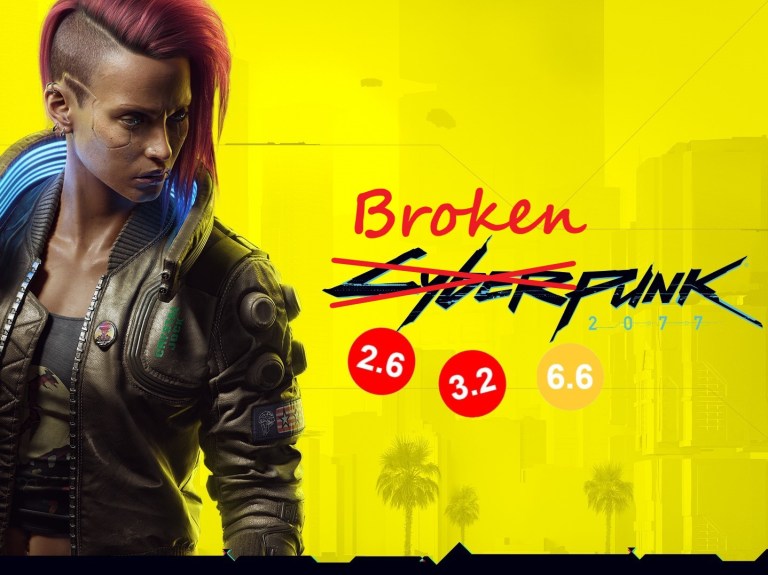
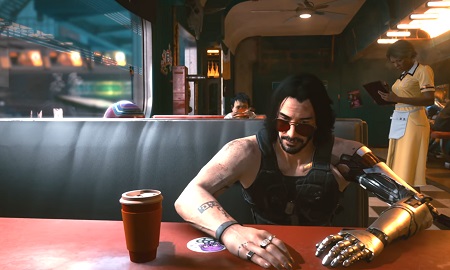
Cyberpunk 2077 is unusual in the sense that, unlike the other entries on this list, it’s a single-player game. It isn’t the only single-player game to ever release too soon, but it’s certainly the most significant one in recent years. CD Projket Red appear to have been desperate to release the game before the end of 2020, and whatever the reason for that may be, the end result was a game so riddled with bugs and glitches that many described it as “unplayable.”
Sony took the unprecedented step of withdrawing Cyberpunk 2077 from sale on the PlayStation Store – a move which has not yet been undone. CD Projekt Red, which had been one of the most popular games companies in the view of the general public, saw its reputation collapse – and its share price took a nosedive too.
Even now, almost three months on from release, Cyberpunk 2077 is still in a bad state, especially on PlayStation 4 and Xbox One. The game is simply not optimised to run well on those consoles, and it will take many more months of work to get it anywhere close to playable. However, in some ways the bugs and glitches have covered up what may come to be seen as Cyberpunk 2077′s worst failing: the game underneath the bugs certainly does not live up to the pre-release hype. Far from being a genre-busting once-in-a-lifetime experience, what players who stuck with the game through its issues have found is an okay first-person-shooter/role-playing game, and little else.
So that’s it. Five games which prove unequivocally that the “release now, fix later” concept simply does not work. The sooner games companies come to realise that a delay is better than a bad launch the better. There is a much-overused quotation from Nintendo legend and Super Mario creator Shigeru Miyamoto: “a delayed game is eventually good, a bad game is bad forever.” Despite all of the games above promising fixes, they remain, in the eyes of most gamers, bad.

Picture Credit: Vincent Diamante from Los Angeles, CA, USA, CC BY-SA 2.0 https://creativecommons.org/licenses/by-sa/2.0, via Wikimedia Commons
That’s the fundamental problem with this approach. It’s very difficult to overcome first impressions, and if a game launches to mediocre reviews and online criticism, that will be the only thing most people remember. No Man’s Sky has worked incredibly hard to overcome its launch issues, and the game is in a state today that genuinely lives up to the expectations players had and the pre-release hype. Yet the game will always come with an asterisk, and when people remember No Man’s Sky in ten or twenty years’ time, the fact that it was a colossal disappointment will be first and foremost in people’s minds.
As more and more games release in an unfinished state and go on to underperform – if not fail hard – I hope that games companies and publishers will come to see the folly in this approach. Maybe the 2020s will see more delays and better games as a result. We can only hope, right?
All titles listed above are the copyright of their respective studio, developer, and/or publisher. Some screenshots and promotional artwork courtesy of IGDB. This article contains the thoughts and opinions of one person only and is not intended to cause any offence.

 Trekking with Dennis