

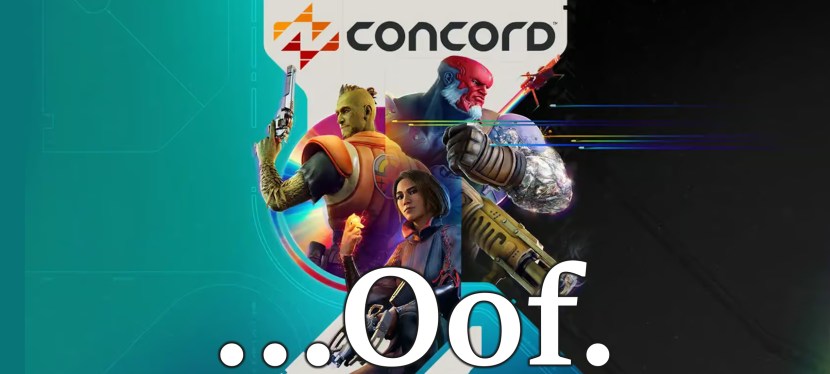
We’ve just seen one of the biggest and most expensive failures in the history of video games. That isn’t hyperbole: Sony’s hero-shooter Concord is now one of the worst flops of all time. Whole books could be written on this topic, with Concord becoming a case study in how not to develop and launch a game – but for now, I’ll try my best to break down what happened, what went wrong for Sony… and most curiously of all, why it won’t actually matter to the company or its PlayStation brand.
The tl;dr is this: Concord was launched years too late into a massively competitive genre, one that has already seen high-profile flops from big studios and developers. Its art style was generic, it didn’t stand out from the pack, and it offered prospective players no reason to switch from other, better-established titles in the hero-shooter genre. But worst of all, Sony was demanding $40/£35 for a game in a genre where the most successful titles are free-to-play. There was no way players were gonna take a punt on an expensive new game when there are so many free ones with huge, established playerbases.
But that isn’t all there is to say. Concord caught criticism for “being woke,” finding itself on the wrong side of the culture war in the video games arena. Releasing at the same time as both Dustborn – which was also highly criticised for its social justice narrative – and Black Myth Wukong, which the “anti-woke” crowd have rallied around thanks to dubious claims surrounding its development and supposed rejection of “interference” by companies allegedly pushing “an agenda.” Concord was harmed by these comparisons, no doubt.
There’s also the fact that the live service/games-as-a-service marketplace is oversaturated. There are only so many players who want always-online competitive multiplayer titles, and most of them are already committed to one or two games. If Concord had been free-to-play, more people might’ve been willing to at least fire it up and give it a try. But for the stupidly high price that Sony demanded? It’s really no surprise that Concord failed to make a dent in this very difficult market.
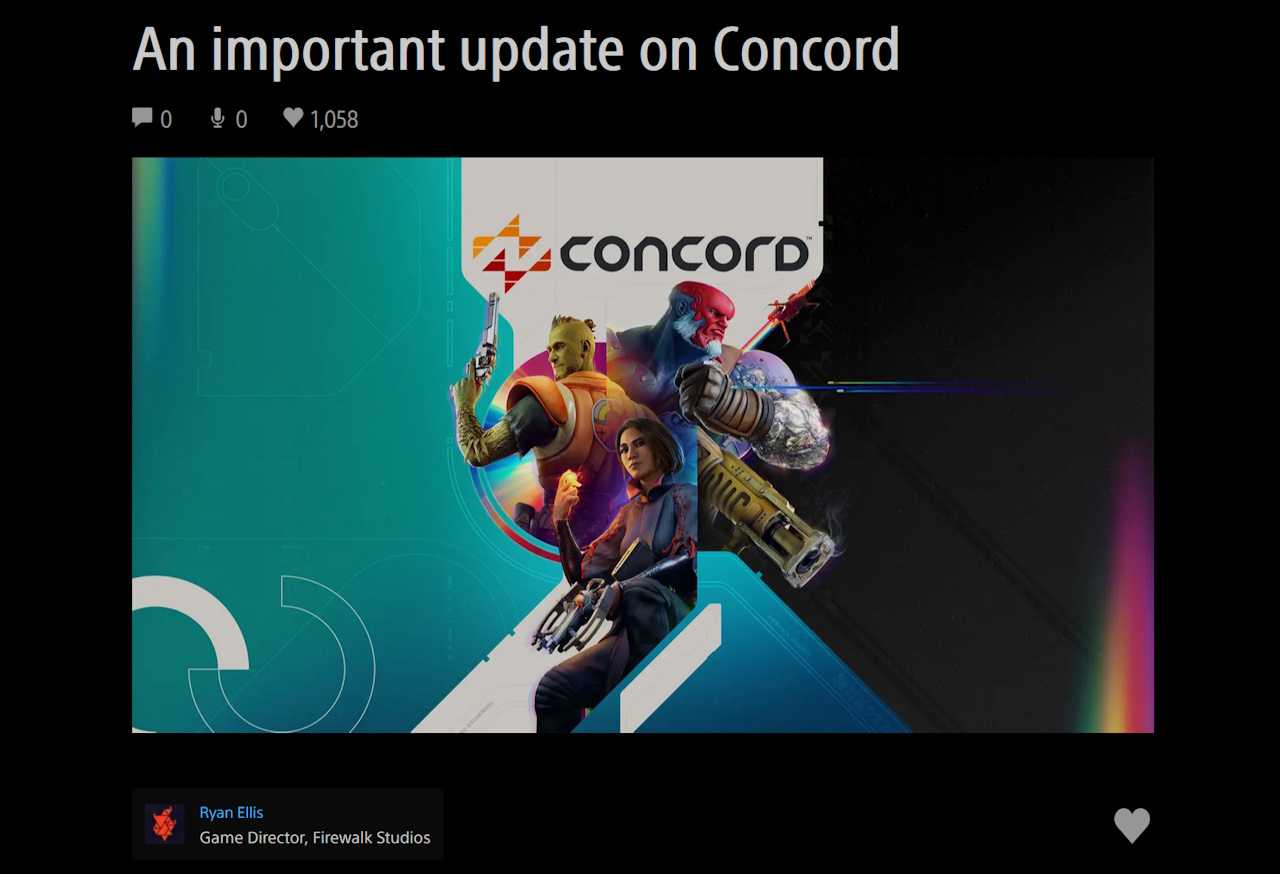
Shortly before I started to write this article, Sony announced that everyone who bought Concord would be given a full refund and the game would be pulled from sale. The game was only released at the end of August; Concord didn’t even last two weeks before Sony pulled the plug. And unlike in the past when some publishers have killed their live-service games… I completely understand why Sony did it and I can even say without a hint of irony that it was the right call. If no one is playing your live service game – and Concord, at least on PC, was seeing player counts of well below 100 concurrent users – then keeping it online is only going to cost money. And Concord has already proven to be a huge expense for Sony.
The claim that Concord had been in development for “eight years” seems to stem from a single quote from one of the developers and hasn’t been fully confirmed. But at the very least, the game was in full development for well over five years, and Sony even pulled resources away from other titles to support Concord. The game has cost Sony well over $100 million, not even counting the money spent on marketing it over the last couple of months. This is certainly one of the most expensive failures that the video games industry has ever seen.
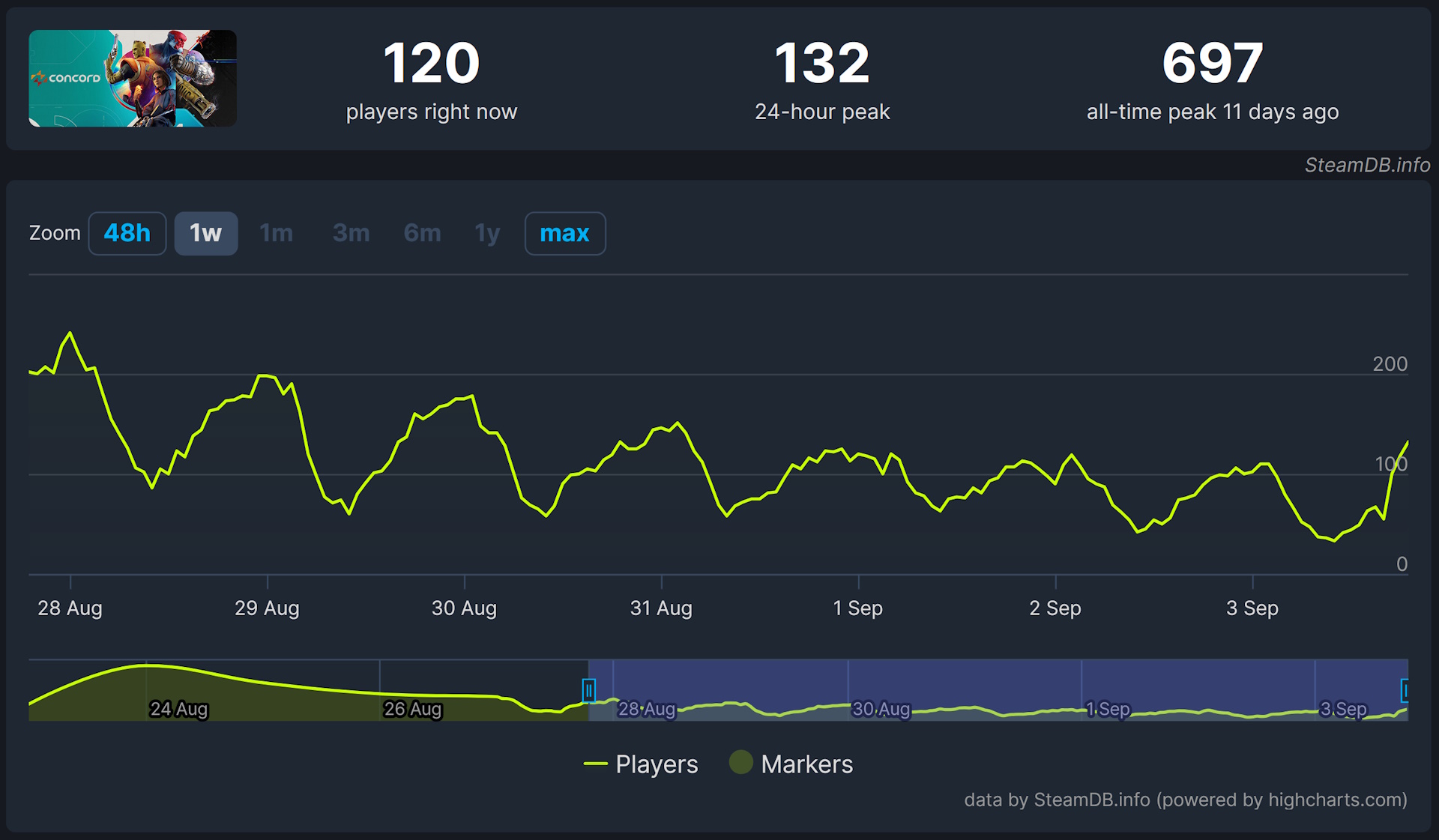
Image Credit: SteamDB.info
But the strange thing is that Concord’s failure really won’t have much of an impact on Sony. The company doesn’t have all of its eggs in one basket, and both its hardware and software divisions are making money hand over fist elsewhere. Sony may even be able to write off Concord’s development costs – or a large portion of them, at any rate – as a loss against its tax bill, further reducing the impact of the game’s catastrophic launch.
This is something that’s increasingly happening in the video games industry. The few massive corporations that dominate the gaming landscape are quite happy to spend vast sums of money on creating new games, because they only need to find one successful title out of a whole bunch. Sony can write off Concord without doing much harm to its broader business model. Would the company have preferred it if Concord had been the next big thing, dethroning Overwatch and Grand Theft Auto V to become the best-selling multiplayer game of the decade? Sure! But you can bet that no Sony executive will lose any sleep over its failure. They have many more titles coming along across a range of genres – and they only need one or two to become big hits.
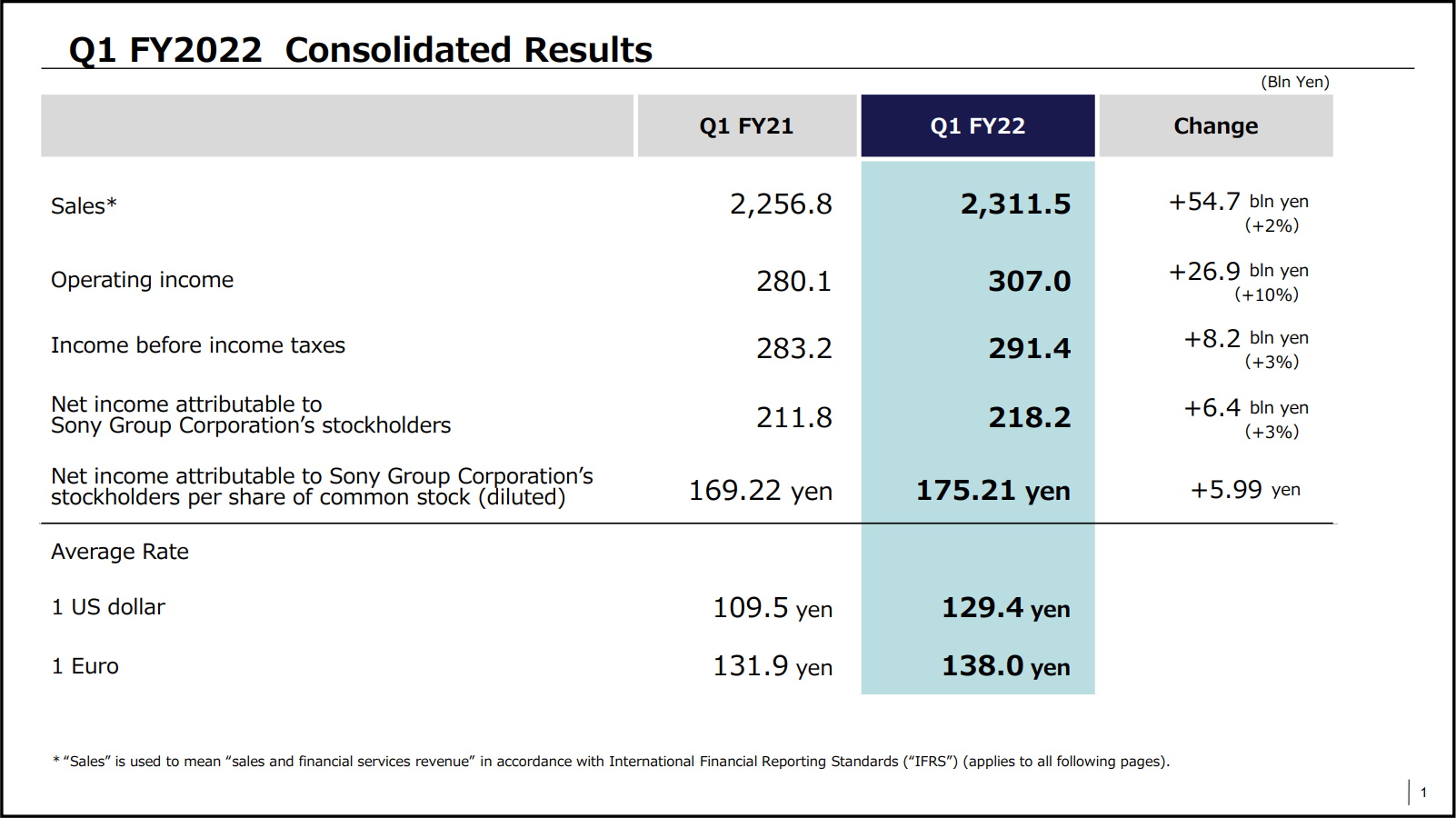
If developer Firewalk Studios had been working independently, Concord’s failure would have undoubtedly ruined the company and its leadership team. And while it’s still quite possible – likely, even – that Firewalk will be shut down by Sony as a result of this situation, Sony itself will carry on virtually unscathed. Such is the nature of the business now that gaming has gone down this corporate path.
Concord was created to be Sony’s answer to Overwatch, Apex Legends, and Valorant. The company saw the potential in the hero-shooter genre and thought it could find a way in, hoping to print money on the scale of some of those other games. But nothing about Concord stood out – the game itself looked like a cheap copy of more successful titles. Which is what it was, at the end of the day.
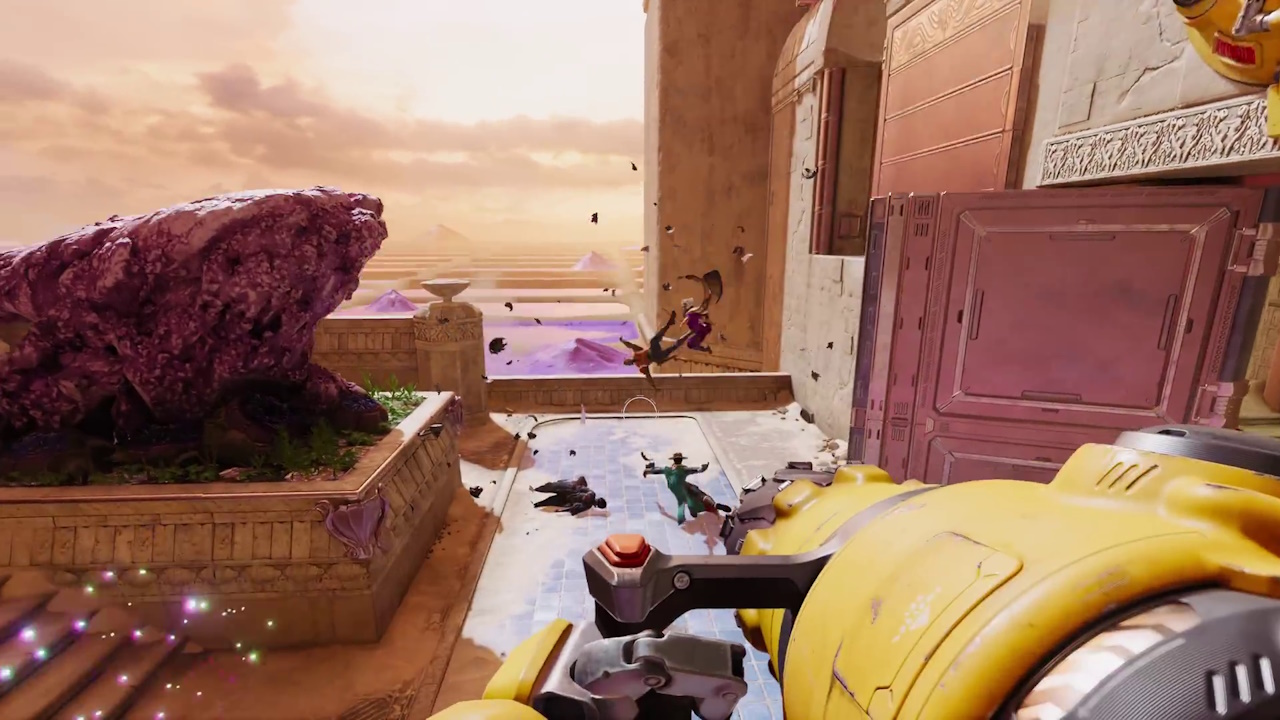
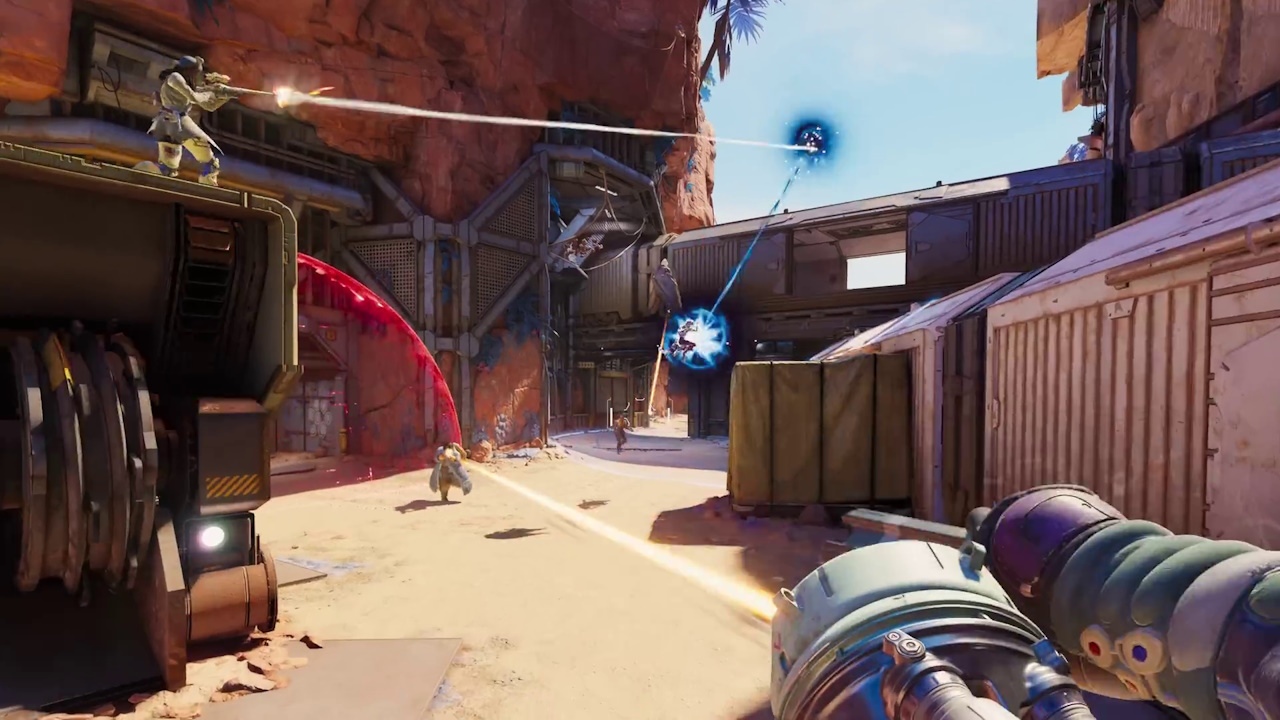
Games need something to get players interested. The first thing many players notice – consciously or subconsciously – is the way a game looks. And everything I’ve seen of Concord from its level design, weapons, and characters just looked derivative and unimpressive. There’s nothing wrong with games taking inspiration from successful titles – remember when first-person shooters were literally known as “Doom clones?” But in the current highly-competitive market, a new title trying to garner attention and support from players who are already immersed in other titles needs something to stand out. And Concord had nothing.
I feel for the developers who poured years of work into Concord. I spent a decade working in the games industry, and I know that developers are passionate people who genuinely care about making the best, most creative titles they can. Concord’s failure will be a crushing blow to the people who worked hard to bring it to life, and we mustn’t forget the human element in this story. The game could also be damaging to people’s careers and future prospects in the industry – particularly if Firewalk Studios is shut down, as seems likely.
Because Concord’s potential failure was built into Sony’s plans, nothing will happen to the company. The situation is embarrassing for Sony, sure – no one wants to win the gold medal for “worst-selling game of all-time.” But Sony has the money and the market share to walk it off, and when Concord is completely forgotten in a few weeks’ time, there genuinely won’t be any consequences for the company or for the executives who pushed for this game to be created, marketed, and sold in the way that it was. Sony will refocus its efforts on its next live service, always-online multiplayer title… and then the next one after that, if it also ends up like Concord.
We are firmly in an era of “live service spirals,” and the industry’s big corporations can afford to keep sharting out games like Concord every few months, if necessary. They’re all just hoping to either create or buy the “next big thing,” and they’re willing to waste as much money as necessary to ultimately make as much money as possible. This is why Microsoft bought Activision and why Sony shelled out to buy Bungie, just to pick on two recent developments.
Concord was dead on arrival. Asking for £35 in a marketplace where other games are free-to-play while offering nothing interesting-looking or unique would have doomed it regardless of other factors. Releasing alongside the popular and successful Black Myth Wukong and the derided Dustborn didn’t help by comparison, but the fundamental premise of the game was really what killed it. For a game that took five-plus years to make and cost well over $100 million, that’s appalling. These corporations need people, somewhere in the chain of command, who know the industry and its trends and will pull the plug or restart development way before release. Concord should have been shut down or completely changed months if not years ago – and it’s on Sony’s leadership that that didn’t happen.
Sony is capable of doing that: remember when the Knights of the Old Republic remake was almost killed? That was, at least in part, Sony’s doing – the company saw a “vertical slice” of the game and hated it so much that the development studio that had been working on it was removed and production completely re-started. If they could do that to the KotOR remake – a title that should be a guaranteed hit – why was no one stepping in to insist on changes to Concord?
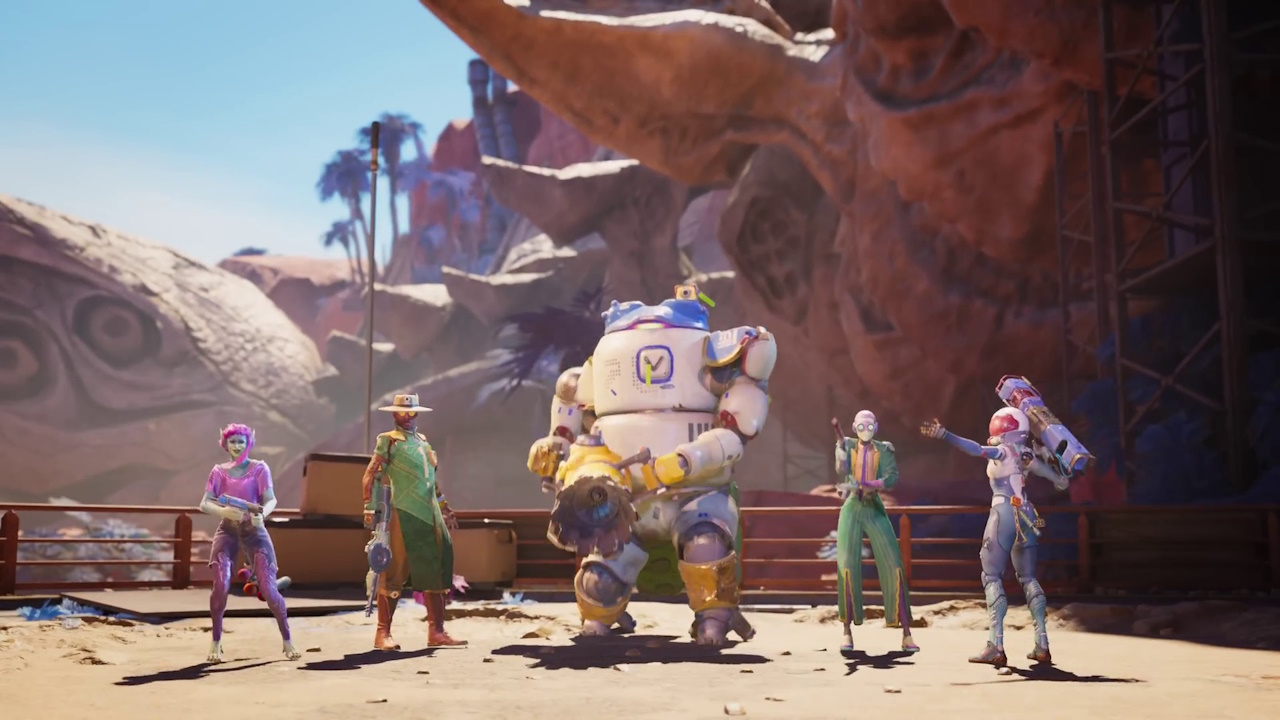
It’s a shame. I never like to see a big game fail in this way, and I really feel sympathy for the development team who undeniably worked their socks off to make Concord. But this failure is a consequence of the way modern games are created – Concord wasn’t an organic idea that a passionate developer had. It was a corporate product, designed from day one to make as much money as possible by piggybacking on successful trends. Sony won’t care that it didn’t work, because the company has other upcoming titles that its executives hope will succeed.
So farewell, Concord. Despite Sony’s ambiguous wording leaving open the possibility of the game returning one day, perhaps in a free-to-play form, I suspect that won’t happen. The embarrassment associated with the name “Concord” has hardened hearts against it, and wasting even more money trying to convert it to a freemium title honestly won’t be worth it. Even if Concord re-launched in a few months’ time as a free title, I don’t see it getting off the ground, so the least bad option is to just quietly kill it off. I hope that Firewalk Studios and its developers will be able to move on to other, more successful projects.
Unfortunately, Concord’s failure was all but inevitable.
Concord is in the process of being de-listed with refunds offered to all players. Concord will be fully shut down on the 6th of September 2024. Concord remains the copyright of Firewalk Studios and Sony Interactive Entertainment. This article contains the thoughts and opinions of one person only and is not intended to cause any offence.
 Trekking with Dennis