


Spoiler Warning: Beware spoilers for Alien: Earth and other films in the Alien series.
The original Alien film (the one from 1979) is one of my absolute favourite sci-fi/horror titles. The claustrophobic atmosphere, the masterful way director Ridley Scott built up the danger and tension, and of course, the titular alien itself, were all absolutely incredible. The film is a classic of cinema – but that’s kind of where my attachment to Alien as a franchise ended… until now.
I liked Aliens, but not as much as the first film. And subsequent entries in the franchise – in my subjective opinion, of course – got progressively less interesting. None of them were out-and-out bad – at least, none that I’ve seen – but I really started to get the sense that Alien should’ve been a one-off; the Xenomorph just felt like a one-trick pony. And I was content to leave Alien there, revisiting the first film for occasional viewings every once in a while, but without really broadening my exploration of this world. I haven’t seen Prometheus or Alien: Covenant, and while I’m pretty sure I watched Alien Versus Predator, I genuinely can’t remember a thing about it.
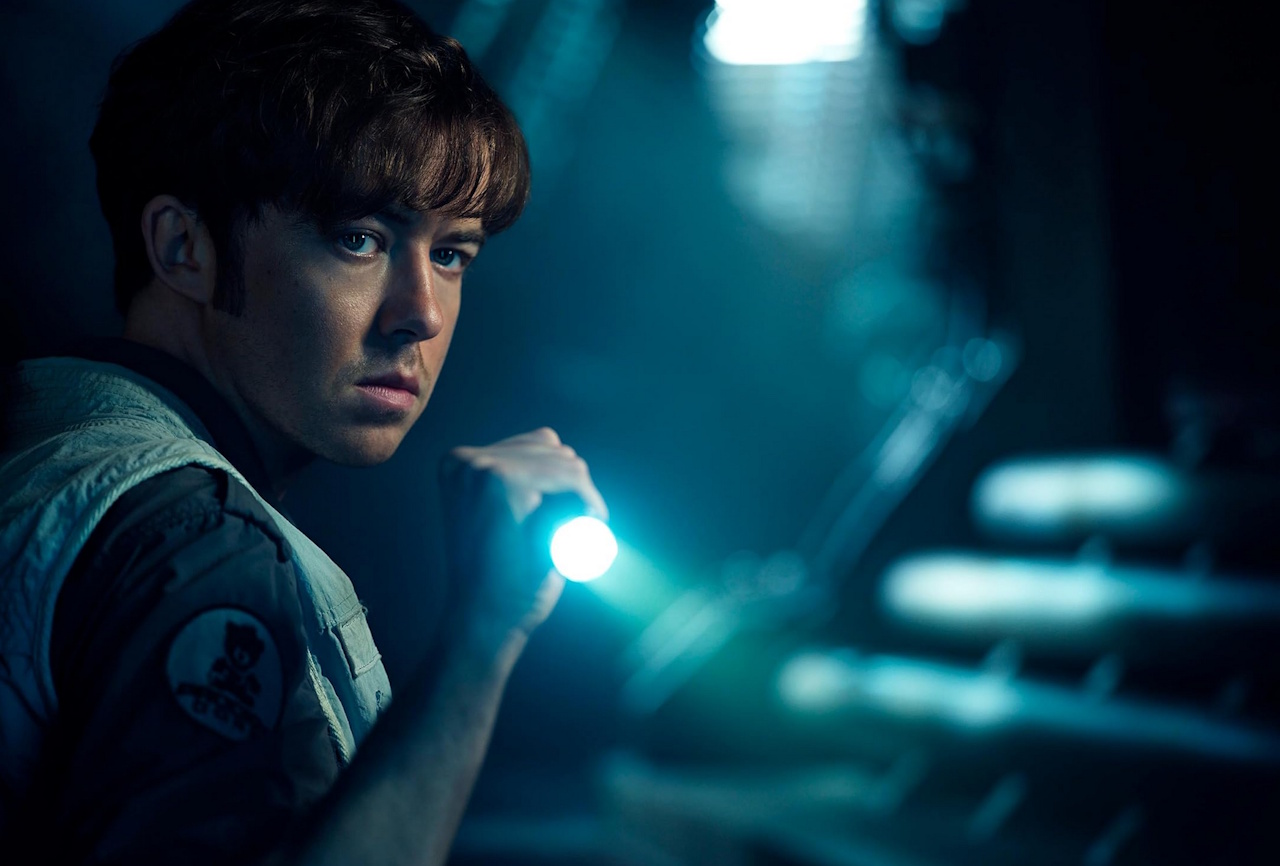
So why Alien: Earth, then? And is my take on a series in this franchise even valid? You’ll have to answer that – no hard feelings if a review from an occasional fan isn’t right for you! But I wanted to be up front about my feelings on the Alien franchise as a whole. Alien: Earth appealed to me, to be blunt about it, because it’s a big-budget sci-fi show in a franchise I’m at least partially familiar with. I’m always on the lookout for new and engaging sci-fi to enjoy, and I thought there was a chance, at least, that Alien: Earth might be worth a watch. Here in the UK it’s on Disney Plus, which is a subscription I dip in and out of, and during one of the months I was paying for it I thought I’d check out the series.
Here’s the headline: I thoroughly enjoyed Alien: Earth, and I’d rank it only slightly behind 1979’s Alien if I were to make a “tier list” of everything I’ve seen in the franchise to date. I binged the entire show over a couple of evenings, because I found once I got started I didn’t want to put it down. Alien: Earth managed to thread the needle: growing the world and lore of its franchise while staying true to the original themes and tone. And if I may be so bold… I think it’s set the stage for an expansion of the Alien franchise in a way no entry before it managed to do.
A couple of years ago, I took a look at the video game Aliens: Fireteam Elite here on the website. And I wrote then that there was “an odd duality” to the Alien franchise, with some films presenting a single Xenomorph as an unstoppable killing machine… while others depicted whole legions of them as being little more than cannon fodder. I wrote then that Alien really only had one alien… and diminishing it too much would risk making future projects feel less frightening and less intense.
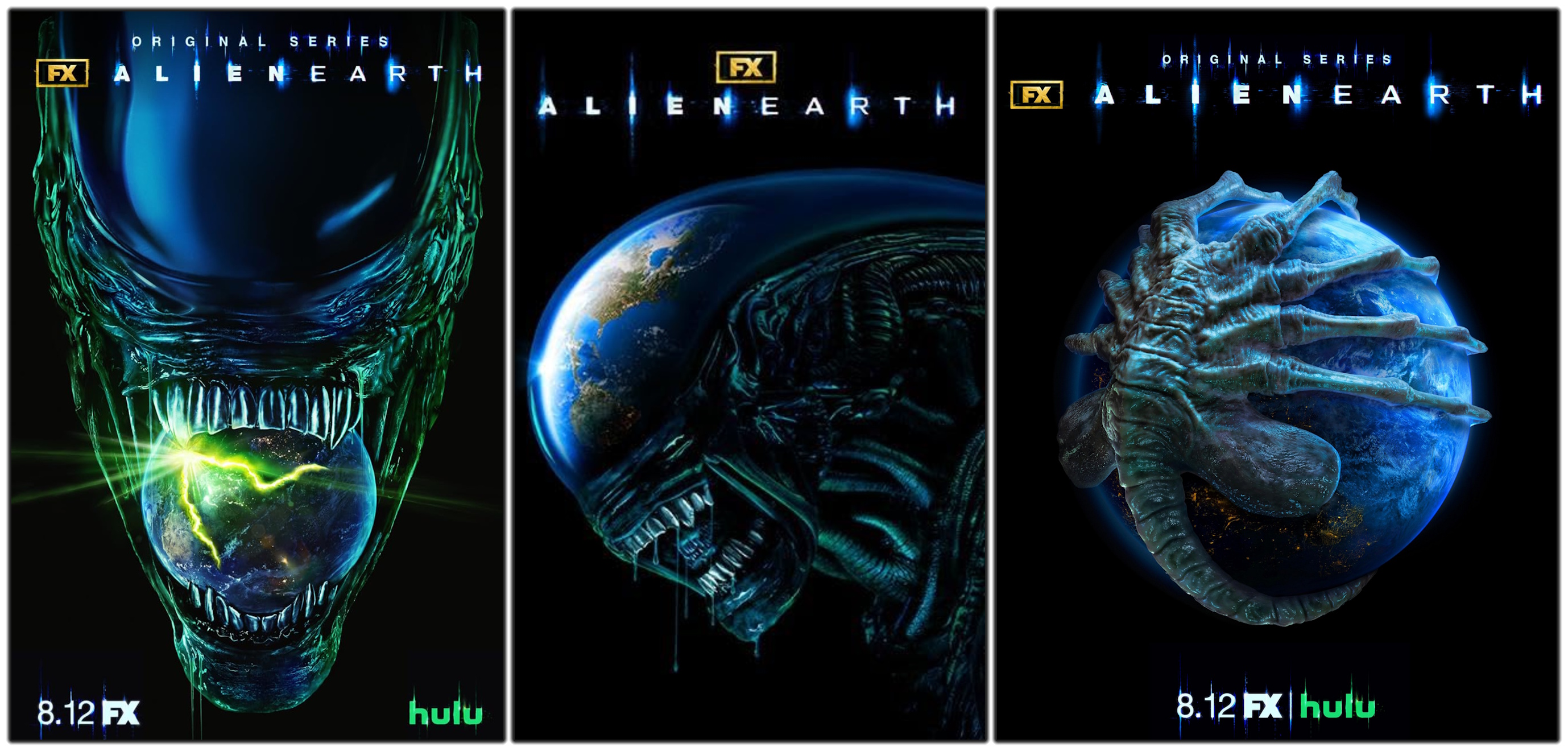
Alien: Earth introduces several new alien species to the franchise – and they’re a genuine breath of fresh air. If there are to be more Alien films or TV shows, the franchise will need to expand beyond just the Xenomorphs and fill out its galaxy with more life-forms to terrorise (and occasionally bond with) our protagonists and antagonists. For me, Alien: Earth took a massive and incredibly important step in that direction, creating brand-new creatures – at least one of which was arguably more frightening than the original Xenomorph. If Alien remains in production, we may come to look back at Alien: Earth as a major turning-point, revitalising the franchise and keeping it fresh.
Alien: Earth depicts a future ruled by corporations. This corporate dystopia has been a theme going all the way back to the original film; Weyland-Yutani’s single-minded desire to capture a Xenomorph was revealed to be the driving force behind that story. Given that Alien: Earth (and the rest of the franchise) is now owned by Disney, one of the biggest corporations on the planet… there’s an irony there which wasn’t lost on me. The anti-corporate tone, criticisms of oligarchy, and the general depictions of both Weyland-Yutani and Prodigy as being horribly corrupt… it doesn’t land quite as hard, perhaps, because of the real-world ownership and money behind it!
However, I found the messaging interesting – once I got past all of that. We spent a lot of time with Prodigy, and its founder, and we got to see more than I think we’ve ever seen before of this vision of humanity’s corporatist future. At one point, Joe explains to the kids how democracy “didn’t work,” so it was overthrown and replaced with the corporatocracy that the series depicts, and the whole thing really was fascinating. Sci-fi is usually as much a commentary on the world today as it is on the future, and there are parallels to the rise of real-world corporations and their power that were intentionally unsettling.
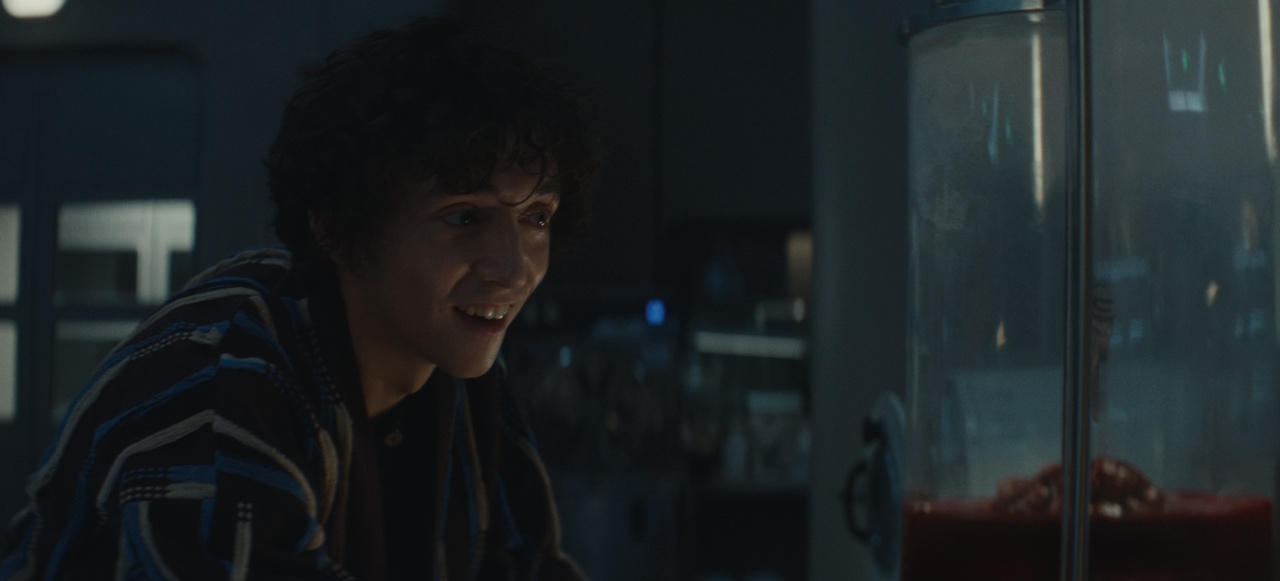
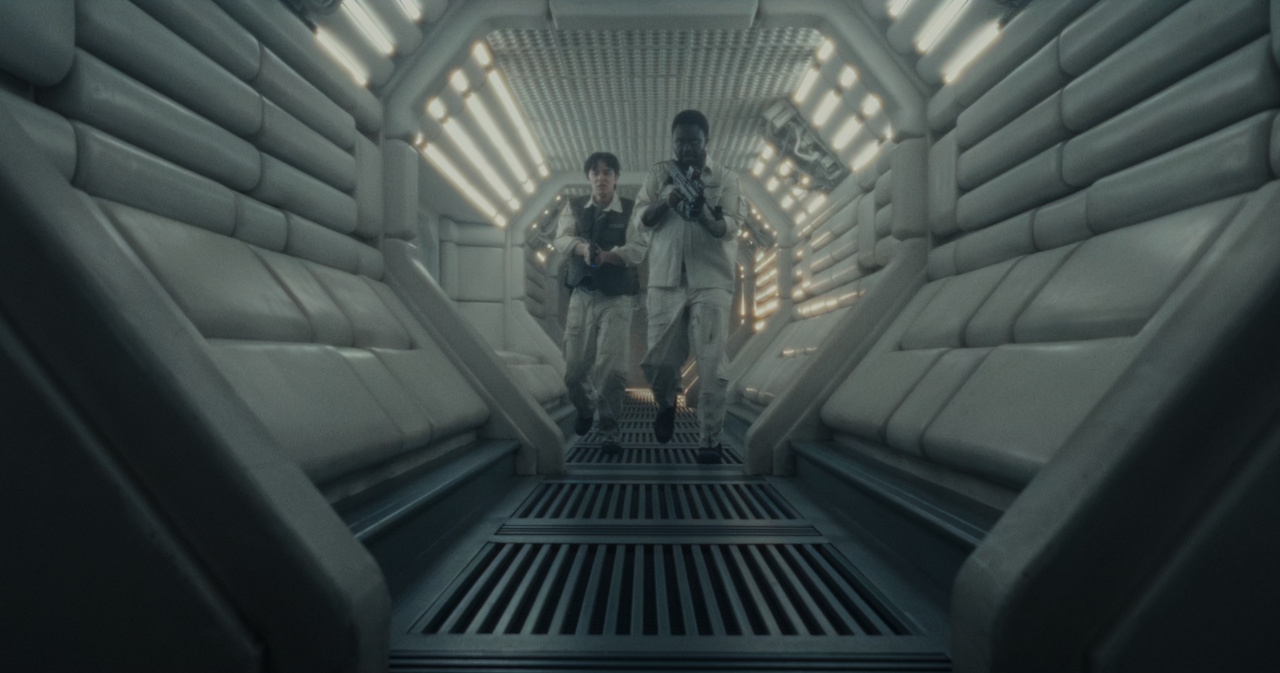
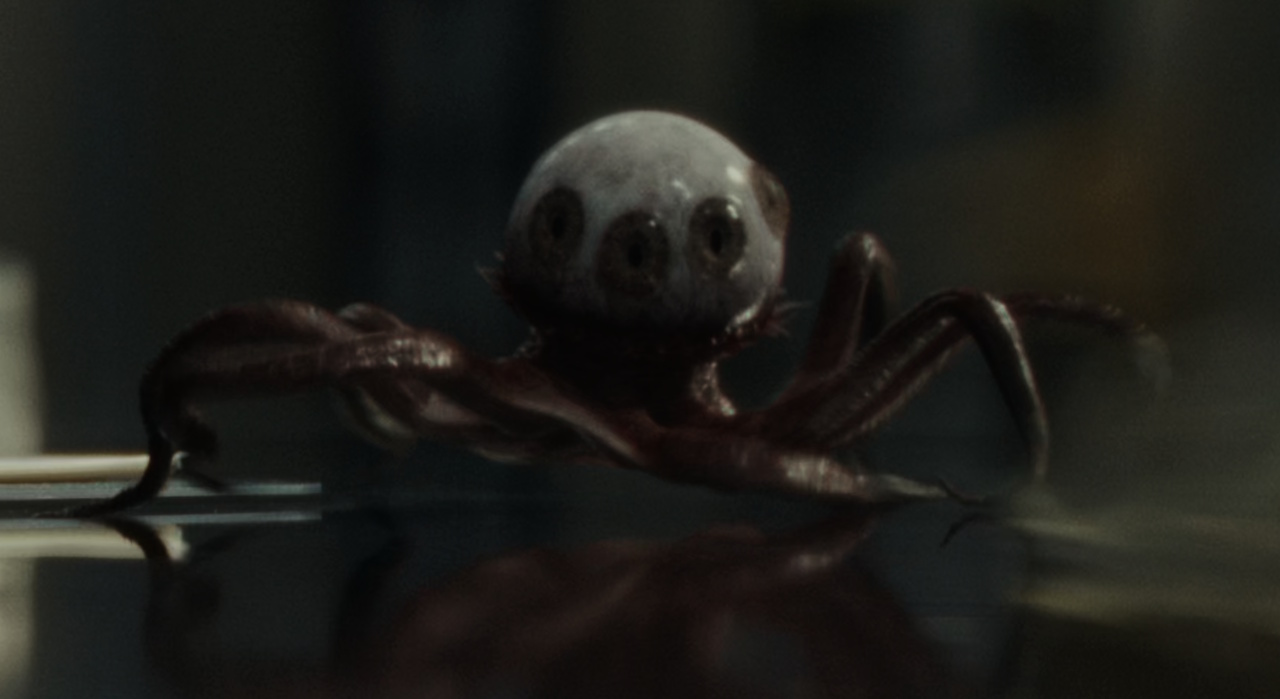
In terms of individual episodes, the fifth episode of the season, In Space, No One… was by far my favourite – and a damn good reimagining of the original 1979 Alien, in my opinion. It was the only episode set entirely in space, aboard the doomed USCSS Maginot, and the story unfolded in such a tense and exciting way. I’m so glad that Alien: Earth introduced new alien life-forms, because along with the Xenomorph, these were all fascinating and frightening in their own ways – and I could see the eyeball alien in particular being an incredibly intense antagonist in a future story.
Everything about this episode just worked. The damage to the ship, the slow reveal of the saboteur, and the sense of impending doom as the crew came to realise they were on a collision course and running out of time. Then, the breaches in the containment labs, with facehuggers, blood-sucking parasites, and the octopus-eyeball… it was just a masterful buildup of horror and tension. As in the original Alien, gore wasn’t the primary focus, and the Xenomorph itself spent most of its time off-screen, leaving the situation and the tension to carry the story. For me, as a fan of the original film, In Space, No One… was far and away the best episode of the season – and a riveting watch in its own right.
I’ve recently been looking into the development of artificial intelligence, and I’ve talked about one A.I. research paper here on the website. Themes connected to the fast-moving world of A.I. were present in Alien: Earth, and I found the show’s approach to be genuinely interesting. Alien: Earth doesn’t launch headfirst into the A.I. apocalypse in the way something like Terminator or Battlestar Galactica have done, but the theme of A.I. outsmarting and outmanoeuvring humans was key to the story. And, as in the 1979 original, the idea of incredibly wealthy and powerful humans programming their A.I. systems to act not in the common good, but to sacrifice lives to achieve objectives… that was here, too.
We saw it in the synthetic characters. We saw it in “Mother,” the A.I. system installed aboard the Maginot. And we saw it with the hybrids, too, and how they changed and developed after they were installed into synthetic bodies. Kavalier, in his quest to develop and launch a revolutionary A.I. product, felt like a stand-in for any number of real-world A.I. evangelists and entrepreneurs, talking up the benefits of his new hybrid model… before getting distracted with the alien specimens he’d commandeered!
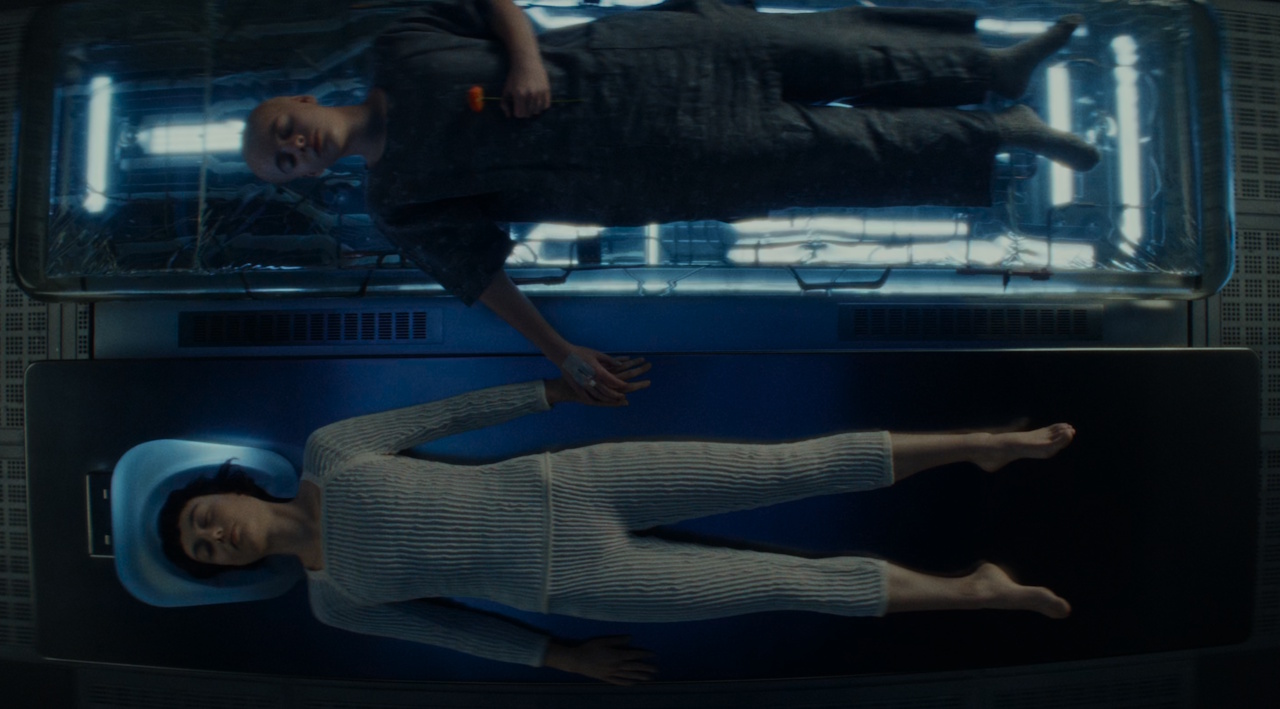
Because A.I. is such a big topic right now, I found this aspect of Alien: Earth to be genuinely interesting. The show takes a nuanced approach, depicting A.I. itself as kind of neutral – at least at first – with its “morality,” or lack thereof, contingent on the whims of its creators and owners. Some synths appear to be completely loyal to their masters, but others, like Kirsh, seem to have a lot more freedom to operate independently, even if that meant doing things like lying, concealing the truth, or even getting into dangerous situations.
At first, I thought Alien: Earth was going to come down on the side of the hybrids being fully human, but as the series progressed, it became clear that the hybrids – human “minds” transferred to synthetic bodies – were no longer fully human. We’re a long way away from “mind uploading” here in the real world (at least, I think we are!) but again, the question of where to draw the line between a machine and a person – and whether there even *is* a line, or if it’s more of a gradient – was absolutely riveting stuff.
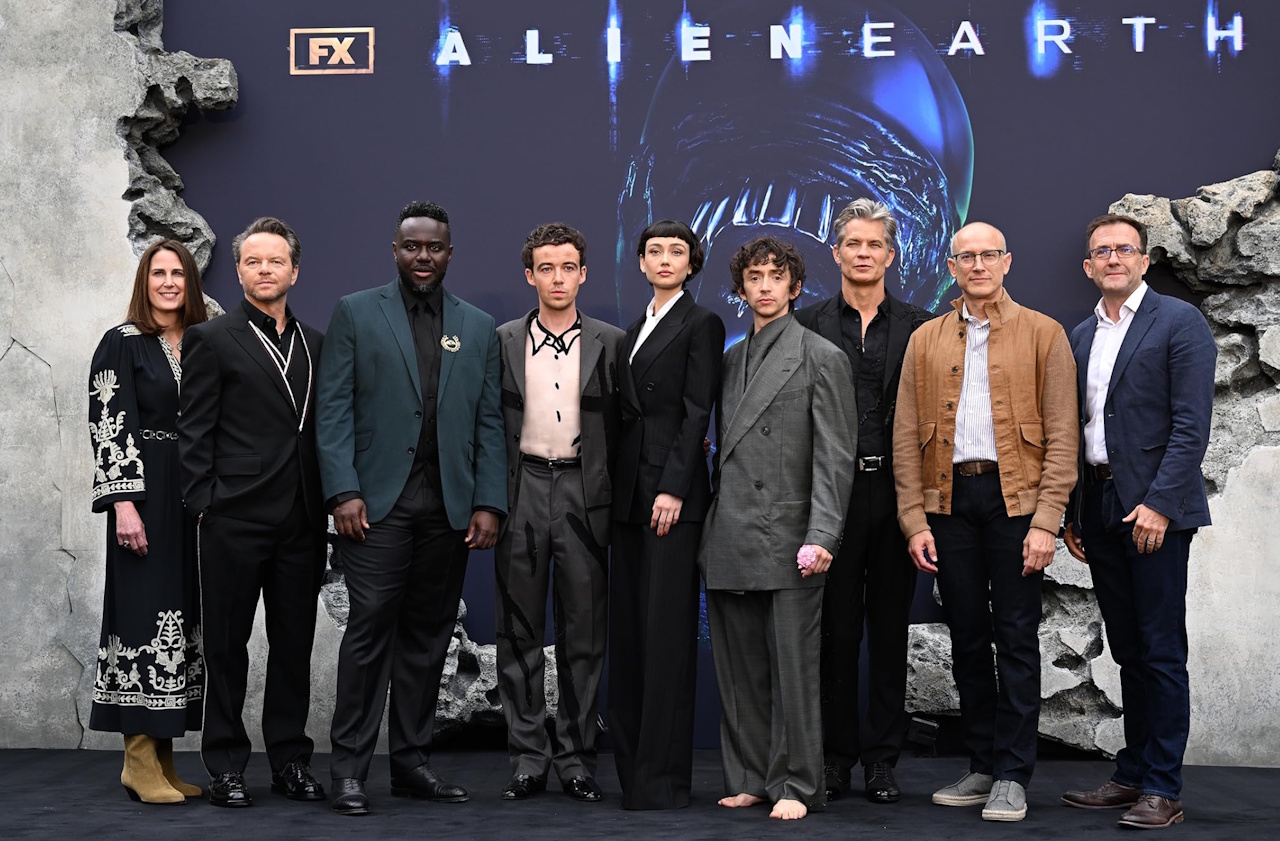
Since we’re talking about the hybrids, I thought they were an interesting collection of characters. I’m not sure whether the original intention was for these roles to be taken by actual child actors, which could have been interesting (as well as leaned into the “creepy kids” horror trope), but I found the idea of children in adult bodies to be an interesting one. It was also another commentary on the whole A.I. concept that we were talking about a moment ago. The performances which brought the characters to life were, for me, a bit hit-and-miss – not so much because of the actors, but rather the way some characters were written. Marcy/Wendy, Jane/Curly, and Isaac/Tootles were much less child-like than their peers, at least most of the time, and while that could be okay, it kind of detracted from the idea of these being kids struggling to come to terms with their new minds, bodies, and abilities.
In contrast, Aarush/Slightly, Rose/Nibs, and Christopher/Smee were all very child-like in the way they came across almost all the time – and I think all three performers deserve a ton of credit for bringing that feeling to life. The way they’d stand and sit, swinging their arms, touching leaves or walls, the awkwardness with which they’d move or approach each other… basically the entire range of all three performances really nailed, for me, the feeling that these were still children at heart, even though they were in adult bodies. There was some great directing and acting (and probably some fantastic coaching, too) that brought this feeling to life.
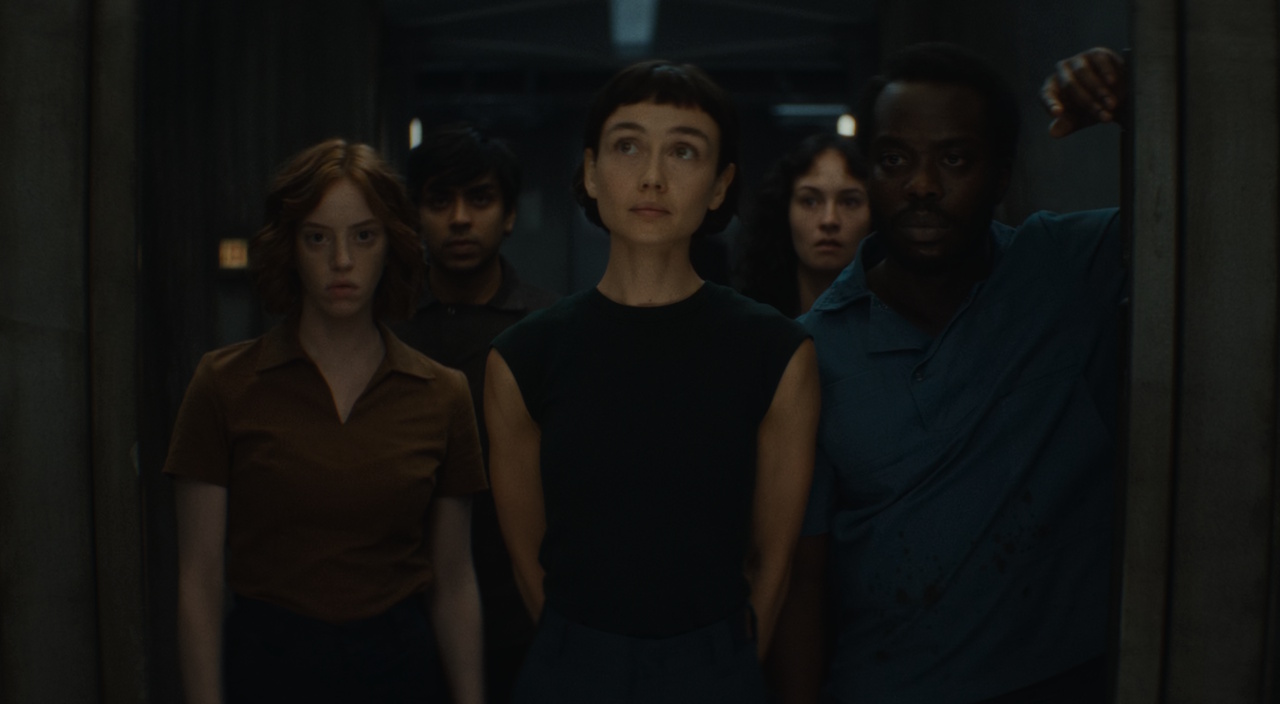
The others, as mentioned, didn’t lean as much on the child-like side of things, though each of them got some moments of childishness scattered through the story. Jane/Curly had her quest to become Kavalier’s “favourite,” which felt very childish, as did her moment near the end of the season with Dame Sylvia. But then, in between, she’d be a dedicated scientist, as was Isaac/Tootles, and the contrast was kind of obvious. In their cases, the transition from child to adult felt more abrupt, I guess, rather than like a slow burn across the season. That’s not necessarily a criticism, just an observation of the way these characters differed from the other, more child-like hybrids.
As the main protagonist, Marcy/Wendy was in focus much of the time. I think maybe the choice to have her kill an adult Xenomorph came too early in the story; it was at the beginning of the third episode, and showing her raw power and capabilities so early was a risk. However, she was a truly interesting character to get to know, and we saw her coming to terms with her new status as a hybrid in different ways as the story progressed. Her fixation on her brother was observed by the Prodigy team, but they deliberately didn’t interfere, even granting her the wish to chase after him when he was in danger. As a way to communicate that she’d retained her memories and personality after the transfer, I think that worked incredibly well.
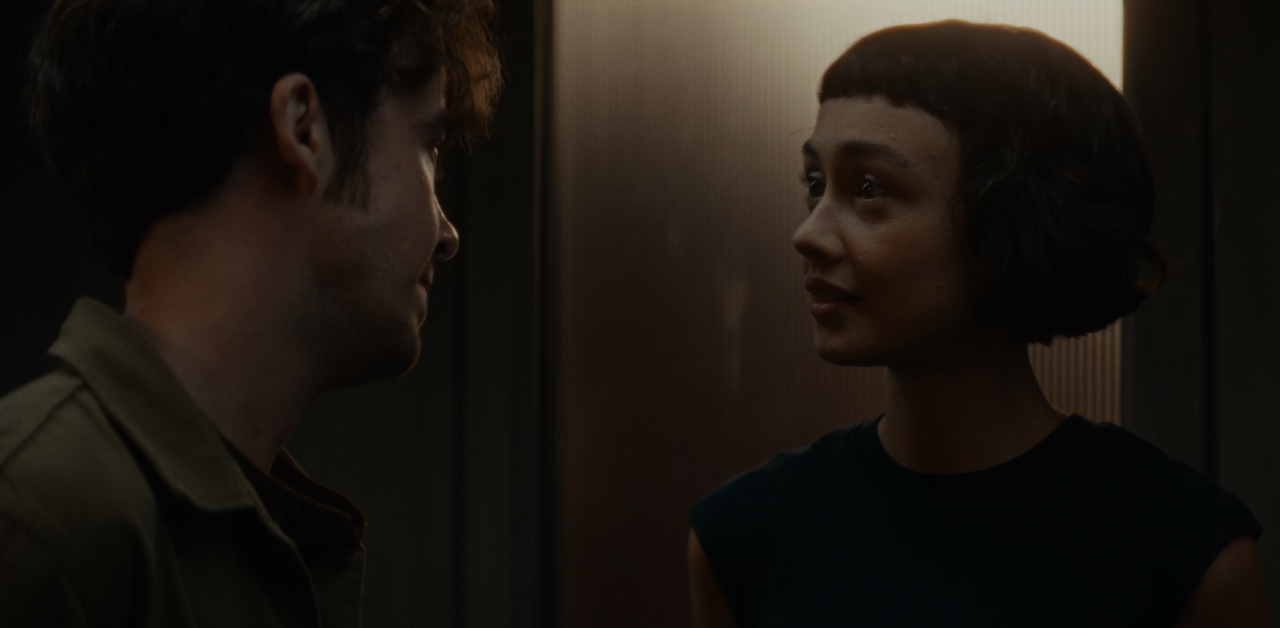
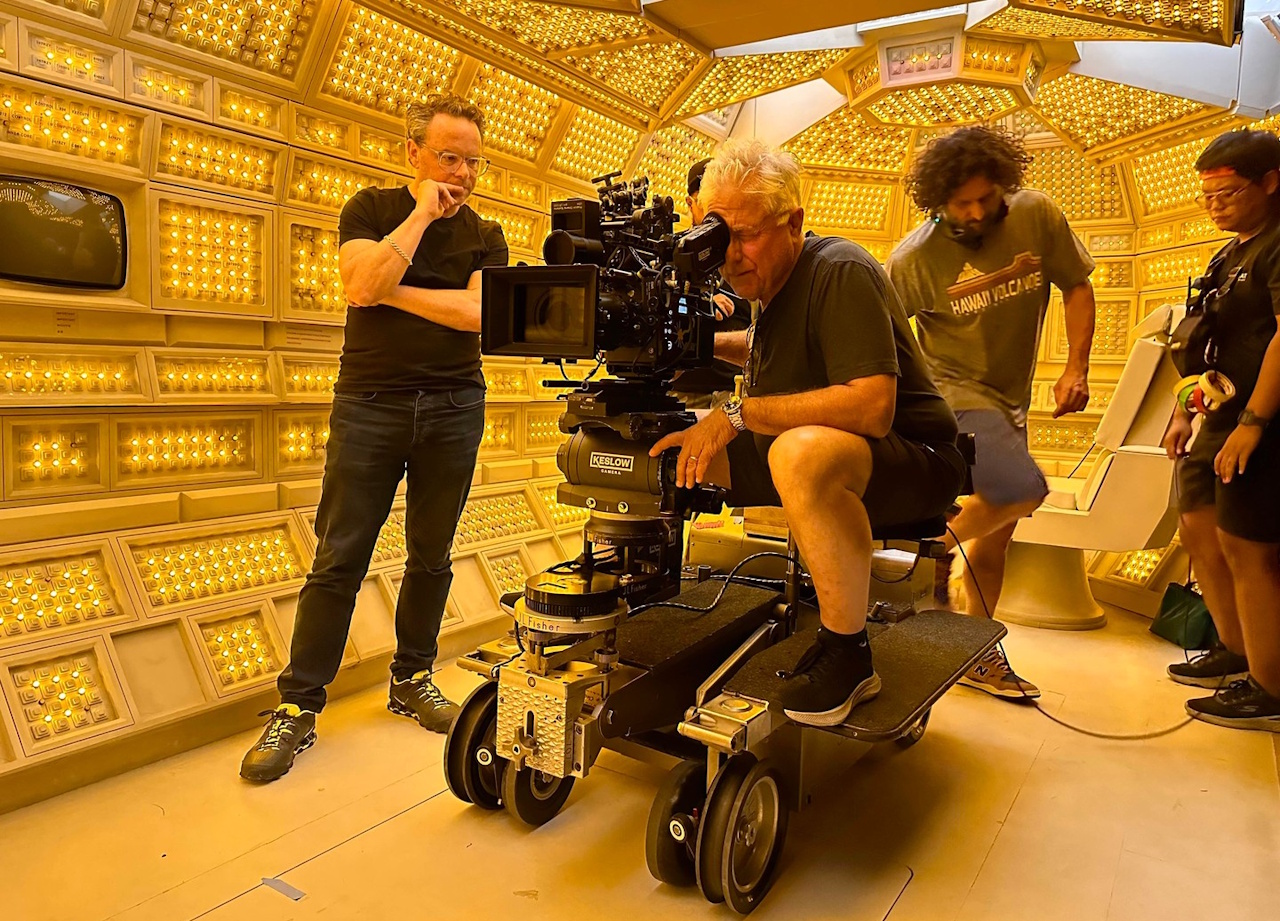
Alien: Earth made a concerted effort to lean into the aesthetic of the original film – a visual style that I’d call “very ’70s.” This is still a very late ’70s vision of the future, with plenty of brown and orange tones to the furniture and bold patterns and prints on some shirts and outfits. Whether you like this or not is very much a subjective thing! Where I was less keen was when it came to retro technology – I just have a hard time buying that this is supposed to be “the future” where A.I. exists and there are sentient robots if all computers look like the BBC Micro that I used in my first-ever I.T. lesson back in school!
CRT screens and monitors, black-and-white cameras, handheld camcorders, computer systems with text-only interfaces and green-on-black screens, cassette tapes… none of it feels like the future, and I think it’s indicative of a trend in some sci-fi franchises where the desire to perfectly recreate everything that came before overwhelms common sense.
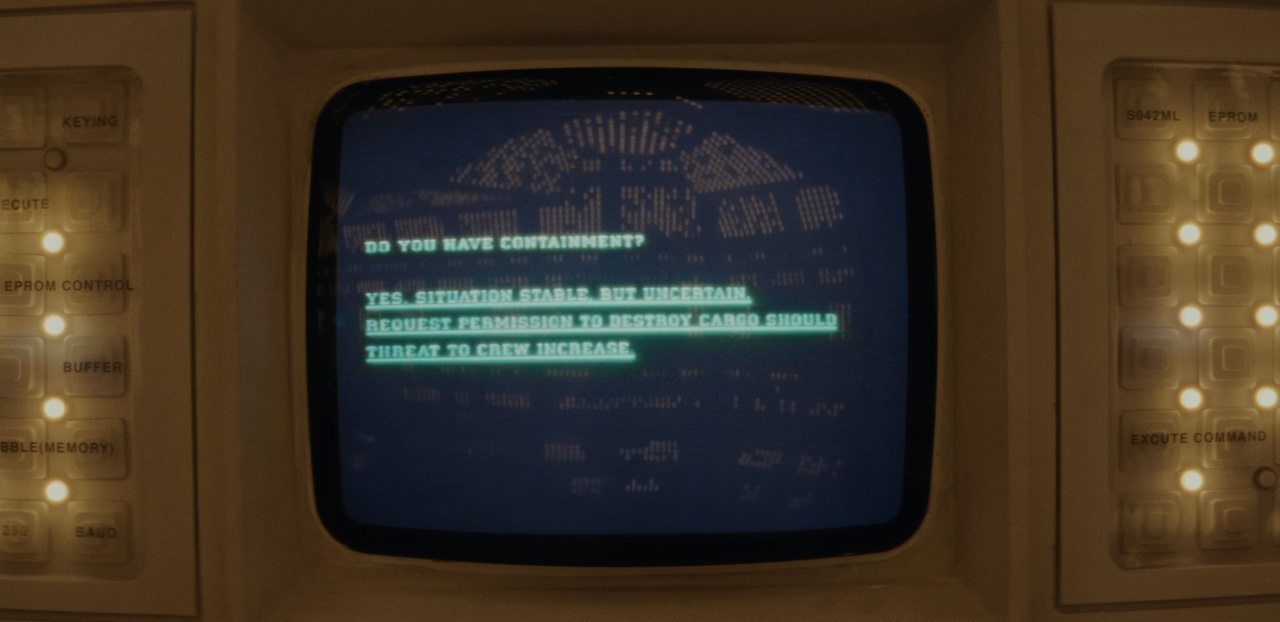
Think about it: why did the original Alien depict computers with text interfaces, CRT monitors, and tapes? Because, in 1979, that was what the future of technology looked like. There are ways to modernise the way technology is represented in a franchise like Alien without sacrificing everything about it – updated screens, faster computers, graphical and visual interfaces can (and I would argue should) be able to exist in this world. It wouldn’t be immersion-breaking, and for me, I think it would be more interesting and a more realistic depiction of a far future setting where the kinds of fantastical technologies depicted in the series exist. You’re telling me the world of Alien invented artificial gravity for spaceships… but not flat-screen displays or a graphical interface?
There could’ve also been an opportunity to show the passage of time and the contrast between the world Morrow and his crew left behind and the one he returns to. Alien: Earth seems to depict a world where technology is stagnant – 65 years ago, when Morrow left, his ship was presumably on the cutting edge, yet by the time he returns, technology looks and feels basically the same. If the USCSS Maginot had had the old-school retro stuff, but the research facility and other Earth locales had had more modern technology, it could’ve done more to hammer home just how long Morrow had been away and how much had changed in that time.
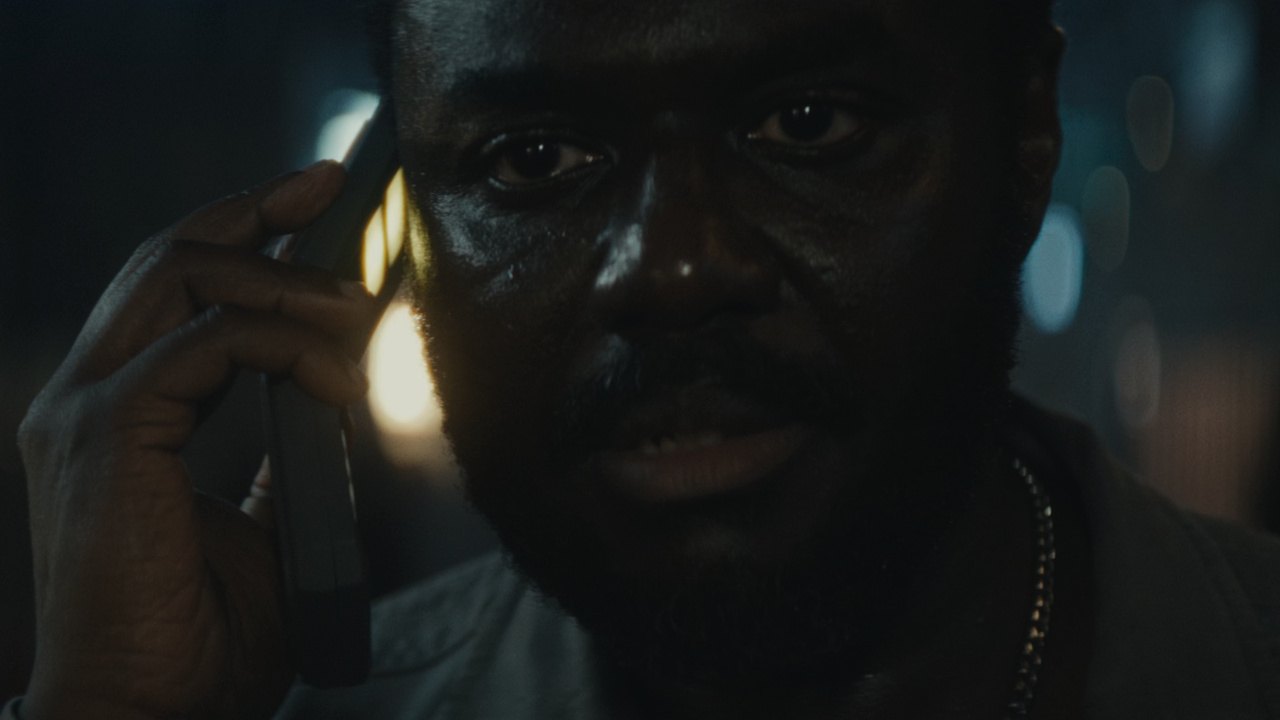
Morrow was an interesting character, and not the pure antagonist that I expected based on his actions in the premiere. In fact, you could make that case for most of the characters, really – Alien: Earth gave pretty much everyone some moral complexity. For Morrow, the revelation about his daughter’s death was heart-wrenching, and learning about how he came to have his cybernetic arm – and that it basically constituted a “life-debt” to Weyland-Yutani – also did a lot to soften, or at least explain, his characterisation. I can’t be the only one who heard “paging Mr Morrow, Mr Tom Morrow” when I first heard his name, though… can I? (If you’re a Disney World fan, you’ll get the reference!)
That leads me into a point about some of the characters’ names. Mr Morrow is already a bit of a weird one, but then we have Boy Kavalier. Really? On the nose much? Dame Sylvia’s also a bit of an odd choice of name, if you think about it, as are Joe and Marcy Hermit. Maybe I’m misremembering… but weren’t most character names in Alien, Aliens, Alien 3, and so on a bit less… weirdly literal? I mean, you had names like Ripley, Burke, Clemens, Dillon, Dallas, Kane, and Brett. I’m not sure why these unusual names were chosen. For synthetic and hybrid characters, it made sense – and for the hybrids in particular, names were a big narrative point. But for someone to be named (or name themselves) Boy Kavalier… it just felt a bit odd, I guess.
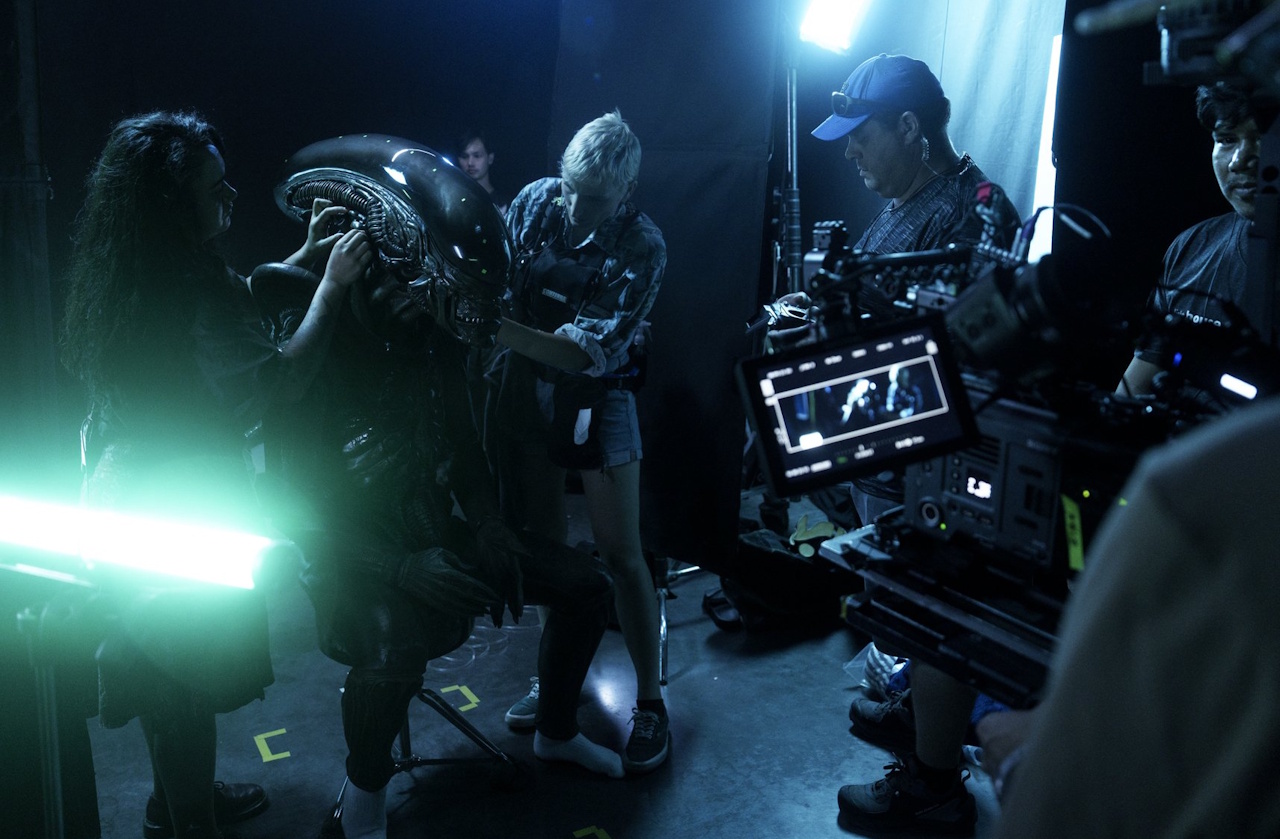
There were definitely echoes of Jurassic Park in Alien: Earth’s top-secret research facility on a jungle island! The main facility itself, with its lab full of glass and metal cages, reminded me a lot of the labs seen in the Jurassic Park/World franchise, too. Later in the season, when Joe, Marcy/Wendy, and Rose/Nibs were trying to escape, I really got hit with that Jurassic Park vibe. Being stalked through the vegetation, first by the Xenomorph and then by various factions of soldiers, really contributed to that feeling. It wasn’t intentional, I’m sure, just a coincidence! But having seen Jurassic Park back in the day, I was surprised to be reminded of it in a completely different franchise some thirty-plus years later.
If I were to make one criticism of the jungle scenes, though, it would be this: I don’t think Alien’s titular Xenomorph benefits from being shown off in bright sunlight. The creepy monster works best, for me, when it’s obscured in shadow, when it has places to hide, and while the vegetation definitely provided hiding places… seeing the creature so well-lit and from all angles was, in my opinion, somewhat diminishing. There was some creative cinematography here, and the incredibly fast motion of the Xenomorph still makes it feel threatening. But over-exposure can, in some cases, be detrimental to a villain or a monster, and I think that’s true here.
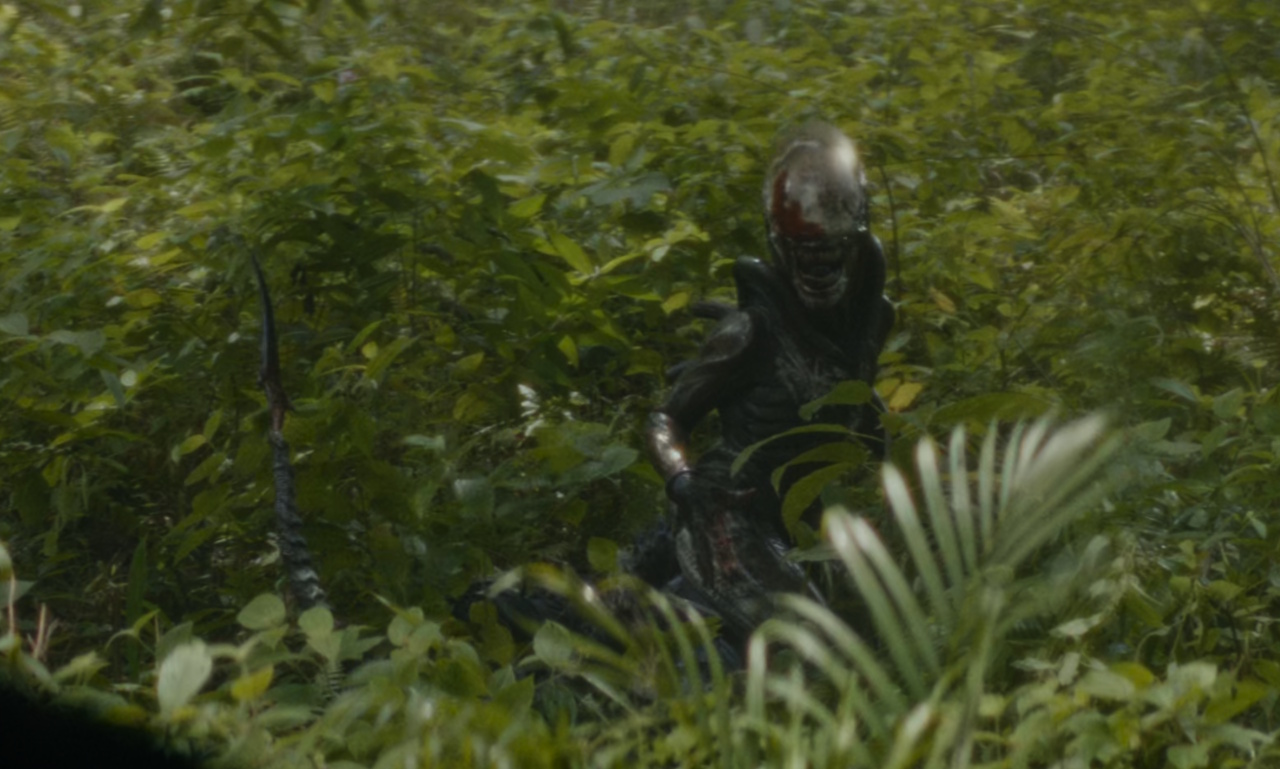
I also worry, at least a little, about the effect of creating a “friendly” Xenomorph. It was never explained how or why Marcy/Wendy could communicate in the Xenomorphs’ language, which is something I’d have liked to get a bit more information about. We saw other characters talking about “learning” languages simply by having them uploaded to their new hybrid brains… but Wendy didn’t get that, did she? And as far as I know, no one in the Alien franchise has ever known the Xenomorphs’ language. In fact, until Alien: Earth, wouldn’t you have said the Xenomorphs are more akin to non-sentient animals than sentient life-forms capable of language? They’re apex predators, sure, but so are lions or sharks – and we can’t just download their “languages” and chat to them.
But to get back on topic, Marcy’s “pet” Xenomorph… how do we feel about that? I’m worried that, if the Alien franchise does this kind of thing, it’s going to diminish that all-important fear factor the next time a writer wants to make a story like In Space, No One… or 1979’s original film. As I said above with some of the video games turning the Xenomorphs into cannon-fodder, when there aren’t a lot of other antagonists or monsters, you have to treat the ones you have with care. And while I’m hopeful for a second season of Alien: Earth that will provide a narrative payoff to Marcy befriending the Xenomorph, I feel a little concerned that having a Xenomorph ally could detract from how frightening the monster should be.
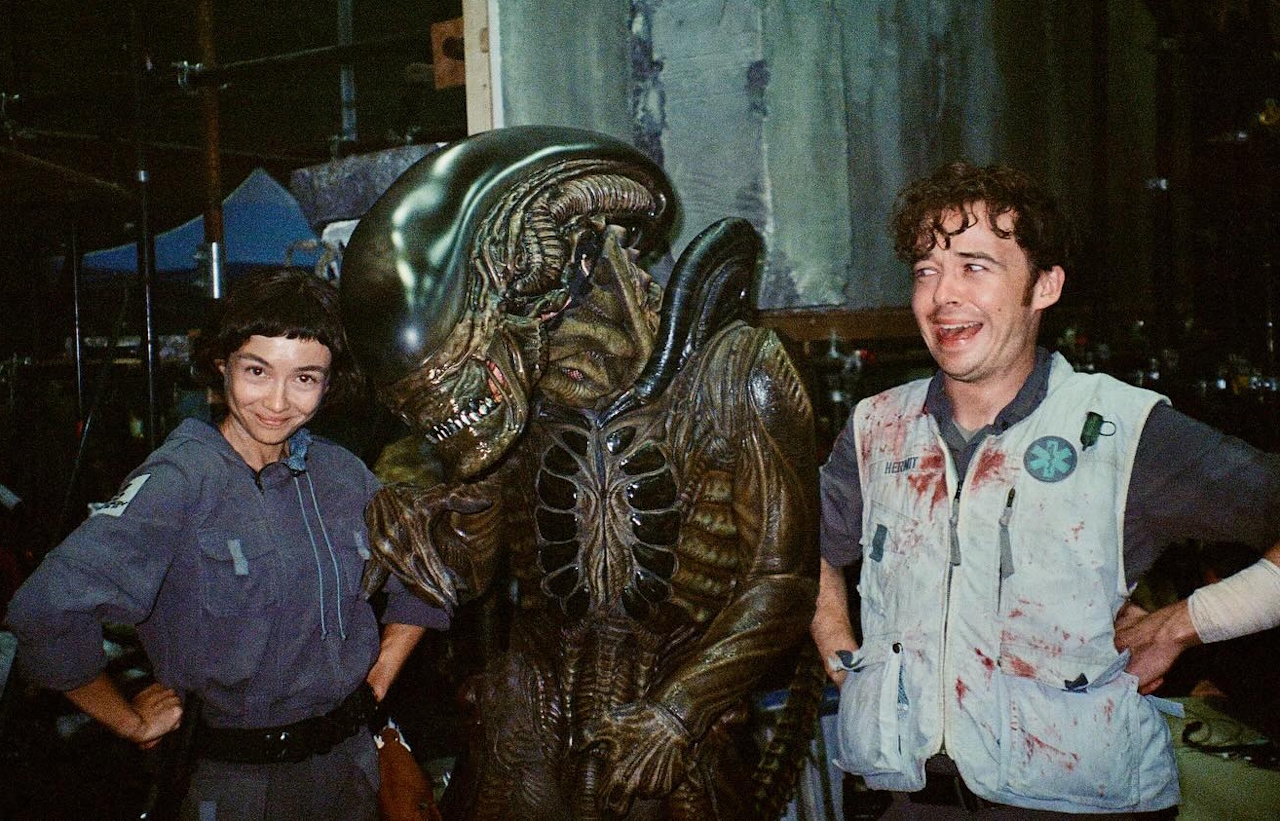
Alien: Earth had some wonderful practical effects as well as some spectacular CGI. If you know me, you’ll know I adore physical props, costumes, and puppets in my sci-fi, and for my money, the show excelled in that department. Obviously we have the Xenomorph, recreated for Alien: Earth using a performer in costume, but there were so many other wonderful props that really brought the world of Alien to life. The obligatory chest-buster scene was less shocking, perhaps, because we knew what was coming, but I can’t deny that it looked fantastic. As did the gore used to depict dead (and half-dead) victims of the Xenomorph and other entities.
CGI was also incredible. Shots of the Maginot in space stand out to me as looking better than anything we’ve seen in modern Star Trek, for example, and I think you can really see Alien: Earth’s animation budget being put to good use. Several of the other alien creatures – the blood-suckers, tadpoles, and eyeball-octopus – were also CGI creations, and they also looked fantastic. Seeing the blood-suckers drain a person of life in moments was especially gruesome.
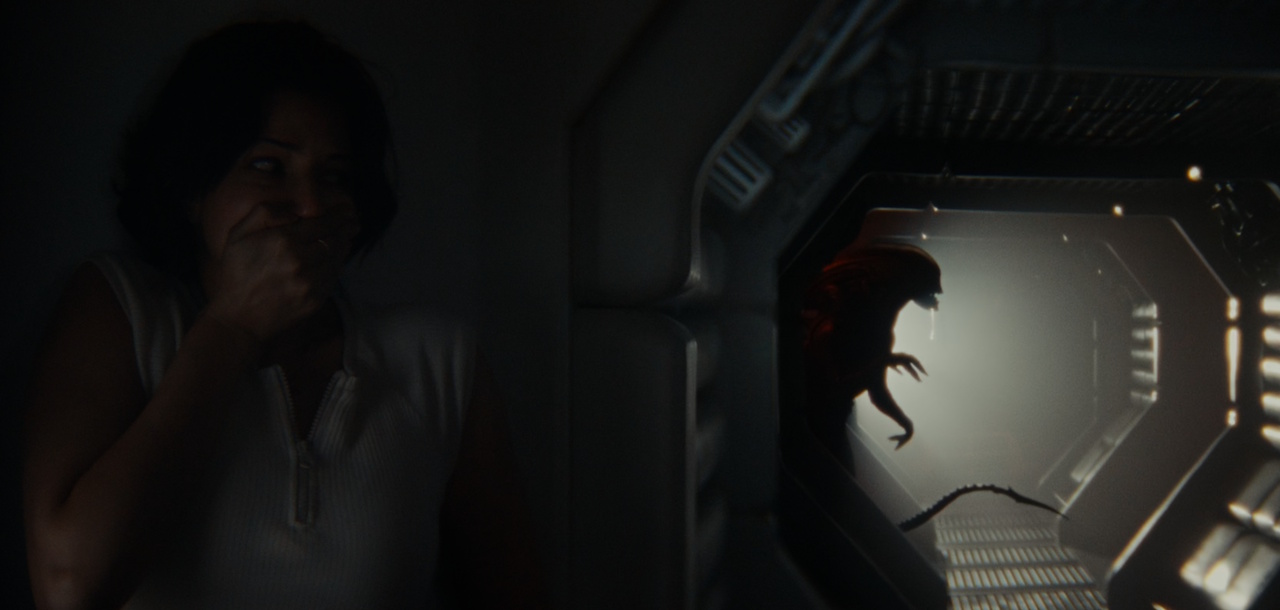
The eyeball creature was, for me, the surprise standout monster in Alien: Earth. Its first appearance – in the eye of a poor kitty cat – was shocking and brutal, and the way it tried to attach itself to Nibs was genuinely frightening, really hammering home how dangerous it could be. But then, as the story progressed, we came to realise that this creature is surprisingly intelligent. As I said above, I could absolutely envision a future film or series in which the eyeball creature serves as a major antagonist.
Because Alien: Earth left things open at the end of the season, with the kids seemingly in control of the facility and the eyeball monster having escaped, possessing the corpse of poor Arthur… maybe that’s what’ll happen next time! I’d certainly be interested to learn more about this creature, its connection to the Xenomorphs, and what – if anything – its objectives or goals might be. The Alien franchise has needed a new creature like this for a long time.
So, after all of that, where do we stand with Alien: Earth?
I had a genuinely wonderful time with this series. It felt closer in tone, most of the time, to 1979’s classic Alien than to any of the lesser spin-offs or sequels that I can remember sitting through, most of the main characters felt complex and compelling, and there were new additions to the franchise which I think have a ton of potential to expand Alien beyond the Xenomorphs – which, for reasons discussed above, is going to be important! My favourite episode was In Space, No One… which was set aboard the claustrophobic USCSS Maginot, and really succeeded at recapturing the feel of Alien for me.
But the rest of the season was interesting and exciting, too. It was fun to get a look at Earth in this vision of the future, and while I’d argue some of the anti-corporate message is blunted when you know who funded production, Alien: Earth’s exploration of a future dominated by mega-corporations felt timely and engrossing.
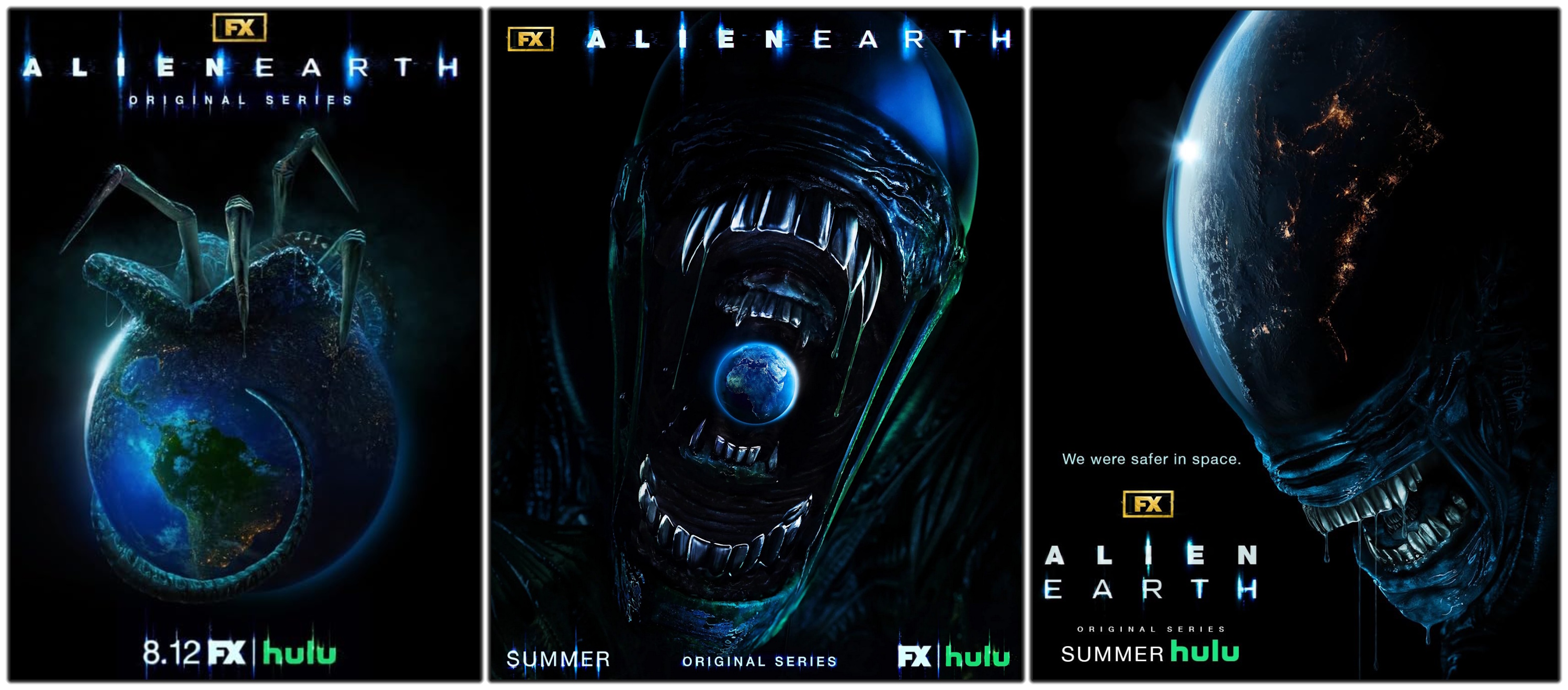
I’ve recently started playing Alien: Isolation – the survival/horror game from a few years ago. I’m a big old scaredy-cat, though, so I’m not sure how far into the game I’m gonna get before I have to put it down for a while! So far, it’s been a fun way to continue my exploration of the world of Alien. Stay tuned, because a write-up of that game (or part of it, perhaps) is possible in the weeks ahead.
So that was Alien: Earth. A great show, a fun sci-fi adventure, and a much-needed expansion of the Alien franchise. There were genuinely interesting characters, complex themes touching on prescient real-world issues, and more than a few scares for the horror aficionados out there! I’m happy to recommend Alien: Earth to fans of the original film, sci-fi and horror fans, and really just anyone looking for an engaging and high-tempo adventure.
Alien: Earth is available to stream now on Hulu in the United States and on Disney+ around the world. Alien: Earth will also be released on DVD/Blu-ray in the future. The Alien franchise – including Alien: Earth – is the copyright of 20th Century Studios and the Walt Disney Company. Some promo photos courtesy of IMDB. This review contains the thoughts and opinions of one person only and is not intended to cause any offence.



 Trekking with Dennis