Star Trek: Strange New Worlds Episode Review – Season 2, Episode 1: The Broken Circle

Spoiler Warning: There are spoilers ahead for Star Trek: Strange New Worlds Seasons 1 and 2. Spoilers are also present for Star Trek Into Darkness, Star Trek: Discovery, and Star Trek: Picard.

Welcome to the first of my Strange New Worlds episode reviews! Unfortunately, some truly idiotic decisions at Paramount blocked off Season 1 and prevented fans in most of the world from being able to (lawfully) watch it at the time it was broadcast, so for that reason I elected not to write individual episode reviews here on the website. But because Season 2 is more widely available, I intend to cover the series from this point forward. Individual Season 1 episode reviews/re-watches may also appear from time to time.

Strange New Worlds’ first season was probably the best thing I watched in all of 2022. The show was a wonderfully welcome return to an older, more episodic style of storytelling that I think is a perfect and natural fit for the Star Trek franchise. As I said in my spoiler-free review of the season, there really weren’t any episodes that I felt didn’t hit the mark last time around. Season 2 has a lot to live up to, then!

The Enterprise departs Starbase 1.

And on balance, I have to say that The Broken Circle was a decent continuation of the series. It arguably wasn’t as strong as the final two episodes of Season 1, which were both phenomenal, and I have some specific criticisms that we’ll get to. But in terms of entertainment value, I can tell you that I was gripped the entire time! The Broken Circle was an action-packed episode that started the season with a bang.

There are a couple of points of concern that were raised that kind of fall outside of the story told in this week’s episode, and I want to look at that before we get into the rest of the review. Where Strange New Worlds succeeded last time was in its blend of episodic storytelling with some character arcs and storylines that ran across multiple episodes. This modernised the format, allowing for the likes of Dr M’Benga’s story with his daughter or Captain Pike’s struggles with his impending accident to not be forgotten, but the focus was still very much on distinct and individual stories week-to-week.

Spock seems upset…

In contrast, The Broken Circle feels very much like “Part 1” of a larger, much more serialised story. Captain Pike took off on a mission to help Una, who’s on trial. Pike’s destination, who he plans to visit, and Una’s trial were all stories that were started briefly but then paused. La’an’s status as an ex-Starfleet officer was also set up, but left unresolved by the time the credits rolled. And most significantly, as the episode was drawing to a close we saw Admiral April and another senior Starfleet officer looking at a report of a possible Gorn incursion – something that is clearly setting up a story thread that the next episode or episodes will follow.

I’m not wild about this new direction, and it feels that Strange New Worlds has taken some big steps down a path much closer to serialisation. When the show’s semi-episodic format had been working so well, this change simply isn’t one that I’d have made – and while I’m not averse at all to the idea of character arcs, two-part stories, or even cliffhanger endings… the season premiere seemed to bring a lot of those serialised elements into play all at once, leading to it feeling like the first part of an ongoing story rather than a classic Star Trek episode that could be enjoyed as a purely standalone affair. That the episode leaned heavily on characters and storylines that had been set up in Season 1 only added to this feeling.

Is this the beginning of a season-long serialised story?

There will be time in the weeks ahead, though, to assess how far down this serialised path Strange New Worlds may venture in its second season. For now, we still have a lot to get stuck into from this week’s outing – and I have to say that it was a blast to welcome back the Klingons.

I wasn’t sure to what extent Strange New Worlds would make reference to Discovery’s Klingon War storyline, but this week’s story connected back to it in a very clever way. Nothing in Discovery was truly “required reading” to make sense of events in The Broken Circle, but for fans who recall Discovery’s first season, the connections were there. The story stood on its own two feet without relying too heavily on Discovery, and could be enjoyed by fans and newcomers alike as a result.

I liked what this episode did with the Klingons.

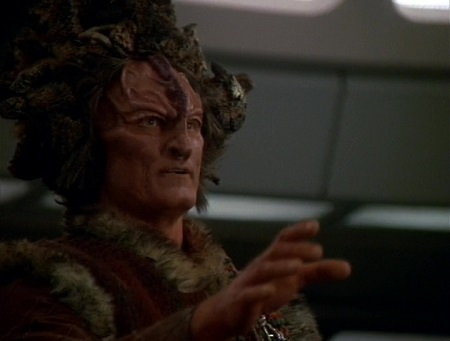
The Klingons in The Broken Circle were much closer, both visually and in terms of their actions and temperament, to how they appeared in much of Star Trek prior to the Kelvin timeline films. For fans who weren’t wild about those more recent depictions, that’s got to be seen as a positive thing! For me, I think there’s room enough in Star Trek for a more diverse and varied look at a familiar race like the Klingons – but I can’t deny that it felt incredibly fun to see them laughing and drinking bloodwine.

The idea of rogue humans and Klingons on a shared world seeking to re-start hostilities for profit was also a genuinely interesting idea, one that the episode did well to explore. Star Trek doesn’t always give us a look at the denizens of the galaxy outside of Starfleet or the main factions – but in a galaxy so vast, there are bound to be settlements like this one, populated by people who’d do anything to make themselves rich. This felt like a glimpse at that world – and it was genuinely interesting.

Cajitar IV is the kind of place Star Trek doesn’t always show us.

Building an entire starship underground felt like a bit of a stretch in some ways (and if this gang had the resources to do that, did they really need to start a war to make more money?) but it was a neat idea nevertheless. It was also a creative way to recycle some of the sets built for the Enterprise, and to get away with a very minimal redress! These sets, which were supposed to be part of the gang’s newly-minted ship, were integrated well into the story. Not every Star Trek episode in recent times has made good use of redressed sets, but on this occasion we can say that it worked well in context.

It was also neat to see a different kind of starship design, one that seemed to use a Crossfield-class saucer section but on a much smaller star-drive and with different nacelles. The Crossfield-class – famous, of course, for being the USS Discovery’s class – was even name-checked in the episode itself, which was neat. In some ways this design felt like an old-school “kit-bash;” a name used for starships that were often created out of spare parts or leftovers in the days when physical models were still used. Some well-known Star Trek ship designs started out life as kit-bashes!

I liked the “kit-bashed” design of the rogue ship.

On the negative side, I felt that Admiral April’s “request denied” was a rather paper-thin setup to the main storyline. We’ve seen in many Star Trek episodes how by-the-book admirals could be little more than bumps in the road, getting in the way of what our heroes needed to do. And this felt very much like that. April had a reason, namely that the Klingons would interpret any incursion to the shared world as an act of aggression, but didn’t seem at all willing to consider other ideas or alternative proposals – even though La’an’s message, as communicated by Spock, suggested that the situation was dire and that the Federation was in danger.

This was disappointing, and there were other ways to get the story to this shared planet without presenting April as a “badmiral” who was getting in the way. In fact, this entire section of the episode didn’t really get any kind of narrative payoff, with Spock’s decision to steal the Enterprise not seeming to give him much trouble, and with April dishing out what amounted to no formal consequences. It ended up feeling a bit artificial; some forced drama to up the stakes.

Spock and Admiral April.

While we’re talking about Admiral April, I’m not thrilled with where his story seems to be going. If there is to be some kind of Gorn conflict that could be interesting, but why present April as someone who has something to hide? It makes sense that any organisation would share information carefully, but the end of The Broken Circle seemed to be saying that April and one of his co-conspirators at Starfleet Command were deliberately concealing information and not sharing it with their crews in the field.

Perhaps this is something that will be resolved or paid off in a future episode – and I’m keeping my fingers crossed for that! I don’t want to see someone like April – who seemed like a decent, upstanding officer last time around – in any kind of negative light. Discovery has done great things in its third and fourth seasons with Admiral Vance, bringing a wonderful character to screen as head of Starfleet. I’d very much rather see April go down that route instead of becoming a typical “badmiral.”

I wasn’t wild about the way April was presented here.

It was a very bold choice for the premiere episode of Season 2 to sideline Captain Pike. Every Star Trek season has episodes in which some characters are in focus and others are not, but Pike is not only central to Strange New Worlds – without him, and without Anson Mount’s incredible portrayal, the show wouldn’t have come to exist at all. So while the decision to send him off on his own little mission made perfect sense in-universe, it was a brave narrative decision by the writers and producers. And arguably a strange one, too.

Strange New Worlds is, for many folks, “the Captain Pike show.” Pike was present in all ten of the first season’s stories, and as the captain of the ship is a key part of the series. His absence gave Spock a turn in the captain’s chair for the first time – which was great to see, don’t get me wrong – but I can’t help feel that there must’ve been a way to include Pike in a larger way. Maybe I’d have chosen to restructure the season to place Pike’s solo adventure first, and then this episode second – just as one example.

I have a theory in the pipeline about who Pike may be going to visit – so stay tuned for that before the next episode airs!

Doing “the Captain Pike show” without Pike?!

Season 1 spent a fair amount of time with Spock, and looked at his inner conflict between his human and Vulcan sides. The Broken Circle threw Spock into a brand-new situation for him… and he didn’t necessarily react the way I’d have expected. This version of the character, perhaps inspired more by his adopted sister and their adventures in Discovery’s second season, seemed much quicker to break the rules when faced with opposition from Starfleet. If we hop over to the Kelvin timeline for a moment, in that reality, Spock told the unvarnished truth about Kirk in a written report and ended up getting him demoted. In The Original Series we could see Spock as a stickler for rules and protocol, too, often butting heads with Dr McCoy and others as a result. I don’t want to say he acted “out-of-character” here, because we are dealing with a younger Spock, a Spock who is still finding himself and finding his feet. But it’s certainly interesting to see how he behaved very differently from the man we might remember.

The theme of Spock’s conflicted nature and how he “isn’t like other Vulcans” came to the fore in The Broken Circle in more ways than one – and was arguably part of the episode’s resolution. Spock’s interaction with the Klingon captain was fun, and I enjoyed seeing him drinking bloodwine and finding an unorthodox route to peace.

Spock negotiated successfully with the Klingons.

This final part of the episode didn’t feel especially strong, however. The climax of the story arrived slowly, and The Broken Circle did a good job at building up its Klingon-human shadowy conspiracy. But the resolution to this conflict seemed to be rushed through, with both the Klingon commander standing down at the drop of a hat and Admiral April back at Starfleet HQ agreeing very quickly to overlook Spock’s actions.

This is something that I’d have liked to have seen a few more minutes dedicated to. We could have drawn out the standoff over the planet, with Spock and the Klingon commander talking around one another with the threat of war hanging over their heads. Seeing Spock handle this situation was great – but it didn’t last very long. And Admiral April gave Spock a pass for desertion, theft of the flagship, violating a peace treaty, and a dozen or more other crimes. Again, this was something that needed more time – especially as the payoff to April’s earlier intransigence.

A Klingon D-7 battlecruiser.

A character like La’an can fall into the trap of stereotyping, or can feel left out as writers don’t always know what to do with a security officer who doesn’t seem to have much by way of a softer side. So it was fantastic to see The Broken Circle really giving her something to do, and doing it in a way that felt natural for her. We saw her past experiences with the Gorn come to the fore in Season 1, and The Broken Circle built on that foundation, taking La’an away from Starfleet for a cause close to her heart.

Seeing her with Oriana really humanised La’an, showing that she can care for others and has more to offer than just her skills with a phaser. The only disappointing thing, as mentioned, was that The Broken Circle didn’t wrap up La’an’s leave from Starfleet one way or another. This is something that may come back into play if a more serialised story is unfolding, and there are sure to be plenty of ways an ex-Starfleet officer could be of use on “the outside,” but in terms of her character arc this week, the lack of a conclusive ending makes it feel like there was something missing from La’an’s story.

Oriana and La’an.

Where La’an’s story built on what had been set up last year, the stories of Dr M’Benga and Nurse Chapel sort of felt like they came out of nowhere. Of course we know about the Klingon War; that was discussed in the episode itself. But even in the recap at the beginning of The Broken Circle, it was noted that the Enterprise and her crew didn’t take part in the conflict. If that’s the case, it obviously means that Chapel and M’Benga came aboard later and did take part – but that was a little confusing and not particularly well-established.

I didn’t re-watch all of Season 1 prior to sitting down to watch The Broken Circle, so my ageing memory may be missing a trick, but I don’t recall either Dr M’Benga or Nurse Chapel discussing the war last season. I don’t think it necessarily matters in a big way, but it was undeniably something that I felt came out of the blue. It certainly succeeded at ramping up the tension as the pair were caught by the Klingons and trapped aboard the fake Starfleet vessel, but it wasn’t a point that felt particularly strong in terms of its setup. If I’m wrong, and if their prior service in the Klingon War was mentioned last year, then I’ll be happy to rescind this point of criticism!

Nurse Chapel and Dr M’Benga.

Being ejected into space is usually a death sentence in Star Trek – and in sci-fi in general! In Picard’s recent third season, a character was killed in precisely this way. So it was odd, in a way, to see Dr M’Benga and Nurse Chapel survive such a harrowing experience. I’m glad they did, of course, and the buildup to their being blown out into space was a tense and deeply emotional sequence. But it does feel a tad inconsistent with what we’ve seen in past Star Trek stories – and rather like the two were given some particularly heavy plot armour.

That being said, it was great to see Dr M’Benga and Nurse Chapel paired up for an adventure that took them outside of sickbay. They work incredibly well together and made a fun pair, and I hope we get to see more of them. It would be fun to explore their history, too – did they serve together during the Klingon War, as The Broken Circle seemed to imply? If so, what was that like? Are they still friends, or have their wartime experiences changed them and driven them apart? And the strange drug that Dr M’Benga keeps in his medical case… what is it? I wonder if it might be some kind of Section 31 invention.

Chapel and M’Benga were blasted out into space!

When we were first introduced to Commander Pelia, I confess I wasn’t particularly blown away. She’s replacing a character in Hemmer who I felt was hard done by in Season 1, and was someone I’d have liked to have had the opportunity to spend more time with. There was a uniqueness to Hemmer, not only as a blind character or as the first Aenar to be a major character on Star Trek, but as an avowed pacifist. We’ll have to deal with Hemmer’s wasted potential in more detail in a standalone piece one day, because there’s a lot more to say!

But suffice to say that I was impressed by Pelia’s chaotic energy, and the revelation that she’s a member of a previously-unseen species – one that is especially long-lived and that has lived amongst humans for a long time. Her connection with Spock’s family is also an interesting angle that The Broken Circle set up that I hope will be further explored in future stories.

Commander Pelia is a brand-new character for Season 2.

Pelia’s scenes on the bridge with Spock (and others) were cute, and I liked the way that she was dancing around what was going on without just coming out and saying it. And it was a fun subversion that this older, higher-ranking character who sussed out the truth didn’t immediately turn Spock in, but actually wanted to come along for the ride. That was fun, clever, and a somewhat unique way to introduce this new character.

Pelia has an almost child-like charm, despite being such a long-lived character, and I’m now especially curious to see her in an engineering setting. We only got the barest of glimpses of her in main engineering this week, but I’m sure she’ll have a lot to offer. It’s premature to be thinking about adding too many more characters, but the idea that Pelia might’ve been a mentor of sorts to Montgomery Scott is a fascinating one that I wonder whether the series might explore in future. Perhaps that’s an idea for Season 3, 4, or even 5!

Spock and Pelia have a connection already.

So I think that’s all there is to say for now. The Broken Circle was a solid start to Season 2 – albeit one that wasn’t quite at the level of the episodes that immediately preceded it. There were some contrivances in the story that left some moments feeling rather flimsy or too short, but overall I had fun with Spock and the crew of the Enterprise as they went off on an unsanctioned mission.

I’m curious to see whether some of the storylines set up or teased this week will turn Season 2 into a fully-fledged serialised affair, or whether they’ll be revisited in some other way. My hope is that Strange New Worlds can find a way to course-correct and return to the semi-episodic style that it employed so perfectly last time around. But I guess we’ll have to wait and see!

Star Trek: Strange New Worlds Seasons 1-2 are available to stream now on Paramount Plus in countries and territories where the service is available. The Star Trek franchise – including Strange New Worlds – is the copyright of Paramount Global. This article contains the thoughts and opinions of one person only and is not intended to cause any offence.

Star Trek: Lower Decks review – Season 2, Episode 9: wej Duj

Spoiler Warning: There are spoilers ahead for Star Trek: Lower Decks Seasons 1-2.

wej Duj – which is Klingon for “three ships” – was an exceptionally funny episode, and certainly one of the highlights of Season 2. What makes it stand out is that much of the humour came not from the main cast, nor even from secondary characters like the senior staff, but from guest-stars who gave us a glimpse at life on the lower decks of both Klingon and Vulcan ships.

Lower Decks promised us right from the beginning that we’d be looking at junior officers who get the worst assignments, so taking that concept and expanding it to show us the same kind of people on other vessels felt incredibly natural. It’s one of those ideas that just makes sense – and leaves you wondering why you didn’t think of it sooner!

The title card – in Klingon!

The episode skipped the usual pre-titles sequence, so after the opening titles rolled we were straight into the action. The title of the episode was displayed in Klingon (or should that be Klingonese?), which was a very neat little touch. As an aside, wej Duj is the first Star Trek episode – out of more than eight hundred – to have a Klingon title!

The setup for the episode was interesting, and gave us a rare glimpse at a starship during a period of downtime. Most episodes naturally focus on adventures of one kind or another, yet when you think about it, at least some interstellar travel is going to be dull, waiting for the ship to arrive at its next destination. We’ve seen glimpses of that in episodes like Voyager’s Season 5 opener Night, but this was its first appearance in Lower Decks. As above, this concept feels like another natural fit for the series – showing us what some of the junior officers get up to while the ship is warping to its next destination.

Dr T’Ana and Tendi enjoying some downtime together.

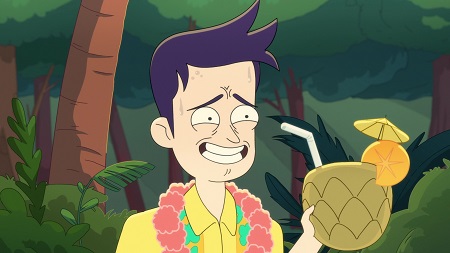
wej Duj used that premise as an excuse to shuffle the ensigns off-stage, and the story progressed without much significant involvement from Mariner, Rutherford, or Tendi. Boimler got a B-plot of sorts as he tried to buddy up to Commander Ransom. This sub-plot relied on a lot of sitcom-style “cringe” humour as Boimler pretended to be from Hawai’i to ingratiate himself with Ransom and a couple of other officers.

This kind of humour, popularised by shows like Friends, isn’t always to my taste. While Boimler’s story definitely had some funny moments, its reliance on a sitcom cliché premise made it the lesser part of the episode – at least in my opinion. The way it ended was definitely amusing in its irony, though, as it turned out that neither Ransom nor any of the others were in fact from Hawai’i either – all having made up the same lie at different times.

Though it wasn’t bad per se, Boimler’s sub-plot featured a style of humour that I generally don’t enjoy.

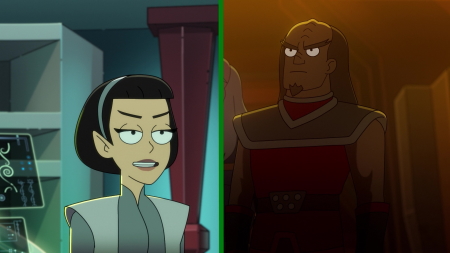
The main thrust of the episode focused on two guest-stars: junior Klingon officer Ma’ah, played by Jon Curry, and Vulcan lower decker T’Lyn, played by Gabrielle Ruiz. Pinning the bulk of an episode on two brand-new characters was a risk, but it was one that paid off and worked exceptionally well.

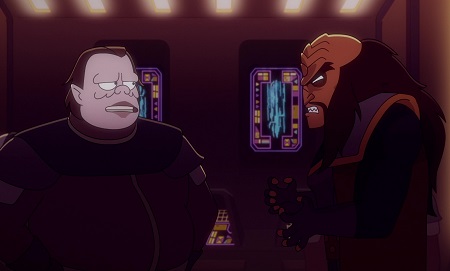
Both characters – and their supporting cast of fellow lower deckers and the senior officers aboard their respective ships – were exceptionally funny in completely different ways. The juxtaposition of two of Star Trek’s best-known races was at the core of what made this comedy work; seeing the aggressive, barbaric Klingons drinking bloodwine and engaging in fights to the death then immediately hopping over to the stoic Vulcans who showed no emotion was key to making the episode as funny as it was.

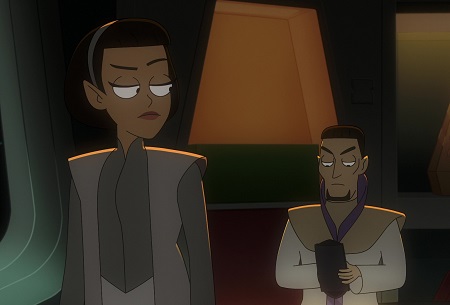
T’Lyn (left) and Ma’ah were the breakout characters from wej Duj.

wej Duj was also a very well-paced episode. In barely twenty minutes it had to bring together multiple story threads that began in very different ways and different places. It also had to balance three entirely disconnected segments and sets of characters, giving each enough screen time to allow for some development and for story beats to play out naturally. Not only did all of this work, with the pacing of each character’s story feeling just right, but wej Duj also connected the events every character experienced into the Pakled storyline that has been running since the end of Season 1!

I haven’t been afraid to criticise Lower Decks earlier in Season 2 when episodes felt overcrowded. Some potentially interesting storylines just didn’t get quite enough time to be fully-realised, and I stand by those criticisms. wej Duj was already an incredibly ambitious episode, considering everything it had to include, but seen in that light I think the fact that the writers, producers, and editors managed to pull it off is nothing short of remarkable.

There were a lot of different elements packed into a single episode this week, and the way they came together was brilliantly-executed!

It would’ve been easy to overlook one or more of the different stories considering the episode’s runtime and just how many characters and ships were in play. It really is a triumph of writing – and undoubtedly editing as well – that wej Duj worked as fantastically well as it did.

The Klingons were featured prominently in Star Trek Into Darkness as well as the first two seasons of Discovery, where some elements of their redesign proved to be controversial. Lower Decks returned the Klingons firmly to their familiar look – the one present from The Motion Picture right through to Enterprise. And as much as I enjoyed some of the Ancient Egyptian influence present in Discovery’s Klingon redesign, it felt absolutely wonderful to be back with the Klingons in their best-known aesthetic and to spend time aboard one of their ships again.

Commander Togg and other Klingon officers aboard the bridge of their Bird-of-Prey.

The aesthetic of the Klingon Bird-of-Prey on the inside was again very much in line with prior depictions. Everything from the lighting to the design used for Klingon computer monitors could’ve been lifted straight from Deep Space Nine or The Search for Spock – and I loved that the lower deckers were forced to sleep in hammocks that made the ensigns’ hallway look palatial in comparison!

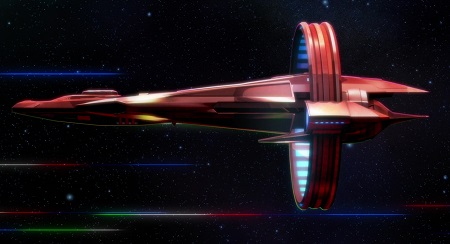
The Vulcan ship was clearly based on the design of ships seen in Enterprise. Though Starfleet is the Federation’s main military and exploratory force, throughout Star Trek the Vulcans have been depicted as maintaining their own fleet of ships alongside Starfleet, so I don’t think it’s in any way a canon problem to have a Vulcan cruiser like this in Lower Decks. The relative power of the Vulcan cruiser compared to the USS Cerritos, which was on full display in the climactic battle, was very reminiscent of the way Vulcan ships would constantly outclass and outmatch the NX-01 in Enterprise – a neat little understated callback to Star Trek’s first prequel.

T’Lyn’s Vulcan cruiser at warp.

With the Klingon commander in league with the Pakleds, T’Lyn and Ma’ah – and later the USS Cerritos – were all drawn to the same place. The Pakleds had detonated a bomb given to them by the Klingon commander in the hope of destabilising peace in the Alpha Quadrant and sparking a war, and while Ma’ah challenged his commander, T’Lyn and the USS Cerritos both detected the residual after-effects of the Pakleds’ weapon detonation.

This moment set up the storylines coming together, and it was based once again on the Pakleds’ stupidity, which was pretty funny. The way Commander Togg reacted to the Pakleds’ detonating the bomb he’d provided was one of the funniest moments in the whole episode! Captain Riker had speculated that someone had been manipulating the Pakleds to become so aggressive, and wej Duj gave us the answer – a rogue Klingon commander.

It turns out that a rogue Klingon commander has been arming the Pakleds and pushing them to attack the Federation.

As Discovery showed in its first couple of seasons, there’s plenty of life in the Klingons as villains. When stories get their warrior-barbarian culture right, the Klingons can feel very threatening indeed. I’d point to the Deep Space Nine Season 5 episode Nor the Battle to the Strong as just one example of that. But having seen the Klingons as allies throughout Deep Space Nine’s Dominion War in particular, and having had sympathetic characters like Worf, B’Elanna Torres, and General Martok, making the Klingon Empire as a whole an enemy once again wouldn’t be my first choice in Star Trek any more.

wej Duj found a clever way around this by giving us a character somewhat inspired by The Undiscovered Country’s General Chang. By making it clear that Togg was acting on his own, without the backing of the Klingon High Council or Chancellor – which should be Martok at this point in time, surely! – the story managed to be interesting and entertaining, but without dragging the Federation and Klingons into open conflict with one another. I think many Trekkies like the Klingons far better when they’re allies, with their aggressive nature turned on mutual enemies, than when they come into direct conflict with Starfleet – and I’m generally in that place too. While the Klingons can and do make entertaining villains, I enjoyed the way they were portrayed in The Next Generation and Deep Space Nine and would be loathe to see them as enemies once again.

The Klingons made a welcome return in a semi-adversarial capacity.

T’Lyn and her Vulcan colleagues also provided the episode with plenty of humour. The absolutely deadpan way that all of the Vulcans spoke to one another was hilarious, and the way they interpreted very politely-worded statements as emotional outbursts or insults was a very funny send-up of Vulcan culture from Lower Decks’ writers.

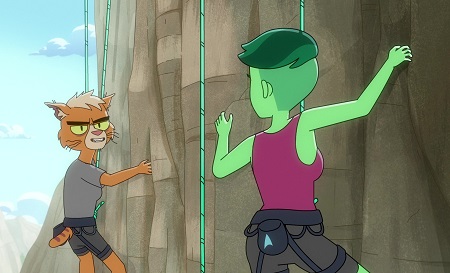
Though they featured prominently in the images shown off before the episode’s broadcast, wej Duj only contained brief scenes involving Tendi, Mariner, and Rutherford. I’d have liked to have seen a little more of the ensigns and their “bridge buddies” during their down time. Tendi’s rock-climbing outing with Dr T’Ana was a cute reference to The Final Frontier, which saw Kirk, Spock, and Dr McCoy enjoying shore leave at Yosemite national park. Rutherford’s pottery-making class with Shaxs actually contained a very sweet moment between the two, with Rutherford calling Shaxs “Papa Bear” when the latter became angry and upset by Boimler mentioning Bajor.

This moment between Rutherford and Shaxs was surprisingly touching.

Mariner didn’t appear to be enjoying her time with Captain Freeman at first, as the pair engaged in some mother-daughter bonding time on the holodeck and later in the captain’s ready room. But as they parted ways, both admitted that they had a good time together – another very sweet moment, and further evidence of the change in Mariner’s character and attitude that we’ve been tracking since midway through Season 1.

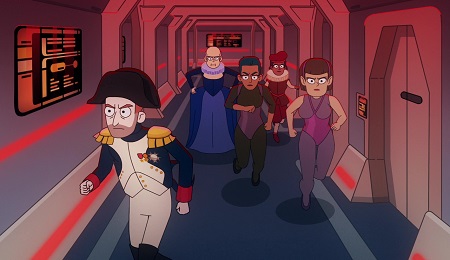
As the crew of the Cerritos scrambled to their posts from their leisure activities, the ship was awash with out-of-uniform officers. It was a pretty funny mix of characters in different outfits, and the sight gag of characters in everything from ball gowns to winter coats worked very well. It also showed that the crew are capable, despite serving on a “lowly” ship. These are still professional Starfleet officers, after all!

The crew of the USS Cerritos dropped what they were doing to rush to their posts!

Two questions remain now that wej Duj is over. Firstly: is the Pakled threat now over? Their reliance on Klingon weaponry has now been exposed, and with Commander Togg dead there isn’t anyone left to manipulate the Pakleds and push them closer to all-out war, so perhaps the threat is now largely at an end. I feel that the Pakleds have been very funny in Lower Decks as adversaries, but the way they’ve been presented has left them feeling like a one-trick – or one-joke – pony. Perhaps the “Pakleds are really dumb” joke has run its course, even though there was plenty of humour derived from that premise this week. Better to end it before it outstays its welcome, though!

Secondly, the end of the episode saw T’Lyn dismissed by her Vulcan commander and forcibly reassigned aboard a Starfleet vessel. Could she be making her way to the USS Cerritos, perhaps? T’Lyn provided ample humour in her own incredibly Vulcan way in wej Duj, and while there probably isn’t room for a fifth lower decker as a major character, bringing her in as a recurring character or in a different department could be an interesting way for the series to go as Season 3 beckons. It’s probably not going to happen… but you never know!

T’Lyn has been reassigned – could we see her aboard the Cerritos one day?

The worst thing about wej Duj is that now it’s over that means there’s only one episode left in Lower Decks Season 2! The ten-episode seasons that many modern television shows use are a double-edged sword in some ways. We get more shows, and the episodes that are made generally get a higher budget as a result. But it does mean that seasons seem to race by very quickly! I’m sure that Lower Decks has a suitably explosive finale planned for the end of the season, though.

wej Duj was a completely different kind of episode for Lower Decks. It saw guest-stars take centre-stage for the first time, and the episode was largely carried not by anyone aboard the USS Cerritos but by a pair of Klingons and some stoic, bickering Vulcans. Seeing the life of lower deckers on a couple of different ships was an absolutely outstanding premise, and wej Duj pulled it off with aplomb. The complicated story was expertly weaved together as it reached its climax, and appears to have exposed and perhaps resolved the lingering Pakled threat.

I had a lot of fun with wej Duj, and it will go down as one of the highlights of Season 2 without a doubt. It was funny almost from the first moment, with suitable moments of tension as the complex four-starship battle unfolded. It’s set a high bar for next week’s season finale!

Star Trek: Lower Decks Season 2 is available to stream now on Paramount+ in the United States, and on Amazon Prime Video in the UK and around the world. The Star Trek franchise – including Lower Decks and all other properties mentioned above – is the copyright of ViacomCBS. This article contains the thoughts and opinions of one person only and is not intended to cause any offence.

Star Trek: Discovery Season 4: Factions of the far future

Spoiler Warning: There are spoilers ahead for Star Trek: Discovery Seasons 1-3 and the teaser for Season 4. There are further spoilers for the following: Star Trek: The Original Series, Star Trek: Deep Space Nine, Star Trek: Voyager, Star Trek: Enterprise, Star Trek: Lower Decks, and Star Trek: Picard.

Now that we’ve seen the first teaser for Star Trek: Discovery’s upcoming fourth season, and learned that a release later this year is on the cards, I thought it could be a bit of fun to consider some of the factions from past iterations of Star Trek that may – or may not – still be around in the 32nd Century! We know that at least part of the story of Season 4 will look at some kind of gravitational anomaly, and if you want to check out a few of my theories on that you can do so by clicking or tapping here. Even if the gravitational anomaly is the overarching season-long story, Discovery is likely to still find at least some opportunities to step away and spend a bit more time exploring the 32nd Century.

Season 3 was our first introduction to this time period in all of Star Trek, and as such we as the audience were learning about the state of the galaxy as Burnham, Saru, and the rest of the crew had their adventures. We met a couple of major factions outside of the rump Federation, but many familiar factions and races from past iterations of Star Trek were entirely absent – including some that might prove interesting from a story perspective. So in this article I’m going to take a look at a few of my favourites and speculate about where they might be in the 32nd Century.

The USS Discovery in the Season 4 teaser.

With Burnham and the crew having originated in the 23rd Century, they’ve missed most of what happened in past iterations of Star Trek! Major events like the V’Ger cloud’s arrival at Earth, two Borg incursions, and the Dominion War will all be unfamiliar to them, and there’s storytelling potential in re-introducing a faction from Star Trek’s past to a character or group of characters who are entirely unaware of their existence. Such a story could be interesting and fun, as well as providing new Trekkies – those who haven’t seen much of “classic” Trek – with an easy introduction to an older faction.
My usual caveat applies: I have no “insider information.” I’m not suggesting that any of these factions will definitely show up, or even be mentioned, in Discovery Season 4. This is simply a chance to have a bit of fun and speculate about the future of some of the factions we’re familiar with from past iterations of Star Trek by imagining where they could be by the 32nd Century.

With that out of the way, let’s jump into the list!

Number 1: The Bajorans

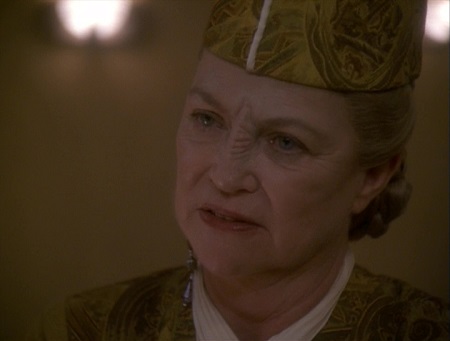
Kai Winn, the Bajoran spiritual leader in the 2370s.

We’re going in alphabetical order, so the Bajorans are up first! Even though they weren’t a Federation member, a number of Bajorans were known to have served in Starfleet in the mid-late 24th Century, including Ro Laren, Sito Jaxa, and Lieutenant Shaxs. The Bajorans were in the process of applying to join the Federation when the Dominion War broke out; it has long been assumed by many fans that they would ultimately be successful, perhaps even becoming a fully-fledged member by the time of Picard Season 1.

Bajorans were familiar to the Federation in the 31st Century at least, because Dr Issa programmed a Bajoran physical appearance into the holoprogramme she made for her son, Su’Kal, aboard their crashed ship in the Verubin Nebula. It seems very likely that the Bajorans were a Federation member in the years before the Burn – whether they remained in touch with the rump Federation afterwards is unknown, but if they did they may very well be welcomed back into the fold following the discovery of a huge dilithium cache.

It’s also worth pointing out that Bajor is at a very strategic location – the Bajoran wormhole connects the Alpha and Gamma Quadrants. Whether that will matter quite so much with the advent of new, faster methods of travel is unclear, but Bajor could very well still be an important location.

Number 2: The Borg Collective

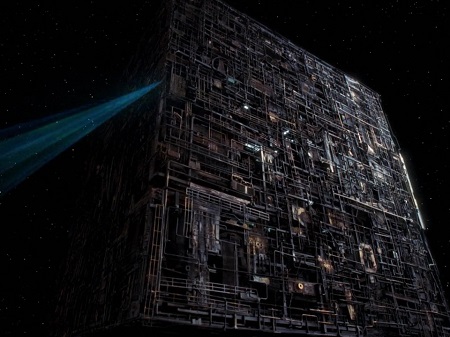
A Borg Cube seen in The Best of Both Worlds.

Since their official first contact with the Federation – which came in either the 2350s or 2360s depending on how we consider such things – the Borg have attempted to invade Earth twice. Though a time-travelling Admiral Janeway did some damage to the Collective in the late 2370s, I never felt convinced that the events of Endgame would have led to the complete destruction of the Borg.

With the Federation – or at least humanity – firmly in their sights, would the Borg have simply given up? It stands to reason that they made subsequent attempts to attack the Federation, taking advantage of their superior technology and greater numbers. However, the existence of the Federation in the 32nd Century means that any such attempts were met with failure! Perhaps the Collective is no longer around, having been decisively defeated.

The Burn would have presented an ideal opportunity for a faction like the Borg to attack the shattered Federation – yet they don’t appear to have done so. Could that mean that they have already been defeated, or could they be waiting just beyond Federation sensor range for Burnham and Discovery? Maybe the Spore Drive is something they want to acquire – and they could even be responsible for the gravitational anomaly seen in the Season 4 teaser!

Number 3: The Breen

Thot Gor, a Breen commander.

The Breen were initially thought up as an unseen faction, able to be referenced without ever making an on-screen appearance. That changed toward the end of Deep Space Nine, when they joined the Cardassian-Dominion alliance and came close to turning the tide against the Federation in the Dominion War.
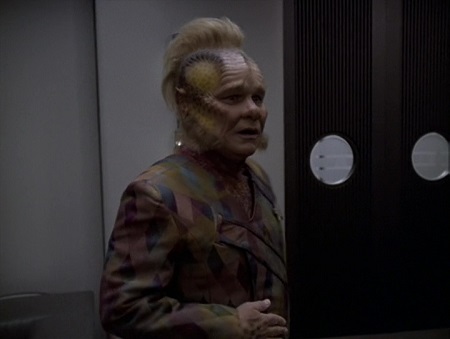
Following the war’s end, we know nothing of the Breen. The peace treaty that they signed after their final defeat over Cardassia may have seen a loss of territory for them, or it may simply have seen them retreat to their own borders. Regardless, the Breen were a major power in the Alpha Quadrant in the mid-late 24th Century, with technology capable of matching and even outpacing the Federation. Their defeat in the Dominion War was a setback, but with their homeworld untouched by the conflict it stands to reason they were able to recover quickly.

Would they have pursued peace with the Federation in the decades and centuries after? Would their technology have continued to keep up? Did the expanding Federation come into conflict with the Breen again? Any and all of these things are possible, but as we didn’t see or hear of the Breen in Season 3, perhaps we will never know.

Number 4: The Cardassian Union

Gul Evek and his aide – two of the first Cardassians ever seen in Star Trek.

Discovery’s first Season 3 trailer tricked us last year! By showing off a Cardassian among a group of what we now know to be Emerald Chain guards, a lot of Trekkies wondered what sort of role the Cardassians might play. The answer, of course, was “none at all!” However, there was a second Cardassian seen in Season 3 – a blink-and-you’ll-miss-it appearance in the episode Scavengers. This is arguably the most interesting post-Deep Space Nine Cardassian appearance to date, as the individual in question was a senior Starfleet officer, perhaps even a captain.

As noted above with the Bajorans, non-Federation members were eligible to join Starfleet under certain circumstances, and the post-Burn Federation was hardly in a position to turn away qualified candidates! But the existence of a Cardassian in what seems to be such a senior capacity suggests that they may have been a Federation member in the years before the Burn.

In a way, despite what happened during Dominion War, this makes a lot of sense. The Federation were in a position to offer help to the Cardassians as they rebuilt following the Dominion occupation of their world, and perhaps that help turned into an alliance over time, culminating in their joining the Federation.

Number 5: The Coppelius synths

A group of Coppelius synths seen in Star Trek: Picard Season 1.

The (relatively) short lifespan of humans and other organics means that, barring time travel shenanigans or being put in stasis, no one we met in the 23rd or 24th Centuries could reasonably have survived to the 32nd Century. However, synths don’t have such limitations, and as such it’s possible that some or all of the Coppelius synths from Picard Season 1 are still alive in this era.

What happened to them after the events of Picard Season 1 is not clear, and it may be something that Discovery’s sister show plans to revisit. If that’s the case we may not see anything of the synths in Season 4. However, if Picard Season 2 is going in a different direction – as its teaser indicated it might – there could be scope to pick up the synths’ story in Discovery.

The Coppelius synths were under Federation protection by the end of Picard Season 1. But with the Romulans hell-bent on exterminating them, they still appeared to be in danger. It would be very depressing to learn that a subsequent Romulan attack wiped them out, especially after Picard and Soji worked so hard to help them. So I hope that the synths are still around – even if they had to relocate to a new homeworld. They could have joined the Federation by this time, too.

Number 6: The Denobulans

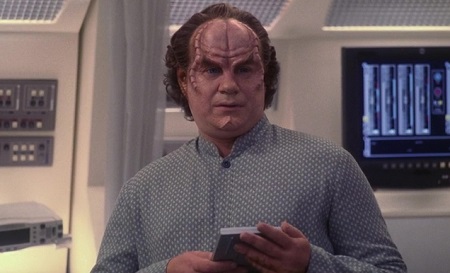
Dr Phlox, a 22nd Century Denobulan.

The Denobulans have thus far only appeared in Star Trek: Enterprise, where main character Dr Phlox was a member of the species. Though friendly toward humanity by the mid-22nd Century, the Denobulans were not strictly “allies,” nor were they a founding member of the Federation – which consisted of Andorians, humans, Tellarites, and Vulcans in its original incarnation.

However, the Denobulan homeworld must have been in relatively close proximity to Earth and Vulcan, and with the Federation coalescing and growing it seems at least plausible that they joined up at some point, especially given their friendly history. If Federation HQ relocates back to Earth in Season 4, perhaps we’ll see more of the Denobulans, who might still be in the vicinity.

Number 7: The Dominion

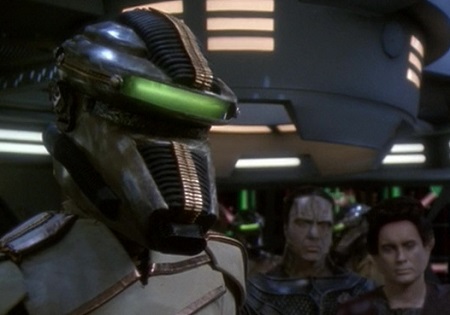
A Jem’Hadar ship.

The Dominion were the dominant power in at least part of the Gamma Quadrant, and according to their own history, had been so for over two millennia as of the mid-24th Century. After a years-long cold war between the Dominion and Federation following first contact, armed conflict broke out in the 2370s. The Dominion War was arguably the most significant event of the latter part of the 24th Century from the Federation’s point of view, proving far more devastating than incursions by the Borg or earlier wars with the Klingons and Romulans.

Following their failed attempt to invade the Alpha Quadrant, the Dominion agreed to return to their own space beyond the Bajoran wormhole. Odo, a Founder who had lived among Bajorans and humans for decades, reunited with his people, hoping to communicate to them that the Federation would not try to wipe them out nor conquer them. If Odo was successful, this could have set the Dominion on the path to peace.
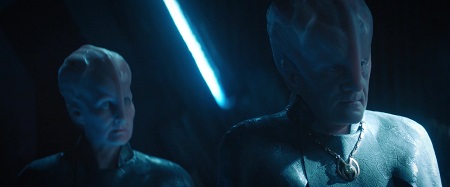
We simply don’t know what became of the Dominion. The Guardian of Forever was seen in Discovery Season 3, and had relocated to a planet near the Gamma Quadrant. Admiral Vance didn’t mention the Dominion when Burnham and Saru planned to travel there, so perhaps we can infer from that that the two powers are at peace. However, the Burn may have disrupted that peace, especially if it resulted in serious damage to the Dominion – might they hold the Federation responsible for that disaster?
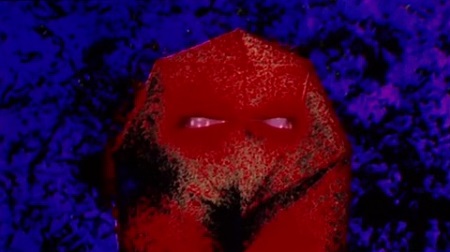
Number 8: The Ferengi Alliance

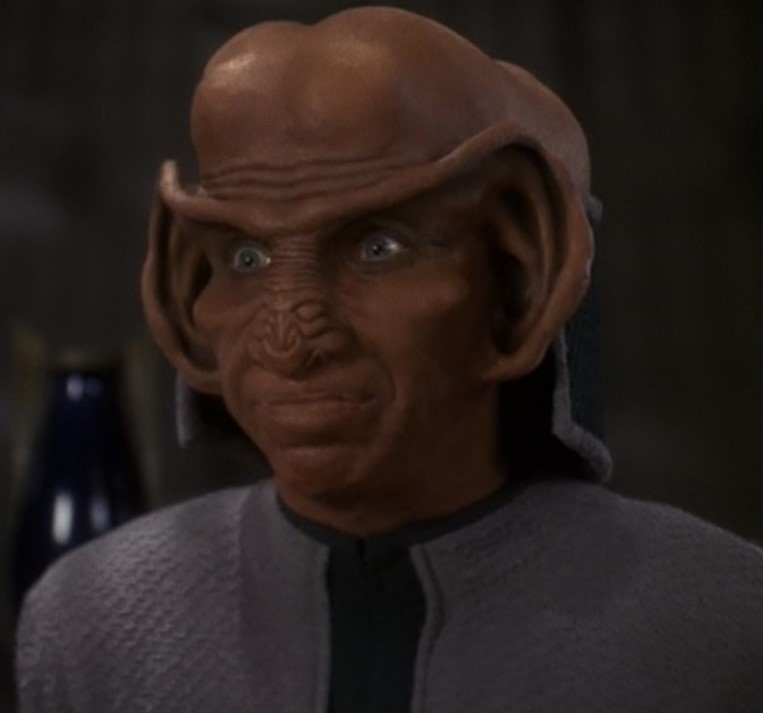
Rom became Grand Nagus of the Ferengi Alliance in 2375.
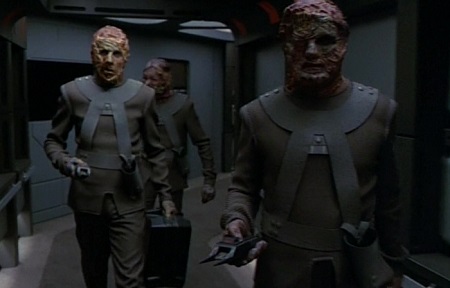
The Ferengi initially appeared to be antagonistic toward the Federation following (official) first contact in the mid-24th Century, but they soon revealed their true nature: hardcore capitalists for whom war was simply not worth participating in as it was usually unprofitable. Ferengi society was strictly segregated, with men participating in business while women were expected to remain at home and raise their families.

There were seeds of change in the 2370s, with women’s rights issues coming to the fore in Ferengi society. There were also moves away from unregulated capitalism, with some Ferengi even forming unions and advocating for more rights and welfare. Though such changes surely led to pushback from conservative Ferengi, the appointment of Rom as Grand Nagus may have cemented at least some of these reforms.

Though hardly allies of the Federation, at least one Ferengi – Nog – would serve in Starfleet in this era, bringing a different perspective to the organisation and perhaps bringing the factions closer together. The existence of a USS Nog in the 32nd Century – while intended to be a tribute to actor Aron Eisenberg – could also be seen as an indication of continued warm relations in this time period.

Number 9: The Gorn

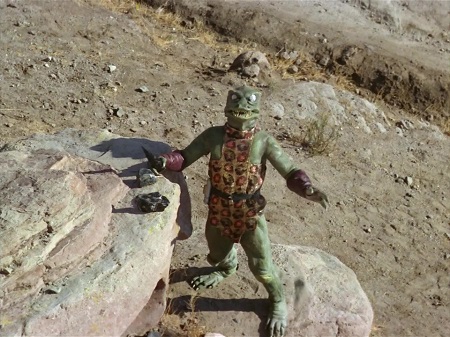
A 23rd Century Gorn captain.

The Gorn were neighbours of the Federation by the 23rd Century, and may have been involved in border disputes and skirmishes. There was no indication that they ever joined or even considered joining the Federation, and appeared to maintain a closed-border policy well into the 24th Century.

In the Lower Decks episode Veritas, Ensign Rutherford’s arrival at a Gorn wedding led to him coming under immediate attack by the Gorn who were present, and while this was (of course) part of an extended joke, it certainly suggests that the Gorn were not in any way friendly toward the Federation by the 2380s.

In That Hope Is You, the Discovery Season 3 premiere, Book told Michael Burnham that the Gorn had “destroyed subspace” somewhere in the vicinity of Hima. Perhaps that indicates that they were not allied to the Emerald Chain, nor the Federation – retaining their status as an independent power.

Number 10: Holograms

Index, a hologram seen in Star Trek: Picard.

We saw a number of holograms in Discovery’s third season, confirming that the technology is still in use in the 32nd Century. At least one of these holograms appeared to be intelligent, perhaps even sentient, but that was never confirmed.

In the late 24th Century, the Doctor – the USS Voyager’s Chief Medical Officer – was involved in a court case regarding his ownership over a work of fiction he had created. The court case was resolved in his favour in the episode Author, Author, and Captain Janeway suggested that he might have “struck the first blow for the rights of holograms.” There were other sentient holograms in the 24th Century as well, including a holographic version of Sherlock Holmes’ nemesis Professor Moriarty. What became of them is unclear!

As with the Coppelius synths, there’s no reason why holograms from the 24th Century couldn’t have survived this long, and one of my most popular theories here on the website has been that Voyager’s Doctor – or rather, a backup copy of him – will make an appearance in Discovery.

Number 11: The Iconians

An Iconian Gateway – one of the few surviving relics of their civilisation by the 24th Century.

Iconian civilisation flourished more than 200,000 years ago, and by the 24th Century they were believed to be extinct. However, their powerful technology utilised “gateways” to travel vast distances, and it was implied by the extent of the archaeological evidence that they maintained outposts or colonies on many other planets.

The destruction of their homeworld by an alliance of their enemies may have rendered the majority of Iconians extinct, but such a widespread civilisation could have avoided total annihilation, perhaps. The reason the Iconians are on this list is because of their popularity in non-canon works, particularly the video game Star Trek Online. Some elements from non-canon Star Trek publications have ended up crossing over to the main series, so perhaps the intervening centuries saw some kind of re-emergence of the Iconians.

Number 12: The various Kazon sects

Maje Culluh, a Kazon leader in the 2370s.

Discovery Season 3 didn’t establish whether the Federation were able to travel to the Delta Quadrant, nor if they had ever revisited the region since the USS Voyager’s transit in the late 24th Century. Given that warp drive was still the main way of travel, and that maximum warp speeds (as understood in a 24th Century context) meant that the Delta Quadrant would take decades to reach, perhaps they never did.

So we may not find out what became of the Kazon! Similar in some ways to a less technological, less organised Klingons, the Kazon were major antagonists across the first couple of seasons of Voyager. We know that the Borg considered them “unworthy” of assimilation – the only species we know of that the Borg couldn’t be bothered with!

It seems unlikely that the Kazon will have had much impact on the Federation given their distance. However, if they ever succeeded in unifying their disparate sects, perhaps they could have become a regional power in the Delta Quadrant. The USS Discovery’s Spore Drive could take the ship anywhere – even 70,000 light-years away. So maybe if they’re able to travel there, we’ll find out!

Number 13: The Kelvan Empire

Rojan, a 23rd Century Kelvan leader.

The Kelvans are an interesting – and potentially alarming – faction. Extragalactic aliens from the Andromeda galaxy, their technology was far superior to the 23rd Century Federation, and arguably to anything the Federation subsequently developed! They only appeared once, in The Original Series Season 2 episode By Any Other Name, but that shouldn’t stop them making a comeback.

The Kelvan Empire’s home galaxy was facing an extinction event due to rising radiation levels, and they sent out scouting parties to look for new homes. One of these parties encountered the USS Enterprise upon arriving in the Milky Way. Though initially interested in conquest, Kirk was able to convince the Kelvans to consider an alternative proposal, allowing the Federation to help them find new worlds to settle.

If the Federation’s proposal was accepted, perhaps there are millions of Kelvans living somewhere in the Milky Way in this era. Or if it was rejected… perhaps the Kelvan Empire is about to descend upon the Federation en masse!

Number 14: The Klingon Empire

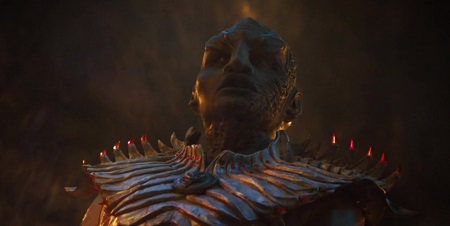
Klingon Chancellor L’Rell.

The Klingons, despite having made so many appearances in Star Trek already, are perhaps the most interesting faction to see return in Discovery. Burnham and the crew are veterans of the Federation-Klingon war, and while I wouldn’t say any of them “hate” Klingons, they certainly would be distrustful of them. How would they react to learning that the Klingons had been allies with the Federation – or even Federation members – for centuries?

I think there’s a lot of potential for conflict, drama, and for Star Trek to do what it’s always done best: use its sci-fi setting to examine real-world issues, in this case, the way we can be guilty of judging groups of people. Characters like Culber, who was “murdered” by Voq, or Stamets, who had to deal with the fallout from that loss, could be front-and-centre in such a story, and it would be absolutely fascinating to see it unfold.

Rather than Discovery making the Klingons antagonists again, like in Season 1, it would be great to learn that the alliance of the 24th Century continued, and that if the Klingons remain an independent power – which they may well be – they’re at least on friendly terms with the Federation.

Number 15: The Maquis

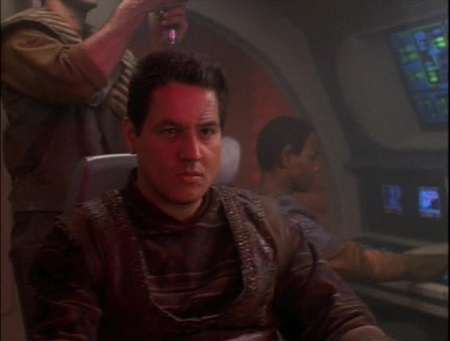
Chakotay, a Maquis commander.

Although Maquis forces were said to have been almost entirely wiped out by the Cardassian-Dominion alliance during the early stages of the Dominion War, at least some Maquis were known to have survived the initial attack. In addition, the USS Voyager returned to the Alpha Quadrant with a contingent of 40-ish Maquis, including Chakotay and B’Elanna Torres.

It’s at least possible that the Maquis, who were breakaway colonists attempting to secede from the Federation, recreated their society in the aftermath of the Dominion War. While their soldiers may have been killed, we saw no confirmation of the fate of other Maquis colonists. If they survived the war, even in captivity, perhaps they attempted to continue their quest for independence afterwards.

If so, the Maquis colonies may have been independent of the Federation for centuries by the 32nd Century. What kind of society they might’ve developed in that time is not known.

Number 16: The Q Continuum

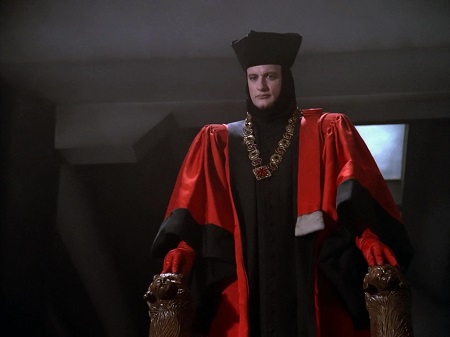
Q, a member of the Q Continuum.

The Q Continuum are returning in Season 2 of Picard – or at least, their most well-known member is. Perhaps that means we won’t see or hear anything about them in Discovery, nor learn what became of them in the far future. But it’s possible!

The Q are as close to immortal as any faction we’ve seen in Star Trek, so they should certainly still be in existence by this time. Their incredible powers are, as a famous quotation puts it, “indistinguishable from magic,” and Q suggested that the Continuum has existed for at least as long as the universe itself.

The Q seemed to view humanity and the Federation with curiosity rather than animosity, with Q even trying to help Captain Picard to solve puzzles that required different ways of thinking. If this kind of intervention continued, and humans continued to develop their reasoning skills, perhaps they might be on friendly terms with the Q by this time. However, if the Q are able to create matter, they would have been very useful friends to have as the Federation began to run out of dilithium! Perhaps the Q have instead stepped back from actively intervening in Federation affairs, content to watch from the outside.

Number 17: The Romulan Star Empire

Romulans, Vulcans, and Romulo-Vulcans in Season 3.

The existence of Romulans on Ni’Var – the planet formerly known as Vulcan – suggests that the Romulan Empire has disbanded following reunification. It was certainly implied heavily in the episode Unification III that reunification involved all Romulans and Vulcans. But it’s possible that a breakaway faction exists in some form; a “New Romulan Empire” claiming the mantle of the disbanded one.

We’ve already seen what was perhaps the biggest possible reveal for Burnham and the crew – learning that the Romulans are an offshoot of the Vulcans. However, with Ni’Var seemingly on the verge of rejoining the Federation, perhaps there is scope to see more from them. The Romulans remained a distinct group on Ni’Var, with full integration with the Vulcans having not occurred, and there are clearly internal tensions between the three main groups. This could be a story thread that Season 4 picks up.

Number 18: The super-synths

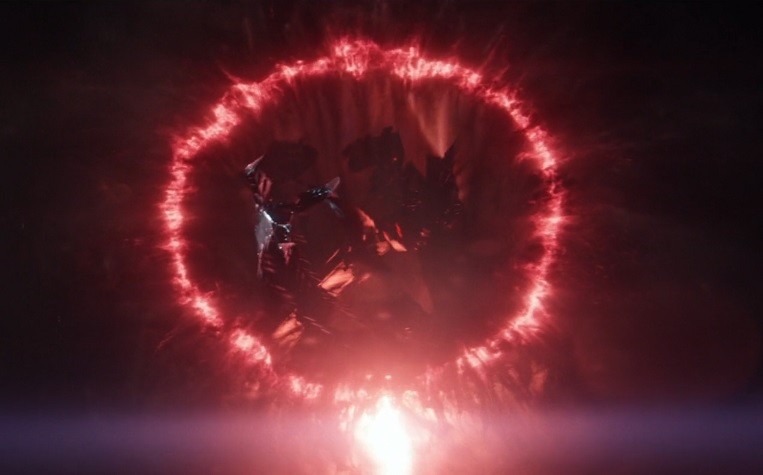
The super-synths almost arrived in the Milky Way… but their portal was closed at the last second.

We know practically nothing about this faction, despite them playing a major role in the conclusion to the story of Picard Season 1. They don’t even have a proper name! Claiming to be “an alliance of synthetic life” existing beyond the Milky Way, this faction offered to come to the aid of any synthetics who needed them. It was not clear if this offer was genuine or part of an elaborate trap.

I suggested in the run-up to Season 3 that the super-synths could have been involved with the Burn, but that turned out not to be the case. However, if they became aware of the Federation following the events of Picard Season 1, they could still be planning to travel to the Milky Way – perhaps with conquest on their minds.

The super-synths could thus be responsible for Season 4’s gravitational anomaly – perhaps it’s a weapon; an artillery barrage to soften up the Federation before the troops arrive! It would be fantastic for the creative team in charge of Star Trek to find a major way to tie Picard and Discovery together. Whether this is the right way to do it is certainly up for debate, but in principle I like it.

Number 19: The Talaxians

Neelix, a Talaxian chef.

Although the Talaxians are native to the Delta Quadrant, there was at least one Talaxian colony in or near the Beta Quadrant, significantly closer to Federation space. This seems to increase the likelihood that the Federation would have been able to remain in contact with them at least in the late 24th Century.

The Talaxian homeworld had been conquered sometime in the mid-24th Century by the Haakonian Order. Perhaps the Federation, if they remained on friendly terms with the Talaxians, would have wanted to aid them in liberating their homeworld. If the Federation developed the ability to travel to and from the Delta Quadrant at some point in the future, perhaps the Talaxians even joined the Federation!

Number 20: The Talosians

Talosians in Season 2 of Discovery.

The Talosians were a very dangerous people whose telepathic powers were able to trick humans, Vulcans, and other known races into seeing things that weren’t there. As a result of their attempt to kidnap Captain Pike and other Enterprise officers, Talos IV was declared off-limits to Starfleet personnel and the Federation.

The events of The Menagerie, in which the Talosians welcomed Captain Pike back to their world, as well as their general helpfulness toward Spock and Michael Burnham in Discovery Season 2, however, may suggest that General Order 7 – the section of Starfleet’s rules banning travel to Talos IV – may have been reassessed, although no in-universe evidence for that exists.

The surviving Talosians lived underground after their planet was devastated by war, and lost their ability to control their technology, focusing instead on refining their mental powers. In the 23rd Century, Talosian leaders believed their race was doomed to extinction – but maybe the Federation found a way to aid them? If not, perhaps Talos IV is uninhabited by this time period.

Number 21: The Tholians

A 23rd Century Tholian commander.

The Tholians have only made a couple of appearances in Star Trek – once in The Original Series and once in Enterprise. However, they’ve been mentioned on a number of occasions, and despite being antagonistic in the 23rd Century, some kind of diplomatic relations clearly existed a hundred years later.

As one of the few non-humanoid sentient species, it would be really interesting to see the Tholians make a return. An area of space that they claimed as their own seemed to have some kind of gateway to the Mirror Universe – if Discovery were to revisit that setting, perhaps the Tholians could be included.

As to where they might be or what they might be doing by the 32nd Century, that isn’t clear. In the aftermath of the Burn, they could have expanded to conquer border worlds, or they might’ve been a peaceful neighbour or even ally of the Federation in this era.

Number 22: The Vidiians

A trio of Vidiians form a boarding party in the 24th Century.

Another Delta Quadrant faction whose reappearance will depend on the Federation’s ability to travel, the Vidiians were an antagonist during the USS Voyager’s journey – but only because a disease known as the Phage was afflicting their society.

In the episode Think Tank, a group of “problem-solving” aliens claimed to have cured the Phage, and if this was true – that was left rather ambiguous due to the way the story progressed – perhaps the Vidiians would have been more peaceful and willing to establish a dialogue with the Federation, especially if they were visiting the Delta Quadrant regularly. Or, due to their relative proximity to the Borg, the Vidiians may have been assimilated!

That may seem like a harsh fate, but in the Picard Season 1 episode The Impossible Box the Borg were revealed to have assimilated at least some members of the Sikarian species, making use of their spatial trajector technology. The Sikarians were present in the same region of space as the Vidiians, so perhaps the expansion of the Borg in the late 24th Century was a problem for them.

Number 23: The Xindi

A Xindi-Aquatic in the 22nd Century.

I recently took a look at the possibility of the Xindi returning – along with fellow Enterprise antagonists the Suliban. Neither faction has been seen since Enterprise went off the air, and their absence suggests that, at least in the 23rd and 24th Centuries, they may have pursued a policy of isolationism.

The Xindi had joined the Federation, however, by the 26th Century, with at least one Xindi serving aboard the Enterprise-J. Whether they remained members in the years after the Burn is not known, and with 90% of Federation members either leaving or being out of contact it seems likely that they would have had to fend for themselves for a while.

So that’s it. A few factions from Star Trek’s past that may be around – in some form – in the 32nd Century!

Captain Burnham in the Season 4 teaser.

This was a long list, so credit to you for making it to the end. Truthfully I can think of at least half a dozen more factions that could have made it, but it was already getting far too long! We don’t know at this stage where Discovery Season 4 is going to go, and thus which factions may or may not be included.

What I would say, though, is that Season 3 had some pleasant surprises, bringing back elements from Star Trek’s past that I genuinely would not have expected. With that in mind, I think there’s potential for any of the factions above to play a role – minor or major – in the upcoming season.

If Discovery Season 4 remains on course, we’ll see it before the end of the year. With Lower Decks Season 2 scheduled to arrive in mid-August and run for ten weeks, we might even see Discovery before Halloween, just like we did in 2020. Time will tell, but I hope you’ll stay tuned for more Discovery news and, when the season is ready, reviews of every episode… and perhaps a bit of theory-crafting!

Star Trek: Discovery Season 4 is scheduled to premiere on Paramount+ in the United States (and other territories where the service is available) before the end of 2021. The series will arrive on Netflix in the United Kingdom and elsewhere. The Star Trek franchise – including Discovery and all other properties mentioned above – is the copyright of ViacomCBS. This article contains the thoughts and opinions of one person only and is not intended to cause any offence.