

Spoiler Warning: There are spoilers ahead for Star Trek: Strange New Worlds Seasons 1-3.
By my reckoning, Shuttle to Kenfori marks the halfway point of Strange New Worlds’ run. We learned ahead of Season 3’s premiere that the series will be cancelled after a cut-down fifth season, clocking in at forty-six episodes in total. With this being the show’s twenty-third outing… that’s it. The halfway point. Does that change how we approach Shuttle to Kenfori? It shouldn’t… but it seemed like something that was worth mentioning before we get started.
Going into Season 3, the “Klingon zombie episode,” which had been teased in one of the trailers, was definitely one of the stories I was most curious about! I’m not the world’s biggest fan of horror, but there have been some fun zombie flicks over the years, and after more than 950 episodes and films… I like that Star Trek can still try new things and surprise me! We’ve had horror-themed episodes before, from Empok Nor to Strange New Worlds’ own All Those Who Wander, but this is Star Trek’s first fully-fledged zombie episode. And while I don’t think it was perfect, Shuttle to Kenfori showed why it was worth trying out this kind of story.
Let’s get a couple of negative points out of the way first, then we can gush about how great other parts of Shuttle to Kenfori were!
Firstly, the episode’s opening act was too short and too abrupt. We went from “everything’s fine, Captain Batel is getting her own command” to “she has days to live” in a heartbeat. Compounding that was how curtailed the scene in sickbay felt with Pike, Spock, Chapel, and M’Benga. We would later learn that Captain Batel, Spock, and the medical duo had discussed her condition off-screen, but that didn’t make the scene feel much better. In the moment, watching the episode unfold, this foundational sequence needed much longer to play out.
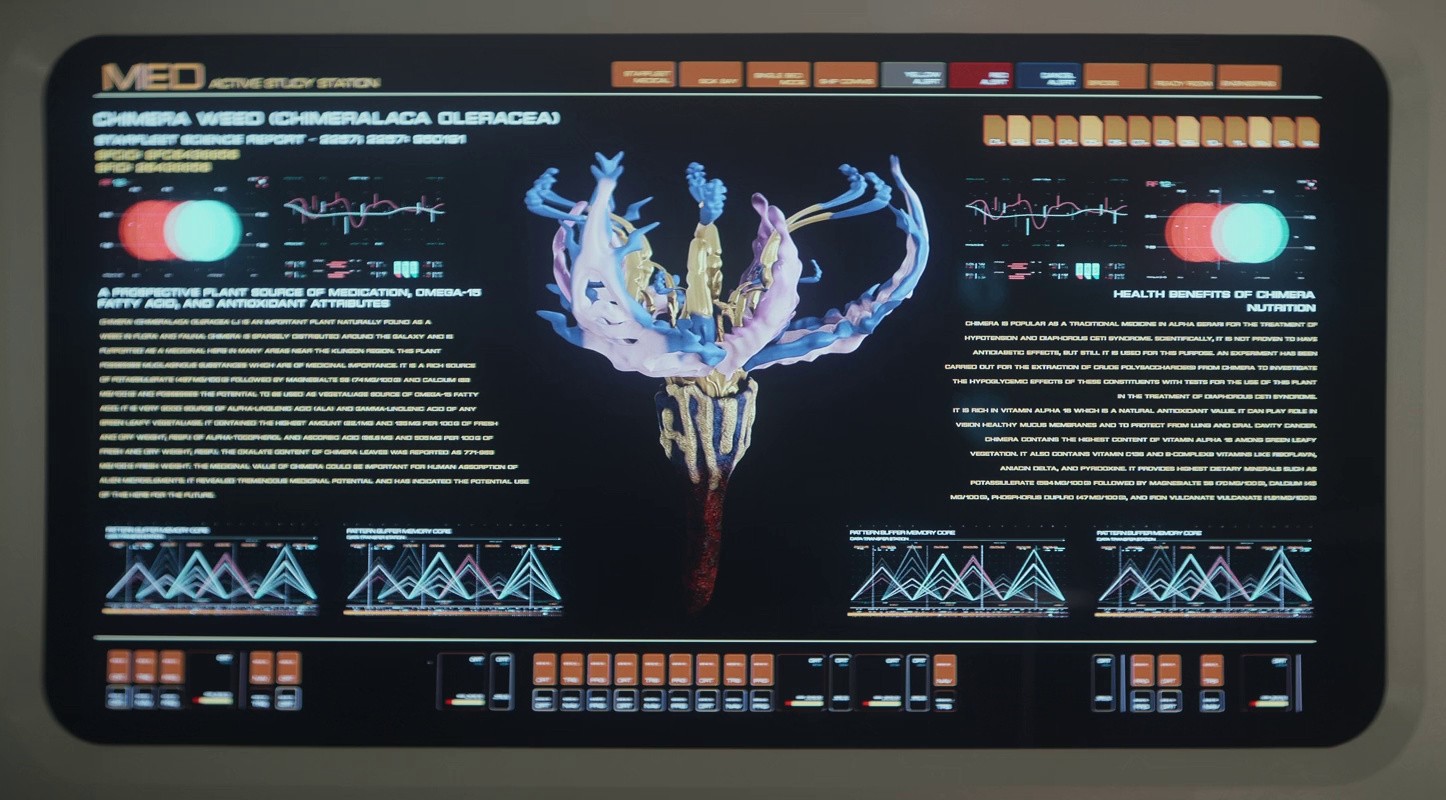
In a matter of seconds, Dr M’Benga and Spock laid out that Captain Batel’s infection was back and that they happened to know of the only plant in the galaxy capable of curing her. Then we got a very short discussion of where the plant might be found… and that was it. It kick-started the story, sure, and the subsequent revelation that the rest of the characters had discussed it off-screen kind of helps, but it still felt very rushed. Going from “the infection’s back” to “but we already have a cure in mind” to “let’s undertake a dangerous off-the-books mission” in less than two minutes just… it’s poor pacing.
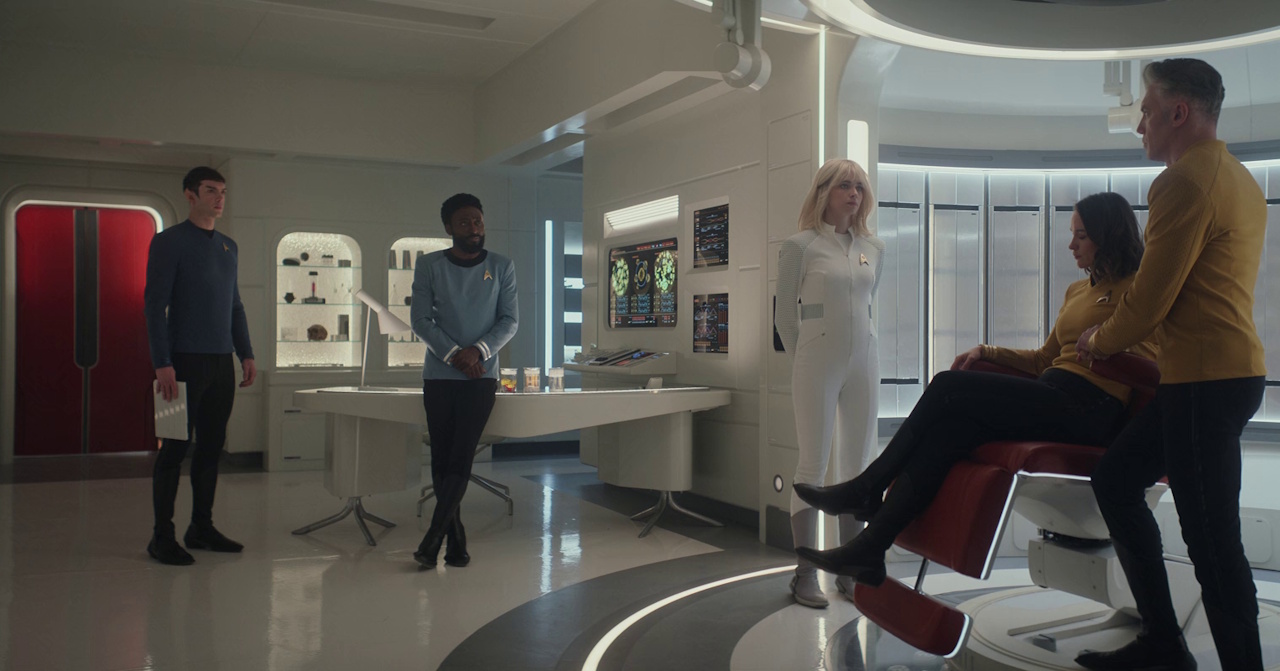
I get that this moment isn’t what Shuttle to Kenfori is all about. But we’ve gone from Captain Batel being cured and ready to take command of a new ship to being days or even hours away from a Gorn-induced death in practically no time at all. All of Shuttle to Kenfori’s story arcs hung off this moment in the opening act… and it was just way too short. Past Star Trek stories would’ve lingered here for several minutes, scanning Captain Batel, realising her infection has returned, throwing out half a dozen technobabble cures then shooting them down… heck, we could’ve gotten an entire montage of Chapel, Spock, and M’Benga running through different possible ideas before settling on the flower. It wouldn’t have needed to last more than, say, five minutes… but it would’ve given the rest of the story a much stronger foundation.
While I wouldn’t say that the rushed opening act soured me on Shuttle to Kenfori from the beginning, I was definitely left with a sense of “wait, was that it?” as the episode’s main storylines got underway. I also felt that these problems of pacing and perhaps a slightly too-short episode were present in Hegemony, Part II last week – so I hope this isn’t going to be a running theme throughout the season. I’m all for stories that are bold and try to do a lot with their runtime, don’t get me wrong! But when the opening act is blitzed through too fast, there can be implications for the rest of the story, no matter how strong it might be.
The second major critique of Shuttle to Kenfori is its Klingon storyline. In short… there was a lot going on when Pike and Dr M’Benga touched down on the titular planet, and I’m not convinced we needed this additional villain and complication. It made the zombies themselves – which, surely, should have been the episode’s fear factor and main antagonist – kind of secondary, especially towards the end, and there just wasn’t any need for it.
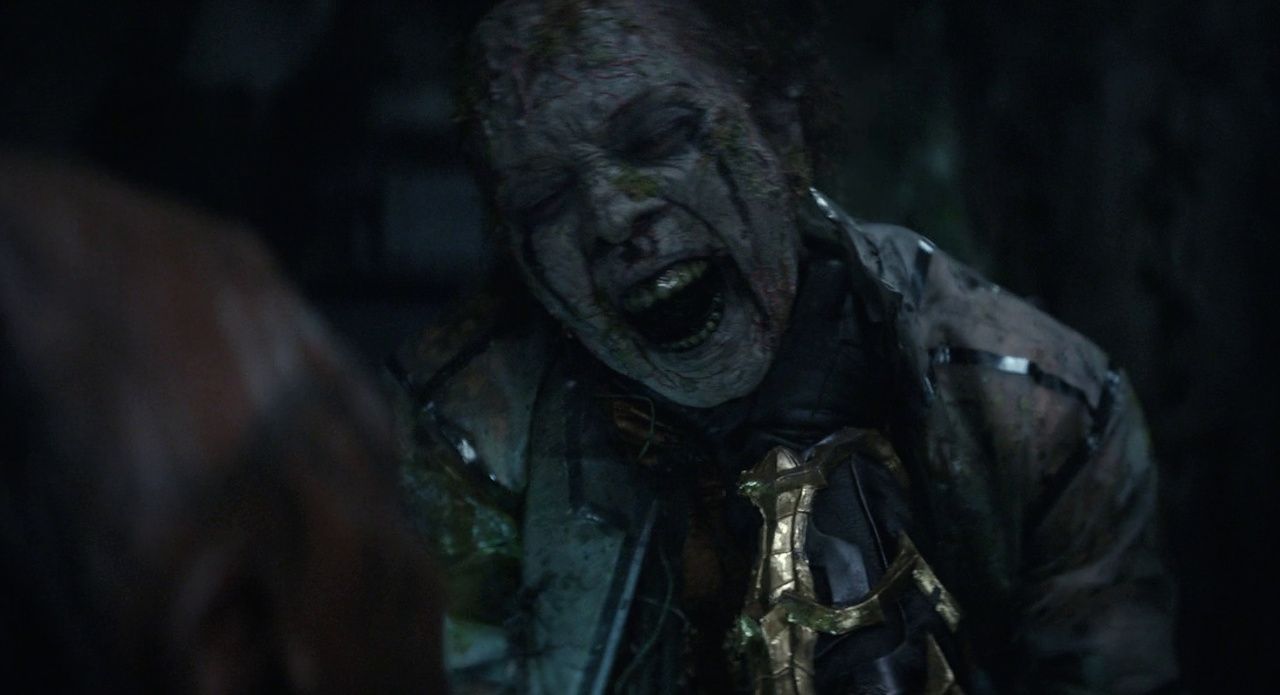
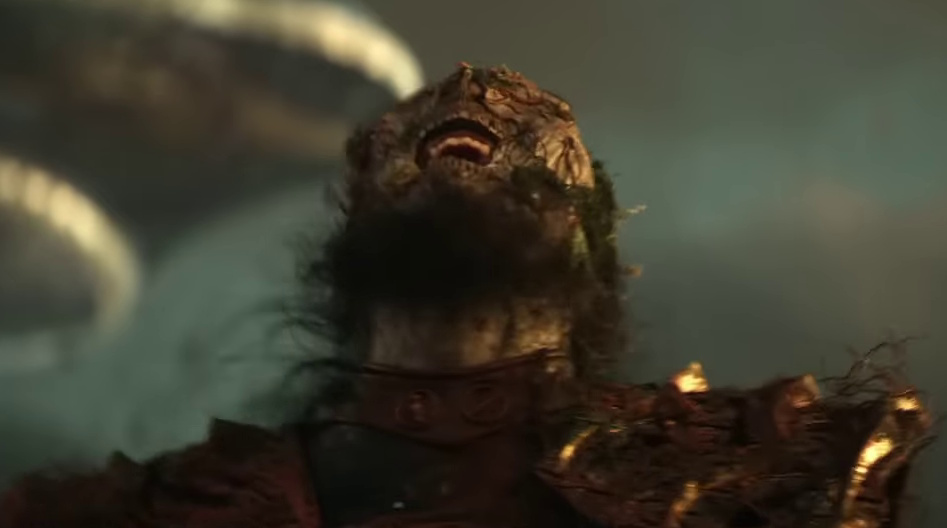
Narratively, I liked Dr M’Benga’s involvement with the Klingons – we’ll get into that later when I talk about some of the things I liked about Shuttle to Kenfori. But as a concept, in an episode that was already busy with several characters competing to be in focus? I think it was a bit of a misfire, to be honest. Star Trek’s first ever zombie story should’ve done more with the zombies – zombies that were genuinely frightening and must’ve taken a ton of work in the makeup department! Instead, the zombies were relegated to background status pretty quickly, literally looking in from the outside behind an impenetrable narrative force-field as Dr M’Benga’s Klingon adversary took centre-stage.
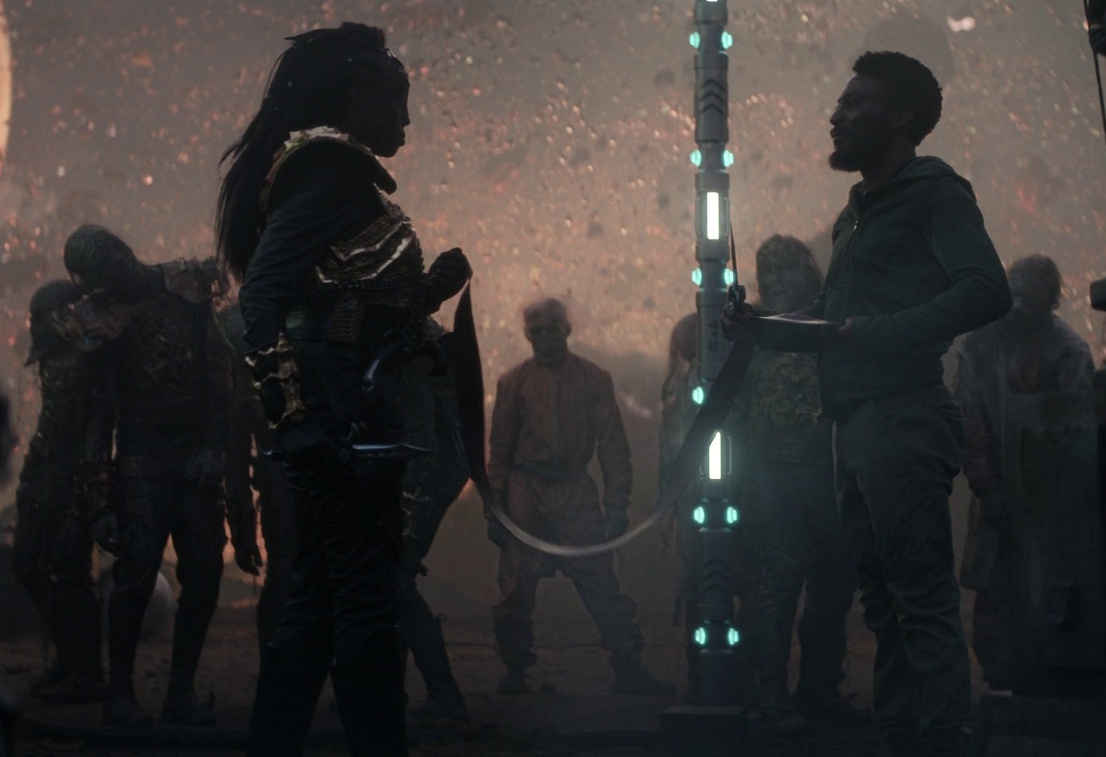
I was kind of reminded of later seasons of The Walking Dead with how this played out. If you know me, you’ll know I’ve said more than once that The Walking Dead – AMC’s zombie apocalypse TV series – should’ve ended after perhaps three seasons, because it wore out its core premise and its zombies stopped being the main focus. The Walking Dead’s writers switched things up and started finding human antagonists for Rick Grimes and his group to deal with, most of whom in the later years were pretty repetitive and basic. That show needed to do that because its core premise – the zombie apocalypse – was itself tired and worn out. But Shuttle to Kenfori is brand-new and its zombies have literally never been seen in Star Trek before. We just didn’t need a sentient antagonist when the undead monsters were already filling that role.
For me, I’d have preferred Shuttle to Kenfori if Pike and M’Benga were trapped in the zombie-overrun research facility with no Klingons present. And then, in another episode, Dr M’Benga could’ve gotten his Klingon enemy and ritual combat, because I genuinely liked what Strange New Worlds did with this storyline. I just feel that smooshing them together into one didn’t let either the zombies or the dishonoured Klingon Bythra truly shine. If we were three seasons into a Star Trek zombie show, and the zombies were beginning to wear out their welcome, then I could see why you’d do a story like this – it’s what The Walking Dead has been doing since about Season 4 of the main show and in most of its spin-off projects. But this zombie idea was so creative and new that having a Klingon antagonist just wasn’t necessary – and I wish we’d gotten to see more of Pike and Dr M’Benga taking on the zombies.
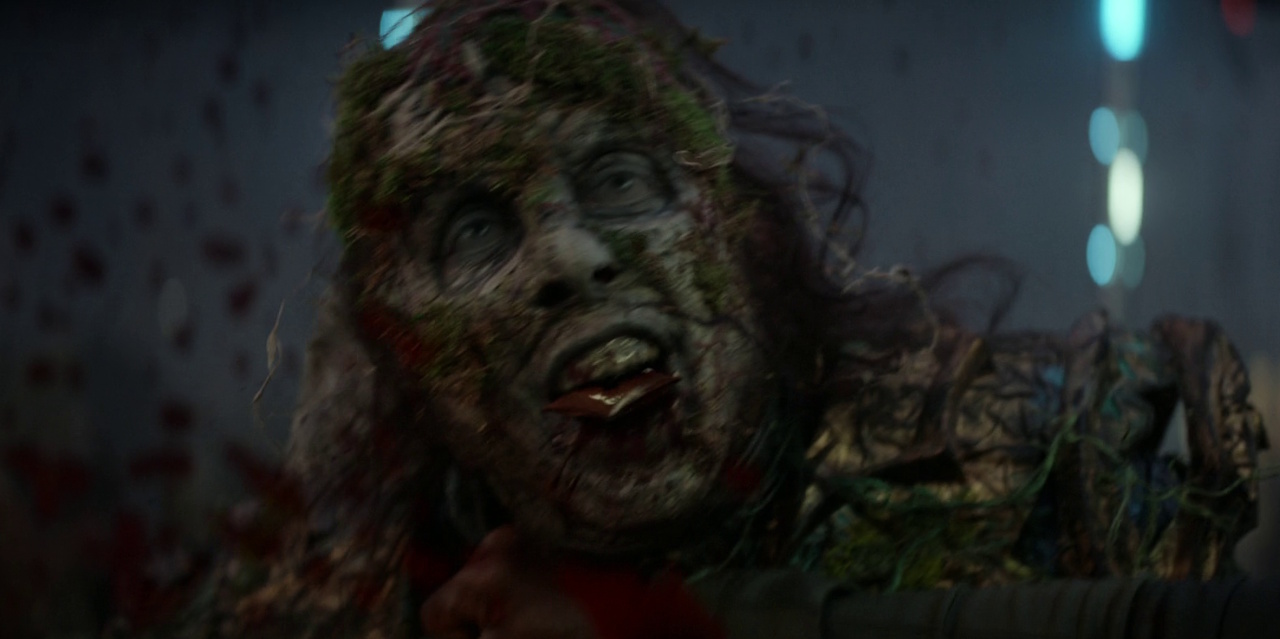
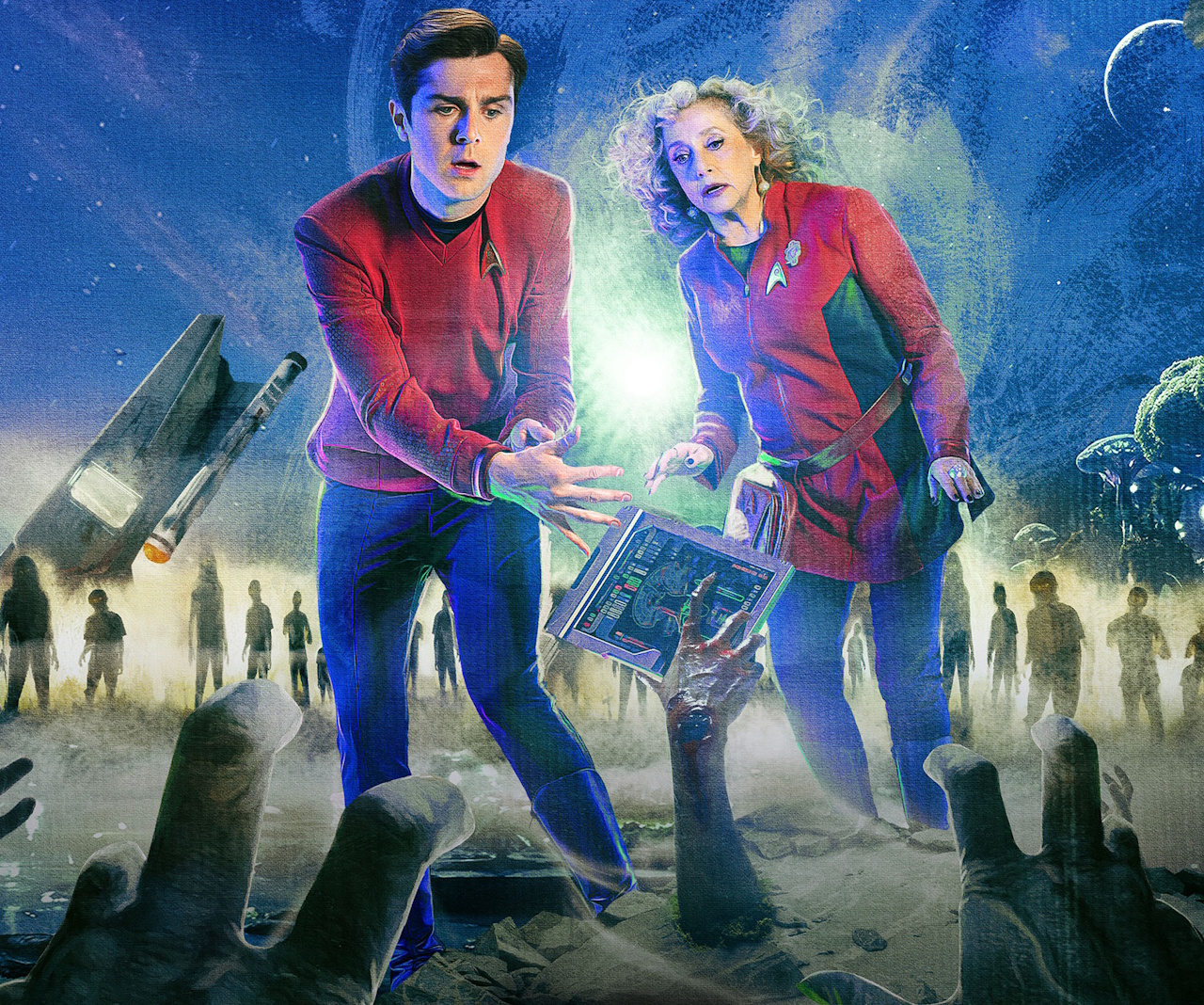
I will caveat all of that by saying that the Kenfori zombies could return later in the season. There were promotional posters for Season 3 released a few weeks ago, and one of them showed Pelia and Scotty seemingly surrounded by zombies. Scotty was present in Shuttle to Kenfori, but he stayed on the Enterprise, and Pelia was entirely absent. So maybe I’m reaching and maybe it’s a stretch, but could there be a second zombie story in the offing? If so, and if the zombies are the main focus… maybe we can revisit this side of Shuttle to Kenfori and be a little kinder in hindsight.
There were plenty of ways to turn the zombies into the story’s main adversaries. After Pike and Dr M’Benga retrieved the flower sample, they could’ve been confronted and chased by a small group, becoming trapped in the facility. Looking outside, they’d realise their shuttle was cut off by a massive horde of zombies, and that they’d have to hunker down and wait for extraction. Rushing from room to room in the abandoned facility, they’d have to find shelter – all the while Spock and Una would be conspiring to make them wait longer and longer for a rescue, just as happened in the actual episode. We could’ve got more zombie action, more conversation between Pike and Dr M’Benga about Captain Batel’s condition, and – as a nice little bonus – a longer opening act that didn’t feel so rushed! Two birds with one stone, as they say.
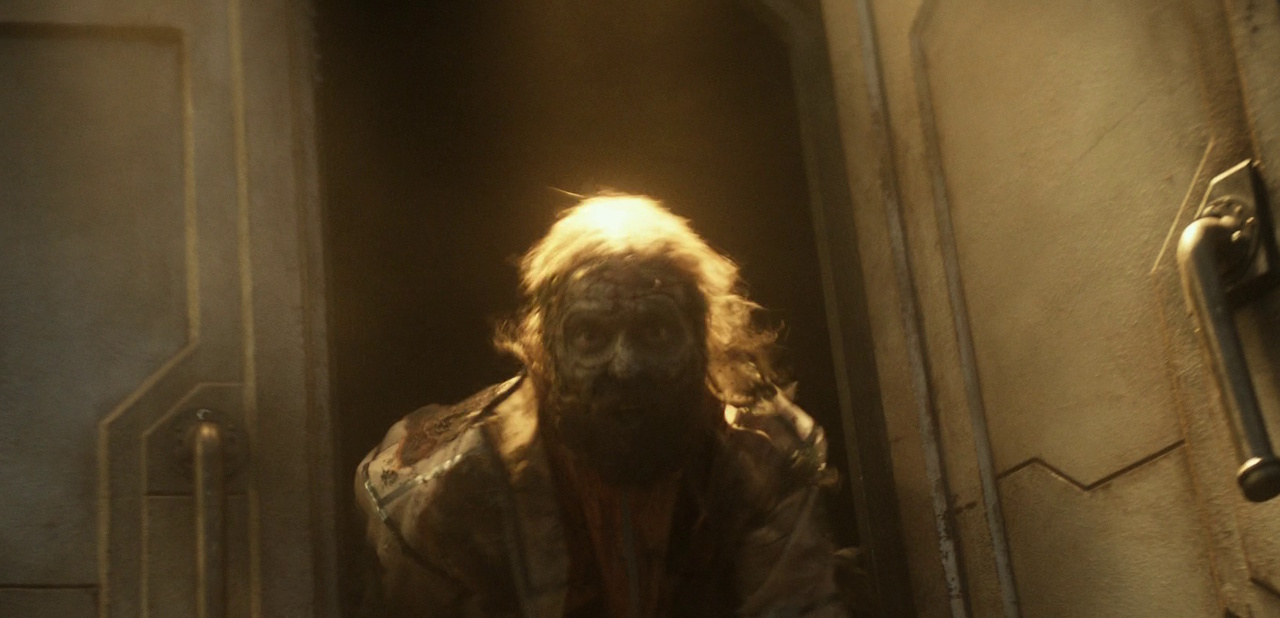
Alright, that’s enough about that for now. With those two issues aside, I really liked Shuttle to Kenfori. It was a ton of fun to get this kind of Star Trek zombie story, seeing zombified Klingons was somehow even scarier than human zombies, and the zombie sequences at the abandoned research base were pitch-perfect. The sets were decrepit and decaying, the prosthetics used to create the zombies were fantastic, there were some neat uses of the AR wall, and props used to create the Klingon skeleton, the important flower, and the half-eaten leg were all either gruesome or beautiful.
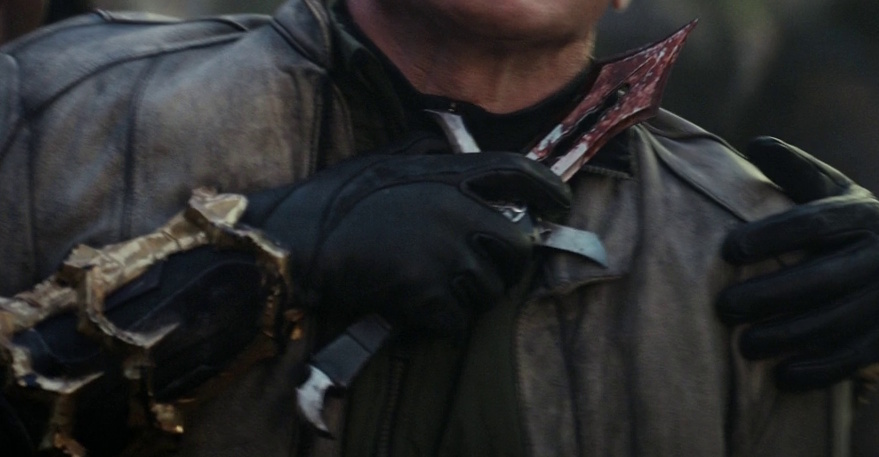
On the practical side of things, Strange New Worlds has been absolutely wonderful. Puppets, prosthetics, and physical props are back – and they’re back in style! CGI can work wonders, sure, but there’s something about physical props and practical effects that – for me, anyway – can’t be beat! They’re part of what makes Star Trek feel like Star Trek, and Shuttle to Kenfori had plenty of prosthetics for the zombies and some absolutely phenomenal props. I don’t think a Klingon d’k tahg (dagger) has ever looked better or more realistic in any episode, we saw a classic Original Series-inspired tricorder, and everything about the research base just screamed “danger.” I love it!
Star Trek is science-fiction, and while it’s never been “realistic,” Star Trek stories have always gone out of their way to emphasise the science side of things. Even when dealing with wacky and ridiculous storylines, the franchise has always tried to ground those things in its own fictional science. Races like the Q or the Prophets were always perceived as “just another alien,” not some kind of god or deity, for instance, and even the silliest stellar phenomena – like Season 2’s improbability field that caused everyone to burst into song – were presented as having a scientific basis which could be scanned, studied, and understood.
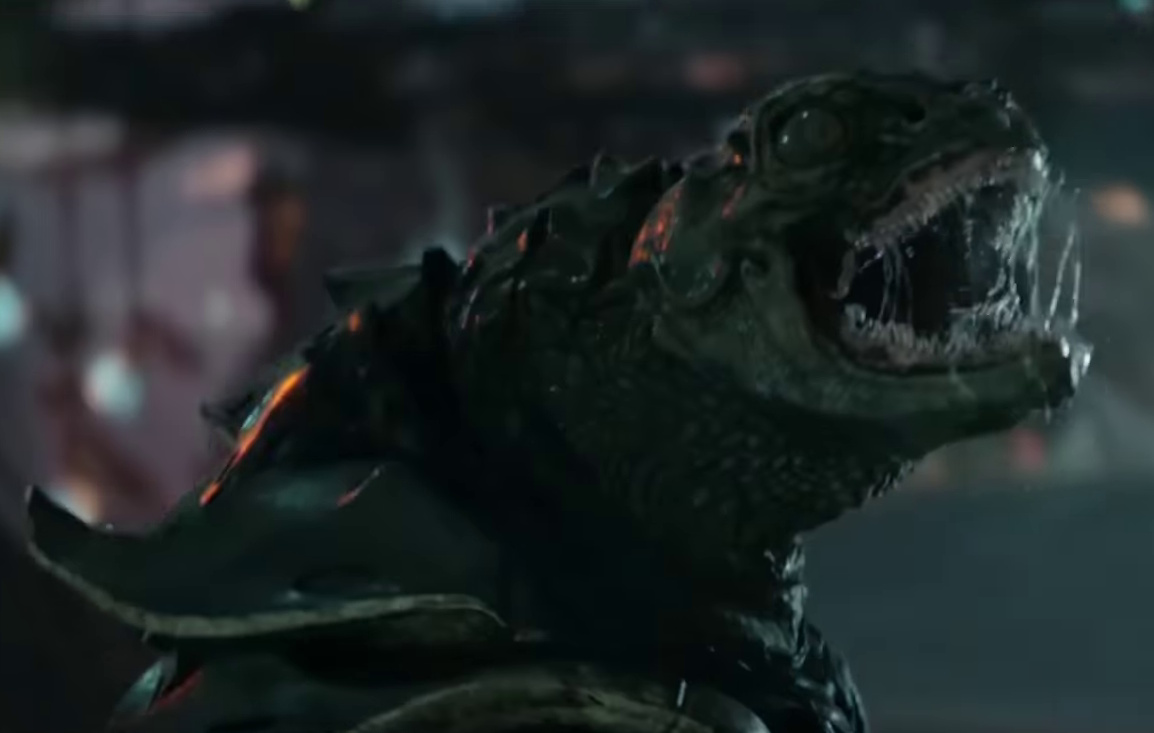
Shuttle to Kenfori does the same with its zombies. They’re the result of an infection of moss spores, not some kind of supernatural entity or undead monster, and I really appreciated that. It doesn’t lessen the fear factor to know where the zombies came from or why they exist, but it keeps the franchise’s scientific tone. There was also kind of a The Last Of Us vibe as a result; these zombies, like the ones from that franchise, are a natural phenomenon caused by plants. The episode clearly leaned on other zombie properties, too: the title is reminiscent of the Korean zombie film Train to Busan, and even the name of the planet Kenfori is derived from actor Ken Foree, known for his role in Dawn of the Dead.
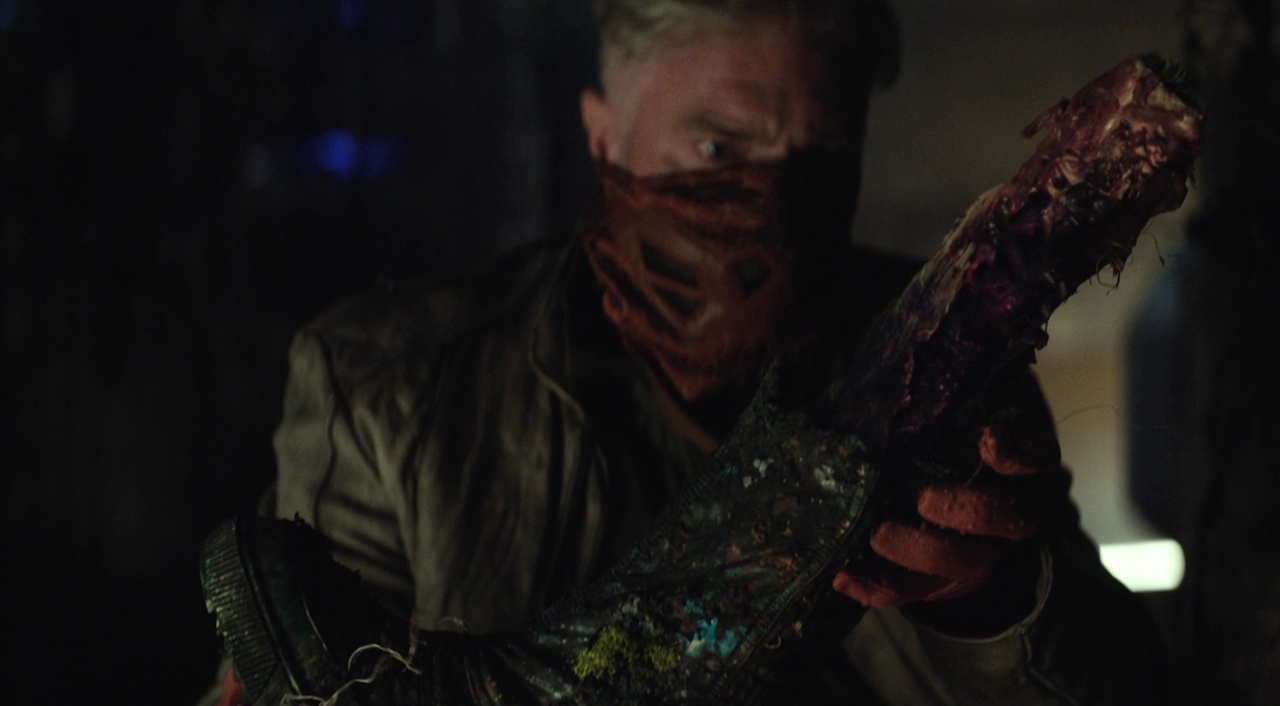
Star Trek has arguably told zombie-adjacent stories before. The biggest example of this, as I’ve discussed before, is the Borg: Star Trek’s own cybernetic zombie faction! But the Borg are also a different kind of villain presented in a different way; there’s something about Shuttle to Kenfori’s mindless, monster-like moss-zombie abominations that’s totally unique. I love that Strange New Worlds has been bold enough to go there – and to tell these horror-inspired stories. We’ve seen it with the Gorn, and now we’re getting this new and creative zombie idea.
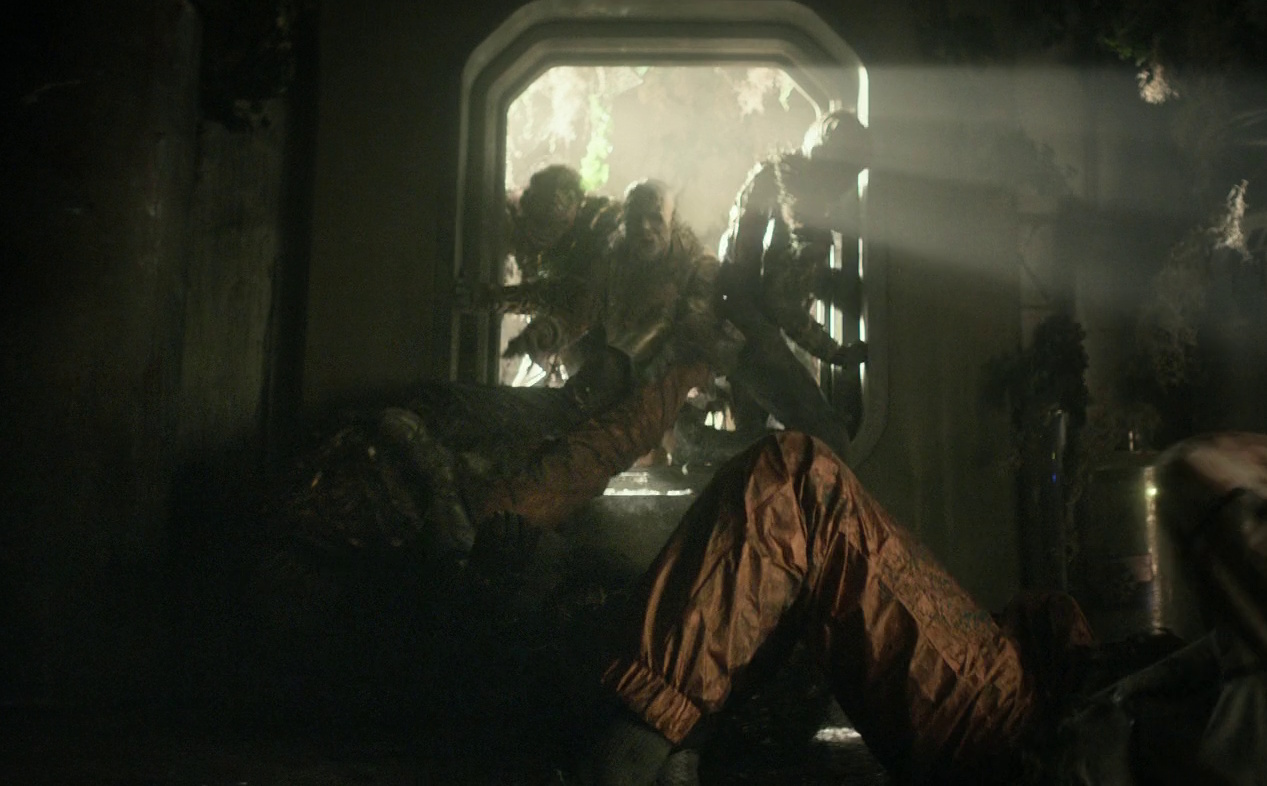
If the Borg represent your typical Night of the Living Dead zombies – shuffling around at a slow pace – then the zombies in Shuttle to Kenfori were closer to those from more modern titles like 28 Days Later or the aforementioned Train to Busan. Sprinting at full pelt after Captain Pike and Dr M’Benga, these zombies were truly scary! The jump-scare at the window about made me piss my pants, and the way the horde of zombies tumbled over one another desperately trying to grab our heroes… it was riveting stuff right out of a modern horror film!
Here’s a question I bet you weren’t expecting: did Shuttle to Kenfori make you think of Tuvix? Voyager’s “meme episode” definitely came up for me, with a flower that can merge DNA seeming quite familiar! I don’t think that means we’re gonna get a half-Gorn Captain Batel at the end of the day, or some kind of horrific Batel/Gorn “Brundlefly,” but it was interesting to hear about this flower and its unusual properties.
There was more to Shuttle to Kenfori than just the zombies – so let’s talk about that next!
Captain Batel’s Gorn infection coming back was something I kind of predicted last week after the opening pair of episodes. There was a lot of talk about her “re-absorbing” the Gorn DNA, especially in Wedding Bell Blues, and I just felt it hinted at there being more to this story than met the eye. In that sense it wasn’t a total shock – though I stand by what I said in my review of Hegemony, Part II: spoiling her survival in trailers and marketing material was a mistake. But I do think it’s interesting that, despite the Gorn themselves apparently taking a little nappy-nap, their influence and impact on our characters is going to stick around.
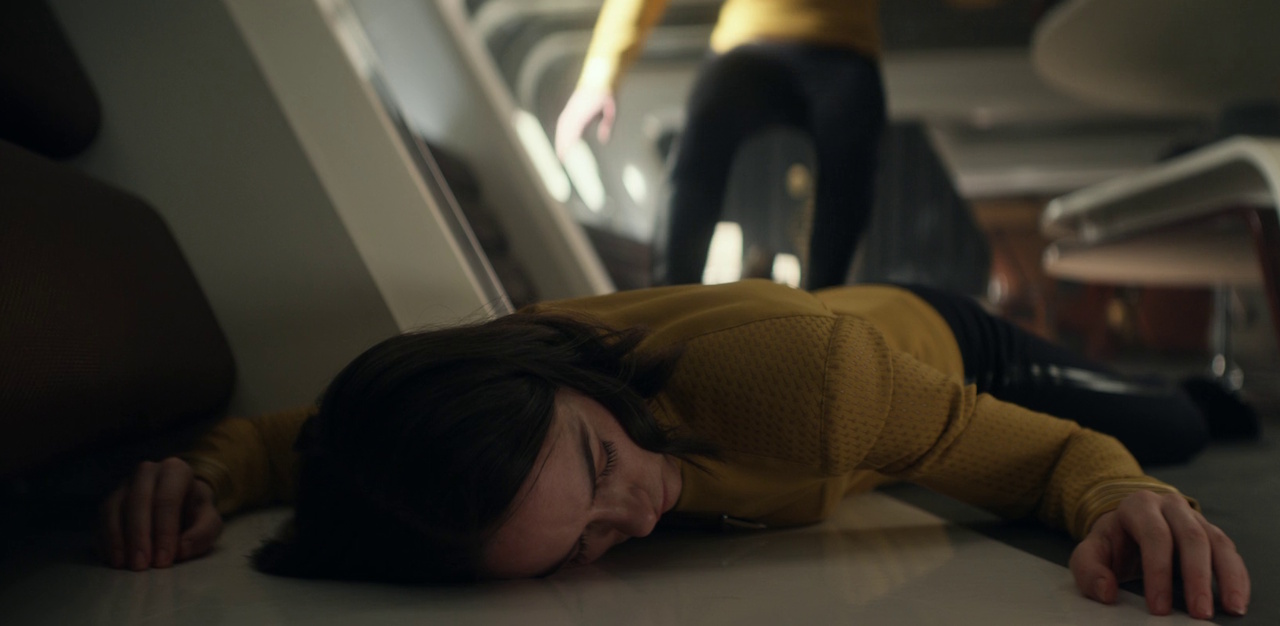
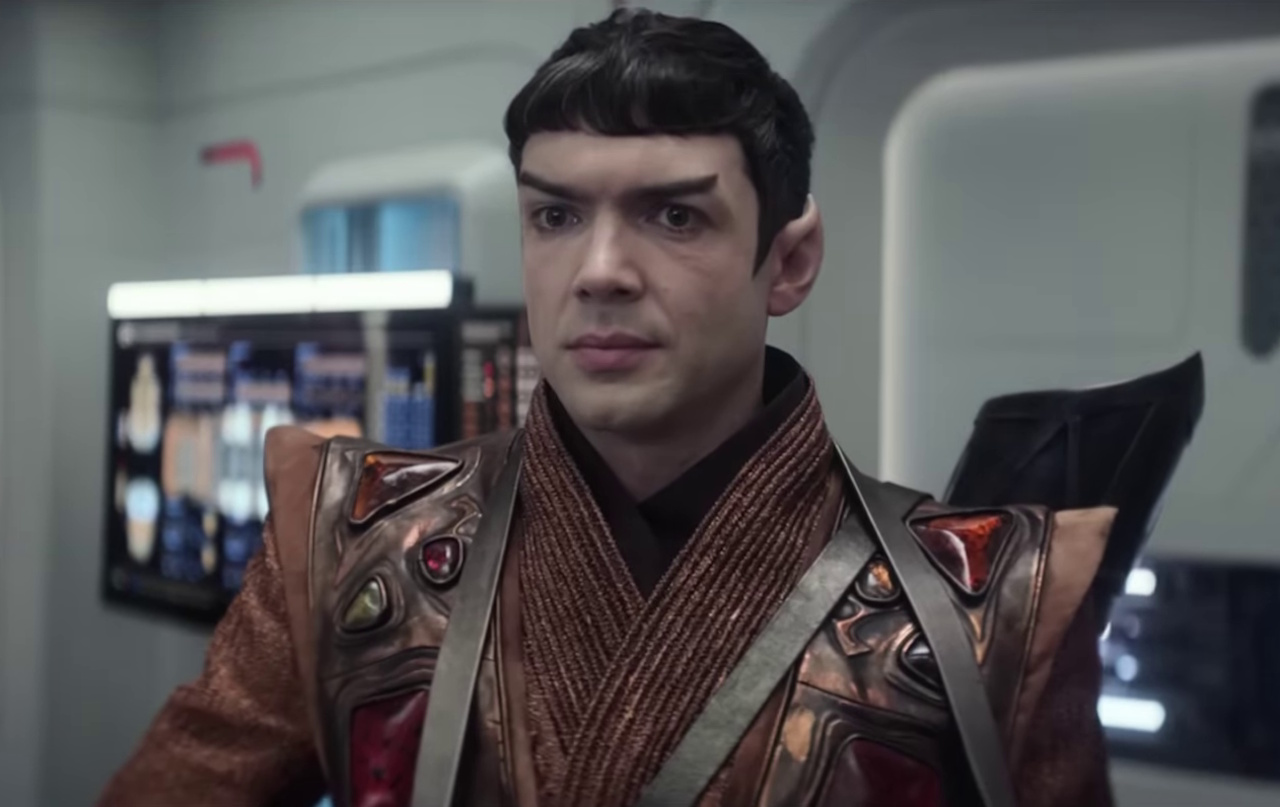
The mind-meld sequence really hammered home how dangerous and unsettling this idea of a Gorn infection truly is. Spock seemed to perceive not only Gorn DNA but an actual individual Gorn somehow inside of or sharing Captain Batel’s body, and that concept is pretty horrifying, if you think about it! The parasitic Gorn eggs draw a lot from the film Alien, where the xenomorphs infect humans in a similar way, and I noted in Hegemony, Part II how truly grotesque the latter stages of that infection looked – brought to life, again, with some fantastic physical special effects work.
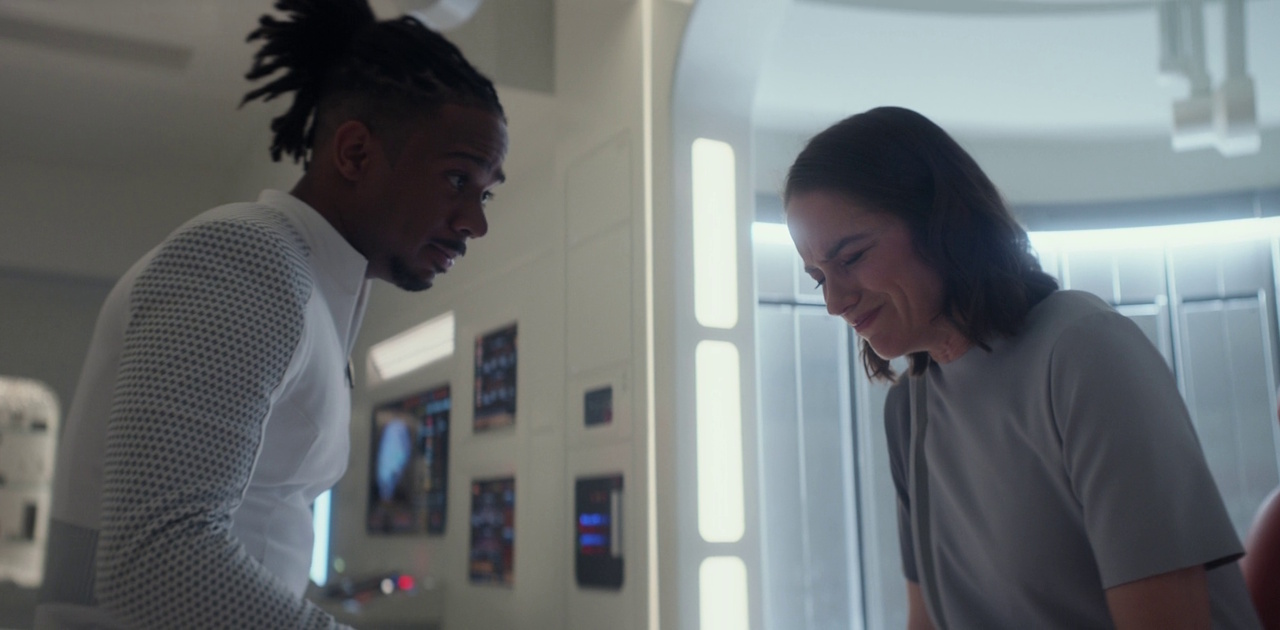
The inclusion of Gamble – the new nurse – was also interesting on this side of the story. I said last time that I wondered if Strange New Worlds was teeing him up as either a baddie in disguise or as a secondary character who could be killed off later in the story; when Spock flung him across the room in a Gorn-induced rage, I wondered if that might’ve been poor Ensign Gamble’s end! I like that Strange New Worlds is at least trying to add to its cast – and not just with returning legacy characters. Gamble is still a character I can’t quite place; if he is going to be killed off, fleshing him out and keeping him around in sickbay sequences makes a lot of sense. And if he’s going to take a villainous turn, I think it’s concealed well enough at this stage that the twist will still work!
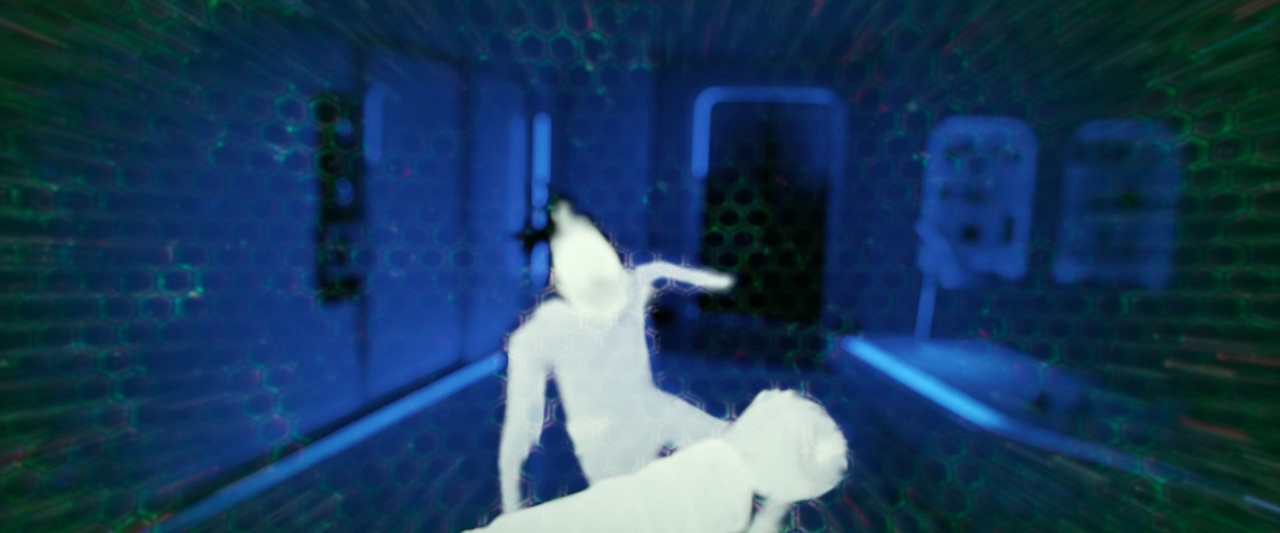
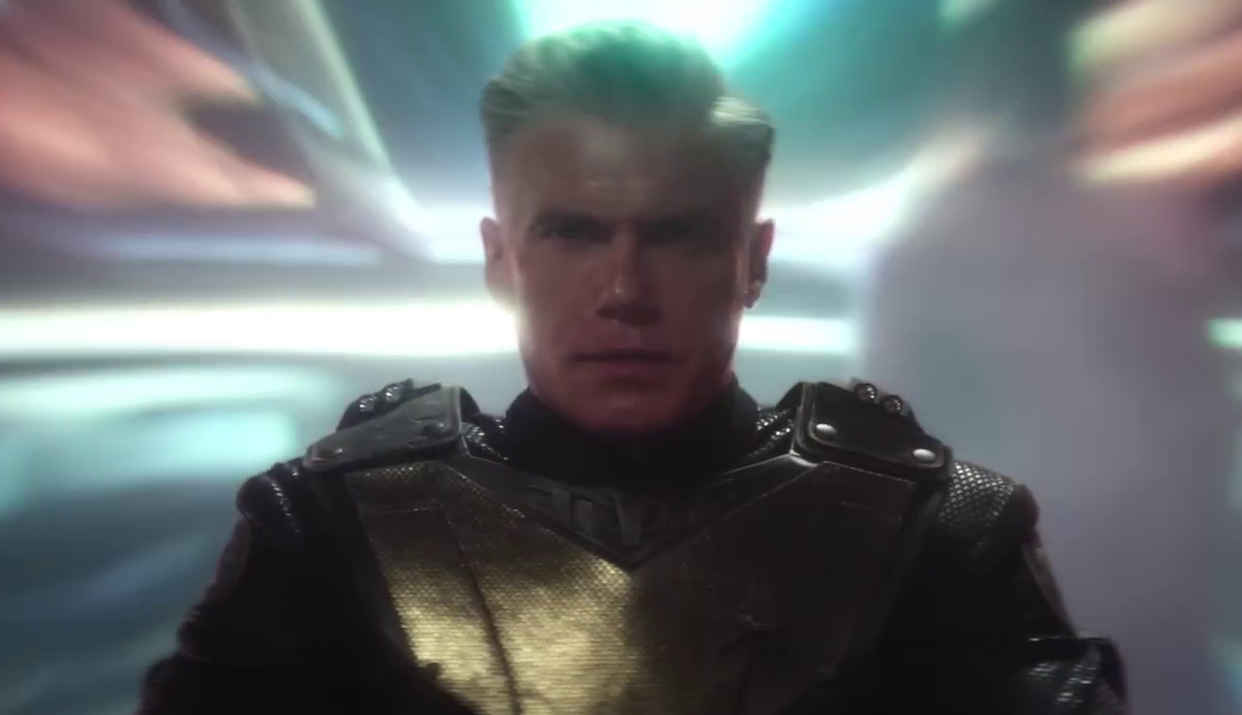
The mind-meld also gave us some very creative camera work/CGI. I love the idea that we were seeing things from a kind of “Gorn eye view,” percieving the world the way they might, with distorted colours and sensing things like heat from their prey. I can’t quite remember if All Those Who Wander did something similar… but I think so. Right? Regardless, this effect was creative and fun, and it really hammered home how this alien entity is still – somehow – alive inside Captain Batel. The CGI camera filter, with its hexagonal shapes, also harkened back to the original depiction of the Gorn captain in Arena – with his trademark silver, insect-like eyes.
Spock’s mind-meld also raised the stakes. The infection isn’t just going to kill Captain Batel, but it could spawn another Gorn – or perhaps multiple Gorn. And we saw in Season 1 how even juvenile Gorn and hatchlings can be deadly! So in that sense, Captain Batel’s infection isn’t just a danger to her, but it’s a potential danger to others, too – like the aforementioned Ensign Gamble! If I had to make a prediction or theory, by the way, I’d speculate that the young nurse will be killed in some kind of Gorn incident related to Captain Batel’s condition!
Also on the Gorn side of things, we had Lieutenant Ortegas. I touched on this last time, as she’s clearly suffering from some kind of Gorn-induced PTSD-type condition. Una and La’an noted that she’d passed her psychological evaluation and was deemed fit to return to duty, but there’s clearly more going on. We didn’t get anything as explicit as last week’s Gorn reflection/haunting (I’m loathe to say it was an out-and-out “hallucination” without more evidence), but Ortegas is clearly being reckless and insubordinate due to how she’s feeling.
This has potential, but I think it needs to be handled with care. As a secondary or even tertiary story element in an episode which was largely focused elsewhere, there wasn’t a ton of time to dedicate to Ortegas. While what we saw was interesting and does hint at her mental state not being great… I also feel echoes of some of Discovery and Picard’s half-arsed mental health story attempts. Modern Star Trek has admirably tried to include these kinds of stories… but hasn’t always done so with care. An exploration of post-war or post-captivity PTSD is a genuinely interesting narrative concept, and one that could be heart-wrenching if done well… but it’s also a storyline which needs sufficient time dedicating to it. That doesn’t mean an entire episode, but it does mean more than just a few scenes and sequences.
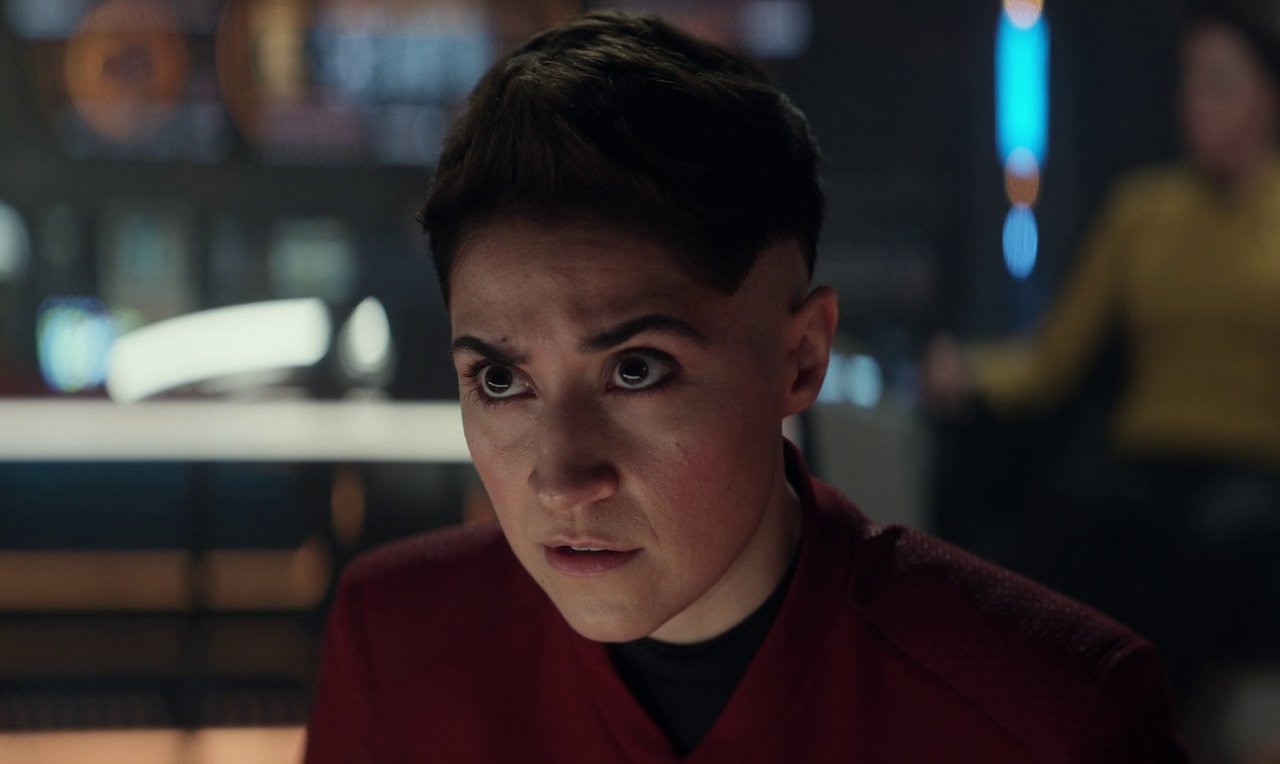
Ortegas’ run-in with Uhura kind of encapsulates this for me. At the briefing, Ortegas interjected with her own riskier but faster rescue plan. But when Una opted for Spock’s slower approach, Ortegas seemed to lash out at Uhura for not backing her up. But this lasted all of a few seconds, and didn’t come up again. Ortegas’ main conflict – if we can characterise this kind of thing as a “conflict” – was with Una. This left her interaction with Uhura kind of sticking out; it needed more than just a couple of lines’ worth of setup, and more of a payoff. If that pattern repeats across this storyline… I worry it won’t achieve everything it aims for.
And that would be a real shame. Melissa Navia, who plays Ortegas, was genuinely compelling to watch this week, and after the Gorn attack, it stands to reason that someone would be suffering some lingering effects. Given Ortegas’ background in the Klingon war as well, there’s a real opportunity to talk about post-traumatic stress, grief, fear, and the lingering after-effects of trauma. I just hope that this opportunity will be fully seized and not fumbled – like Picard and Discovery arguably did.
On a more positive note, I felt Ortegas’ frustration as her plan was shot down. When you’re already on edge, suffering, or just not feeling your best, frustration can boil over – and in a chain-of-command situation, like there is in Starfleet, if your superiors don’t go with your idea, that can absolutely be the kind of thing that sets people off! This side of the story was handled well, and I kind of like the idea of leaning into this and showing Ortegas going rogue, trying to force the situation.
One way or another, this will be resolved. And it’s more realistic than in earlier iterations of Star Trek, where characters would go through some horrible trauma one week and be totally fine the next. I appreciate that Strange New Worlds – which is more episodic in nature than other recent projects – still keeps these ongoing character arcs. It makes people like Ortegas feel more well-rounded; fleshed-out people not just characters. I’m just crossing my fingers and hoping that this PTSD-type storyline manages to stick the landing when it counts.
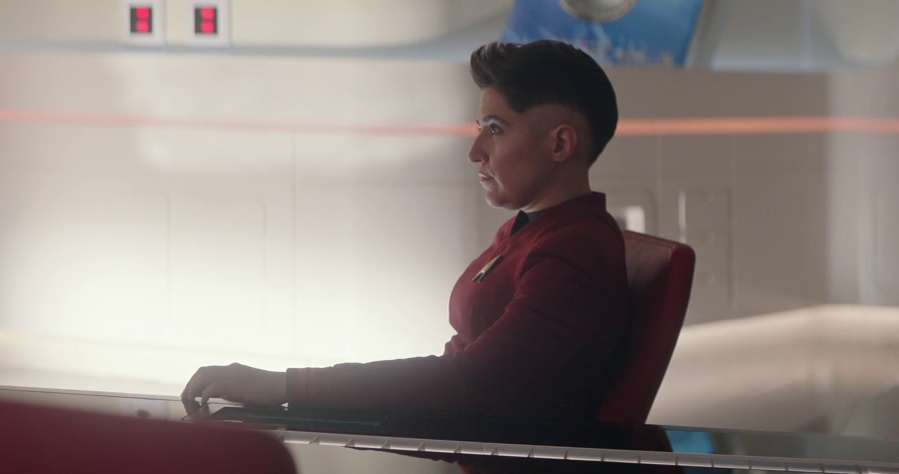
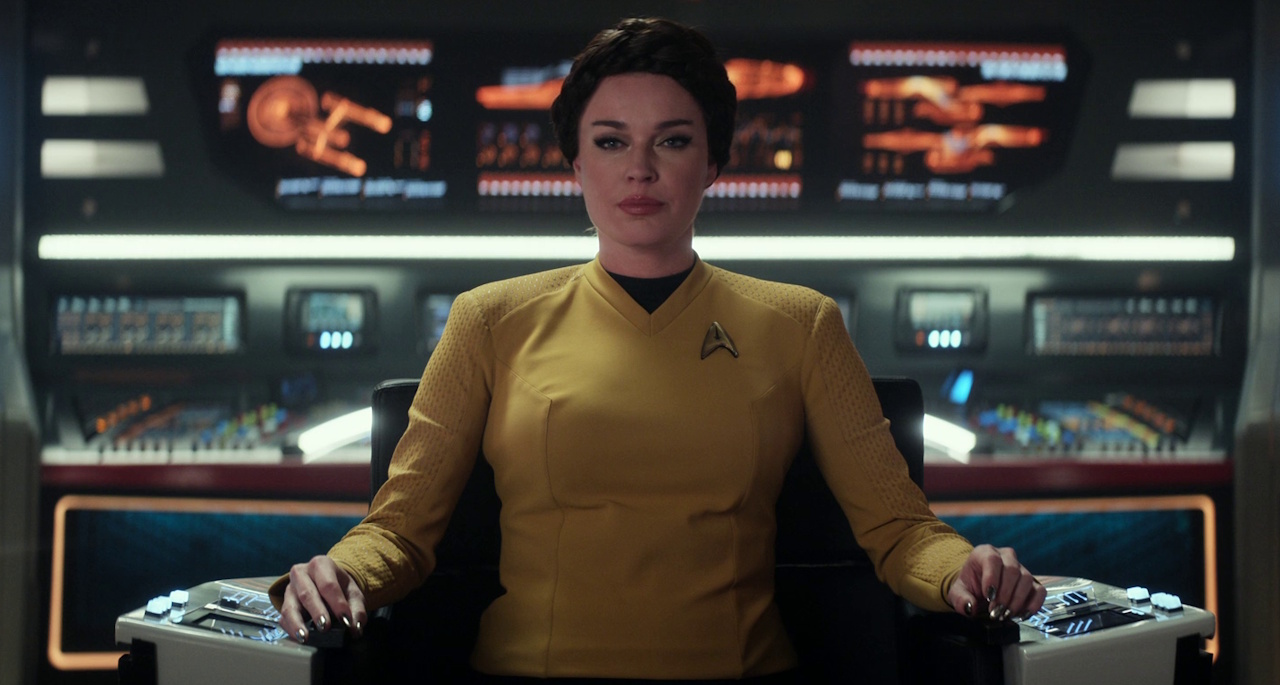
On this side of the story, we got to see Una in command. She’s sat in the captain’s chair before, of course, but this was one of her first real outings where she had to make impactful command decisions; really embracing the role of first officer. Una was clearly taking inspiration from the way Captain Pike runs his ship, but there were enough differences in her approach and the way she handled both the briefing and the Ortegas situation to keep things interesting; she wasn’t just a stand-in for Pike in those moments.
XOs in Star Trek shows have a challenging role: they can’t outshine their captains, but they can’t be too different from them when in command, either. I think we got a great example of how a first officer should behave when left in command in Shuttle to Kenfori – Una was her own person, running the briefing and commanding the ship in her own way. She clearly had the respect of her colleagues – Ortegas’ misbehaviour aside! But she’s also leaning into Captain Pike’s style of command, listening to people, taking suggestions, and then deciding on a plan based on the best evidence available to her. It was a fun sequence, and I’m glad we got to see her taking the reins for a change.
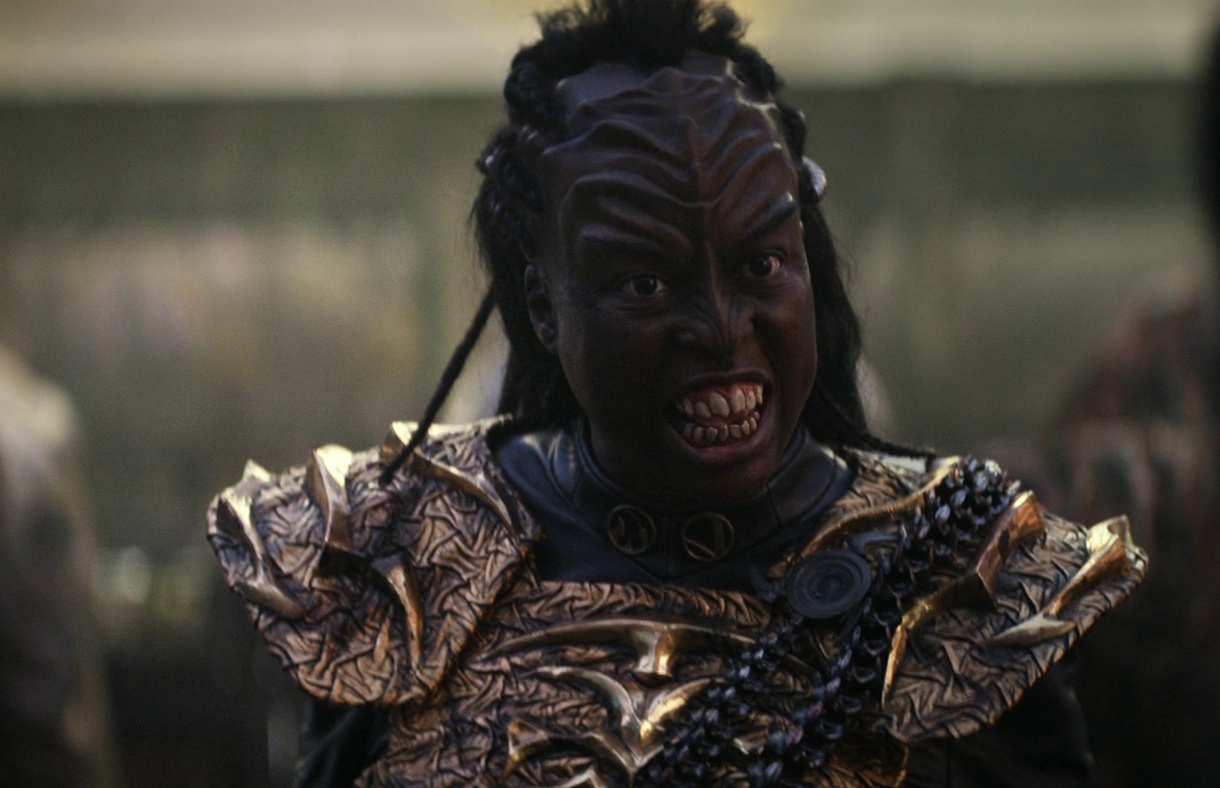
Although I criticised the inclusion of Bytha and her Klingon band, there was a lot to love on this side of the story. Set aside questions of whether the story needed to be told alongside Shuttle to Kenfori’s zombies for a moment and consider it as a standalone thing. We got a callback to Dr M’Benga’s war service, in which we know he was notorious for killing dozens of Klingons. It also connected to the Season 2 episode Under the Cloak of War in a big way, too. But moreover, what we got on this side of the story was one of the most “Klingon” performances in modern Star Trek.
Discovery’s Klingons could feel a bit muddled, sometimes. They were still Klingon, don’t get me wrong, and there are things to admire with that show’s Klingon war arc. But Strange New Worlds has returned the Klingons to a more familiar visual style and also a tone closer to “classic” Klingons, if you take my meaning. Bytha, who was the daughter of Dak’Rah, was very concerned with matters of personal honour and the standing of her family’s house in Klingon affairs – and this felt like something out of The Next Generation era in the best way possible.

Bytha was an interesting character, and I liked that her motivation was more complex than just “revenge.” It tied into what we know of Klingon houses and concepts of honour, harkeing back to stories involving Worf, Gowron, and Martok in The Next Generation and Deep Space Nine. Even when surrounded by zombies and with her team dead, Bytha couldn’t stop herself challenging Dr M’Benga to ritual combat in line with Klingon codes of honour, and I found that fascinating and realistic based on what we know of the Klingons.
Bytha’s death was also particularly gruesome! She went out on her own terms, staying true to her beliefs and restoring her honour. I liked Dr M’Benga using honour against her, by beating her and refusing to finish her off. This set the stage for Pike and M’Benga being able to escape, but also gave Bytha an ending to her story that was, if nothing else, fitting. There wasn’t a ton of time to develop Bytha, but we got to know enough about her to understand why she was there, what she wanted, and who she was as a character. Christine Horn, who played the character, did a great job, too – she avoided falling into the trap of going over-the-top or leaving Bytha feeling one-dimensional. Though not in focus for the entire story, I felt she was a compelling villain – even if I’d have preferred to see her in a different episode, perhaps!
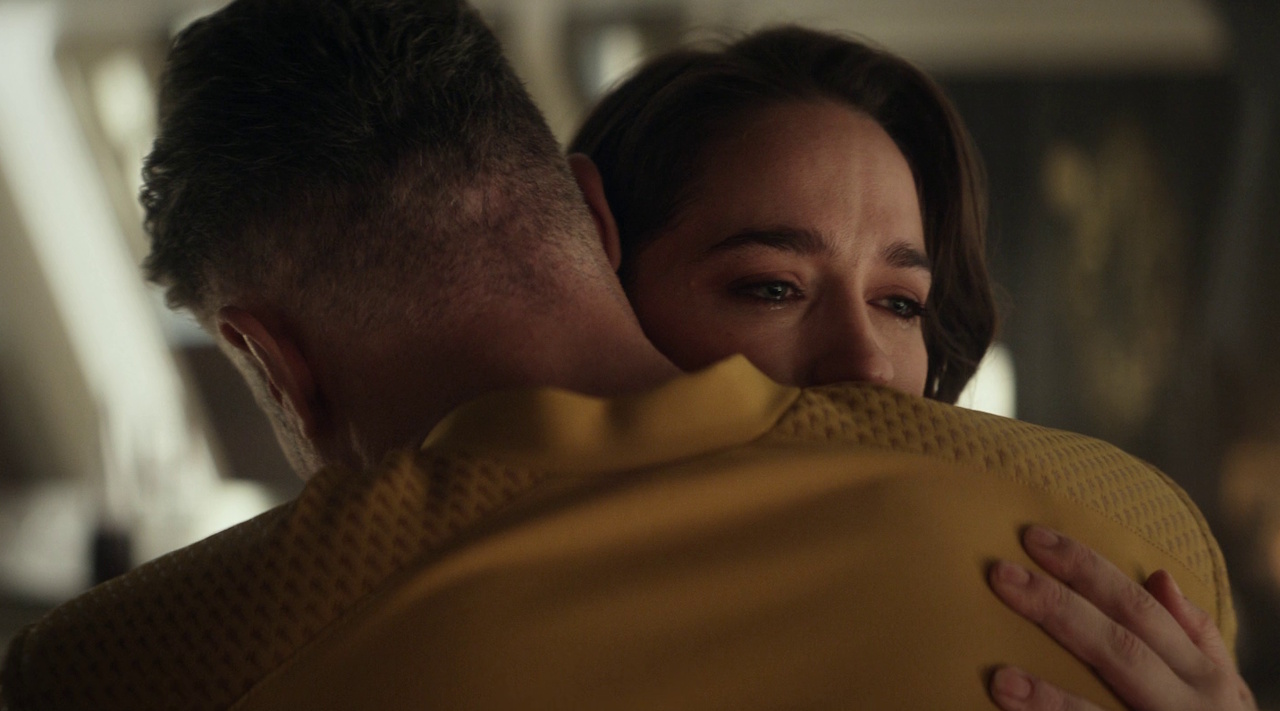
At the end of the episode, we saw Pike and Captain Batel reunited. And this was one of the most emotional sequences in Shuttle to Kenfori. Captain Batel tried to explain why she didn’t tell Pike everything straight away, and there were a couple of pertinent lines in there. “I don’t have the space to worry about how my dying hurts your feelings” is a powerful sentiment, and I think it encapsulates how she’s been feeling and how Pike can react. I don’t think Pike is actually that selfish, by the way, but we’ve seen over the course of his relationship with Batel that he isn’t the perfect partner and doesn’t always know what to say.
There’s also a message about medical consent and terminal illnesses. Pike’s story, going back to Discovery’s second season, has been building up to his own impending accident and disability. With Captain Batel, Pike is the one on the outside having to deal with her worsening health and potential terminal illness, and I think we got a powerful sequence exploring that. The failure of a treatment, an almost desperate, last-ditch attempt to find a new solution, and Captain Batel keeping Pike out of the picture because of how he might’ve reacted. It was riveting, dramatic stuff – but I’m glad that they came back together at the end. I’m curious to see what will come of this treatment – something tells me Captain Batel isn’t out of danger just yet.
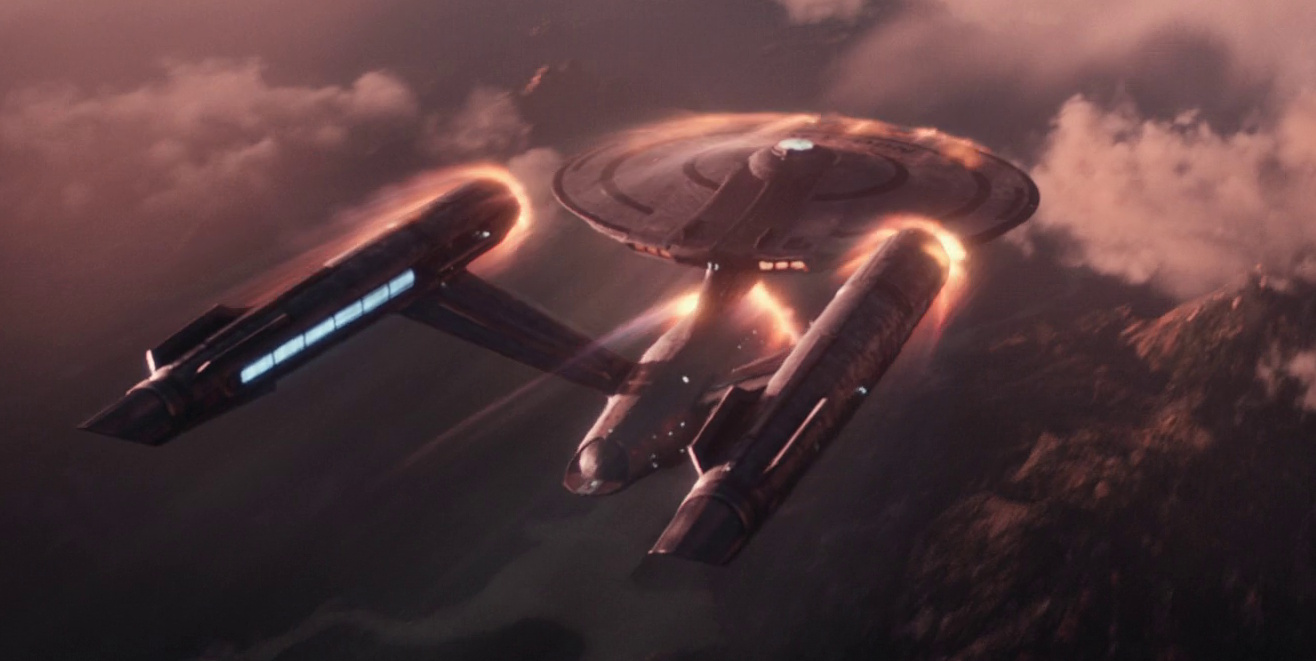
So that was Shuttle to Kenfori. With the exception of a rather rushed opening sequence and a Klingon villain who, while compelling in her own right, was ultimately unnecessary for the zombie story, I think it was an outstanding episode. The horror theme was present throughout, the zombies themselves were frightening and incredibly well-designed, and we moved along key storylines involving Pike, Captain Batel, Ortegas, Dr M’Benga… and possibly our new Ensign Gamble, too!
Obviously, though, this episode will be remembered for its zombies. While I don’t want Strange New Worlds to spend too long on any one storyline – as its episodic nature has been one of the best things about the series – I’m kind of hoping we revisit the zombies in the future. It seems strange for Starfleet to just abandon the planet Kenfori with its zombie infestation, and I’m sure the scientists would be very interested to learn more about this contagion, how it spreads, the moss that causes it… and maybe if it could be weaponised. That seems like something that the Klingons might be interested in, too – and if Bytha’s statement is anything to go by, the Klingons knew what they were about to walk into. Then there’s the Scotty and Pelia poster I mentioned earlier – is that hinting at a second zombie story later this season?
But that’s all for today. A tense, gruesome, and occasionally frightening episode – but it was a lot of fun! As Strange New Worlds hits the halfway point, I can already tell I’m not gonna be ready to let go of this wonderful series when the moment comes. It really has been the high-water mark of modern Star Trek, returning to the franchise’s episodic, exploration-focused roots – while also being brave enough to try completely new and different things.
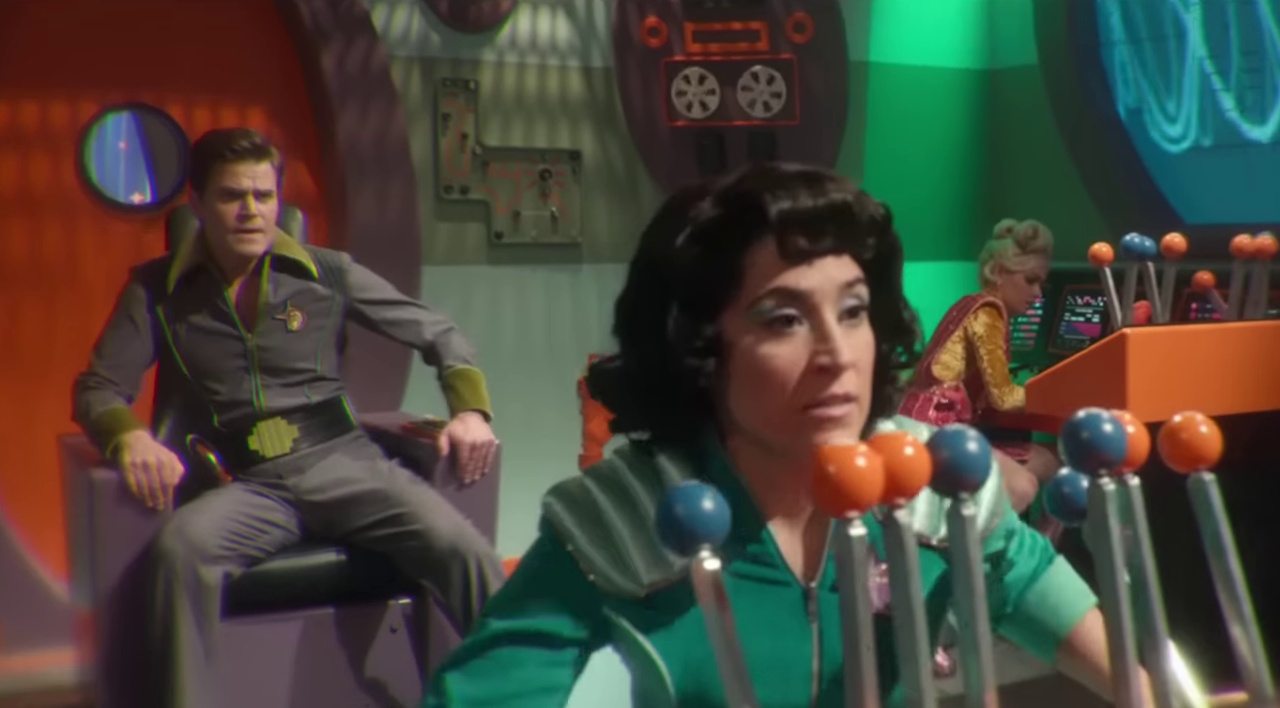
Next week we have the retro-inspired Space Adventure Hour, and also the apparent return of Kirk. This will almost certainly be a total change in tone from Shuttle to Kenfori’s horror offering, so if this wasn’t to your taste and you’re hankering for something a bit more light-hearted, I think you’re in for a treat!
Star Trek: Strange New Worlds Seasons 1-3 are available to stream now on Paramount+ in countries and territories where the platform exists. The first two seasons are also available on DVD/Blu-ray. The Star Trek franchise – including Strange New Worlds and all other properties discussed above – is the copyright of Paramount Global. This review contains the thoughts and opinions of one person only and is not intended to cause any offence.



 Trekking with Dennis