

Spoiler Warning: There are spoilers ahead for the Mass Effect trilogy – including Mass Effect: Legendary Edition – and its ending.
Like it or hate it (and my god do some people hate it) Mass Effect: Legendary Edition retains the three-and-a-half possible endings present in the Mass Effect 3 Extended Edition DLC from 2012. In this article I’m not going to spend too much time critiquing the ending of the games from a narrative perspective, but rather try to answer a question I haven’t really seen many fans asking: which is the “best” ending? And no, this isn’t a guide as to how to achieve a specific ending or outcome; it’s a consideration of the pros and cons of the various ending options.
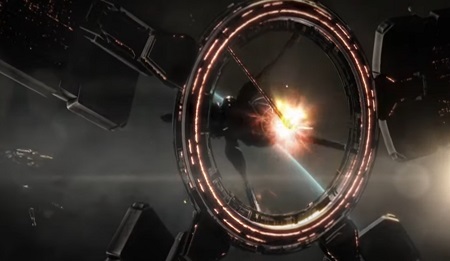
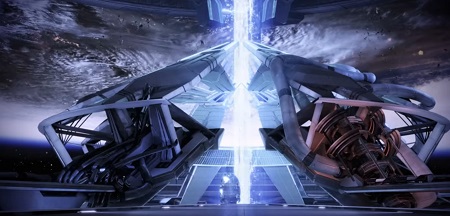
Just to recap if it’s been a while since you played Mass Effect 3, Commander Shepard and their crew spend much of the game putting together fleets and forces to defeat the Reapers. The key to victory in the Reaper War seems to be the Crucible – an ancient superweapon that the races of the galaxy come together to build across the game. After an intense battle in space and on Earth, the Crucible docks at the Citadel, ready to be armed and fired, bringing the war to an end.
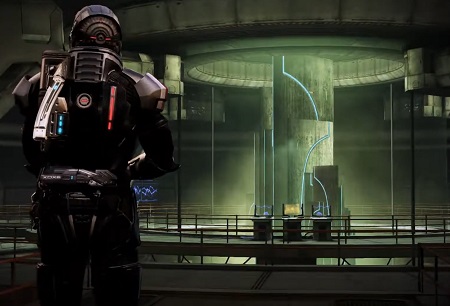
After arriving at the control room for the Crucible, Shepard is able to interact with the Catalyst – an artificial intelligence in control of the Reapers. The Catalyst tells Shepard that the reason for all of this death and destruction is to “preserve” organic life by harvesting it; otherwise organic life would inevitably be exterminated by synthetic life. The Catalyst then presents Shepard with three very different ways to use the Crucible, and it’s these three options we’re going to look at in a bit more detail today.
I’m going to exclude the option to not use the Crucible. Continuing to fight a doomed conventional war when the superweapon was available seems like a bad option, and players who go down this route ultimately learn that the Reapers were successful in their harvest of humanity and everyone else – duh, right? So that option is clearly not a good one in terms of outcome, though I guess you could argue that there’s a certain satisfaction in saying “I choose not to choose” and continuing to fight.
Assuming players have accrued enough war assets and done as much as possible to get ready for the final confrontation, the Catalyst will present Shepard with three options for using the Crucible: destroy the Reapers, control the Reapers, or fuse all organic and synthetic life together by rewriting everyone’s DNA. These options are substantially different from one another, and while many players have a gut reaction as to which is the “right” decision, each has points in its favour as well as major drawbacks.
Let’s begin with the most popular choice by far: using the Crucible to destroy the Reapers. I can’t remember where or when I read this, I think it must’ve been circa 2012-13 when Mass Effect 3 was new, but a survey was conducted asking players which ending they chose, and “destroy” received almost 75% of the votes. That’s what I’m basing my claim that it’s the “most popular” ending on, at any rate!
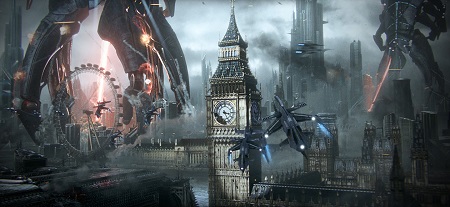
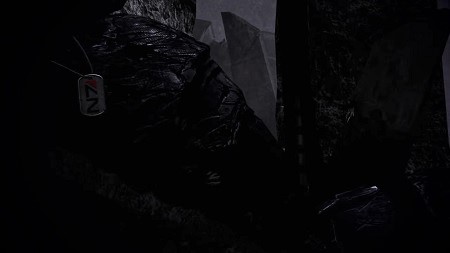
The biggest point in favour of this ending is that, if you have a high enough war score, it’s at least implied that Shepard might’ve survived. In a very brief scene lasting only a few seconds, amidst the ruins of what could be either the Citadel or London, a figure wearing burnt armour with an N7 dog tag sharply inhales right before the credits roll. Though Shepard’s survival has never been officially confirmed, many players – myself included! – subscribe to the notion that this figure simply must be Shepard. If there is to be a continuation of their story in Mass Effect 4, this is the only way it could happen based on what we see on screen.
Though on some level we all want our hero to survive, in many ways Shepard’s survival could be argued not to fit with the tone of the story. Both with the Citadel DLC (which is now incorporated into Legendary Edition) and with the sequence immediately prior to the assault on the Citadel beam, Shepard said their goodbyes to their friends and crewmates. There was a finality to Shepard’s story; the person who saved the galaxy. Having them survive might feel great, but it doesn’t necessarily make a fitting end to their story. Some narratives are destined to end with the death of the protagonist, and I’d argue that the Mass Effect trilogy probably fits that mould.
Setting aside their possible survival, the “destroy” ending best represents Shepard achieving what they set out to do. Destroying the Reapers has been Shepard’s mission since they first learned of their existence in the first game, and though there were hints at possibly being able to co-opt or control the Reapers, especially during later missions in Mass Effect 3, Shepard and their allies had argued against this at every opportunity. Destroying the Reapers, or defeating them militarily, appeared to be the only option; Shepard’s only goal.
But the “destroy” ending comes at a price, especially for players who’ve managed to navigate the tricky path across all three games to achieving peace between the geth and quarians or who have befriended EDI. Using the Crucible to destroy the Reapers also results in the destruction of other synthetic life forms, including EDI and the geth. This makes the price paid for destroying the Reapers very high indeed, as it’s possible to befriend the geth and EDI – and of course Legion was a big part of Mass Effect 2 in particular.
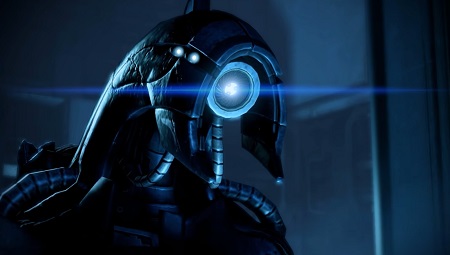
I really like Legion, both as a squadmate and as a character. Doing the mission Rannoch: Geth Fighter Squadrons also lets Shepard find out a great deal about the geth’s initial war against the quarians, and to say that they were wronged would be an understatement! Destroying EDI could be argued to be a sacrifice worth making; she is, after all, a single individual. But destroying every geth, especially if peace has been achieved and the geth have begun to adopt individual personalities, is tantamount to genocide.
So is exterminating the Reapers. Though in that case it’s arguably “kill or be killed,” the Reapers are nevertheless a sentient race, one far older than any other in the galaxy and with motivations and goals that humanity simply does not understand. The Reapers’ ruthless and relentless war may condemn them to death, especially since diplomacy and negotiation are not options, but the decision to wipe out the entire race, even for the sake of survival, should not be taken lightly. The Catalyst doesn’t give Shepard an option of talking the Reapers down, though.
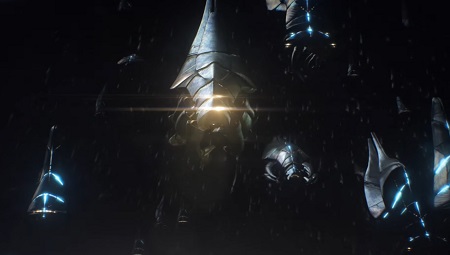
So Shepard has the option to go ahead with their plan and destroy the Reapers, perhaps on the understanding that the loss of the geth and EDI is a price worth paying for the survival of humans, turians, asari, and all the other galactic races. This is an extreme example of the calculus of war – sacrificing some so that others can survive. But despite Shepard’s initial goal of destroying the Reapers being in sight, the Catalyst offers alternatives – alternatives that Shepard (and us as players) are right to consider.
Throughout Mass Effect 3, a frequently-heard line from many characters is that nobody is sure precisely what the Crucible will do when activated. It’s only Shepard who learns what options are available, and although their intention was to defeat the Reapers, if a better option is available then it makes sense for Shepard to take advantage of that – especially considering the drawbacks of using the Crucible to destroy the Reapers.
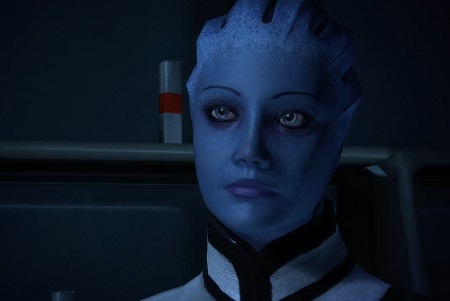
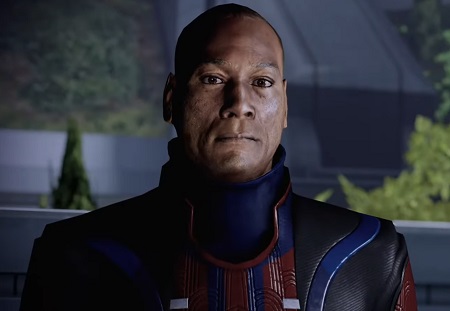
The first of the two other options presented – assuming players have a high enough war score – is to control the Reapers. This was the Illusive Man’s goal, though he was indoctrinated and thus unable to take advantage of the Reapers as he hoped. By choosing the “control” ending, Shepard will replace the Catalyst as the force in command of the Reapers – sacrificing their own body in the process. Shepard is thus able to make the Reapers leave, ending the war without further loss of life.
On the surface that seems like a reasonable option – it would save the lives of EDI and the geth while ending the war. But I have concerns! The Reapers, despite being coordinated by the Catalyst, appear to be sentient beings. Seizing control of them may be possible, but how long would Shepard remain in control? Is their personality forceful enough to permanently overcome the likes of Harbinger? By taking control of the Reapers and directing them to leave the galaxy, the Reapers aren’t defeated or destroyed and will continue to exist – meaning the threat hasn’t gone away.
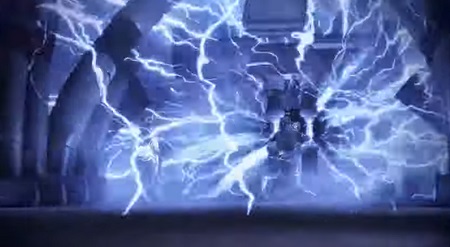
Even if Shepard were able to remain in control of the Reapers in the short term, we’re potentially talking about an indefinite amount of time, at which point all bets are off. Perhaps Harbinger or other Reapers are able to change Shepard’s mind, convincing them that a new harvest is necessary after all. Perhaps Shepard goes crazy after millennia of isolation from their own people, or loses control of the Reapers. There appear to be too many variables and unknowns to make this feel like a safe and permanent end to the Reaper threat.
So that brings us to option number 3: synthesis. Shepard is given the option to add their energy to the Crucible, forcibly changing all organic and synthetic DNA at a molecular level, creating a galaxy full of organic-synthetic hybrids. All races, whether krogan, salarian, human, or geth would be altered, presumably being augmented with a combination of synthetic and organic components.
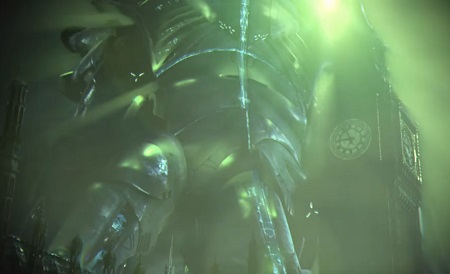
The Catalyst seems to present this outcome as not only the best option, but as something inevitable; an end goal it has been trying to reach. By fusing organic and synthetic life together, it argues, both will benefit and come to fully understand and appreciate each other. This is obviously a monumental decision for Shepard, with a lot of information – and opinion – being thrown at them mere moments before the decision has to be made.
My issue with the “synthesis” ending is that it shouldn’t be Shepard’s decision alone. A decision of this magnitude, even if it’s “correct” according to some, can’t be made for every sentient being in the galaxy by one individual; doing so is a grotesque over-reach of power, something no leader should ever be able to do. Not only that, but Shepard only hears a single opinion on this subject – the opinion of the Catalyst. Even if the Catalyst has been studying the idea of organic-synthetic synthesis for millions of years, can Shepard really trust it?
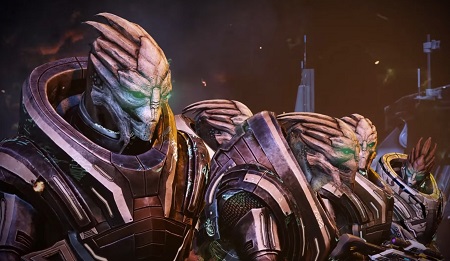
We’re dealing with the force behind the Reapers. All of the death and destruction that Shepard has seen, from Sovereign’s rise and the war against the Collectors through to the Reaper invasion itself is all caused by the Catalyst; an artificial intelligence which, according to its creators, the Leviathans, betrayed them and rebelled. Even if the Catalyst is 100% sincere in its belief that synthesis is the best possible outcome for everyone, can Shepard trust its judgement?
This is a being which decided that the best way to “save” organic civilisations is mass murder, co-opting and indoctrinating the few survivors into working for its purposes and goals. Its judgement has to be questionable at best; perhaps it’s simply a very sophisticated computer with a programming error! The fact that the quarian-geth conflict can be peacefully resolved, and that EDI is accepted by members of the Normandy’s crew suggest that peace between organics and synthetics is not as impossible as the Catalyst believes, and rather than simply accepting its judgement and view of the galaxy, surely it’s worth Shepard considering the possibility that the Catalyst is wrong. Machines, even very clever ones, can malfunction, and perhaps the Catalyst is experiencing something like that.
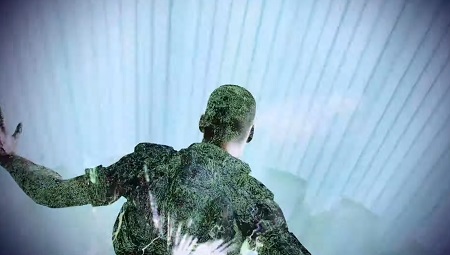
If Shepard does accept the Catalyst’s version of events, and accepts that synthesis is the best – and perhaps only – way to prevent future conflict, it means fundamental change for every sentient being in the galaxy. The consequences of this decision are almost unfathomable; it’s very difficult to wrap one’s head around the scale of the change Shepard is being asked to make. The positives – assuming the Catalyst can be trusted – are monumental: an end to conflict and war, unlimited knowledge, and perhaps even immortality are all on the table.
The game seems like it wants to present “synthesis” as the best ending, the one with the most upsides. But even if we take the Catalyst at its word and trust EDI’s epilogue seeming to show the galaxy on course for a new golden age, the question remains: was this Shepard’s decision to make? By changing everyone at a fundamental level, is that not similar to the Reapers’ own goals of harvesting organics and forcing survivors to become synthetic? In the short epilogue scene, everyone involved seems to just go along with what’s happened, perhaps suggesting their ways of thinking and even personalities have been altered. Is this truly a win, then, or just a galaxy-wide case of indoctrination?
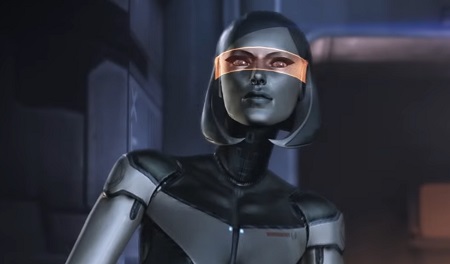
I’m not sure that there is a “best” ending to the game! Despite the justifiable criticisms of Mass Effect 3′s ending in 2012, the options on the table are varied and nuanced, with each presenting pros and cons. On my first playthrough of Mass Effect 3 I chose the “destroy” ending, because it seemed in keeping with what Shepard had been fighting for. But it comes at a high price, and the options to control the Reapers or go for synthesis both hold appeal, especially because it means saving the geth and EDI.
To answer the question I posed at the beginning: I don’t know. Each ending has points in its favour and each has drawbacks. “Control” seems to offer the greatest potential for something to go wrong, “destroy” means killing friends and allies, as well as condemning two races to extinction, and “synthesis” not only means Shepard deciding something monumental for everyone in the galaxy, but is also questionable at best because of who advocates for it, and the fact that it only appears as an option right at the very end of the game.
I don’t blame anyone who has a difficult time deciding which option to choose! The fact that there are three complex choices may not be to every player’s taste, especially considering the myriad choices and options available across the trilogy, but the fact that each ending represents a radically different vision of the future of the galaxy is, at the very least, interesting.
One of the great things about a series like Mass Effect is replayability. It’s possible, then, for different versions of Commander Shepard to make different choices, choices which best fit their personality and the way that individual would handle this moment. Shepards who weren’t able to make peace between the geth and quarians might have no qualms about destroying the Reapers and other synthetics, whereas those who were very attached to Legion and his people may desperately look for another option – and that’s just one example. So maybe the true answer to the question I asked at the beginning is: “whichever one you think is best.”
Was that a cop-out? Maybe! But I stand by it. I have a hard time making this choice – it’s by far the most difficult in the entire trio of games, even though the short epilogue that follows is anticlimactic at best. The fact that the writers of the Mass Effect series succeeded at getting players so invested in the world they created that the choices posed at the very end feel like they matter is testament to how amazing these stories are. Because of how different the endings are, though, it does raise an interesting question: which one will BioWare choose as “canon” when they come to make Mass Effect 4?
Mass Effect: Legendary Edition is out now for PC, PlayStation 4, PlayStation 5, Xbox One, and Xbox Series S/X. The Mass Effect series – including all titles and properties mentioned above – is the copyright of Electronic Arts and BioWare. This article contains the thoughts and opinions of one person only and is not intended to cause any offence.

 Trekking with Dennis