Ten of my gaming pet peeves

A couple of years ago, I put together two lists of things I really dislike about modern video games – but somehow I’ve managed to find even more! Although there’s lots to enjoy when it comes to the hobby of gaming, there are still plenty of annoyances and dislikes that can detract from even the most pleasant of gaming experiences. So today, I thought it could be a bit of fun to take a look at ten of them!

Several of these points could (and perhaps one day will) be full articles or essays all on their own. Big corporations in the video games industry all too often try to get away with egregiously wrong and even malicious business practices – and we should all do our best to call out misbehaviour. While today’s list is somewhat tongue-in-cheek, there are major issues with the way big corporations in the gaming realm behave… as indeed there are with billion-dollar corporations in every other industry, too.

Gaming is great fun… but it has its annoyances!

That being said, this is supposed to be a bit of fun. And as always, I like to caveat any piece like this by saying that everything we’re going to be talking about is nothing more than one person’s subjective take on the topic! If you disagree with everything I have to say, if you like, enjoy, or don’t care about these issues, or if I miss something that seems like an obvious inclusion to you, please just keep in mind that all of this is just the opinion of one single person! There’s always room for differences of opinion; as gamers we all have different preferences and tolerance levels.

If you’d like to check out my earlier lists of gaming annoyances, you can find the first one by clicking or tapping here, and the follow-up by clicking or tapping here. In some ways, this list is “part three,” so if you like what you see, you might also enjoy those older lists as well!

With all of that out of the way, let’s jump into the list – which is in no particular order.

Number 1:
Motion blur and film grain.

Film grain and motion blur options in Ghostwire Tokyo.

Whenever I boot up a new game, I jump straight into the options menu and disable both motion blur and film grain – settings that are almost always inexplicably enabled by default. Film grain is nothing more than a crappy Snapchat filter; something twelve-year-olds love to play with to make their photos look “retro.” It adds nothing to a game and actively detracts from the graphical fidelity of modern titles.

Motion blur is in the same category. Why would anyone want this motion sickness-inducing setting enabled? It smears and smudges even the best-looking titles for basically no reason at all. Maybe on particularly underpowered systems these settings might hide some graphical jankiness, but on new consoles and even moderately good PCs, they’re unnecessary. They make games look significantly worse – and I can’t understand why anyone would choose to play a title with them enabled.

Number 2:
In-game currencies that have deliberately awkward exchange rates.

Show-Bucks bundles in Fall Guys.

In-game currencies are already pretty shady; a psychological manipulation to trick players into spending more real money. But what’s far worse is when in-game currencies are deliberately awkward with their exchange rates. For example, if most items on the storefront cost 200 in-game dollars, but I can only buy in-game dollars in bundles of 250 or 500. If I buy 250 in-game dollars I’ll have a few left over that I can’t spend, and if I buy 500 then I’ll have spent more than I need to.

This is something publishers do deliberately. They know that if you have 50 in-game dollars left over there’ll be a temptation to buy even more to make up the difference, and they know players will be forced to over-spend on currencies that they have no need for. Some of these verge on being scams – but all of them are annoying.

Number 3:
Fully-priced games with microtransactions.
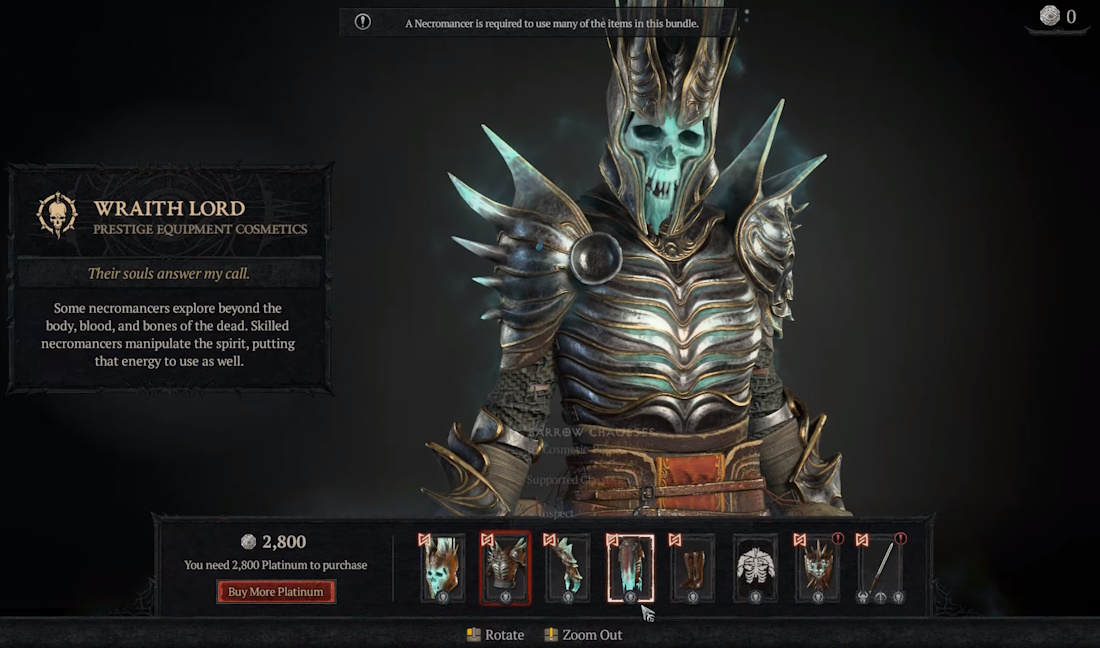
The in-game shop in Diablo IV.

If a game is free – like Fortnite or Fall Guys – then microtransactions feel a lot more reasonable. Offering a game for free to fund it through in-game purchases is a viable business model, and while it needs to be monitored to make sure the in-game prices aren’t unreasonable, it can be an acceptable way for a game to make money. But if a game costs me £65 up-front, there’s no way it should include microtransactions.

We need to differentiate expansion packs from microtransactions, because DLC that massively expands a game and adds new missions and the like is usually acceptable. But if I’ve paid full price for a game, I shouldn’t find an in-game shop offering me new costumes, weapon upgrades, and things like that. Some titles absolutely take the piss with this, too, even including microtransactions in single-player campaigns, or having so many individual items for sale that the true cost of the game – including purchasing all in-game items – can run into four or even five figures.

Number 4:
Patches as big as (or bigger than) the actual game.

No patch should ever need to be this large.

This one kills me because of my slow internet! And it’s come to the fore recently as a number of big releases have been buggy and broken at launch. Jedi: Survivor, for example, has had patches that were as big as the game’s original 120GB download size – meaning a single patch would take me more than a day to download. Surely it must be possible to patch or fix individual files without requiring players to download the entire game all over again – in some cases more than once.

I’m not a developer or technical expert, and I concede that I don’t know enough about this topic on a technical level to be able to say with certainty that it’s something that should never happen. But as a player, I know how damnably annoying it is to press “play” only to be told I need to wait hours and hours for a massive, unwieldy patch. Especially if that patch, when fully downloaded, doesn’t appear to have actually done anything!

Number 5:
Broken PC ports.

This is supposed to be Joel from The Last Of Us Part 1.

As I said when I took a longer look at this topic, I had hoped that broken PC ports were becoming a thing of the past. Not so, however! A number of recent releases – including massive AAA titles – have landed on PC in broken or even outright unplayable states, plagued by issues that are not present on PlayStation or Xbox.

PC is a massive platform, one that shouldn’t be neglected in this way. At the very least, publishers should have the decency to delay a PC port if it’s clearly lagging behind the console versions – but given the resources that many of the games industry’s biggest corporations have at their disposal, I don’t see why we should accept even that. Develop your game properly and don’t try to launch it before it’s ready! I’m not willing to pay for the “privilege” of doing the job of a QA tester.

Number 6:
Recent price hikes.

It must be some kind of visual metaphor…

Inflation and a cost-of-living crisis are really punching all of us in the face right now – so the last thing we need are price hikes from massive corporations. Sony really pissed me off last year when they bragged to their investors about record profits before turning around literally a matter of weeks later and announcing that the price of PlayStation 5 consoles was going to go up. This is unprecedented, as the cost of consoles usually falls as a console generation progresses.

But Sony is far from the only culprit. Nintendo, Xbox, Activision Blizzard, TakeTwo, Electronic Arts and practically every major corporation in the games industry have jacked up their prices over the last few years, raising the basic price of a new game – and that’s before we look at DLC, special editions, and the like. These companies are making record-breaking profits, and yet they use the excuse of “inflation” to rip us off even more. Profiteering wankers.

Number 7:
The “release now, fix later” business model is still here.

The player character falling through the map in Star Wars Jedi: Survivor.

I had hoped that some recent catastrophic game launches would have been the death knell for the “release now, fix later” business model – but alas. Cyberpunk 2077 failed so hard that it got pulled from sale and tanked the share price of CD Projekt Red… but even so, this appalling way of making and launching games has persisted. Just in the first half of 2023 we’ve had titles like Hogwarts Legacy, Redfall, Jedi: Survivor, Forspoken, and The Lord of the Rings: Gollum that arrived broken, buggy, and unplayable.

With every disaster that causes trouble for a corporation, I cross my fingers and hope that lessons will be learned. But it seems as if the “release now, fix later” approach is here to stay. Or at least it will be as long as players keep putting up with it – and even defending it in some cases.

Number 8:
Day-one DLC/paywalled day-one content.
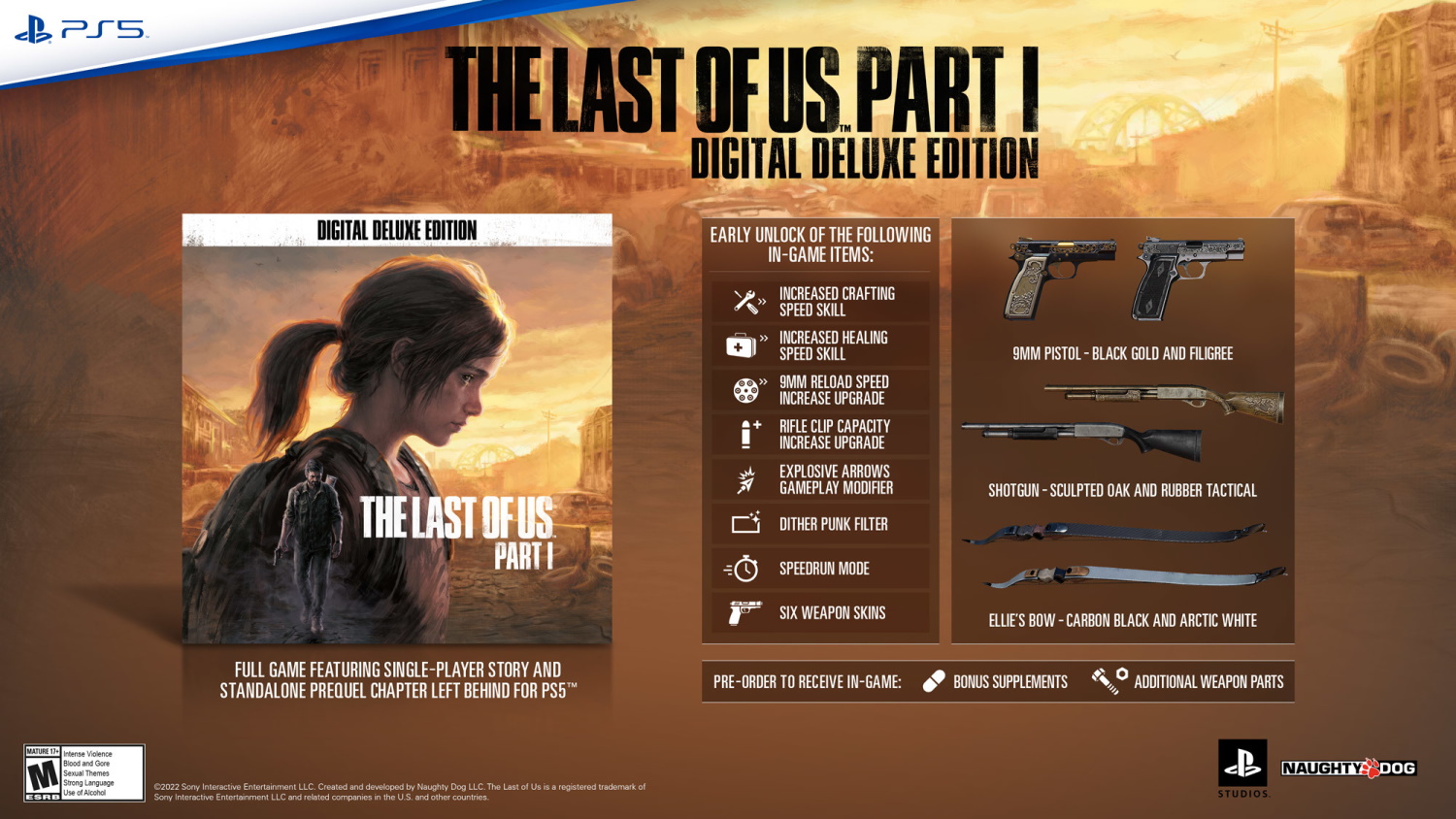
An example of a “digital deluxe edition” and its paywalled content.

It irks me no end when content that was clearly developed at the same time as the “base version” of a game is paywalled off and sold separately for an additional fee. The most egregious example of this that comes to mind is Mass Effect 3′s From Ashes DLC, which was launched alongside the game. This DLC included a character and missions that were completely integrated into the game – yet had been carved out to be sold separately.

This practice continues, unfortunately, and many modern titles release with content paywalled off, even if that content was developed right along with the rest of the game. Sometimes these things are designed to be sold as part of a “special edition,” but that doesn’t excuse it either. Even if all we’re talking about are character skins and cosmetic content, it still feels like those things should be included in the price – especially in single-player titles. Some of this content can be massively overpriced, too, with packs of two or three character skins often retailing for £10 or more.

Number 9:
Platform-exclusive content and missions.

Spider-Man was a PlayStation-only character in Marvel’s Avengers.

Some titles are released with content locked to a single platform. Hogwarts Legacy and Marvel’s Avengers are two examples that come to mind – and in both cases, missions and characters that should have been part of the main game were unavailable to players on PC and Xbox thanks to deals with Sony. While I can understand the incentive to do this… it’s a pretty shit way of making money for a publisher, and a pretty scummy way for a platform to try to attract sales.

Again, this leaves games incomplete, and players who’ve paid full price end up getting a worse experience or an experience with less to do depending on their platform of choice. That’s unfair – and it’s something that shouldn’t be happening.

Number 10:
Pre-orders.

Cartman from South Park said it best:
“You know what you get for pre-ordering a game? A big dick in your mouth.”

Pre-ordering made sense – when games were sold in brick-and-mortar shops on cartridges or discs. You wanted to guarantee your copy of the latest big release, and one way to make sure you’d get the game before it sold out was to pre-order it. But that doesn’t apply any more; not only are more and more games being sold digitally, but even if you’re a console player who wants to get a game on disc, there isn’t the same danger of scarcity that there once was.

With so many games being released broken – or else failing to live up to expectations – pre-ordering in 2023 is nothing short of stupidity, and any player who still does it is an idiot. It actively harms the industry and other players by letting corporations get away with more misbehaviour and nonsense. If we could all be patient and wait a day or two for reviews, fewer games would be able to be launched in unplayable states. Games companies bank on a significant number of players pre-ordering and not cancelling or refunding if things go wrong. It’s free money for them – and utterly unnecessary in an age of digital downloads.

So that’s it!
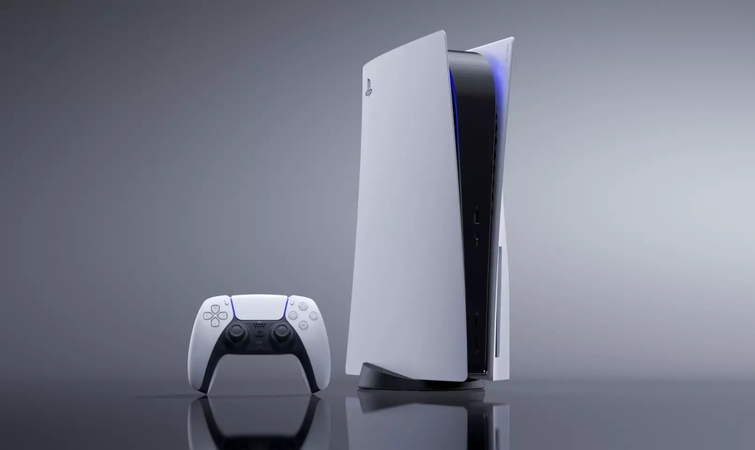
A PlayStation 5 console.

We’ve gone through ten of my pet peeves when it comes to gaming. I hope this was a bit of fun – and not something to get too upset over!

The gaming landscape has changed massively since I first started playing. Among the earliest titles I can remember trying my hand at are Antarctic Adventure and the Commodore 64 title International Soccer, and the first home console I was able to get was a Super Nintendo. Gaming has grown massively since those days, and the kinds of games that can be created with modern technology, game engines, and artificial intelligence can be truly breathtaking.

But it isn’t all good, and we’ve talked about a few things today that I find irritating or annoying. The continued push from publishers to release games too early and promise patches and fixes is particularly disappointing, and too many publishers and corporations take their greed to unnecessary extremes. But that’s the way the games industry is… and as cathartic as it was to get it off my chest, I don’t see those things disappearing any time soon!

All titles mentioned above are the copyright of their respective developer, studio, and/or publisher. This article contains the thoughts and opinions of one person only and is not intended to cause any offence.

More of the worst things about modern video games

A couple of months ago I took a look at some of the trends I hate the most in the modern games industry. But one list wasn’t comprehensive enough, apparently, because I’ve found ten more of the worst things to look at today!

Gaming as a hobby has come a long way since I first owned a Super Nintendo. Games have evolved from being little more than electronic toys to being a legitimate artistic and storytelling medium in their own right, and many of my favourite entertainment experiences of all time are in the gaming realm. Games can equal, and in some cases surpass, film and television.

Mass Effect 2 has to be one of the best stories I’ve ever experienced.

But not everything about gaming is fun! There are annoyances and problems with games today, some of which didn’t exist a few years ago, and others which have dogged the medium since its inception. As always, this list is entirely subjective, so if I criticise something you like, or ignore something you hate, please keep in mind that all of this is just the opinion of one person. If you want to check out my previous list, you can find it by clicking or tapping here.

With all that out of the way, let’s get started!

Number 1: Checkpoints

Cal Kestis at a checkpoint in Star Wars Jedi: Fallen Order.

Is it 1996? No? Then let’s stop using checkpoints and allow players the freedom to save their game whenever and wherever they need to! With relatively few sensible exceptions – like in the middle of a boss fight or during a cut-scene – there’s no reason why modern games can’t incorporate a free save system.

Checkpoints were a limitation of older hardware and software; games and consoles weren’t always able to offer players the ability to save the game anywhere, so designated save zones – or checkpoints – had to be incorporated. This was already a step up from passwords that you had to write down (remember those?) but checkpoints are simply unnecessary and out-of-date in modern games.

Control also uses a checkpoint system.

With gaming having grown in the years since checkpoints were the only way to manage save files, more people from different backgrounds are getting into the hobby – including many more adults, working-age people, and folks with less free time. Having to replay a lengthy section of a game because the game didn’t offer the freedom to save when you needed to is incredibly frustrating, and considering that there is no technical reason for not implementing a proper save system, in my opinion there’s no excuse.

Whine all you want about “vision” and “integrity” and that players should “git gud,” but a lot of folks simply want to play through a fun and entertaining narrative. We also want to play through it once, not multiple times because of the lack of a convenient save function. Checkpoints seemed to have largely disappeared until the likes of Dark Souls brought them back as part of its “extreme difficulty” shtick. But there’s a difference between a challenge and something frustrating; checkpoints are definitely in the latter category.

Number 2: Boring and/or repetitive side-missions

“Another settlement needs our help.”

It’s no good bragging about the number of quests or missions in your game if 80% of them are the same – or equally as bad as each other! Open-world games tend to fall victim to this, but it’s a phenomenon that can plague all manner of different titles.

These kinds of missions follow one of a couple of different formulae: “go to location X and pick up item Y” or “go to location X and kill Y number of enemies.” Then that’s it. Mission over, receive a few experience points or a random, usually-not-worth-it item, and repeat. Such quests are nothing but padding for a game that should’ve been shorter and more focused.

The Mako in Mass Effect: Legendary Edition.

Even otherwise good games can end up going down this route. Mass Effect 1 is a case in point. The main story missions in the game are phenomenal, and while the stories which set up some of the side-missions sound like they could be potentially interesting, each one basically consists of “drive vehicle to location, kill enemies, press button.” Because 90% of the side-missions use basically identical maps and environments, this gets old fast – even if the storyline setting up the mission seems superficially interesting.

If you can’t make a good side-mission, skip it. I’d rather play a game that isn’t as long but doesn’t have this unnecessary fluff padding it out and, frankly, wasting my time.

Number 3: Collect-a-thons

Another feather. Yay.

On a related note, many open-world games have recently begun being padded out with miscellaneous items to collect. Upon picking up a feather, for example, the game will tell you that you’ve discovered 1/100 – only 99 more to go! These items almost always have no impact on the plot or gameplay of a title, and often don’t even give out a reward for finding all of them. At most you might get a trophy or achievement for collecting all of them.

At least boring side-missions usually have some kind of setup. A villager needs you to kill the rats in his basement, an admiral needs you to shut down all four computer cores, etc. Though the missions themselves are junk, a modicum of thought went into their creation. Collect-a-thons have no such redeeming feature. Often the items to be collected are so random that they have no link whatsoever to the plot or character.

Pigeons in Grand Theft Auto IV are another example.

Why does my grizzled war veteran on a mission to save the world need to spend his time hunting down 100 feathers or 50 leaves? If the items did something – anything – like if they could be used for crafting or if they were notes or recordings containing lore and info about the game world, well at least there’d be a point. It wouldn’t necessarily be a good point, but still.

These items are added into games – often in obscure or hard-to-reach places – purely to pad out the game and extend its runtime. They serve no purpose, either narratively or in terms of gameplay, and while I have no doubt that some players find collecting every single in-game item fun, for me I’d rather the effort and attention wasted on features like this was refocused elsewhere. One side-mission, even an average one, would be better than 100 random pieces of shit to collect.

Number 4: Online cheating

An aimbot for popular game Fortnite.

If you have a single-player game and want to turn on god mode or assisted aiming, go for it. Cheats can sometimes be accessibility features, offering a route through a game for players with disabilities, as well as providing a way to skip the grind for players who don’t have much time. But when you go online and play against real people, you damn well better leave the cheats behind!

There are so many examples of cheating players getting caught and banned that it can be kind of funny. Even some professional and wannabe-professional players have been caught out and learned the hard way that the internet never forgets. But no one should be doing this in the first place.

Some losers even cheated at Fall Guys, for heaven’s sake…

Trying to take away the most fundamental tenet of competition – fairness – is so phenomenally selfish that I don’t even know what to say. If there were a financial incentive – like winning the prize money at a big tournament – I could at least recognise that some folks would be tempted to try to take the easy route to payday. But in a game like Fall Guys where it’s supposed to be fun… I just don’t get why someone would feel the need to cheat.

Some games have a bigger problem with cheating than others, and games that don’t get a handle on a cheating problem fast can find themselves in serious jeopardy. It’s unfortunate that the anonymity of the internet means that a lot of players simply get away with it, with some even going so far as to use “disposable” accounts, so that if one gets banned they can just hop to another and keep right on cheating.

Number 5: Overly large, confusing levels

Looks like fun…

We kind of touched on this last time when considering empty open worlds, but some games have poorly-designed levels that are too large and almost maze-like. Getting lost or running in circles – especially if no map is provided – can become frustrating very quickly. These kinds of levels are often repetitive and bland with little going on.

Some games have levels which are simply not well laid-out, making it difficult to find the right path forward. I’ve lost count of the number of times I was trying to explore, thinking I was investigating a side-area, only to find it was the main path forward, and vice versa. Advancements in technology – particularly as far as file sizes go – have meant that levels and worlds can be physically larger. Sometimes that’s a good thing, but sometimes it isn’t!

This also applies to featureless open worlds or maps without landmarks for ease of navigation.

If a game has a map, or if a level is well-signposted (either literally or figuratively) then it shouldn’t matter how large it is. Players will be able to figure out where to explore and where to go to proceed with the story or quest. But too often that isn’t the case, and getting lost, backtracking, or not knowing where to go are all annoyances! Not every level has to be massive. Some work far better when kept concise, especially if the number of things to find or do in the level are limited.

Obviously I don’t include in this category mazes or levels which are deliberately designed to be puzzling. Some games make clever use of deliberately puzzling levels, where exploring and figuring out the right path is all part of the fun. Others just screw up their level design and leave players wandering around, confused.

Number 6: Orphaned franchises/unfinished stories

I’m not even going to say it…

Though the phenomenon of a story being abandoned partway through is hardly new – nor even unique to gaming – the rise of more cinematic, story-driven games since the turn of the millennium has brought this issue to the fore. The first encounter I had with this was in 2001 when Shenmue II dropped off the face of the earth (following abysmal sales in Japan and elsewhere) meaning that the saga was never finished.

But it isn’t just financial failures that don’t land sequels. The lack of a third game in the Half-Life series has become a joke at this point, more than fifteen years after the last mainline entry in the series. Fans have been clamouring for Half-Life 3 for a long time, and the recent success of VR title Half-Life: Alyx proves there’s a market and that the game’s audience is still here.

Will there ever be a Bully 2?

Sometimes a studio gets busy with other projects. There hasn’t been a new Elder Scrolls game, for example, in part because Bethesda has worked on the Fallout franchise and Starfield in the years since Skyrim was released. But there are also plenty of cases where a developer or publisher finds a cash-cow and abandons all pretence at making any new game so they can milk it dry.

Look at Rockstar with Grand Theft Auto V’s online mode, or Valve with its Steam digital shop and the success of online games like Dota 2 and Counter-Strike: Global Offensive. Those studios could make new games or sequels to existing games, but instead choose to focus on older titles. Similarly, studios like Bethesda found success by porting existing games to new and different hardware, as well as releasing new or updated versions of older games.

Number 7: Ultra Special Super Extreme Deluxe Editions

How many different “editions” does a game need?!

I’m not talking about so-called “collector’s editions” of games, which are often simply the game plus a statue or other memorabilia. Those can be fine, because if someone is willing to part with silly money to get a resin statue of an in-game character who am I to judge? What I greatly dislike are games that are sold with multiple “editions” – i.e. a “basic” version with missing features, then several progressively more expensive versions with those missing features added back in.

Some games take this to silly extremes, with a “basic” version retailing for full price (£55/$60) and the most expensive “deluxe” edition being far more expensive for the sake of adding in-game content (extra skins, missions, etc.) that were literally developed alongside the main game then cut out. Some of these ultra extreme special editions can retail for £80, £90, or even £100 in some cases, and that’s just deceptive.

Sports games, like the FIFA series, do this a lot.

This is an evolution of the “day-one DLC” phenomenon that was present a few years ago. In the case of Mass Effect 3, for example, an entire main character, a mission to recruit them, and all of their scenes and dialogue, was literally developed along with the game, perfectly integrated and designed to be part of the game, then cut out and sold as downloadable content literally on the day the game launched.

In multiplayer titles, the extreme special supreme editions can come with in-game advantages, making them literally pay-to-win. In free-to-play games, perhaps a degree of paying for an advantage is to be expected – but some of these games are asking full price, then giving a competitive advantage to players who pay above full price.

Number 8: Unrepresentative trailers/marketing material

Anthem made a fake trailer… and look what happened to the game.

I used to work in video games marketing, and I thought I’d seen every shady trick in the book! But some of the trailers and marketing material that publishers show off in the run-up to the launch of a new game can be downright deceptive. Some games, like notorious failure Anthem, even went so far as to create fake “in-game” footage to be shown off at marketing events, which is incredibly bad form.

Cyberpunk 2077 is another example. That game was developed to run on high-end PCs and next-gen consoles, and the Xbox One/PlayStation 4 version was so poorly-optimised when it launched that many folks considered it to be literally “unplayable.” The trailers and marketing material hid this fact, and developer CD Projekt Red deliberately kept those versions of the game away from reviewers. The result was that no one realised how broken the game was until it was too late.

CD Projekt Red didn’t show things like this in the Cyberpunk 2077 trailer…

Mobile games are notorious for putting out trailers that are entirely unrepresentative of the games they’re selling. Many mobile games are samey, basic tap-a-thons with unimpressive graphics and mediocre gameplay, yet the trailers make them seem like big-budget console-quality games. In a way this isn’t new; 2D games in the 8-bit era were often marketed with cartoons and fancy graphics that made them look far better than they were!

The thing is, unrepresentative marketing always comes back to bite a company. Just ask CD Projekt Red, whose implosion in the aftermath of Cyberpunk 2077′s abysmal launch will enter gaming history.

Number 9: Massive patches and updates

Yikes.

Last time I criticised ridiculously huge file sizes for games, and this time I want to pick on updates and patches in particular. There’s no feeling more disappointing than sitting down to play a game you’ve been looking forward to all day only to find that either the game or the console needs to download a stupidly large update before you can jump in.

Some updates can be dozens of gigabytes, and if you’re on a slow internet connection (like I am) or have limited downloads, it can take forever to update the game – or be outright impossible. Once again, folks with limited time for gaming are in trouble here; even on a reasonably fast connection, a massive update can cut into or erase the time someone set aside for gaming.

After buying a brand-new console, downloading patches and updates can be a time-consuming task.

The stupid thing is that many of these updates appear to change absolutely nothing! I’ve lost track of how many times Steam has updated itself on my PC, for example, only to look exactly the same every time. While it’s good that games companies can roll out bug fixes, patch out glitches, and even fix cheating issues remotely, these things can happen at the most inconvenient times!

In the run-up to Christmas it’s now commonplace, even in mainstream news outlets, to see advice given to update new consoles and games before giving them out as presents. Little Timmy’s Christmas would be ruined if he had to spend all of Christmas Day waiting around for his new PlayStation to update before he could use it!

Number 10: We’re drowning in sequels, remakes, and spin-offs

The Final Fantasy series is up to its fifteenth mainline title…

It’s increasingly rare for a games company to produce a new game that isn’t based on an existing franchise or property. Don’t get me wrong, this isn’t an issue unique to gaming – it’s happening on television and in cinema too. We’re 100% in the era of the franchise.

As great as it is to play a sequel to a much-loved title, it’s also great fun to get stuck into a completely new story with new characters and a new world. Unfortunately, as is the case in television and cinema, companies are increasingly viewing brand-new stories as risky – if fans don’t respond well then their investment will have been wasted!

How many Call of Duty games have there been by now?

Sooner or later, I think this franchise and sequel mania has to break. It can’t go on forever, not least because existing franchises will run out of material and fans will lose interest. But right now it shows absolutely no signs of abating, and some video game franchises have become annual or almost-annual fixtures. The Call of Duty series is a case in point – there’s been a new game every year since 2005.

I appreciate studios willing to stick their necks out and take a risk. Control is a good recent example of a successful new IP, and Starfield will be Bethesda’s first wholly new property in decades when it’s finally ready. But there’s certainly less storytelling innovation than there used to be, and fewer new games in favour of sequels, franchises, and spin-offs.

So that’s it. Ten more things that bug me about modern gaming!

I’m sure I’ll be able to think of more later!

Although we’ve now found twenty annoying trends in modern gaming, the hobby is generally in a good place. Technological improvements mean games look better than ever, and the increase in gaming’s popularity has seen more money enter the industry, as well as quality standards generally rising rather than falling. There are problems, of course, but the industry as a whole isn’t in a terrible place.

At the end of the day, it’s fun to complain and have a bit of a rant! The last list I published seemed to be well-read, so I hope this one has been a bit of fun as well! Now if only someone would make a Star Trek video game… perhaps the lack of one warrants a place on my next list!

You can find my first list of the worst things about modern video games by clicking or tapping here.

All titles mentioned above are the copyright of their studio, developer, and/or publisher. Some screenshots and promotional art courtesy of press kits on IGDB. This article contains the thoughts and opinions of one person only and is not intended to cause any offence.