


Spoiler Warning: Beware of spoilers for Non Non Biyori Season 1.
I want to preface this by saying that I’m not familiar with anime as a medium. I haven’t watched any anime, really, save for a couple of films that an ex insisted we watch, and while I’ve never looked down on anime or anime enjoyers, it’s never been something I really sought out or took an interest in. So I’m approaching this series – which I’ve only seen, at time of writing, a few episodes of – as a total newcomer to anime in a general sense. I don’t think that matters so much in this instance, because this piece really isn’t “a review” of the series or episode in question. But I think it’s worth being up-front about these things, and there’ll be no hard feelings if you think my relative unfamiliarity with anime makes my take somehow less valid.
It’s quite rare, these days, for any film, game, or TV series to really punch me in the face with “the feels,” but I really don’t know how else to describe the experience of watching a single twenty-two-minute episode of an anime called Non Non Biyori. This episode almost perfectly encapsulated summertime memories from decades in the past, bringing them bubbling to the surface in a way I just… wasn’t expecting at all. And I felt I needed to put (metaphorical) pen to paper and share the experience with you today.
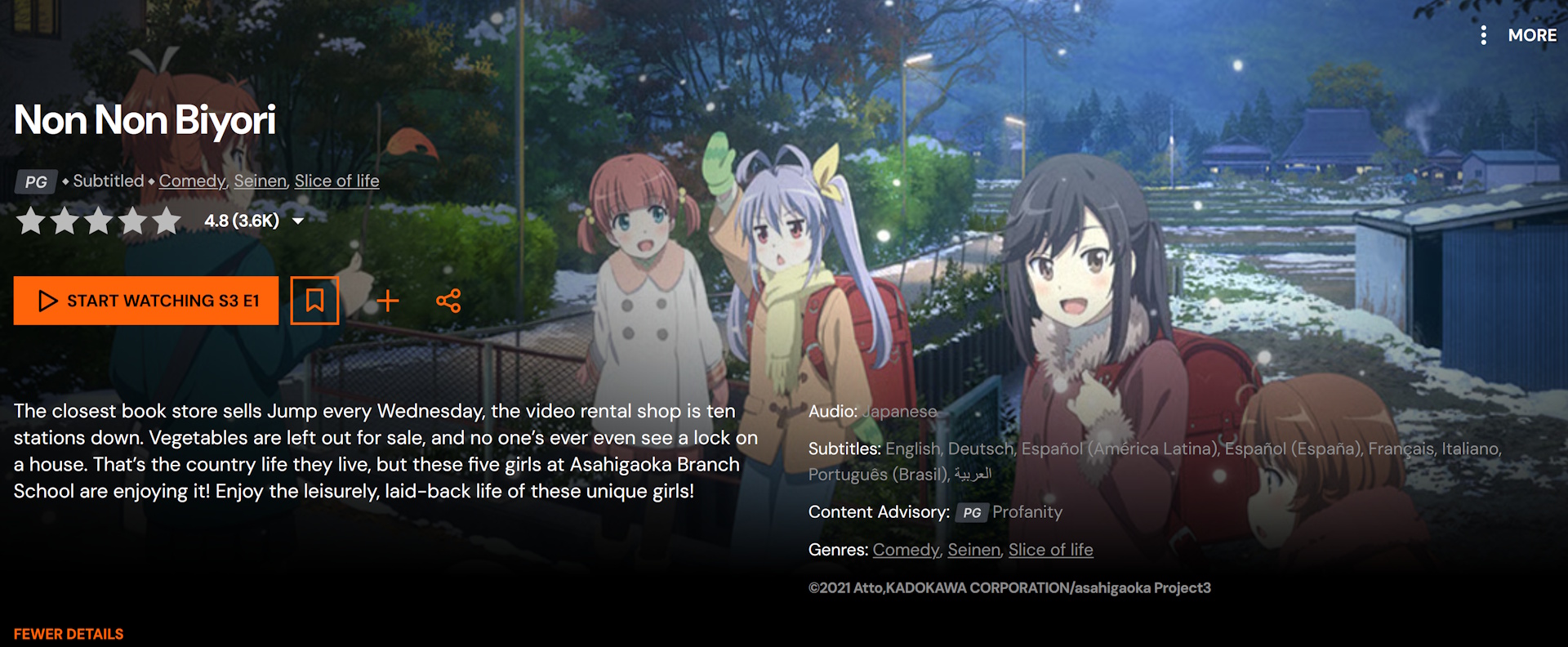
For a bit of background, I asked a friend of mine for some TV and movie recommendations – particularly something “slow,” and not fast-paced, thrilling, or scary. My friend, who is a bit of an anime fanatic, jumped at the chance to recommend me several anime shows in the Iyashikei genre. I was totally unaware of Iyashikei, as a total anime noob, but it’s a Japanese term that roughly translates to “healing,” and it refers to anime and manga that depict calming stories and peaceful locales. That sounded like just what I was in the mood for, and Non Non Biyori was the anime that I chose from that genre to get started with.
Iyashikei is a relatively new genre of manga and anime, from what I can tell. It emerged in the mid ’90s, as a reaction to events like Japan’s economic recession, the Tokyo subway gas attack, and the Kobe earthquake, all of which sparked an interest in calming, healing stories. The genre has continued to this day. It seemed like something worth checking out when I was craving something slower-paced and calming, so after a bit of deliberation and research, I settled on trying Non Non Biyori.
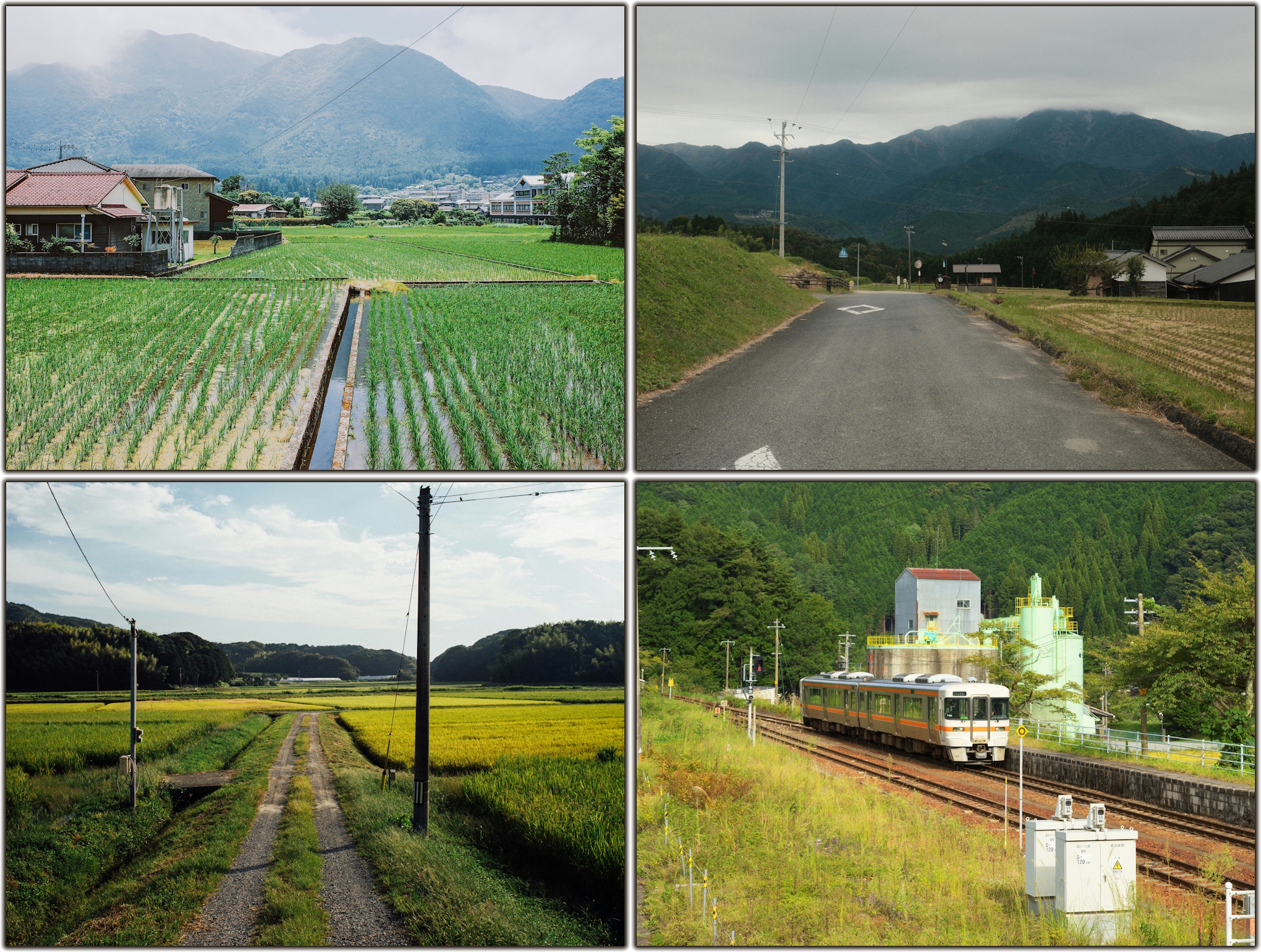
Something you should know about me, to better inform this discussion, is that I grew up in a small village in the rural north of England. The village I was raised in from the age of one had a dozen houses, a single farm, and about thirty or so residents, and the primary school I attended never had more than about forty pupils at a time; there were only two classrooms, two teachers, and my year group had just six pupils my age. I have vivid memories of playing in the mud, walking home from school along unpaved farm tracks and over the fields, picking brambles in the autumn… and positively *dying* of boredom as a teenager!
I had absolutely no expectations for Non Non Biyori. The only thing I knew about it was that it’s an anime in the Iyashikei genre. I certainly didn’t expect to get an episode that so perfectly – and so powerfully – reminded me of my own childhood, of summer days spent roaming the village, playing in the sun, and getting into mild mischief. But… that’s exactly what I got in the fourth episode of the first season.
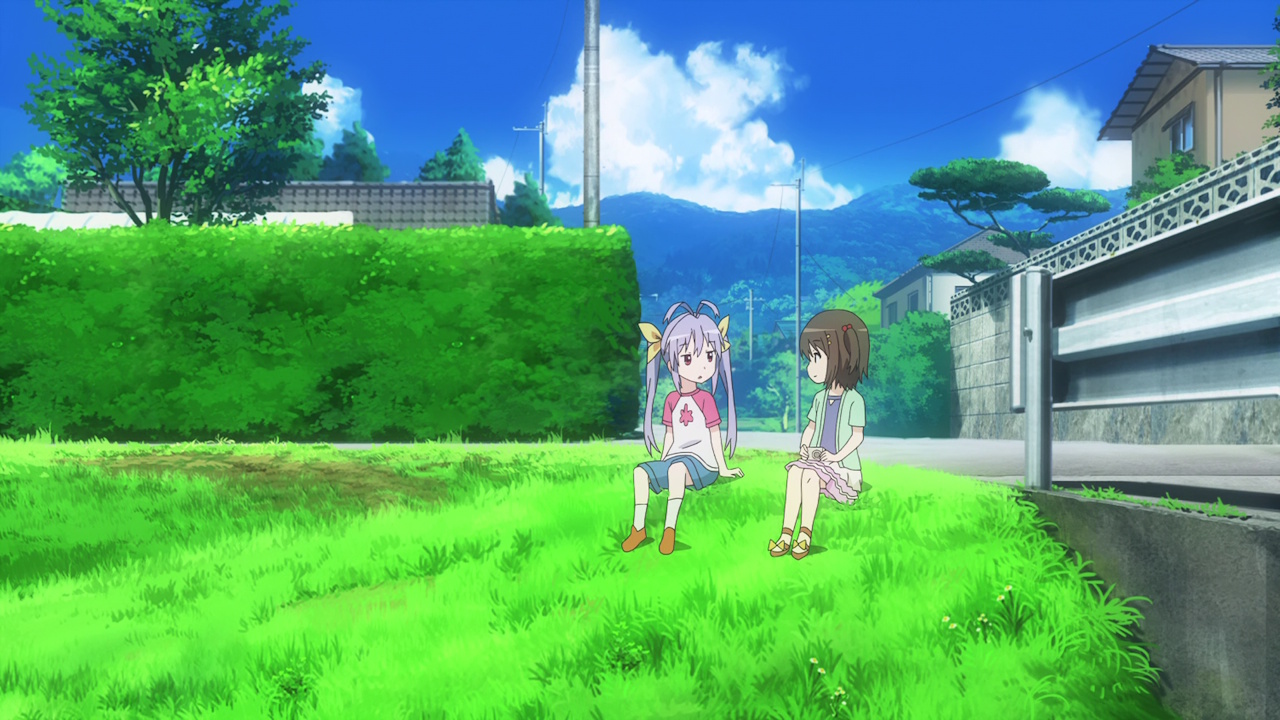
Non Non Biyori is (at least so far; I haven’t seen all of it) a largely episodic show. The main characters have one or two adventures per episode, and the next episode picks up a different story, often with a different main character in focus. Episode 4 is titled Summer Vaction Started, and I want to focus on one of the main storylines in the episode: that of first-grade pupil Renge over a few days at the start of her summer break.
Renge’s summer break begins when her older sister returns to the small village of Asahigaoka – the setting for the series. Although we’re worlds apart in some ways, I felt echoes of my own childhood in Non Non Biyori’s depiction of Asahigaoka from the very first episode. There’s a sense of isolation that you feel as a kid that can be quite hard to put into words if you’ve never lived in a place like this. The whole world seems to pass you by as you exist in this small, almost unchanging place. You’re restricted to activities within walking or cycling distance, when there’s no public transport and you’re too young to drive, and when all that’s around you are fields… well, you have to make your own fun with whoever you can find!
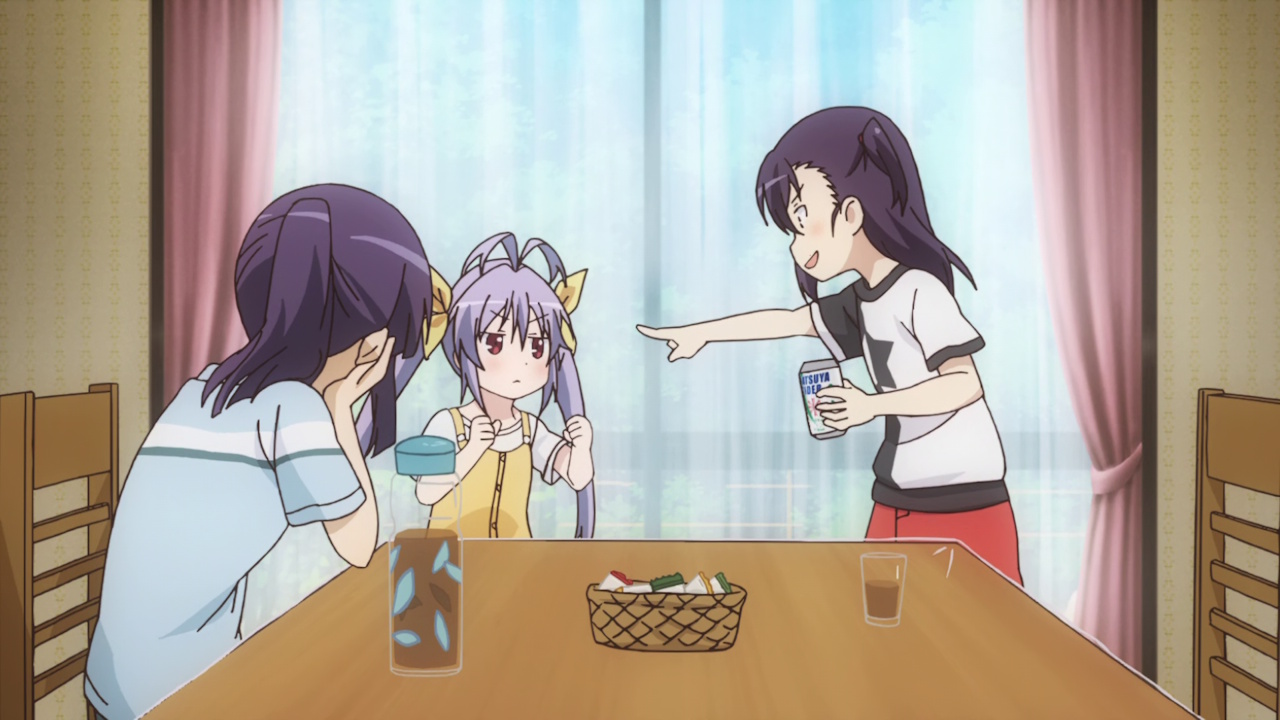
When I was growing up, we had a couple of other kids around my age in the village, and even though we didn’t have a lot in common, we played together, as kids will. I can remember digging a “swimming pool” in a neighbour’s garden one summer – a large hole that we fully intended to turn into our very own private pool. It was nothing more than a muddy hole, but we must’ve spent hours digging in the heavy soil, moving stones, and planning out what we’d do when we finally got our “pool” just the way we wanted it!
Non Non Biyori dragged up memories just like this one – memories from, in some cases, almost forty years ago. And I just… I honestly wasn’t expecting that strange bittersweet feeling from a series like this. These aren’t *painful* memories, but they’re events and situations that I just haven’t dwelt on for such a long time, with most of the people involved totally gone from my life today – or having passed away years ago.
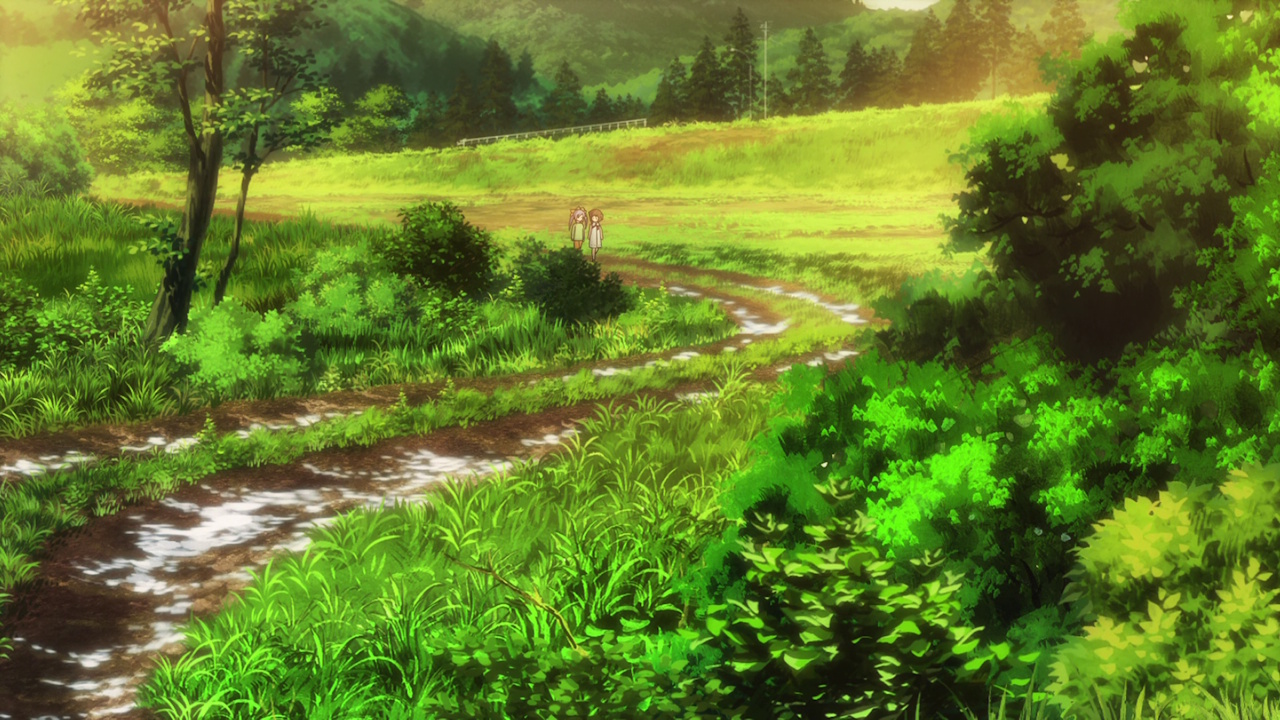
I can see why, to a city-dweller, a series like Non Non Biyori would appeal. It’s textbook escapism – an idealised slice-of-life for the kind of life that most people today, especially in urban areas, don’t really get to experience. I guess that’s also why the Iyashikei genre continues to attract an audience. There’s a lot to be said for something slower-paced and cosy, especially in today’s world. And for folks who live hectic lives in bustling cities… I can totally understand why stories and settings like these appeal. It’s the same reason why period dramas, set in Victorian times or older, are popular in some circles.
As a newbie to anime, I gotta admit that I’ve never really paid much attention to the art style – at least, not background art. Anime characters and that style of drawing and animating people has become pretty popular even outside of Japan, and while I’ve never *disliked* it, it’s not something I really spent much time at all thinking about. I was even less familiar with the way anime shows like Non Non Biyori represent their environments… and I was blown away by some of the vistas in the show.
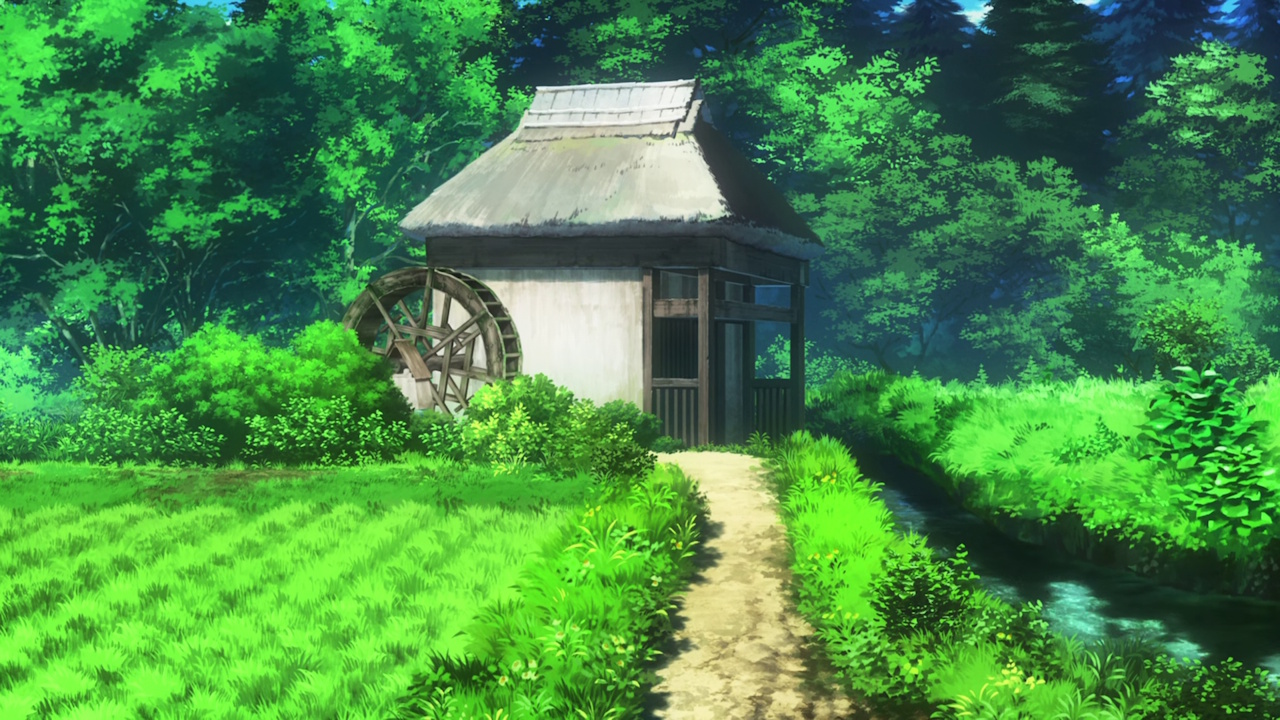
There are some establishing shots in Non Non Biyori, depicting the village of Asahigaoka and the area around it, that I would literally buy a print of to hang on my wall – they’re that good. And this is another part of the show that I really wasn’t expecting at all! Yet the beautiful artwork brings the setting to life in an absolutely stunning way, and is a major contributing factor to those cosy and nostalgic feelings that I talked about.
An animation studio called Silver Link worked on Non Non Biyori, bringing the world of Asahigaoka to life. The studio, which was established in the late 2000s, has dozens of other productions under its belt at this point, and has a well-deserved reputation for high-quality work. I know it seems silly to harp on about the backgrounds and establishing shots… but I think these are absolutely key parts of the way Non Non Biyori’s summer vacation episode hit me with that sense of nostalgia.
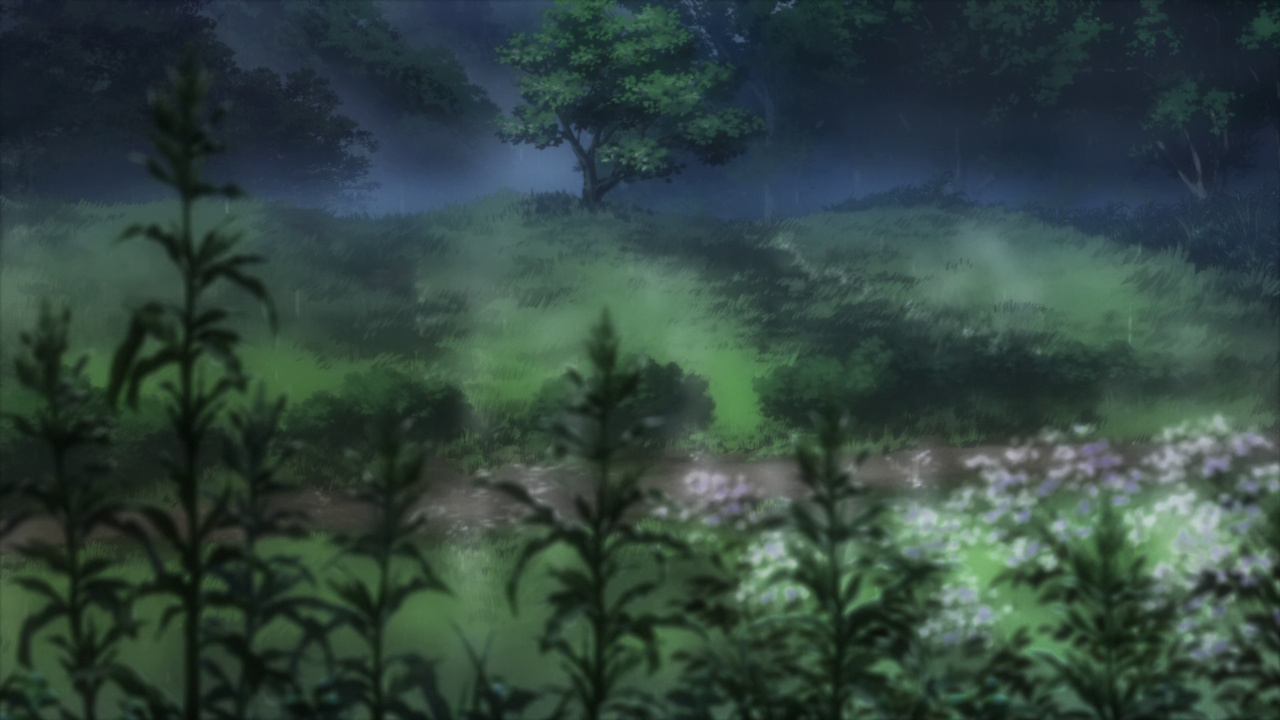
To get back to the story, part of the episode follows Renge as she takes time off from school, eventually meeting up with another girl her age – a visitor from the city, who’s come to stay for the summer break. Renge shows the new girl around, and they take photos together, building up a firm friendship. This is a great way for us as the audience to explore Asahigaoka and the area around the village, seeing it through the eyes of newcomer Honoka. We get several beautiful shots – totally dialogue-free – just depicting the environment, and the girls moving through it.
Renge, from her first moments on screen, is… what’s a nice word for “a bit of an oddball?” She’s the youngest of the main characters, perhaps the youngest person in her village, and she seems to have developed a unique way of looking at the world and interacting with the people around her. She has friends, and they accept that side of her, but seeing her make a new friend – someone her own age – was something special, and you could see how much it meant to her.
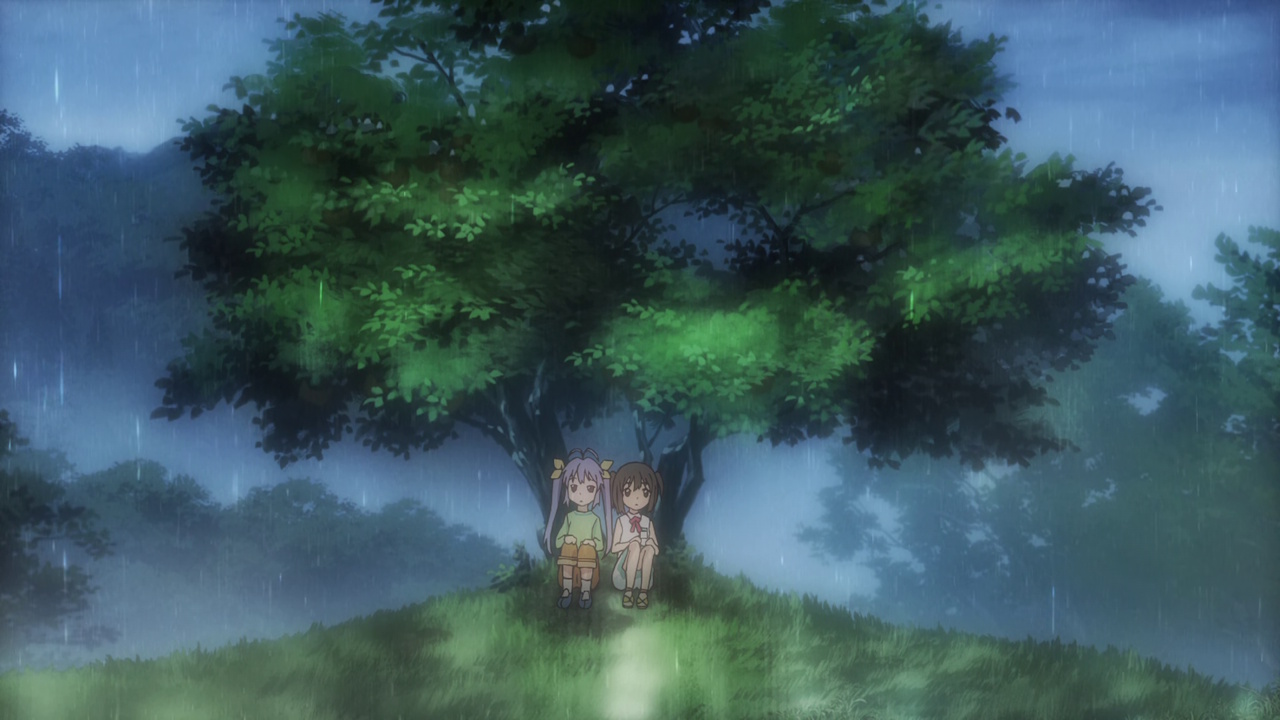
This setup was another thing that dragged me right back to my own childhood. Across the fields from the village I lived in was a caravan park, and although the holidaymakers usually kept to themselves, we’d occasionally encounter them when out on walks. I have a vivid memory of being four or five years old, playing with a couple of German kids whose parents my parents had befriended. I can remember doing the same kind of thing as Renge does in Non Non Biyori, taking these two German kids around the village, showing them a pond with frogs and tadpoles, a field with lambs, climbing in an old tractor tyre, and then playing with toy cars in our garden.
That memory… it’s been buried for almost four decades. Yet here I am, in 2026, reminiscing about the couple of days I ran around, one summer, and played toy cars with a couple of kids from Germany all the way back in the ’80s. It’s… it’s a testament, I guess, to the power of storytelling, of animation, and of media in general to tug the heartstrings and evoke feelings that we didn’t even know we could feel.
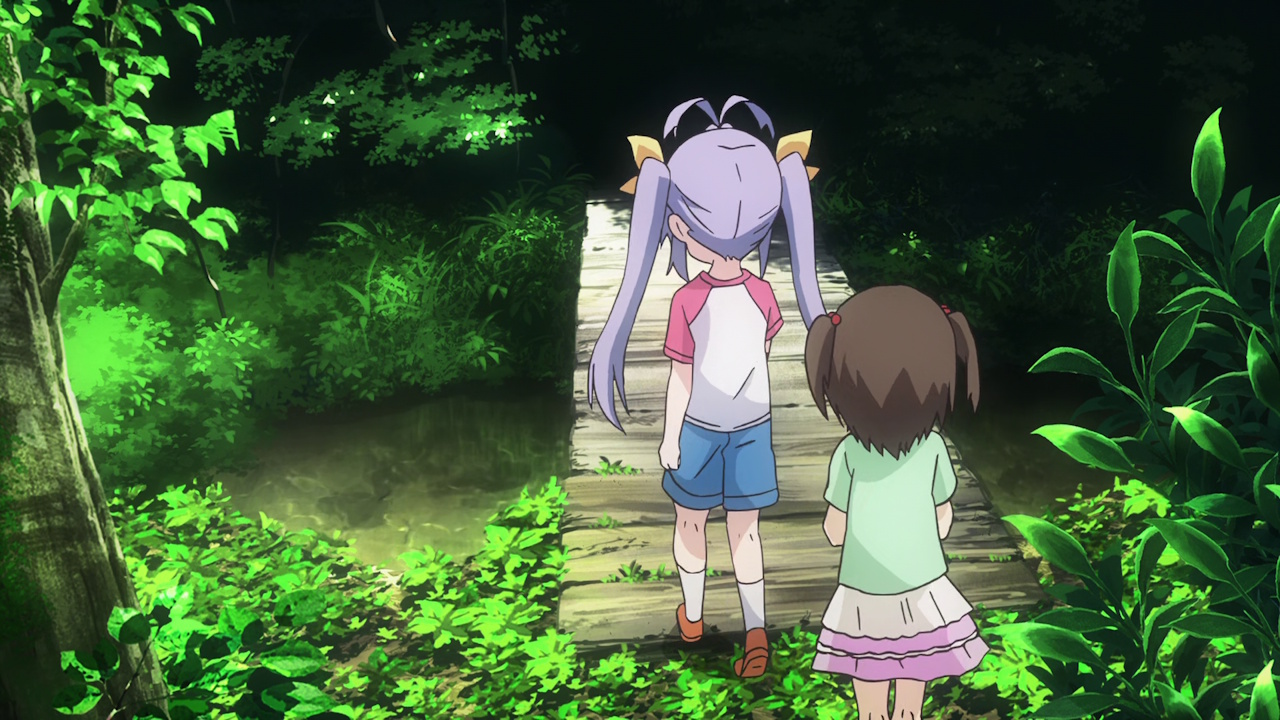
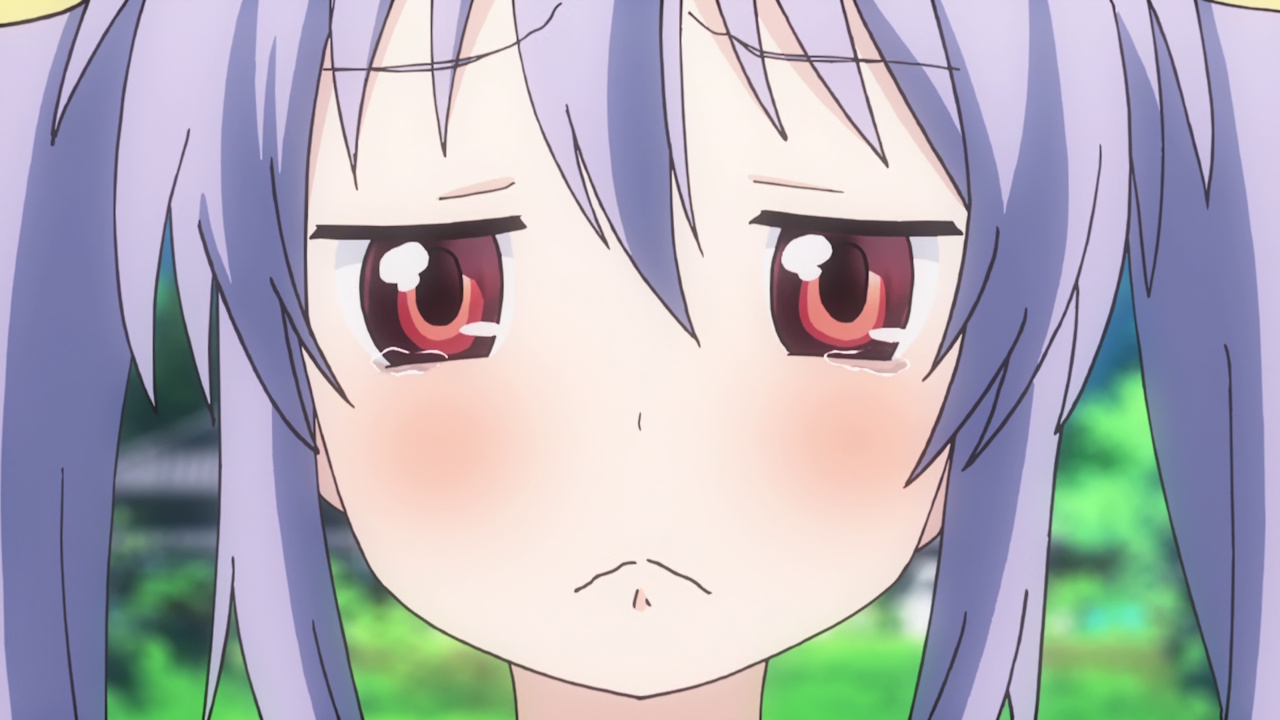
The story ends the way you’d expect: Renge’s new friend has to go home, back to the city. She leaves suddenly, and isn’t able to say goodbye. It’s heartbreaking to see Renge – normally so stoic – getting genuinely excited for her playdate, only to find out that Honoka has left. Non Non Biyori feels a bit ambiguous with its timing, but I get the sense it’s meant to take place before things like smartphones and iPads were all the rage. Renge has no way to contact her new friend, and just like that… she’s gone.
As Renge absorbs this news, she slowly starts to tear up – and *I* teared up right along with her. Partly, there’s shock: shock that this character is actually just a kid, despite her stoic and oddball presentation in earlier episodes. And partly… well, it’s because I’ve been there. The German kids I had so much fun with that summer, they went home after a few days. And we never kept in touch. There was no internet, no email, and long-distance international phone calls were impossibly expensive, so… that was it. You got a few days’ of playtime, and then it was over. For a five-year-old… it was pretty heartbreaking.
There was a happy ending, of sorts. Renge receives a letter from Honoka, apologising for leaving so abruptly, and promising to visit again soon.
I’m going to watch more of Non Non Biyori. But… I don’t want to rush it, really. It’s not the kind of show that I want to binge, because it’s exactly the opposite of a binge-style series, I guess. It’s slow-paced, and forcing my way through half a season at once just wouldn’t feel right. These characters all have their own little quirks and personality traits, but the show isn’t really about them – it’s about what they represent, and the kind of life they lead. A slower pace of life that, really, isn’t possible any more – and not just because time has moved on.
Maybe this will be the start of a longer anime journey for me, I really don’t know. I’d quite like to check out the Shenmue anime – a series based on one of my favourite video games ever seems like it could be fun! But, again, I’m in no rush, really. I’m going to take my time with Non Non Biyori, and even if none of the show’s remaining episodes come close to hitting me in the way Starting Summer Vacation did… that’s okay. I came to this series because I wanted a bit of a break, to slow down, and watch something a bit less taxing. I found that, for sure – but I also found something I absolutely was not expecting.
Thanks for reading.
Non Non Biyori is available to stream now on Crunchyroll. The series may also be available on DVD/Blu-ray. Non Non Biyori is the copyright of Kadokawa Corporation, Silver Link, et al. This article contains the thoughts and opinions of one person only and is not intended to cause any offence.
 Trekking with Dennis