Ten Gaming “Hot Takes” (Part 1)

Today I thought we could have a bit of fun and talk about some of my more controversial gaming opinions! This is the first part of a two-part list, so be sure to stay tuned in the days ahead for five more gaming “hot takes.” There were too many to fit into a single piece this time around!

Although this is intended to be lighthearted and somewhat tongue-in-cheek, these are opinions that I genuinely hold; I’m not making things up for the sake of clickbait. I’ll always give the caveat that I’m a fan of video games and an advocate for gaming as a hobby… but that doesn’t mean that there aren’t things to criticise from time to time!

A Sega Mega Drive console.
Let’s share some controversial gaming opinions!

Gaming has changed a lot since I first picked up a joystick at a kids’ club in the ’80s, and I’ve seen the games industry and games themselves evolve dramatically! Most of those changes have been for the better… but perhaps not every last one.

As I always say when we talk about potentially controversial topics: these are my wholly subjective opinions! I’m not trying to claim that I’m right and that’s the end of the affair – on the contrary: I’m acutely aware that I’m in the minority here! I share these “hot takes” in the spirit of thought-provoking fun, and you are free to disagree wholeheartedly.

With all of that out of the way, let’s take a look at some “hot takes!”

“Hot Take” #1:
An open world isn’t the right choice for a lot of games.

A screenshot of Jedi: Survivor showing protagonist Cal Kestis outside of a saloon.
Jedi: Survivor is a recent game that employed an open world style.

Open worlds became a gaming trend sometime in the early 2010s, and too many publishers nowadays insist on forcing the formula onto titles that are entirely unsuited to it. Some open worlds are great… but I’d argue that relatively few manage to hit the golden combo of being both a well-constructed open world and one that suits the game in question. There have been some fantastic open worlds in which stories were told that didn’t fit, and some games that could’ve been wonderful that were undone by the fetishisation of the open world formula in some corporate boardrooms.

In many, many cases, having distinct levels or separate sections of a larger map just… works. It allows for the game’s narrative to create an often-necessary sense of physical distance in between locations – something that even the best open world maps are usually unable to manage. And for an awful lot of stories – even in games that we might consider to be masterpieces – that can be important to the immersion.
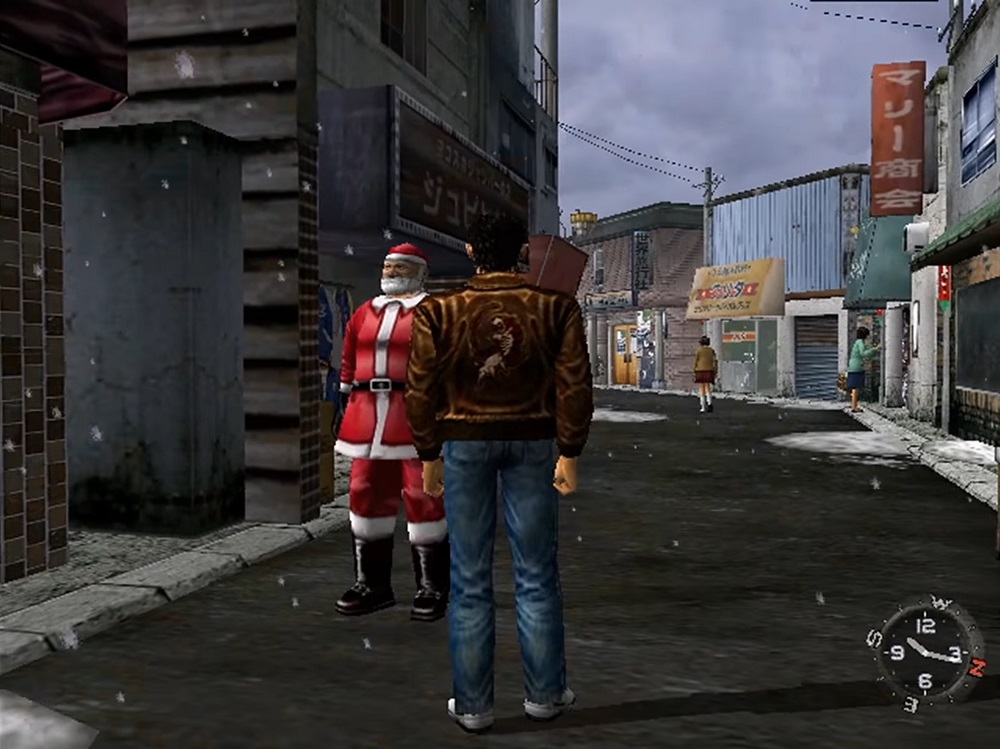
Ryo Hazuki, protagonist of Shenmue, encounters a man dressed as Santa Claus.
An early open world pioneer was Shenmue on the Dreamcast.

Take Red Dead Redemption II as an example. That game is one of the very best that I’ve ever played… but there were several points in its single-player story where the open world formula came close to being a problem. After escaping the town of Blackwater by the skin of their teeth in the game’s prologue, Arthur Morgan and the gang roam around in the mountains for a while, before eventually finding a new place to make camp… literally five minutes away from Blackwater. And this would happen again later in the game, when the gang would escape the town of Valentine only to settle at a new campsite just up the road.

The game’s narrative presented these locations as if they were far apart, but the open world of Red Dead Redemption II, for all of the content that it was filled with, didn’t always gel with that. It’s a scaled-down representation of part of the United States, and I get that. But narratively, it might’ve worked even better if the game’s main acts took place in separate, smaller open maps instead of merging them all into one larger open world.

Arthur Morgan, the protagonist of Red Dead Redemption II.
Red Dead Redemption II is a masterpiece.

Red Dead Redemption II is, without a doubt, one of the best games that I’ve ever played. So if the open world could be a problem there… well, you don’t need to think too hard to find examples of the open world formula tripping up worse and far less enjoyable titles! There’s absolutely nothing wrong with creating separate levels for a game – as has been done really since the beginning of narrative video games. Doing so often allows for more diversity in locations, environments, and terrain – and it’s something more titles need to consider taking advantage of.

I could probably count on my fingers the number of games that have genuinely made good use of an open world formula, and that have used that style of map properly. And when I think about modern games that I’ve really enjoyed such as The Last of Us, Jedi: Fallen Order, or the Mass Effect trilogy, they don’t use open worlds – and they’re much better for it.

“Hot Take” #2:
Every game should have a robust easy mode – it’s an accessibility feature.

The Skyrim options menu with difficulty settings highlighted.
Difficulty options in Skyrim.

I’m a big believer in making games accessible to as many players as possible. That can mean including accessibility features like colourblindness settings, disabling quick-time events, or ensuring that subtitles are available. But it also means that players need to be able to tone down the difficulty – yes, even in your precious Dark Souls!

I suffer from arthritis, including in my hands and fingers. I don’t have the ability to pull off complicated multi-button combos any more – if I ever possessed such an ability! And as with any skill or set of skills, gaming abilities vary from person to person; even someone who isn’t suffering from a health condition may simply not be blessed with the reflexes or hand-eye coordination necessary to progress through some of the industry’s more punishing titles. Not to mention that many folks don’t have the free time to dedicate to learning precise button combos or the intricate details of specific boss battles.

A promotional screenshot of Kingdom Come: Deliverance.
Kingdom Come: Deliverance was a title I found too difficult to play, despite wanting to enjoy it.

And that’s a real shame – because there are some outstanding games that everyone should be able to experience. Stories in some games are truly awe-inspiring, and can be better in some cases than films or television shows. For those stories to be denied to people with disabilities or people who may not have the time to repeat the same boss fight or level over and over again is just… sad.

I absolutely detest the expression “not every game is made for every player” when this debate rolls around. It’s absolutely true that people like different things, so if I’m not into online multiplayer shooters then I’m probably not going to enjoy the next Call of Duty title. But that doesn’t apply to difficulty, or to making a game that millions of potential players are locked out of because of a skill mismatch or health condition. That kind of gatekeeping is honestly just pathetic.

A toddler or young child playing a racing game.
Gaming should be accessible to as many people as possible.

I’d also add that the reverse is true here: certain games can be too easy for some players, and including the option to increase the difficulty in that case is likewise a good thing and something that developers should seek to include.

Difficulty settings have been a part of games going back decades, and they aren’t all that difficult to implement. At the very least, giving players the option to skip a level or boss battle after failing it multiple times should be achievable for every developer – and I can’t think of a good reason why a studio that cares about its audience wouldn’t want to implement something so incredibly basic. It doesn’t “hurt” the game to include an easy mode, nor does it damage the developers’ “artistic vision.” An easy mode only impacts players who choose to turn it on – and in a single-player game, why should anyone be judgemental about that?

“Hot Take” #3:
Artificial intelligence isn’t “coming soon,” it’s already here – and the games industry will have to adapt.

Still frame from the film Terminator (1984).
Are you ready for the “rise of the machines?”

One of the hottest topics of 2023 has been the arrival of easily-accessible generative AI software. It seems that anyone can now create an article like this one, a photorealistic image of just about anything, an audio recording of a celebrity… or even code for a video game. This technology has well and truly landed, and I don’t see any practical way to prohibit or ban it – so the games industry is going to have to adapt to that reality.

I can see a lot of potential positives to AI. Modding, for instance, can now get a lot more creative, and we’ve seen already mods featuring AI voices that are basically seamless and can add a lot to a character or story. For smaller developers and indie studios, too, AI has the potential to be a massively useful tool – doing things that a single developer or small team wouldn’t be able to achieve.

"Matrix code" from the 2021 film The Matrix: Resurrections.
AI is already here – and could prove incredibly useful to game developers.

But there are unquestionably massive downsides. The games industry has seen significant layoffs this year – despite most of the big corporations making record profits. Corporations in all kinds of industries are looking to replace as many real humans as possible with AI software… and for an all-digital product like a video game, the potential for divisions or even entire studios being shut down is firmly on the table.

The arrival of generative AI is going to shake things up, and because of the way it works, I can absolutely see there being less creativity in the games industry if too many big corporations go down that road. Because of the way these AI programmes work, they aren’t capable of truly creating – only reworking things that already exist and generating something with the same parameters. If major video games start using AI in a big way, you can say goodbye to innovation and creativity.

An example of AI-generated art.
An example of AI-generated art that was created (in less than ten seconds) from a prompt I entered.
Image Credit: Hotpot Art Generator

Whichever company cracks AI first is, in all likelihood, going to be rewarded – so there may even be a kind of “AI arms race” within the games industry, as some of the biggest corporations duke it out to be the first one to strike the right balance between AI and human-created content. What that might mean for games in the short-to-medium term… I can’t really say.

Generative AI is here to stay, though, and I don’t see a way around that. Some folks have suggested boycotting AI-heavy titles, but these consumer boycotts seldom succeed. If a new game that relied on AI during its creation ends up being fun to play, I daresay it’ll get played. Most players don’t follow the ins and outs of the industry, and may never even know the extent to which their favourite game was created using AI. I hope you’re ready for AI… because I’m not sure that I am!

“Hot Take” #4:
Sonic the Hedgehog doesn’t work in 3D.

Promotional screenshot from 2014's Sonic Boom: Rise of Lyric.
3D Sonic.

We’re going franchise-specific for this one! I adored the first Sonic the Hedgehog games on the Sega Mega Drive. I didn’t have a Mega Drive at the time, but a friend of mine did and we played a lot of Sonic in the early ’90s! Along with Super Mario, Sonic was one of the characters who scaled the mountain and was at the absolute peak of gaming… for a time.

But Sonic’s sole gimmick meant that the character struggled to successfully make the transition from 2D side-scrolling games to fully 3D titles. Extreme speed is something that works well in a 2D title, but it’s hard to code and even harder to play in a 3D environment.

Cropped box art for the re-release of Sonic the Hedgehog.
Sonic’s “gotta go fast” gimmick works in 2D games… but not in 3D.

The most successful Sonic game this side of the millennium has been Sonic Mania… a 2017 title that was originally created by fans of the series before Sega got involved. Sonic Mania is an old-school 2D platformer in the style of the original Mega Drive games. It’s great fun, and a real return to form for Sega’s mascot after years of mediocrity.

Sonic’s fundamental problem begins with his sole superpower: speed. Extreme speed was something that felt wonderful in 2D… and not to mention incredibly innovative! But in 3D, it’s just so much more difficult to build worlds suited to moving so quickly – not to mention that it’s tricky for players to control a character moving at such speed.

Promotional screenshot for 2017's Sonic Mania.
Sonic Mania has been the most successful Sonic game in decades.

There have been 3D Sonic games that tried to innovate, but even the best of them feel like they’re missing something. I remember playing Sonic Adventure on the Dreamcast and barely having to push any buttons; in order to make Sonic work in 3D, much of the interactivity had to be stripped out. That made for a far less enjoyable gaming experience.

When Sonic shows up in other titles – such as alongside Mario for an arcadey sports game, or in Sega’s Mario Kart competitor – then the character can be made to work. But those games almost always rob Sonic of his one defining trait: his speed. I’ve never played a 3D Sonic game that felt anywhere near as good as those original 2D titles.

“Hot Take” #5:
Google Stadia was a good idea (in more ways than one).

Promo image featuring the Stadia control pad.
Promo image of the Stadia control pad (right) next to a laptop.

The history of video gaming is littered with failed consoles and devices; machines that didn’t quite make it for one reason or another. 2019’s Stadia – Google’s attempt to break into the games industry – has become the latest example, being fully shut down after only a couple of years. There were myriad problems with Stadia, and Google has a track record of not backing up its projects and investments nor giving them enough time to deliver. So in that sense its failure is understandable. But I think I’m out on a limb when I say that it’s disappointing – and potentially even bad for the games industry as a whole.

Stadia offered a relatively inexpensive way to get started with gaming by relying on streaming. Gone was the need for an expensive console or PC; players could jump in using only their existing screen and a Stadia controller. Lowering the cost of entry to gaming is a good thing, and we should be looking around for more ways to do that!

Promo screenshot of Stadia-exclusive title Gylt.
Gylt was one of the only Stadia-exclusive games.

Secondly, Stadia represented the first potential shake-up of a pretty stagnant industry in nigh-on twenty years. Since Microsoft entered the video game market and Sega dropped out, there have been three major hardware manufacturers and three main gaming platforms. Disrupting that status quo is, again, not a bad thing in theory. Stadia, with Google’s support and financial resources, seemed well-positioned to be the kind of disruptive force that often leads to positive change.

Stadia won’t be remembered – except as the answer to an obscure pub quiz question in a few years’ time, perhaps. But it had potential when it was announced, both in terms of the way it could have brought console-quality games to people who couldn’t necessarily pay for a current-generation machine up-front, and in the way Google could’ve disrupted the industry, leading to competition and innovation.

A Google Chromecast device.
Stadia was designed to be compatible with Google’s Chromecast devices – as well as other platforms.

I didn’t buy into Stadia on day one. As someone who has a gaming PC, I didn’t really feel it was necessary. And there were limitations to Stadia: a lack of exclusive games, no subscription option, and Google’s well-known history of prematurely shutting down underperforming products and services. All of these things put me off – and undoubtedly put off a lot of other folks, too.

But in a way, I regret the demise of Stadia. Its short, unsuccessful life will surely be a warning to any other company that might’ve considered launching a new console or a comparable streaming device, and if there’s one thing I think we can all agree on it’s this: the games industry needs a shake-up from time to time! Stadia couldn’t do it, unfortunately… but I hope that another device will.

So that’s it… for now!
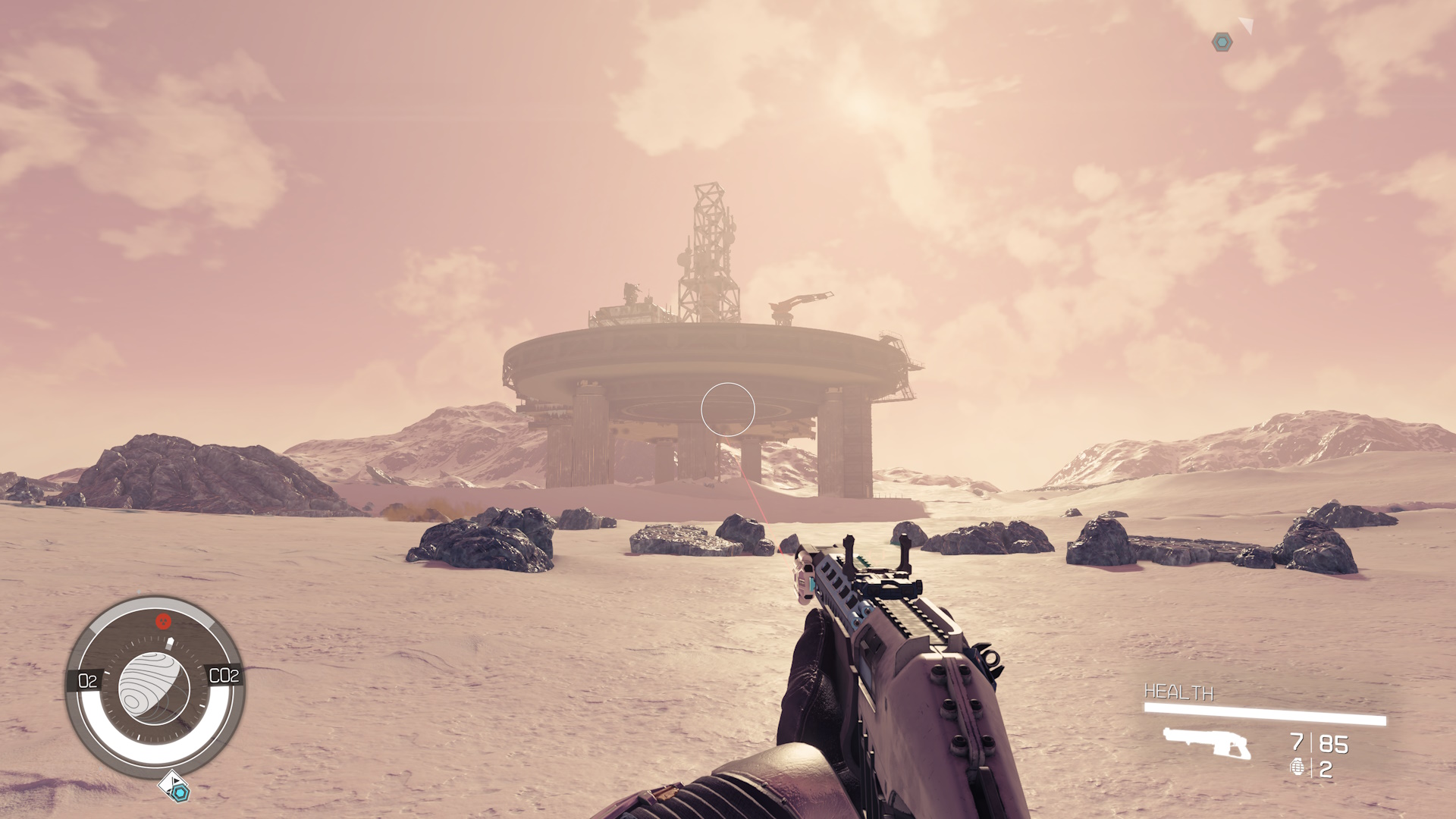
Screenshot of Starfield.
Starfield (2023).

Stay tuned, because I have five more “hot takes” that I’m currently in the process of writing up.

As I said at the beginning, none of these things should be taken too seriously – this is just intended to be a bit of thought-provoking fun, at the end of the day.

There’s a lot to love about gaming as a hobby, and the quality of video games in general is way higher today than I could’ve imagined even just a few years ago. There are some incredible games out there; masterpieces in every sense of the word that have given me some of the best entertainment experiences I’ve ever had. And there are some games that I didn’t enjoy, too! I hope this look at a few of my “hot takes” hasn’t gotten anyone too upset!

All titles discussed above are the copyright of their respective studio, developer, and/or publisher. Some images used above courtesy of IGDB and Unsplash. This article contains the thoughts and opinions of one person only and is not intended to cause any offence.

More of the worst things about modern video games

A couple of months ago I took a look at some of the trends I hate the most in the modern games industry. But one list wasn’t comprehensive enough, apparently, because I’ve found ten more of the worst things to look at today!

Gaming as a hobby has come a long way since I first owned a Super Nintendo. Games have evolved from being little more than electronic toys to being a legitimate artistic and storytelling medium in their own right, and many of my favourite entertainment experiences of all time are in the gaming realm. Games can equal, and in some cases surpass, film and television.

Mass Effect 2 has to be one of the best stories I’ve ever experienced.

But not everything about gaming is fun! There are annoyances and problems with games today, some of which didn’t exist a few years ago, and others which have dogged the medium since its inception. As always, this list is entirely subjective, so if I criticise something you like, or ignore something you hate, please keep in mind that all of this is just the opinion of one person. If you want to check out my previous list, you can find it by clicking or tapping here.

With all that out of the way, let’s get started!

Number 1: Checkpoints

Cal Kestis at a checkpoint in Star Wars Jedi: Fallen Order.

Is it 1996? No? Then let’s stop using checkpoints and allow players the freedom to save their game whenever and wherever they need to! With relatively few sensible exceptions – like in the middle of a boss fight or during a cut-scene – there’s no reason why modern games can’t incorporate a free save system.

Checkpoints were a limitation of older hardware and software; games and consoles weren’t always able to offer players the ability to save the game anywhere, so designated save zones – or checkpoints – had to be incorporated. This was already a step up from passwords that you had to write down (remember those?) but checkpoints are simply unnecessary and out-of-date in modern games.

Control also uses a checkpoint system.

With gaming having grown in the years since checkpoints were the only way to manage save files, more people from different backgrounds are getting into the hobby – including many more adults, working-age people, and folks with less free time. Having to replay a lengthy section of a game because the game didn’t offer the freedom to save when you needed to is incredibly frustrating, and considering that there is no technical reason for not implementing a proper save system, in my opinion there’s no excuse.

Whine all you want about “vision” and “integrity” and that players should “git gud,” but a lot of folks simply want to play through a fun and entertaining narrative. We also want to play through it once, not multiple times because of the lack of a convenient save function. Checkpoints seemed to have largely disappeared until the likes of Dark Souls brought them back as part of its “extreme difficulty” shtick. But there’s a difference between a challenge and something frustrating; checkpoints are definitely in the latter category.

Number 2: Boring and/or repetitive side-missions

“Another settlement needs our help.”

It’s no good bragging about the number of quests or missions in your game if 80% of them are the same – or equally as bad as each other! Open-world games tend to fall victim to this, but it’s a phenomenon that can plague all manner of different titles.

These kinds of missions follow one of a couple of different formulae: “go to location X and pick up item Y” or “go to location X and kill Y number of enemies.” Then that’s it. Mission over, receive a few experience points or a random, usually-not-worth-it item, and repeat. Such quests are nothing but padding for a game that should’ve been shorter and more focused.

The Mako in Mass Effect: Legendary Edition.

Even otherwise good games can end up going down this route. Mass Effect 1 is a case in point. The main story missions in the game are phenomenal, and while the stories which set up some of the side-missions sound like they could be potentially interesting, each one basically consists of “drive vehicle to location, kill enemies, press button.” Because 90% of the side-missions use basically identical maps and environments, this gets old fast – even if the storyline setting up the mission seems superficially interesting.

If you can’t make a good side-mission, skip it. I’d rather play a game that isn’t as long but doesn’t have this unnecessary fluff padding it out and, frankly, wasting my time.

Number 3: Collect-a-thons

Another feather. Yay.

On a related note, many open-world games have recently begun being padded out with miscellaneous items to collect. Upon picking up a feather, for example, the game will tell you that you’ve discovered 1/100 – only 99 more to go! These items almost always have no impact on the plot or gameplay of a title, and often don’t even give out a reward for finding all of them. At most you might get a trophy or achievement for collecting all of them.

At least boring side-missions usually have some kind of setup. A villager needs you to kill the rats in his basement, an admiral needs you to shut down all four computer cores, etc. Though the missions themselves are junk, a modicum of thought went into their creation. Collect-a-thons have no such redeeming feature. Often the items to be collected are so random that they have no link whatsoever to the plot or character.

Pigeons in Grand Theft Auto IV are another example.

Why does my grizzled war veteran on a mission to save the world need to spend his time hunting down 100 feathers or 50 leaves? If the items did something – anything – like if they could be used for crafting or if they were notes or recordings containing lore and info about the game world, well at least there’d be a point. It wouldn’t necessarily be a good point, but still.

These items are added into games – often in obscure or hard-to-reach places – purely to pad out the game and extend its runtime. They serve no purpose, either narratively or in terms of gameplay, and while I have no doubt that some players find collecting every single in-game item fun, for me I’d rather the effort and attention wasted on features like this was refocused elsewhere. One side-mission, even an average one, would be better than 100 random pieces of shit to collect.

Number 4: Online cheating

An aimbot for popular game Fortnite.

If you have a single-player game and want to turn on god mode or assisted aiming, go for it. Cheats can sometimes be accessibility features, offering a route through a game for players with disabilities, as well as providing a way to skip the grind for players who don’t have much time. But when you go online and play against real people, you damn well better leave the cheats behind!

There are so many examples of cheating players getting caught and banned that it can be kind of funny. Even some professional and wannabe-professional players have been caught out and learned the hard way that the internet never forgets. But no one should be doing this in the first place.

Some losers even cheated at Fall Guys, for heaven’s sake…

Trying to take away the most fundamental tenet of competition – fairness – is so phenomenally selfish that I don’t even know what to say. If there were a financial incentive – like winning the prize money at a big tournament – I could at least recognise that some folks would be tempted to try to take the easy route to payday. But in a game like Fall Guys where it’s supposed to be fun… I just don’t get why someone would feel the need to cheat.

Some games have a bigger problem with cheating than others, and games that don’t get a handle on a cheating problem fast can find themselves in serious jeopardy. It’s unfortunate that the anonymity of the internet means that a lot of players simply get away with it, with some even going so far as to use “disposable” accounts, so that if one gets banned they can just hop to another and keep right on cheating.

Number 5: Overly large, confusing levels

Looks like fun…

We kind of touched on this last time when considering empty open worlds, but some games have poorly-designed levels that are too large and almost maze-like. Getting lost or running in circles – especially if no map is provided – can become frustrating very quickly. These kinds of levels are often repetitive and bland with little going on.

Some games have levels which are simply not well laid-out, making it difficult to find the right path forward. I’ve lost count of the number of times I was trying to explore, thinking I was investigating a side-area, only to find it was the main path forward, and vice versa. Advancements in technology – particularly as far as file sizes go – have meant that levels and worlds can be physically larger. Sometimes that’s a good thing, but sometimes it isn’t!

This also applies to featureless open worlds or maps without landmarks for ease of navigation.

If a game has a map, or if a level is well-signposted (either literally or figuratively) then it shouldn’t matter how large it is. Players will be able to figure out where to explore and where to go to proceed with the story or quest. But too often that isn’t the case, and getting lost, backtracking, or not knowing where to go are all annoyances! Not every level has to be massive. Some work far better when kept concise, especially if the number of things to find or do in the level are limited.

Obviously I don’t include in this category mazes or levels which are deliberately designed to be puzzling. Some games make clever use of deliberately puzzling levels, where exploring and figuring out the right path is all part of the fun. Others just screw up their level design and leave players wandering around, confused.

Number 6: Orphaned franchises/unfinished stories

I’m not even going to say it…

Though the phenomenon of a story being abandoned partway through is hardly new – nor even unique to gaming – the rise of more cinematic, story-driven games since the turn of the millennium has brought this issue to the fore. The first encounter I had with this was in 2001 when Shenmue II dropped off the face of the earth (following abysmal sales in Japan and elsewhere) meaning that the saga was never finished.

But it isn’t just financial failures that don’t land sequels. The lack of a third game in the Half-Life series has become a joke at this point, more than fifteen years after the last mainline entry in the series. Fans have been clamouring for Half-Life 3 for a long time, and the recent success of VR title Half-Life: Alyx proves there’s a market and that the game’s audience is still here.

Will there ever be a Bully 2?

Sometimes a studio gets busy with other projects. There hasn’t been a new Elder Scrolls game, for example, in part because Bethesda has worked on the Fallout franchise and Starfield in the years since Skyrim was released. But there are also plenty of cases where a developer or publisher finds a cash-cow and abandons all pretence at making any new game so they can milk it dry.

Look at Rockstar with Grand Theft Auto V’s online mode, or Valve with its Steam digital shop and the success of online games like Dota 2 and Counter-Strike: Global Offensive. Those studios could make new games or sequels to existing games, but instead choose to focus on older titles. Similarly, studios like Bethesda found success by porting existing games to new and different hardware, as well as releasing new or updated versions of older games.

Number 7: Ultra Special Super Extreme Deluxe Editions

How many different “editions” does a game need?!

I’m not talking about so-called “collector’s editions” of games, which are often simply the game plus a statue or other memorabilia. Those can be fine, because if someone is willing to part with silly money to get a resin statue of an in-game character who am I to judge? What I greatly dislike are games that are sold with multiple “editions” – i.e. a “basic” version with missing features, then several progressively more expensive versions with those missing features added back in.

Some games take this to silly extremes, with a “basic” version retailing for full price (£55/$60) and the most expensive “deluxe” edition being far more expensive for the sake of adding in-game content (extra skins, missions, etc.) that were literally developed alongside the main game then cut out. Some of these ultra extreme special editions can retail for £80, £90, or even £100 in some cases, and that’s just deceptive.

Sports games, like the FIFA series, do this a lot.

This is an evolution of the “day-one DLC” phenomenon that was present a few years ago. In the case of Mass Effect 3, for example, an entire main character, a mission to recruit them, and all of their scenes and dialogue, was literally developed along with the game, perfectly integrated and designed to be part of the game, then cut out and sold as downloadable content literally on the day the game launched.

In multiplayer titles, the extreme special supreme editions can come with in-game advantages, making them literally pay-to-win. In free-to-play games, perhaps a degree of paying for an advantage is to be expected – but some of these games are asking full price, then giving a competitive advantage to players who pay above full price.

Number 8: Unrepresentative trailers/marketing material

Anthem made a fake trailer… and look what happened to the game.

I used to work in video games marketing, and I thought I’d seen every shady trick in the book! But some of the trailers and marketing material that publishers show off in the run-up to the launch of a new game can be downright deceptive. Some games, like notorious failure Anthem, even went so far as to create fake “in-game” footage to be shown off at marketing events, which is incredibly bad form.

Cyberpunk 2077 is another example. That game was developed to run on high-end PCs and next-gen consoles, and the Xbox One/PlayStation 4 version was so poorly-optimised when it launched that many folks considered it to be literally “unplayable.” The trailers and marketing material hid this fact, and developer CD Projekt Red deliberately kept those versions of the game away from reviewers. The result was that no one realised how broken the game was until it was too late.

CD Projekt Red didn’t show things like this in the Cyberpunk 2077 trailer…

Mobile games are notorious for putting out trailers that are entirely unrepresentative of the games they’re selling. Many mobile games are samey, basic tap-a-thons with unimpressive graphics and mediocre gameplay, yet the trailers make them seem like big-budget console-quality games. In a way this isn’t new; 2D games in the 8-bit era were often marketed with cartoons and fancy graphics that made them look far better than they were!

The thing is, unrepresentative marketing always comes back to bite a company. Just ask CD Projekt Red, whose implosion in the aftermath of Cyberpunk 2077′s abysmal launch will enter gaming history.

Number 9: Massive patches and updates

Yikes.

Last time I criticised ridiculously huge file sizes for games, and this time I want to pick on updates and patches in particular. There’s no feeling more disappointing than sitting down to play a game you’ve been looking forward to all day only to find that either the game or the console needs to download a stupidly large update before you can jump in.

Some updates can be dozens of gigabytes, and if you’re on a slow internet connection (like I am) or have limited downloads, it can take forever to update the game – or be outright impossible. Once again, folks with limited time for gaming are in trouble here; even on a reasonably fast connection, a massive update can cut into or erase the time someone set aside for gaming.

After buying a brand-new console, downloading patches and updates can be a time-consuming task.

The stupid thing is that many of these updates appear to change absolutely nothing! I’ve lost track of how many times Steam has updated itself on my PC, for example, only to look exactly the same every time. While it’s good that games companies can roll out bug fixes, patch out glitches, and even fix cheating issues remotely, these things can happen at the most inconvenient times!

In the run-up to Christmas it’s now commonplace, even in mainstream news outlets, to see advice given to update new consoles and games before giving them out as presents. Little Timmy’s Christmas would be ruined if he had to spend all of Christmas Day waiting around for his new PlayStation to update before he could use it!

Number 10: We’re drowning in sequels, remakes, and spin-offs

The Final Fantasy series is up to its fifteenth mainline title…

It’s increasingly rare for a games company to produce a new game that isn’t based on an existing franchise or property. Don’t get me wrong, this isn’t an issue unique to gaming – it’s happening on television and in cinema too. We’re 100% in the era of the franchise.

As great as it is to play a sequel to a much-loved title, it’s also great fun to get stuck into a completely new story with new characters and a new world. Unfortunately, as is the case in television and cinema, companies are increasingly viewing brand-new stories as risky – if fans don’t respond well then their investment will have been wasted!

How many Call of Duty games have there been by now?

Sooner or later, I think this franchise and sequel mania has to break. It can’t go on forever, not least because existing franchises will run out of material and fans will lose interest. But right now it shows absolutely no signs of abating, and some video game franchises have become annual or almost-annual fixtures. The Call of Duty series is a case in point – there’s been a new game every year since 2005.

I appreciate studios willing to stick their necks out and take a risk. Control is a good recent example of a successful new IP, and Starfield will be Bethesda’s first wholly new property in decades when it’s finally ready. But there’s certainly less storytelling innovation than there used to be, and fewer new games in favour of sequels, franchises, and spin-offs.

So that’s it. Ten more things that bug me about modern gaming!

I’m sure I’ll be able to think of more later!

Although we’ve now found twenty annoying trends in modern gaming, the hobby is generally in a good place. Technological improvements mean games look better than ever, and the increase in gaming’s popularity has seen more money enter the industry, as well as quality standards generally rising rather than falling. There are problems, of course, but the industry as a whole isn’t in a terrible place.

At the end of the day, it’s fun to complain and have a bit of a rant! The last list I published seemed to be well-read, so I hope this one has been a bit of fun as well! Now if only someone would make a Star Trek video game… perhaps the lack of one warrants a place on my next list!

You can find my first list of the worst things about modern video games by clicking or tapping here.

All titles mentioned above are the copyright of their studio, developer, and/or publisher. Some screenshots and promotional art courtesy of press kits on IGDB. This article contains the thoughts and opinions of one person only and is not intended to cause any offence.