

Spoiler Warning: Beware of spoilers for The SpongeBob Movie: Search for SquarePants.
My first encounter with SpongeBob came in 2005, when the first SpongeBob SquarePants Movie was released here in the UK. I think I was dimly aware of the show before then, thanks to its merchandise, but I hadn’t watched any of the episodes. A friend suggested going to see it at the cinema, though, and I must’ve thought that it sounded like a good time. It was one of the last films I saw at a small, family-run cinema before it closed down – the town is now served only by a branch of Vue (or one of those other chains, I forget which).
The point is that, for me, SpongeBob SquarePants started as a cinematic experience, and the first film is what led to me going back to watch some of the show’s earlier episodes. I wouldn’t call myself “a fan” of SpongeBob to any great extent – and I was surprised to learn, not that long ago, that new episodes and seasons are still being produced. But the first film was enjoyable, as were many of those earlier episodes, and while I’m not at all caught up on recent seasons or any of the spin-offs… a brand-new SpongeBob movie seemed like it could be a fun way to spend ninety minutes or so.
So when I saw that The SpongeBob Movie: Search for SquarePants was available to rent, that’s what I did! And I had a pretty good time with the film, to be honest with you. I don’t know whether I can recommend paying a lot of money for the film on video-on-demand, but I expect it’ll land on Paramount+ (or perhaps another streaming service) within the next few weeks or so, and it’s an easy recommendation if you’re already signed up. If you don’t mind waiting, I think there’s plenty of fun to be had with The SpongeBob Movie: Search for SquarePants, whether you’ve got kids or whether you’re just a kid at heart – like yours truly.
I went into The SpongeBob Movie: Search for SquarePants hoping to have an enjoyable time, but not really with sky-high expectations. The change in animation style was certainly noticeable at first (other SpongeBob films and spin-offs have used 3D animation, but this is the first such project I’ve seen), but I found I got used to it pretty quickly. We’ll get into more detail about the CGI in a moment, because I have a few thoughts on how well it ultimately worked, but once the film got going, I found myself content to go along for the ride.
Story-wise, Search for SquarePants had a relatively straightforward kids’ movie plot. Nothing about SpongeBob’s quest to become a “big guy,” nor the Flying Dutchman’s scheme to trick him, felt groundbreaking, but the principal characters had solid, easily-understandable motivations that successfully kept things feeling reasonably grounded. When the story involves pirate ghosts and talking sea creatures, that’s no easy task! A couple of the secondary characters got somewhat of an arc of their own, too, including newcomer Barb the ghost-fish. But at a couple of points, I felt that Squidward and even Patrick – mainstays of the franchise – were almost included in the film by default.
There were also noteworthy omissions from the cadre of principal characters from the main show. Sandy the squirrel got a cameo, but Pearl, Karen, and Plankton were all entirely absent. I think there have been TV movies starring some of those characters in recent years, so that could be why. In terms of the story that *this* film wanted to tell, I can see why those characters would’ve felt superfluous or even distracted from the main narrative. But I find it interesting, in any case, that a decision was taken to keep the film focused on just a handful of characters from the main series – including an antagonist who is really a relatively small part of the world of SpongeBob SquarePants.
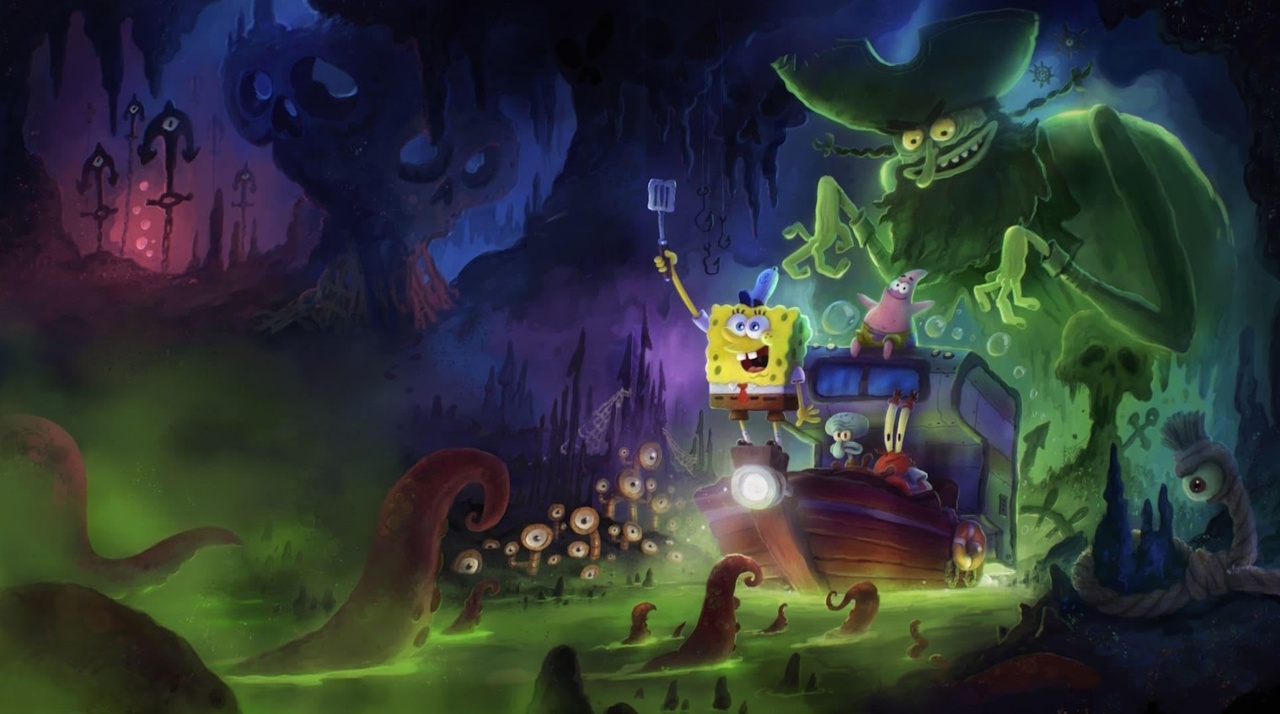
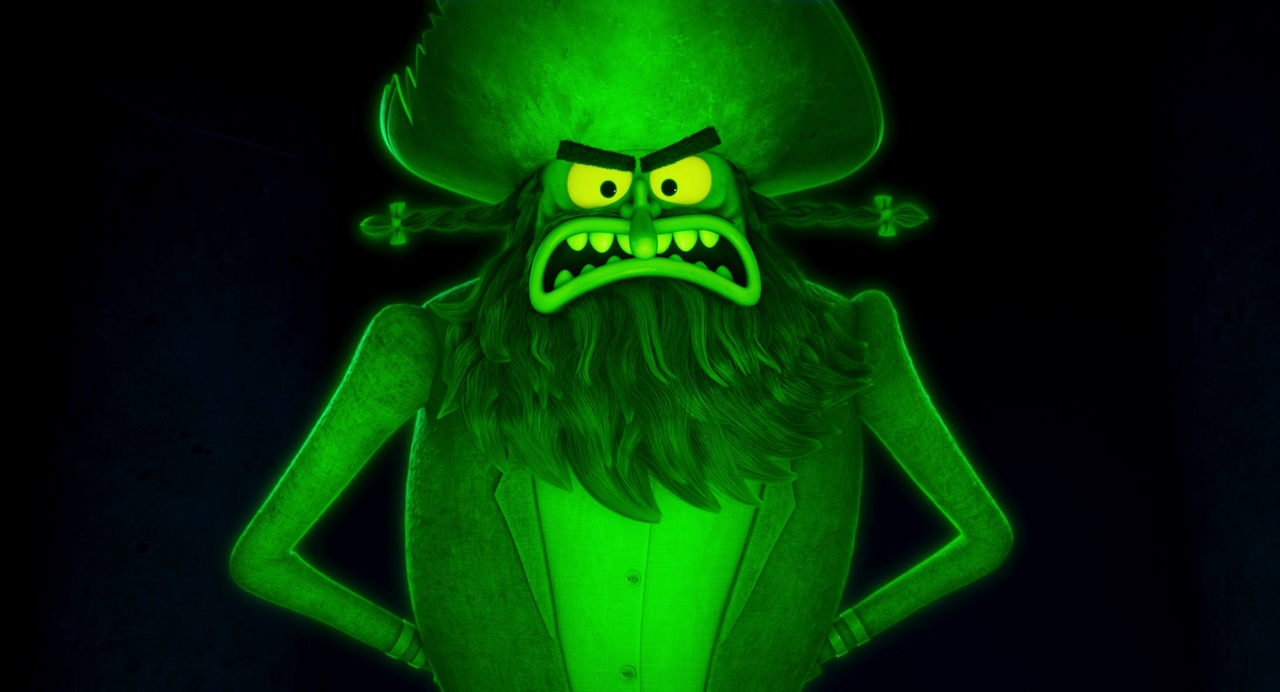
The Flying Dutchman – played in this appearance by Mark Hamill – is an incredibly memorable villain from the original show, despite only making a handful of appearances. And a ghostly character like that was a wonderful choice to bring to the big screen for a bigger role. The Flying Dutchman’s design (both in 2D and now in 3D) is fun, reminding me a bit of LeChuck from the Monkey Island games – and while he’s definitely spooky, I don’t think he’d really frighten the film’s intended young audience. Maybe some especially sensitive little ones wouldn’t enjoy a story about a ghost, but for the most part, I think the Flying Dutchman walks a line between being fun in a spooky way without being actively frightening.
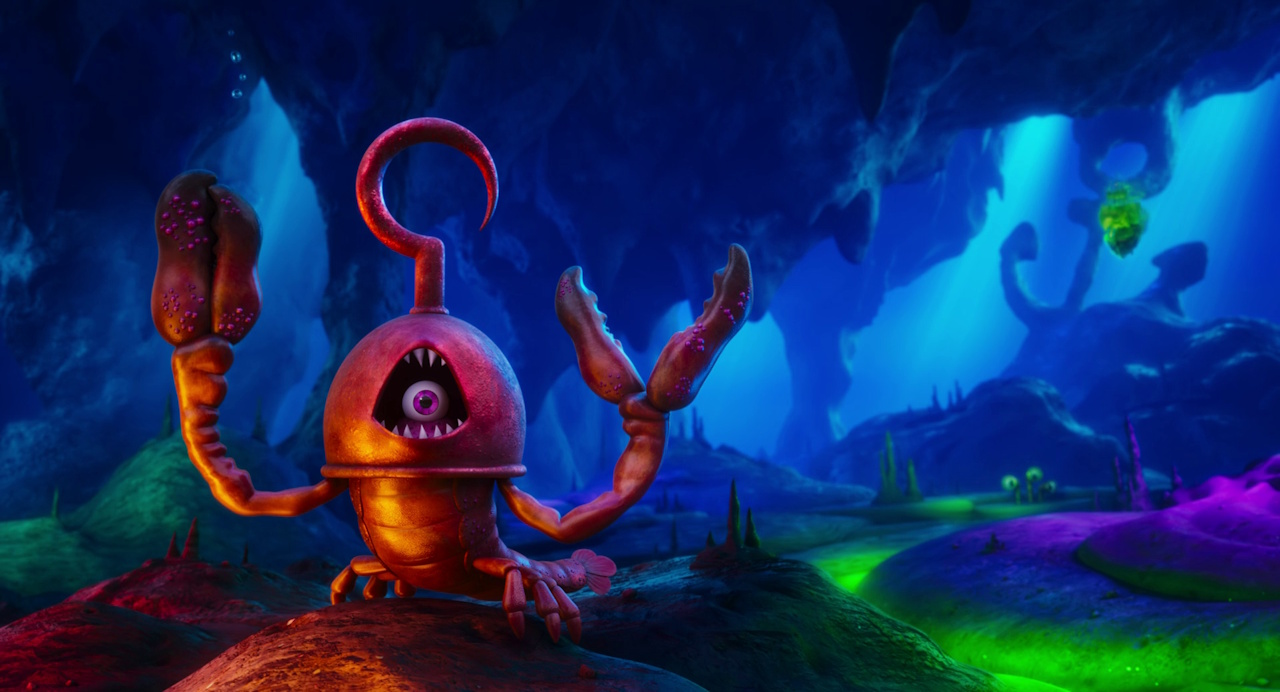
And the same is true of the Underworld – a major setting for the film’s adventure. There are monsters and a river of ooze – but the designs are definitely kid-friendly! I’m a big old scaredy-cat sometimes, so even I appreciated that these designs leaned more into “weird and wacky” than “terrifying,” and I’m sure a younger audience will, too.
Mark Hamill gave an outstanding performance as the Flying Dutchman, and it wasn’t until I looked into it that I came to realise he wasn’t the original voice actor from the TV series; his performance felt seamless. Maybe if you’re a huge SpongeBob fan and you’ve watched all of the Halloween and Flying Dutchman episodes over and over again you’ll pick up on some subtle differences, but speaking for myself, I really wouldn’t have known that Hamill wasn’t the instigator of the role. And his performance – both vocally and in the film’s live-action sequences – was fantastic.
What I appreciated about the Flying Dutchman is the same thing I value in basically any cinematic villain: he has a genuine reason for doing what he does, he isn’t “evil for the sake of it,” and his backstory was even kind of… sympathetic. The Flying Dutchman is cursed to roam the seas as a ghost for eternity – and he wants to find a way to break the curse, even if that means sacrificing someone else to suffer the same fate. We aren’t meant to agree with the actions he takes – setting up SpongeBob to take his place, nor abandoning his first mate when he finally gets what he wants – but we are able to understand where he’s coming from, at least. And if you stop to think about it, whatever crimes the Flying Dutchman may have committed all those years ago… does it justify a punishment of infinite duration?
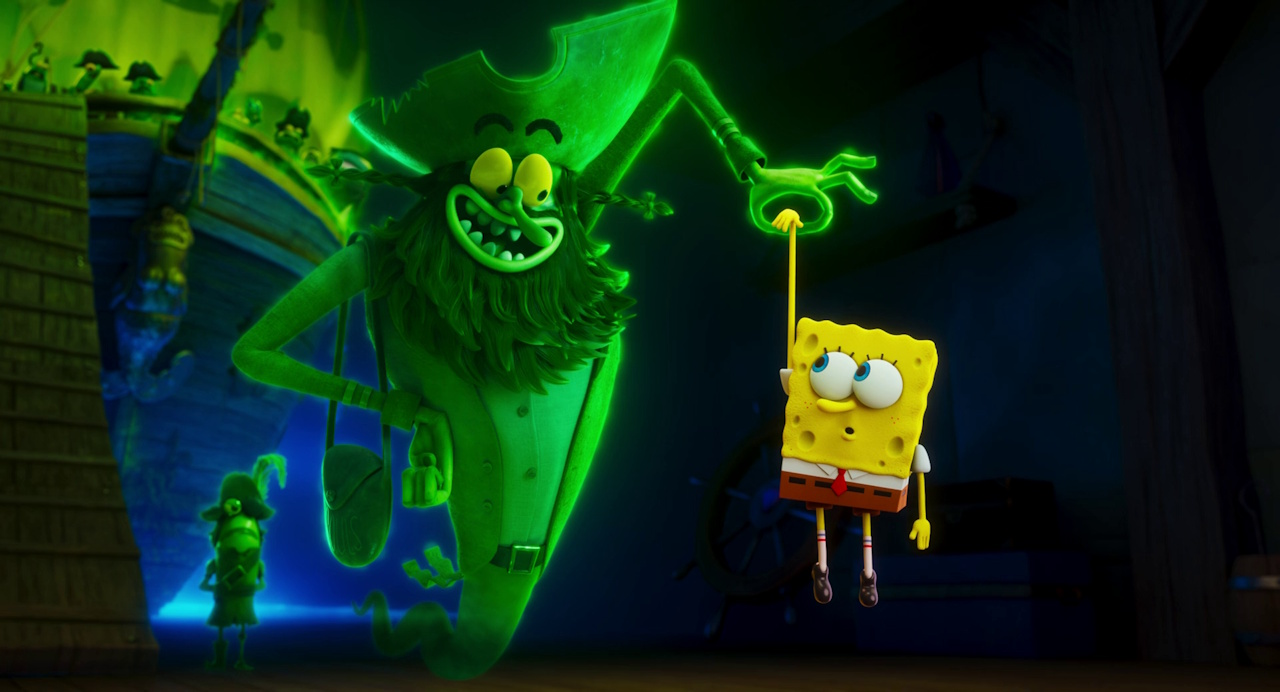
This is a kids’ film, and it’s part of a franchise that’s been running for more than a quarter of a century. So it was very possible that the film’s villain wouldn’t have had any of those subtleties or nuances; we could’ve got a story about the Flying Dutchman wanting to steal SpongeBob’s soul for no other reason than “that’s what I like doing.” But I truly appreciate that the film went out of its way to make the villain someone we can, at the very least, understand. He still comes across as selfish, and the comeuppance he gets at the end therefore feels justified – especially after how he treated his first mate.
But there’s a tiny twinge of sympathy in the Flying Dutchman’s presentation; the sense that this is a man who, despite his obvious flaws and deficiencies as a person and a friend, is suffering a horrible otherworldly punishment. Perhaps that’s something primal, that empathy for even the most selfish villain… or maybe I’m totally misreading the room! But for me, the Flying Dutchman having a genuinely understandable motivation elevated the main story of the film, and made it that much better.
Before we come to SpongeBob himself, the second character who gets an arc of sorts is Mr Krabs. Krabs’ story is a bit more simplistic, as he learns a lesson about boasting, exaggerating his achievements, and just generally lying and being deceitful. He begins the story by exaggerating his past to SpongeBob, painting himself as an all-conquering hero, and this in turn kicks off the main story. Krabs has to come to terms with the fact that his lying caused SpongeBob to get tangled up with the Flying Dutchman, and it’s clear that Krabs genuinely cares about SpongeBob *as a person*, not just as a money-earning employee. That isn’t always present in the show, from what I recall, so it was sweet to see.
There was kind of a father-son thing going on with SpongeBob and Krabs, even though the pair spent most of the film apart, and that culminated in Krabs risking everything – and losing everything, at least for a while – trying to rescue SpongeBob from his grizzly fate. As with the Flying Dutchman above, this mini-arc and an understandable motivation gave Mr Krabs’ story a bit more depth; it would’ve been easy for the film to say “SpongeBob’s friends are going to try to rescue him just because!” and leave it at that. But this additional storyline added a lot and helped keep Mr Krabs feeling a bit more grounded and realistic. The way this was conveyed, too, with Krabs continually looking at SpongeBob’s old ID card, was pretty creative.
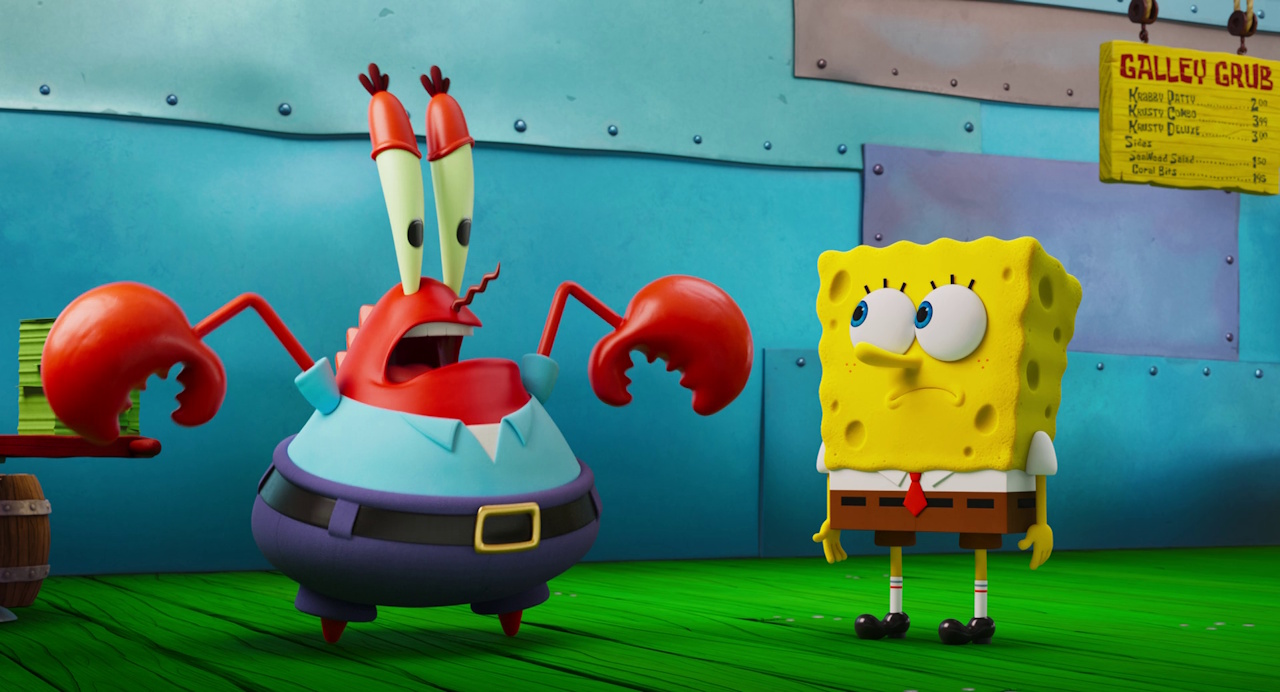
The Search for SquarePants uses, as I mentioned earlier, a 3D animation style. That’s a change from not only the SpongeBob SquarePants TV show, but also from that first film that I saw some two decades ago! For the most part, the change in animation was neither a positive nor a negative thing; it’s just the way this film looks, and I was fine with that. But there are a couple of things I wanted to point out – it’s up to you to decide whether these are issues, nitpicks, or even intentional!
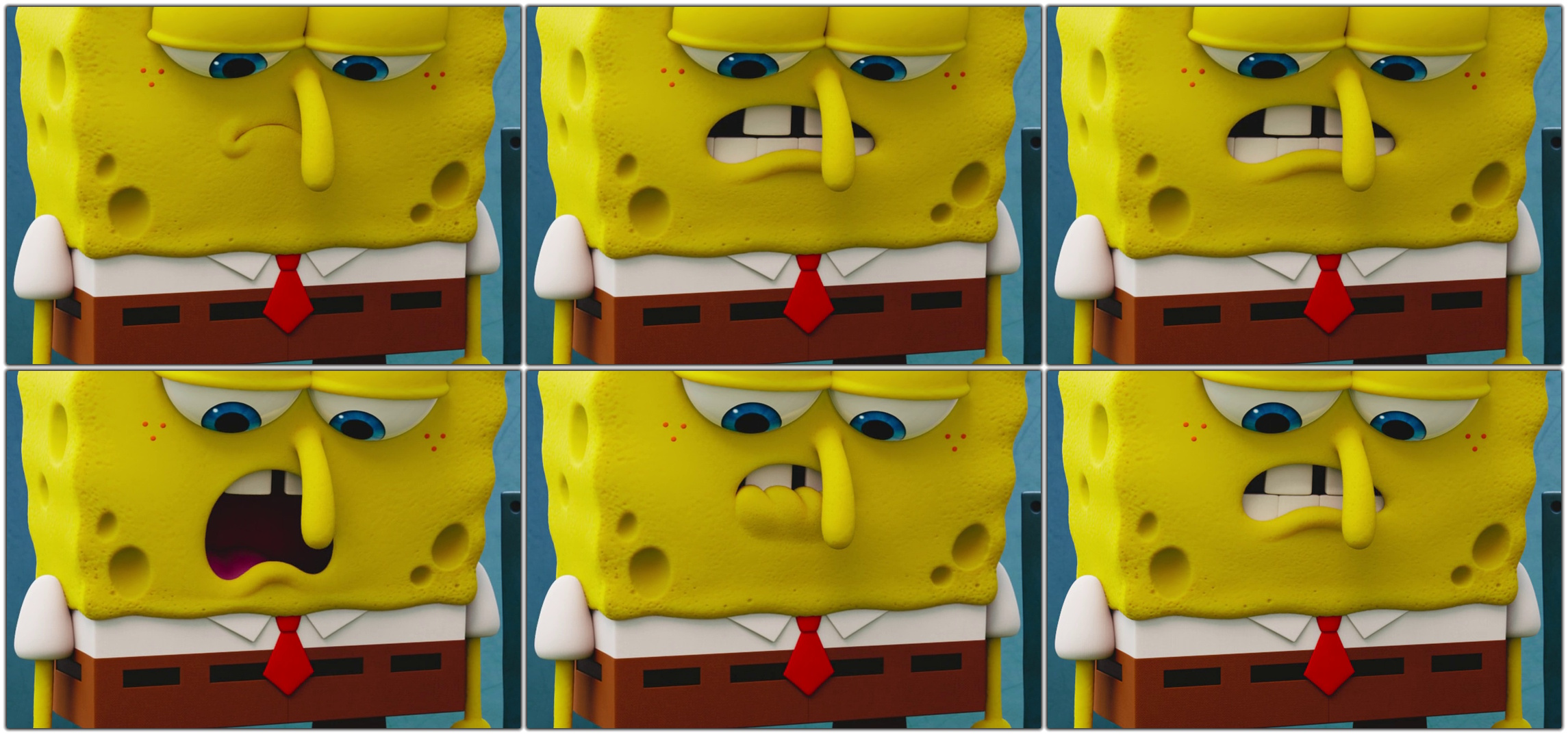
SpongeBob’s skin(?) has a weird effect to it where some of the holes or depressions on his face will stay stock still while the background texture moves around them. It was only really noticeable in close-ups, but it was weird – and it’s one of those things that, once I started to notice it, I found that I *kept* noticing it every time the titular sponge was in focus. It feels like a bit of an animation shortcut, and it might be the kind of thing that hardly anyone picks up on. But I did notice it… and while it’s not the worst thing in the world, it didn’t look fantastic.
Sticking with the animation, there was a kind of rubbery, stretchy effect to some of the characters. I noticed this most with Mr Krabs and Patrick; their shell/skin appeared to have the texture of rubber or stretchy plastic. This may have been a deliberate choice, with the animators leaning into a visual style that was a little more textured, less flat, and less “shiny” than some CGI films can be. In any case, I didn’t really have a problem with it; it made the film feel more “cartoony,” if that makes sense. But I did think it was worth mentioning.
Let’s talk about music. Search for SquarePants had a solid score. The soundtrack to the film was spooky where it needed to be, downcast when it looked like defeat was inevitable, and up-tempo and fun at other points, too. My number one rule for any film’s soundtrack is “do no harm;” the music shouldn’t get in the way of, or detract from, what’s going on on screen. Search for SquarePants has a score that clears this admittedly low bar.
The film’s main song, though – Ice Spice’s Big Guy – is another matter.
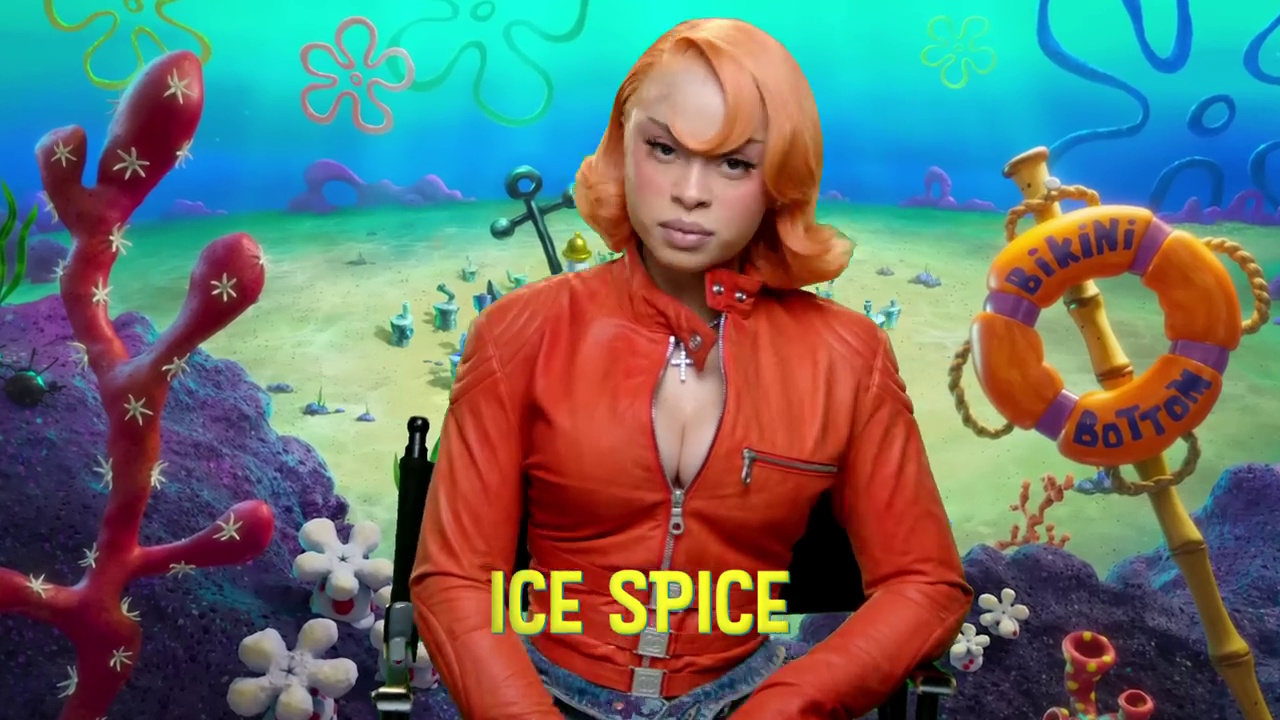
I will caveat this by saying that I’m not a fan of contemporary hip-hop and rap music, and that I was unaware of Ice Spice until watching the film. So this song was probably never going to be my thing, and that’s okay! But my goodness, it’s no exaggeration to say that Big Guy is, without a doubt, one of the worst songs I have ever had the misfortune to listen to.
Within The SpongeBob Movie itself, the Big Guy sequence is short enough to pass by relatively inoffensively. But do yourself a favour: don’t do what I did and listen to the entire song. It is a musical travesty; a song in which I can genuinely find zero redeeming qualities. I agree with one of the top comments under the song’s YouTube video: what a great day to be deaf.
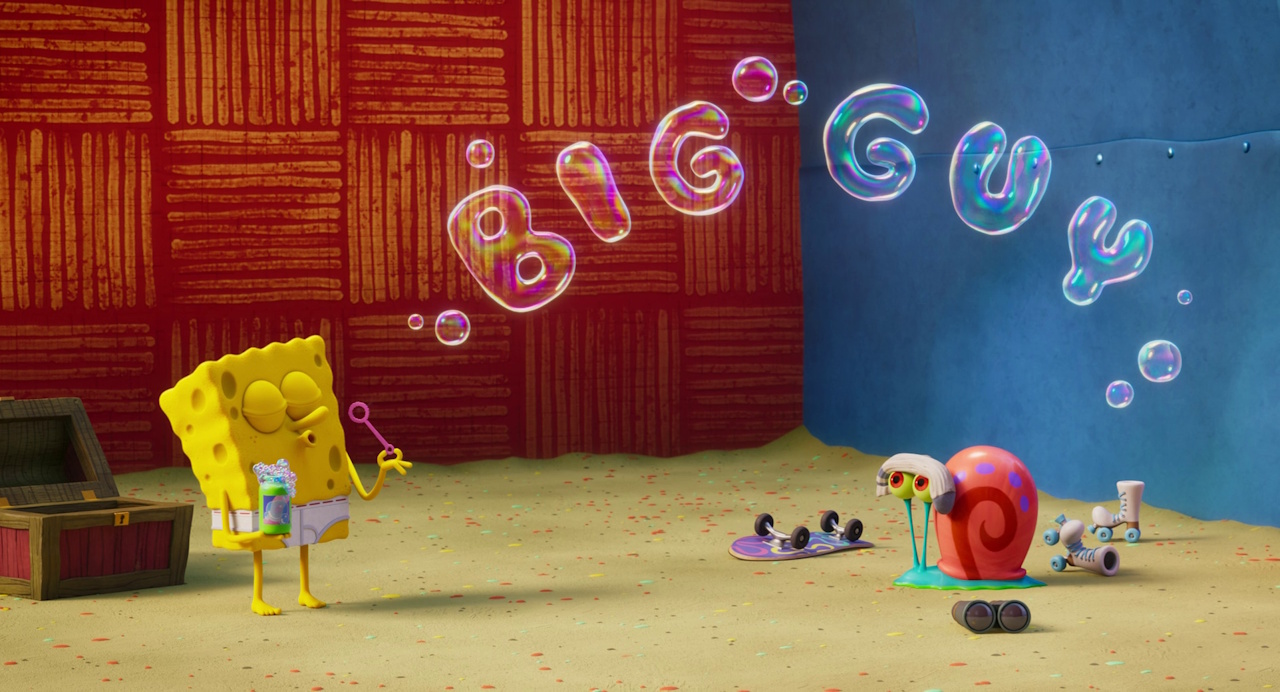
I suppose we should talk about SpongeBob, shouldn’t we? This is his movie and his story, after all!
If you remember the first SpongeBob SquarePants Movie from a couple of decades ago… you’ve kind of got the core of SpongeBob’s story right there. SpongeBob wants to feel like a “big guy,” in the words of Ice Spice, but begins the film feeling that, despite a growth spurt, he’s still young and immature. This kicks off his quest to be seen – by Mr Krabs, especially – as more than just a kid. For a film aimed at a younger audience, I think this is an easily-understood character motivation.
My struggle these days is the opposite – the cashier is always a little too quick to hit the “clearly over 25” button when I’m treating myself to a bottle of wine! But I can remember being at school, where I was one of the younger kids in my year group, and wanting to be perceived as older and more “grown-up.” It’s a natural thing that I think a lot of kids experience, so as the motive for the central character of a kids’ film… it works exceptionally well.
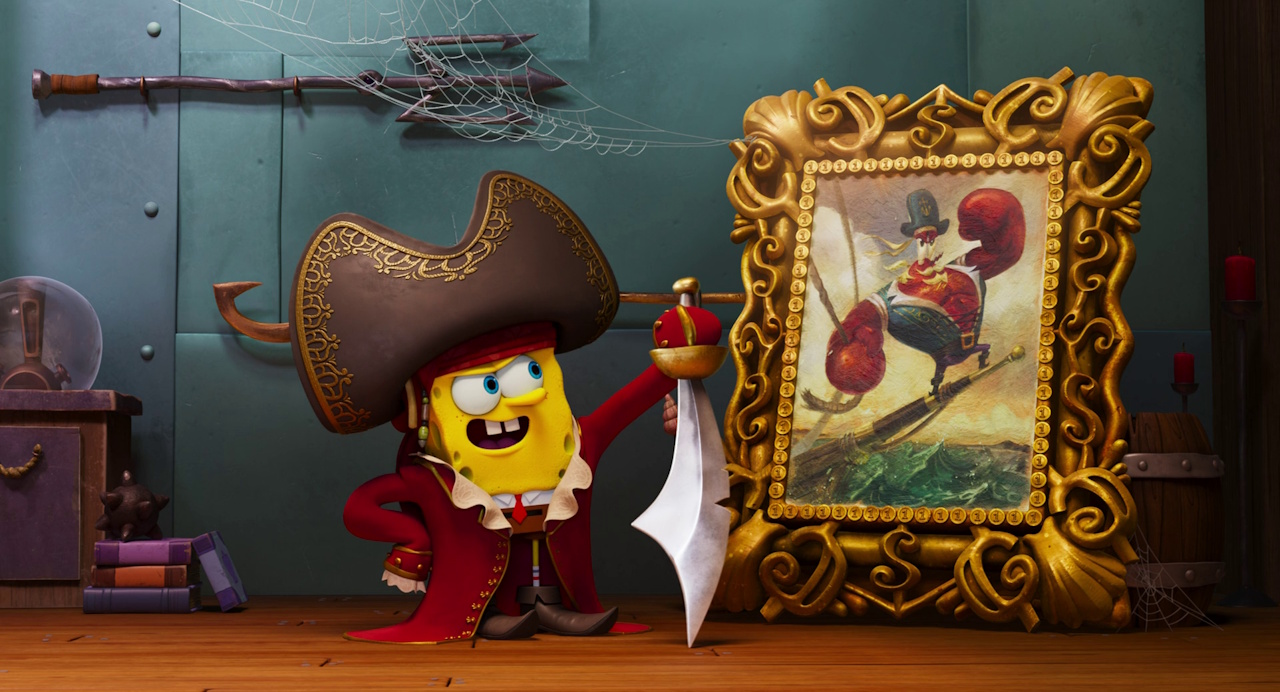
Despite the core similarity with SpongeBob’s motivation in the earlier film, the presentation of the two stories is different enough that Search for SquarePants doesn’t feel repetitive or derivative. Yes, both films present SpongeBob as a young guy who wants the people around him to see him as more of a grown-up. And yes, in both cases, this leads SpongeBob and Patrick on a “hero’s journey,” travelling to dangerous and faraway places. But the similarities end there; the SpongeBob of Search for SquarePants comes across as younger and more naïve than he does in The SpongeBob SquarePants Movie.
The inciting incident in both cases is different, too – though both are connected to Mr Krabs! In The SpongeBob SquarePants Movie, SpongeBob believes he’s up for the job of manager at the Krusty Krab’s new location, but loses out because he’s seen as too young and childish for the role. That’s more of, for want of a better term, an “adult problem” for the character. In Search for SquarePants, SpongeBob is excited to finally be able to ride a rollercoaster at his favourite theme park – but chickens out when he sees how big and scary it is. This is much more of a childish problem, emphasising that this version of the character feels younger.
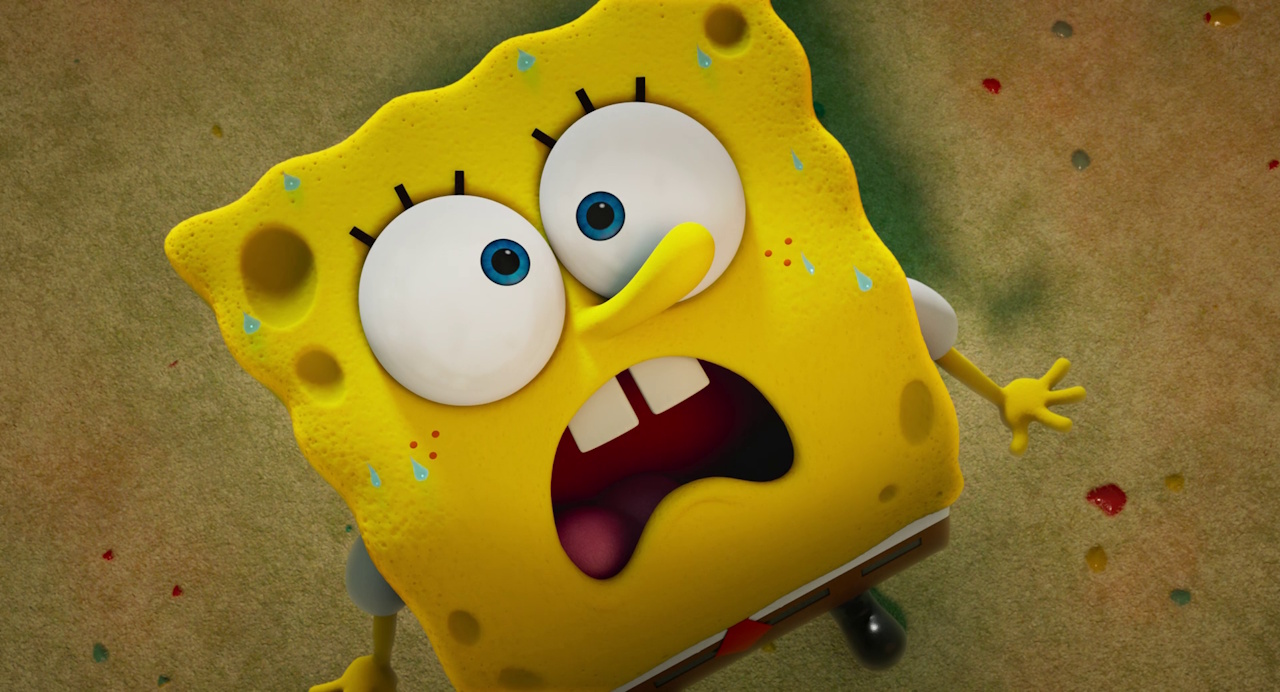
This culminates in SpongeBob having to literally face his fears at the climax of the story, having confessed to the Flying Dutchman about his fear of the rollercoaster. I really liked the way in which SpongeBob leaned into bubble-blowing – which the film presents as one of his more childish hobbies – as the way to save the day. The message for kids is that it’s okay to be a kid; that you don’t have to rush to grow up. In an age of social media and the internet, where kids are feeling the pressure to grow up at an ever-earlier age, that’s a positive message, in my book.
So that was The SpongeBob Movie: Search for SquarePants. Can I recommend you purchase it at full-price? If you or your kids are mega-fans, maybe. But if you can wait a few more weeks, it’ll land on Paramount+, I expect, where it’s a much easier recommendation.
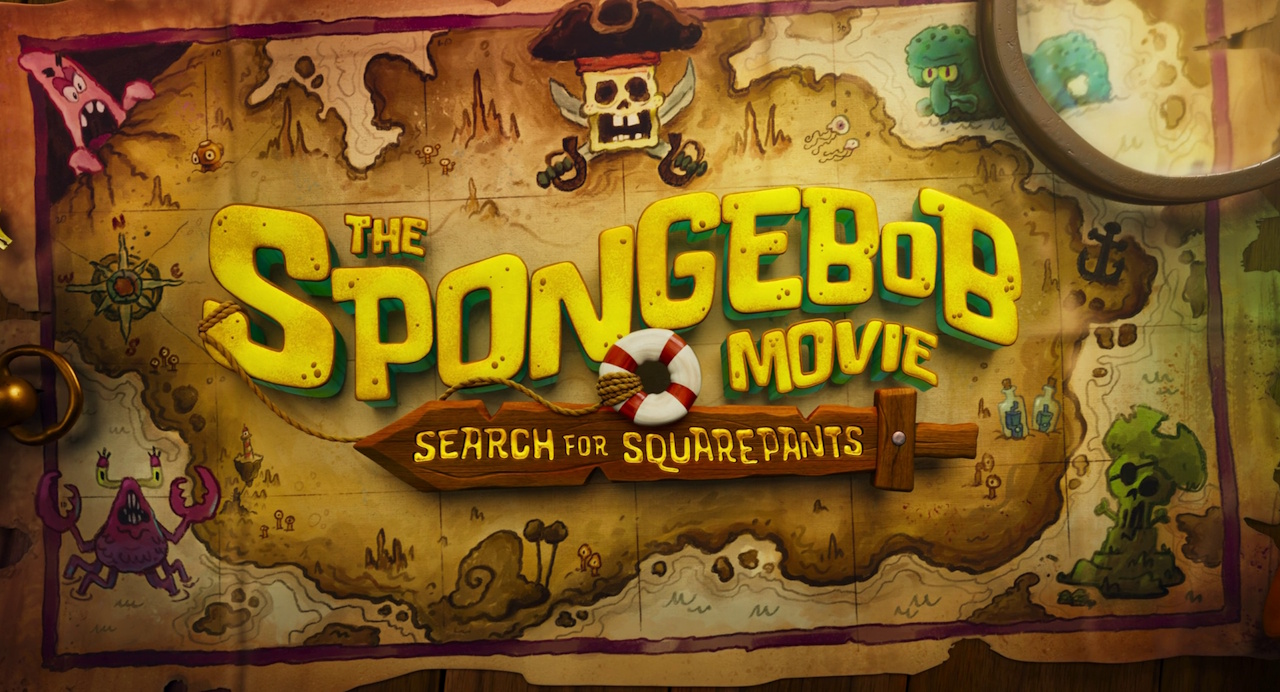
For my part, I had fun with the film. It was my first adventure with SpongeBob and his friends in quite a while, and while I definitely felt echoes of 2004’s The SpongeBob Movie, there was more than enough originality to make this film stand apart. The Flying Dutchman made for a fun and understandable antagonist, Mr Krabs kicked off the story and also got an arc of his own, and SpongeBob himself got a storyline about wanting to grow up that will surely resonate with a younger audience – with a message at the end about not needing to grow up *too fast* that I think is important in this day and age.
Thanks for joining me for this review! Depending on when it releases on video-on-demand or streaming, my next film review could very well be 28 Years Later: The Bone Temple, which will be a decidedly spookier affair than Search for SquarePants has been! And I have plans later in the year to check out a few other titles – click or tap here to see a few films I’m looking forward to in 2026. I hope you’ll join me for some of those! And if you missed it, last year I reviewed KPop Demon Hunters, another animated film that I’m happy to recommend. Click or tap here for that review.
Have fun out there – and try not to get into too much nautical nonsense!
The SpongeBob Movie: Search for SquarePants is currently available to buy/rent via Amazon Prime Video, Apple TV+, and other video-on-demand platforms in some countries and territories. The film will likely debut on Paramount+ later in 2026, and will also be available on DVD/Blu-ray later this year, too. The SpongeBob Movie: Search for SquarePants is the copyright of Paramount Animation, Nickelodeon Movies, and/or the Skydance/Paramount company. This review contains the thoughts and opinions of one person only and is not intended to cause any offence.



 Trekking with Dennis