

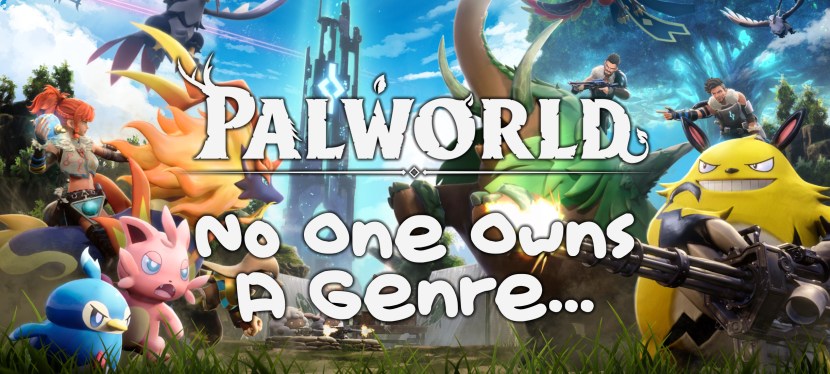
I have very little interest in the new survival/monster game Palworld. I’ve never engaged with titles like Monster Hunter or Pokémon, so the game just wasn’t on my radar. But an issue has come up for Palworld that I think is an important one not only for the games industry, but for entertainment and media as a whole, and I felt compelled to add my two cents to the conversation.
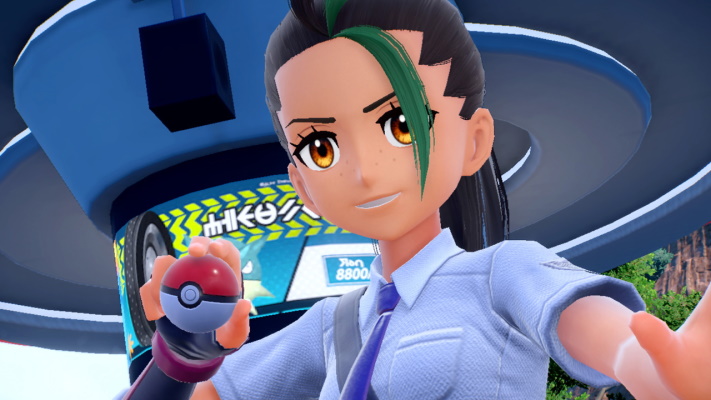
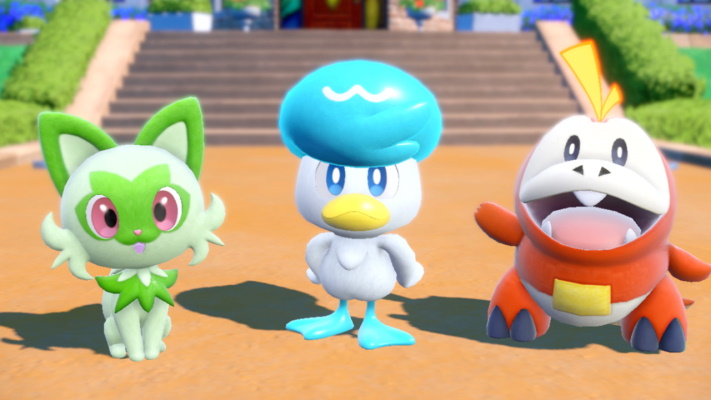
If you haven’t heard, Palworld has been accused of “ripping off” or plagiarising the long-running Pokémon series. The game uses some familiar designs for its monsters, and although I haven’t bought it or played it for myself, I understand that some elements of its gameplay are similar, too, with players being able to “catch” monsters and use them in battles.

Nintendo and The Pokémon Company, who jointly own and develop the Pokémon series, have even commented on this, with the latter releasing a statement saying that they “intend to investigate” Palworld and “take appropriate measures to address any acts that infringe on intellectual property rights.” I’ve linked to The Pokémon Company’s full statement at the end of this piece so you can read it in full if you’re interested.
Whether you like Palworld or not, the issue this raises is a genuinely interesting one – and it’s one that the games industry hasn’t really wrangled with for a long time, at least not in public. The basic question is this: can any company claim ownership of, and potentially patent, trademark, or copyright, an entire genre, style of game, or gameplay mechanic?
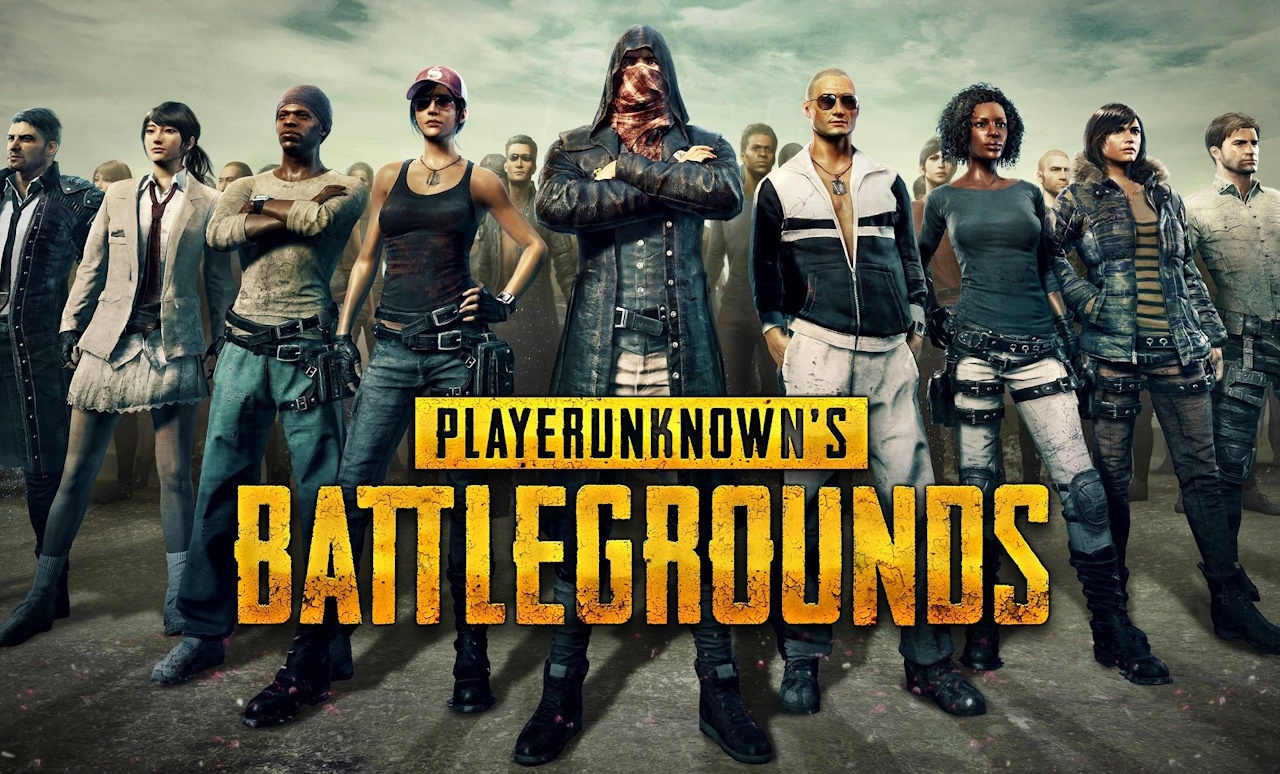
The answer should be obvious: no, of course not, don’t be stupid. The Pokémon Company and Nintendo can’t own the concept of a game with battling monsters any more than Rockstar could own the open-world sandbox crime genre, or PlayerUnknown’s BattleGrounds could own battle royale. The developers of PlayerUnknown’s BattleGrounds tried in vain to claim ownership of the battle royale genre, even going so far as to try to sue Epic Games, creators of Fortnite, over the perceived “copying.” That lawsuit went nowhere – and rightly so.
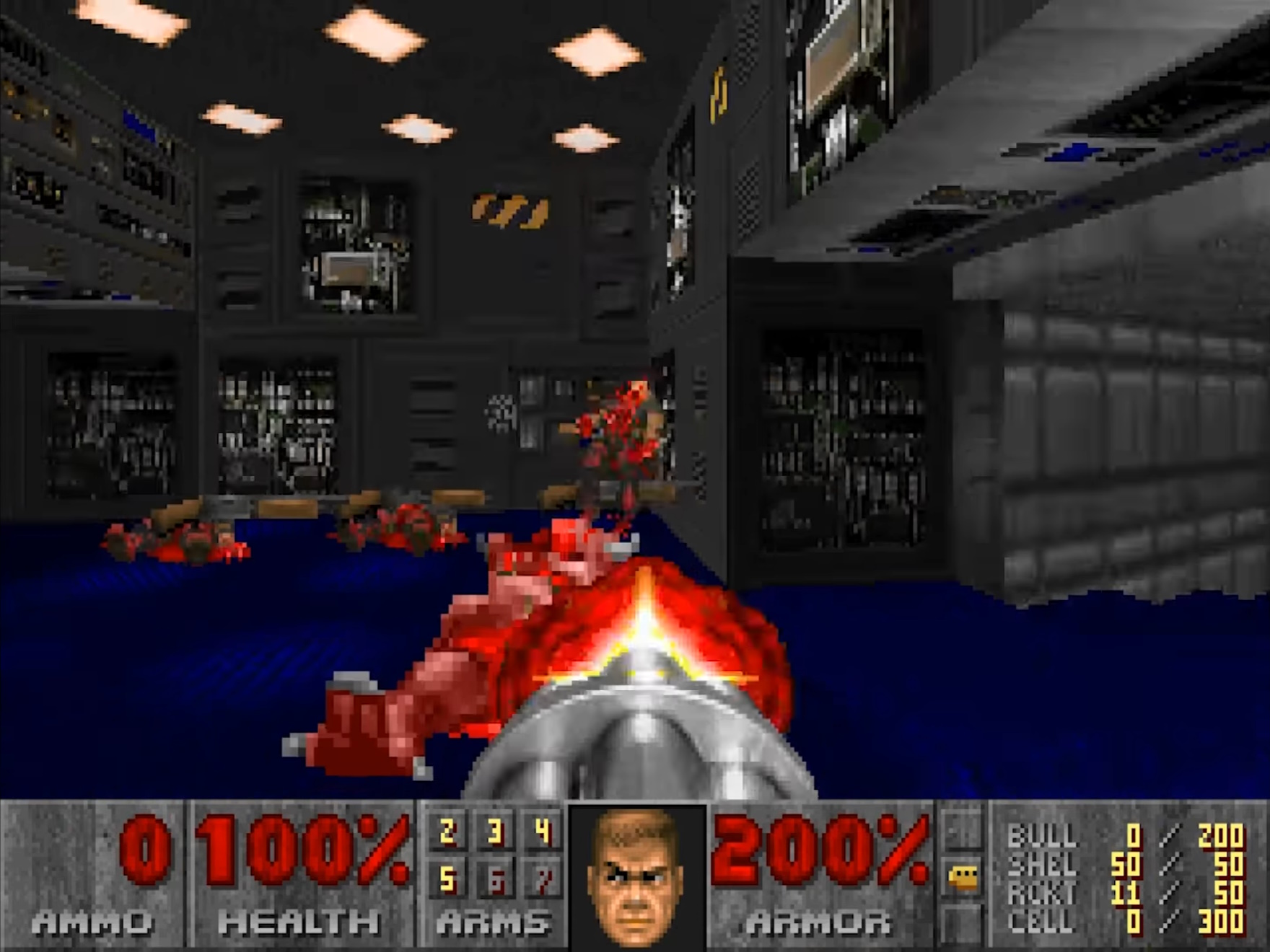
I’m old enough to remember when first-person shooters were literally called “Doom clones.” Doom popularised the first-person shooter in the early 1990s, and on the back of its success, dozens of other FPS titles were developed. But Doom’s creators didn’t lawyer up and try to prevent anyone else from making a first-person shooter at the time, nor did Rockstar go after the likes of the Saints Row series in the mid-2000s.
Going all the way back to the earliest video games, new titles have come along that used similar styles, designs, and gameplay elements. Some of these games have gone on to innovate, pioneering entire sub-genres and gameplay mechanics, and if they’d been shut down or prevented from existing by excessive copyright lawsuits or patents, gaming today would be in a much worse place. The history of gaming is one of piecemeal innovation, and of companies jumping on popular genres, innovating, and pushing boundaries.
There were first-person titles literally decades before Doom, with 1980’s Battlezone in particular being a noteworthy progenitor. And there were crime games and open-world titles years before Grand Theft Auto III came along. So in neither case can the developer claim to have wholly independently “invented” something, even if their title was the one that popularised it. That was the fundamental flaw in the PlayerUnknown’s BattleGrounds lawsuit.
Stepping away from gaming, we can look to cinema and even literature for other examples. No one would try to make the claim that only Tolkien should be allowed to write fantasy, or that fictional races like elves and orcs are somehow copyrightable. Nor would anyone be able to argue that the owners of 1927’s Metropolis should be able to trademark the entire sci-fi genre. That isn’t how art and media work or have ever worked.
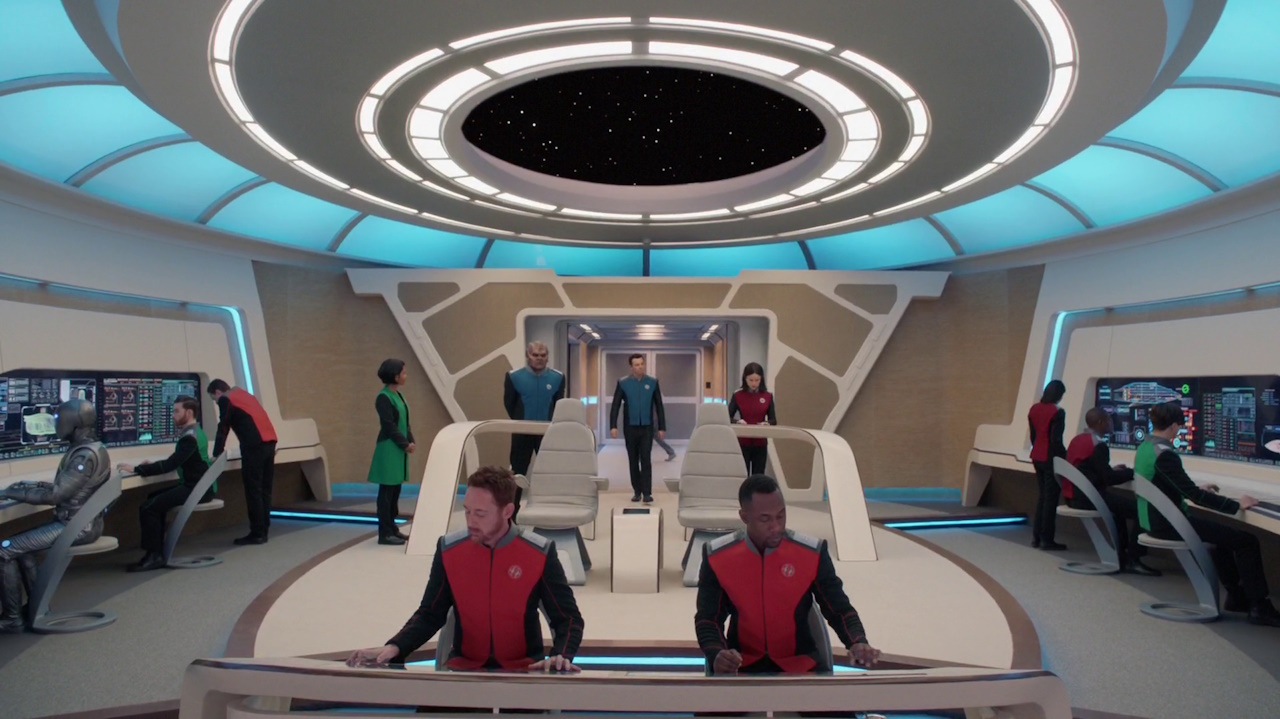
Look at a film like Galaxy Quest, or a TV series like The Orville. Both lean heavily on the Star Trek franchise for inspiration (and parody), but Paramount wouldn’t have a leg to stand on if it tried to take their creators to court. And once again, that’s because Paramount doesn’t own the sci-fi genre, or even the “explorers on a faster-than-light spaceship seeking out new life” sub-genre of sci-fi. Anyone is allowed to tell their own stories – as long as they don’t use trademarked names or characters for profit.
If Palworld had its own Pikachu or Charizard, maybe Nintendo and The Pokémon Company would have an argument here. But from what I’ve seen, the game’s monsters all have unique names, and while they may look similar to critters from the Pokémon series… so what? You can’t claim ownership of any and all yellow-haired monsters in every video game. That’s the kind of claim that would be laughed out of court.
Maybe The Pokémon Company and Nintendo have been complacent, because there hasn’t really been a serious challenger to the Pokémon series before. Monster Hunter exists in a similar space, as do games in the Digimon series, but Pokémon has been a force unto itself for a long time. Perhaps the sudden arrival of Palworld struck a nerve, or perhaps Nintendo is worried because recent Pokémon titles haven’t been well-received.
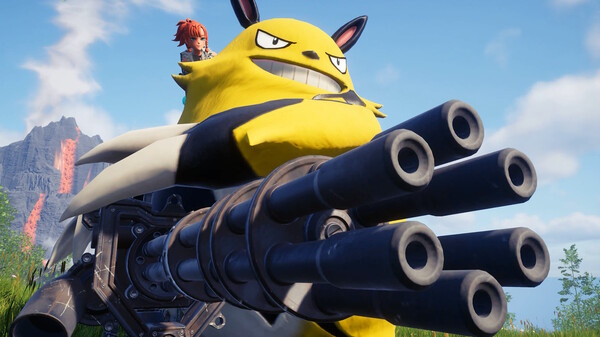
But none of that actually matters. Palworld has as much right to exist as any of the 873 Pokémon games, and if its better than anything that The Pokémon Company has done in recent years… well, they’ll have to adapt and do better. They’ll have to make better games, actually finish working on them before releasing them, and maybe even look at some of the features included in Palworld that players have enjoyed. Pokémon has arguably been pretty stagnant for a while, at least from what I can see looking in from the outside, so a kick up the backside from a genuine competitor could be just what the series needs. Complacency breeds stagnation and ultimately decline, but competition can revitalise a flagging series.
Rather than seeing Palworld as a problem to be crushed, The Pokémon Company and Nintendo should view its entry into the marketplace as a window of opportunity. After years of having the monster-battling space all to themselves, there’s now the potential to look at how other developers might handle that kind of game – and even opportunities to learn and grow. But that would take the kind of critical thinking that Nintendo doesn’t always have a knack for!
Either way, Palworld is here to stay. I can’t imagine that the game will be pulled from sale or forced to be shut down because of a complaint from Nintendo and The Pokémon Company, because any threat of legal action would surely be doomed to failure – as it has been every other time it’s been tried by other publishers and developers. Even if we accept that Nintendo and The Pokémon Company originated the monster-battling sub-genre (which is very much up for debate, as Pokémon itself is a variation on the role-playing game genre), they don’t get to claim ownership of it exclusively. And even if Palworld uses similar designs, visual styles, and gameplay mechanics… none of those things are copyrightable. This argument will go nowhere.
I will concede that, from what I’ve seen, parts of Palworld do look similar to the Pokémon series. And from the point of view of a fan or player, I can absolutely understand wanting to leave it a negative review pointing that out, or even to boycott it and refuse to play it because of its perceived “ripping off” of the Pokémon series. That’s absolutely fine on an individual level – and I can definitely appreciate why some Pokémon fans might see things that way. But that’s very much a personal, individual decision – and one that has no bearing on any copyright law or trademark case!
For my money, Palworld is a title I’m happy to skip. It’s not my thing – just like Pokémon isn’t. But I found this argument to be interesting – particularly when The Pokémon Company itself weighed in. I doubt we’ll hear much more about this; if The Pokémon Company has decent lawyers, they’ll tell them pretty quickly that nothing in Palworld comes close to violating copyright laws. But hey, I’ve been wrong about these things before… and in a way, I’d quite like to see this issue litigated, especially if it ends up embarrassing Nintendo and The Pokémon Company and costing them a lot of money!
You can read the full press release from The Pokémon Company by clicking or tapping here. (Warning: Leads to an external website)
Palworld is out now for PC, Xbox One, and Xbox Series S/X consoles. Palworld is the copyright of Pocket Pair. All other titles discussed above are the copyright of their respective publishers, developers, and/or distributors. This article contains the thoughts and opinions of one person only and is not intended to cause any offence.



 Trekking with Dennis