Thoughts on a potential Mass Effect television series

Spoiler Warning: There are minor spoilers present for the Mass Effect trilogy.

Have you heard the latest rumour? Amazon is apparently very close to securing a deal to make a television series based on the Mass Effect video game franchise. I thought it could be fun to discuss this rumour – given that it seems to be close to being officially confirmed – as well as the merits of big-budget television shows in general.

Many film adaptations of video game properties have proven to be disappointing. There are a number of reasons why that’s the case, and it varies from project to project, but one thing absolutely worth considering is the fundamental, irreconcilable difference between how long the average film lasts and how long the average video game lasts.
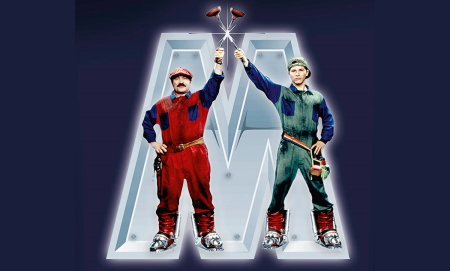
1993’s Super Mario Bros. is an… interesting film.

Many video games – especially those with strong stories, like the Mass Effect series has – can require many, many hours of playtime. Despite what I said a moment ago, there really isn’t such a thing as an “average” video game length; it can vary from a couple of hours all the way to dozens or even more than a hundred. But most video games that have seen disappointing film adaptations in recent years have been these kinds of long, story-driven titles – and condensing a whole video game’s worth of story into a two-hour film is difficult to get right.

This is also the problem a lot of novel adaptations face, so much so that “the book was better than the film” has become an overused cliché! Even adaptations that have been widely praised overall – like the Harry Potter series, for instance – had to make significant story cuts to squeeze an entire book’s worth of plot into a standard cinematic runtime. Exceptions exist, of course, and the Lord of the Rings films from a few years ago are an example. But in that case, the extended editions of the films are widely considered to be superior to the shorter theatrical cuts, and the extended edition of the trilogy clocks in at well over eleven hours long.
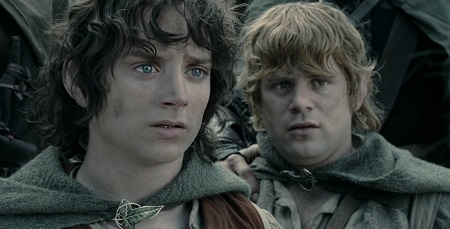
The Lord of the Rings films are an exception to the rule!

What I’m trying to say is that a story like Mass Effect will be far better served by a television series adaptation than it would’ve been by a film adaptation. If it’s true that this is the route Amazon wants to go down, I’ll be very interested to see what will become of the project in the months and years ahead.

In the aftermath of big serialised shows like Lost and Game of Thrones, audiences have become used to story arcs that run across multiple seasons, something that would be a perfect fit for a long story like the one seen in the Mass Effect games. Even just the original story of Mass Effect 1 could itself be two seasons’ worth of television without feeling padded or bloated, so there’s potential in this project to really bring the Mass Effect galaxy to life.
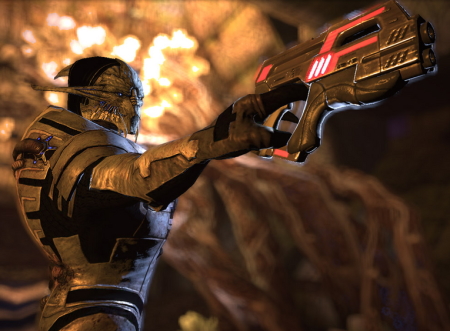
Saren, the main villain of Mass Effect 1.

Amazon is still a relative newcomer to the television series game, but the company has already got an impressive track record. Shows like The Man in the High Castle and Jack Ryan were great, The Wheel of Time, which debuted just last week, is off to a fabulous start, and the company also picked up The Expanse following its cancellation, putting out two amazing seasons of the show so far. Amazon has also played host to Star Trek: Picard and Star Trek: Lower Decks, giving Prime Video a solid lineup in the sci-fi and fantasy genres. And we haven’t even mentioned the upcoming Lord of the Rings series!

Projects like The Lord of the Rings have demonstrated Amazon’s willingness to spend vast sums of money on their television shows, and if they do pursue a Mass Effect series, I would hope they’d be willing to invest there too. One of the great things about the Mass Effect galaxy is how “alien-feeling” some of its non-human races are. Races like the volus, hanar, and krogan were able to be created for the video game series because the animators weren’t limited by the need to use human actors – and recreating those races for the small screen will be a challenge.
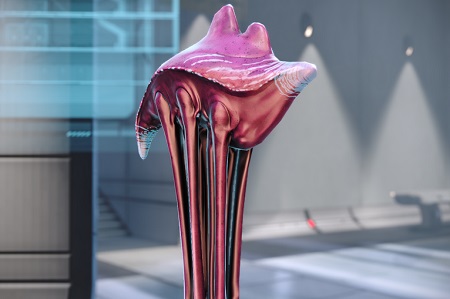
Bringing a hanar to the screen in a live-action series will be a challenge!

I don’t like to speak ill of Star Trek, but in that respect I think Mass Effect actually gives the franchise a run for its money! Many alien races in Star Trek – and other live-action sci-fi shows and films too – are naturally limited by using human actors. There have been some very different-looking aliens, of course, but the majority of the main cast are humanoid, something that’s also true of Star Wars. Mass Effect shook that up with races like the krogan being part of the player’s crew from the very first game, and I’d be curious to see how well that would work in a live-action production.

The story of the Mass Effect trilogy, with Commander Shepard on a quest to save the galaxy from the Reapers, would be absolutely fascinating to see retold as a television show! It would definitely need multiple seasons to do justice to such a long story (my playthrough earlier in the year of Mass Effect: Legendary Edition clocked in at almost 80 hours) but I think it could be done exceptionally well.
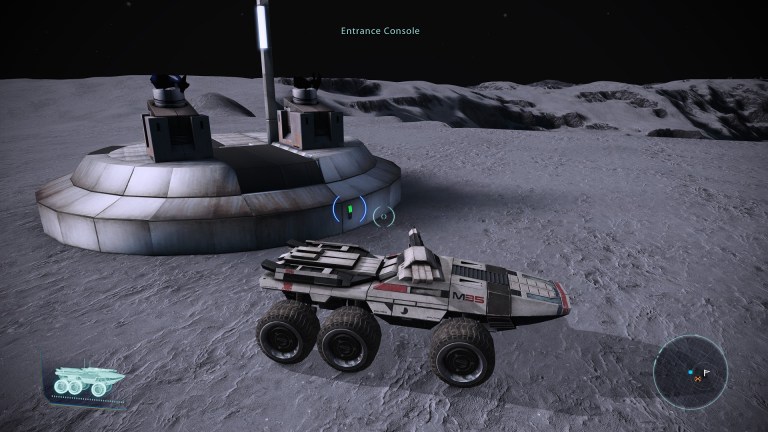
I recently replayed the Mass Effect trilogy.

Some fans have expressed concern about retelling the story of the Mass Effect trilogy. Not only would doing so mean recasting characters that fans have come to know and love, but it would also mean setting in stone a number of key decisions which form the core of the games’ role-playing and branching storylines.

On the first point, I think that we’ve seen so many franchises recast key characters over the years that I’m not particularly worried. In Star Trek we’ve had characters like Spock go through three iterations at this point, and while many fans have a favourite portrayal, I don’t think anyone disagrees that all three versions of the character work as intended in their various stories. Just like many actors have played roles like Hamlet or Richard III over the years, there’s room for more than one actor to play Commander Shepard. Heck, the original Mass Effect games already have two Commander Shepards – a male and female version of the character!
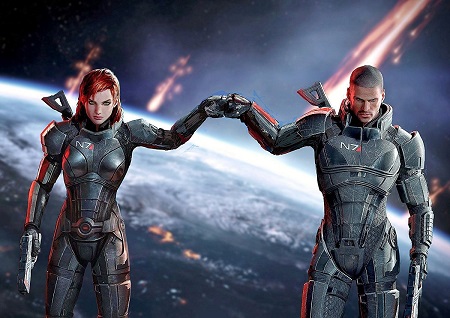
There are already different Commander Shepards…

On the second point, the Mass Effect galaxy absolutely feels like a vast setting in which different stories could be told. The story of the Reaper War is exciting and I think would make for engrossing television, but equally a Mass Effect television show could tell an original story in the same setting. Amazon is doing precisely this with its Lord of the Rings adaptation – the new show won’t be a retelling of the books nor a remake of the films, but a prequel set millennia earlier.

There’s huge potential in a Mass Effect television series, and there are many different ways to jump into the setting and tell stories. It wouldn’t have to be a straight adaptation of the video games and Commander Shepard’s story, because there are so many other stories out there in the Mass Effect galaxy. But at the same time, why not? The Reaper War is one of the best sci-fi stories I’ve seen in many years, and even though its rushed and imperfect final act did put a downer on things, that’s something that a television series could actually fix. An adaptation doesn’t have to be a like-for-like copy, so there’s scope to go back into the story and fix things that didn’t go to plan in the original games.

So watch this space! The rumour mill suggests that an announcement may be imminent, and while I don’t have “sources” of my own, I’m picking up this story from a number of different outlets – some of which are more reliable than others! For my two cents, I think a series like Mass Effect would work far better as a television series than a film, so I’m keeping my fingers crossed. If and when we get any major news be sure to check back as I may have more to say.

The Mass Effect series is the copyright of Electronic Arts and BioWare. This article contains the thoughts and opinions of one person only and is not intended to cause any offence.
Mass Effect 4 theory: Leviathan

Spoiler Warning: There are spoilers ahead for Mass Effect: Legendary Edition and its ending.

Though the release of the underwhelming Mass Effect: Legendary Edition earlier this year was partly a money-making ploy on the part of BioWare and Electronic Arts, there is another significant factor in the development of what we’ll generously call a “remaster.” Legendary Edition had the task of rehabilitating the series’ reputation following the disappointment of Mass Effect: Andromeda, and was also tasked with bringing in new fans – as well as getting existing fans hyped up – in time for the upcoming release of Mass Effect 4. In that sense, Legendary Edition does seem to have largely succeeded, as excitement for the next entry in the series is higher than it’s ever been.

No details have yet been announced for Mass Effect 4, and we’ve only had the tiniest of teases in the form of a CGI teaser trailer, so any details of the game’s story are complete unknowns. But based on what we know about the Mass Effect galaxy, perhaps it isn’t too early to speculate about what might come next for Commander Shepard and their crew… assuming Shepard is coming back, of course!

Mass Effect 4 is coming!

One of the key things Mass Effect 4 will have to balance is the scale of its story. Whether we get to play as Shepard or not, Mass Effect 4 will almost certainly be picking up the story in the aftermath of the Reaper War. This conflict saw the whole galaxy – led by Shepard – fighting for its very survival against a seemingly unstoppable foe, so from a narrative point of view that kind of epic tale can be hard to top.

This was the fundamental problem that befell Mass Effect: Andromeda. Even if that game had been launched in a better condition, without the bugs and visual glitches that would go on to define it for many players, the underlying story still felt anticlimactic. I’ve described Andromeda in the past as a game that feels like an overblown side-quest, and partly this is because of the story that came immediately before it. Andromeda was an attempt to branch out, to take Mass Effect away from Commander Shepard and spin it out into a larger franchise. But it failed not because of its bugs and other technical issues – though those were catastrophic in their own right – but because it told a story that many players simply weren’t interested in.

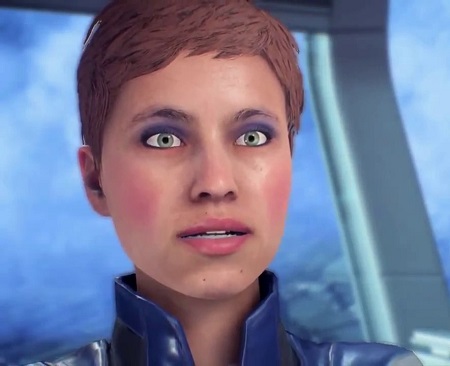
My face is tired.

Coming on the heels of the Reaper War, Mass Effect 4 has to avoid feeling anticlimactic in the way Andromeda did. But it has to balance that against telling a story that’s too derivative or repetitive; another galactic-scale threat caused by invaders from beyond the galaxy would feel like a cheap knock-off of what came before. Look to Star Wars’ old Expanded Universe for countless examples of this, as fan-fiction versions of Luke Skywalker, Han Solo, and Princess Leia battled clone after clone of Palpatine and fought dozens of bland, derivative Sith Lords and Imperial wannabes.

What comes next for the Mass Effect galaxy has to feel consistent, too, with what we already know about the setting. After Shepard succeeded at uniting the forces of practically every major faction in the galaxy, having one of them turn on the others and become an antagonist wouldn’t only be difficult to pull off narratively, it would risk upsetting fans and coming across as annoying.

The next Mass Effect game has to tell a story that follows on from the Reaper War.

So I think we can rule out stories like a krogan or turian uprising, or the sudden return of the long-dead Protheans looking to conquer the galaxy! Those kinds of stories might seem interesting – and perhaps the game will ultimately try to go down a similar path – but for the reasons mentioned I think they’d be too difficult to execute in a satisfying way.

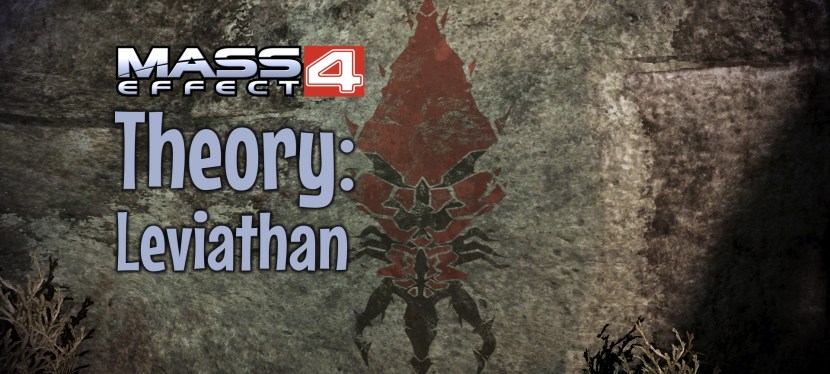
Instead I want to focus on a faction from Mass Effect 3′s DLC – the Leviathans. The Leviathan DLC is integrated into Mass Effect: Legendary Edition (albeit not especially well; there are some issues which arise from the timing of its insertion into the story) so I think we can safely assume that it’s fully canon and that most Mass Effect fans will have played it. Leviathan introduced Commander Shepard to the titular Leviathans – ancient lifeforms with the power to control minds.

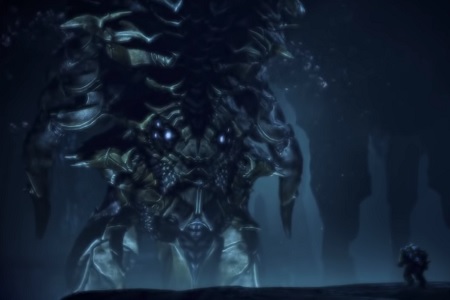
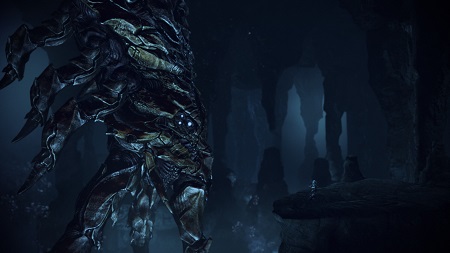
Commander Shepard meets with one of the surviving Leviathans in Mass Effect 3.

The Leviathans revealed to Commander Shepard that their species created the Reapers; much like the way the quarians created the geth, the Reapers were artificial intelligences designed to aid the Leviathans. Of course, they soon betrayed their masters, having interpreted their directive to “preserve” all life in an apocalyptic manner.

Commander Shepard encountered a handful of Leviathans hiding deep below the surface of an uncharted ocean world. These were the survivors – or more likely the descendants of survivors – of a race whose empire once spanned the entire galaxy. The Leviathans were unapologetic for their dominance of other “lesser” races, who they forced to worship them as gods. The survivor who spoke with Commander Shepard had little regard for humans or other races, and seemed only willing to act in the Reaper War out of self-interest.

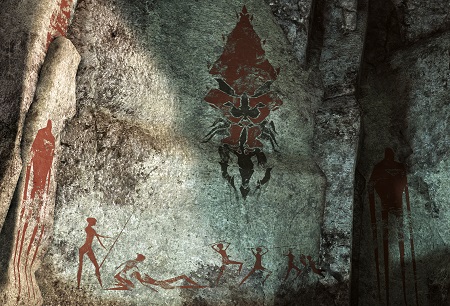
The Leviathans wanted other races to worship them and pay tribute to them.

Despite being in hiding for millions of years – perhaps longer – the Leviathans’ sense of self-importance was undimmed. They regard themselves as the galaxy’s “apex race,” and used their mind control powers to attack or kill anyone they perceived as even a minor threat.

The Leviathans seem to regard the entire Milky Way galaxy as their own personal fiefdom; their domain. Sharing power or joining a broader galactic community is simply not on their agenda, and with the destruction or removal of the Reapers, it seems at least plausible that they might seize the opportunity to emerge from hiding to reclaim the empire they had lost in the distant past.

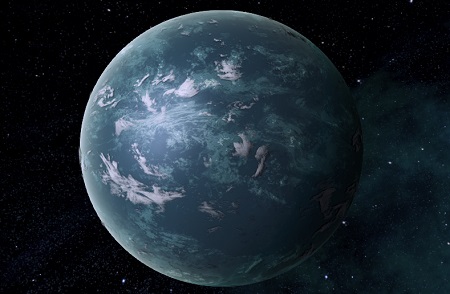
The planet 2181 Despoina was the Leviathans’ hiding place.

On a much smaller scale, this was the Protheans’ idea. At least two Prothean facilities – on Eden Prime and Ilos – were designed to host hundreds of thousands of Protheans in hibernation, to emerge after the Reaper threat had passed. The Protheans failed in their goal – though a single individual did survive – but the Leviathans didn’t. They managed to sustain a viable population at the bottom of the ocean on an uncharted world, and although we only saw a few individuals it’s possible that there are hundreds, thousands, or even more Leviathans. They may even have populations on other worlds.

Of the three endings offered to the player at the conclusion of Mass Effect 3, a Leviathan return works best with the “destroy” ending. If Shepard opted to take control of the Reapers, it stands to reason that the Leviathans would still consider them to be a threat, whereas if Shepard chose the “synthesis” ending then presumably the fusing of organic and synthetic DNA across the galaxy would also have affected the Leviathans.

The “synthesis” ending would surely have affected the Leviathans as well as everyone else.

But if the Reapers were destroyed – the most popular ending choice – suddenly the Leviathans could find themselves in a galaxy where their biggest foe has been vanquished. Not only that, but with the Mass Relay network critically damaged and the combined fleets and forces of the galaxy all massed around Earth (and feeling a lot worse for wear after months of conflict, no doubt), the Milky Way might appear to them to be practically undefended – and ripe for the taking.

Striking out from their hidden undersea base, the Leviathans could use similar tactics to the Reapers to gain control of key worlds – using their mind control abilities to sway military and political leaders and bring them into the fold. From there, Leviathans could abandon their base, taking up residence at key locations around the galaxy before the survivors of the battle for Earth even realise what’s happened.

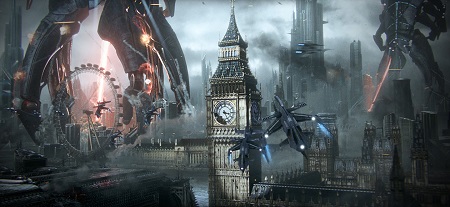
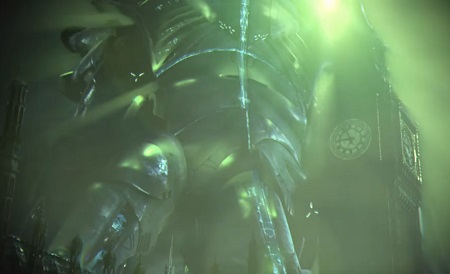
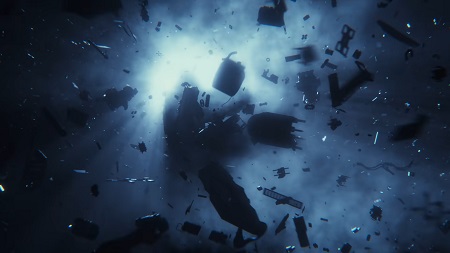
Amidst the wreckage of the Citadel and the ruins of Earth, it might be a long time before anyone realised the Leviathans were attacking.

Repairing the Mass Relays will take time – if the assembled scientific minds can even figure out how to do so – and with communications and travel disrupted across the galaxy on account of the long war, the Leviathans could establish a commanding position even if they didn’t make their move immediately.

A power vacuum on this scale is chaotic – and many war-weary citizens and refugees might even welcome Leviathan rule if it were accompanied by stability, and if the Leviathans could provide them with basic supplies like food and shelter. By the time the Council races realise what’s happened, large swathes of the galaxy could already be under Leviathan control – perhaps even including three of the four Council homeworlds.

The Leviathans could be the next threat for Commander Shepard and the rest of the galaxy.

Fighting the Leviathans would be similar, in some ways, to fighting the Reapers – their armies would largely consist of enthralled mind controlled victims of the galaxy’s races. The difference might be that taking on an actual Leviathan would be comparatively rare – unlike the Reapers, the Leviathans don’t seem like they’d want to get involved on the front lines, preferring instead to sit back (or hide) and let their enthralled victims do their dirty work.

So that’s the extent of this theory, really. To summarise it in a single sentence: with the Reapers defeated, the Leviathans finally emerge from hiding, intent on reclaiming a galaxy they’ve always considered to be “theirs.” Commander Shepard may be pressed back into action to save the galaxy all over again, or maybe we’ll take on the role of a new character when Mass Effect 4 is ready. Please keep in mind that, as always, I don’t have any “insider information.” This is nothing more than a fan theory – and it may very well be completely wrong!

Despite how I felt about Legendary Edition, I do like the Mass Effect series. In fact, the reason I was upset at BioWare for the sloppy work and unimpressive upgrades that Legendary Edition offered was because the games are so enjoyable – the series has the potential to be so much more than Legendary Edition made of it. I’m hopeful that Mass Effect 4 will be a game worth getting excited about – but there’s no rush. If BioWare and Electronic Arts have learned anything from recent releases, it should be to take their time!

Mass Effect: Legendary Edition is out now for PC, PlayStation 4, PlayStation 5, Xbox One, and Xbox Series S/X. A new Mass Effect game – referred to above as Mass Effect 4 – is currently in development, but no release date has been announced. The Mass Effect series – including all properties mentioned above – is the copyright of BioWare and Electronic Arts. This article contains the thoughts and opinions of one person only and is not intended to cause any offence.