Game length and value

From time to time a video game will come along that causes controversy for its length. Titles like last year’s Resident Evil 3 remake, PlayStation 4 launch title The Order 1886, and even Gears of War 4 have all been criticised in some quarters for being too short, and whenever such criticism is made the same keyboard warriors crawl out of the woodwork. “There’s no such thing as too short!” they exclaim, stating that a game’s length doesn’t matter so long as the game itself is good. And that’s not an unfair argument; many players would rather play an excellent game that’s 6 hours than endure a bad game for 60 hours. But that isn’t the end of the affair.

This whole discussion seems to stem from a place of wealth and privilege. If someone has a huge budget for gaming, then of course the length of a game doesn’t matter. Paying £50 or £60 for a six-hour experience is absolutely fine – but only for players who can afford it. Many folks, myself included, have a limited budget for games and gaming, and the length of time we’ll be able to enjoy a game is thus a factor in deciding whether to purchase it and whether it meets our needs, especially considering how many games are out there waiting to be played.
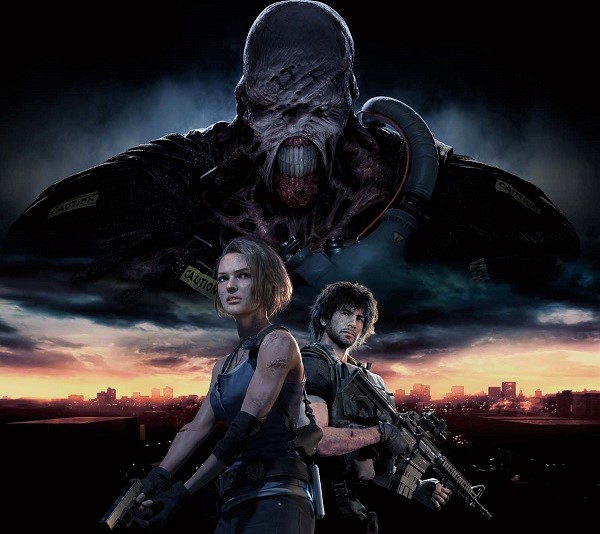
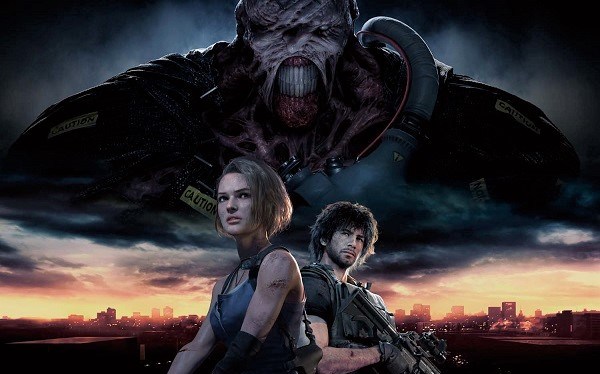
Last year’s Resident Evil 3 remake is one title that has been criticised for its length.

In brief, if I’m confronted with two games that are each £55 (the standard price for brand-new AAA games in the UK at present) one of which is 6 hours long and one of which is 30 hours long, one game clearly offers better value than the other; I will get more gaming for my money with the longer title. “Enjoyment” is a nebulous concept which is difficult to quantify, but if we assume both games are in the same genre and both were well-received by reviewers, one game demonstrably offers better value.

It’s uncommon for me to pick up a brand-new title at launch specifically because of how pricey games can be. Though length isn’t the only consideration when deciding which new game to pick up, it certainly can be one factor among many. Though I would never say “short games are bad,” because many aren’t and can be a lot of fun, how much time I can expect to enjoy a game for is a factor for myself and, I have no doubt, for many other players with limited funds.

Anthem was also attacked in some quarters for its short campaign.

The length-to-value calculation assumes that games are initially offered at full price – £55 or $60 for the basic version, with some ultra-special editions going for a lot more. But there is a second component to this issue, and for me it gets right to the heart of the matter. Some games, such as Ori and the Blind Forest, are competitively priced right from the moment that they launch. Both games in the Ori series didn’t ask full price, and because both games were relatively short (at around eight and ten hours respectively) they still offered good value.

If a game only has six hours’ worth of content and asks for £55 or $60 up front, it deserves all of the criticism that it gets. But if the same game were to launch for £20 or £30, practically all of that criticism would melt away. The game could be seen as good value because it would be priced accordingly. Raw length on its own isn’t the issue, the real reason why some people – especially those of us on lower incomes or with less money for gaming – can feel ripped off by a short game is that they feel like bad value.
The Ori games aren’t particularly long, but they don’t charge full price either.

Getting the best value for money isn’t always about buying the cheapest product. If I buy an incredibly cheap roll of bin liners (garbage bags) but they leak so I have to use two each time, I haven’t necessarily got the best value. If I buy a cheap pair of headphones that break, and I have to keep replacing them every few months, I haven’t necessarily got the best value. The same is true of video games: I could log on to Steam or any other digital shop right now and buy the cheapest game I could find – but there’s no guarantee I’d enjoy it or even be able to play it.

Value for money exists whatever kind of product we’re talking about, and video games are commercial products. Just like the cheapest game isn’t necessarily the best value game, nor is the longest game. But when considering all of the different factors involved in deciding whether or not to go ahead and make a purchase, for a lot of folks length absolutely can be a valid consideration.
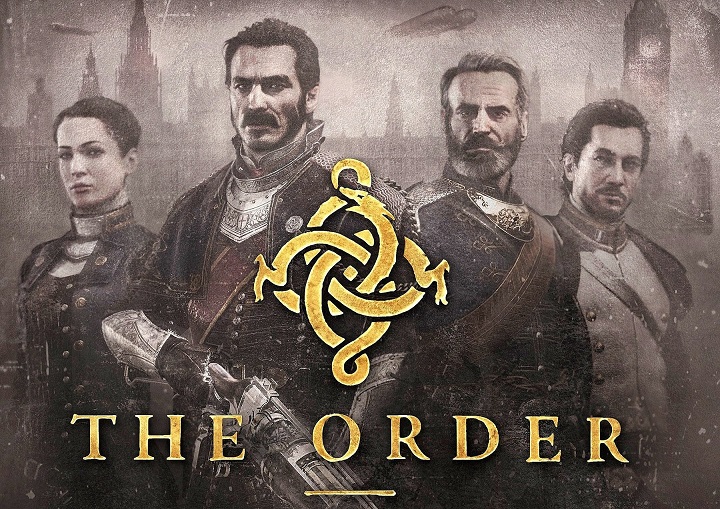
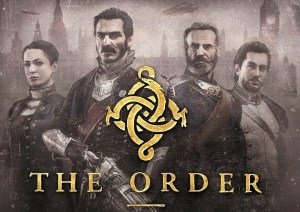
The Order 1886 is another title that was subject to criticism.

If a game is too short, and a player only has enough money for one new game, I can quite understand that player choosing to overlook that game in favour of a longer one. For someone whose primary hobby is playing video games, how long a video game lasts can be important. If a game is over within a few hours, and can thus reasonably be beaten in a day or even in an afternoon, someone on a limited budget could find themselves stuck with nothing to play for the rest of the week or the rest of the month.

This is why length matters. It isn’t the only thing that matters, and I don’t believe that most folks on this side of the argument are trying to simplistically argue that “short game equals bad game.” But what we are saying is that short games that ask full price aren’t great value, and that some publishers need to reconsider how much they charge if their latest title is particularly short.

Game length can be one factor in determining value for money.

There are many short games that I’ve played over the years that I had a lot of fun with, and I would never say that short games are inherently bad or not worth playing. But at the same time, when reviewing a title like that you can expect to see me comment on the length and even go so far in some cases as to recommend players wait until a game’s price is reduced before picking it up. That’s simply because of my own perception of a game’s value.

Think about it like this: a six-hour game that costs $60 is charging you $10 per hour of playtime, whereas a six-hour game priced at $20 is only charging $3.33 per hour of playtime, and a game with a hundred hours’ worth of content at $60 is charging you a mere 60¢ per hour of playtime. Now it’s true that not all games and thus not all hours of gameplay are created equal, but assuming that we’re looking at games with similar review scores within the same genre then I think the comparison is apt.

Let’s conclude by answering a question: can a game be too short? No, but it can be too short to offer good value at its price point. Asking for games to be priced accordingly instead of blindly leaping to the defence of publishers who are, in some cases at least, trying to get away with overcharging and underdelivering, will see this argument all but disappear.

All titles mentioned above are the copyright of their respective studio, developer, and/or publisher. Some screenshots and promotional art courtesy of IGDB. This article contains the thoughts and opinions of one person only and is not intended to cause any offence.
Length isn’t everything… but it IS important.

Resident Evil 3 is the latest game to release to mixed reviews, with one source of criticism being the game’s length. It’s primarily a single-player experience, but the main campaign takes less than six hours to finish. Any time a video game receives criticism for its length the same group of people come out, proclaiming that “it doesn’t matter how long it is as long as it’s good!” The discussion around some titles thus descends into arguments between people who feel that there is such a thing as “too short” and people who feel that length makes no difference.

I can summarise my position on the issue quite succinctly: I don’t care how long a game is, provided it is priced accordingly. Article over, stay tuned for more – wait, it isn’t over? Hmm.

Let’s take a step back and look at why game length does actually matter. The way I usually explain it is like this: most people have a budget for gaming, and if there are two games for the same price, one which lasts three hours and another which lasts sixty, then one title is clearly better value than another. Next, if someone can only afford one new game a month or every few months, then they are absolutely right to consider how long the experience they are paying for will last. If a game is over in an afternoon and it’ll be weeks or months before they can get another one, that’s absolutely a fair consideration. This applies to many people, but folks on fixed or low incomes will feel this even more acutely.

Resident Evil 3 (2020) has released to mixed reviews.

Different games appeal to different people. So a game like Overwatch could be argued to have hundreds of hours of potential gameplay – it’s a multiplayer shooter, and there’s no campaign to beat. Players can play as many matches as they like. But for someone who dislikes multiplayer games, Overwatch would be a waste of money because they wouldn’t enjoy the experience. Thus it doesn’t really fit the model outlined above, and I’d say for the most part, multiplayer-only games don’t really fit in the same way. When I talk about game length I’m primarily considering single-player experiences.

There are also questions regarding at what point one considers a game to be “complete”, and again this will vary from person to person. Someone may consider a title finished if they beat the main campaign once, others may want to play it twice. Some people might want to unlock achievements or trophies, and still others may be completionists who want to unlock everything, explore every area, and discover every hidden item. So a game which may have a six-hour campaign on the surface can potentially be a thirty-hour experience for some people – and the question of value will depend on how a person chooses to play their games and enjoy their experiences.

A game like Lego Star Wars: The Complete Saga has a number of levels to complete across its story mode, but it also offers great replay value by having a large roster of unlockable characters, many of whom can do different things on those same levels. There are also tons of hidden collectables and coins across every level, such that the game has – for some gamers, at least – many more hours of enjoyment than just the “basic” story.

So where does this leave Resident Evil 3? The problem with it, and why I feel it’s been criticised in this area, is that it’s a full-price game – that is, it retails for £50-55 ($60 USD). That’s the same price as Red Dead Redemption 2, which offers a story roughly fifty hours long. And it’s more than twice the price of the recently-released Ori and the Will of the Wisps, which offers a story that’s around eight to ten hours long.

Some people are already uncomfortable by the comparisons, getting ready to bash their keyboards in anger and say that “length doesn’t matter!” But it does to a lot of gamers, especially at this price point. It’s not a question of raw length. A game can be short yet still feel like an enjoyable and worthwhile experience. Short games are not inherently bad games, and I don’t think anyone’s trying to say that they are. I’m certainly not making that case. But if a game is primarily a single-player experience, as Resident Evil 3 is, it needs to factor its length into its price in order for people to feel that they got a good deal and weren’t ripped off. If I paid £55 for a game and it lasted less than six hours, I’d be disappointed, especially considering that there are better options out there for me to have spent my money on.

Ori and the Will of the Wisps is a short game that has received critical acclaim.

Ori and the Will of the Wisps never pretends to be a long game. The first entry in its series, Ori and the Blind Forest, was even shorter, and both are considered amazing games. Stay tuned, by the way, for my own thoughts on Ori and the Blind Forest, as I have an article in the pipeline about it. But the producers behind the Ori series recognise that its comparatively short length means it needs to be priced accordingly, and they factored that in when the games were released. If they’d both been full-price titles they wouldn’t have been so well-received, and at the very least, their reviews would have come with caveats.

By comparison, The Order: 1886 was roundly criticised upon release for being too short for its price. This PlayStation 4 exclusive was one that many people were anticipating, but upon release it ended up being a disappointment. Many reviews at the time made note of the game’s length, and while it wasn’t the only source of criticism, the fact that it was a full-priced game that lasted around five hours was something that left many players and reviewers feeling let down and ripped off.

This principle is something which can apply to other forms of entertainment as well. If you’ve been a reader since last year, you may remember my top ten television series of the 2010s – you can find the list by clicking or tapping here. In that list, I explained why I preferred Elementary to Sherlock – two television shows about Sherlock Holmes in a modern-day setting. Sherlock has thirteen episodes, Elementary has 154. That isn’t the only consideration, but if there’s more to enjoy I’ll always want more of it. While not all of Elementary’s episodes were good, enough were to make it a more rounded, enjoyable experience. And not every Sherlock episode was good either, especially in its fourth “season”.

To my mind, Resident Evil 3 should fall into the same bracket as the Ori series mentioned above. If it were priced at, say, £30 instead of £55, people wouldn’t be giving it a hard time over its length – because it would be priced somewhat more fairly. And to return to my explanation as to why, the hypothetical low-income or budget gamer could pick up Resident Evil 3 and still have money left over for something else to play when they’d beaten it.

2015’s The Order: 1886 was criticised for its length.

Length is inherently tied to the value of a game, and while it isn’t the only determining factor in making purchase decisions and review scores, it is undeniably a factor for many people. If someone is in a position where they can waste all the money in the world on the latest games because they can afford it, well good for them. But many people can’t, and therefore how long they’ll be able to enjoy a purchased game is important – even more so in the days of digital distribution, as there’s no chance of trading in completed titles.

Quantity over quality is not a sound argument. But that isn’t the argument that I’m making, nor is anyone who criticised Resident Evil 3 or any other game that seems too short. What I’m saying is that length is tied to value, especially at higher prices and when considering people on lower incomes who can’t afford to get every new title that they might want to.

While I haven’t played Resident Evil 3 for myself, it serves as a good example – the latest in a long line – of why games publishers need to consider adjusting their pricing to fit a game’s length and value. By charging full price for a short game, people will feel that the money they invested was not worth it, which will hurt the game’s reputation and ultimately result in fewer sales. There is a balance which publishers need to hit, and in the case of Resident Evil 3 it seems that, at least for some gamers, they missed the mark.

All titles mentioned above are the copyright of their respective studio, developer, and/or publisher. Images courtesy of Press Kits sourced via IGDB. This article contains the thoughts and opinions of one person only and is not intended to cause any offence.