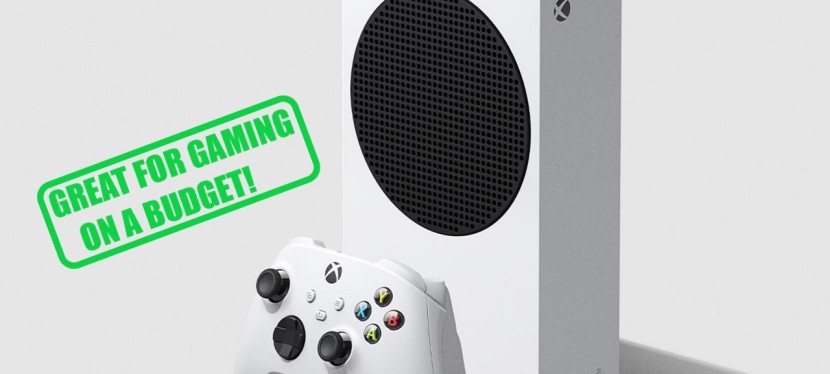
The Xbox Series S is an exciting prospect for players on a budget

I haven’t exactly been the biggest supporter of Microsoft’s strategy as we approach the new console generation. In particular, the company’s decision to make all Xbox Series X titles also available on Xbox One for the first couple of years of the new console’s life seems like a weight around its neck, and makes it a much harder sell at what was already a difficult time. But the leak/announcement of the Xbox Series S – along with its reasonable price at £250 – has definitely shifted my opinion.

The launch of a new generation of consoles is a fun and exciting time for enthusiasts with a suitably high budget, but for a lot of people it can be a moment where they feel left out and left behind. Technology moves on and new games are released, but only for those who can afford it. For players who’ve had to save up just to get a current-gen machine, it can be disappointing to see the newest and best titles be beyond their reach. It’s a position I’ve been in several times, and I know it’s not a nice feeling.
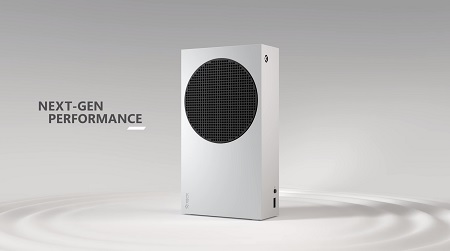
The Xbox Series S.

The Xbox Series S is a unique piece of kit. Though there have been cheaper variants of consoles – there’s even an Xbox One S available now – none were released simultaneously with the brand’s flagship machines, meaning that the beginning of a new console generation has always offered players a binary choice: pay up or don’t participate. The Xbox Series S offers players that budget option right from the start, and for many people who have been in the position of thinking next-gen will be unaffordable at launch, it’s undoubtedly a welcome surprise.

The Xbox Series S is not as powerful a machine as the Xbox Series X, and for some players perhaps the perceived downgrade will be a disappointment. But the Series S is still more powerful than the current crop of consoles, and for the market it’s aimed at, I think few will care about 1440p compared to 4K, a smaller, possibly slightly slower NVMe solid-state drive, and other minor differences. The processor at the system’s core is the same one used in the Series X, and while its graphics chip is a less-powerful version, it’s built on the same architecture as its sister console’s.
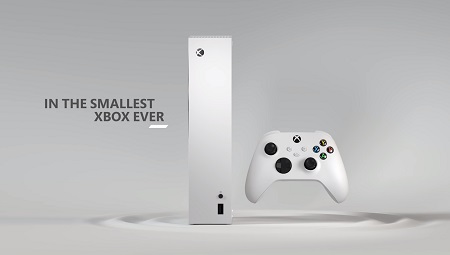
The console promises to be smaller than the Series X.

In short, the Xbox Series S is like getting a mid-tier gaming PC instead of a high-end one. And the PC comparison is apt, because compared to many PC gaming setups, the Series S blows them away. It would be impossible to build anything even vaguely comparable to the Series S for £250 or less, so it feels like a decent machine.

I recently took a look at Game Pass for PC, and the subscription service is also available on Xbox – where it offers over 100 games. The combination of the £8-a-month subscription with the cheap console is an incredibly enticing proposition for budget gamers, and one which is honestly hard to beat. It will likely be hard to beat for several years at least!
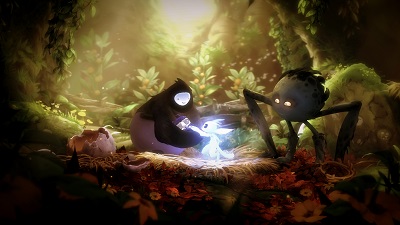
Ori and the Will of the Wisps is on Game Pass.

For less than the price of a standard Netflix subscription, players will have access to a huge library of titles, including every Xbox exclusive and every new game from a Microsoft-owned studio. Titles already on the service include: Dead Cells, Forza Horizon 4, all five games in the Gears of War series, Halo: The Master Chief Collection, Kingdom Hearts 3, Minecraft, No Man’s Sky, the two Ori games, PlayerUnknown’s Battlegrounds, State of Decay 2, Streets of Rage 4, The Outer Worlds, and Wasteland 3. Those are just some of the highlights, and it’s not unfair to say that Game Pass offers phenomenal value to console players. Combined with the low asking price of the Series S, I think it’s a steal.

There are still some concerns. The fact that Microsoft still plan on releasing games for Xbox One for the next couple of years or so means that realistically, buying an Xbox One S or even a preowned Xbox One is still a cheaper prospect. And I have to confess a degree of concern at the possibility of the Series S’s lower specs potentially holding back next-gen titles within the next five years or so. In short, if Xbox games have to be built with Series S compatibility in mind, will that slow the pace of game development considering that the Series S is comparable to a PC you could buy today?
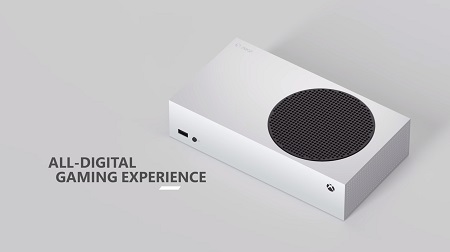
The Xbox Series S won’t take discs.

The first of those points – that the Xbox One is still the cheaper option – may sway some budget gamers. In that sense, as I wrote once before, the biggest competition that the Xbox Series S/X will have won’t come from PlayStation – it’ll come from the Xbox One. But despite that, I think that players who don’t just want a console for the next couple of years could future-proof their gaming setups with a Series S. The low price still makes it a solid option, even if it’s possible to pick up an Xbox One for less money. The price difference between an Xbox One – even preowned – and the Series S won’t be that large, and when the Series S will be able to play new games for the next six-eight years instead of one or two, it ends up being better value in the long run.

If you couldn’t tell, I like this console. I like it far more than the Xbox Series X or the PlayStation 5! It fills a niche that no major company has tried to fill before, and offers players on a budget a way into next-gen gaming right from day one. There are a lot of people who fall into that category, and for some of them who may have felt next-gen was simply out of reach, they may now feel that they will be able to join in. Expanding the gaming hobby to more people is a great thing, and helping people who would have otherwise missed out or had to wait get a foot in the door is fantastic. I applaud this decision from Microsoft.

The Xbox Series S will be available in November. The Xbox brand is the copyright of Microsoft. This article contains the thoughts and opinions of one person only and is not intended to cause any offence.
Halo Infinite’s delay doesn’t matter at all for the Xbox Series X

The blogosphere and the gaming world have been aflame today, following the announcement that Halo Infinite has been delayed. 343 Industries – the studio which acquired the Halo brand when original developer Bungie left the series a decade ago – made the announcement earlier, and it’s significant because the new game will no longer launch alongside the Xbox Series X. Well, unless that gets delayed too!

The general consensus is that this announcement is the worst possible news for the Xbox Series X and could ruin its launch. But will it?

I don’t think the Halo Infinite delay will prove to be all that significant for one major reason: the Xbox Series X was going to have an underwhelming launch anyway. The hardest of the hardcore Xbox fanatics will buy a console, and perhaps a few well-meaning aunties and grandpas will buy one for their relatives for Christmas, but the console most gamers are interested in and excited for is the PlayStation 5. And I’m not saying that as a PlayStation fanboy – for the longest time I was an Xbox guy. It’s just the reality of where most console gamers are right now.

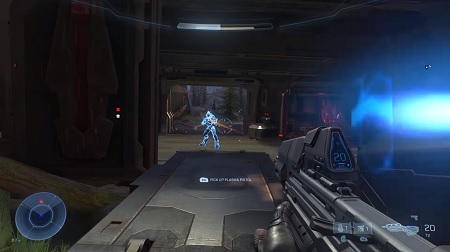
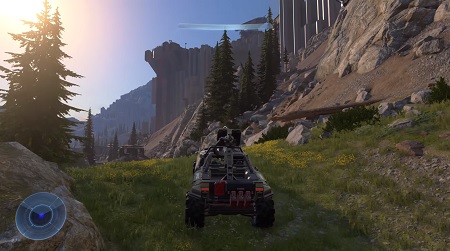
A scene from the recent Halo Infinite trailer.

Microsoft – as I’ve noted several times already – has made the incomprehensible decision to launch the Xbox Series X with literally no exclusive games. Not even one. Halo Infinite is also scheduled for a release on Xbox One and PC, as are a number of other first- and third-party titles that Microsoft has shown off. The arguments in favour of buying an Xbox Series X this year were already nonexistent, so removing one non-exclusive game from its launch lineup will have no material impact on sales. I can practically guarantee that.

With all of the issues that are stacking up right now – including those of Microsoft’s own making – I’d argue there’s a pretty solid case for delaying the console’s launch until next year. In the current economic climate, I’m already expecting that fewer people than usual will be interested in a brand-new console for the inevitable £400+ price tag, and many fans – even those who are genuinely interested to play some next-gen games – may have no choice but to wait it out.

If the Xbox Series X launches alongside the PlayStation 5, all it will do is draw unfavourable comparisons. The lack of exclusive titles is a large part of that, and it’s not inconceivable to think that there could be hundreds of thousands of unsold units sitting on shelves or in warehouses come January. It feels like it’s going to be an expensive flop, and while it may eventually build up a solid user base a few years down the line, the Xbox Series X is already lining up to be the upcoming generation’s second- or even third-tier machine.

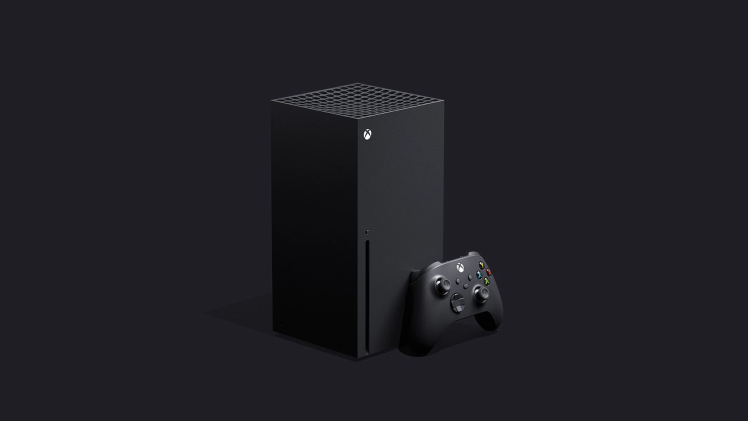
The upcoming Xbox Series X.

The Halo Infinite delay will upset some Halo diehards who were excited to see their favourite franchise get a new release for the first time in over five years. But in terms of the launch of the new console – where it wasn’t a system exclusive – it’s genuinely hard to see how it will have any impact whatsoever.

When considering the more general issue of game delays – and, incidentally, delays in other entertainment media as well – I’m all in favour of them. How many titles have been released just in the last few years that would have benefited massively from some additional development time? I can think of many, such as: Anthem, Fallout 76, Mass Effect: Andromeda, No Man’s Sky, 2013’s Star Trek, and WWE 2K20. All of these games released to negative reviews and underwhelming sales, so from that point of view, I fully support the delay to Halo Infinite – and to any other upcoming title that needs it.

I think Mass Effect: Andromeda is a good example of how to screw up a launch, and a great comparison to Halo Infinite. The Mass Effect series was already tarnished by the ending of Mass Effect 3, and was relying on Andromeda to be a semi-reboot of the series. Similarly, the Halo series has been experiencing gradually declining reviews, and while there isn’t one moment fans can point to on a par with Mass Effect 3′s ending that really upset the fanbase, there’s a sense that the series isn’t as good as it once was. Halo Infinite has billed itself as a soft reboot, aiming to return Halo to its roots and put some recent disappointments behind it.

Mass Effect: Andromeda launched in a broken, glitch-riddled state.

When Mass Effect: Andromeda launched, it was a bug-riddled mess. It was mocked online, and the mockery and memes hurt its sales far more than the mediocre reviews the game received. Halo Infinite has already seen its trailer come under heavy criticism for its visuals, which many felt look decidedly current-gen – an odd criticism for a game that literally is a current-gen game as it will be released on Xbox One, but that’s beside the point. If Halo Infinite were to release later this year in its current form, it would have undoubtedly drawn criticism on a scale similar to Mass Effect: Andromeda. And that game killed the Mass Effect series, which was “put on hiatus” in the aftermath of its disappointing launch and underwhelming sales.

It’s clear that 343 Industries and Microsoft feel that Halo Infinite needs more development time to work on the issues it currently faces. And to them I say: take all the time you need. I’d rather wait a little longer for a better, more polished game than play a rushed, broken mess.

Another moment from the Halo Infinite trailer.

But I don’t agree that it will damage the reputation or sales performance of the Xbox Series X. That’s not because the game doesn’t matter to that console – the Halo series is one of Xbox’s few strong selling points, after all – but because behind-the-scenes business decisions have already condemned the Xbox Series X to second place behind the PlayStation 5. In fact if I were advising Microsoft, I’d ask them if they wanted to take this opportunity to delay the console as well.

Flip the issue on its head, and let’s think about it this way around: would Halo Infinite have been a massive help to the Xbox Series X at launch? Because that’s the fundamental assumption people are making when they say its delay will hurt the console, and from where I’m sitting that doesn’t feel true. If I don’t own an Xbox or a PC and – for some reason – have a desperate need to play Halo Infinite, my best bet is to pick up a cheap Xbox One S or a preowned Xbox One from 2013 and play it there. I don’t need to buy an expensive Xbox Series X to play a game that I could play on a console that costs less than half the price. And if I’m already an Xbox One owner, I’m in no rush to upgrade because every Xbox Series X game is coming my way, including Halo Infinite.

So at the end of the day, Halo Infinite’s delay should be good for the quality of the finished title. I’m all in favour of that. And it won’t have any material impact on the launch of the Xbox Series X – because that console is destined for a seriously disappointing launch anyway.

Halo Infinite is the copyright of 343 Industries and Xbox Game Studios. The Xbox Series X and Xbox One consoles are the property of Microsoft. Header image and Mass Effect: Andromeda promo screenshot courtesy of press kits on IGDB. This article contains the thoughts and opinions of one person only and is not intended to cause any offence.
My thoughts on the “console war”

Barring a major shift in circumstances, which we may yet see if the coronavirus pandemic isn’t sorted out in the next few months, Xbox and PlayStation plan to launch new consoles before Christmas. They will replace this generation’s Xbox One and PlayStation 4, which were released in 2013, and will join the Nintendo Switch to form the “big three” gaming platforms heading into 2021 and beyond.

When I’m in a gaming mood I’m primarily a PC player. I find PC to be a more versatile platform, and the abundance of digital shops on PC means that sales and discounts are aplenty, which I absolutely feel makes PC an appealing choice even if the up-front costs can be higher than a console. But that’s a whole different article!

When Google Stadia launched towards the end of last year, I felt it had the potential to be disruptive to the gaming market in all kinds of good ways. To understand why, we need to step back in time.

The Xbox Series X was unveiled late last year.

For a brief moment just after the millennium, there were four companies in the home console market, and they were, broadly speaking, all trying to appeal to the same core audience of gamers. There was Sega, with the Dreamcast, Sony, with its PlayStation brand, Nintendo, and Microsoft, which launched its first Xbox console in 2001. This moment wasn’t to last, of course, as the Dreamcast would prove a failure forcing Sega out of the market altogether. Nintendo’s GameCube was also not a resounding success, and the lessons the company learned led to the creation of the Wii in 2006, and from that point on, Nintendo has been fishing in a different pond to the other two console brands.

So since the mid-2000s, when Nintendo decided to go in a completely different direction with the Wii, Xbox and PlayStation have been the two main brands in direct competition. Nintendo’s current offering, the Switch, is a very different platform from anything Microsoft and Sony have, being half-handheld and half-console, and has a very different hardware setup. As a result, many gamers (myself included) will have a primary platform for playing most games and a Nintendo for playing their titles. I’m currently in the early stages of building my island in Animal Crossing: New Horizons so stay tuned for my thoughts on that at some point!

The two main competitors, PlayStation and Xbox, have taken very different routes since 2013, and the console market is in danger, I feel, of becoming a monopoly. It needs something major to shake things up – hence my excitement at Stadia potentially doing so. Microsoft’s Xbox brand has been focused on being a “multimedia” brand instead of purely gaming, and its output reflects that. Microsoft has also seen a steady growth in the PC gaming market and has chosen to release some previously exclusive titles on PC as well – the most significant being Halo: The Master Chief Collection, which is as close as Xbox has to a signature franchise. Only Halo 5 remains a console exclusive right now, and I have to say it feels like only a matter of time before that, too, is ported to PC. Microsoft have been working hard to turn the Xbox One into a multimedia centre – something people could have in their living rooms to watch television, use streaming services, and even do things like make video calls.

As a result of Xbox’s foray into the PC space and using their platform to promote things like video streaming as much as gaming, PlayStation has been the dominant force in this console generation. They’ve offered many more exclusive titles, and the PlayStation 4 has outsold the Xbox One by at least two-to-one, perhaps even more. While Xbox as a brand is still healthy and commercially viable, it doesn’t leave the overall state of the market feeling especially great, as competition between the two companies is necessary to keep quality high and for developers to keep pushing the boundaries.

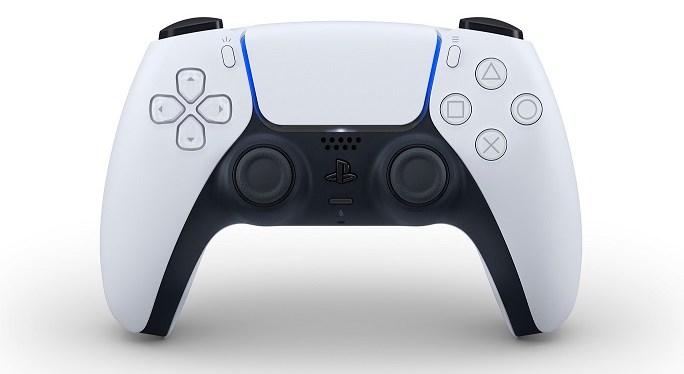
The DualSense controller is all we’ve seen of the PlayStation 5 so far.

Google Stadia is clearly not going to be the disruptive force I hoped for, at least not any time soon. Its minuscule userbase and tiny library of games has seen to that, though I hope Google will continue development as the core technology is interesting at least. And as far as I know, no one else is planning to get in on the home console market right now. There have been past attempts, like the Ouya and other android-based consoles, but none have been particularly successful. It took a company with the clout and financial resources of Microsoft in 2001 to break into the market for the first time as a newcomer, and if Google is unable to successfully enter the gaming space I can see that failure being offputting for anyone considering investing significant money into a new home console.

So we’re left with a two-plus-one situation in the home console space. PlayStation versus Xbox, with Nintendo off to one side largely doing its own thing. Both the Xbox Series X and PlayStation 5 will be comparable in terms of their internal hardware, especially as both seem to be using AMD’s Zen chips and incorporating ray-tracing graphics, so the choice between systems will be more about marketing than technology. Xbox has already signalled that their multimedia and PC plans will continue into the new generation, and it was even suggested at one stage late last year that every Xbox Series X game will also be available on Xbox One for the first year or two of the new console’s life. This combination will, I feel, give the PlayStation 5 a distinct advantage.

So where do I stand? I’ll be honest, I don’t really have a dog in this fight any more. As someone who plays primarily on PC it’s less important to me. Later in the generation, when prices start to come down, I can perhaps see myself picking up a console, but it would only be if there was some must-play exclusive that didn’t make it to PC. And of the two, PlayStation seems most likely to offer something along those lines so it’s not impossible I’d pick up a PlayStation 5 in the next few years. It certainly won’t be at or near launch, though.

However, I’ve never really been a big PlayStation gamer. In the generations after the first PlayStation launched I owned a Nintendo 64, a Dreamcast, an Xbox, and then an Xbox 360. It wasn’t until much later when I picked up a second-hand PlayStation 3. By then I was less into gaming and I’ve only played a handful of PlayStation 3 and 4 titles over the last few years. This is purely subjective, but as someone who likes to play some games with a controller instead of keyboard and mouse, I find Xbox controllers more comfortable to use. The original Xbox controller from 2001 – known as the “duke” – is actually one of my favourites, despite the justifiable criticism it received at the time for its large size!

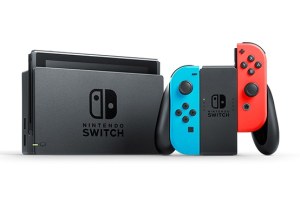
The Xbox Series X and PlayStation 5 will join the Nintendo Switch in the home console market.

Looking in from the outside as someone who has no plans to purchase either of the new consoles imminently, what I hope is that both are successful for their parent companies and that both are going to be great platforms for gaming. I’d like to see a bigger stride this console generation than the last, particularly where graphics are concerned, but it seems unlikely. Many PlayStation 4 and Xbox One titles don’t look much different from games released in the latter part of the previous generation, and gameplay and graphics in general have not advanced nearly as far over the last few years as they had in previous generations. Earlier console generations brought huge advancements over their predecessors. The Nintendo 64, for example, was an incredibly powerful machine compared to the Super Nintendo, which was itself streets ahead of the earlier NES. I remember in the late 1990s and early 2000s when there was talk of genuine photorealism by 2010, 2015, or 2020. While some projects can come close to that, we aren’t there in a general sense. And to make a long story short, the fact that the next generation of consoles will be a progression or iteration on what is already available in terms of graphics and gameplay makes them less exciting to me personally.

What we will see are smaller quality-of-life improvements. Things like longer battery life in wireless peripherals like controllers, as well as a move from hard discs to solid-state drives will give console gamers something to appreciate. There might also be things like faster download speeds, quicker installation from optical discs – which are still going to be present – and support for 4K resolution and video playback. With most new televisions being 4K that makes a lot of sense.

Overall, the biggest issue that is currently facing Xbox and PlayStation is the pandemic. Both in terms of disruption to their manufacturing and logistics and the wider economic impact on consumer spending, the launches scheduled for later this year may yet be delayed, and if they aren’t, sales may not initially be as strong as they were in 2013 or 2005/06. The consoles themselves will be of some interest, but what I’m most interested to see is how new games plan to take advantage of some of the new hardware capabilities. Pushing the boundaries and creating games that are bigger, better, and more visually impressive than ever is something I’ll always be interested to see, even though I don’t really mind which brand or company “wins”.

All brands mentioned above are the copyright of their respective parent companies. This article contains the thoughts and opinions of one person only and is not intended to cause any offence.