The End of the Kelvin Timeline?

A Star Trek-themed spoiler warning.

Spoiler Warning: Beware of minor spoilers for the Kelvine timeline films and Strange New Worlds.

In a little over six months from now, it’ll be ten years – an entire decade – since Star Trek Beyond hit cinemas. Beyond is the most recent film in the Kelvin timeline – the Star Trek spin-off films set in an alternate reality. There have been multiple attempts in the nine-plus years since its release to get a sequel off the ground, including a couple of years ago when Paramount announced – and then had to rapidly un-announce – a film that wasn’t ready. That was a clusterfuck, eh?

Every so often, if you follow some of the big Star Trek fansites and social media pages, an interview will pop up with a member of the Kelvin cast, and they always make the right noises, sounding positive and hopeful about one day returning and making another film. But if recent reports are to be believed, the newly-merged Skydance/Paramount corporation is ready to “move on” from the Kelvin timeline. While a new Star Trek film is supposedly being planned, it won’t involve the Kelvin timeline or the cast of the rebooted series. I thought we could discuss that today.
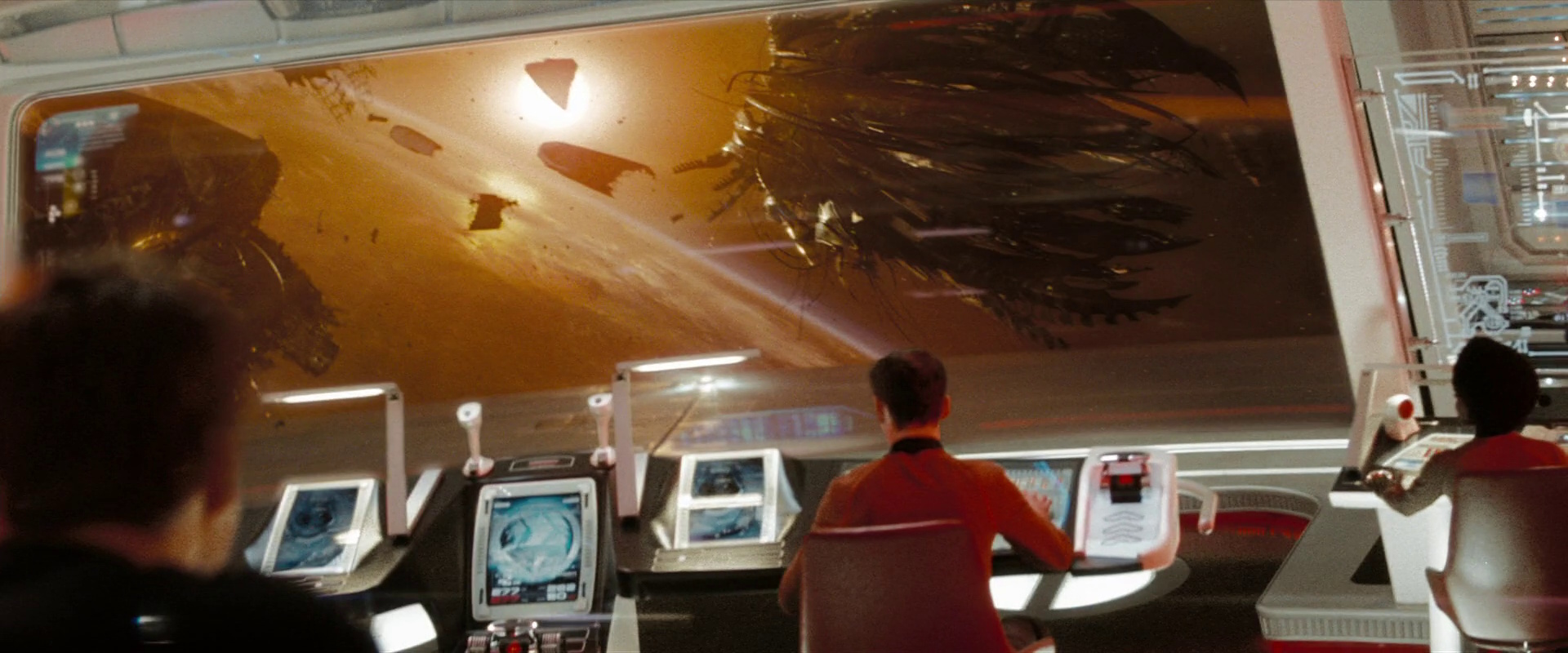
Still frame from Star Trek 2009 showing the main viewscreen on the bridge.
The bridge in Star Trek ’09.

I know the Kelvin films weren’t every Trekkie’s favourite part of the franchise – to put it mildly! Heck, I *still* know people who refuse to even watch them because of how upset they were at both the recasting of classic characters and the more action-heavy storytelling. But we should all be able to acknowledge what the films – and the 2009 reboot in particular – did for Star Trek at a time when the franchise had been cancelled after more than fifteen years on the small screen.

We wouldn’t have seen Discovery, Picard, Lower Decks, Strange New Worlds or really any of the Star Trek productions we’ve enjoyed over the last decade were it not for the success of the Kelvin timeline films. Star Trek ’09 demonstrated to investors that, despite declining viewership on TV in the 2000s, there was still life in the Star Trek franchise, and still new stories to be told. These films carried the torch for Star Trek during what could’ve been its darkest hour, and they set the stage for the franchise’s revival.
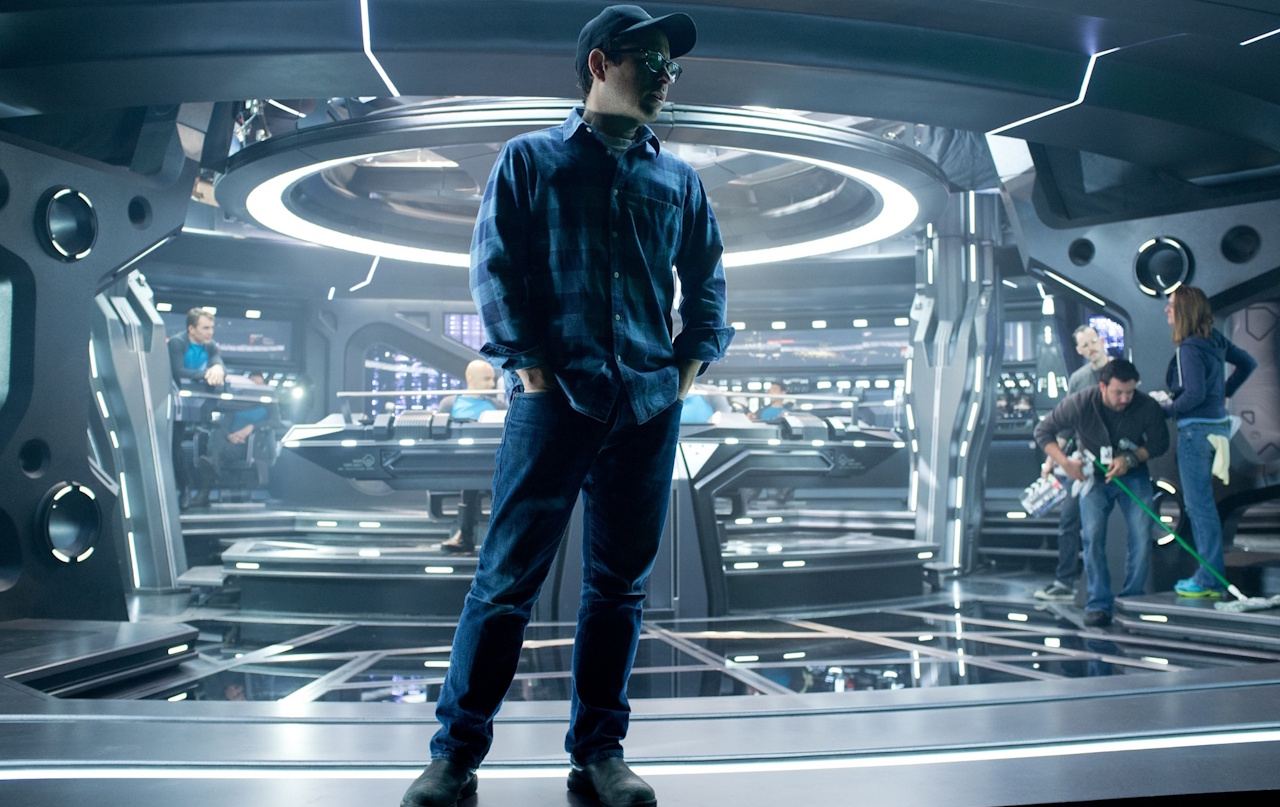
Behind-the-scenes photo from the set of Star Trek Into Darkness showing director JJ Abrams.
Director J.J. Abrams on the set of Star Trek Into Darkness.

With all that being said, regular readers will undoubtedly remember me saying that I don’t believe there’s a place for a new Kelvin timeline film. I wrote about this in 2020 and 2021, and while my original reasons for saying that have now shifted in light of the spate of cancellations this year… I stand by the original point. I know Beyond seemed to tease a sequel in its closing moments, and there will always be a part of me that wants to see reboot Kirk’s adventures aboard the Enterprise-A. But given the changes not just to Star Trek over the past ten years, but the entertainment landscape as a whole… I’m not sure a 2009-style film is the right fit any more. After almost a decade, audiences have moved on and expectations have changed.

Then there’s Strange New Worlds. What was the original idea behind Star Trek ’09? It was to show “young Kirk” and “young Spock” at Starfleet Academy, then undertaking their first missions together. Well… we’ve seen that. And thanks to Strange New Worlds, we’ve also seen the prime timeline version of that, too. Strange New Worlds has introduced several other legacy characters, and thanks to being able to develop those characters a lot more because of the extended runtime a television show permits, I’d argue it’s done a lot more with some of those characters than the entire Kelvin trilogy did.
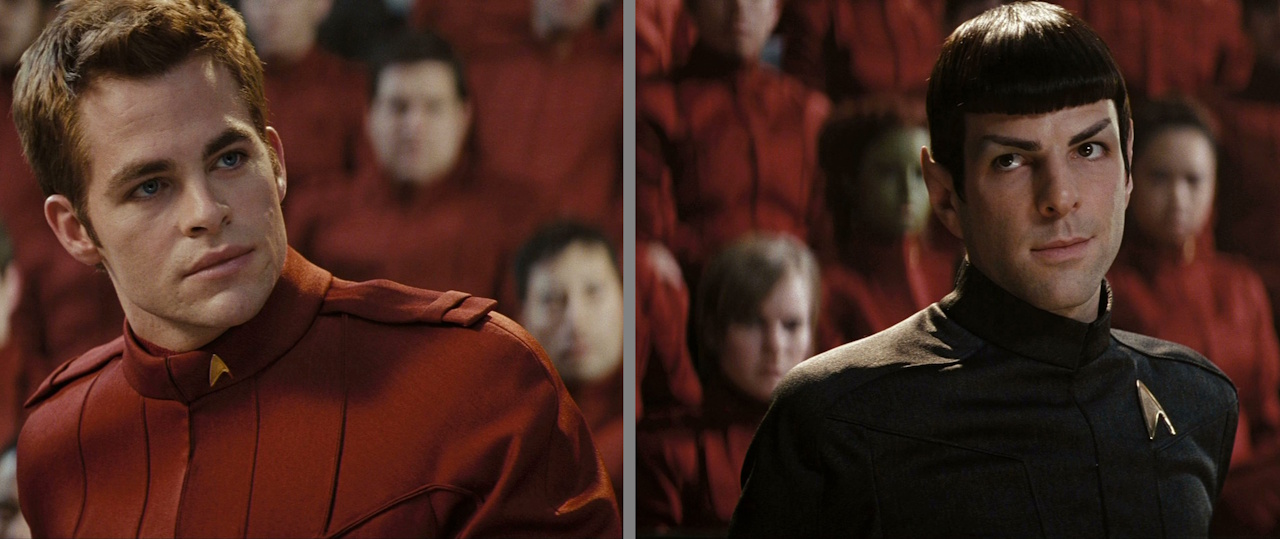
Two still frames from Star Trek 2009 stitched together, with Cadet Kirk on the left and Commander Spock on the right.
Kirk and Spock at the Academy in Star Trek ’09.

At this point, if we returned to the Kelvin timeline a decade after Beyond, we wouldn’t be seeing “young Kirk” and “young Spock” on one of their first missions. We’d be seeing Kirk and Spock on their five-year mission – or perhaps even *after* that, in the latter part of the 23rd Century. There are things that the Kelvin timeline could do with that idea, sure… but we’ve already seen plenty of Kirk and Spock at this point, haven’t we? Between TOS, the Kelvin films, Strange New Worlds, and the rest of Star Trek, we’ve spent a lot of time with these characters already. So… what could a new Kelvin film do that we haven’t already seen?

This leads me to my most fundamental point: Star Trek needs to move on. Not just from the Kelvin timeline, but from the 23rd and 24th Centuries in general. Since the turn of the millennium, we’ve had Enterprise, Discovery, Strange New Worlds, and the Kelvin timeline – all of which were prequels. Then we had Prodigy and Picard, which were direct sequels to Voyager and The Next Generation. The closest Star Trek came to originality was Lower Decks, ironically enough! And that show called back to The Next Generation era over and over again, and brought in numerous guest-stars.

Still frame from Star Trek: Picard Season 3 showing the Titan/Enterprise-G in orbit of a star.
What *new* adventures might lie ahead for the Star Trek franchise?

A new film at this point should have the freedom to go in a totally different direction, and shouldn’t be too tied up with what came before. That doesn’t mean it can go breaking all of the rules of canon, of course, but after so many sequels, prequels, and spin-offs, it’ll be nice to get something truly original for once. Won’t it?

If Star Trek continues to look backwards at its own history, and keeps trying to bring back characters from the past, that limits the franchise’s potential to grow and expand. I became a Trekkie in the early 1990s not because of Kirk, Spock, and Dr McCoy, but because of Picard, Riker, and Data. If Star Trek, in the ’80s, had doubled-down on The Original Series and those classic characters, we’d have missed out on so much – not only The Next Generation, but Deep Space Nine, Voyager, and more. After such a long time, and with so much having happened since Beyond was in cinemas… a new film taking a new approach just feels like the best option.
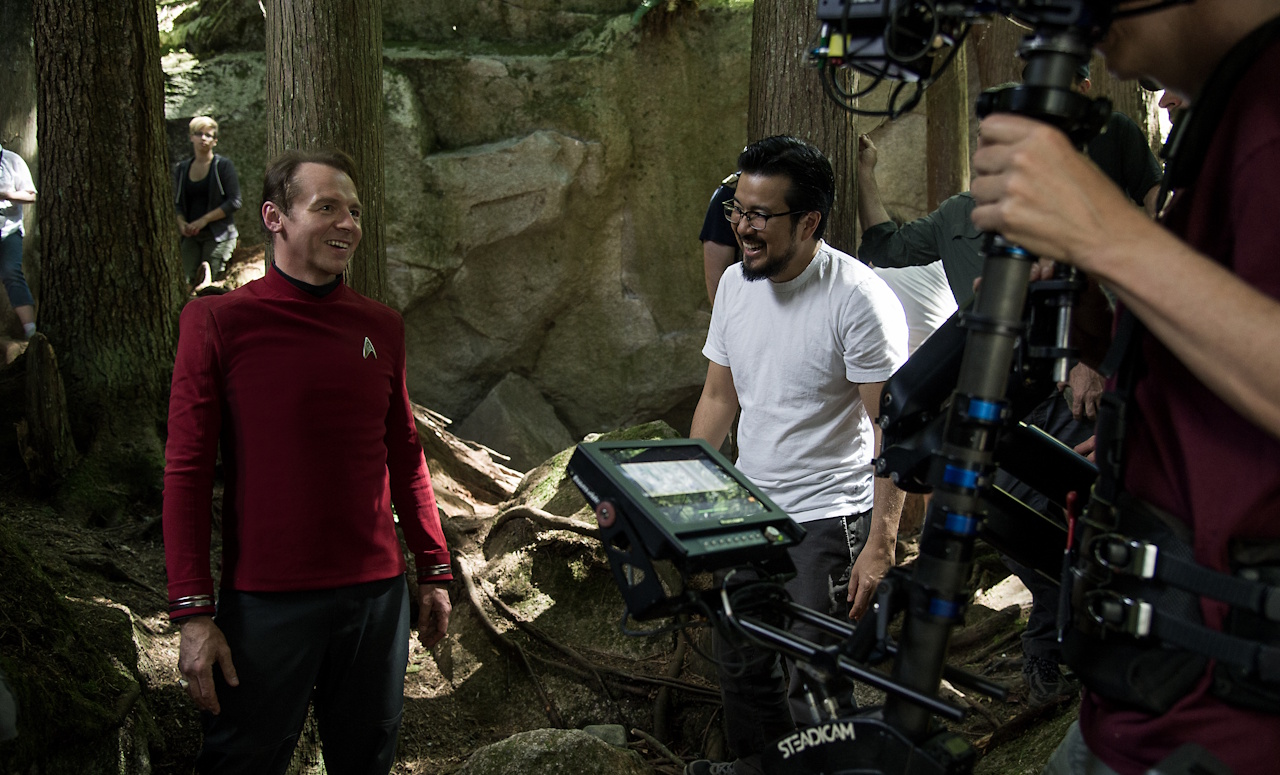
Behind-the-scenes photo from Star Trek Beyond showing Simon Pegg, Justin Lin, and others.
Simon Pegg (Scotty) and director Justin Lin on the set of Star Trek Beyond.

There are risks, of course. Into Darkness remains the cinematic Star Trek franchise’s high-water mark in terms of financial success, and all three of the Kelvin films turned a profit. Creating something brand-new, with a new director and a new cast of characters, might not achieve the same level of success as a Beyond sequel. Figuring out how to attract audiences who turned out for Into Darkness – but who may have skipped *everything* Star Trek has done since – will be the biggest challenge Skydance faces when it comes to pitching the new film.

And there’s kind of limited room for manoeuvre here. In 2009, a lot of people who hadn’t watched the likes of DS9 and Enterprise showed up specifically because Star Trek was billed as a reboot. The universe was going to be reset, you didn’t have to have followed any of the increasingly convoluted storylines from the previous fifteen-plus years… this film was its own thing. But can you re-reboot a franchise and achieve the same level of success a couple of decades later? Does the name “Star Trek” carry the same weight it did in 2009, after not really managing to reach out to a big new audience on streaming? I think those are valid questions as this new film may be getting underway.

Cropped promo image for Star Trek 2009 showing the USS Enterprise in sillhouette.
A silhouette of the Enterprise was one of the first teaser images released for Star Trek ’09.

I don’t lament the demise of the Kelvin timeline. It laid the groundwork for Star Trek’s return to its small screen home in 2017, which I truly appreciate, but then it kind of lost its place – at least for me as a Trekkie. By the time Pike and Spock joined Discovery a couple of years later, and we were getting news of new projects featuring Picard, Section 31, and a new animated series, it really seemed like Star Trek was back. Strange New Worlds, with its focus on many of the same characters as those in the Kelvin films, occupies a very similar space, and I’m just struggling to see what a new Kelvin film could really have to say after five seasons of Strange New Worlds and everything else Star Trek has done over the past nine-plus years.

At the same time, there’s a sense that Star Trek’s executives never took *full* advantage of the alternate reality that the Kelvin films presented. We could’ve seen, just as one example, Captain Kirk taking on the Borg – something that would be impossible to do in the prime timeline. Or we could’ve done more with the idea of a crossover from the prime timeline, bringing in William Shatner and George Takei alongside Leonard Nimoy. That can’t happen now.
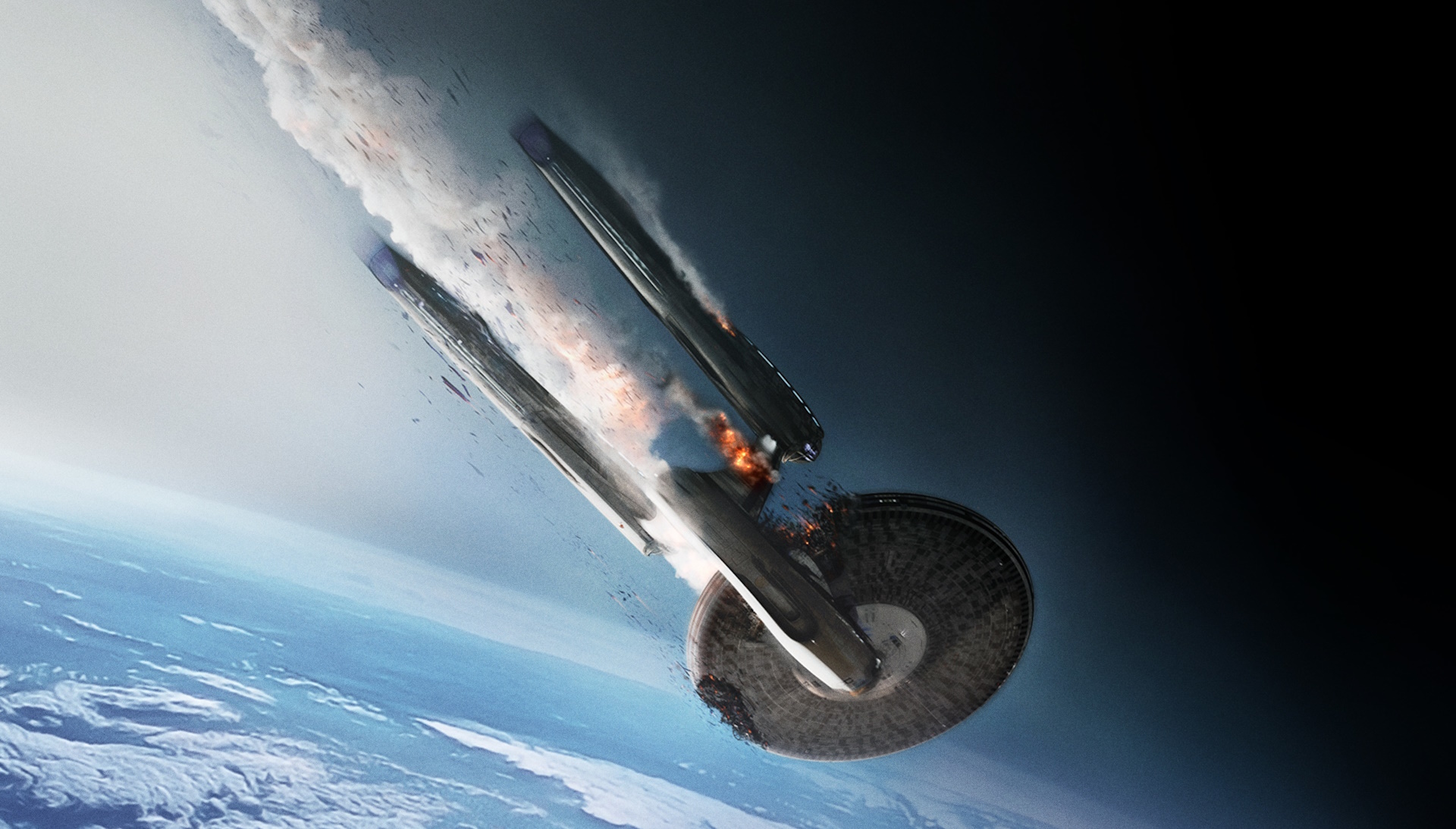
Cropped promo poster for Star Trek Into Darkness showing the USS Enterprise crashing into the atmosphere of a planet.
The Enterprise.

But the Kelvin films – or perhaps we should start saying “the Kelvin trilogy” – have a place in the history of Star Trek. They carried a torch for the franchise at a time when total cancellation and annihilation seemed not only likely, but were actively happening, and they set the stage for several great streaming shows that expanded the franchise in new ways. That isn’t a bad legacy by any means.

And as we look to the future? Star Trek seems set to enter a fallow period as the 2020s come to a close. After Strange New Worlds finishes its run, all we know for sure is that Starfleet Academy is getting a second season – and then there’s this potential new film. Star Trek XV – or whatever we’re going to end up calling it – has a lot to live up to in some ways, as it may have to pick up the mantle from the Kelvin timeline and keep Star Trek alive at a time when there might not be anything else going on. But this new film, thanks to being its own thing, has almost limitless storytelling possibilities, and won’t be constrained by what came before. That worked well in 2009, and it set the stage for bigger and better things. I’m going to keep my fingers crossed that this new film, in whatever form it ultimately takes, will be much more like Star Trek ’09 and less like the unfortunate Section 31.

So I hope this has been interesting. Part of me wonders if, in another ten or fifteen years, we may yet get a belated Kelvin timeline revival. Who knows! But nostalgia can be a big deal in entertainment, and if there are enough Kelvin fans clamouring for it… never say never, right? I will keep my ear to the ground and if there’s any news about a new Star Trek film in the weeks and months ahead, I daresay I’ll have more to add, so be sure to check back from time to time. And if you want to see what else I’ve had to say about the Kelvin timeline over the years, you can check out my dedicated Kelvin timeline page by clicking or tapping here. Until next time, friends!


Star Trek ’09, Star Trek Into Darkness, and Star Trek Beyond are available to stream now on Paramount+ in countries and territories where the platform is available. All three films are also available on DVD and Blu-ray. The Star Trek franchise – including all films and other properties discussed above – is the copyright of Skydance/Paramount. This article contains the thoughts and opinions of one person only and is not intended to cause any offence.

So, About That Star Trek Comedy Series…

We’ve had Comic-Con, where Star Trek made a splash with news about Starfleet Academy, Khan, and a pitch for a Strange New Worlds successor series. And now it’s Star Trek Las Vegas – a huge Star Trek convention with many of the franchise’s biggest stars in attendance. In between, there was a tiny little tidbit of news you may have missed – Paramount Global and Skydance Media finally completed their expensive and much-delayed corporate merger.

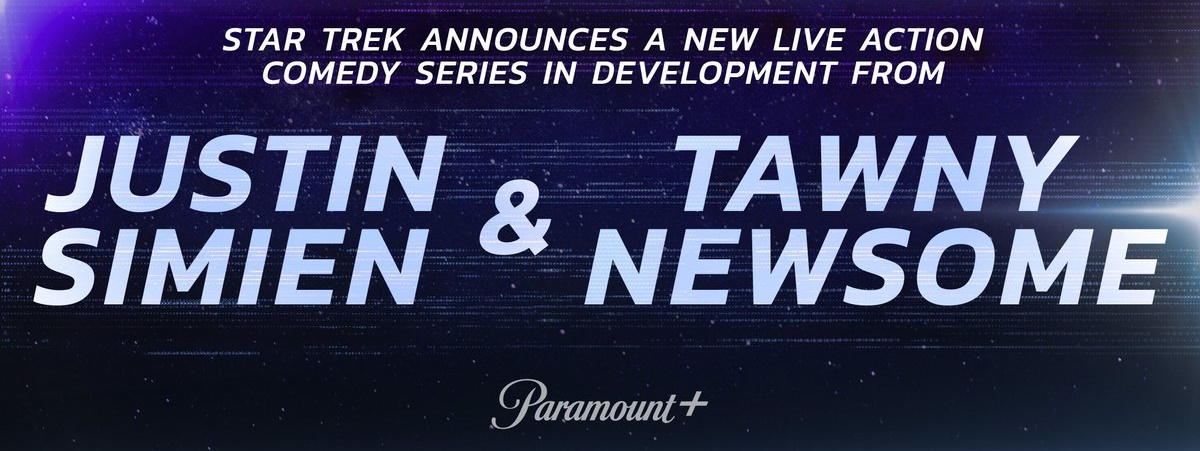
Last year, Tawny Newsome, Alex Kurtzman, and Paramount surprised a lot of us by announcing a brand-new Star Trek series – a “workplace comedy” which Newsome and Justin Simien were working on together. I noted at the time that the announcement seemed pretty threadbare, as if it had been thrown together at the last minute, and we didn’t really get a lot of details about it beyond who was writing it and that it might be set outside of Starfleet.

Justin Simien (left) and Tawny Newsome were working on this series.

Star Trek and comedy go well together, and they have done since the franchise’s inception. I made this argument when Lower Decks was in the offing and some fans were upset about it, because comedy has always been a part of Star Trek and will always have a place in Star Trek. Given the other options for new Star Trek shows and films, I don’t think I’d have necessarily chosen Newsome’s comedy pitch myself, but that’s beside the point. I’d have happily tuned in and I’d have wanted the new series to do well.

Note the past tense.

In the aftermath of Paramount’s merger, Newsome appeared at a panel at Star Trek Las Vegas. And she said something telling about her comedy series: “we’re waiting to hear” – i.e. from Skydance and Star Trek’s new corporate leadership about the show’s future – which she followed up with: “not to sound bleak, but nothing’s guaranteed.”

Star Trek’s new corporate overlords.

So… the comedy series ain’t happening, then. I mean, it’s not happening, is it? I would be astonished at this stage if it goes ahead; of all the proposals on the table for expanding the Star Trek franchise, it’s gotta be way down the list for the new team coming in. And I don’t think this is a huge shock – obviously Skydance plans to continue with Strange New Worlds’ final two seasons, and the two seasons of Starfleet Academy, one of which is complete and the other of which is already in production. But beyond that, there’s no new Star Trek being commissioned, and Skydance doesn’t seem to be obliged to fulfil Paramount’s past announcements – including Newsome’s comedy series.

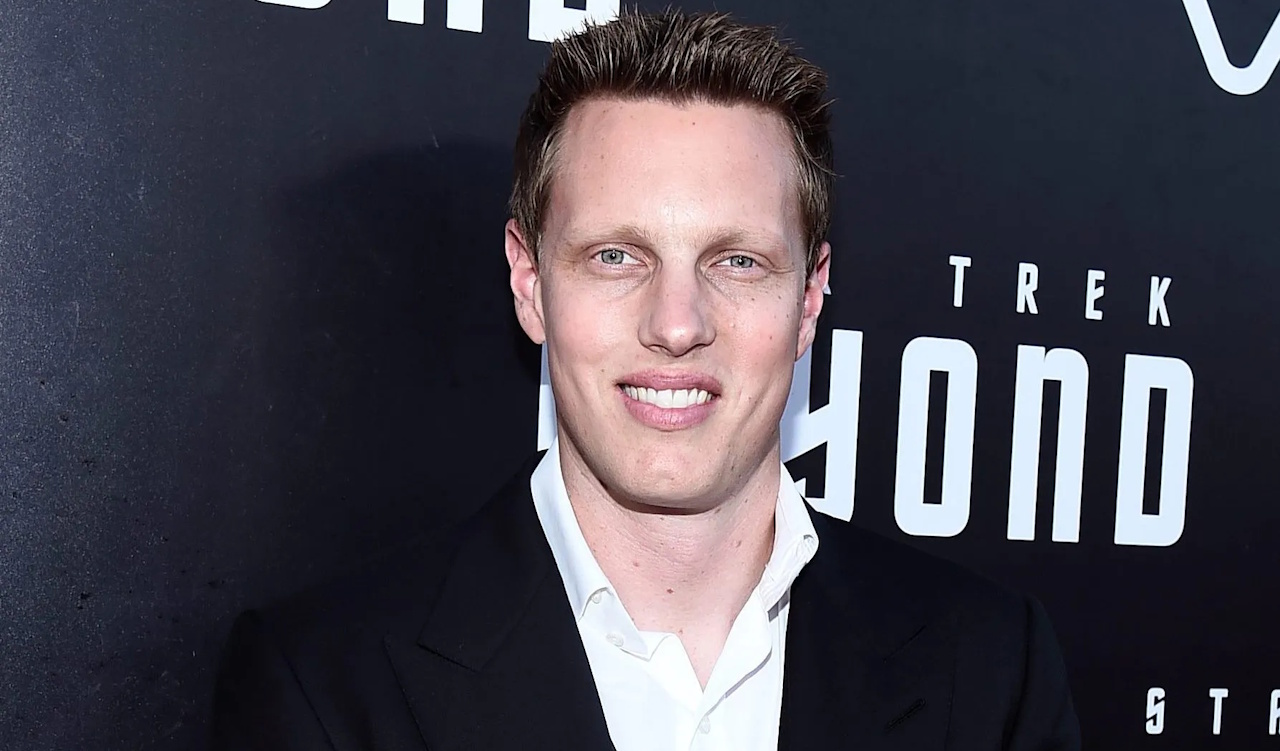
Skydance CEO David Ellison seems much more interested in films than television shows. If Star Trek has a future in this new era, I would suggest at this early stage that it’ll be in feature films rather than made-for-streaming TV, based on what we can see from Skydance and Ellison at this early stage.

Skydance CEO David Ellison.

I don’t think it’s a coincidence that Discovery, Lower Decks, and Strange New Worlds all had their cancellations announced after Skydance and Paramount began working on their merger, with Strange New Worlds’ cancellation being announced years ahead of time while the merger was still being completed. It seems to me that Skydance wanted to come in with a clean slate, not having commitments to make any new Star Trek series whatsoever. And the comedy series? It may have been announced already, and at least some work has taken place on writing scripts, creating characters, and so on… but it was too late to the party.

If the comedy series had already entered full production, it would be safe for at least a season. But it hasn’t – and now the new team is taking over, they evidently have no obligation to pick it up. As far as we know, no casting decisions were taken, no contracts were signed, no sets have been constructed… the only thing we can be sure of is that a pitch and some scripts exist. And it’s very easy to put those in the old circular filing cabinet.

The announcement from last year’s Comic-Con.

What we heard from Tawny Newsome in Las Vegas feels more like Michael Dorn’s “Captain Worf” idea from a few years ago, or when Robert Duncan McNeill pitched a “Captain Proton” series to ViacomCBS. These are ideas that some fans might’ve liked, others might not have been into… but they never got off the ground despite clearly having a lot of thought and work put into them. I don’t believe that Goldsman and Meyers will succeed with their “Year One” pitch, and based on what we’ve just heard, I doubt that Newsome and Simien’s comedy series will go ahead, either.

And that’s a shame. As a Star Trek fan, I’d rather see the franchise in production than not – even if the kinds of shows being made wouldn’t have been my first choice. Obviously I’d be really keen on an idea like Legacy, or any kind of Strange New Worlds-inspired episodic series set somewhere after Picard. But if that’s not an option, I’d happily accept Year One or the comedy series. There’s potential in both, and I’m sure Skydance would make money on them.

Whether it’s a Strange New Worlds sequel, a comedy series, or something else… I just want more Star Trek!

But the direction of travel has changed. We’ve seen that with the cancellations. This current era of streaming Star Trek is, in my view, coming to an end in the next few years – possibly as early as 2028 or 2029 when the final episodes of Strange New Worlds and Starfleet Academy will air. Skydance’s new team might be interested in commissioning a feature film – and as luck would have it, there are several scripts being worked on – but I don’t think they’re interested in taking Star Trek forward on streaming at the moment. That might change, depending on all kinds of factors, and the more noise we can make as fans, and the more attention we can draw to Star Trek the better the franchise’s prospects will be! But for Ellison and Skydance, I just don’t believe they see much value in the Star Trek brand right now.

And that’s probably what’s done it for the comedy series. It’s a shame, because even though this wouldn’t have been my first choice for a new Star Trek production, there was still potential. And anything set after the Picard era is going to be of interest, even if it wasn’t the kind of exploration-focused episodic series that I’d have preferred. Maybe Skydance can be convinced to make a show like that… but I’m not holding my breath.

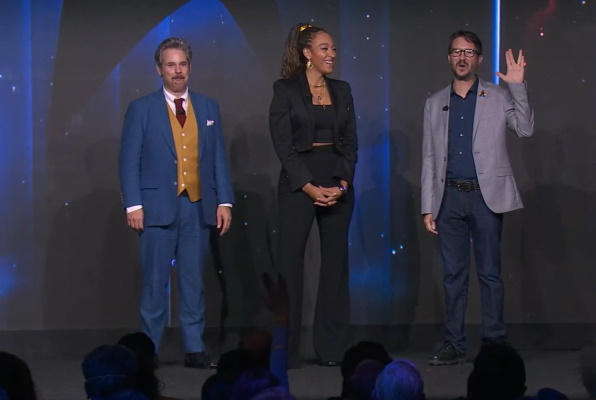
Tawny Newsome (c) with Paul Tompkins (l) and Wil Wheaton in 2022.

As we talked about when Strange New Worlds was cancelled… the blunt fact of the matter is that I don’t expect to see much more Star Trek beyond about 2028. When the shows that are currently in production make it to air and then conclude their runs, I really get the sense that that’ll be it – at least on the small screen. A fourth Kelvin film, or possibly some other cinematic adaptation, could still be possible in the years ahead, but for me, Star Trek has always been better-suited to television than the cinema.

I think in the weeks or months ahead we’ll have to lay out what’s gone wrong for Star Trek in this era of streaming television – and how Paramount’s outgoing executives took what could’ve been a golden opportunity and ended up pissing all over it. Star Trek could have been well-positioned as a big-budget, flagship franchise – but so many things went wrong, from the rollout of Paramount+ to Paramount’s inability to bring younger fans on board in significant numbers. But that’ll have to be the subject of a longer piece.

So long, Paramount. We won’t miss you.

For now, it seems to me as if Newsome’s comedy show is dead – albeit unofficially at this stage. And while you may not be terribly disappointed about that on an individual level (as I’m not, to be honest with you), I think it says a lot about the Skydance merger and Star Trek’s future under this new corporation. And that does genuinely have me worried, because it feels like we’ve only just got Star Trek back after more than a decade in the wilderness. To think it could be shutting down again so soon – and with so much potential left behind – is a bitter pill to swallow.

But hey, maybe I’m wrong. Maybe Skydance will announce their commitment to this project – and to many more Star Trek shows, films, and video games! We can cross our fingers and hope, right?


The Star Trek franchise – including all films and series discussed above – is the copyright of the new Paramount-Skydance Corporation. Credit to TrekMovie.com for the initial reporting on Tawny Newsome’s comments. This article contains the thoughts and opinions of one person only and is not intended to cause any offence.
Introducing MountCock+

Ladies and gentlemen, boys and girls, roll up and be the first to subscribe to the greatest streaming service of all time: the brand-new MountCock+!

Made-up logo of fictional streaming service "MountCock+".
If only it was real…

If you haven’t heard, Paramount Global – the company behind Paramount+, the Star Trek franchise, and others – is in a pretty bad place financially. That isn’t “breaking news;” it’s been the case for quite some time. As Paramount has continued to lose money, its executives have put a lot of faith in streaming to swoop in as some kind of saviour – but they’ve learned, belatedly, that streaming is a difficult market to crack at the best of times. And these are not the best of times!

Here’s what I think happened a few years ago. An elderly executive or investor – who knows nothing about the internet, data, streaming, or any of the complex technologies required to make it work – saw the success of Netflix, looked at CBS/Paramount’s own back catalogue and library of content and said to some poor, overworked employee “make me my own Netflix.” In the mid-2010s, Netflix was the hottest up-and-coming property in the entertainment world, and Paramount wanted a piece of that action. But rather than work with Netflix, Paramount wanted to be a competitor – despite having none of the outside investment, financial support, development knowledge, or technological know-how.

Logo of Paramount Global.

I really wish that I’d been faster at getting to work on this story, because “MountCock+” would’ve been a great April Fools’ gag if I’d made it a week ago! Oh well, lesson learned.

The title of this piece – which, in case it really needs saying, is facetious and won’t really be the name of a potential newly-merged streaming service – comes from news that new Paramount investor and potential new owner, SkyDance Media, is considering rolling Paramount+ and the Peacock streaming service together into one single entity. This would give subscribers to either platform access to a lot more films and TV shows, and the hope is that rolling two unprofitable streamers together will help the restructured Paramount/Paradance/Dancemount (or whatever the new company might be called) edge its way closer to profitable territory.

Logo of Skydance Media.
Paramount Global and Skydance Media may be in talks about a merger or sale.

Let’s get one thing straight right off the bat: small, specialised streaming platforms that only offer relatively few shows and films within a single niche have always been a bad idea. It was a bad idea when DC Comics tried it, it was a bad idea when CNN tried it, and the fact that DC Universe and CNN+ no longer exist as independent platforms is all the proof you’ll ever need. Netflix succeeded in the 2010s because it was a comparatively cheap and convenient way to access a huge library of content. Yes, there were whole genres on Netflix that you’d never even touch because they were of no interest to you. But there was so much other stuff that was appealing that it made a Netflix subscription worthwhile.

That was what convinced me to cut the cord – or rather, the wire to my satellite dish! In the late 2000s I got Sky – a satellite TV provider here in the UK. Getting Sky in the first place had been one of my ambitions for a long time; ever since it launched in the ’90s, the idea of hundreds of channels had been massively appealing! But by the late 2010s, the media landscape was changing. When Star Trek: Discovery was only going to be available on Netflix, I signed up so I could watch it. And I found streaming to be so convenient and at such a good price point that I very quickly dropped Sky altogether.

Stock photo of a satellite TV dish.
You can still see a satellite dish on many houses here in the UK.

The reasons for Netflix’s success were its convenience, low price point, and huge library of content. Take away one of those factors and it wouldn’t have become the phenomenon that it did – and as the so-called “streaming wars” rage in the 2020s, it’s a combination of those same factors in reverse that account for the failure or underperformance of other, newer streaming platforms. Less content for a higher price turns people away – even big fans of some franchises. I’m a Trekkie, but in 2024 I’ve only paid for a single month of Paramount+ so far; the streaming platform just doesn’t feel worth it most of the time.

Roll Paramount+ content in with another streaming service, though, and suddenly it becomes a more enticing proposition. As long as the price stays low as the library of content grows, there would be much more of an incentive to sign up for MountCock+ than there is for either Paramount+ or Peacock individually. Continuing as competitors will, in all likelihood, lead to the failure of both platforms, but if they join forces they might stand a chance. Even though Skydance doesn’t own Peacock and thus profits will have to be split, it still feels like a good idea.

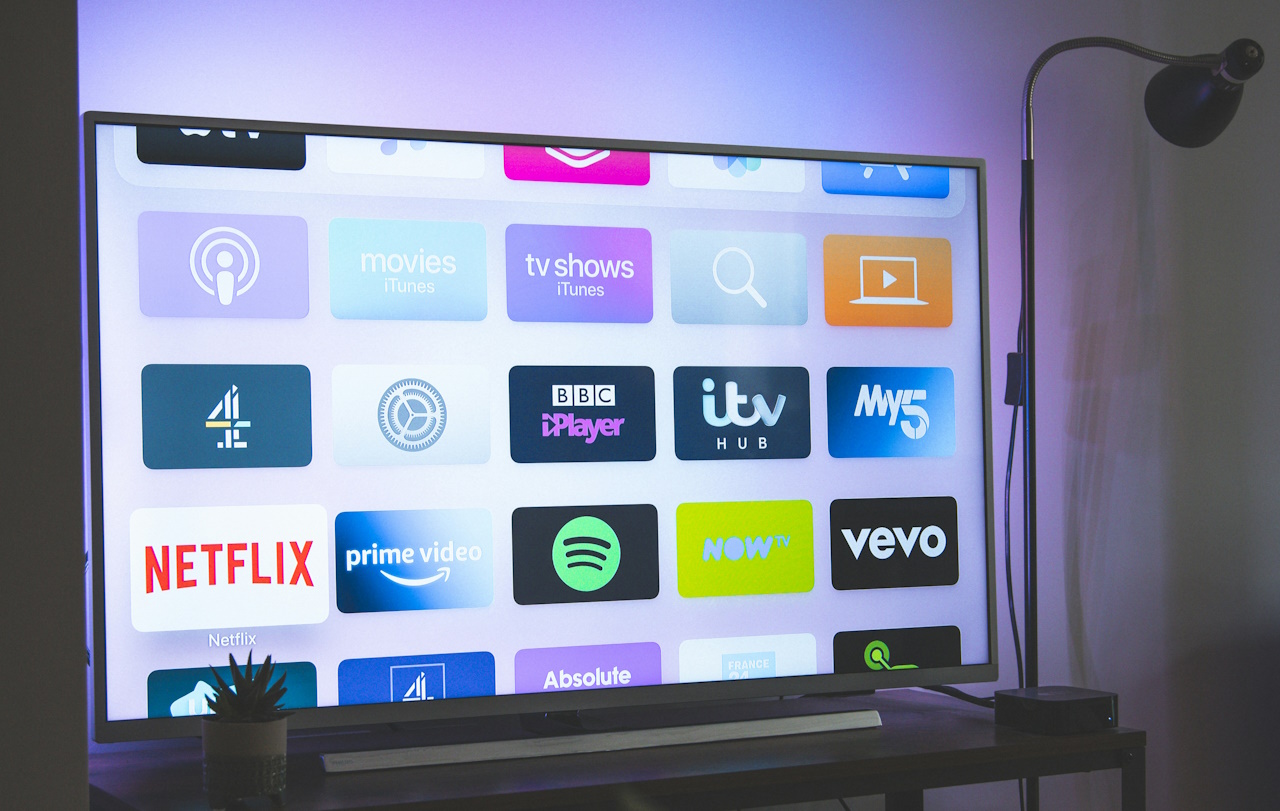
Stock photo of streaming apps on a TV screen.
There are currently too many streaming services. Some will never be profitable for their parent companies.

Almost every time Star Trek’s parent company has been shaken up, there have been changes for the franchise. And not all of these changes have been positive. We have to keep in mind that it’s possible that a Skydance/hedge fund-owned corporation would have less of an interest in Star Trek, especially if the franchise seems to be underperforming, not bringing in or retaining subscribers, or even running too hot. While I don’t expect to see imminent cancellations, it’s something to be aware of as it’s happened before. It’s also possible that new corporate leadership might be keener on feature films with cinematic releases than on making more made-for-streaming series.

On the other hand, Paramount has been slow and even reluctant to listen to Trekkies sometimes. There’s been a significant fan campaign to create a sequel/successor show to Star Trek: Picard – but after more than a year, it hasn’t garnered a response from those at the top of the corporation. So perhaps new faces in the boardroom would be better at reading the room and understanding where the fan community is and what kind of projects we’d like to see. This is an area where Paramount has needed to improve for a long time, so again there’s the potential to see some positive changes.

Still frame from Star Trek: Picard Season 3.
Trekkies have been clamouring for another Picard-era series.

Business and finance is not my strong suit nor my area of expertise – and I don’t blame you if the details are boring or difficult to grasp. I’m pretty sure I’m oversimplifying it because I don’t fully understand it either; when you’re looking at corporations that routinely deal in the hundreds of millions or billions of dollars… it can be hard to really comprehend the kinds of decisions that they take. But as fans, and as consumers of media in a competitive marketplace, we need to know a little about what’s happening behind-the-scenes. The future of Paramount Global will have an impact on future Star Trek productions, on the corporation’s other streaming projects, and even on its cinematic output and television channels.

For my two cents, I can see why amalgamating Paramount+ and Peacock – or Paramount+ with some other streaming platform, if the Peacock deal falls through – would make sense. After several years of streaming becoming an increasingly balkanised and fractured marketplace, bringing different platforms together just makes sense. There’s a general unwillingness on the part of audiences to pay for more than two or three different streaming services, and smaller, second-tier platforms will struggle in such a challenging environment. I’m a Trekkie – albeit one who’s been feeling a bit burned out of late – but even I have never paid for a full year’s worth of Paramount+; it’s a service I pick up for a month or two at a time to watch a couple of shows. On a related note: have you checked out my review of Halo Season 2 yet?

Promo poster for Halo Season 2.
It’s the Master Chief!

So could the hypothetical MountCock+ turn things around? I think it has to have a better chance of turning a profit than either Paramount+ or Peacock do individually – though it will perhaps need a better name than I’ve given it! But in theory, a bigger streaming platform with more original and legacy content, backed up by a corporate merger that brings more film franchises and television shows under its umbrella is a good thing. We don’t want any one corporation to have a monopoly in this marketplace, of course, but creating platforms that are more consumer-friendly and don’t see small bundles of content paywalled off at every turn is a good thing and a positive development.

“Watch this space” is probably the soundest advice right now! Paramount has been in talks for a while about possible mergers, sales, or splitting off different parts of its business, so nothing is set in stone and this latest Skydance/Peacock proposal is unofficial at best. It could happen – or Paramount could end up going in a very different direction. Still, corporate changes are afoot – and I feel increasingly confident of major news breaking before the year is over.


All properties discussed above remain the copyright of their respective broadcaster, distributor, studio, etc. This article is not financial or investment advice. This article contains the thoughts and opinions of one person only and is not intended to cause any offence.