


Thanks to Storm Éowyn knocking the power off, I’m a little late getting to Section 31! You can imagine my annoyance when the electricity went off mere minutes after the film was made available on Paramount+; it’s delayed this review by a couple of days. Although I could, I suppose, have logged into the app on my phone and watched it there… who really wants to watch a brand-new Star Trek film on a tiny screen? Not me, anyway – so I had to wait all weekend until the power came back!
Now that that issue has – touch wood – been resolved, it’s time to get into the review! This first piece isn’t going to contain any plot spoilers, but I have a longer review in the pipeline that will look at the narrative in more detail. I definitely have some thoughts on the finer points of Section 31′s plot! But this piece is intended to be a soft landing for anyone who hasn’t seen the film and wants to go into it un-spoiled.

Photo Credit: Star Trek on Facebook
For my part, I haven’t read any other reviews of Section 31. I’ve been keeping my head down and avoiding social media groups and my usual Trekkie websites and blogs; I wanted to give my thoughts on the film without fear of being influenced by other critics’ opinions. So that’s what you’re gonna get today: pure, uncorrupted thoughts from Trekking with Dennis!
If you’ve read my preview of Section 31, which I published on Wednesday, you’ll know that I was sceptical of the film on a personal level. The trailers and teasers seemed to hint at a project with a very modern tone, inspired by the likes of Suicide Squad and other popular superhero flicks. With a couple of specific concerns about the story and character arcs (that we’ll go over in more detail next time when we talk spoilers), I wasn’t convinced that Section 31 would really be my kind of film. Despite that negative first impression, though, I can put my hand on my heart and tell you that I gave Section 31 a fair shake, giving director Olatunde Osunsanmi, writer Craig Sweeney, and lead actress Michelle Yeoh a chance to impress me.
I think I’ll start by making two somewhat conflicting observations.
Firstly, Section 31 was a very generic action/sci-fi film that – bar a couple of the barest of Star Trek references that mostly came in the form of blink-and-you’ll-miss-it name-drops – could’ve been set in a totally different franchise without much effort. There were a couple of moments where I caught the briefest glimpse of things that felt familiar from past iterations of Star Trek… but for the most part, this film left all of that behind. If you’re a Trekkie showing up for Section 31 because it has the Star Trek name attached… keep in mind that it’s only the name. Nothing else about this film felt like Star Trek.
Secondly… once I got started, Section 31 seemed to fly by. I was astonished to glance down and realise I was already halfway through. For what it was, I can’t say I didn’t enjoy Section 31. I would argue that it isn’t even close to anything the franchise has done before – with the possible exception of parts of the Kelvin timeline reboot films – but taken as a standalone title, one that almost certainly isn’t getting a sequel or spin-off… yeah. I didn’t dislike it. In fact, I’d say I enjoyed Section 31 more than I expected I would.
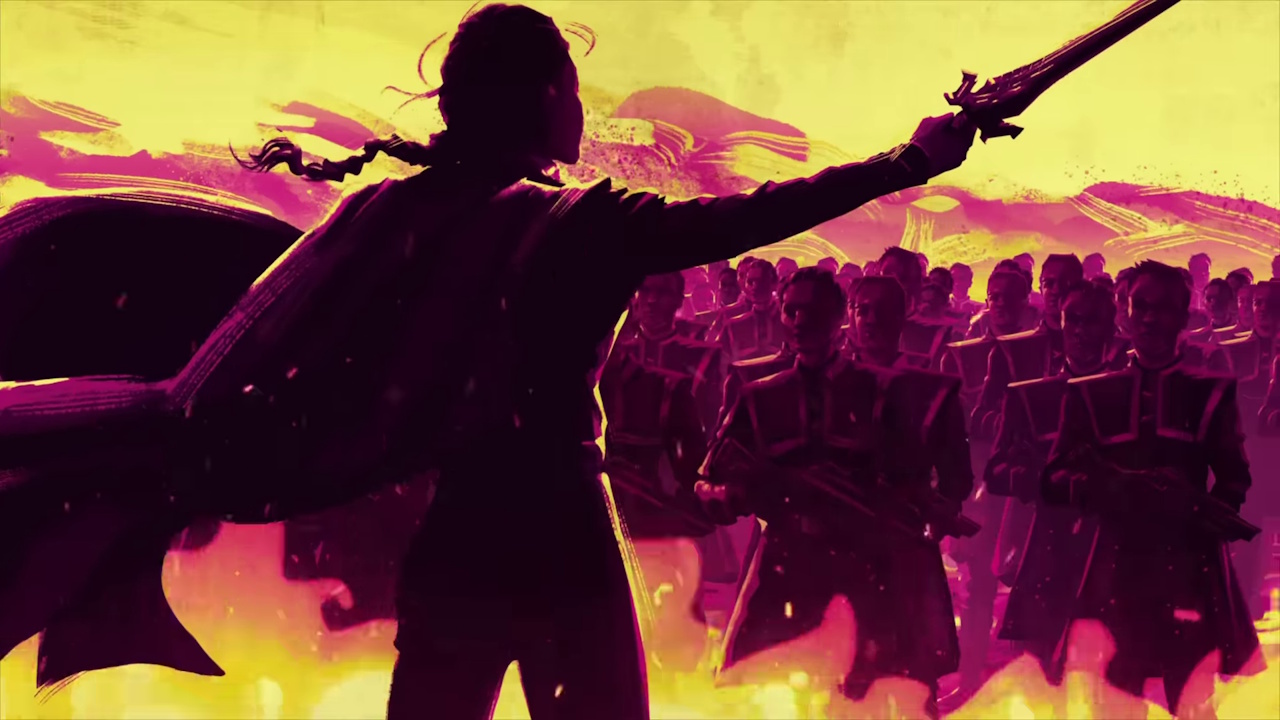
In my preview of Section 31, I argued that Paramount was positioning this title as a “first contact” for potential new fans and viewers. Star Trek can’t remain the sole preserve of people who liked it decades ago; if it’s going to survive and remain in production, new folks need to be joining the fan community. On that mark – which is where I actually had the most hope for Section 31 – I’m not feeling so optimistic any more, unfortunately.
Long story short, I just don’t think this spin-off was the right choice to adapt as a “first contact” film, a soft reboot, or an attempt to bring in brand-new fans. Making a film with a more modern tone, leaning into popular cinema as a way to ease new viewers into what can be a complex franchise is a great idea, and there will have had to be compromises made along the way – as there were with the 2009 reboot, too. There were strong points in Section 31′s story that were definitely entertaining… but I’m not sure it would be the right introduction to Star Trek given how detached it is from the rest of the franchise both narratively and – more importantly – in terms of theme, style, and tone.

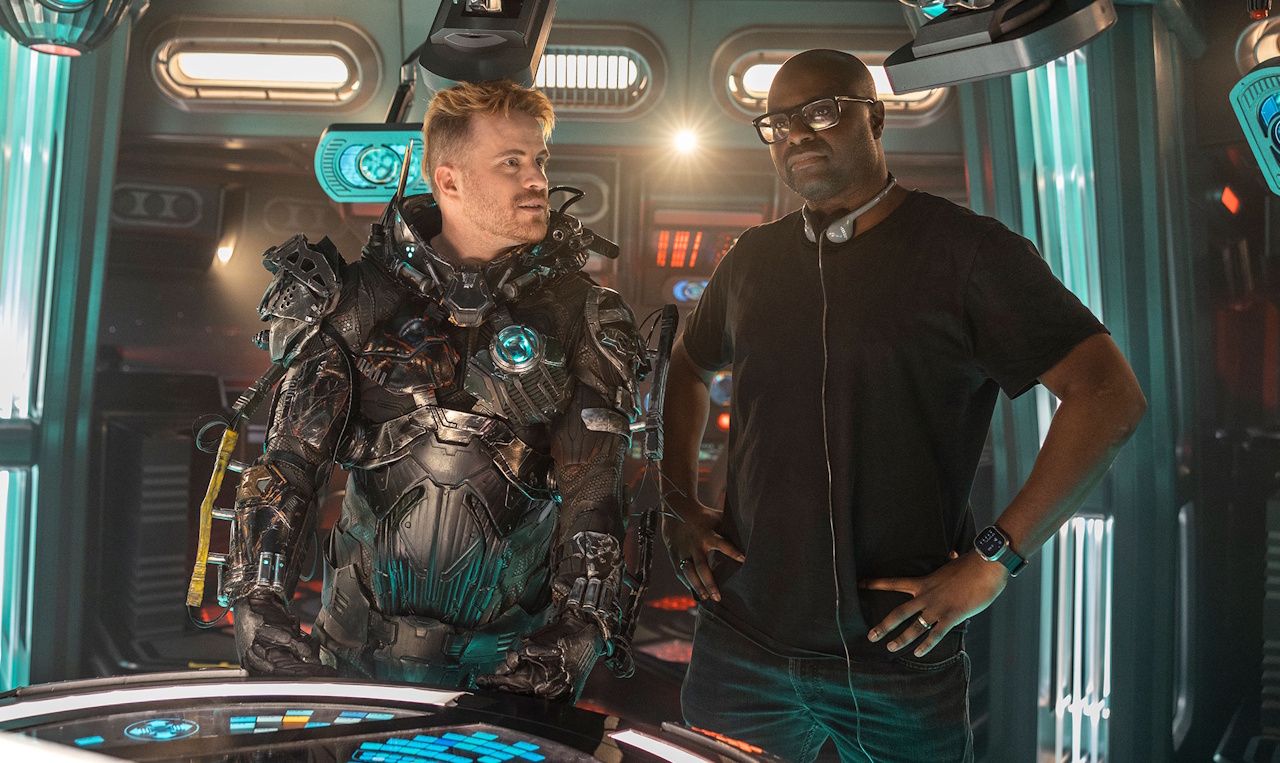
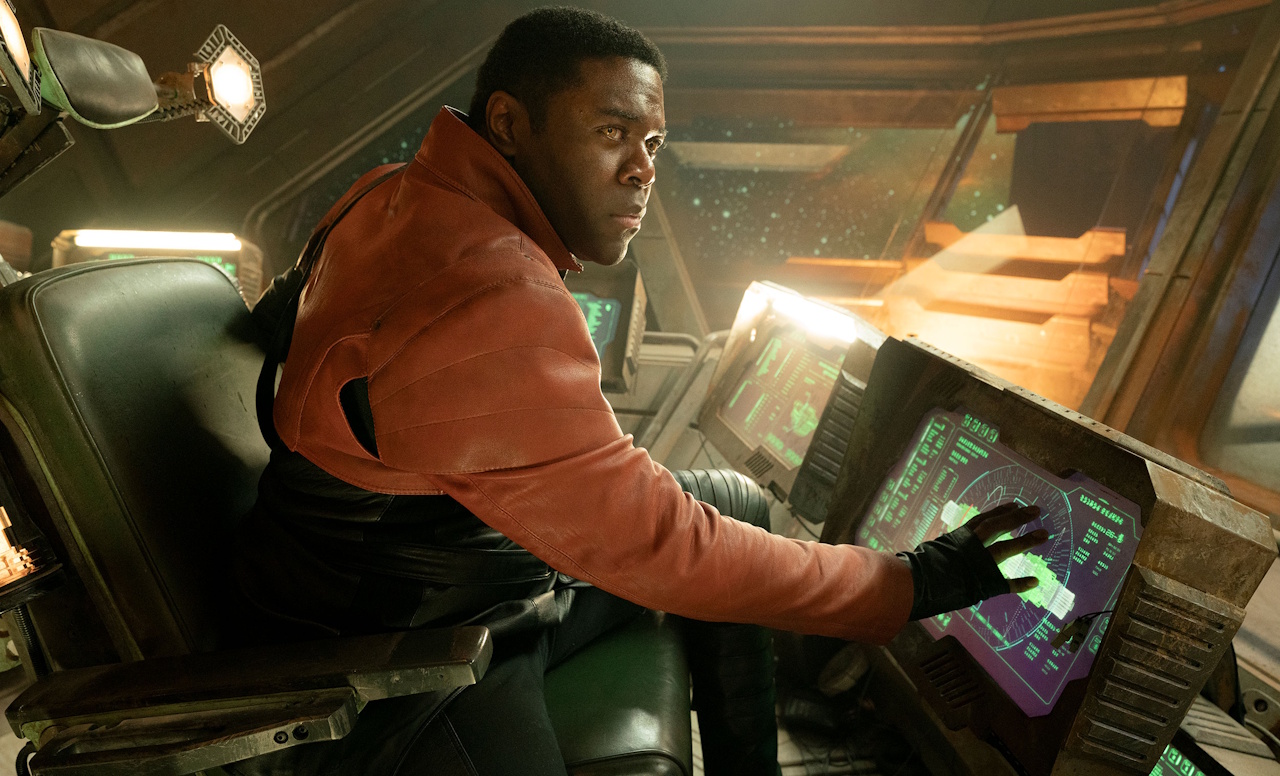
The visual language of Star Trek is quite distinctive and memorable. There are spaceships with saucer sections and nacelles, uniforms in bright primary colours, the familiar Starfleet delta… and Section 31 uses none of these. Its visual language is more akin to something from Marvel or Star Wars, and while those are both popular franchises that are absolutely fair game for drawing inspiration from… it breaks the film off from what came before a bit too abruptly, and sticks out as perhaps the most glaringly obvious example of how detached Section 31 feels from the rest of the franchise.
In that sense, what I felt could’ve been Section 31′s strongest suit and the biggest point in its favour feels in real danger of falling flat. I struggle to see the film converting many viewers into fully-fledged Trekkies – though I certainly hope I’m wrong on that front. With so few ties back to the rest of Star Trek, it’s hard to know where a viewer impressed by Section 31 could turn next. Stay tuned, though, because in the next few days I’m going to write up a short list of episodes that I think could make for a soft landing for fans of Section 31.
I would’ve liked the film’s musical score to have had a few more familiar Star Trek elements – only once did I hear the classic sting from The Original Series. As above with Section 31′s visual language, there was definitely room to use music to tie the film in a more overt way to the rest of the franchise. That being said, the score itself wasn’t bad… it was more or less on par with what you’d expect to get elsewhere in modern Star Trek.
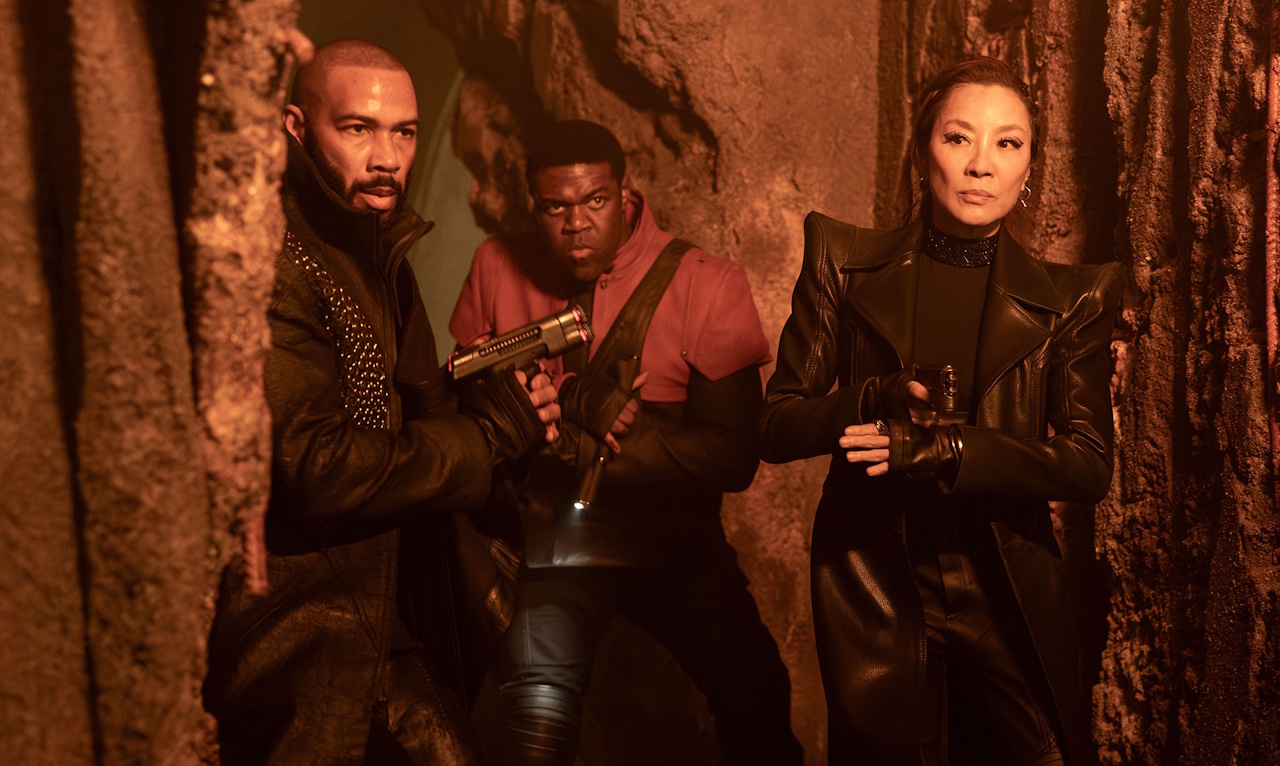
Michelle Yeoh – no, wait, I’m sorry… Academy-Award winner Michelle Yeoh, whose newfound fame and status Paramount wished to capitalise on by resurrecting Section 31 after years in development hell – was, naturally, the standout star of the film. Despite what I’d say was a confusing and somewhat repetitive storyline for her character (which we’ll get into in more detail next time), Yeoh dominated most of her scenes and did the absolute best she could with the material she had to work with. Section 31 isn’t going to win her another trophy cabinet full of awards – but that’s more a comment on the film itself rather than her performance.

I was familiar with Kacey Rohl from her work on Hannibal a few years ago, and I was impressed with her turn in Section 31. The character she played had more depth and complexity than I’d been expecting, and the expanded role she had on screen – including several key scenes without Michelle Yeoh that were important for the story – gave her plenty to work with. Paramount did well to land a performer of her calibre to take on the role of a legacy character, and the story threaded the needle quite well: expanding the character’s backstory without treading on the toes of anything we’re familiar with from past iterations of Star Trek.
I also want to credit Sven Ruygrok for his complex performance. Without getting into spoilers, Ruygrok’s character had layers, and while there must’ve been a temptation to ham it up in some scenes, I feel the right balance was struck. There were several scenes in which Ruygrok’s character was centre stage, and he rose to the occasion well. I wasn’t familiar with him prior to his appearance in Section 31, but I hope he can return to Star Trek one day.
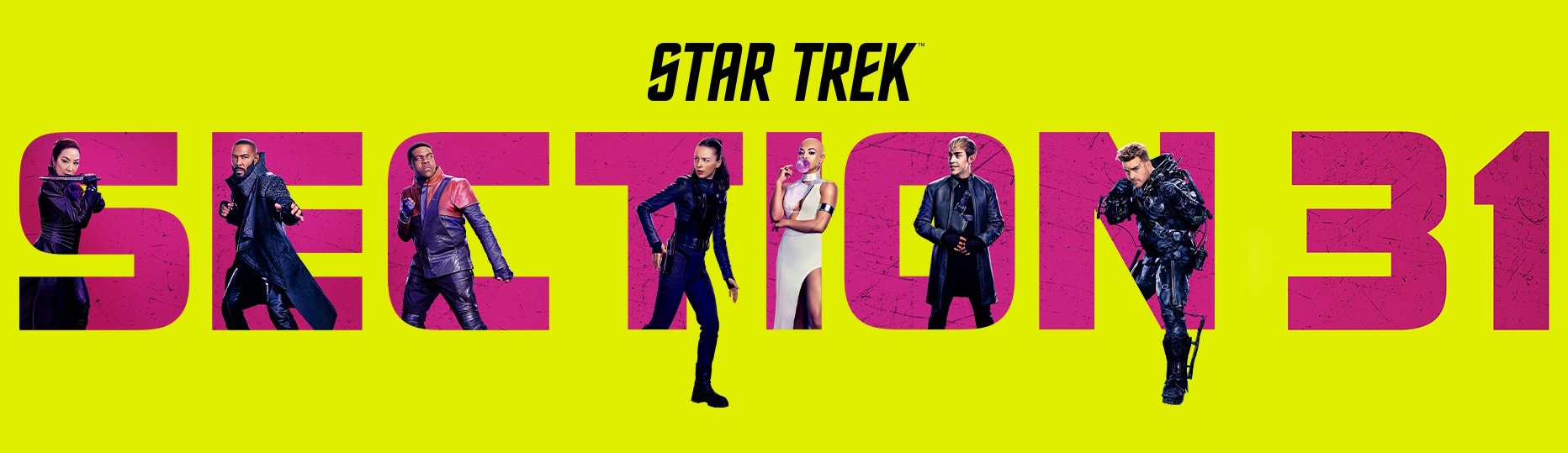
The final performer I’d like to highlight is Omari Hardwick. Hardwick’s character also had more complexity than I’d been expecting, and we got a decent explanation of his backstory, too. There was more emotion to this character than I thought there’d be, and Hardwick brought that to screen exceptionally well. There were limitations to this character – perhaps as a result of compressing a TV series into a sub-two-hour film – but separating criticisms of the character from the performance and I think we can say that Hardwick did a great job.
That statement above also applies to several of the other characters. I suspect if Section 31 had gone ahead in its originally-planned form in 2019, some of these characters would’ve been expanded upon, we’d have spent more time with them, and their backstories and arcs could’ve played out over multiple episodes or even multiple seasons. We got what we got with the film, though, and while I could certainly entertain the argument that cutting one or two of these characters might’ve given us a few extra seconds with the principals… I think each of them brought something to Section 31.
I used to work in marketing (video game marketing specifically, which is part of the broader entertainment industry), and I like to think I still have a reasonable grasp on the subject! With that in mind… some of Paramount’s decisions when promoting Section 31 leave me scratching my head. Putting Michelle Yeoh front-and-centre was obviously the right call, but in terms of the film’s social media campaign… I really don’t think Paramount did a great job.
The two trailers generally presented a positive and accurate picture of the film, getting the tone more or less spot on. But why weren’t these trailers more readily available on YouTube and platforms like TikTok? If this film was targeting a younger audience, surely it makes sense to spend money on ad campaigns where younger folks are. Paramount also has a weird obsession with big, expensive stunts in New York City – Times Square billboards, for instance, or in Section 31′s case, lighting up the Empire State Building in vague shades of yellow, purple, and pink. For the amount of money that must’ve cost… did anyone notice? Or even make the association between random colours not typically associated with Star Trek and the upcoming film?

Photo Credit: Star Trek on Facebook
I came to Section 31 with high hopes for the Star Trek franchise, but low expectations on a personal level. It turns out I was wrong on both counts: the film seems unlikely, in my view, to serve as a good “first contact” for new viewers who are unfamiliar with Star Trek, at least insofar as converting them into fully-fledged Trekkies. But despite my misgivings and some criticisms of a rather formulaic action story, I had a much better time with Section 31 than I expected based on the trailers. I guess it’s true what they say: you can’t judge a book by its cover! Or a film by its trailers, in this case.
I think we’ve gone about as far as we can without getting into the meat of the story. If you’re a Trekkie and you’re already a Paramount+ subscriber, all you have to lose by watching Section 31 is an hour and a half of your time. If you already have Paramount+ and you’ve enjoyed modern Star Trek – Discovery in particular – I think you’ll find at least something to hold your attention. If you’re a fan of action/sci-fi films, I also think Section 31 is worth checking out.
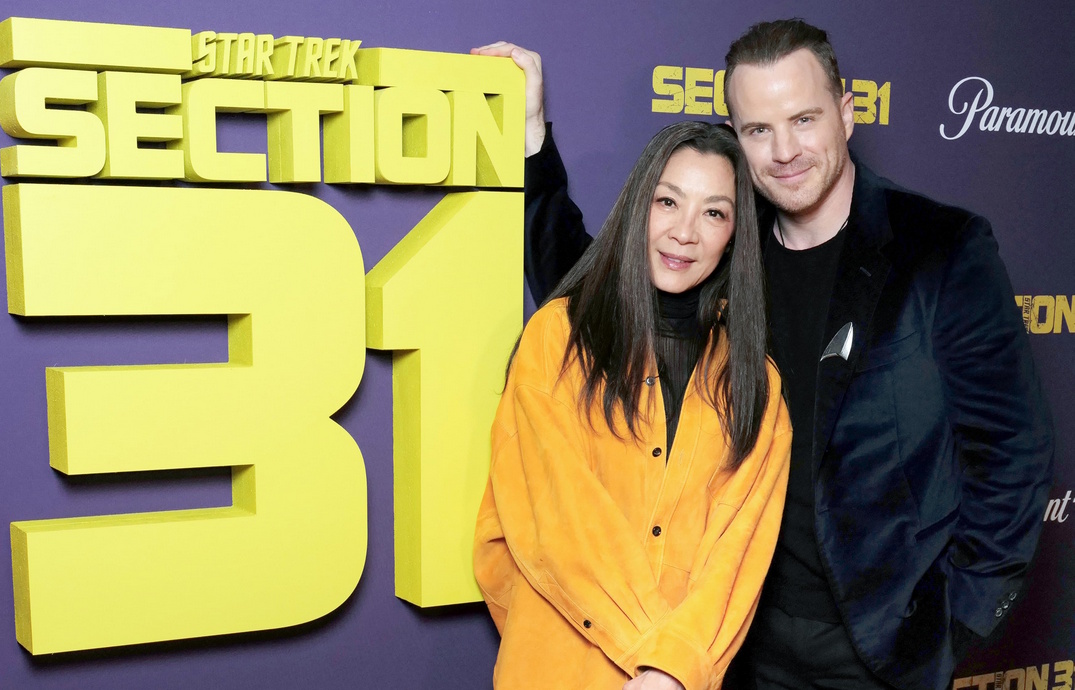
Photo Credit: IMDB
However, this isn’t going to be an award-winning film, and it won’t be the film to finally sway haters of “nu-Trek.” In fact, it’s barely a Star Trek film at all, lightly affixing some of the franchise’s aliens, factions, and names atop a very generic story. Section 31 wouldn’t feel out of place in Marvel, Star Wars, Alien, or any one of a dozen action/sci-fi properties. With very minor tweaks, you wouldn’t notice the difference.
I hoped that Section 31 could’ve been a big draw for the franchise, bringing in legions of new fans who would go on to discover other parts of Star Trek. And while I’m sure there will be some new viewers – as there are with every Star Trek project – I can’t help but feel the opportunity presented by Michelle Yeoh’s return hasn’t been properly taken advantage of.

That being said, I didn’t feel watching Section 31 was a hard slog. If anything, its basic, action-heavy story, generic villains, and simple macguffin made it incredibly straightforward to watch; the cinematic equivalent of easy listening. That isn’t a criticism exactly – there’s always gonna be room for made-for-TV movies that deliver a bog-standard narrative experience. Was making a film like that the right call for the Star Trek franchise at this delicate moment, though? I think the jury’s out on that; we’ll have to wait and see how well-received the film is and whether it succeeds at attracting the new, younger audience it’s seeking.
Next time I’ll dive into the story in more detail, and we’ll take a look at the main plot, individual character arcs, and so on. So I hope you’ll stay tuned for that and come back after you’ve watched Section 31. It’s hard for me to say I didn’t like it or there isn’t a place for it; it’s such a bland, middle-of-the-road film that it didn’t elicit particularly strong emotions either way. You can make a negative inference from that if you want, but I don’t really mean it in a negative way. Perhaps my expectations were so low that the film didn’t need to do much to leave a positive impression!
I’m in no rush to return to Section 31, but I won’t shun it or actively avoid it. I can see myself re-watching it in a couple of years’ time and having a decent time with it again. Or perhaps putting it on in the background while I do the vacuuming or clean the toilet. It’s that kind of film.
Star Trek: Section 31 is available to stream now on Paramount+ in countries and territories where the platform is available. The Star Trek franchise – including Section 31, Discovery, and all other properties discussed above – is the copyright of Paramount Global. This article contains the thoughts and opinions of one person only and is not intended to cause any offence.
 Trekking with Dennis