


Spoiler Warning: There are spoilers ahead for Star Trek: Voyager – Across The Unknown and for Star Trek: Voyager.
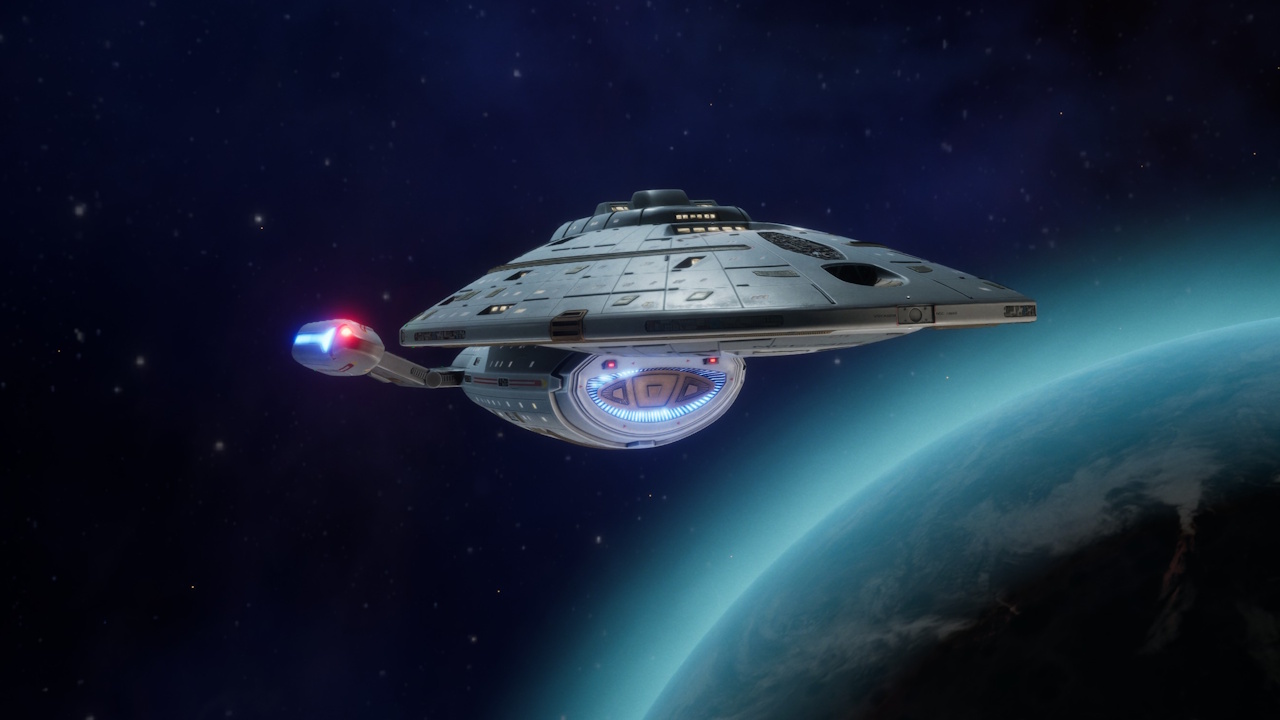
After I wrapped up my review of Star Trek: Voyager – Across The Unknown (which you can find by clicking or tapping here; don’t miss it!) I went back to the game for another run! That’s something I almost never do; re-playing a game so soon after finishing it usually doesn’t hold much appeal. But I think that alone is testament to how enjoyable Across The Unknown was for this old fan of Voyager.
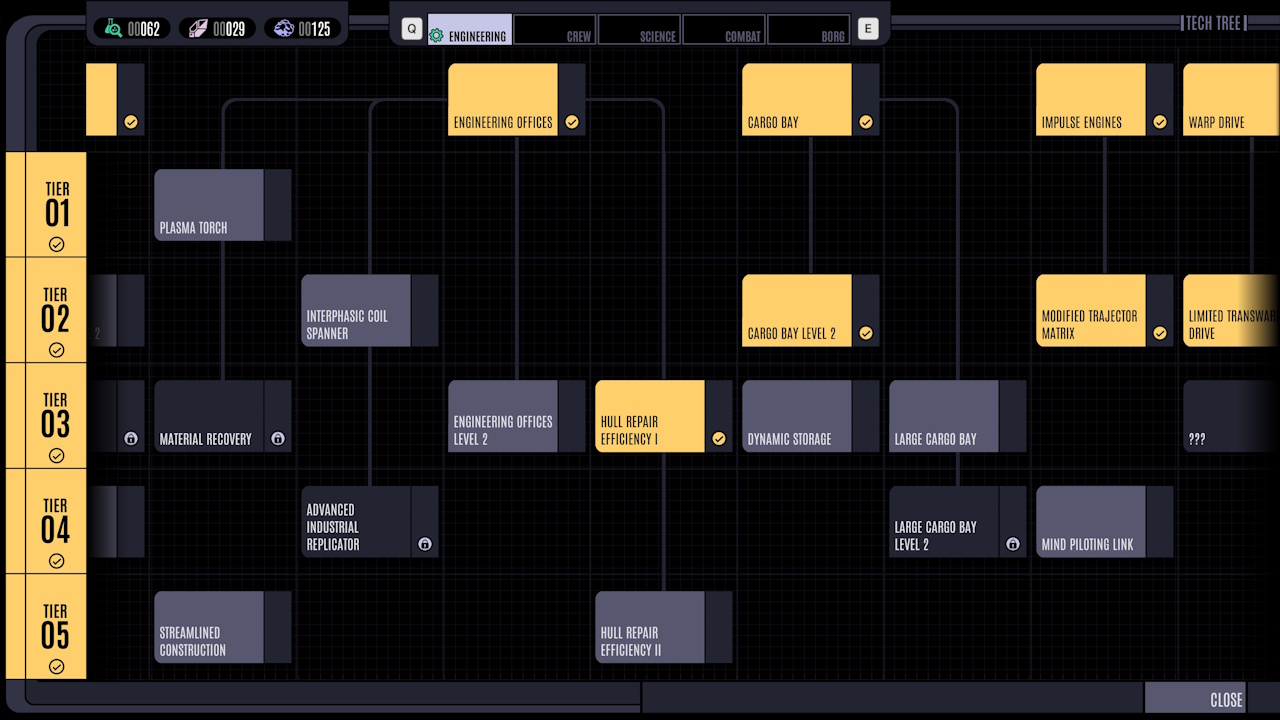
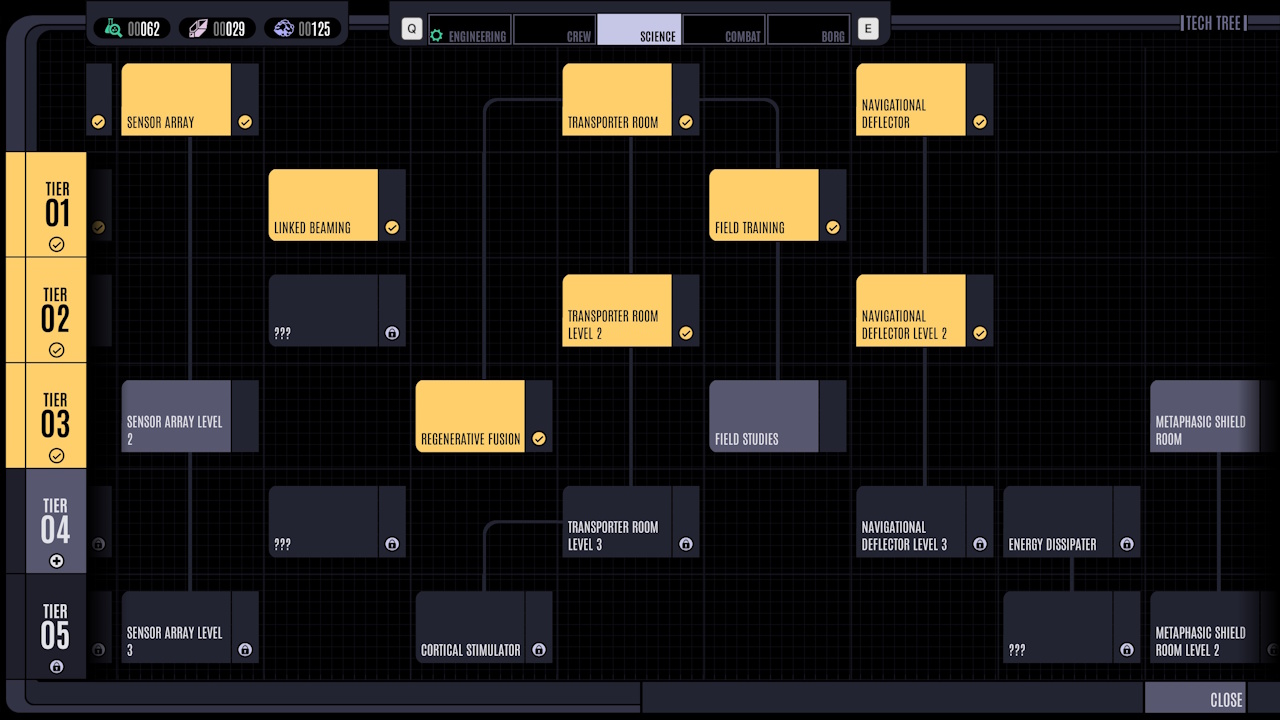
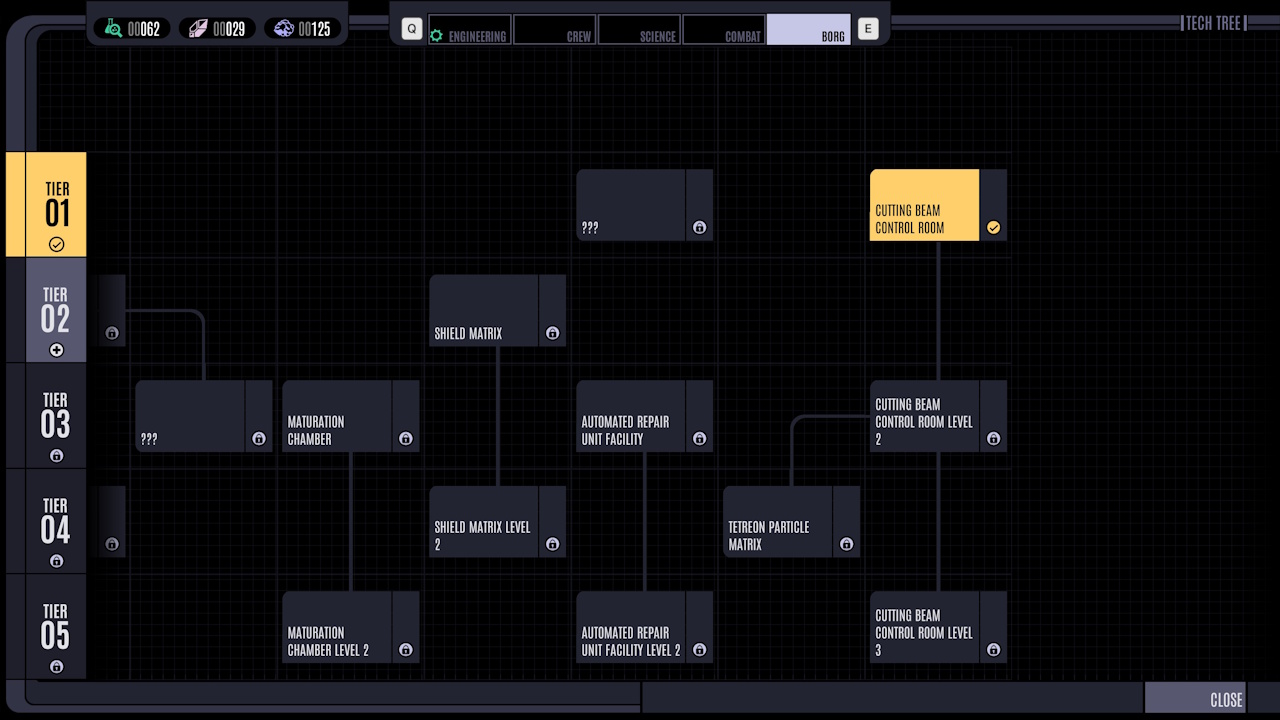
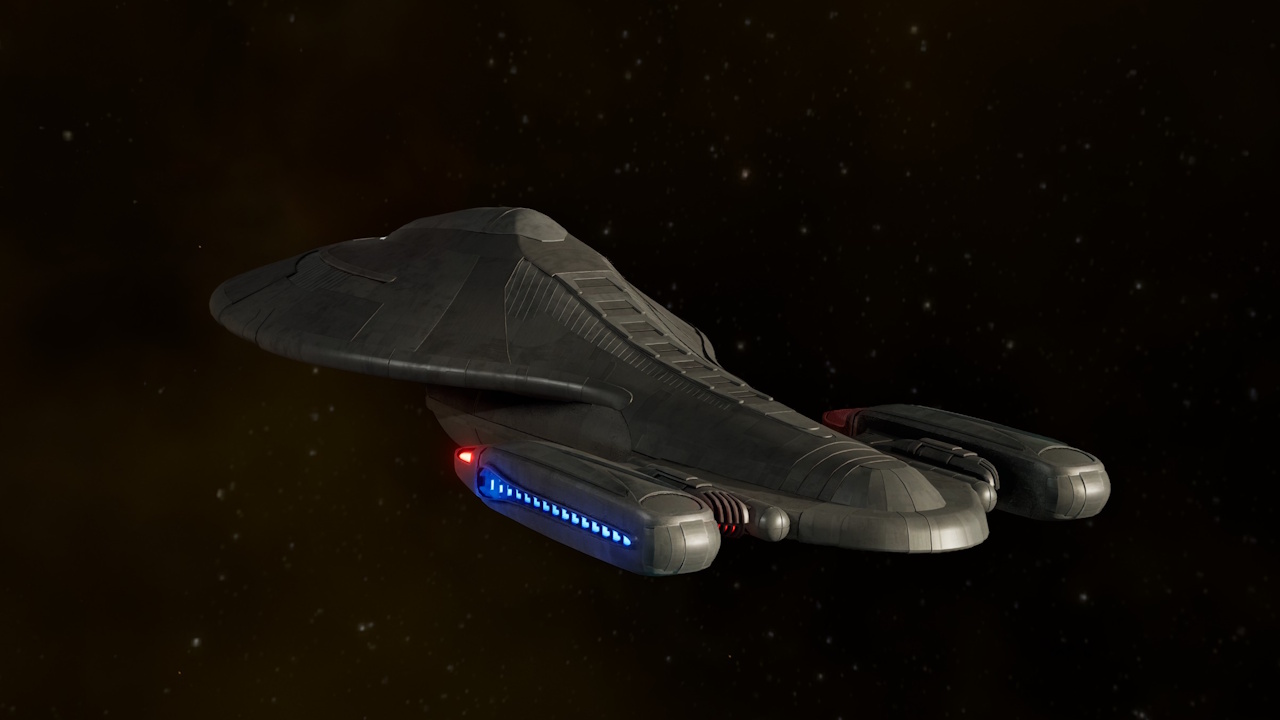
That second run unfolded quite differently, as I made some deliberate choices that I hoped would lead to completely different outcomes. I ended my first run through the game without having unlocked some optional hero characters; I went out of my way to grab some more of them this time. And I tried to set up the USS Voyager differently, too – different rooms, different weapons arrays, and so on, having run through the tech tree in a different order.
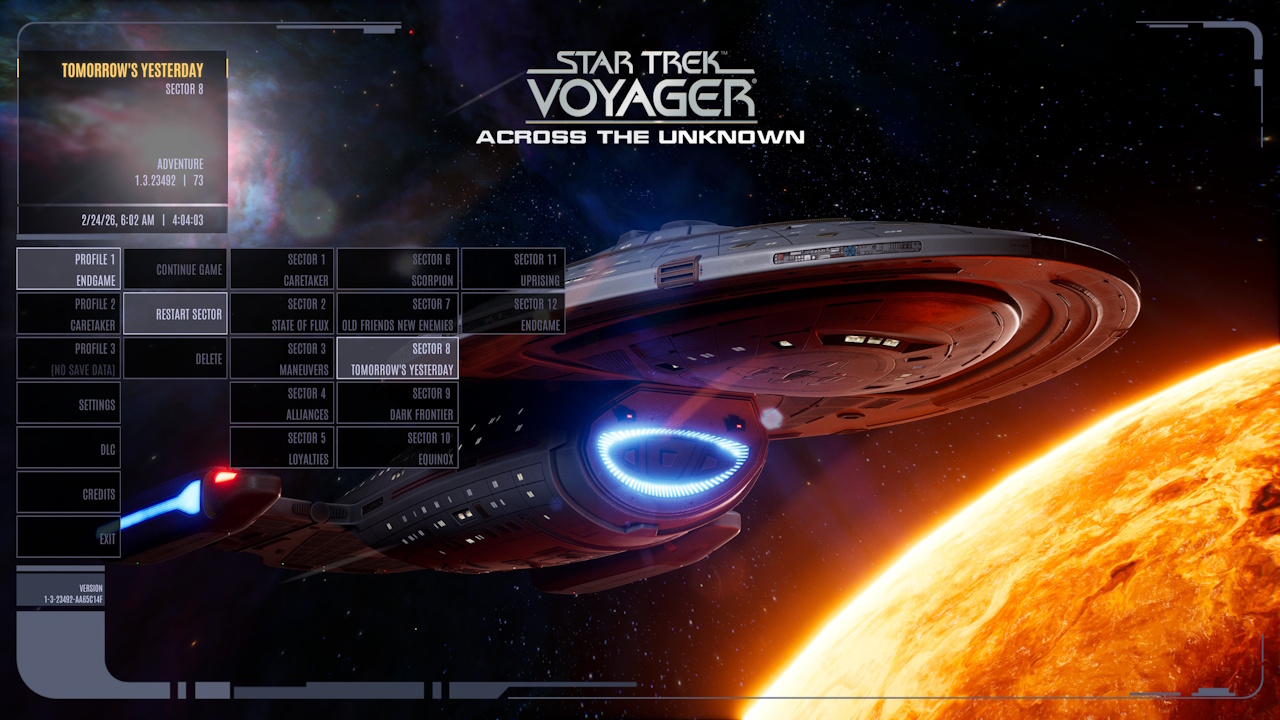
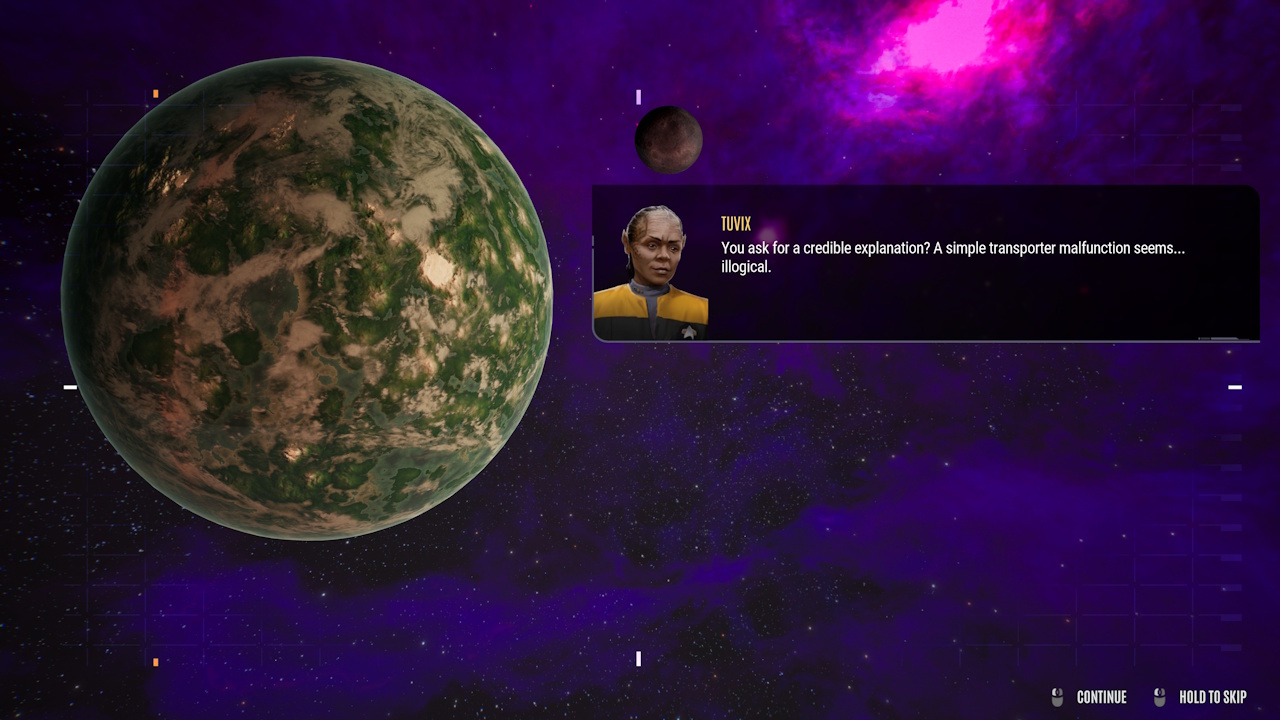
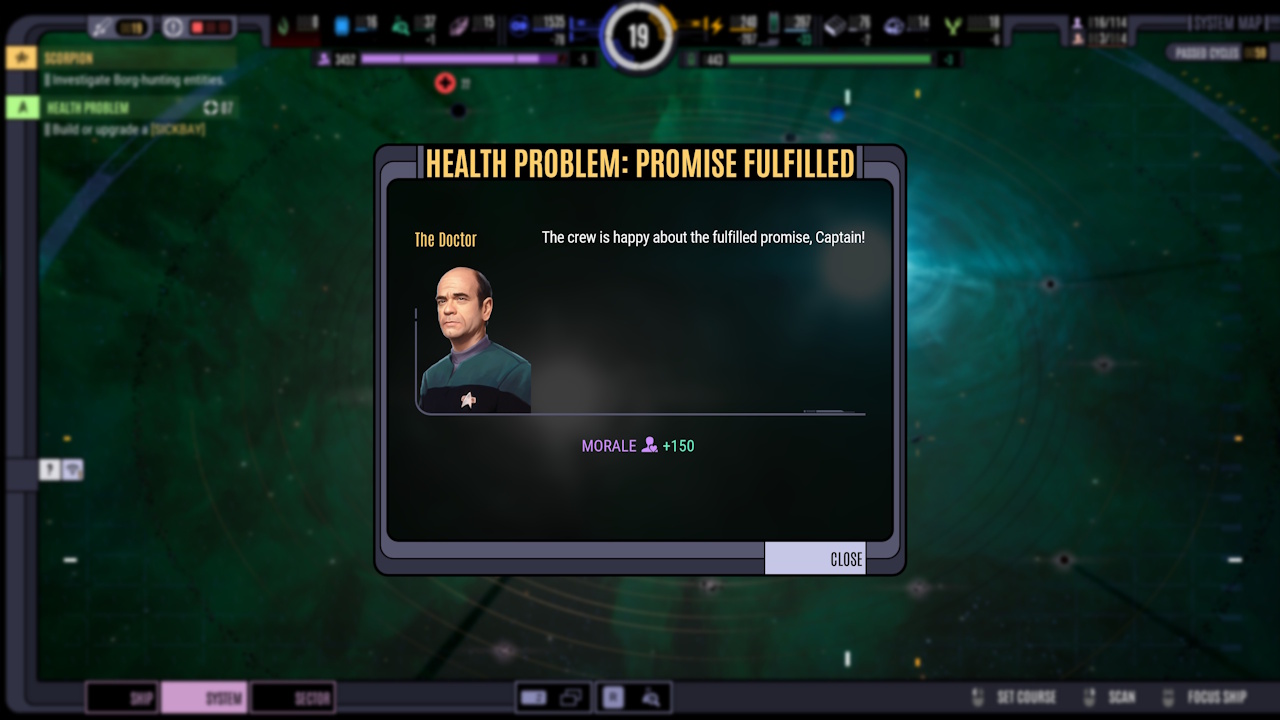
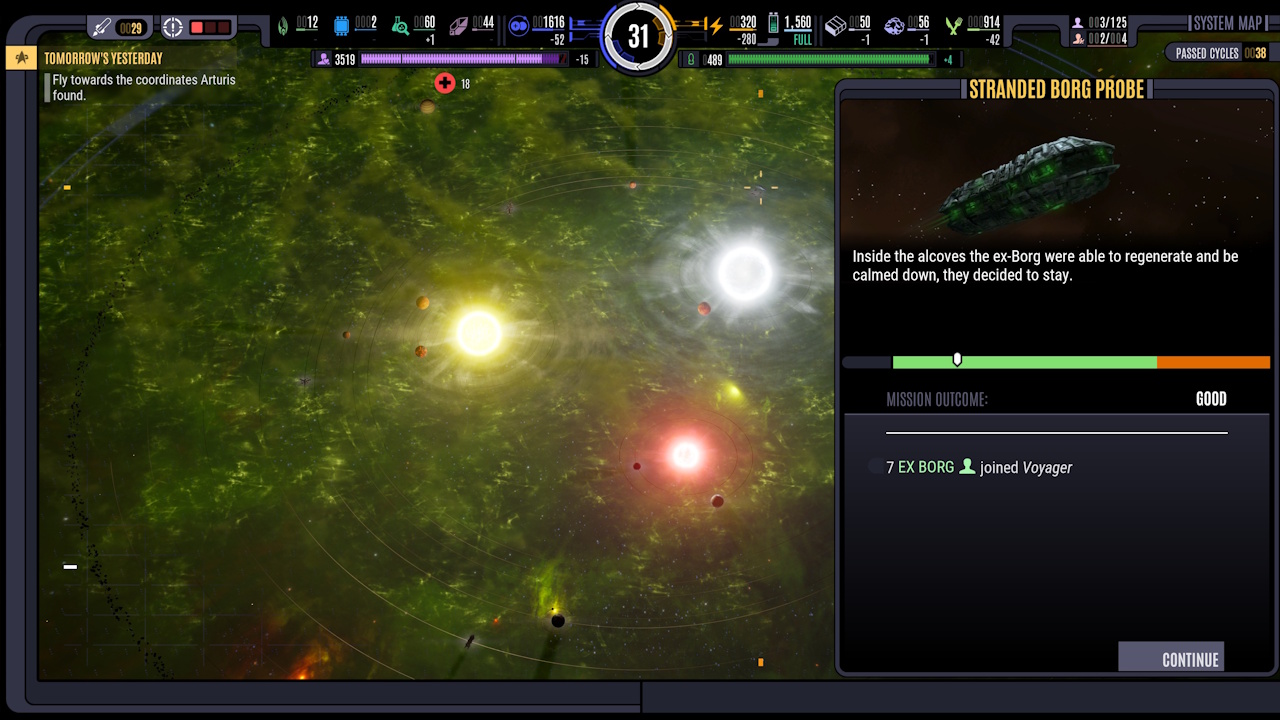
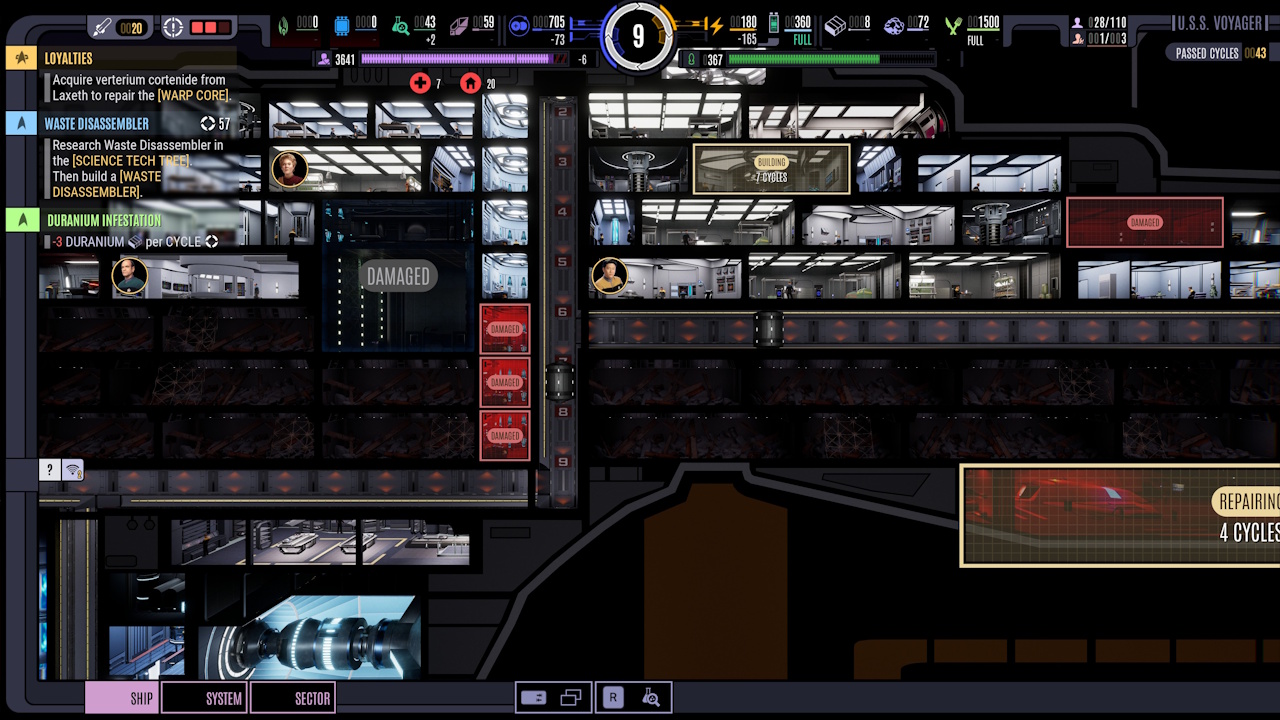
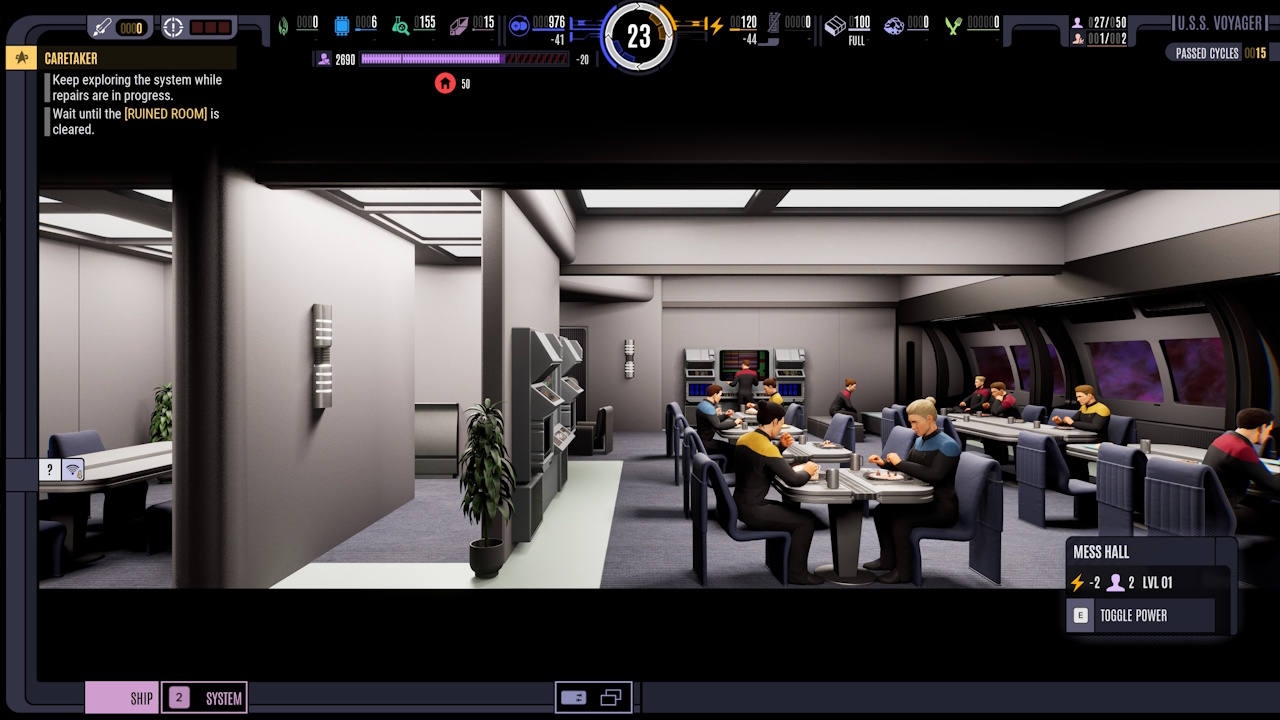
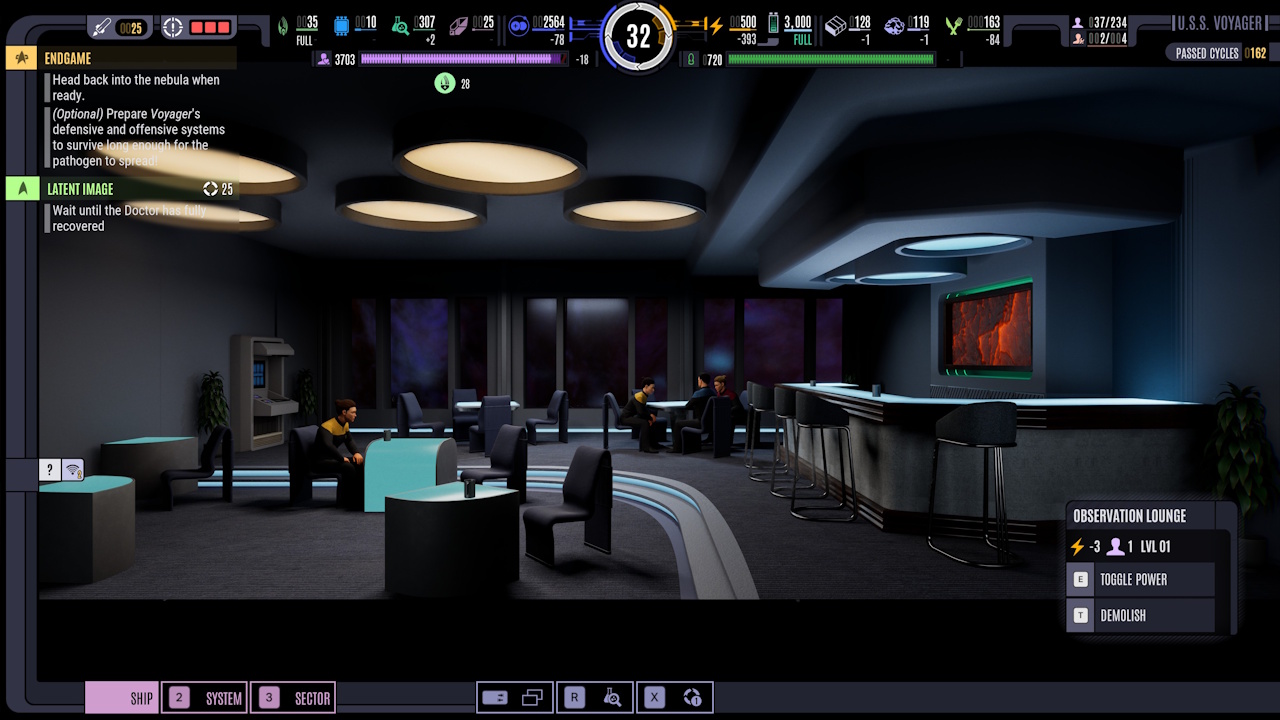
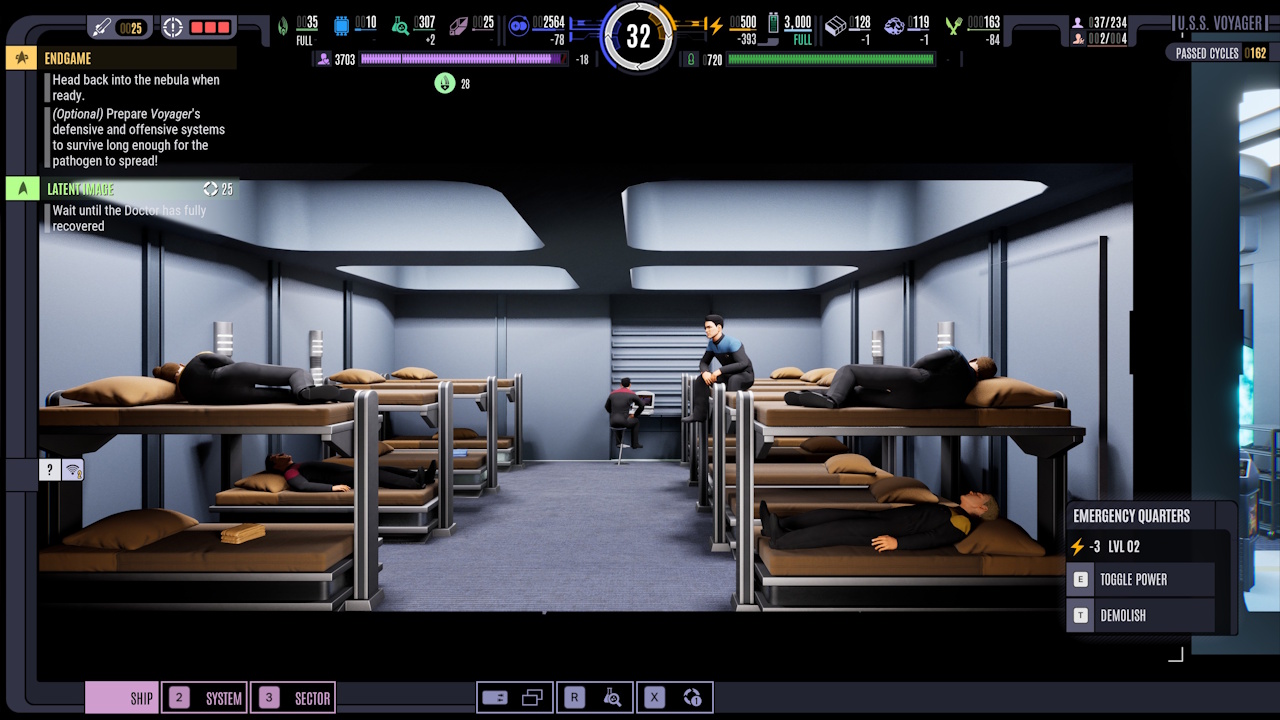
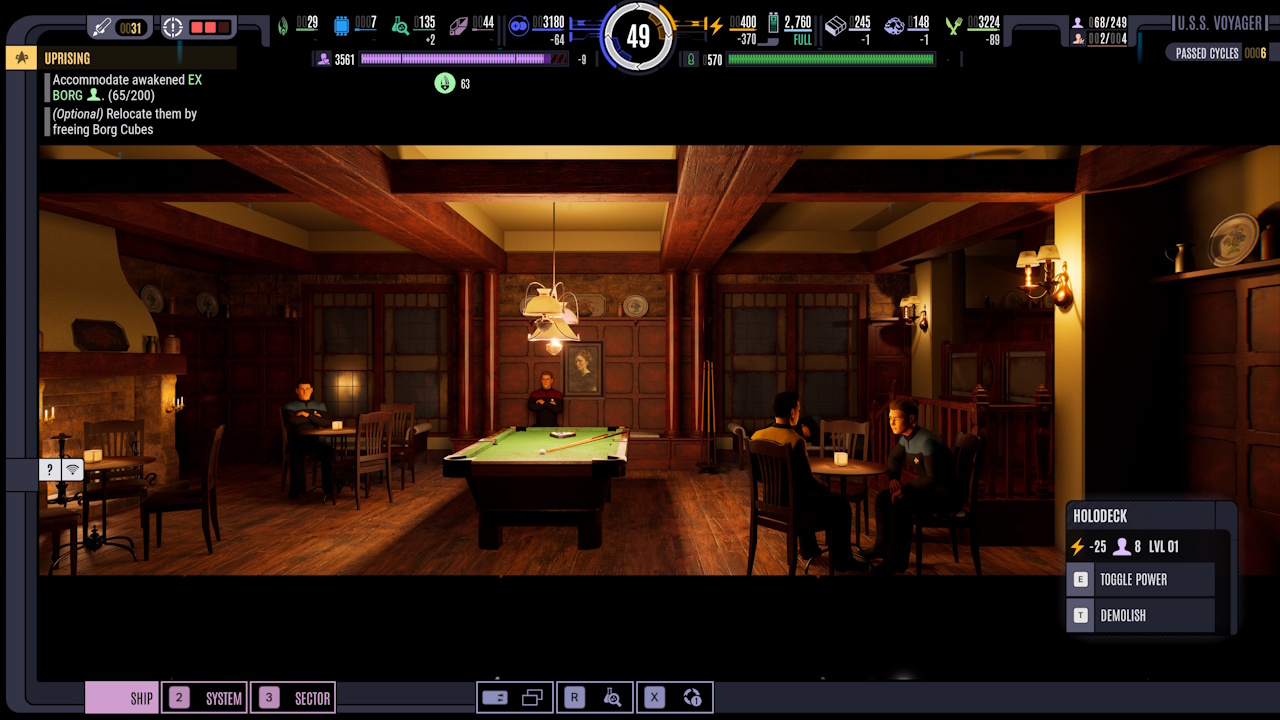
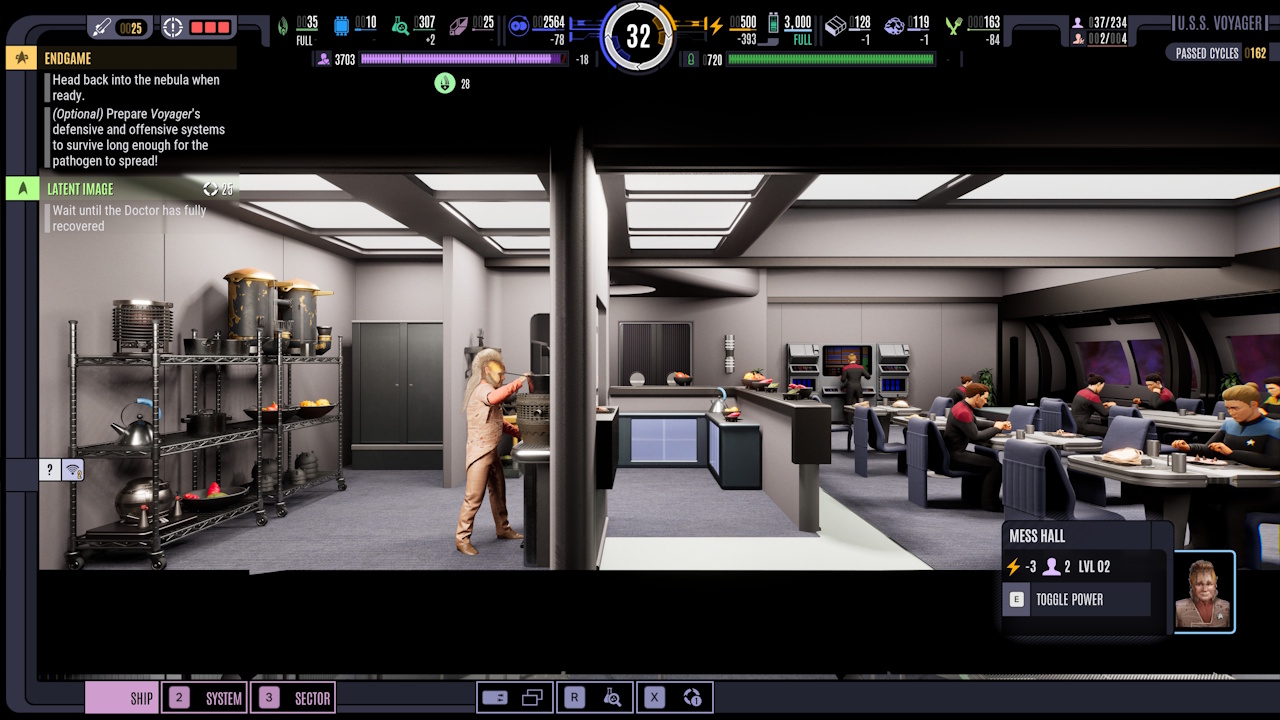
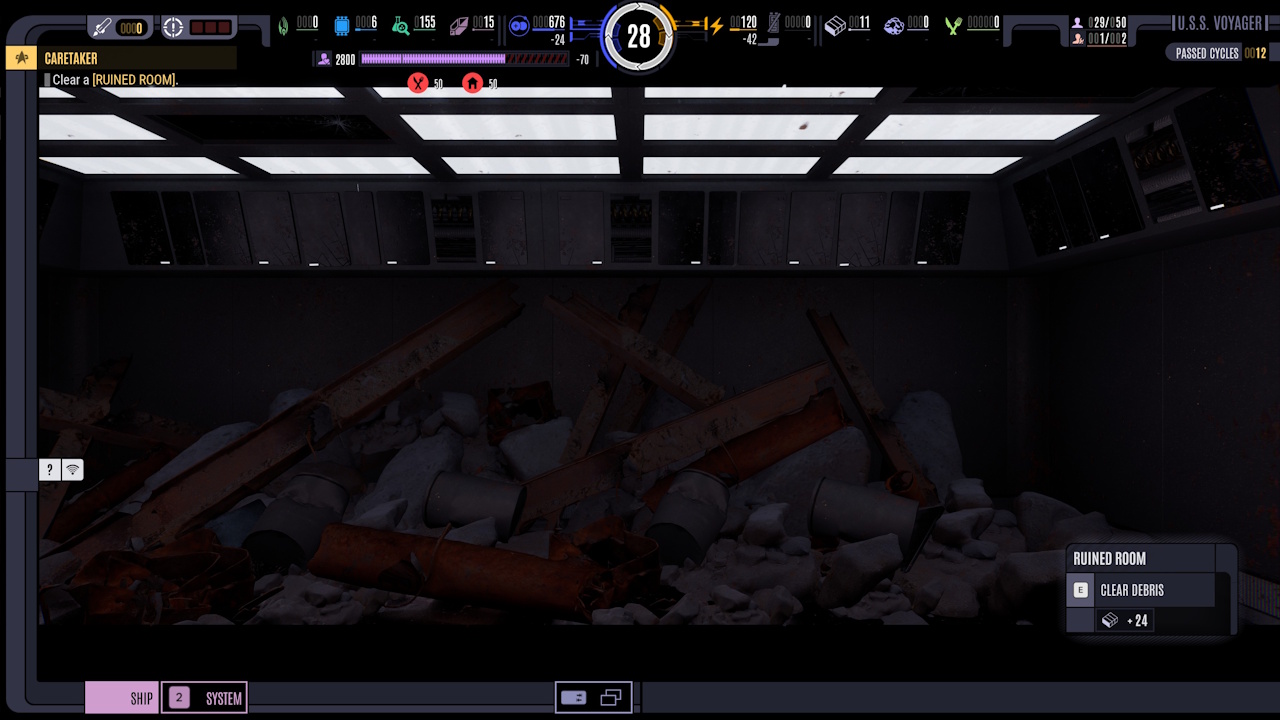
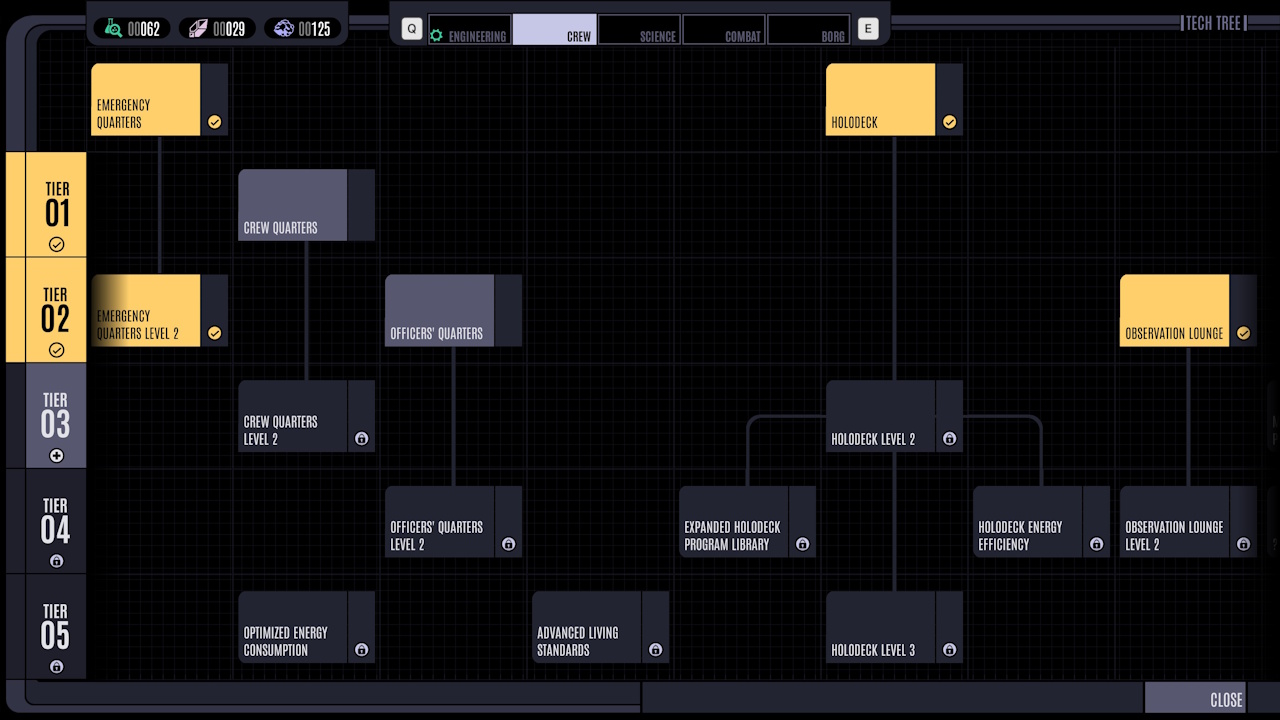
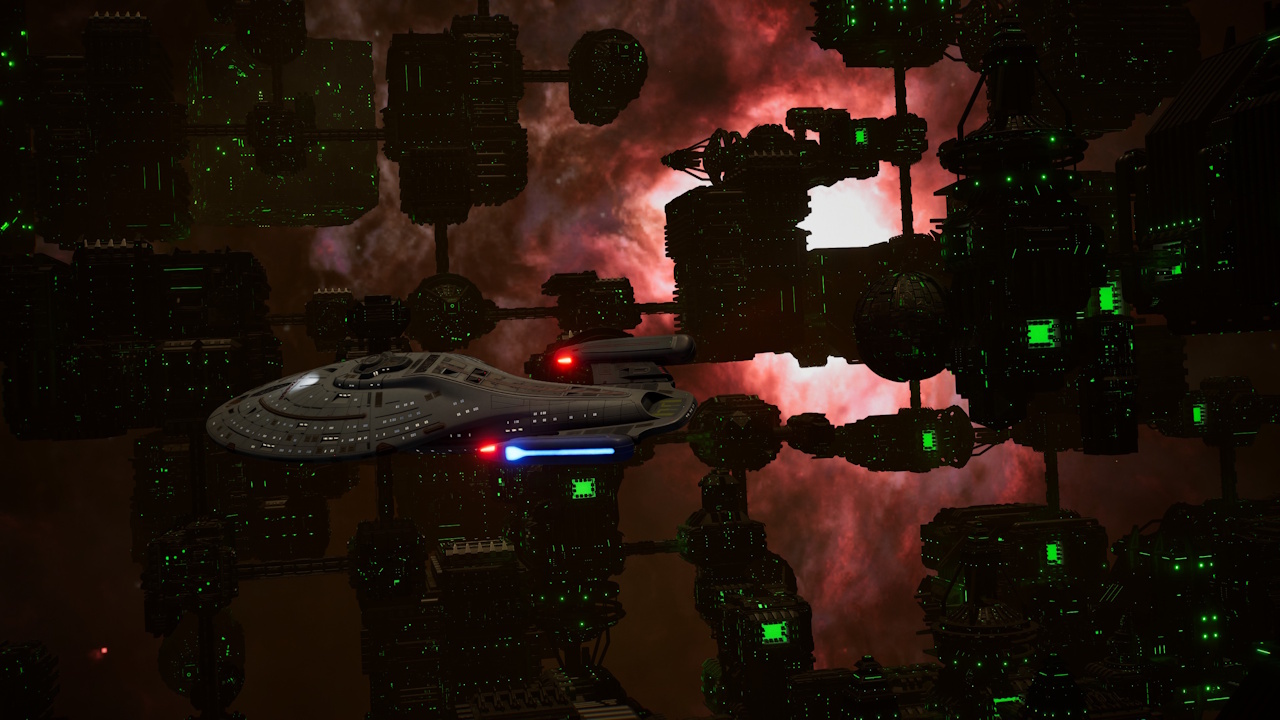
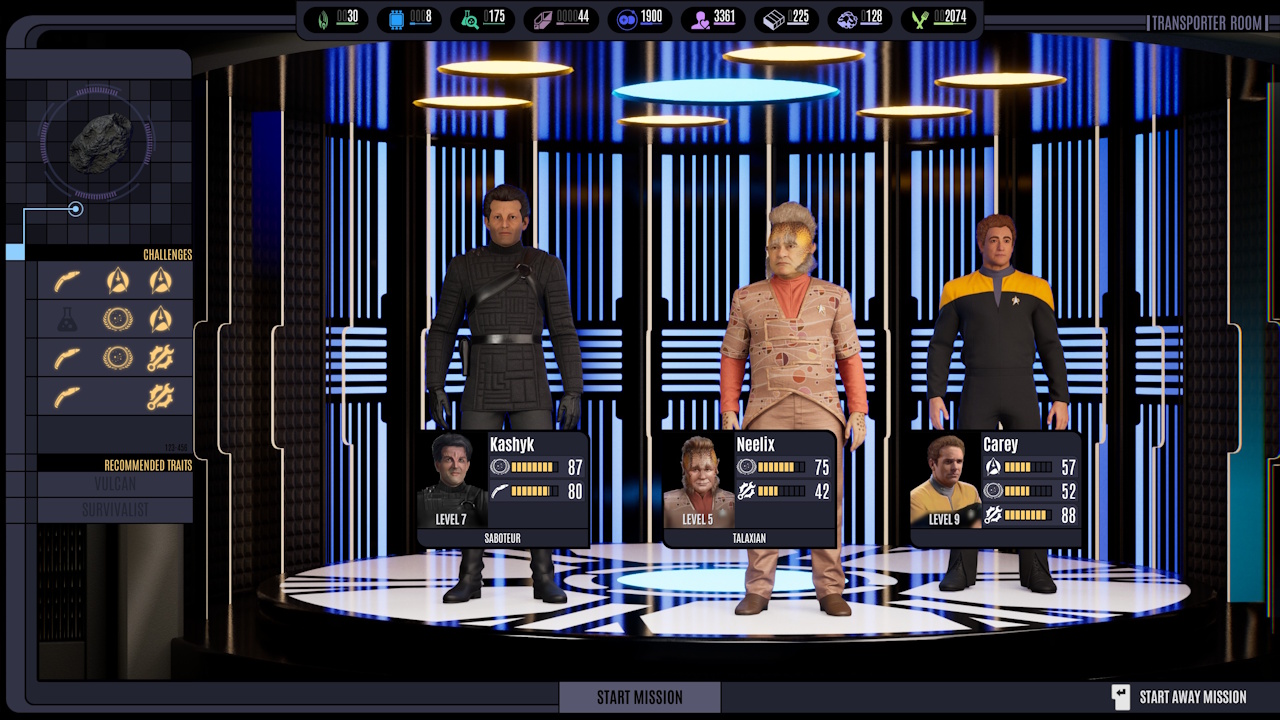
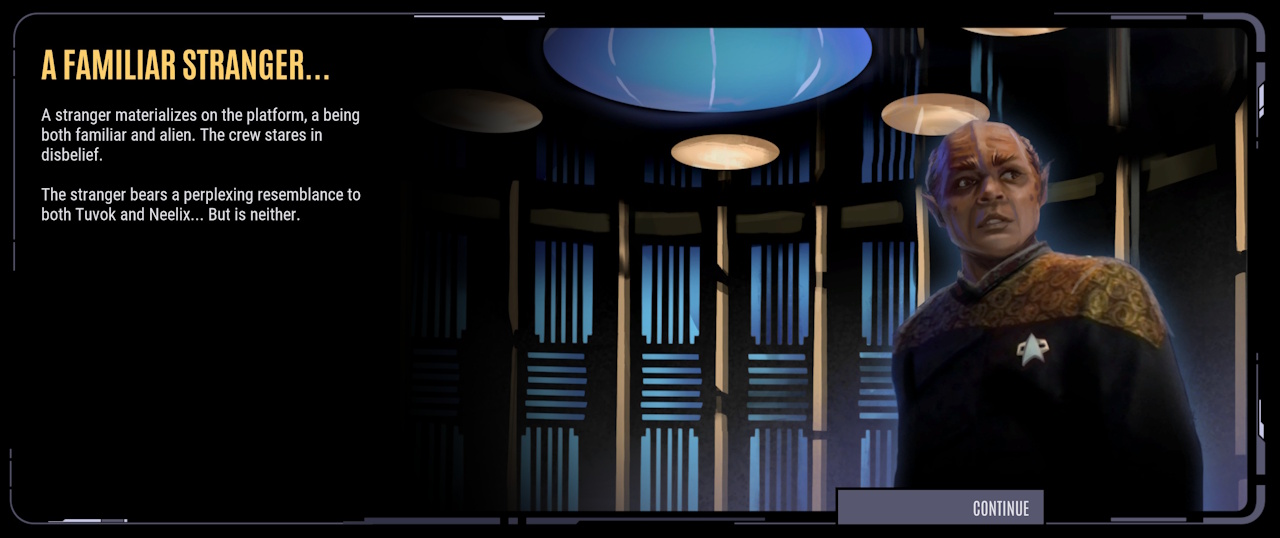
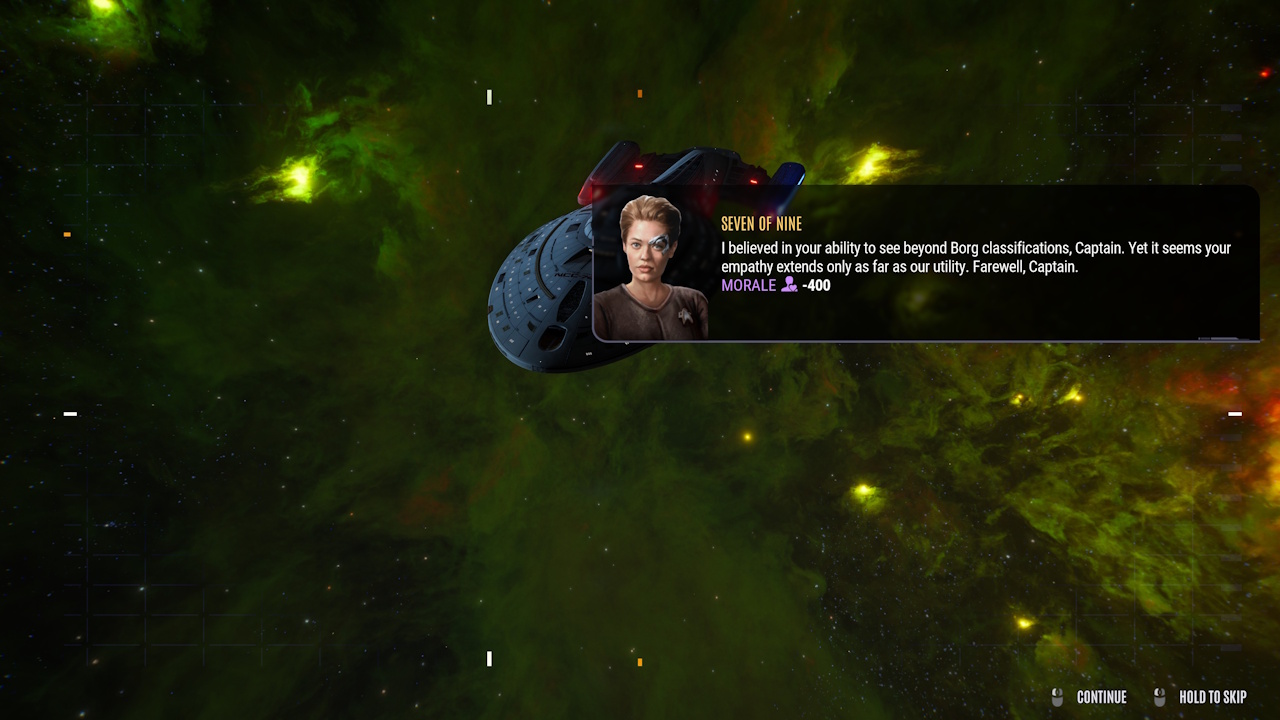
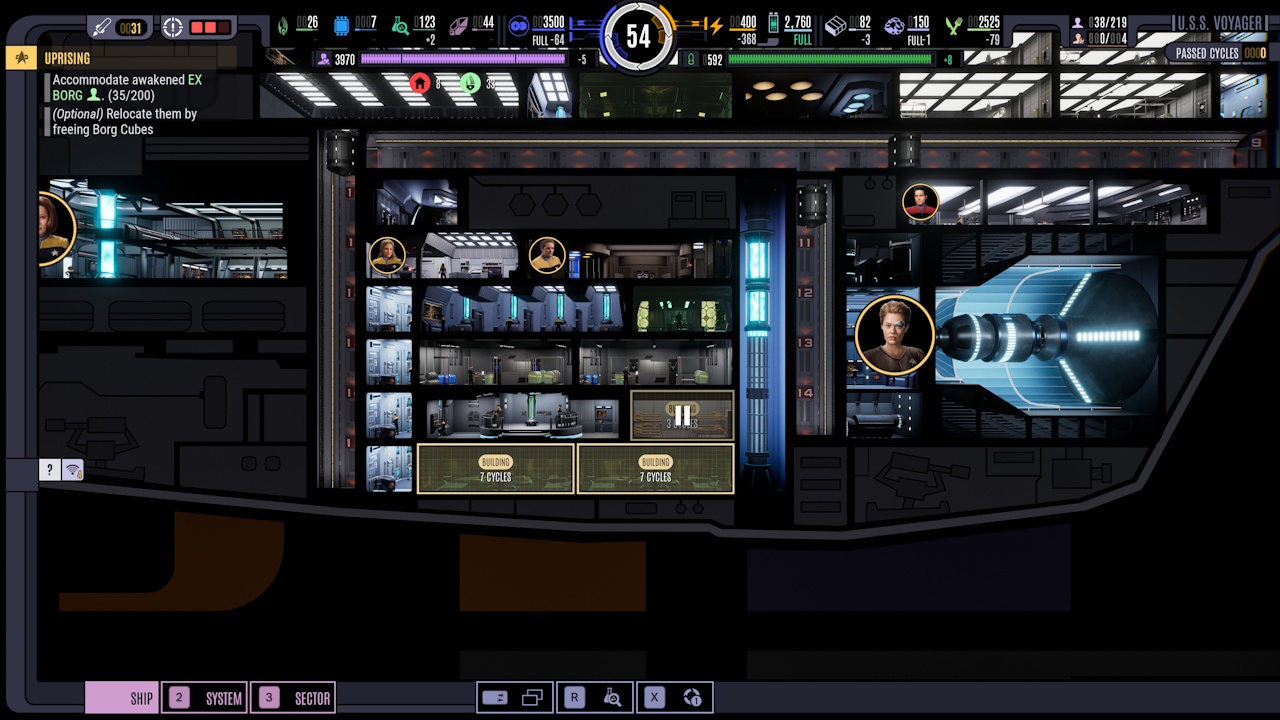
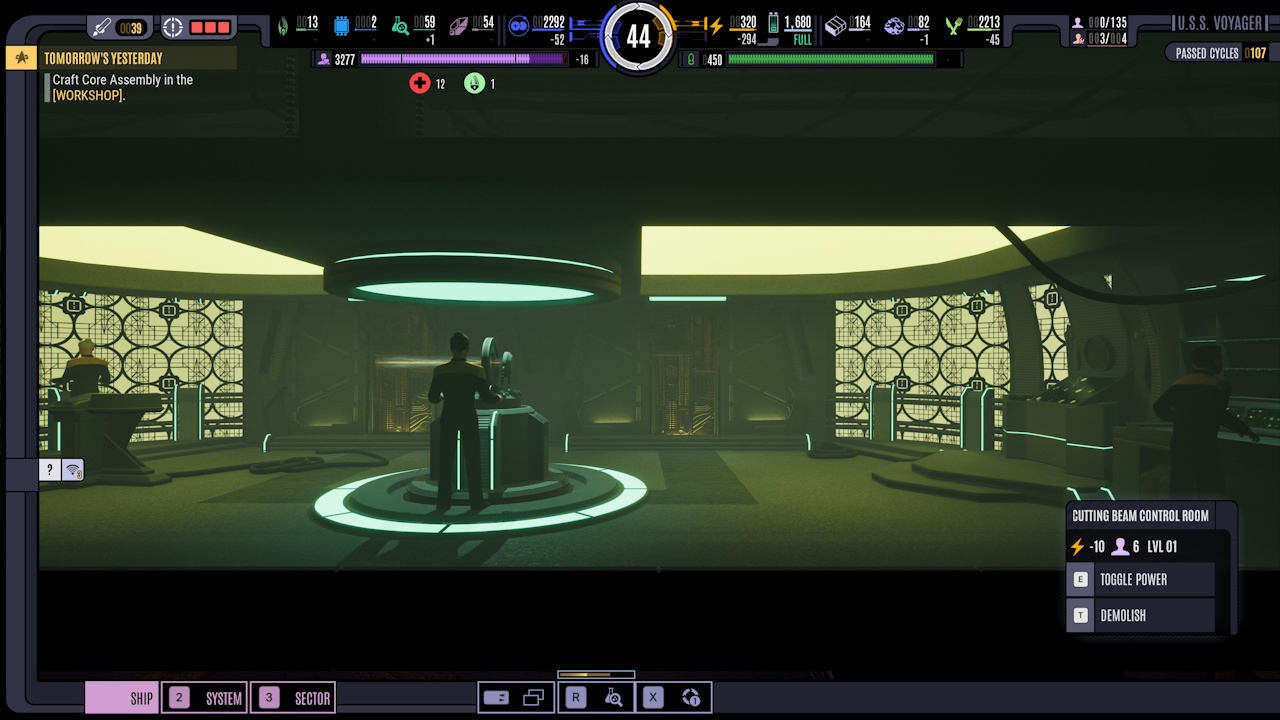
And that’s really my first point about the game: it genuinely plays very differently depending on how you set up the ship and which heroes you have at your disposal. In my first run, I found myself struggling with crew morale quite a lot, so this time, I went out of my way to try to unlock more morale-boosting options. I subbed out emergency quarters for officers’ quarters, upgraded the holodeck, built an observation lounge, and upgraded the quality of meals in the Mess Hall. My morale was hampered this time because I chose to keep Tuvix – meaning I lost Neelix – but those other upgrades and unlocks were fun. Though I had to swap most of the officers’ quarters for standard crew quarters and Borg alcoves later in the game!
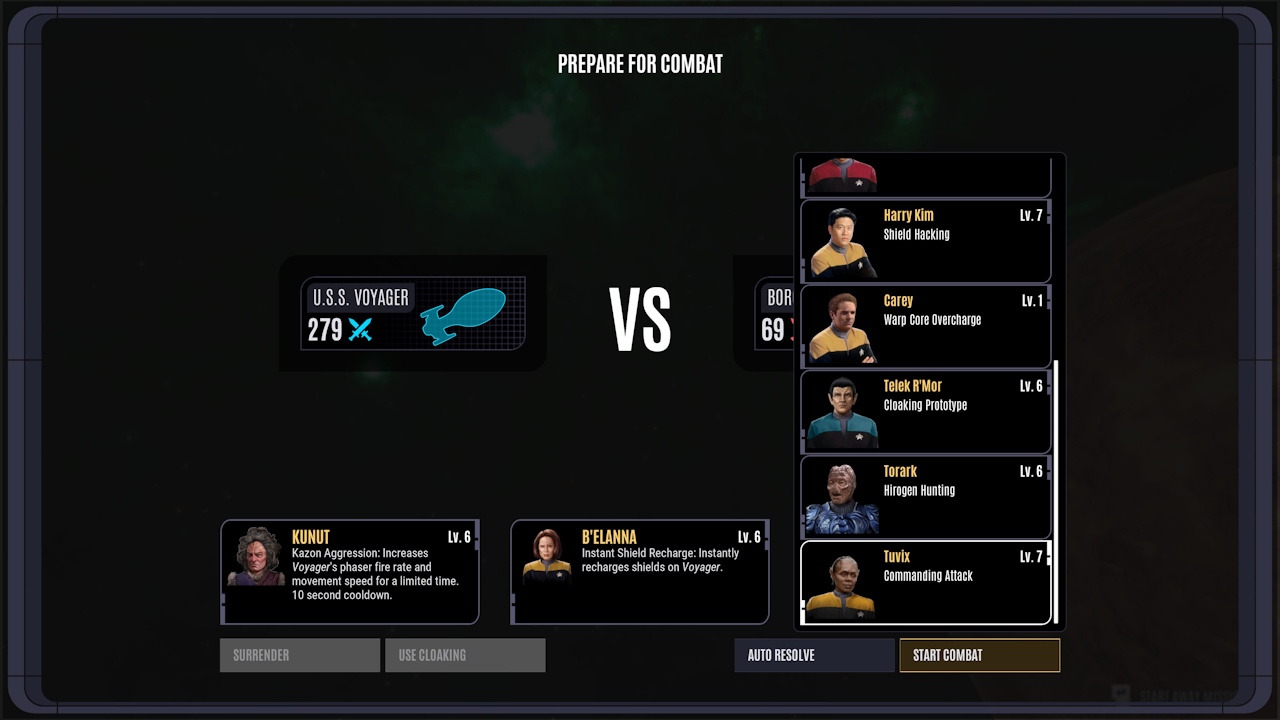
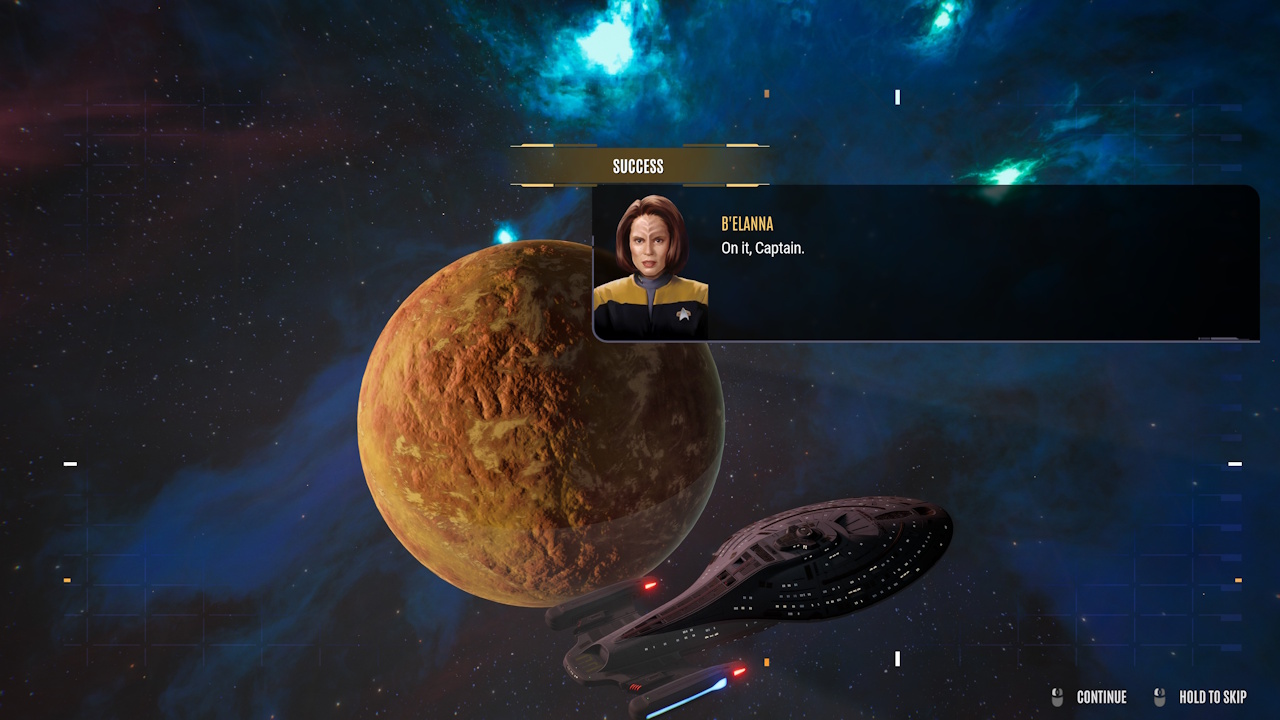
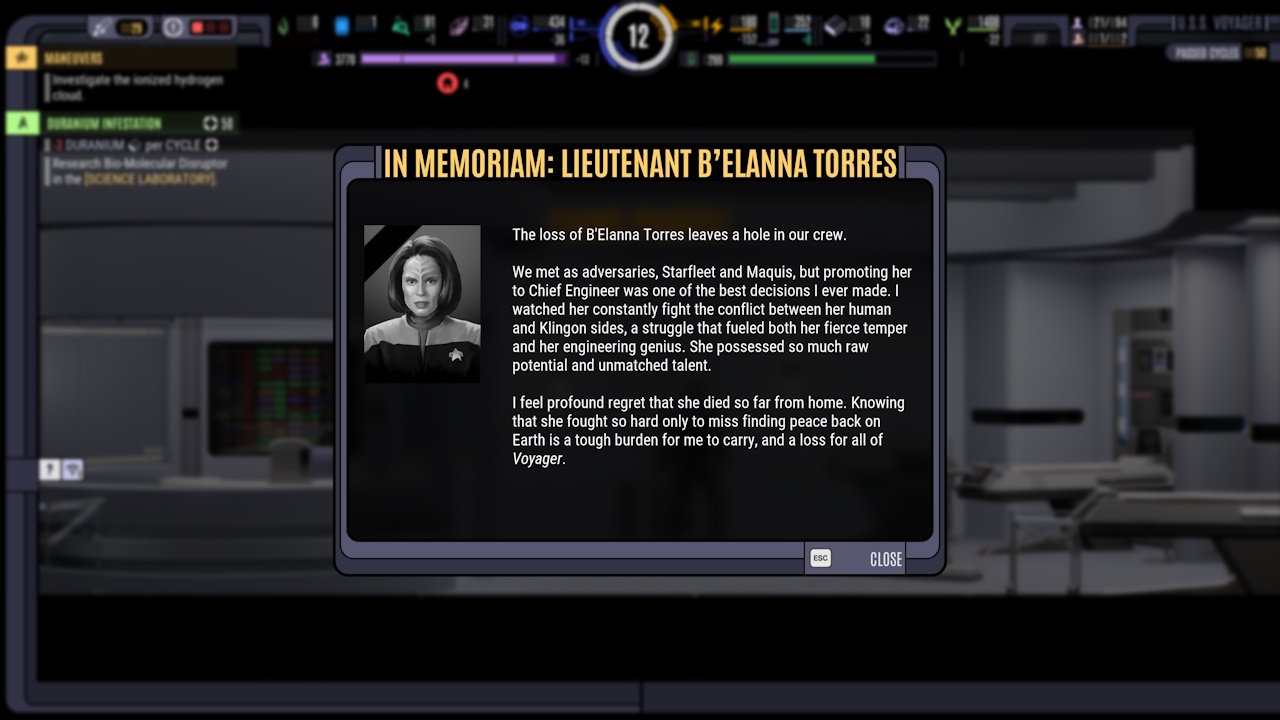
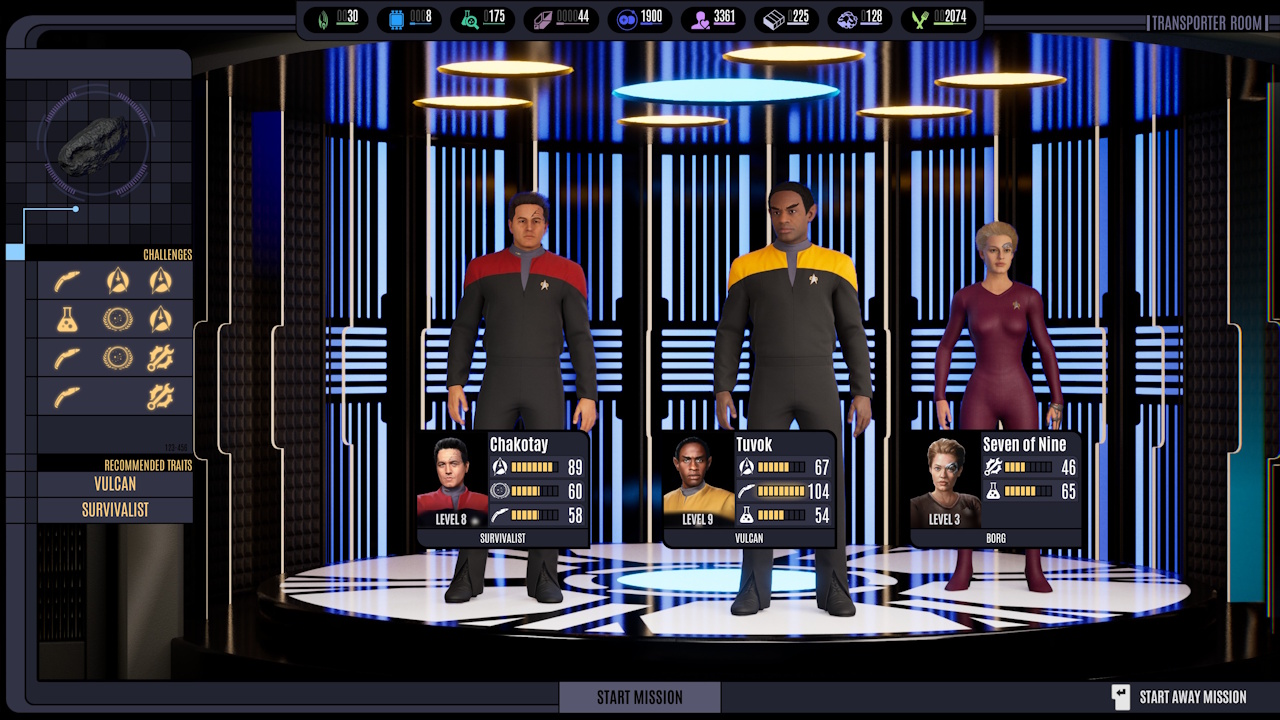
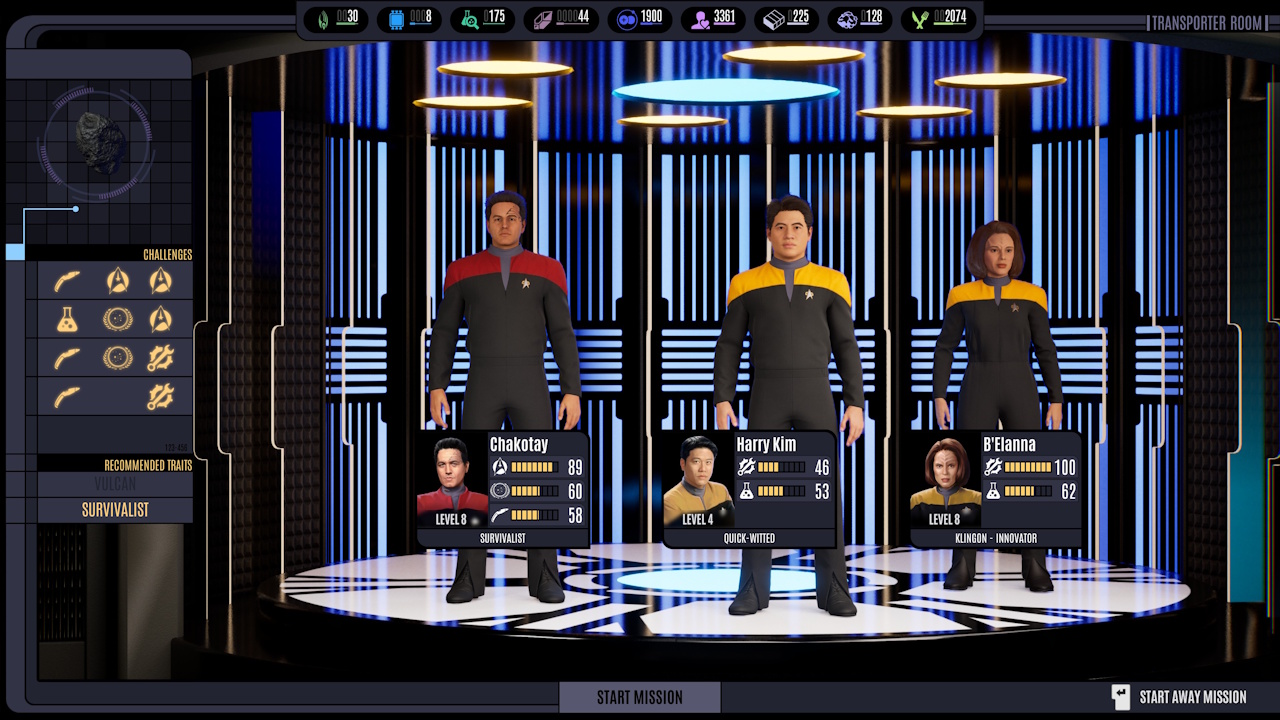
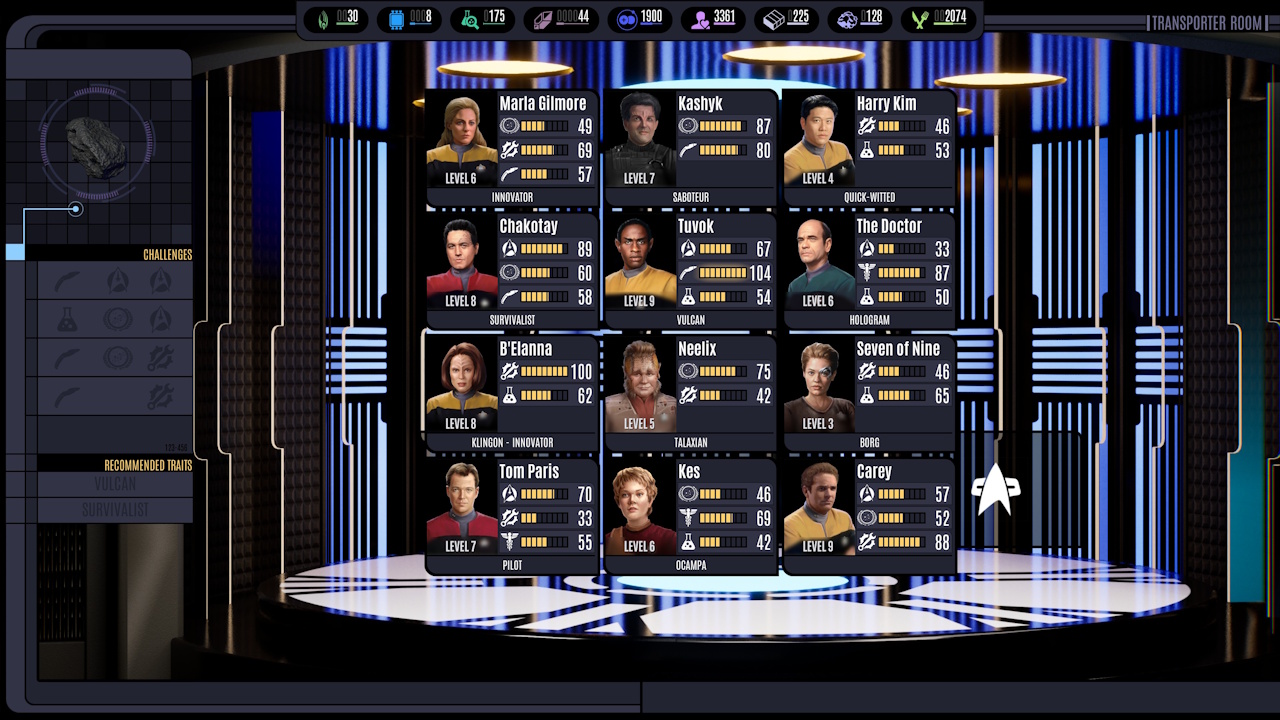
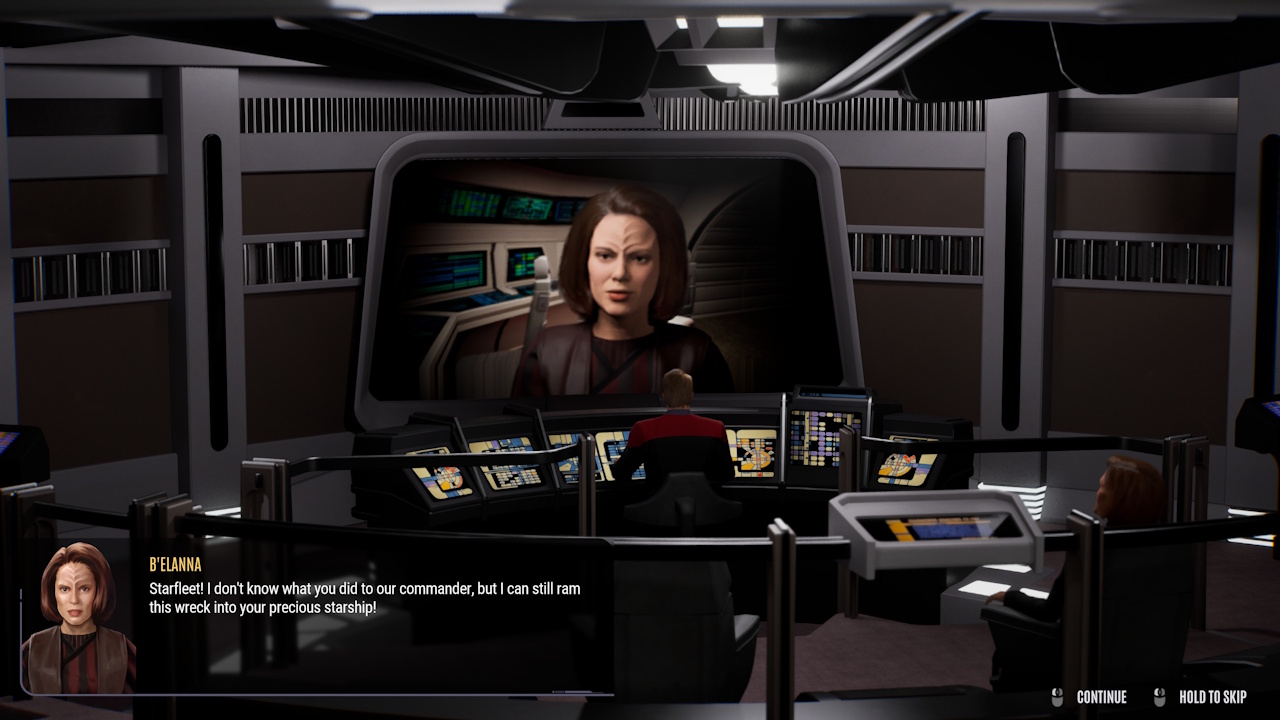
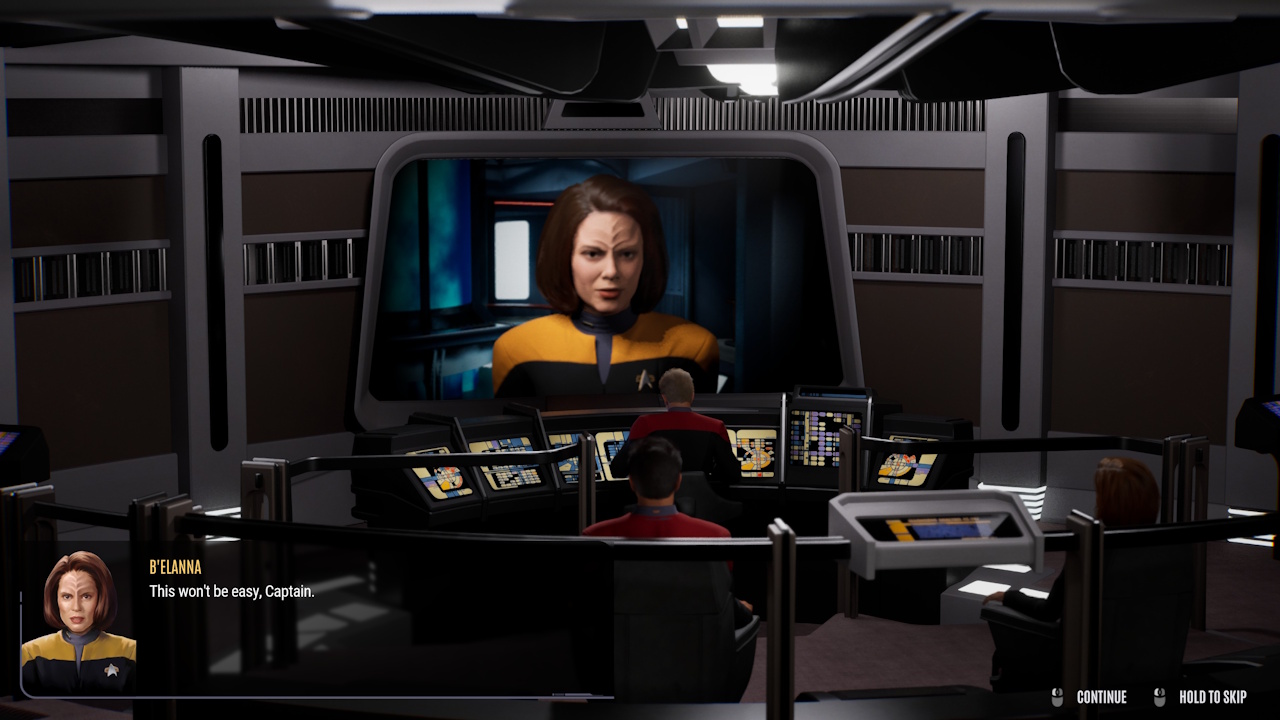
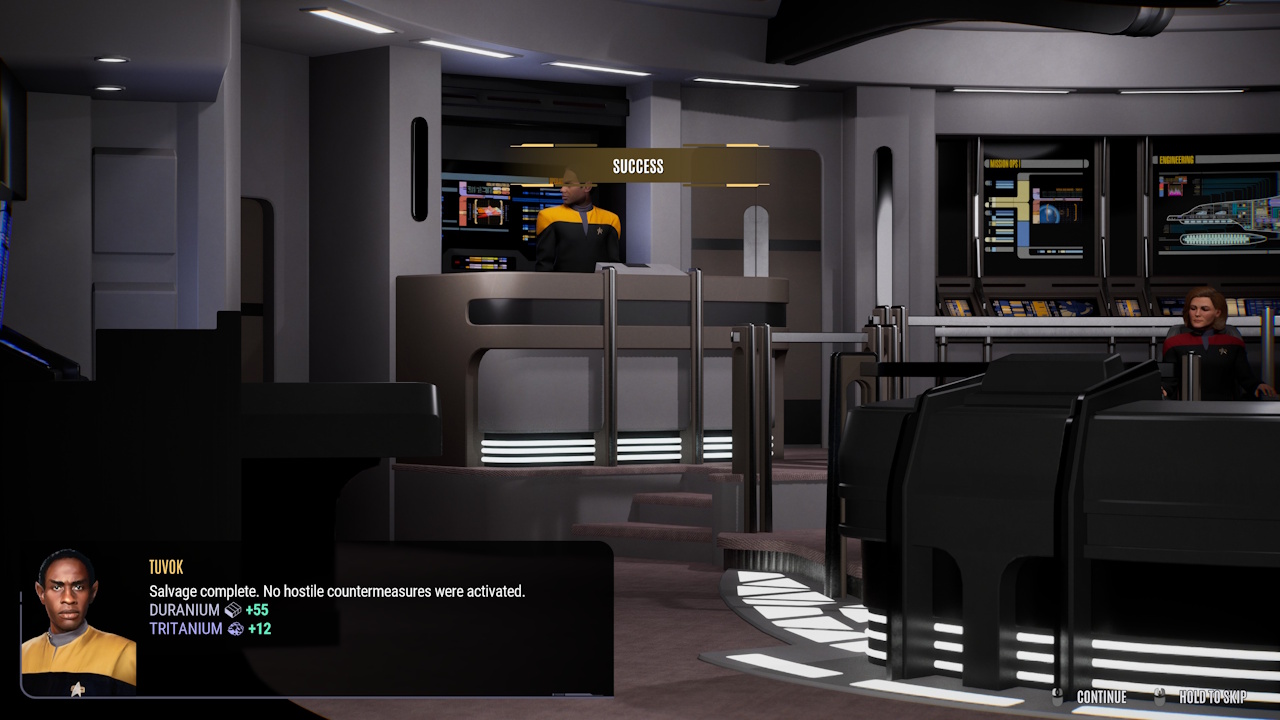
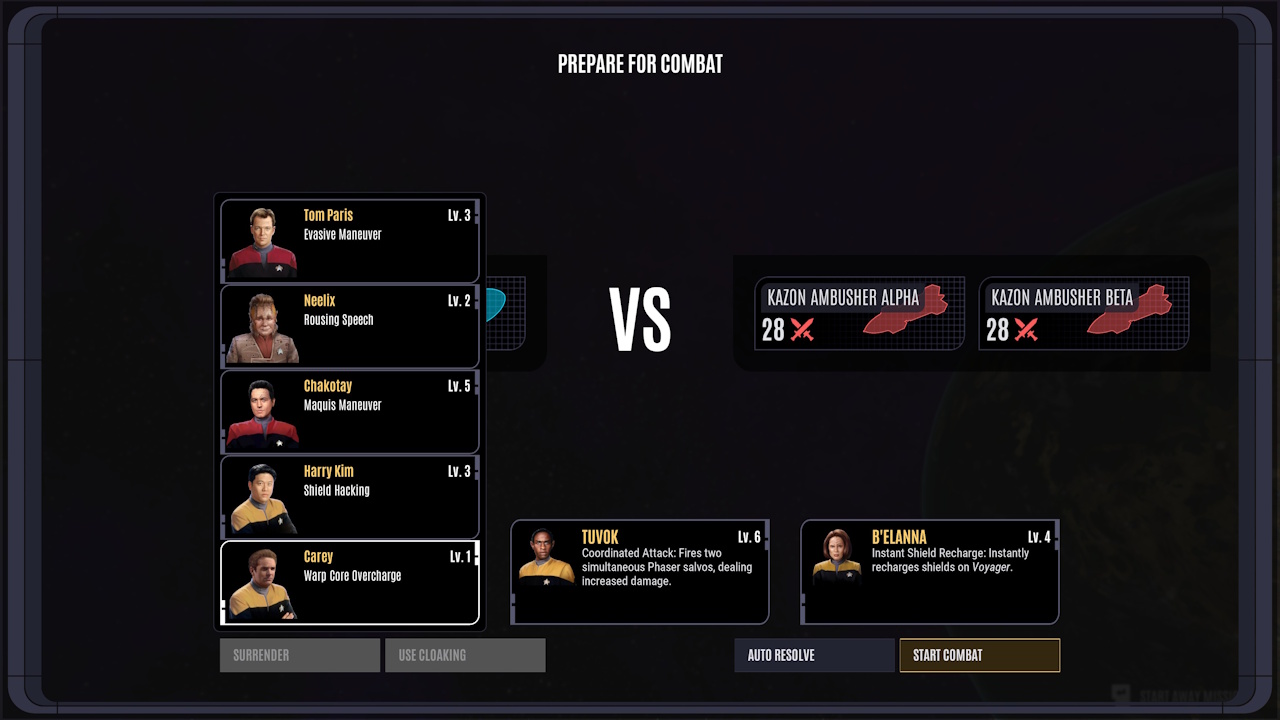
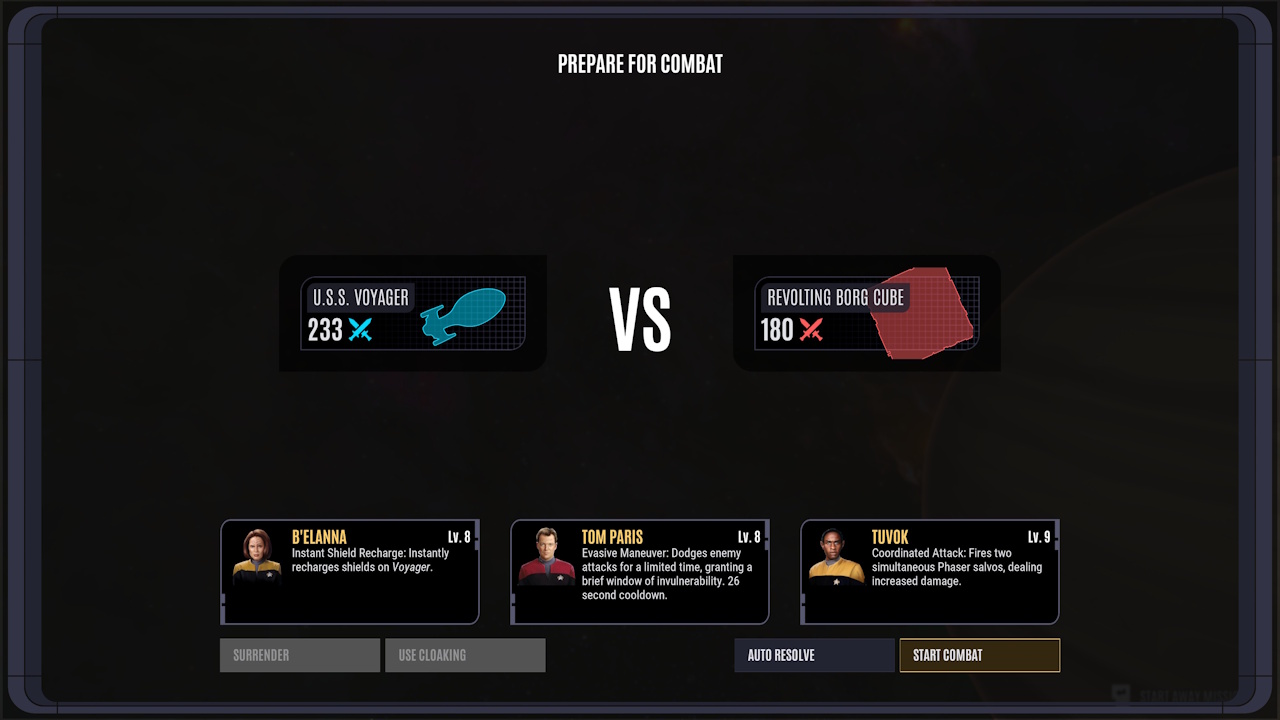
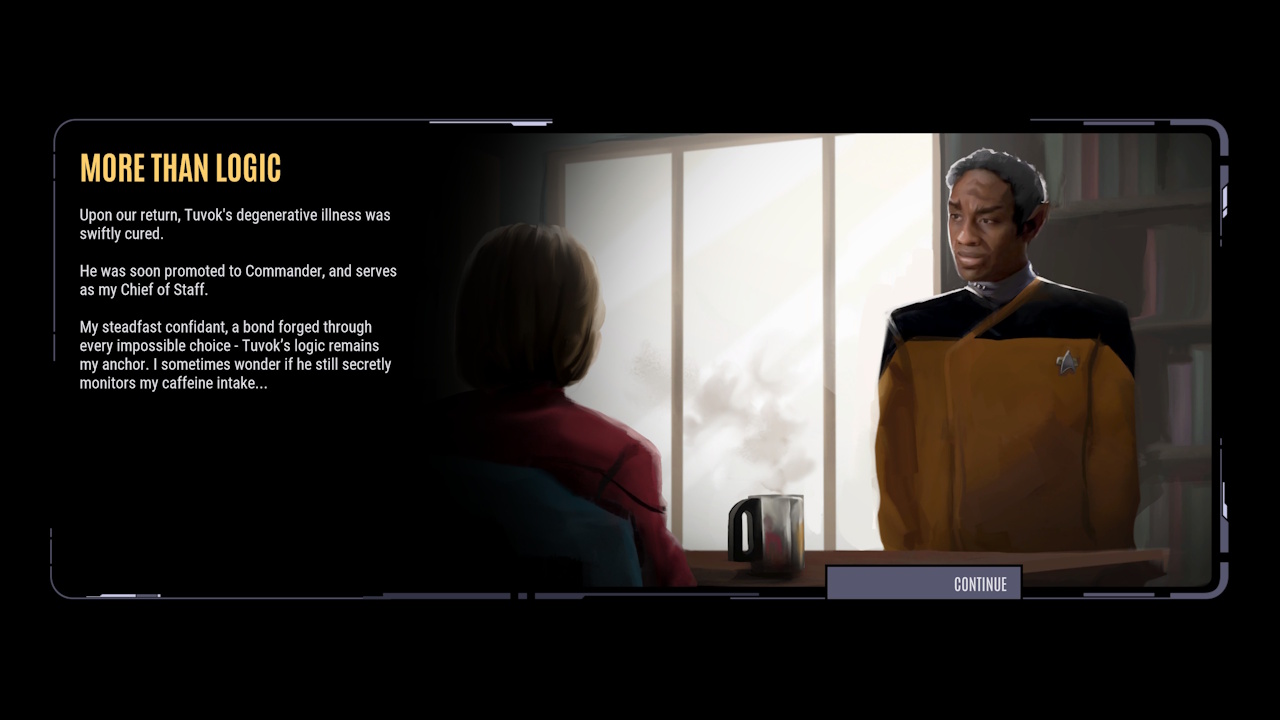
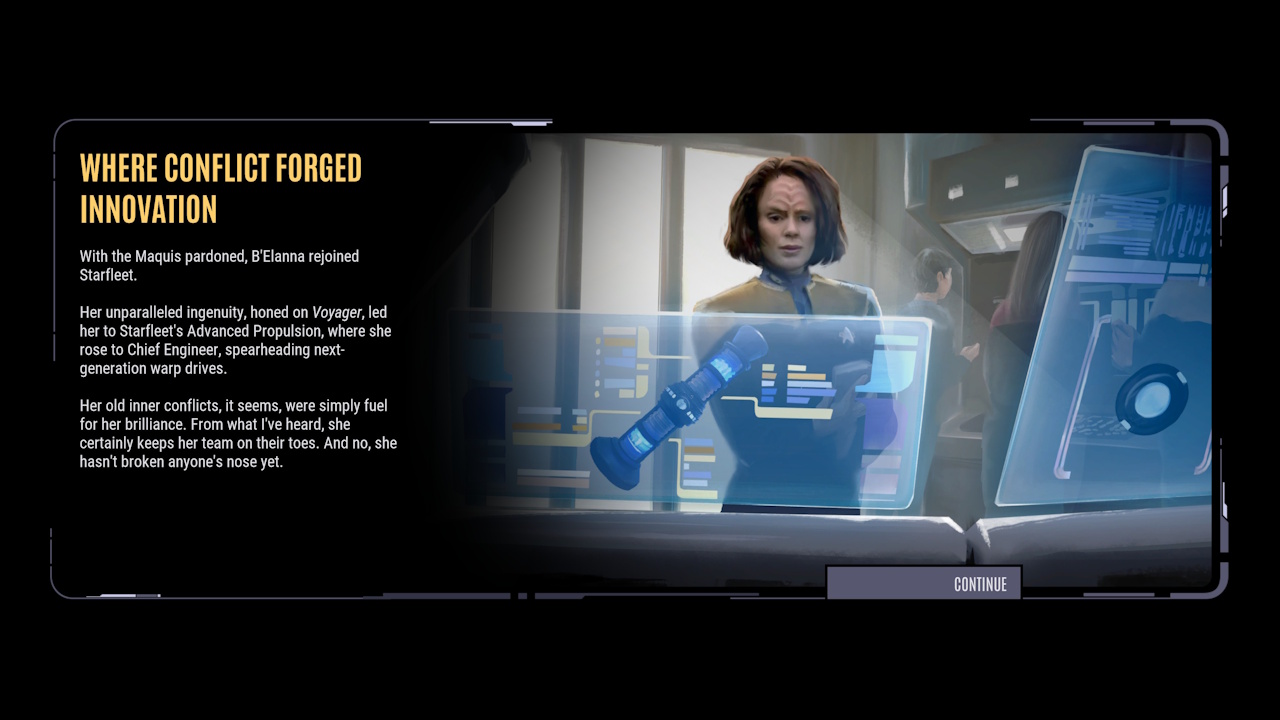
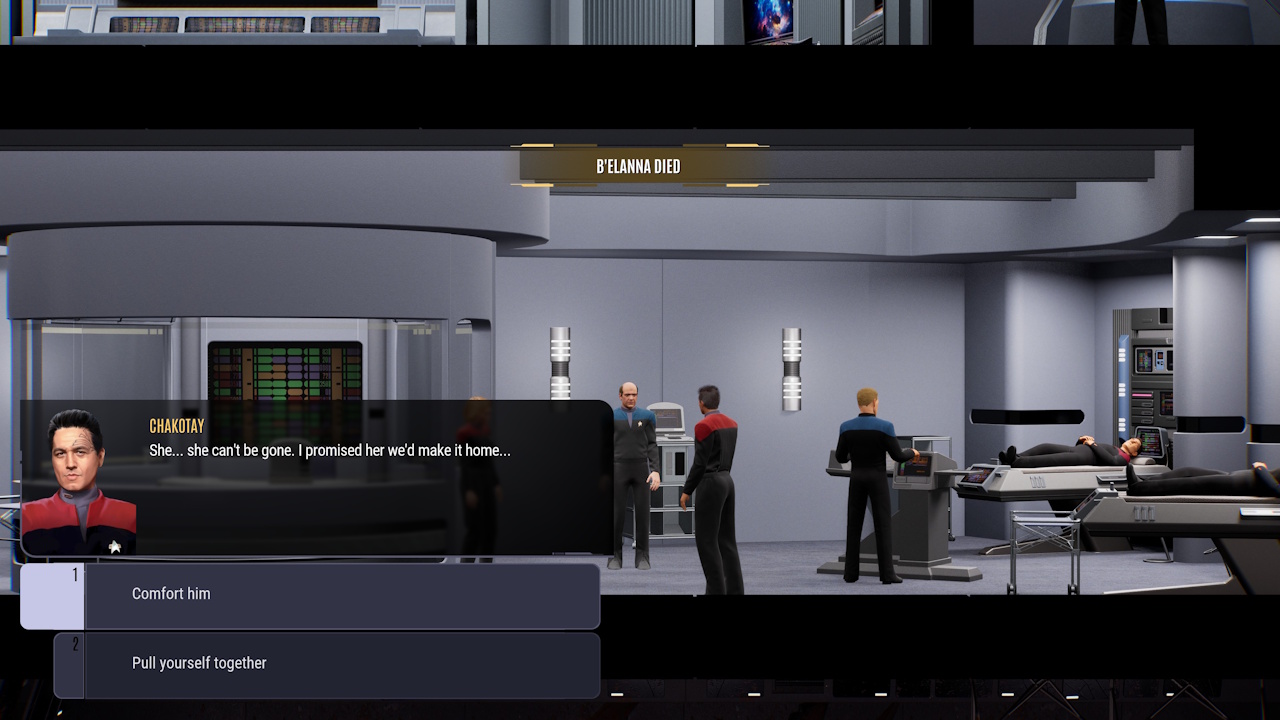
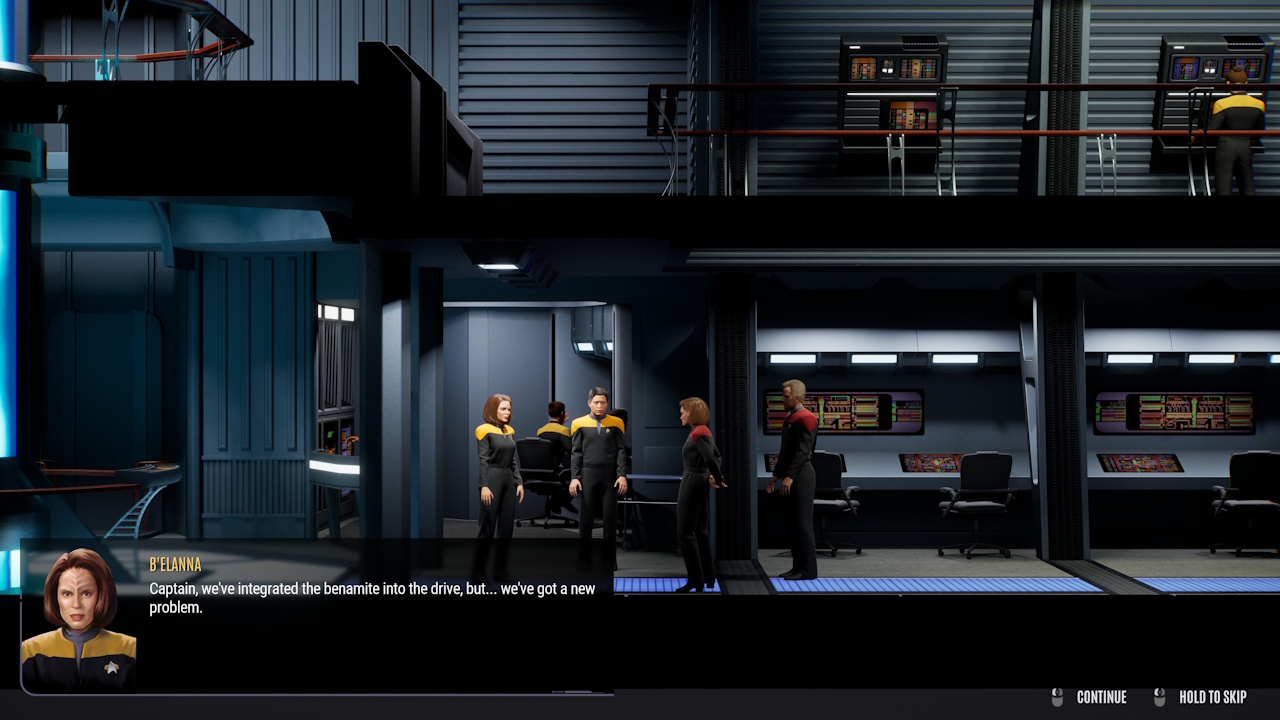
Unlocking different heroes was fun, too. I noted in my original review that some decisions – like keeping Tuvix instead of restoring Neelix and Tuvok – lead to “worse” outcomes, and I stand by that to an extent. But, having deliberately tried to unlock more heroes this time around than I did in my first run, I think at least *some* of that can be offset. For example, my first run through the game utilised Tuvok in almost every combat encounter for his unique ability; I found that Tuvix, while weaker, was an okay substitute, especially when teamed up with other heroes. And although I managed to save B’Elanna this time, her unique combat ability (recharging shields) could be replaced in a way by one of a couple of other heroes who also have defensive powers.
Not a retraction, then, but an amendment!
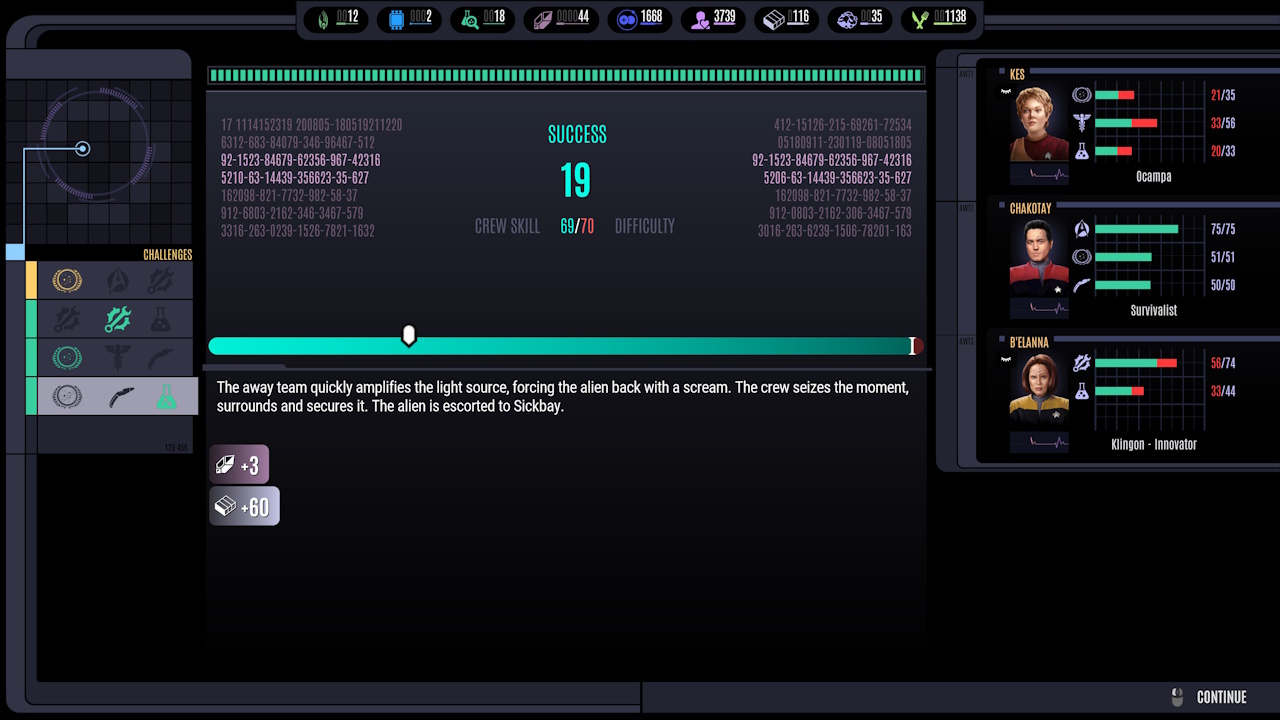
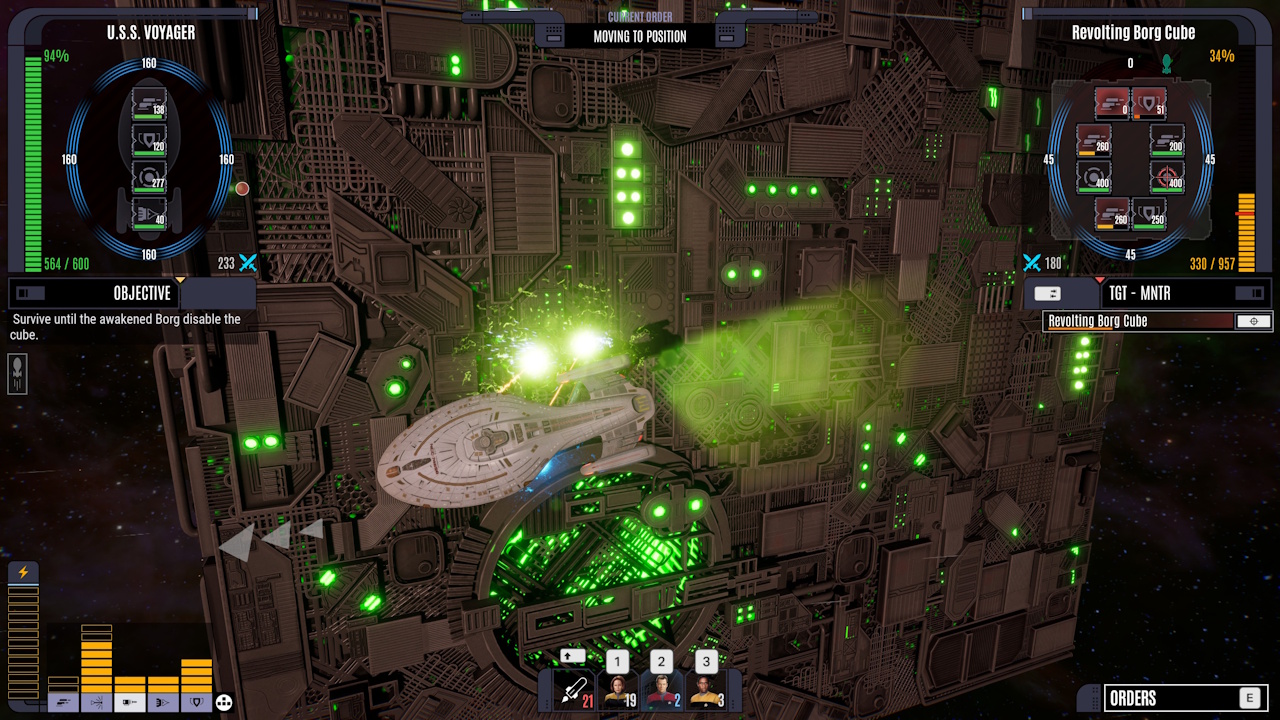
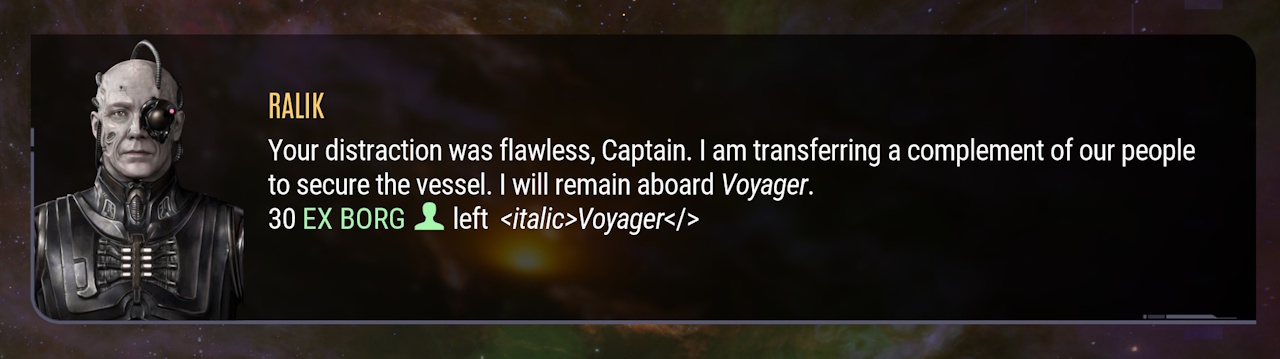
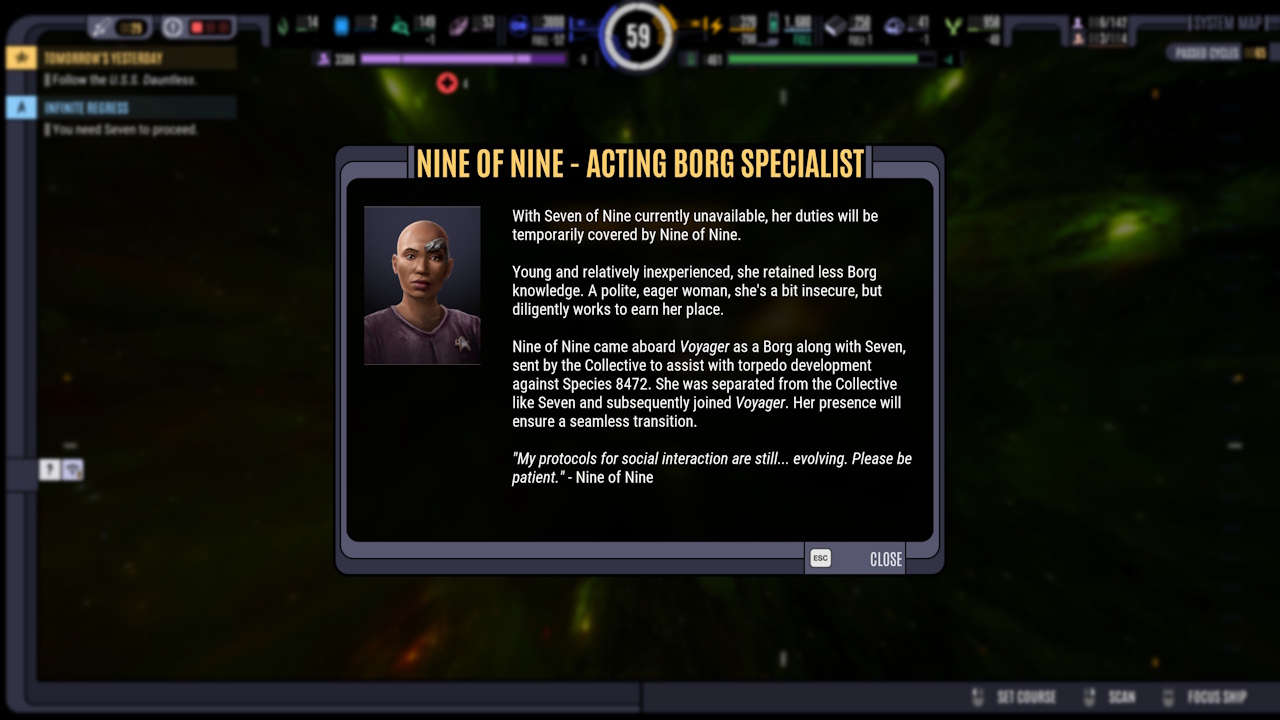
I encountered a bug this time that forced me to re-play part of a side-mission. The mission based on the episode Child’s Play, which can result in Icheb being unlocked as a hero character, bugged out in its final act. After racing back to the Borg Cube to rescue the away team, I managed to convince Icheb to stand down, allowing me to beam everyone out. But rather than getting the final cut-scene in sickbay, after the dialogue box popped up telling me what was happening, I was back to the system screen with the Borg Cube still intact. I had to re-play that final section of the mission, complete with random rolls of the digital dice, and at the second time of asking, it was fully completed. I don’t know if that’s a common bug, but I hope it can be fixed.
Let’s stick with the digital dice for now – also known as “random number generation,” or RNG for short.
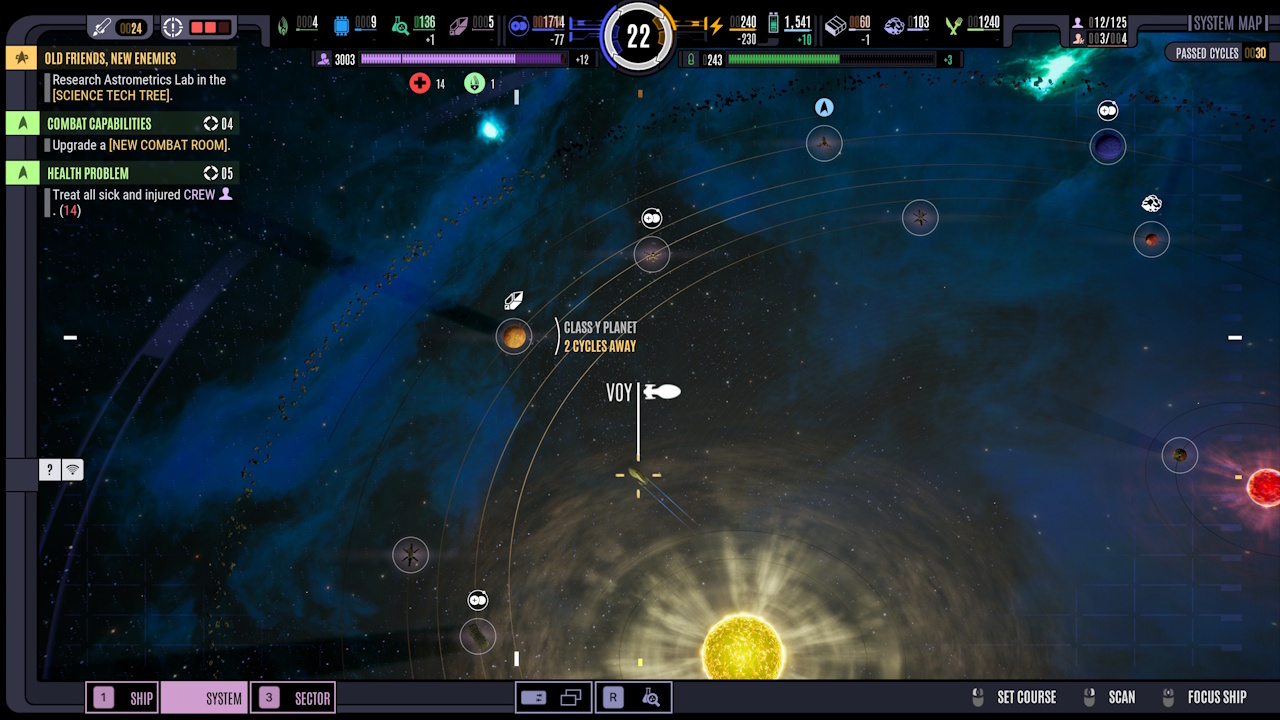
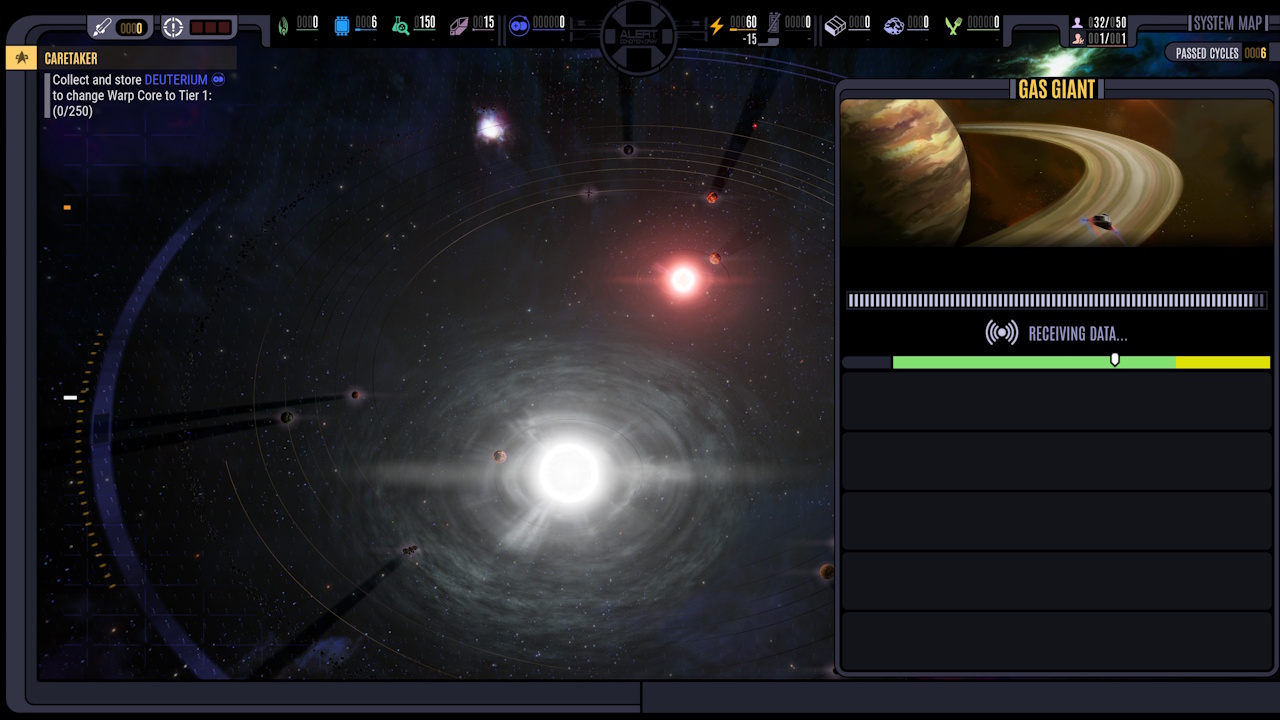
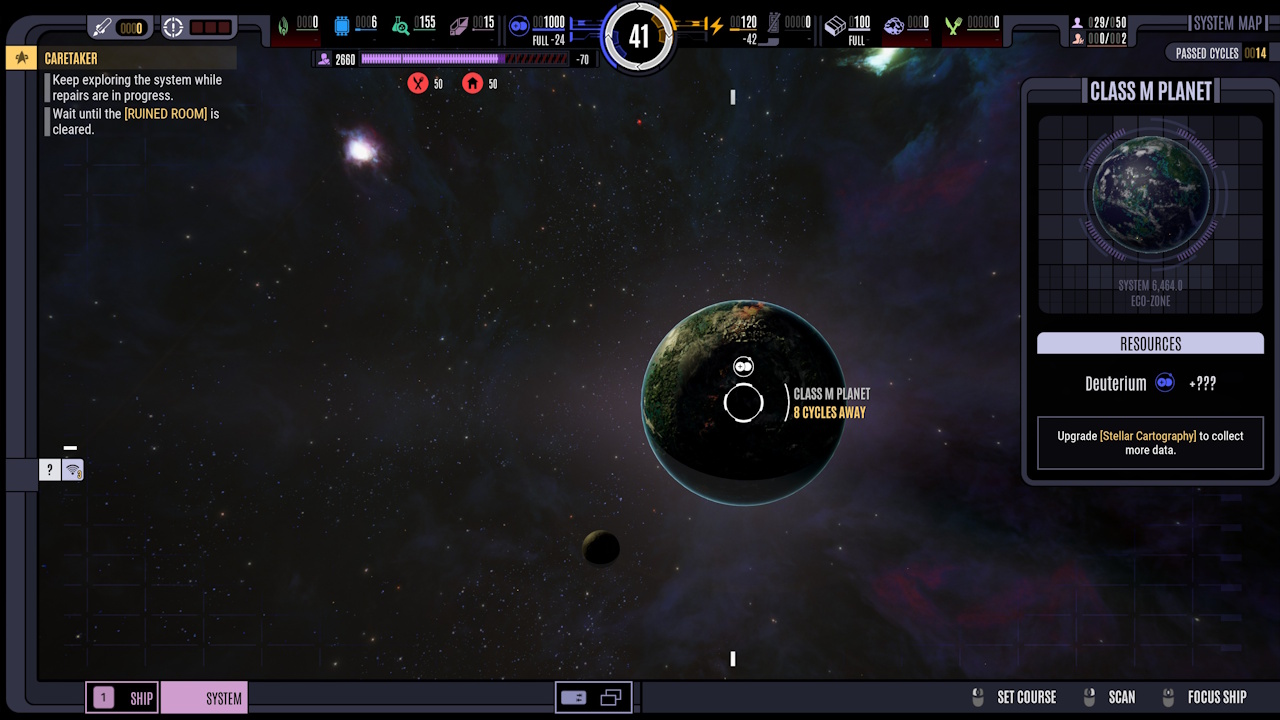
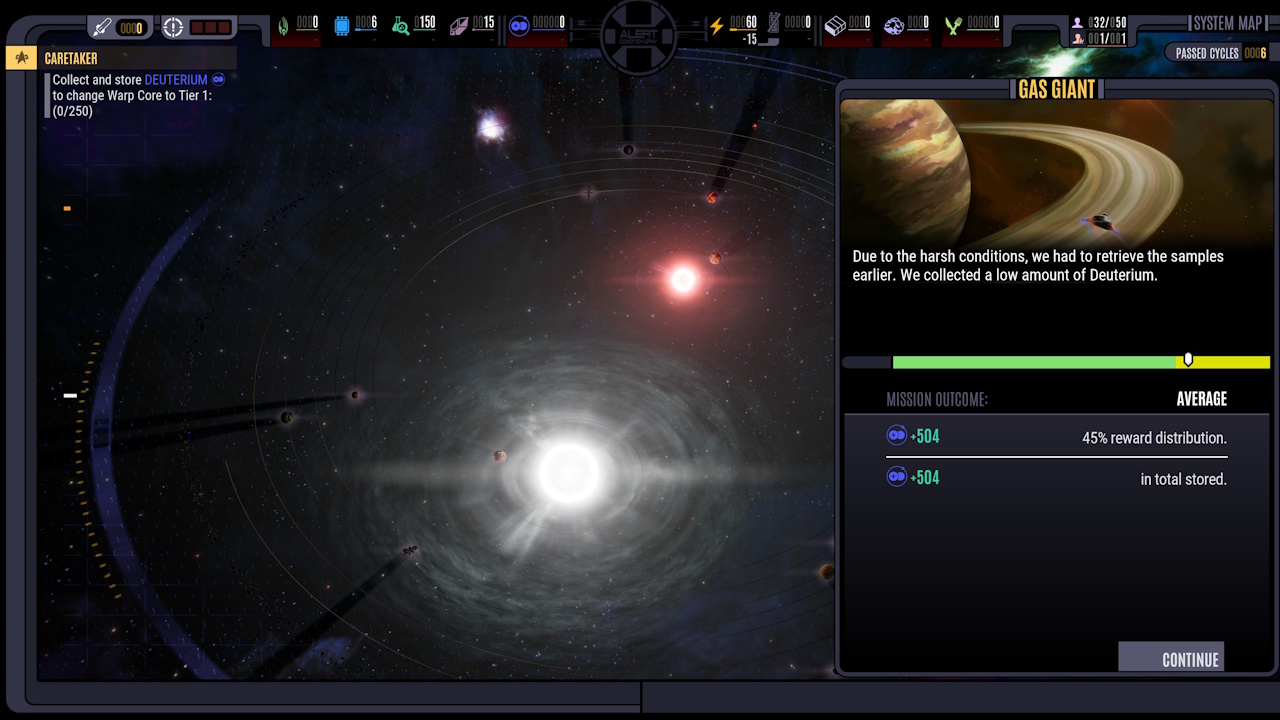
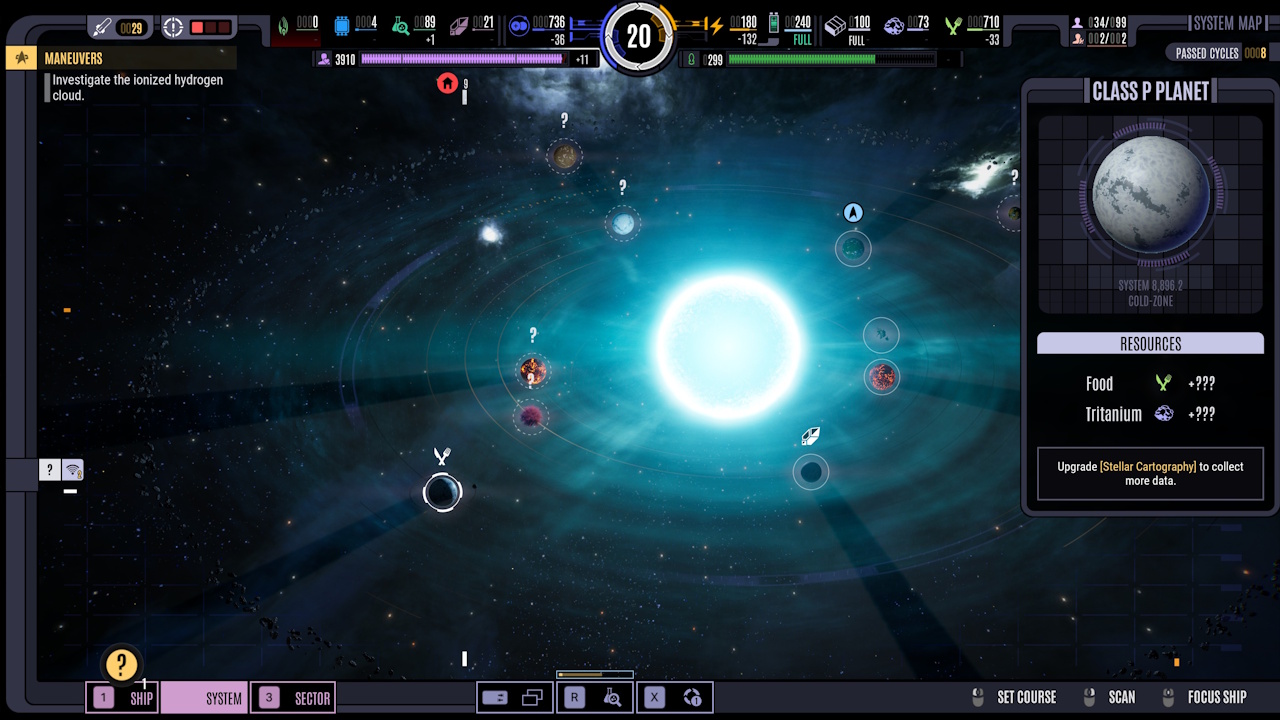
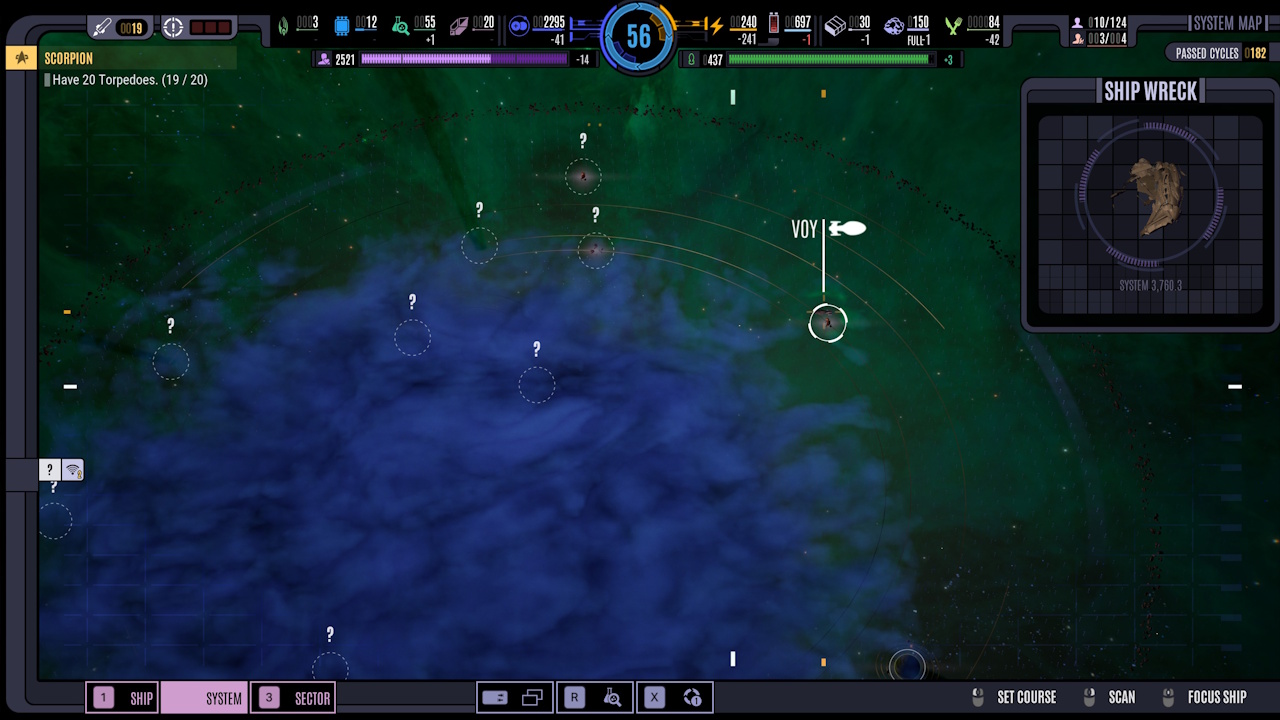
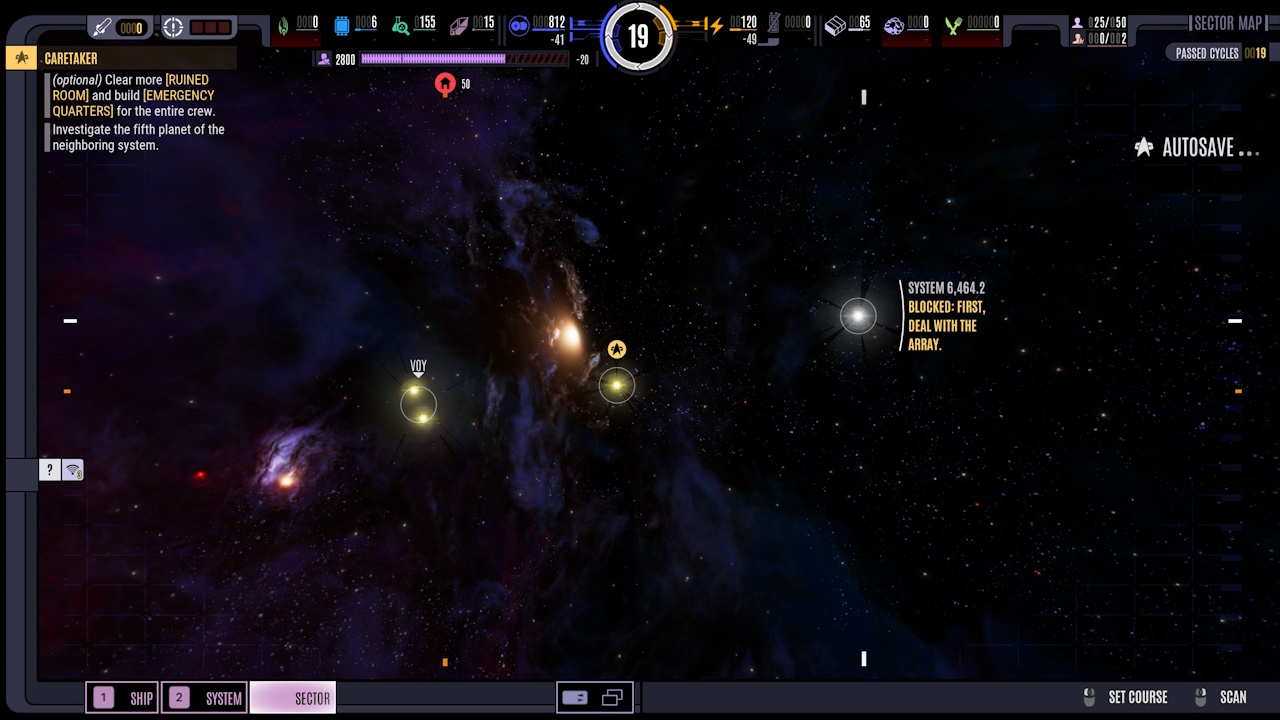
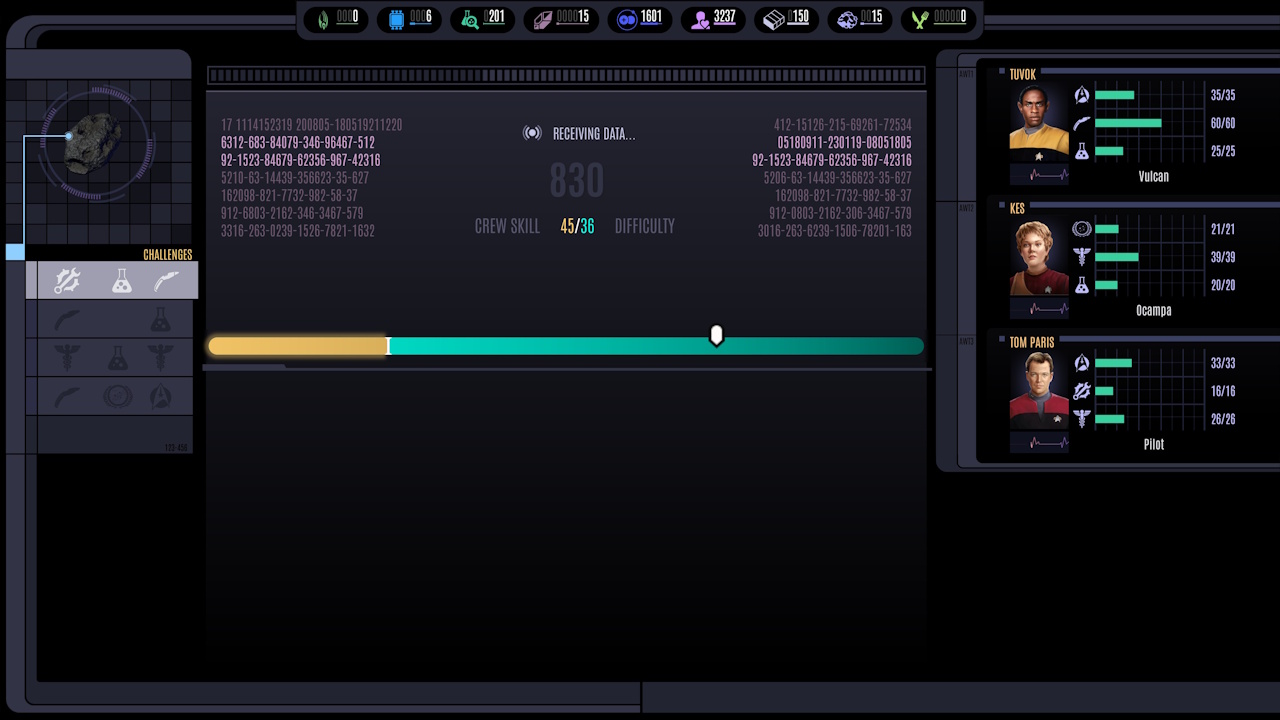
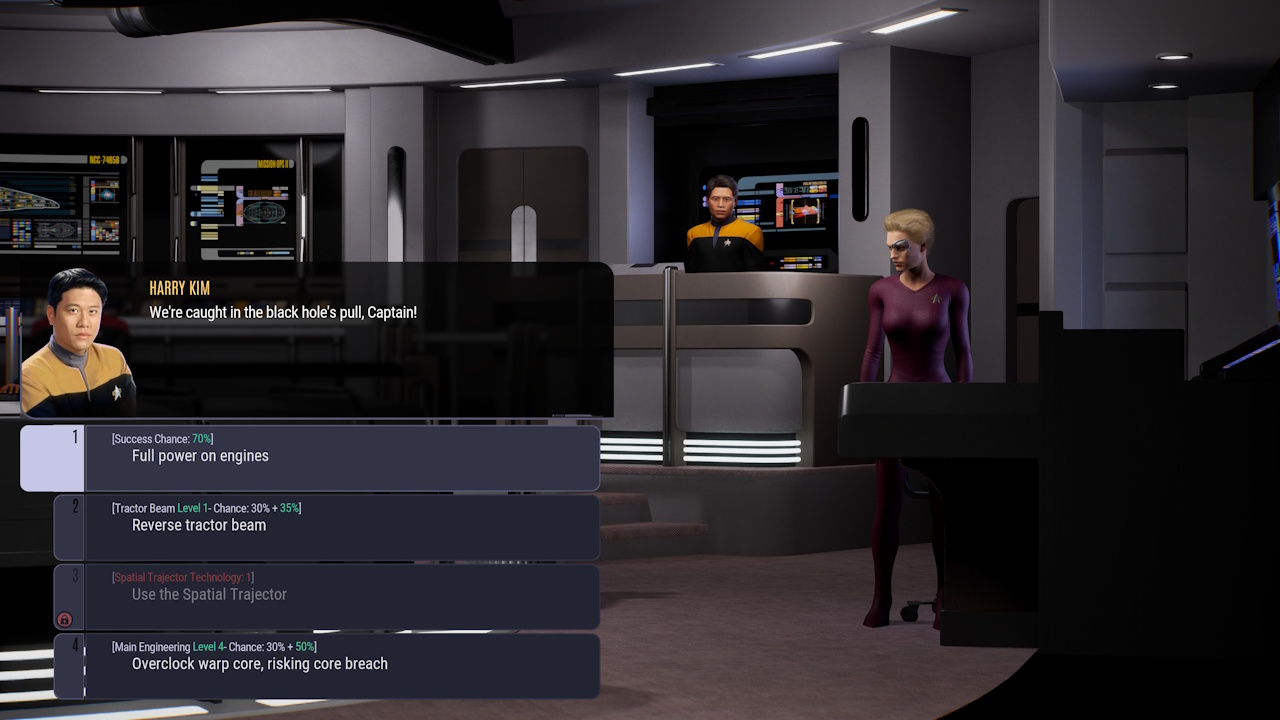
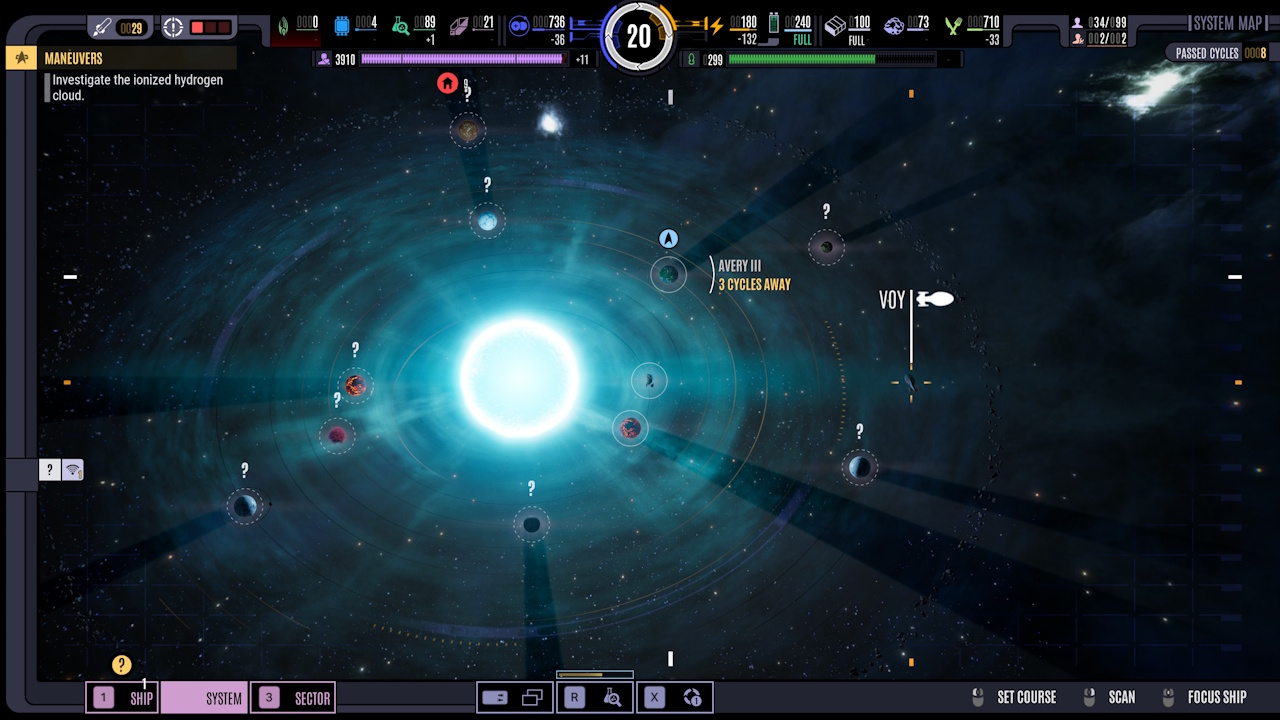
On one occasion, I think it was in Sector 6 or 7, I was soft-locked and unable to progress any further because of a roll of the digital dice. In short, in order to complete the main mission of that sector – which is essential for moving on to the next one – I needed about ten dilithium crystals (one of several in-game resources that you can spend on ship upgrades, tech unlocks, and so on). I didn’t have enough dilithium to unlock the required technology or build… whatever it was that I needed to build. But, as luck would have it, there was *one* remaining planet in the entire sector that contained dilithium. So I warped over to it, chose the option that has the largest chance of a positive outcome… and got fucked over by the digital dice.
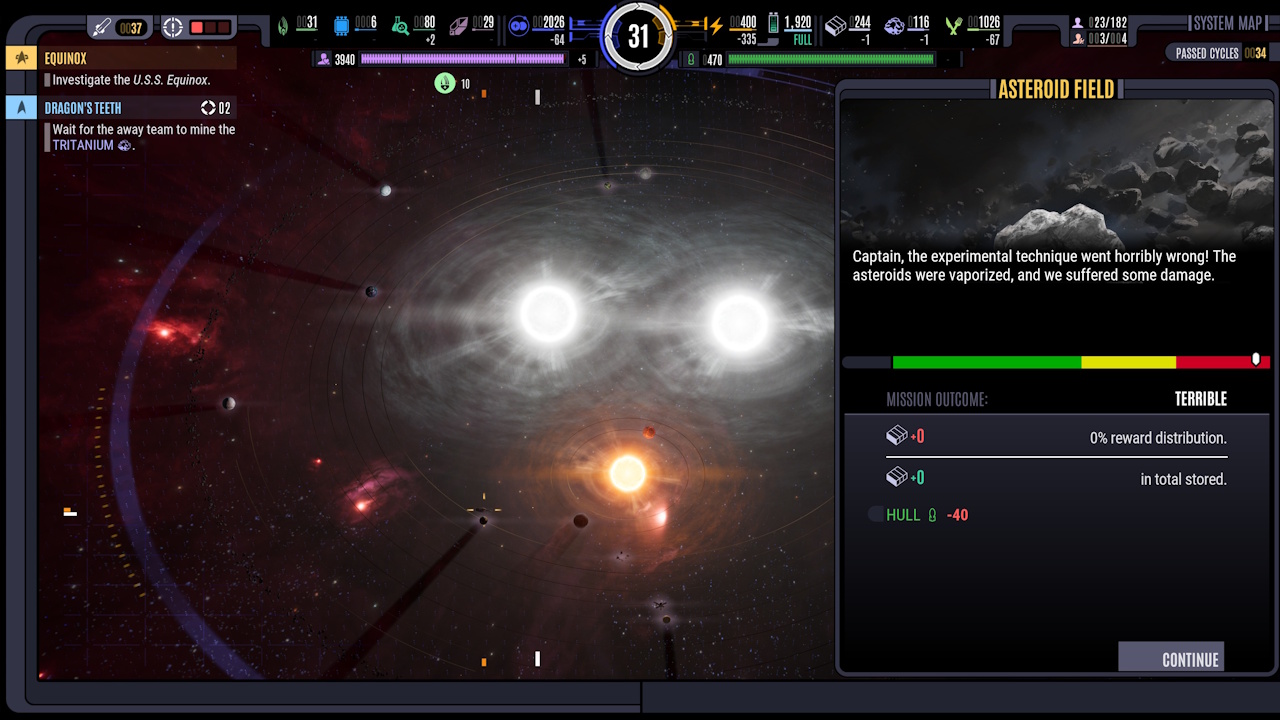
In a game about balancing and managing your resources, you have to keep on top of things to make sure you have enough of everything, that you aren’t wasting resources, and so on. I get that that’s how the game is designed. But mission-critical technologies and unlocks shouldn’t depend on resources – especially not rare ones like dilithium, which only have a few available points of interest per sector. Something like this is inevitable in that case.
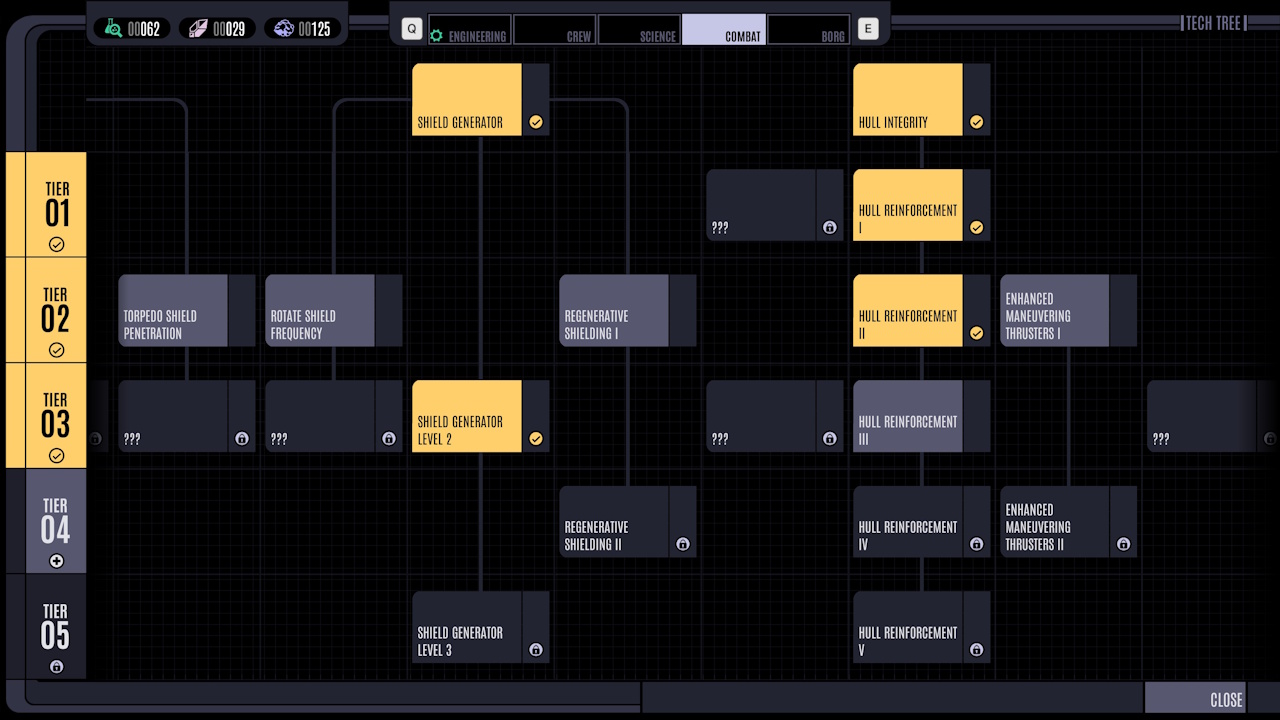
This example hammered home how reliant the game is on RNG because of how annoying it was to get to this point of interest and come away with zero dilithium when I needed it to progress. But really, this kind of thing could happen at any point in that sector’s main mission. Suppose I’d decided I wanted to unlock the next tier of the combat tech tree, which requires dilithium, or that I’d wanted to upgrade main engineering, which also requires dilithium. I could’ve used up my available supply well before I even knew I’d need that resource to progress the main story, and I could end up ruining my playthrough of that entire sector completely by accident. Even if these mission-critical technologies or builds normally require certain resources to progress, I really think there should be a way around this for players who literally cannot get those resources. Otherwise the game is effectively soft-lockable every time this arises. And to add insult to injury, Across The Unknown autosaved as soon as the digital dice failed to deliver my dilithium – meaning my *only* choice was to re-play that entire sector.
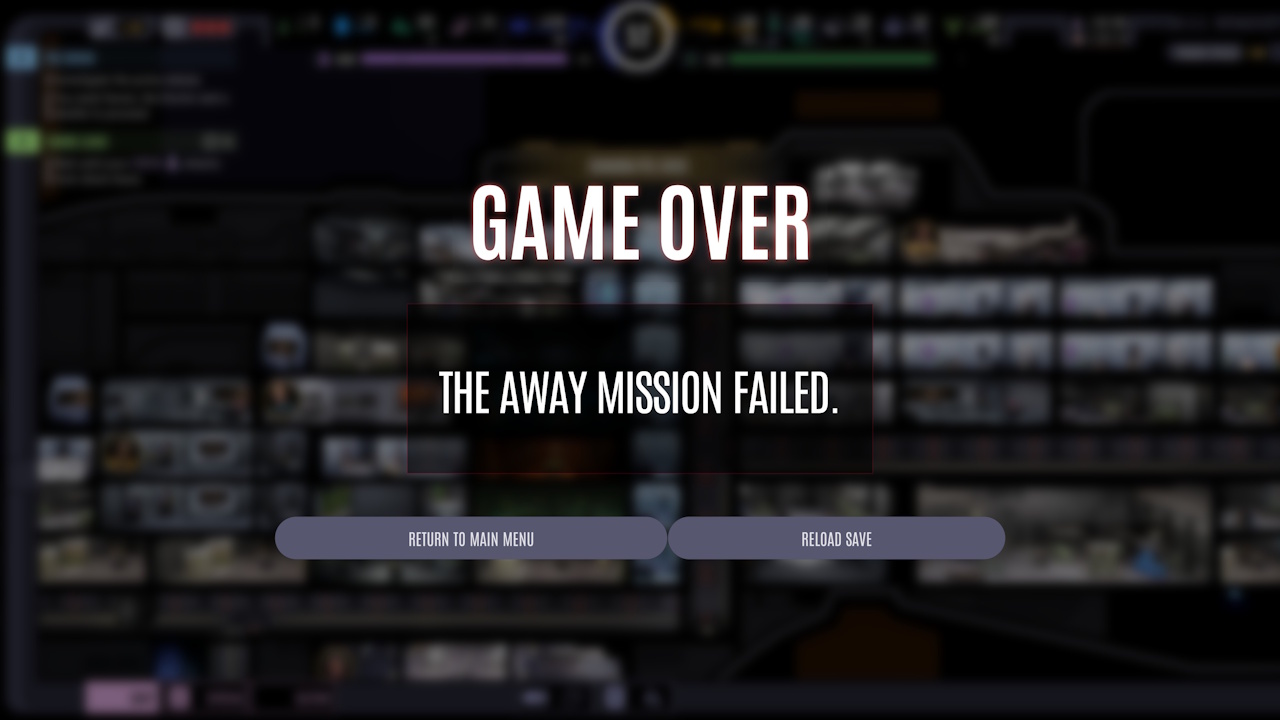
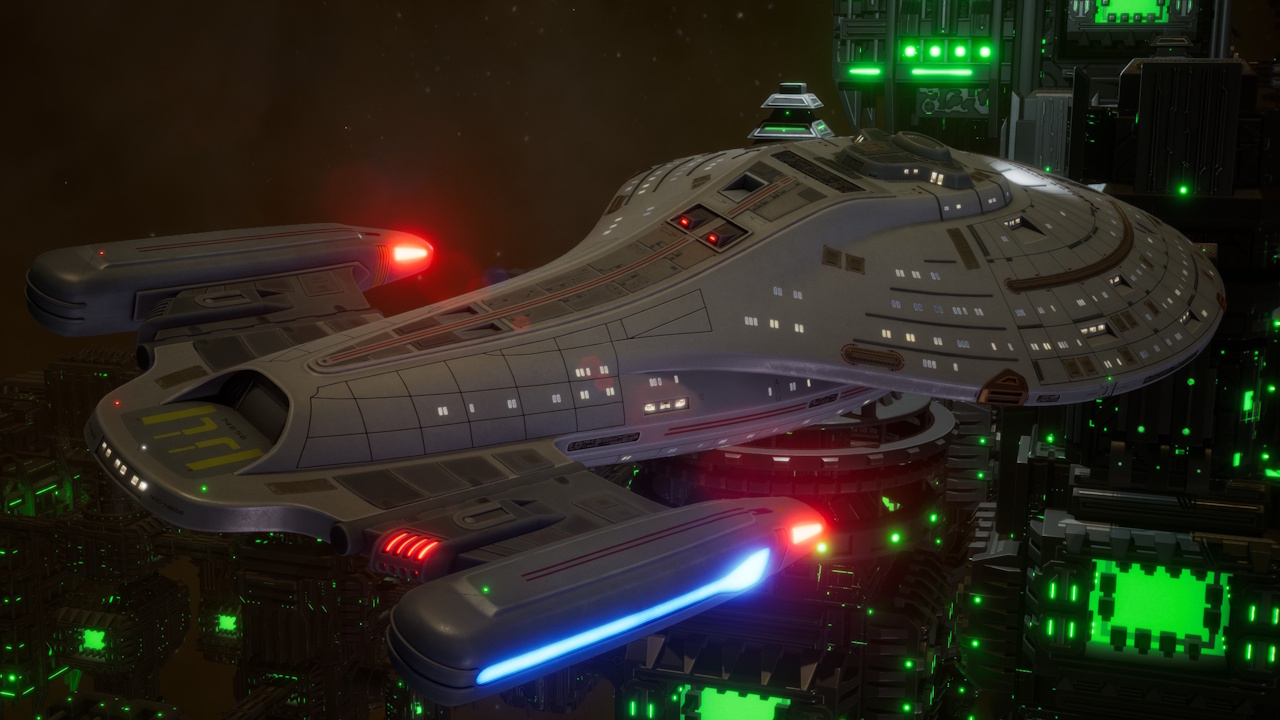
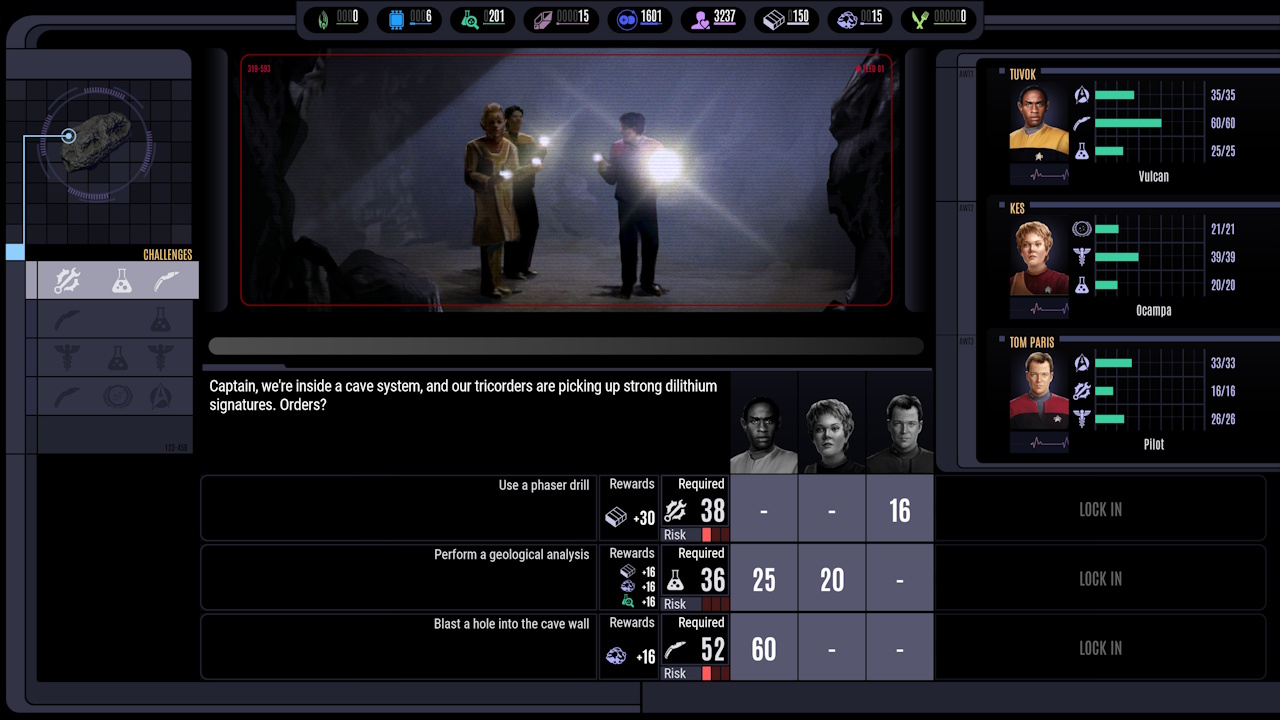
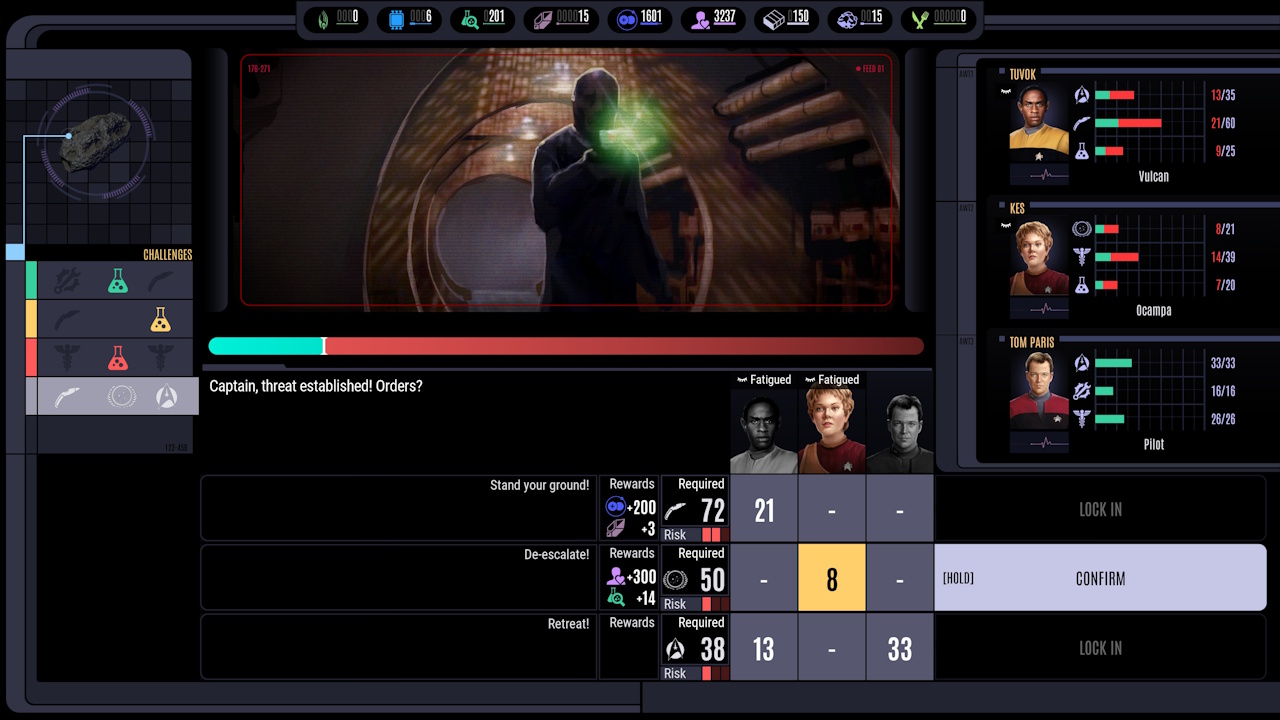
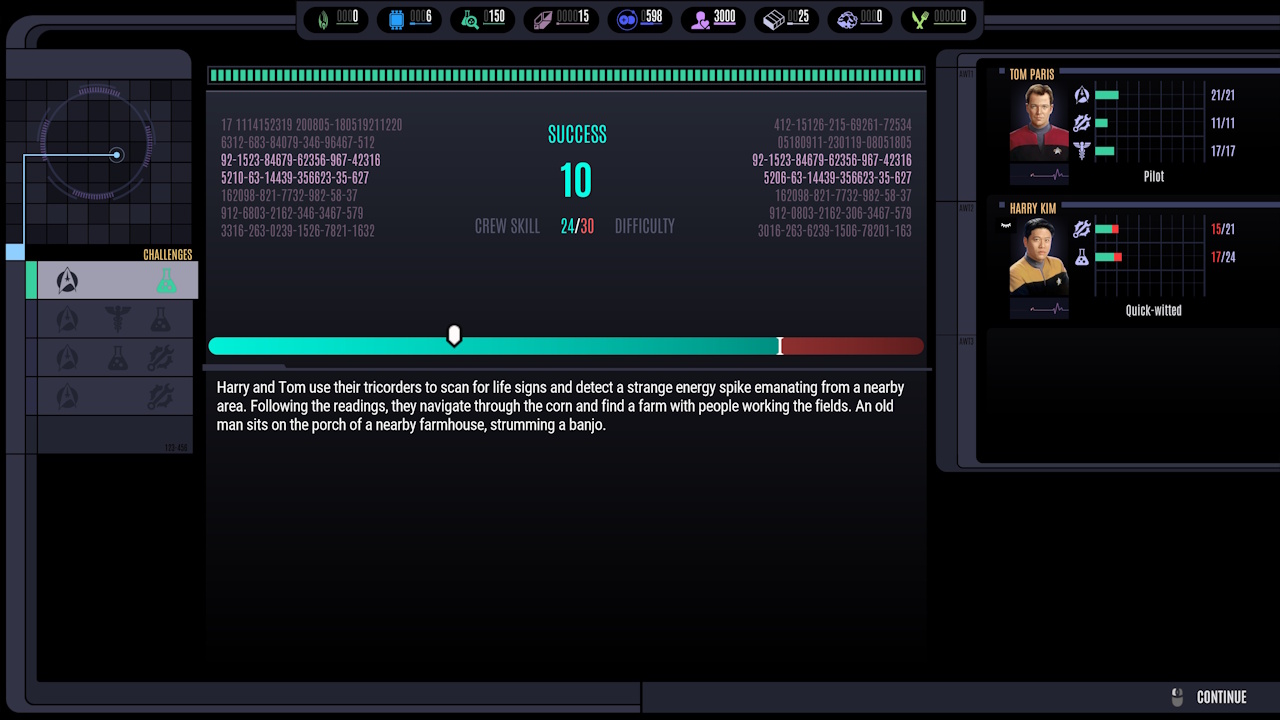
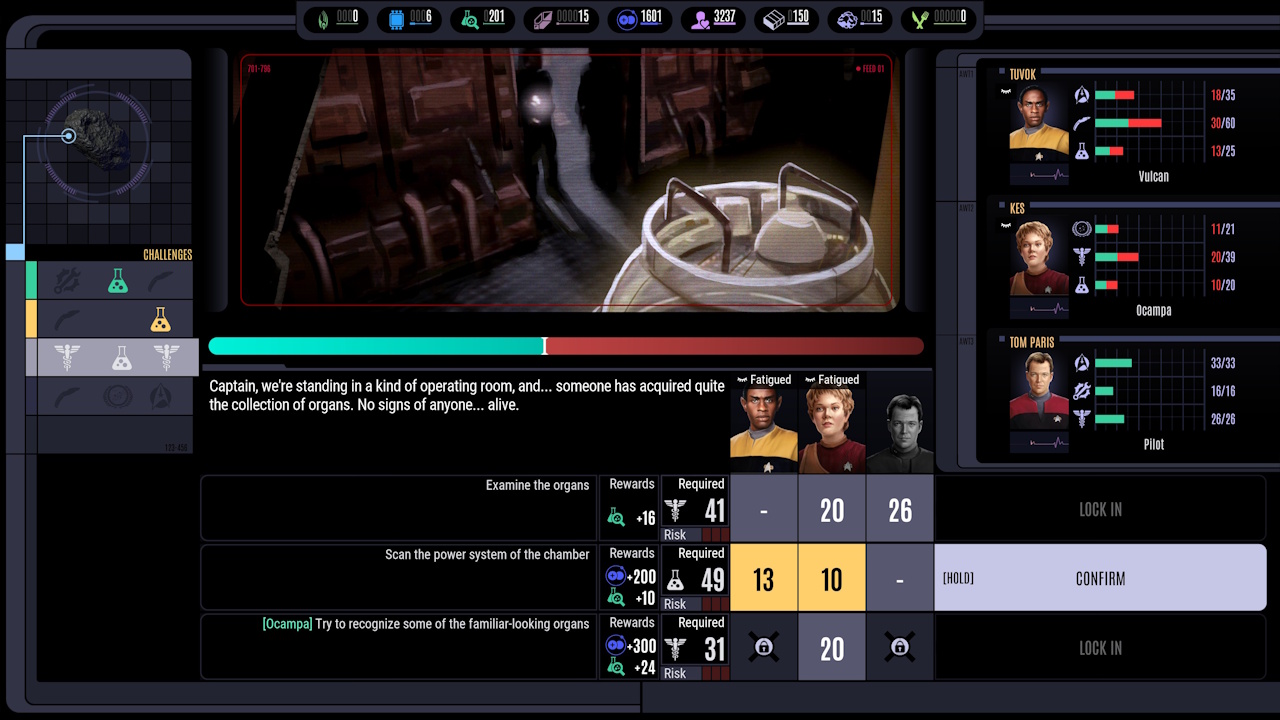
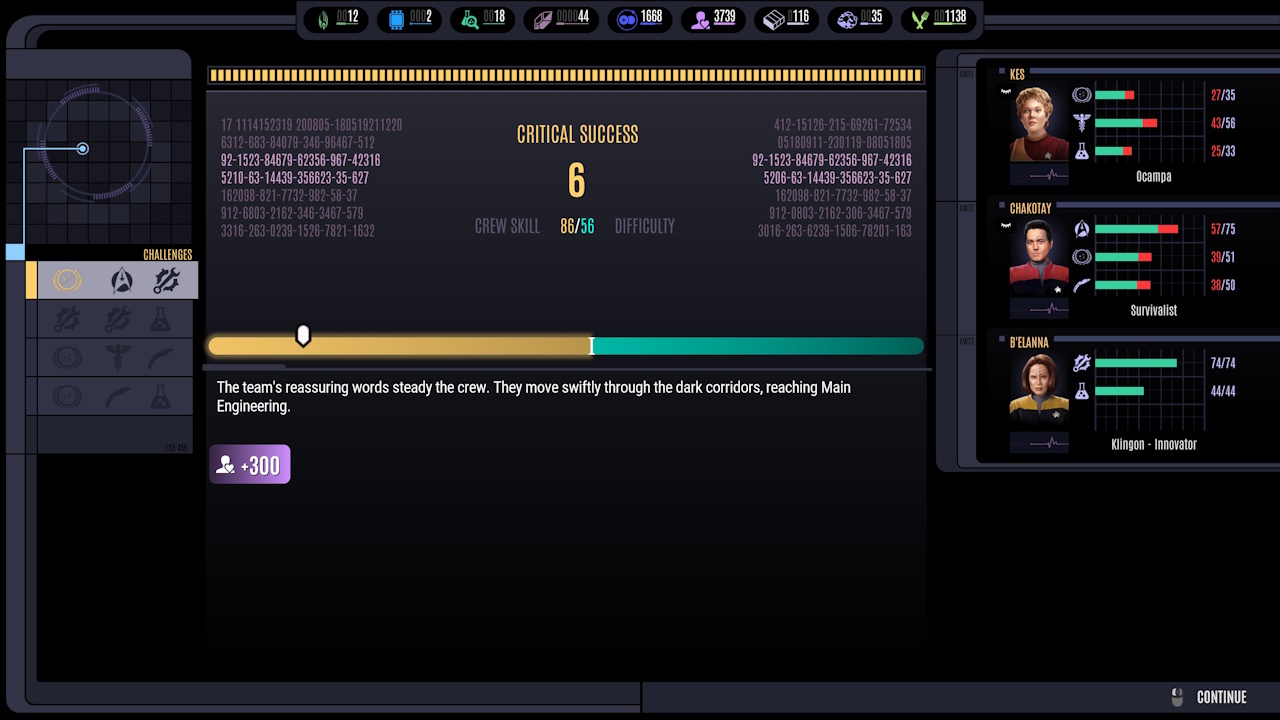
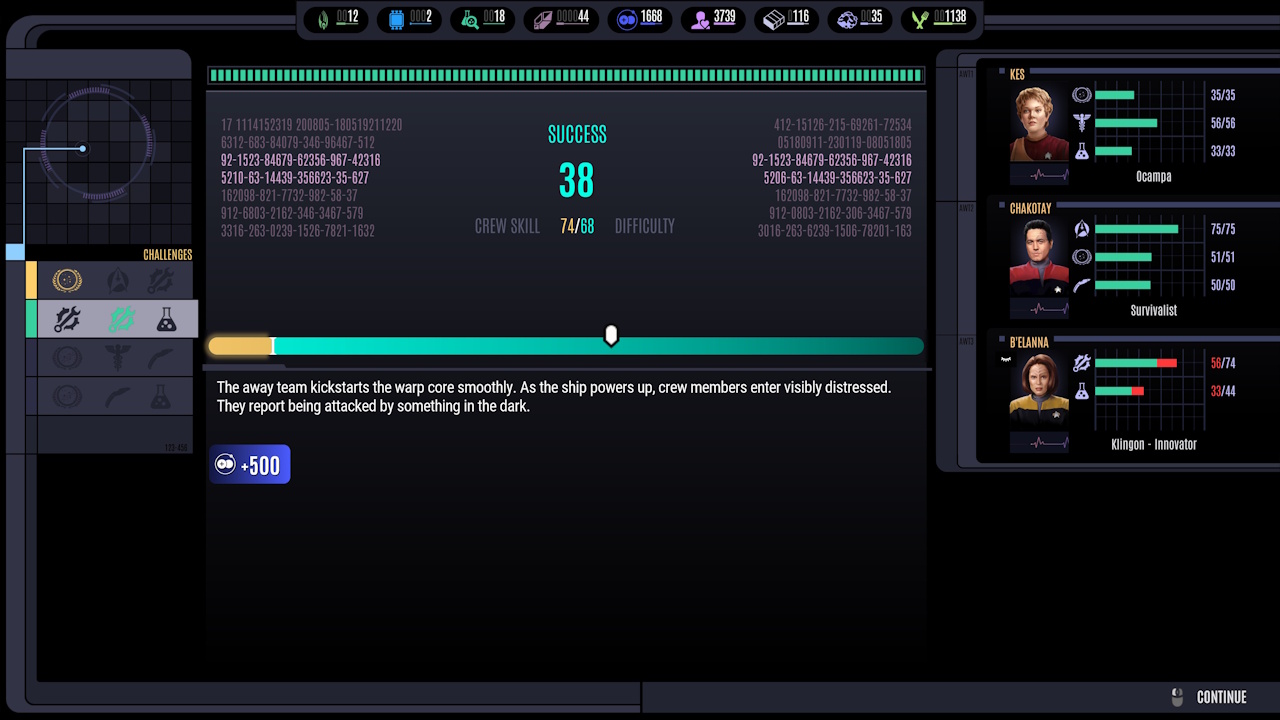
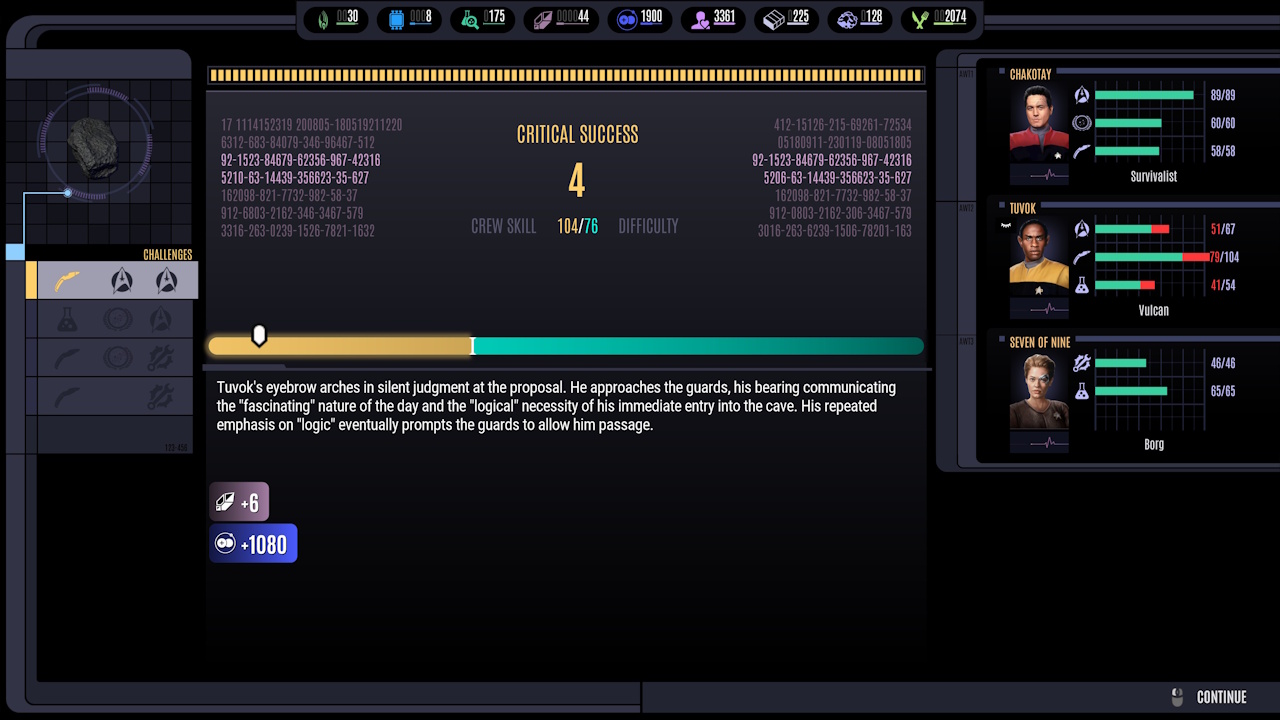
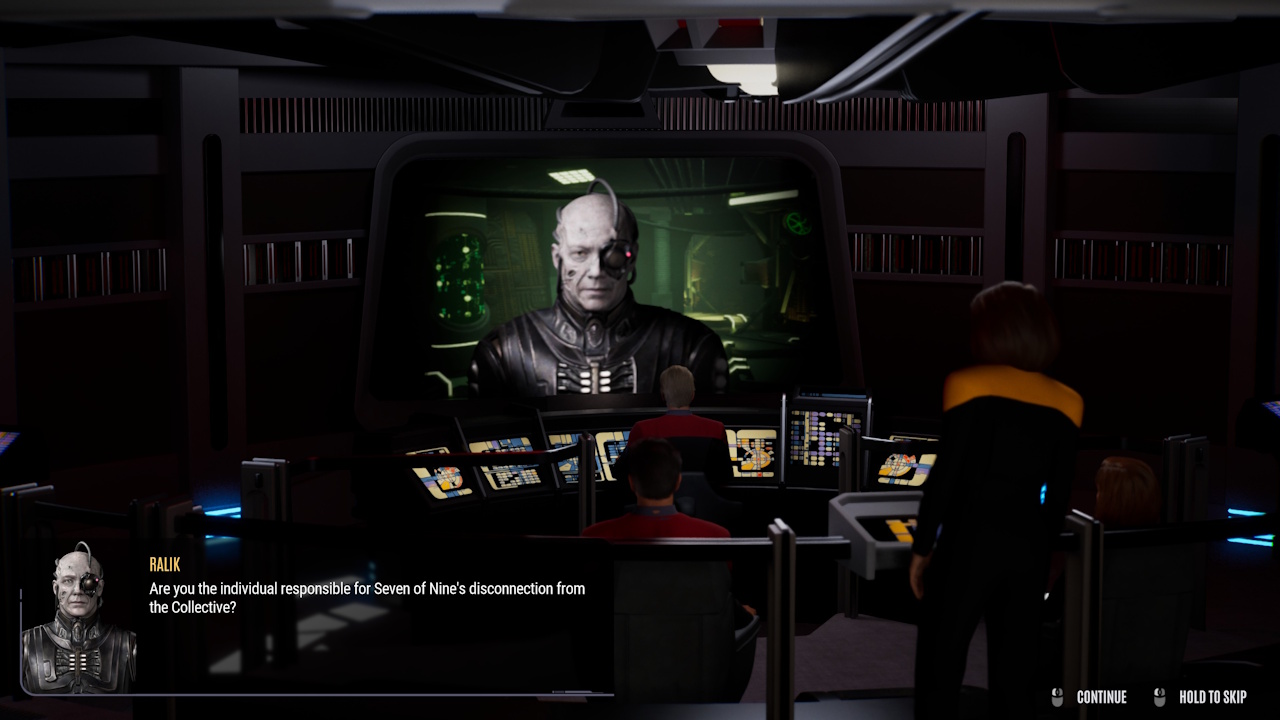
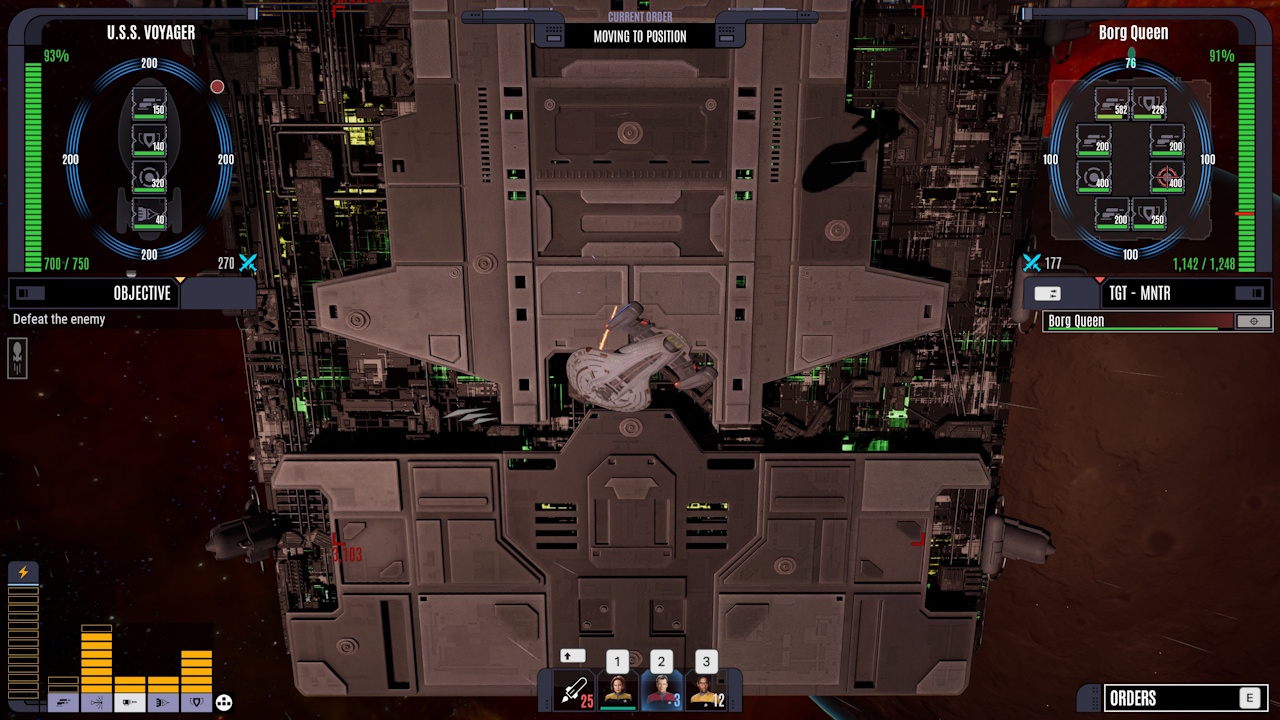
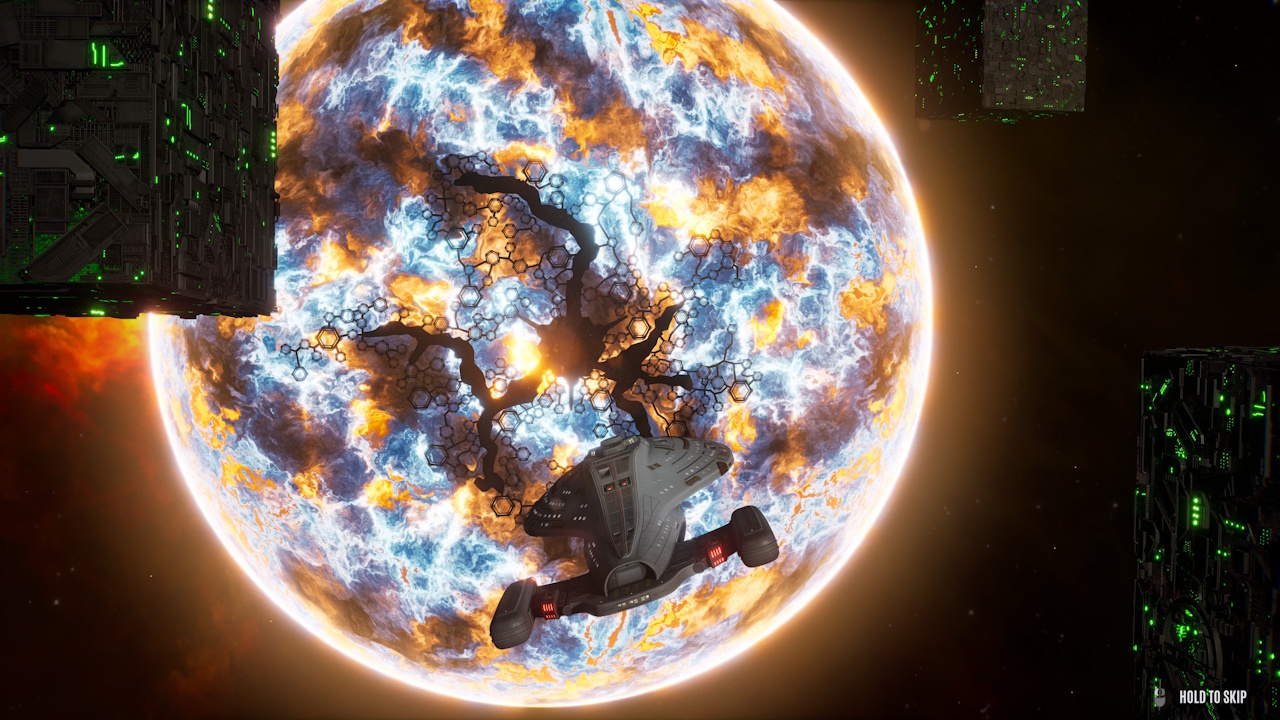
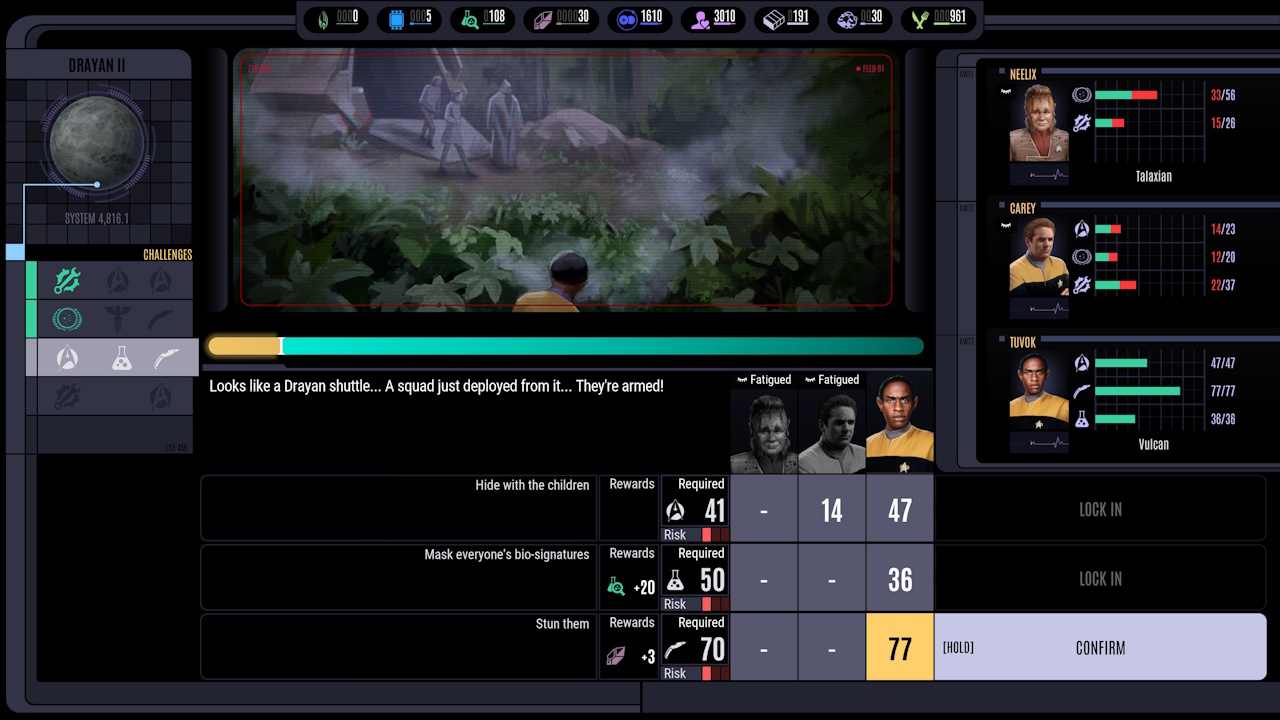
RNG also plays a role in away missions – and again, this can lead to some pretty silly outcomes. In the mission based on Dark Frontier, which is another main quest, I ended up at the Borg Queen’s unicomplex to rescue Seven of Nine. I chose three heroes for the away team based on what the game suggested I needed: a pilot, most notably, and then someone with engineering skills. I made it to the final dice-roll screen, and I had what looked like a relatively good two-thirds chance of success. But, of course, RNG did its thing and that final dice roll ended up as a failure.
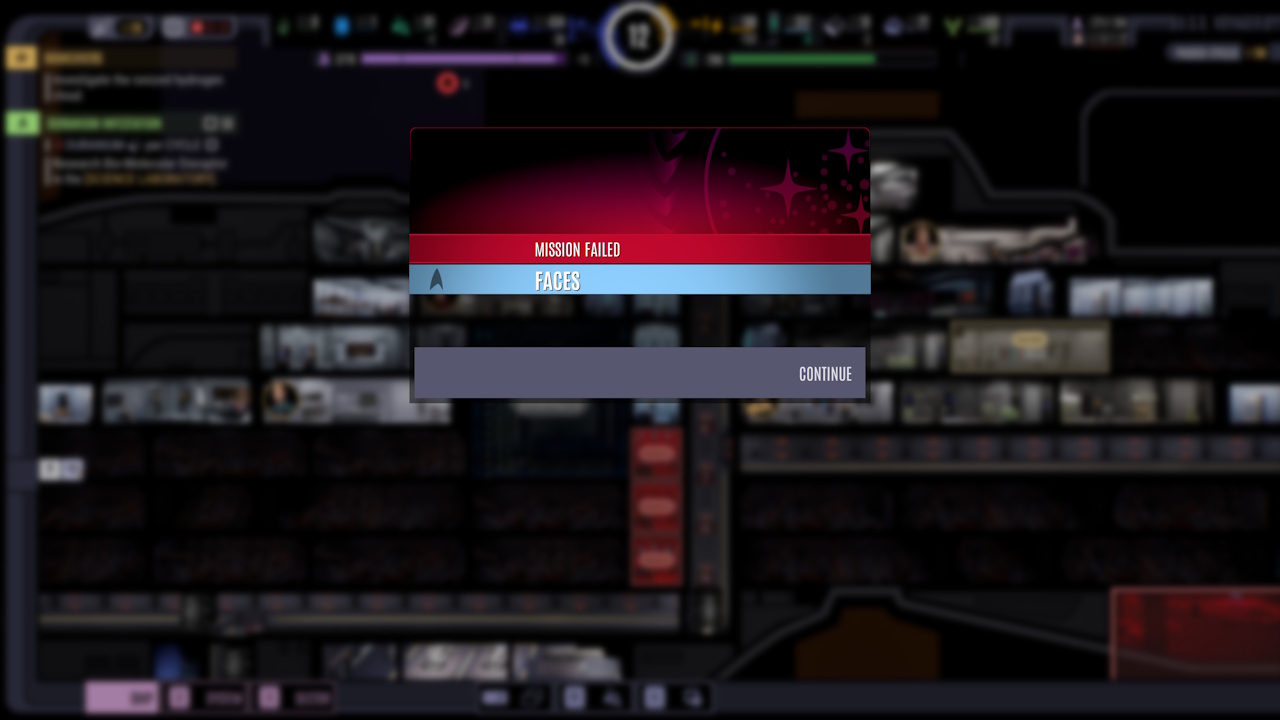
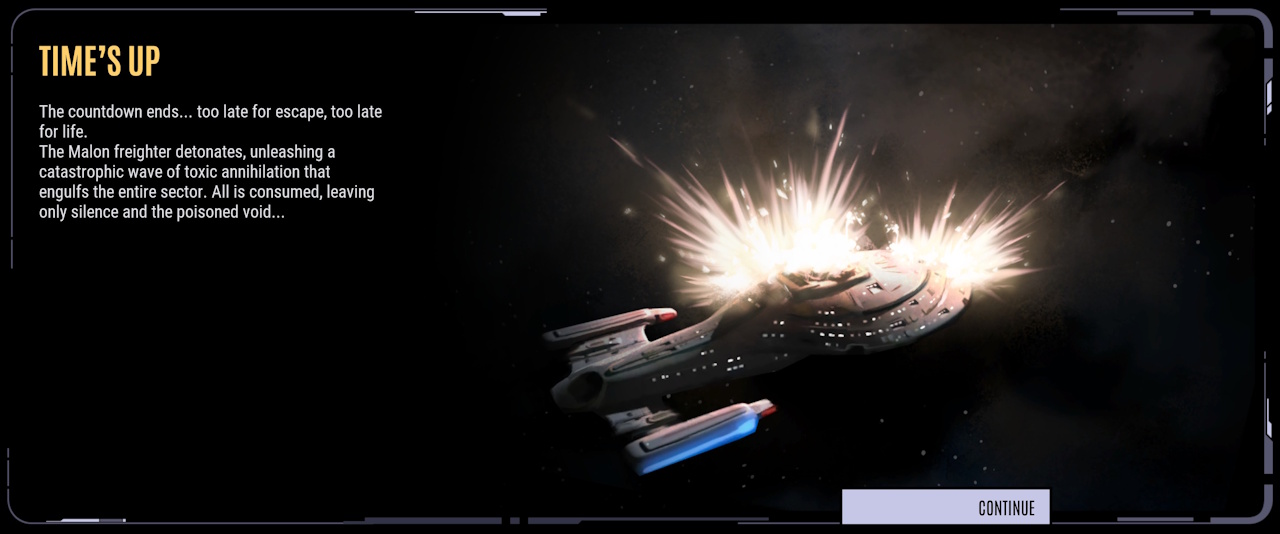
That’s fine, you might say, that’s how it goes. But this particular dice roll leads to an instant game over if you fail it.
In this case, I’d manually saved right before the trip to the Borg base, so I could re-load and try again. But it really didn’t feel good, or like the game was reacting in any way to my choices or the way I’d set things up, by randomly deciding that I’d failed that final hurdle and that that was going to be fatal to *the entire ship and everyone aboard*. If I’d been defeated in a real-time combat event, then sure. Or if I’d had some other way to feel like I was in control of events. But because it was literally just a roll of the digital dice – a roll that had a relatively high chance of success, too – it just felt wrong that it should lead to an instant game over.
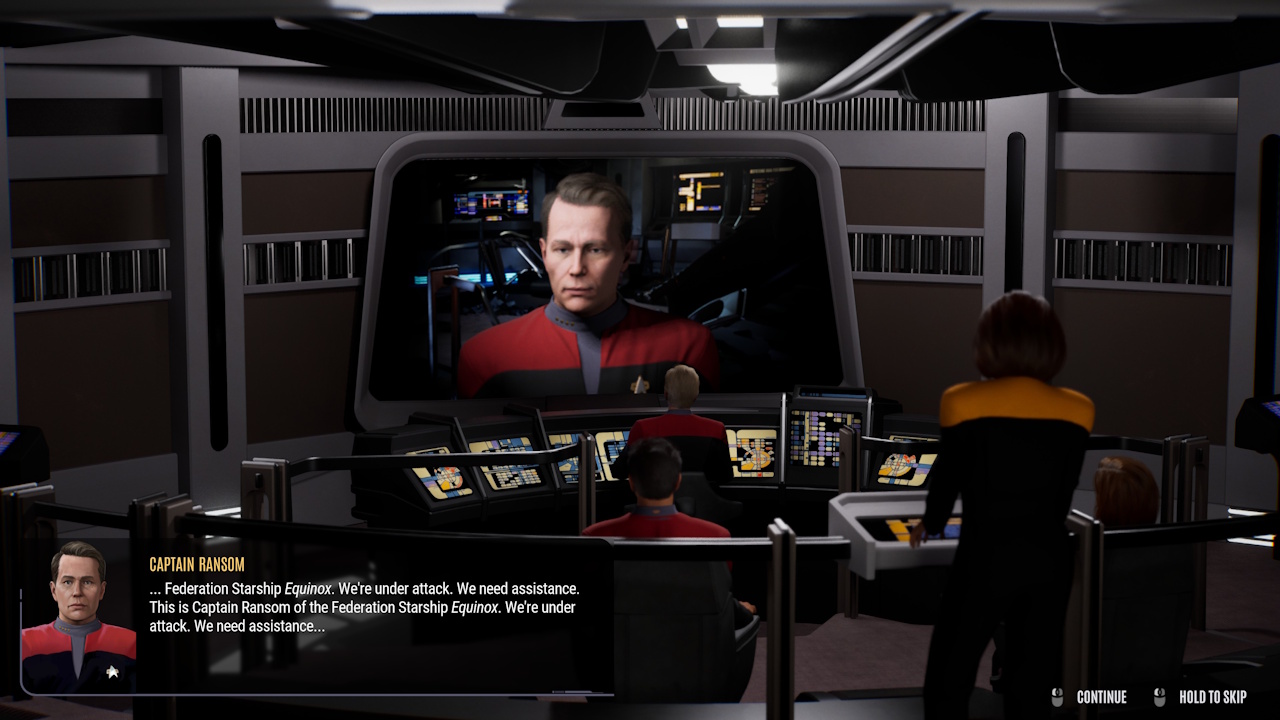
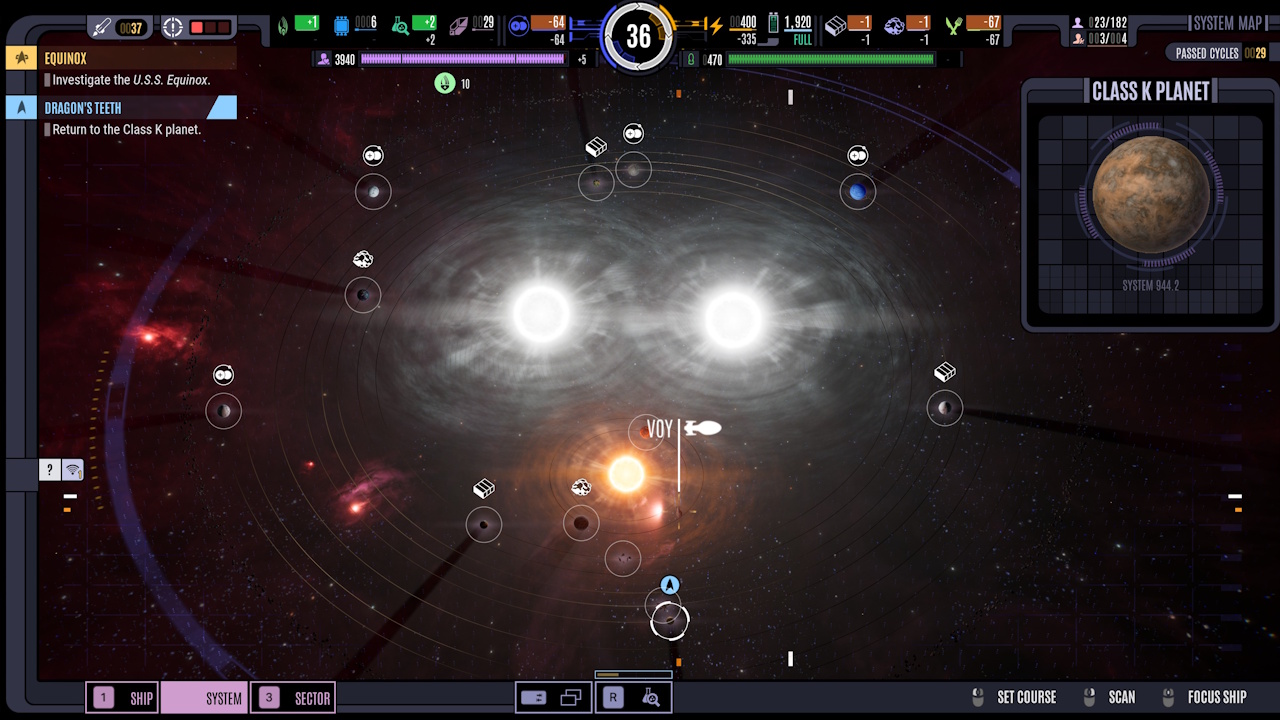
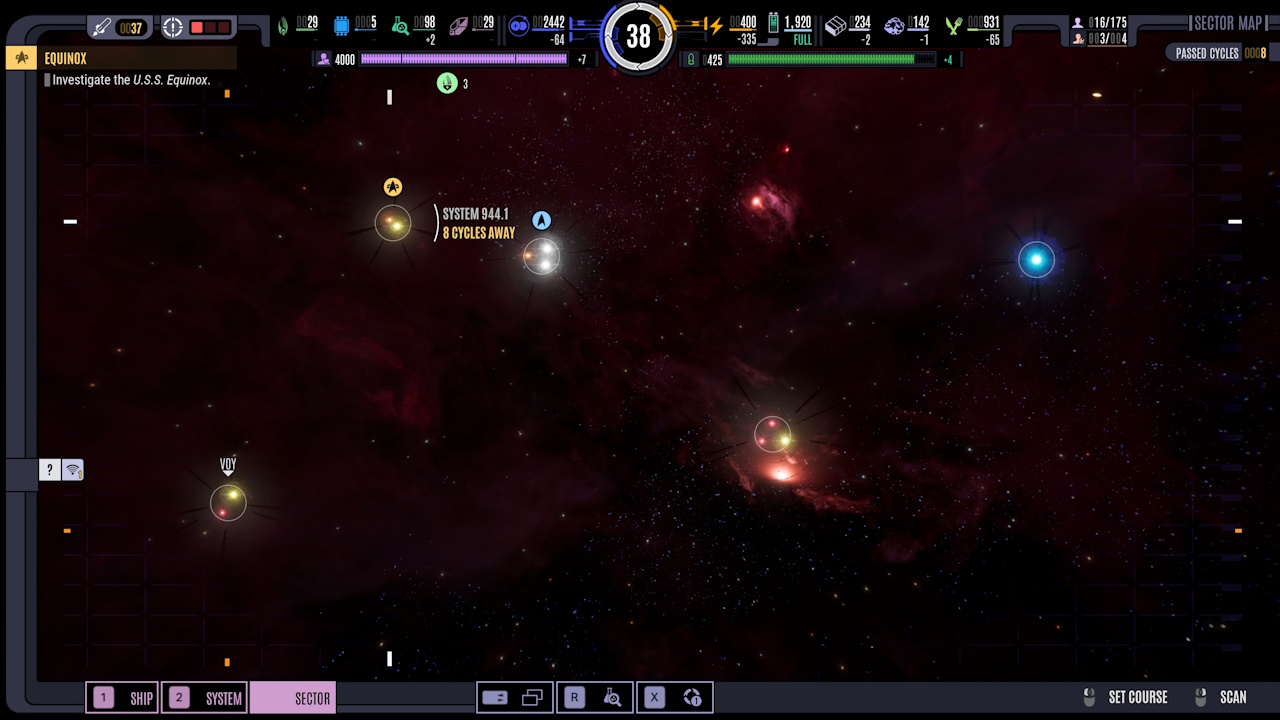
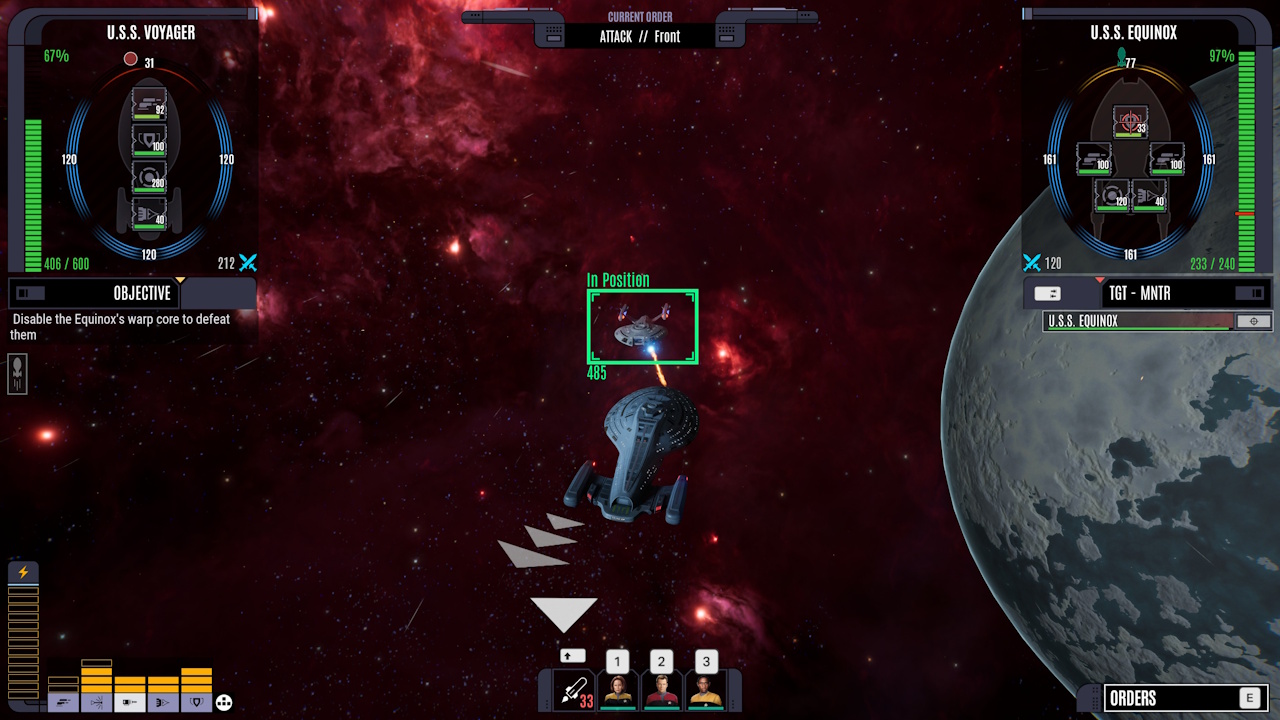
I noted earlier that, on this run, I was deliberately making different choices to try to see some different results. Many of these were fun, but one… well, it really wasn’t. And I think it makes the story significantly worse and less comprehensible, especially for anyone new to Voyager or who doesn’t remember the episode in question. The mission based on the episode Equinox – which is a main mission and must be played – can go one of two ways: either Janeway and the crew are able to uncover what happened aboard the Equinox, revealing the truth behind why Captain Ransom and his crew are under attack by aliens from another realm, or… they just never find out anything at all.
Ransom’s actions in the second case make absolutely no sense. You make one choice, relatively early into the mission, and begin working on defensive measures to protect against the aliens. Then, for no reason at all – not just a reason that doesn’t make narrative sense, but literally no reason whatsoever – Ransom’s crew attack Voyager, steal the technology, and warp away. The rest of the mission plays out similarly – you face off against the Equinox in combat, beat them, and then you can either try to save some of their crew or not. But there’s still no explanation at all for what happened… and it just felt pretty unsatisfying, and like a way, way worse version of the story of that episode.
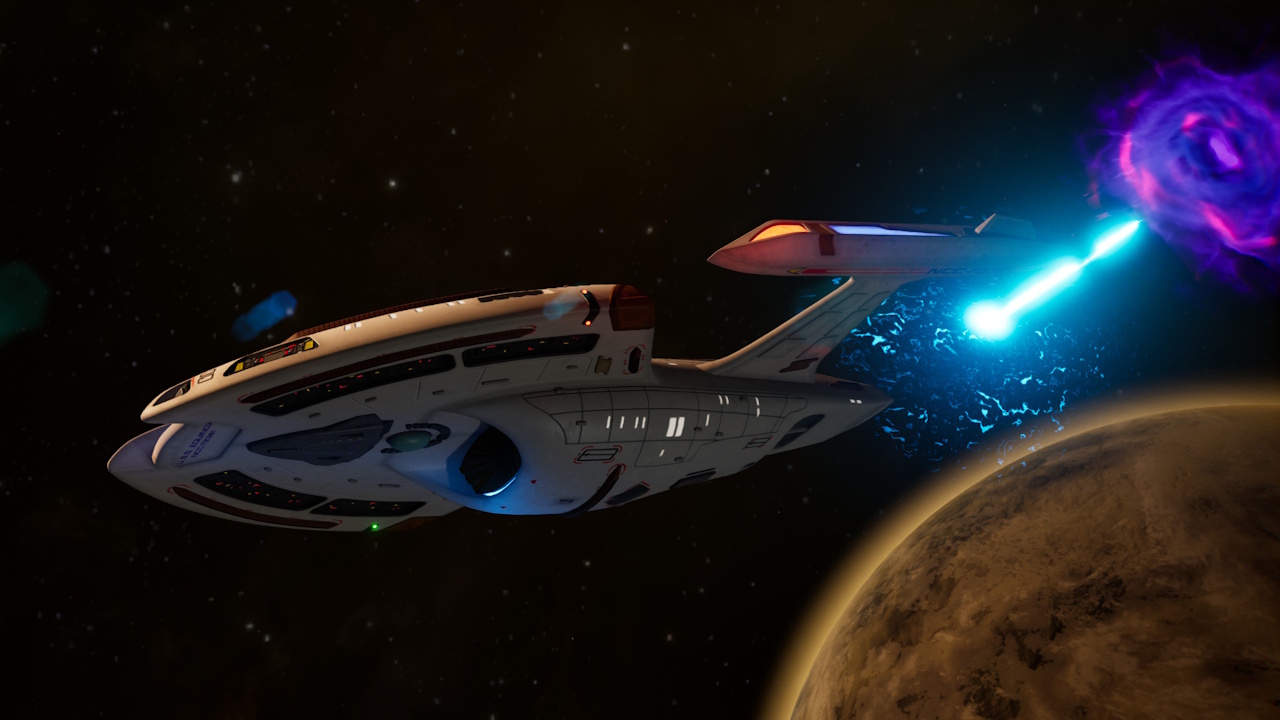
I think, in this case, a combination of factors came into play. Firstly, I didn’t have the Doctor’s mobile emitter for away missions, so he couldn’t go to Equinox’s lab (I think). Then, I didn’t have Tuvok to lead an investigation, as I had Tuvix instead. And finally, I made a different choice at the beginning of the mission, which set me on that path.
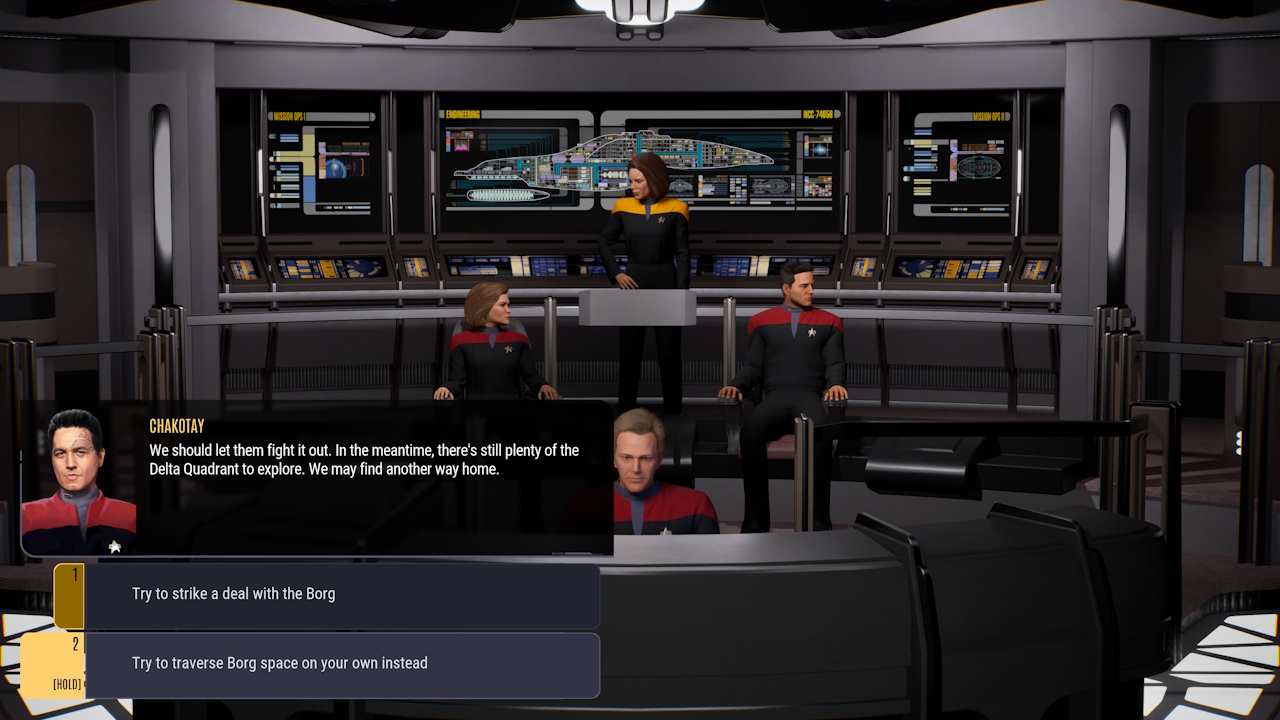
I’m really in favour of the game plotting out different outcomes to key events in Voyager’s story – that’s the whole point, and I think it’s pretty fun. But when one of the main stories you get to experience has one canon outcome that makes sense and a non-canon one that’s just incredibly random… it makes it less fun and less interesting. It would be neat, for example, if you uncovered the truth, arrested Ransom, made peace with the aliens, and got to keep the Equinox as an allied ship to join you in combat. Or if you never uncovered the truth, you’d maybe have to sacrifice the Equinox but unlock Ransom as a hero character. Just a couple of examples of how this mission could unfold differently from how it did in the show, but in ways that would make narrative sense based on choices which players can make.
Next, I’d like to talk about a few absences that I felt more strongly this time around.
It’s odd that Janeway can *never* go on away missions. Even away missions that, canonically in the show, Janeway did take part in, she can’t go on in Across The Unknown. I’m sure there’d be a way to make this happen – maybe Janeway cannot die no matter what, if that’s important to the way the game works. Or maybe if she does die, Chakotay steps up to be captain with Tuvok as second-in-command? I’d love to have the freedom to pick Janeway for *all* away missions, but I understand if that’s difficult for some reason. Still, I think making her available for *some* specific away missions, those we know she canonically went on, would be a huge improvement.
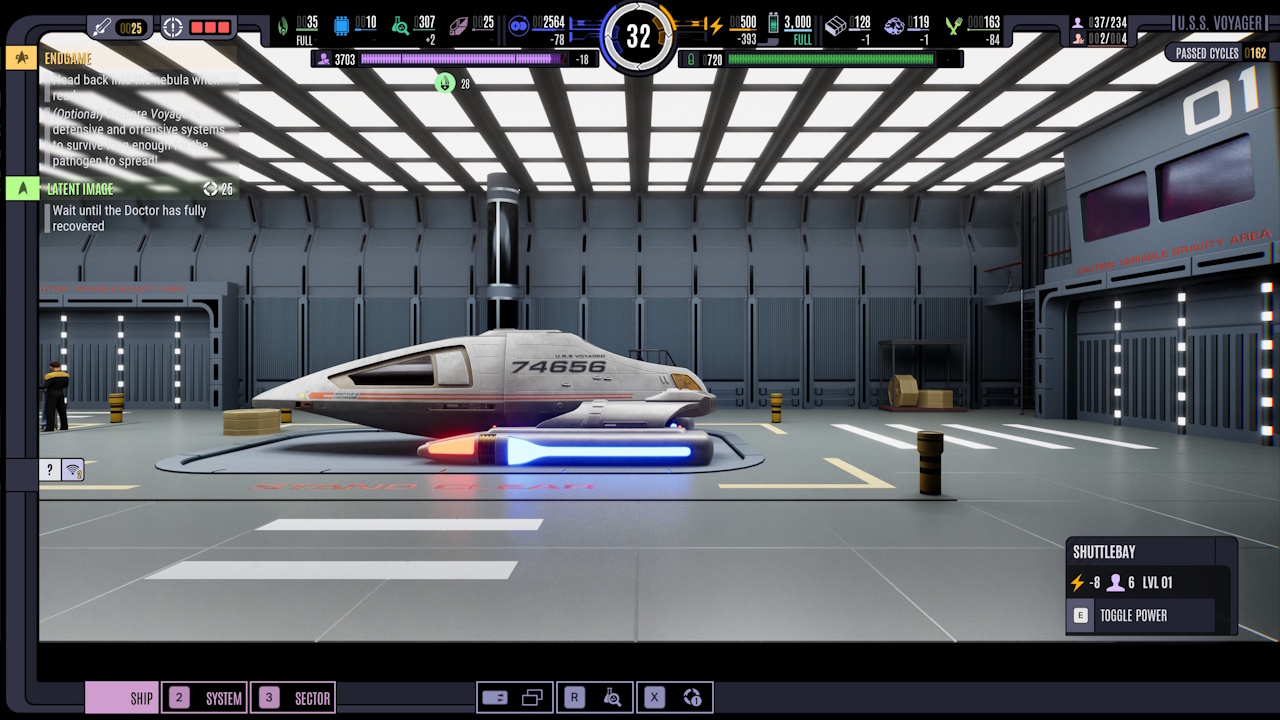
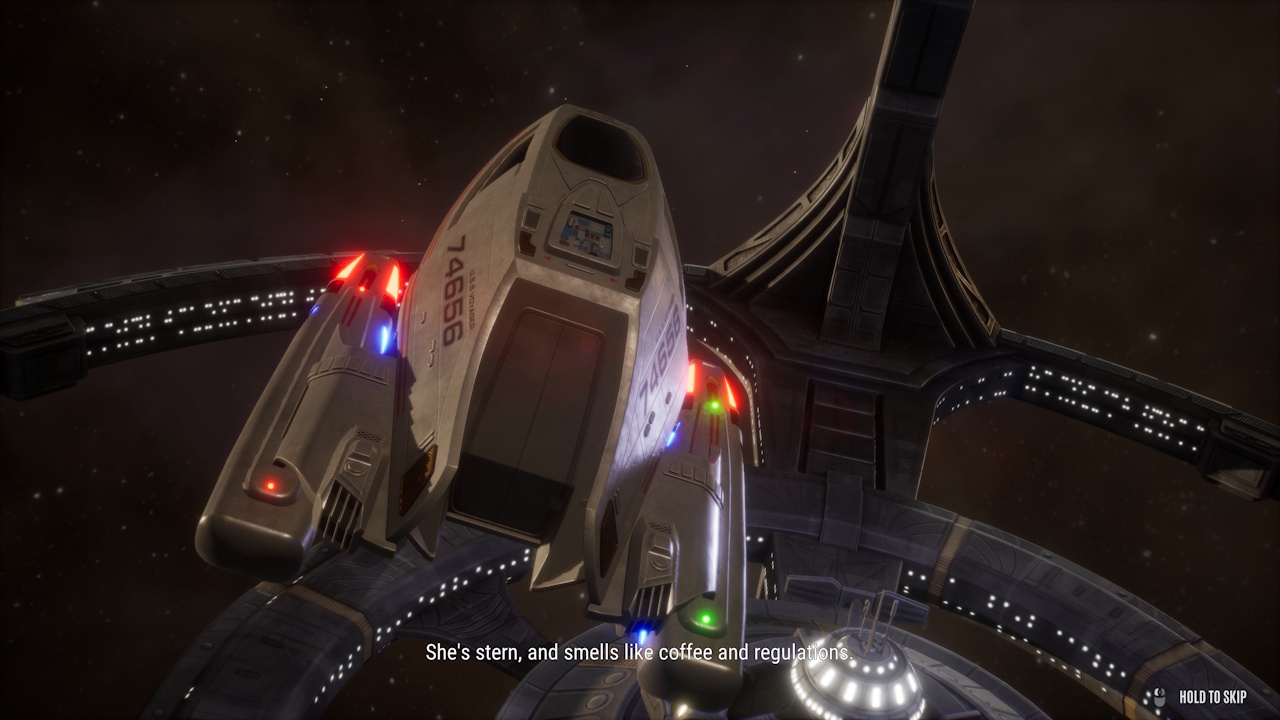
Secondly… where’s the Delta Flyer? I thought I’d just missed this, or not unlocked it, on my first playthrough, because I wasn’t using the shuttlebay very much. But this time, I went out of my way to keep the shuttlebay functional all the time, and unlocking upgrades and everything. But… no Delta Flyer.
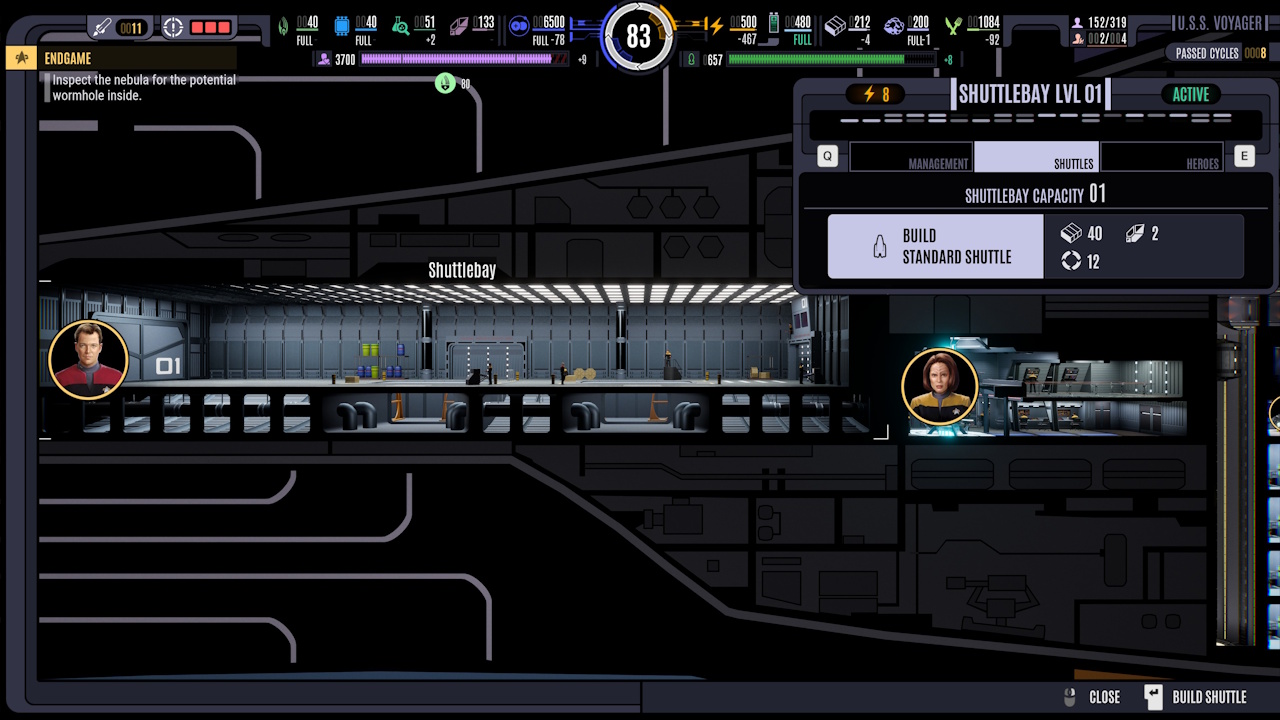
A game like Across The Unknown, where you have a tech tree, upgrades, resources, and literally already have buildable shuttles, would’ve been *perfect* for including the Delta Flyer! I just cannot fathom why it wasn’t included, especially given its prominence in later seasons of the show. The Delta Flyer appeared in 29 Voyager episodes from Season 5 onwards, and I just find it very strange that it’s not part of the game at all.
As an example of how it could work, the Delta Flyer could either function like an upgrade to the standard shuttle, increasing the chances of successful outcomes for shuttle-based missions/points of interest. Or it could be its own thing entirely, unlocking different pathways to progress through certain missions – like the way the Vidiian Surgical Device or Pralor Shield Technology can be used to bypass certain checkpoints in some missions, or grant 100% successful outcomes. It could be a fun thing to unlock, too, requiring its own side-mission and a lot of resources to construct. Just… an odd omission. And no, I don’t think the trading-only aeroshuttle makes up for it in any way.
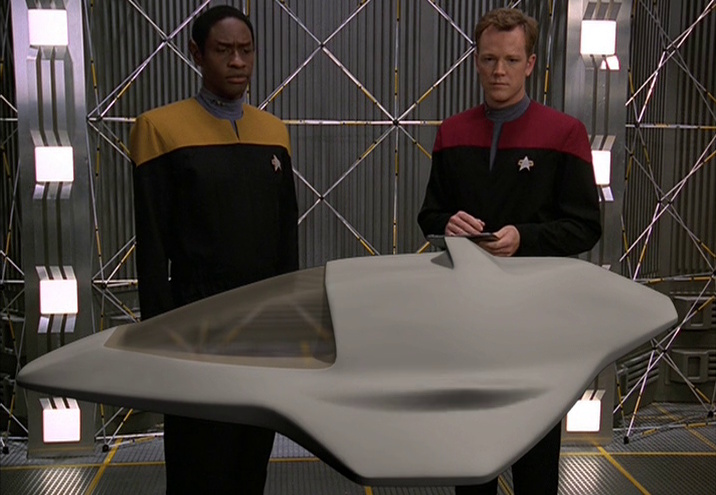
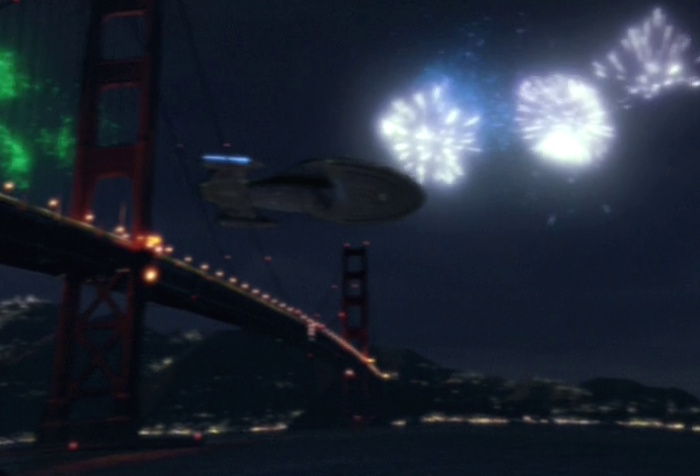
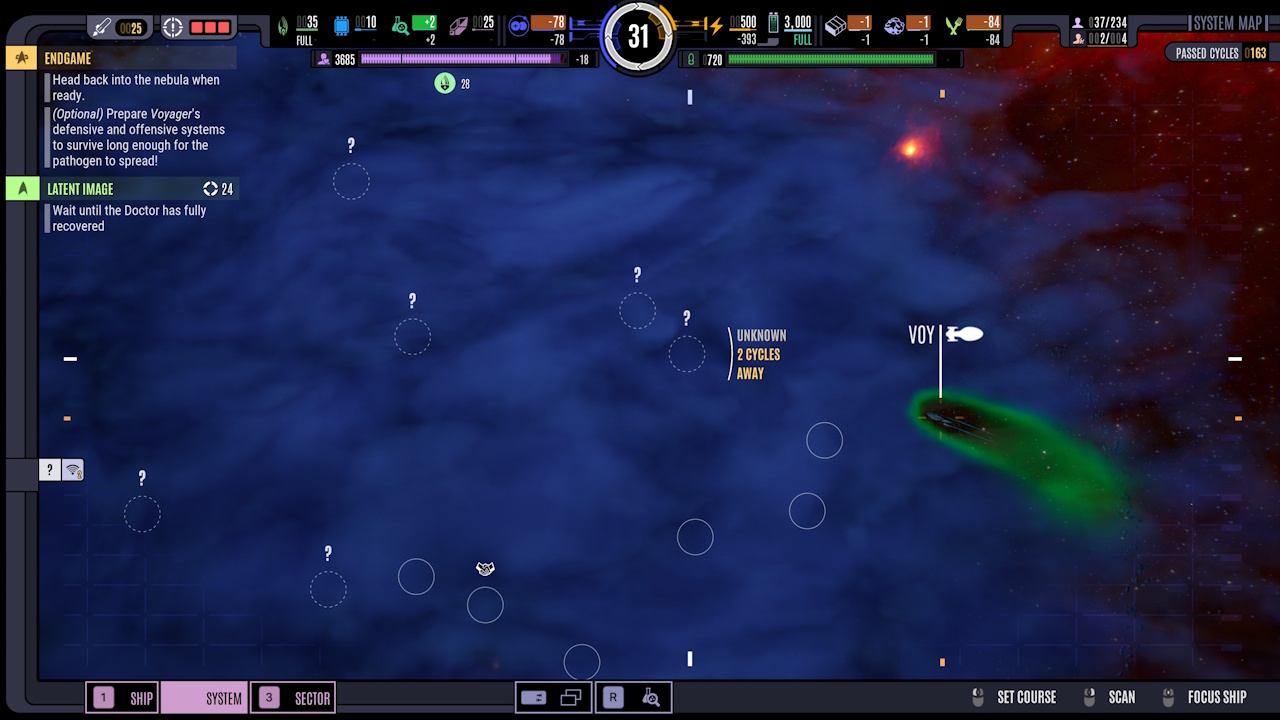
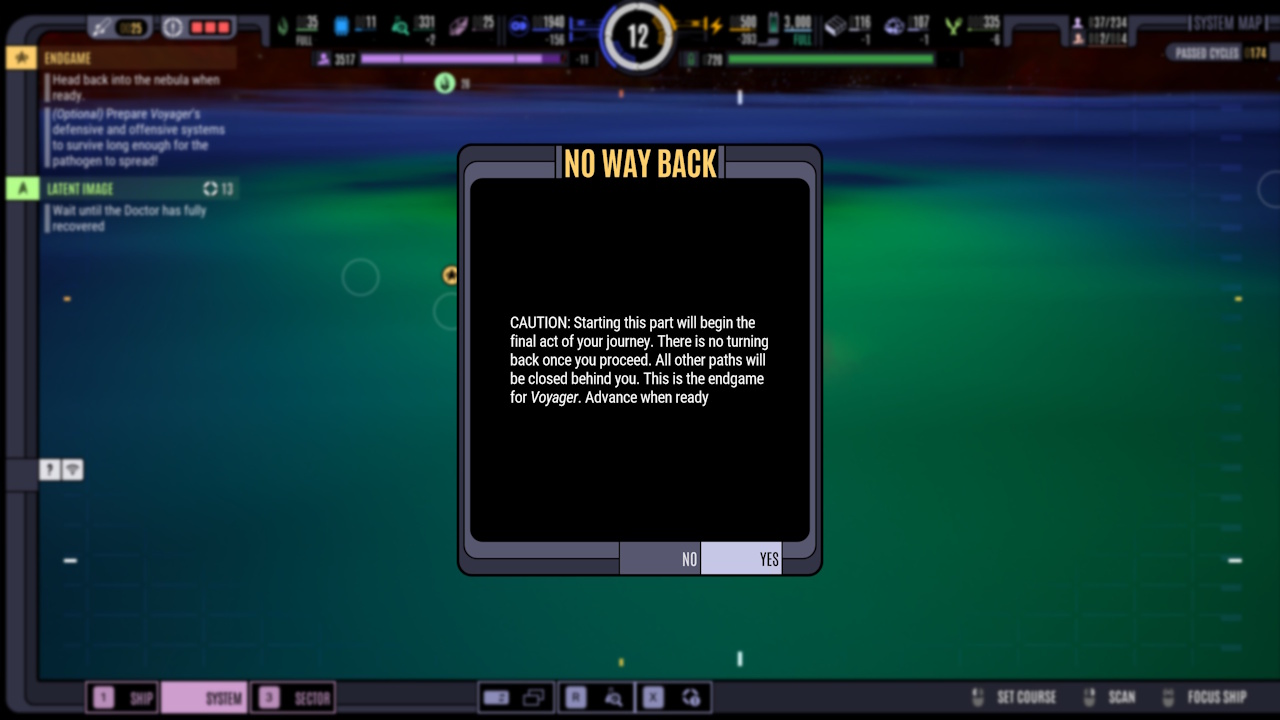
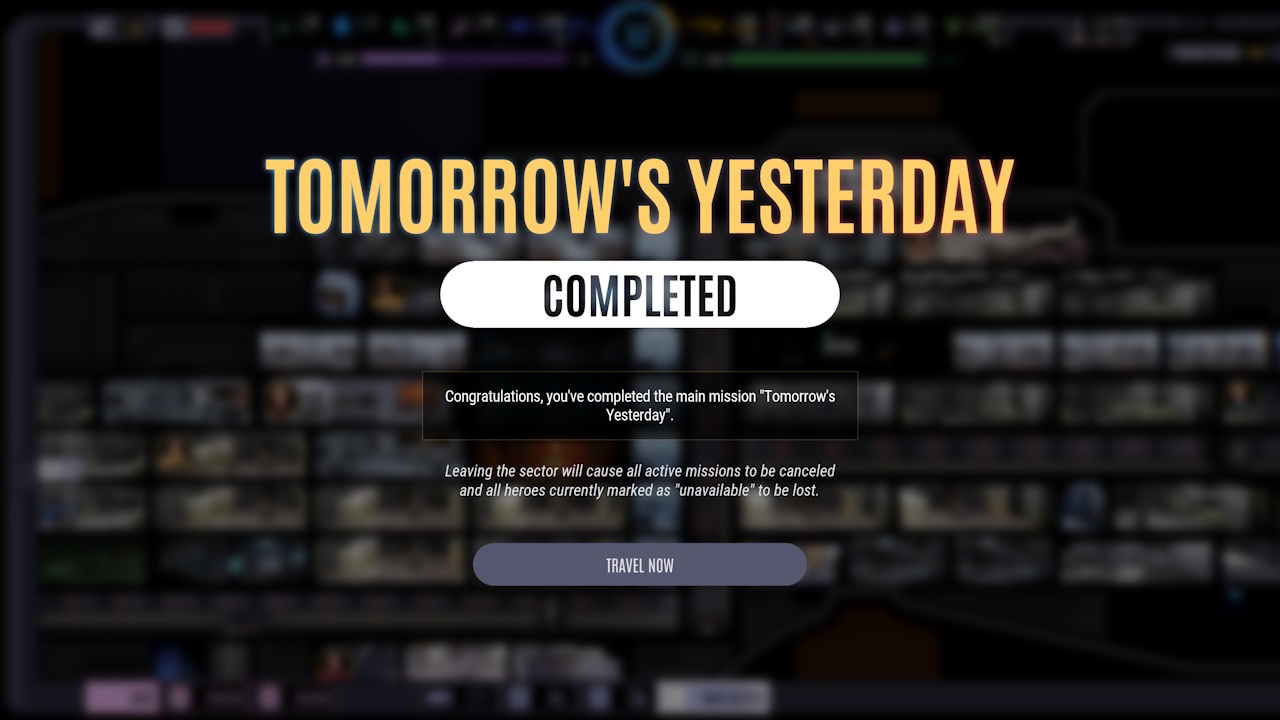
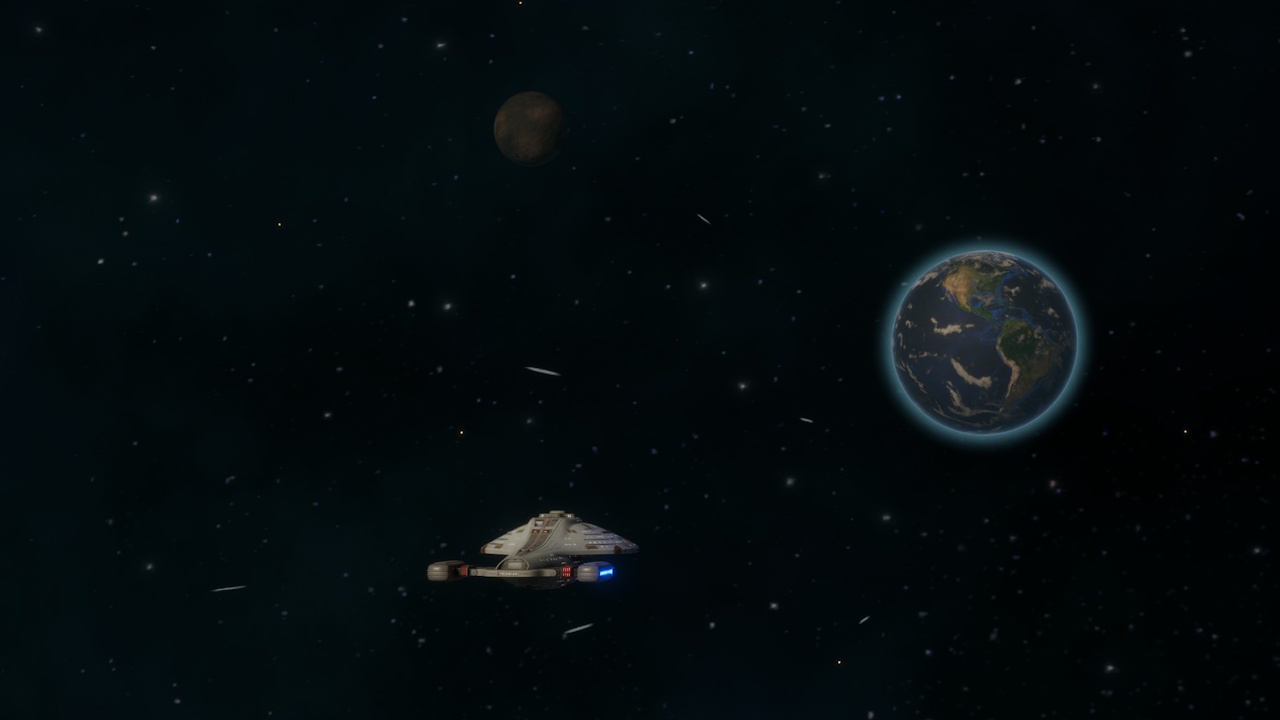
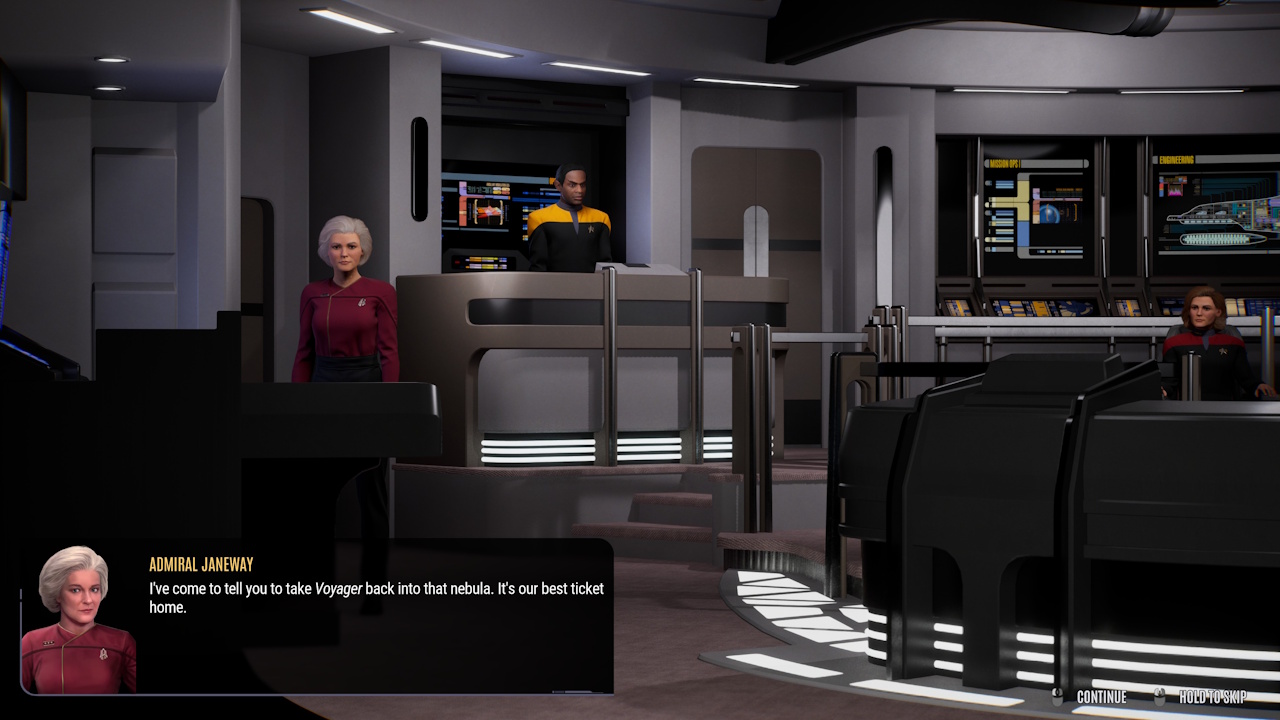
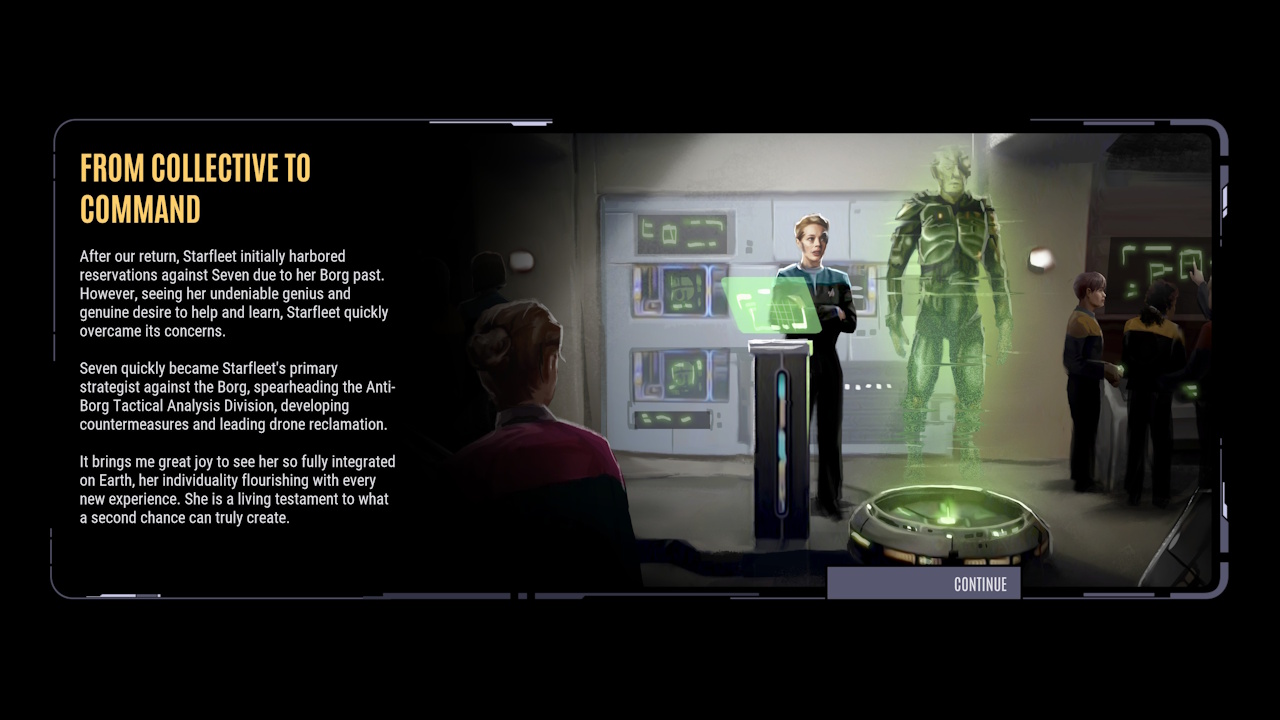
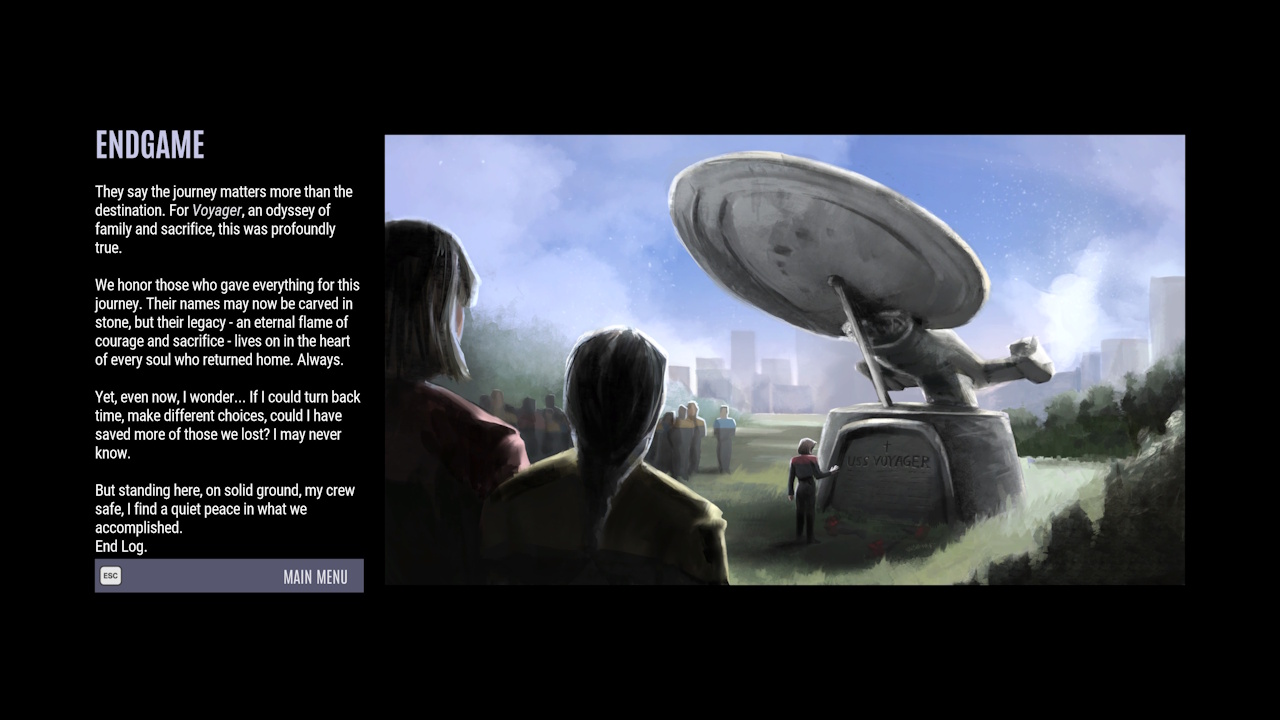
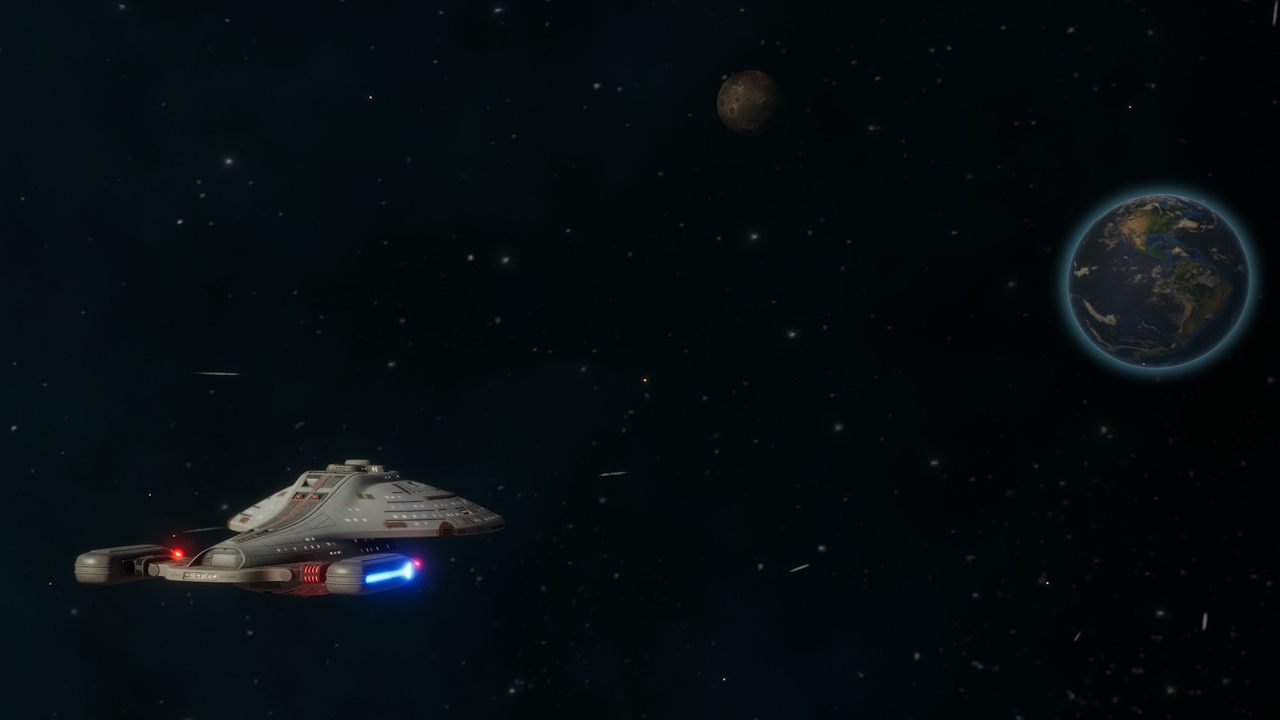
I mentioned this in my review, but the game’s finale still feels pretty underwhelming. You get a text-only log, told from Janeway’s perspective, as the ship is seen cruising towards Earth… and then that’s it. In Endgame, the final shot showed Voyager being escorted by several other Starfleet vessels as she finally made it home – that would be a huge improvement. And I’d love – *love* – to see the ship swooping over the Golden Gate Bridge. That would really be a perfect way to end the game.
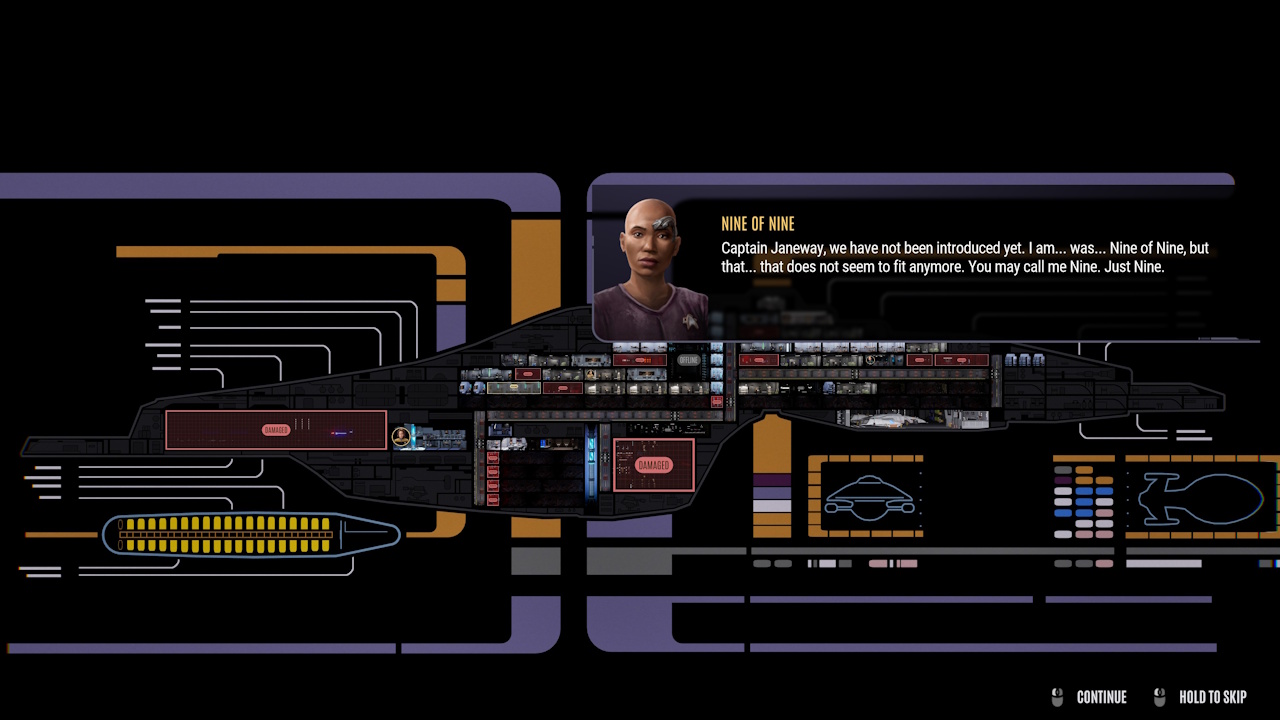
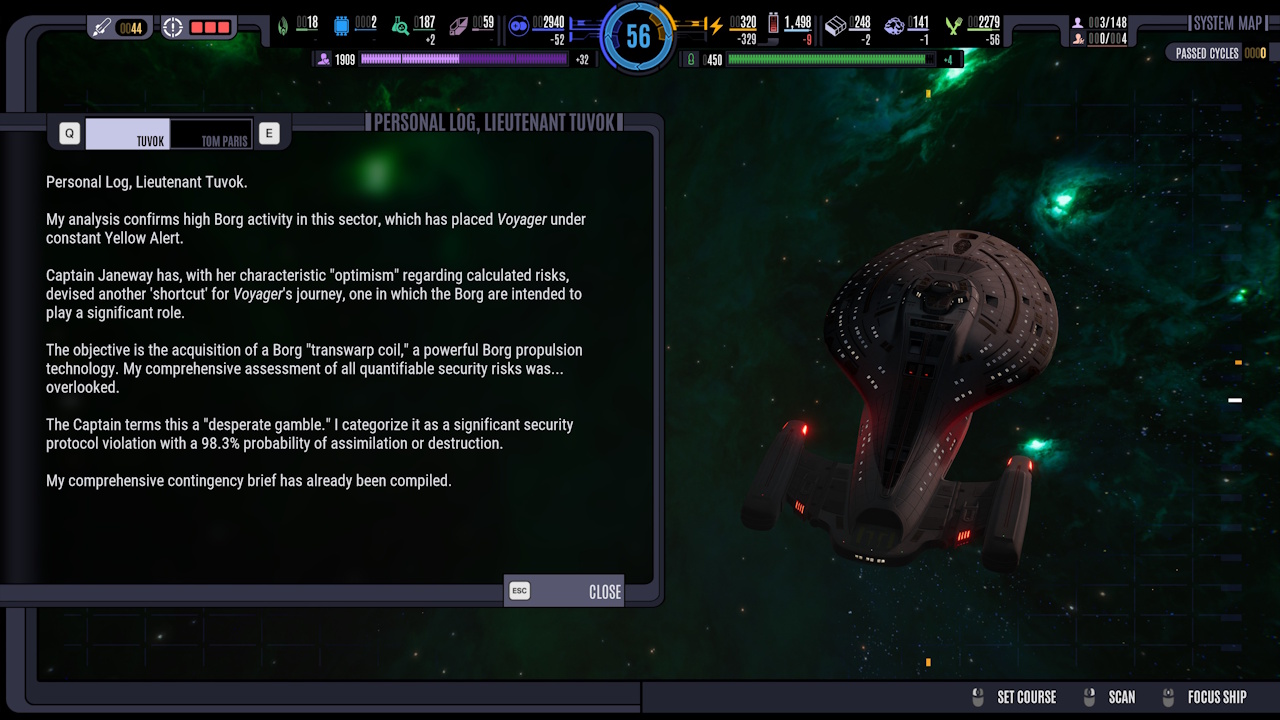
It would be great if that final log entry could be fully-voiced, too. I know that the developers went out of their way to recruit Robert Duncan McNeill and Tim Russ to reprise their roles and record log entries, and those logs have been a ton of fun. I don’t know whether getting Kate Mulgrew is in any way realistic – especially if it’s only for one scene. So maybe Tuvok and Paris could narrate that final scene between them? I don’t think it would be so glaring or so notable if we hadn’t had those logs from Paris and Tuvok throughout the game, but I think it does feel like something is missing from those final moments. At the very least, I’d like to see updated cut-scenes depicting Voyager, accompanied by more Starfleet ships, and ideally, that shot of the Golden Gate Bridge, too.
There are a few memorable episodes from the show that I feel would’ve made for fun inclusions. I know that, with 168 episodes, Across The Unknown couldn’t possibly adapt all of them! That’s fine – some episodes wouldn’t really suit a game like this, anyway. But some genuinely would, and while I’m not surprised that they’re missing, I think adding them in would be a great way to improve the game.
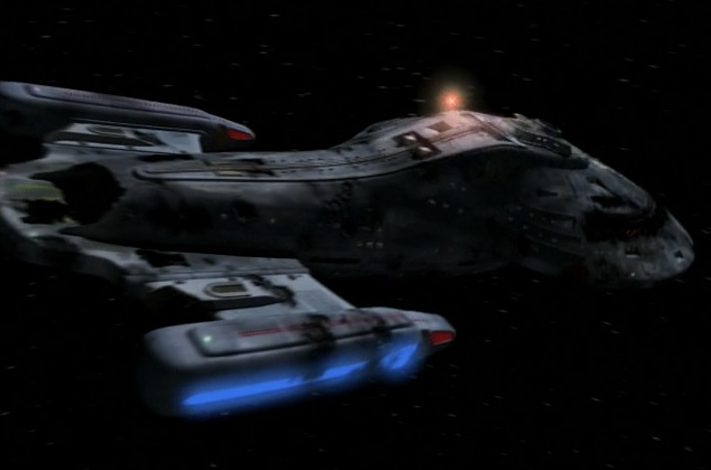
Let’s start with Year of Hell. This would, in my view, work best as a new main mission with a whole sector entirely built around Voyager’s conflict with the Krenim. Imagine slowly having to deactivate entire decks, seeing heroes die, rooms destroyed, and eventually having to make a final, consequential choice: sacrifice this version of the ship and this version of Janeway, who you’ve spent the whole sector with, to potentially restore an earlier version of the ship and the timeline, or try to escape the Krenim having basically lost everything. Making the canon choice would reset Voyager back to the way it was before the sector began – all your unlocks and collected resources would be gone, but the ship and any dead heroes would be restored. Alternatively, trying to press on could mean the ship is permanently crippled – unable to increase the warp core cap, or perhaps with entire decks permanently destroyed and unusable. It could be an *incredible* inclusion if handled well.
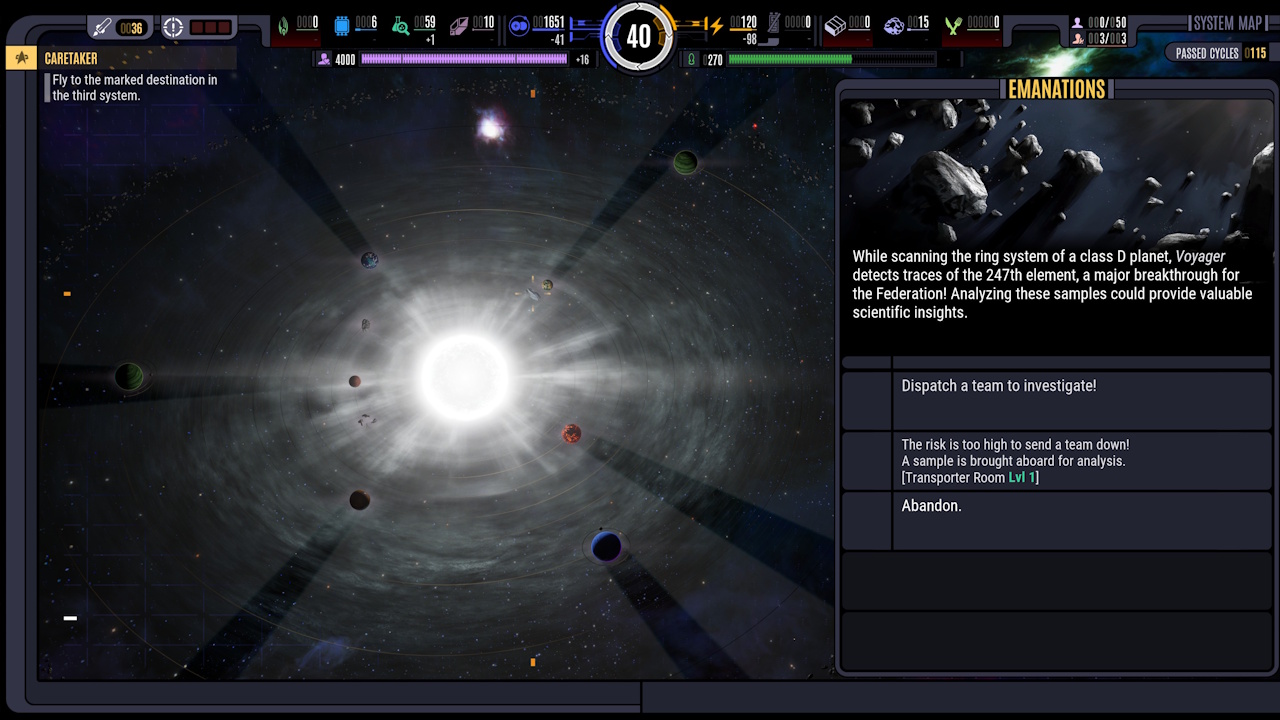
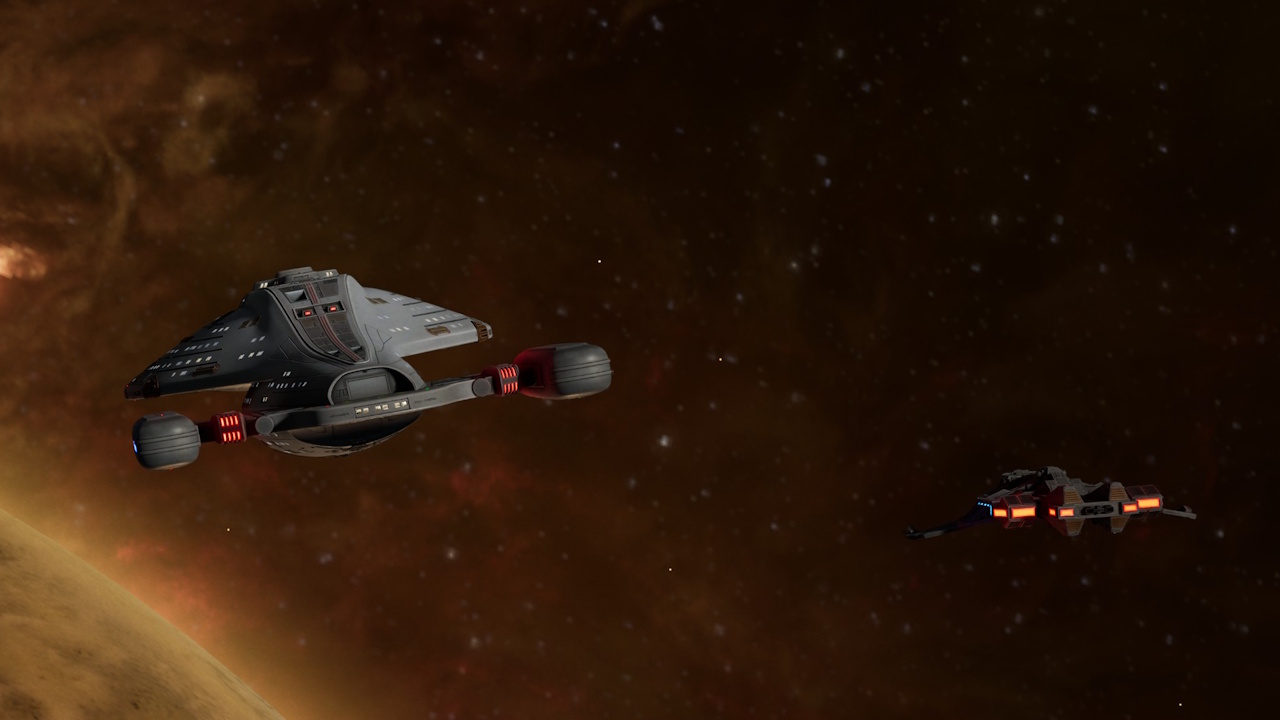
The 37’s could see you gain Amelia Earhart as a hero – or else lose half the crew to staying behind on the colony, if you don’t play your cards right. Dreadnought could put B’Elanna at risk, but could unlock torpedo upgrades, perhaps. False Profits could unlock a Ferengi hero. Future’s End would be a fun blast of ’90s nostalgia with an away mission to Earth! The Omega Directive could be another, like Juggernaut, that has potentially run-ending consequences, but which could unlock a powerful new technology or something of that ilk. Relativity would send Seven to the future, building on the events of Future’s End, and could unlock Ducane as a hero. Pathfinder could unlock Barclay as a hero, and that would be a lot of fun. The Haunting of Deck Twelve would be a fun, spooky nebula story that could unlock a new tech to help make navigating nebulae easier. Prophecy could net you a classic Klingon D7 Battlecruiser as a combat ally. And so on – I’m sure you have your own examples.
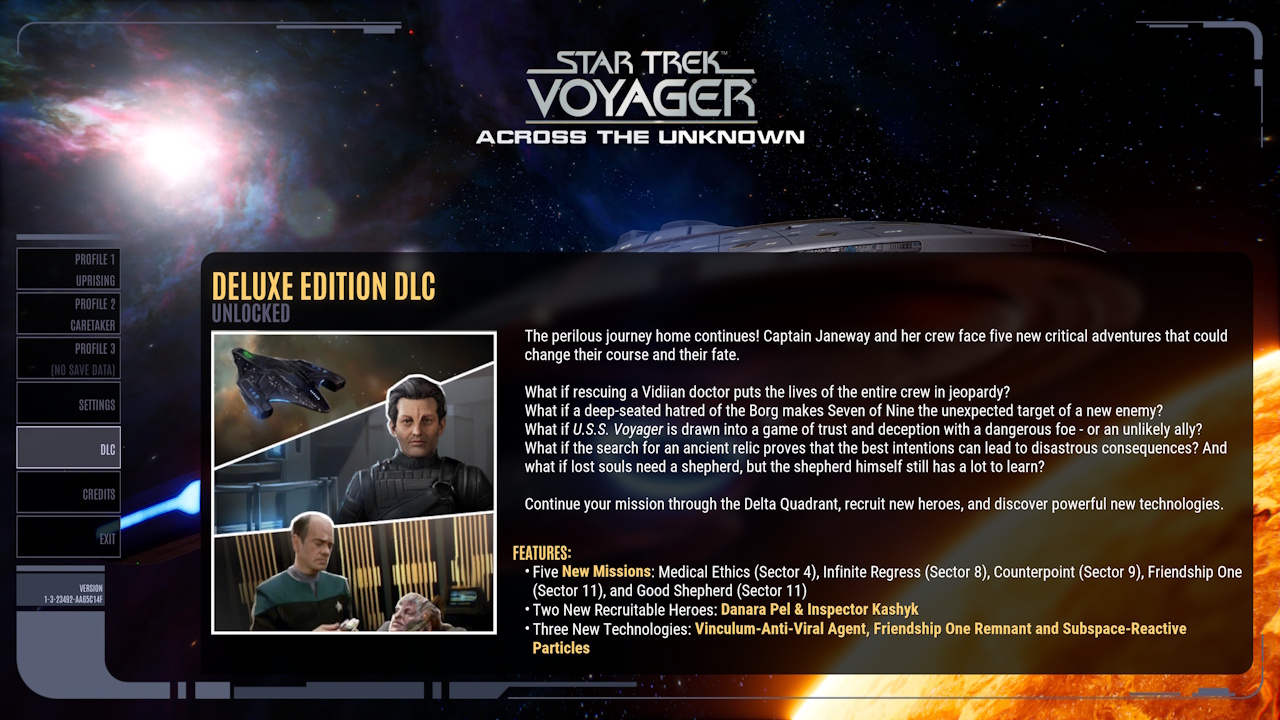
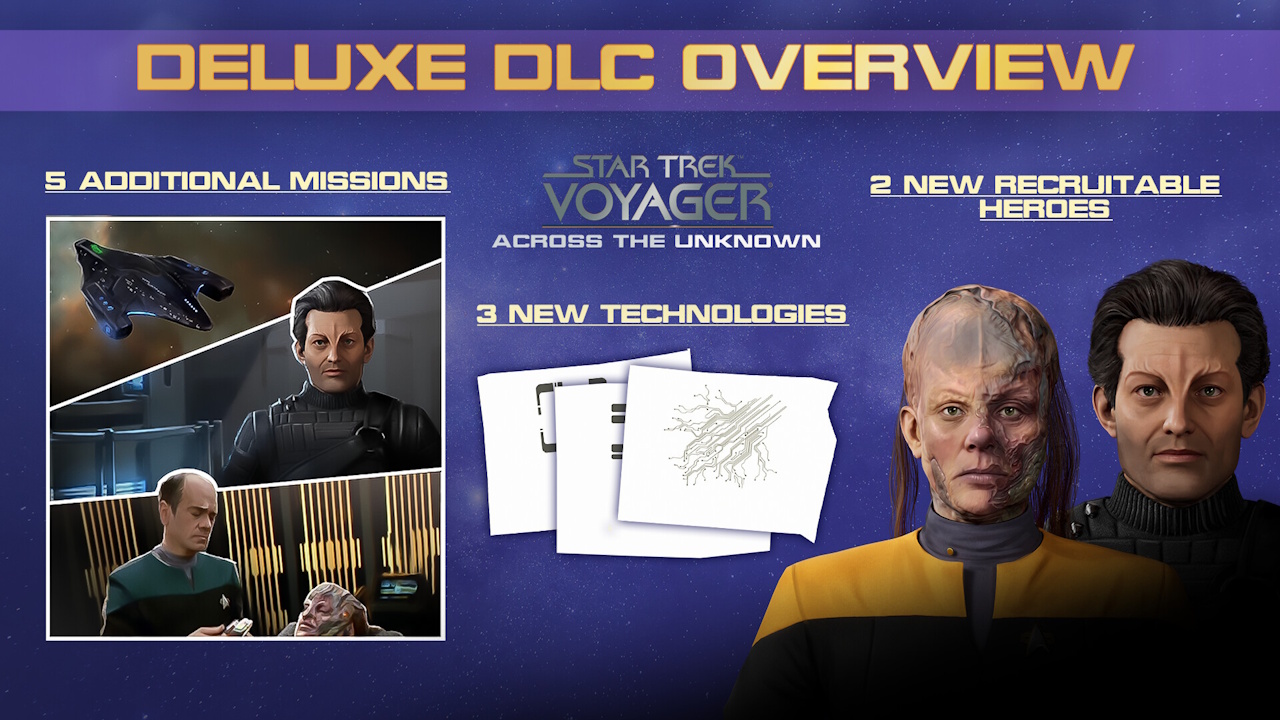
Maybe, given the game’s success, some of these ideas will be considered for free updates or even as paid DLC. I’ve had a blast with Across The Unknown so far… and I genuinely wouldn’t mind paying for DLC if it expanded the game significantly. I said in my review that the “deluxe edition” felt a bit steep for what it was, but an expansion which would add one main story mission in Year of Hell, half a dozen side-missions as suggested above, a few new characters, a couple of new techs, and more… I mean, I’d buy that.
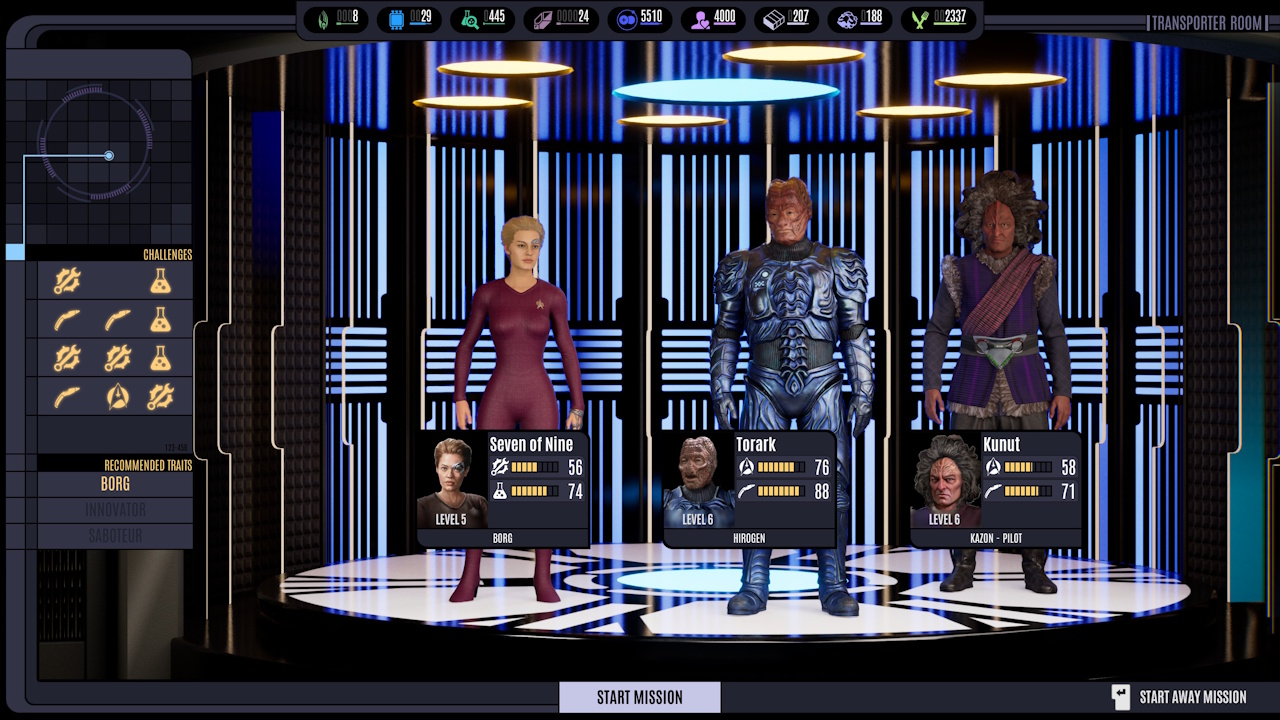
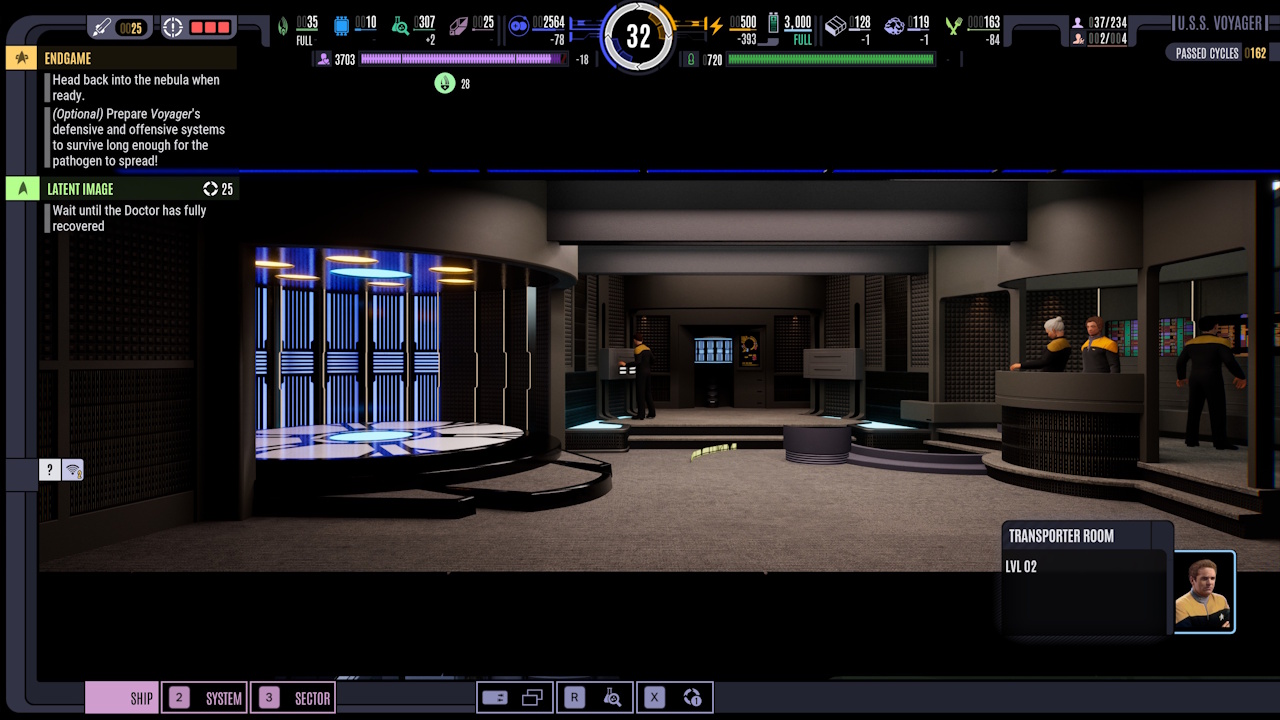
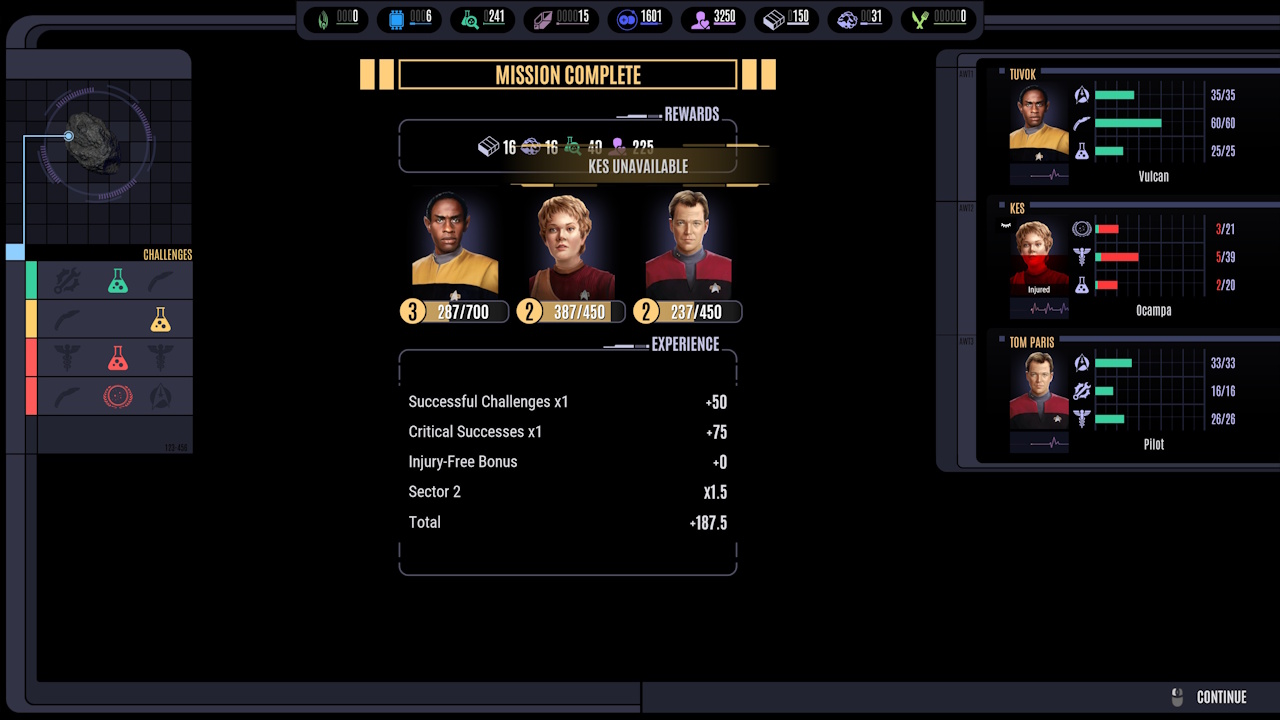
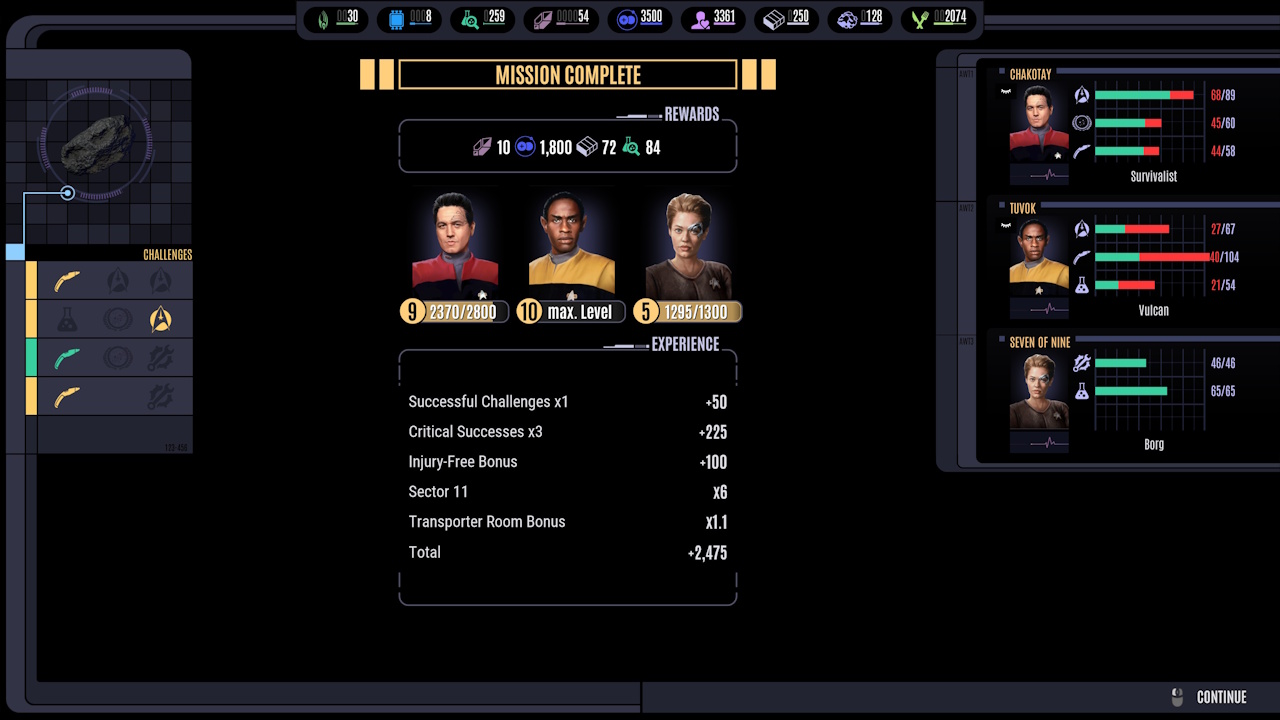
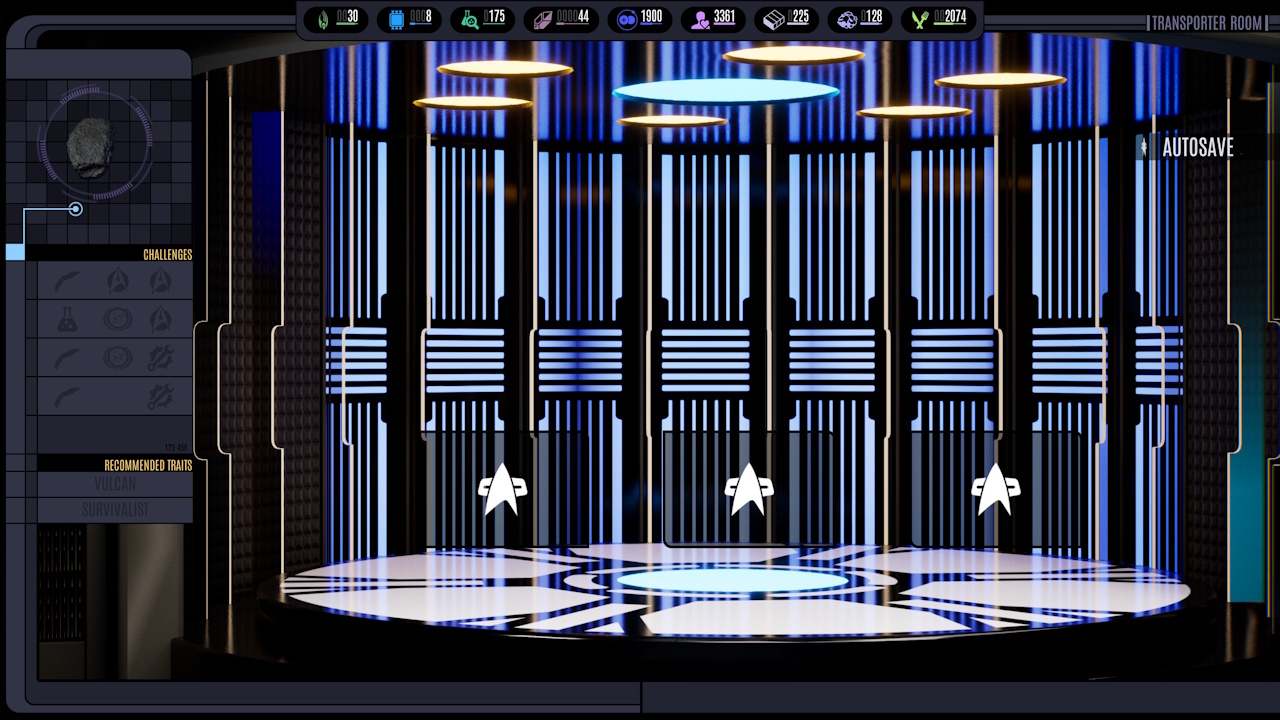
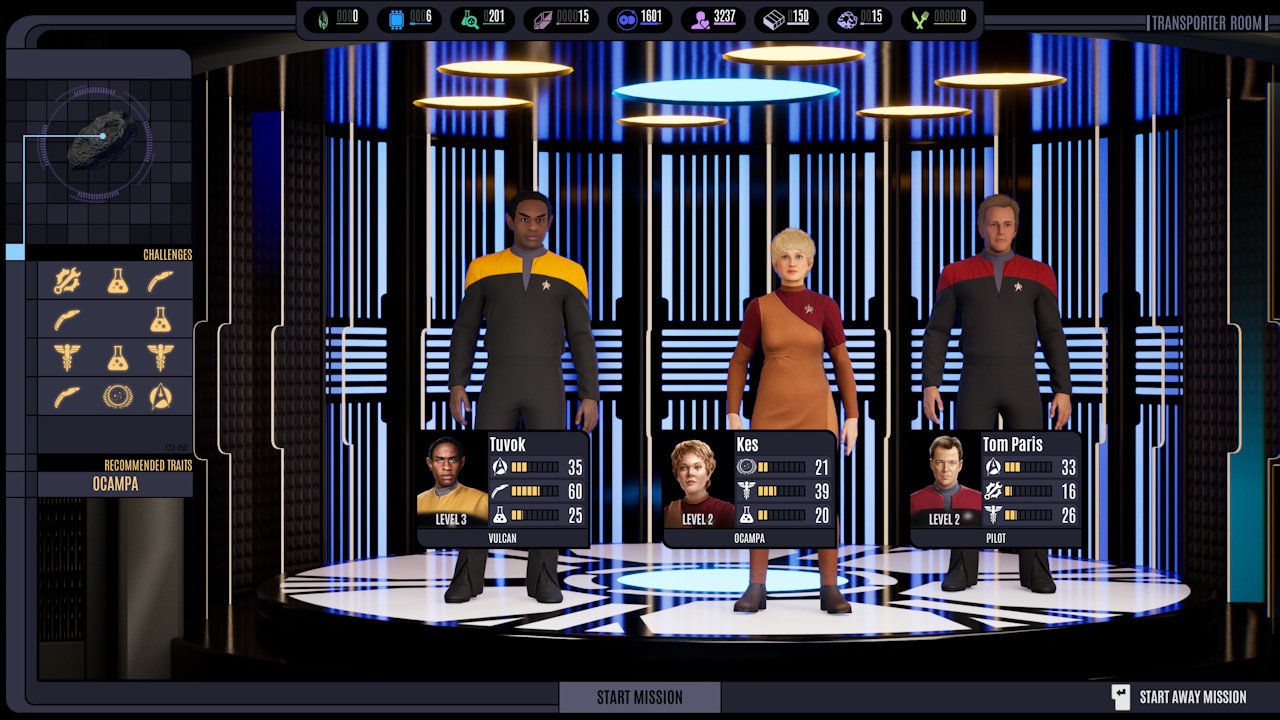
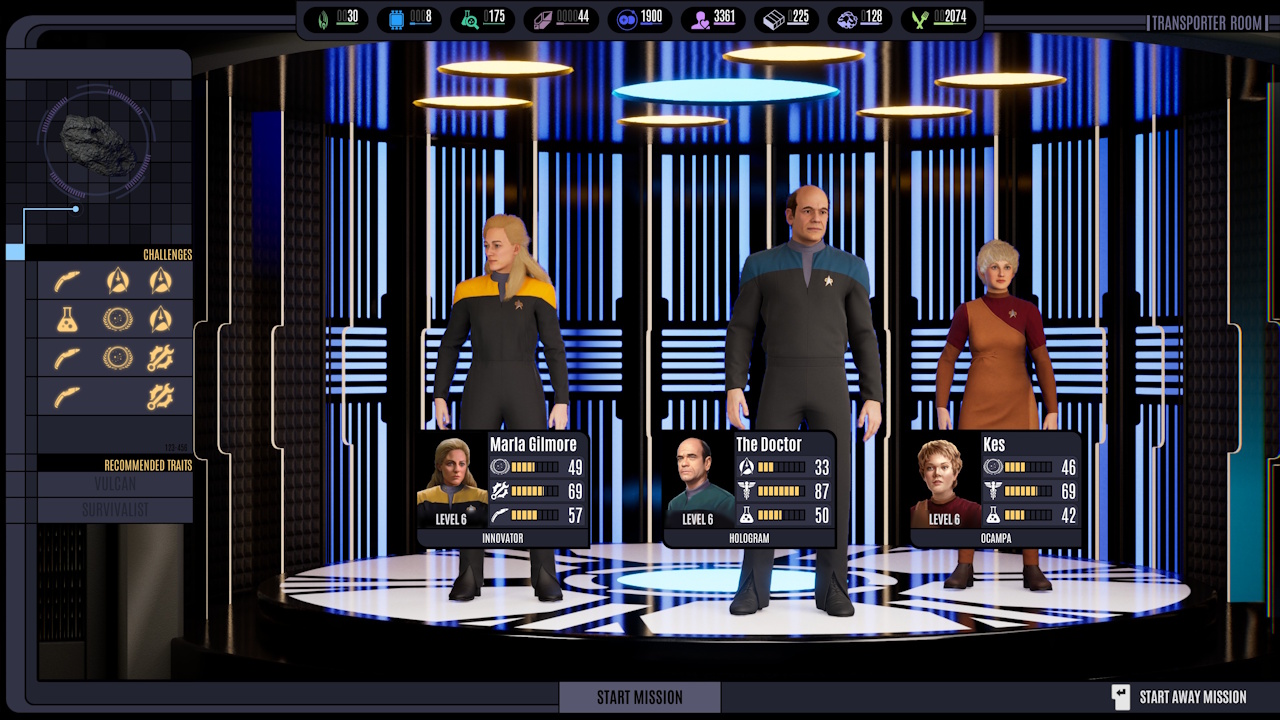
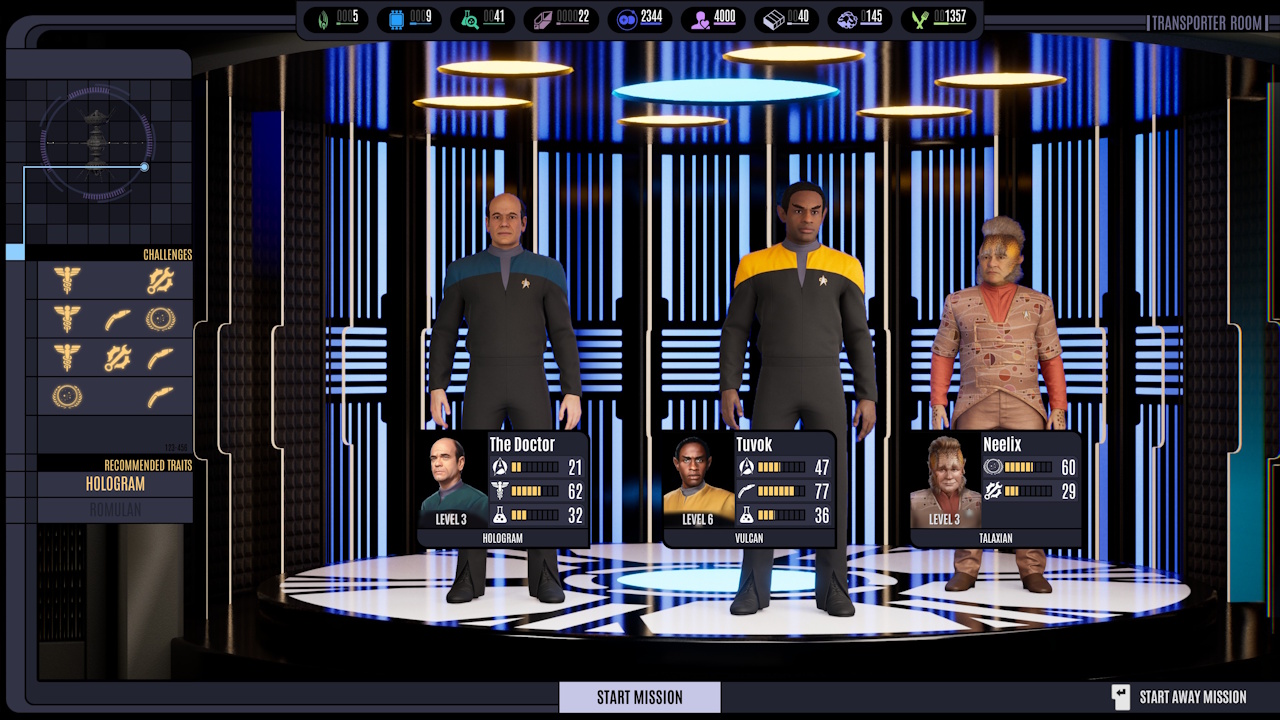
I’d like to see some potential late-game upgrades to both the transporter and the ship’s combat abilities. In short, I think it would be a lot of fun if you could work your way up to being able to have *four* heroes, instead of three, for both away missions and combat. There are a few heroes who I didn’t really get to use very much, and I just think it would be fun to add that in as an option.
Sometimes in games like this, I scout out the tech tree and decide which prizes are worth racing to get! And in Across The Unknown, it could be worth speed-running something like a transporter upgrade if it meant you could send four people on away missions, increasing both your chances of success *and* the XP those characters would gain. It would need to be balanced carefully, so that other aspects of the game don’t end up feeling too easy, but I think it’s achievable. And, again, it would be an improvement – as well as something for players to work towards.
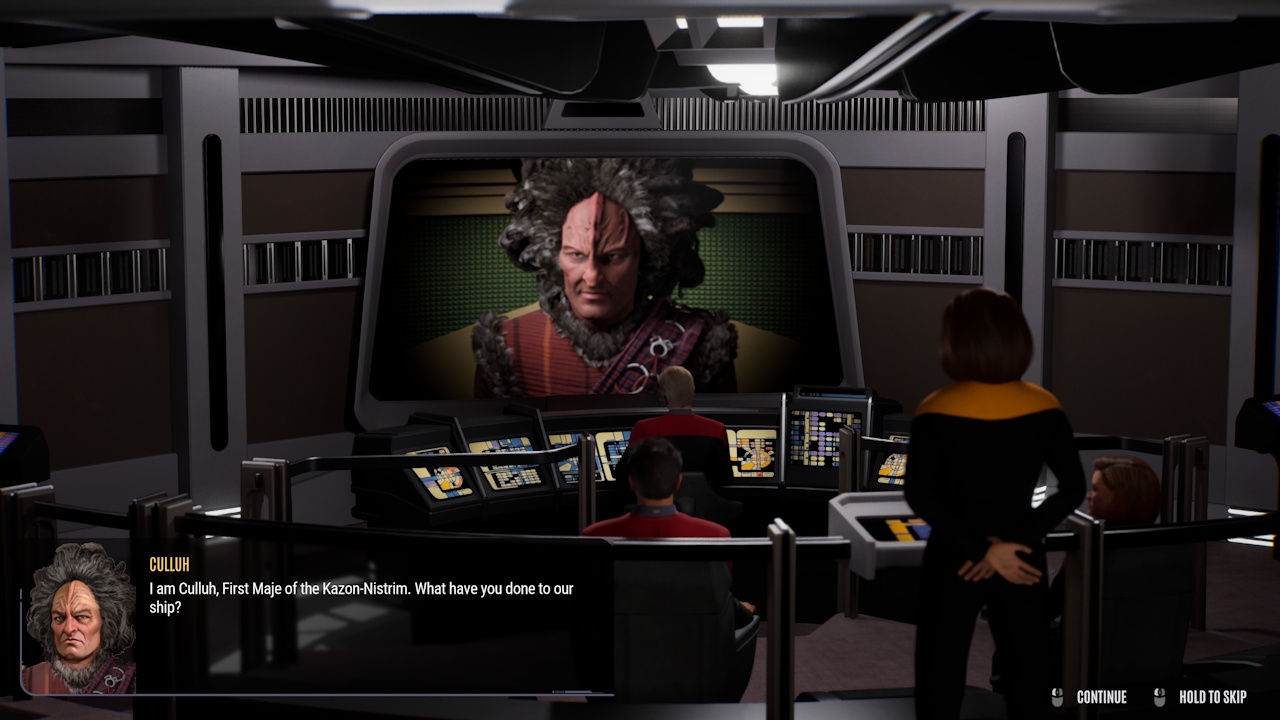
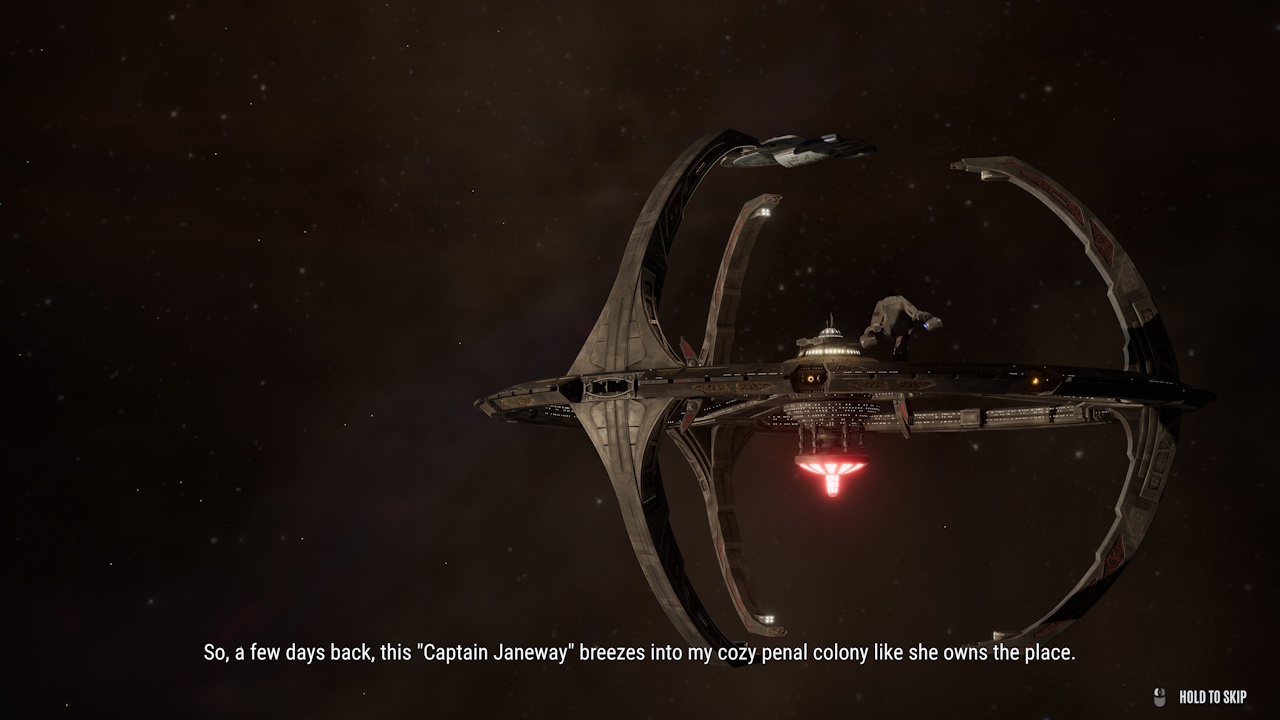
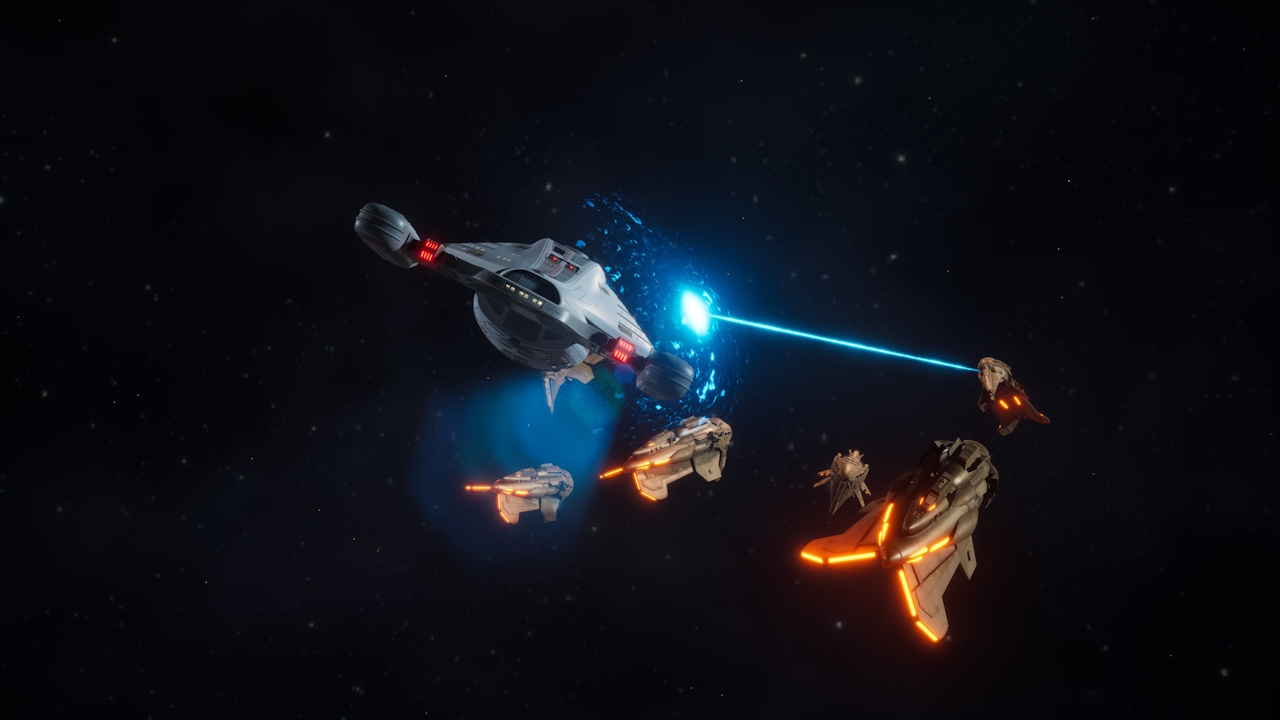
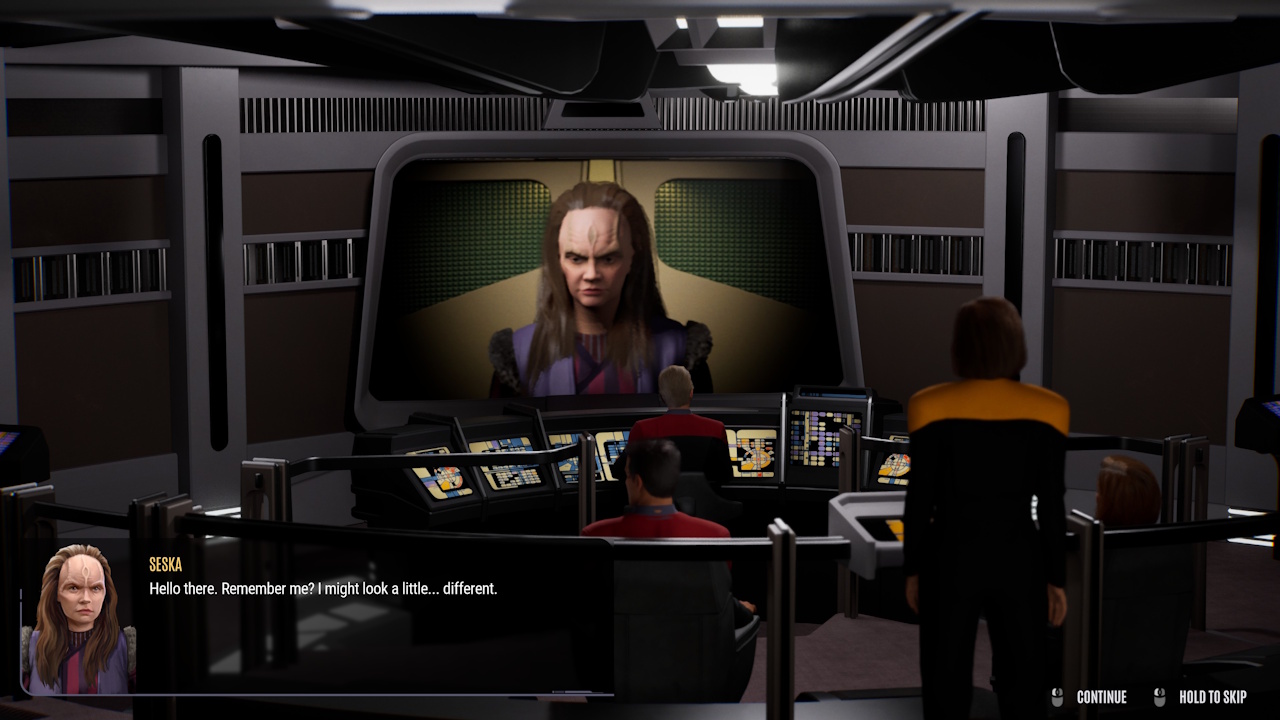
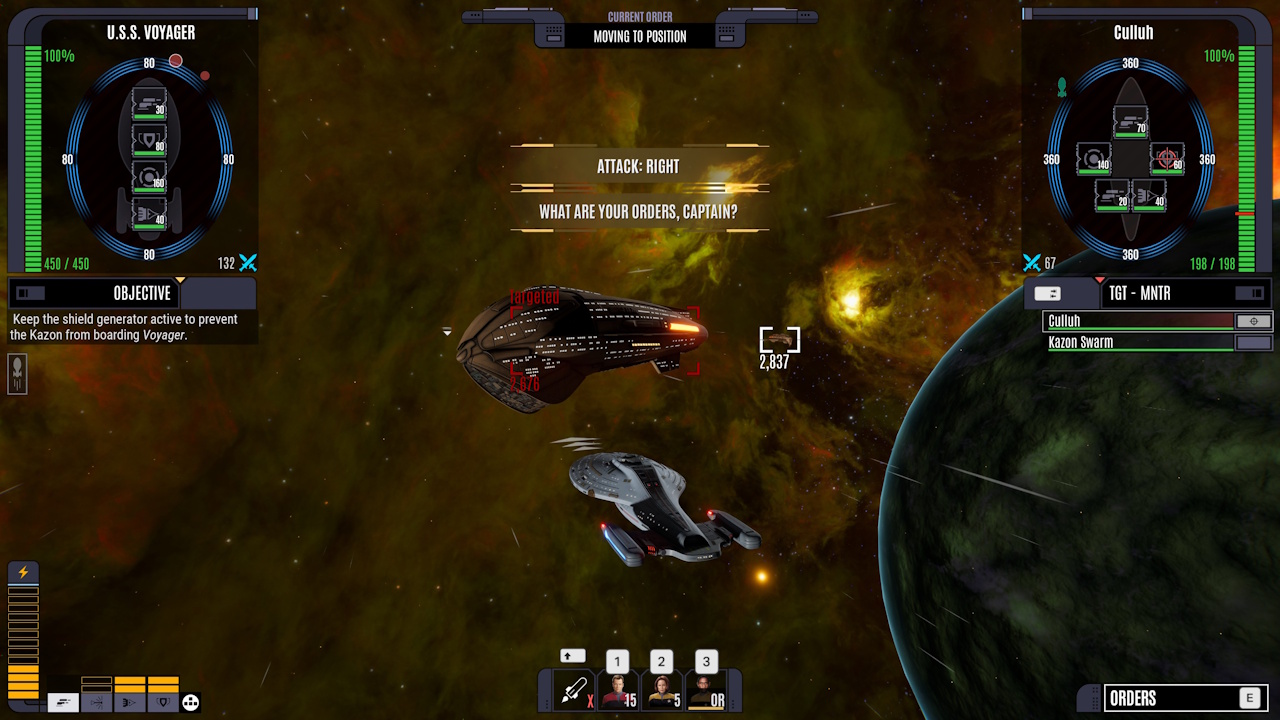
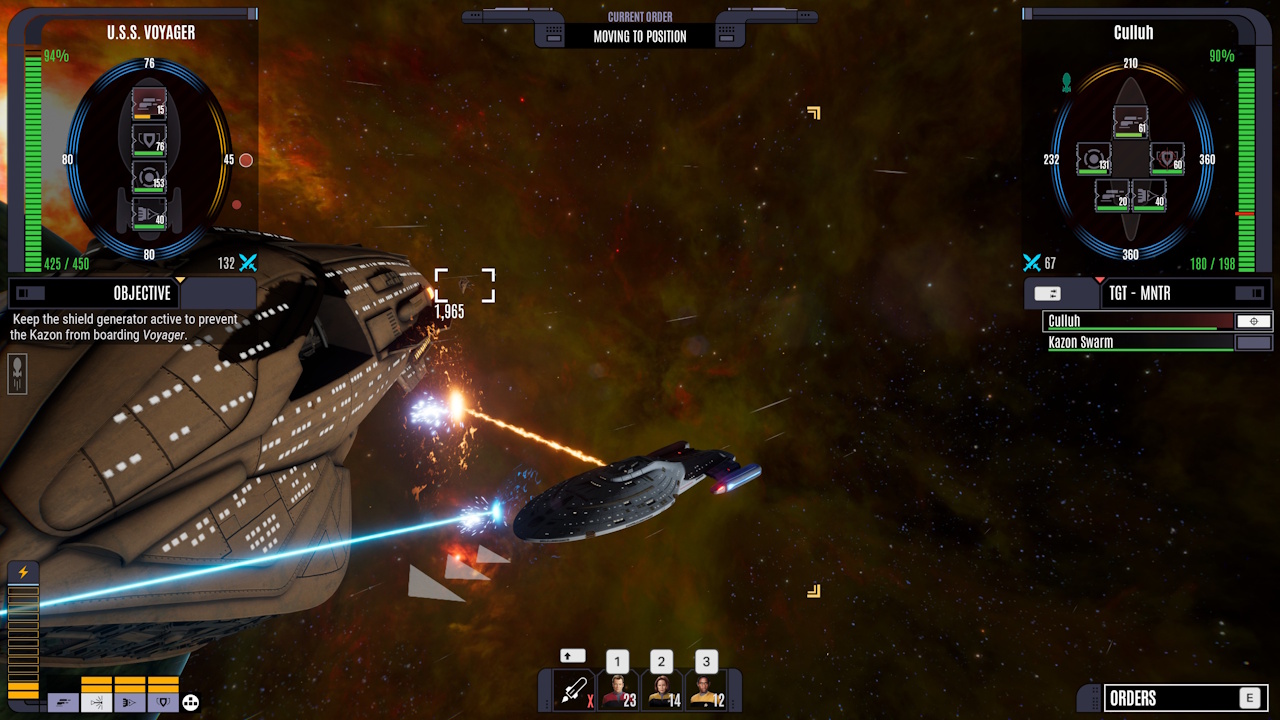
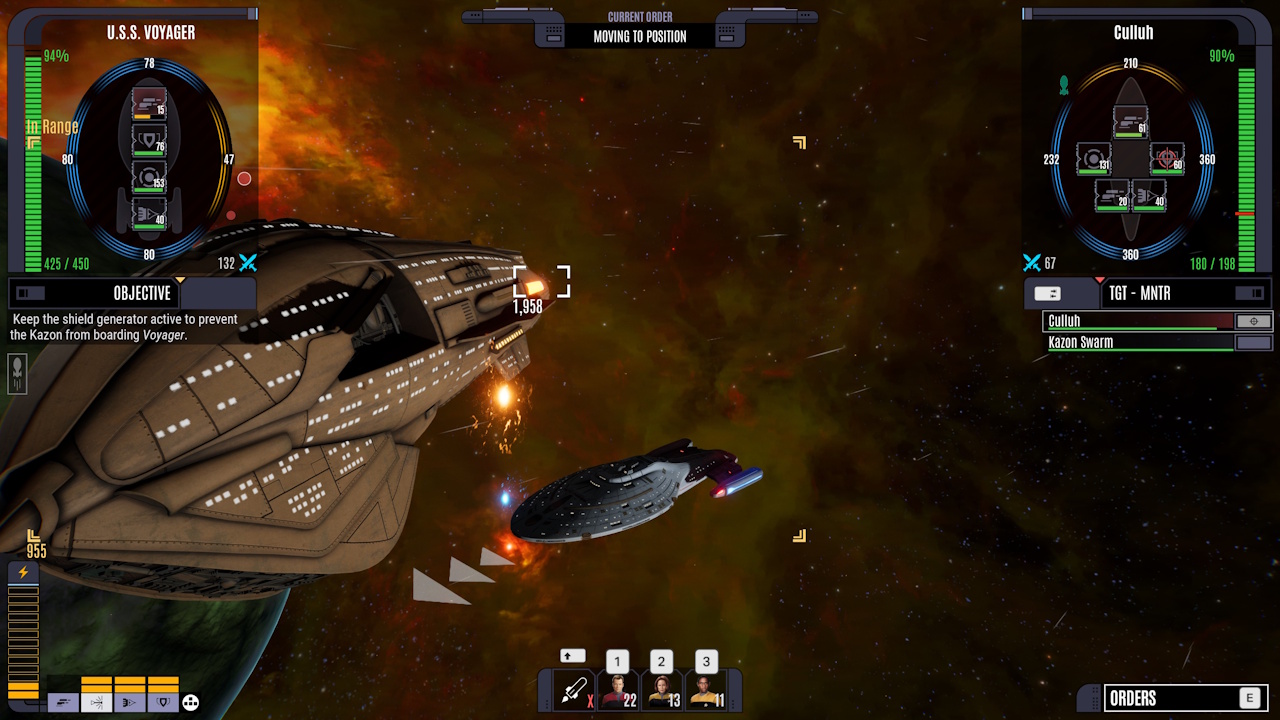
Something I didn’t mention in my review, but really should have, pertains to balancing. In short… I kind of feel like Across The Unknown is a game divided into two halves. You have the early missions, leading up to the conflict with Seska and Culluh, and then after that… you have the rest of the game. The early game is much, much harder, and I would personally rate the fight against Culluh as the toughest boss battle in Across The Unknown. That entire sector beats you up, with random Kazon encounters a near-constant threat, and it comes at a point when you won’t have had time to either properly build up the ship or unlock all of your capabilities.
But after beating Culluh (which took me two attempts even on my second run), the game kind of eases off – or at least, it feels like it does. The result of this is that you kind of have a game of two halves: before and after the Culluh fight. A tougher early game culminates in a very tricky boss fight, but then things seem to let up and you get what feels like an easier ride through the remainder of the game. I don’t think that’s a criticism, necessarily – more of an observation. But if you’ve been struggling, wondering if it’s worth sticking with the game because of how difficult it feels at first… definitely persevere. Once you’re past Culluh, I found it got a lot easier (and more fun!)
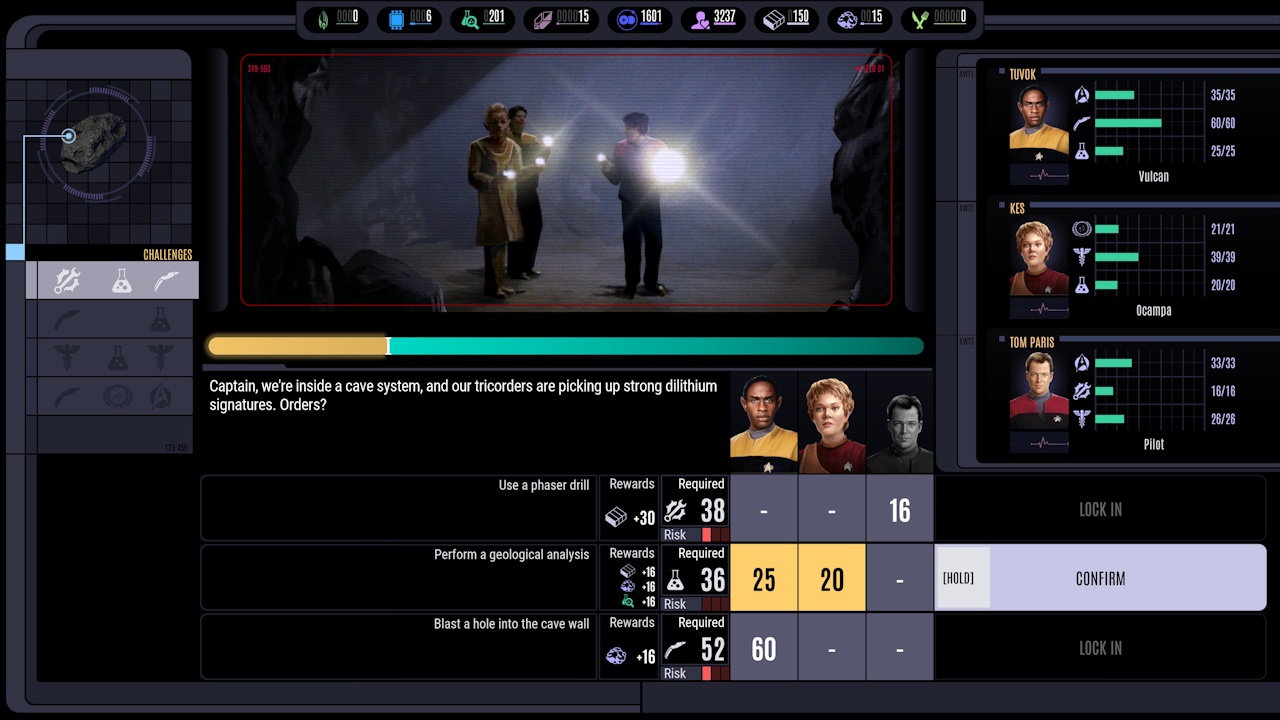
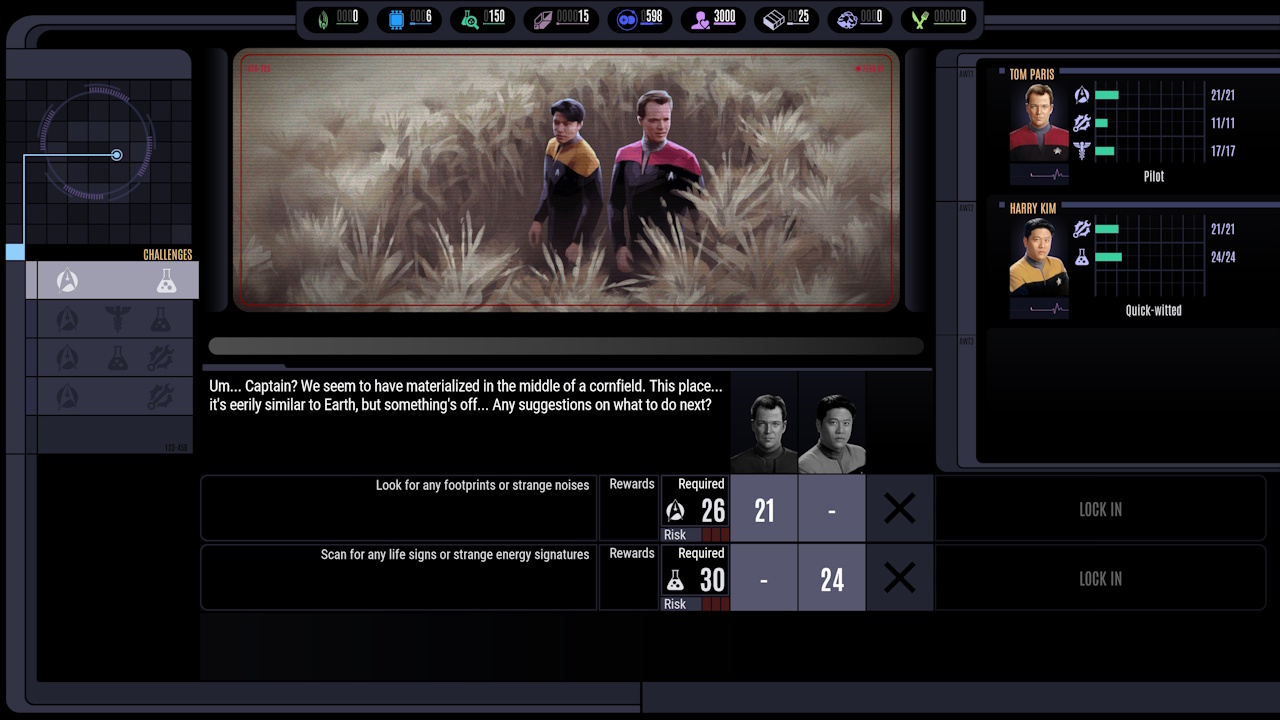
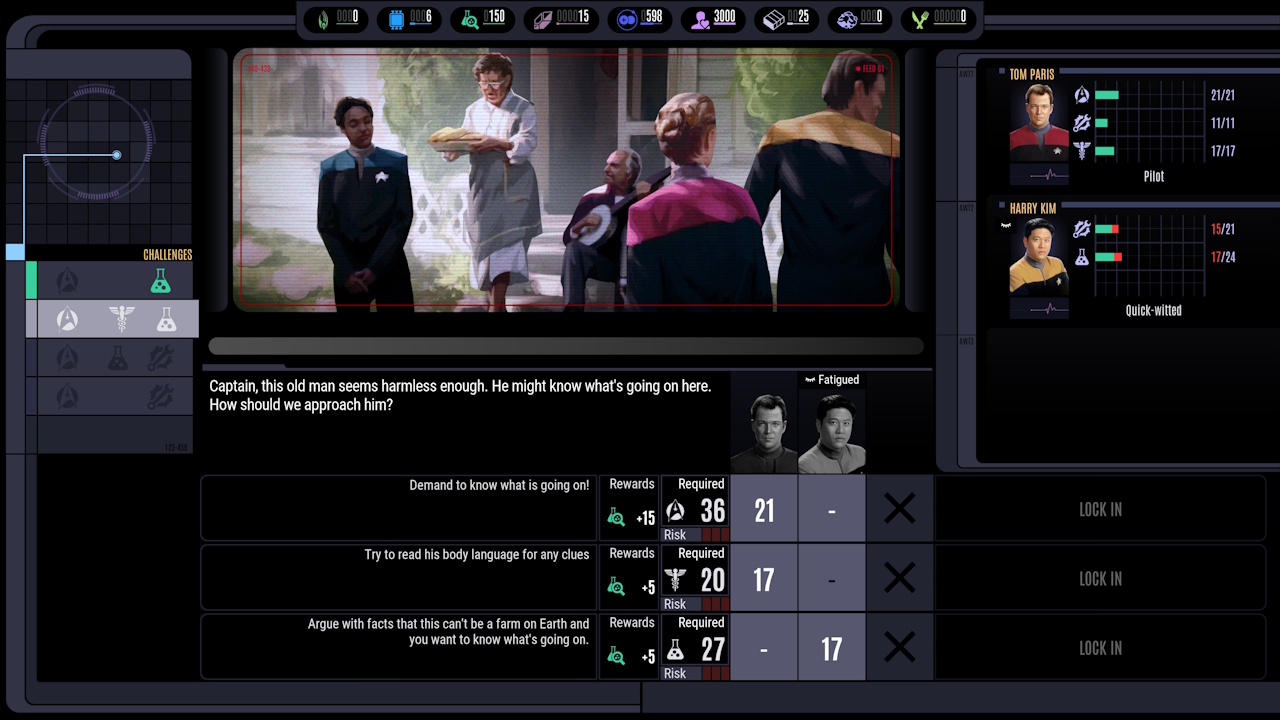
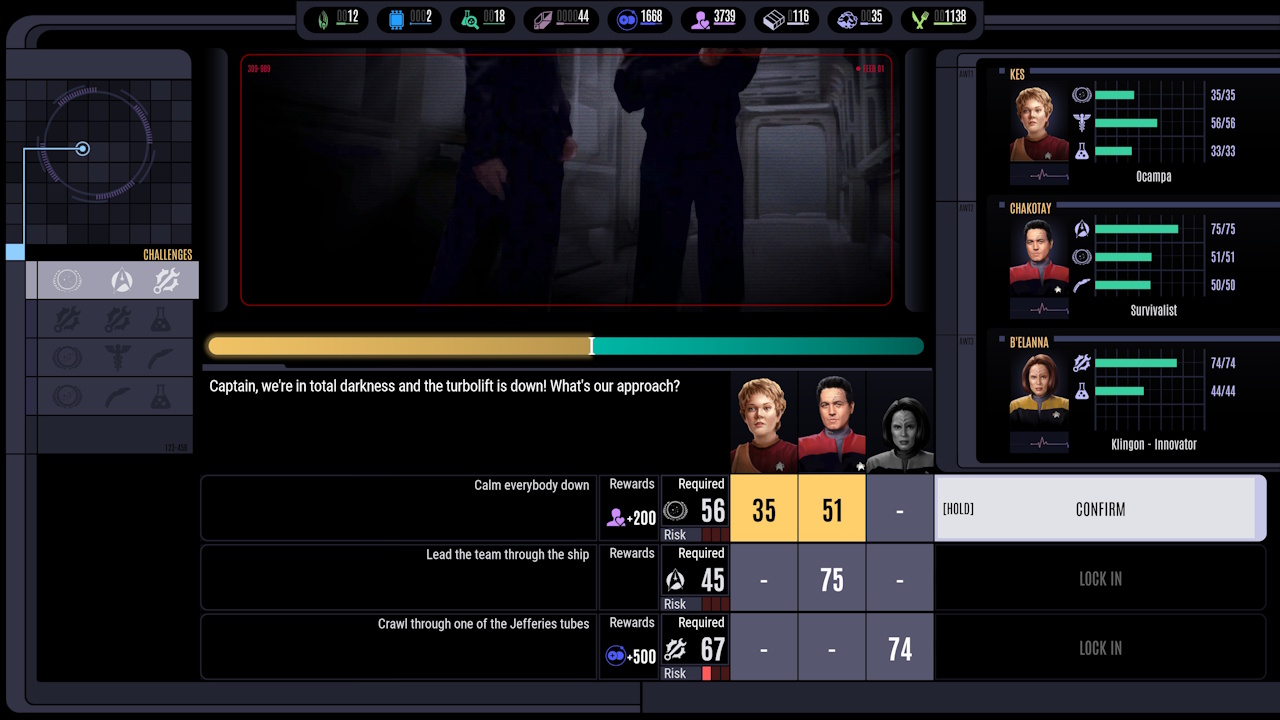
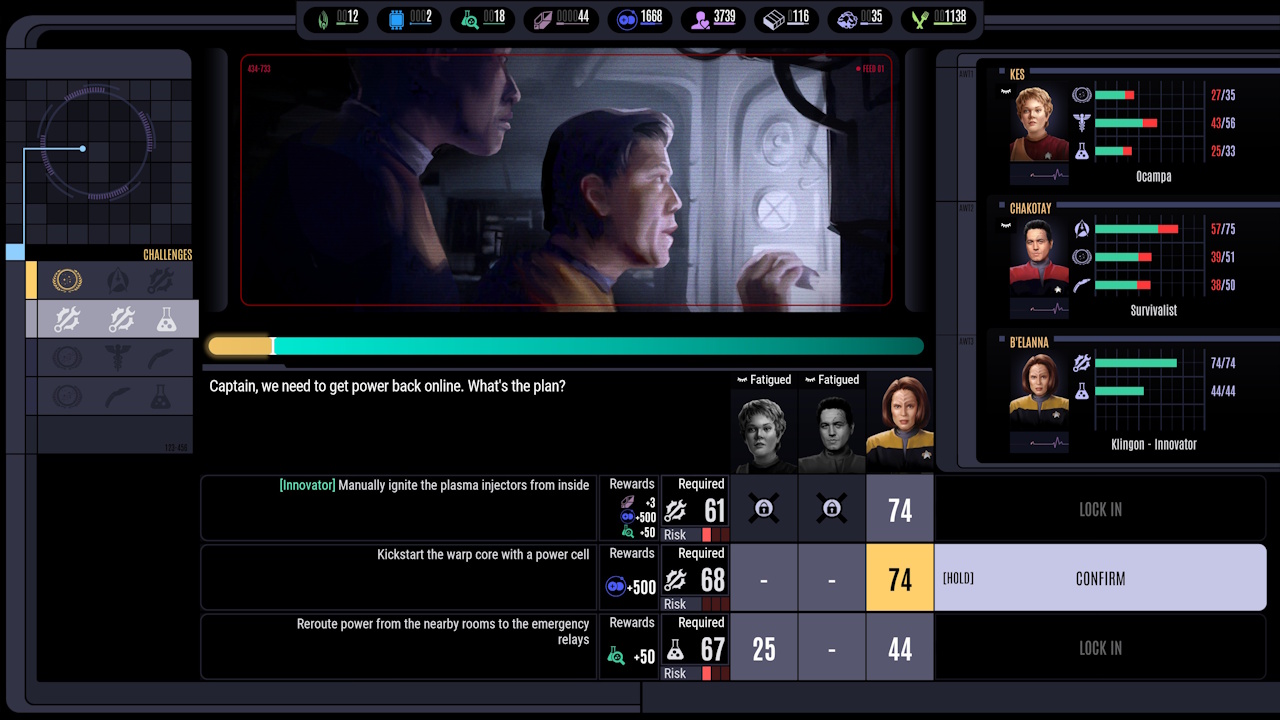
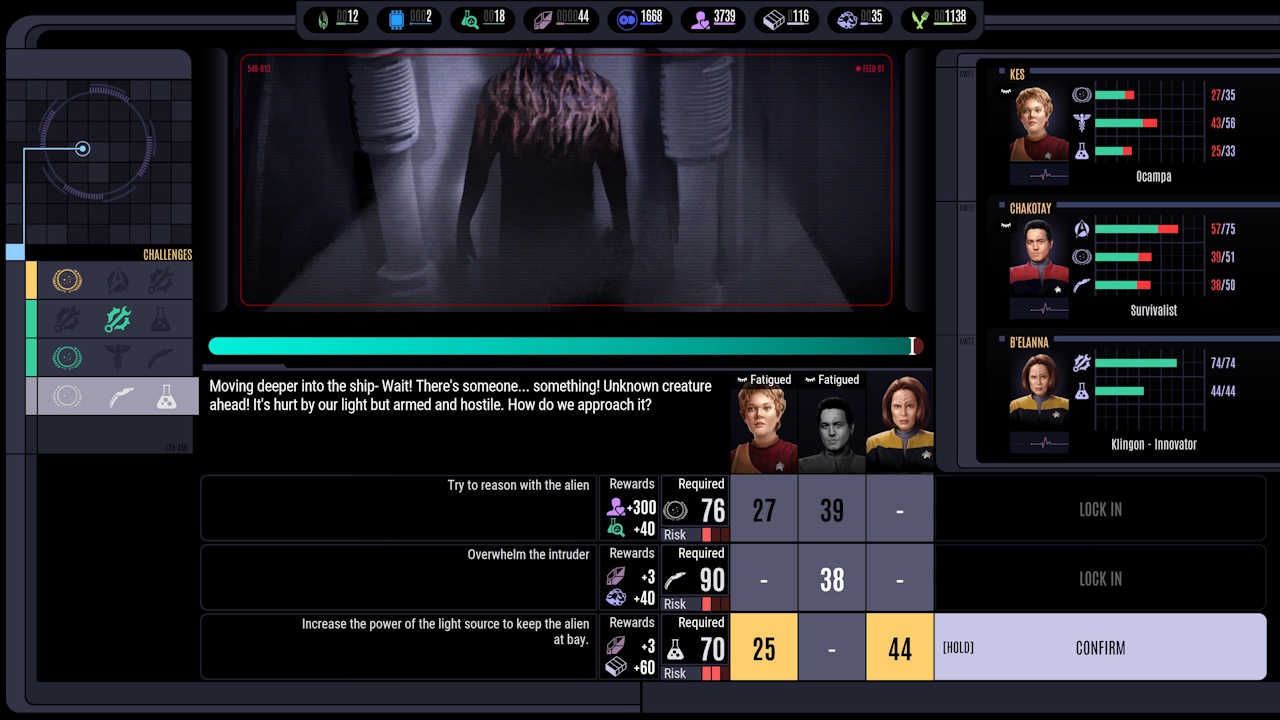
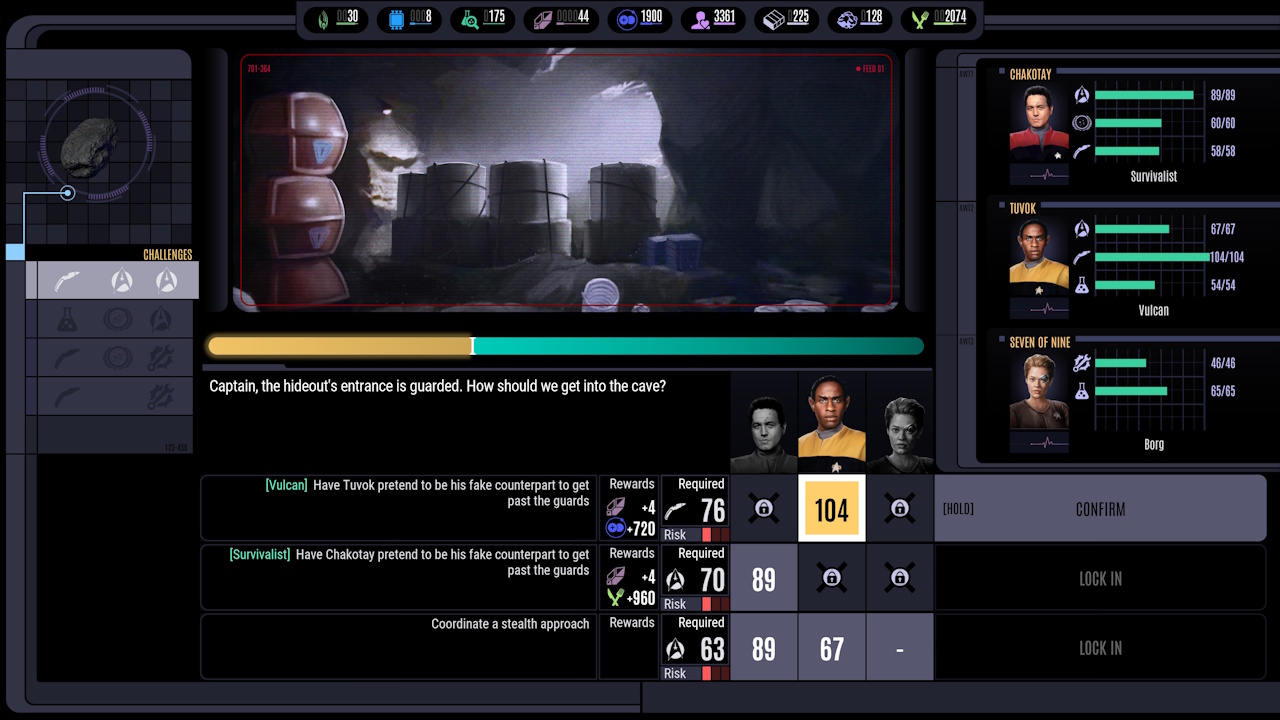
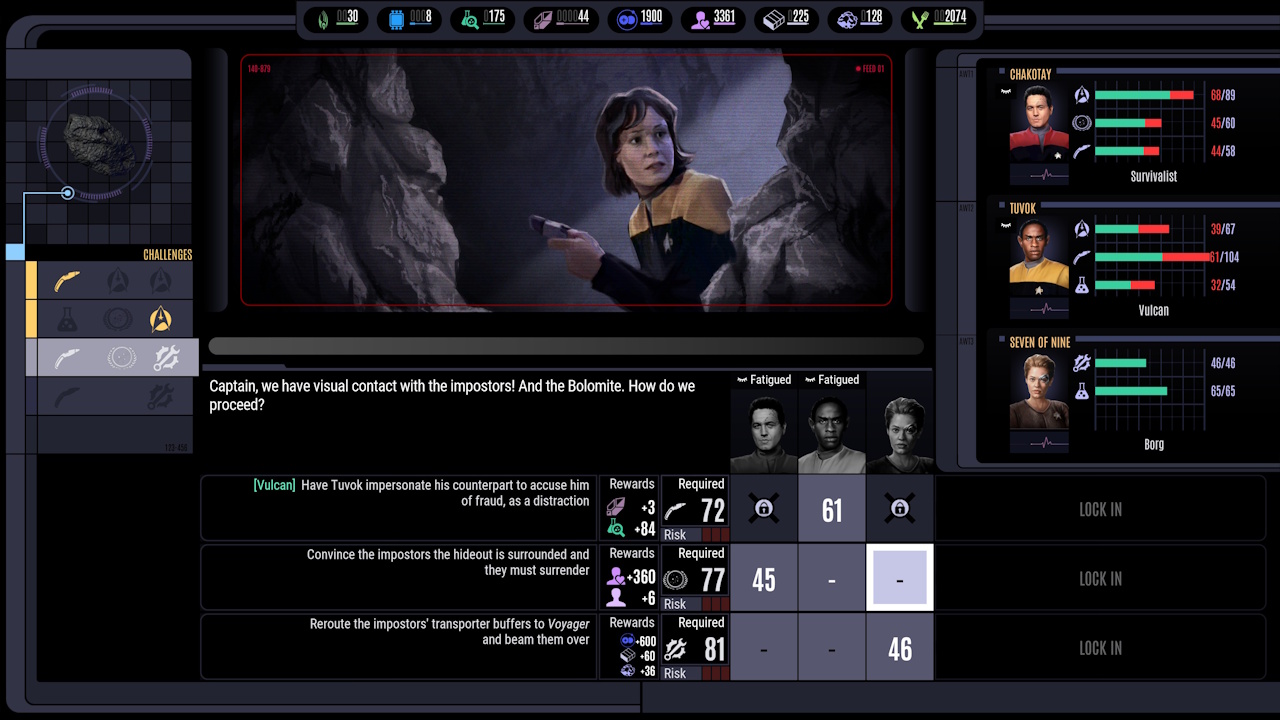
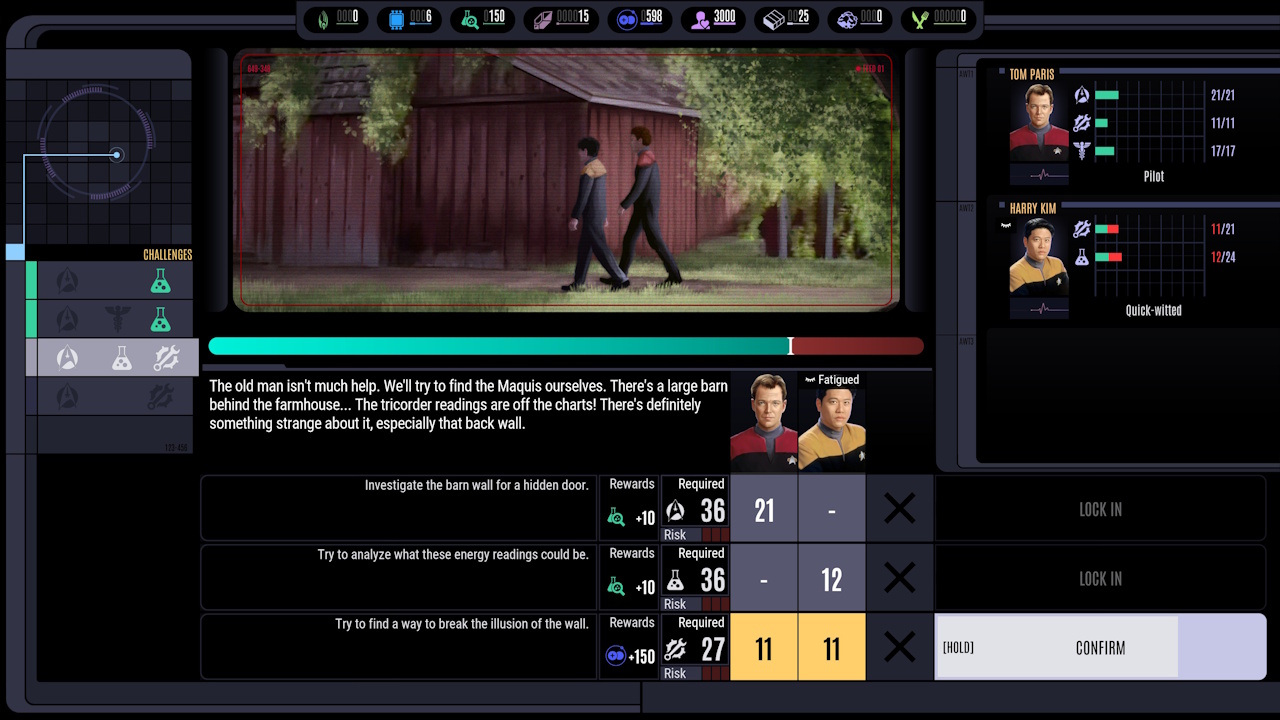
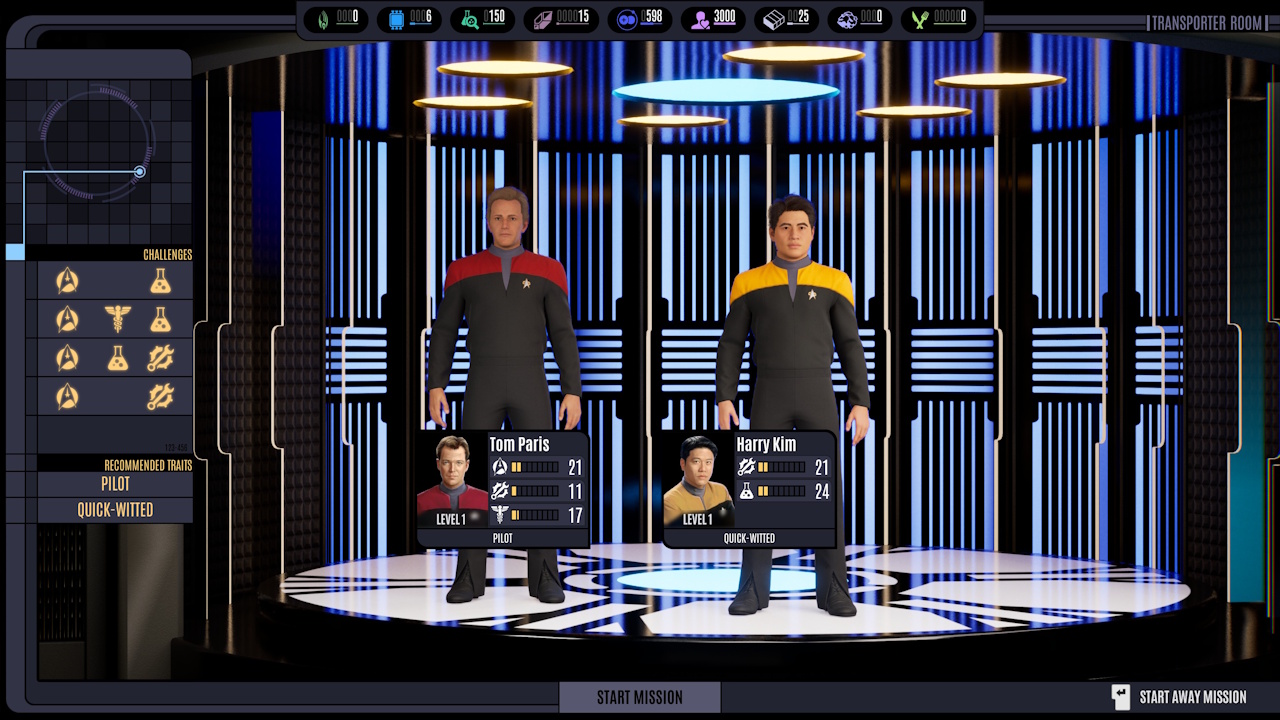
I really like the artwork used to depict away missions. I like the “painted” style, and how these images give each away mission a unique flavour. But if I could make one request, it would be this: please make new art assets that depict a variety of different heroes taking part in these missions! It feels a bit immersion-breaking, sometimes, to have sent Chakotay, Tom Paris, and Harry Kim on an assignment… only for all of the art to depict Seven of Nine and B’Elanna. These are static images, and I’m sure it’s possible to make more of them to depict different heroes in different missions. I’m no graphic design expert (clearly), but I’m sure that, with a combination of transparent layers and such, the same character models could even be re-used.
I just think it would be more fun and more immersive if away missions genuinely reflected the characters I’d assigned to them. Not *every* scene needs to be remade from scratch – there are plenty of moments where artwork depicts a villain, a landscape, or a hero who is mandatory for the assignment in question. But it’s a bit disappointing, sometimes, to see the “wrong” characters depicted in the artwork, especially when, sometimes, the characters who *are* shown aren’t even the recommended ones for the mission in question.
So that’s it.
I think I’ve *finally* said everything I wanted to say about Across The Unknown!
If it’s not clear from my review and this piece… I really love this game. It’s 100% a “game of the year” contender for me, as it brings one of my favourite parts of the Star Trek franchise to life in a new and unexpected way. I had a blast playing – and re-playing – Across The Unknown, and I may very well jump back in for a third run later in the year. If you’ve been on the fence about the game at all… I really think it’s worth trying out.
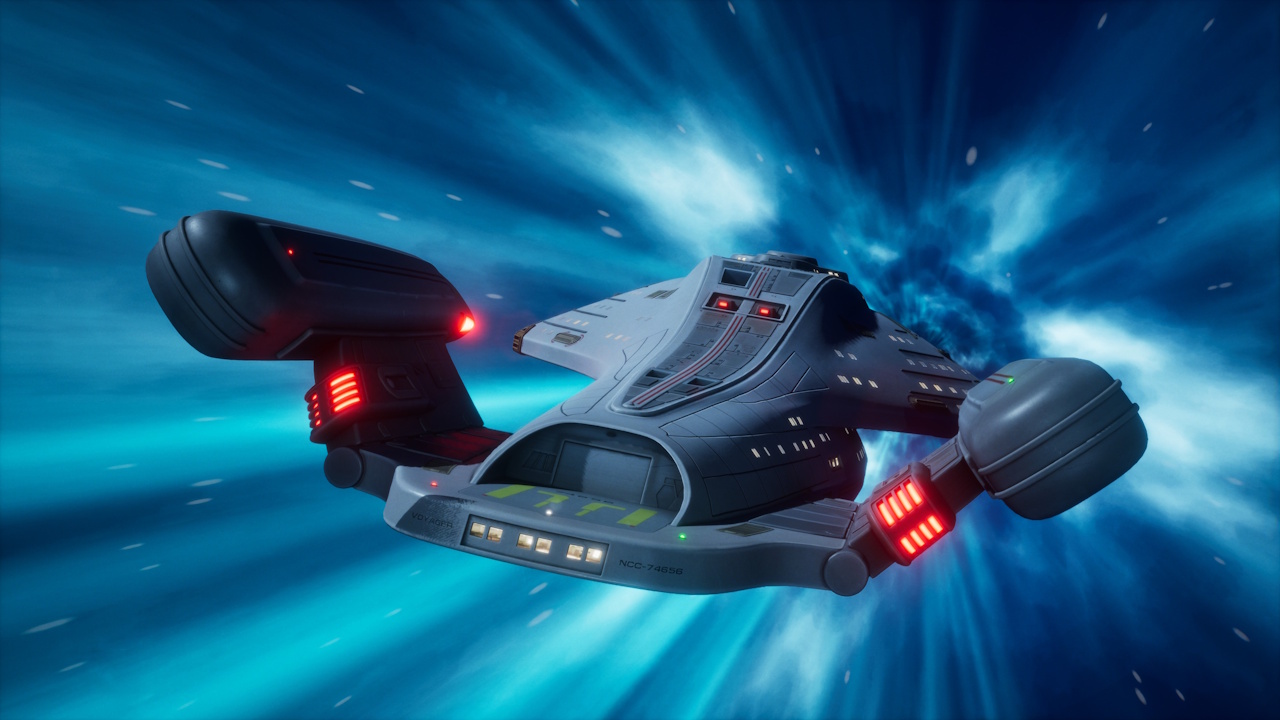
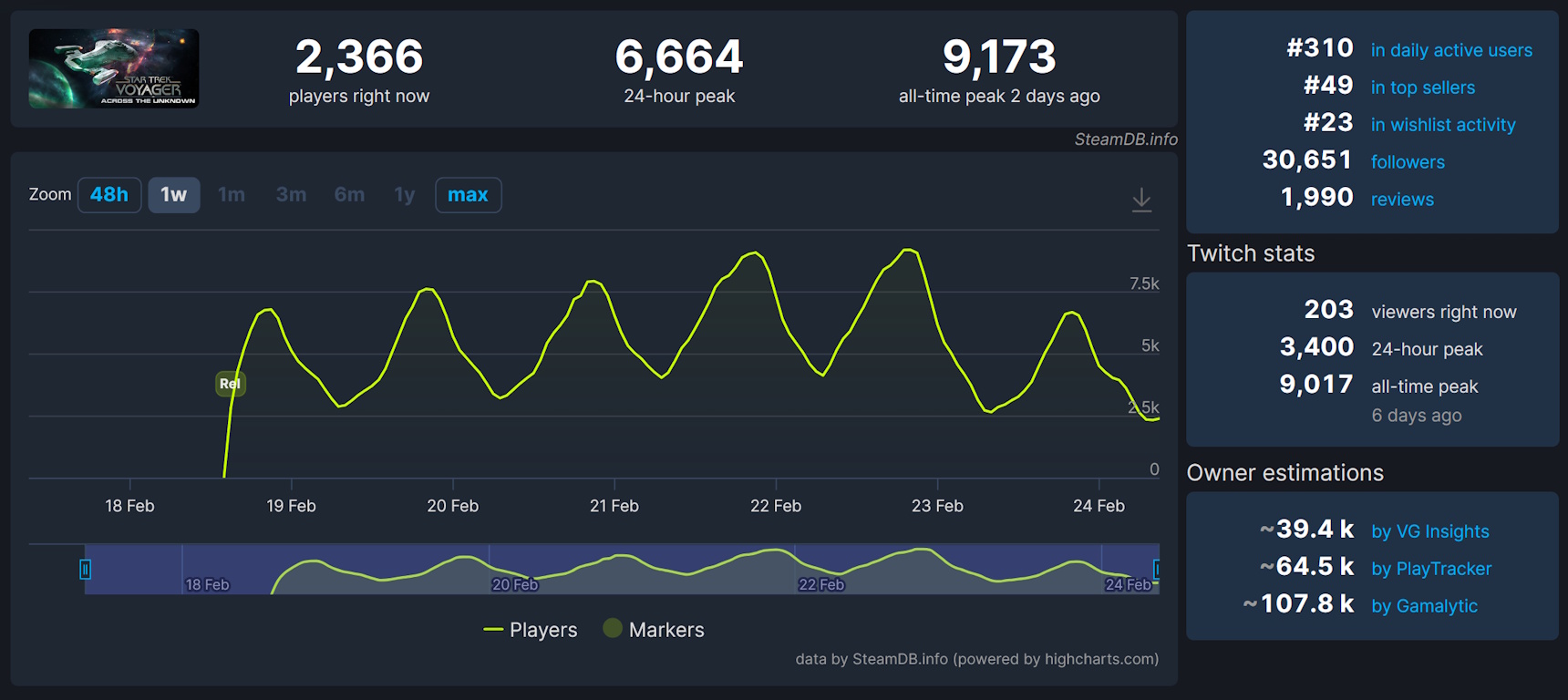
When making suggestions for improvements or potential DLC, I tried to be realistic. I don’t think the game needs to be fully-voiced by the entire main cast, nor do I think that would be a realistic request. I don’t think the game needs first-person, Doom-inspired away missions… nor is that a realistic ask, at this stage! But I think there are a few things that need to be tweaked, a few ways the game could be improved, and some additions that could make for an incredible DLC bundle, if developers GameXcite are interested in going down that road. Across The Unknown seems to have sold really well, which is great news. So maybe DLC is a possibility.
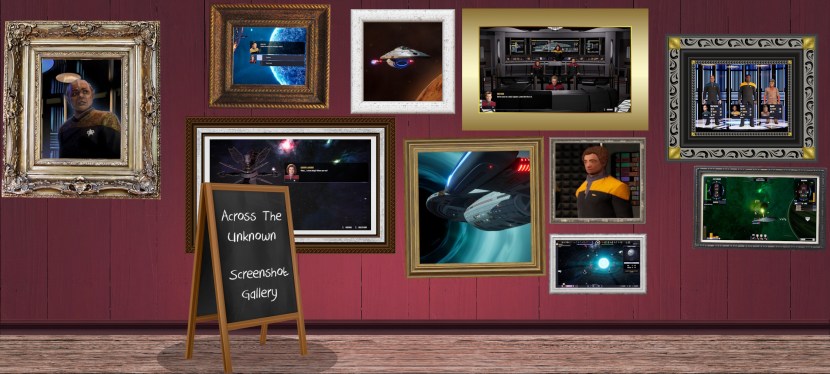
Thanks for reading, and I hope you’ve enjoyed my coverage of Star Trek: Voyager – Across The Unknown. If you missed my original review, you can find it by clicking or tapping here. And I also have a gallery containing more than 180 screenshots from the game, which you’re free to use in your own reviews or other projects. You can find that by clicking or tapping here.
As Star Trek’s landmark 60th anniversary year rolls on, I’ve got plenty of other things planned right here on the website! There’ll be a review of Starfleet Academy Season 1 later in the month, episode re-watches, and more. So stay tuned. And… Live Long and Prosper!
Star Trek: Voyager – Across The Unknown is out now for Nintendo Switch 2, PC, PlayStation 5, and Xbox Series consoles. Across The Unknown was developed by GameXcite and published by Daedalic Entertainment. Star Trek: Voyager remains the copyright of the Skydance/Paramount corporation. This review contains the thoughts and opinions of one person only and is not intended to cause any offence.





 Trekking with Dennis