Starfield: A Question of Scale

Spoiler Warning: Minor spoilers may be present for Starfield.

Today we’re continuing our look ahead to Starfield! Bethesda’s upcoming open-galaxy sci-fi role-playing game is my most-anticipated game right now… but that doesn’t mean I don’t have questions and concerns. We’ve taken a look at several already, but today I want to zero in on one very specific question that I have about Starfield: will the game truly be able to create the sense of scale that it’s clearly aiming for?

We can break down this question into a couple of big pieces. Firstly, we have the size of the game’s open galaxy – or rather, the amount of actual content relative to the size of the map. Will there be enough characters to interact with, enough settlements to visit, and enough of a world to get stuck into in a map that contains 1,000 explorable planets?
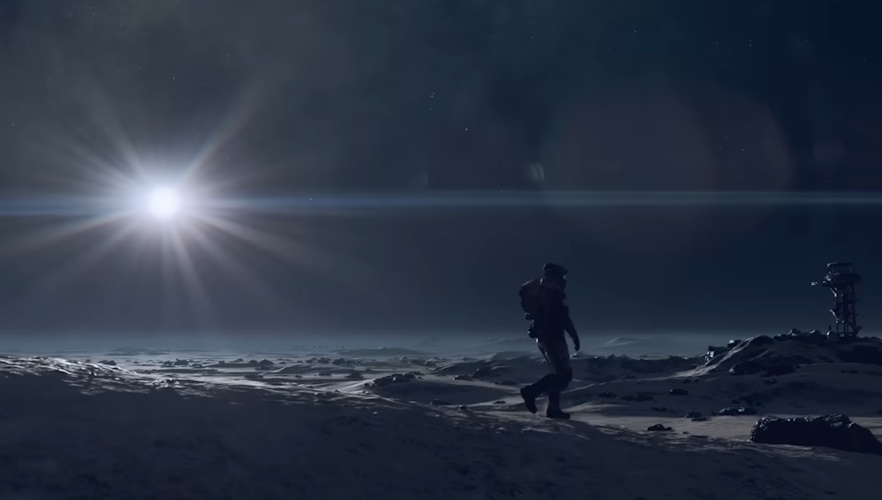
Is there a danger that Starfield might feel too… empty?

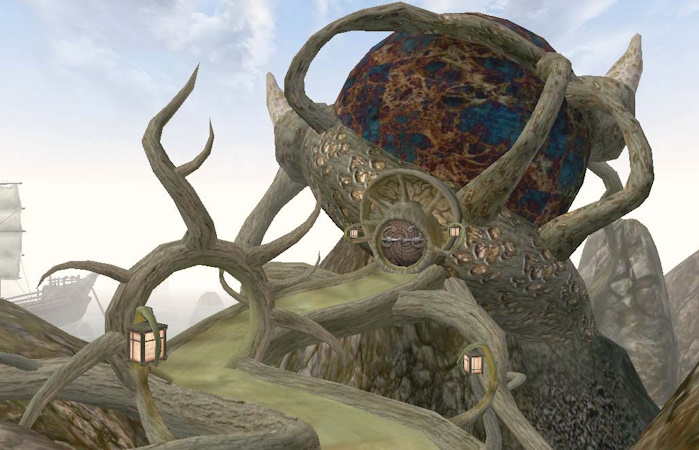
Secondly, we have the open nature of the game world itself. Although not strictly a true “open world” in the sense that Starfield’s “open galaxy” will be split up into star systems and planets, a hallmark of Bethesda titles going all the way back to the 1990s is that every square inch of the map is accessible and can be explored. In a game that takes place in a single province of a larger world, there’s still a sense of scale – that the world of Morrowind, Skyrim or Fallout exists beyond the confines of the game map. Starfield won’t have that – it can’t have it by design. That could be an issue, and it’s where my concern begins.

Take, for example, a game like Mass Effect 2 or Jedi: Fallen Order. Or in the open-world sphere, take a game like Red Dead Redemption II or The Witcher 3. All of these games manage to convey a sense of scale – of deep, persistent worlds that continue to exist beyond the confines of their playable maps, populated by, in some cases, literally trillions of individual people. One of the reasons that these games feel so much fun to play, and their stories so engaging, is precisely because as players, we know we’re only scratching the surface.
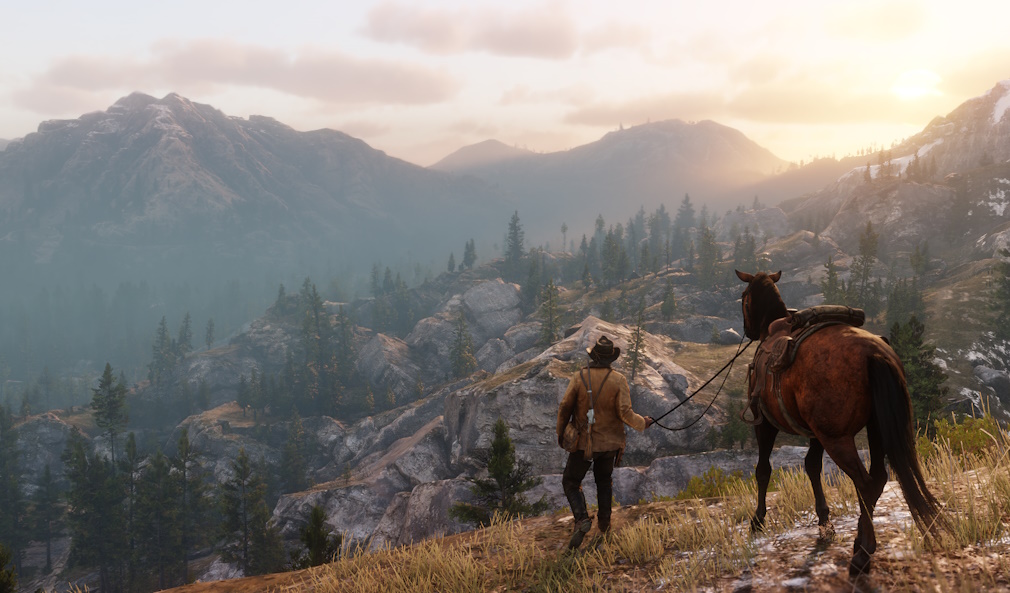
The story of Red Dead Redemption II feels like it takes place in one small corner of a vast world.

Even older Bethesda games managed to nail this feeling. Playing Morrowind, we knew that there was a whole continent beyond the confines of Vvardenfell, and in Fallout 4 it was clear that the Commonwealth was only one small patch of a much larger wasteland. These areas still felt lived-in, but part of the reason for that is because we knew that there were people and settlements beyond our reach, making the game world feel real.

By design, Starfield can’t have that. Opening up the entirety of the Settled Systems to players, including the capital cities of both major colonial factions, means that the idea of an expansive, populated world beyond the borders of the game’s map can’t exist. And that absolutely could be okay, but if Starfield’s open galaxy has a population comparable to that of a small town… I fear that an important part of the immersion will be lost before the game can even get going.
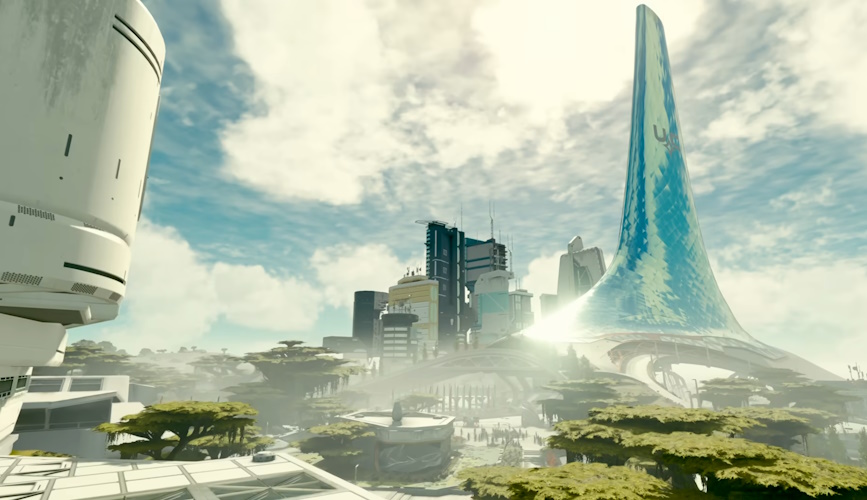
New Atlantis – the capital city of the United Colonies.

Every game has a limited number of non-player characters – it’s unavoidable. Even massive online games or expansive open-world titles have, at the very most, a few hundred or perhaps a thousand NPCs to engage with. But in most cases – and especially in games that succeed at creating that sense of expansiveness and immersion – there’s always the sensation that, despite the limited number of people available in the game, there are untold numbers of others just beyond the invisible wall dividing the game’s map from the rest of its world.

In Mass Effect 3, for example, it’s possible to walk across parts of the Citadel and really feel the scale of the massive space station. Sure, there are only a few dozen people to engage with, some of whom only have a single line of dialogue, but a combination of the game’s lore, art design, sound effects, narrative, and more all come together to make you feel that there’s so much more just out of sight.
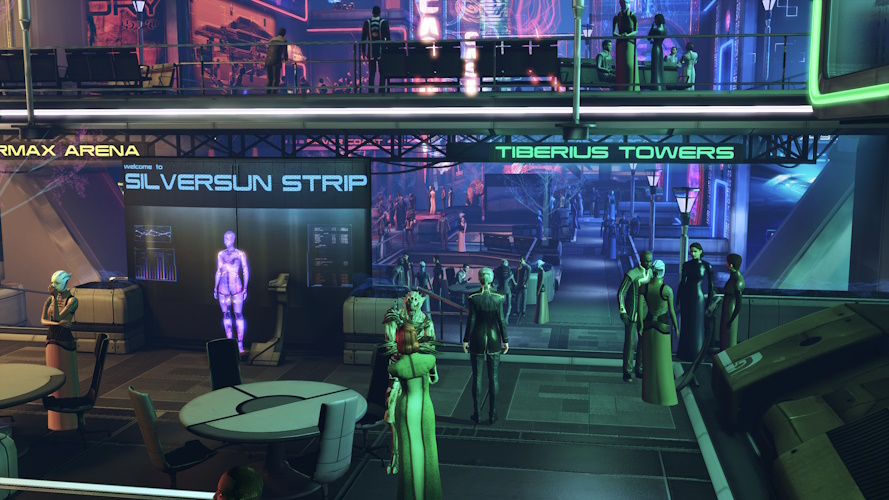
The Silversun Strip on the Citadel in Mass Effect 3.

For me, the experience of playing a game that takes place in a small part of a much larger world is something I hadn’t really considered before Starfield. It was only when I began to truly consider the implications of an open-galaxy map with 1,000 planets to explore that I really zeroed in on one of the absolutely essential ways that so many games create that sense of immersion and scale.

And it’s not something exclusive to gaming by any means. Watch an episode or two of Star Trek, and you’ll soon get the sense that there’s far, far more going on in the galaxy beyond the adventures of a few officers aboard a single starship! Star Wars, too, has a densely-populated galaxy filled with alien races, criminal gangs, and so much more. As I’ve argued more than once, it seems positively criminal that Disney and Lucasfilm have insisted on revisiting the same handful of characters time and again when the setting is so vast and potentially interesting!
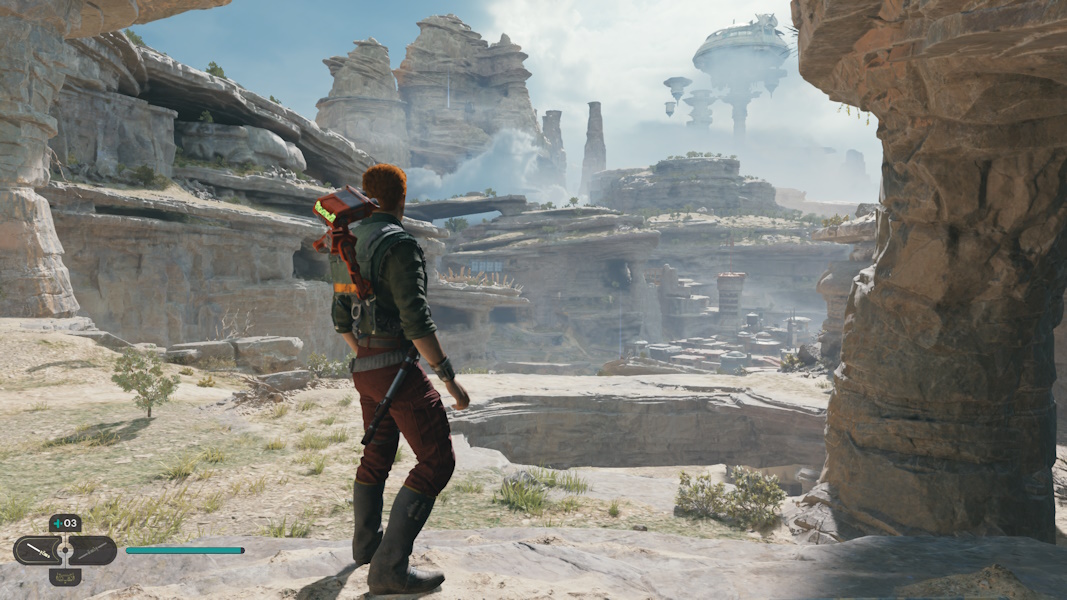
Cal Kestis in Jedi: Survivor.

As Starfield opens up its entire map to players, will there be enough content – and especially enough content relative to the size of the map – to really nail that sense of scale? If we can interact with everyone in the entirety of the Settled Systems… how long will it take before we realise that there isn’t anything more to this world? Enough to sustain a playthrough of the game, I hope… but is that enough?

Bethesda has recorded more dialogue for Starfield than it did for Skyrim and Fallout 4 combined. There could easily be well over 2,000 NPCs in the game, some of whom will have in-depth conversations with the player character. On the one hand, that’s a lot of chatter! But on the other, in a fully open map that supposedly depicts humanity’s expansion to colonies beyond the stars… 2,000 people seems like a minuscule number. It’s barely the population of a small town. When you add into the mix that these characters are going to be spread across four major settlements, space stations, spaceships, and perhaps small settlements and other locations too… I’m just worried that the sense of scale that a game like Starfield relies on will be lost.
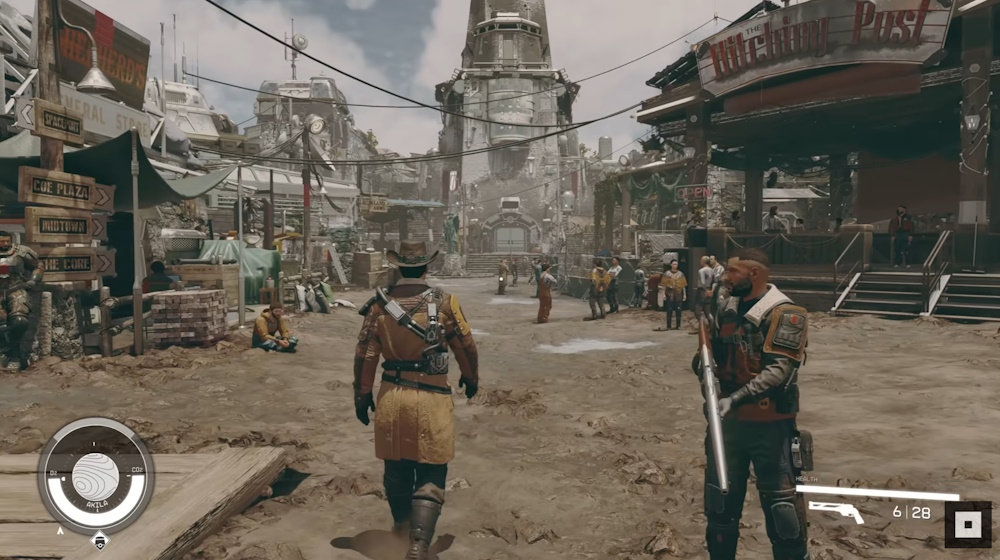
Akila City in the Freestar Collective.

Despite its difficult launch and gameplay issues, Cyberpunk 2077 is a game that manages to really succeed at conveying a sense of scale. From almost the first moment, players are aware that they’re only one person in a vast world; a dense cityscape populated by thousands of people. Although it isn’t possible to travel far beyond the confines of the city, there’s still that sense that the world beyond Night City is vast – and that within the city itself, there are people going about their lives blissfully unaware of the protagonist’s story.

Sometimes, being “the chosen one” can also get in the way of this sense of scale. If the fate of the entire galaxy hinges on the player character and the actions they take, it’s much harder in a role-playing game to see oneself as just one character among many in a vast world. Bethesda does love its “chosen one” archetypes, though, so I wouldn’t be shocked to see it appear in Starfield in some form. If so, I hope it’s handled carefully – and perhaps buried deeply in the main quest, so players who don’t want to go down that road will have the opportunity to avoid it altogether!
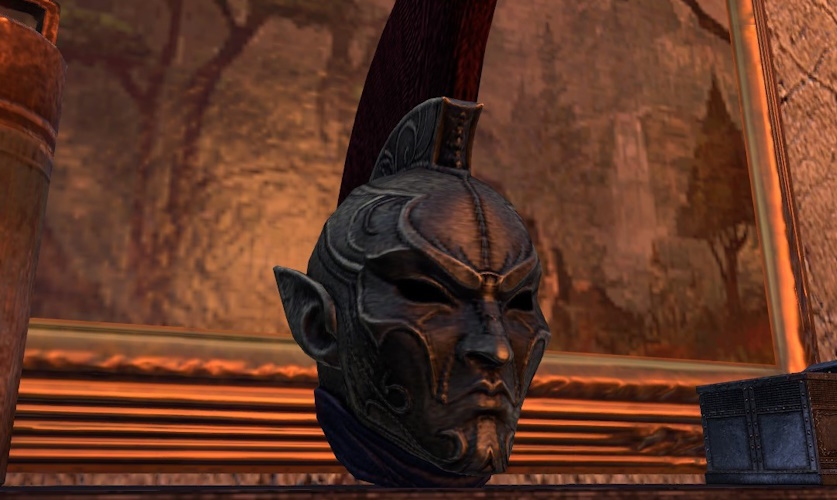
Making the player character “the chosen one” (as in games like Morrowind) could add to the sense of Starfield being small in scale.

What makes a fictional world feel lived-in and real? I would argue very strongly that one very important factor is the notion that there’s more to that world than I as a player (or a reader, viewer, etc.) can see. No matter how large Starfield may be, no matter how expansive its map is, no matter how much of it I could take in in a single playthrough, and no matter whether the game has 2,000 or 10,000 NPCs to interact with, there’s a very real danger that it will feel limited, and dare I say even small. The idea that the story we’re taking part in is only one small part of the world of Starfield won’t exist, it can’t exist by design. The notion that there’s more, that Starfield is bigger than the available map and characters, cannot exist.

I hope that there will be so much to get stuck into that that sense won’t be overwhelming, and that Bethesda’s world-building will be better than ever to such an extent that I don’t notice. But part of the appeal of a game like Starfield is that I as a player am going to be whisked away to another world, a world in which I can get lost in the role-playing experience. Part of that, though I could never put it into words nor even really conceptualise it before thinking about Starfield, is because the worlds I’ve sought out feel bigger than the stories told in them. I’m not sure how Starfield can recreate that feeling based on what we know of the game – and there’s a genuine danger, I fear, that trying to pretend half the known galaxy is populated by a few thousand people is going to feel catastrophically unbalanced.
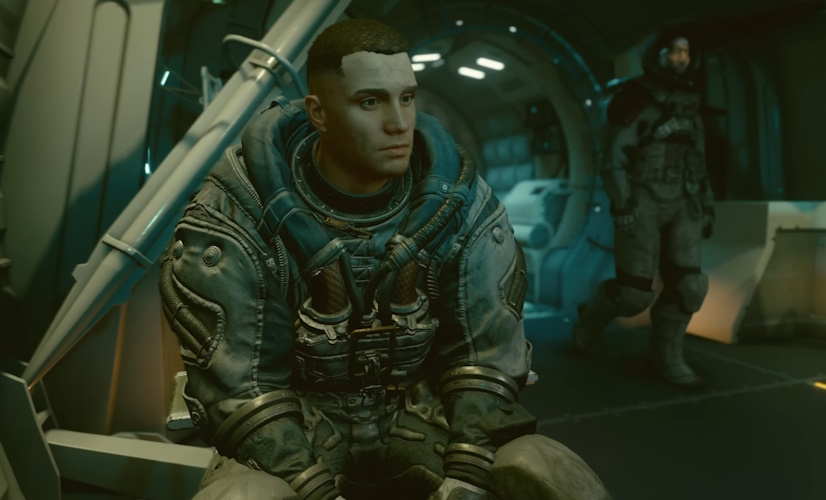
We’re pondering a big question about Starfield

I said a couple of weeks ago that, if the “United Colonies” turns out to be a mere two cities, and if the Freestar Collective is likewise a “collective” consisting of just a couple of settlements, something will feel amiss. And this is what I meant by that. The concept of an expansive world that exists beyond the confines of a single story or the playable area of a game’s map is something that, based on everything we know at this stage, Bethesda has deliberately chosen not to create. It almost feels like we’re heading into uncharted territory – the game will be large, sure, but can it possibly be large enough to overcome that deficit? Will the number of settlements, the number of characters, the number of factions, and the overall amount of content relative to the size of the game world feel so unbalanced and out of whack that it will detract from the experience? If so… will those things prove fatal to the Starfield experience?

Thus far, my biggest concerns about Starfield have been on the practical side. Will the game be released in a polished state? Will it be overburdened with microtransactions? Will Xbox and Bethesda consider a last-second delay if further bug fixes and tweaks are needed? But this question of scale… it’s probably my single biggest gameplay concern right now. And this isn’t just a fear of a repeat of Fallout 76′s “big empty world,” a game map that had no NPCs to interact with and precious little to do. It’s deeper than that – it cuts to the very sense of immersion and believability that should be present in Starfield’s galaxy.

The crew of the Frontier.

Games like Red Dead Redemption II, Cyberpunk 2077, or the Mass Effect trilogy succeed, in part, because they get me to believe that a bigger world exists beyond the confines of the game map. And in a more general sense, whether we’re talking about novels, films, television shows, or video games, getting an audience not only to believe that a world exists but to care about it and feel a sense of investment in it is a key part of the pathway to suspension of disbelief and to enjoyment. Starfield may well succeed at creating an interesting, engaging world that I care about and want to see more of – but if that world feels like it’s limited to only the characters and locales present in the game, part of the immersion could be lost.

Conversely, this is set to be the biggest world that Bethesda has ever created, populated by more NPCs than in any single-player game that the studio has ever built. So perhaps the idea here is that players will be so overwhelmed with content – be that quests, factions, points of interest, or characters to chat with – that the game world will feel full to the point of being overstuffed. That could go some way to negating the fact that, well, we’ll be able to explore the entirety of the settled systems, visit every colony, land on every settled planet, and meet every single human who exists at that moment in Starfield’s future.

I really hope it won’t be an issue. I hope I’ll look back on this article in a month’s time and think how silly it was to be worried! But as the buildup to Starfield’s launch continues, it’s definitely something that’s weighing on my mind.

Starfield will be released on the 6th of September 2023 for PC and Xbox Series S/X consoles. Starfield is the copyright of Bethesda Game Studios, Bethesda Softworks, Xbox Game Studios, and/or Microsoft. Some promo images and screenshots used above courtesy of Bethesda. This article contains the thoughts and opinions of one person only and is not intended to cause any offence.

Ten more Starfield questions

Spoiler Warning: There are no major story spoilers for Starfield, but there may be spoilers for the game and its features and systems. This article also uses screenshots and promotional images.

Well it turns out that my last post about Starfield wasn’t enough, and that there are still more questions about the game! Starfield is my most-anticipated game right now, and along with my excitement for Bethesda’s upcoming open-galaxy sci-fi role-playing shooter, I have some concerns and some general questions about the game and how it will work. A few days ago I posed ten questions about Starfield – so click or tap here to check out those questions if you haven’t already – but I’ve already come up with ten more!

What I’m trying to do with these questions is not say “here’s a feature that I think must be part of the game,” because I don’t want to make the mistake of getting over-hyped nor building up an inaccurate picture of Starfield. Instead, what I want to do is fill in some of the gaps in our knowledge of the game, because there are things that Bethesda hasn’t clarified. There are features that seemed to be hinted at by the Starfield showcase that haven’t been confirmed, there are questions raised by statements Bethesda and Xbox made, and then there are systems and mechanics that have been included in past Bethesda or Xbox titles that may make their way to Starfield – we just don’t know yet! That’s my mindset when I pose these questions, anyway. As I said when I wrote up my Starfield “wishlist,” I have high hopes that the game will be fun regardless of whether or not it does everything that I think I want from it at this early stage!

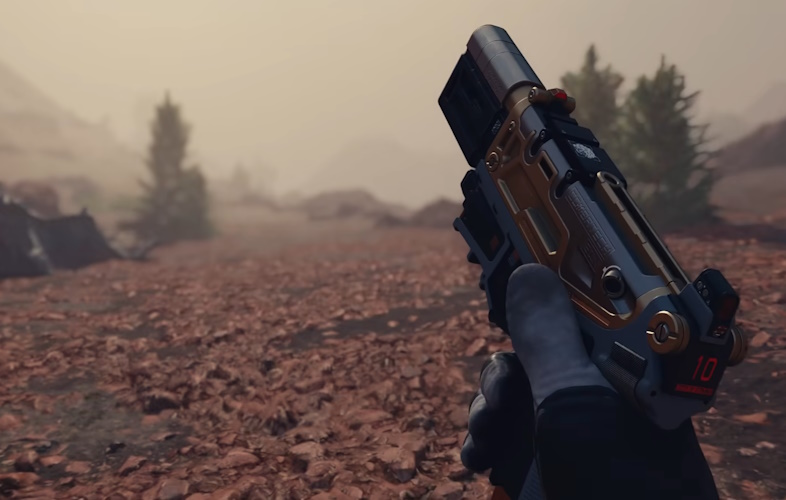
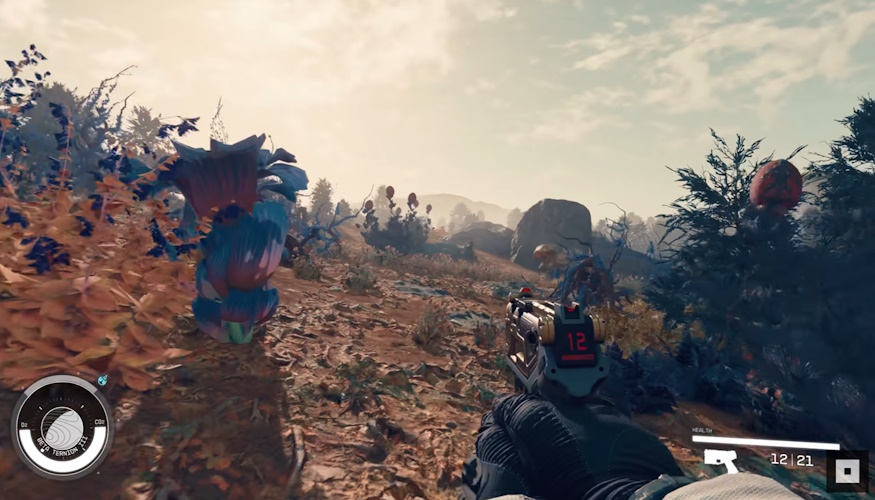
A handgun.

I have a couple of caveats that I always give when I put together a list like this one. The first is that I have no “insider information,” nor any connection with Bethesda, Xbox, or Microsoft. I’m not claiming that anything we’re going to talk about will, won’t, or must be part of Starfield – this is a list put together by someone who’s interested in the game, based on the showcase, interviews, and other marketing material. Secondly, all of this is the subjective opinion of one person – so if you hate all of my questions and ideas, that’s totally okay!

Finally, as I said last time, I haven’t seen every single interview that Starfield’s developers and producers have given. Nor have I read every single press release, comment, or social media post – so it’s possible that I’ve missed something, or that one of the questions on this list will have already been answered. My ageing brain may not have retained everything, too!

With all of that out of the way, then, let’s jump into my list of questions!

Question #1:
Is the main quest fully complete?
Or: will DLC be required to complete the main story?

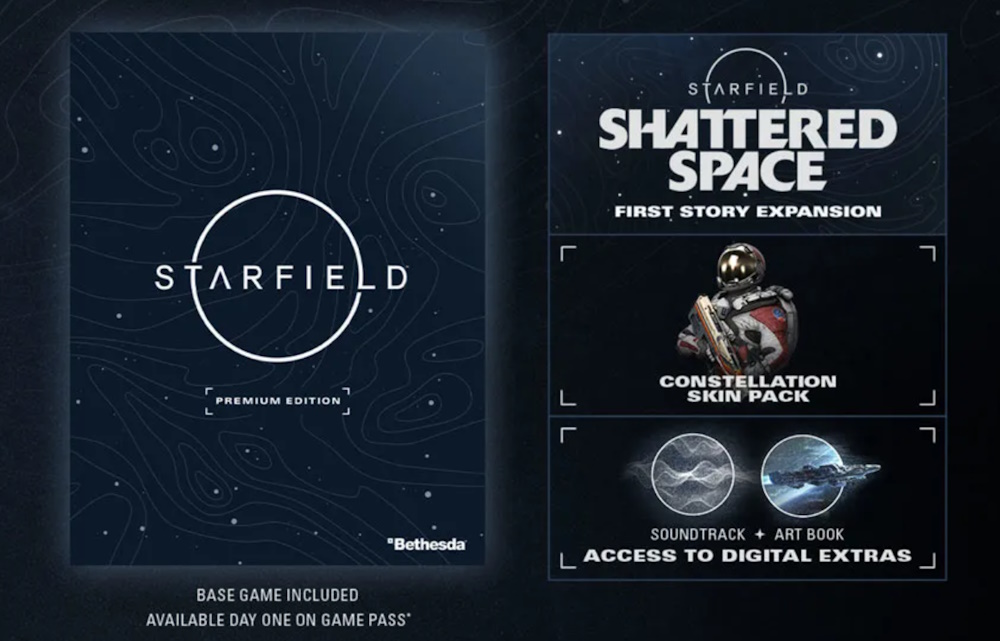
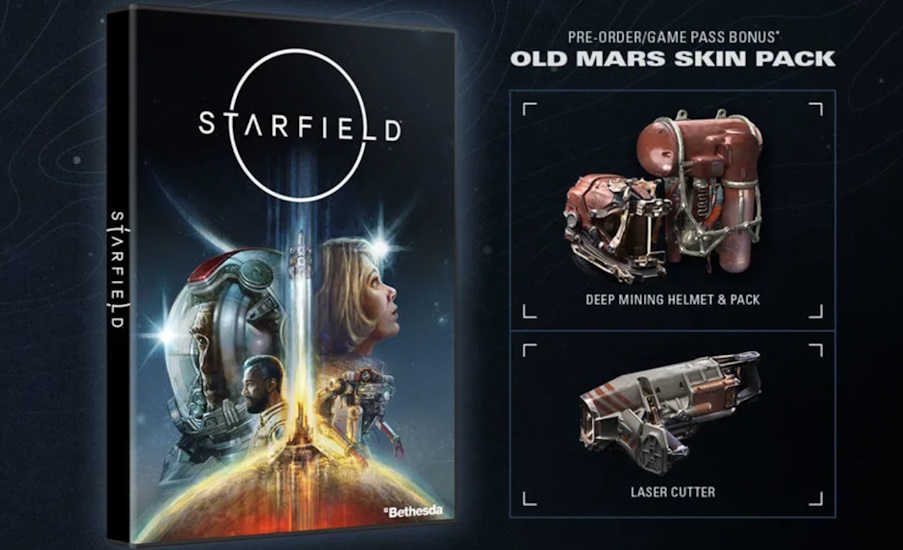
Starfield’s premium edition includes access to the first piece of planned DLC.

As you can see from the image above, pre-ordering the “premium edition” of Starfield grants players access to the first piece of planned DLC. I’ve already expressed my scepticism about this; it seems far too early to be considering DLC when the game isn’t even out. But the subtitle of this piece of DLC is what I’m curious about today, because Shattered Space is described as the “first story expansion” for Starfield.

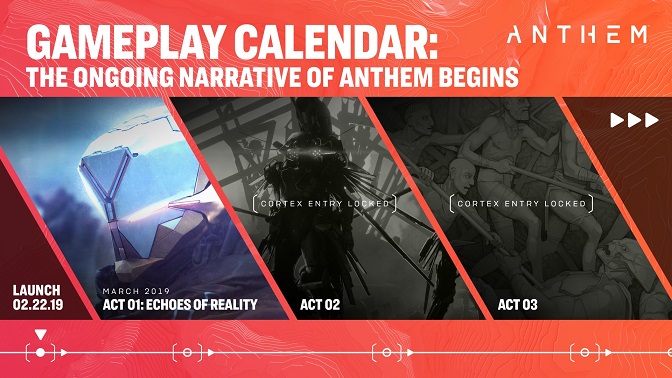
This raises the unpleasant spectre of an incomplete game; a “release now, fix later” title with promises of a “roadmap” to more content. This is the model often adopted by “live service” games, and it seldom works as intended. I’m all for an expansion pack, don’t get me wrong, but the way this one has been advertised has me at least a little worried.

How’s that roadmap working out for you, Anthem?

Bethesda has two points in its favour here, as I see it. The first is that, despite a very poor launch, the company has continued to support Fallout 76 with updates and expansions. Even if Starfield is released to poor critical reception, that gives me hope that support for the game will continue, and that at the very least that first planned expansion will still arrive. Secondly, and perhaps more importantly, Bethesda’s single-player titles have been well-supported by expansion packs. Morrowind got massive expansions in Tribunal and Bloodmoon, and as much as we like to mock Oblivion’s horse armour DLC, that game also received the major Shivering Isles expansion pack. So the company has a solid track record here.

That being said, I’m still a little concerned about Starfield’s story potentially not being complete at launch. Given that the base game is already priced at £60 or $70, it would be nigh-on exploitative to force players to pay an additional fee of at least £25 or $30 to buy the next chapter of the story. Even more so considering that Shattered Space has been in development alongside the base game.

Question #2:
Is Starfield capped at 30fps on PC?
Or: is it possible to push Starfield to 60fps and beyond on higher-end PCs?

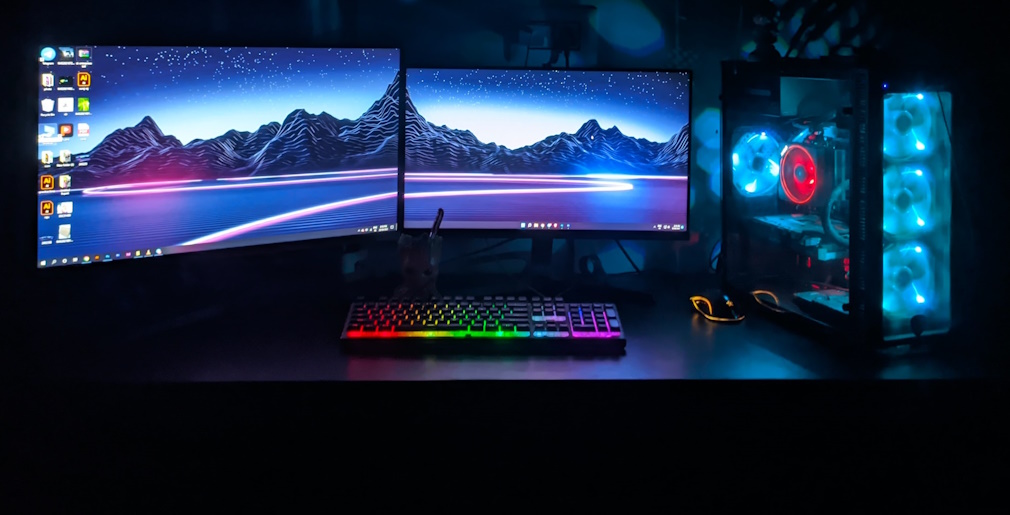
A fancy-pants gaming PC.
(No, it’s not mine!)

Although it wasn’t discussed at the showcase, Starfield’s director Todd Howard subsequently confirmed in an interview that the game will be capped at 30 frames-per-second on Xbox Series S and X consoles, with the less-powerful machine also running the game at 1440p resolution. In the same interview, Howard seemed to indicate that the game can run at 60fps on PC, at least in Bethesda’s internal tests.

But what hasn’t been made clear is whether that will be an option for players on PC. Many modern PC games have frame-rate options as standard, and offer features like Vsync, where the game will match a monitor’s refresh rate. I recently upgraded to an RTX 3070 Ti – a fairly powerful GPU. I’d expect to hit at least 60fps in most titles – or at least in games that are well-optimised and have proper PC ports!

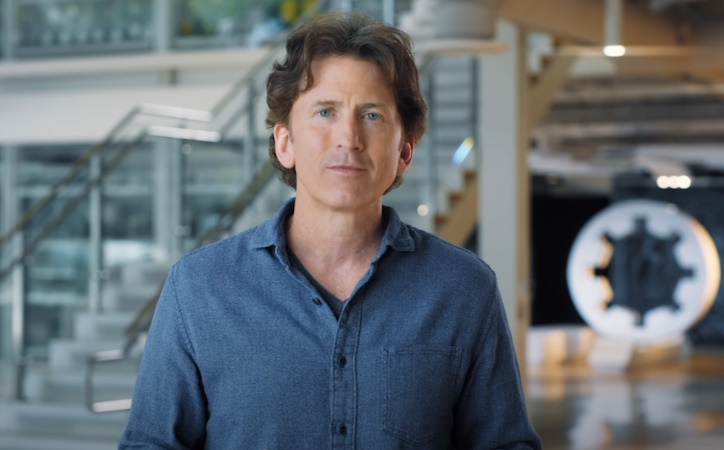
Todd Howard, Starfield’s director.

Thats being said, I’m not a stickler for frame-rate in the way some folks are. I’m not even sure I could tell much of a difference between frame-rates in a lot of cases. But 60fps isn’t even the gold standard, it’s a fairly low bar that most PC games in 2023 should be able to clear. If Starfield is so massive and so detailed that its console version needs to be frame-capped, then I guess that makes sense. But many folks have PCs with specs that far exceed the Xbox Series X.

If this isn’t an official feature, don’t despair. I wouldn’t be shocked at all to see a mod pop up in the days after Starfield’s launch that uncaps the game’s frame rate!

Question #3:
What impact (if any) do different levels of gravity have on exploration and combat?

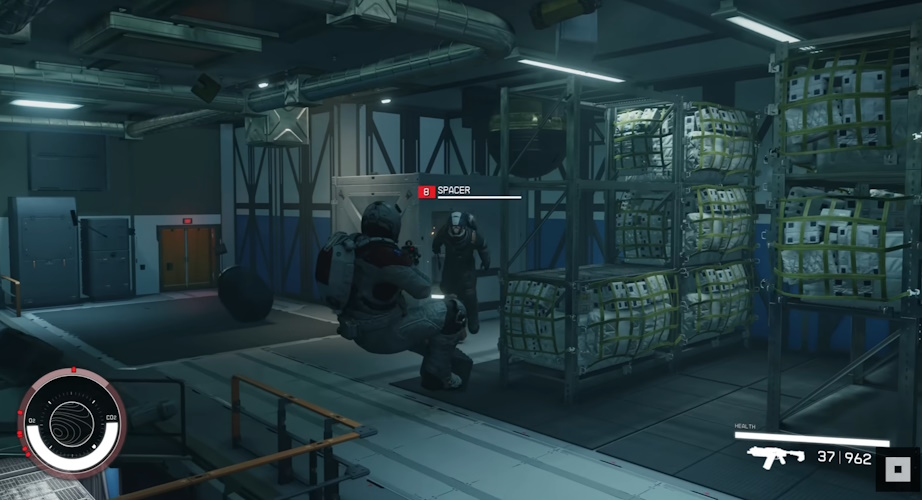
Firing a weapon in zero-G.

At the showcase we saw a zero-G section of gameplay featured prominently. Whether this is a recurring feature, or whether zero-G sections are part of scripted missions only wasn’t clear – but it was still something cool to see. We also saw that planets could have different levels of gravity, which makes sense!

But what wasn’t entirely clear from the gameplay that was shown off is what impact – if any – this will have. If I land on a high-gravity planet, for instance, does that mean I move slower, or can carry fewer items? On a low-gravity world can I jump tens of metres into the air without a jetpack? And what about firing a weapon – do projectiles have less range in high gravity than in low?

Will exploring in low gravity differ from exploring in high gravity?

I’m not banking on any of those things being true, because it seems like it would be complicated and time-consuming to create features like that. But at the same time, it would be neat if gravity was a consideration. There are so many different ways in which this could manifest, potentially impacting everything from combat to resource-gathering.

Although I’m not necessarily expecting a massive and deep gravity levels system, what I will say is this: if a planet designated as a high-gravity world and a planet designated as a low-gravity world are functionally the same, with gravity not seeming to have much of an impact on exploration or gameplay, it will raise the question of why it was even mentioned or included!

Question #4:
Will DLC eventually come to Game Pass?

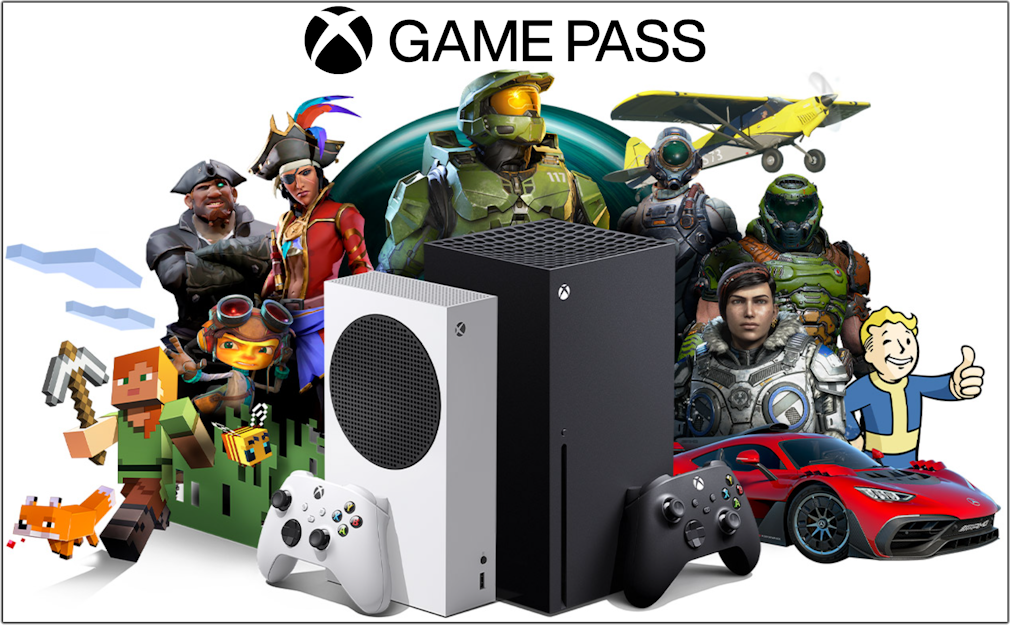
Game Pass is building up quite the library of titles!

As noted above, there’s already DLC planned for Starfield. But it doesn’t seem like that DLC will come to Game Pass – at least, not at first. The base game is available on Game Pass, but it’s also possible to pre-order the premium edition of Starfield, complete with the DLC. This kind of feels like a rough deal for Game Pass players – especially if the first piece of DLC won’t be ready for months or even years.

To be fair to Starfield, other games work a similar way. DLC for the likes of Age of Empires II is also something that has to be bought separately – but that doesn’t really excuse it. This is something Microsoft will have to figure out as Game Pass continues to grow, and while some optional content and DLC might still be okay to sell separately, things like Shattered Space might not be – especially if it’s vital to complete the main quest.

Game Pass players get access to one of the pre-order bonuses.

With Skyrim, the current Game Pass version includes the game’s major expansion packs. So I wonder if, at some point in the future, Starfield will be updated in a similar way. Microsoft is raking in the money from Game Pass every single month, and I’m sure that Starfield’s launch will bring an influx of new subscribers to the platform. But when Shattered Space is ready, some of those folks will be disappointed to learn that they have to pay an additional charge on top of their Game Pass subscription.

The subscription model is still new in the gaming realm, and there are questions like this that need to be sorted out! But if Game Pass is to achieve Microsoft’s aim of being “the Netflix of video games,” then it can’t get away with continuing to charge for add-ons and expansion packs, surely. Netflix doesn’t do that; you don’t get access to the first season of The Witcher then have to pay an additional fee to watch Season 2. So I’d love to see Shattered Space and any further DLC expansion packs come to Game Pass on day one.

Question #5:
How important is crafting?
And: can weapons and items break?

A weapon in the inventory menu.

I’m biased here: I detest weapon and item durability in practically every game. Very few titles manage to get this feature right, and more often than not it just turns into a frustrating experience. Weapons breaking partway through combat and items needing to be replaced every ten minutes may seem “realistic” in some ways… but it’s not exactly fun.

There are better ways to deal with weapons and items, such as cosmetic wear and tear, upgrades, or simply offering an abundance of choice. Rather than forcing players to a workbench or crafting station to keep re-creating or repairing tools, it’s far better – in my opinion, of course – to figure out other ways to make gameplay interesting.

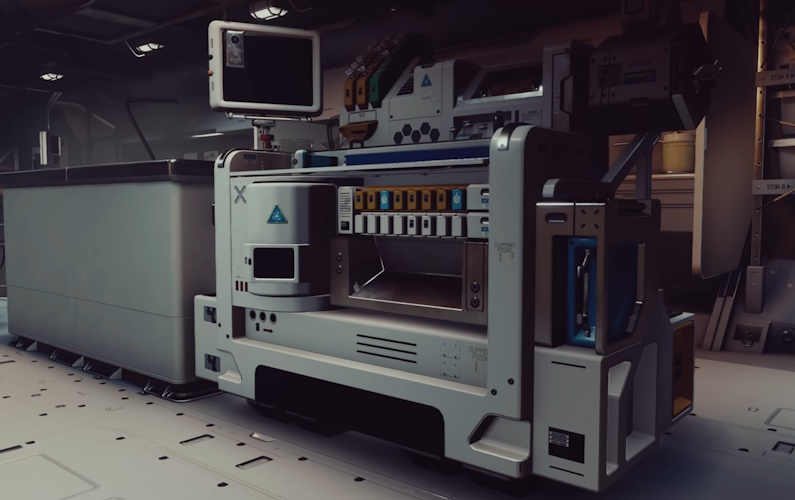
This may be an in-game crafting station.

This also speaks to a potentially much larger point: what kind of role will there be for crafting in Starfield? We know that there can be a crafting station aboard a player’s spaceship, but how often will we be required to use it? What kind of items will we need to craft or upgrade? And crucially: how necessary will crafting be?

Bethesda role-playing games have always offered customisation options, even for things like weapons. Swords could be enchanted in Morrowind, for instance, and guns could be upgraded in Fallout 4. The latter also introduced settlement building, with resources needing to be collected. I feel there’s scope for a detailed and in-depth crafting system in Starfield, but I also think it’s something that may be optional for players who want a more action-forward experience.

Question #6:
Can we give names to outposts and planets?

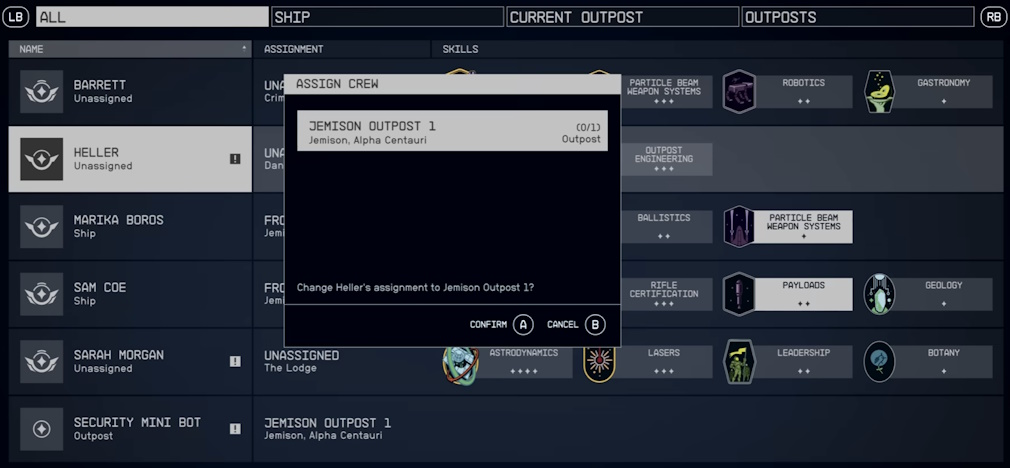
“Jemison Outpost 1” doesn’t feel like the most inspired name…

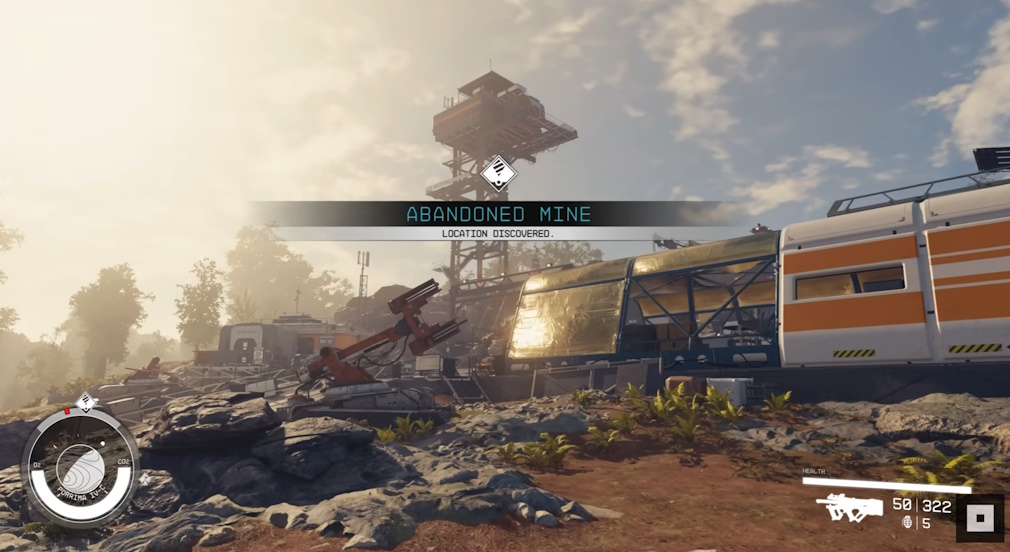
I’m fairly sure that re-naming spaceships is possible in Starfield; it certainly seems that way based on footage from the showcase. And of course the player character’s name can be freely chosen. But what about outposts and planets? We saw at the showcase several locations that were simply called “civilian outpost” or “industrial outpost,” so I’m not sure whether or not this will be possible.

It would be nice to be able to give a name to an outpost, though! Instead of making my home at the rather clinical and official-sounding “mining outpost,” it would be neat if I could give it a more personal name that reflects my character, their style, or even simply geographic features present at the base.

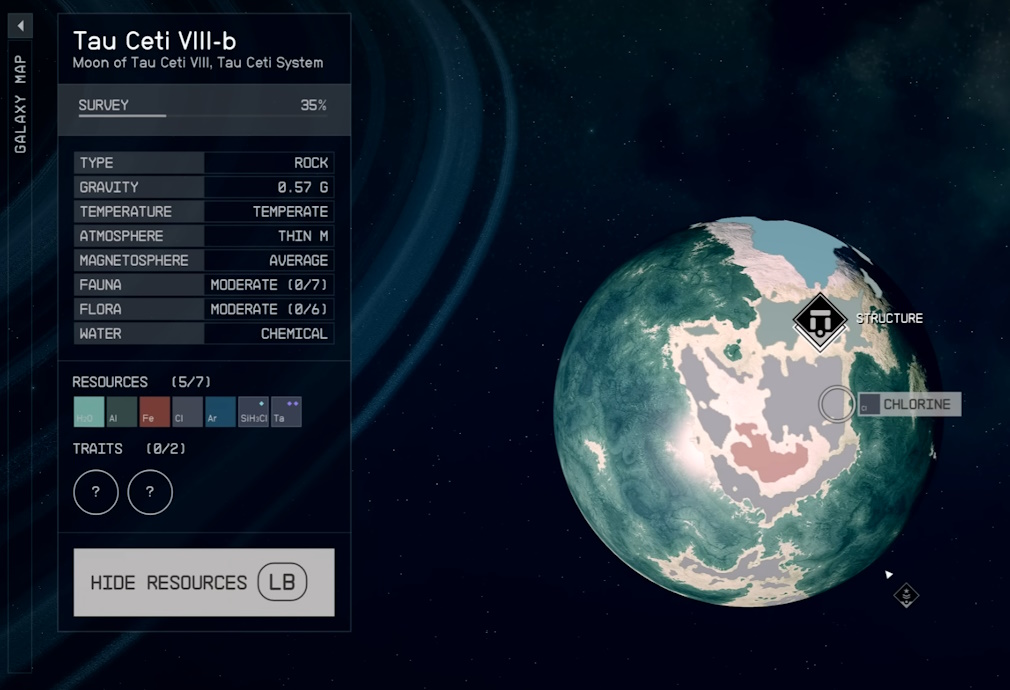
The moon Tau Ceti VIII-b.

While I have some hope for outpost names being possible, I’m far less convinced that re-naming planets will be part of Starfield. But again, I’d quite like this to be included in the game. Obviously we won’t be re-naming Mars or Jemison, nor any of the other named worlds that already have settlements. But if I stumble upon an uninhabited rock called something like Kepler-295 B, and decide to build the first-ever human outpost on its surface, I’d like to be able to give that world a more personal name!

Maybe this seems like something minor, and it is in a way. But these kinds of personal touches can go a long way to making the role-playing experience feel immersive; coming home to Fort Dennis on the planet Dentopia would be a lot more fun than returning to Outpost #7 on Kepler-259 B.

Question #7:
How do factions work?
Or: does joining one faction permanently cut off another?

The Freestar Collective is one of the main factions in Starfield.

In past Bethesda games, choosing to associate with one faction over another could permanently cut off that second faction, making it impossible to complete every available quest in a single playthrough. The example that leaps to mind are Morrowind’s Great Houses: joining one would mean the other two would be permanently unavailable.

This adds a lot of replay value to a game, especially if those factions have well-developed characters and long, detailed questlines of their own. Indeed, one of the appeals of a Bethesda role-playing game is that some of these factions and their missions can be at least as in-depth as the main quest and just as worthwhile to play.

Joining one Great House in Morrowind would permanently close off the other two in that playthrough.

We’ve seen at least a hint at something similar in Starfield via the traits menu in the character creator. Choosing to have a United Colonies background means that players can’t also choose to have a Freestar Collective background, and there are three religious affiliations which are also mutually exclusive. Whether and to what extent those traits will impact gameplay is still not known, but it’s interesting, at any rate.

Starfield will contain joinable factions in addition to the Constellation organisation, and it seems logical to assume that being a member of the Freestar Rangers might permanently cut off membership in the United Colonies’ space force. That’s just one example. If these factions are as deep and well-developed as we’d hope they would be in a Bethesda game, this feature would add a ton of replayability to Starfield.

Question #8:
Are there invisible walls?
Or: are landing zones limited in size?

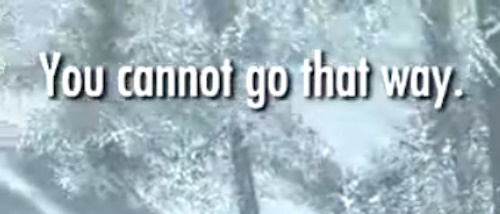
Will we see a message like this in Starfield?

This kind of ties into a point that I raised last time: how much of the surface of an individual planet can be explored? There was mention at the showcase and in subsequent interviews about selecting a “landing zone” on a planet’s surface – with players seemingly given a completely free choice of where to land. But do those zones have limits, or is it truly going to be possible to circumnavigate a planet on foot?

If there are limits to landing zones, I hope that invisible walls won’t be the way it’s handled. Something like that would absolutely break the immersion, even if landing zones are massive in size. A game that encourages exploration will surely push players to roam far away from their spaceships.

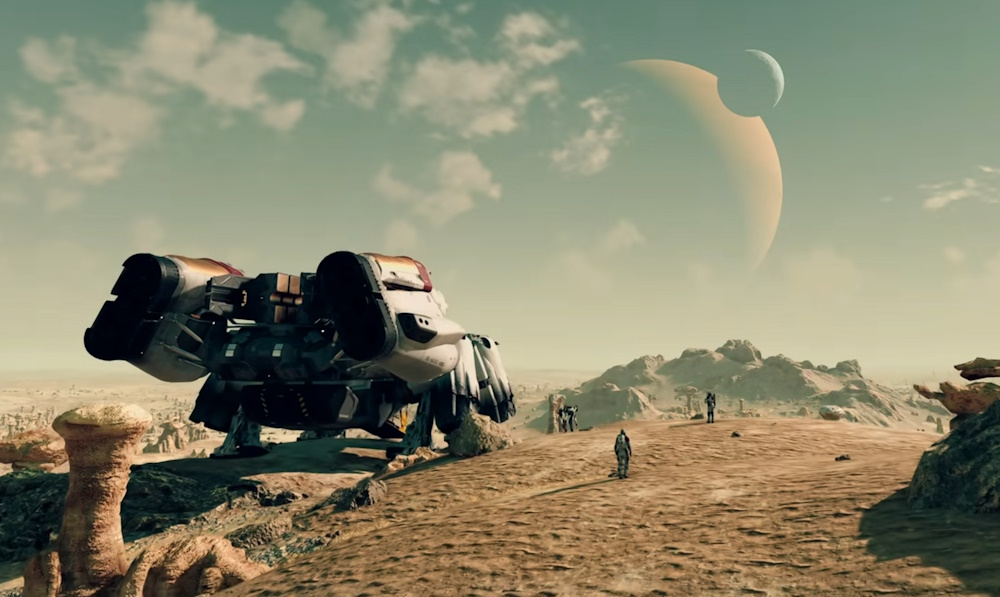
A spaceship on the surface of a planet.

I’m not really sure how Starfield should deal with this. The best-case scenario is that exploration is completely unlimited, and players who want to will be able to go on long-distance expeditions far away from where they landed. Look at games like Minecraft, for example, and how some players will go on huge treks across vast swathes of the procedurally-generated map.

That being said, there are ways in sci-fi to generate a technobabble explanation or reason for just about anything! If it were explained at an early stage that, for example, communicators had a limited range, then maybe that could be an excuse for why roaming too far beyond where a spaceship landed isn’t possible. I think running into a random invisible wall with no explanation won’t cut it, but some kind of “turn back” message, perhaps with multiple warnings preceding it, could work.

Question #9:
Are gas giants among the promised 1,000 explorable planets?
Or: what role will gas giants play in Starfield?

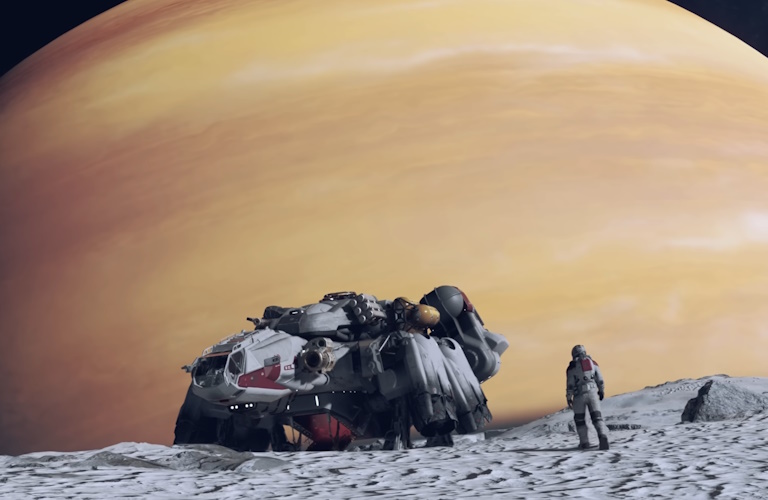
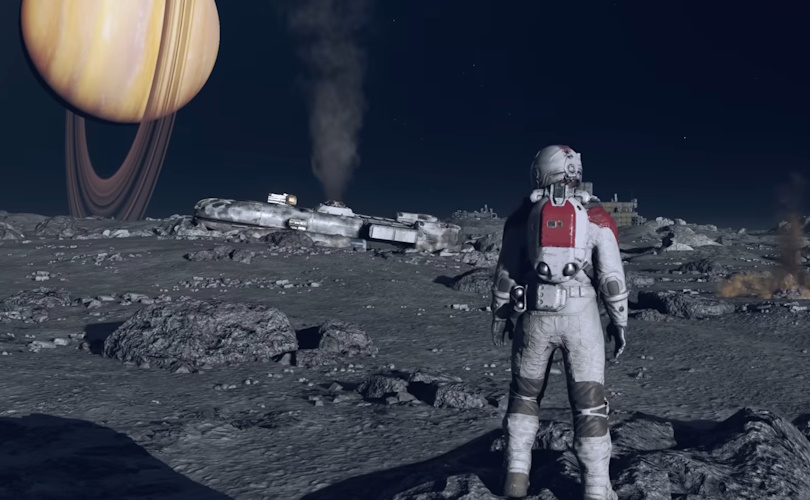
This appears to be a moon orbiting a gas giant.

Plenty of images and clips of Starfield prominently feature gas giants – massive planets like Saturn and Jupiter that are mostly comprised of hydrogen, helium, and other gaseous material. Because of the nature of gas giants, there isn’t a “surface” to speak of that can be visited; gas giants are comprised of various layers of gases and liquids, with the “boundaries” between different densities often being very gradual.

So it doesn’t seem likely that we’ll be able to land on gas giants – but can we fly near them? Can we fly into their cloudy atmospheres at all? What about gathering resources? In real life, gas giants are known to harbour vast quantities of helium – and helium-3 is confirmed to be the material used for spaceship fuel in Starfield. So gas giants could conceivably have resources to collect… somehow.

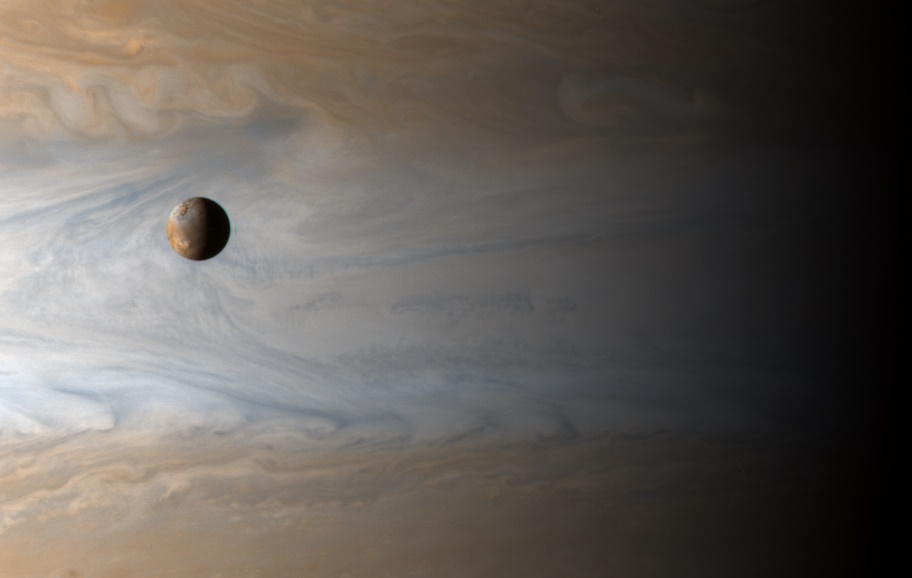
Jupiter and its moon Io, as photographed by NASA’s Cassini probe.

But how would this work? You can’t build an outpost on a gas giant like you would on the surface of a planet, and unless spaceships can be outfitted with equipment to harvest resources – something we also haven’t seen – then I’m just not sure how we’d go about extracting anything from a gas giant in the game.

Finally, Starfield’s marketing has promised 1,000 planets to explore. In real life, the majority of planets that have been discovered so far are gas giants or ice giants; will that be true of the majority of Starfield’s 1,000 planets, too? If so, it could cut down the number of planets we can actually land on by a considerable margin.

Question #10:
Are there procedurally-generated quests and missions?

Will some NPCs be randomly generated or dish out random quests?

We know that Starfield will use procedural generation for some of its planets and environments. There’s still a degree of confusion over how exactly this will function, but today I’m asking a different question! Are all of Starfield’s missions and quests hand-crafted? Or will there be procedurally-generated quests and missions?

Some games have random encounters and/or missions with set parameters but where the specific details are procedurally-generated. This could include, for example, a quest involving killing a monster – but where the quest-giver is a procedurally-generated NPC, the monster type is chosen at random, and so on.

Discovering a hand-crafted location in a random place!

Another example would be the patented “nemesis” system used in Middle-earth: Shadow of Mordor and its sequel. Random NPCs in the enemy army would be promoted, depending on the actions of the player, and defeating these levelled-up enemies was an integral part of both titles. I’m not expecting anything like this in Starfield, it’s just an example of how this kind of randomness can work!

So will Starfield have anything comparable? Or have all of the game’s missions and quests been constructed by human developers from the ground up? The way Bethesda has talked about the game seems to suggest that at least some quests may take place in randomly-assigned locations.

So that’s it!

Is that a crashed spaceship?

I managed to find another ten questions that I’d love Bethesda and Xbox to answer before Starfield’s release.

As I’ve said before, the point here is not to pre-emptively criticise the game, nor to deliberately seek out things to pick on. Instead, I’m concerned that Bethesda and Microsoft ought to do more to rein in speculation when it gets out-of-hand. If a feature isn’t going to be included in the game, or won’t behave in the way players are expecting, it’s infinitely better to say so now, months before release. The alternative is that the hype train ends up going down the wrong track – before ultimately derailing when players finally get their hands on Starfield.

A good marketing team knows how to say “no” in a way that isn’t offputting, and how to redirect the conversation in a positive direction. If the interiors of spaceships can’t be customised, for example, then tell us and be up-front about that – but also shine a light on outpost building or the variety of costumes and cosmetic options elsewhere in the game. That’s just one example. But covering things up or saying “pass” when asked a basic question about an in-game system or feature that would in no way be a spoiler… well, it isn’t always a good look.

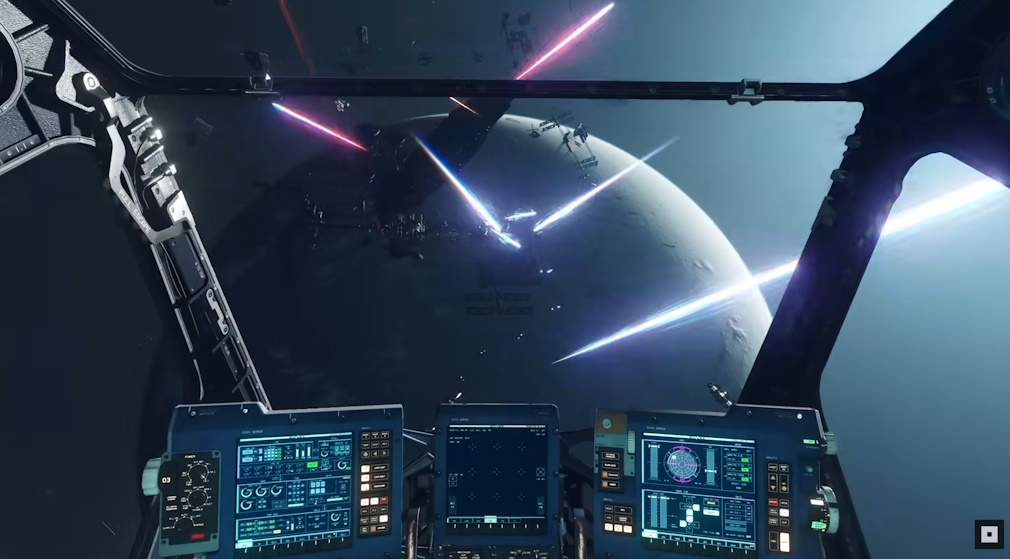
Dogfighting in space!

There are reasons why Starfield should sit in the “wait for the reviews” category. But at the same time, it’s absolutely my most-anticipated game and I can feel the hype train leaving the station. I really can’t wait to get my hands on Starfield, and even if the game doesn’t do absolutely everything that I think I want it to right now, I still think we’re in for a fun time.

There are quests in practically all of Bethesda’s older games that I still haven’t played – or even started! These games tend to be overstuffed with things to do, such that even years later I still haven’t seen or done it all. But I greatly enjoyed all of them in different ways, and the chance to take to the stars in a sci-fi role-playing game like this… it has the potential to be incredible. I haven’t felt this much excitement for a new game since Bethesda’s own Morrowind more than two decades ago!

Starfield will be released on the 6th of September 2023 for PC and Xbox Series S/X consoles. Starfield is the copyright of Bethesda Game Studios, Bethesda Softworks, Xbox Game Studios, and/or Microsoft. Some promo images and screenshots used above courtesy of Bethesda. This article contains the thoughts and opinions of one person only and is not intended to cause any offence.