Starfield: A Question of Scale

Spoiler Warning: Minor spoilers may be present for Starfield.

Today we’re continuing our look ahead to Starfield! Bethesda’s upcoming open-galaxy sci-fi role-playing game is my most-anticipated game right now… but that doesn’t mean I don’t have questions and concerns. We’ve taken a look at several already, but today I want to zero in on one very specific question that I have about Starfield: will the game truly be able to create the sense of scale that it’s clearly aiming for?

We can break down this question into a couple of big pieces. Firstly, we have the size of the game’s open galaxy – or rather, the amount of actual content relative to the size of the map. Will there be enough characters to interact with, enough settlements to visit, and enough of a world to get stuck into in a map that contains 1,000 explorable planets?
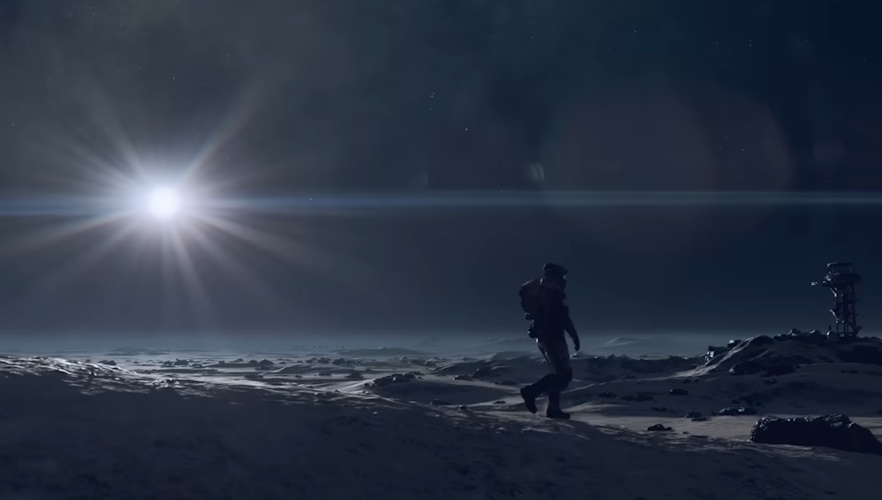
Is there a danger that Starfield might feel too… empty?

Secondly, we have the open nature of the game world itself. Although not strictly a true “open world” in the sense that Starfield’s “open galaxy” will be split up into star systems and planets, a hallmark of Bethesda titles going all the way back to the 1990s is that every square inch of the map is accessible and can be explored. In a game that takes place in a single province of a larger world, there’s still a sense of scale – that the world of Morrowind, Skyrim or Fallout exists beyond the confines of the game map. Starfield won’t have that – it can’t have it by design. That could be an issue, and it’s where my concern begins.

Take, for example, a game like Mass Effect 2 or Jedi: Fallen Order. Or in the open-world sphere, take a game like Red Dead Redemption II or The Witcher 3. All of these games manage to convey a sense of scale – of deep, persistent worlds that continue to exist beyond the confines of their playable maps, populated by, in some cases, literally trillions of individual people. One of the reasons that these games feel so much fun to play, and their stories so engaging, is precisely because as players, we know we’re only scratching the surface.
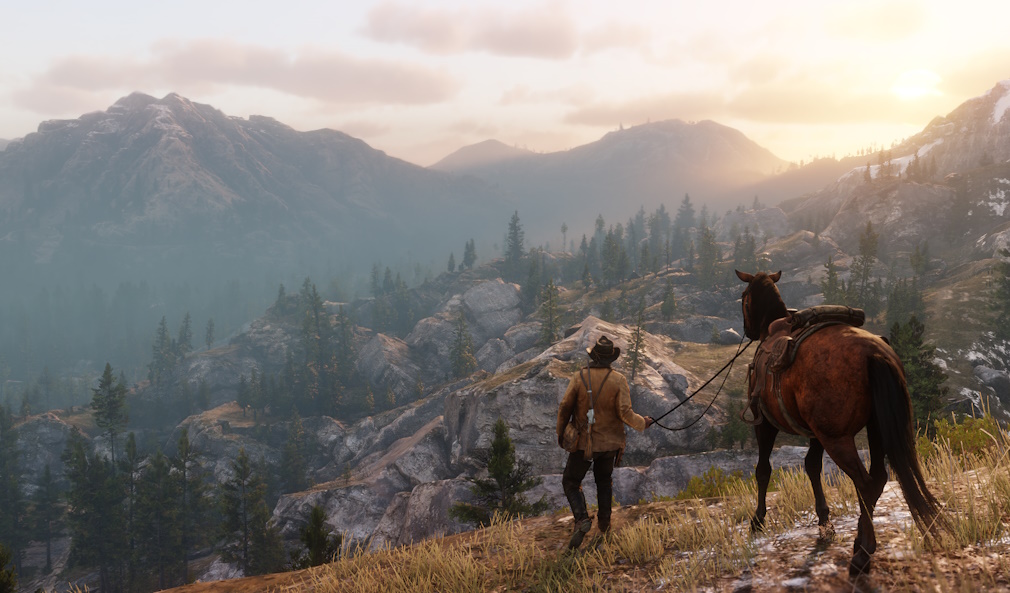
The story of Red Dead Redemption II feels like it takes place in one small corner of a vast world.

Even older Bethesda games managed to nail this feeling. Playing Morrowind, we knew that there was a whole continent beyond the confines of Vvardenfell, and in Fallout 4 it was clear that the Commonwealth was only one small patch of a much larger wasteland. These areas still felt lived-in, but part of the reason for that is because we knew that there were people and settlements beyond our reach, making the game world feel real.

By design, Starfield can’t have that. Opening up the entirety of the Settled Systems to players, including the capital cities of both major colonial factions, means that the idea of an expansive, populated world beyond the borders of the game’s map can’t exist. And that absolutely could be okay, but if Starfield’s open galaxy has a population comparable to that of a small town… I fear that an important part of the immersion will be lost before the game can even get going.
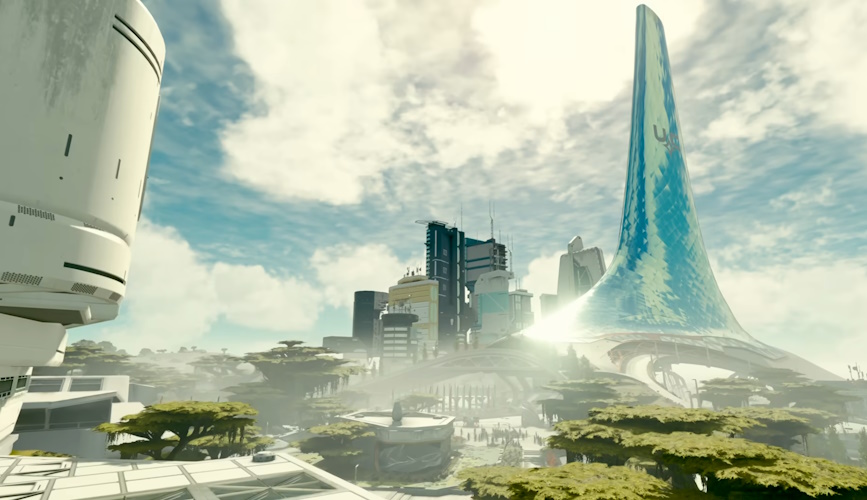
New Atlantis – the capital city of the United Colonies.

Every game has a limited number of non-player characters – it’s unavoidable. Even massive online games or expansive open-world titles have, at the very most, a few hundred or perhaps a thousand NPCs to engage with. But in most cases – and especially in games that succeed at creating that sense of expansiveness and immersion – there’s always the sensation that, despite the limited number of people available in the game, there are untold numbers of others just beyond the invisible wall dividing the game’s map from the rest of its world.

In Mass Effect 3, for example, it’s possible to walk across parts of the Citadel and really feel the scale of the massive space station. Sure, there are only a few dozen people to engage with, some of whom only have a single line of dialogue, but a combination of the game’s lore, art design, sound effects, narrative, and more all come together to make you feel that there’s so much more just out of sight.
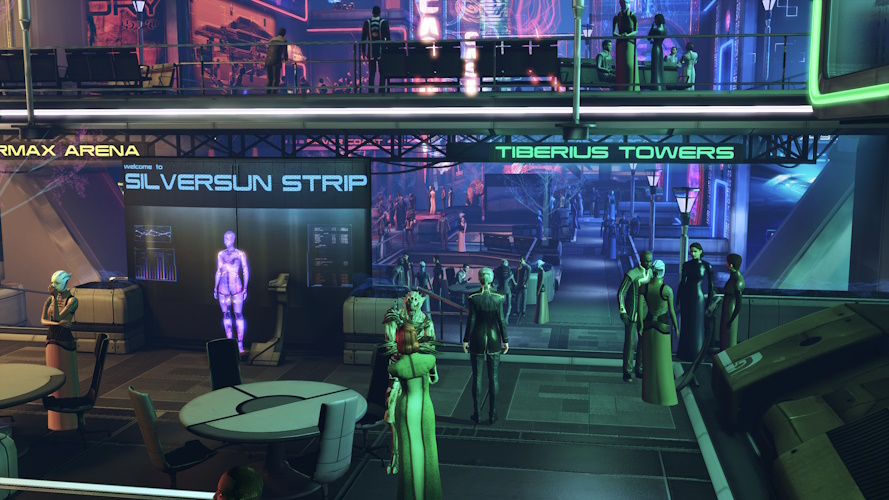
The Silversun Strip on the Citadel in Mass Effect 3.

For me, the experience of playing a game that takes place in a small part of a much larger world is something I hadn’t really considered before Starfield. It was only when I began to truly consider the implications of an open-galaxy map with 1,000 planets to explore that I really zeroed in on one of the absolutely essential ways that so many games create that sense of immersion and scale.

And it’s not something exclusive to gaming by any means. Watch an episode or two of Star Trek, and you’ll soon get the sense that there’s far, far more going on in the galaxy beyond the adventures of a few officers aboard a single starship! Star Wars, too, has a densely-populated galaxy filled with alien races, criminal gangs, and so much more. As I’ve argued more than once, it seems positively criminal that Disney and Lucasfilm have insisted on revisiting the same handful of characters time and again when the setting is so vast and potentially interesting!
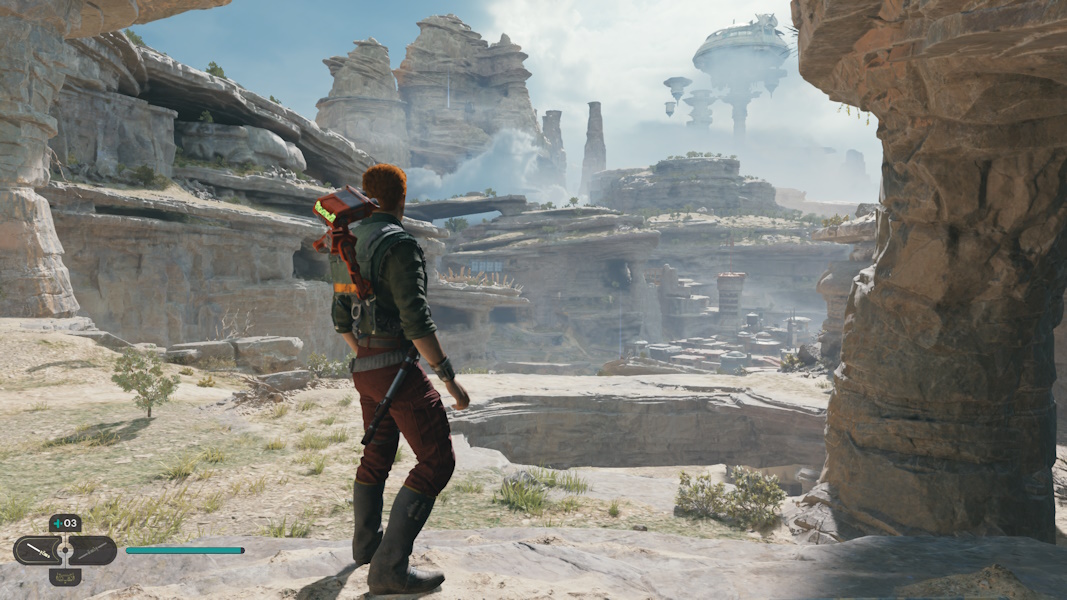
Cal Kestis in Jedi: Survivor.

As Starfield opens up its entire map to players, will there be enough content – and especially enough content relative to the size of the map – to really nail that sense of scale? If we can interact with everyone in the entirety of the Settled Systems… how long will it take before we realise that there isn’t anything more to this world? Enough to sustain a playthrough of the game, I hope… but is that enough?

Bethesda has recorded more dialogue for Starfield than it did for Skyrim and Fallout 4 combined. There could easily be well over 2,000 NPCs in the game, some of whom will have in-depth conversations with the player character. On the one hand, that’s a lot of chatter! But on the other, in a fully open map that supposedly depicts humanity’s expansion to colonies beyond the stars… 2,000 people seems like a minuscule number. It’s barely the population of a small town. When you add into the mix that these characters are going to be spread across four major settlements, space stations, spaceships, and perhaps small settlements and other locations too… I’m just worried that the sense of scale that a game like Starfield relies on will be lost.
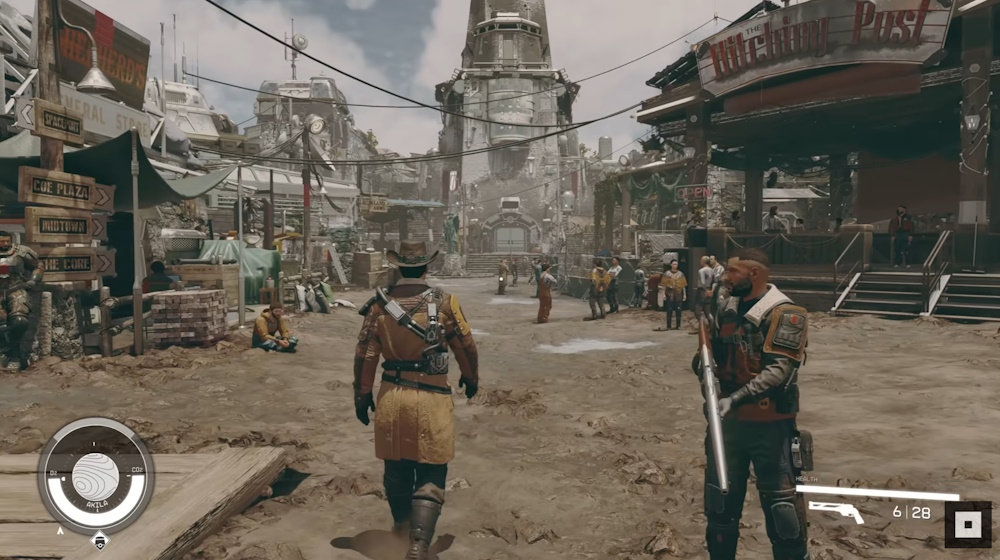
Akila City in the Freestar Collective.

Despite its difficult launch and gameplay issues, Cyberpunk 2077 is a game that manages to really succeed at conveying a sense of scale. From almost the first moment, players are aware that they’re only one person in a vast world; a dense cityscape populated by thousands of people. Although it isn’t possible to travel far beyond the confines of the city, there’s still that sense that the world beyond Night City is vast – and that within the city itself, there are people going about their lives blissfully unaware of the protagonist’s story.

Sometimes, being “the chosen one” can also get in the way of this sense of scale. If the fate of the entire galaxy hinges on the player character and the actions they take, it’s much harder in a role-playing game to see oneself as just one character among many in a vast world. Bethesda does love its “chosen one” archetypes, though, so I wouldn’t be shocked to see it appear in Starfield in some form. If so, I hope it’s handled carefully – and perhaps buried deeply in the main quest, so players who don’t want to go down that road will have the opportunity to avoid it altogether!
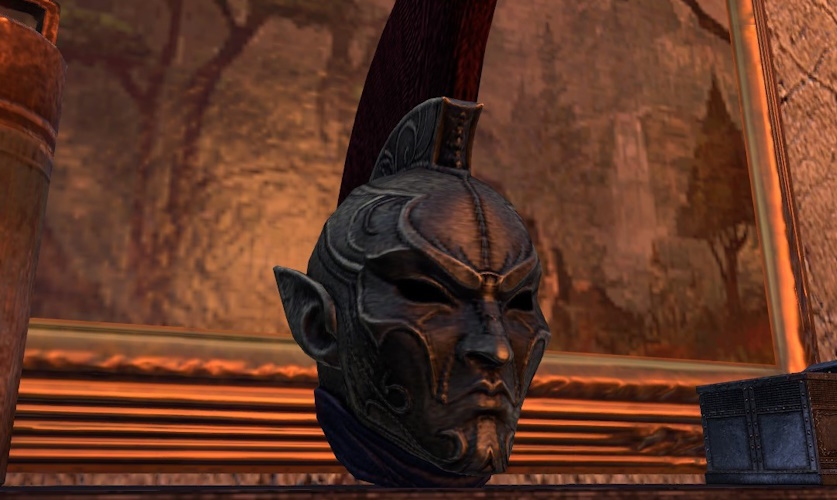
Making the player character “the chosen one” (as in games like Morrowind) could add to the sense of Starfield being small in scale.

What makes a fictional world feel lived-in and real? I would argue very strongly that one very important factor is the notion that there’s more to that world than I as a player (or a reader, viewer, etc.) can see. No matter how large Starfield may be, no matter how expansive its map is, no matter how much of it I could take in in a single playthrough, and no matter whether the game has 2,000 or 10,000 NPCs to interact with, there’s a very real danger that it will feel limited, and dare I say even small. The idea that the story we’re taking part in is only one small part of the world of Starfield won’t exist, it can’t exist by design. The notion that there’s more, that Starfield is bigger than the available map and characters, cannot exist.

I hope that there will be so much to get stuck into that that sense won’t be overwhelming, and that Bethesda’s world-building will be better than ever to such an extent that I don’t notice. But part of the appeal of a game like Starfield is that I as a player am going to be whisked away to another world, a world in which I can get lost in the role-playing experience. Part of that, though I could never put it into words nor even really conceptualise it before thinking about Starfield, is because the worlds I’ve sought out feel bigger than the stories told in them. I’m not sure how Starfield can recreate that feeling based on what we know of the game – and there’s a genuine danger, I fear, that trying to pretend half the known galaxy is populated by a few thousand people is going to feel catastrophically unbalanced.
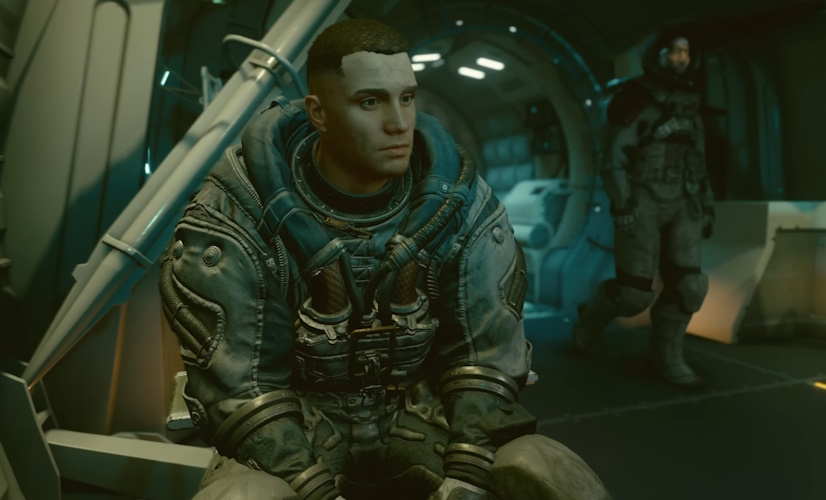
We’re pondering a big question about Starfield

I said a couple of weeks ago that, if the “United Colonies” turns out to be a mere two cities, and if the Freestar Collective is likewise a “collective” consisting of just a couple of settlements, something will feel amiss. And this is what I meant by that. The concept of an expansive world that exists beyond the confines of a single story or the playable area of a game’s map is something that, based on everything we know at this stage, Bethesda has deliberately chosen not to create. It almost feels like we’re heading into uncharted territory – the game will be large, sure, but can it possibly be large enough to overcome that deficit? Will the number of settlements, the number of characters, the number of factions, and the overall amount of content relative to the size of the game world feel so unbalanced and out of whack that it will detract from the experience? If so… will those things prove fatal to the Starfield experience?

Thus far, my biggest concerns about Starfield have been on the practical side. Will the game be released in a polished state? Will it be overburdened with microtransactions? Will Xbox and Bethesda consider a last-second delay if further bug fixes and tweaks are needed? But this question of scale… it’s probably my single biggest gameplay concern right now. And this isn’t just a fear of a repeat of Fallout 76′s “big empty world,” a game map that had no NPCs to interact with and precious little to do. It’s deeper than that – it cuts to the very sense of immersion and believability that should be present in Starfield’s galaxy.

The crew of the Frontier.

Games like Red Dead Redemption II, Cyberpunk 2077, or the Mass Effect trilogy succeed, in part, because they get me to believe that a bigger world exists beyond the confines of the game map. And in a more general sense, whether we’re talking about novels, films, television shows, or video games, getting an audience not only to believe that a world exists but to care about it and feel a sense of investment in it is a key part of the pathway to suspension of disbelief and to enjoyment. Starfield may well succeed at creating an interesting, engaging world that I care about and want to see more of – but if that world feels like it’s limited to only the characters and locales present in the game, part of the immersion could be lost.

Conversely, this is set to be the biggest world that Bethesda has ever created, populated by more NPCs than in any single-player game that the studio has ever built. So perhaps the idea here is that players will be so overwhelmed with content – be that quests, factions, points of interest, or characters to chat with – that the game world will feel full to the point of being overstuffed. That could go some way to negating the fact that, well, we’ll be able to explore the entirety of the settled systems, visit every colony, land on every settled planet, and meet every single human who exists at that moment in Starfield’s future.

I really hope it won’t be an issue. I hope I’ll look back on this article in a month’s time and think how silly it was to be worried! But as the buildup to Starfield’s launch continues, it’s definitely something that’s weighing on my mind.

Starfield will be released on the 6th of September 2023 for PC and Xbox Series S/X consoles. Starfield is the copyright of Bethesda Game Studios, Bethesda Softworks, Xbox Game Studios, and/or Microsoft. Some promo images and screenshots used above courtesy of Bethesda. This article contains the thoughts and opinions of one person only and is not intended to cause any offence.
Starfield: my biggest concerns

Spoiler Warning: Although there are no major story spoilers for Starfield, minor spoilers may be present. This article also uses screenshots and promotional artwork of the game.

I touched on this subject when I gave my thoughts on the recent Starfield showcase, but I wanted to expand on some of my concerns about Bethesda’s upcoming sci-fi role-playing game. For context, Starfield is absolutely my most-anticipated game right now, and it’s one I’m very excited about! The hype train has definitely left the station, and I’m going to be riding it until September!

But that doesn’t mean that there aren’t concerns to be addressed. Some of these are things we can’t know or won’t get to see until Starfield is released, but others are things that Bethesda can – and really ought to – begin to address right away, before things get out of hand. We saw with Cyberpunk 2077 how dangerous an ever-growing hype bubble can be, and it doesn’t serve any game if players are allowed free rein to speculate and build up an inaccurate and even impossible picture of what it could be.

An unknown character seen in the recent Starfield showcase.

That’s perhaps my single greatest concern: that Bethesda and Microsoft aren’t doing enough to step in when speculation gets wild. I’ve seen commentators and critics propose entirely unannounced features that are almost certainly not going to be included in Starfield, dedicating entire forum threads or YouTube videos to discussing them. Theorising can be fun, but there’s a line somewhere that falls in between speculating about what might be present and convincing oneself (and others) that an exciting-sounding feature is certain to be included.

This is where a good marketing department is essential! There are ways to let players down gently, or to redirect the conversation to other areas of the game, without deflating the hype bubble or crushing players’ expectations. It’s infinitely better to do so at this stage, months before the game is launched, rather than attempting to clean up ambiguous statements and explain the lack of features fans felt certain they’d get to see after a rocky release.

Todd Howard, executive producer at Bethesda and director of Starfield.

In different ways, this is basically what tripped up Cyberpunk 2077 and No Man’s Sky. Both games were subject to intense criticism and even hate upon release, and while Cyberpunk 2077 in particular suffered from being in an incomplete state, both games had been over-sold. In both cases, marketing departments seemed incapable of saying “no,” promising players a genre-busting, once-in-a-lifetime experience that no game could ever hope to live up to. When it turned out that No Man’s Sky was pretty barebones and barren, and that Cyberpunk 2077 was so unfinished that many folks found it to be unplayable, the dejection that players felt as they fell back to Earth was unparalleled. They’d been promised something special, but all they found when the dust had settled was a sense of crushing disappointment.

Starfield is absolutely in danger of doing this. There are going to be limitations within the game: limited NPC numbers, limited character traits and skills to choose from, limits to customisation for spaceships and the player character, limits on exploration, and limits to the role-playing experience. It’s essential that Bethesda and Microsoft use the next few months wisely, setting appropriate expectations and not allowing players to build up an image of Starfield in their heads that the game could never live up to.

Spaceship customisation is sure to have its limits.

Let’s talk about the size of Starfield itself. With 1,000 explorable planets being promised, I can’t be the only one who thinks that Bethesda might’ve made the game too big… can I? Don’t get me wrong, it’s essential that Starfield’s galaxy feels expansive, and if exploration, mining, and resource collection are going to be key parts of gameplay, it’s important to ensure there’s enough space to do all of those things. But 1,000 planets seems like a lot – arguably too many for any one player to even visit, let alone explore thoroughly in a single playthrough.

With the way Starfield’s procedural generation has been described, there’s a risk that players will miss things, too. If some characters, locations, and even missions are randomly assigned to planets, there’s only a one-in-one-thousand chance of finding a particular mission on a particular world. That potentially means that Starfield will be awkward to replay, or that it will be difficult for players to try out a mission that they’ve seen or to share something exciting with their friends.

A close-up scan of a planet.

In Fallout 4 or Skyrim, every single player could go to the same point on the map and encounter the same NPC or start the same quest. But that won’t be possible in Starfield – which is fun in some ways, but could become frustrating. If players find a fun quest or a useful item on one playthrough, locating it again on another save file could be like trying to find a needle in a haystack. That can be fun in some cases… but it will definitely be frustrating in others.

Some of the planets shown off in the Starfield showcase also looked pretty flat and barren. One of the key marketing lines is “if you can see it you can go there,” with words to that effect being used in reference to a moon in orbit of a planet. But here’s the thing: if that moon or planet has nothing of note except, perhaps, for some crafting resources to collect… going there won’t actually be a lot of fun.

Some of these planets look lifeless and barren.

For all the talk of Starfield having 1,000 planets, only a handful of those – perhaps a dozen at most – are going to have a significant amount of content. Whether we’re talking about small settlements, villains’ lairs, shipwrecks to scavenge, random character encounters, ruins, or other hallmarks of exploration in a Bethesda game… there’s only going to be so many of those. My fear here is that 1,000 planets might spread this content too thin, leaving swathes of the galaxy feeling empty.

There was also talk of planets consisting of “puzzle pieces” – i.e. hand-made pieces of content stitched together at random. That seems to solve one problem, but might it create another? Unless Bethesda has created enough of these puzzle pieces to make each planet totally unique, at some point is there not a danger that they’ll have to be recycled? It would be immersion-breaking to land on a planet and see the exact same mountain or ruin as we’d just been exploring somewhere else.

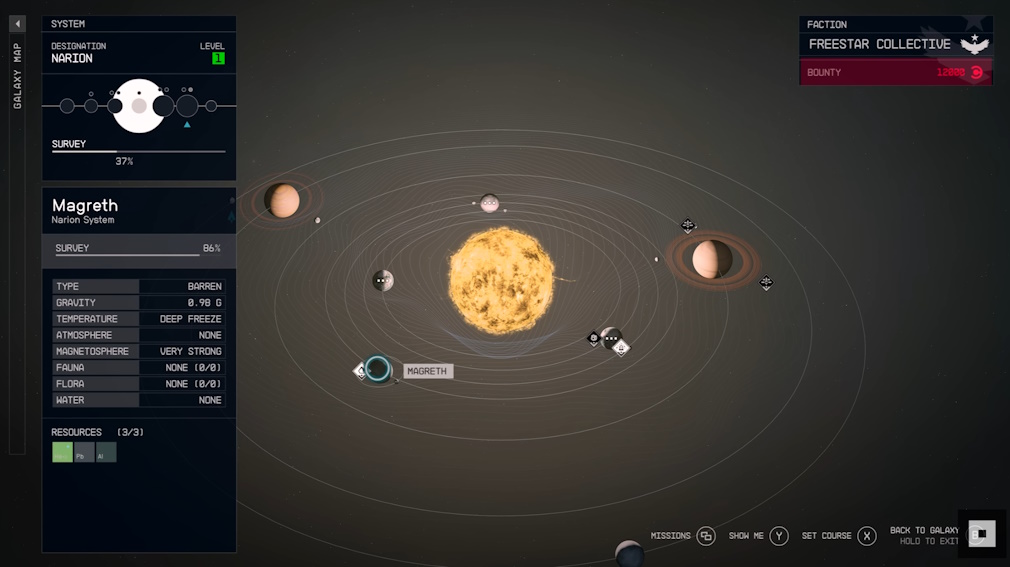
The map, focusing on a single solar system.

I don’t think that Bethesda has done enough to allay some of these concerns about the scale of the map and the amount of content it may contain. One of the criticisms of No Man’s Sky when that game launched was that its planets felt empty – and outside of some of the main settlements and story locations, I’m just not sure how Bethesda will get around this.

Starfield will be Bethesda’s biggest game to date, with some reports suggesting it may have twice as much recorded dialogue as Fallout 4. Fallout 4 had close to 700 non-player characters, but even if we generously assume that Starfield might have as many as 2,000, that still spreads them out very thinly. Even more so if we assume that the three major settlements we know of will congregate a lot of NPCs in one place.

Sarah Morgan, one of the game’s important non-player characters.

Complaining that a space game is “too big” seems silly – and I freely admit that. But my concern is less to do with the size of the map itself and more with the amount of content relative to the size of the map. One of my main complaints about Fallout 76 was that its open world felt utterly lifeless due to the complete lack of non-player characters to engage with… and outside of settlements and space stations, I just fear that parts of Starfield’s galaxy could fall into the same trap.

The game is going to clock in at a whopping 125GB – at least on PC. That sounds huge, but when you compare it to other modern games, it actually isn’t. Star Wars Jedi: Survivor is comparable in size, for example, as is Red Dead Redemption II. Now don’t get me wrong, I adore Red Dead Redemption II’s open world – but is its patch of the wild west in the 19th Century a fair comparison with Starfield’s 1,000 planets? Again, my concern is really the amount of enjoyable content relative to the size of the map.

Starfield’s system requirements.
Image Credit: Steam/ZeniMax

Let’s hop over to the character creator now. This might seem like a nitpick, and as facial hair is something I seldom use on custom characters, it isn’t something that will affect my own playthrough. But the facial hair in Starfield’s character creator… well, it just looks a bit shit, doesn’t it? I’m not the only one who thinks so, surely. In fact, I’d go so far as to call facial hair the worst-looking part of Starfield that we’ve been shown so far, and on some character models it seriously detracted from the way they looked, dropping the realism down several notches.

Hair and hairstyles looked pretty good, with a variety of hair types and styles that should allow players to create a diverse array of characters. That’s fabulous – but it raises the question of why facial hair is struggling to hit that same level of quality. This is something past Bethesda games have struggled with, too – Oblivion most notably, but also Skyrim and the Fallouts to a lesser extent.

Facial hair does not look great in Starfield.

I fear that facial hair may be the first outward sign of another of my big worries: Starfield’s game engine. Bethesda has insisted on using their proprietary Creation Engine 2 for Starfield – but the underlying technology here is more than twenty years old. The core technology of Creation Engine 2 is Morrowind’s Gamebryo, a piece of kit that Bethesda has literally been using since the late ’90s when that game first entered development. Changes and additions have been made, but this technology has its limits. The facial hair problem, which is a hallmark of prior Bethesda titles, could be the canary in the coal mine here.

There are advantages to working with a familiar toolkit. If Starfield had been built on, say, Unreal Engine 4 or 5, it would have required a completely different development cycle, with a different team who were familiar with how that technology worked. I’m not saying that would have been better, and I’m not arguing in favour of any one of the well-known game engines that other modern titles use. There are drawbacks and disadvantages to working with practically all of them.

Starfield’s game engine uses the same core technology that Bethesda has relied on since Morrowind.

But what I am saying is that Bethesda’s technology is at best untested on a title this massive. Some of the in-game features and mechanics promised for Starfield, such as spaceflight and ship-to-ship combat, have never been done before in any form of Gamebryo or the Creation Engine. That’s one concern.

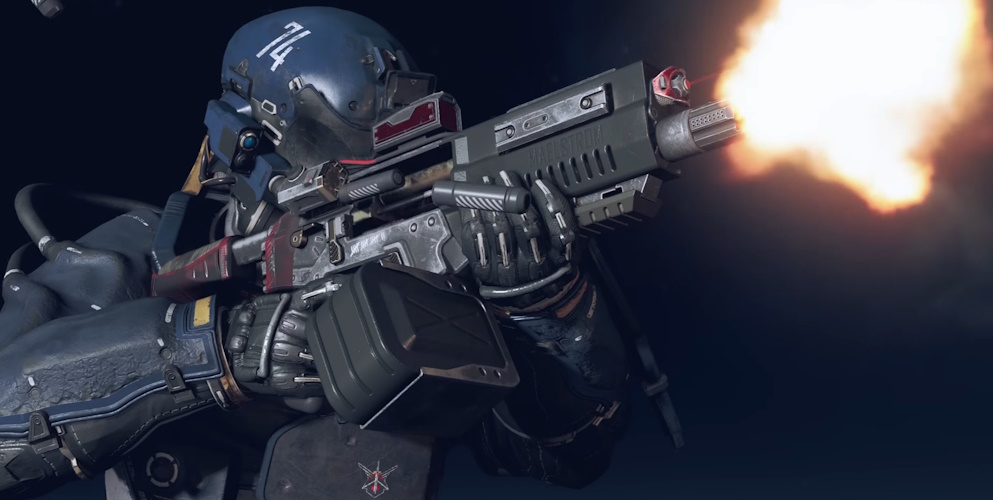
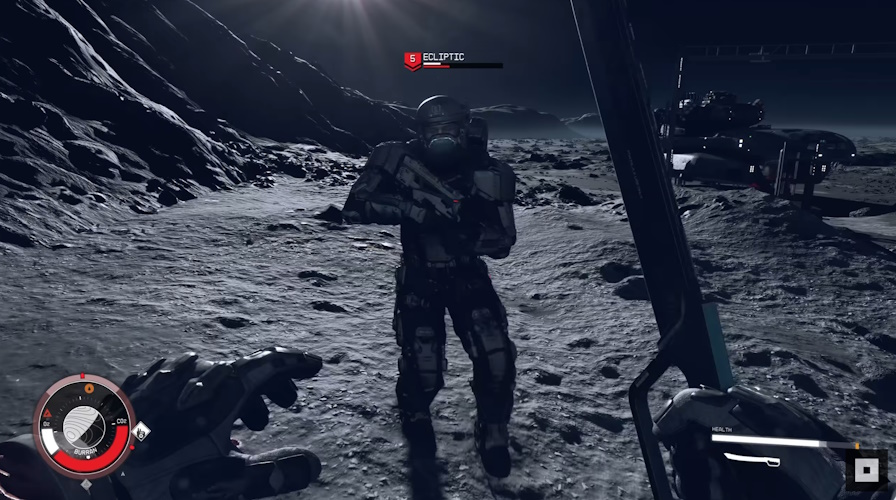
Then there are things that have been done before – but haven’t always been done particularly well. I noted in my piece on the Starfield showcase how impressed I was with the gunplay. Partly that’s because gunplay in Bethesda’s Fallout duology was pretty poor without those games’ signature VATS system covering for it. An update to the engine should allow for significant improvements in that area, but again this is something that’s untested, and something like shooting can be difficult to judge from compressed YouTube video footage – especially carefully-edited marketing bumf. Any developer worth their salt can make even the most lacklustre game look fast-paced, fluid, and exciting in their own marketing material.

Gunplay looked great in the showcase.

Bethesda has earned itself a reputation among players for releasing games bedevilled by glitches and bugs. The company wouldn’t be the first to release a broken, buggy game in 2023 – but that’s no excuse! I’ve already said that Starfield is a game that I’ll be waiting to see reviews and tech breakdowns of before I commit myself, and that’s because Bethesda has done so much to warrant such a cautious approach.

Look back to trailers and marketing material shown off for Cyberpunk 2077 in 2020. Or Redfall earlier this year. It’s easy for a clever publisher to compile footage – even in-game footage – that looks great, and to show off a “vision” for how the game could look under the right circumstances. Trailers, teasers, and gameplay reveals often turn out to be inaccurate, and the version of a game that arrives on launch day – or during a pre-order exclusive access window – can be a million miles away from how it was promised or presented. Bethesda has done this too, with Fallout 4 and especially Fallout 76 receiving well-deserved criticism for bugs and glitches when they were released.

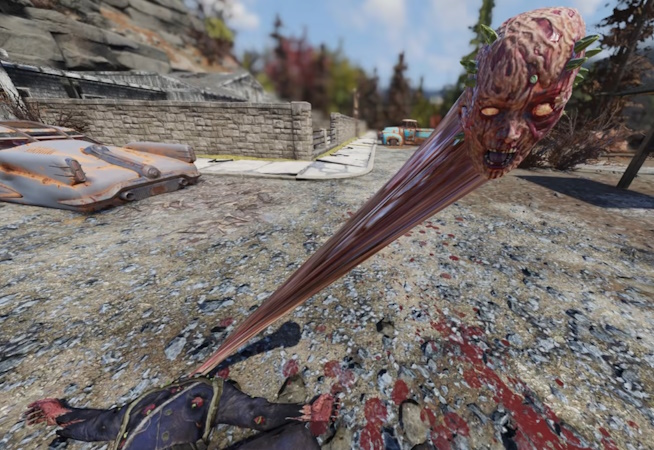
Fallout 76 at launch had, uh, a few issues…

There’s a specific story concern that I have – one that hadn’t even entered my mind until someone commented on it somewhere online. I can’t remember where I first saw this idea or theory posited, so I apologise to its original creator for that! But several people have suggested that Starfield could be some kind of sequel to the Fallout series – noting in particular that Earth looks barren, devastated, and uninhabitable in teases we’ve been shown… not unlike Fallout’s nuclear wasteland.

To be clear, there’s no indication whatsoever that this will be the case. Bethesda hasn’t denied it outright, but they haven’t actually commented on it at all as far as I can tell.

For my money, this would be an atrocious idea. Even if this was a secret that was kept, with the player character not finding out until well into the main story… it just wouldn’t work. It would make Starfield feel diminished, living in the shadow of another game – and it just isn’t necessary. Starfield can and should stand on its own two feet, doing its own thing, and not needing to be constrained by other games in a different fictional universe.

This is one rumour I hope proves to be false.

After Starfield is launched, a lot of attention will be paid to how well the game sells. But as I’ve said before, in an era where Game Pass has tens of millions of paid subscribers, sales numbers no longer tell the full story. I fully expect the PlayStation fanboys to jump all over Starfield – as they are already for any point of criticism they can find – and if the game seems to be selling fewer copies than other Bethesda games or than comparable PlayStation 5 games, you can bet they’ll take that and run with it. There’s sure to be content proclaiming Starfield a “failure” no matter what happens!

But it isn’t fair to judge Starfield – nor any Microsoft or Xbox game – purely on sales numbers any more. Game Pass is a game changer; it’s quite literally changing the way many of us play games. The way players on Xbox and PC engage with Bethesda titles and other Microsoft-owned games and studios is changing rapidly, with more and more subscribers joining Game Pass every day. Starfield’s release is sure to see a spike in Game Pass numbers, too – because it makes a lot of sense from a player’s perspective! I’ll be playing Starfield on Game Pass, and several people I know will be doing the same thing. Each Game Pass player represents a sale not made – so look to Microsoft and Bethesda for player numbers rather than raw sales data.

Starfield is a big deal for Game Pass.

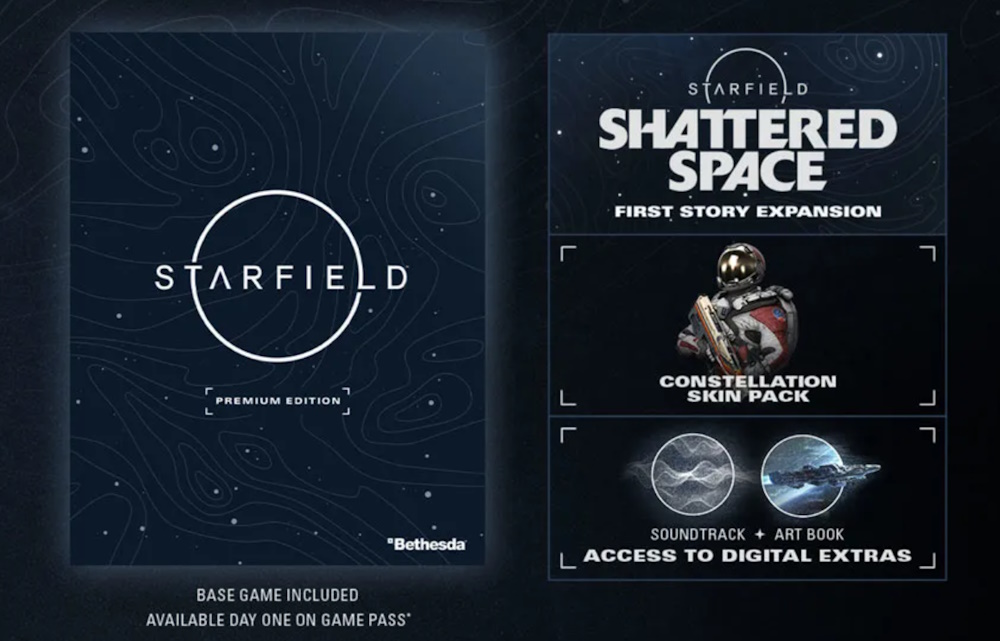
Speaking of sales and money, another area of concern is that Starfield seems to be quite aggressively chasing some recent cash-grabbing trends that have blighted the modern games industry. It was a given that Starfield would have a collector’s edition and a special edition at launch – such things are so commonplace nowadays that they don’t even raise an eyebrow. But I admit that I was a little surprised at how steep the price was and what kind of content was on offer.

Firstly, for an additional £25 – on top of Starfield’s £60 (US$70) price tag – players get a couple of skins, a digital soundtrack, an “art book,” which will be a collection of JPEG images of the game’s concept art, and access to the first piece of planned DLC. We’ll get to DLC in a moment, but there’s one more thing that pre-ordering this expensive special edition gets players: five days of early access to the game.

Starfield has a special edition – because of course it does.

Let’s look at this another way: Starfield’s release date isn’t the 6th of September, it’s the 1st of September – but only for players who splurge some extra cash. The rest of us plebs will have to wait five days, close to a week, in order to play the game. I find these kinds of paid access periods to be a particularly revolting way of monetising a game, and I’m disappointed that Microsoft and Bethesda would stoop so low in order to manipulate players into pre-ordering Starfield.

Then we have these character costumes. I hope I’m wrong about this, but I fear these paid outfits are a harbinger of some aggressive in-game monetisation. This might be something that’s already present in Starfield, or it might be something Bethesda plans to implement after the game’s release – but either way, it doesn’t bode well. A fully-priced game shouldn’t be selling costumes like it’s some free-to-play MMO, but the games industry has been getting away with more and more of this kind of aggressive in-game thievery. And Bethesda is one of the pioneers of this nonsense, with Oblivion’s infamous “horse armour” DLC.

Yup.

If I’m paying £60 – or £85 – for a game, I should expect to be able to equip my character with all of the costumes that the game has to offer. This isn’t Roblox or Fortnite; free-to-play titles that use in-game purchases and subscriptions to turn a profit. For the money Bethesda and Microsoft are demanding, it’s positively disgusting to think that some character outfits – and possibly other pieces of content too – have been cut out to be sold separately.

I mentioned the first expansion pack there, too, and this is another thing that’s ringing alarm bells. Starfield is still almost three months away from release – this is not the time to be talking publicly about expansion packs and DLC. It worries me that attention and development resources may be diverted away from what should be Bethesda’s top priority: getting the game ready for launch. DLC is great – and if Starfield is as amazing an experience as we’re all hoping for, I’ll definitely be picking up every major expansion pack that gets released! But now is not the moment to be advertising it.

Let’s get the game launched before we talk about DLC.

I do have one final point of concern before we wrap things up. Since the Starfield showcase was broadcast, hype for the game has gone way up. Players like myself who had been on the fence about Starfield or who were tentatively looking forward to it have now well and truly boarded the hype train – and that brings with it a degree of expectation. Microsoft and Bethesda have promised a release date of the 6th of September (or the 1st for people who pay up). There’s now more pressure than ever to meet that deadline.

That means two things. First of all, crunch. Having once worked in the games industry, I’ve seen crunch first-hand, and I know the toll it can take on developers and everyone working at a games company. Crunch is something that should be avoided at all costs – but rigid deadlines make it far more likely.

It’s on Bethesda (and Microsoft) to avoid a difficult crunch period.

Secondly, Microsoft and Bethesda are now far less likely to delay Starfield. The game has already been delayed twice officially – or four times unofficially, if you believe certain reports. If Starfield isn’t ready in time for September, there’s going to be a lot of pressure for the game to be pushed out anyway – and that could be disastrous. Look at Cyberpunk 2077, a game which, despite pulling off an admirable recovery, will be forever tainted in the minds of players by an atrocious launch. Likewise No Man’s Sky. And for every game like those that manage to recover, there are dozens of titles like Anthem, Babylon’s Fall, or 2013’s Star Trek that never do. Bethesda has some experience in this field, both with Fallout 76 and as the publisher responsible for this year’s Redfall.

I praised Starfield last year for being delayed. I stand by what I said then: it’s never fun when a game I’m excited for gets delayed, but more and more players have the maturity to understand that it can be necessary. Practically everyone would rather play a good game a few months later than a bad, broken, or unfinished game a few months earlier. But with so much hype building up and a release date seemingly set in stone, a further delay at this stage might be something that Microsoft and Bethesda are unwilling to consider. I hope that, if Starfield needs a few more weeks or even a few more months, that they will ultimately be willing to take that tough decision.

A spaceship!

So I think that’s all I have to say for now. I know it’s a lot – and if you feel like I just took a big stinking dump all over your excitement for Starfield, well… sorry!

Despite everything we’ve discussed today, I’m still incredibly excited for Starfield. I’m trying to restrain myself and not get overly hyped up – and that’s partly why I decided to put metaphorical pen to paper and write out all of my concerns and issues with the game. But the truth is that in spite of some worries and fears, I’m still really looking forward to this game. In fact, I can’t think of any other title since Bethesda’s own Morrowind more than two decades ago that I’ve been this excited to play for myself.

I’m keeping my fingers crossed, and I truly hope that all of the points I’ve raised today will turn out to be misplaced fears. In three months’ time, feel free to come back and have a good laugh at my expense if Starfield really does live up to our expectations! I know that’s what I’ll do… if I’m not too busy playing Starfield, of course.

Starfield will be released on the 6th of September 2023 for PC and Xbox Series S/X consoles. Starfield is the copyright of Bethesda Game Studios, Bethesda Softworks, Xbox Game Studios, and/or Microsoft. Some promo images and screenshots used above courtesy of Bethesda and IGDB. This article contains the thoughts and opinions of one person only and is not intended to cause any offence.