Ten Ways To Improve Starfield

A spoiler warning graphic.

Spoiler Warning: There are spoilers ahead for Starfield’s main quest – including its ending.

I know, I know: I keep telling you that I’m “done” talking about Starfield… only to pop up again a few weeks later with another new article or something else to add! So perhaps I’d better stop saying that this will be my last-ever piece about Starfield and just take it as it comes!

Over the past couple of weeks, Starfield has come back into focus for me. The recent Fallout television series has seen a surge of interest in Bethesda’s other sci-fi property, with both Fallout 76 and Fallout 4 seeing massive player numbers in April 2024. Both games were already running ahead of Starfield – which seems to have dropped out of the charts altogether by this point – but with talk of Bethesda potentially greenlighting some new Fallout project to tie in with the second season of the show, it really puts into perspective how far Starfield has fallen.

Don’t forget to check out my review of the Fallout TV series, by the way. You can find it by clicking or tapping here.

Cropped promo poster for the Fallout TV series.
The Fallout TV series has given a big boost to the games.

So here’s the deal: if you’ve read my first impressions of the game, or any of my other post-launch articles, you’ll know that I was underwhelmed by Starfield. There were elements of the game that had potential – but none that truly lived up to the hype. I didn’t hate Starfield by any means, and when I looked back at the worst or most disappointing gaming experiences of 2023, it didn’t seem fair to include it there, either. But the game was clearly not all it could’ve been.

Today, what I’d like to do is throw out a few of my (totally unsolicited) ideas for how Starfield could be improved. None of these are “magic bullets” capable of turning the game into a 10/10 perfect experience. I think that ship has sailed! But even within the confines of Starfield’s limitations, there are ways in which the game could be improved to make it worth returning to. I’m not proposing a total overhaul or re-making of the game, nor am I asking for something totally unrealistic like a brand-new main quest or recreating the game in a new engine. Instead, I’m trying to propose reasonable changes to certain systems or additions that wouldn’t undermine or fundamentally break the game as it currently exists.
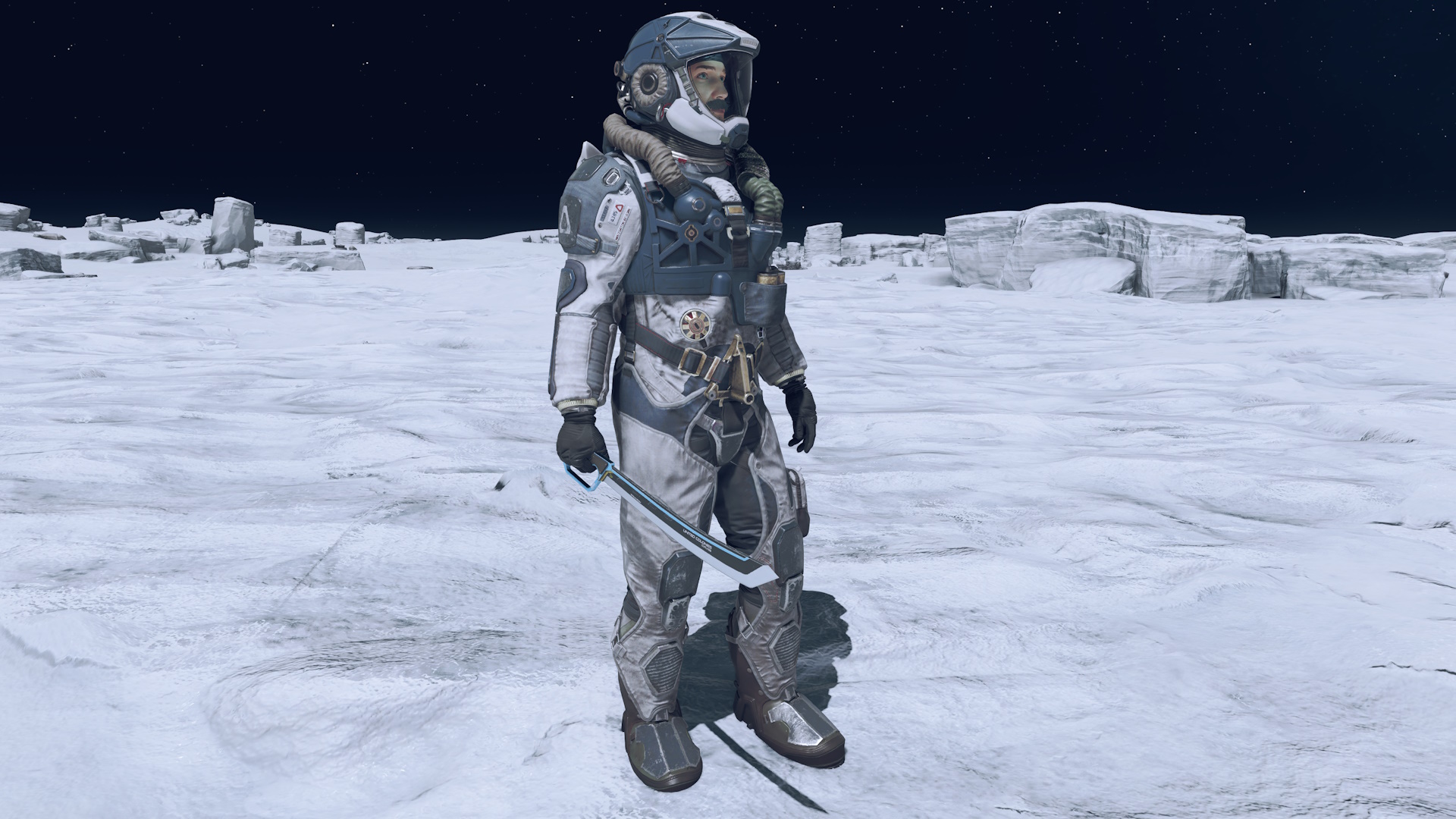
Screenshot of Starfield (2023) showing the player character wearing a spacesuit.
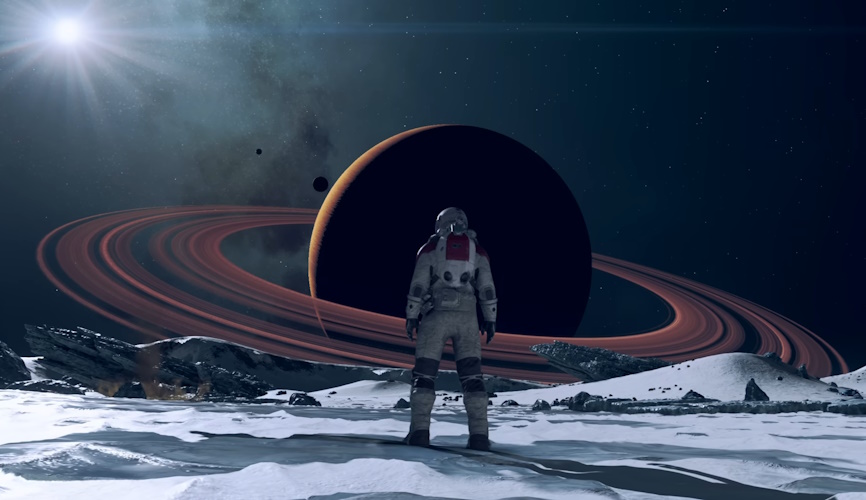
My character on the surface of an icy moon.

If that sounds like something you’re interested in, let me begin with my usual caveats! First of all, I have no “insider information.” I’m not trying to claim that anything discussed below can, will, or must be included in a future update or expansion for Starfield. This is a wishlist from an ex-player, and nothing more.

Secondly, all of this is my entirely subjective opinion. If you loved Starfield in its original form, think the game is utterly irredeemable, or just hate all of my suggestions, that’s totally okay! There’s plenty of room in the Starfield and Bethesda fan communities for polite discussion and disagreement – and we don’t need to get into an argument about hypothetical ideas for the game that Bethesda may never include.

With all of that out of the way, let’s get started!

Number One:
Empty Planets.
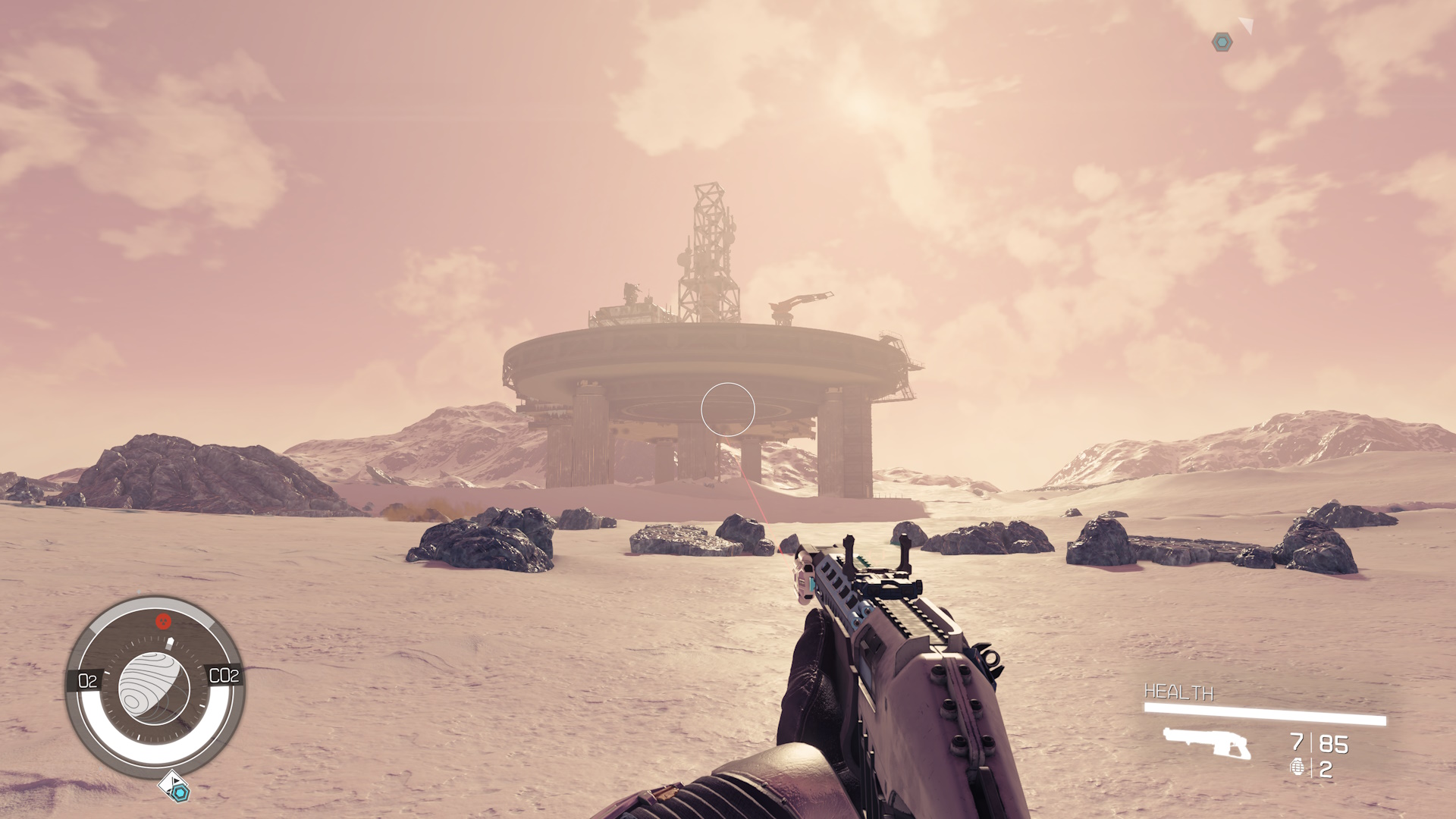
Screenshot of Starfield (2023) showing the player approaching a structure.
A man-made structure on a random planet.

Considering that one of the biggest complaints I repeatedly hear about Starfield is that “too many of the planets are empty and boring,” this might seem counter-intuitive. But bear with me, because I genuinely believe that making a portion of the game’s planets completely empty would be a significant improvement.

One of the things I wanted most of all from a game like Starfield was the sense of going “where no man has gone before,” and being the first person to set foot in an alien landscape. Like a Starfleet officer, I wanted to explore the galaxy – after all, isn’t that supposed to be the mission of Constellation, the main faction that players are forced to join in Starfield?
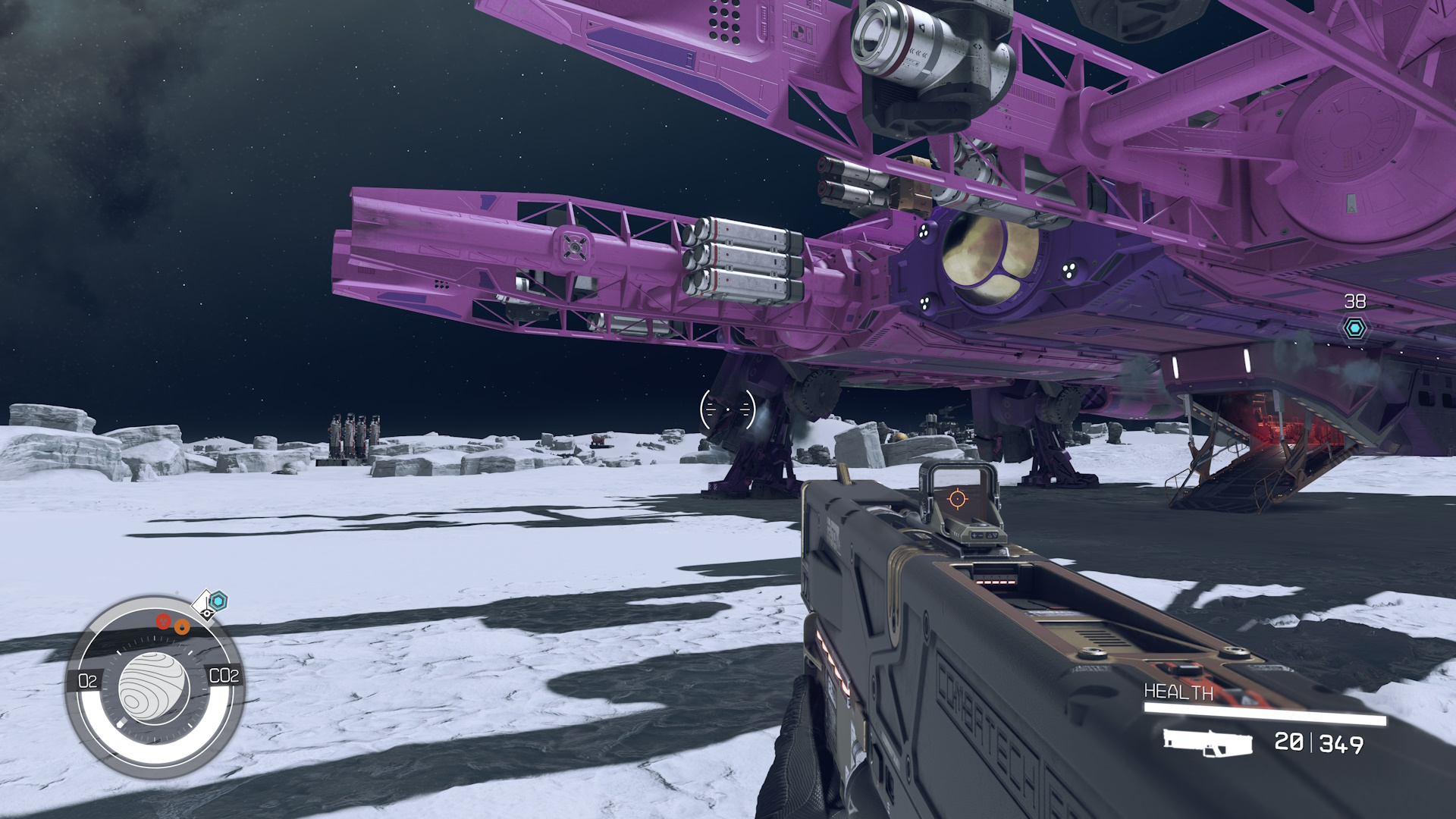
Screenshot of Starfield (2023) showing the player's spaceship on the surface of a moon.
Landing on a planet where people have already been – and are still actively living – isn’t really “exploration,” is it?

But instead, the way Bethesda chose to create planets has meant that there are none – literally zero – that are empty. Humans have set foot on all of Starfield’s 1,000 planets, and it’s completely impossible to pick a landing zone that doesn’t already have pre-made structures, points of interest, shipwrecks, spaceship landing sites, and more. Any chance to feel like a bona fide explorer was lost… and for me, one of the single most crucial elements of a “space game” melted away as I came to realise that.

Empty planets in Starfield could serve a variety of purposes. Building outposts and habitats is one – because honestly, who wants to build their dream home or pirate base a few metres away from a spacer hideout, a commonly-used landing site, and an abandoned research tower? Such worlds could also contain more resources – and with a potential overhaul to the way resources are collected and used in-game, becoming a miner or space-trucker could become viable in-game career options.
Screenshot of Starfield (2023) showing the starmap.
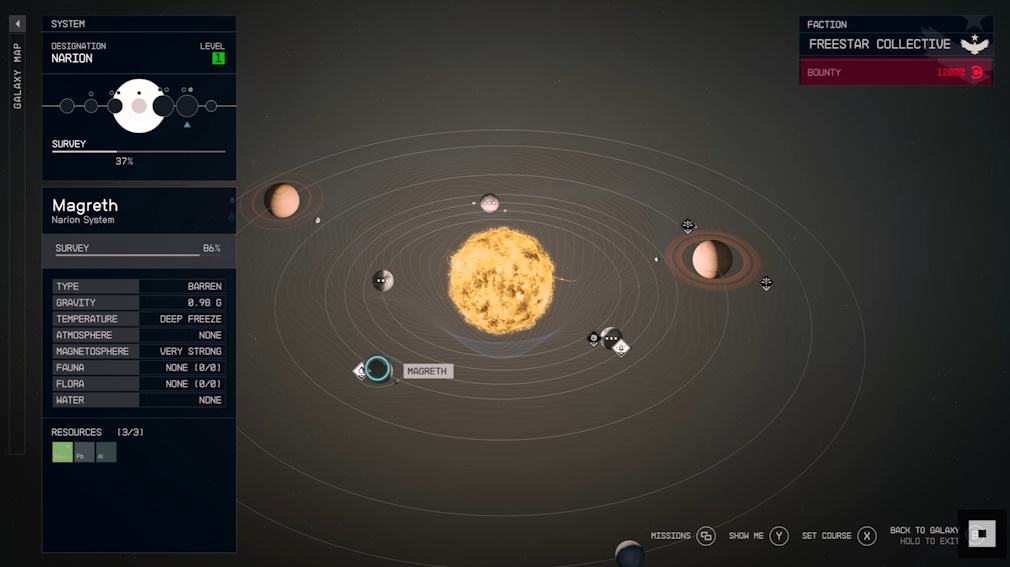
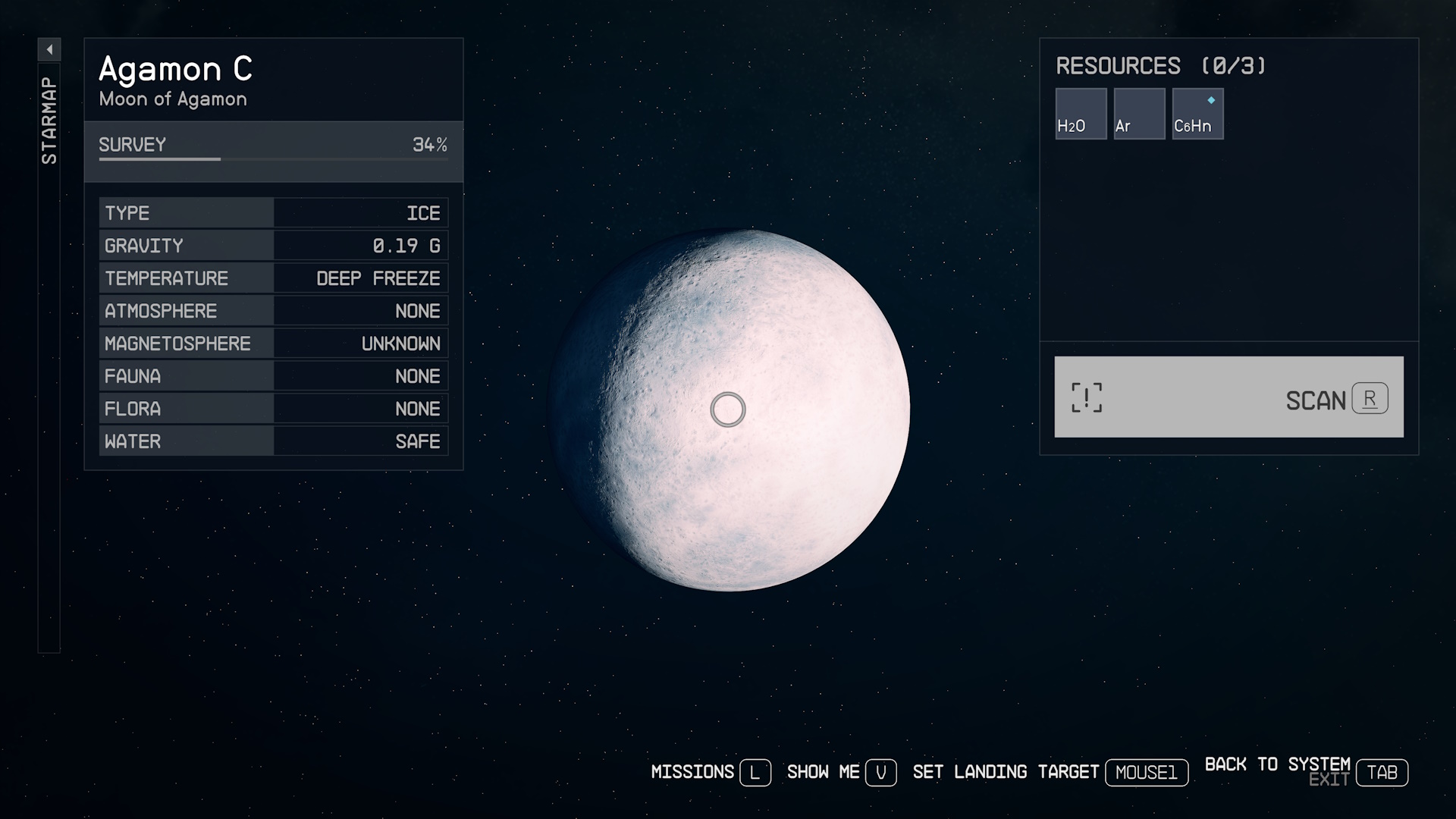
Scanning a planetary body from orbit.

I loved the idea of finding a desolate planet, far away from civilisation, and building my luxury space penthouse there. I loved the idea of hopping from world to world, collecting rare resources that could be sold or traded, and upgrading my ship so that I could carry more and more cargo. Starfield offers the illusion of this through “mission boards,” but these are so barebones and non-interactive that they hardly even count.

I’d take the core of the Settled Systems – worlds around Sol, Alpha Centauri, and Cheyenne – and leave them more or less as they are. But the further out players get from those core worlds with their bigger settlements, the greater the number of genuinely empty planets there should be. I think this change could work wonders for Starfield, especially if it were to be combined with some of the other suggestions and proposals on this list.

Number Two:
New and Modified “Points of Interest,” Including Different Variants.

Screenshot of Starfield (2023) showing the player approaching a structure.
Arriving at a “deserted biotics lab.”

Within my first few hours of playing Starfield, I’d been to the same “abandoned research tower” and the same “abandoned mine” four or five times each. I hoped that I was just unlucky – that there were many more of these copy-and-paste structures out there and I’d just run into the same couple of them a few times. But there really are only a few of these – some of which don’t have much going on. Considering how big the game is and how Bethesda expected players to want to spend hundreds of hours playing Starfield over the span of a decade, that’s pretty poor, and has been a huge weight around Starfield’s neck.

What the game desperately needs is many, many more of these so-called “points of interest.” Just to start, I’d say there ought to be four times as many as there currently are, and every free update should be adding new ones on top of that. But even if that were to happen, the fact that all of these structures – and everything within – are literally identical from one appearance to the next means that further changes are needed.

Screenshot of Starfield (2023) showing the player discovering a structure.
Discovering another copy-and-paste location.

So here’s my next proposal: each point of interest should come with multiple variants. I wouldn’t mind encountering the same structure half as much if the NPCs and loot contained within were in different configurations every time! It would make approaching one of these structures feel a bit more tense, too – you wouldn’t know whether you were about to encounter friendly NPCs, hostile enemies, alien monsters, or something else.

Taking the “abandoned research tower” as an example (because I played through several of those!) Here are some variant ideas: one variant could be the same as it is now, with hostile pirate NPCs having made the tower into their base. A second variant could contain scientists and researchers, perhaps even with a quest-giver to provide radiant quests or missions on the planet. A third could also have scientists, but be guarded by soldiers belonging to one faction or another, with players who haven’t gained enough ranks in that faction being turned away… or having to sneak in! A fourth variant could be totally empty, but with audio logs and notes suggesting something bad happened. A fifth could be filled with terrormorphs or other hostile monsters. And so on. How much more interesting would it be to approach an “abandoned research tower” if you didn’t know which variant you were going to get?
Screenshot of Starfield (2023) showing an NPC using a welder.
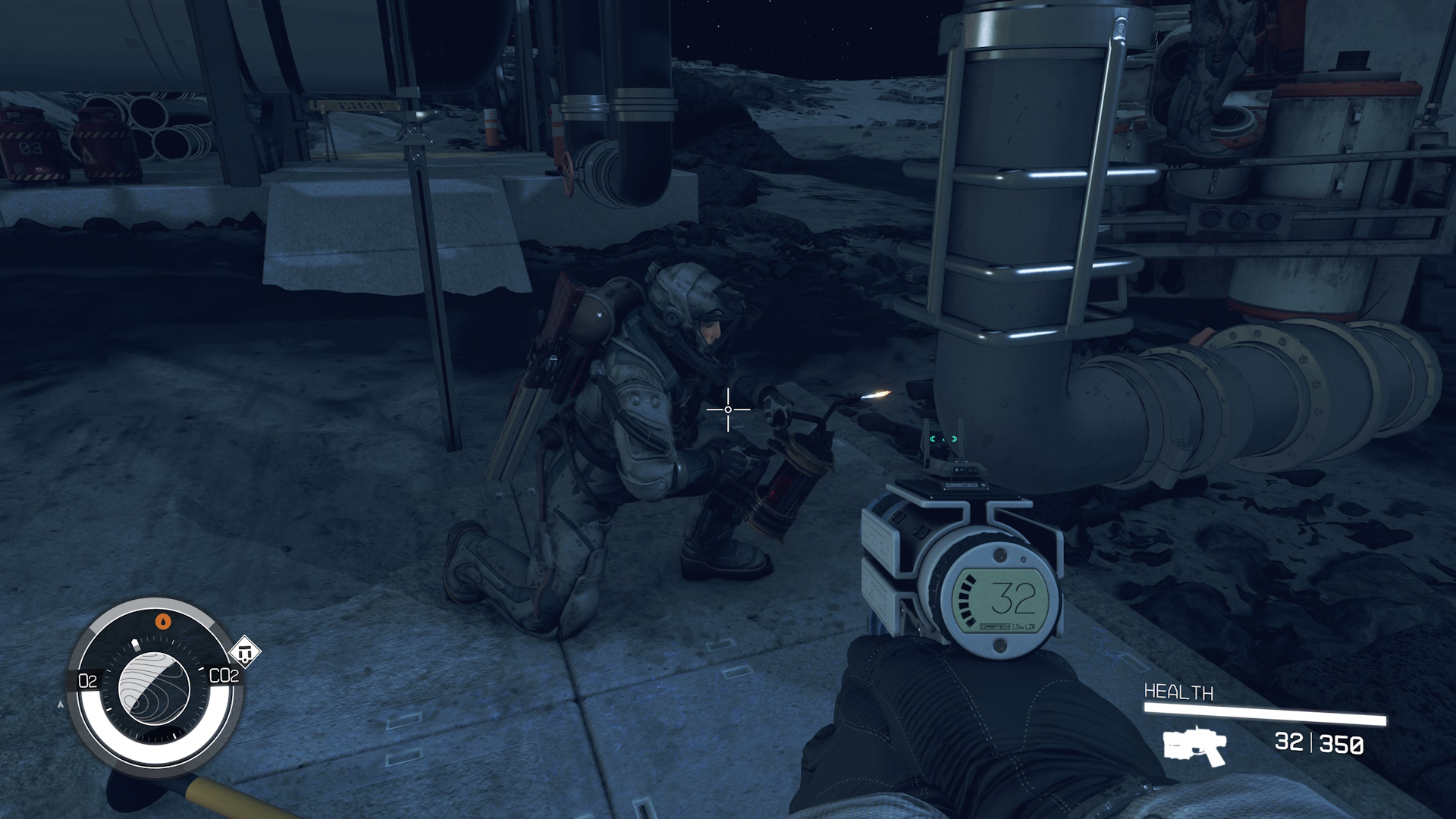
A non-hostile NPC at a random location.

There could also be unique once-per-playthrough points of interest that still appear at random but are never repeated. These could be variants of common structures or complete one-offs – ideally a mix of both. Some might spawn randomly on a certain planet or only in a certain biome, and others could be 100% random, with exclusive loot or quests to participate in. Clues could be left behind in the world to guide players to their locations.

In any case, one of the biggest things holding Starfield back is the incredibly repetitive dungeons/points of interest. I don’t think they can be entirely scrubbed from the game due to the way it’s made, but even just adding new and different variants of the current points of interest would be a start. Creating brand-new ones to add to the game ought to be a priority, too.

Number Three:
Changes to the Ship-Builder.
(Part One)

Screenshot of Starfield (2023) showing the ship-builder.
Starfield’s ship-building system.

Starfield’s ship-builder is one of the game’s best features… but it’s imperfect, finicky, and in serious need of some quality-of-life improvements. Firstly, it’s a pain in the arse to have to trek from one vendor to another to be able to design my ship exactly how I’d like it! Enabling players to access all ship parts at all vendors – or to unlock different constructors’ parts and use them from that point on – would massively improve the ship-building experience.

Being able to unlock different parts or groups of parts and then use them at all ship-building stations would be a massive improvement, one that this otherwise decent system desperately needs. The easiest way, I think, would be for each manufacturer to grant players a “license” (or other in-game jargon) for their pieces, permanently unlocking them. This would mean that players would still have to work to unlock all the different parts; they wouldn’t just be there by default. But it would also mean that there’d be no need to keep travelling between star stations and planets to add one component that’s only available in one location.
Screenshot of Starfield (2023) showing an NPC in dialogue.
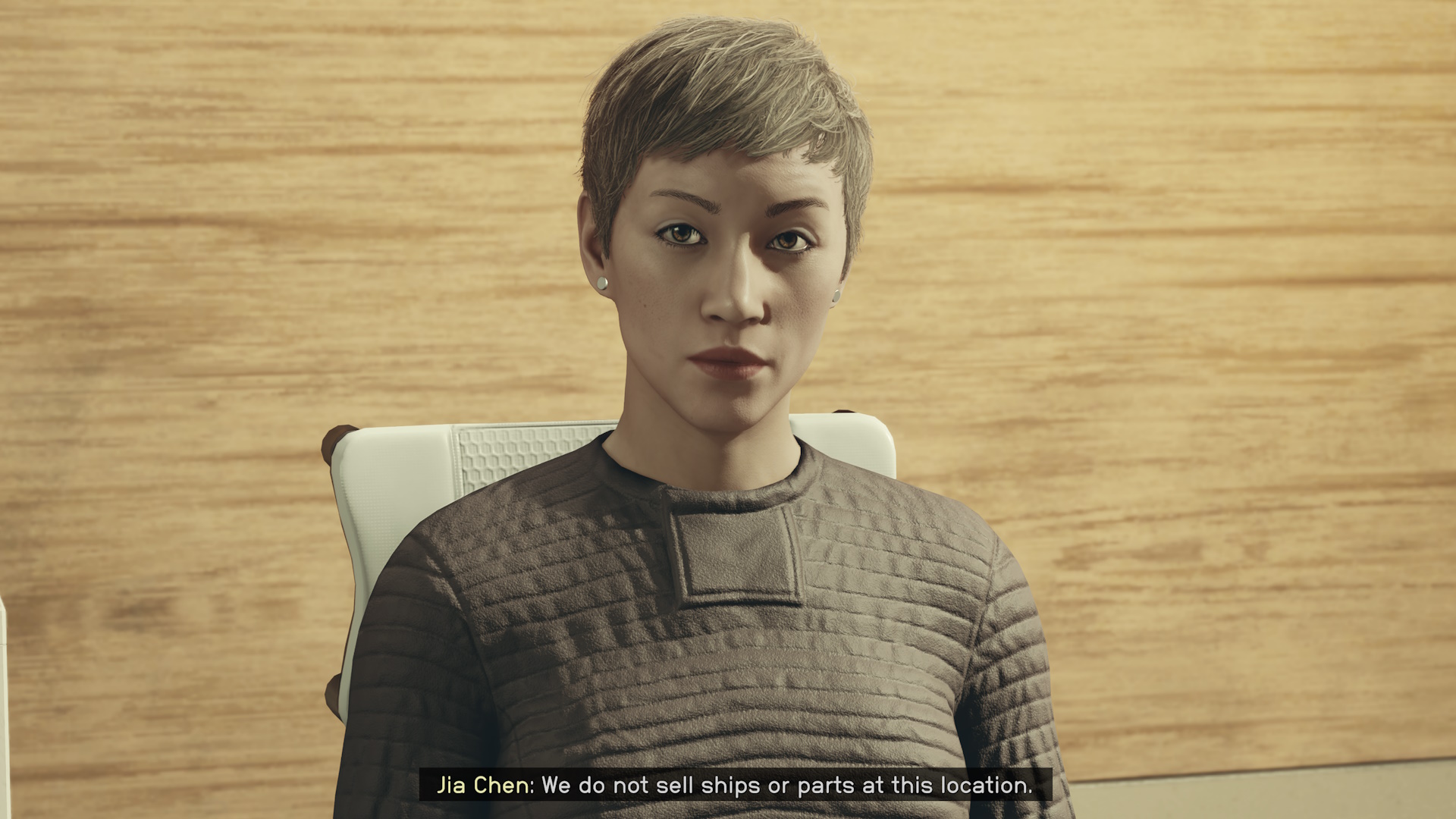
It’s a pain to have to continually travel between locations to access all of the different spaceship components.

Secondly, I’d want to see Starfield combine its interior decorating – which is currently only present in the outpost builder – with ship-building. This could be optional, meaning that players who aren’t interested wouldn’t have to participate. But one area of the ship-builder that I felt really let down the whole system was the lack of interior customisation.

It’s possible for players to drop items aboard their ship and have them remain where they fall – something that was epitomised by “sandwich lady” in the Starfield Direct marketing broadcast. But this is a Bethesda game hallmark that’s been present since Morrowind… and it hasn’t been improved in any way for almost a quarter of a century. Not only that, but any modification to a ship – even if those modifications don’t change the interior or layout in any way – would lead to all items being removed and dumped in the ship’s inventory. So even that very, very basic amount of interior customisation comes with a massive downside!

Screenshot of Starfield (2023) showing the player placing an item aboard their ship.
It’s possible to drop and clumsily reposition items on your ship – like this wooden duck.

At the very least, I’d like to be able to choose colours for the walls, floors, and doors, as well as choose where doors and hatches in between modules will appear. At present, there are only pre-set colours and doors appear at random; this should be easily added with a modicum of effort!

If I dared to dream, I’d like to see furniture options for each module, posters and wall art to decorate the ship, and everything from rugs to kitchen appliances, all with different designs and colour variants to choose from. One of the disappointing things for me was that, despite making my ship look the way I wanted from the outside, it never really felt like “mine” when I was exploring the inside. There was a half-eaten sandwich on a table that my character didn’t bite. There were math equations on a whiteboard in my captain’s cabin that I didn’t write. And I would have never chosen such a ghastly colour scheme!

Number Four:
Changes to the Ship-Builder.
(Part Two)

Screenshot of Starfield (2023) showing an NPC.
The ship services technician on Akila.

Sticking with Starfield’s ship-builder, there are a few more places where I think improvements could be made. Firstly, having to manually “assign” weapons is finicky and annoying, and there has got to be a better way to do this. Ideally, weapons would be automatically assigned as soon as they’re added to a ship, with the same slot always being used for the same weapon type. Heck, there are only four types of shipboard weapons in the game – so ensuring that each one is always assigned the same button shouldn’t be that difficult!

Secondly, adding the option to rotate ship pieces would be nice. Maybe not every single piece would need to be rotatable – engines, for instance, as well as cockpits might be tricky. But some layouts might work better a different way around, and being able to have some hab modules running “sideways” could open up a lot more combinations. There are also visual and aesthetic reasons for wanting to be able to rotate certain ship pieces – and this must surely be achievable without ruining the ship-builder!

Screenshot of Starfield (2023) showing the ship-builder.
Having to manually “assign” weapons is a pain in the arse.

It would also be great if there was some way to preview how different ship pieces look on the inside without having to buy them. The in-game descriptions of the likes of the brig and armoury are pretty barebones, and it’s only after purchasing an expensive hab and installing it that players actually get to see what it looks like. If the look isn’t right, if it doesn’t match the rest of the ship, or if it doesn’t do what players had been expecting… it can end up being a waste of time and credits.

This could be combined with the interior decorating and doorway positioning additions that I suggested above. The preview window could show different colour variants, for instance, and also allow players to choose where to place hatches, doorways, and even ladders.

Screenshot of Starfield (2023) showing a module in the ship-builder.
Adding a new module in the ship-builder.

Finally, if players have a particular ship component on another vessel in their fleet, it should be possible – somehow – to swap parts between ships. Even if removing a part from one ship to add it to another made the first ship un-spaceworthy, if that wasn’t the player’s currently-assigned ship, then it should be okay. It seems silly to allow players to amass a fleet of ships that could have perfectly usable components, but be unable to swap them between different vessels in the fleet. Having to buy the same part more than once – especially if other ships are unused and just sitting there – feels like something that could be avoided.

The ship-builder is definitely one of the better game modes that Starfield introduced, building on the likes of Fallout 4′s settlement system. But there are ways in which it could be improved, allowing players to really make their ship into the flying home of their dreams!

Number Five:
Alternate Starting Points for Different Character Backgrounds.

Screenshot of Starfield (2023) showing an NPC in the game's prologue.
Every character starts here – regardless of how they’re set up.

It never made a lot of sense to me that a xenobiologist, a professor, or a diplomat would have ended up working in a mine. Sure, an ex-soldier or a criminal on the run might’ve taken a gig like that… but some of Starfield’s backgrounds just don’t gel with the game’s opening act. Rather than changing the entire opening (starting from a prison cell would’ve worked better, IMHO) perhaps Bethesda could add just a couple of alternate starts to account for some of these different backgrounds.

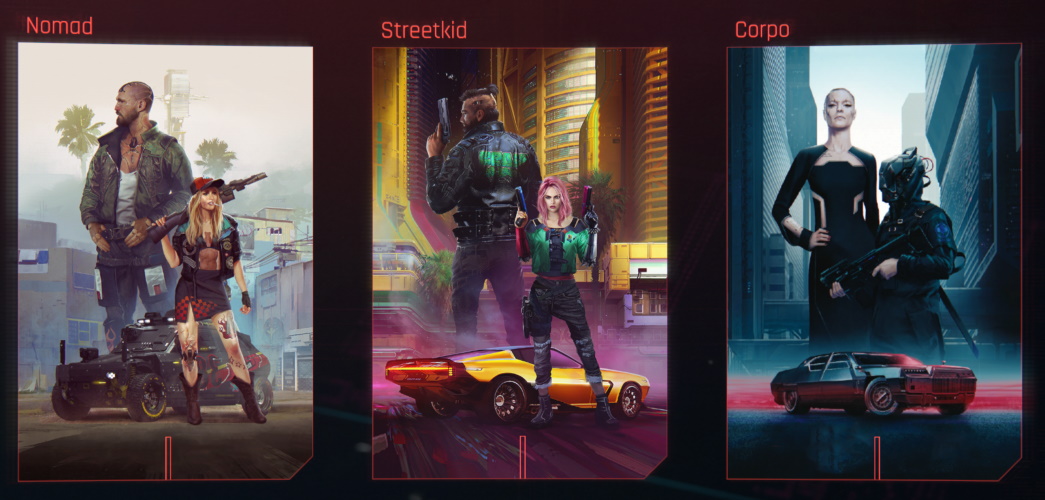
Look at what Cyberpunk 2077 did with its life paths as an example. There are three different starts in that game, each of which sees V living a different life in a different place. They all come together to kick-start the main storyline, but the journey to that point is pretty different. Even though the life paths don’t matter once the game gets going (there’s one mission apiece midway through, but they were pretty basic and uninteresting), the way the game begins offers players a different role-playing experience.
Screenshot of Cyberpunk 2077 (2020) showing the three "life paths" available to players.
Starfield could offer alternate starts that work similarly to Cyberpunk 2077′s life paths.

Each Starfield starting point could still see players grabbing an artefact on the mining planet of Vectera if that’s important to Bethesda, but how players get to that point could change depending on which start was chosen. For example, players who wanted to imagine their character as a spacefarer could begin in space, landing on the planet to transport the unearthed artefact to New Atlantis. Or players could begin working in the mine’s laboratory, studying the artefact.

I’d also like to see at least one starting point that didn’t force players down the Constellation/main quest route immediately. Players could choose not to engage with the artefact, for instance, or could choose not to accept Barrett’s offer. After the pirate attack on Vectera, players could commandeer the pirate ship instead of being given the Frontier. These are just a few ideas off the top of my head!

Screenshot of Starfield (2023) showing the character creation menu.
Many of the available backgrounds don’t line up with working in a mine at the beginning of the game.

I don’t think Bethesda would need to go overboard here. There could be two or three mining-adjacent roles that could see players on Vectera in just the right place at just the right time to pick up the artefact. But these could be different enough from one another to take into account the different player backgrounds on offer in Starfield, which is something that I think would make a lot more sense.

If nothing else, adding a couple of alternate starting points would add to the game’s replayability, as it has for Cyberpunk 2077. There are ways to implement something like this without radically changing the game’s main story or even its opening act, and when it comes to the role-playing side of things – the side that makes me want to lose myself in a character and their fictional world – it would be a huge improvement.

Number Six:
Make In-Game Careers Viable.
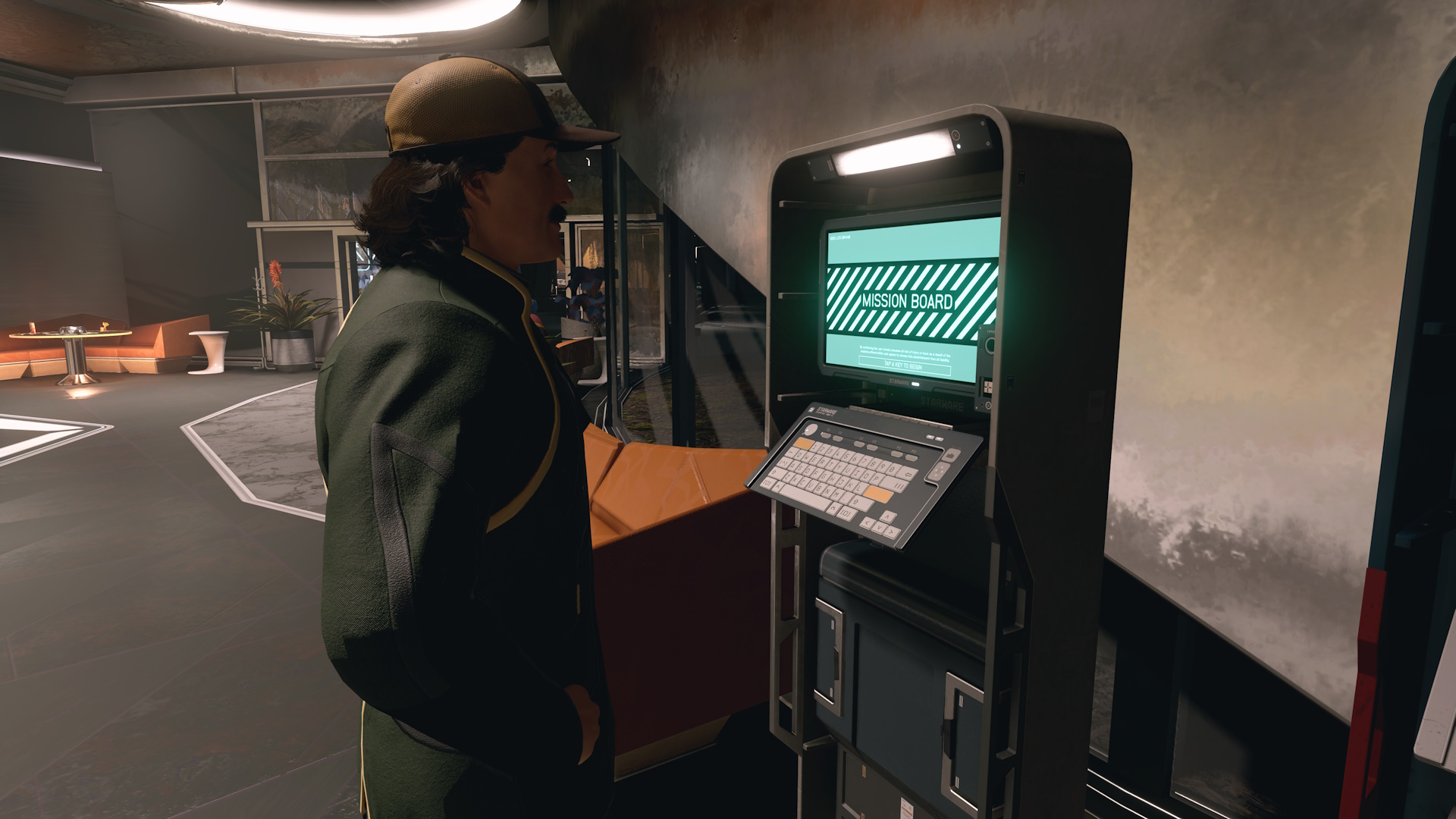
Screenshot of Starfield (2023) showing the player at a mission board.
I was unimpressed with Starfield’s mission boards.

One of the things I love to do in a big open-world game is to step away from the main story and get lost in the world. In order to do that, my character needs to be more than just a generic adventurer… so in-game career options need to exist. And no, I don’t mean getting a job with one of the factions that quickly sees the player character climb the ladder to become its leader! I mean jobs that are off to one side, not really connected to any of the main questlines.

For example, it could be possible to be an explorer: charting unexplored and unvisited planets. Players could send probes to the surface, like in Mass Effect 2, to scout landing sites, then disembark and either map the area or collect different resources. These planetary surveys – which would actually require work to complete – could then be returned to Constellation for a profit… or sold to one of the game’s other factions. As players acquire a reputation for exploration, new quests could even arise, with factions offering players bigger rewards to survey planets further and further afield.
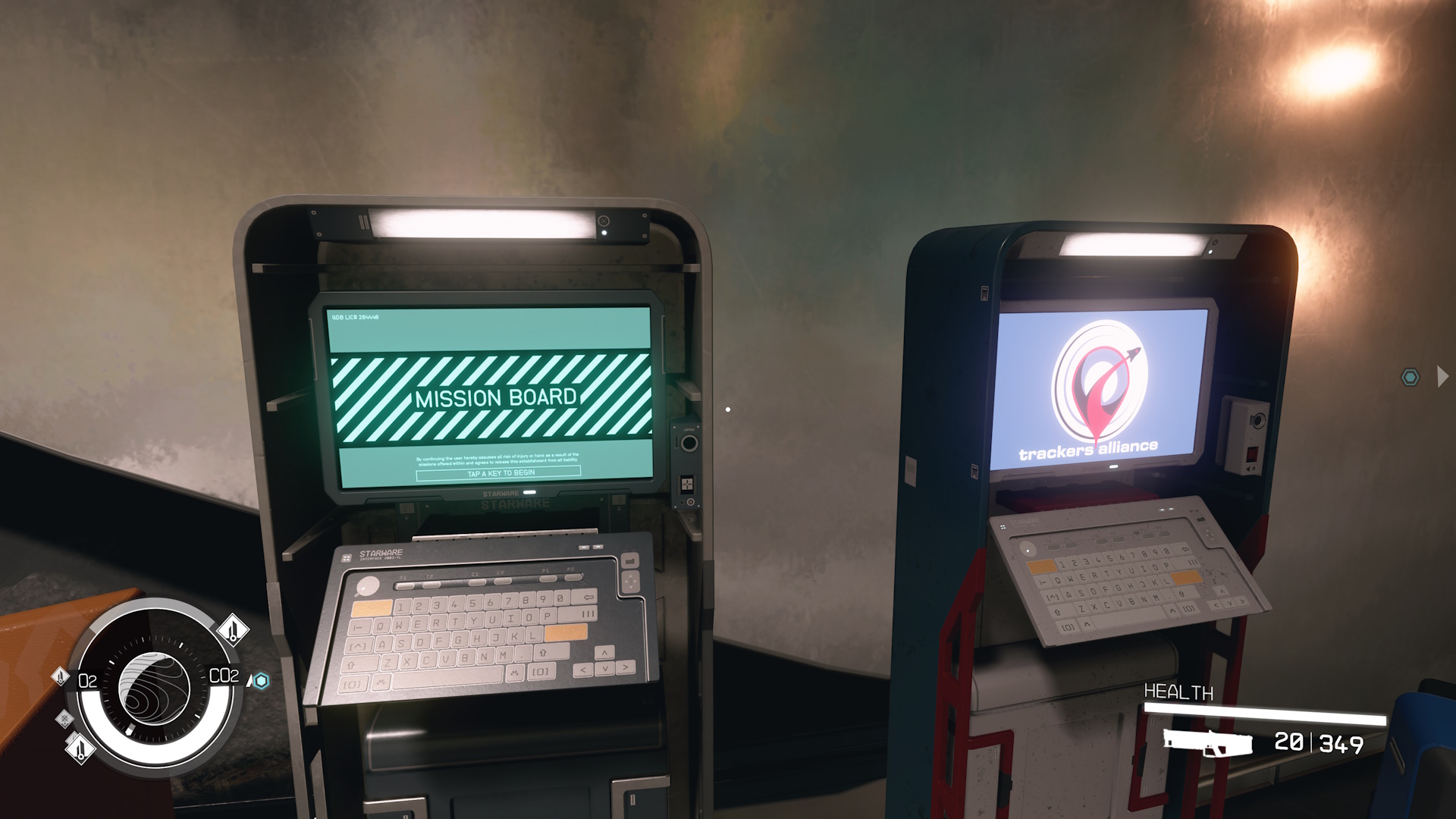
Screenshot of Starfield (2023) showing the mission board.
The mission board in New Atlantis.

Being a long hauler – one of the actual in-game backgrounds – could also be a career option. Using the mission boards, players could collect cargo from one planet and take it to another, either under contract or just to buy and sell. Different planets or settlements could have different resources or items that they’re asking for, and this could change week-to-week.

These missions would need to be much more interactive than they are currently, with players having to manually load and unload cargo, perhaps, or travelling to meet up with different NPCs inside settlements instead of just having a mission marked as “complete” as soon as the ship touches down! But there’s potential in this system to expand it and make it into a bona fide “space trucking simulator.”
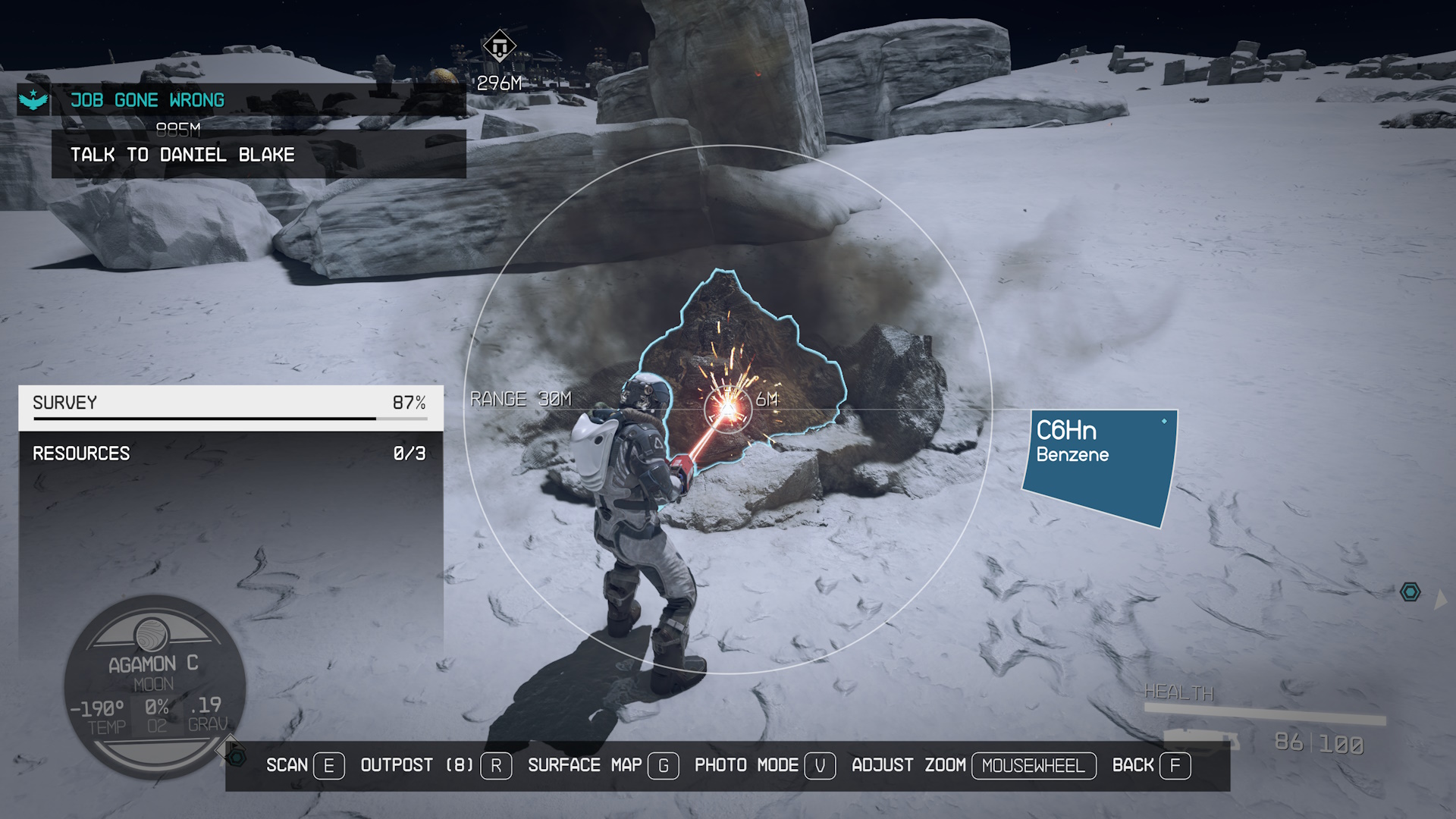
Screenshot of Starfield (2023) showing the player character mining a resource.
Mining a resource.

Finally, for a game that kicked off deep inside a mine… there’s basically no reason to do any actual mining in Starfield. Resources are so worthless and sparsely spread out that I found there was absolutely no point in mining them when exploring a planet. If I desperately wanted to complete a research project or something, it was easier and quicker to loot a spacer base, sell the items for credits, and buy whatever resource I was missing.

But all of that could change! Making resources more abundant and accessible on different planets could make mining a viable in-game career. Tweaking the value of these resources could also make it much more worthwhile, and it could be strangely relaxing to spend an hour or two mining mercury or lithium to haul back to New Atlantis and sell it. I’m not alone in enjoying those kinds of slower-paced, “cosy” experiences… and it’s actually something I was hoping to get out of Starfield. As things stand, it’s way too unbalanced and grindy, but I can see the potential for a fun time hiding just under the surface!

Number Seven:
An Alternate Ending/Reframe the Starborn.

Screenshot of Starfield (2023) showing an NPC wearing a spacesuit.
One of the Starborn early in the game.

I hesitate to call this an “alternate” ending… because one of Starfield’s big narrative problems is that many of the fundamental questions present in its main story didn’t get any kind of conclusion in the first place. But that’s beside the point! What I’d like to see, as players reach the final act of the main quest, is the option to reject the Unity and to really push back against the whole concept of becoming Starborn. Not simply choosing not to go through the Unity, but actively stating how evil it is and the Starborn are and rejecting the whole thing.

The game puts Starborn adversaries in the player’s way, but most of these are unexplained, nameless non-entities that don’t really feel like actual people. The only two Starborn characters that players can engage with, the Hunter and the Emissary, have both been “reborn” hundreds or thousands of times over in many different universes – and the game actively pushes players to do the same thing. In fact, it’s the only way to fully complete the main quest.

Screenshot of Starfield (2023) showing a mission prompt.
Completing the main quest requires players to travel to a new universe.

But there are huge implications to abandoning one’s entire universe and everyone in it, and Starfield doesn’t do much more than pay lip service to this. It’s possible, for instance, for players to have a romantic partner or even get married – but their spouse doesn’t travel to a new universe with them. It’s implied that, based on choices the player has made, their universe of origin will be permanently changed in some way by their becoming Starborn… but this raises some massive ethical questions. Again, Starfield does nothing with these ideas.

So here’s my proposal: introduce new dialogue during the final act of the main quest that makes clear that the player rejects the entire concept of the Unity and becoming Starborn – and not only that, but they want to kill the Hunter and the Emissary to make sure that no one else can ever become Starborn either. However many universes these two might’ve fucked up… it ends here.

Screenshot of Starfield (2023) showing the final mission in the game.
I’d like to see a “rejection” option added to the end of the main quest.

This is what I’d want to do if I found myself in that situation, confronted with a weird mirror image of myself telling me that “the Creators created everything,” and that becoming a Starborn is my destiny. No – fuck that. I’m from this universe, I want to stay in this universe, and I want to make damn sure that these Starborn clowns won’t be able to harm or kill anyone in the next universe, either. This universe-hopping quest ends here – not just for my character, but for all of the Starborn.

The Starborn and the Unity are the game’s real villains – at least until we get a proper explanation for the artefacts, their purpose, and where they came from. And I would want to see that reality reflected in the game’s final act, with players able to choose to reject the very idea of the Unity and the Starborn and ensuring they can’t go on harming people across countless parallel realities.

Number Eight:
Quests with Multiple Pathways to Completion.
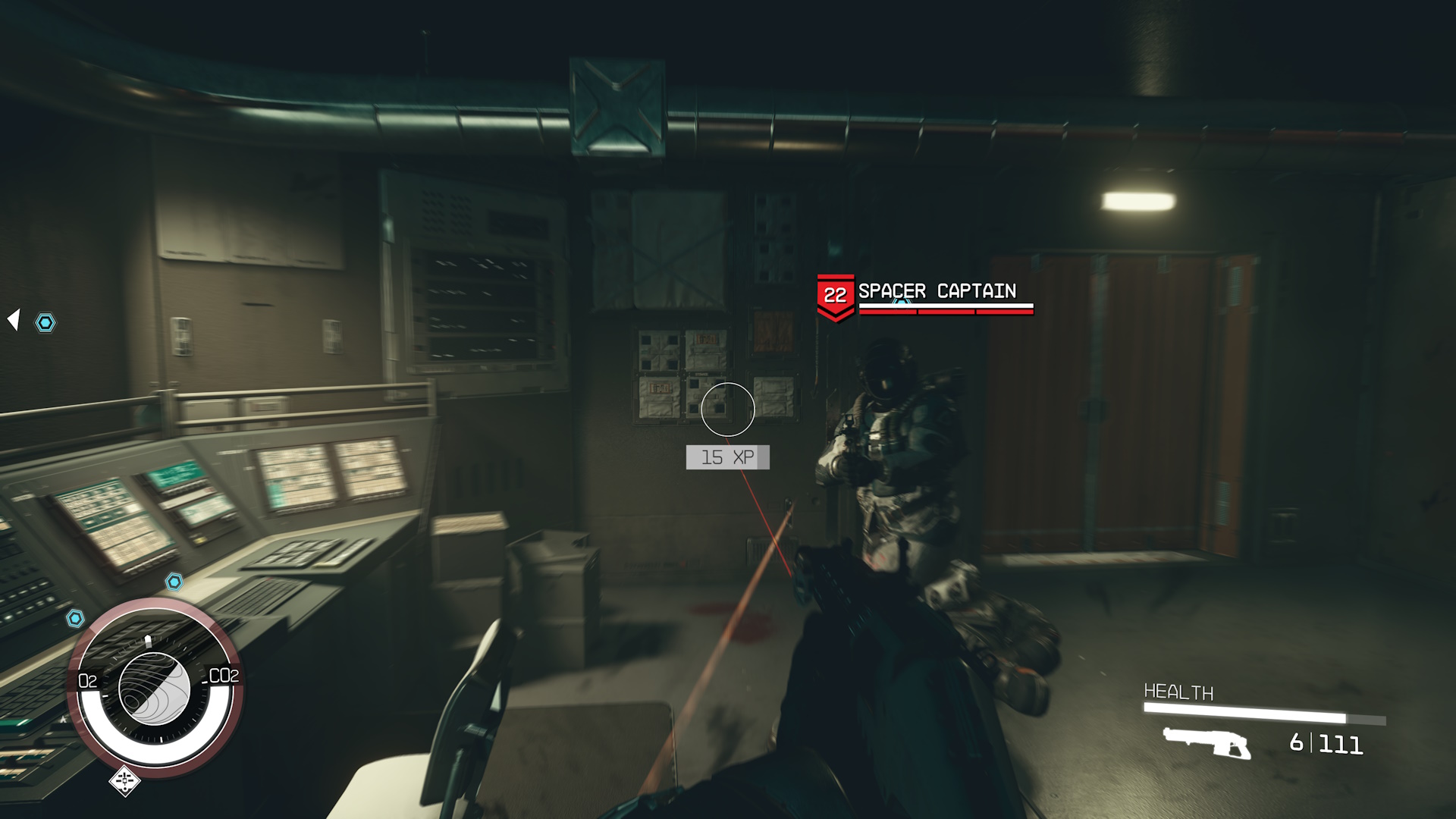
Screenshot of Starfield (2023) showing a combat encounter.
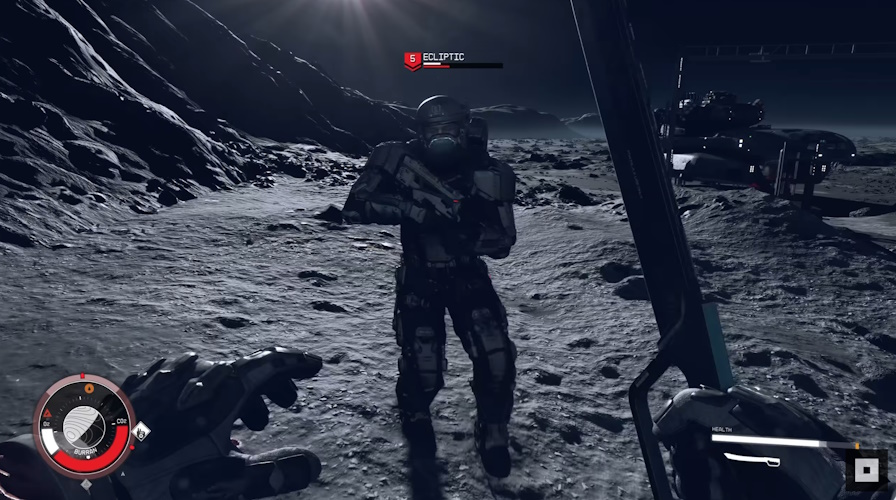
Battling a Spacer Captain at the climax of a quest.

One very disappointing thing about Starfield is how damn linear so many of its quests are. Most quests only have one route from beginning to end, and playing the game can feel like you’re riding a bike with training wheels half of the time. It ought to be possible to complete at least some quests in different ways, utilising different combinations of combat, tech, stealth, and even piloting skills depending on how players have set up their characters and which skills they’ve chosen to invest in.

Perhaps Starfield was harmed by comparisons with Baldur’s Gate 3, which was released just a month earlier. Actually, scratch that. Starfield was undeniably harmed by those comparisons! Baldur’s Gate 3 opens up practically all of its quests and characters, giving players a huge amount of freedom to decide how they want to tackle the game – leading to some incredibly fun gameplay moments. It’s possible for practically everyone in the game to die – something Starfield doesn’t allow with its “unkillable” NPCs – and for many quests to be tackled in radically different ways.
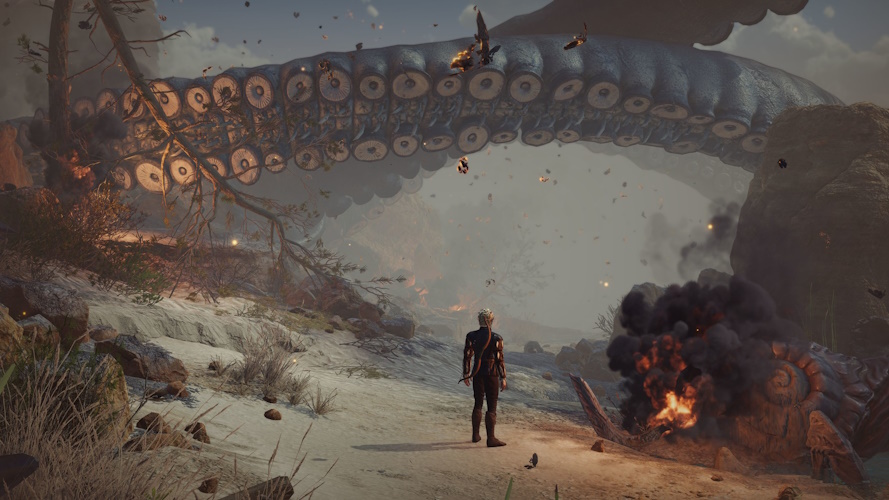
Promo artwork of Baldur's Gate 3 (2023).
Baldur’s Gate 3 is overflowing with player choice and different ways to complete quests.

Where I got frustrated with Starfield was when the game presented the illusion of choice. At one now-infamous mission on Neon, players are teamed up with Walter to acquire another artefact. Walter states multiple times that there will be different ways to approach this interaction – but that turns out to be a lie. The game forces players down one path, and one path only.

Just taking this one mission as an example, it should be possible to abandon Walter and acquire the artefact alone, either by stealthily stealing it, killing the person carrying it, or causing panic at the nightclub and seizing it in the chaos. Then, after the player’s ship is impounded, there should be multiple options for escaping Neon. Players could sneak to the landing pad, knock out the guards, and disable the lockdown, or even rush over to another landing bay and steal a different ship. Just within this one mission there are so many ways things could go – but Bethesda has insisted that players must be locked onto one very specific route.
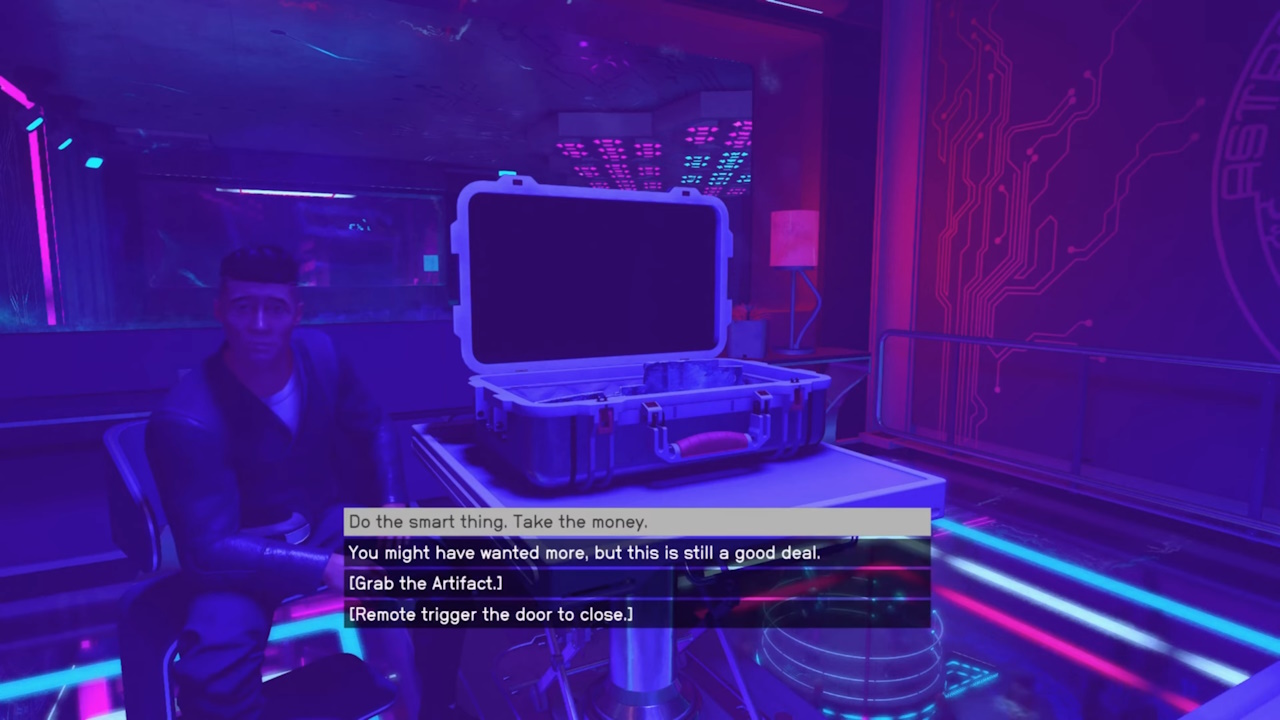
Screenshot of Starfield (2023) showing dialogue options in a main story mission.
There should’ve been multiple approaches to this mission on Neon.

And there are many missions like this – both in main questlines and just out in the world. One side-story that I encountered involved a group of families on different planets and moons who found themselves in conflict with a gang of spacers. But there was only one way to complete every step of this mission – getting their communications back up and running, solving a conflict within the group, and then boarding the spacers’ station and killing them all. There should be so many different options in a mission like this – such as siding with the spacers for a reward, picking one family over the other when they argue, sneaking aboard the spacers’ station and opening all of the airlocks, or building a missile launcher on one of the moons and blowing it up from 10,000km away. Those are just a handful of ideas off the top of my head.

It’s obviously true that not every mission can have 100 different outcomes and routes to completion. But there should be some degree of choice in a role-playing game, for goodness’ sake! Even if all Bethesda can do at this point is make it so that some unkillable NPCs can now die and add one new alternate path for a handful of main story missions… that would still be a noticeable improvement.

Number Nine:
More Cosmetic Items and Apparel.

Screenshot of Starfield (2023) showing the player and an NPC wearing the same outfit.
It doesn’t take long to find NPCs wearing the same outfit as you!

I was quite disappointed with Starfield’s lack of cosmetic items – clothing in particular. For some reason, clothing only comes by way of whole outfits, with no option to mix and match different tops, trousers, or shoes – and there are almost no skirts, shorts, or different kinds of headgear beyond basic baseball caps and the occasional cowboy hat. Even Starfield’s omnipresent spacesuits are cosmetically limited, with the few available options having no colour variants.

It seems a given that Bethesda and Microsoft plan to add skins as paid-for microtransactions at a future point. You can even see in the game just where these skins will appear when they’re ready to be rolled out. But in my opinion, cosmetic microtransactions have no place in a wholly single-player game, and Bethesda should’ve added a lot more cosmetic variety to Starfield for free from day one.
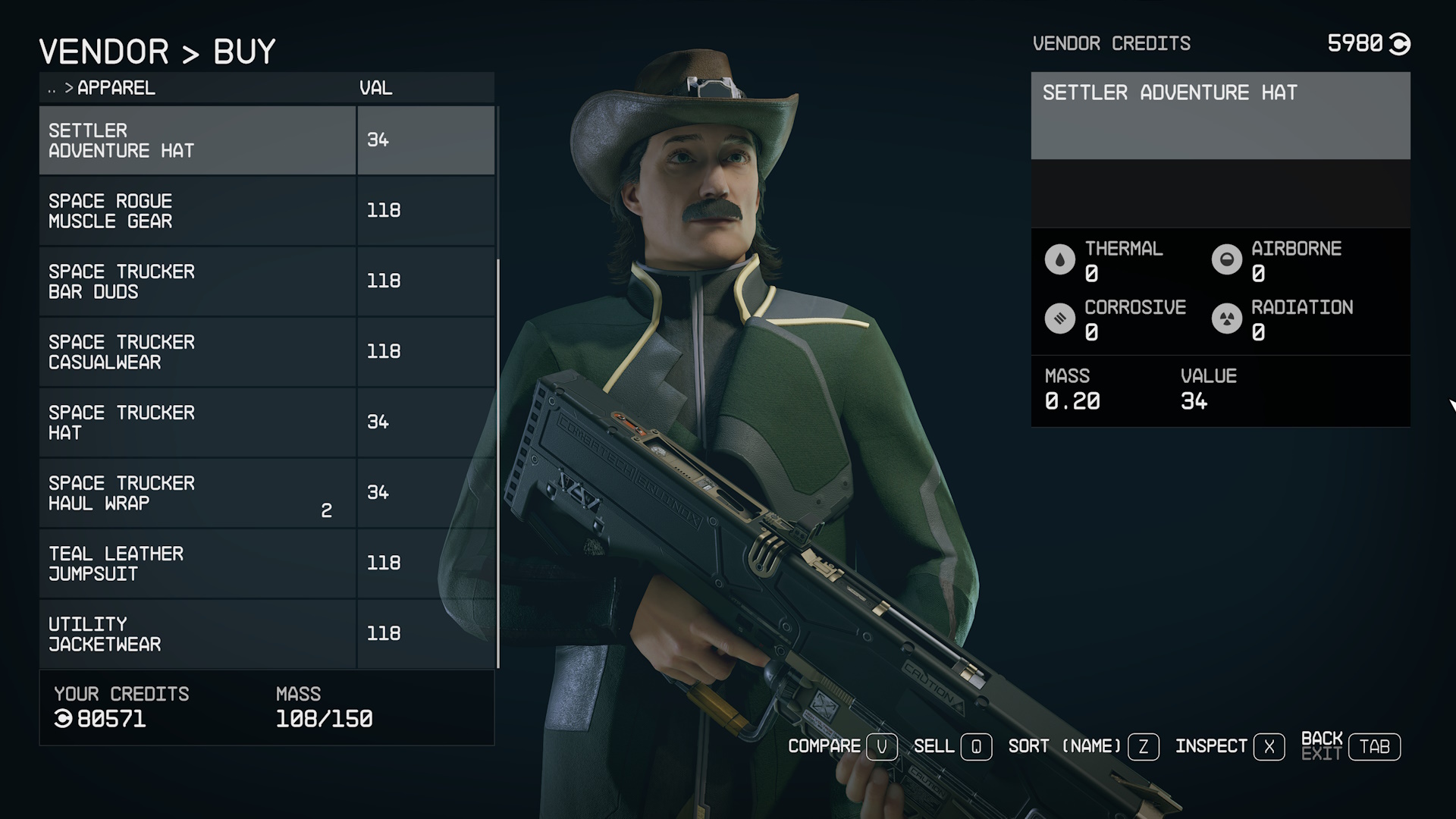
Screenshot of Starfield (2023) showing apparel at a vendor.
Clothes shopping in Starfield isn’t much fun.

As far back as Morrowind it was possible to play dress-up by choosing different trousers, tops, shoes, and even individual pieces of armour. This would already make Starfield’s whole-body costumes feel like a backwards step even if there weren’t so few of them… but a combination of a lack of different costumes combined with the inability to select individual pieces of clothing comes together to make for an apparel system that’s underwhelming in the extreme.

For me, one part of the role-playing experience is getting my character to look exactly the way I want them to, and when Starfield offers such a limited range of costumes, that’s impossible. Most outfits in Starfield fall into one of two categories: generic “futuristic” sci-fi or western/cowboy. There’s very little diversity, no way to reflect different cultures and backgrounds… and for a game that makes a selling-point of its photo mode, there’s very little worth photographing from the available outfits.
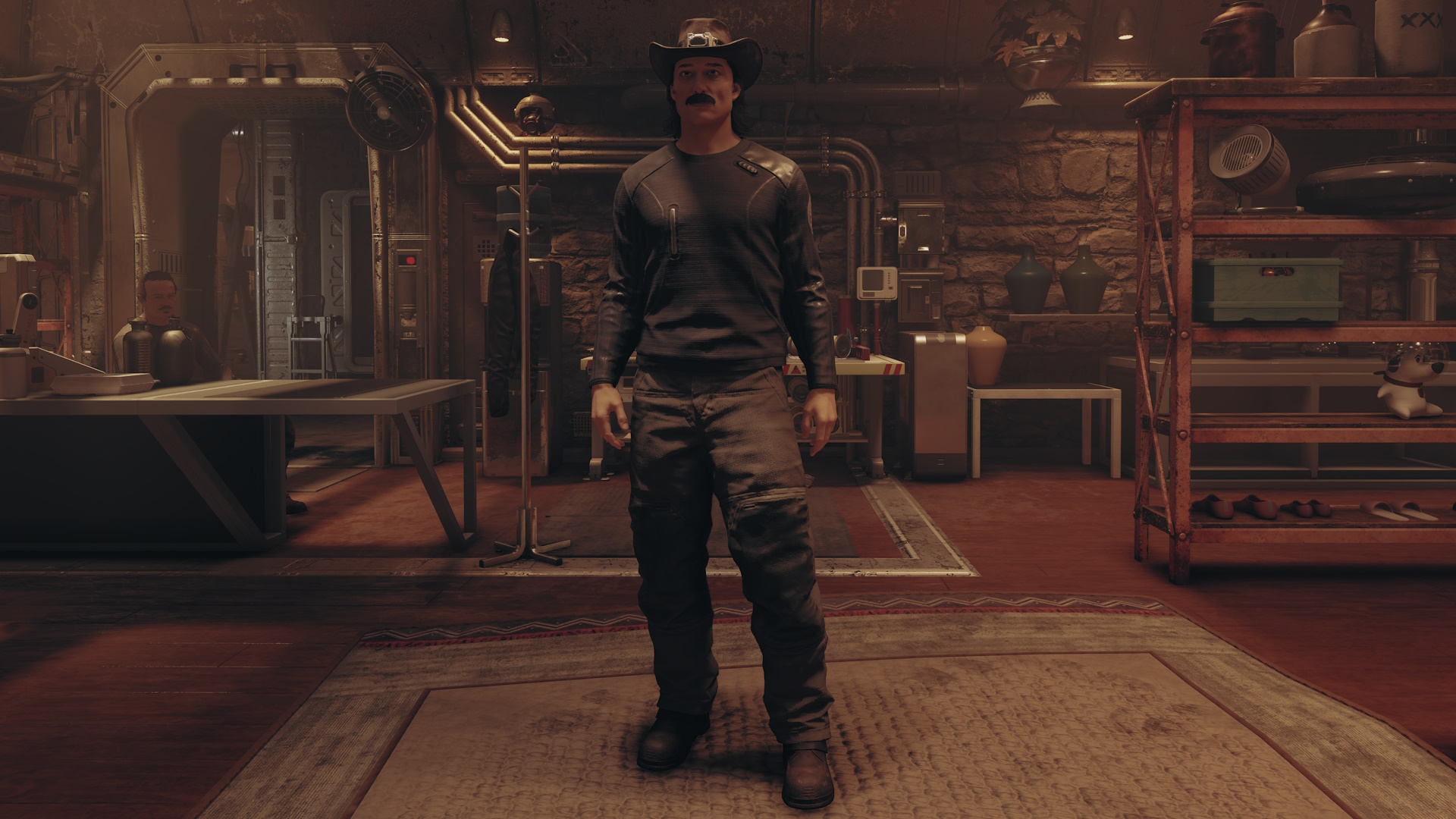
Screenshot of Starfield (2023) showing the player character in photo mode.
Wearing a cowboy hat in Akila City.

Things like fashion sense and personal style are, of course, incredibly subjective – so you might enjoy the outfits and spacesuits that Starfield has to offer. That’s great – but even if you like some or all of the costumes available, adding new ones into the mix, as well as expanding the existing lineup with new colour variants and designs, can only be a good thing! I’d love to see Starfield add a lot more costumes and outfits, as well as skins and colour variants – all for free. There shouldn’t be paid skins in a game of this type.

And while we’re at it, let’s create some wholly unique cosmetic items that can only be found once per playthrough. One of the fun things about past Bethesda games used to be exploring dungeons and following questlines and being rewarded with something shiny and new! The only outfit in Starfield that comes close to falling into that category is the Starborn spacesuit… and I wasn’t especially wild about the way it looks.

Number Ten:
Actual Spaceflight/Piloting.
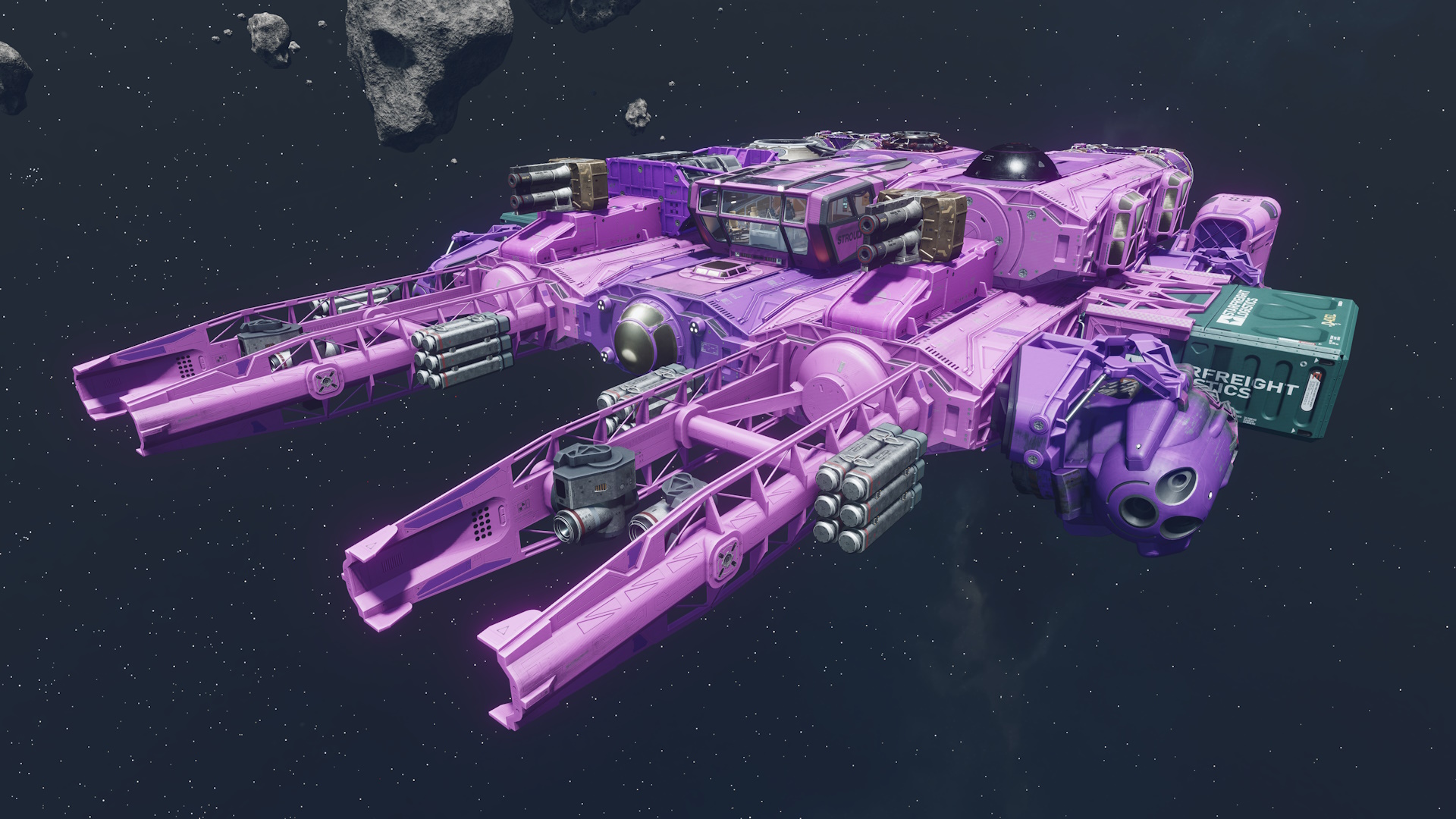
Screenshot of Starfield (2023) showing a custom spaceship.
There’s not much of an opportunity to be a pilot…

Starfield is a game set in space. It encourages players to build and customise their own spacecraft. Ship-to-ship combat takes place in real-time in space. But there’s absolutely no spaceflight in this game. Let me explain what I mean by that: players can’t get in their ship and manually fly it from one location to another. The only option is a modified form of fast-travel that generates a small bubble of space around the player’s ship. As some folks have demonstrated, there are no “real” planets or objects within that bubble; they’re just jpegs floating in the background.

Of all the points I’ve raised today, this could be the hardest to fix. Starfield is built from the ground up around fast-travelling between locations, and the way in which pockets of space are generated in orbit of planets or near starstations would need to be expanded and changed in a significant way in order to make real spaceflight work. Ships, too, would need to change – with better and faster engines being options for players who long for that space-sim experience.

Screenshot of Starfield (2023) showing the starmap.
Starfield appears to be built around fast-travelling from the galaxy map.

So there are real logistical issues in the way of adding bona fide spaceflight to Starfield. But I think it’s worth trying, at least – because if the only option is to fast-travel between locations, much of what appeals about taking to the stars is lost. Locations don’t feel far away from one another if players can teleport there in a few seconds, meaning much of the scale of Starfield’s galaxy – something that already feels diminished in light of its tiny cities, repetitive NPCs, and copy-and-pasted points of interest – is lost.

In past Bethesda titles, the journey from place to place was a significant part of the gameplay in and of itself. Walking from Seyda Neen to Balmora in Morrowind could lead to random combat encounters, side-quests, and interactions with NPCs. In Fallout 3, travelling from Megaton to the radio tower likewise saw the player presented with new opportunities to get lost in the game’s world and have fun. Heck, the recent Fallout TV series even referenced how exploring the wasteland often leads to getting side-tracked!
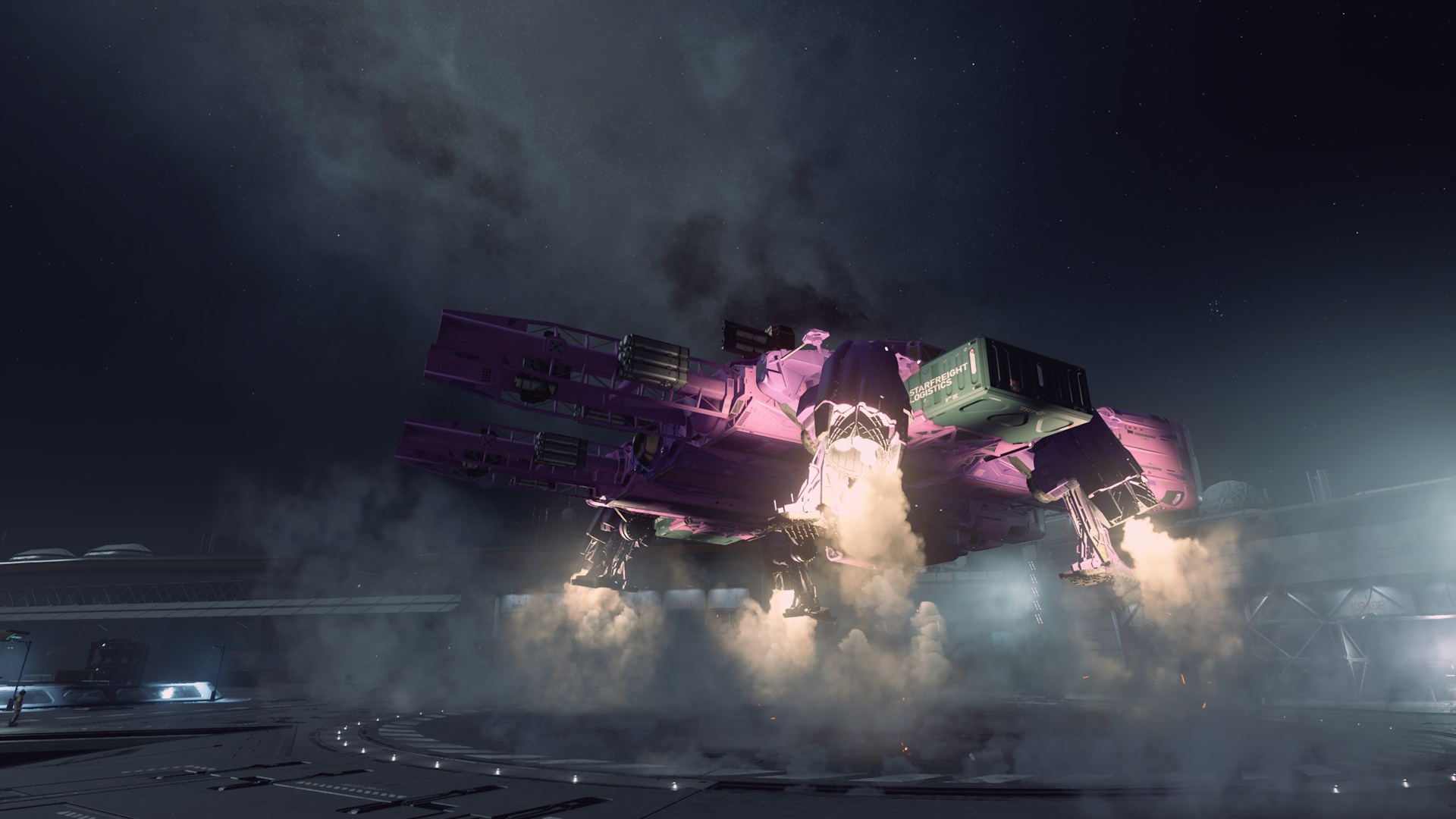
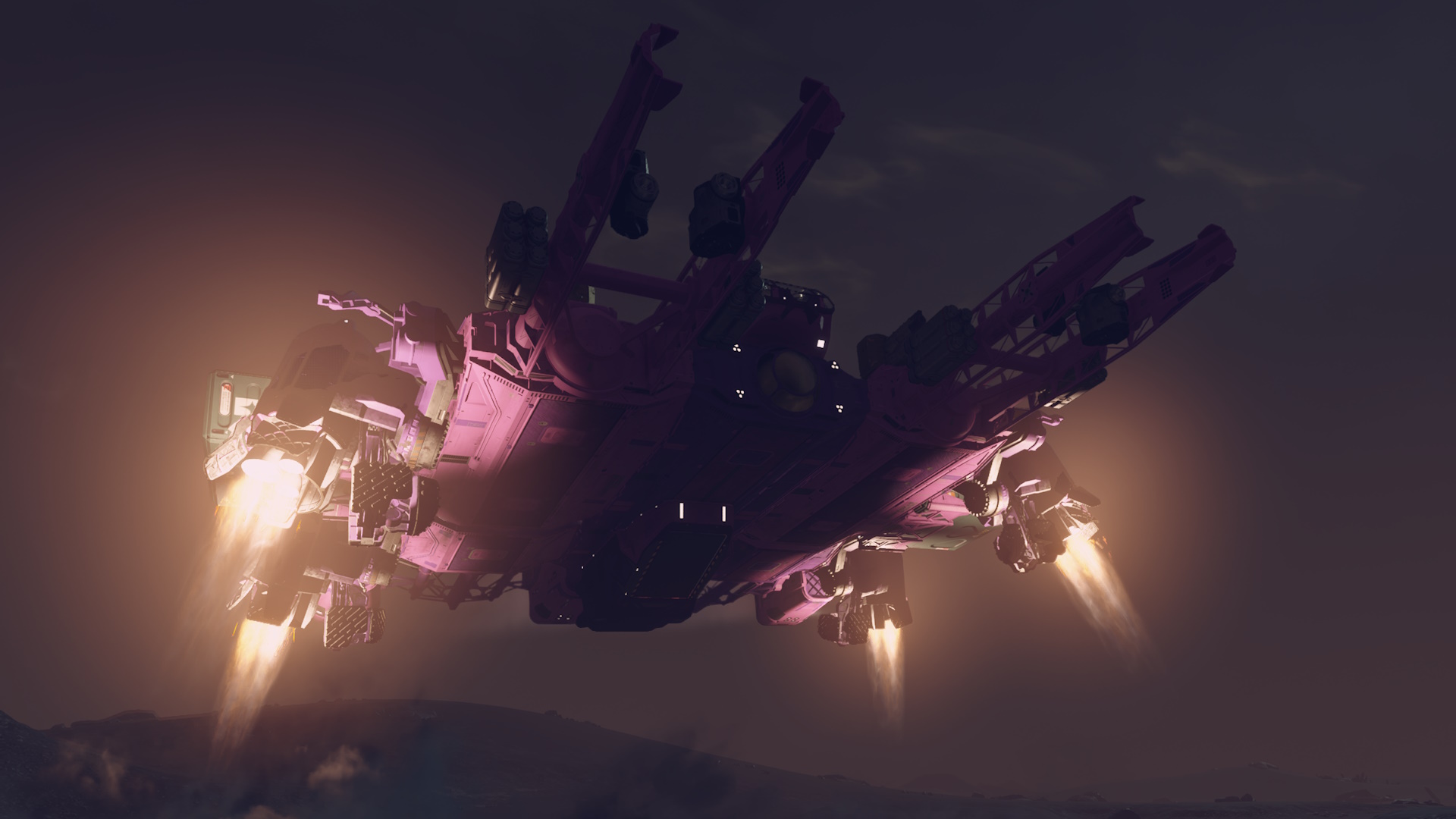
Screenshot of Starfield (2023) showing a custom spaceship taking off.
Part of the fun of past Bethesda games was journeying from place to place and stumbling upon new adventures along the way.

In short, the lack of spaceflight means there are fewer opportunities for players to take their time and explore Starfield’s galaxy in their own way at their own pace. When not on the surface of a planet – or approached by a random ship in orbit – there’s basically no way for players to get side-tracked by being offered a totally different quest or mission in a way that feels natural.

Starfield having functionally no spaceflight doesn’t just harm the game from a space-sim or space game perspective, it also denies players one of the fundamental building blocks of a Bethesda open-world game, too. I don’t know how it could realistically be implemented at this stage – and flying in between star systems would probably have to remain as fast-travel only. But making an effort to get proper spaceflight up and running would be worth it as it would be a huge improvement to Starfield’s immersion and gameplay.

So that’s it!

Screenshot of Starfield (2023) showing an NPC on a medical bed.
Does Starfield need to be rushed to the medical bay?

We’ve considered ten ways that Starfield could be improved – in my humble opinion, of course.

Although I spent close to a decade working in the games industry, I’m not a developer. I don’t know whether some or all of these ideas might’ve once been considered for Starfield, but were ultimately cut because they proved to be unpopular, impractical, or unworkable. The game’s very existence is, in some respects, a technological achievement; that Bethesda managed to build something this complex using the zombified remains of a game engine that’s more than twenty-five years old should count for something, right?

But I’m not alone in finding Starfield to be an underwhelming experience to play, and the fact that it didn’t win any big awards and seems to have dropped out of our collective cultural conversation after just a few months is testament to that. Starfield was being regularly beaten by Skyrim and Fallout 4 in terms of active players even before the Fallout TV show brought renewed attention to that franchise… and unless Microsoft and Bethesda take bold action in the months and years ahead, Starfield may very well end up being forgotten.

Screenshot of Starfield (2023) showing a custom spaceship on a landing pad.
A custom spaceship on the landing pad at New Atlantis.

I’ve said before that I believe the only way to save Starfield is if its first major expansion is at least as big and impressive as Cyberpunk 2077′s Phantom Liberty DLC was last year. Tinkering around the edges won’t cut it, and if Bethesda can’t find a way to build a significant improvement to Starfield – not just a narrative addition or the inclusion of a new questline – then I think the game’s longer-term prospects will remain bleak.

I’ve had my say, and I’ve made my suggestions! Maybe not all of them would work, and maybe some of them are impossible due to the technical limitations of Bethesda’s game engine or the less-powerful Xbox Series S console. But Starfield would be a damn sight better if they were included… and really, some of these things should have been present at launch.

Could Starfield get its redemption arc one day? Never say never…


Starfield is out now for PC and Xbox Series S & X consoles. Starfield is the copyright of Bethesda Game Studios, Bethesda Softworks, Xbox Game Studios, and/or Microsoft. Some promo images and screenshots used above courtesy of Bethesda. This article contains the thoughts and opinions of one person only and is not intended to cause any offence.
Starfield: Further Thoughts

Spoiler Warning: There are spoilers ahead for Starfield’s main quest, including its ending.

I have to confess that I haven’t played a lot more of Starfield since I last shared my thoughts on the game, its flaws, and how Bethesda might want to respond to some of the biggest points of criticism. But as I’ve sat with the game in the month since it released, I’ve found a few more things to say that I didn’t get to mention in either of my two big post-launch pieces about Starfield. It’s these points that we’re going to talk about today – and if you ignored the spoiler warning above, please know that we’re going to discuss the ending of the main quest and Starfield’s New Game Plus mode.

I feel that Skyrim’s unprecedented success changed something at Bethesda. The company ceased viewing its games as individual stories to be created, completed, and published, and instead began seeing all of its projects as ongoing, long-running experiences. Because Skyrim remained popular for years after its release, Bethesda seems to have internalised that and expected it to become the “new normal,” deliberately taking steps to build all future games with that goal in mind. We saw that most obviously with Fallout 76, but I’d argue very strongly that it happened with Starfield as well.

Starfield has landed…

In a recent interview with Insomniac Games (creators of Marvel’s Spider-Man, among other successful projects), Bethesda executive producer Todd Howard said that Starfield was “a good base of a game to build upon,” referencing the company’s plans for future DLC and additional development for years to come. This isn’t the first time we’ve heard of talk of years-long plans for Starfield. In fact, it seems that building a kind of single-player live-service title was one of Bethesda’s main objectives when developing the game.

My question is this: was Starfield screwed over by this idea?

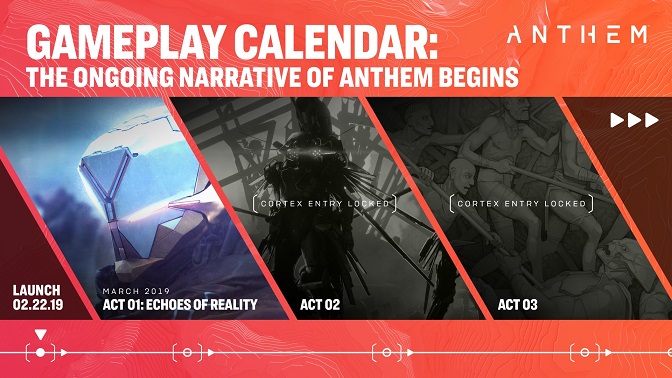
Find me a recent game that billed itself as having a “ten-year plan” or a “five-year roadmap” that actually went the distance. Whether we’re talking about the likes of Anthem, Marvel’s Avengers, or Halo Infinite, many titles have come along promising something like this – only to fail to deliver. Games that genuinely last a decade or more are seldom planned that way; titles like Fortnite, Grand Theft Auto V, or Skyrim are lightning in a bottle. These one-off games succeed for almost unquantifiable reasons – and a massive amount of luck. Corporate planning to replicate that kind of once-in-a-generation level of success has almost never worked. Massive developers like Rockstar have faltered, and even some of the biggest brands and properties on the planet, like Marvel, have been unable to make a “five-year experience” work.

Anthem’s “roadmap” of content that was supposed to be added to the game.

And I can’t help but feel echoes of the likes of Anthem in Starfield. Parts of the game feel barebones and incomplete, as if waiting for future “content drops” and updates to round things out. There are plenty of missions and quests to get stuck into in Starfield, for example, but where are the cosmetics and skins? Why are there so few weapon styles, outfits, skins, and the like? I said when I wrote up my first impressions of Starfield that I was pleased to see the game wasn’t being excessively monetised… but looking at the lack of cosmetic variety and skins, it seems pretty clear that Bethesda plans to add these as paid-for DLC.

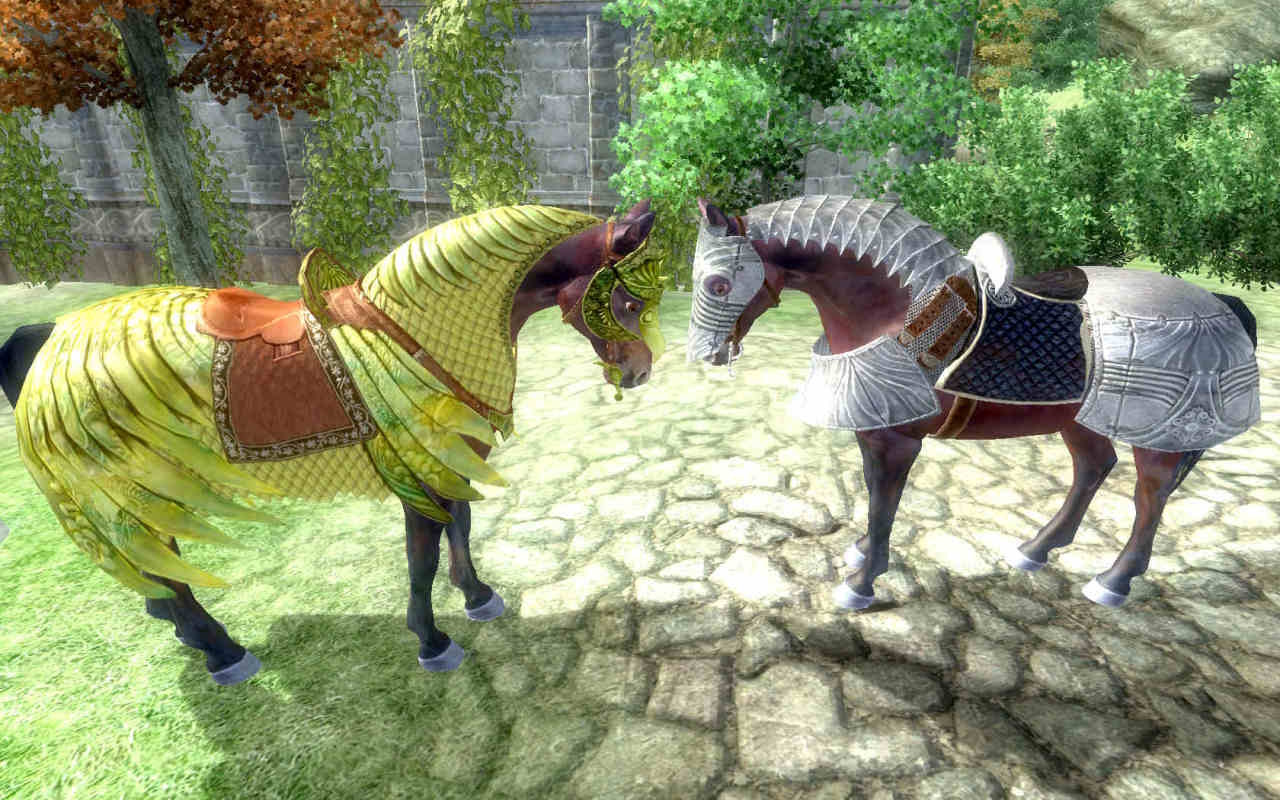
The corporation is no stranger to this. In fact, I’d argue that Bethesda is actually one of the guiltiest parties in the entire games industry when it comes to microtransactions – especially in the single-player space. Oblivion’s infamous horse armour DLC in 2006 was one of the most notorious examples of bad value cosmetic DLC in a single-player game, and one of the first to attract mainstream attention. Other companies saw Bethesda essentially getting away with it, and a truly unfortunate trend accelerated.

Oblivion’s horse armour DLC was released in 2006.

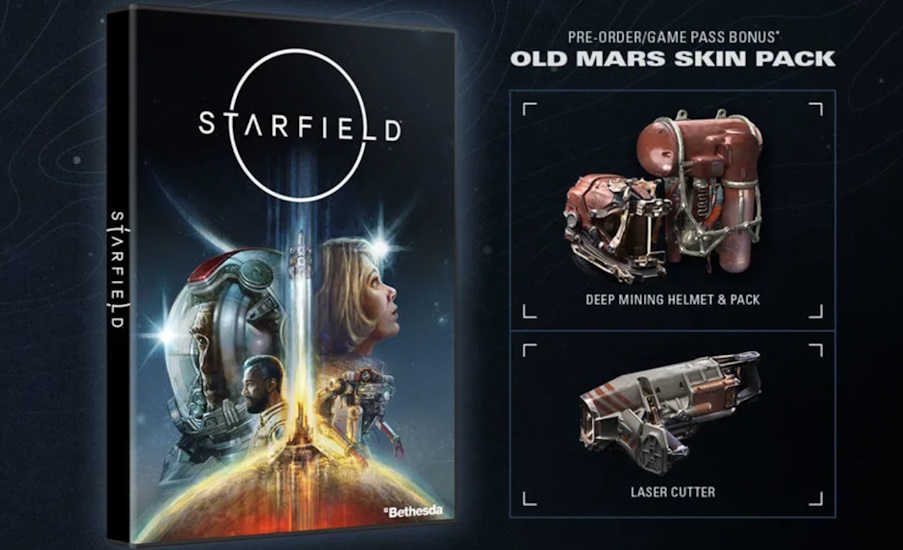
At time of writing in October 2023, the only skins available in the game come from expensive pre-order or premium editions of Starfield. That’s already a red flag, in my opinion, and it seems all but certain that future skins will also only be available as paid add-ons.

Starfield could look very different in six months or a year from now, with in-game purchases that could easily push the cost of the complete game closer to £200. Remember that in order to get the currently available skins, and pre-order Shattered Space, players are already having to fork over £100 to Bethesda for Starfield’s premium edition, so £200 when additional skins and cosmetics have been released doesn’t even seem like a stretch. By the time Bethesda finally stops working on Starfield altogether in the years ahead, the full price of the game plus all of its DLC and additional content could run to far more than that.

Skins are currently available as pre-order and special edition bonuses only.

So I’m rescinding my “doesn’t feel excessively monetised” statement from my earlier piece. Starfield feels like a game that’s being primed for additional monetisation – and rumours of paid mods have not escaped my notice, either. Paid mods will have to be the subject of a longer piece one day – but suffice to say for now that I’m not a supporter of them in any way, shape, or form.

Bethesda took a risk by turning Starfield into a single-player live-service title, and while I will say that the “base” version of the game still has a lot on offer – for people who are still interested in Bethesda games and the way they design their quests – I’m not sure it was the right decision. Building a good game with fun gameplay and an engaging story should have been priority number one – but it feels like both of these things took a back seat. Planning for a decade’s worth of add-ons and extra content became Bethesda’s main ambition. I’m not convinced all of these planned pieces of DLC will see the light of day.

This is where skins will appear – when Bethesda is ready to begin selling them.

When I really dig down, Starfield’s biggest issue for me personally isn’t actually that its gameplay feels outdated and uninspired. It’s that the game’s story just didn’t grab me and the worldbuilding was so bland and uninteresting that I didn’t care to spend any more time in it. The world of Starfield feels small, flat, and boring – and when the gameplay backing it up was lacklustre too, I couldn’t find a way to make progress. I’m someone who’ll happily play through some absolutely bog-standard gameplay if I’m enjoying a story or getting lost in a fictional world, but with Starfield offering neither an entertaining story nor an engaging world… sticking with the game lost its appeal.

I looked up spoilers online to see what happens further along Starfield’s main quest. I was bored to tears playing it, but if it picked up later on I thought I might be able to push through to get to the promised moment where the game would finally “get good.” But what I read actually surprised me – and I ended up feeling glad that I didn’t waste any more hours of my life playing through the story.

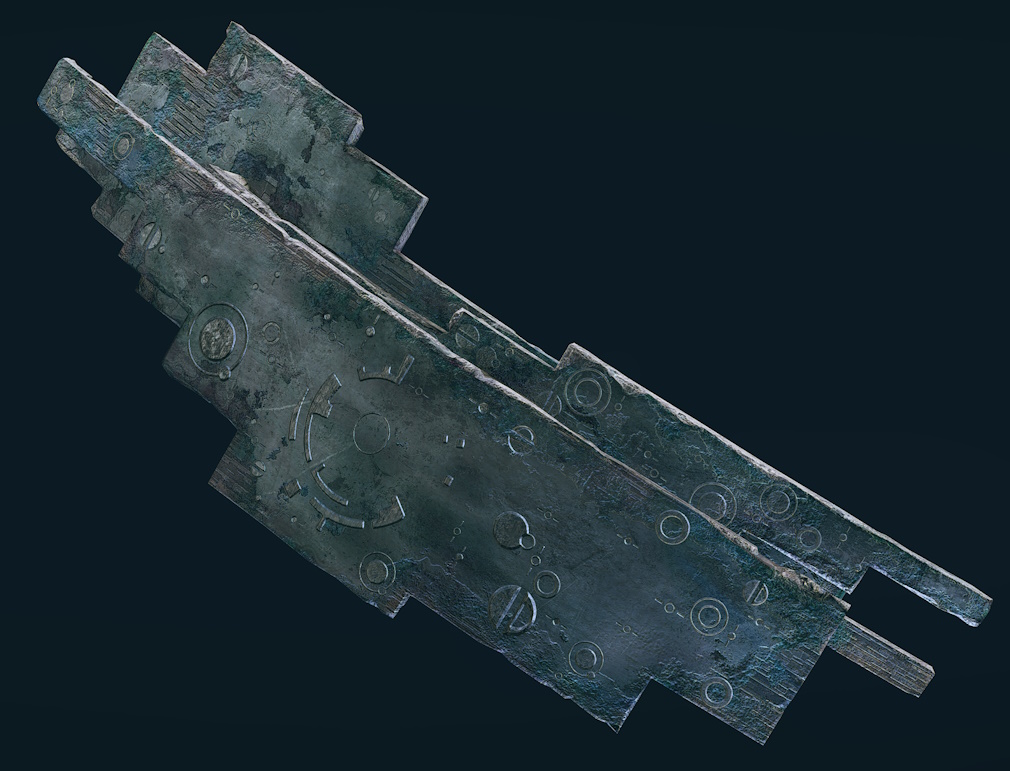
One of the artefacts at the heart of the game’s story.

What is one of the most basic pillars of storytelling? Any narrative needs a beginning, a middle, and an end. If a story revolves around a big mystery, solving that mystery is absolutely key to making it feel complete. Starfield’s writers chose to ignore this absolutely fundamental rule of narrative construction, and the result is that the game’s main story seems like it comes to a deeply unsatisfying “end.”

Starfield began by setting up a mystery: what is this artefact? What does it do? And who made it? Then the game introduces us to a team of people dedicated to figuring it all out. There are major structural weaknesses on this side of the story – like what anyone involved in Constellation actually does or has been doing for the past thirty years prior to the player character showing up – but that’s somewhat beside the point. After a series of glorified fetch quests that see us chasing different artefacts across the galaxy, Starfield introduces two antagonists and magical powers that we can learn… but then the story ends without explaining anything about what the artefacts were or who created them.

Starfield’s main story has a deeply unsatisfying ending – and the journey to get there isn’t much fun either.

Failing to solve the key mystery at the heart of the narrative, and refusing to even answer the most basic of questions about that mystery, ignores one of the fundamental tenets of storytelling. It makes the whole story – which then begins again in a weird kind of cyclical manner – feel incomplete and frustrating.

It seems to me that this aspect of the game – starting over by “travelling to an alternate reality” – is nothing more than a narrative gimmick to allow Bethesda to put a New Game Plus mode into Starfield.

And why would Bethesda want to add such a feature? None of the company’s previous titles included New Game Plus, after all. Oh, that’s right: because Starfield was built to be a “ten-year experience” rather than a complete game, and New Game Plus feels like an easy way to keep players engaged for longer.

I couldn’t even get through the game once

So we come full-circle, and I think we can reasonably make the case that Starfield has been harmed in more ways than one by Bethesda’s insistence on planning for the long-term at the expense of the short-term. Maybe Shattered Space, or some additional piece of DLC in the future, will resolve Starfield’s big mystery. And maybe, if that happens, the main story of the game will feel complete and worth experiencing. But if the best possible spin I can put on Starfield is that it’s an incomplete experience that needs additional content to actually feel like its story has a proper ending… that’s not great. It makes it feel no different from dozens of other incomplete live-service games.

I usually avoid live-service titles, and I do so for one basic reason: I don’t like to play an incomplete game. If a film or season of TV ends on a cliffhanger, with promises of a resolution to come next time, that’s one thing. But Starfield isn’t a film or a TV show, it’s a single-player game that shouldn’t depend on future DLC or updates to actually complete its main story.

Ready for boarding?

The longer I’ve sat with Starfield, the further the game has slipped down in my estimation. There are unfavourable comparisons with other recent releases that can’t be avoided, but at its core we’re stuck with a game that feels fundamentally incomplete. As Todd Howard himself admitted, Bethesda made a “base experience” that they intend to build on over the next few years – and that they also expect modders to help with. That might’ve been okay were it not for the outdated and buggy gameplay combined with an uninteresting and bland setting.

So like with other live-service titles, maybe Starfield will be worth revisiting after those promised updates, content drops, and DLC packs have been created. Maybe the “ultra deluxe anniversary edition” will be worth playing in 2030 – so if I live that long, maybe I’ll check it out. But I’ve been wasting my time on a game that, for all of its lofty promises, just isn’t what I’d been expecting. As I said last time: part of that is on me for internalising too much of the hype and excitement that built up in the months before Starfield’s launch. But a lot of the blame lies with Bethesda for creating an uninspiring setting, a bland, incomplete story, and for building a game that feels a decade out of date.

You cannot go that way.

Forget about Starfield becoming a “ten-year experience.” Bethesda needed to catch up on at least ten years worth of improvements and changes in game design and development. Those are the ten years that Bethesda should have been focused on. The company should have been looking at what comparable games in the open-world, action-adventure, and role-playing spaces have been doing since Skyrim launched and worked to incorporate some of those elements into Starfield. Instead, Bethesda took the Skyrim formula, cut out content to introduce later by way of paid DLC and add-ons, and planned for a decade’s worth of content for a game that already feels at least ten years out of date.

I wanted to love Starfield. The game’s overall aesthetic and many of its creative choices looked to create exactly the kind of sci-fi setting that appeals most to me. Blending real-world design elements with some of the sci-fi properties that I remember fondly from years past should have been exactly what I was looking for. I was worried that I was too harsh on Starfield and that I’d been treating the game unfairly or unkindly… but the longer I’ve sat with it the more I’ve seen its “ten-year plan” laid bare. I don’t care for live-services, for incomplete experiences, or for badly-written stories with cheap endings. I think I’m done with Starfield for now – though I will give the caveat that the game could be worth picking up again once its planned add-ons have been released.

Starfield is out now for PC and Xbox Series S & X consoles. Starfield is the copyright of Bethesda Game Studios, Bethesda Softworks, Xbox Game Studios, and/or Microsoft. Some promo images and screenshots used above courtesy of Bethesda. This article contains the thoughts and opinions of one person only and is not intended to cause any offence.
My Starfield wishlist

Spoiler Warning: Although there are no major story spoilers for Starfield, spoilers are still present for the game and some of its systems.

Yes, we’re talking Starfield again! Bethesda’s upcoming open-galaxy sci-fi role-playing game is absolutely my most-anticipated game right now, and there’s a lot to look forward to. There are also a few points of concern! I’ve covered both here on the website already, but today I thought it could be fun to put together a “wishlist.” We’re going to talk about some of my biggest concerns for Starfield as well as some possible inclusions that haven’t been announced. We’re also going to look at some of the game’s announced features and mechanics and consider how I’d like them to be used.

The major caveat I always give when putting together a wishlist is this: I have no “insider information.” I’m not trying to claim that anything listed below *is* going to be part of Starfield – no matter how much I might want it to be! I’m crossing my fingers and hoping that the game Bethesda has developed will be plenty of fun to play regardless of whether my “wishes” end up being granted!

A custom spaceship.

And as always, all of this is the wholly subjective opinion of one person. If I miss something that seems obvious to you, or if you disagree with all of my ideas, that’s totally okay! There’s enough room in the gaming community and the Starfield fandom for differences of opinion and respectful disagreement.

Now that that’s out of the way, there are a few points from the recent Starfield presentation that were left unclear, with features I’d like to see included in the game that weren’t announced or discussed in detail. There are also some concerns about the game – from its marketing and hype bubble to Bethesda’s reputation. Let’s jump into the list and look at each of my wishes in turn.

Wish #1:
No microtransactions and especially no paid mods.

Starfield will launch with pre-order bonuses.

I was alarmed to see that the special edition of Starfield comes with a handful of character costumes that aren’t going to be part of the main game. Pre-order bonuses are nothing new, of course… but I fear that this is just the canary in the coal mine; a harbinger of some potentially aggressive in-game monetisation.

In a free-to-play game, I’m much more forgiving when it comes to microtransactions. They mustn’t be exploitative, of course, and prices still need to be measured and reasonable, but a game that doesn’t charge its players anything up-front has to make its money back somehow. Starfield will be a fully-priced game, retailing for £60 here in the UK or $70 in the United States, and that means microtransactions are absolutely unacceptable.

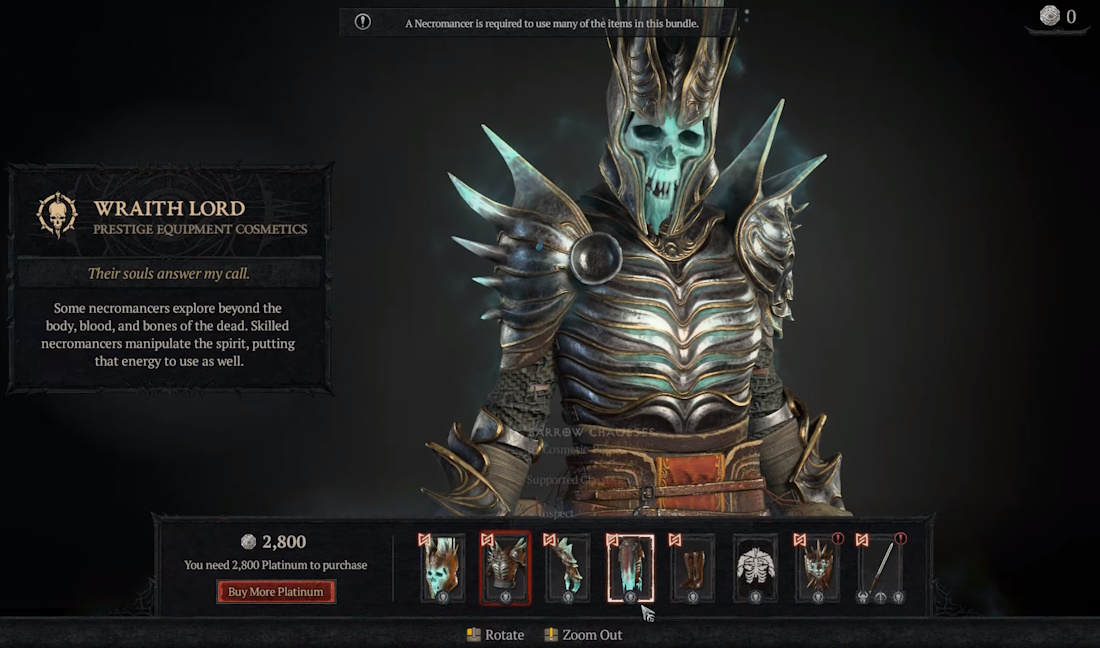
An in-game shop in Diablo IV.

I was astonished by the scale of Diablo IV’s in-game marketplace. That game has online features, but it can be a wholly single-player experience – and it’s charging players £20/$25 in some cases for character skins and other cosmetic items. To me, that’s so far beyond the pale that it almost feels laughable.

Bethesda is one of the pioneers of this kind of nonsense, too, with Oblivion’s notorious horse armour DLC in 2006 paving the way for this kind of in-game monetisation in single-player titles. Bethesda has also tried to monetise mods, with multiple attempts to get the “Creation Club” off the ground in both Skyrim and Fallout 4. Paid mods could (and should) be the subject of an entire article one day – but for now, suffice to say it’s something I want to be kept as far away from Starfield as possible.

Wish #2:
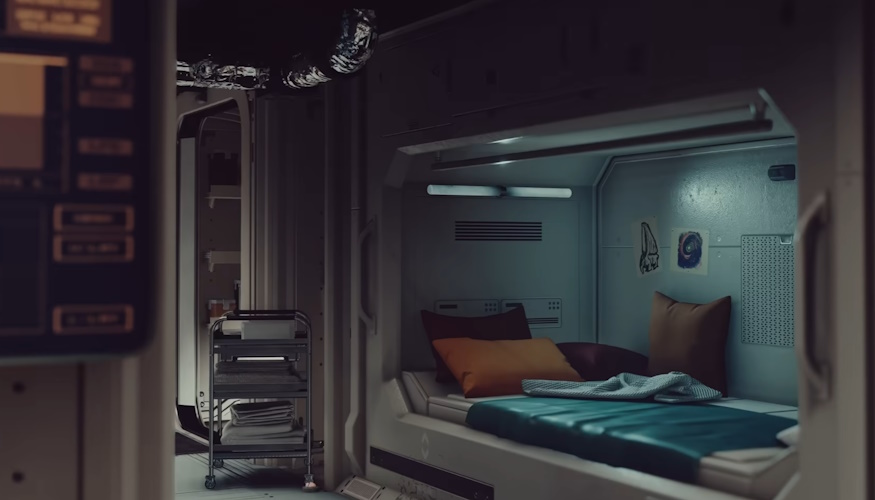
Customisable spaceship interiors.

A bed – I hope there will be options to customise it!

Bethesda showed off spaceship customisation extensively at the showcase – and the feature looks amazing. But what wasn’t shown was to what extent the interior of spaceships can be modified and customised… or if that’s even going to be possible at all. Part of me thinks that, if it were possible to make any sort of modification to a vessel’s interior, Bethesda would have shown it off and talked about it. So I suspect this particular wish may not be granted.

We saw a Bethesda developer depositing a large number of sandwiches that she’d pilfered onto a table aboard her ship – so it’s obviously possible to place some in-game items aboard a spaceship and have them remain there. But whether that extends to things like furniture is unclear.

Customising a spaceship’s exterior has been shown off…

At the very least, I’d like to see basic options for things like colours being included. If I want a hot pink spaceship for my gay-as-hell pirate – and if you know me, you know that’s exactly what I want – then it would feel a bit disappointing if the inside of that ship was just a boring white or grey colour.

As far back as Morrowind it was fun to put items on shelves and tables, to decorate a home or cave and make it feel a bit more personalised. If Starfield only gives us pre-made pieces to snap together, with no possibility for further customisation, part of the role-playing experience will be lost. We know that the interior of outposts on planets can be customised – at least to an extent – so I hope spaceships can be too. If not, this should be a priority for the game’s first free update!

Wish #3:
A polished, bug-free launch – or a delay if that won’t be possible.

A visual bug in Fallout 76.

In 2022, I praised the decision to delay Starfield. If the game wasn’t going to be ready for prime-time in November of last year, a delay was the only thing Microsoft and Bethesda could have done. But Starfield’s hype bubble has inflated massively since the showcase, and with a release date at the beginning of September seemingly set in stone, there’s going to be a lot of pressure to launch the game whether it’s ready or not.

This year alone we’ve seen far too many bug-riddled, broken, unfinished games pushed out too early by greedy publishers. Microsoft and Bethesda are not immune from this, either, with Redfall being an absolute abomination only a few weeks ago. Given the state of other Bethesda titles when they were released – Fallout 76 most notably – there are reasons to be concerned. Starfield is, for me, a game firmly in the “wait for the reviews” column.

A broken character model in Redfall.

Xbox Game Studios head Matt Booty was recently quoted as saying that Starfield would have “the fewest bugs of any Bethesda game ever shipped” if it were released today… and that’s a bold claim that he will be held accountable for. It’s easy for any developer worth their salt to put together a “vertical slice” of gameplay that runs well and is polished, and even the worst and most incomplete, broken games can look decent in their own marketing material. All that we’ve seen of Starfield so far has been promotional bumf released by Bethesda, so until the game is actually in the hands of real players, we can’t be sure of its condition.

There is a lot riding on Starfield for Bethesda; the company is looking to recover its reputation after Fallout 76. But there’s a lot riding on the game’s success for Xbox and Microsoft, too. If Starfield goes the way of Anthem or even Cyberpunk 2077, the situation may not be salvageable… and that could lead to serious long-term problems for Bethesda and its parent company. If Starfield isn’t good enough by September, then for god’s sake delay it!

Wish #4:
Small towns and settlements to visit beyond the main cities.

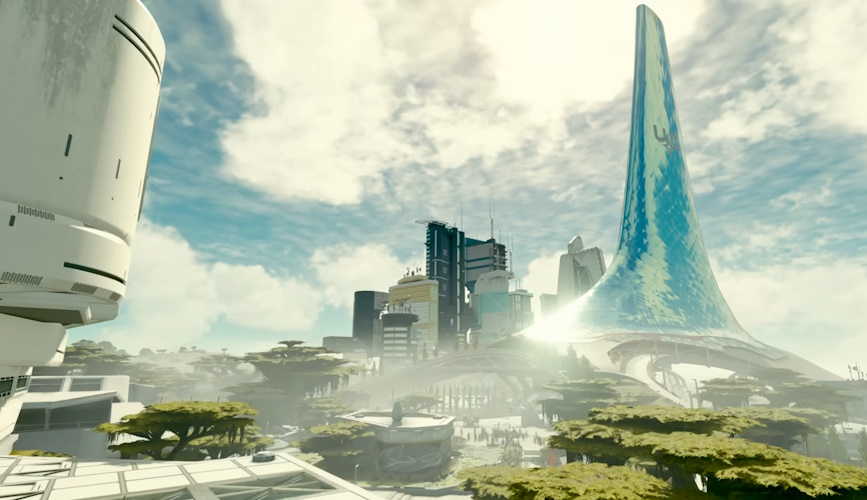
The city of New Atlantis.

At time of writing we know of four major settlements in Starfield: Akila City in the Freestar Collective, the pleasure city of Neon, New Atlantis in the United Colonies, and Cydonia on Mars. We also caught a glimpse of a space station that looked quite large, as well as a location called “Red Mile” that we don’t know much about yet. But that’s all.

In Skyrim there were nine cities, five smaller towns, and a number of settlements and farmsteads scattered across the map. Fallout 4 likewise had several larger and smaller towns, and even Morrowind had a number of smaller places to visit outside of the main settlements. I hope that some of Starfield’s planets will have colonies or small towns to encounter, especially if they aren’t tied to the main quest. I hope that both the United Colonies and the Freestar Collective will have other settlements outside of their capital cities. And I hope that these locations will be visually interesting and fun to visit!

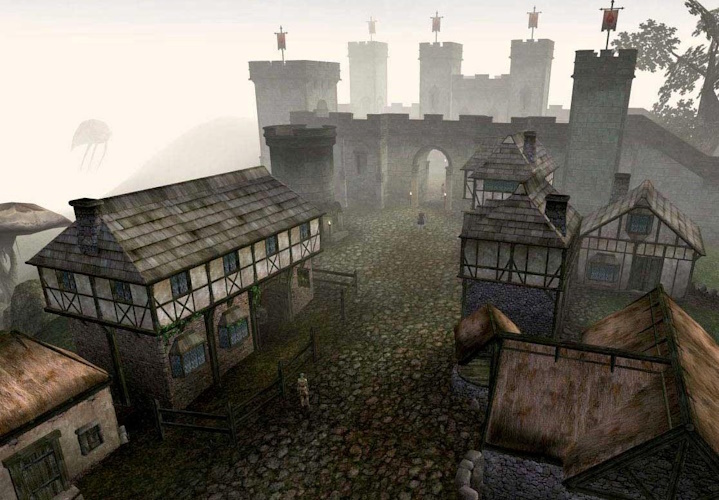
The town of Pelagiad from Morrowind is an example of the kind of place I’m thinking of.

This really speaks to a bigger concern that I have about Starfield – namely that the game’s massive open-galaxy map could feel incredibly empty. Without these smaller settlements and the people that live there, Starfield risks feeling very under-populated. If the galaxy only contains four cities and a couple of thousand people… the population relative to the size of the map will be completely out-of-balance.

Bethesda has shown off a handful of locations, like an abandoned mine populated by hostile NPCs, but I’m looking for settlements akin to Morrowind’s Pelagiad or Fallout 3′s Grayditch – small towns with a few characters to encounter that go a long way to making their respective worlds feel lived-in and complete.

Wish #5:
Heads-up display options.

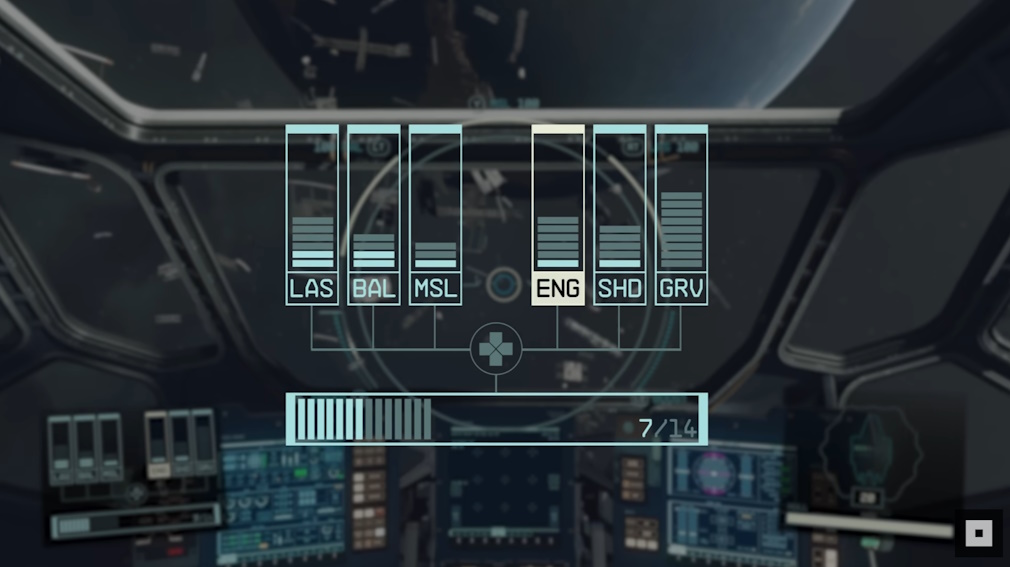
The HUD during spaceflight.

One visual choice that I wasn’t wild about came during some of the first-person spaceflight sections shown off in the Starfield showcase. A well-designed cockpit could be seen, complete with buttons, screens, and readouts… but clumsily slapped on top of that was the game’s HUD in transparent boxes.

For me, this detracted from the way those spaceflight sections looked. I’d love to be able to move things like power management to those screens directly, and to see my character pushing buttons that correspond with the actions I’m taking. Failing that, I hope there’s at least an option to minimise or hide the HUD so it doesn’t get in the way.

Transferring energy between systems.

This is less of an issue on the ground, at least from what we saw at the showcase. And a good heads-up display is important; the HUD contains vital information like the amount of ammo you have left, the state of your health, a mini-map, and more. But during those spaceflight sections in particular, I felt that the HUD was clunky and got in the way.

The best-case scenario would be to move the HUD options directly to one or two of the screens in the cockpit. That would be fantastic to see! But at the very least if there could be options to hide this during first-person spaceflight, that would go a long way to helping with that sense of immersion that Starfield is going for.

Wish #6:
Difficulty and accessibility options.

Difficulty options in Skyrim.

Say it with me, folks: difficulty options are an accessibility feature! Many modern games offer things like large text, colour-blindness settings, motion sickness settings, and more. One of the best games I’ve played in terms of the sheer number of accessibility features was Control, but other titles like Grounded have been pioneers, with options to dial back the fear factor in some of its bugs and arachnids.

Accessibility extends to difficulty, too, and while I certainly hope that Starfield will pose a challenge for folks who need or want that, I hope there will be options to dial back the difficulty to allow those of us who don’t want to die every six seconds to have an enjoyable time! There’s hope in that regard: Skyrim and Fallout 4 both had decent difficulty options. The addition of a “hard-core” mode with permadeath could be fun for some players, too… but it definitely won’t be something I choose to activate!

I hope I won’t be seeing this very often!

A role-playing game needs to be adaptable, allowing players with different ability levels to participate. Bethesda has usually made an effort, at least, to get this right – but modern games allow for many more options in that regard. It should be possible to dial down the difficulty of combat, for instance, while maintaining a higher difficulty level for something like lockpicking or puzzle-solving.

There’s been a trend in some modern games, pioneered by the likes of the Dark Souls series, toward a punishing level of difficulty. That’s fine for some players – but it would deny Starfield to millions more, myself included. There are games I’ve genuinely wanted to play that were denied to me because they were totally inaccessible – I hope Starfield won’t be among them.

Wish #7:
Pets!

An alien life-form!

It’s already been confirmed that we won’t be able to “mount” any of the wild animals we encounter in Starfield. That’s fine by me, as mounts and vehicles weren’t things I was expecting. But it would be really sweet and cute if we could get pets for our spaceships and outposts!

These could either be purchasable from in-game vendors, perhaps with Earth animals like cats or dogs being available. Or, as an alternative, tamed alien animals that we encounter out in the game’s open world. We’ve already seen that players can choose an ability to pacify aggressive animals – it’s not much of a leap from that to having a tamed, domesticated pet!

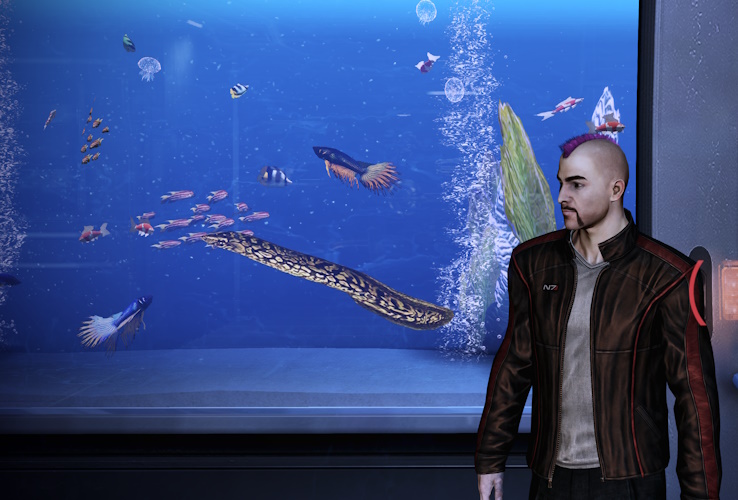
Commander Shepard with their fish tank in Mass Effect 3.

If this isn’t something included in the base game, it’s absolutely something that Bethesda should consider for an update or even as a standalone piece of DLC. Other games have done this: from Commander Shepard’s hamster and fish tank in Mass Effect 2 through to horses in Red Dead Redemption II and the mini-games required to properly care for them. It’s possible to pet cats and dogs in games like Ghostwire Tokyo, and Bethesda’s own Fallout 4 gave players a pet dog to accompany them!

This is pure fantasy, of course, as it’s a feature that hasn’t been announced or even teased. But the ability to acquire a pet would add a lot to the pure role-playing immersion of a game like Starfield.

Wish #8:
Make those traits and backgrounds matter.

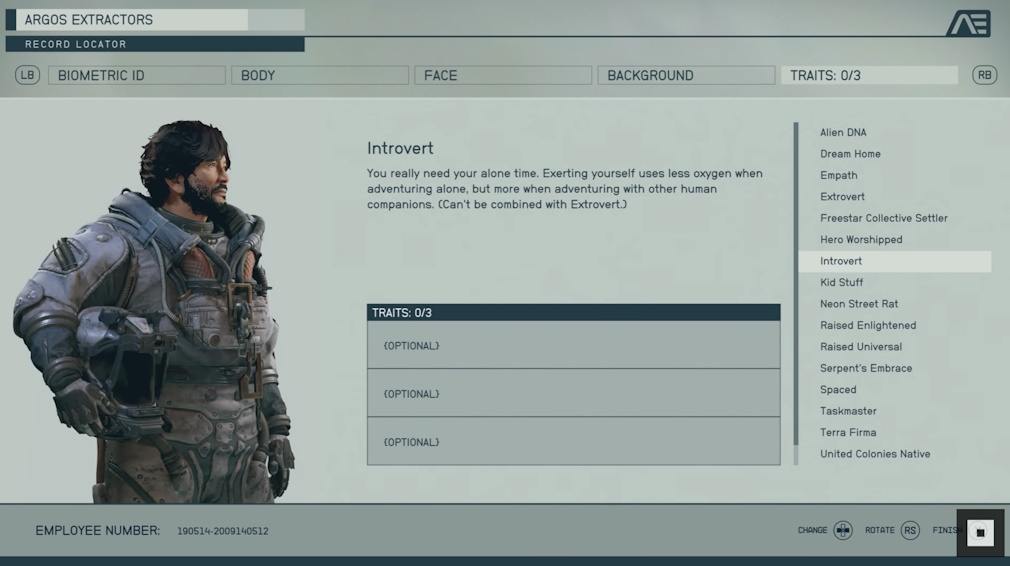
The traits menu in the character creator.

The Starfield showcase highlighted both character backgrounds and optional traits – all of which seem like they have the potential to really shake up the way Starfield plays. Some traits add wholly new characters or change the way different factions will react to the player character, and that’s great… I just hope that it matters in a meaningful way.

In Cyberpunk 2077, the much-vaunted “life paths” that a player could choose ultimately had very little impact on gameplay. Outside of a short prologue, which was different for each, there was one solitary quest – and a short one at that – midway through the game, and a couple of places where different dialogue options could appear. That was it. There really wasn’t much to Cyberpunk’s life paths, certainly not enough to add much by way of replayability.

One of the available backgrounds.

Starfield needs to get this right. If I can choose to be a chef who frequently goes home to visit their parents, then playing the game with those options needs to feel substantially different from choosing to be a gangster with a bounty on their head. If these things will only have a superficial impact on gameplay, then they won’t really matter – and that will damage the sense of immersion and make starting a second save file feel less than worthwhile.

If these traits and backgrounds in their various combinations don’t matter as much as Bethesda’s marketing has suggested, then they may as well be scrapped and Starfield could have a Skyrim-style class system instead. It’s hard to see how all of the fifteen or more different backgrounds could each be given their own unique questlines and extensive dialogue options… but an effort has to be made!

Wish #9:
A reason to explore – and to keep exploring.

A star system.

Recent interviews by Starfield’s director Todd Howard have confirmed that approximately 10% of the game’s 1,000 planets will have life on them. That leaves 900+ planets being lifeless, but with resources to collect and possibly a handful of ruins or abandoned outposts to discover.

Starfield needs to ensure that players have a reason to explore these worlds. Forced scarcity of resources won’t cut it – and could easily become frustrating. If the game’s Constellation organisation is focused on exploration, then there has to be a reason why they’re pushing the player to explore these planets. Seeking out ancient artefacts could be part of that – but again, there will be a lot of planets that don’t have any. What reason will players have to visit these worlds?

What reason do I have to visit these planets?

I think it’s possible that DLC will add new locations, crashed spaceships, ruined colonies, and much more to some of these empty planets… assuming that Bethesda will be in a position to continue to support Starfield post-release. That’s a longer-term solution, though, and doesn’t really get away from the immediate problem of what could be a map that’s simply too large for the amount of content that will be contained in it.

This is one of my biggest worries, to be honest. I have no doubt that Bethesda will have created some wonderful characters, some fun quests, and some engaging storylines… but will that content be too thinly spread? Or will most of it be concentrated in a handful of big cities and populated planets? Fallout 76 felt big and empty; an open-world with nothing to do and no reason to explore it beyond admiring the scenery. I hope that Starfield hasn’t fallen into the same trap.

Wish #10:
Exciting and enjoyable combat.

An example of melee combat from the showcase.

I’ve usually enjoyed combat encounters in The Elder Scrolls games, particularly melee combat with swords, axes, spears, and the like. But Bethesda’s Fallout duology hasn’t always gotten its gunplay right. In Bethesda’s single-player Fallout titles, the VATS system paused the game to allow for targeting, and that went a long way to covering up what was pretty mediocre shooting and gunplay.

When VATS couldn’t be implemented in Fallout 76 – because of the game’s multiplayer nature – Bethesda’s sub-par shooting was laid bare. What we’ve seen of Starfield’s gunplay looks impressive so far, but again that comes with the caveat that everything we’ve been shown is carefully-edited marketing material that may not ultimately prove to be representative of the finished game.

Firing a pistol/handgun in Starfield.

Todd Howard confirmed that Bethesda has worked with fellow ZeniMax studio id Software on elements of Starfield, and the famed developer of the Doom series – including the recent highly-praised titles Doom and Doom Eternal – would definitely have a lot to offer. Some of Starfield’s shooting looked to draw inspiration from those recent Doom games.

At the end of the day, all we really need is for shooting to be competent. It won’t be the main focus of Starfield for the most part, but when combat encounters arise, they need to be basically fun to play and not frustrating! In a role-playing game with different playstyles and options, different kinds of weapons need to behave differently from one another, too.

So that’s it!

Using a mining laser.

Those are ten of my Starfield wishes!

In an ideal world, the game would do everything I want! But even if none of the things we’ve talked about today come to pass, I’m still hoping for a fun and enjoyable game. Maybe Starfield won’t be the best game of all-time… but as long as it has some of that Bethesda magic, and some decent systems and mechanics that don’t get in the way, I daresay it’ll be good enough to keep my attention and focus for a time this autumn.

I really am trying not to get too carried away. It’s hard, though, because I don’t think I’ve been this excited about a game since Bethesda’s own Morrowind more than twenty years ago. If you asked me to describe my idea of an “ideal game,” many of the things I’d choose to include have already been confirmed to be part of Starfield.

One of the available companions.

In a broader sense, Starfield feels like the game I’ve been waiting decades to play, ever since I first played games like Star Trek: Starship Creator, Star Fox on the Super Nintendo, and first-person shooters like the original Doom, System Shock, and Elite Force. I’m trying not to place too high a bar on Starfield… but I can’t deny how excited I am!

Every time I think I’ve ran out of things to say about Starfield, I find at least one more thing to comment on! So I hope you’ll stay tuned here on the website, because I may have something else to say about the game before too long. When Starfield is released, I’ll also do my best to share my first impressions and my thoughts about the game and its various systems and gameplay mechanics, so definitely check back for all of that later in the year.

Until then, I hope this wishlist was a bit of fun!

Starfield will be released on the 6th of September 2023 for PC and Xbox Series S/X consoles. Starfield is the copyright of Bethesda Game Studios, Bethesda Softworks, Xbox Game Studios, and/or Microsoft. Some promo images and screenshots used above courtesy of Bethesda. This article contains the thoughts and opinions of one person only and is not intended to cause any offence.