Spoiler Warning: There are minor spoilers ahead for the titles on this list.
When writers and producers sit down to craft a new television series, usually they can’t plan for anything beyond a single season. Most television shows are greenlit for one season at a time, and renewed for one additional season at a time. Forward planning for events that may take place in Season 6 of a show are usually not at the forefront of creators’ minds when sketching out the storyline of Season 1.
And this approach makes a lot of sense. A series like Terra Nova clearly had a multi-season story planned, as Season 1 ended on a cliffhanger, but cancellation meant that the remaining story was never put to screen. That’s frustrating as a viewer – and yes, even though it’s been ten years I’m still sore about Terra Nova!

But one drawback to this season-by-season approach to writing and storytelling comes when a show is renewed. If writers have managed to successfully wrap up a season-long storyline and character arcs, what comes next? This is something I’ve termed “the Disney sequel problem,” because it’s comparable to a situation many sequels to successful Disney films find themselves in. What comes next after “happily ever after?” Or in this case, what comes next after a finished story?
Some shows just run and run and run, continuing long after they’ve completely exhausted their potential stories and original purpose. These shows tend to morph into something different – even unrecognisable – from their original incarnation. Even though the characters may remain the same, storylines change and often get wilder and more bizarre. Though some shows retain a large following even as they change, in many cases fans of the first couple of seasons realise that the changes have been for the worse.

Television, like any entertainment or artistic medium, has its limits. No single story can run and run forever, and no set of characters can endure season upon season of increasingly outlandish storylines. Most television shows, like most stories across other forms of media, have natural lifespans. In some cases that could be a single season, in others it could be ten seasons. It varies a lot and depends on the show. But practically every show eventually hits that wall – and some try to sidestep it and keep going.
Today we’re going to look at five examples of television shows that should’ve ended far sooner than they did. As I always say, this is just the opinion of one person. If you like a show on this list and enjoyed its later seasons, that’s okay. I’m not trying to claim these shows or their latter episodes are somehow objectively bad. Simply put, I feel they outstayed their welcome.
Number 1: The Simpsons (1989-present)

Given The Simpsons’ place in popular culture and the show’s enormous influence over satire and comedy, this one is painful to admit. But The Simpsons, which will begin broadcasting its 33rd season later this year, has clearly and demonstrably gone on too long. Its original premise – satirising family-oriented 1980s sitcoms and taking a comedic yet biting look at America as the 1990s dawned – has entirely evaporated, and while there have been creditable attempts in recent seasons to recapture parts of that, the show has largely forgotten its roots.
A few weeks ago I picked out twelve of my favourite episodes – and as I was composing that article I came to realise pretty quickly that all of my favourites were within the first eight or nine seasons. That was when The Simpsons was at its peak, and while the show is still running and clearly has an audience, even Simpsons fans admit that it’s gone downhill.

One of the most-cited differences between The Simpsons in its ’90s heyday and the series today is the characterisation of Homer. Originally he was presented as a hard-working everyman, down on his luck and with undeniable flaws, but nevertheless someone viewers could root for. In his first standalone appearance in the Season 1 premiere Simpsons Roasting on an Open Fire, Homer’s financial problem and desire to do right by his family as Christmas approaches elicits genuine sympathy; an oddly timeless story. But by later seasons, spurred on by a desire or need to continue a trend of increasingly outrageous storylines, Homer has been turned into a character that’s half-clown, half-jerk, exaggerating his worst traits and becoming a parody of himself.
Unlike some other entries on this list, The Simpsons is episodic in nature. It didn’t have a single overarching story to tell that was exhausted at some point in its run. Instead it had an underlying premise, and a desire to show Americans a satirical mirror of their society. But since the show itself became part of American popular culture, and inspired not only a whole genre of adult-oriented animation but also a whole style of comedy, its ability to effectively do that waned. And as writers exhausted plausible storylines to put a comedic spin on, all that remained was to take the show to extremes – pushing the boat out ever further to try to keep it funny.
Number 2: Supernatural (2005-2020)

Supernatural is the show that originally inspired this article! If you’re a regular around here you might remember it from last year’s awards – where it “won” the award for worst television series of the year. I stand by what I said then: Supernatural had become the king of running too long.
When Supernatural premiered in 2005 it had a wonderfully innovative premise. It was a great blend of episodic, monster-of-the-week television with season-long character arcs and stories that rumbled away in the background, particularly the disappearance of the boys’ father and their quest to hunt the Yellow-Eyed Demon. As Sam and Dean travelled the United States hunting an array of new and old monsters and horror movie villains, there was a lot to love.

But Supernatural exhausted its original storylines sometime before 2010, certainly by the fifth season or so. Not only that, but having faced down examples of most horror staples – ghosts, demons, werewolves, and the like – the writers and producers were running out of material. The show moved away from its original semi-episodic format toward a more serialised approach, and while there’s nothing wrong with serialised storytelling, combined with the satisfying conclusion of Supernatural’s original storylines and the exhausting of most monster-of-the-week stereotypes, there was nothing left for the show to explore.
For me, one episode more than any other cements Supernatural’s decline: Season 6’s The French Mistake. It was at this moment that the show lost all semblance of seriousness and descended into the fan-servicey mess that became the hallmark of its latter seasons. The transformation of main characters Sam and Dean from two relatively ordinary guys thrust into a world of demon-hunting into invincible Biblical warriors anointed by God and the angels was catastrophic, but that episode was the icing on the cake.
Number 3: Lost (2004-2010)

Lost is absolutely one of the best shows of the 2000s, and unlike other entries on this list which ran for a decade or longer, its six seasons actually seem rather modest in comparison. But Lost nevertheless exhibits many of the same issues, including exhausting its original premise and storylines, and putting its characters in increasingly weird and wacky situations to try to keep the magic going.
I mentioned at the beginning that many television shows are written season by season, without much thought for how or when they will end. Lost is a case in point. JJ Abrams, who created the show, has become notorious for writing half a story – a beginning without any idea of how it will end. In fact, the so-called “mystery box” has become a hallmark of the way Abrams creates his stories. In the case of Lost – as with the Star Wars sequel trilogy that Abrams also helmed parts of – the weaknesses of this approach become apparent.

There were mysteries in Season 1 of Lost. What caused the plane to crash? How were they so far off-course? What’s with the weird smoke monster? What’s inside the hatch? Who is Kate, and what did she do? But fundamentally it was a character-driven story with a strong focus on the need for survival. The characters found themselves in a hostile environment with no immediate hope of escape, and much of the drama came from that premise.
Lost had become unrecognisable by Season 6, with a narrative that involved worldwide conspiracies, time travel, an island that could literally move, and so on. For fans who had become engrossed in its world, perhaps some of these answers were satisfying. For many, though, they were not, and what started as a fun and mysterious show lost its way when the creative team found themselves boxed in narratively, unable to find a satisfying way to conclude various story elements.
Number 4: 12 Monkeys (2015-2018)

As with Lost above, 12 Monkeys doesn’t seem to have enough seasons to fit the bill as a show that outstayed its welcome. But it absolutely did! The series began with a similar premise to the 1995 film of the same name – a man from the future must travel back in time to the modern day in order to prevent the release of a biological weapon that would decimate humankind.
That premise sounds amazing, and more than a little timely given the year we’ve just had! Though time travel stories are seldom my favourite for a number of reasons, 12 Monkeys Season 1 absolutely nailed it. But then they ran out of story, and what was chosen to replace it simply did not work. Things went downhill fast.

The plot became overly complicated when the original premise – stopping the release of the virus – was played out. What replaced it was a convoluted and frankly just plain dumb story about an international conspiracy to “stop time itself.” Yeah. I know.
Though the characters remained the same, the lines they were spewing now made no sense, and the show had to create increasingly stupid reasons for both using the time machine – its central piece of tech – and for including characters from the modern day. With the focus having switched to battling this weird army of time-hating people, the entire concept of the series was lost.
Number 5: The Walking Dead (2010-present)

The Walking Dead’s main problem is that the entire show is built around a very simple premise: zombies. When the zombies stop being frightening, and when the show’s original cast has been decimated by season after season of “shocking” deaths, there’s nothing left to do. That should be game over – and The Walking Dead managed about three seasons before that feeling set in.
Unfortunately, despite hitting the wall, The Walking Dead kept going. The zombies stopped being the show’s focus and were relegated to a background role, with the impetus switching to new groups of characters who, for no other reason than “because plot,” would turn out to have a burning hatred of protagonist Rick Grimes and his group.
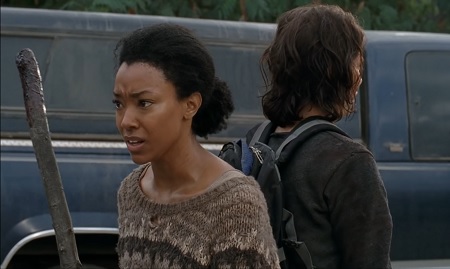
After the show found success with the Governor as its main human antagonist in Season 3, the writers evidently became desperate to recapture that feeling, throwing villain after villain at Rick. That’s all the Terminus cannibals were, that’s all Negan was, and now this new villain Alpha is in the same mould.
The Walking Dead, along with Game of Thrones which was around at the same time in the early 2010s, helped to pioneer the idea of a “disposable” main cast – where viewers were kept on the edge of their seats not sure if all of their favourites would survive to the end. The problem is that the end should’ve come far sooner. Spin-offs like Fear the Walking Dead and World Beyond can pick up the baton for the franchise, telling new stories with new characters. But the main series should’ve ended a long time ago.
So that’s it. Five shows that ran too long – or are still running too long!
Usually this happens for “business reasons” – namely money. Investing in the creation of a new television series is expensive, and when a show is a hit, executives and producers naturally want to keep going, bringing in more money and making use of existing sets, props, and characters. However, this can come at the expense of artistic integrity and good storytelling, with shows forced to make major changes to compensate for either concluding their original story or simply running out of ideas.

None of the shows on the list above were bad. I actively enjoyed all five in their early days. But somewhere along the way their original intentions got lost, and the transformed series that resulted became less enjoyable. In some cases this can happen within a season or two, especially if the original creative team tell what is essentially a one-and-done story across one season of television. But other shows have a slower, more gradual decline over the course of several years, with concepts that were interesting and exciting in Season 1 decaying and becoming clichéd tropes by Season 5. There are different ways this decline can manifest, just as there are different lifespans for different shows.
As a fan, in every single case I’d rather be writing an article saying “this show was cancelled too soon!” instead of “this show should’ve been cancelled already.” I’d rather lament what we could’ve seen had a show ran for just one more season than feel it declined because it went on too long. Perhaps that seems paradoxical, but sometimes, as the saying goes, “less is more.”
Regardless of what I may think, this phenomenon isn’t going away any time soon. Television producers will always look to continue successful projects where they can and cancel those that don’t bring in enough viewers and enough money. That’s just the way the industry works!
All titles listed above are the copyright of their respective network, broadcaster, studio, and/or distributor. This article contains the thoughts and opinions of one person only and is not intended to cause any offence.