



Spoiler Warning: Minor spoilers may be present for some of the entries on this list.
As many television shows approach their summer break, perhaps you’re looking for something to watch while you wait for new series and seasons to debut later in the year. Late spring and summer have historically been the “off season” for prime-time television series, with the main television season running from September/October through to April/May. The rise of streaming services has gone some way to breaking that up, which is good news, but there are probably still fewer big television productions on the air at this time of year.
With that in mind, I thought it could be fun to take a look at five television series that you might’ve missed – or just not seen for a while! All five are, in my opinion, underappreciated today, even if they were big hits at the time they were originally broadcast. Some series end up living long lives even after they go off the air – these ones, despite picking up some attention, aren’t quite at that level.
We’ve got a mix of different genres today, from action and drama to horror and even a documentary. So hopefully you’ll find something worthy of your time this summer!
Number 1: Jericho (2006-2008)
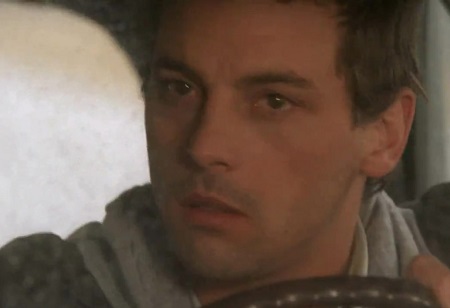
Between the mid-2000s and the mid-2010s there seemed to be a lot of interest in the post-apocalyptic genre. We’d see The Walking Dead premiere in 2010, as well as Survivors, Battlestar Galactica, and films like Children of Men and Contagion. Arriving on our screens in 2006 was Jericho, a post-apocalyptic drama series about the inhabitants of small-town America as they endure the aftermath of a nuclear attack on the country.
Jericho featured some wonderful characters, including the hot-headed Jake, his level-headed brother Eric (played by Star Trek: Discovery’s Kenneth Mitchell) and father Johnston, and the enigmatic Robert. The interactions between the residents of the town – and other characters they met along the way – was really the core of the show, and Jericho dived headfirst into exploring how ordinary, everyday people would confront such a major, nationwide calamity.
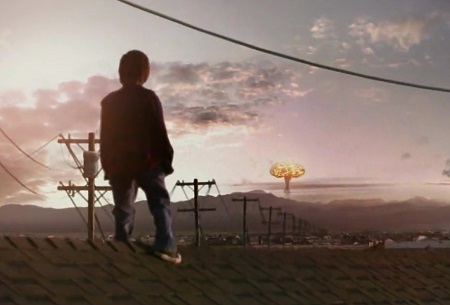
As always in post-apocalyptic works, some people respond better than others! Characters like protagonist Jake and mayor Johnston rose to the occasion, demonstrating the kind of selflessness and leadership necessary to help their community through the difficult times that lay ahead. Other characters descended into villainy, trying to shake down or scam the town, or violently attack people. This dichotomy, while hardly unique to Jericho, was put to screen exceptionally well.
While there was a storyline which focused on the bombings themselves – something that was explored further in the show’s short second season – for me the main draw of Jericho was its character-driven post-apocalyptic narrative, spending time with these folks as they tried to process what had happened.
Number 2: The Terror (2018-2019)
The Terror could be a great show to watch in October to mark Halloween – if you can wait that long! This anthology series so far only consists of two seasons, but both were interesting in their own ways. Season 1 is definitely the better of the two, focusing on the ill-fated Franklin Expedition to the Arctic in the mid-19th Century.
Sometimes I’m a little uncomfortable with shows that take real-life people – even historical figures – and fictionalise them, and I think that will have to be the subject of a future essay! But despite that, The Terror Season 1 was an incredibly well-done piece of character-centric drama. The horror elements came into play over the course of the story, but like with classics of the monster horror genre like Jaws, the creature stalking the surviving members of Franklin’s arctic expedition was better for being largely unseen. The tension and stress that was built up over the course of ten episodes was truly riveting to watch.

The second season picked up a completely different story, taking place in a Japanese internment camp during the Second World War. This story focused on a vengeful spirit, and likewise did a good job of building tension, though overall it was a more horror-centric season compared to the first. Star Trek: The Original Series star George Takei, who was himself interned during the war, had a co-starring role.
There was scope to continue The Terror as an anthology series, with new stories produced under the same banner. However, the lacklustre reception to Season 2 appears to have put the show on ice – pun intended – at least for now. Even though horror is far from my favourite genre, I had a good time with both seasons, and it feels like a lot of folks missed this one when it was first broadcast.
Number 3: Star Trek: Voyager (1994-2001)

It wouldn’t be one of my lists without at least some Star Trek, right? I feel that Voyager tends to be overlooked by at least some in the Star Trek fandom. The Original Series kicked things off and is a classic, The Next Generation is, for many folks of my generation at least, the high-water mark of the franchise, and Deep Space Nine has a fandom of its own. Modern Star Trek has picked up a following of new and old Trekkies alike, but Voyager can feel underappreciated.
I think a big part of the reason why is that Voyager struggled to find its own identity at the height of Star Trek’s ’90s “Golden Age.” The Next Generation introduced fans to the 24th Century, and during Voyager’s run its cast were starring in feature films. Deep Space Nine was something altogether different: set on a space station with a big cast of secondary characters, and dealing with darker themes. Voyager could feel, at times, a little too close to copying The Next Generation’s formula, and thus “just another Star Trek show.”

That sells it short, in my view, and there’s a lot to love about Voyager. It’s certainly true that not every element worked as intended – the “one ship, two crews” idea being the biggest, but even the overall story of a journey home could feel overlooked at points. But Voyager had a wonderful cast led by a fantastic captain.
Perhaps we could entertain the argument that Voyager could have done more to stand out. But re-watching it now, more than twenty years after its finale, it’s still a wonderful series. It’s just such a shame that it hasn’t been remastered yet!
Number 4: The World At War (1973)
There are a huge number of World War II documentaries floating around out there, with outlets like the History Channel making more all the time. Many modern documentaries make use of fully-acted dramatic recreations and use CGI and special effects to bring history to life. By those standards, The World At War might feel out-of-date and rather stuffy. But for my money there’s no documentary as interesting.
The World At War was produced at just the right moment, and I’ll explain what I mean by that! It’s difficult – if not impossible – to make a fair and balanced documentary during or immediately after the events it covers; feelings are too raw, some of those involved have careers to consider, and for all manner of reasons, getting to the raw unvarnished truth can be impossible if done too quickly. But on the other hand, waiting too long can mean that too many of the main people involved in an event have died or become too unwell to share their recollections. The World At War was produced almost 30 years after the end of World War II – long enough for passions to have faded and for people to share their opinions honestly, but also not too long after the event.
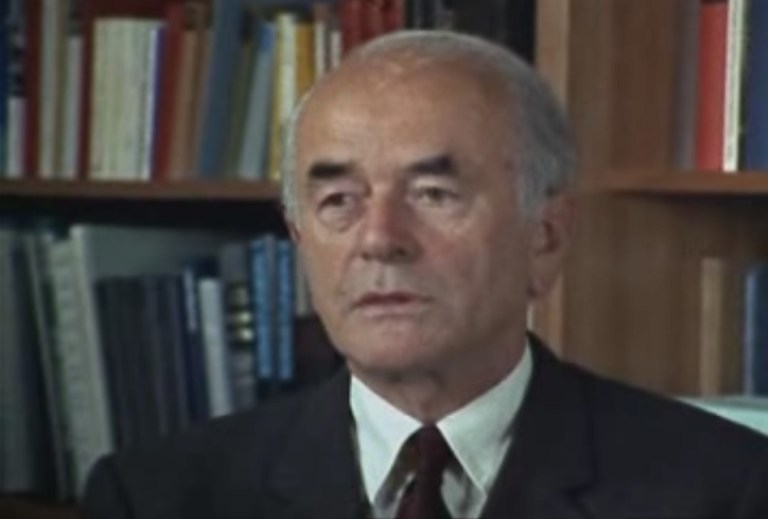
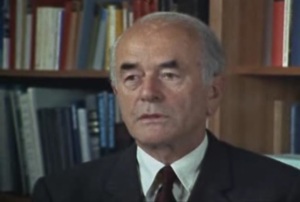
As such, The World At War was able to interview many significant people from World War II, including British foreign secretary (and future Prime Minister) Anthony Eden, British RAF leader Arthur Harris, German Admiral (and Hitler’s designated successor) Karl Dönitz, German armaments minister Albert Speer, and a number of others. Getting these individuals on record to share their views, and to be able to see and hear them, is absolutely priceless from an historical perspective.
Beyond that, though, The World At War was incredibly well-made. With narration provided by Lawrence Olivier, plenty of footage from the era, and the aforementioned interviewees providing a direct eyewitness account to the war, it’s a unique production that aimed to be comprehensive, and a must-watch for any history buff.
Number 5: The Last Ship (2014-2018)
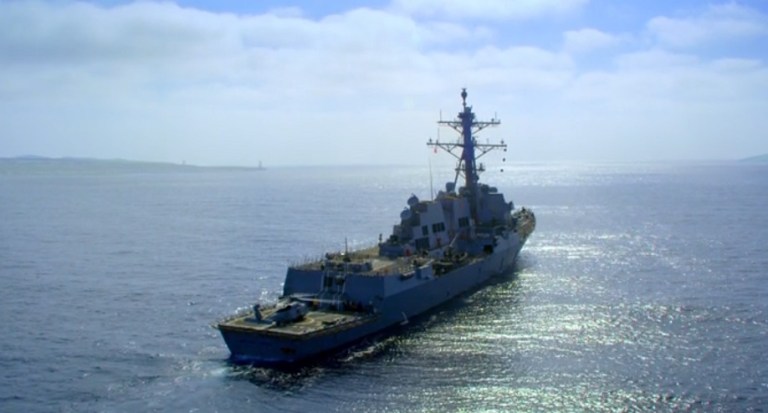
It’s possible that, with the pandemic raging, now isn’t the best time to watch a series about the world being brought to its knees by a virus! But The Last Ship is a fun, action-packed show and something truly different in a post-apocalyptic genre that was being milked dry in the 2010s.
Some post-apocalyptic fiction uses military characters and settings, and that can be fun. But very few have a strictly naval focus, and the addition of that setting is really what makes The Last Ship so different from the likes of The Walking Dead and others. The USS Nathan James is a home base for most of the main characters, and a safe space away from the chaos engulfing the world around them. Some Star Trek fans say that the starship is like an additional character, and the Nathan James definitely fills that role in The Last Ship.
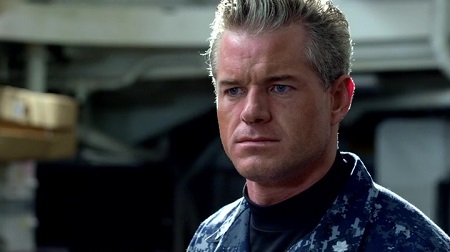
There are some fantastic character moments in what is a very tense and dramatic series. All of the main cast put in fantastic performances, and there are some villains who genuinely inspire hatred! Writing a truly nasty character whose motivations are still believable is no mean feat, yet The Last Ship managed it on more than one occasion.
Despite the dire straits the world finds itself in in The Last Ship, the series tells a positive, uplifting, and hopeful story, showing off humanity at its best as well as at its worst. This is one aspect of post-apocalyptic fiction that I really like, and The Last Ship uses the backdrop of the virus to reach for something good instead of merely revelling in showing us the bad.
So that’s it!

We took a short look at five television shows that I think are underappreciated right now. Some failed to make much of an impact when they were first broadcast and simply fizzled out, others have been eclipsed by other productions made in the years since they went off the air. But all five are absolutely worth a watch – or a re-watch – in 2021.
I had fun putting this list together, and I hope you’ll stay tuned for more lists and other articles coming up soon! We’re almost halfway through the year, so check back at the end of the month for my look ahead to the entertainment experiences that we’ll be enjoying before 2021 is over. Until next time!
All shows mentioned above are the copyright of their respective broadcaster, studio, distributor, production company, owner, etc. Availability to stream or purchase on Blu-ray or DVD may vary by region. This article contains the thoughts and opinions of one person only and is not intended to cause any offence.


 Trekking with Dennis