


A few days ago, I shared the first of my gaming “hot takes,” and today we’re going to finish the job. I’ve got five more “hot takes” to round out this list, and I think we’ve got some spicy ones in the mix!
As I said last time, this isn’t clickbait! These are opinions that I genuinely hold, and I’m not inventing things for the sake of being controversial or to score “internet points.” I’m also keenly aware that I’m in the minority, and that plenty of folks can and will disagree. That’s okay – there should be enough room in the gaming community for differences of opinion and friendly discussion of these topics. This is all subjective, at the end of the day!
So if you missed the first part of the list, you can find it by clicking or tapping here. Otherwise, it’s time to get started!
“Hot Take” #6:
Story matters more than gameplay (in most cases).
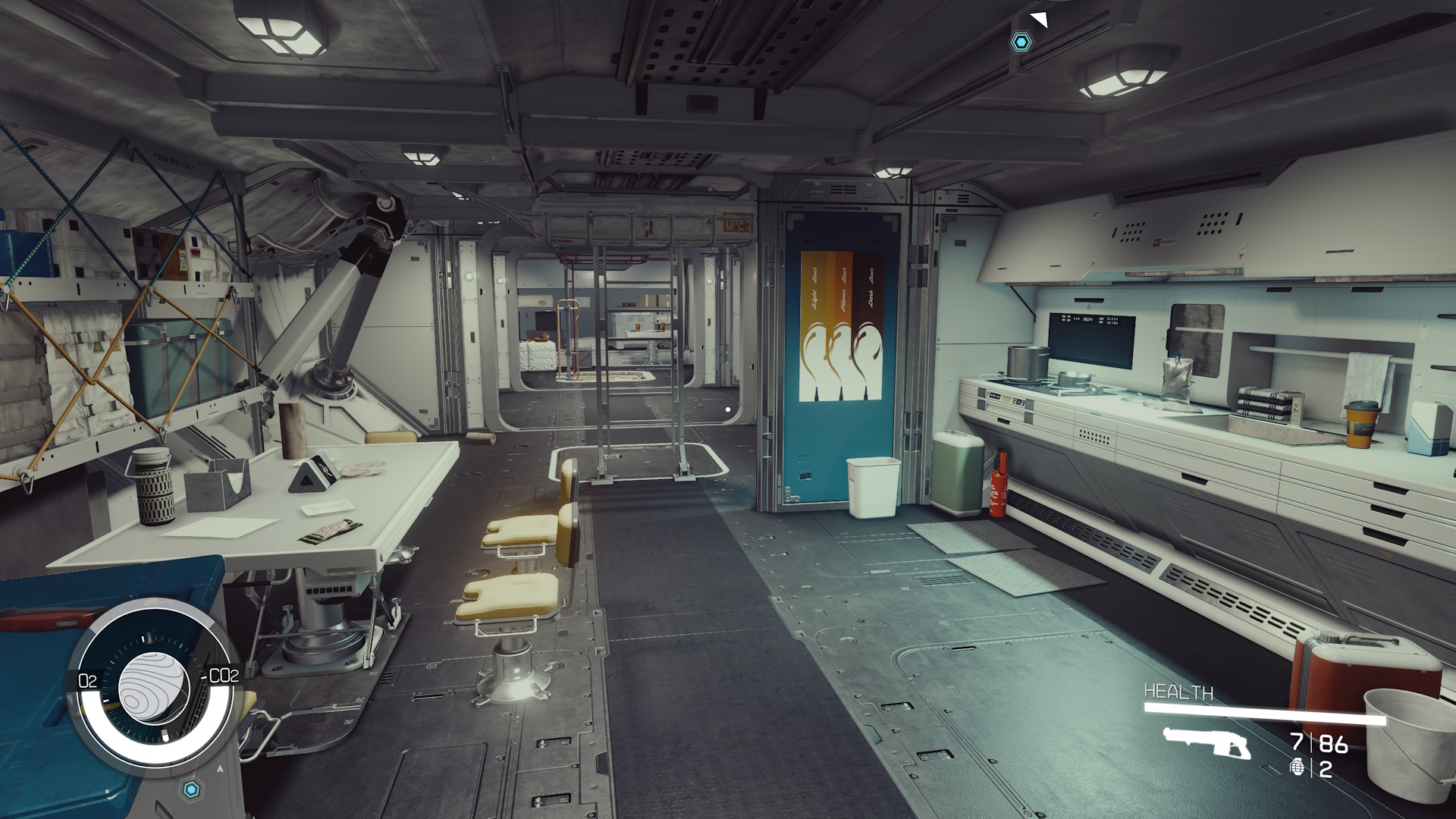
When discussing Starfield a few weeks ago, I said something rather telling. I didn’t really appreciate it in the moment, but looking back, I think it sums up my relationship with video games as a hobby quite well: “I’m someone who’ll happily play through some absolutely bog-standard gameplay if I’m enjoying a story or getting lost in a fictional world…” If you want to see the full quote in context, by the way, you can find my piece on Starfield by clicking or tapping here.
That line pretty much sums up how I relate to most games I play – and almost all single-player and action/adventure titles. There are some exceptions: Mario Kart 8 Deluxe springs to mind, as does Fall Guys, and some turn-based strategy games, too. But when I look at the games I’ve enjoyed the most since at least the second half of the ’90s, it’s story more than gameplay that appeals to me.

It was a solid story and great world-building that convinced me to stick with Cyberpunk 2077, even when I felt its gameplay was nothing special. And on the flip side, it was a mediocre story set in a boring, empty world that led to me giving up on Starfield after less than thirty hours. When I fire up a single-player game, I’m looking for a story that grabs me, and a world I can lose myself in.
It doesn’t feel controversial to say “I want a game to have a good story,” but that isn’t really the point I’m trying to make. For me, story almost always trumps gameplay. While there can be exceptions – games with either incredibly innovative gameplay in which the narrative is less relevant or games that are so mechanically poor or bug-riddled that even the best story couldn’t salvage them – for the most part, that’s what I’m looking for in a new release.

It was Shenmue, around the turn of the millennium, that stands out to me as an example of this. Shenmue was the first game I’d played where the story seemed like it would be right at home on the big screen, and I absolutely adored that. Many games have come along in the years since with compelling characters, wonderful worlds, or magnificent mysteries… and I think that’s part of why I still love playing video games after more than thirty years.
If games had stuck to being glorified toys; story-less arcade boxes where the only objective was either “kill everything on the screen” or “keep walking to the right,” then I think I’d probably have drifted away from the hobby. But I was fortunate enough to play some absolutely phenomenal titles as gaming made that transition and many incredible stories were written.
“Hot Take” #7:
More complexity and additional gameplay elements do not make a game “better.”

Some modern games try to cram in too many features and gameplay mechanics that add nothing to the experience – and in some cases actively detract from it. I know this probably comes across as “old man yells at cloud;” an out-of-touch dinosaur whining about how modern games are too convoluted! And if this was something that only happened in a handful of titles, I guess I’d be okay with it. But it seems to happen all the time!
Strategy and “tycoon” games seem to fall victim to this very easily. I adored Rollercoaster Tycoon when it launched in 1999; it felt like a game that was simple to get started with but difficult to master. In contrast, when I tried 2016’s Planet Coaster… I was hit with such a huge wall of options and features that it was offputting. I didn’t know where to start.

There’s a balance that games have to find between challenge and complexity, and some titles get it wrong. I don’t have the time (or the energy) to spend tens or hundreds of hours becoming a literal rollercoaster engineer; I want something I can pick up and play, where I’m able to throw down a few theme park attractions without too much complexity. If the game had those more complex engineering sim elements in addition – as optional extras for players who wanted them – that could be okay. But when booting up a new game for the first time, I don’t want to encounter a dense wall of features and content.
This doesn’t just apply to strategy games, either. An increasing number of shooters and action/adventure games are incorporating full-bodied role-playing systems, and again it just feels wholly unnecessary. Look at a game from the early 2000s like Halo: Combat Evolved. It was a shooter – your character had a handful of weapons to choose from, and you blasted away at aliens. There was no need for levelling up, for choosing traits or skills, or anything like that. But more and more modern games, even in the first-person shooter or stealth genres, are going for these kinds of role-playing mechanics.

Don’t get me wrong: I love a good role-playing game. But when I boot up something like Assassin’s Creed or Destiny, the last thing I want or expect is to spend ages in menus micromanaging a character who, to be blunt, doesn’t need that level of engagement. Partly this is about balance, and in some cases it can be fun to level up and gain access to new equipment, for instance. But in others it really is a question of simplicity over complexity, and what kind of game I’m playing. Not every game can or should be a role-playing experience with a complex set of stats and skills.
Some titles really emphasise these elements, too, seeking to win praise for including a convoluted levelling-up system and skill tree. And a lot of the time, I find myself rolling my eyes at that. Leave the role-playing to RPGs and leave the overly-complicated systems to simulators and let me pick up and play a fun game!
“Hot Take” #8:
I hate VR.

Is “hate” too strong a word to use in this context? I’m going to go with “no,” because I genuinely hate VR. I was worried when the first VR headsets started being released that the video games industry in general was going to go all-in on VR, because I felt if that were to happen that I wouldn’t be able to keep up. But thankfully VR remains a relatively niche part of gaming, and even if that were to change, it doesn’t seem like it’s going to replace regular old video games any time soon!
In the ’80s and ’90s, it seemed as if VR was something tech companies were working towards. It was a futuristic goal that was just out of reach… so when VR headsets first started cropping up, I really thought that they were going to be “the next big thing.”

But I’ve never found a VR system that I could actually use. I could barely manage playing tennis on the Wii – and even then I had to remain seated! I’m disabled, in case you didn’t know, and the move toward VR headsets and motion-tracking devices felt a bit threatening to me; these technologies seemed like they had the potential to lock me out of gaming.
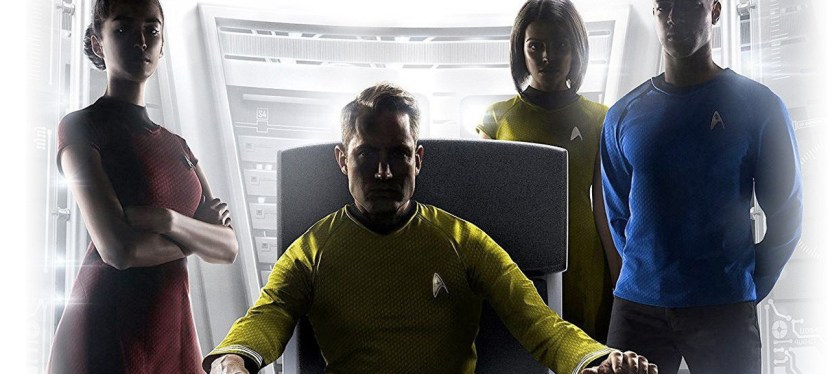
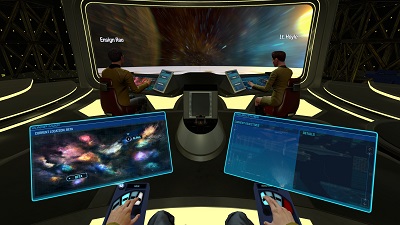
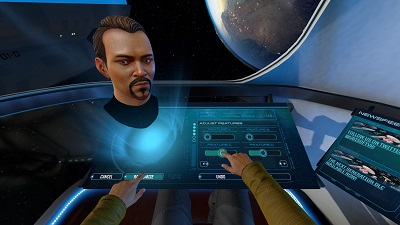
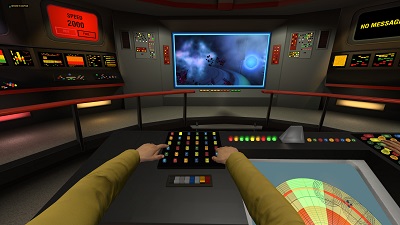
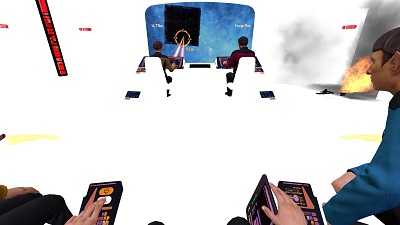
There haven’t been many VR titles that have interested me, though. One of the only VR titles that did – Star Trek: Bridge Crew – was pretty quickly ported to PC without the VR requirement. While the influence of VR is still clearly present in that title, I think it demonstrates that at least some VR games can work without the expensive equipment.

There’s plenty of room for innovation in gaming, and for companies to try out different kinds of screens, controllers, and methods of interactivity. But for me personally, VR felt like a step too far. I’m biased, of course, because between vision problems and mobility restrictions I don’t feel capable of using any of the current VR systems – not to anything like their full capabilities, at any rate. But even with that caveat, I just don’t think VR has turned out to be anything more than a gimmick.
It’s possible, I suppose, that a VR system will come along one day that I’ll feel compelled to invest in. But it would have to be something I could use with ease, and none of the VR devices currently on the market fit the bill. So I won’t be jumping on the VR bandwagon any time soon!
“Hot Take” #9:
We need fewer sequels and more original games.

Across the world of entertainment in general, we’re firmly in an era of franchises, sequels, spin-offs, and connected “universes.” This trend has been going on for well over a decade at this point… but it’s been to the detriment of a lot of stories. There’s always going to be room for sequels to successful titles… but too many video game publishers have gone all-in on franchises and a handful of ongoing series at the expense of creating anything original.
And unfortunately, some original titles that have come along in recent years haven’t found success. I mentioned Starfield above, which seems to be seeing a precipitous drop in its player count, but we could also point to games like Anthem, Forspoken, or Babylon’s Fall – all of which were new settings featuring new characters that struggled to get off the ground.

The reason why I consider this one to be a “hot take” is simply because of how many players seem content to go back to the same handful of franchises or series over and over again. Some folks have even gotten genuinely angry with developers for sidelining their favourite series in order to work on something new, as if a studio should only ever be allowed to work on a single series in perpetuity. Sequels, prequels, and spin-offs are all more popular and attract more attention than brand-new experiences, and I think that’s short-sighted on the part of publishers and narrow-minded on the part of at least some players.
And I have to hold up my hands here: I can be guilty of this, too. I’ve written articles here on the website looking ahead to the next Mass Effect game, for instance, while it seems clear that at least some of the folks at BioWare wanted to branch out and create something different. And I have to admit that a sequel to a game I enjoyed or a new entry in a franchise I’m invested in is exciting – more so, arguably, than the announcement of a brand-new project.

Brand-new games are more difficult and more expensive to get people to pay attention to. They’re also comparatively risky propositions from a corporate point of view; a ton of people will turn up for a game with a well-known name attached, even if it’s not all that good. But a brand-new world has to be something truly special to attract players in the first place – let alone retain a huge playerbase and make a profit.
But it’s a shame that that’s the situation we’re in, because when developers are restricted to sequels and the same handful of franchises, creativity is stifled. Where’s the next breakthrough going to come from if the only games a studio is able to make are sequels and spin-offs to earlier titles? And when audiences get tired of the decreasing number of surviving franchises… what will happen?
“Hot Take” #10:
Graphics actually do matter.
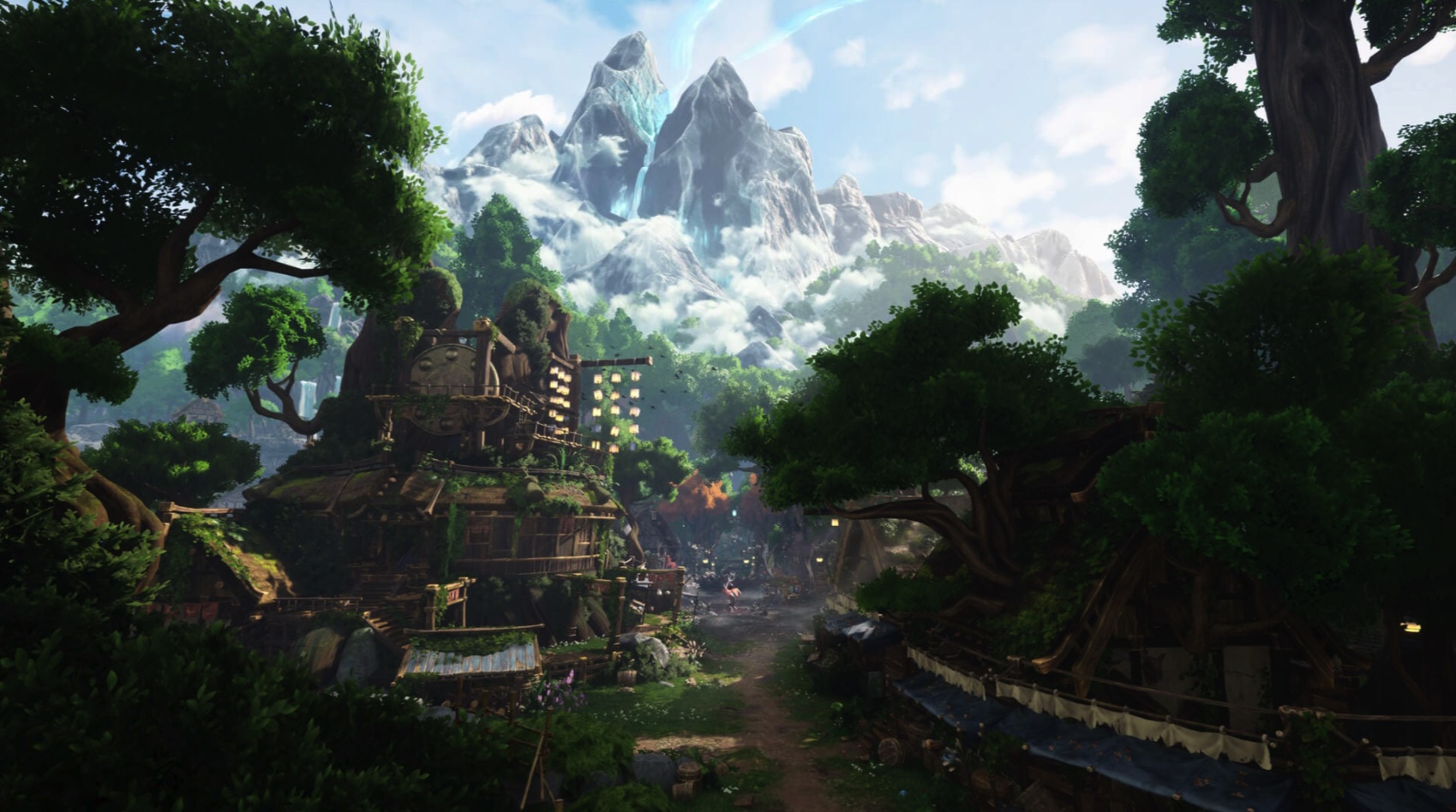
This is perhaps the most contentious point on this list! I’ve lost track of the number of times I’ve heard some variant of the expression “graphics don’t matter” when discussing video games. But you know what? If you showed me two similar games in the same genre, with the key difference between them being that one was a ray-tracing Unreal Engine 5 beauty and the other looked like a Nintendo 64 game that had been sneezed on… I know which one I’d choose to play.
When I was really getting into gaming as a hobby in the 1990s, it seemed like the push for better and better graphical fidelity was never-ending. Games used their visuals as a selling-point, and that trend continued into the 2000s with consoles like the Xbox and PlayStation 2. It would’ve seemed wild in those days for a game to not only take a backwards step in graphical terms, but to celebrate doing so.

We need to separate “graphics” from “art style,” because they’re really two different things. Some games can do wonderful things with cell-shading, for example, or a deliberately cartoony aesthetic. When I say that “graphics actually do matter,” I don’t mean that photorealism is the be-all and end-all; the only art style that games should pursue. What I mean is that games that prioritise looking great – within their chosen style – are going to grab my attention.
I think an interesting example here is South Park: The Stick of Truth. No one would argue that that game is “realistic” in its art style – but that’s the point. Developers Obsidian Entertainment worked overtime to recreate the look and feel of the South Park cartoon – and what resulted was a genuinely fun and interesting visual presentation. Playing that game really felt like taking part in an extended episode of the show. Compare the way The Stick of Truth and its sequel look to the upcoming South Park: Snow Day. I know which one I’d rather play!

When a developer wants to go down the photorealism route, though, it’s great to see just how far they can push modern hardware. There were moments in games like Red Dead Redemption II where the environment felt genuinely real – and that feeling is one that games have been chasing since the inception of the medium. I really can’t wait to see how graphics continue to improve, and how realistic some games might be able to look in fifteen or twenty years from now… if I live that long!
At any rate, visually beautiful games are always going to catch my eye, and games that don’t prioritise graphical fidelity will always have a hurdle to overcome in some ways. Gameplay and story are important, of course, but graphics aren’t irrelevant. The way a game looks really does matter.
So that’s it!

We’ve come to the end of the list – for now! I’m sure I’ll have more “hot takes” and controversial opinions about video games that I’ll be able to share before too long.
I hope that this has been interesting – and not something to get too worked up over! As I said at the beginning, I know that I’m in the minority and that a lot of folks can and will disagree. Although some people take gaming a bit too seriously sometimes, I like to think that there’s room in the community for polite discussions and disagreements.
Have fun out there – and happy gaming!
All titles discussed above are the copyright of their respective studio, developer, and/or publisher. Some images used above courtesy of IGDB and Unsplash. This article contains the thoughts and opinions of one person only and is not intended to cause any offence.


 Trekking with Dennis