At least the PlayStation 5 will have exclusive games…

Xbox undoubtedly lost the current console generation. Sales estimates put the PlayStation 4 at more than double the sales of the Xbox One, which is a bit of a surprise coming on the back of the Xbox 360’s dominance in the previous cycle. Aside from an incredibly rocky launch, where the Xbox One’s online-only model, inability to share or trade-in games, and forcing the console to be bundled with the Kinect were all criticised, Xbox One’s biggest problem through the whole generation has been a lack of exclusive games.

Just off the top of my head I can name a number of PlayStation 4 exclusives, many of which were well-received are considered among the best titles of the generation: there’s God of War, Uncharted 4, Spider-Man, and Horizon Zero Dawn, as well as remasters of titles like The Last of Us and Uncharted 1-3. What does Xbox have in response? The Halo series, but with the recent release of those titles on PC, only Halo 5 remains a true exclusive. Other Xbox One titles, like the Forza series, Sunset Overdrive, and Sea of Thieves were also released for PC. That doesn’t have to be a problem, but not having any exclusive titles robs a console of one of its major selling points. The fact that Xbox’s lineup of titles have been generally thought of as average rather than great definitely didn’t help, and Xbox One has been an underwhelming console ever since it launched in 2013.

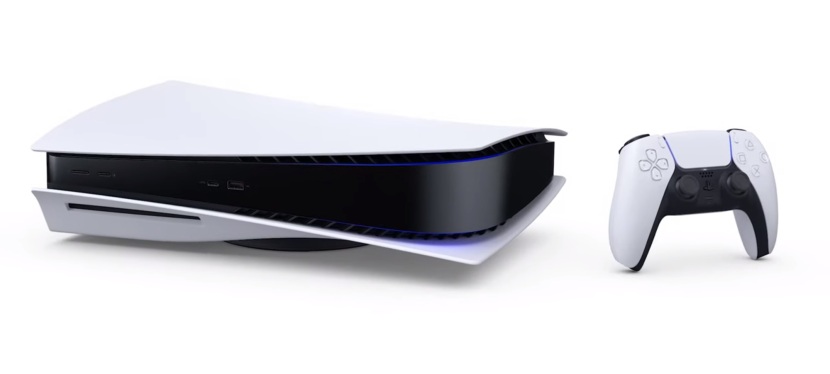
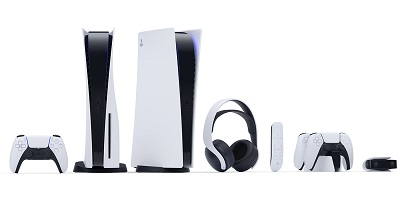
The PlayStation 5 family of devices, which were shown off yesterday.

I didn’t see anything in yesterday’s PlayStation 5 reveal presentation that blew me away. As I wrote previously when looking at Microsoft’s Xbox Series X gameplay trailer, the biggest selling-point for new consoles since at least the era of the Xbox 360 and PlayStation 3 has been graphics. And none of the titles on show either for Xbox Series X or PlayStation 5 look significantly better than what’s currently on offer. As a result, in order to stand out in a difficult market, the consoles are going to really have to push their exclusive titles, and this is where PlayStation 5 has the upper hand.

The issues Xbox has had this generation are not going away. In fact, they’re compounded by the strange decision to make all Xbox Series X titles also available on the Xbox One for at least the next couple of years. This means that any new Xbox title is constrained by the system specifications of 2013’s Xbox One and will need to remain compatible with that device. So far it seems like PlayStation has avoided this pitfall, but even so I wasn’t exactly on the edge of my seat thinking how amazing PlayStation 5’s graphics were.

Games in 2020 look great. PC games can run in 4K resolution with high frame rates, and even the oldest versions of the current crop of consoles manage to output decent-looking titles. The Nintendo Switch, despite its small form factor, can run games like The Witcher 3, and even titles like Animal Crossing: New Horizons look great on that system. PlayStation and Xbox have long billed themselves as the “hardcore gamer” brands, and they’ve both put a big focus on graphics and how games look. While it seems that the reaction to the PlayStation 5 announcement is generally positive, I’m disappointed that neither brand is really doing anything different.

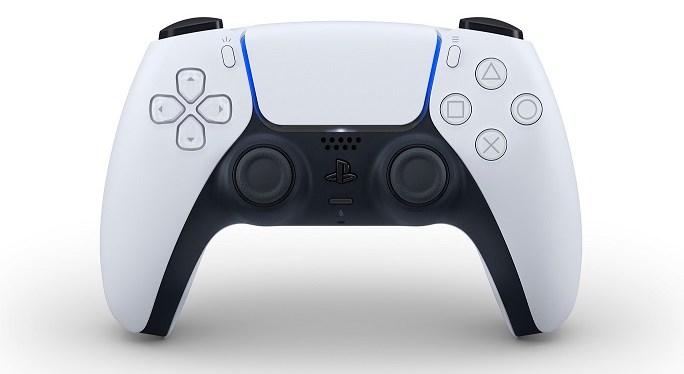
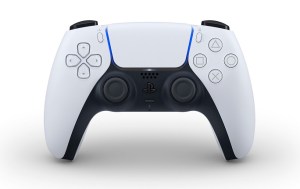
The new PlayStation 5 controller – the DualSense.

The PlayStation 5 and Xbox Series X – which has a truly awful name – feel like minor iterations of what we already have. There will be some quality-of-life improvements for sure: better battery life in the control pad, faster loading times as a result of using SSDs instead of hard drives, a better rumble/vibration feature in the control pad, etc. But beyond these small things, there are no new genres being pioneered as there had been in the past. There are no new ways to play – both systems have control pads scarcely any different to current generation controllers. The graphics on display look great, but graphics already looked great and I didn’t see anything in the PlayStation 5 or Xbox presentations that wouldn’t feel right at home in the current generation. In short, is there really much point to a new generation of consoles in 2020?

If the new consoles can’t do anything fundamentally different or transform players’ experiences in new ways, there’s definitely an argument to be made that it would be better to continue with the current consoles, even though they’re into their seventh year of life. Nintendo at least offers innovation – the Wii introduced motion controls, and the Switch is a hybrid between a handheld system and a home console. Xbox and PlayStation are really just offering more of the same.

In this environment, what will matter is exclusive titles. Whichever brand is perceived as having the best exclusives and the most exclusives will benefit, because when the graphics look samey, when the consoles look samey, and when it’s hard to really upsell a small difference in loading times or longer batter life, exclusive titles are what players will be focusing on. While PlayStation 4 won the argument this time around, any time a new console generation kicks off it’s a case of the slate being wiped clean. It should be up for grabs, and both companies should be going for it. But they aren’t.

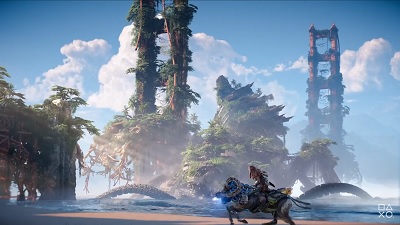
Horizon Forbidden West will be a sequel to 2017’s Horizon Zero Dawn.

PlayStation 4 will pass the baton of varied and great exclusive titles to PlayStation 5, as they demonstrated last night. Spider-Man: Miles Morales, Project Athia, Returnal, Sackboy: A Big Adventure, Destruction All-Stars, and Horizon Forbidden West, as well as a remaster of Demon’s Souls makes for an impressive-looking lineup. None of the titles blew me away in terms of their graphics, but they all look like they have the potential to be great games. And this matters! Exclusive titles are going to be a huge selling point this generation, and if Xbox Series X doesn’t offer many, and only has multiplatform titles like Assassin’s Creed or FIFA, it’s hard to justify picking up that console instead of a PlayStation 5, which offers those same titles plus a bunch of exciting exclusives.

PlayStation is playing essentially the same hand that it has since 2013. Why mix it up too much if it works, right? Xbox looks set to stumble into the same trap it did this generation too.

All that’s left now is for both companies to sort out their price structures – and to make sure that the coronavirus pandemic won’t disrupt their launches. If I were advising Microsoft, I’d suggest the best chance they have right now is to try and undercut the PlayStation 5 in a big way. If Xbox Series X could manage to be £100 or more cheaper, it suddenly seems like a better option, even if its exclusive lineup is lacklustre. But we’ll have to wait and see.

All brands and properties mentioned above belong to their respective owners. The Xbox Series X and PlayStation 5 are scheduled to release by the end of this year (2020). This article contains the thoughts and opinions of one person only and is not intended to cause any offence.
Xbox’s first big next-gen push falls flat

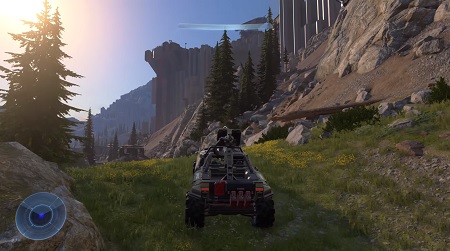
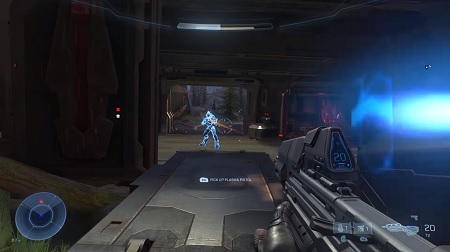
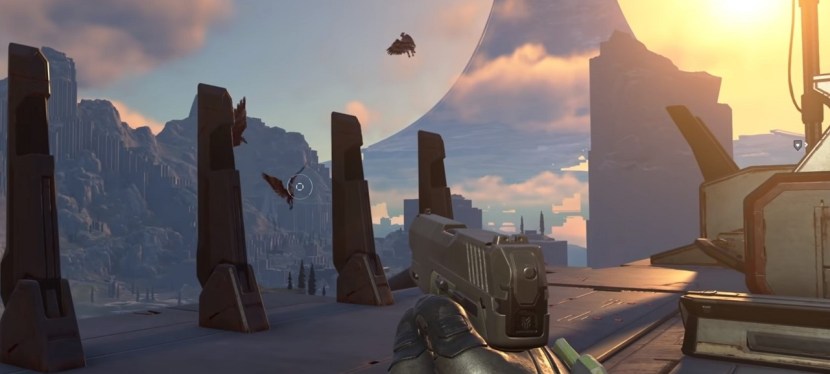
In the absence of any news at all about the PlayStation 5, Xbox has had the floor to itself when it comes to marketing for their next-generation console, the awfully-named Xbox Series X. They announced the console back in December, and its design, controller, and even its specifications have all been shown off. The next thing Microsoft had to do was show off gameplay, which they finally did in a trailer which was released alongside a scaled-down promotional event.

The trailer has not been well-received, with its like-to-dislike ratio on YouTube skewing very negative, and I think that there are a couple of reasons for this.

The first is that the trailer promised “gameplay”, and much of what was shown was not actual gameplay, but concepts and “in-engine footage”, which is industry code for pre-rendered visuals. There can be a world of difference from CGI created using a game’s engine and how a game actually looks when being played – something gamers are ever more aware of in an age of shady marketing.

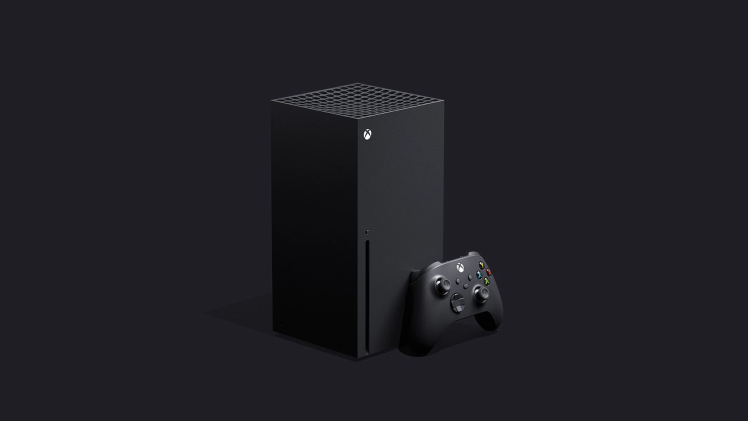
Promo image of the Xbox Series X.

So for Xbox gamers who wanted to see how good games might actually look on the Xbox Series X, the trailer didn’t deliver, at least for a significant amount of its runtime. But there is another issue, a bigger issue which speaks not just to Microsoft’s current strategy but to the pace of development in the games industry overall.

Games on a current-gen console can look pretty good. Even titles that are five or six years old can still look absolutely amazing – many people cite The Witcher 3 from 2015 or 2018’s Red Dead Redemption II as being among the most beautiful games ever made, and I’d add into the mix titles like Project Cars, which was released in 2015, as being another example of a game that is still visually stunning. These titles and others were, as all big-budget titles have been this console generation, limited by the available hardware – in Microsoft’s case, the Xbox One, which was released in 2013. Any game had to be able to run on 2013 hardware efficiently, otherwise it wouldn’t be able to be sold. So all of the titles mentioned had that limitation and still managed to look fantastic.

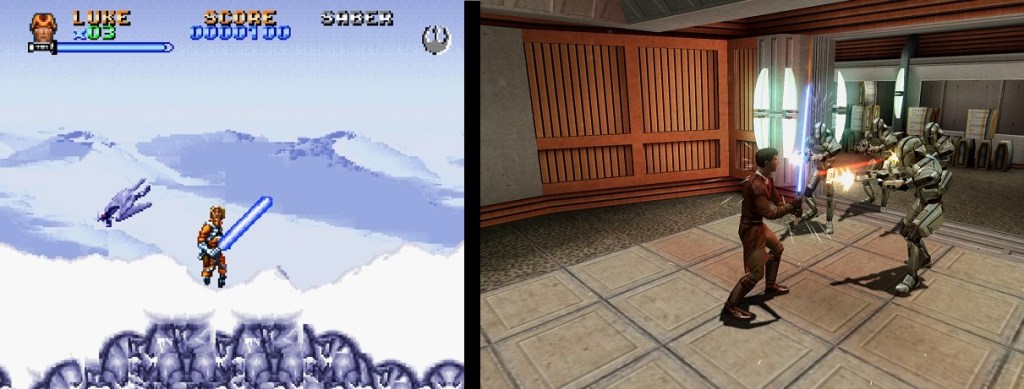
I was struck when writing an article earlier this week by two screenshots. The screenshots were from games released only a decade apart, both in the same franchise, and the difference in what was capable is truly remarkable. The first screenshot was taken from Super Star Wars: The Empire Strikes Back on the SNES, a game from 1993. The second was from Knights of the Old Republic, a 2003 title for the Xbox and PC. See the difference for yourself below:

Super Star Wars: The Empire Strikes Back (1993) and Star Wars: Knights of the Old Republic (2003). The games were released a decade apart, and the difference between them is massive.

What’s immediately apparent is how far games had come in such a short span of time. Not just the visuals, though that’s a huge part of it. But Super Star Wars was 2D, with no voices and only text. It was a fun game, but it was just a game. And this is partly my own bias showing, as Knights of the Old Republic is one of my favourite games of all time, but that game feels cinematic; it’s a beautiful 3D world which the player can explore, fully voiced by some pretty great actors, and it drags the player into the story in a way the older title just… didn’t. In short, it was leaps and bounds ahead of Super Star Wars and came a mere ten years later. Many of today’s games – even the big-budget, AAA titles – could have been made ten years ago and wouldn’t feel terribly out of place.

The change from the Xbox 360 and PlayStation 3 to the Xbox One and PlayStation 4 was probably the smallest ever, especially in graphical terms. To stick with Microsoft, as they’re the subject of this piece, games produced in the latter part of the Xbox 360’s life, like Mass Effect 2, for example, still hold up today as being perfectly acceptable in terms of how they look. In fact, if Mass Effect 2 were released today, I’d be perfectly happy with a game that looked like that even in 2020 – and herein lies Microsoft’s challenge, and the groundwork for their undoing.

For a variety of reasons, the pace of advancement in computing has slowed. Where processor speeds rocketed up through the 1980s, 90s, and early 2000s, the rate of change has slowed. Modern CPUs and GPUs are still better and offer more by way of performance than their predecessors, but the change is less noticeable with each iteration than it used to be. There’s also the general lack of a major new feature or way of playing compared to the introduction of 3D worlds, or even the creation of new genres which means that a new generation of consoles in 2020 lacks a “killer app” – something brand-new that the current generation can’t offer.

In Microsoft’s case this is compounded by a strange decision to make all Xbox Series X titles also available on the current Xbox One during the new console’s first couple of years of life. To reiterate the point I made earlier, every single title is thus limited by the system specifications of 2013’s Xbox One. In order to remain compatible with that console, a game is constrained in what it can do and how far it can push boundaries.

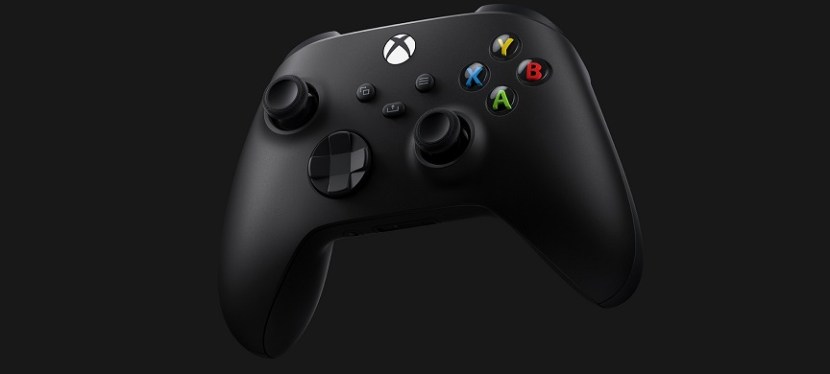
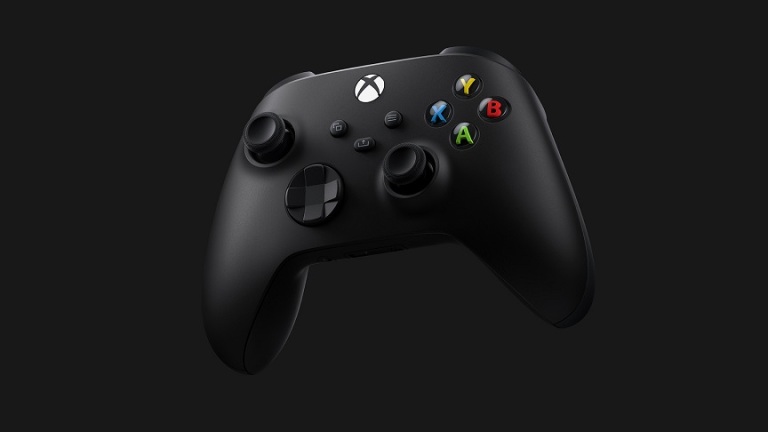
The Xbox Series X controller is practically identical to the Xbox One controller – which was itself very similar to the Xbox 360 controller.

That combination of factors has come together to make the Xbox Series X an underwhelming prospect. In addition, many of the games scheduled to launch alongside the console are from franchises that have been around for a long time. Halo, Assassin’s Creed, Forza, and many others are all game series that that players are familiar with, and that combination – the similar visuals and the familiar games – makes the Xbox Series X feel like nothing new. And with all of its titles supposedly available on Xbox One, I’m left wondering – as many people seem to be – just why anyone would bother buying an Xbox Series X, especially at launch.

The new console offers a barebones upgrade in terms of graphics, which is even less noticeable compared to the Xbox One X, and no unique titles or ways to play. That just doesn’t seem like good value – or offer any value at all. About the only thing that the Xbox Series X claims to offer that’s new is the ability to output 8K visuals – but there are very few 8K screens right now, and no games that run natively in 8K. While that might be great future-proofing, as of right now it represents a big dose of nothing.

The only other changes and improvements on offer are minor quality-of-life things: the battery life of the control pad, the reduced loading times thanks to switching from a hard drive to a solid-state drive, and perhaps a shinier interface are really all the Xbox Series X has to offer. In a previous console generation, if you were to stack up a Nintendo 64 against a Nintendo GameCube, or a Sega Saturn against a Dreamcast the differences are immediate and obvious. Nothing in Xbox’s “gameplay reveal trailer” looked any different to what’s already available, and while we don’t yet have the console in our hands to confirm this, I would bet good money that an awful lot of consumers would genuinely struggle to tell the difference between an Xbox One X and an Xbox Series X version of the same game. I will be really interested to see a side-by-side, frame-by-frame comparison when the new console launches!

There’s nothing inherently wrong with this image of Dirt 5, but if you told me it was an Xbox One title instead of something meant to show off the Xbox Series X I’d believe you.

I really do sympathise with Xbox fans who feel let down. And in a way, even though this console generation has dragged on to become one of the longest, if there really isn’t much to gain from creating new consoles, there’s an argument to be made that companies should wait and continue to make the most of what’s already available; trying to force what looks to be a pretty minor upgrade onto gamers seems, at least on the surface, to be rather anti-consumer. I’d wager that’s the main reason why a lot of people came away from Microsoft’s trailer unsatisfied: none of the titles on offer or the graphics shown off feel better than what’s already available – or even any different – and the end result is that people feel as though they’re being asked to buy a very similar product to what they already have to access these samey titles.

Nintendo realised a long time ago that the value of a new console is tied to innovation and doing things differently. By focusing less on graphics and raw power, two of Nintendo’s three most recent consoles (the Wii U being an exception) have been wildly successful by offering players something genuinely different to what was already on offer. Xbox doesn’t do that, and when all the Xbox Series X has to offer is an increase in power and graphical fidelity, it’s no longer good enough for its games to look “great”; they need to look significantly better than those titles that are already available. The verdict from the trailer is that they simply don’t.

The Xbox Series X and Xbox One are the copyright of Microsoft. The Xbox Series X is due for release before the end of 2020. This article contains the thoughts and opinions of one person only and is not intended to cause any offence.
My thoughts on the “console war”

Barring a major shift in circumstances, which we may yet see if the coronavirus pandemic isn’t sorted out in the next few months, Xbox and PlayStation plan to launch new consoles before Christmas. They will replace this generation’s Xbox One and PlayStation 4, which were released in 2013, and will join the Nintendo Switch to form the “big three” gaming platforms heading into 2021 and beyond.

When I’m in a gaming mood I’m primarily a PC player. I find PC to be a more versatile platform, and the abundance of digital shops on PC means that sales and discounts are aplenty, which I absolutely feel makes PC an appealing choice even if the up-front costs can be higher than a console. But that’s a whole different article!

When Google Stadia launched towards the end of last year, I felt it had the potential to be disruptive to the gaming market in all kinds of good ways. To understand why, we need to step back in time.

The Xbox Series X was unveiled late last year.

For a brief moment just after the millennium, there were four companies in the home console market, and they were, broadly speaking, all trying to appeal to the same core audience of gamers. There was Sega, with the Dreamcast, Sony, with its PlayStation brand, Nintendo, and Microsoft, which launched its first Xbox console in 2001. This moment wasn’t to last, of course, as the Dreamcast would prove a failure forcing Sega out of the market altogether. Nintendo’s GameCube was also not a resounding success, and the lessons the company learned led to the creation of the Wii in 2006, and from that point on, Nintendo has been fishing in a different pond to the other two console brands.

So since the mid-2000s, when Nintendo decided to go in a completely different direction with the Wii, Xbox and PlayStation have been the two main brands in direct competition. Nintendo’s current offering, the Switch, is a very different platform from anything Microsoft and Sony have, being half-handheld and half-console, and has a very different hardware setup. As a result, many gamers (myself included) will have a primary platform for playing most games and a Nintendo for playing their titles. I’m currently in the early stages of building my island in Animal Crossing: New Horizons so stay tuned for my thoughts on that at some point!

The two main competitors, PlayStation and Xbox, have taken very different routes since 2013, and the console market is in danger, I feel, of becoming a monopoly. It needs something major to shake things up – hence my excitement at Stadia potentially doing so. Microsoft’s Xbox brand has been focused on being a “multimedia” brand instead of purely gaming, and its output reflects that. Microsoft has also seen a steady growth in the PC gaming market and has chosen to release some previously exclusive titles on PC as well – the most significant being Halo: The Master Chief Collection, which is as close as Xbox has to a signature franchise. Only Halo 5 remains a console exclusive right now, and I have to say it feels like only a matter of time before that, too, is ported to PC. Microsoft have been working hard to turn the Xbox One into a multimedia centre – something people could have in their living rooms to watch television, use streaming services, and even do things like make video calls.

As a result of Xbox’s foray into the PC space and using their platform to promote things like video streaming as much as gaming, PlayStation has been the dominant force in this console generation. They’ve offered many more exclusive titles, and the PlayStation 4 has outsold the Xbox One by at least two-to-one, perhaps even more. While Xbox as a brand is still healthy and commercially viable, it doesn’t leave the overall state of the market feeling especially great, as competition between the two companies is necessary to keep quality high and for developers to keep pushing the boundaries.

The DualSense controller is all we’ve seen of the PlayStation 5 so far.

Google Stadia is clearly not going to be the disruptive force I hoped for, at least not any time soon. Its minuscule userbase and tiny library of games has seen to that, though I hope Google will continue development as the core technology is interesting at least. And as far as I know, no one else is planning to get in on the home console market right now. There have been past attempts, like the Ouya and other android-based consoles, but none have been particularly successful. It took a company with the clout and financial resources of Microsoft in 2001 to break into the market for the first time as a newcomer, and if Google is unable to successfully enter the gaming space I can see that failure being offputting for anyone considering investing significant money into a new home console.

So we’re left with a two-plus-one situation in the home console space. PlayStation versus Xbox, with Nintendo off to one side largely doing its own thing. Both the Xbox Series X and PlayStation 5 will be comparable in terms of their internal hardware, especially as both seem to be using AMD’s Zen chips and incorporating ray-tracing graphics, so the choice between systems will be more about marketing than technology. Xbox has already signalled that their multimedia and PC plans will continue into the new generation, and it was even suggested at one stage late last year that every Xbox Series X game will also be available on Xbox One for the first year or two of the new console’s life. This combination will, I feel, give the PlayStation 5 a distinct advantage.

So where do I stand? I’ll be honest, I don’t really have a dog in this fight any more. As someone who plays primarily on PC it’s less important to me. Later in the generation, when prices start to come down, I can perhaps see myself picking up a console, but it would only be if there was some must-play exclusive that didn’t make it to PC. And of the two, PlayStation seems most likely to offer something along those lines so it’s not impossible I’d pick up a PlayStation 5 in the next few years. It certainly won’t be at or near launch, though.

However, I’ve never really been a big PlayStation gamer. In the generations after the first PlayStation launched I owned a Nintendo 64, a Dreamcast, an Xbox, and then an Xbox 360. It wasn’t until much later when I picked up a second-hand PlayStation 3. By then I was less into gaming and I’ve only played a handful of PlayStation 3 and 4 titles over the last few years. This is purely subjective, but as someone who likes to play some games with a controller instead of keyboard and mouse, I find Xbox controllers more comfortable to use. The original Xbox controller from 2001 – known as the “duke” – is actually one of my favourites, despite the justifiable criticism it received at the time for its large size!

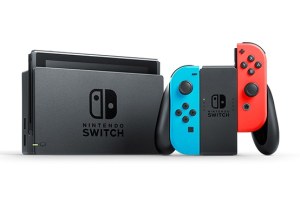
The Xbox Series X and PlayStation 5 will join the Nintendo Switch in the home console market.

Looking in from the outside as someone who has no plans to purchase either of the new consoles imminently, what I hope is that both are successful for their parent companies and that both are going to be great platforms for gaming. I’d like to see a bigger stride this console generation than the last, particularly where graphics are concerned, but it seems unlikely. Many PlayStation 4 and Xbox One titles don’t look much different from games released in the latter part of the previous generation, and gameplay and graphics in general have not advanced nearly as far over the last few years as they had in previous generations. Earlier console generations brought huge advancements over their predecessors. The Nintendo 64, for example, was an incredibly powerful machine compared to the Super Nintendo, which was itself streets ahead of the earlier NES. I remember in the late 1990s and early 2000s when there was talk of genuine photorealism by 2010, 2015, or 2020. While some projects can come close to that, we aren’t there in a general sense. And to make a long story short, the fact that the next generation of consoles will be a progression or iteration on what is already available in terms of graphics and gameplay makes them less exciting to me personally.

What we will see are smaller quality-of-life improvements. Things like longer battery life in wireless peripherals like controllers, as well as a move from hard discs to solid-state drives will give console gamers something to appreciate. There might also be things like faster download speeds, quicker installation from optical discs – which are still going to be present – and support for 4K resolution and video playback. With most new televisions being 4K that makes a lot of sense.

Overall, the biggest issue that is currently facing Xbox and PlayStation is the pandemic. Both in terms of disruption to their manufacturing and logistics and the wider economic impact on consumer spending, the launches scheduled for later this year may yet be delayed, and if they aren’t, sales may not initially be as strong as they were in 2013 or 2005/06. The consoles themselves will be of some interest, but what I’m most interested to see is how new games plan to take advantage of some of the new hardware capabilities. Pushing the boundaries and creating games that are bigger, better, and more visually impressive than ever is something I’ll always be interested to see, even though I don’t really mind which brand or company “wins”.

All brands mentioned above are the copyright of their respective parent companies. This article contains the thoughts and opinions of one person only and is not intended to cause any offence.
Xbox is terrible with names

At last night’s Game Awards, Phil Spencer, the head of Microsoft’s Xbox brand, made the surprise announcement of their next-generation console. That the console exists wasn’t the surprise, of course; we’ve known another Xbox would come out next year for quite a while. But it was a shock to me to see it unveiled at the Game Awards.

I don’t mean to be too disrespectful, but the Game Awards are very much a second-tier event in the industry, definitely not on par with E3, and probably behind Europe’s biggest event Gamescom when it comes to the gaming calendar. While the event is somewhat unique – though practically every outlet and organisation in games media makes a list of their favourite titles of the year – it just isn’t quite on the same level as some others. Which makes it an unusual choice of venue to premiere a new console. Just in terms of raw numbers, the audience for the Game Awards is much lower than for something like E3, and with it being so close to Christmas a lot of people who don’t follow the games industry religiously have tuned out.

Promo image for the Xbox Series X.

That’s not to say that unveiling the console at a big event like E3 would be the best idea, with so many other news stories coming out of that event you might be headline news for a day, only to be overshadowed the next day by another announcement. These kind of announcements are best suited to a dedicated event, where the brand can control all aspects of the presentation. At least in my opinion (as someone who did work for a time in games marketing, I should add) that seems like the best route to go down for something this significant.

As a result of announcing the device here, the immediate reaction hasn’t been one of triumph for the Xbox brand. Instead it’s been confused. At first I wasn’t sure whether the Xbox Series X was a new console, another Xbox One variant, or a different device entirely. And a significant part of that is down to the choice of name – one which is, frankly, crap.

Xbox has struggled with names since its second generation. And it was an understandably difficult conundrum for the brand to overcome. In 2005, the original Xbox came to the end of its life and was phased out. PlayStation, having launched its brand a whole generation ahead of Xbox, was already onto the PlayStation 2 – so logically, their next console would be the PlayStation 3. From Xbox’s point of view, having the Xbox 2 compete with the PlayStation 3 wouldn’t work. In the opinion of marketing professionals, they would surely have argued that running a “2” console against a “3” would look like it was a step behind, and would cost them sales, especially among consumers who didn’t know much about gaming. So the decision was made to name the new console something with a 3 – to match PlayStation 3. And as Xbox 360 essentially won that generation’s console war, it seems like it wasn’t a terrible name after all.

The Xbox Series X control pad.

But after Xbox 360 came Xbox One, though that console’s rough launch can’t really be attributed to its odd name. Midway through this generation we’ve also seen the Xbox One S and the Xbox One X – one a lower end system, one a more advanced system. Not that you’d know the difference from the names. Xbox One X is already a complicated name, with no simple short form way to say it. PS3, PS4, PS5; those short nicknames just work well and roll off the tongue. XBX doesn’t, not that anyone’s ever called it that.

And so after the Xbox One X, we arrive at the Xbox Series X. I fear it risks making the mistake Nintendo made with the Wii and Wii U – those consoles’ names were so similar that a lot of people were confused as to what exactly a Wii U was. Was it a tablet? An accessory for the Wii? A handheld? That confusion among consumers – especially casual consumers who aren’t hardcore gamers and who don’t follow any gaming news – hurt Nintendo and contributed to Wii U’s underperformance. And Xbox Series X just sounds so similar to Xbox One X and Xbox One S that I fear they haven’t learned from Nintendo’s issues in 2012/13.

If I already own – or have just recently bought – an Xbox One X or Xbox One S, if I’ve even heard of Xbox Series X I’m going to be seriously wondering whether it’s something I need to buy. Is it a new console? Is it just another variant of what I’ve already got? A lot of people won’t know – and won’t take the time to find out, especially if PlayStation 5 comes in with slick marketing. Now that’s clearly a brand new console, and even if I’m not normally a PlayStation consumer I still know – instantly – that it’s their next generation machine.

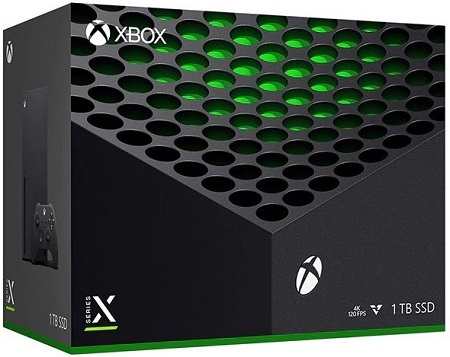
The Xbox Series X box.

I think Xbox had a couple of good naming options – one was simple: Xbox. Just plain Xbox. Everyone would know what it is, and that would be that. Alternatively, the name I really thought they would’ve gone with was Xbox Five. Why five, if it’s only the fourth generation Xbox? Because you’d number them like this: 1) Original Xbox, 2) Xbox 360, 3) Xbox One, 4) Xbox One X, 5) Xbox Five. Then they’d have the Xbox Five up against the PlayStation 5. There’d be no confusion as consumers would know both consoles represented the same generation.

Even while writing this article I had to go back and double-check that Xbox Series X was definitely, 100%, their next-generation offering. The confusing name is a potential problem – one that the brand is all too familiar with. Time will tell whether the choice of name will be damaging, and to be fair to Xbox they have a solid ten or eleven months to get the word out and get Xbox Series X firmly locked into the minds of consumers. But even if they can overcome the confusion with their current-gen offerings, let’s be honest – the name is still crap.

Xbox, Xbox Series X, Xbox One X, and other consoles mentioned above are the copyright of Microsoft. This article contains the thoughts and opinions of one person only and is not intended to cause any offence.

Post edited (to correct an image alignment error) 23rd Nov. 2020.