

Spoiler Warning: There are spoilers ahead for Star Trek: Strange New Worlds Seasons 1 and 2.
After a rather light-hearted story in the crossover episode Those Old Scientists a week earlier, Strange New Worlds served up a dramatic and emotional war story in Under the Cloak of War. The episode was intense and brutal in its depictions of war and the post-traumatic stress that many soldiers and other participants can suffer from for years afterwards. It was also a story that challenged Star Trek’s positive and optimistic presentation of the 23rd Century – with some members of the crew coming across as prejudiced and almost racist.
In that sense, parts of the episode were deliberately uncomfortable. Others, however, were in danger of being tripped up by the big contrivance that set up the main thrust of the story, and by a couple of scenes and sequences that seemed to zip by a little too quickly for my liking. However, despite some limitations, Under the Cloak of War is one of the most gritty, realistic, and brutal depictions of war that the Star Trek franchise has ever brought to screen – and the episode succeeds at conveying those sensations for almost its entire runtime.
Let’s start by talking about the biggest contrivance in Under the Cloak of War, because at first I was worried that this was going to set the stage for a weak story. However, I think I can forgive it in light of what subsequently transpired.
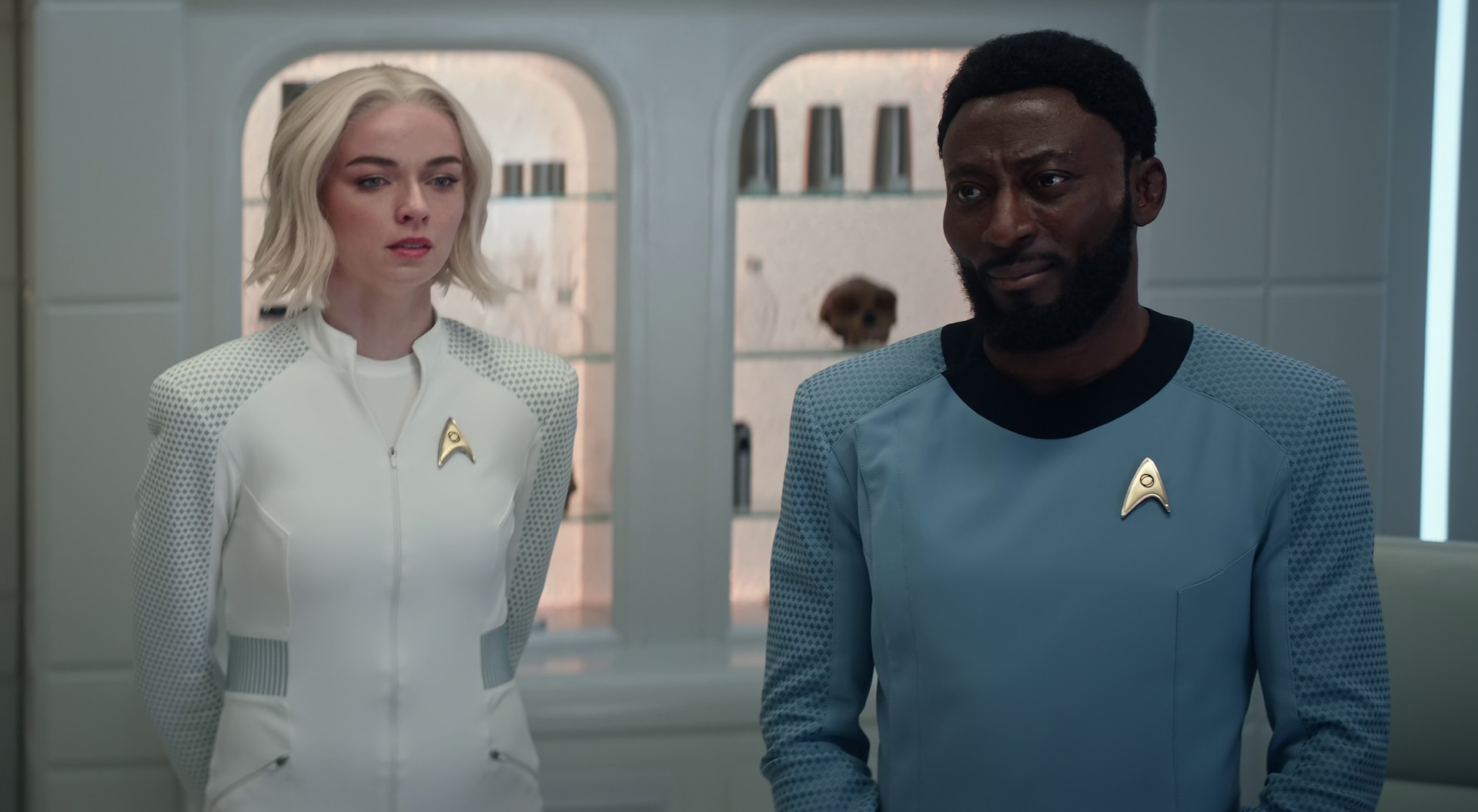
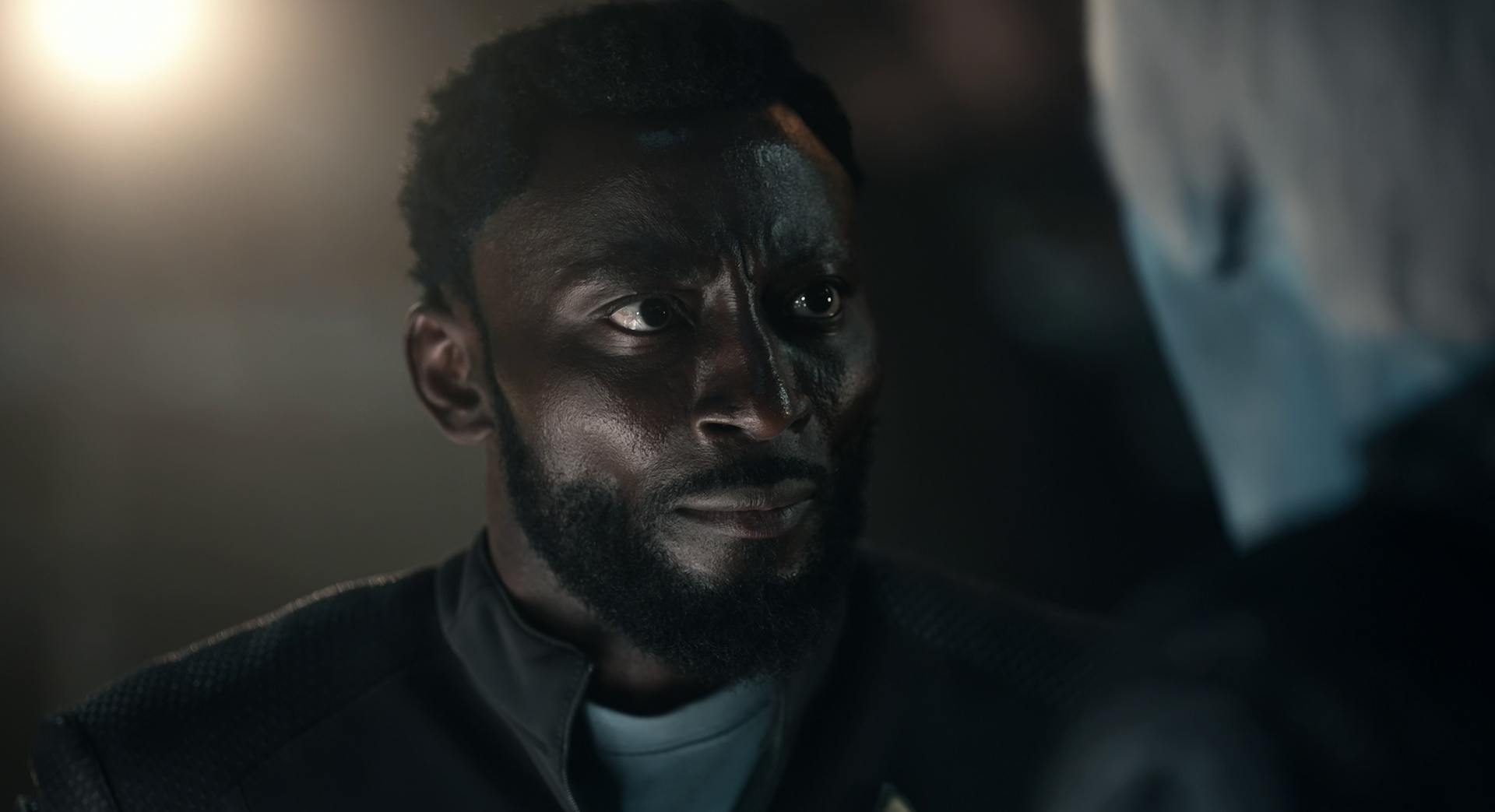
Having Starfleet and Captain Pike essentially force Dr M’Benga, Nurse Chapel, Lieutenant Ortegas (and presumably other members of the crew too) to interact with Ambassador Rah was… poor. It’s the kind of thing 23rd Century Starfleet shouldn’t do, because that decision put members of the crew in uncomfortable and even dangerous positions – as we’d see. Pike’s complicity in this, too, was unpleasant to see, and I’d have liked to have seen him trying to argue against whichever higher-up gave this order – even if just briefly in a single scene.
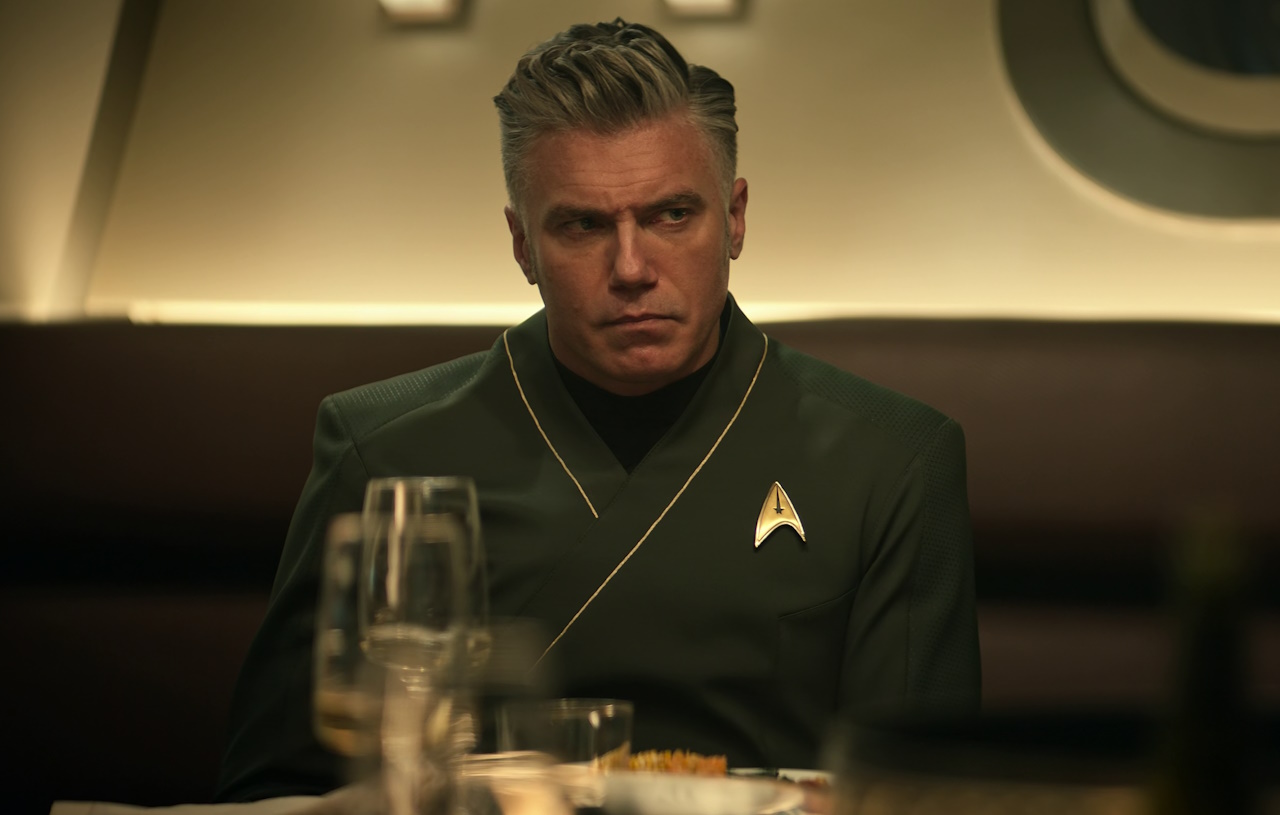
We know Captain Pike as an advocate for his crew, and someone who cares about them deeply. Even if he didn’t or couldn’t know the extent of the trauma faced by the veterans – and it’s worth remembering that this idea of not being able to understand the trauma of war was one of the themes of the episode – I still believe Pike wouldn’t have wanted to put them in that situation. Having Pike be the one to order Dr M’Benga and Nurse Chapel to participate took what was already a pretty contrived idea and made it uncomfortable.
The final act of Under the Cloak of War hinged on the “big reveal” of Dr M’Benga – thanks to his super-soldier serum – being the real “Butcher of J’Gal,” and while this idea was interesting in some ways, I think it also constrained the story in others. Part of the power of an episode like Under the Cloak of War, particularly in its flashback sequences, is that the characters we’re following aren’t anyone special – they’re regular people caught up in this incredibly traumatic event. The things they see and are forced to participate in end up changing them.
When Under the Cloak of War introduces the idea that Dr M’Benga is a kind of infamous super-soldier, the character loses at least some of his “ordinary guy” persona, and that begins to work counter to other parts of his arc. We saw earlier in the season this “super-serum” that Dr M’Benga and Nurse Chapel had, and finding out more about where that came from was admittedly interesting. It’s something I can absolutely see a future story picking up on; M’Benga’s role in creating something that horrified him is clearly eating away at him. But in terms of this story – one about the repercussions war and trauma can have years later – I think we lost something with the focus on Dr M’Benga and the way his character was presented.
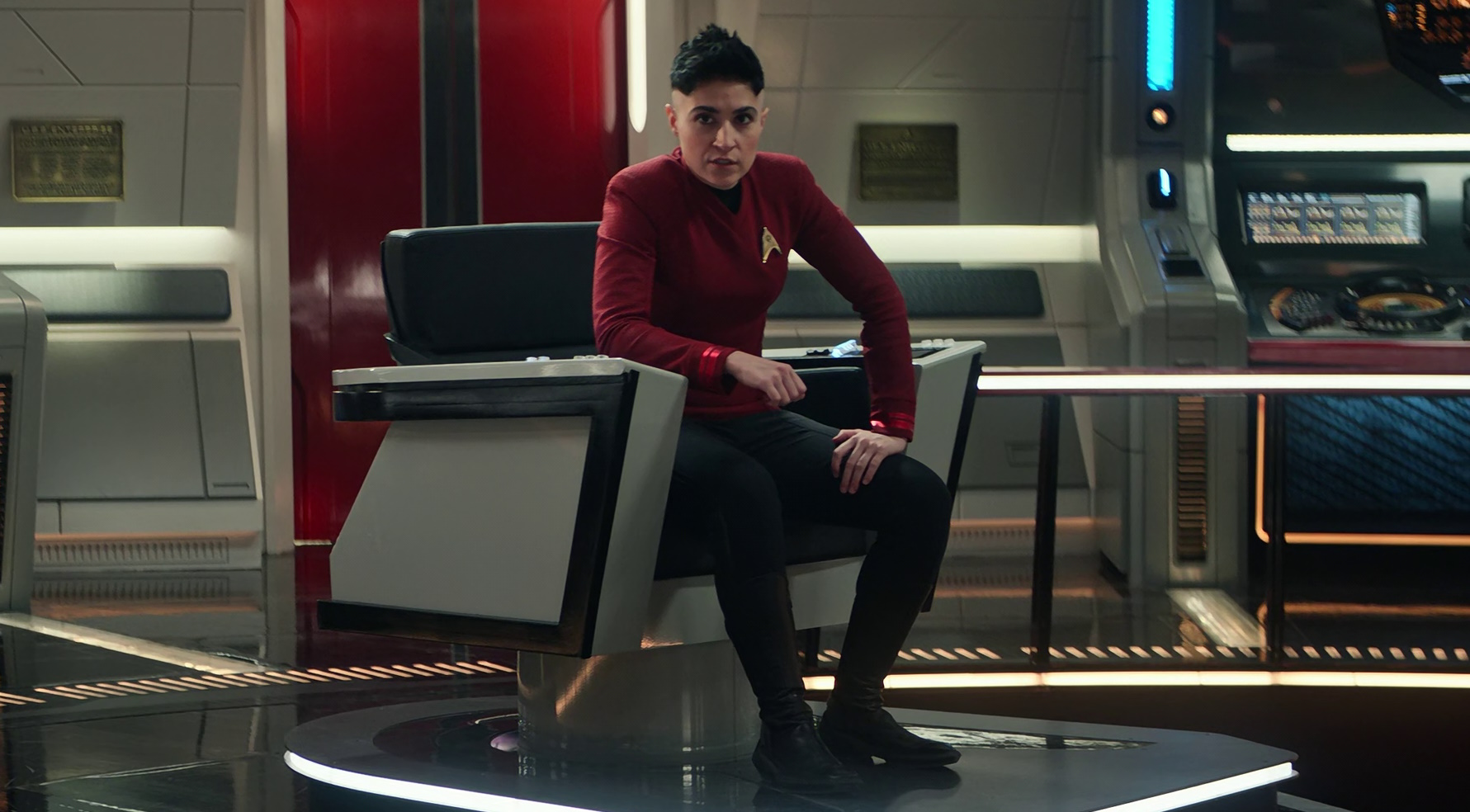
If instead Under the Cloak of War had spent more of its time with either Ortegas or Chapel, we could’ve gotten a more down-to-earth depiction of post-traumatic stress. Throwing non-soldiers into a warzone is a great setup for an intense and traumatic story, and a focus on one of those characters, perhaps, would’ve made that side of the story more engaging. Keeping the focus on Dr M’Benga but dropping the “super-soldier” angle could’ve worked, too.
As an aside, I know that Ortegas has been less front-and-centre this season due to her performer, Melissa Navia, asking for a reduced amount of screen time. Navia’s partner passed away in between production on Seasons 1 and 2, and she requested less of a prominent role. Throwing her into a story about death, post-traumatic stress, and so on would have been difficult, so I’m not saying I wanted to see Ortegas in these flashbacks or taking on a major role in the story. There are perfectly understandable reasons for this episode focusing on Dr M’Benga and Nurse Chapel. I merely present the idea of a character like Ortegas – a non-soldier – taking part in a story about war and post-traumatic stress as being closer to the episode’s core themes and ideas.
Sometimes modern Star Trek has tripped over this kind of “extra-special character” trope. We’ve seen it in Discovery, where Michael Burnham always happened to be the “Chosen One;” the only person capable of solving a mystery or defeating a villain. I guess I’m just a bit tired of it at this point, and while I liked what Under the Cloak of War ultimately did with Dr M’Benga and his secretive past, I can’t help but feel that making him into a super-soldier who had a direct connection to the episode’s reformed villain ended up jumbling some of the other messages it wanted to convey.
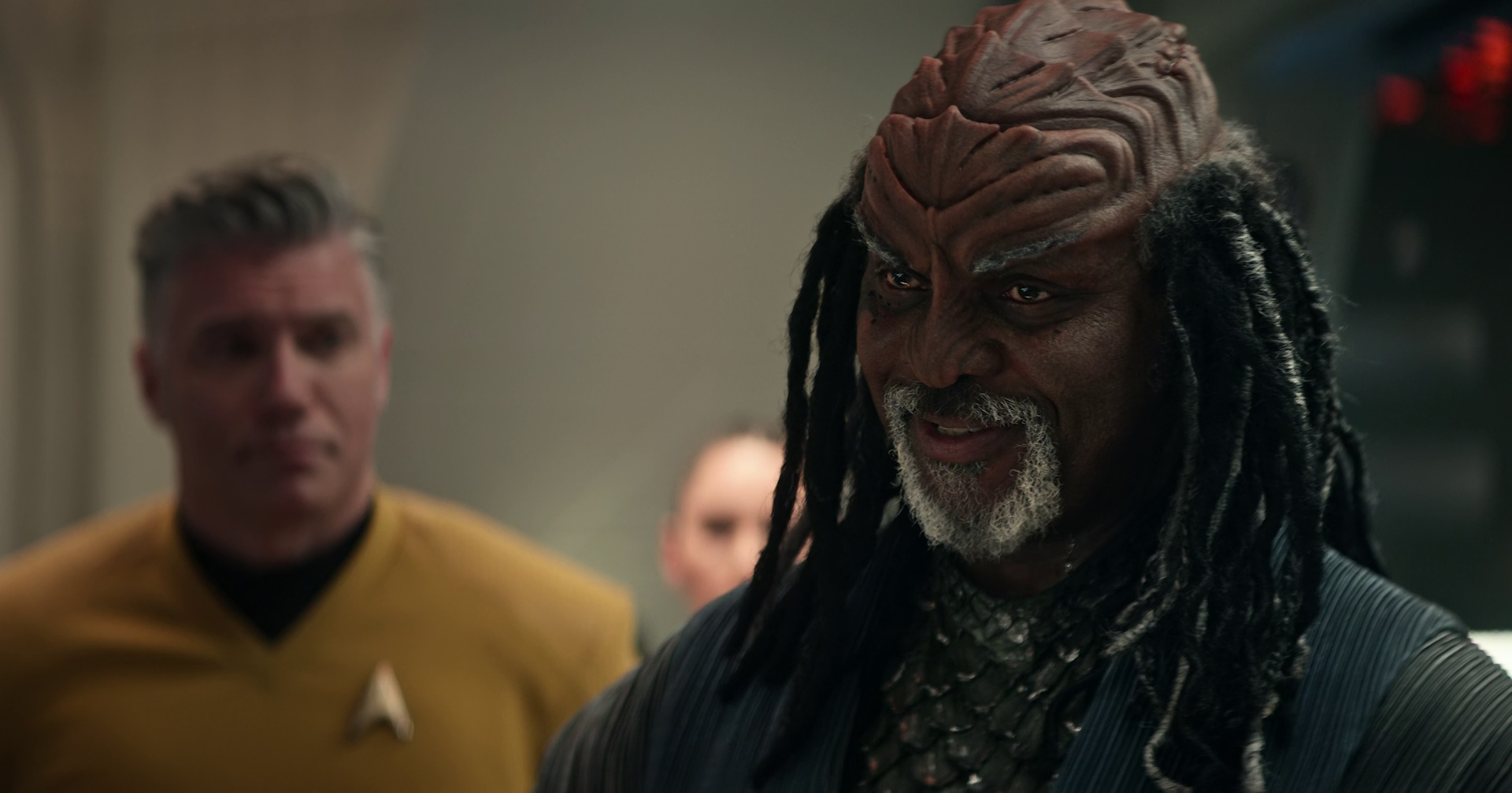
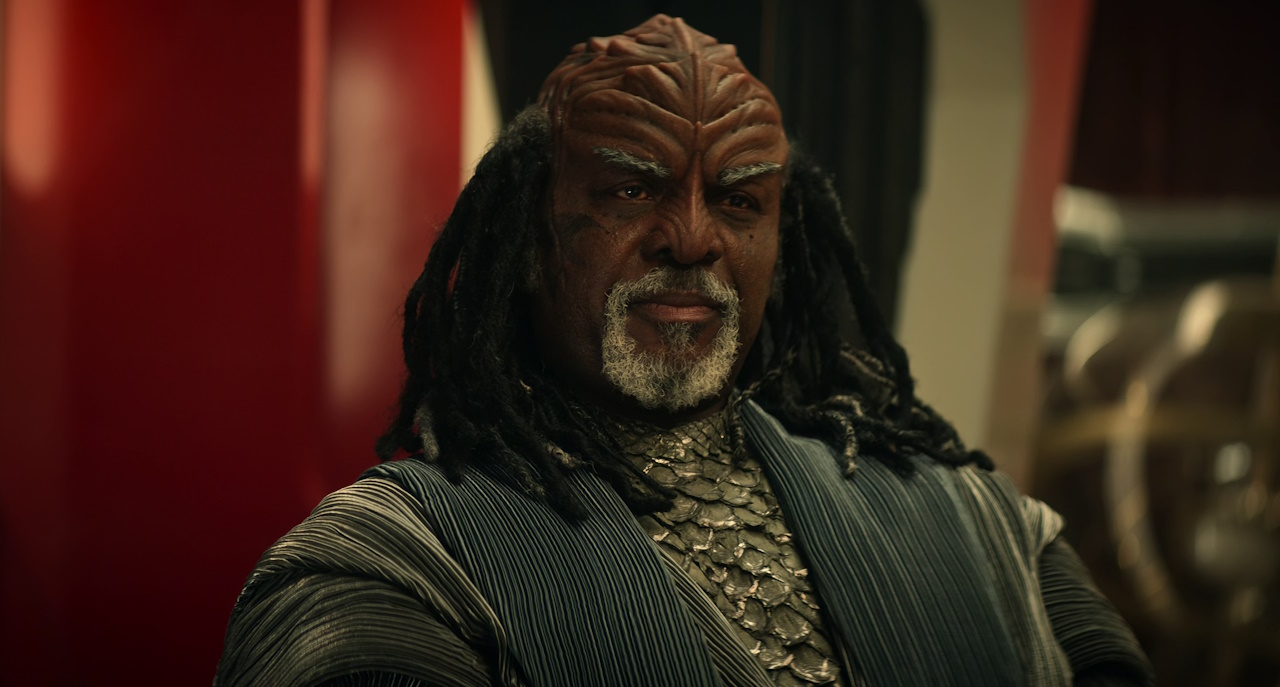
Under the Cloak of War wanted to confront us with the very visceral reaction some of its characters had to Ambassador Rah. There was anti-Klingon prejudice – racism, really – in the way some of them behaved and reacted, and the writing seemed to want to make us uncomfortable with that. Here was a man who had defected to the Federation, giving up violence, changing, and becoming an advocate for peace. And some of our favourite characters treated him with disdain because of where he came from and what he looked like. You can argue that M’Benga and Chapel should be excused from that because they saw first-hand what Rah had done a few years ago. But can we give that same pass to Ortegas? There’s no evidence that she was present on J’Gal during the events depicted. Nor to the other nameless crew members both on the Enterprise and other Federation ships who have been uncomfortable with or protested against Ambassador Rah.
I’m reminded of The Undiscovered Country, and how Kirk and his crew had to come to terms with making peace with the Klingons. In Kirk’s own words: “I’ve never trusted Klingons, and I never will.” Gene Roddenberry famously hated this presentation of Kirk and Starfleet at large, feeling that things like racism and prejudice should have been all but forgotten about by the 23rd Century. Indeed, we’d see this theme in several episodes of The Original Series, from Balance of Terror in Season 1 through to Let That Be Your Last Battlefield in Season 3.
We will never be able to agree, as fans and viewers, on which presentation of Starfleet is “better” or more realistic. And I’m open to arguments on both sides. On the one hand, this kind of overt prejudice runs counter to what we’ve come to expect from (most) Starfleet officers, and from a narrative and storytelling perspective, there’s power in depicting a society that has largely moved on from such things. On the other, it’s difficult if not impossible to tell a story about war and post-traumatic stress without at least acknowledging that such prejudices exist – and to tell a relatable story for an audience today, you kind of have to go there.
So I’m on the fence about this one. I get where it came from and I think it worked in context. But I’m not sure that this kind of open prejudice is something I want to see a lot of in Star Trek. Using it sparingly and in a nuanced way – as Under the Cloak of War does – arguably heightens its impact and makes it as powerful a storytelling device as it can be. Overuse would take away from that… and would arguably damage some or all of the characters if we saw them repeatedly behaving that way and espousing those kinds of sentiments.
But maybe that’s the point, or at least part of it. Some stories are intended to be uncomfortable to force us, as the audience, to consider the questions being raised. Veterans of many conflicts out here in the real world find it difficult to deal with former enemies – and moments where combatants from both sides of a resolved conflict are able to come together are often seen as moments to be celebrated. We could write a book or a series of books on the psychological impact of war and how it must feel to be forced to break bread with a former enemy. This episode barely scratched the surface in that regard.
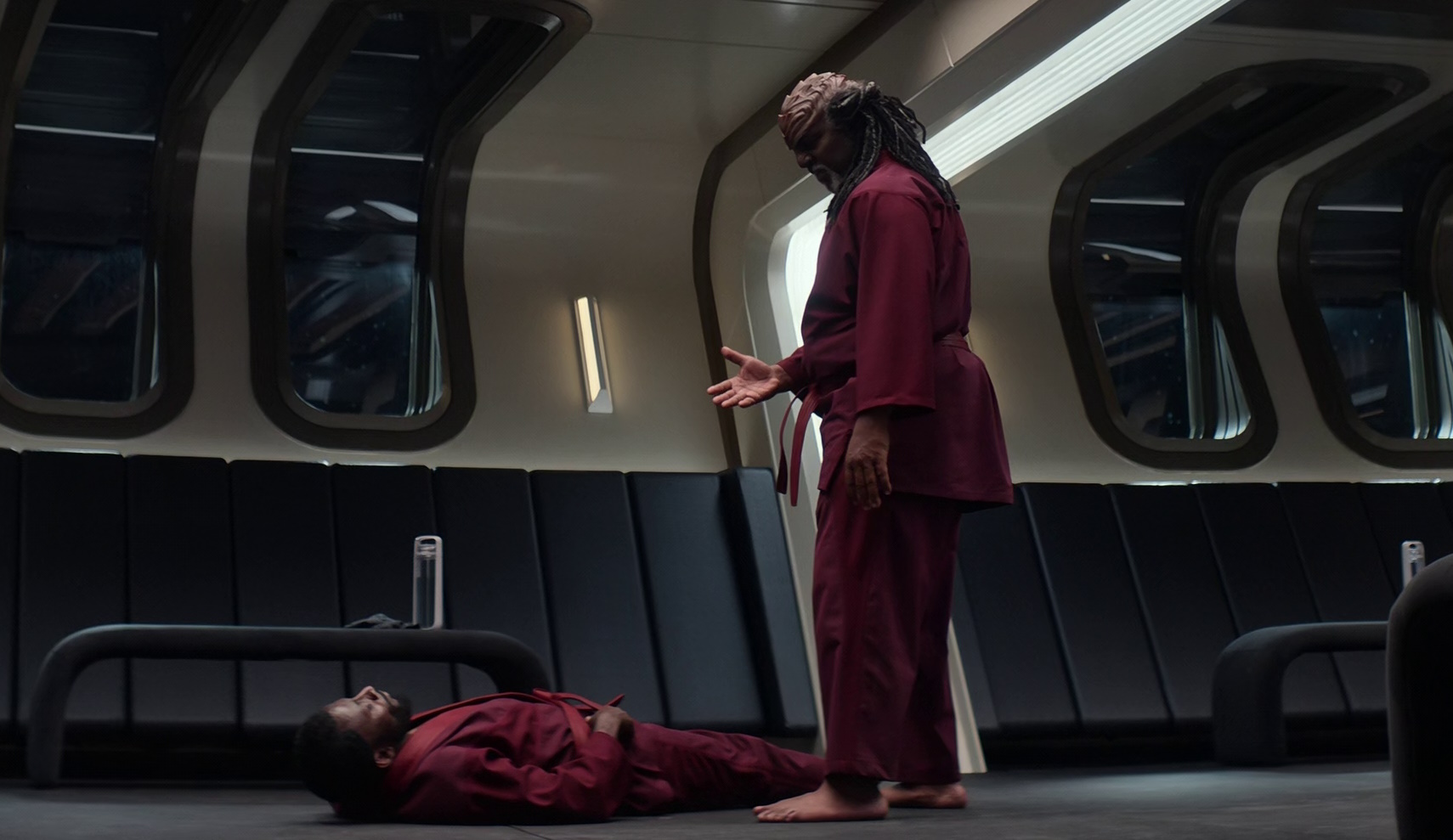
One episode more than any other was foremost in my mind during the flashback sequences: Deep Space Nine’s Season 7 episode The Siege of AR-558. Intentionally or not, there were clear echoes of that story in Under the Cloak of War, from the minor Federation outpost to the depleted and patched-together Starfleet soldiers. That was also a powerful episode, one that focused on the futility of war and how, from the perspective of a soldier, dying or being wounded for the sake of a nameless place just doesn’t sit right.
If The Siege of AR-558 was inspired by the war in Vietnam (a war in which the episode’s director, Winrich Kolbe, had served) then maybe it’s fair to call Under the Cloak of War a reaction to modern conflicts like those in Iraq and Afghanistan, as well as the War on Terror in a more general sense. The United States is still wrangling with the fallout of those wars; the futility of the latter coming into frame following America’s withdrawal from the country.
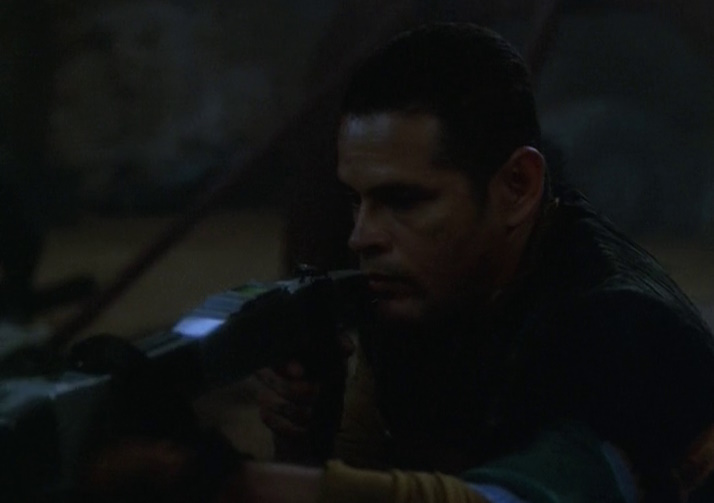
Ambassador Rah was an interesting character, and I really enjoyed the performance from veteran actor Robert Wisdom. The way Rah came across – conversational, pleasant, and even likeable – had an undercurrent of tension or even creepiness because of the way he was framed and how his story was told from the perspective of Dr M’Benga and others. The character had an unsettling vibe for practically his entire time on screen – and the combination of a stellar performance with some great sound design, cinematography, and direction from Jeff W. Byrd made this possible. It’s rare to get such a strong feeling from a single guest star, but Under the Cloak of War really succeeded at making me feel unsettled and creeped out by this affable, personable Klingon.
Sticking with the Klingons (or Klingon, singular, in this case), Strange New Worlds has taken the deliberate decision to return to the more familiar visual language of the Klingon Empire that we’ve seen in past iterations of Star Trek. The Kelvin films changed the way Klingons look, but it was Discovery that doubled-down on this in its first season, stripping away much of what we’d seen of the Klingons throughout the previous 600+ episodes of Star Trek to bring in shaved heads and armour and ships that seemed to borrow quite heavily from Ancient Egypt in their appearances.
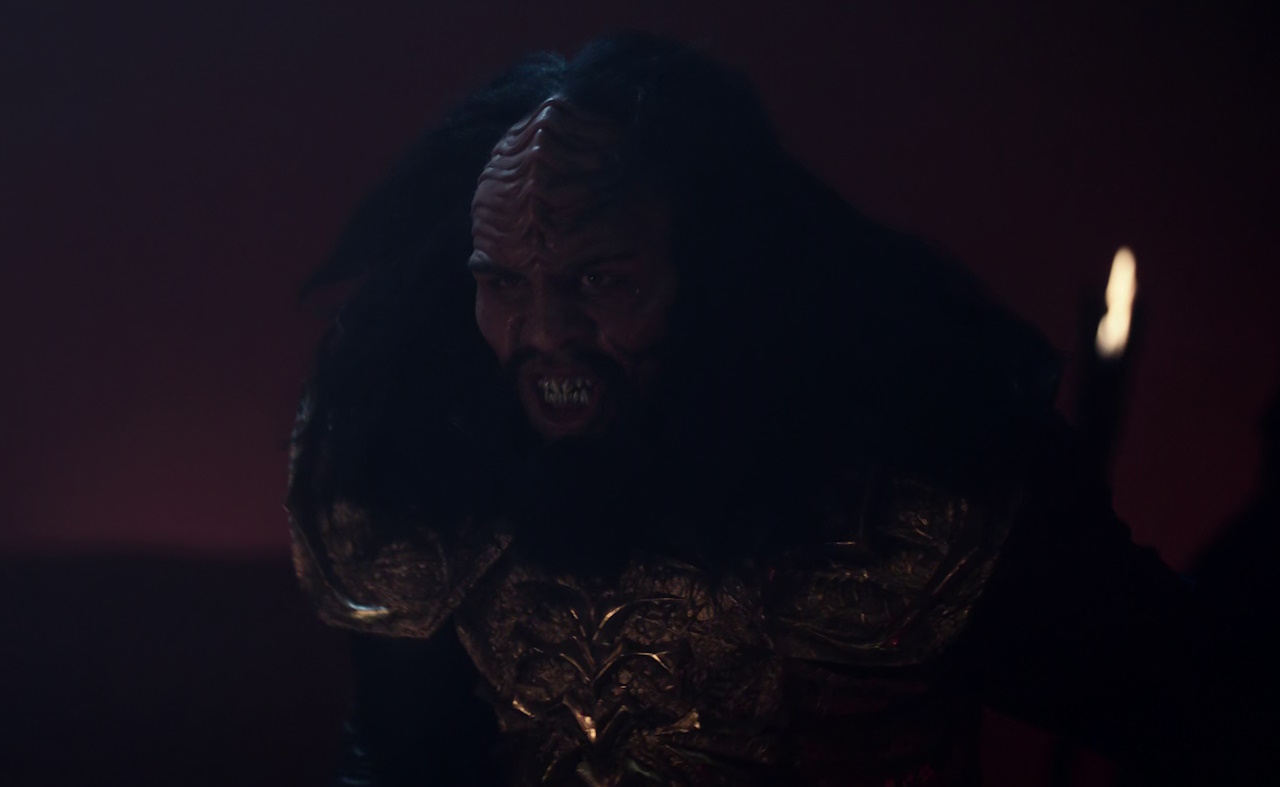
I noted when looking back at Star Trek III: The Search for Spock a few months ago that some of the designs that debuted there – such as Klingon armour as well as the Bird-of-Prey – had become absolutely iconic, and that some fans had been disappointed when the Kelvin films and Discovery changed things up. I think the reaction to that has been interesting, and we now see Star Trek’s executive producers moving back to more familiar ground for important and well-developed races like the Klingons. In a way, we could argue that creativity is being stifled here… but on the whole, I think that having a consistent visual style is probably more useful than not for a franchise that aims to retain viewers.
Casual viewers who may be tuning into Star Trek for the first time in years can instantly recognise the Klingons in a way that perhaps they couldn’t in Discovery, and that’s a positive thing. I maintain that Strange New Worlds is a great “first contact” for new and returning viewers, so making it easier for folks to jump over to other parts of the Star Trek franchise is also a good thing to see.
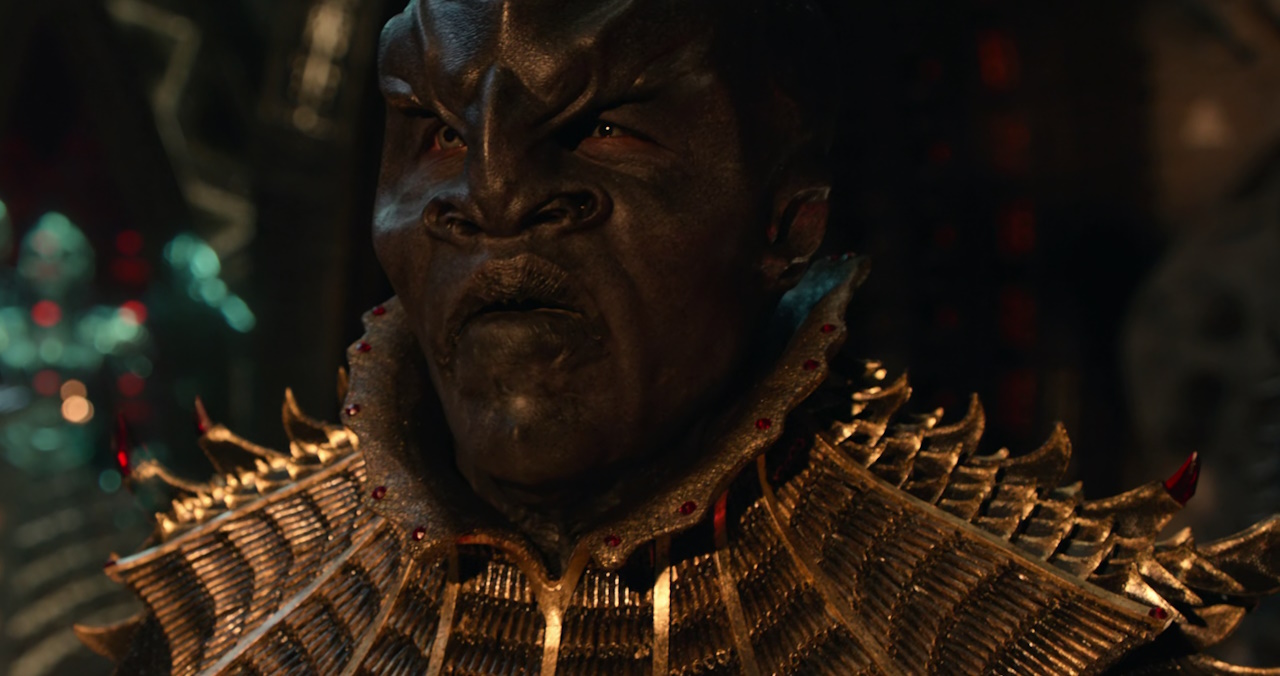
It was a treat to welcome back Clint Howard to the Star Trek franchise! Howard first appeared in The Original Series episode The Corbomite Maneuver and has since played roles in Deep Space Nine, Enterprise, and Discovery as well. He’s an icon of the Star Trek franchise for his role as Balok, and he was instantly recognisable to me in Under the Cloak of War as the rather stressed-out Commander Buck Martinez – the officer who received Nurse Chapel upon her arrival at J’Gal.
There are threads that bind disparate parts of Star Trek together, and some performers fill that role. Just as it’s great to see an episode directed by the legendary Jonathan Frakes, so too is it wonderful to get another special performance from Clint Howard. Commander Martinez was an interesting character, too – and a prominent one. Howard’s interpretation of someone who’d almost become numb to the warzone he was stuck in stood in contrast to Nurse Chapel – the newcomer who was still adjusting and finding all of it frightening and shocking.
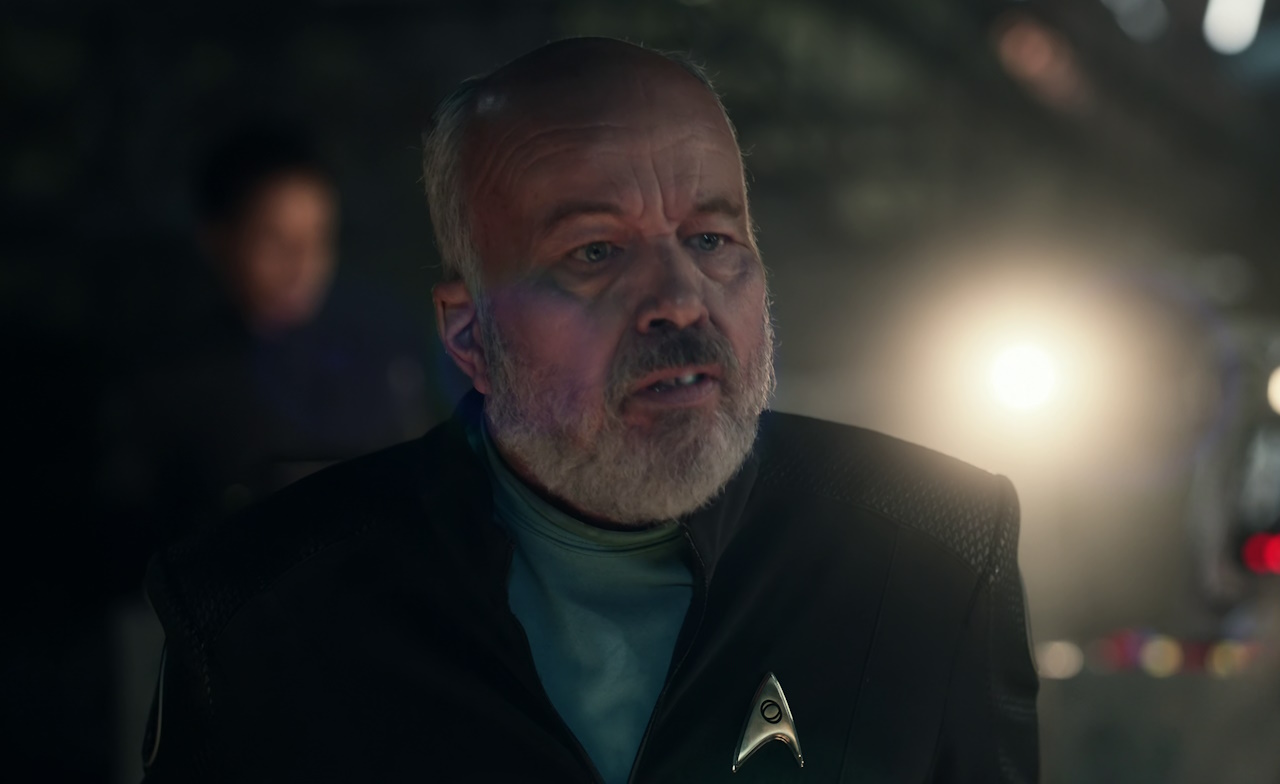
Chapel was, for me, the episode’s standout character. Though she got less screen time than Dr M’Benga, and her conflict with Ambassador Rah didn’t have that personal edge, seeing war through the eyes of a nurse was harrowing. Chapel seemed to lose her innocence across the flashback sequences, culminating in the scene where she lost the first patient she treated when his pattern was erased. Despite that, however, we never saw her become numb to the suffering like Martinez, nor as resigned to her fate as Dr M’Benga – Chapel held onto at least some sliver of herself and her humanity despite the trauma she went through.
I would’ve loved to have seen an extended scene between her and Spock. In the hallway, Spock’s admission that he didn’t understand how she felt or what she’d been through was played exceptionally well by both Ethan Peck and Jess Bush, and I could’ve happily spent half an episode on just those two characters as they wrangled with the fallout of Chapel’s experiences. Spock could be uniquely able to help. But at the same time, seeing her push him away and him having to acknowledge that he can never really understand… it was powerful stuff.
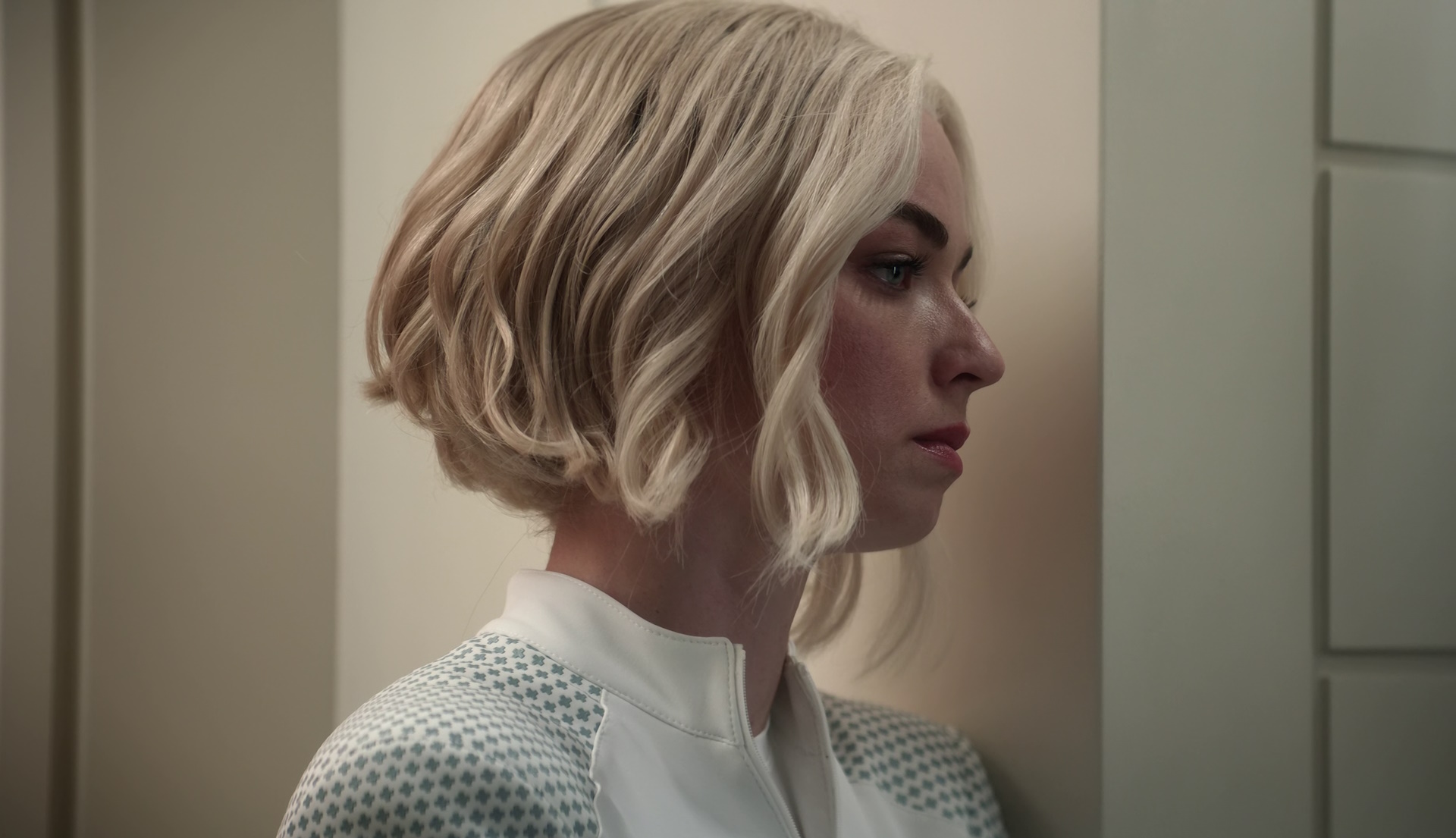
Part of me wonders if Strange New Worlds is readying Dr M’Benga for departure. We know he won’t be killed off – M’Benga appears alongside Dr McCoy in a couple of episodes of The Original Series, lest we forget. But having built a wall between M’Benga and Captain Pike, with Pike clearly not fully trusting M’Benga’s lie that he killed Rah purely in self-defence, I’m not sure how the series will be able to break that down again. With more legacy characters being added to Strange New Worlds periodically, could M’Benga be about to be reassigned or take a demotion, and could we see Dr McCoy signing up in Season 3 or 4? I can’t help but wonder.
So I think that’s everything I have from my notes. This was a tough one to watch, in places – and I mean that in the best possible way as a compliment to everyone involved! There were some truly gruesome moments, and the story really hammered home just how destructive war can be to the individuals caught up in it. There are some possible ramifications down the line for those involved, and possibly a bit of tension developing between Captain Pike and members of his crew. Whether Strange New Worlds will return to these ideas remains to be seen. Or not, if you’ve already seen the next two episodes and know what happens! I’m still catching up with Season 2, as you can tell.
I have to be honest: I’m not looking forward to Subspace Rhapsody next time. Musicals – non-animated musicals, at any rate – really aren’t my thing, and musical episodes in non-musical series even less so. But I daren’t skip it, so I’m sure I’ll have a review of it ready before too long!
Star Trek: Strange New Worlds Seasons 1-2 are available to stream now on Paramount Plus in countries and territories where the service is available. The series is also available on DVD and Blu-ray. The Star Trek franchise – including Strange New Worlds – is the copyright of Paramount Global. This article contains the thoughts and opinions of one person only and is not intended to cause any offence.
 Trekking with Dennis