

It’s been a little over a year since I wrote up my response to the very alarming A.I. 2027 paper, and I wanted to revisit the topic. You might’ve noticed that the website now has an official “A.I. Policy” – click or tap here to check it out, if you want – and that seemed like something worth adding, given the state of A.I. content on the internet. I would never have expected, when I created the website less than seven years ago, that I’d need to have a permalink to a policy about my (lack of) use of computer-written articles and columns… but that’s a sign of the times, I suppose!
The tl;dr is that last year, I think I was a bit too negative about A.I. in some ways, perhaps a bit too optimistic in others, and I definitely had less of an understanding of the way the technology works than I do today. Last year, I compared generative A.I. models to “parrots and mynah birds;” arguing that they were capable of repetition rather than genuine understanding. And while that statement – I would argue – is still true of many free A.I. chatbots that you might engage with online, it’s definitely *not* true of cutting-edge models, at least not any more.
Lately, I’ve been seeing a lot of posts and videos on the topic of A.I., and people seem to be falling into one of three distinct camps. And I gotta be honest: tend to scroll past or click “ignore” on all three. There’s a lot of overexcited babbling, a lot of end-of-the-world whinging, and an awful lot of wishful thinking and hits of “copium,” too.
Firstly, we have the fantasists. These are the folks who have fully bought into the hype, who believe in “post-labour economics,” the end of all human work, and that within a few years (if not a few months), we’re all gonna kick back and sip piña coladas in some kind of technological utopia. Some of these folks *seem* reasonable at first… but their “predictions” quickly veer into pure fantasy, and it’s really hard to take their ideas seriously.

Second are the “bubble” people. You know the ones: “the A.I. bubble is about to burst!” has been their refrain for at least the last eighteen months. They’re also likely to say things like “A.I. has peaked and can’t improve any more,” or that “A.I. is much more limited than the corporations are letting on.” And then what happens? The next A.I. model comes out, proves their predictions utterly wrong, and A.I. companies continue to grow and prosper!
Third are the doom-mongers. These are the folks who call A.I. an extinction-level threat to all of humankind, and predict that – within as little as just a couple of years – A.I.-powered killer robots or an A.I.-engineered plague could literally kill us all. Just like the fantasists, who sipped a little too much copium, the doom-mongers’ predictions seem, to me anyway, increasingly fantastical.
That being said, all three groups raise interesting and valid points. The fantasists are correct insofar as A.I. is showing huge improvements in its capabilities – at least at certain tasks. The “bubble” folks are correct that an inordinate amount of money is being pumped into anything with “A.I.” slapped on the side, and that some of the companies in the space almost certainly won’t survive. And the doom-mongers aren’t wrong if they’re calling for regulation and safety protocols, because those things could be phenomenally important.
I just find the conversations to be predictable… and, quite often, A.I.-generated, too.
I don’t have the same visceral objection to A.I.-generated content that some folks do. If an article is interesting, well-written, and factually correct… should it matter that it was A.I.-generated or A.I.-modified? And if a video of a cat playing the piano made me laugh, or a meme about Donald Trump failing to conquer Iran is funny… why would it matter if they were A.I.-generated?
Where I find myself getting annoyed, though – and once again being quick to hit the “unsubscribe” or “never show me this person’s content again” buttons – is if a writer or content creator is pretending they don’t use A.I. when they *clearly* do. The biggest part of my own A.I. policy for the website (aside from the fact that I don’t use A.I. to “write” articles for me) is that I’ll always endeavour to let you know if I’ve used any A.I.-generated imagery in one of my posts. I know some folks object to A.I. art, and at least being honest about its use means that folks can decide whether or not to engage with my website and its content.
That’s my philosophy, at any rate.
And a lot of people online seem to do something similar. You’ll see disclaimers, sometimes, noting that A.I. was used for writing a script, generating images or video clips, or simplifying things like research and finding sources. And if someone’s up-front about that… great. But when there’s deception, well… that does start to irk me.
You don’t have to look far to find A.I.-generated content. I don’t think it’s *as* bad as some folks claim, but there’s clearly a lot of it out there, and if you’re just scrolling or looking for something to half-watch in the background, you might not always notice, at first. And some creators – well, “creators” might not be the right word, eh? – seem to go out of their way to conceal their use of A.I. and pretend they don’t touch it.
I’ve seen videos on YouTube from well-established channels that have *obviously* transitioned to using A.I.-generated scripts. Even if the human who appears on camera is still the same, the script they’re reading from isn’t being written by a person any more. And when called out on it? It seems their natural instinct is to deny, deny, deny.

Maybe in another year or two, A.I. will have improved so much that its use will genuinely go unnoticed all the time. I feel like we’re almost on the cusp of that now, and it’s really only when obvious mistakes are left in that A.I.-generated text or scripts are even noticeable any more. But there are still some “tells” if you know what you’re looking for. There’s the infamous “it’s not X, it’s Y!” thing that some A.I. bots tend to overuse. And there was, for a while, excessive use of the em dash (the extra-long hyphen or dash character) that could be seen as a “tell” of A.I.-generated work.
But as A.I. companies receive this feedback, they’re going to try to patch that stuff out, and if you compare A.I.-generated text from just a year ago to something made today… those “tells” are going to be harder and harder to spot. Which is why, to get back on topic, disclosure and honesty are increasingly important.
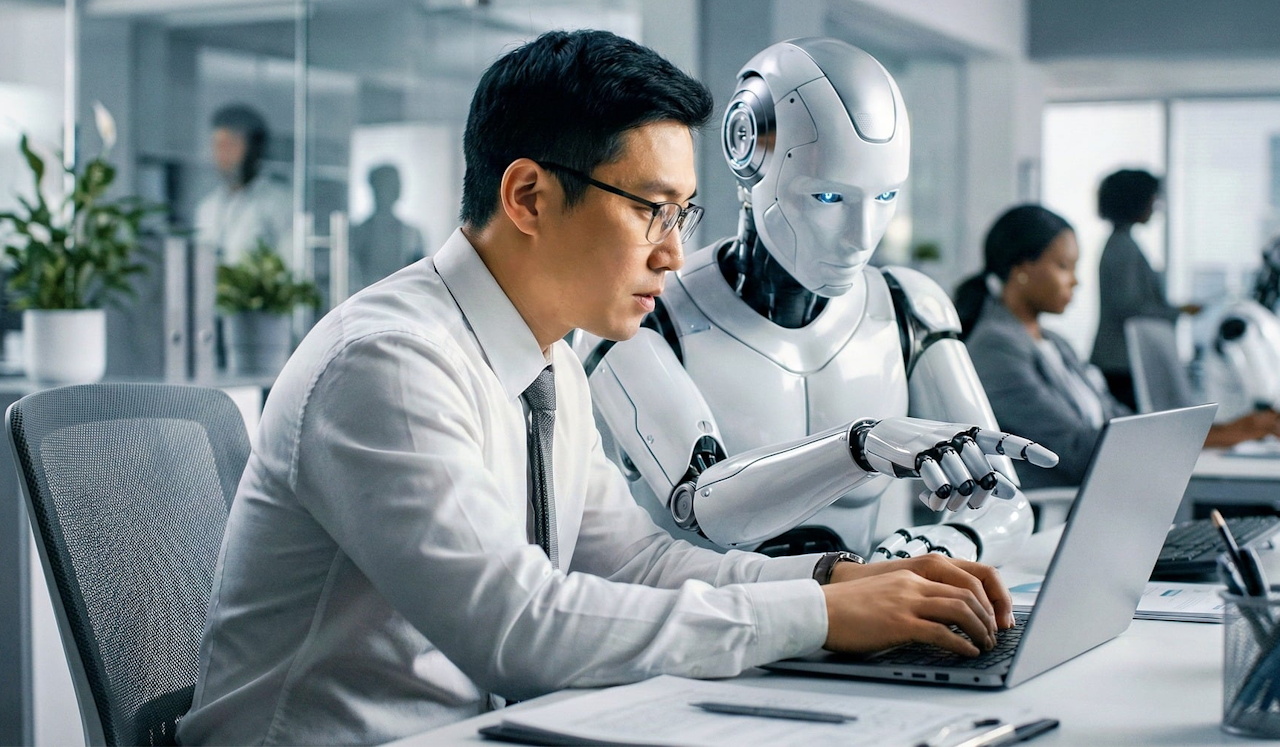
When I hear people saying things like “A.I. can’t do that,” or “I tried A.I. and it was useless,” or “A.I. couldn’t even handle this basic instruction,” two things come to mind. One is that, yeah… it’s possible that you’ve found some limitation to modern A.I. that the technology hasn’t caught up to yet. That’s probably going to keep happening for a while, at least on the consumer side!
But on the other hand… if you’re using the free tier of a simple chatbot, you aren’t even *close* to experiencing what the up-to-date, higher-end models and agents are capable of.
I’ve come up with a helpful analogy: if I picked up a Commodore 64 – or even a Nintendo 64 – and then told you that “video games are all blocky and basic, and they aren’t capable of telling cinematic and exciting stories,” you’d be quick to point out that there have been major technological leaps since then. And likewise, if I were using a computer running Windows 95 and told you that “this computer thing just seems like a fad, there’s no way I’d ever have a use for something like that,” you’d want to show me a modern PC or a smartphone, and all the new things those technologies can do. Right?

Image: Jet Force Gemini
If someone’s only experience with A.I. is a free-tier chatbot, I don’t blame them if they think the technology sounds overrated and overblown. That’ll be because the capabilities being talked about and promised by the “tech bros” and A.I. evangelists seem light-years away from what ChatGPT can do if you just visit the website or download its free smartphone app. But it’s not a fair test and it’s not a fair comparison – and this is, I will freely admit, a mistake I’ve been guilty of making, too.
Last year, when I decided I wanted to discuss A.I. here on the website, I played around with ChatGPT and a couple of other free bots. And that led me to a familiar conclusion: A.I. is limited, its memory is weak, its ability to understand simple instructions and retain information from one message to the next is not great, and the potential applications for this technology in my life are… well, nonexistent. But that was an imperfect experiment based on a misunderstanding and very limited data.
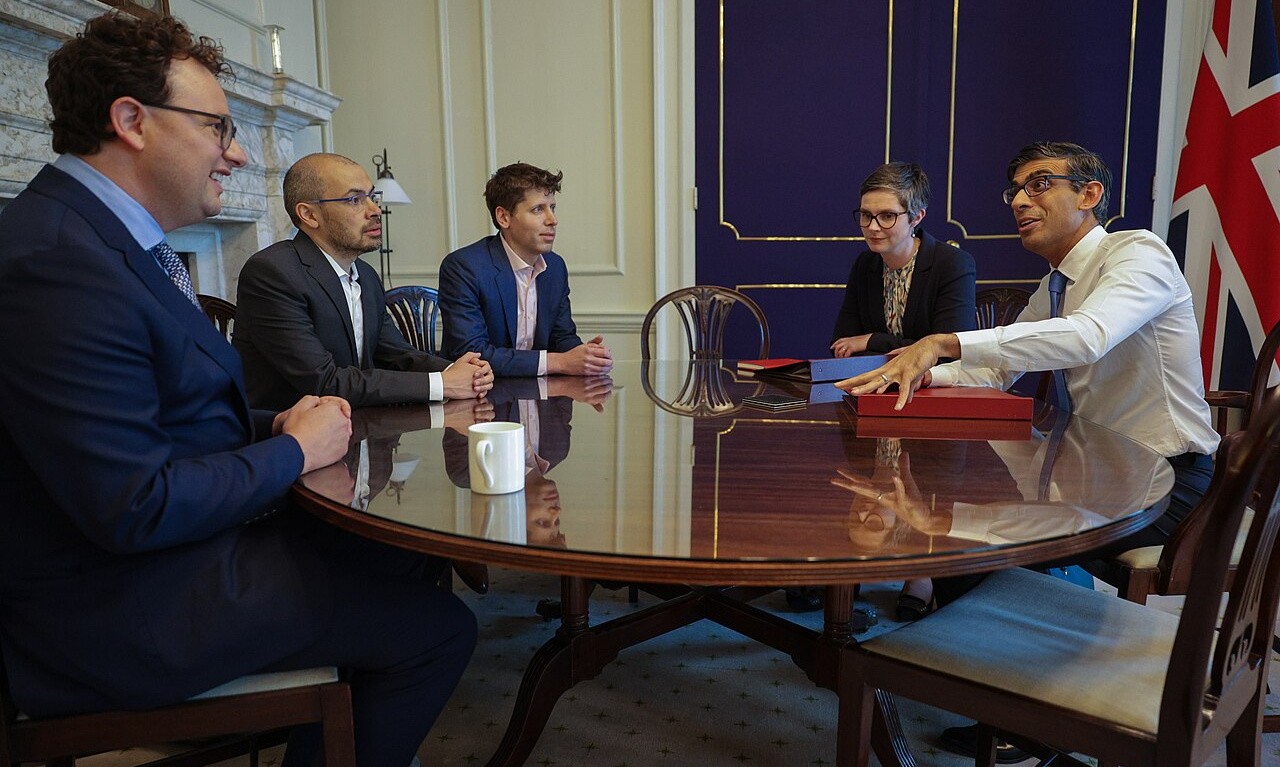
UK Prime Minister, CC BY 2.0, via Wikimedia Commons
Now, do I believe all of the claims made by A.I. companies, their corporate backers, and the “tech bros?” No. Not a chance! There’s so much money tied up in A.I. right now that exaggeration is to be expected, timelines are going to be deliberately inaccurate, and some promises and claims are going to fall short. But what I *am* saying is that modern A.I. is better and more capable than I gave it credit for a year ago, and just in the last twelve months, its capabilities have advanced beyond what I would’ve expected.
We’re getting to a point where A.I. video, A.I. images, and more are genuinely tripping me up – even though I consider myself fairly switched-on and tech-savvy. As one example: a “before and after” image, purportedly of the recent flood in Nepal, popped up on my social media feed… and I wouldn’t have been able to tell it was A.I.-generated. As we were discussing with text above, those “tells” or giveaways that something has been created or edited with A.I. are disappearing rapidly.

I’m also finding myself increasingly frustrated when I encounter low-quality, outdated, or useless chatbots! Just to give a couple of examples: my bank, which is a large high-street bank here in the UK, has one of the worst and most useless bots I’ve ever encountered. It seems to have been programmed in, like, 2008 – and hasn’t been updated since. It can’t handle the most *basic* of questions about topics directly related to banks and banking, rendering it beyond useless.
The same is true of some pretty big online shops – like Amazon, for instance. Amazon’s “customer service” has always been one of the worst aspects of dealing with the company, but their A.I. bot somehow makes it even worse. Again, as with the bank example, it can’t handle the most basic of enquiries, seems to be at least a decade behind even free-tier bots elsewhere online, and it’s just functionally useless.
And because I’ve seen how good other chatbots are – even free ones – my frustration with bad ones grows ever more!

Another thing we discussed last year was the “classism” that seems to have wormed its way into the A.I. conversation – especially on the anti-A.I. side of things. I said then that I view the creation of generative A.I. not as something brand-new or an aberration, but the continuation of a process of automation, offshoring, and other money-saving measures that have devastated working-class communities here in the UK – and across much of the western world. For literal decades, mining jobs, factory jobs, agricultural jobs, manufacturing jobs, and many other manual jobs have been disappearing from working-class communities like those in the area of northern England where I grew up, thanks in large part to automation. A.I. is the same thing… only now it’s coming for white-collar work.
A lot of the folks whining about A.I. today are being hit with the same fears that working-class communities struggled with from the ’70s onwards. It’s just that some of those people have a disproportionately louder voice, and they’re using it. But I’d have more sympathy, to be honest, if those weren’t the exact same people, in a lot of cases, who sneered at working-class communities, devastated by the losses of mines, factories, and other industrial jobs, and told us to “learn to code,” or “re-train.”
How’s that coding job looking now, huh? Looks like automation came for you, too.

There’s also a *ton* of ignorance in this debate. I’ve literally seen people say words to the effect of: “Why does A.I. have to do coding, data entry, translation, and <insert white-collar job of choice here> instead of mining, manufacturing, cleaning, or factory work?” And friend, let me tell ya… automation already took many of those jobs! You just didn’t notice in your cozy middle-class bubble. Or worse, you actively supported it, because you wanted to “de-industrialise,” get rid of those dirty, smelly mines and factories, and build a “service-based economy” where working-class folks with dusty faces and mucky boots weren’t blighting your community.
I don’t mean to get all angsty and upset. But some of these arguments that I’ve seen online have really riled me up, sometimes! The sheer ignorance and arrogance coming from some of these folks is really, truly grating.
None of that means that there aren’t real fears about A.I.’s potential to take away jobs. I have friends and family members in *very* at-risk roles and industries, and depending on how A.I. shakes out in the next couple of years… I mean, we could be looking at a “job apocalypse” of sorts. My gut instinct is that it won’t be as bad as some of the doomsters (or utopian fantasists) believe, but changes are definitely in the pipeline for the world of work.

The ignorance that we discussed also extends to what A.I. is capable of and even to what it *is* at a core, fundamental level. And part of that is understandable: technology improves more quickly than ever, these days, so if someone’s only experience with A.I. was a chatbot a couple of years ago… as we said above, that’s not representative of what A.I. is capable of any more. The terms “L.L.M.” and “chatbot” are often used interchangeably with A.I.; conveying a stunning lack of understanding, in my opinion. Yes, A.I. has a large-language model component, but that’s not the full picture any more. And anyone describing A.I. as nothing more than a chatbot is just signalling their lack of understanding of the tech; chatbots are still a big consumer-facing part of A.I., but to assume that the free tier of ChatGPT is *all* A.I. is or ever will be is flat-out incorrect.
Unfortunately, there are two factors at play in this online A.I. discussion and debate. Firstly, A.I. is a *huge* topic of conversation, so even people with no concept of the technology are piping up… just like I’m doing now, I guess! And secondly, some of the people with the loudest voices online – influencers, content creators, social media stars, and so on – have a disproportionately loud voice, and their (understandable) concerns about the impact of A.I. on their careers and lives is causing some anxiety. That combination has led to some shockingly bad, utterly incorrect statements being put out by people with large audiences… contributing, at least in some way, to some of the negativity around A.I. in some corners of the internet.
Speaking for myself, I still think there’s a lot of potential in A.I. as a broad suite of technologies. As A.I. capabilities improve, we’ve already seen breakthroughs in fields like mathematics, medical science, astronomy, and more – and there are bound to be more of those to come. In terms of my own life and my own processes, I like that A.I. can make it easier, sometimes, to research a topic – it’s easier than ever to get information – such as, for instance, viewing figures for a TV show, box office receipts for a movie, or sales and even achievement stats for video games. That info was always available, but A.I. makes it quicker and easier to access. I always double-check my sources, but I like that A.I. can, even in just a small way, make things a little quicker or more efficient.
In terms of the future of entertainment, I think we’ve seen some moves in 2026 that indicate where A.I. could go. It’s easier than ever to decompile and reverse engineer software – including video games. This has the potential to massively open up home-brew games, mods, and indie game development, and we’re already seeing some wacky and fun results! A.I. can already generate entire stories and characters, and when you combine that with image and video generation, it seems to me as if fan-made episodes or even movies are closer than ever to being a reality. Some of these things are expensive and require a lot of “tokens” and “compute” right now, but the history of technology and computing tells us that costs do come down over time. The PC that I have today would’ve been a “supercomputer” by the standards of, say, ten or fifteen years ago, and it’s not impossible to think that improvements to A.I. and efficiency will mean models and agents will be able to use less power and run on less impressive hardware before too long.

Right now, A.I. requires a ton of computing power to both train new models and for existing models to do their work. That’s leading to the controversial rise in data centre construction projects, especially in the United States. But my part of the UK isn’t immune; several data centre projects have either already been greenlit or are going through the process right now, so there could be several of these within a few dozen kilometres of my house pretty soon, including at least one absolutely massive one.
I get the concern around data centres, particularly their power use. One of the biggest issues the UK continues to have is that much of our infrastructure is old and outdated, and new developments – whether they’re housing estates or data centres – don’t automatically come with increased capacity for things like power, water treatment, and so on. And I suspect that’s also true in the USA and other countries. So the data centre rollout has to be paired with increased capacity for… whatever the data centre needs. If it needs more power, we need more wind turbines and solar farms. If it needs more water, we need to make sure we have the reservoir capacity – and if we don’t, we need to build more. Data centres also need to be situated in locations where they make sense – why build a data centre on open countryside when there are so many “brownfield” sites that used to host factories, mines, and mills? That’s just one example.

But as I said: I think improvements will come. Look at the image above: a five-megabyte hard disk looked like that in 1956. But today, you can fit two *tera*bytes onto a microSD card which is a mere 15mm long. I know that data centres and hard disks aren’t *directly* comparable, but as technology improves, it’s tended to get smaller and more manageable; that’s how home computers emerged from the room-sized machines of computing’s early days, and how smartphones evolved from PCs. We probably won’t need warehouse-sized data centres forever… or even for very long at all, perhaps.
A.I. itself has the potential to generate the advances in technology that could make its own data centres obsolete! Advancements in A.I. programming and training have already reduced the time it takes to train a model and the compute needed for a model or agent to execute tasks, and those improvements have not – as some doomsters and “bubble-bursters” argued – plateaued or even slowed down. A.I. is poised to make even more improvements to its own infrastructure and core technologies, and could even lead to whole new ways of computing. The much-hyped and long-awaited quantum computing could finally be in reach – and that would be a game-changer!
But okay, I’m starting to sound like one of those fantasists we talked about earlier!

Photo: IBM
For me, this is still an open-ended subject. It’s possible that many of today’s big A.I. companies are gonna go bankrupt, and large-scale A.I. rollouts will come to a halt. It’s also possible that A.I. will continue to get smaller, cheaper, and easier to run, becoming more accessible to more people on standard hardware. In terms of what I do here on the website, I think A.I. can be useful as a research aid, and I like that A.I. can easily upscale old photographs and still frames to make them more visually pleasing.
A.I. is already having a massive impact on the entertainment industry, which is the main topic of discussion here on the website. Just this year, we’ve seen A.I.-generated movies, A.I. used to decompile and reverse engineer software and games, and A.I. used in the video game development process. There are even A.I. “actors,” and A.I. is already being used to digitally recreate deceased actors to insert them into new films. We can debate how much of that is positive, negative, or neutral… but generative A.I. is clearly here to stay in some form.

Screenshot: Sky News
While I don’t like the idea of massive entertainment industry corporations using A.I. as a money-saving tool or an excuse to lay off staff, I *do* see huge potential in the independent media space. That could be something as simple as a content creator using A.I. to generate more visually appealing images than they’d be able to create on their own, through fan-films and fan art, all the way to independent filmmakers being able to show off their skills. For someone with no money at all – perhaps from a working-class community or a developing country – A.I. has the potential to open up creative arts and the entertainment industry in a way they never could’ve been before. And that, in my view, is a positive thing.
It’s also not something new, but rather the continuation of a trend that goes back at least thirty years!
In the 1990s and 2000s, the internet opened up whole new fields to people who’d never have been able to access them. In my small way, I’m part of that: the internet completely opened up and democratised media criticism, taking it away from a handful of journalism graduates at big publications and ensuring that anyone – even a dumbass like yours truly – could set up shop on a small slice of the interweb and share their thoughts and opinions. Generative A.I. is poised to do the same for content creators, filmmakers, artists, game developers, and more – people who’d never have got even a glance from the entertainment industry, or who lack the financial means to *ever* get a fair shot… well, now they might. And that’s a good thing.

I guess the upshot of all of this is that some A.I. stuff is already being used to transform industries, work, and people’s lives. And other parts of the A.I. conversation remain in a speculative place; there’s potential, but not all of that potential has yet been realised.
Last year, I pondered whether A.I. might be nearing the limitations of its capabilities, and that, without further advancements in technology, some of the promises being made may be completely impossible. I think now, with a slightly better understanding of A.I. – and having spent more time diving into the topic – that’s one thing I got wrong. A.I. has changed and evolved a lot over just the past year, and more changes are happening even as I sit down to write this. Not all of those advancements have filtered through just yet; some companies are gatekeeping their best models, studies need to be conducted on the best ways to use A.I. and how to maximise its potential while minimising risks, and there are financial and corporate issues, too. But I no longer see A.I. as being so limited – at least, not in the short term – and where it could, a year or two ago, have really been a “flash in the pan” that we’d have all forgotten about before the end of the decade… I don’t think that’s possible any more.
A.I. is here to stay.
Some images generated with A.I. (yes, on purpose!) Some stock photos courtesy of Unsplash, Pixabay, and Wikimedia Commons. This article contains the thoughts and opinions of one person only and is not intended to cause any offence.


