Spoiler Warning: There will be spoilers ahead for Star Wars Jedi: Fallen Order, as well as for other iterations of the Star Wars franchise.
Welcome back to Jedi: Fallen Order! Last time, I came up against my first difficult fight in the game, and it took a couple of attempts to get past some of Dathomir’s Night Brothers. This session didn’t start particularly smoothly, as there was apparently a connection problem with Steam that took a while to resolve. Jedi: Fallen Order is a single-player title of course, but I’m never sure whether playing while Steam is in “offline mode” means things like screenshots are disabled. I waited until whatever problem Steam was having was fixed before playing.
The Steam error message. What a great way to start!
When Steam worked and we’d made it through the various loading screens and updates for Steam and Origin, Cal was back at the meditation spot where we left him on Dathomir. The Night Brothers in the area immediately beyond had respawned too, but were easily dispatched – I might finally be getting the hang of the game’s combat!
The Night Brothers by the save point respawned.
Past the locked door were a series of corridors and rooms – including the corridor where the camera got stuck last time. This go around Cal made it through alright, and having only used one stim-pack to regenerate his health too! In a rather out-of-place space-age crate amidst the rocks and ruins, BD-1 found a customisation option for the Stinger Mantis, giving it a shiny new metallic silver paint job. Though I liked its previous yellow colour, I decided to mix things up and try out the new one for now.
The Mantis’ new look.
Jedi: Fallen Order’s third-person camera has been okay, despite the issue last time. I generally like third-person cameras in games, and especially in an action/adventure title like this it works well. It would make exploring and some of the more complicated jumps more difficult if it were a first-person title – not to mention the combat. The camera can also be used to peek around doorways; spotting enemies before they have a chance to see Cal gives him an advantage. And there were plenty of enemies in these ruins!
Spotting an enemy in the room beyond using the camera.
The hallways eventually led to an open area, where a stone bridge is crumbling. The back side of the locked door from earlier was here, and unlocking it created a shortcut back to the meditation spot where this section of the playthrough began. Cal was able to jump across a gap in the bridge, where a mysterious “wanderer” greeted him. Dressed in old, dark robes, this character gave off a distinctly creepy vibe – I’m about 98% sure Cal will have to fight him sooner or later! He reminded me somewhat of Kreia, the mysterious Force-sensitive old lady who mentors the Jedi Exile in Knights of the Old Republic II. The wanderer talked in very vague terms about visiting Dathomir to study extinct cultures, but not much of what he said was helpful in the short term.
Cal listening to the wanderer.
However, one thing the wander explained was very interesting. He told Cal that others have tried to discover the secrets of the ruin – the one beyond the bridge that Cal is trying to reach – but that something inside it corrupted them. Could this be a hint at something connected with the dark side of the Force? It sounds intriguing… and dangerous! It’s also implied that there may only be one Night Sister, as the wanderer speaks of her in the singular. He then ends the conversation by telling Cal in no uncertain terms to “avoid the ruin”. Cal says he can’t do that… but actually he can, and has no choice in the matter for now.
Cal and the wanderer.
At this point Cal hit the wall… literally. The bridge on which the wanderer is standing is broken, and Cal cannot jump from one section to the next; every time he tried he fell. There was a path below the bridge heading back the way we’d come. After several failed jumps I headed in that direction to see if there was something there to help Cal progress, and found something incredibly exciting! At a random workbench tucked away to the side of the passage, Cal was able to upgrade his lightsaber to be double-bladed – like Darth Maul’s famous lightsaber from The Phantom Menace! Obviously I liked this; the upgrade may very well come in handy! But I didn’t like that Cal worked on the blade in silence, and I especially disliked that no explanation was given as to why he was able to perform the upgrade here.
Upgrading Cal’s lightsaber near the bridge.
A couple of lines of dialogue would have massively improved this moment – having Cal say something like “look BD-1, a new lightsaber macguffin, I bet I could upgrade mine to be double-bladed” would have been all that was necessary to explain what was happening. The databank did lodge an entry about the upgrade, but nothing to explain why it was able to be done, how it could be done here, or what Cal found to be able to make the upgrade. It felt like one of those situations where we were very close to having a great moment in the game, but one element was missing and the result was that it just kind of fizzled out.
The double-bladed lightsaber.
The lightsaber can be switched back to its single-bladed form at any time with a single button press, and I like having both options as it feels like it adds more variety to the game. Whether the lightsaber options are purely aesthetic or whether, as the game suggests, the different blades will be useful in different situations is unclear right now. After going through the tunnel beyond the lightsaber workbench and dispatching a handful of the poisonous spider-creatures, Cal ended up back at the meditation point where we began this playthrough. I debated saving, but doing so would allow all of the Night Brothers to respawn and I wasn’t keen to fight them all over again. However, there was nothing here that would help Cal across the gap in the bridge. Exploring the ruins further yielded nothing either, and I must’ve spent fifteen or twenty minutes trying various methods of crossing the gap or finding a way around, at which point I did choose to rest, though Cal had no skill points to use.
Back at the meditation spot.
Climbing on the wall by the wanderer didn’t work. There was a tiny hole at the bottom of the gap that I thought Cal could have squeezed through, but that did nothing. There were no vines on the wall to climb, and nothing else to hold on to. I mentioned last time that some elements of Jedi: Fallen Order feel less cinematic and very “video-gamey”, and this moment is absolutely one of them. The rough rock that’s supporting the next section of the bridge could be easily climbed – there are a number of potential footholds and handholds, and from its base the rock face can only be four or five metres high. A Jedi – even a trainee Jedi – should be easily able to climb this short, cragged rock face, yet Jedi: Fallen Order makes no such allowance. I eventually relented and headed to the internet in search of a strategy guide. I was careful to avoid spoilers for the rest of Dathomir, but it turns out that this is as far as Cal can go until he unlocks a “Jedi flip” ability much later in the game!
There’s simply no way across this gap until Cal learns a skill much later in the game.
This Jedi flip sounds like it’s basically a double-jump, and will allow Cal to cross the gap with ease. As cool as it was to come to Dathomir and get the double-bladed lightsaber, I’m disappointed with this outcome. Why would Jedi: Fallen Order give me a choice of destinations if one is basically blocked to Cal until he levels up? Despite the amount of time we’ve spent on Dathomir so far, we haven’t actually done anything of consequence yet; if I had to guess based on the size of the previous planet (Bogano) I would say Cal has maybe explored a third of what Dathomir has available, and aside from the monsters and the Night Brothers, all Cal has done is speak very briefly to one Night Sister and this wanderer.
Screenshot of the IGN wiki guide for Dathomir.
I’m playing Jedi: Fallen Order for the first time, and until this moment I hadn’t picked up a guide or searched online for any walkthrough as I wanted to experience what the game had to offer for myself. After completing Cal’s quest on Bogano, it felt as though I had a free choice of destination – two planets were available, one of which said it was the main quest and one – Dathomir – that felt like a side-quest. I’m just a little confused why the game would do this, and why it wasn’t made more obvious that we’d gone as far as possible into Dathomir. Cal makes an offhand remark that he “can’t jump that far” when failing the jump for the first time. But that’s it. There was nothing to say that I should go back to the ship or that this was all I could do on Dathomir for now – but it is, and after reading online that I’d done all I could I doubled back and returned to the Stinger Mantis. The enemies had all respawned, but sprinting and bashing the dodge button repeatedly meant the return journey was fast and Cal took no damage.
Back at the Mantis.
Back aboard the ship I went straight to the galaxy map and selected the Zeffo homeworld – confusingly also named Zeffo. The ship took off from Dathomir as smoothly as before, and within moments we were landing on a stormy planet.
Landing on Zeffo.
It wasn’t a perfect landing – despite what Greez tried to claim – and the storm appears to be interfering with communications aboard the Mantis. I always like this kind of setup, as having no way to communicate with the ship ramps up the tension. The storm on Zeffo provides a good excuse for why communication may be difficult. Cere promises to stay aboard and work on getting them working, leaving Cal to explore the landing zone.
Greez Dritus piloting the Stinger Mantis en route to Zeffo.
There were several things to explore in the immediate area. Near the ship was a large open hangar – it had one crate inside that contained a lightsaber part. Further away from the ship there were two routes, one that led up a hill and one into a larger hangar. Inside the hangar was a locked door and another crate – this one contained a new poncho for Cal, which I promptly equipped. He seemed to approve!
Cal’s new poncho.
With the door in the hangar locked, and nowhere else to explore in the immediate area around the Mantis, Cal headed up the hill and across a damaged bridge, where two animals were chewing on the dead body of a Stormtrooper. That’s right – the Empire made it to Zeffo first! If only we hadn’t wasted all that time going to Dathomir… just kidding, I know that isn’t how it works. After killing the creatures (they were no challenge, like the other monsters seen so far) Cere had managed to restore communications. Cal informed her of his discovery and the Empire’s presence.
Cal standing over the dead Stormtrooper.
Beyond the trooper’s body were two paths – I took one that went off to the right, into a pitch-black cave. Holding the block button means Cal uses his lightsaber as a flashlight, illuminating a small area around him. Aside from a Force echo, the only thing of note in the cave was a crate that contained a stim-pack upgrade: BD-1 can now carry three stims instead of two, giving Cal one more chance to heal in between meditation spots. I knew sooner or later we’d be able to upgrade this, and I’m so glad I came this way or I might’ve missed out! BD-1 did the most adorable little dance when being given the upgrade, and honestly he’s my favourite Star Wars droid right now. Sorry BB-8. You’re cute too, but you’re not as cute as BD-1. If anything happens to BD-1 I’m giving Jedi: Fallen Order 0/10 for traumatising me.
BD-1 receiving his first upgrade in the dark cave.
Exiting the cave meant doubling back to the fork in the road, and after a couple of jumps and ramps up, Cal was on top of the hangars near the Mantis. Going down placed him behind the locked door in the hangar bay; unlocking it provides a shortcut which may come in handy later. There were a couple of monsters along the way, but no Stormtroopers yet… I was sure they couldn’t be far away, though!
The hangar door – a shortcut to and from the Stinger Mantis.
Immediately beyond the door and we got our first group of Stormtroopers. All of them were using blasters, which meant it was relatively easy to hang back and deflect their shots back at them. The Stormtroopers talk during combat, both shouting aggressively at Cal and bantering with each other – but Jedi: Fallen Order doesn’t seem to have recorded many lines of combat dialogue for the Stormtroopers, and they very quickly begin to repeat themselves. Perhaps we should excuse that since they’re clones(!) but as with the lightsaber upgrade that had no explanation, a few extra lines would have been nice and would have avoided the sense of repetitiveness, especially as we got further into Zeffo and encountered more troopers.
Putting the double-bladed lightsaber to good use!
The path leads away from the hangar towards a village crawling with Stormtroopers. In addition to the regular troopers carrying blasters, there are also Scout troopers armed with melee weapons – we’d fought a couple on the train on Bracca back in Part 1 of the playthrough. In small numbers neither type of trooper is particularly bothersome, but a larger group, consisting of both ranged and melee opponents is harder to overcome. Regardless, Cal made it through several scraps in the village unscathed.
Battling Scout troopers in the village.
We got our first mini-boss on the far side of the village – a Scout trooper commander, designated by his orange shoulder pad. This guy uses a melee weapon like the regular Scout troopers, but is more skilled and harder to take down. Eventually Cal was able to prevail, however! There were several Force echoes in the village, which combined with the one we found in the dark cave to tell a story of a family forced from their homes by the Empire. An eviction notice was seen pinned to a doorway in the village, too. Are these people the Empire expelled Zeffo? Or are they another race that has settled the ruins of the Zeffo homeworld? I understood from what Master Eno Cordova said that the Zeffo are extinct, so I assume these people were settlers – but that remains unconfirmed right now! Hopefully we will learn what became of these people.
The Imperial eviction notice.
The Scout trooper commander was guarding a drawbridge. The bridge seemed to have a red glow or aura to it, similar to how some objects have a blue glow indicating Cal can use his Force powers to slow them down. However, this is presumably linked to another skill Cal doesn’t yet have, as there was no way to move the bridge. At several points during Cal’s time in the village I heard the distinctive whine of TIE Fighter engines, but unfortunately I didn’t look up in time to see them (and when I waited none flew overhead).
The bridge wouldn’t budge!
There was another route near the bridge which took Cal into what looked like one of the huts in the village. However, this building was cut into the rock behind, and contained a passageway that was another shortcut back to the abandoned hangar near the Mantis – perhaps this shortcut will come in handy as well! More importantly, though, the passageway contained a meditation spot, and I was able to get two new powers/lightsaber moves for Cal, as well as rest and make sure the game had checkpointed. I was tempted to call it a day, but we’d only just got to Zeffo and I wanted to see what was beyond the bridge, so after using the meditation spot and unlocking the shortcut I headed back outside.
Cal prepares to meditate on Zeffo.
The outfit Cal wears under his poncho has been the same since we left Bracca, and I didn’t think it was something that could be customised. But in a storage box here, BD-1 found Cal a different colour for his outfit – there are only five options, but it’s another nice little element of customisation. This one is a brown/khaki tone, and I equipped it to replace the blue/grey outfit he’s worn since the beginning of the game.
Cal’s new threads. Lookin’ good!
The troopers had all respawned due to using the meditation spot (a feature I can’t decide if I like or not) and despite taking Cal on a different path I still had to fight several of them. There was another way across the gap that the bridge should have allowed Cal to cross, by climbing and jumping across a couple of roofs, and on the other side a couple of troopers were no match for Cal’s lightsaber.
About to surprise two Stormtroopers!
This area was fairly small, and aside from a locked storage crate that BD-1 can’t access yet – he still needs repairing, apparently – there wasn’t much to see. I was able to get all the way around to see the bridge from the other side, though. If we have to come back this way later, hopefully Cal will be able to move the bridge somehow and use it to get back to the Stinger Mantis, as I don’t think jumping back the way he came is possible.
The other side of the drawbridge. I wonder what damaged it?
After heading up a ramp, Cal came upon another dark cave and another meditation spot. I decided to take this opportunity to have a break, and save exploring the cave for next time.
Cal uses his lightsaber to see into the mysterious cave.
So Dathomir was a bust! What a waste of time. As cool as it is to get the double-bladed lightsaber, it’s patently obvious that the upgraded weapon can’t be necessary to complete Zeffo, or the game would have made acquiring it mandatory instead of hiding it. I don’t really like that Dathomir was made available to visit but not possible to complete – that’s poor game design, in my opinion. At no point while playing should I need to pause the game and open a guide because the game hasn’t made clear where to go or what to do, yet on Dathomir when Cal couldn’t make that jump I was stumped. It wasn’t in any way clear that this was an absolute barrier to progress, and I wasted time on that world that I could have spent advancing the story on Zeffo further. Not to mention that when Cal finally makes it back to Dathomir later, we’ll have all the same monsters and enemies to fight.
That aside, I think I’m getting better at Jedi: Fallen Order. The battles this time went much more smoothly, and fights I might’ve lost when I first started playing were easily won. Story-wise, aside from the Dathomir dead end not even being acknowledged by any of the characters, I think Jedi: Fallen Order is doing a solid job. I’m curious to see what we’ll uncover on Zeffo and what the Imperials are doing here. It seems unlikely they’re here for the same reason as Cal – unless they saw Master Cordova’s message somehow.
Swing by next time and maybe we’ll find out!
Star Wars Jedi: Fallen Order is out now on PC, Xbox One, and PlayStation 4. Star Wars Jedi: Fallen Order is the copyright of Respawn Entertainment and Electronic Arts. The Star Wars franchise is the copyright of Lucasfilm and Disney. This article contains the thoughts and opinions of one person only and is not intended to cause any offence.
Spoiler Warning: There will be spoilers ahead for Star Wars Jedi: Fallen Order and for other iterations of the Star Wars franchise.
Welcome back to Jedi: Fallen Order! If you missed the previous instalment of this playthrough, you can find it by clicking or tapping here. Last time, Cal and the gang left the planet of Bogano bound for the mysterious, dark world of Dathomir. I was hoping I’d made a good choice opting to head to that planet, but I ended up losing my first fight in Jedi: Fallen Order so far! Let’s go through how we got to that point.
Cal, with the Stinger Mantis in the background, shortly after landing on Dathomir.
After arriving on Dathomir, Cal was ready to disembark the Stinger Mantis and set out in search of the Zeffo – the race that Jedi Master Eno Cordova tasked him with learning more about. The route from the Mantis’ landing spot into the first area of the level was well-indicated, and I like the deserted, alien feel of Dathomir with its red-tinged stone and rock. Red often makes a good choice for an otherworldly terrain colour. After moving along the path a short way, a section of it collapsed and Cal had to jump and climb along some conveniently-placed vines to access the first area, which contained a patrolling monster. I really thought this was going to be a young Rancor monster (a larger one tried to kill Luke Skywalker during his mission to Jabba the Hutt’s palace in Return of the Jedi) as it looked very similar to the young Rancors seen in the Knights of the Old Republic games. As Cal is still quite low-level, I decided to sneak around at first, seeing what else the area had to offer.
Sneaking past the monster near the Dathomir landing point.
The patrolling monster was easy to avoid, and Cal climbed up to a higher elevation, where several smaller monsters were easily dispatched – though these spider-creatures dissolve in a pool of acid when killed, injuring Cal unless he leaps out of the way in time. Taking on one or two at a time is no real challenge, but here I began to see why a number of reviewers said Jedi: Fallen Order isn’t a walk in the park! One or two of these monsters pose no threat, but on Dathomir there’s a long way to go from the Stinger Mantis to the first save point – save points/meditation spots are where Cal can rest and heal – and each fight against one or two of them adds up, knocking a few points from Cal’s heath, then a few more, then a few more – leading to consequences we’ll see in a moment! BD-1 can heal Cal if asked, but this can only be done twice in between save points (though I suspect that can be upgraded down the line).
If Dathomir is deserted, who lit this fire?
After taking out several groups of these monsters, I came to a somewhat confusing point. A narrow gap in a doorway, window, or crack in the ruins of Dathomir clearly opened out into a room just beyond, and by moving the camera I could see something in that room to interact with. Yet despite Cal previously being able to climb through tight spots, there was no way in to this obvious room. I even tried smashing my way in with Cal’s lightsaber! There was nothing to interact with to allow Cal access to the room; he just ignored it and acted as thought nothing was there. Perhaps it’s possible to gain access via another route, or to come back here later when Cal has learned some new skill or other, but it was very odd.
The inaccessible room.
Beyond the inaccessible room was a bridge; BD-1 scanned an artefact which led to an ominous reference to the Night Brothers – remember last time I asked if there were Night Brothers to go with the Night Sisters? There are! An entry in the databank says that the Night Brothers were second-class citizens in a female-dominated society that once flourished on Dathomir. Count Dooku apparently was responsible for the destruction of the Night Sisters after they tried to assassinate him – something which might have been included in The Clone Wars animated series as I know Dooku was a character there. I haven’t watched The Clone Wars so I can’t be sure, though. After cutting a rope which provides a shortcut to and from the lower part of the level, Cal proceeded across the bridge.
Cal and BD-1 rushing across the bridge.
A cut-scene triggered after crossing the bridge, with cute little BD-1 scanning some markings on the rocks that Cal identified as being evidence of the Zeffo. However, before they’re able to do anything with the markings, a hooded figure materialises out of thin air. Waving her arms and using green “magic”, she summons two shirtless men. Cal tries to talk her down – though telling her he “can’t leave” Dathomir is not what I’d have said in that situation – but the woman disappears and her minions attack. This was Cal’s first encounter with a Night Sister – not so extinct after all!
A Night Sister emerges.
Weakened from battling a number of those spider-creatures en route, Cal didn’t do very well against these two assailants, the Night Brothers. Taking one down felt like a good accomplishment, but the second was able to kill Cal fairly quickly thereafter. I’m still getting used to Jedi: Fallen Order’s combat; evidently I need to work on blocking and parrying, as well as dodging attacks! Getting better at those key skills will help as we progress through the game. Cal respawned at the Stinger Mantis. Being already back at the ship, and with no other meditation spots on Dathomir that I’d seen so far, I took Cal aboard and used the one in the rear cabin. I had two unused skill points; one had been awarded for defeating the first Night Brother, though I’m not sure how long I’d been sitting on the second! I chose to increase Cal’s maximum Force points, which will allow him to use his Force abilities more often and/or for longer. The second point was invested in Cal’s blocking ability, which should reduce the damage he takes from attacks while blocking. A solid use of two points, if I do say so myself.
A Night Brother, as seen in the game’s databank.
Now I had to progress back through the level to get back to the fight, and using the meditation spot meant that Dathomir’s monsters and enemies had all respawned. Luckily Cal had unlocked that shortcut earlier, allowing several of the smaller spider-creatures to be bypassed. I also stopped to take on the monster I misidentified as a Rancor; it is in fact a different kind of creature unique to Dathomir according to its entry in Jedi: Fallen Order’s databank. It also wasn’t nearly as difficult to fight as it looked!
Defeating the monster near the beginning of Dathomir.
I wasn’t sure if I’d need to sit through the cut-scene again after crossing the bridge, but fortunately Jedi: Fallen Order is better-designed than games of the past had been! The two Night Brothers were both back to full health, but after jumping and dodging and a fair amount of hopeful lightsaber swinging they both went down, leaving Cal – to my surprise – still with a fairly full health meter. After swinging, Tarzan-style, across a couple of vines, we finally found Dathomir’s first meditation spot/save point. Cal had been awarded another skill point during the second fight against the Night Brothers, but there was only one option on the skill tree this time, some kind of dash-attack.
The meditation spot.
Immediately after the meditation spot Cal came under attack from another group of Night Brothers, including one who was using a ranged weapon – some kind of blaster in the form of a longbow. Having practiced on Stormtroopers during the escape from Bracca at the beginning of the game, it was relatively easy to bounce the shots back to the archer – though this was made more complicated by a second Night Brother attacking from close range. A second archer was similarly defeated, as was another Night Brother in the next hallway. Cal then came upon a locked door. As with the inaccessible room from earlier, there must be a way in; whether this is something we’ll find as we explore or whether it’s an area we’ll have to come back to later isn’t clear.
The locked door.
I’ve encountered a couple of graphical glitches since arriving on Dathomir. The first one came right at the beginning of the level, while Cal was climbing the vines near the Stinger Mantis. His hands, arms, and part of his head appeared to clip through the ledge he was supposed to be holding on to:
A minor graphical issue.
This wasn’t a big deal, and though I spotted it I wasn’t particularly put out by it. Evidently what’s happened is the game has designated the “edge” of the ledge incorrectly, slightly too far inside the actual texture of the rock. No biggie, and I might not have brought it up but for something that happened later. After defeating the Night Brothers and archers, Cal entered another narrow hallway and was attacked by another single Night Brother. But the camera swung wildly as Cal dodged an attack, and it was impossible to see what was going on:
The camera at this point made it hard to see where Cal and his opponent were.
I couldn’t get the camera unstuck and back into a normal position during the fight, nor could I find a way out of the hallway. I’m not blaming the camera movement for Cal’s defeat in this fight; I was already low on health and hadn’t used BD-1’s stim-pack to replenish it. But it definitely didn’t help, and while it’s the first time there’s been a problem like this I did want to bring it up because this is all part of the gameplay experience for me.
Even though we haven’t got very far into Dathomir or actually done very much, I had to get on with something else so I took a break – we’ll pick up from the save point next time and press on further into the ruins of Dathomir. Hopefully those last two points don’t feel too much like nitpicks; I just want to be as comprehensive as possible in a playthrough like this. I’m not an especially competent gamer these days, and it often takes me several tries to beat a difficult level or hard boss. As mentioned in Part 1 of this series, I am playing Jedi: Fallen Order on its easiest difficulty setting. I do this as my health is poor, meaning things like button-mashing and millisecond-perfect hits are things I’m just not capable of for the most part. The first fight against the two Night Brothers definitely caught me off-guard – the fact I was able to easily beat them on my second try is, I think, evidence of that! Hopefully the next phase of exploring Dathomir will go smoothly!
Star Wars Jedi: Fallen Order is out now on PC, Xbox One, and PlayStation 4. Star Wars Jedi: Fallen Order is the copyright of Respawn Entertainment and Electronic Arts. The Star Wars franchise is the copyright of Lucasfilm and Disney. This article contains the thoughts and opinions of one person only and is not intended to cause any offence.
Spoiler Warning: There will be spoilers ahead for Jedi: Fallen Order and for other iterations of the Star Wars franchise.
Welcome back to my playthrough of Jedi: Fallen Order! If you missed the first part of this series you can find it by clicking or tapping here. Last time, we left Cal on the planet of Bogano. He’d just met the droid BD-1 and was making his way toward a mysterious vault.
Cal on Bogano.
I’m sure it’s just me, as I’m less used to modern video games with their broader, more open levels, but at points during Cal’s adventure on Bogano I found it hard to know where to go. The scenery is very pretty – but it’s also all rather samey, with white chalk or limestone cliffs and green vegetation. Although there are some identifying features on Bogano – such as an elevator platform – it wasn’t always clear where Cal had been and where Jedi: Fallen Order wanted me to take him next. The level consists of a number of similar pathways and open spaces at different heights; it was very easy (for me, at least) to overlook a pathway that was lower down that Cal had to jump down to.
The scenery of Bogano.
One thing is undeniable, though, and that is that Bogano is a beautiful setting. A lot of care and attention has gone into both locations Cal has visited so far, and even on my PC – which is no longer a cutting-edge machine (if it ever was!) – the environments look spectacular. Though I may have said something similar a decade ago, in 2020 we’re getting very close to photorealism in many aspects of games. I recently took a look at a tech demo that exemplified this. There were moments in earlier cut-scenes, particularly when looking at starships, characters in helmets, or aliens, that could have been scenes from a television show or film. And while my PC doesn’t have that fanciest of new, next-gen technologies – ray-tracing – the lighting on Bogano looked fantastic, as I think this next screenshot demonstrates.
The sun’s rays.
Last time, we left Cal before he’d made his way to the mysterious vault. I wasn’t sure if this quest would take a long time, and after loading my save file (a suitably quick process) there were still some things for Cal to do first. After exploring a cavern and killing a few monsters, we arrived at a dead end. With no obvious way out or any way to go back, the only thing at the end of the cavern was a glowing spot to interact with. Tapping on this led Cal to draw on a memory from his past, during his time as a Jedi padawan under Master Jaro Tapal – someone we learned last time died during Order 66.
Cal by the emblem of the Jedi Order during a flashback.
This flashback sequence shows Master Tapal teaching Cal how to use the Force to run along walls – something Cal remembers how to do and is able to use to escape the dead-end cavern. The wall-running ability opened up new pathways on Bogano, and Cal is able to further explore the cavern, using his ability to sense the past to note that a Jedi had once passed this way. I liked the use of the flashback as a concept, but the Jedi training room that Master Tapal and young Cal were in was incredibly generic; I’d have liked to see more decoration to make it appear even vaguely Jedi-esque. As it is, the grey tones didn’t really seem to fit with anything we’d really seen in the prequel era (when this scene was set). It was a very bland video game tutorial room that could have been from almost any other action-adventure title. It was nice to see Master Tapal again though, and I’m sure we’ll get more flashbacks to this character as the game progresses, not least because his death had a huge impact on Cal. He may have even died saving him – but we’ll have to wait and see if I’m right about that!
Cal’s Jedi Master is seen during the flashback.
Returning to the main section of Bogano, Cal is able to use his remembered wall-running technique to cross to a previously-inaccessible area and approach the mysterious vault that Cere had tasked him with exploring. BD-1 and Cal race each other to the vault, and to reemphasise what I said last time, the little droid is absolutely adorable. The entry to the vault had a couple of optional things for BD-1 to scan, adding entries to read from one of the in-game menus. Other than that, all that was here was the sealed door to the vault, which Cal is able to open with ease thanks to the Force.
While a curious BD-1 looks on, Cal opens the vault door.
The mysterious vault seemed like it would take longer and/or be more difficult to reach; I was expecting Cal not to be able to enter and to have to backtrack or go elsewhere to find a way in. But the door opened at the first opportunity, and Cal was able to squeeze through a narrow passageway into the vault. The vault is a large open room with a wet floor. There isn’t much to say about it, really, other than it looked sufficiently ancient as to be believable! In the middle of the room is a single circular object, and after Cal looks around for a moment, BD-1 rushes over and beeps at it excitedly. Walking over to BD-1 triggers a cut-scene. Jedi: Fallen Order has perhaps the smoothest transitions between gameplay and cut-scenes that I’ve seen, and it makes the whole experience much more cinematic; it feels like playing – and taking part in – a Star Wars film. BD-1 projects a hologram…
The cut-scene in the vault.
BD-1, incidentally, has been given a paint job thanks to having the game’s deluxe edition. I don’t recall why I paid extra for this version, it may have been because it was on sale. Normally I wouldn’t reward a company for cutting content from a game and selling it back, and while Jedi: Fallen Order has hardly gone overboard with its cosmetic extras, they should really be accessible in the base game or unlockable via gameplay as everything else is.
The deluxe edition of Jedi: Fallen Order allows BD-1 to get an optional coat of paint.
The hologram is stored withing BD-1 – not in the vault itself – and is a recording of another Jedi Master. Master Eno Cordova had explored Bogano years prior, and earlier Cere had explained that the planet isn’t present on any star charts; it’s a hidden world. Master Cordova had what he described as a “vision of doom” – presumably foreshadowing Order 66 and the rise of the Empire – and has chosen to hide something of value within the vault. While I like this setup, the fact that the holo-recordings are stored within BD-1 and not the vault itself raises a question immediately, one which admittedly may be explained further into the game. But if all the information Master Cordova has is stored in BD-1, who displays holo-recordings when Cal takes him to specific locations, would it not be possible to simply hack the droid and get the information out? Rather than darting about from planet to planet to get to the right spot for BD-1 to display all of the recordings, if I were Cal the first thing I’d do is shut down BD-1 and take him to a black market droid hacker!
Jedi Master Eno Cordova, whose plan seems like it could be undone with a visit to the Star Wars equivalent of PC World.
Master Cordova has acquired a list of force-sensitive children and squirreled it away in the vault. His plan, now taken up by Cere, is to use train these children as Jedi and use them to stand up to the Empire. Jedi: Fallen Order is set fourteen years before A New Hope, five years after Revenge of the Sith and Order 66. If Master Cordova put this phase of his plan into effect not too long before that, or if he updated the list, it stands to reason these children would still be out there and might be anywhere from ages 5-15 by now. While traditional Jedi teachings – according the prequel films – meant that a child of 9 was considered “too old” to train, Luke Skywalker and Rey both began their Jedi training as young adults and thus Cordova’s plan seems to have mertit.
Cal listens to Master Cordova.
The next part, however, is very “video-gamey”. Cordova insists that in order to gain access to the list of names – which may or may not be stored in BD-1, that wasn’t clear – is to “follow his path”. He tells Cal to go to the homeworld of a race called the Zeffo, who built the vault on Bogano. He’s to learn something there that will allow him to gain access to the vault. Nothing in games can ever be straightforward, eh? After Master Cordova sends Cal on his merry way, Cal chats to BD-1, saying that they have something in common as they’re both alone. It was a sweet moment. The only way forward from here is back out of the vault, and after sliding down the hill he climbed up to get in, Cal faces off against some kind of larger monster. This creature was able to perform unblockable attacks, meaning the fight took a lot of jumping and dodging. I couldn’t tell whether this monster was one of the ones recently seen in The Mandalorian or just vaguely similar.
Battling a large monster outside of the vault.
En route back to the ship – a route which, as mentioned, was easily-overlooked due to the level’s layout – BD-1 stops by a wall painting and another holo-recording from Master Cordova plays. He thinks the Zeffo may have visited the planet of Dathomir – a name that sounded vaguely familiar to me, not sure why – and suggests to Cal that he visit there, despite it being a “dark” place. I’m thrilled that Jedi: Fallen Order – like Knights of the Old Republic before it – gave me a choice of destinations. In a game that’s otherwise fairly linear, some elements of choice are great – as are the customisation options and the game’s skill tree for levelling-up Cal. Incidentally, I invested my first upgrade for Cal into extra health, as it’s something I feel almost always comes in handy in these kind of games!
The skill tree used for levelling-up.
After stopping to inspect the holo-recording, Cal must backtrack through earlier parts of the level to return to the ship – which I forgot to tell you last time is called the Stinger Mantis, or just the Mantis for short. I’m not sure where I’ve heard the name Dathomir, or whether it’s just because the -mir suffix has a Lord of the Rings sound to it, but it really does feel familiar. I wonder what Cal will find there?
The holo-recording which tells Cal about the planet Dathomir.
Upon returning to the Mantis, Cal tells Cere and Greez what he discovered in the vault and what BD-1 showed him on their return journey. He correctly susses out that BD-1 was the “someone” Cere wanted him to meet on Bogano (something which I had kind of already guessed!) They briefly discuss the situation – Cere knew Master Cordova, as she had once been his apprentice. She is also vaguely familiar with the planet of Dathomir, and says it was once home to a group referred to as the Night Sisters. The Imperial Jedi-hunter pursuing Cal is called the Second Sister, so I’m wondering if those two things are related. Were there Night Brothers, too? The information Master Cordova has stored in the vault is assumed to be in the form of a Jedi holocron – we just saw a Sith holocron in The Rise of Skywalker a few months ago, and apparently the Jedi use them too. Cere has one aboard the Mantis, and she shows it to Cal – it plays a short recording of Obi-Wan Kenobi, which was a nice little tie to the mainline films.
Cal inspects Cere’s Jedi holocron.
After spending a little time looking around the Mantis – its interior is fairly small – I headed to the map near the bridge. There were two planets available to visit, and as mentioned, it was a free choice as to which one to pick. The Zeffo homeworld was displaying an icon telling me that was Cal’s main objective, whereas Dathomir had no indicators of any kind. I chose to go to Dathomir; whether this was a good call or not isn’t clear yet! There were a couple of reasons why I made this decision, though.
BD-1 displays the map.
Firstly, I’m still not sure why but the name Dathomir is familiar. I’m curious to see if I find out why when Cal gets there! Secondly, if the game is pointing me to the Zeffo homeworld, that’s the main quest line, and if there are side-missions to explore I’d like to see those too. Jedi: Fallen Order is too much fun to skip missions! Finally, sometimes in games, quests or missions become unavailable after a certain point in the main story, and I would hate to miss out on Dathomir because I went to the Zeffo homeworld first. If the Zeffo homeworld is where Cal needs to go to advance the main story, it seems certain that area will still be available after the mission to Dathomir, but it may not be the case the other way around. I could look it up, but I don’t want to inadvertently spoil anything major for myself, as I’m playing Jedi: Fallen Order for the first time. After choosing to go to Dathomir, the Mantis takes off, and this whole sequence, transitioning from being on the surface of Bogano to being aboard the Mantis to heading into space was seamless!
Jumping to hyperspace en route to Dathomir.
I’m used to loading screens and cut-scenes breaking up a story, yet while the Mantis was taking off and headed to orbit, Cal was free to walk around the cabin and even head to the bridge to see the planet’s atmosphere give way to space. I think that might be the closest any Star Wars fan can get right now to being a passenger on board a vessel in a galaxy far, far away – except, perhaps, for the new ride at Walt Disney World’s Galaxy’s Edge, aka Star Wars land. The visual effect of the jump to hyperspace could have been lifted from any of the Star Wars films, and it was a really fun, slightly nostalgic moment to play through. Before the Mantis landed on Dathomir, Cal was still able to freely move around the ship. I took this opportunity to visit the rear cabin and upgrade his lightsaber again; I had acquired a couple of lightsaber components on Bogano.
Customising Cal’s lightsaber aboard the Mantis.
The journey to Dathomir was very short, taking only as much time as for a few lines of dialogue, and after taking a seat for landing on the Mantis’ bridge, a short cut-scene plays showing the ship approaching a red, Mars-looking planet. Immediately upon landing the area outside the ship is ready to be explored – there’s no transition between the Mantis and the two planets it’s visited so far, which makes the whole experience a touch more immersive. It was here I decided to leave Cal, and save the exploration of Dathomir for next time.
Cal, about to depart the Stinger Mantis for the mysterious – yet oddly familar – world of Dathomir.
I’m still having a great time with Jedi: Fallen Order. I’m about two hours in now according to Steam – though a few minutes of that was taken up with patching the game and connecting to Origin when I first installed it. Dathomir sounds dangerous and potentially interesting, and I’m also excited to learn more about Cere, Jedi Masters Jaro Tapal and Eno Cordova, and Cal himself. The Zeffo sound interesting too, and perhaps we’ll find out something about them here on Dathomir. But you’ll have to come back next time for that!
I’m experimenting with adding more screenshots this time, as this is supposed to be a playthrough. Hopefully this format is working; it may evolve further as I spend more time on these write-ups!
Star Wars Jedi: Fallen Order is out now on PC, Xbox One, and PlayStation 4. Star Wars Jedi: Fallen Order is the copyright of Respawn Entertainment and Electronic Arts. The Star Wars franchise is the copyright of Lucasfilm and Disney. This article contains the thoughts and opinions of one person only and is not intended to cause any offence.
Spoiler Warning: There will be spoilers ahead for Star Wars Jedi: Fallen Order and for other Star Wars titles, including the films.
Star Wars Jedi: Fallen Order was released in November last year, the first single-player, story-focused Star Wars game on a major platform since 2010’s The Force Unleashed II. While 2018’s much-criticised Battlefront II actually had a creditable single-player campaign, that game was primarily a multiplayer title, so Jedi: Fallen Order is a rare gem in the current Star Wars lineup. Many Star Wars fans had been asking for a title like this for years, and criticism of Electronic Arts’ handling of the brand they’re licensing from Disney had been building in part due to the lack of single-player titles.
This article is going to be the first in a series charting my playthrough of Jedi: Fallen Order in close to real-time – by which I mean that I’ll write up each section of the game or each play session as I go, rather than offer a review of the whole game at the end. From my point of view, writing this way is a bit of an experiment; a blend between my usual reviews and YouTube-inspired gameplay videos. If it doesn’t work, I guess I won’t keep it up! But if this style proves popular with my readers – and enjoyable to write – perhaps I’ll look at writing up other games in a similar format. At this point I don’t know how many articles will be in this series, nor how long it will take me to complete Jedi: Fallen Order.
Jedi: Fallen Order protagonist Cal Kestis.
I had to postpone playing this game as my computer hadn’t been working right. PC, if you recall, is my main gaming platform these days. I picked up Jedi: Fallen Order on sale a few weeks ago, snapping up a 30% discount. But of course this year’s Steam Summer Sale offered a bigger 50% discount! Sigh.
The Steam version of Jedi: Fallen Order requires a connection to EA’s Origin system, which is a bit of a pain. The initial start-up of the game takes some time: connecting to Steam, updating Steam, updating Jedi: Fallen Order, connecting to Origin, updating Origin, patching Jedi: Fallen Order within Origin… does anyone else miss the days of jamming a cartridge into a SNES and the game just starting? I know I do! But me showing my age aside, when Jedi: Fallen Order booted up, I encountered a simple, easy-to-navigate menu with a few different video and audio settings. Interestingly, Jedi: Fallen Order strongly recommends the use of a control pad, not keyboard and mouse, even when playing on PC. That’s fine for me as a gamepad is my preferred way to play action-adventure titles, but I thought it worth noting. I also adjusted a few of the settings – making sure in-game subtitles were on, as well as increasing the size of in-game text and subtitles. I wasn’t sure at first if doing so would result in comically huge text, but I’m glad I chose to make the text bigger as it would have been harder to read otherwise.
Unlike many games which commence with a long opening cut-scene, Jedi: Fallen Order dropped me right into the story mere seconds after it began. A very short scene introduces protagonist Cal Kestis, who is living on the planet of Bracca. Bracca is a strangely atmospheric place, and Cal lives and works in a ship-breaking yard. Whether the entire planet is just used for this purpose (Star Wars loves its monothematic planets, after all) is unclear. Nevertheless, the rain-soaked planet covered in decaying, broken starships feels like the perfect place for someone to disappear to if they wanted to remain anonymous!
The ship-breaking yard on Bracca.
The first level of the game took Cal and I through the junkyard, learning the basics of the game’s running, jumping, and climbing mechanics, as well as showing off the setting. There were a few neat lines of dialogue between non-player characters as Cal darted about the junkyard, but mostly this part of the game’s opening act was combat-free and straightforward.
I don’t guarantee it’ll be combat-free at all difficulty levels though (but that’s probably something I should Google). I usually opt to play games on their easiest difficulty setting. As many of you know if you’re regular readers, my health is complicated. Some of my issues can make gaming at a high difficulty too hard for me, especially in games which need fast reflexes and quick reactions. I’m happy to play a turn-based game like Civilization VI at a higher difficulty level for the strategic challenge, but generally speaking I come to a story-focused game like Jedi: Fallen Order to – surprisingly enough – enjoy the story. Cranking up the difficulty would have made for a more frustrating and less enjoyable experience, and that’s the last thing I want. Some reviewers made note of the game’s difficulty upon release, with it even being compared to the Dark Souls series. I haven’t played those games – on purpose, because again that sounds like an impossibly frustrating experience for me! But I was a little put off by the perceived high difficulty – until learning that a “Story Mode” exists, which turns everything down and makes the game easier to play. That’s the mode I chose to play on, and everything in this write-up will be based on that.
Jedi: Fallen Order drew comparisons to the Dark Souls series upon release.
As Cal and his friend Prauf reach their destination, they encounter a rusted Jedi starfighter – it looked to be the design Obi-Wan or Anakin used during the prequel films. Prauf says very pointedly that he doesn’t believe all Jedi could be traitors, referring to Order 66 which saw the Jedi rounded up and killed. I liked the way the game took this short sequence to establish Prauf as someone at least slightly sympathetic to the Jedi before everything else happened – it made his later actions more understandable and sympathetic.
After an accident which sees Cal and Prauf fall – in a fairly neat sliding section which required Cal to slide from side-to-side and dodge obstacles – Prauf is left hanging on the edge of the broken ship. It seemed obvious that Cal would have to use the Force to save him, and I was right – Prauf falls and Cal uses the Force to slow him down, saving his life. Prauf immediately realises what’s happened, and after a short cut-scene in which Cal flies a small craft to safety – which could have made for a fun sequence to play through instead – the two are safely on the ground and headed home.
After a short conversation on the train, Cal falls asleep. When he wakes up, Prauf is missing. And I’m sure some people will say this was obvious as a dream sequence, but I sure as heck didn’t realise it! Cal walks along the train looking for Prauf, when he comes across a locked door. After a few attempts to enter, I turned Cal around to go back the way he’d come, only for the train to vanish – replaced with a Death Star-esque corridor! I was stunned; the transition from one environment to the next was absolutely seamless, and the whole effect was very surreal. I’m sure this worked better because they’re both small, narrow corridors. But even so it was fantastic to play through and a genuine surprise.
This moment was a perfectly-executed shock that made me jump!
After briefly exploring the corridor, and following an R2D2-type droid, Cal sees his former Jedi Master in the dream, and is alerted to the fact that all is not well. As he awakens, the train jolts to a halt. I loved this sequence, it was by far my favourite part of this introductory section of the game. The fact that it wasn’t obviously a dream made the Imperial/Death Star corridor appearing from nowhere a real shock, and seeing Cal’s Jedi Master was great – he’s a character I hope we get to know more about as the game goes on.
The editing and pacing of some recent Star Wars projects has been poor. And this next part of Jedi: Fallen Order unfortunately didn’t do a great job of conveying the passage of time. We saw Cal and Prauf escape the broken ship in the junkyard mere moments ago, and the scene on the train seems to be taking place immediately afterwards. At most, an hour or so has passed. Yet in that time the Empire has been alerted to Cal’s Force use (somehow) and not only dispatched Stormtroopers to intercept his train, but top-of-the-line Jedi hunters as well.
A Stormtrooper on Cal’s train.
In Star Wars, travel between planets hasn’t always been consistent. But in most cases it isn’t instantaneous, as the scenes on the Millennium Falcon in A New Hope conveyed perfectly. Is it the case that the Inquisitors/Sisters happened to be on Bracca already? Maybe – if that’s what happened perhaps it’ll be confirmed later and seal this minor plot hole. But as it is, taking the sequence on its own it seemed as though the Imperials got to Cal almost impossibly fast.
A group of junkyard workers from the train are lined up by the Sisters and Stormtroopers, and the Second Sister promises to execute them all if the Jedi they’re hunting doesn’t step forward. Prauf steps forward and beings to speak about the injustices the Empire has forced on the people of Bracca – only to be cut down in short order by the Second Sister. Prauf fills a role that vaguely reminded me of a character from Knights of the Old Republic called Trask Ulgo – a character who is similarly killed saving the protagonist during that game’s opening mission. While I’m sure this wasn’t intentional, having consistent threads running through the franchise is always a neat thing!
RIP Prauf.
Speculation time! I wonder if we’ll learn that the Empire is using some kind of scanner or sensor that’s able to detect Force powers. While the junkyard wasn’t deserted, it wasn’t exactly crowded either, and it seemed as though Prauf was the only one who knew about Cal’s one very brief moment of Force use. There certainly weren’t any obvious witnesses, so for me this definitely raises the question of how the Empire came to know about Cal – and how they were able to know so soon after what he did. At the very beginning of the game, an Imperial Probe Droid (the kind seen in The Empire Strikes Back) flitted across the screen. Could these droids be scanning for Force-users?
After Cal attempts to engage the Second Sister in a lightsaber duel, he ends up falling onto a moving train, and this marks Jedi: Fallen Order’s first proper gameplay sequence. Cal is armed with a lightsaber, and makes short work of the various Stormtroopers in his path. The game did a great job introducing me to the various combat moves at Cal’s disposal. There’s the standard attack, there’s blocking and parrying, and of course Cal can use his lightsaber to bounce blaster shots back at the Stormtroopers. All of these are intuitive and fun to perform, and within moments I was chopping and blasting my way through the train full of Stormtroopers.
Uncharted 2, anyone?
Some kind of ship attacks the train, but before Cal can be killed or injured another ship takes it down – the woman aboard offers to help, but Cal can’t jump to her ship from the moving train. Eventually, after an exciting and occasionally tense sequence, Cal is face-to-face with the Second Sister in another duel. This time I got to fight, and while the Second Sister is clearly invincible in this duel – as I assume she’s a key part of the plot later on – it was so much fun to block and dodge and swing Cal’s lightsaber at her!
The ship from earlier returns, and Cal is rescued by the woman and her pilot: the two are named Cere Junda and Greez Dritus. The Second Sister attempts to bring down their ship, but the two of them manage to shake her off and escape Bracca, jumping to hyperspace. Cal is suspicious of his rescuers, initially thinking they may be trying to cash in on an outstanding Imperial bounty for ex-Jedi.
The Second Sister on Bracca.
The journey from Bracca to Cal’s next destination takes some time – re-emphasising my point about pacing earlier – and he’s able to rest a little aboard the ship. I enjoyed the introduction to Cere, who describes herself as an ex-Jedi attempting to put the Jedi Order back together. How exactly one becomes an ex-Jedi, and whether she will be able to use the Force (it doesn’t seem so) or train Cal is unclear, but I like her character.
Cal is revealed to have a special Force sensitivity which means he can touch an item and sometimes is able to sense part of its history – in the example from the cut-scene, he touches an instrument and is able to play a tune on it. I’m sure this power will come in handy later in the game for uncovering some mystery or other, and establishing its existence at this early stage was great – it’ll avoid feeling like a deus ex machina later. And as a Force power that we haven’t seen before, I liked it. It’s suitably magical and mysterious in a way that fits with what we’d expect the Force to be able to do. It’s not overpowered, it’s not even something that could be weaponised, and is thus a neat feature of the game that – so far at least – seems to work well.
Cal and Cere talk after escaping Bracca.
The ship travels to the planet of Bogano, where Cere has been working on rebuilding the Jedi Order. There’s a mysterious vault which requires the Force to access, which is why she’s brought Cal along.
Cere leaves Cal to it when they reach Bogano, telling him to make his way to the vault. Apparently there’s someone else on Bogano who Cal needs to talk to; who this mysterious character is, as well as what’s in the vault isn’t clear at this stage. In a sequence reminiscent of a Tomb Raider game, Cal begins to explore the area surrounding the vault on Bogano.
This area is a fairly typical early-game stage, with some aggressive but easily-defeated monster opponents. This series of articles will probably reference Knights of the Old Republic more than once or twice, because those two games on the original Xbox were among my favourites! But here on Bogano, I got a distinct Dantooine vibe. That planet was playable in both Knights of the Old Republic games and was a similar sunlight, grassy world with monsters to fight.
Cal after arriving on Bogano.
During the exploration of the ruins/abandoned residence on Bogano, Cal encounters a droid. This cute little animal-esque droid is called BD-1, and will join Cal for the rest of the game. If you’re a regular, you’ll know I’m a sucker for cute critters, and BD-1 definitely falls into that category! His (or her) introduction, where Cal patches up a damaged foot, was absolutely adorable, and I’m already in love with BD-1.
Exploring Bogano will lead to several interesting discoveries, including a workbench where Cal can modify his lightsaber. Judging from the number of greyed-out options, there are plenty of customisation elements to uncover! Having got the special or deluxe version of Jedi: Fallen Order I had a couple of different options already, including a really cool orange tone for Cal’s lightsaber. In Knights of the Old Republic II, the orange coloured blade was really hard to get, so having it right off the bat here feels great, and I like that there are a range of aesthetic options. BD-1 also found Cal a different-coloured poncho to wear – and I love that the game refers to Cal’s outfit as a poncho in all the various menus and in-game text!
BD-1 and Cal meet.
After Tomb-Raidering my way across the first part of Bogano, killing a few monsters, changing up Cal’s lightsaber, and dressing him in a shiny new poncho, I was ready to take a break.
Jedi: Fallen Order has started incredibly strongly. The story that’s been set up is interesting and gripping, and I really want to find out what’s in the vault, as well as who the Second Sister is. Cere tantalisingly mentioned she knew Cal’s former Jedi Master, and I hope we’ll see some exploration of that relationship too.
Both Bracca and Bogano are interesting planets to have visited, and as far as I can tell, both are unique to Jedi: Fallen Order. In a franchise that can overplay the nostalgia card, changing things up and doing something different is always appreciated. While both settings felt unmistakably “Star Wars”, they are also different to anything seen in the main films, and I think that’s great.
Come back next time and we’ll explore some more of Bogano – maybe we’ll even get into that mysterious vault!
Star Wars Jedi: Fallen Order is out now on PC, Xbox One, and PlayStation 4. Star Wars Jedi: Fallen Order is the copyright of Respawn Entertainment and Electronic Arts. The Star Wars franchise is the copyright of Lucasfilm and Disney. This article contains the thoughts and opinions of one person only and is not intended to cause any offence.
Spoiler Warning: There will be spoilers ahead for The Empire Strikes Back and the rest of the Star Wars franchise.
On the 21st of May 1980, The Empire Strikes Back arrived in cinemas. Its release would set the stage for Star Wars becoming the greatly-expanded franchise we know today, and it remains for many fans – myself included – the high-water mark which subsequent entries have struggled to live up to. The Empire Strikes Back also gave us the first hint of a potential prequel series, as it adopted the moniker “Episode V”, retroactively making 1977’s Star Wars, which had of course been the first film released in the series, the fourth part of a larger story.
It wasn’t at all clear, even in the months leading up to Star Wars’ 1977 release, that the film would be a success. Lucasfilm had created a number of options for a Star Wars sequel depending on what kind of budget might be available – something which was dependant on the scale of the first film’s success. One option was to make a film version of the 1978 novel Splinter of the Mind’s Eye, which had been written as a sequel story to the original film. This story had been written specifically to allow the reuse of many props and sets – which would have allowed a film version to have a relatively low budget. It’s also a story that, if circumstances required it, could have been a conclusive end to the Star Wars story – potentially killing off Darth Vader. However, Star Wars went on to be a greater success than expected, allowing for a different sequel story, one which was far broader in scope than Splinter of the Mind’s Eye.
Early work on the project that would become The Empire Strikes Back – which was then simply titled Star Wars Chapter II – seems to have kicked off while the original film was still in cinemas in the summer of 1977. Emboldened by the success of Star Wars, George Lucas was able to negotiate very favourable terms for a sequel, and though production was hampered by the loss of some special effects people and artists, by 1978 The Empire Strikes Back was taking shape. Sequels were, at the time, relatively uncommon and success was by no means guaranteed. Nevertheless, the original cast returned for the sequel and filming began in 1979.
The Battle of Hoth.
The biggest story point that everyone remembers from The Empire Strikes Back is, of course, the revelation that Darth Vader is Luke’s father. This scene has become iconic not just in cinema but in popular culture in general, to such an extent that I’d wager most people, even if they’ve never seen the film – or indeed any film in the Star Wars franchise – could tell you what happened! It’s also one of cinema’s most misquoted scenes: Vader doesn’t say “Luke, I am your father”, as so many people seem to think. Instead, after hearing Luke say he knows that Vader killed his father, he responds with “No, I am your father!”
This moment was incredibly shocking, and I was fortunate enough on first viewing the film as a kid to go into that moment unspoiled and unaware of what was about to unfold. There was no internet in those days, and my friend, whose VHS copy of the film we were watching, was kind enough not to have spoilt it for me! I have an article that I wrote for Star Wars Day earlier this month in which I go into a little more detail of my own early history with the franchise – those of you interested can find it by clicking or tapping here.
One of the most iconic scenes in all of cinema.
I do feel that this moment has its downsides, though. The semantic gymnastics required to get around Obi-Wan’s statement in A New Hope that Darth Vader killed Luke’s father are kind of ridiculous, and before the prequels were released, the line that what he said was true “from a certain point of view” was one of the low points of the entire franchise (along with the Ewoks)! In fact, if you’ll allow me a complete tangent for a moment, with the prequels and sequels attracting negative attention from sections of the fanbase, it’s almost easy to forget that Return of the Jedi was considered Star Wars’ weakest film for a long time. When I first watched the original trilogy with my friend, I remember discussing it afterwards and his father in particular was adamant that Return of the Jedi was atrocious! But we’ve gone way off-topic.
The other major downside from the Vader-Luke revelation is that subsequent entries in the franchise, most egregiously the prequels but also key points in the sequels too, rely on similar familial connections, usually thrown in just for cheap nostalgia. There’s a sense in the Star Wars universe that because Force powers can be inherited that every major character needs to have inherited their powers from someone else in the franchise. Return of the Jedi continued this trend by making Luke and Leia brother and sister – something which similarly came from nowhere. The prequels kicked that into high gear by making practically every character related or connected to someone else, and finally we have the sequel trilogy, which focuses on the son of Han and Leia battling the granddaughter of Palpatine – the latter being either the stupidest or second-stupidest character relationship along with Anakin building C-3PO.
This moment in the prequels? Not good.
By changing Luke’s character from an everyman, someone who showed the audience that anyone from anywhere could step up and play a major role in saving the galaxy, The Empire Strikes Back laid the groundwork for what would become a story about destiny. Luke was the one to take down the Death Star and face Vader and the Emperor because he was destined to play that role. Or even worse, Luke was simply being manipulated the entire time by Palpatine – as every major character seems to have been – robbing him of any agency over his own story. But that latter point in particular would only become apparent later on, and once again I’ve veered off-topic!
None of that means, however, that the revelation was not incredibly powerful and shocking within The Empire Strikes Back itself. There’s a reason why that scene has become so iconic, after all! But there are drawbacks, some of which we’ve really only begun to see with recent Star Wars projects trying desperately to recapture that magical moment.
On a more positive note, The Empire Strikes Back introduced Yoda for the first time. When Luke was sent to the Dagobah system to continue his Jedi training, we as the audience – like Luke himself – expected him to meet someone not dissimilar to Ben Kenobi: an older, wiser, stronger man who will help Luke unlock his potential. Yoda is so far removed from what we expected that it could have ended up being comical, yet this is actually a great example of how to properly subvert an audience’s expectations! It also has a simple message, both for Luke and for us: don’t judge a book by its cover.
Yoda debuts in The Empire Strikes Back.
Dagobah is such an atmospheric setting, as indeed most of the locations The Empire Strikes Back visits are. A jungle-swamp shrouded in thick fog feels very eerie, and Yoda being the only sentient creature we meet there adds to the sense of isolation. Hoth is a wonderful setting too – the frozen wasteland is symbolic of the Rebels being on the run and having to hide off the map, so to speak. We often associate frozen, arctic locations with being inaccessible due to the polar regions of Earth being so difficult to get to, so this in particular was a masterstroke in my opinion. Seeing the Rebel base invaded at the beginning of the film also served to show just how powerful the Empire was – they could track the Rebels anywhere, even this remote outpost.
While we’re on the subject of locations, Cloud City is also a really interesting place – the bright, sunlit, futuristic city makes the betrayal that happens there all the more shocking. And the lower reaches of the city, where Vader and Luke have their duel and where Han is frozen, is also absolutely iconic. With the exception of some of the outdoor scenes set on Hoth, which were filmed in Norway, almost every location in The Empire Strikes Back was filmed on indoor sound stages. I’ve been championing this choice for current and upcoming productions recently; one of the (few) disappointments from the first season of Star Trek: Picard is that all of its planets looked samey due to being filmed within a few miles of its Los Angeles base. The Empire Strikes Back makes a great case for using indoor filming locations instead of going on expensive outdoor shoots all the time.
After only being referenced in A New Hope, in The Empire Strikes Back we’re finally introduced to the Emperor (who would remain nameless until the prequels; I never could figure out where the name “Palpatine” came from!) In the original version, the Emperor, who only appears to Darth Vader via hologram, was a composite of actor Clive Revill, painter Marjorie Eaton, and the eyes from a chimpanzee to create a weird, creepy look and sound. The role would, of course, be recast for the Emperor’s expanded role in Return of the Jedi. The scene was rerecorded for the “special editions” of the films in the early 2000s.
Palpatine’s original appearance.
What makes The Empire Strikes Back really stand out, at least for me, is that it’s a film where the heroes lose. A New Hope told the story of a desperate last-ditch effort to transport the stolen Death Star plans and destroy that weapon of war. Aside from Obi-Wan’s death, the heroes come out victorious – and one life is a tiny price to pay compared to destroying a planet-killing superweapon. But The Empire Strikes Back does what its title says – the Empire retaliates for the Rebel victory, destroying their new base, causing friends to turn on them, capturing Han Solo and maiming Luke. By the end of the film, the destruction of the Death Star seems a long time ago, and there’s a mountain to climb if Luke, Leia, and the rest of the Rebels are to ever be victorious.
That’s something that very few stories nowadays would be prepared to risk. There would be a three-year wait before Return of the Jedi picked up the story, and that’s a long time to leave fans hanging, especially as the ending was, in many ways, a real downer. As we’ve seen from the recent Star Wars sequel trilogy, they weren’t bold enough to let either The Force Awakens or The Last Jedi end on such a note. Some television series do have end-of-season cliffhangers, but for these the wait is usually only a few months. In short, they don’t make films like The Empire Strikes Back any more!
However, there’s a valuable lesson in the film’s narrative of successive losses and defeats, and it means that the Rebels’ ultimate victory in Return of the Jedi is even more sweet knowing how close they came to defeat. It demonstrates clearly how powerful the galaxy-spanning Empire truly is. And Luke learns that he needs to train and study if he’s even going to have a chance at standing up to Vader and the Emperor. As the audience, we expect our heroes to prevail. The Empire Strikes Back says that sometimes, merely surviving to fight again another day can be just as important.
At the same time, the film ends with optimism and hope – Luke and Leia are alive, despite everything they’ve been through. And though initially someone who betrayed them, Lando has come around to be a new ally. The Rebellion is also still alive, despite losing its base, and Luke’s lost hand is replaced with a mechanical one. As dark as parts of the film were, and despite the successive defeats, there is still hope for the Rebels in the film’s closing scene.
The heroes look across the galaxy at the end of The Empire Strikes Back.
For me personally, one of the things I remember most from my earliest viewing of The Empire Strikes Back was how genuinely frightening Darth Vader was. The unmoving masked face, the slow, mechanical breathing, and the relentlessness he showed in the duel with Luke combined to make him terrifying – and The Empire Strikes Back is the pinnacle of Vader being an intimidating villain. Sadly, the prequels would go a long way to undermining that, at least in my opinion.
The Empire Strikes Back is still the best Star Wars has to offer, and after forty years and with ten other films and a television show, that’s quite a legacy. Although, perhaps that says more about the decline in quality in subsequent projects than it does about the film itself! Regardless, it’s the high bar that the Star Wars franchise – and many other science fiction and fantasy titles too – aim for. It’s a film which has quite understandably become legendary, but in a time where nostalgia and reboots trump originality, it’s hard to see when another film, either in the Star Wars franchise or not, will come close to matching what The Empire Strikes Back accomplished.
The Empire Strikes Back is available to stream on Disney+. The Star Wars franchise – including The Empire Strikes Back and all other properties mentioned above – is the copyright of Lucasfilm and Disney. This article contains the thoughts and opinions of one person only and is not intended to cause any offence.
Spoiler Warning: There will be spoilers ahead for Season 1 of The Mandalorian, as well as minor spoilers for other iterations of the Star Wars franchise.
The Disney+ series The Mandalorian was the first subject I wrote about here on the website after I founded it last year. Suffice to say I found the show disappointing and boring, and a lot of that disappointment stemmed from the fact that the show seemingly promised a new and different look at the Star Wars galaxy, but ended up bringing back overused tropes and sending the characters over already-trodden ground. I wanted something new, a look at the Star Wars galaxy away from the Force and familiar characters, but The Mandalorian’s producers at Disney didn’t have the confidence to make a series that stood on its own.
I spotted a rumour earlier today, which has apparently been doing the rounds over the last 24 hours or so, that Boba Fett will be included in The Mandalorian’s second season. And when I saw that I sighed with disappointment and said “really?”
Boba Fett, mere moments before his death in Return of the Jedi.
While it is unconfirmed at this stage and should be taken with a pinch of salt, this rumour has been picked up by a number of reputable news outlets and is at least credible. While I generally avoid rumours here, this is one that I wanted to tackle. The Mandalorian was disappointing to me personally, for the reasons I’ve already laid out. I also found Pedro Pascal’s protagonist impossible to get behind, as he was a blank slate – a helmet-wearing, seldom-speaking, monotone bag of nothing. With no personality came no motivation – why did he do any of the things he did, like turn on his client to save the child? The answer seemed to be “because a room full of TV show writers decided that’s what he was going to do.” There was also The Mandalorian’s runtime – for a flagship series, thirty-minute episodes is pretty pathetic. And when practically all of those episodes would have benefited greatly from a few extra scenes providing background, explanation, or even just to show the passage of time from one moment to the next, the show felt poorly-edited or that corners had been cut.
But the worst part was the introduction of the child – nicknamed “baby Yoda” by the internet. The revelation that the Mandalorian’s target was a child is not in itself an issue. In fact it’s a major driving force for the rest of the season’s plot. Nor is my issue with the idea that the child is a member of Yoda’s species. That’s a little unoriginal, but there were always going to be little callbacks to other aspects of the franchise present in The Mandalorian. What bugged me was that, inside of two episodes, the Force comes back into play. The Force. In a show that promised to take a look at the Star Wars galaxy away from the Jedi and Sith. The Mandalorian told us it was a show about a lone gunslinger far beyond the reach of the Republic, and that premise sounded amazing. The Jedi and Sith are a tiny minority of the denizens of the Star Wars galaxy, and seeing how the 99% live, far away from the Force, is something that appealed to me. That concept still does – but it isn’t what The Mandalorian delivered.
Recent Star Wars projects – practically all of them, in fact – have overplayed the nostalgia card. The Force Awakens and of course The Rise of Skywalker may seem the most egregious, but there’s also Solo: A Star Wars Story and the Darth Vader sequences in Rogue One. I named the latter my favourite film of the last decade, but those sequences detracted from it, at least for me.
I would have preferred to see Rogue One stand on its own without Darth Vader – the story was good enough.
The Mandalorian has the same issue. At a number of points in its short runtime it strayed across that invisible line which divides a nod and a wink to returning fans from boring unoriginality. The overuse of nostalgia, such as in the sequences with the Jawas and their sandcrawler and epitomised by the child being a Force-user, went a long way to spoiling the series for me. The return of Boba Fett would just be another example of how the show’s producers don’t trust any Star Wars story to succeed without the crutch of nostalgia.
I really do find that to be disappointing – and it’s apparent, too, that Disney has learnt nothing from the overwhelmingly negative response fans had to the overuse of nostalgia in The Rise of Skywalker if it really is their intention to bring Boba Fett into this series. The only reason why The Mandalorian Season 2 was something I was even considering watching was because I hoped that we might finally get to see some character development and to see Pedro Pascal shine, finally bringing the nameless, bland protagonist to life and giving him some colour. But the Mandalorian is, at best, a pale clone of Boba Fett – even down to the identical armour design – and standing him up alongside the original would not make for a good comparison.
The Mandalorian’s unnamed and boring protagonist.
Boba Fett was himself an uninteresting character in Star Wars – his expanded role, such as his cameo in the prequels, was due simply to the popularity of action figures and merchandise. But despite that, he’s an established character now, someone we’ve seen as a child and as an adult, and while fortunately his role in the franchise’s awful Expanded Universe has been erased, he will still stand up next to the nameless protagonist of The Mandalorian and draw positive comparisons.
The Star Wars franchise has never been able to successfully move on from its first three films. The prequels told the backstory of some of the characters in the originals. The sequels (two of them, anyway) just remade those same films. And of the two spin-offs, one was a prequel focusing solely on one of the main characters, and the other was also a prequel which led directly to the plot of the first film. There is scope within Star Wars to move away from A New Hope, The Empire Strikes Back, and Return of the Jedi. But so far, no one has tried. Every major Star Wars project has relied excessively on its first three films. The characters, themes, and storylines have been rehashed so many times that at this point they really are flogging a dead horse. I long for some genuine originality in the Star Wars universe, and to see a project which finally steps out of the shadow of those three films. As wonderful as the original trilogy is, Star Wars should be able to be more than that.
The Knights of the Old Republic video games told a story that didn’t rely on the original Star Was films.
Knights of the Old Republic was a duology of Star Wars video games from 2003-04. These games are among my favourites, and are also among my favourite stories told in the Star Wars galaxy. Why? Because they’re original. They take an original premise and an original setting, ignoring the first three films entirely, and tell an exciting and engaging pair of related stories. Knights of the Old Republic is basically the only property from the old Expanded Universe worth reviving, largely because of its uniqueness and originality.
Why can’t The Mandalorian be as bold as that? Why do they feel the need to rely so heavily on what we’ve already seen, bringing the Force and Boba Fett into the show? The premise sounded so interesting and genuinely different, yet what we got was bland and dripping in cheap nostalgia. The return of Boba Fett – setting aside the dumb story point of reviving yet another dead character, which is a whole issue in itself – just stinks. It’s yet another example of the higher-ups at Disney not understanding Star Wars. There’s a whole galaxy to explore with trillions of inhabitants and perhaps thousands of years of history to dig into. Yet time and again, they drag the franchise back to the same handful of characters and the same overtrodden ground. I really hope this Boba Fett rumour turns out to be untrue.
The Star Wars franchise – including The Mandalorian – is the copyright of Disney and Lucasfilm. This article contains the thoughts and opinions of one person only and is not intended to cause any offence.
Spoiler Warning: There will be spoilers ahead for various Star Wars films, games, and other media.
Over the last few months, I’ve taken a few shots at the Star Wars franchise. Much of this was motivated by my intense dislike of The Rise of Skywalker, which is second only to The Phantom Menace in terms of how I’d rank the worst entries in the series. But it’s Star Wars Day today (well, it’s actually the day after… oops) so I thought it would be a great time to take a look at some of the franchise’s high points from my perspective. This will be a personal take on Star Wars, looking at my own history with the franchise and the things I’ve most enjoyed, and I’ll set aside most of the controversies and dislikes so we can just focus on the good stuff!
Yep… should’ve posted this yesterday.
So let’s start at the beginning. In the mid-1970s, a man called George Lucas… oh wait, that’s too far back. Let’s start at my beginning as a Star Wars fan. By the early ’90s I was a big Trekkie. Star Trek: The Next Generation was on the air, and I’d fallen in love with the world the series created, which spurred an interest in both science fiction in general and outer space in particular. I was dimly aware of the Star Wars franchise’s existence, but I’d never seen the trilogy of films. One of my schoolfriends at the time was a huge Star Wars fan, though, and for his birthday one year he received the three films on VHS. He invited me over and we watched all three over a weekend. The division that existed between Star Trek and Star Wars fans was prominent, however, and I remember thinking that “my” fandom of Star Trek was superior, even as I sat down to watch the films for the first time.
I don’t want to say that I was completely blown away by Star Wars the first time I saw it. It was exciting, sure, but at the time I was still comparing it in my head to Star Trek, and Star Wars’ action-heavy story compared to the often peaceful exploration seen in Star Trek, as well as Star Wars’ fantasy elements like the Force compared to Star Trek’s supposedly “real future” were drawbacks. This was really just tribalism, though, and I can recognise looking back that, with part of my young identity being tied to being a “Trekkie”, I was less keen on Star Wars than I should’ve been!
Subsequent viewings of the trilogy in the months and years after definitely improved my opinion of the franchise, and I began to collect a small number of Star Wars toys, books, and model kits (I was a big model-builder in my youth). My friend and I grew up in a small community, and him and his dad were the only two Star Wars fans I knew at that point. I borrowed those video tapes and re-watched them more times than I can remember, finding something new to appreciate with almost every viewing.
Luke Skywalker, Han Solo, and Princess Leia became the archetypal heroes for me going forward. Their steadfast loyalty to their cause – even when it seemed like everything was going wrong in The Empire Strikes Back – was inspirational, and I’ve never forgotten that aspect of the films.
It was in the mid-90s that I got to play some Star Wars video games for the first time. On the SNES, which was the first home console I owned, I got the Super Star Wars trilogy of games – 2D action-platformers which were made for that console. They were difficult (and still are, if you’re tempted to track down copies today) but great fun nevertheless. After upgrading to a Nintendo 64 in 1998 I picked up a further two Star Wars games: Shadows of the Empire and Rogue Squadron, both of which are absolutely fantastic, if somewhat dated by today’s standards. By this point in the late ’90s, helped in no small part by the video games I’d played as I was a big gamer at the time, I had definitely become a Star Wars fan – just in time for the prequel trilogy to kick off with The Phantom Menace in 1999.
Super Star Wars: The Empire Strikes Back was released on the SNES in 1993.
While I wasn’t impressed by The Phantom Menace itself, it did generate a lot of buzz around the franchise, as well as churn out a couple of surprisingly good games. I first played the Nintendo 64 version of Star Wars Episode I: Racer, which I enjoyed. That title is still celebrated by fans of both Star Wars and the racing genre today as being good fun, and despite the podracing sequence in the film not being my favourite, the game surprised me by being great fun, especially with friends. The second title I greatly enjoyed that shared The Phantom Menace’s setting was Star Wars Episode I: Jedi Power Battles, which I picked up on the Dreamcast. This action-fighting title was another great one to play with friends, and both of these games went some way to redeeming The Phantom Menace and helping me get over the disappointment I felt at the film itself.
Up next in the prequel trilogy came Attack of the Clones, which, despite what many people at the time and since have said, was scarcely any better than The Phantom Menace had been three years earlier. Once again, however, the aftermath of the film led to three great games – which I’d still hold up as being among my all-time favourites. First was 2003’s Knights of the Old Republic, which I picked up on the original Xbox. The Dreamcast had died by this point, and with no new games on the horizon I traded it in for an Xbox. The second game was the original Battlefront, which was absolutely amazing, especially with another player. And finally, there was Knights of the Old Republic II: The Sith Lords.
The two Knights of the Old Republic games must be my favourite entries in the Star Wars franchise – far exceeding several of the films in terms of creating an exciting and engaging story. These two titles are basically the only part of Star Wars’ former Expanded Universe that I’d consider worth reviving – the story of Darth Revan and the Jedi Exile are outstanding, and showed off what story-driven, cinematic role-playing games of the time were capable of. Fully voice-acted with a great art style and genuine player choice that affected the way the games unfolded, they stand up even today as being better than many of the current generation’s offerings. The twist in the first game that the player was Darth Revan was stunning – at least on a par with the revelation of Darth Vader being Luke’s father in The Empire Strikes Back. At that moment I put down the control pad and just sat for a moment in awe.
2003’s Star Wars: Knights of the Old Republic remains one of my favourite video games to this day.
Revenge of the Sith came out in 2005 and was the high-water mark of the prequel trilogy. While it was still an imperfect film, and as I’ve previously written I feel that we didn’t need to see Anakin Skywalker’s fall play out in such detail, because the original trilogy told us everything we needed to know, it was an alright film nevertheless. I might even be convinced to say it was a good film.
I read in an article or review some time ago (it may even have been in 2005 when the film was released) that Revenge of the Sith could – and perhaps should – have been the whole trilogy; that there was enough material in the final part to spin out into three parts, and that it was the only part of the story worth telling. I’m not sure I agree on that last part, because as I said I don’t necessarily feel that anything in the prequels was a “necessary” story, but on the first part I agree. Revenge of the Sith thus laid the groundwork for the original films, and the prequel trilogy was complete.
After picking up Battlefront II in 2005, which was far better than the original game and another great title to play with friends, the only other games I picked up were 2007’s Lego Star Wars: The Complete Saga and Empire at War, a Star Wars strategy game for PC that I couldn’t coax my ageing machine to run correctly at the time! Lego Star Wars was amazing though, and incredibly funny. It’s a great title to play on the couch with a friend, and it has a great sense of humour. A new Lego Star Wars game is coming out in the near future, and I’m sure I’ll give that one a try too!
Lego Star Wars is a ton of fun.
The Star Wars series seemed complete after the prequels were released. I even bought a DVD box-set called something like “the complete saga”, so it seemed for years that Star Wars was done and dusted: two amazing films, two okay films, and two crap ones, with a bunch of video games and toys to go along with them. So when rumours began swirling in 2012 that Disney was planning to purchase Lucasfilm, and with it the rights to Star Wars… suffice to say it piqued my interest!
JJ Abrams had led 2009’s Star Trek reboot, and Star Trek Into Darkness was due to be released. While Star Trek was different in many respects to what had come before, and I knew several Trekkie friends at the time who refused to watch it (some still haven’t, as far as I know), I felt that Abrams had done what he set out to. The franchise had been rebooted, and the film had succeeded in bringing new people to Star Trek for the first time in a long time – something that was necessary if we were ever to see anything more. So there was great optimism on my part that he could do something similar for Star Wars, optimism which peaked after Star Trek Into Darkness came out and was much better than the first film. George Lucas had been given too much free rein with the prequels, in my opinion, thanks to his legendary status as the franchise’s creator. With someone tried and tested at the helm in JJ Abrams, and with a big studio behind him to keep things in line, the sequel trilogy was lining up to be amazing.
The Force Awakens is the last Star Wars film I was able to see at the cinema. Despite being in pain and finding the experience difficult, I did manage to get there despite my worsening health – I couldn’t see myself waiting another six months! I’d do something similar for Star Trek Beyond in 2016, but after that I finally had to call it quits on going to the cinema in person, sadly. But to get back on topic, The Force Awakens was amazing. After the disappointment of the prequels a decade earlier, JJ Abrams put together a film which re-told Star Wars’ greatest hits for a new generation of fans. I was in love with Finn, Rey, and Poe – they felt different to the characters we’d seen before, but similar in some ways too. And Kylo Ren was an amazing villain, not despite his somewhat whiny and childish behaviour, but because of it. On display with Kylo was an aspect of the dark side we’d never really seen – Vader and especially Palpatine were so composed, and that was intimidating. But Kylo was conflicted and his emotions were right at the surface. Adam Driver played the role perfectly.
Adam Driver as Kylo Ren in The Last Jedi.
2016 brought us Rogue One, which I didn’t get to see until a little later. I would go on to name it as my favourite film of the 2010s when I wrote a list back in December, and with good reason. For the first time, Star Wars stepped away from the Skywalkers and largely left the Force alone. While I’d argue the scenes with Darth Vader were unnecessary and perhaps a little too much fan-service, the rest of the film was astonishingly good. Sticking with a single story – the race to capture the Death Star plans before the station could be unleashed – basically the whole cast are killed by the end, which was a major change in direction for a Star Wars title.
Jyn Erso is such a well-written protagonist, as is Cassian Andor – who will be the lead in a new series coming to Disney+ in the future. Jyn’s arc, from the jaded, apathetic criminal to the inspiring leader of a suicidal mission was beautiful to witness, and the death of each of the film’s heroes was tragic, with all of them given their own moment of heroism. Rogue One is a great reminder that every war leaves behind scores of dead heroes, and that the amazing deeds of the survivors are never the only stories worth remembering. The sacrifice of the crew of Rogue One paved the way for Luke being able to destroy the Death Star – setting up the fall of the Empire.
A Star Destroyer hangs over Jedha City in Rogue One.
I know that The Last Jedi was controversial, and that controversy didn’t feel great heading into 2018. Many Star Wars fans had come to detest the franchise, and some would even start making money cashing in that hate for advertising revenue on social media platforms like YouTube. I had low expectations for The Last Jedi as a result of all the controversy, and again this was a film I didn’t get to see until months after its release. I knew the outline of the story heading in, and because so many people had been so vocal and genuinely angry about the way the film played out I lowered my expectations – and came out pleasantly surprised.
What I admire most in The Last Jedi is the way the story explains what happened to Luke. This single storyline shows how anyone – even someone we want to put on a pedestal as a hero – can fall into depression. Mental health is incredibly complicated, as anyone who deals with it or cares for someone dealing with it can attest. Luke made a mistake – again, something which can happen to anyone – and as a result of his one mistake he fell into a deep depression that left him “waiting to die” on Ahch-To. To me this was a powerful message, one that I related to. To anyone who says “but my hero could never ever become depressed!”, I will always say that mental health can affect even those we think should be the strongest, and that mistakes, flaws, and failures are all part of being human. Anyone who can’t understand that has been very lucky in life to never have to deal with mental health or see a loved one go through it, and perhaps that’s why they had a hard time with the concept.
The characterisation of Luke Skywalker in The Last Jedi may have been controversial, but it resonated with me.
The Last Jedi also threw a curveball in how Rey’s lineage unfolded. By saying she had no connection to Star Wars’ “great families”, the film showed how heroes truly can come from anywhere. Any of the young girls watching the film could be as great and powerful as Rey – again, that was a powerful message, one which finally steered the franchise away from the concept of inherited power, chosen ones, and destiny.
In 2018, I picked up the most recent Star Wars game I’ve played – the much-maligned Battlefront II. I got the title on sale at a deep discount, and as someone who isn’t much of a multiplayer gamer, I just played through the campaign. I enjoyed my time with the single-player story, and felt that for the discounted price, Battlefront II was worth it. However, the controversy surrounding the game’s incredibly poor in-game monetisation is legitimate, even if Electronic Arts has since restructured some aspects of that.
I also had the opportunity to watch Solo: A Star Wars Story in late 2018, and I found it to be an enjoyable heist-crime film with some Star Wars trappings. It doesn’t fundamentally “ruin” Han Solo’s character, but nor does it really add much to his story. I saw the Mandalorian in November/December last year – it was actually the first subject I wrote about here on the website – and finally, of course, I have recently watched The Rise of Skywalker.
So that recaps my personal history with Star Wars – but already there’s more on the horizon. A couple of weeks ago I picked up Star Wars Jedi: Fallen Order on PC, and I’m going to be playing that very soon (assuming my PC can handle it!) There are of course more projects in the pipeline for Disney+, including the aforementioned Cassian Andor series, as well as an Obi-Wan Kenobi series which will see Ewan McGreogor reprise his role. It’s definitely a great time to be a Star Wars fan right now, with so much going on and the franchise very much alive.
Star Wars began with a story about this trio, but grew to be much bigger than any of them.
When I think back to what Star Wars was when I first encountered it – a geeky trilogy of films that you’d be bullied at school for being associated with – and compare it to where it is today, the change is astonishing. Star Wars has fully entered the mainstream in a way science fiction and fantasy stories usually don’t. Along with the Lord of the Rings trilogy of films and Game of Thrones, Star Wars has not just crossed over successfully, it’s been a trailblazer for many other sci fi and fantasy projects to become a success. More than that, it’s popularised both genres in a way that they never had been, and transformed what was once a fairly small niche into something that big companies are happy to invest vast sums of money in. The entire world of sci fi and fantasy owes a lot to Star Wars’ success, and it’s hard to envision how many great shows, films, and games we’d have missed out on were it not for the franchise.
Star Wars also has an aesthetic all its own, inspired by earlier science fiction in some regards, but putting its own spin on them. The ships, weapons, and even costumes of the Star Wars galaxy are instantly recognisable. A Star Destroyer or a lightsaber couldn’t possibly come from any other franchise, and this visual style has carried through every iteration to date.
Speaking for myself, Star Wars has had hits and misses, but there were definitely more of the former than the latter. I’ll always be excited to see what the franchise has to offer next, and I’ll always be ready to tune in to the latest film or series or try the latest game if at all possible. The setting Star Wars created, with Sith and Jedi and the Force, and with hyperspace, blasters, and droids, remains a genuinely fascinating and enthralling fictional galaxy to escape to, and I’m happy to go back and re-watch my favourite films and re-play my favourite games time and again.
May the fourth (or fifth) be with you!
The Star Wars franchise – including all films, series, and games mentioned above – is the copyright of Lucasfilm and Disney. This article contains the thoughts and opinions of one person only and is not intended to cause any offence.
Spoiler Warning: There will be spoilers ahead for the whole Star Wars franchise, including The Rise of Skywalker.
The Star Wars sequel trilogy accomplished absolutely nothing. Okay, maybe that strictly isn’t true. I can think of a lot of things it accomplished, from modernising the aesthetic of the franchise to helping fans disappointed in the prequels move on. The sequels also helped make the franchise far more mainstream today than it has ever been, with a larger and more diverse fanbase. But that isn’t what I meant.
In terms of the overarching narrative of the franchise, Star Wars is in exactly the same position as it was in 1983 after Return of the Jedi – and for the most part, that’s actually intentional.
In my review/tear-down of The Rise of Skywalker, I went into detail about how JJ Abrams seems to have been desperate to use that film to try to remake Return of the Jedi – using story elements that were simply not suited for that purpose. Setting aside my plot complaints – notably the return of Palpatine – The Rise of Skywalker ended in identical fashion, and has left the Star Wars galaxy in basically the same place it was almost forty years ago.
Luke at the end of Return of the Jedi – the story of Star Wars has circled back to this point.
One thing fans of the original trilogy (like myself) were so keen to see in the sequels is what happened to the galaxy in the aftermath of the Emperor’s death. Did a New Republic ultimately take control, as depicted in the (awful) Expanded Universe? Did Luke succeed in setting up a new Jedi Order? What happened to Han and Leia – did they get together? There were many questions of this kind, and the sequel trilogy set out to answer them.
The answers we got in The Force Awakens were at least potentially interesting. After the incredible disappointment of the prequels, which were released between 1999 and 2005, I was content for The Force Awakens to re-tell some of Star Wars’ “greatest hits”. Even though, in retrospect, I would absolutely argue that it crossed the line between paying homage and ripping off many aspects of the originals – A New Hope in particular – in 2015 I was fine with that.
But if we look back at The Force Awakens today, in 2020, the groundwork for what would be a cheap recycling of the Star Wars story, ultimately taking the franchise nowhere but back to where it was, are on full display. We have a hidden and secluded old Jedi master, paralleling Ben Kenobi from A New Hope. We have an authoritarian state with a planet-killing superweapon, which of course parallels the Empire and the Death Star. We have a mysterious old dark side user who has a helmet-wearing apprentice, blatantly paralleling the Emperor and Vader. We have a rag-tag group of Resistance fighters – led by Princess Leia. And we have Han and Chewie regressing to their pre-A New Hope roles as non-caring smugglers.
However derivative that setup may have been, even by the end of The Force Awakens there was scope for Star Wars to go in a different direction and end up in a different place by the end of the trilogy. The Last Jedi tried to pull the franchise to a different point – most significantly by taking Kylo Ren away from the copycat-Vader path toward redemption and making him, not Snoke, the ultimate evil villain of the story.
The Rise of Skywalker, to my surprise, I must admit, spent a significant amount of time undoing what had been set up in The Last Jedi and tried – unsuccessfully – to remake Return of the Jedi from a very different starting point, cramming unsuitable story elements into that mould and relying on the deus ex machina of Palpatine’s inexplicable return to allow Kylo to follow Vader’s path to redemption.
Kylo Ren was forced to take the same path as Darth Vader.
The Rise of Skywalker established that the First Order was in control of almost all of the galaxy by this point in the story – akin to the Empire’s powerful position in Return of the Jedi. Just like in that film, the Resistance’s destruction of one fleet and the death of one leader does not, in itself, constitute overall victory – there is still a war to be won against the remaining forces of the First Order, just as the Rebels after Return of the Jedi had to continue the war against the Empire. The resolution to this war was not seen on screen and, frankly, victory cannot be guaranteed. The destruction of the Sith fleet at Exegol didn’t do anything to the First Order’s other fleets and forces, and while Palpatine may have been a “power behind the throne” for much of the First Order’s rise, his death is far less meaningful to the average First Order soldier or supporter than his fake-death was to Imperial officers after Return of the Jedi.
With the galaxy still under First Order control, the Resistance have their work cut out if they’re to follow Leia’s example and try to recreate the Republic for a second time. Even without a Supreme Leader, the First Order poses a significant challenge.
The First Order’s two potential leadership figures – Palpatine and Kylo Ren – both died in The Rise of Skywalker. Palpatine’s second death – if indeed it is a death and not another ruse – obviously copies his death in Return of the Jedi. And Kylo’s was also a copy of Vader’s death in Return of the Jedi – dying in Rey’s arms as Vader had died in Luke’s.
With her Jedi masters – Luke and Leia – dead, Rey is the sole survivor, as Luke had been at the end of Return of the Jedi. The Jedi Order must now be recreated from this one remaining young person, and Rey’s task is now identical to the one Luke faced all those years ago. Where will she go to establish her Jedi temple? How will she find force-sensitive children (or adults) to train? How long will it take for the Jedi to be restored? All of these questions were faced by Luke, and now they fall to Rey.
The Sith have been finally defeated. As they should have been after Return of the Jedi. With no remaining dark side devotees following the deaths of Snoke, Kylo, and Palpatine, the question of what happens to the Sith and the dark side rears its head. Will that knowledge be forever lost? Will someone new find out about the Sith and try to recreate their teachings? And of course the burning question: is Palpatine really dead? All of these questions existed in 1983 too.
In some circumstances, a cyclical story can feel good. It can make sense and it can have a powerful message, saying something like the rise of evil is a problem we always need to be on guard against. But it doesn’t feel good with Star Wars. In the aftermath of The Rise of Skywalker, three major storylines have taken a circular, copycat path and landed right back where they started: the state of the galaxy and who governs it, the future of the Jedi Order and how it may be rebuilt, and the demise of the Sith and the dark side. In all three of these cases, Star Wars is in exactly the same place as it was after Return of the Jedi.
The “Rey Skywalker” scene from The Rise of Skywalker was widely mocked and became an internet meme.
This feels cheap and lazy. The creators of the sequel trilogy – and I’m looking at JJ Abrams in particular – didn’t actually answer any of the questions posed by the ending of Return of the Jedi. Instead they pulled a bait-and-switch, remaking the original trilogy with a different trio of main characters and a few minor spot-the-difference story threads. With The Rise of Skywalker overwriting key points from The Last Jedi, we can almost disregard that film entirely from the trilogy. It tried to be different, but the differences it brought to the table didn’t last. Instead we have two copycats, and by remaking those same stories and putting the new characters into situations that are repeats of what came before but with a slightly different veneer, the trilogy ends with the same questions as before. What will happen to the galaxy? What will happen to the Jedi?
We didn’t get real answers to those questions in the sequels. We got a pretend set of answers that simply lifted all the same elements present in the original trilogy, gave them a new coat of paint, and plopped them down in the answer column.
What happened to the galaxy after the Empire? A new Empire, called the First Order, showed up. Oh and it was being controlled by the old Emperor who only pretended to have died.
What happened to the Jedi Order? Luke made a new one and then it got destroyed again! And that happened almost entirely off-screen, so the only part we got to see was Luke being a hermit like Old Ben Kenobi.
What happened to the Sith and the dark side? Well remember how there was an ancient, scarred dark side user who had a helmet-wearing apprentice? Yeah, well there’s two more guys like that. Oh and one of them, in a shocking plot twist, is related to other main characters!
Okay… so what will happen to these storylines? Surely something different that what we saw in 1983, right? Nope! The First Order will have a fleet of planet-killing ships destroyed and Palpatine and Kylo and Snoke will all die! But the rest of their forces are intact and probably still in charge of the whole galaxy. The Jedi Masters will all die leaving only one Jedi left! And the dark side is… I dunno. Gone, maybe? Or maybe it’ll come back when we need another villain. Who knows?
The future of the Star Wars galaxy is as unclear today as it was in 1983. Not only are the questions that we have identical to those that we asked after Return of the Jedi, but the “answers” to those questions the first time we asked them has been to simply re-tell the same story in a worse way, dragging it full-circle right back to the same point.
Considering where it started and where it ended up, the whole sequel trilogy has been a waste of time. The first two films may be enjoyable as standalone pieces of cinema, but in the broader context of a large, ongoing story set in a massive fictional universe, it accomplished absolutely nothing. The three new films could’ve not been made and nothing would have changed.
The Star Wars franchise is the copyright of Lucasfilm and Disney. This article contains the thoughts and opinions of one person only and is not intended to cause any offence.
Spoiler Warning: There are spoilers ahead for Star Wars Episode IX: The Rise of Skywalker and for other films in the Star Wars franchise.
Health problems make it impossible for me to get to the cinema these days, and as a result it usually isn’t until films are released on home video or streaming services that I’m able to see them. In some cases, such as with the Star Wars franchise, the prevalence of online spoilers means I know the premise and plot before I’ve seen the film. With The Rise of Skywalker I was not impressed with what I’d read, and I adjusted my expectations accordingly. Something similar happened a couple of years ago with The Last Jedi, and despite expecting to be let down by that film, I came out of it feeling pleasantly surprised – so there was a glimmer of hope!
Sadly, it was not to be. The Rise of Skywalker is saved from being my least-favourite Star Wars film simply by the existence of The Phantom Menace – and at times, it’s a toss-up as to which film was worse. At one point while I was sitting down to watch The Rise of Skywalker, one of my cats sat in front of the television and proceeded to lick her arsehole… it was by far the most entertainment I got in the entire two-and-a-half hours.
The first teaser poster for The Rise of Skywalker (2019).
Let’s start with what I did like. There are some points in The Rise of Skywalker worth praising, despite my overall feelings. Firstly, most of the visual effects, especially the CGI and digital artwork, were outstanding. There’s no denying that The Rise of Skywalker is a visually impressive film; from its space scenes to the various settings on the surface of planets, many of the visual effects and set dressings were good. Compared to the incredibly rough late-90s/early-2000s CGI present in the prequel films and the updated original trilogy, digital effects have come a long way – The Rise of Skywalker thus stands up alongside the other two films in the sequel trilogy, as well as Rogue One and Solo, as being good-looking. There were some individual visual elements and props that I felt didn’t hit the mark, but we’ll deal with those later.
Next, there were a couple of genuinely funny moments where The Rise of Skywalker’s humour hit the mark. The scene in the serpent’s den where Rey ignites her lightsaber only for Poe to turn on a flashlight was quite amusing, and did win a chuckle.
I’ve always been a sucker for heroic stories about last stands – so despite the various plot complaints that I’ll come to in a moment, the desperate last-ditch effort by Poe and Finn’s rebel forces did manage to elicit some of the feelings it was clearly aiming for. And the scene where Lando arrived with a last-minute rag-tag collaboration of ships and people from across the galaxy did feel good in that moment. This kind of story – a heroic, seemingly doomed last stand where the day is saved at the eleventh hour – is one of my favourites, and even though it’s been told numerous times across different types of media through the years, it still has the potential to be exciting and emotional.
Adam Driver is a phenomenal actor, someone who I’m sure will win one of the top awards one day. The Star Wars franchise really lucked out to land someone of his calibre to play Kylo Ren, and he didn’t disappoint in The Rise of Skywalker in terms of his performance. Sometimes it can be difficult to separate the performance from the character, especially if the plot is a mess, but despite my misgivings about Kylo Ren’s storyline, Driver gave it his all and the film was significantly better for his presence in it.
Adam Driver has been outstanding as Kylo Ren across all three films.
Despite his limited screen time, I also enjoyed Richard E Grant’s performance as General Pryde. He is the kind of steadfastly loyal member of the “old guard” who I wish we’d seen more of in the previous two films. The First Order was, in some ways, presented as a youth-led rebirth of the ideology behind the Empire, but it was clear even in The Force Awakens that there needed to be more people than just Snoke who had lived through the Empire’s reign and wanted to reinstate it. The First Order could really only have come to exist because of people like General Pryde, so an acknowledgement of that was definitely worthwhile.
Finally, I appreciated the fact that, in a film that was otherwise completely overwhelmed by attempted nostalgia, there were new locations to visit instead of having the characters always retreading old ground. The planets of Pasaana, Kijimi, and of course Exegol are all new to the franchise, and the first two in particular were interesting locations.
Now let’s get to what I disliked – which, unfortunately, is the majority of the film and its story.
Palpatine has returned… somehow. That’s all the explanation he gets, yet his return presents a massive issue not just for this film, not even for this trilogy of films, but for the entire “Skywalker Saga”. I’ve written about this previously, but the inclusion of Palpatine, and the revelation that he’s been the driving force behind the entire plot of the sequel trilogy, means that the Skywalkers aren’t the focus of their own story. Anakin Skywalker, Luke Skywalker, and now Rey Skywalker (she adopted the name at the end of the film in a widely-mocked scene) aren’t really protagonists any more thanks to the return of Palpatine. They have no agency over their own stories, because it turns out that Palpatine was behind the scenes manipulating everything and everyone – the three main characters of the three Star Wars trilogies were just along for the ride; their stories were something that happened to them as opposed to something that they actually did. As I wrote previously, the “Skywalker Saga” should really be titled the “Palpatine Saga”, since all of the stories are his and he’s the only character who actually acts of his own volition.
Star Wars ceased to be Anakin, Luke, and Rey’s story and became Palpatine’s over the course of a tedious two-and-a-half hours, transforming the story at a fundamental level. And for what? What purpose did the return of Palpatine actually serve? The biggest factor in play is nostalgia, something which The Rise of Skywalker absolutely drowned in. The only other reason he was drafted back in was because JJ Abrams and the rest of the creative team couldn’t think of another villain.
There was clearly a desperate desire on the part of JJ Abrams for Kylo Ren to be redeemed – following the path of Darth Vader in Return of the Jedi, which The Rise of Skywalker was trying so hard to emulate. But even more so that Darth Vader, Kylo was irredeemable. He’d made his choice in The Last Jedi to commit to the dark path and claim the mantle of Supreme Leader for himself, and there was no going back for him. This is, after all, the character who murdered Han Solo in cold blood – are we supposed to forget about that?
Snoke’s death in The Last Jedi – which was Kylo’s moment of clarity and final commitment to the dark side – created a huge problem for JJ Abrams, who was evidently wedded to the idea of Kylo’s redemption. This concept, that Kylo could be redeemed and come back to the light, is part of a broader problem with the two JJ Abrams-led Star Wars films: they’re copying their predecessors. The Force Awakens crossed that invisible line between paying homage to A New Hope and outright ripping it off, and when it comes to many elements in The Rise of Skywalker, Kylo’s redemption included, it’s crossing that same line with Return of the Jedi.
The Rise of Skywalker shoehorned Palpatine into a story that was never meant to be his.
Kylo didn’t need to be redeemed. His storyline took him from wavering dark side devotee, desperately living in his grandfather’s shadow, right up to being Supreme Leader – something even Darth Vader never managed. He overthrew his master and claimed all of that power for himself, and in that moment he committed to the dark path. There should have been no going back from that, and the turnaround makes almost as little sense as General Hux’s betrayal of the First Order. Adam Driver plays Kylo perfectly as angry and entitled. He wouldn’t be a good leader; he lacks all the characteristics. But that didn’t stop him craving the position, and when he saw a chance to turn on Snoke he did; Snoke was little more than a foil for Kylo’s rise. His turnaround in a film which already suffers greatly from pacing issues feels like it comes from nowhere; there’s simply no time for exploration or development of that moment. One second he’s evil dark side “I’ll turn you evil too just you wait and see” Kylo, the next minute he’s back in the light as Ben Solo. There’s no process, no nuance. It’s black-or-white, with the flick-of-a-switch to change sides. Apparently that’s how the Force works: you’re on one side or the other, and switching is easy as pie. That’s despite the originals, prequels, and the first two sequels showing that to absolutely not be the case.
As you know if you’re a regular reader, I like to nitpick. And the biggest nitpick I have regarding the Palpatine plot is this: how the heck did he survive the Death Star blowing up? He was thrown down a deep shaft in the Death Star right before it exploded – and depending on what you read and where, that may have led directly to the station’s main reactor core. But let’s say that he did survive the destruction of the station somehow – why did he wait over thirty years to re-emerge? Why not simply hop on the nearest Star Destroyer, fly back to his palace on Coruscant, and continue to reign as Emperor? Even in Star Wars’ new canon, it took well over a year from the destruction of the Death Star for the Empire’s forces to be finally defeated – ample time for Palpatine to re-emerge and provide the fracturing Imperial forces with much-needed leadership. It would be much easier for Palpatine to have retained control of much of the galaxy and rebuilt his Empire by defeating the rebels than to have to re-conquer the entire galaxy all over again with the First Order.
Staying with Return of the Jedi, are we supposed to believe that this was Palpatine’s “grand plan”? To govern as Emperor for twenty years, get thrown down a reactor shaft, be blown up, wait thirty years while Emperor of nothing, and then return to re-conquer the galaxy with a new fleet? That reads like awful fan-fiction, not to mention that it’s incredibly convoluted, even by the standards of the old Star Wars Expanded Universe – which has thankfully been overwritten.
Palpatine’s survival and re-emergence also deprives Darth Vader of his redemption and makes his sacrifice far less meaningful. At the climax of Return of the Jedi, Darth Vader’s dedication to the Sith and the dark side is finally overcome – the love he has for his son brings him back to the light for the final time, and by killing Palpatine he not only saves his son, but sets the stage for bringing peace and freedom to the galaxy. That’s a heck of a legacy, though it doesn’t negate two decades’ worth of dark side evil. However, The Rise of Skywalker undoes that incredibly powerful ending to Darth Vader’s story. His one great act of redemption now marks little more than the halfway point in Palpatine’s rule instead of its end, and the sacrifice he made turns out to be meaningless in the overall story of the franchise. At best, Vader set back Palpatine’s plans by a few years. At worst, he contributed to making them happen by being – as all the main characters seem to have been – an easily-led pawn in Palpatine’s evil schemes.
Palpatine manipulated the entire story of Star Wars to get to this climax, even growing Snoke in a tank… apparently.
I don’t believe for a moment the argument coming from JJ Abrams and others that Palpatine’s return was “always the plan”. There’s simply no evidence to support this claim in the two previous films. Snoke was the First Order’s Supreme Leader, and there was no indication that he was anything other than the person in charge. Especially in his second appearance in The Last Jedi, Snoke was this trilogy’s version of Palpatine – continuing the theme of JJ Abrams essentially copying characters and story points from the originals. Neither Abrams nor Rian Johnson acknowledged in any way the possibility that Snoke was merely a pawn, a clone, or someone who lacked volition.
The insertion of Palpatine is a classic example of a deus ex machina. JJ Abrams had a problem when he commenced work on The Rise of Skywalker. He needed Kylo Ren to follow Darth Vader’s model and be redeemed, but with Kylo being the Supreme Leader, and with no other villains in the story, the only way to get to that specific endgame was some kind of deus ex machina – dumping a bigger, badder, evil-er villain into the story at the last minute. Even within that unnecessarily limited framework, however, there were other options. Just off the top of my head here are three: Snoke returns in some form (ghost, cloned body, etc), an ancient Sith emerges in some far-flung part of the galaxy, or General Hux stages a First Order coup and claims the title of Supreme Leader for himself.
Palpatine’s return is really the major point that ruined the film. There were plenty of other areas where things went wrong – and don’t worry, we’ll look at all of them – but the fundamental flaw in the story was Palpatine being desperately shoehorned in by a writer/director who had no idea what to do or where to take the story. Even if all of the other issues with The Rise of Skywalker disappeared, Palpatine would still loom over the plot, stinking it up.
So I think we’ve covered in sufficient detail why Palpatine’s return failed so hard. But this wasn’t the only point where the name “Palpatine” caused a problem, as The Rise of Skywalker changes Rey’s past to make her his granddaughter.
The Last Jedi firmly established that Rey didn’t have a lineage and wasn’t descended from one of Star Wars’ established families or characters. There had been internet speculation for two years leading up to The Last Jedi that she would be related to someone – Han Solo, Luke Skywalker, Palpatine, Obi-Wan Kenobi, Jabba the Hutt, etc. – but The Last Jedi made it crystal clear that she wasn’t. This became one of the points of criticism of that film, and one part of the reason for the backlash and division it caused, but overall I actually liked that story point. Like other Star Wars fans, I’d been happy to speculate after 2015’s The Force Awakens who Rey might be related to. But I also had the ability to recognise that these fan theories – convincing though they may be – were just that: fan theories. And the likelihood of any of them being true was pretty low. As a result, when we got the answer to Rey’s family in The Last Jedi I was satisfied – and more than that, I felt it was a good idea.
I know not everyone liked the idea of Rey being unrelated to anyone in Star Wars, so let me just explain briefly why I felt this worked so well. One of Kylo Ren’s most significant points is his background. He sees his lineage as both something he’s desperate to live up to, and something he’s embarrassed about. He wants to be Darth Vader, but he’s living with a weight on his back as the son of Han and Leia – two of the most significant leaders in the Rebellion. He also feels that he has a birthright, that his ancestry being so powerful in the Force gives him some kind of right to rule. By contrast, Rey has none of that. Her baggage stems from not knowing her family, barely remembering them, and being abandoned and alone. There’s an immediate contrast between Rey and Kylo that works incredibly well.
Rey’s lineage – or lack thereof – as established in The Last Jedi is overwritten by The Rise of Skywalker.
Secondly, Rey’s origin in The Last Jedi had a very powerful message – heroes can come from anywhere. Destiny and ancestry don’t matter, what matters is a person’s own character and how they behave. No one has a birthright to anything, least of all power – whether that means power in the sense of ruling or magical power like the use of the Force. Of all of the points in The Last Jedi, this was the one worth keeping. Not only does undoing that require the use of stupidly complicated semantic gymnastics that make Return of the Jedi’s “from a certain point of view” actually seem to make perfect sense, but it undermines the one established fact about Rey’s character and weakens the overall story of Star Wars. Force powers can be inherited, that’s something we already knew going back to the revelation of Darth Vader being Luke’s dad. But JJ Abrams seems to think that means that all Force-sensitive characters – main characters, at least – need to have inherited their powers from another main character. The idea that Rian Johnson had, which was not just present in Rey but also in “broom boy” at the end of The Last Jedi, is that Force sensitivity can manifest in anyone.
The final answer to the question of “is Rey a Mary-Sue character?” seems to be that actually, yeah, she kind of is. I stuck up for Rey for a long time in discussions like that, and especially after The Last Jedi I pointed to her origin as an argument in her favour. I felt that we needed to see her story in full before rushing to judgement, that there would be a valid reason for her innate Force abilities. This reason was at least hinted at in The Last Jedi, with the line: “darkness rises, and light to meet it”, implying that Kylo and Rey’s status as a Force duo was somehow connected to her power. But nope, it turns out it was destiny. Destiny and ancestry. I find the “destiny” excuse to be such an overused trope in fantasy, and it’s disappointing that Star Wars would send its protagonist down that path.
Many people in Star Wars, including Rey actress Daisy Ridley and Lucasfilm head Kathleen Kennedy, like to talk about Rey being a “strong female character” and use that to make some kind of pseudo-feminist point. But by saying the sole reason for her power is that she’s descended from someone powerful – a powerful man, in this case – she stops being the “anyone” character that young girls can look up to and feel inspired by. It’s no longer the case that any girl can grow up to be as powerful as Rey; she’s the galactic equivalent of a Disney Princess, whose power and authority comes from nothing more than her birthright. The Force is a great metaphor for aristocracy, apparently.
In a way, we can argue that this is a wider issue in Star Wars. The revelation of Vader being Luke’s dad was shocking and truly unexpected in The Empire Strikes Back, but the drawback to that big shocking moment was that Luke’s character changed from being a nobody from a backwater planet who happened to be in the right place at the right time to change the galaxy to someone who was fated and destined to play that role. The Star Wars franchise has leaned excessively into this trope, making practically every character somehow related or tied to every other character – something that happened a lot in the prequels in particular.
The final issue I have with Rey being a descendent of Palpatine is this – it’s fanservice. It’s as if JJ Abrams had read through a bunch of fan theories about Rey and said “hey, this one is popular so let’s use it”. It’s not so much that it’s nonsensical, but that it overwrites a major point from the last instalment. It’s a story beat that was clumsily dumped into the film for the sole purpose of pleasing the vocal minority of Star Wars fans who hated The Last Jedi. It’s corporate revisionism to attempt to placate upset fans, not an organic and natural story point. In fact that sentence could summarise basically the whole plot of The Rise of Skywalker – it’s corporate-mandated cowardice, caving to the angry reaction some fans had to the last film.
How else do we explain the greatly diminished role offered to the one significant character The Last Jedi introduced – Rose Tico? Kelly Marie Tran played the character well in both of her appearances, and in the aftermath of The Last Jedi found herself subjected to a campaign of online hate by the film’s detractors who, being brain-dead morons, could not separate the actress from the character. Some of this hate spilled over into racism and sexism, and Tran has been vocal about how the attacks affected her. For JJ Abrams, Disney, and the Star Wars brand to treat her with such blatant disrespect by writing such a minor blink-and-you’ll-miss-it role for her character is a disgrace. It was an attempt to appease that same group of angry fans by simply giving them what they wanted – the removal of a non-white female character. That was not the initial reason they may have had for disliking Rose Tico in The Last Jedi, but over the course of more than a year of aggressive attacks on the actress through 2018, while The Rise of Skywalker was in development, it became about more than just a character and the way she was written – and that’s something the Star Wars brand should have taken a stand on. Rian Johnson himself had been supportive of Kelly Marie Tran since her appearance in The Last Jedi, but I heard next to nothing from anyone else associated with Star Wars in support of her, even from Lucasfilm head Kathleen Kennedy, who likes to talk big about being a “feminist”. It seems that the higher-ups at Disney were content to throw the actress under the bus in an attempt to placate fans who were responsible for some truly vile sexist and racist statements. I guess sexists and racists still buy tickets and merchandise if you give them what they want.
Rose Tico was little more than an extra in The Rise of Skywalker, despite playing a large role in The Last Jedi.
On a somewhat-related note, I’m disappointed that Star Wars missed the opportunity for one of Poe or Finn to be gay. This is less about them being a couple; their bromance is a fun dynamic and I don’t think it needed to “evolve”. But I think we saw enough hints from the time they spent together in The Force Awakens that either of them could have been gay. Rose Tico complicates that particular plot point for Finn, but in The Rise of Skywalker, Poe is reunited with an old flame – and this new character was the perfect opportunity, as making them male instead of female would have changed nothing in the story. I don’t like to be all about “identity politics”, but it feels as though the franchise missed an open goal. Representation of LGBT+ people in all forms of media and entertainment is streets ahead of where it used to be. In Star Trek: Discovery, for example, we have a gay couple in Stamets and Culber. I don’t think it’s “absolutely necessary” for Star Wars to follow suit, but I’m left wondering why they didn’t. Was it another attempt to placate sections of the audience, particularly in less-tolerant parts of the world? We already know that one minuscule section of the film showing a same-sex kiss was censored in some markets. Did JJ Abrams and/or Disney want to make Poe gay but backed down in the face of opposition and lost revenue? I can’t help but wonder.
Let’s move on and look at a couple of the visual effects and aesthetic choices I felt didn’t work. Modern Star Wars films have, generally speaking, enjoyed great visuals, and as I mentioned already, those in The Rise of Skywalker were good on the whole. But there were some missteps. Firstly, the decision for Palpatine’s face to be illuminated by the flickering of lightning worked well in his first appearance to keep his face hidden until the right moment. Lightning for a villain is clichéd, but that doesn’t even matter when compared to the failure of the Palpatine plot overall. But the overuse of this lightning effect for practically all of Palpatine’s scenes rendered any impact it could’ve had completely impotent, and detracted from the look. In short, it was a cliché idea to begin with and it was thoroughly done to death.
Next, the Sith assassin’s dagger. For such an important macguffin, one that the characters spent a lot of time searching for then examining, it looked crap. It was made of foam-rubber or some other non-metal material, and that fact was painfully obvious on screen. Rather than looking like a dangerous fantasy-inspired weapon it looked like a cheap child’s toy. For one of The Rise of Skywalker’s main props that simply shouldn’t have happened, and if it looked that bad on camera then some digital effects should have been applied in post-production to improve its look.
A Stormtrooper holding the Sith Dagger macguffin.
We also need to talk about the scenes involving Carrie Fisher’s Princess Leia. Fisher passed away in 2016 – a year before The Last Jedi was released – and her role in this film was always going to be a hurdle for JJ Abrams to overcome. Tying into the theme of the trilogy overall lacking any sense of leadership and direction – which I discussed in more detail in a previous article that you can find by clicking or tapping here – Leia’s role needed to be addressed. There was a year in which to adjust, in a relatively minor way, The Last Jedi in order to bring her role in the franchise to a different end. Instead, Kennedy and Johnson opted to leave her role untouched in that film, despite the opportunity for a more heroic death presenting itself and despite the fact that there was scant leftover footage for The Rise of Skywalker to incorporate. As a result, the scenes with Leia are clumsy at best, nonsensical at worst, and the fact that they’re lifted from a different film is painfully obvious. While having Leia die off-screen would have been difficult too, starting the film with her funeral and with every character talking about her could have been an option and I’m sure a suitably heroic tale of how she came to pass away could have been written. Look at how Star Trek Beyond paid homage to Leonard Nimoy’s character of Spock for a smaller-scale version of the kind of thing I mean.
Leia’s actual death in the film was a poor shadow of Luke’s in The Last Jedi. Luke appeared to Kylo in a vision, standing up to the First Order to buy time for the Resistance to escape. Leia simply called his name – once – didn’t appear in any kind of visual form, didn’t say anything other than his name, and then died. Compared to other options for Leia’s death, this was a let-down. My first choice would have been to rework The Last Jedi to see Leia killed off during the space battle. There was a pitch-perfect scene included in that film which would have allowed her a death that was dramatic, impactful, and that mattered. The second-best option would have been for Leia to have died off-screen and for her brief role as Rey’s Jedi trainer to have fallen to Luke – perhaps with the explanation that Leia had trained Rey in the intervening years off-screen. And if JJ Abrams was wedded to the idea of Leia reaching out to Kylo, that could have been included early in the film, or in flashback form.
While I understand that there was a desire on the filmmakers’ part to treat Leia and Carrie Fisher with respect, they had ample time from her death in 2016 to find a way to rework the story to get around it. Luke’s death in The Last Jedi could have been cut with minimal effort so that Leia died and Luke survived to train Rey. Or if Luke had to die in The Last Jedi his inevitable Force ghost could have been introduced far earlier in The Rise of Skywalker to allow for Leia to die off-screen and be commemorated with enough time left over for Luke to fill her shoes as Rey’s trainer.
There’s no escaping the awkwardness of Leia’s scenes in The Rise of Skywalker, unfortunately. In 2019 and 2020 we might forgive that as the memory of Fisher’s passing is still recent. But The Rise of Skywalker will not age well, and these scenes will look even worse in the years to come – not that I’m in any hurry to rewatch the film, of course.
General Hux’s role in The Rise of Skywalker goes completely against his character as established in the previous two films. Hux was one of two surviving named villains as of the end of The Last Jedi. Captain Phasma had been thoroughly wasted in both of her appearances, of course, and with Snoke dead only Kylo and Hux remained. Domnhall Gleeson played the role perfectly, as he had done in both previous entries, but the decision for Hux to turn on Kylo and spy for the rebels wasn’t a clever subversion, it was ham-fisted and indicative of the fact that the plot couldn’t be made to work with the available characters. JJ Abrams needed a spy in the First Order for story reasons, and with no one else available, it had to be Hux.
Hux’s decision to switch sides made no sense.
Hux had the potential to be a far more interesting villain. I already proposed the idea that he could have staged a coup against Kylo, thanks to the loyalty he commanded from his forces. That was one option. But Hux was a dyed-in-the-wool First Order zealot, so the idea that he, of all people, would change sides simply because he doesn’t like Kylo is just stupid. Illogical and stupid.
The climactic battle between Palpatine’s Sith armada and the rebels doesn’t make sense, and the story behind it doesn’t survive even a brief first glance, let alone a deeper examination. While some of these points stray into nitpicky territory, taken as a whole the entire sequence is one big failure.
I can believe, in the context of a fictional universe, that certain starships may be built that require an external guidance system. It’s stupid, and no other ship in Star Wars to date has had that limitation, but as a basic concept it’s not wholly unbelievable. But given that no other ship in Star Wars has been so limited, why would Palpatine make that decision? Giving the entire battlefleet a crippling limitation is stupid, and while it may be something that could happen, it’s not a mistake someone like Palpatine would be likely to make. The line that the ships “can’t tell which way is up” is similarly ridiculous, because all they’d have to do is go up… the opposite direction to the planet’s surface. They could figure that out by looking out a window if they had to.
This dumb storyline was included to allow Palpatine’s fleet to look large and thus visually impressive, especially in the trailers and other pre-release marketing, but without making it too powerful. Giving the ships an artificial and unnecessary limitation opened the window for the rebels to defeat them, allowing JJ Abrams to write scenes for Poe, Finn, and others that harkened back to A New Hope and Return of the Jedi. If the fleet were utterly invincible, then of course the story would not have been able to come to a happy ending. But good stories find ways for their protagonists to prevail without making stupid choices and putting them up against cardboard cut-out opposition.
The huge Star Destroyer fleet looked impressive, but made no sense and was easily defeated.
Next, we have the decision to have Finn and his group of rebels land on the outer hull of one of the ships. This was included solely for the purpose of looking visually “cool”, and for someone solely interested in brainless action I guess it did for a few seconds. But thinking about it, even for just a brief moment, it becomes obvious that all the starship would have to do to to get rid of them is… move. The smallest move in almost any direction would have sent them tumbling, and rolling or rotating the ship would have meant they’d have all fallen to their deaths. The fact that no one on the bridge of the ship considered that option is not credible.
Equipping all of the ships with Death Star cannons makes a degree of sense, and as an in-universe concept the idea that the technology could be manufactured on that scale isn’t stupid. But again, as with the number of ships this is something which seems impressive for all of ten seconds, but quickly fizzles out without the weapons causing major damage or having much of an impact on the plot. Everything about the fleet, from the scale of it to the weaponry it’s equipped with is impressive-looking but ultimately lacking in depth. It’s shallow and show-offy but without anything substantial to back it up.
One thing from the battle that I would have wanted to see is how Lando managed to rally people from across the galaxy to the rebels’ cause – especially considering Leia’s failure to do so at the end of The Last Jedi. Was it Lando’s winning personality that convinced everyone? Was it the threat of Palpatine? How did he bring together so many people in such a short span of time, starting from nowhere? How did he even know he needed to, or where to send them? This could be a whole film in itself – and would be far more interesting than The Rise of Skywalker.
Finally, and this ties into Palpatine’s role in the film in general, is why Palpatine broadcast his intentions to the galaxy before his fleet was ready or even in position to be ready. All that did was allow his enemies the opportunity to organise – which is what we see them do for the entire film. As I’ve already noted, this robs the characters of agency in the story as all they do for the entire film is scramble to respond to Palpatine’s threat. But why make the threat now? Why not wait 24 hours until his fleet had got into position – especially considering the inbuilt weakness in the fleet that made them vulnerable at their home base? It’s a storyline written to look tense and dramatic on the surface, but without any depth to it to pay off the tension and drama. It was designed in such a way as to look like a desperate last stand, but with an obvious path to victory for the rebels.
The “Rey Skywalker” scene at the end of the film was widely mocked online and became a meme.
One of the few original elements present in The Rise of Skywalker was the concept of using the Force to heal wounds and even revive someone who had died or was close to death. This power has been present in some Star Wars video games – where it makes a certain kind of sense as an in-game mechanic – but was new to the films. And it opens a lot of plot holes for other films in the series. If the Force can be used to heal and even revive the dead, how do we account for the death of characters like Qui-Gon Jinn, or even Darth Vader? And why would Anakin have been so terrified of his wife suffering complications in childbirth if the ability to heal even life-ending injuries was possible through the Force? If The Rise of Skywalker were a new and original film it would have worked, but as the ninth part of a series it didn’t.
The Last Jedi shook up the story of the sequel trilogy, and whether we like that or not – and I respect that there are strong feelings on both sides – it narrowed down the choices for where The Rise of Skywalker could go. However, JJ Abrams decided not only to ignore large parts of the second film in the trilogy, he set out to actively overwrite them. Whether this is because of the reaction to The Last Jedi or because Abrams couldn’t detach himself from his own version of the story isn’t clear – perhaps a combination of the two things.
Where The Last Jedi tried to take Star Wars in a different thematic direction, The Rise of Skywalker drags it back, kicking and screaming, and tries to remake Return of the Jedi using story threads that are no longer suited for that purpose. Unfortunately the story JJ Abrams wanted to tell couldn’t be crammed into that mould, and what results is a horrible mess. The clumsy and stupid insertion of Palpatine into a story that was never his ruins the entire film, and that’s without accounting for the many other storytelling failures. Furthermore, Abrams’ need for The Rise of Skywalker to overwrite parts of The Last Jedi with his own ideas about what could’ve happened to the characters and story in the previous entry means that The Rise of Skywalker feels like two films condensed into one – it’s trying to tell parts two and three of the sequel trilogy, but in the runtime of a single film. As a result, it feels rushed and incredibly poorly-paced. This is not helped by the action supposedly taking place over a single 24-hour period for the most part.
Someone far wittier than I wrote in a review of The Rise of Skywalker when it was still in cinemas that it feels less like a feature film than a collection of Vines or TikTok videos set in the Star Wars universe, and that for a younger generation, raised on six-second video clips, maybe the manic pace and choppy editing will just seem natural. I can’t say I disagree when it comes to the pacing and editing. The film rushes from point to point and from character to character with no time for the audience to digest anything that happens. It also suffers from the longstanding Star Wars problem of needing new characters and character variants to turn into merchandise. The inclusion of some of these characters complicates and confuses the plot, and pads out a story that needed no padding whatsoever in light of the decision to overwrite parts of The Last Jedi. But how else do we explain “Sith Troopers”? They’re just red Stormtroopers. Or Poe’s girlfriend? Two words: action figures.
Sith Troopers were in The Rise of Skywalker to sell action figures.
When the reaction to The Last Jedi was so mixed and some people were angry and upset, I was glad that I hadn’t fallen out of love with the rejuvenated Star Wars. I hoped that The Rise of Skywalker would bring most of those people back into the fold and that with The Mandalorian coming on Disney+, there would be great Star Wars content to come for a long time. I was wrong, and I now have a not dissimilar reaction to that felt by many fans two years ago. However, one bad film does not ruin a franchise, and as much as I dislike The Rise of Skywalker (and was bored to tears by the snore-fest that was The Mandalorian) I remain hopeful of better projects to come. Rogue One was one of my favourite films of all-time, and I even picked it for my top film of the 2010s when I put together a list back in December – you can find that list by clicking or tapping here, by the way. So there is still hope within the franchise and the brand – Star Wars can be good. But The Rise of Skywalker is not good. It is not good at all.
I wrote parts of this article a few weeks ago, the same day I watched the film. But because it was something I genuinely did not enjoy I found writing this review to be hard-going, and as a result it slipped to the bottom of my writing pile and it’s taken several attempts to get it finished. I don’t like tearing down a film like this, especially in a franchise like Star Wars that I do generally enjoy. But honestly, not since I watched The Phantom Menace have I come away from a Star Wars film so deeply disappointed. I’m surprised that a big-budget film could be this bad – and that the trilogy it wraps up could have been constructed so poorly by a major corporation and a group of accomplished filmmakers. It beggars belief that they messed up this badly.
All that being said, I will happily trek back to Star Wars when the next big release is ready, hopeful to see something better and more exciting than The Rise of Skywalker. And I’m happy to rewatch The Last Jedi time and again, as I feel that film really goes above and beyond to show what Star Wars can be when it’s not bogged down in overused tropes and sad clichés.
Star Wars Episode IX: The Rise of Skywalker is out now on DVD and Blu-ray and may be available to stream on Disney+ (if not it will be soon, I didn’t bother to check). The Star Wars brand – including The Rise of Skywalker and all other titles mentioned above – is the copyright of Lucasfilm and Disney. This article contains the thoughts and opinions of one person only and is not intended to cause any offence.
Spoiler Warning: There are spoilers for all three films in the Star Wars sequel trilogy, including The Rise of Skywalker.
As I’ve covered already here on the website, reviews for the final part of the Star Wars sequel trilogy – The Rise of Skywalker – are mixed. What this unfortunately means, at least in the short-term, is that the divisiveness in the fanbase and in online fan communities, as well as a lot of vile anti-Disney hate, will continue. The best opportunity to bring fans back together was wasted with The Rise of Skywalker, which inexplicably brings back Emperor Palpatine, throwing up issues not just for this trilogy, but for the original films too.
I don’t want to get into all of that right now, as I’ll save my opinions on The Rise of Skywalker itself for when I get around to a full review. This article intends to address the production side of the Star Wars sequel trilogy, and the clear issues that have been present.
Poster for The Force Awakens (2015)
Despite what George Lucas subsequently claimed, 1977’s Star Wars was a one-off film. It wasn’t “Episode IV” when it was released, it was a standalone story – albeit one that was careful to leave the door cracked slightly open to allow for the possibility of a sequel. The fact that the original trilogy wasn’t a planned story is noticeable – not least in the haphazard approach to the family ties between Vader, Luke, and Leia. A New Hope (as we’ll have to call it to avoid confusion) is a self-contained story with a beginning, middle, and end. If there had only ever been one Star Wars film, it would still be a complete story. The two sequels follow on from A New Hope, but are a second self-contained story; a duology, if you will.
In 1977 that made perfect sense – there was no guarantee that A New Hope would be a success, so dedicating extra time and money to writing sequels before the original was even a proven earner would have been wasteful. Not to mention that if the story had been written as part one of three, ending without wrapping up its story, and then for production reasons parts two and three were never made, A New Hope would be even more of a failure that if it were a standalone film that flopped. In short, in 1977 it wasn’t anyone’s intention to make a trilogy of films, and the fact that The Empire Strikes Back and Return of the Jedi were able to be made at all was purely on the back of the success of A New Hope and the story it told.
Fast-forward to 2012, when Disney bought Lucasfilm – and with it, the rights to the Star Wars franchise. The intention, as stated by Disney at the time and many, many times subsequently, was to make a new trilogy of films. Not one new film with the possibility to make others, but a trilogy of three films to serve as a sequel to the originals.
It’s apparent from the ending of The Force Awakens that it wasn’t ever intended to be a one-shot story. As Rey finally travels to Ahch-To and meets Luke, she extends her hand and offers him his father’s lightsaber. And then the film ends with the two of them standing on the cliffside – as close to a “cliffhanger” as it’s possible to get without one of them literally hanging from that cliff! This moment set up a sequel, the second part of the planned trilogy.
Disney and Lucasfilm went about writing this trilogy in the worst possible way. They brought in three different writers and directors – later reduced to two when Colin Trevorrow left the project that ultimately became The Rise of Skywalker – and each was essentially given free rein to tell whatever story they wanted, regardless of how well it worked as one part of a larger overall story. JJ Abrams and Rian Johnson simply didn’t work together on their stories – that’s “stories” in the plural, where it should have been two parts of one single story.
The use of different directors for each film is not, in itself, an issue. Even the original trilogy had three different directors. Television series do this all the time, and as long as the story is good there can even be a benefit to having different directors, as each brings their own style and insight. In Game of Thrones, for example, some directors became renowned for their battles, and others for quieter, character-driven stories. Splitting up the directing duties worked well in countless other franchises, so why not in Star Wars too?
Promo poster for 2017’s The Last Jedi
The fundamental problem is that there was no story for the directors to work from – or if there was, they were allowed to ignore it entirely.
Between 2012, when the Lucasfilm deal was announced, and the release of the film that ultimately became The Force Awakens, there needed to be one writer – or a team of writers – planning out in excruciating detail what the story of the trilogy would be. They needed to consider which characters were coming back – obviously Han, Luke, and Leia were, but who else? Then they needed to consider what was happening in the galaxy – we all assumed the Empire had died with Palpatine, but what happened next?
A lot of Disney sequels (the direct-to-video kind) have the same basic problem: how do you tell an interesting and engaging story after “happily ever after” – without completely undoing the happy ending? This is the problem Star Wars was facing: the Emperor was dead, the Death Stars destroyed, and as of the end of Return of the Jedi it looked like we were on course for a Rebel victory. So, if the Rebels did win and managed to restore democratic government to the galaxy, and both of the Sith Lords (Vader and Palpatine) had died, where was the threat, drama, and tension going to come from in order to drive the new trilogy of films?
This was the fundamental question. What came after the happy ending? And then how could that be spun out into a three-film story arc that would be as dramatic, as tense, and as exciting as the originals?
The answer came from JJ Abrams as he set to work on The Force Awakens – after the Empire fell, the First Order rose from its ashes, and was trying to overthrow the New Republic. They had legions of Stormtroopers, they had a planet-killing superweapon, and they had a mysterious Dark Side user as their Supreme Leader, who had a helmet-wearing Dark Side apprentice. A little derivative, perhaps, but not bad. After the disappointment of the prequels a decade prior (see my last article for my thoughts on that series) a return to what made Star Wars great seemed like a solid idea. It was, at the very least, a plausible and perfectly reasonable way to approach the new trilogy.
Except this was how JJ Abrams approached The Force Awakens; it wasn’t how Disney and Lucasfilm were approaching the whole trilogy. Rian Johnson came along and decided that Star Wars needed to go in a bold new direction. Instead of Rey being related to Luke Skywalker or Obi-Wan Kenobi, she was nobody, related to no one. Instead of Kylo Ren being on a path to redemption like his grandfather, he chose to commit to the Dark Side and claim for himself total power. And instead of Snoke being as manipulative and cunning as Emperor Palpatine, he was cut down by his apprentice before he could achieve his goals. Bold. New. Different. And a great way for the franchise to go to stay relevant and exciting.
BB-8 on a promo poster for The Rise of Skywalker (2019)
Both concepts – JJ Abrams’ idea of retelling the “greatest hits” of Star Wars, and Rian Johnson’s idea to shake up the franchise and take it to wholly new thematic places – have merit. But they’re about as far apart as it’s possible to be.
What that means is that Disney and Lucasfilm needed to pick one style or the other. Before The Force Awakens was fully in production, Rian Johnson had been approached to make The Last Jedi and will have, at the very least, submitted some kind of story outline or discussed the basic premise and concept he had in mind. There was still time, even in mid-2014, to change direction and go down the Rian Johnson route if Disney and Lucasfilm wanted to do so. But if they were happy with the JJ Abrams approach, and wanted the sequels to essentially re-tell the original trilogy, then they needed to commit to that approach instead.
Trying to do both has resulted in the sequel trilogy being a mess. It hasn’t had any direction to its story, and at a fundamental level it hasn’t even known what kind of story it was supposed to be telling. That is a significant problem that has hampered it, and one that was entirely avoidable if basic film production and storytelling rules had been followed.
This has been made worse and more noticeable by JJ Abrams returning for the final film in the series. If someone else – literally anyone else – had made their version of The Rise of Skywalker, perhaps the trilogy would have felt like a bit of a mixed bag; a collection of three distinct films. But because JJ Abrams came back and was allowed to essentially ignore the plot of The Last Jedi – even overwriting large parts of it – the resulting trilogy has a very weird feel where two films take one approach, but the middle part is completely different. And whatever one’s opinions on The Last Jedi may have been when it was released, the overall trilogy is not served by having films overwrite one another.
When there are a total of three films to tell a story, with a total runtime of seven hours, give or take, there just isn’t time for one film to retcon and overwrite its predecessor. The tonal shift is incredibly jarring too, as the trilogy goes from “remember the greatest hits of Star Wars?” to “I bet you didn’t see that coming!” – and then back again. A consistent tone is just as important as a consistent story – perhaps even more so. And as it’s clear that the two writers and directors had such contradictory visions for where to take the franchise, a decision had to be made as to which one to go with.
The first promotional poster for 2019’s The Rise of Skywalker
The fact that no such decision was made, and production on the films was allowed to proceed in this manner ultimately rests with the executives at Disney, who will have had the final say on such things. I guess I just don’t understand how people who have worked in this industry – very successfully – for decades would have failed to realise that they had a problem on their hands. Organising the trilogy along these lines should simply have never happened. I don’t think it’s fair to blame either JJ Abrams or Rian Johnson – because both The Force Awakens and The Last Jedi are great films as standalone pieces. In fact I think as time goes by, The Last Jedi in particular will be held up as a great example of sci-fi filmmaking and of the Star Wars franchise in general. But you can’t blame storytellers for telling the stories that they wanted, especially when they had almost unlimited resources thrown their way. The guidance and the control over their stories had to come from someone higher up, and it was unfortunately absent.
If there had been a story treatment written for the trilogy, then each director would have been constrained by that. Perhaps someone like Rian Johnson might’ve decided not to jump on board if he had to tell a JJ Abrams-style story, and vice versa.
But I’d have liked to see it go even further. The most successful film trilogy of recent years, Peter Jackson’s Lord of the Rings, was produced and shot back-to-back. One team was in control for the entire production, and the films were then released over a three-year period. There’s absolutely no reason why Star Wars couldn’t have emulated this successful formula. By appointing someone to be in overall creative control, there would have still been the option to have three different directors and different scriptwriters for each film, but the production would have been smoother.
Shooting the films back-to-back would have also meant that Carrie Fisher’s death in 2016 wouldn’t have been an issue for The Rise of Skywalker to have to get around. This is purely hindsight, because no one would have predicted that she would have passed away before the trilogy was complete, but it has nevertheless been a production issue. With the death of Han Solo in The Force Awakens and the death of Luke Skywalker in The Last Jedi, Fisher’s Princess/General Leia was the last remaining of the original core characters. And unfortunately the scant footage that was left on the cutting room floor from the first two films was nowhere near enough to sculpt the kind of major role destined for her in The Rise of Skywalker – leading to some clumsy scenes in that film. Again though, this isn’t a reason why shooting all three films at once should have happened, it’s instead a positive consequence of doing so because of what happened out here in the real world.
This kind of production would have been more expensive initially, because the cost of producing all three films would have to be paid up-front. But it does offer advantages. Firstly, some costs would be lower – due to not having the expense of setting up production three times. Secondly, and most importantly from an audience point of view, the story and scripts could be adjusted if necessary. If something didn’t seem to be working or making sense it could be cut or reworked, to the ultimate benefit of the story of all three films.
Theatrical release poster for The Rise of Skywalker (2019)
Whether that option was ever seriously considered, or whether it was always the case that the three films would be produced wholly separately isn’t known. But I think that the way the sequel trilogy turned out is a great argument for producing all films in a planned series at once. In that sense, its ultimate purpose may be to serve as a warning of how not to approach filmmaking in future.
At the end of the day, the two competing visions at the core of the Star Wars sequels – JJ Abrams’ idea to re-tell Star Wars “greatest hits”, and Rian Johnson’s approach, trying to take the franchise to new and unexpected places – have merit, and each could have been spun out into a creditable series of films. Both concepts actually produced decent standalone pieces of cinema. But they completely failed to gel together and produce a cohesive story.
When film historians look back on the sequels, they will say that they managed to avoid many of the missteps that plagued the prequels, and that they are a much more watchable and enjoyable set of films as a result. What the sequel trilogy is not, however, is a single narrative. And it lacks many of the basic points that a story should have to reach the heights that the franchise aims for.
How are Rey, Finn, and Poe significantly different by the end of The Rise of Skywalker than they were at the beginning of The Force Awakens? Rey has learned the truth of her parents – after a deliberate false start. Finn… quit the First Order. But he did that in The Force Awakens and as a character hasn’t changed any since. Poe is still Poe… he’s a good pilot and a leadership figure. But none of them learned major lessons, suffered significant defeats, or appear to have grown. And from the original characters, Han was murdered by his son, and Luke and Leia both died performing the same Force power. Han had actually wholly regressed as a character by The Force Awakens, abandoning his family and the cause he’d fought for to return to being a smuggler. Leia was fundamentally no different than the last time we’d seen her, taking a leadership role in the new rebellion. Luke is the only one of the three to have had significant character development – all of which happened off-screen. He tried to raise a new generation of Jedi, and fell into a deep depression when he failed.
I know some fans were upset by Luke’s depiction in The Last Jedi, and I’d like to address that one day in a standalone piece as there’s too much to cover here.
But back to the characters – Kylo Ren is the only one of the new characters who goes through any significant arc. And even this is blighted by the different approaches from the different writers/directors. In The Last Jedi, after killing his father in the previous film he then turns on his master, Snoke, and kills him too, claiming the mantle of Supreme Leader for himself. He had made a commitment to the Dark Side and seemed beyond redemption, only to be redeemed anyway in the next film.
The sequel trilogy hasn’t really known whose story it was telling. The prequels were Anakin’s story. The originals were Luke’s story. And the sequels can be viewed as both Rey’s story and Kylo’s, but also as Palpatine’s thanks to his inclusion in The Rise of Skywalker and the revelation that he’s been manipulating everything and everyone from the beginning. For me this deus ex machina fails completely as any kind of passable story point. But given that it’s in there, it changes the whole nature of the trilogy, and of the “Skywalker Saga” as a whole. It should have almost certainly been titled the “Palpatine Saga” given his role in the story.
The only way to have avoided these pitfalls would have been an entirely different approach beginning immediately after Disney bought Lucasfilm in 2012. By the time they’d decided to essentially tell three independent stories and string them together, the damage was done and it’s taken till now for the extent of it to be realised. JJ Abrams, given his “mystery box” style of crafting stories was always the wrong choice to helm this series. He was the wrong choice to tell the first part of a story because he offered a barebones setup with no forward plan, and he was the wrong choice to bring in to conclude it for the same reason. Rian Johnson, for all the criticism that came his way, made a brilliant film. But The Last Jedi only really works as a standalone piece, bookended as it now is by two JJ Abrams films.
Ultimately, responsibility lies with the senior executives who chose this approach. And while it might be tempting to say that Rian Johnson derailed the trilogy by taking the middle film in such a different direction, if there had been someone in overall creative control, that either wouldn’t have happened, or it would have happened in such a way that the final film could have followed on from its conclusion and still felt natural. As things stand today, the trilogy is a mess. It’s a mess in terms of story, and in terms of tone, and unfortunately it’s in a position similar to The Hobbit from the last decade – in that it’s considered mediocre at best, and not really a worthy successor to a franchise as iconic as Star Wars.
The Mandalorian – despite how I personally felt about it – has been received far better. As was Rogue One. So there is still life in the franchise thanks to these other projects, and as we move forward there will be the Obi-Wan Kenobi series and at least one new series of films which I hope will be more successful. Unlike with the prequels I’m happy to rewatch the sequels because, as I keep saying, they do make for great standalone films. But as a series, and as one single, cohesive story, they didn’t hit the mark.
The Star Wars franchise is the copyright of Disney and Lucasfilm. This article contains the thoughts and opinions of one person only and is not intended to cause any offence.
Spoiler Warning: Beware spoilers for the Star Wars prequels.
I’m not a prequels fan. I wasn’t when they came out and I’m not today. For all of the missteps made since Disney acquired Star Wars, the films that have been made since 2015 are superior in practically every way to the prequels. So if you’re here expecting me to say that the prequels were great, you’ve come to the wrong place.
Nor am I going to say that the sequel trilogy having problems – and it undeniably does – somehow makes the prequels better. That’s probably one of the more idiotic arguments people have put forward – “this is bad, therefore this thing that’s also bad is now good!” It doesn’t work that way.
Of course films are subjective – a film that works for one person doesn’t work for another, and that’s okay. We don’t all enjoy the same things and that’s fine. I’m not for a moment trying to argue that the prequel trilogy is objectively bad, just that it failed to win me over. In my subjective opinion. One of the biggest annoyances in the aftermath of The Last Jedi was the insistence by some fans that it was an “objectively” bad film. It wasn’t; they just didn’t like it. And that feeling is the same for me with the prequels.
Theatrical release poster for The Phantom Menace in 1999.
Nostalgia is a funny concept, and one that can be difficult for all of us, let alone big companies, to come to terms with. If someone (like myself) watched the original Star Wars films years before the prequel trilogy was even conceived, there’s a higher than average chance they’d be disappointed in the prequels when they came out. If someone’s first encounter with the Star Wars universe was the prequels, or they were very young when they first saw those films, chances are they enjoyed them much more. Particularly as kids, a lot of the finer points of cinematography and filmmaking go completely over our heads. That’s why a film like The Emoji Movie found an audience – it’s made for kids. And those kids who saw it and loved it at age six or eight will grow up regarding it as a piece of their childhood.
In that sense, we tend to put childhood memories on a pedestal. It’s just a natural way that human beings are, and it means that some legitimately bad stories we encountered before the age of, say, twelve or thirteen are forever cemented in our brains as a positive experience. This applies to films, books, television series, and even songs, and it’s related to the idea that we’re all defined to an extent by the era we grew up in and the trends that were evident at that time. There are many examples from my own childhood; silly little cartoon shows of the 1980s which I remember with incredible fondness. British children’s television shows in that era were – when looking at them with a critical eye – awful. Animation for cartoons was dire, with whole scenes often comprised of a single static image. Stories were simplistic, there was often only a single voice actor who would make no effort to differentiate characters, but because these are some of my earliest memories of watching television I hold such programmes as Mr Benn or The Adventures of Rupert Bear in high regard. Not for their actual value, but for what they represent to me as an individual. Their flaws, while I can spot them with a critical eye, melt away. And all that remains is the positive nostalgic feelings.
For many people, the same is true of the Star Wars prequels. They were young enough when first viewing them that the flaws in the films don’t register – only the positive feelings do. And when it comes to looking back and being objective, they’re incapable of doing so. Particularly in the wake of the disappointment many fans felt at the sequels – The Last Jedi in particular – they’re clamouring for more films like the prequels, and for the figurehead of their hate, Lucasfilm president Kathleen Kennedy, to be replaced by Star Wars creator George Lucas.
But Lucas wasn’t a particularly good director or writer, especially when given the kind of leeway he got when making the prequels. His status as a legend in both the franchise and wider filmmaking industry scored him essentially free reign to do whatever he wanted when he started to make the prequel trilogy. This wasn’t the case when making the originals, and a group of incredibly talented creative people, including John Williams the composer, as well as editors, directors, script doctors, and so on all contributed massively to those films’ success. Lucas may have come up with this kernel of an idea, but to say he alone was responsible for Star Wars as we know it simply isn’t true. And when given free reign to tell his own story in the universe, he came up with a series of three films which undermined Star Wars’ classic villain, Darth Vader.
When we encountered Vader in 1977’s Star Wars (later retitled Episode IV: A New Hope) we knew all we needed to know. He was “more machine now than man”, he had a very powerful command of the Force, and he was ruthless. Seeing nine-year-old Ani, and trying to frame at least the first two films of the prequel trilogy to make him the protagonist detracted from that, in practically the same way as Hannibal Rising detracts from the character of Hannibal Lecter, or the 2005 remake of Charlie and the Chocolate Factory overexplains Willy Wonka. Some characters work because they’re mysterious. We didn’t need to know that Willy Wonka runs a sweets factory because his dad was a miserly old dentist. And we didn’t need to seeHannibal Lecter as a scared orphan – it took something important away from the character. And the same applies to Darth Vader. Seeing him as a bright-eyed child, with much of the film shot to make him as sympathetic as possible, robs Darth Vader of much of his imposing fear factor.
To explain why, let’s hop from one franchise to another and look at Star Trek: The Next Generation, and in particular the two-part episode Chain of Command. Capt. Picard has been captured by the Cardassians, who are trying to get him to reveal sensitive tactical information – using torture. It’s one of TNG‘s finest stories, but one moment in it is interesting, and it shows why too much backstory ruins a threat. At one point, days or weeks into his captivity, Picard is sat down with his torturer, Gul Madred (played expertly by David Warner). Madred tells Picard a little of his life growing up alone and in poverty on Cardassia, and Picard seizes upon it, proclaiming: “Whenever I look at you now, I won’t see a powerful Cardassian warrior. I will see a six-year-old boy who is powerless to protect himself. In spite of all you have done to me, I find you a pitiable man.” The circumstances are not the same – we’re the audience looking in, Picard is a character in the middle of it. But the effect is the same. Too much information detracts from a villain.
The creative decision to allow us, the audience, to see Darth Vader as a child, to tell his story as a young man, robs the character of a significant part of his imposing nature. He could still tear us apart with his lightsaber or choke us to death while not even being on the same starship, but all the while we’re still able to pity him, not be afraid of him. Lucas allowed the most significant element of his story’s most important character to be lost through this decision. Instead of wondering what horrors lay beneath the mask, or what twisted reasons Vader had for giving himself mechanical parts, we now know not only that he was a slave, that he grew up in poverty and cried for his mommy, but that underneath that scary suit is a burnt-out husk, and without the suit he’ll just suffocate and die. As he ultimately does.
The reveal of Vader in Return of the Jedi as a mere man, a fragile, badly wounded man kept alive by this suit we’d come to fear over three films, is robbed of all dramatic effect too. In Return of the Jedi, this powerful scene is rendered almost meaningless, because we’ve already seen what he looks like under there in Revenge of the Sith – which showed us more than we needed to see of his injuries. Vader’s transformation from imposing and frightening villain, redeemed through his one good deed, is complete. It began with seeing him as a child, it ran through his stint as protagonist, and finally seeing the painful, life-limiting injuries he had to live with, as well as the mental anguish he went through after the loss of his wife, change fundamentally how we see him. And it’s not a change for the better. Sometimes, less is more. The original film gave us everything we needed to know about Vader. The prequels told us too much.
While for me, the fact that the prequels seriously undermine Vader as a redeemable villain is their most unforgivable error, the prequel trilogy also throws up a huge number of other issues, some minor and some more major. Many of these are present simply as a result of the nature of prequel stories, and others are just a consequence of bad and/or lazy writing.
One of the biggest criticisms I’d have of the sequel trilogy is that it was split up. There wasn’t any attempt made to tell one single story over three films, instead the writing was split up between different writers and directors, with each given free rein to tell whatever story they wanted. The result is a jarring tonal mess. The prequels don’t have that issue, because generally George Lucas knew what story he wanted to tell. There were tweaks, certainly – Jar Jar Binks’ role was scaled back after the response to The Phantom Menace, for example. But overall, he knew what story he wanted to tell and he made three films to tell it. Problem is, the story was crap.
Politics can be exciting, and political dramas can be thrilling. At a fundamental level, the rise of Palpatine from being a senator from a backwater planet to Supreme Chancellor and then Emperor is the same as the rise of the scheming Frank Underwood in House of Cards – and watching how he manipulated circumstances to become Vice President and then President was both fascinating and exciting. So I disagree with those who say that all of the politics behind Palpatine’s rise is a fundamental flaw; if handled differently it could’ve been okay – though it’s not necessarily what fans wanted or expected from a Star Wars film.
Theatrical release poster for 2002’s Attack of the Clones.
The prequels didn’t fall flat for any one reason, though Vader’s characterisation is a significant issue all by itself. There were dozens of smaller problems that they created. Jar Jar Binks is mentioned frequently by detractors of the films, though he was really only a significant stumbling block in The Phantom Menace, being largely absent from the two other titles in the series. It’s understandable to see why he was disliked though: in a film that a lot of people had been waiting almost twenty years to see, there was this oafish character with a hammy performance that seemed to be aimed at children under five. Many of those kids, by the way, are the prequel films’ defenders today as mentioned above. Reaction to Jar Jar was so extreme that some fans even went so far as to edit him out of the film, cutting his scenes entirely in a reworked fan-edit of The Phantom Menace. But Jar Jar was there to give the film extra appeal to children, because Star Wars has always been – despite what many hard-core fans want to think – a family franchise. I wouldn’t go so far as to say they’re kids’ films, but they’re films which have always appealed to children and though there’s nothing wrong with adults enjoying them too, Star Wars wants to keep that child-friendly atmosphere. After all, it’s mostly kids who buy toys and other merchandise.
And that’s another big point. The original films had made a lot of money from merchandise, so when the prequels rolled around the expectation was that they’d do the same. Some creative decisions can be linked to this, such as the decision to have “Jedi robes” mimic Alec Guiness’ costume from the original film. That costume was clearly something fit for wearing in a desert environment, and wasn’t originally supposed to represent the robes of the lost Jedi order. If it was, why would Obi-Wan be so blasé about wearing it everywhere he went? If the Jedi are being actively hunted, any surviving Jedi would be taking steps to ensure no one knew of his or her identity. The fact that this doesn’t happen is an example of a prequel-created plot hole.
By going back in time to before the original films, the Star Wars prequels create a number of inconsistencies and issues for the franchise. This isn’t something unique to the prequels – the reveal that Darth Vader is Luke’s father in The Empire Strikes Back, and the semantic gymnastics required to get around that in Return of the Jedi (remember “from a certain point of view”?) was the first and biggest example. But the fact is that that reveal worked – it was dramatic, shocking, and for the vast majority of the audience who didn’t remember Ben Kenobi’s one line in the previous film about Luke’s dad, wasn’t in any way contradictory.
But it’s stated several times that Yoda is the Jedi who trained Obi-Wan. Yet in The Phantom Menace, we’re introduced to Obi-Wan Kenobi as a padawan apprentice – whose master is in fact Qui-Gon Jinn. Liam Neeson’s performance as Qui-Gon is one of the few high points of that film, so I’m not trying to detract from the character altogether. But it’s yet another example of the prequels taking what was already established and ignoring it. It would have been perfectly feasible to have Kenobi and Jinn as partners, teamed up in much the same way, and still establish firmly that Yoda was Obi-Wan’s master. Same story, no contradiction. One or two lines of dialogue and/or an extra scene would’ve established this and it would fit right in with canon.
Then there’s the inclusion of C-3PO and R2-D2. Obi-Wan spent a lot of time in the prequels with R2-D2 in particular, yet in A New Hope claims to have never seen the droid. That must’ve been depressing for poor R2. Not to mention that Anakin build C-3PO as a child. Okay, this one isn’t so much a plot hole as it is stupid.
Speaking of stupid – Anakin was conceived with “no father”, implying a Jesus-esque immaculate conception via the Force. This was vaguely tied into the “prophecy of the chosen one”, which is referenced several times across the three films, but ultimately serves very little purpose. Star Wars has, and continues to have, problems with the idea that people – good and bad – can come from ordinary beginnings. Anakin had to be a Force baby. Rey had to be a… well, spoiler alert for The Rise of Skywalker. Luke couldn’t just be a great Jedi, he had to be Vader’s son. And so on. Because both the immaculate conception and chosen one concepts were handled so poorly, it wasn’t even obvious that this was Lucas’ intention. The famous opera scene, where Palpatine tells Anakin the “story of Darth Plagueis the Wise” is supposed to imply that Plagueis created Anakin by “manipulating midi-cholorions to create life”. Except, we never met Plagueis, we never saw any of this happen, and no timeframe is hinted at by Palpatine in the scene. As far as I knew on watching the films, the Plagueis legend took place centuries earlier, and was just another way Palpatine could get his hook into Anakin to sway him. It was also never expressed that Palpatine was the one giving Anakin the visions of Padmé’s death – though again we’re supposed to have implied this somehow. Even though the film is shot in such a way that we don’t.
Some of these ideas actually have merit – particularly the concept that Palpatine was both giving Anakin the visions of his wife dying while at the same time hinting he knew enough about the Dark Side that he could save her. That shows Palpatine at his devious best, except it never fully made it to screen. It instead stumbled halfway onto the screen, then fell flat. And that’s a shame, because it’s one of the few good story points the prequels had.
A little while ago, I read an article where someone had suggested that the prequels would have been made significantly better if Revenge of the Sith had been all three films, and The Phantom Menace and Attack of the Clones were never made. This might actually be a decent idea, because it would have allowed some of the themes and concepts in Revenge of the Sith more screen time to be properly explored, instead of merely mentioned in passing or hinted at.
So those are some of the story threads that failed in the prequels. And by far, story and characterisation is where the prequels failed hardest for me. But on the production and filmmaking side, there are major issues too.
The late 1990s and early 2000s were when CGI was really becoming a big deal in filmmaking. But the CGI in those days was pretty rough, meaning a lot of films produced in that era that rely heavily on those kind of effects have aged very poorly – and didn’t even look great at the time.
This is arguably at its worst in Attack of the Clones, where legions of clone troopers are seen, rendered in CGI. And it looks like a mid-2000s video game. The CGI is unrealistic, far too “shiny”, and not at all lifelike. The fact that these films were largely shot on green screens with few practical effects has dated them horribly, and the aesthetic they present is poor by anyone’s standards. CGI today is still an impefect medium, but back then it was far worse.
Where the original films have a late-70s, early-80s aesthetic, complimented by some wonderful puppets and practical effects giving them a unique charm, the prequels just look like a low-budget fan film of the kind you’d find on YouTube by comparison. Even in The Last Jedi a little over two years ago, director Rian Johnson opted to use a puppet to represent the spirit of Yoda, believing CGI would look worse. And he was right – CGI would’ve looked worse that a physical puppet. In 2017. So you can imagine how much worse it would’ve looked in 2002 – but you don’t have to, just take a look at Yoda in Attack of the Clones.
2005’s Revenge of the Sith theatrical release poster.
One thing that the visuals of the prequels did get right, and I’m happy to give credit where it’s due, is in how the Republic ships, troops, and overall aesthetic is clearly linked to the later Imperial aesthetic that we know from the originals. The Republic had its own look, but it was clearly a predecessor to how Imperial things looked, and the attention to detail to get that right is impressive.
And there were some decent performances from the cast. All of the main cast, really. Part of the reason fans are excited for the Obi-Wan Kenobi spin-off television series is because Ewan McGregor was fantastic in that role. I’d argue he gave a great performance from three poor scripts, as did other actors like Liam Neeson, Christopher Lee, and even Hayden Christiansen, but the fact is that as acting performances they’re all decent. I don’t believe for a moment the prequels flopped on account of bad acting. Some of it was “hammy”, certainly, but that’s how the films were written.
Again, it’s worth crediting Lucasfilm in the prequel era with crafting and telling a single story. That’s absolutely how filmmaking should work, and the idea that writers/directors can “pass the baton” from one to another without even having the barest bones of a story structure to work from has meant that the sequel trilogy has not been the success it should’ve. The fact that I personally dislike the story of the prequels, and the plot issues it creates, as well as the overreliance on bad CGI, doesn’t mean I don’t appreciate that it was planned and told as one story – the fall of Anakin Skywalker.
I’d just argue that we didn’t really need to see his fall to know he’d fallen, nor to understand how he came to be redeemed in Return of the Jedi. Once it had been established that Luke was Vader’s son, his path to redemption existed and seeing how he came to be Vader rather than Anakin was an unnecessary addendum. It isn’t in any way necessary to watch the prequels, or even read a plot synopsis, to understand how anything in the original trilogy came to unfold. In fact, in many ways it detracts from that experience, particularly if someone new to the franchise were to choose to watch the prequels first. But again, that’s my opinion, and all of this is subjective.
At the end of the day, it’s easy enough to ignore or not watch the prequels and still enjoy Star Wars for what it is and what it represents. To me that’s a positive thing, because I’m not arguing that the prequels somehow “ruin” Star Wars. But it’s also a fairly damning indictment – three films telling the rise and fall of a main character are ultimately wholly unnecessary and contribute nothing to the story except exposition and background.
Star Wars was, for me, Luke’s story, not Vader’s. And overexplaining his origins, from his “virgin birth” and awkward childhood through his spell as the series’ protagonist, ultimately did more to detract from his character as an imposing but ultimately redeemable villain. By turning Vader into an object of pity, the prequels ultimate sin was in robbing Star Wars of its best villain and most mysterious Sith Lord.
The Star Wars prequel trilogy is available to stream now on Disney+, and may also be available on DVD and Blu-Ray. The Star Wars franchise – including The Phantom Menace, Attack of the Clones, and Revenge of the Sith – is the copyright of Lucasfilm and Disney. This article contains the thoughts and opinions of one person only and is not intended to cause any offence.
Spoiler Warning: While I have tried not to reveal any significant plot points from The Rise of Skywalker, this article does stray into somewhat spoiler-y territory. There will also be potential spoilers for The Last Jedi and The Force Awakens.
Last time I wrote this about The Rise of Skywalker: “if it’s only okay – and even if it’s good but not great – the online hate and anti-Disney sentiment will continue”. After all of the controversy surrounding Star Wars over the last two years, which began with the reaction to The Last Jedi and continued through Solo: A Star Wars Story – which significantly under-performed – this film needed to work especially hard to bring fans back together.
Pre-release reviews initially seemed to be positive, but now that we’ve hit release day in the United States and other territories around the world, the full picture is coming into view, and it seems as though The Rise of Skywalker is not being particularly well-received.
Promo poster for The Rise of Skywalker.
Critic reviews are not always a reliable metric for judging a film – after all, critic reviews for The Last Jedi were glowing and completely failed to predict that film’s divisiveness. But this time, it seems as though critics and a significant number of Star Wars fans are on the same side, believing The Rise of Skywalker to be a flop.
As a caveat, this isn’t a review. While I have read a synopsis of the story, I haven’t seen the film for myself, and I won’t until it’s available on home video in a few months’ time. My health unfortunately precludes me taking trips to places like the cinema, and because I knew I couldn’t realistically avoid spoilers for months I chose to read a summary of the plot when it became available. But I won’t dig too deeply into that here – I will save reviewing the film itself for when I’ve seen it in the new year.
What The Rise of Skywalker had to try to do is bring back together two groups of fans – those who liked and hated The Last Jedi. The way to do that wasn’t by picking a side, because by so doing one group or the other will end up feeling alienated. The only way to bridge this kind of gulf would have been to set aside The Last Jedi and neither overwrite it nor celebrate it. There are ways that The Last Jedi could have been built upon to tell a new story which wouldn’t have been controversial. By trying to retcon large parts of it, The Rise of Skywalker has picked a camp and will have unfortunately upset many fans of its predecessor.
As I said last time, bringing back Emperor Palpatine risked coming across as cheap and lazy – and by most accounts, that has been exactly the outcome. Palpatine’s appearance in The Rise of Skywalker – after only the scarcest of references in the last two films and having had essentially no impact whatsoever on their stories – seems to be a deus ex machina. And this is a direct consequence of who was brought in to tell this story – JJ Abrams, who’d set up a mystery box in The Force Awakens that he didn’t know how to solve. He didn’t know how, of course, because he never expected to be in this position.
The decision to break up the writing of the Star Wars sequel trilogy, giving each part to a new writer/director, is inexplicable. It is by far the biggest issue that these films have had, and I’m saying that as someone who loved The Force Awakens when I first saw it, and as someone who greatly enjoyed The Last Jedi. As much as I liked The Last Jedi, the shift in tone from its predecessor is noticeable, and apparently The Rise of Skywalker is yet another change in tone from that film.
After buying Lucasfilm and the Star Wars brand in 2012, Disney needed to get together one team of writers and task them with crafting a new story – one which would play out over three films. If they wanted a JJ Abrams-style of storytelling, leaning very heavily on the original trilogy, then okay. If they wanted someone like Rian Johnson to shake up the whole trilogy and take Star Wars in a new direction, that’s okay too. But pick one – by trying to do both they’ve ended up with a disjointed series of films that have literally gone out of their way to overwrite one another. When there are a grand total of seven hours to tell the story, there’s just no time for rushing around undoing parts of it to cram in something new.
Realistically, this began with The Last Jedi, where Luke Skywalker famously throws away his lightsaber. That moment, set up at the end of The Force Awakens was a literal passing of the baton from one writer/director to another. And instead of taking that moment and building on it, Rian Johnson threw it away and told his own story. And from what I’ve read about The Rise of Skywalker over the last couple of days, JJ Abrams has essentially done the same thing this time too.
Instead of a triumphant return to Star Wars after the disappointment of the prequels, this trilogy simply hasn’t known what it wanted to do or what it wanted to be. Is it supposed to be a reboot, retelling Star Wars’ “greatest hits” for a new generation? Or was it supposed to be a bold new direction for a forty-year-old franchise that had serious issues with its prequels? Someone needed to be in charge to make that decision, and not allow the trilogy to sit on the fence and try to be both – while ultimately ending up being neither.
Theatrical release poster for The Rise of Skywalker.
When I’ve had a chance to see the film for myself in its entirety I will review it, but for now suffice to say that the division in the Star Wars fanbase looks set to continue, and this last best opportunity to patch things up has been lost. That’s a huge disappointment – and an own goal from Disney, as they needed to bring back fans of the franchise who’d drifted away in the last two years. Despite my own personal misgivings about it, The Mandalorian television series has been well-received and hopefully that will go some way to mitigating the issues with Star Wars as a brand.
Indeed, The Mandalorian and its success may well have bought Star Wars some breathing room. Despite that, however, if the next Star Wars project underwhelms or disappoints, I wouldn’t be at all surprised to hear that there’s going to be a major shake-up, including cancellations or possibly even the brand going on hiatus. We should remember, after all, that it’s only in the last four years that we’ve had Star Wars as a franchise back. And it’s only since 1999 that the idea of Star Wars as ever being anything more than three films has existed. In short, we can’t take for granted that the franchise will just go on churning out new content, especially if that content doesn’t meet Disney’s objectives.
Reviews for The Rise of Skywalker, to get back on track, mostly seem to say similar things. The overriding feeling is that, for better or worse, there’s an absolute ton of nostalgic throwbacks and returning content from previous iterations of the franchise. And in addition, the film goes out of its way on a number of occasions to undo and retcon moments from The Last Jedi. Several reviewers have written that The Rise of Skywalker feels like it’s trying to be both Episodes VIII and IX – almost as if JJ Abrams has completely written The Last Jedi out of Star Wars lore and has tried to cram in two films of his own into the runtime of a single title.
One positive aspect of seeing films late is that I know what I’m getting myself into when I finally do get around to seeing them. And with The Rise of Skywalker I have suitably lowered my expectations – which may actually make for a better experience. When it came to The Last Jedi my expectations were similarly low owing to that film’s controversial nature, and I ended up really enjoying it (despite the shift in tone). So we will see – and I’ll report back when I’ve seen it in the new year.
One thing I hope all Star Wars fans could agree on is that more Star Wars on our screens should be a positive thing, whether we’re talking about films or television series. But there are some people who now feel that Star Wars in the Disney era is wholly without merit, and they won’t tune in for new shows nor show up at the box office for new films. That could be a problem for the brand going forward, and one that will have to be addressed. Even if future Star Wars projects are great, I fear some fans have already decided to essentially quit the fanbase, or at most stick to the original trilogy and the now-outdated expanded universe.
It really does feel as though the best opportunity to bring fans back together was missed with The Rise of Skywalker.
The Rise of Skywalker and the Star Wars brand are the copyright of Lucasfilm and Disney. This article contains the thoughts and opinions of one person only and is not intended to cause any offence.
Spoiler Warning: There will be spoilers ahead for Star Wars Episode VIII: The Last Jedi, as well as other films in the Star Wars franchise.
The final film in the Star Wars sequel trilogy, The Rise of Skywalker, releases tomorrow here in the UK. And it’s not unfair to say that there’s a lot riding on it for fans of the franchise.
Disney spent a lot of money to buy Lucasfilm – and with it the rights to Star Wars – back in 2012. Depending on what measure you use, they might’ve just about broken even by now, thanks to three successful titles at the box office, one headline series leading the charge for their new streaming platform, and sales of a ton of toys and merchandise. But breaking even isn’t good enough for a huge company, and with Solo: A Star Wars Story being the first title in the history of the franchise to fail to make its money back, there’s a lot riding on The Rise of Skywalker as far as Disney is concerned.
It’s also a critical time for fans.
The spectre of Palpatine looms over Rey and Kylo Ren on the promo poster for The Rise of Skywalker.
Personally I enjoyed The Last Jedi, though I think it works better as a standalone piece than it does as part two of a trilogy, or part eight of an ongoing series. The major shift in tone from The Force Awakens – as epitomised by the scene in which Luke Skywalker simply throws away his old lightsaber – is certainly jarring. And while I’m a fan of the film myself, I understand the criticism levied at it by some in the Star Wars fanbase.
The Last Jedi was, whichever side of the argument you’re on, an unquestionably divisive film. And unfortunately, one consequence of the controversy it generated is that fans have broken up into factions. Some fan groups have descended into pure hate, attacking Disney, Lucasfilm, Kathleen Kennedy, and even actors and actresses from the films. This insane amount of online negativity has damaged the Star Wars brand to an extent. The Rise of Skywalker has to find a way to get things back on track.
In the run-up to the release of Solo: A Star Wars Story, some groups of fans were planning to boycott the film and its merchandise as a way to register their dislike of The Last Jedi and disapproval of the overall direction of the franchise. How many of them stuck to their guns and didn’t see Solo is something impossible to measure, but the negative feelings and ill-will undoubtedly hurt the film, which came out only five months after The Last Jedi.
What The Rise of Skywalker has to manage to do is bring back those fans. It has to give them a reason to want to show up at the box office, but more than that, it has to give the story a satisfying conclusion – one which can reunite the fractured fanbase.
I honestly don’t know whether it can.
Adam Driver as Kylo Ren.
The problem isn’t that huge numbers of people will stay away. I think that most Star Wars fans, even those who felt that The Last Jedi was a terrible film, will head back to the cinema this time around, if for no other reason than morbid curiosity. At the end of the day, this franchise has been running since 1977, and the first phase of its story – that of Luke Skywalker and Anakin Skywalker – is finally coming to a close. That alone is reason to turn up and check out the film. Whether fans who found The Last Jedi to be a bad experience will find the conclusion of the story to be satisfactory is another question, however.
The Star Wars sequel trilogy failed to reunite its core three characters – Han, Luke, and Leia. By killing off Han Solo in The Force Awakens while Luke was still out of the picture, there was no opportunity for a reunion. And with the untimely passing of Carrie Fisher – as well as Luke’s supposed death in The Last Jedi – there’s now no chance to bring them back together even in a flashback sequence. In time, I suspect this will come to be viewed as a mistake. And as I wrote in my list of disappointments of the decade, the decision to have Luke going missing be the driving force for the plot of The Force Awakens will probably also be seen as problematic in hindsight.
There are, undoubtedly, missteps and mistakes to be overcome in The Rise of Skywalker. On the one hand, bringing back JJ Abrams for the film is a positive thing. He was, after all, responsible for creating characters like Rey, Poe, and Finn, and did initially draft out where those characters could go after The Force Awakens ended. But because the decision was taken to split up the storytelling of these films, giving each part to a different writer/director, Rian Johnson had the opportunity to ignore much of that story treatment when he wrote The Last Jedi – and that seems to be exactly what he did. Johnson was constrained by the concept of Luke being missing, but now Abrams is constrained by the ending of The Last Jedi too. And if it’s the case that the characters are in a completely different place than he intended them to be, then he basically will have had to write a whole new story for The Rise of Skywalker.
JJ Abrams is a good storyteller, and he can make films that are respectful of their place in a franchise but without feeling the need to entirely copy an existing story. His work on Star Trek Into Darkness shows this – that film pays homage to Star Trek II: The Wrath of Khan without copying it or overwriting it. But Abrams can also cross that line, and I’d argue that The Force Awakens strayed from being an homage to the first Star Wars film into copying it. Starkiller Base is, for all practical purposes, the Death Star, even down to the vulnerable hole at the end of a trench that a team of X-wings have to attack. When I first saw The Force Awakens I thought that kind of film is exactly what I wanted from Star Wars, especially after the disappointment of the prequel films a decade earlier. But looking back, it wasn’t the best take on Star Wars, and a little more originality would have been called for, as well as a better use of Luke Skywalker – or at the very least a reason for his absence.
“Mystery box” storytelling is what JJ Abrams has always done. He sets up a puzzle, a set of unexplained situations and circumstances, which draw in audiences and get people thinking. But he never writes a conclusion. His mysteries are beautifully set up – and then he disappears, leaving the ending to someone else. He did that in the television series Lost, which started well, but unfortunately became incredibly convoluted and ended with a controversial and, to many people, disappointing finale. So whether Abrams really was the right choice to bring the “Skywalker saga” to its end is something I’m not convinced of – at least, not yet.
The Rise of Skywalker has a difficult job to do if it’s going to be viewed as a success by both fans and detractors of The Last Jedi – and whether this division in the fanbase between the two camps will be temporary or permanent really does depend on how this film is received. If it manages to be a hit, then the fanbase can come back together and look forward together to new Star Wars projects. But if after release, fans remain divided into pro-Disney and anti-Disney camps, the biggest and best opportunity to heal that divide will have been lost. Also lost will be some fans – who will no longer turn up for new films and shows in the franchise. This happened to an extent with Star Trek, three times in fact: in 1987 with fans who didn’t want The Next Generation, in 2009 with fans who didn’t want the reboot films, and in 2017 when some fans didn’t want Discovery.
Any discussion of this topic would be remiss to not point out that some of the anti-Disney communities online actually make money – even a living in some cases – from their hate. And yes, a lot of it crosses the line from criticism into outright hate. For some of these YouTube channels, websites, and social media groups, controversy, division, and hatred are what drive clicks, views, and advertising revenue. If they were to come out and say “hey guys, The Rise of Skywalker was great and you should all go to see it!” they’d lose subscribers and viewers so fast they’d have nothing left. Many of the people who read and watch such content are there purely to see their own preexisting opinions reflected back at them, and the people creating this content know this. They know that their audiences expect a negative reaction to The Rise of Skywalker – and most of them will give them what they want, regardless of whether it’s what they actually think. And the reason is simple: attention and money.
With that in mind, The Rise of Skywalker has to go even further than any other title in order to be successful. It has to absolutely knock it out of the park, because if it does, maybe the overwhelming positive reaction from fans will force at least some of these people to concede. But if it’s only okay – and even if it’s good but not great – the online hate and anti-Disney sentiment will continue, because people are getting attention from the community and money from advertising on sites like YouTube for speaking out in that way.
It’s an uphill struggle then. But it’s one of Lucasfilm’s own making in a way – splitting up the story, and giving three different writers and directors essentially free reign to do whatever they wanted was an own goal. When creating any story, let alone one that has to be the follow-up to a genre-defining set of films, it’s important to take the time and plan it out. They needed to think carefully about legacy characters as well as plot out character arcs for the new ones. There’s no evidence that there was any proper planning or story work done – and that was a mistake.
Some of the story points which appear to be part of The Rise of Skywalker are questionable, too. Palpatine feels shoehorned in, especially given he was scarcely mentioned in the previous two films and had no impact whatsoever on their plots. A combination of fanservice, to appeal to those who hated The Last Jedi, and desperation, caused by the lack of a significantly imposing villain after Snoke’s death, seems to be why Palpatine has returned. Those reasons do not form the basis of a strong narrative, and the risk is that his appearance in the film will simply come across as cheap and lazy.
I’m sure Disney and Lucasfilm are aware of these issues, and others. There’s a lot riding on JJ Abrams and his storytelling, and in a very real sense The Rise of Skywalker will, for better or worse, set the stage for the next phase of Star Wars.
On a personal level, I really hope that the film will be a success. Not least because I want an ending to Luke and Leia’s stories that will be satisfying, but because I really want to see the division of the last two years put behind us as fans. There will always be disagreements over The Last Jedi – just like there are in Star Trek over who’s a better captain – but if the majority of fans can at least return to civility and get back to a place where new Star Wars projects generate almost universal excitement rather than arguments, I think The Rise of Skywalker will have done its job. Reviews from critics have come out in the last couple of days, and seem to be positive – but critic reviews for The Last Jedi were strong too, and failed to anticipate that film’s divisiveness. So we will have to wait and see.
If we can return to a place in the fanbase where debates are good-natured then that’s really going to be a positive thing. The negativity generated two years ago has been difficult to wade through, at times. There are enough things in the world today to divide people; we don’t need entertainment adding to that. Not when it’s supposed to be escapism and a distraction.
It’s my hope that The Rise of Skywalker will go a long way to mending fences, and that the Star Wars franchise can have a more united and secure future going forward.
The Star Wars franchise and The Rise of Skywalker are the copyright of Lucasfilm and Disney. This article contains the thoughts and opinions of one person only and is not intended to cause any offence.
I can’t be the only one feeling underwhelmed by The Mandalorian now that we’re four episodes in, can I? All I see everywhere online is how great it is, but honestly I’ve been disappointed, frustrated, and outright bored by parts of this series so far.
Part of the problem is that when a show (or any entertainment product for that matter) disappoints or seems to have problems, other smaller problems become more apparent because I start looking at it with a more critical eye. This is the “snowball” or “piling on” phenomenon, and you see it frequently across media criticism, especially when something under-performs. It’s easy for further criticism to creep out of the woodwork, including of comparatively minor points that would not – on their own or in a better product – be worth noticing. Such is the point I have reached with The Mandalorian.
First, I’d like to step back to my biggest and most fundamental issue. The Mandalorian was advertised as “the story of a gunslinger far from the reaches of the New Republic”. To me, that setting sounded amazing. And it still does, because it suggests a strong break from everything we’ve seen before in the Star Wars galaxy. I was attracted to this series not because I wanted to see a Mandalorian/Boba Fett copycat, but because I was genuinely interested to see what the Star Wars galaxy looks like away from the Jedi, the Sith and the Force, and without the galaxy-ending threats of the Empire and Death Stars and Starkiller Base. And while we’ve got some glimpses of that, what happens two episodes in? We get the Force back in play.
Clearly the producers behind Star Wars don’t trust the franchise to survive without it, but that’s just so disappointing to me and I feel like it strays away from what the series promised. It takes the show away from being a Firefly-esque “space western”, and dumps it firmly back in the already-trodden ground of previous iterations of Star Wars.
The Mandalorian.
So that, for me at least, is the biggest problem with The Mandalorian and the fault upon which all others are built. But while a disappointing premise can undermine a series, it’s not the show’s only problem. I mentioned in the intro that at times I find the show to be boring. Any show lacking in dialogue can fall victim to this, but The Mandalorian faces a somewhat unique challenge in that its protagonist is in full armour and wearing a full face helmet at all times. Pedro Pascal is a great actor, but thus far he hasn’t been able to show that. With a combination of his face being concealed, the minimal dialogue, and the unemotional, monotone delivery of the scant lines he’s had, his character thus far is a complete bag of nothing. He could be literally anyone, his motivations are not understandable, and because of these things he’s become a protagonist in name only, a protagonist I can’t get behind and get invested in. Right now I’m honestly not bothered if he succeeds or fails, lives or dies. And four episodes into a ten-episode series, I need that as a viewer. We’ve elapsed almost half of the show’s runtime, and I don’t give a damn about the main man. In a show so centred around one character, this is a serious failing.
Not being able to see or hear the protagonist – heck, he doesn’t even have a name (and no it isn’t “Mando”) – is holding the show back narratively, too. Aside from the brief scene in the spacecraft (itself unnamed until episode four) there was no bonding between the protagonist and the child. He may have felt he owed the child a debt of sorts for aiding him against the CGI monster, but again, how are we supposed to tell that with no dialogue and no facial expressions? So when we get to episode three and the protagonist makes the monumental decision to turn on his client, there’s no buildup to that, no emotional investment; it’s like he makes the decision from nowhere and for no reason other than the writers deemed that that’s what he was going to do.
The best characters in fiction are the ones who feel like real people, and a big part of that is ensuring that a character’s core values, personality, and motivations are communicated to the audience. The Mandalorian has failed comprehensively in this regard. And that failure makes important story points and character decisions seem to come from nowhere – the decision to turn on his guild by helping the child being the most notable. Star Wars has a great variety of characters just in the eight Saga films and two spin-offs. Jyn Erso makes an amazing protagonist in Rogue One, and Luke, Han, and Leia also all feel like real people with real motivations and depth to them. So Star Wars can do great characters – its what the franchise was built upon. But here, there’s no characterisation, no depth, no exploration, no emotion, no nothing. Just actions and decisions dictated entirely by a writers’ room, and it shows.
Recent Star Wars projects have been beset by an overuse of nostalgia. Darth Vader’s appearance in Rogue One, while an exciting sequence, was pure fanservice and really didn’t do much to further the film or improve upon its story. The story could have – and I would argue should have – stood on its own without bringing him and his lightsaber into it. Much of The Force Awakens was, as has been pointed out so many times before by others, an homage to the original 1977 Star Wars to such an extent that it came very close to being a copy in places. And of course Solo was 100% a nostalgia play – an otherwise decent film that was hampered by being a prequel involving Original Trilogy characters. I get it though, nostalgia sells and after all, nostalgia is what convinced Disney to buy Lucasfilm and bring back Star Wars in the first place. And it’s far from the only franchise to be reborn in the 2010s as a safer bet for audiences. But there is a line somewhere, a line which divides an “easter egg” or reference for returning fans from a lack of original ideas. The Mandalorian has, on occasions, crossed that line for me. The Jawas and the Sandcrawler are one example, as is the freezing (presumably in carbonite) of the protagonist’s bounties. Little things like OT Stormtrooper armour are great, the protagonist being kitted out like a shinier Boba Fett is less so. Little winks here and there, like the eyeball droid when the protagonist visits the home of the warlord are nice, subtle nods to what came before but leaving room for the series to carve its own path. But too many pieces from the OT have made their way into the first two hours, and while I can’t exactly pinpoint where this metaphorical line is, some of these nostalgia plays definitely stray onto the wrong side.
“Baby Yoda.”
Since I mentioned the runtime there, let’s talk about that. Half-hour episodes for such a heavily-marketed flagship series? There are kids’ cartoons with longer runtimes than that. One of the great advantages of streaming over “traditional” television channels is that you don’t have a time constraint. Need an extra episode or two? No problem, chuck them in there! Star Trek: Discovery did that for both of its first two seasons. Need an extra ten or fifteen minutes this episode? No problem, we have all the time in the world. There’s no need to cut down an episode to fit an arbitrary time-slot any more, and yet The Mandalorian has the shortest episode runtime of any flagship, “prime time” television series that I think I’ve ever seen. And it’s not the better for it. The most recent episode at time of writing (episode four) would’ve benefited greatly from some extra scenes and sequences. The training montage where the villagers are taught to fight lasted barely a minute, and there was just no indication of the passage of time save for one line of exposition which was clumsily dumped in toward the end of the episode. From the way it was shot, it looked like the protagonist and child arrived, then travelled overnight to the village where in one day they met everyone, trained the villagers, came up with a plan, and drove away the raiders by that same evening. A few extra scenes, totalling no more than a couple of minutes, would have gone a long way to alleviating this problem. So why the unnecessarily short runtime? With the budget Disney has, there’s no sensible explanation for it. And it certainly hasn’t improved the story or made things clearer. Streaming shows can adapt their episodes to be as long or short as needed to advance the story. I just don’t understand why The Mandalorian needed to be so cut-down.
No critique of The Mandalorian would be complete without discussing Disney+. The release in November 2019 just shows how little value Disney places on its overseas (i.e. non-American) customers. In the UK, Disney+ won’t launch until the end of March 2020 – four-and-a-half months after its United States premiere. And I gather in other countries and territories it’s set to be even later still. For a massive release on this scale – the first ever live-action television series in the Star Wars franchise – fans deserved better than a release that’s split up by geography. In decades past, it wouldn’t have mattered. But in the age of the internet, fan communities are a big deal, and spoilers are everywhere. “Baby Yoda” has literally been all over the internet to such an extent that friends and family who have no interest in Star Wars have seen the pictures and the memes. Any Star Wars fan has had The Mandalorian spoiled for them if they don’t live in the United States, and that’s unfair to them. The even more stupid thing is that here in the UK, Disney already has a streaming service called Disney Life. I have a subscription to it. With a minimum of effort it would’ve been possible to add a parental controls setting to Disney Life, gating off The Mandalorian so kids couldn’t access it inadvertently, and allowing fans over here (and in any other territories with a similar service) access to the show. It could even have been delayed to ensure that as many fans as possible around the world would’ve been able to watch at the same time, either by delaying the launch of the app or just the launch of the series. It’s just disappointing to see how little value Disney places on people like me. Game of Thrones did this right – releasing new episodes simultaneously with their US release even though it was the middle of the night here. And Star Trek releases its new episodes within hours of their US premiere on Netflix (and soon to be on Amazon Prime), so why couldn’t Disney have gone down that route? As it stands, the only way to watch The Mandalorian outside of the US is to pirate it. And that’s a massive own goal from Disney.
What I think has been valuable about The Mandalorian is that it has brought back into the fold a lot of fans of the franchise who felt let down by the most recent films, especially The Last Jedi. Introducing some positivity into those fan communities, which had descended into anti-Disney hate groups for the most part, is a good thing. And I respect that a lot of those fans are excited for The Mandalorian and have genuinely enjoyed it thus far.
For me, the two biggest failures are the decision to bring in Force powers in a series that should’ve tried to move away from that side of Star Wars storytelling, and the fact that the main character is, thus far, a blank slate about whom the audience knows and understands very little. The other points where I’ve felt disappointed or underwhelmed would have scarcely been noticed if I’d been more invested in the story and protagonist.
It’s hard to say what I’d like to see going forward that would improve the show, aside from more development of the protagonist. The less we see of the Force the better, that’s for sure, and I hope to God that there isn’t going to be some convoluted time travel or cloning storyline to say the child is actually Yoda from the Original Trilogy. That would be the nail in the coffin and probably the moment I’d stop watching. The old Expanded Universe of Star Wars novels, comics, games, etc. never really appealed to me because, aside from being massively complicated, much of it was essentially low-quality fan fiction made “canon” by Lucasfilm’s bizarre policy of seemingly allowing anyone to write anything. That’s how the EU ended up with fifty clones of Emperor Palpatine, and Darth Maul surviving being literally chopped in half. A time travelling Yoda or a clone of Yoda would really be too much, dragging what should’ve been a standalone series too far backwards, and as I said earlier, not letting it stand on its own two feet carving its own niche within the greater Star Wars galaxy. I really hope that doesn’t end up being the case.
As things stand right now, I’ll keep tuning in to see whether the story picks up. But there are definitely issues that should be addressed going forward to make the show more interesting and draw the audience in. I can tolerate the nostalgic throwbacks, the copying, the unorigiality of too much of the aesthetic, but I can’t really take a whole lot of a boring main character with no personality who just seems to drift from episode to episode at the whim of the plot. Nor can I really be all that bothered to tune into yet another look at how the Force works in Star Wars or how Force users can use their magical powers to show off and save the day. We’ve seen so much of that side of the galaxy already in the “Skywalker Saga”. I really hoped that The Mandalorian would be something genuinely different and original. But instead we’ve got a less interesting, shinier version of Boba Fett who’s inexplicably teamed up with a baby version of Yoda. Some originality, please. Until then, I daresay The Mandalorian will remain a show which is, at best, underwhelming.
The Mandalorian is available for streaming on Disney+ in the United States. The Mandalorian is the copyright of Lucasfilm and Disney. Edited 15.12.20 for formatting. This article contains the thoughts and opinions of one person only and is not intended to cause any offence.


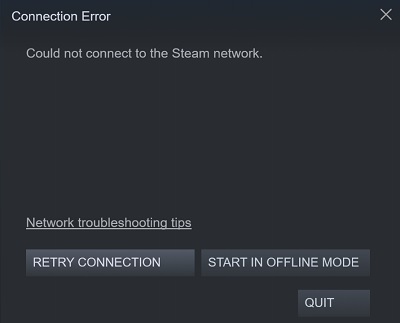
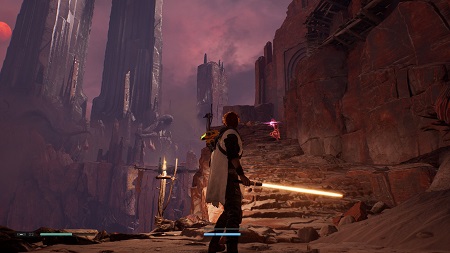
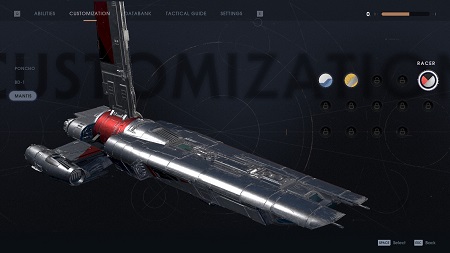
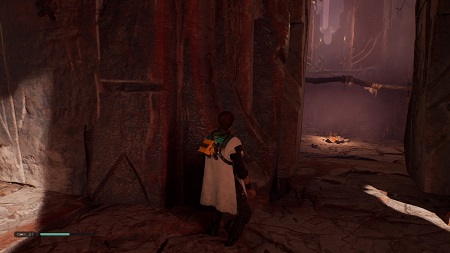
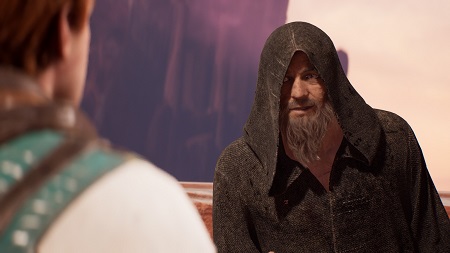
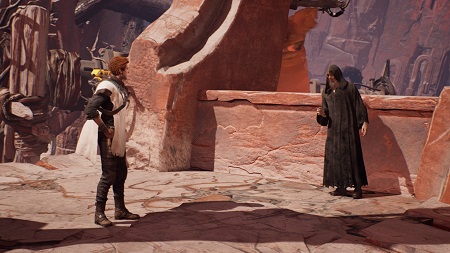
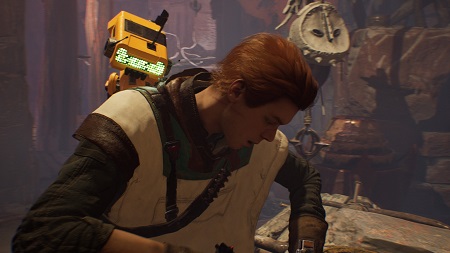
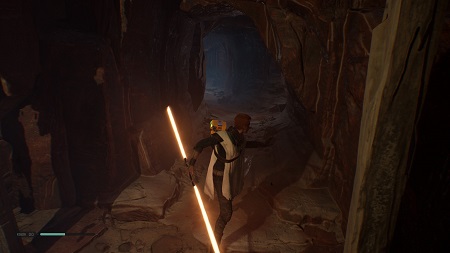
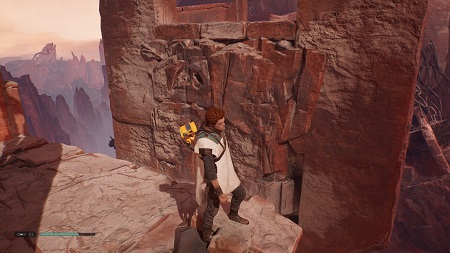
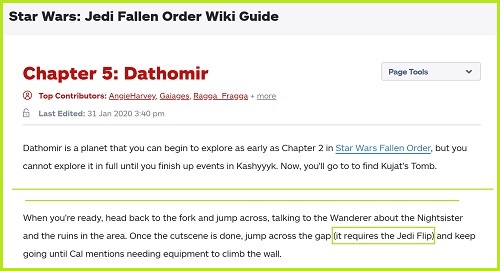
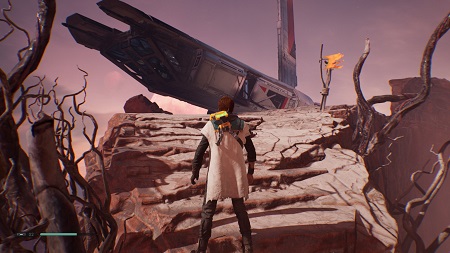
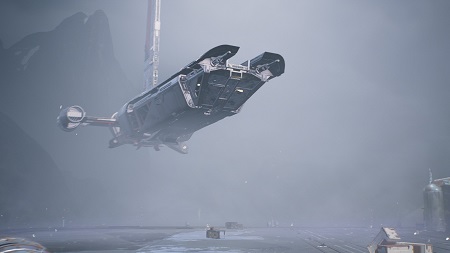
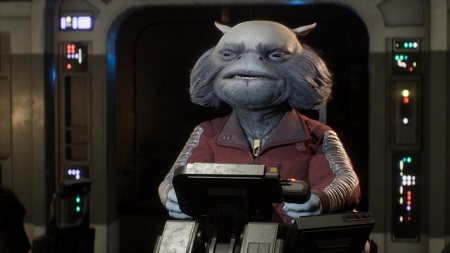
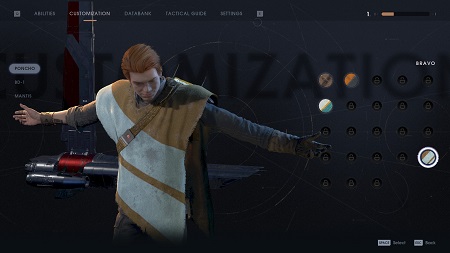
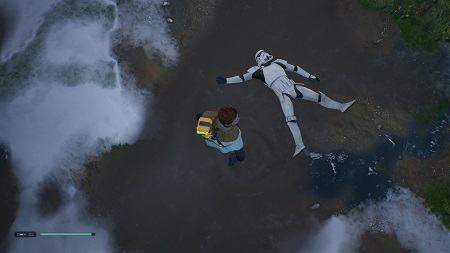
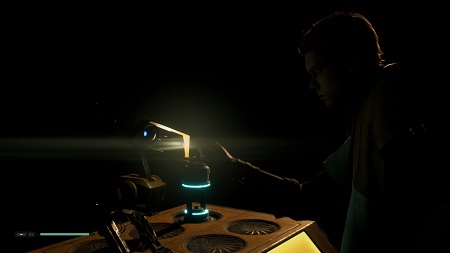
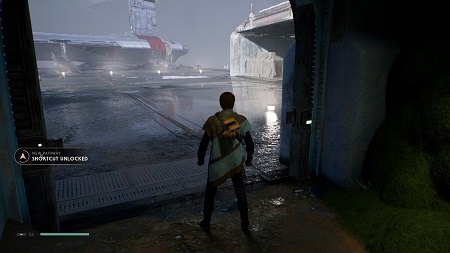
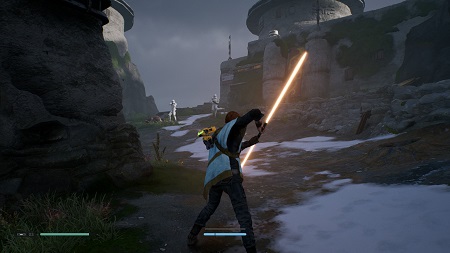
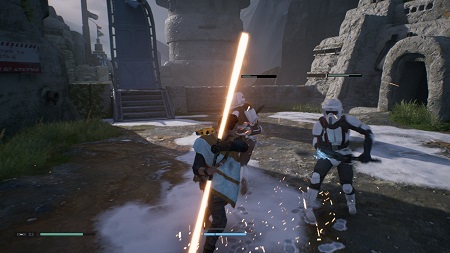
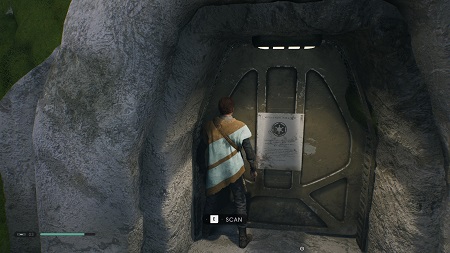

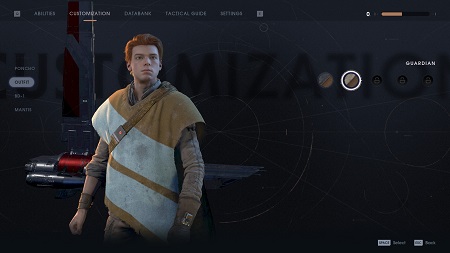
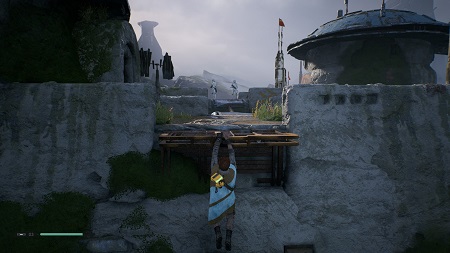
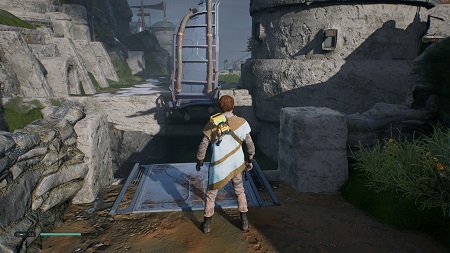
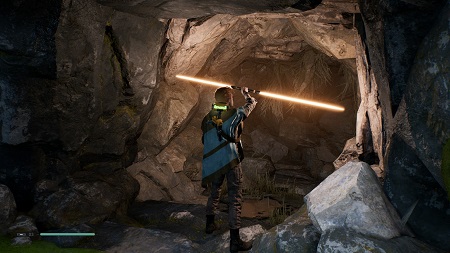
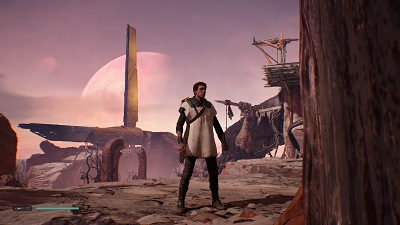
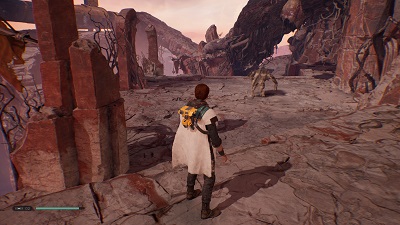
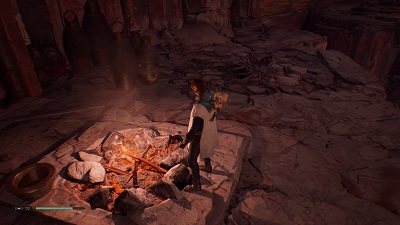
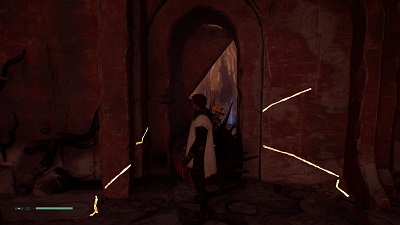
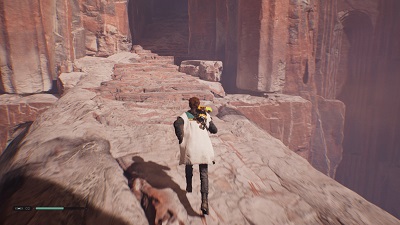
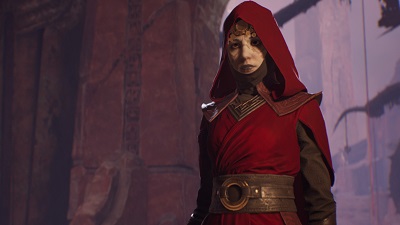
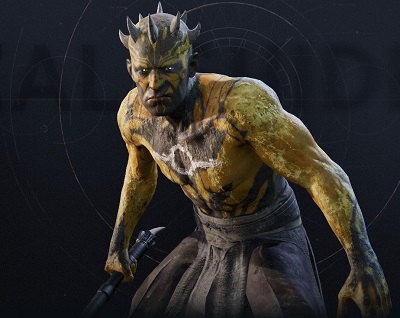
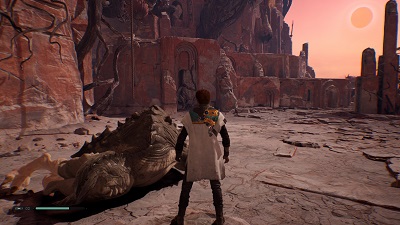
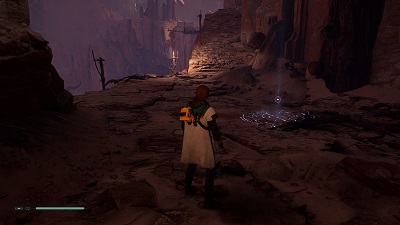
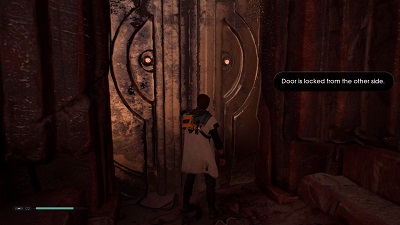
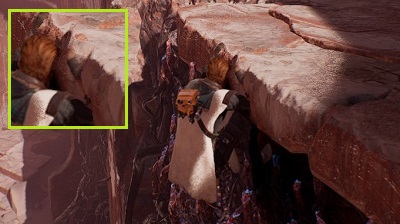

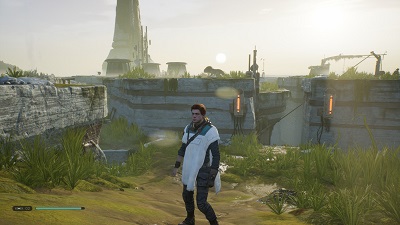
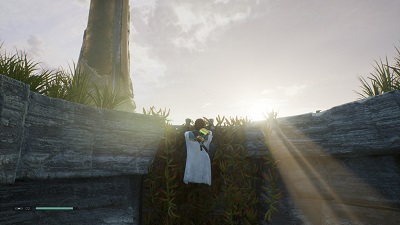
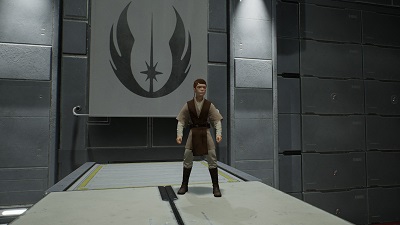
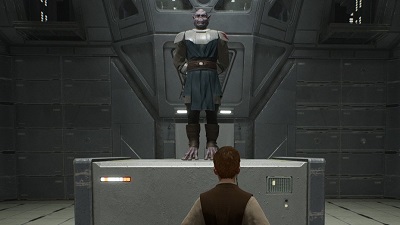
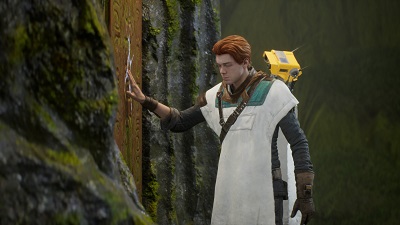
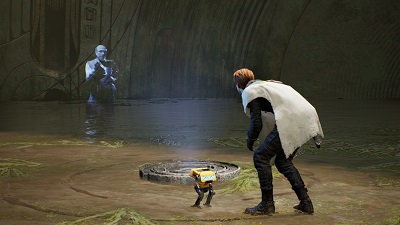
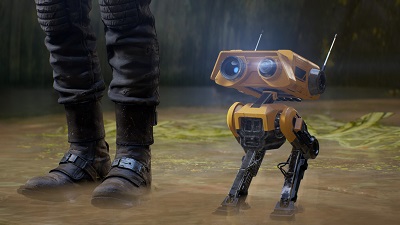
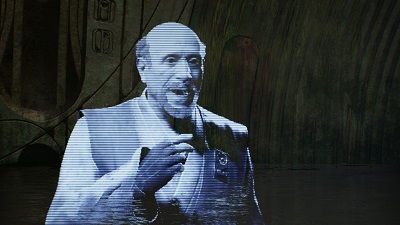
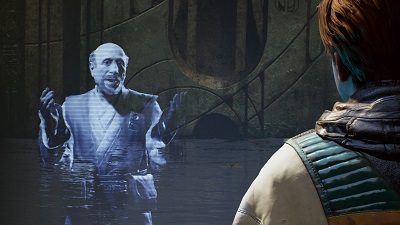
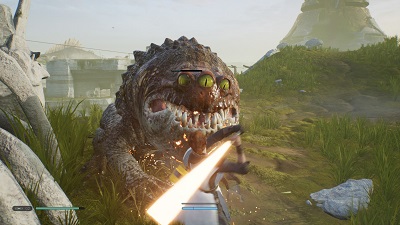
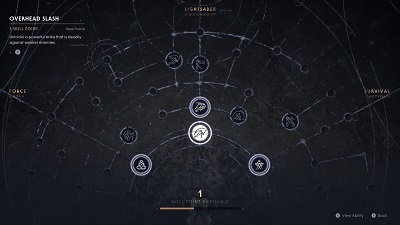
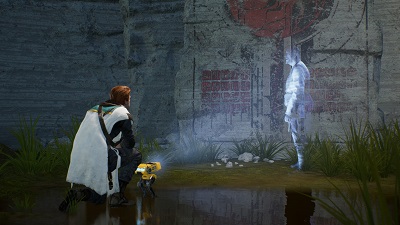
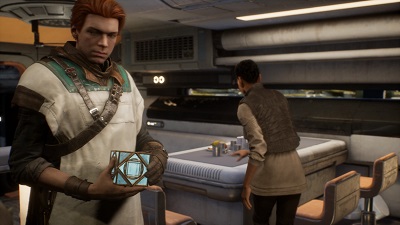
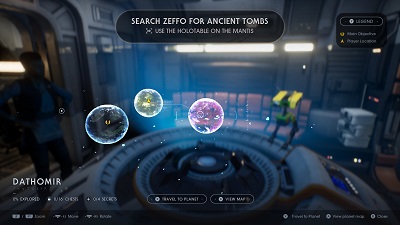
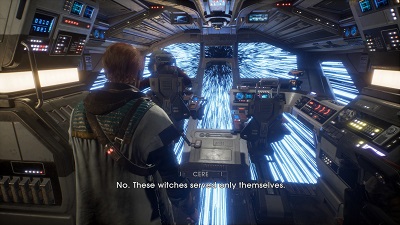
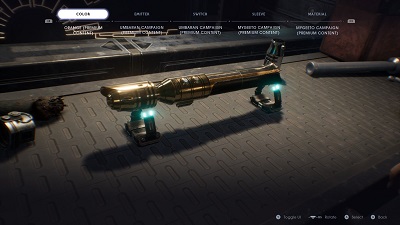
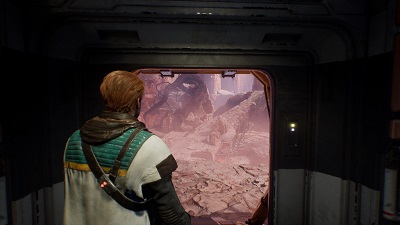
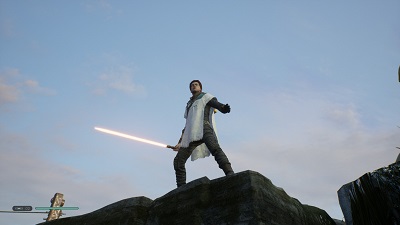
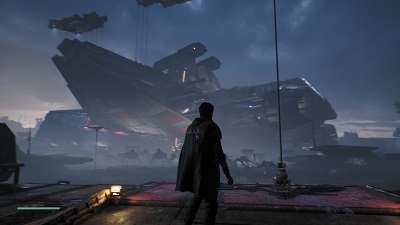

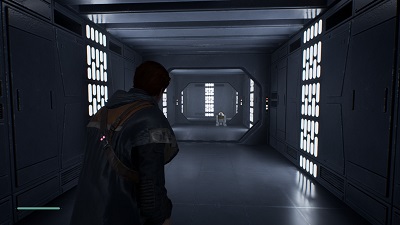
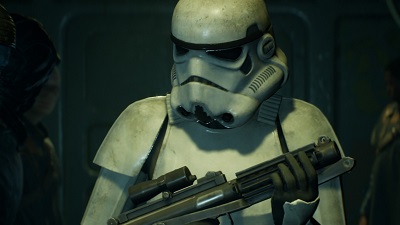
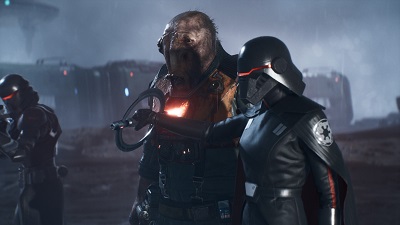
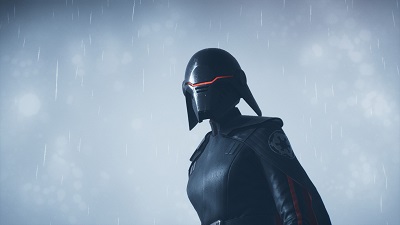
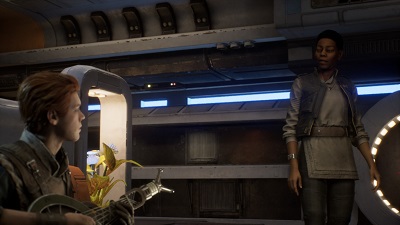
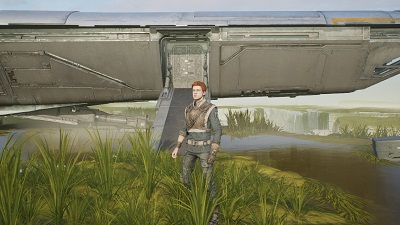
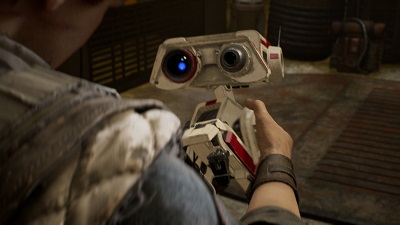
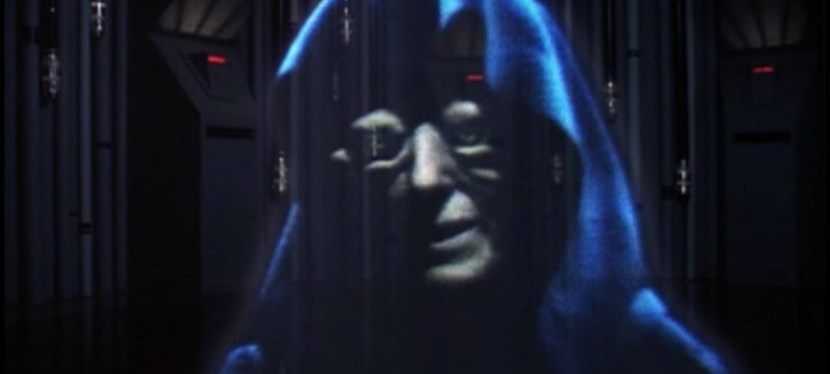

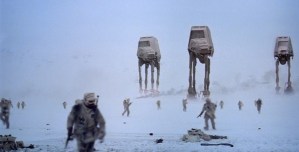

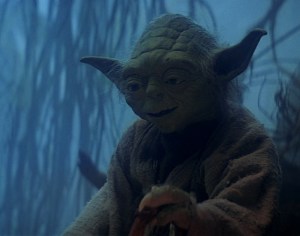
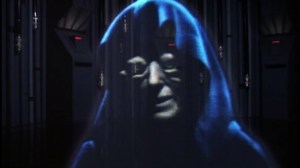

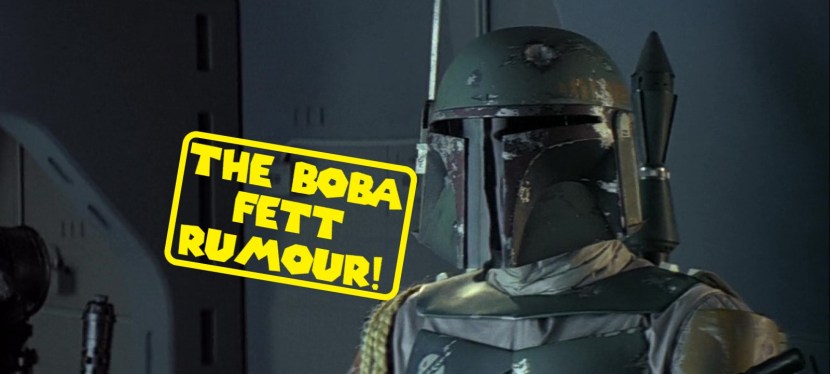





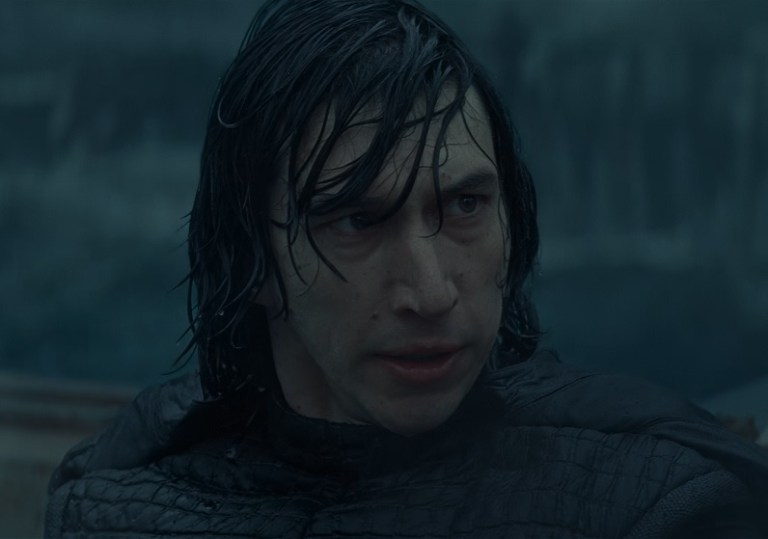


 Trekking with Dennis