Thoughts on the Doctor in Starfleet Academy

A Star Trek-themed spoiler warning.

Spoiler Warning: There are spoilers ahead for Star Trek: Starfleet Academy Season 1. Spoilers are also present for the following Star Trek productions: The Next Generation, Deep Space Nine, Voyager, Discovery, and Prodigy.

I’d like to focus on one individual storyline from Starfleet Academy’s first season today – specifically from the episode The Life of the Stars. This was only one part of the episode, so if you want to get my thoughts on other aspects of The Life of the Stars, I have a brief review in my Starfleet Academy Season 1 episodes piece – click or tap here to check it out. And if you want to see what I thought of Starfleet Academy’s first season as a whole, check out my full review by clicking or tapping here.

We’re going to get into some serious spoiler territory today, so if you ignored my little spoiler warning above, consider this your last chance to nope out before I talk about storylines impacting not only Starfleet Academy, but also Voyager, Prodigy, and other parts of the Star Trek franchise, too.
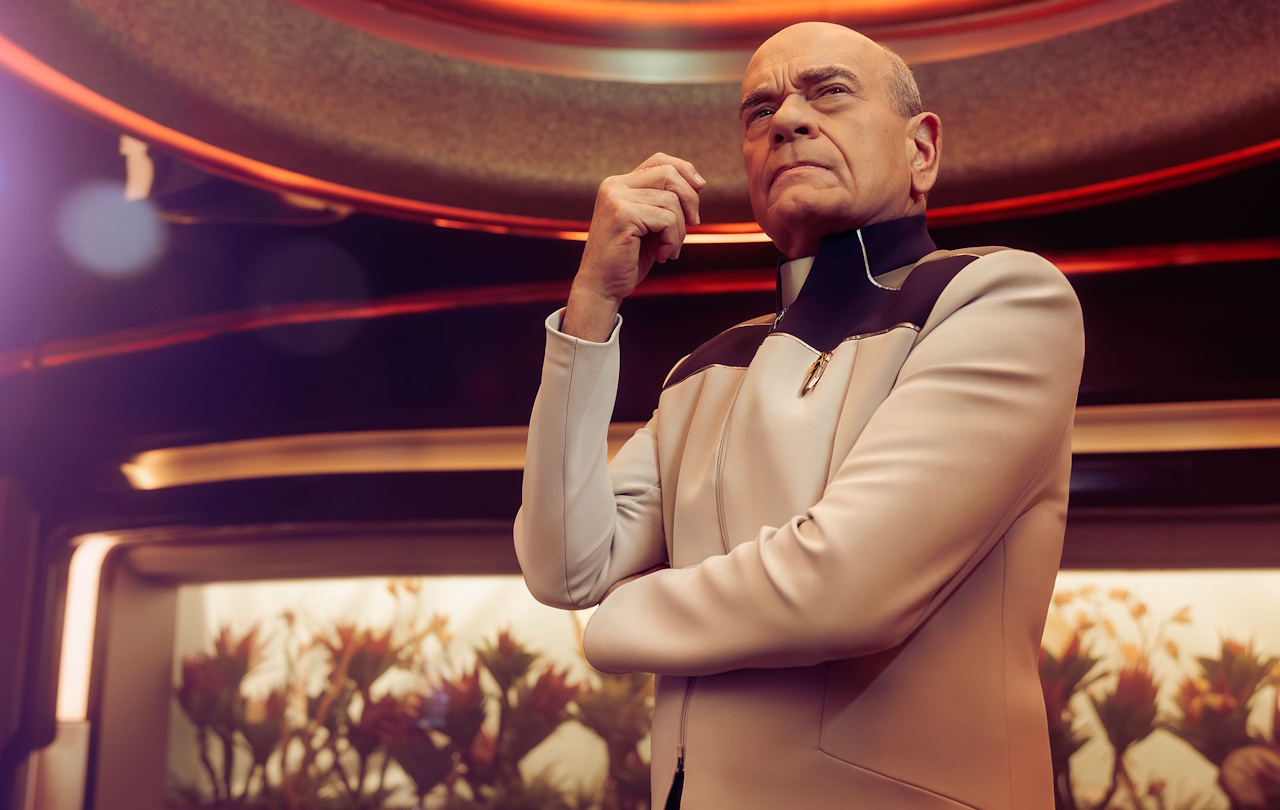
Promo photo for Starfleet Academy S1 showing the Doctor
Promo photo of the Doctor released ahead of Season 1’s premiere.

Today, we’re going to focus on the Doctor: Voyager’s Emergency Medical Hologram. The Doctor was a surprising inclusion in Starfleet Academy’s cast when the announcement was made a couple of years ago, but I genuinely thought it was a fun idea. I’d speculated for a long time that the Doctor – or perhaps a backup copy of him – could have survived to the 32nd Century, but we didn’t get to see him in Discovery. A teaching role sounded perfect for a being who’s now more than 800 years old; Robert Picardo, who plays the character, described this version of the Doctor as being akin to Yoda over in the Star Wars franchise! I thought that sounded like an apt comparison.

The Doctor appeared in almost all of Starfleet Academy’s episodes this season, but his role in The Life of the Stars was by far the biggest. This storyline explored the Doctor’s history, his family, his memories, and why he struggled to make a genuine connection with Sam – Starfleet Academy’s holographic cadet.

And… I really didn’t like what this storyline had to say, unfortunately.
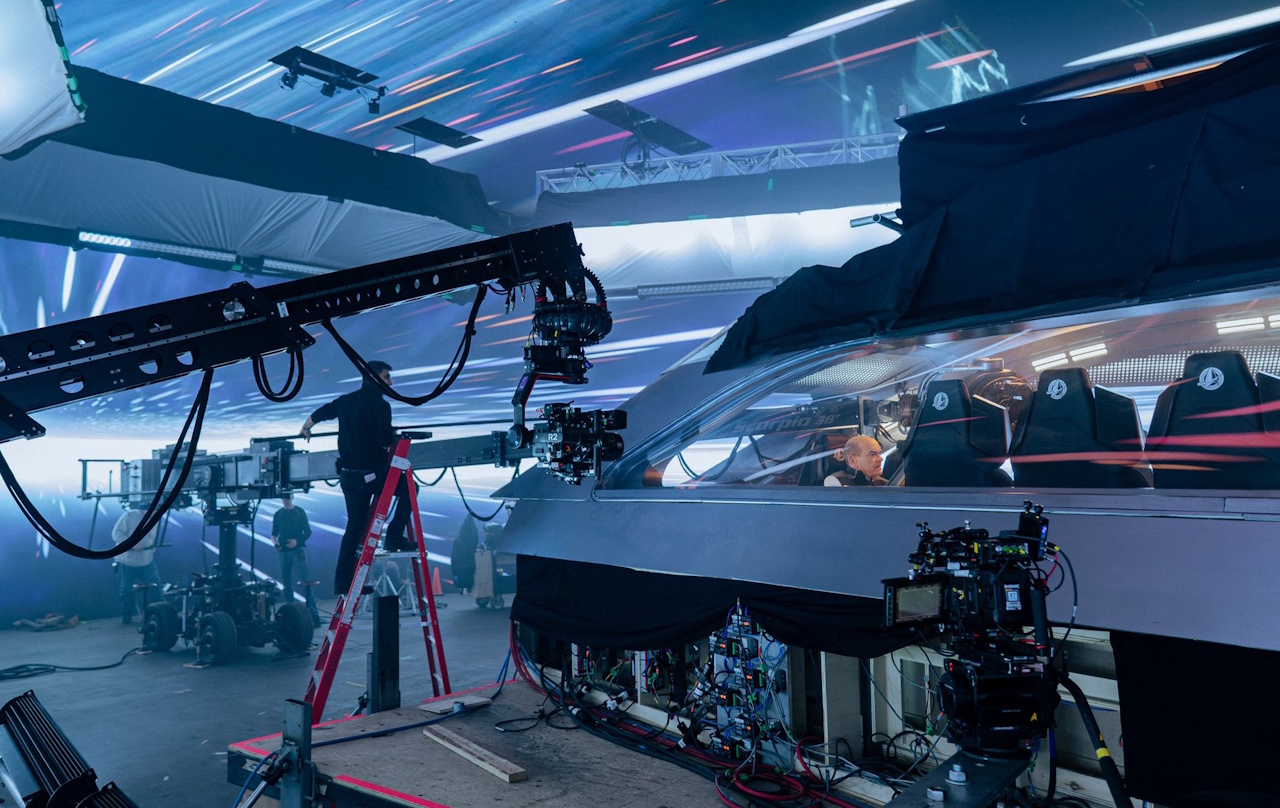
Behind-the-scenes photo from Star Trek SFA S1 showing the shuttle set
Behind-the-scenes during production on The Life of the Stars.

Before we go any further, let me give my usual caveat: everything we’re discussing today is the *subjective, not objective* opinion of just one old Trekkie. If you disagree with me about the Doctor (or any other element of Starfleet Academy), if you think I’ve totally got the wrong end of the stick, or if our views don’t align… that’s okay. There’s enough room in the Star Trek fan community for differences of opinion and respectful disagreement, and I share my thoughts with you in that spirit. I’m not trying to say “I’m right and that’s that;” I’m well aware that other Trekkies may completely disagree – and that’s totally fine.

There are always going to be a range of opinions on works of art and media in general, and just because I personally didn’t like what this storyline had to say doesn’t mean other people won’t find it interesting or entertaining. The story was clearly written this way for a reason, so at least *someone* out there must’ve thought it was a good idea!
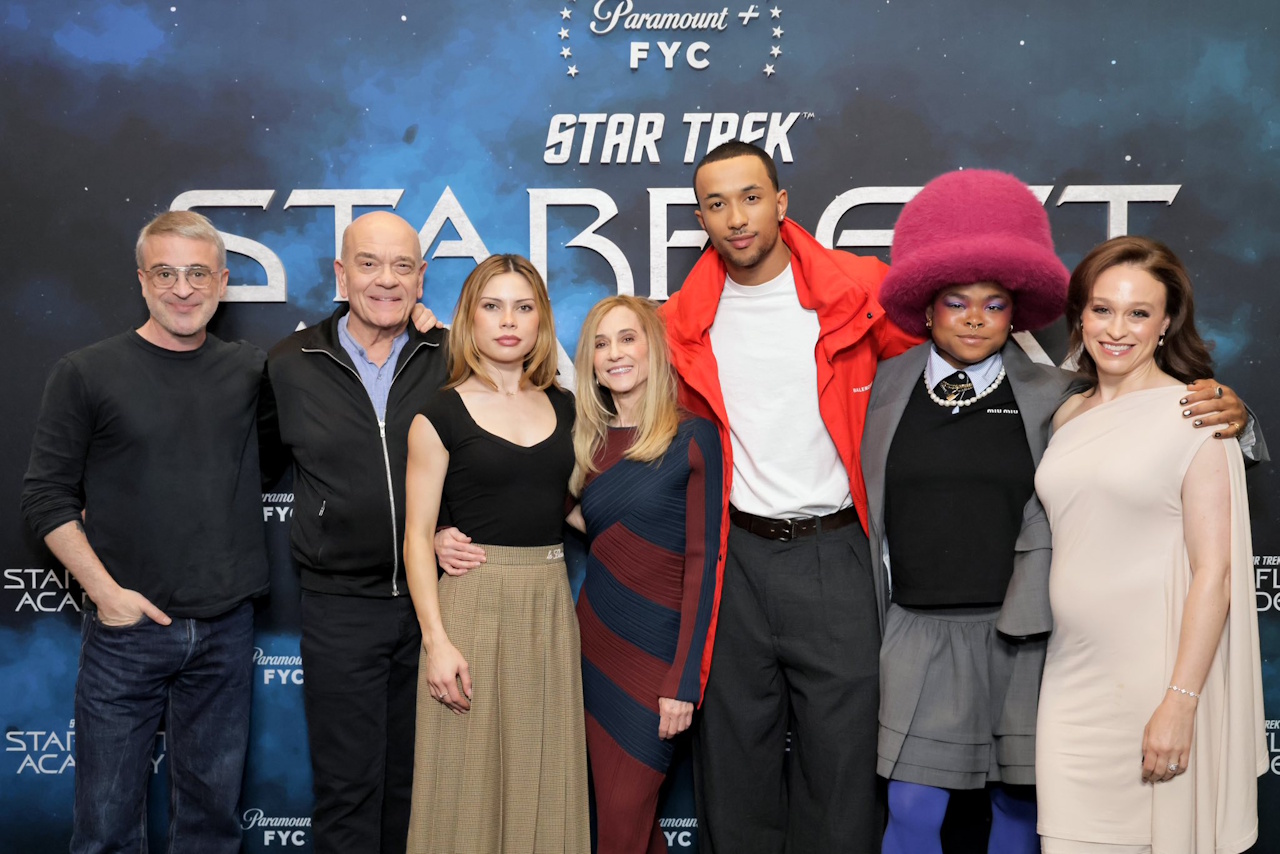
Photo from the Star Trek SFA finale screening showing the main cast and showrunners
Robert Picardo (second-left), with several co-stars and the executive producers of Starfleet Academy in March 2026.

Finally, this is my second time criticising the way in which Starfleet Academy handled the legacy of a character from The Next Generation era. The show only did two storylines which really focused in on legacy characters, so for me to come away feeling that *both of them* weren’t enjoyable and I didn’t like what they said… that’s pretty disappointing, to be honest. It’ll go down as a real black mark against Starfleet Academy, at least in my book.

Starfleet Academy, in my view, already had several challenges to overcome: its teen/young adult focus, its serialised storytelling, its unimpressive villain, and the simple fact that it’s the sixth new Star Trek series to come along in just nine years. Solid, well-written, enjoyable callbacks to Deep Space Nine and Voyager could’ve done a lot to boost the show’s prospects, at least for an old Trekkie like myself, and could’ve made it more entertaining and just more memorable. I didn’t want to be in this position of having to criticise two of the storylines that *should*, in a sense, have been just the kind of thing I’d have wanted or hoped to see in a series like this. But… here we are.

If you want to check out what I thought of Starfleet Academy’s connection to Captain Sisko and DS9, by the way, you can find that article by clicking or tapping here.
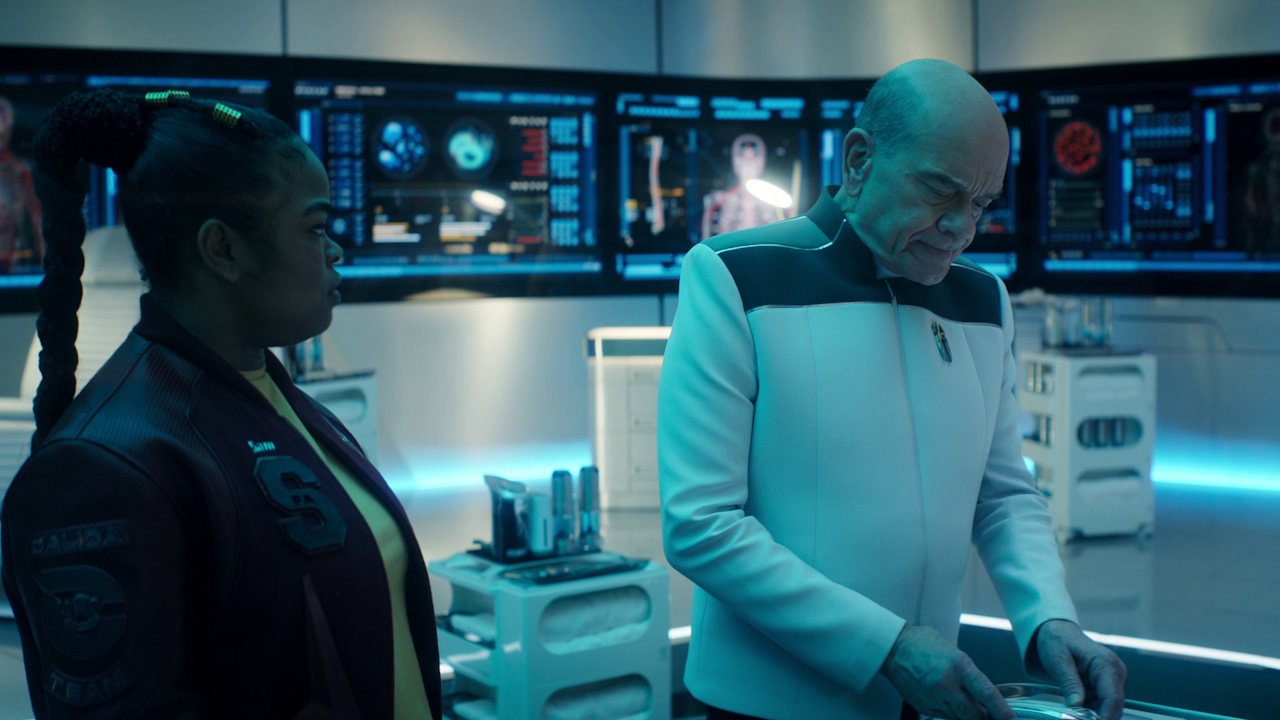
Still frame from Star Trek SFA 1x05 showing Sam and the Doctor
Series Acclimation Mil was also an episode I did not enjoy…

Alright, now that that’s out of the way, let’s set the scene. Cadet Sam – short for Series Acclimation Mil – is only a few days old, but she’s been programmed by her holographic race to have the maturity and appearance of an Academy-aged individual. The Life of the Stars follows on from Sam’s role in the episode Series Acclimation Mil, in which we learned why her people wanted to create her and send her to the Academy in the first place.

Sam had been injured (or “damaged,” I guess) a couple of episodes earlier in Come, Let’s Away, and her injuries progressed to such an extent that the Doctor couldn’t find a treatment. The Doctor and Captain Ake agreed to take Sam back to her homeworld, Kasq, where there was hope that Sam could be repaired. There were stakes not only for Sam herself, but also for Kasq’s potential to come out of isolation and to spend more time with organic life-forms. Sam’s mission, at the end of the day, was to better understand organic life and convey that understanding to her makers.
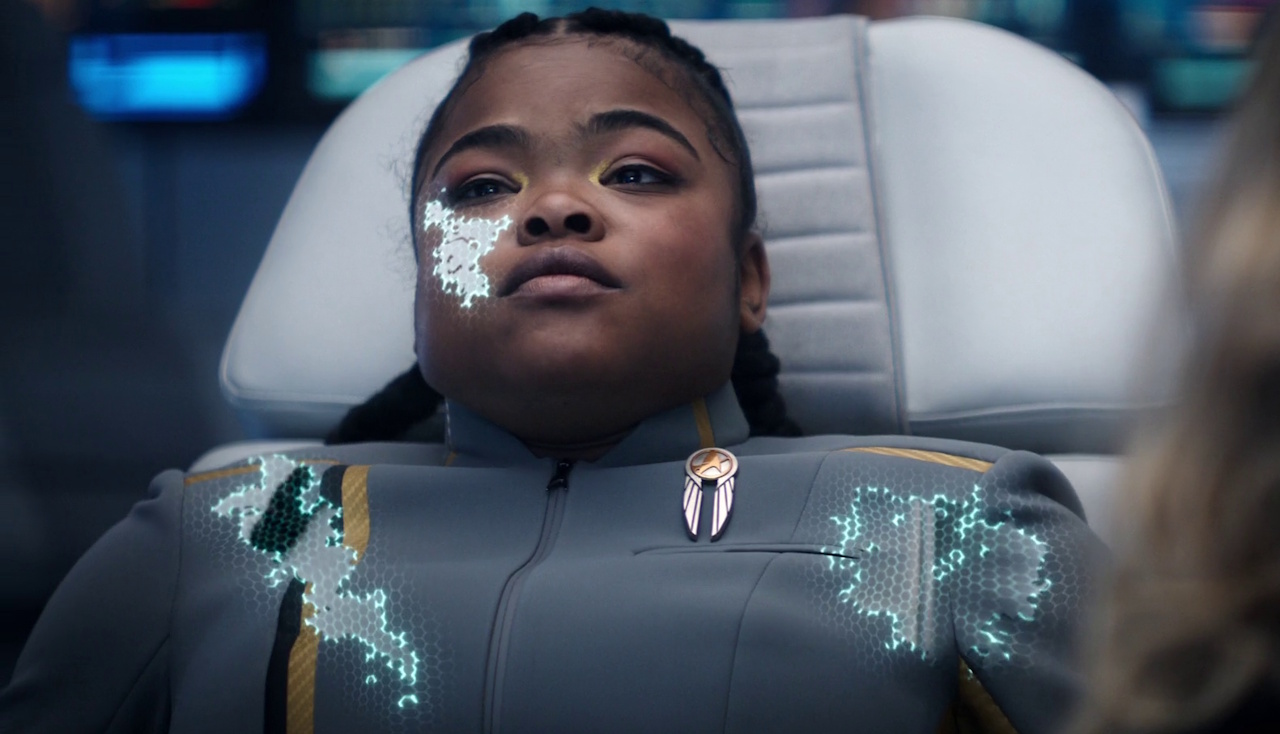
Still frame from Star Trek SFA 1x08 showing Sam
Sam’s injury.

And then we come to the Doctor.

The Doctor had been quite standoffish with Sam when they first met, back in the series premiere. When Sam tried to bring up the Doctor’s past life – the crews of the USS Voyager and Protostar – he quite quickly shut her down. I speculated that the Doctor could be struggling with having lived such a long life, and having seen potentially many generations of organic friends live and die. I said that, while I was glad the Doctor didn’t overwhelm Starfleet Academy in the show’s premiere, I was curious to see if that angle would be explored further.

The Life of the Stars was that explanation – after a fashion. It turns out that the Doctor was, as I theorised, struggling with life and loss… but not in the way I’d have thought or expected. Rather than mourning his friends from the USS Voyager or the cadets of the Protostar, the Doctor had, instead, spent close to eight centuries grieving for his holographic family from the Voyager Season 3 episode Real Life.
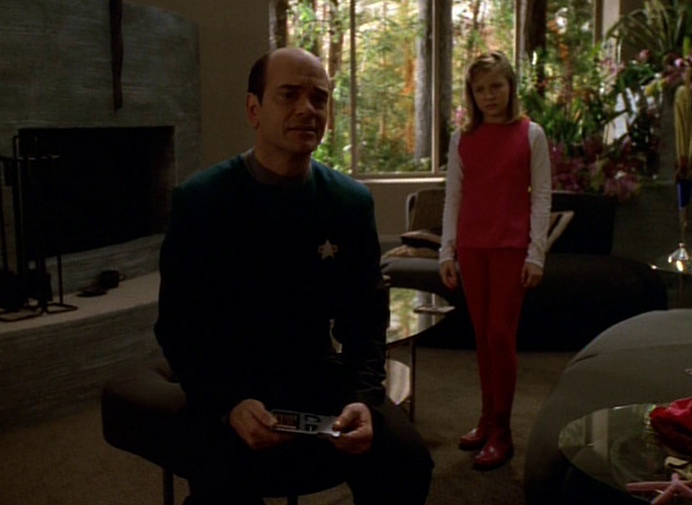
Still frame from Star Trek Voyager Real Life showing the Doctor and Belle
The Doctor with Belle, his holographic daughter, in Real Life.

According to The Life of the Stars, it wasn’t Janeway or Seven of Nine that the Doctor missed and lamented outliving. It wasn’t lil’ Harry Kim, the fresh-faced ensign who was one of the first people the Doctor ever met. Nor was it Dal, Gwyndala, or Rok-Tahk, the young kids he came to know – and perhaps the first cadets he ever really “mentored.” The Doctor, according to this story, loved none of them as much as his holographic family from Real Life, and it was the simulated “death” of his holographic daughter in particular that caused him to become withdrawn and unwilling to risk loving anyone ever again.

What the actual fuck?

Let’s talk about holograms, as defined by Star Trek – and specifically, what their capabilities were in the 24th Century. The Next Generation was the first series to introduce holograms, and according to that show, as well as to Deep Space Nine and Voyager, practically all holograms at that time *were not sentient*. They’re characters in a story, computer programmes, pieces of code. Their lack of sentience is such an important point that holograms which become genuinely self-aware were almost always treated as unique, special, or even dangerous, in some cases.
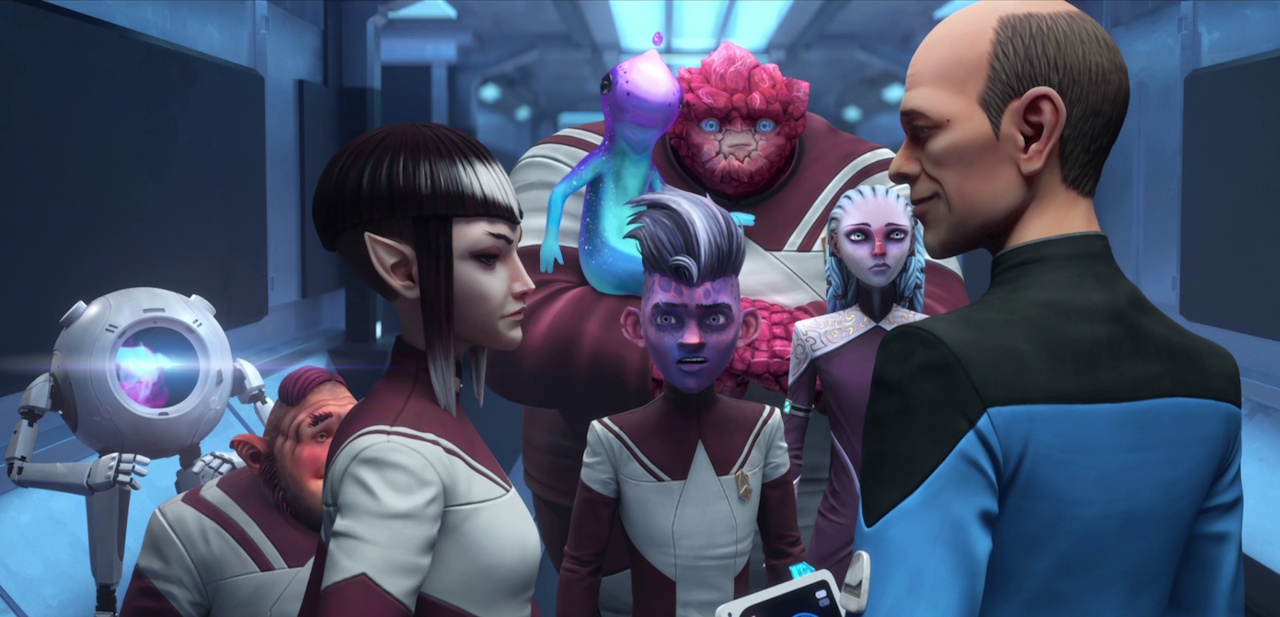
Still frame from Star Trek Prodigy 1x06 showing the Doctor and the cadets
The Doctor with the cadets in Prodigy Season 2.

The first sentient hologram we met in Star Trek was Professor Moriarty, in Elementary, Dear Data. He was inadvertently created by the Enterprise-D’s computer following a misunderstanding, and seemed – at that time, anyway – to be the only sentient holoprogramme in existence. The next self-aware hologram is arguably the EMH programme – i.e. the Doctor’s original programme. And then we come to the likes of Vic Fontaine. But in between we saw countless examples of holograms that were basically – to use some modern lingo – akin to video game NPCs.

This is how we get away with stories like Hollow Pursuits, which saw Barclay recreating members of the Enterprise-D crew on the holodeck as part of his escapist power fantasy. Or the countless references to holosuites at Quark’s being used for… adult activities. Or holograms created entirely for the purposes of being killed in training simulations. The list goes on.
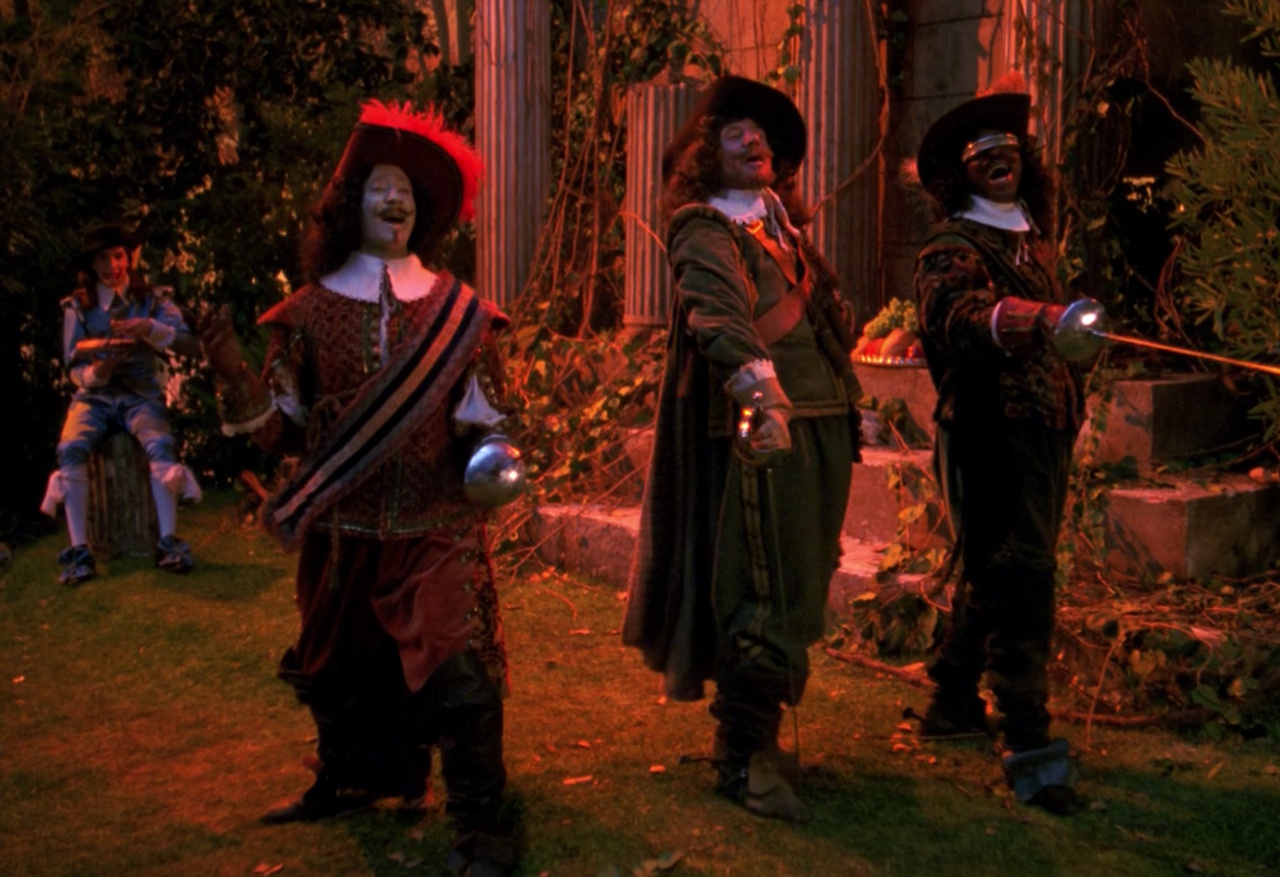
Are these holograms “alive,” too?

What The Life of the Stars is effectively saying, in my opinion, is that the Doctor spent hundreds of years of his life refusing to get too close to anyone ever again because… he had a particularly emotional reaction to a character from a video game. It would be like if you or I refused to get married or have kids because “this one time, my family in The Sims all died, and it made me really sad… I don’t think I could put myself through that again.” Do you get my point? These holograms are, according to everything we know about Star Trek, holodecks, and the 24th Century, not sentient, not self-aware, and not… alive. At least, not by any conventional definition.

I don’t want to downplay the power of entertainment to evoke strong emotions. Heck, I run a website all about films, games, TV shows, and the Star Trek franchise. I can’t even count the number of incredible titles – interactive and non-interactive – that have given me “the feels.” Just the other day, I talked about the intense bittersweet feelings of nostalgia that I got from a single twenty-minute episode of an anime. So I’m not calling out Starfleet Academy because the writers wanted to show the Doctor having a reaction to a holoprogramme that he participated in. If that was the intention of the story, and if it was handled differently, I might’ve been willing to praise an interesting take on the power of interactive media. But that wasn’t the intention, and it’s not the way it comes across.
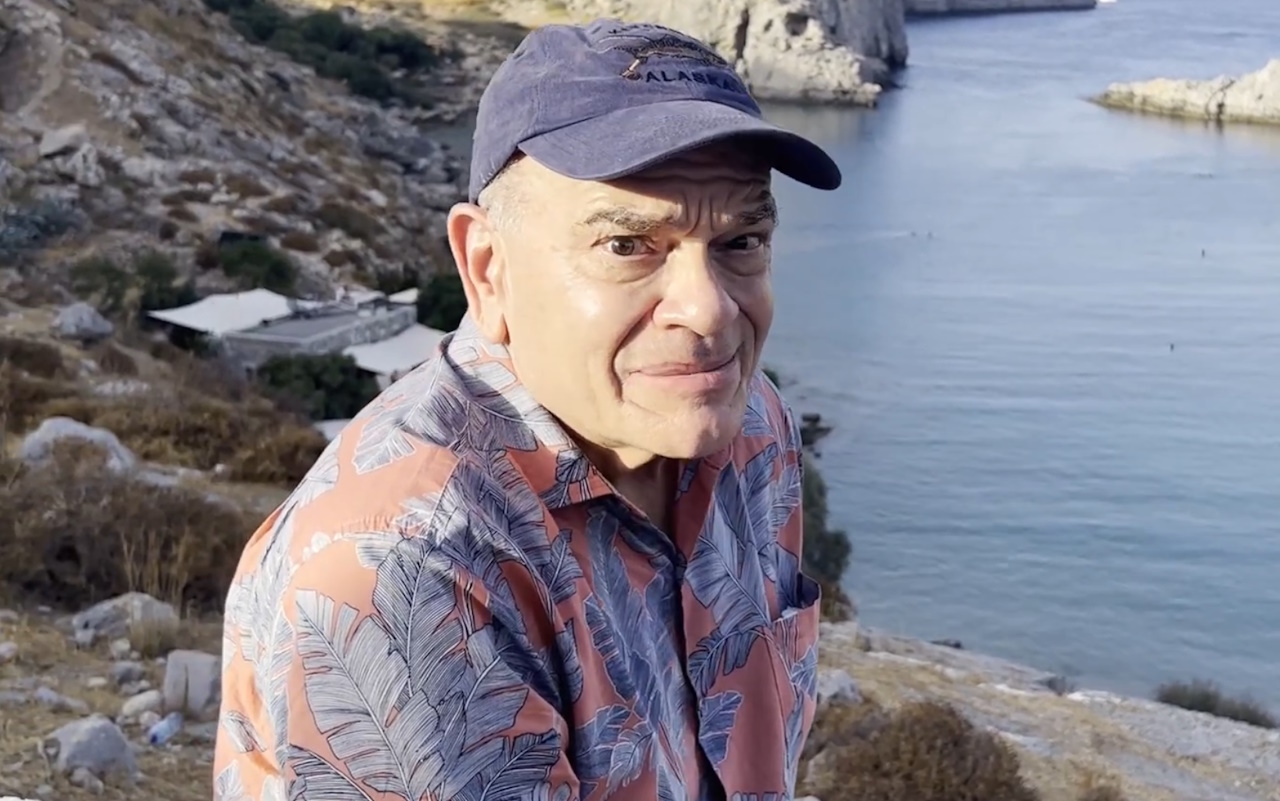
Still frame of Robert Picardo (Star Trek) from YouTube
Robert Picardo, who plays the Doctor.

I’m afraid I have to come to the conclusion that one of the episode’s writers (two writers are credited, but Starfleet Academy also had a writers’ room, I believe) just didn’t understand how holograms worked in past iterations of Star Trek. They looked at their character, Sam, and they looked at the Doctor – two sentient, self-aware, alive holograms – and concluded that *all* holograms must be like that. Even though, during TNG, DS9, and Voyager, sentience was the exception, not the norm. And the result is a massively confused storyline that seriously harms the Doctor’s characterisation.

The sad thing is that this exact same storyline, had it adopted one of two possible changes, could have been one of the best of the entire season. In a season which, in my view, was drowned out by a silly, hammy villain and a little too much teen/young adult drama, a story about an older man coming to terms with loss, grief, and what it means to outlive the people you love… that could’ve been incredibly powerful. I’ve lost people close to me – friends as well as close family – and getting a storyline that touched on that, on what it means to be the one left behind… I really think there’s a lot of potential there, and the Doctor’s unique status and age presented a golden opportunity.

But Starfleet Academy’s writers pissed it away on a story they clearly thought was clever… but that completely misunderstands a very basic piece of the franchise’s history.
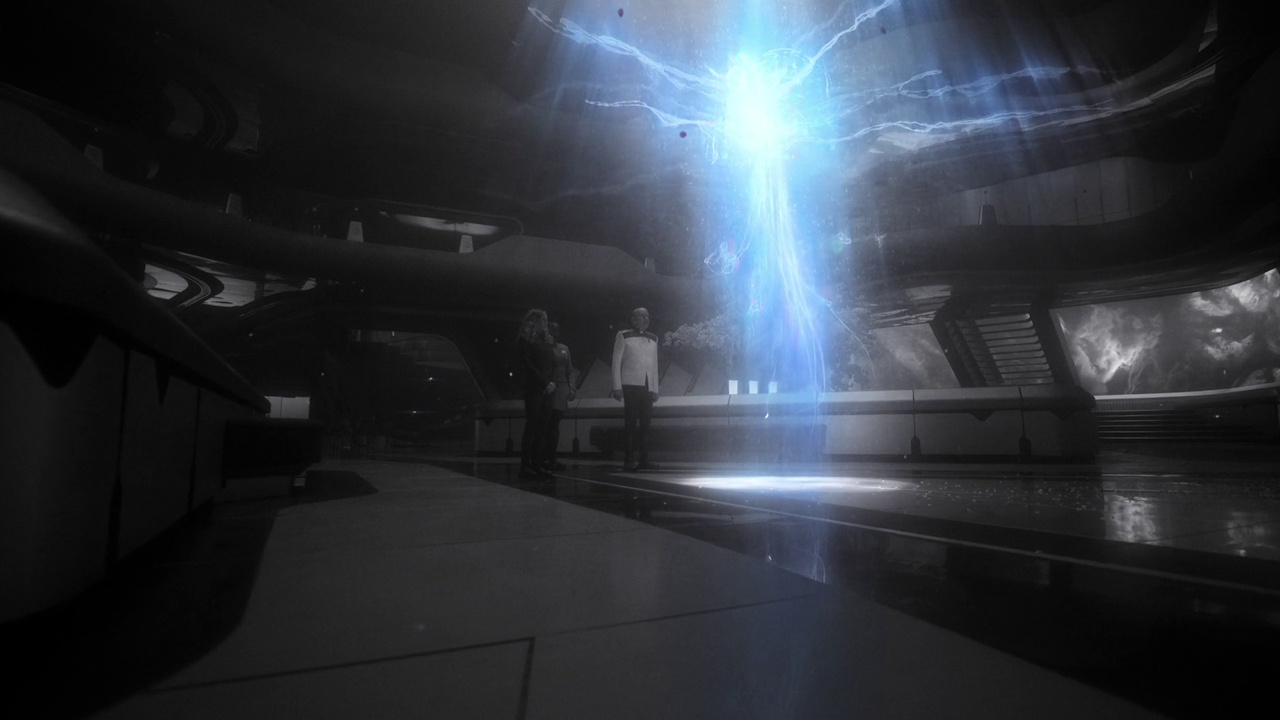
Still frame from Star Trek SFA 1x08 showing Kasq
The Doctor, along with Sam and Captain Ake, arrives at Kasq.

I am not, despite how parts of this piece may be coming across, a stickler for “the tiniest minutiae of canon.” If holograms were relatively new to Star Trek, or if Real Life had been one of the only episodes in The Next Generation era to feature holograms, I’d have been willing to accept this as a bit of a retcon; a change, but one that could lead somewhere narratively interesting. But I believe that there are a few fundamental building blocks to writing a coherent story in a long-running franchise, and one of those is basic internal consistency. It’s been established on dozens, or perhaps even hundreds, of occasions across TNG, DS9, Voyager and beyond that most holograms – like those in Real Life – are not alive and are not sentient. So new writers have to be bound by that; making an arbitrary change to it this late in the game is not something I can accept.

The consequences of such a change ricochet across the entire 24th Century, if that’s the case. It makes B’Elanna into a murderer, first and foremost, since she reprogrammed the Doctor’s idealistic family life in such a way that his daughter died. It makes a lot of other characters into killers, into sex pests, and more… and while I really like the idea of using the holodeck as a way to critique things like fantasising excessively, relying too much on the computer, or – in the modern day – as an analogy for A.I. chat bots, perhaps… that isn’t how this story was intended, and it doesn’t come across that way, either.
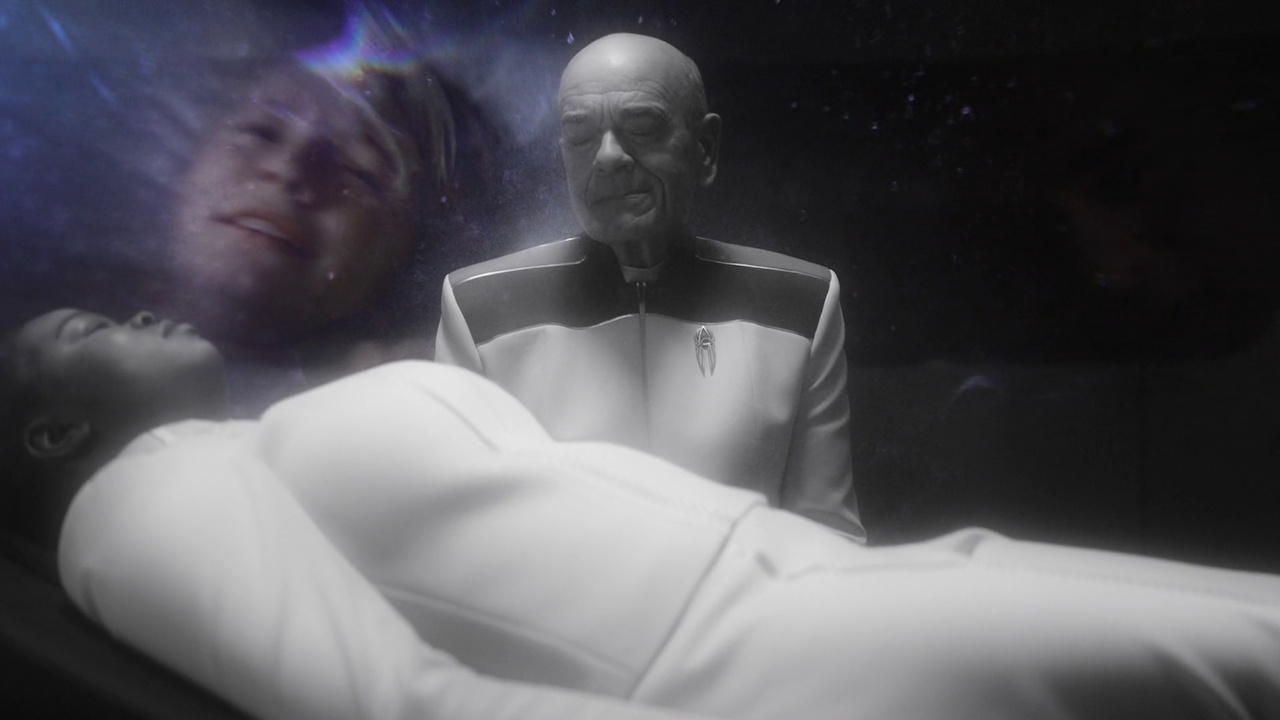
Still frame from Star Trek SFA 1x08 showing the Doctor, Sam, and memories
The Doctor remembers his holographic daughter.

There were, as I mentioned, two ways to salvage this story, so let’s go over them in turn.

Firstly, rather than going back to Real Life and Voyager, The Life of the Stars could’ve simply introduced new holographic characters to fill that role. Let’s say that, sometime in the 25th Century, the Doctor settled down with his holographic husband or wife. But, because of some technobabble, his partner or one of his holographic offspring ended up being damaged beyond repair and couldn’t be reset or saved. This could even be tied to the Burn – the massive, galaxy-altering event that underpins Starfleet Academy’s 32nd Century setting.

That gets us to the exact same narrative place, but in a way that makes it clear that the Doctor is grieving someone who was actually alive to begin with. It wouldn’t have the same connection to Voyager, but I mean… is Real Life an especially memorable episode for a lot of folks? I don’t think that one random deep cut to a single episode would’ve been as effective as the writers hoped, even without this glaring narrative fault.
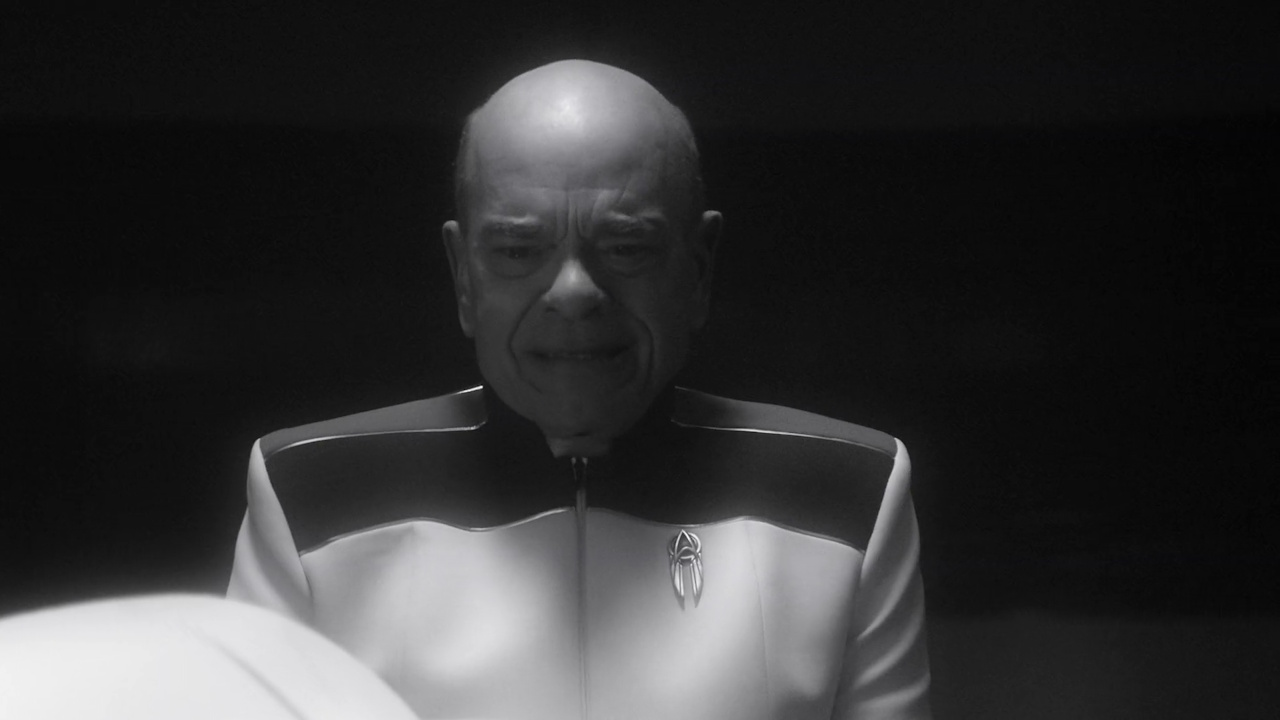
Still frame from Star Trek SFA 1x08 showing the Doctor getting emotional
The Doctor gets emotional.

Secondly, there’s the more obvious solution: the Doctor finds it difficult to accept friendships of any kind because of the toll outliving so many friends has taken on him.

This kind of story could see the Doctor lamenting the deaths of people like Chakotay, Harry Kim, or Seven of Nine. It might’ve even been possible to bring back one of those characters for a brief scene – perhaps their funeral or even their deathbed. The Doctor gained sentience and self-awareness around these people; they were the first friends he ever knew, and they had his back on multiple occasions when he was in jeopardy, when he was distressed, or just when he needed to talk. Seeing him grieve for Captain Janeway or Tuvok, remarking that it’s a terrible tragedy to outlive all of one’s friends… that could’ve been incredibly powerful.

And then, to hammer it home, the Doctor would explain that this didn’t just happen once… but over and over again. Generations of organic friends came and went, and he remembers – and mourns – all of them. But after the Burn, perhaps the Doctor felt he’d lost too much, and for his own mental health and wellbeing he needed to start keeping things professional. He keeps Sam (and others) at arm’s length not because he misses his video game family from one random episode… but because he’s grieving the loss of countless friends across eight centuries.
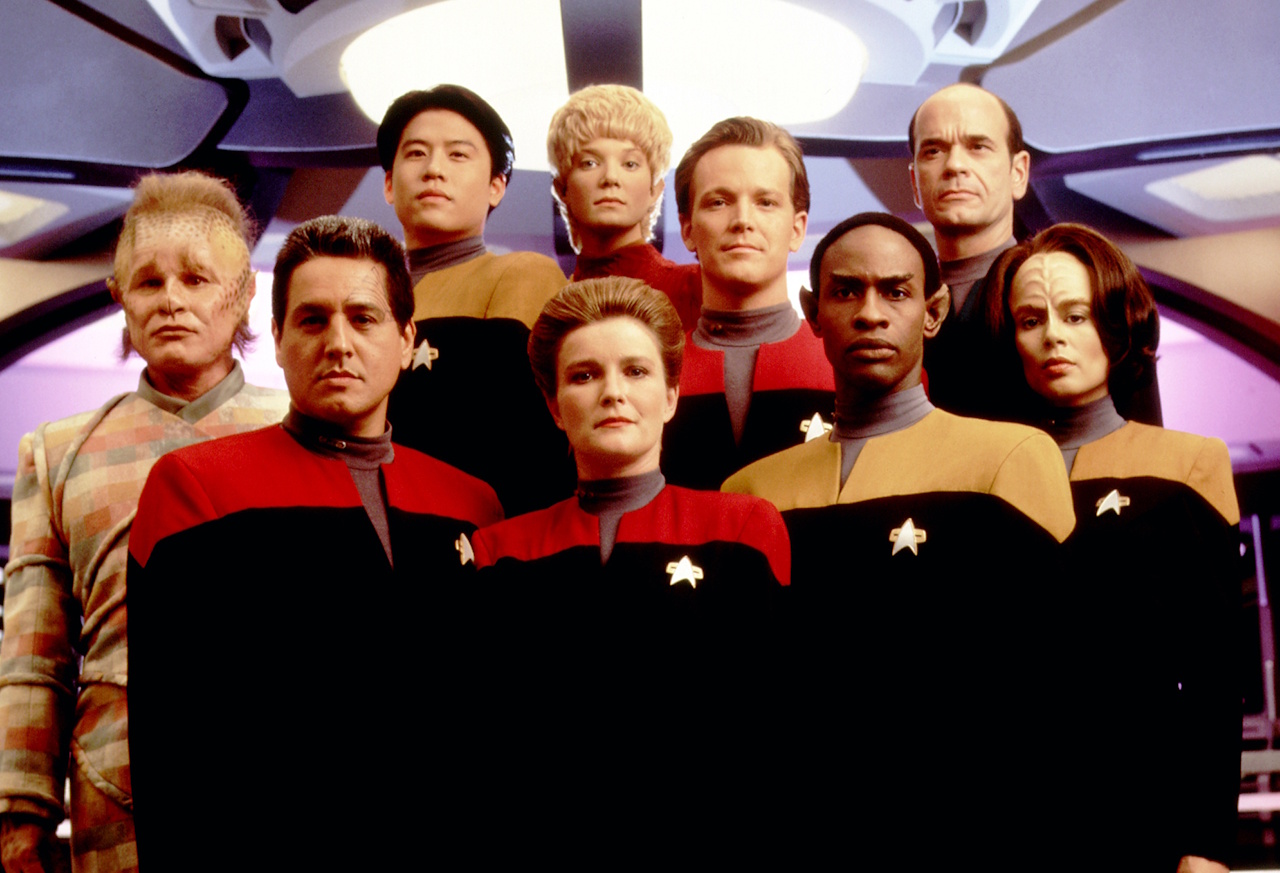
Promo photo for Star Trek Voyager showing the main cast
The Doctor’s sense of loss and grief could’ve connected back to Voyager in another way.

Maybe the writers thought that was “too obvious,” and wanted to be a bit subversive. Unless we get them on the record, I guess we’ll never know for sure. But I think that kind of story would’ve got the Doctor to the same place with the same mindset, ready to have that experience on Kasq with Sam, but in a much more powerful, emotional, and enjoyable way – and a way that makes narrative sense based on our understanding of holograms in past iterations of Star Trek.

As I’ve said before on quite a few occasions with modern Star Trek: it isn’t that the core idea was bad, but the way it was executed just… fucked it up. A story about the Doctor coming to terms with grief and having to make the incredibly brave decision to put his heart on the line one more time to save the life of a child? That’s powerful stuff. But because of the way it was handled, and the decision to make the root cause of his grief these one-dimensional characters from the 24th Century equivalent of a video game? It ruined it, and it turned what should’ve been one of the best storylines of the entire season into one of the worst.
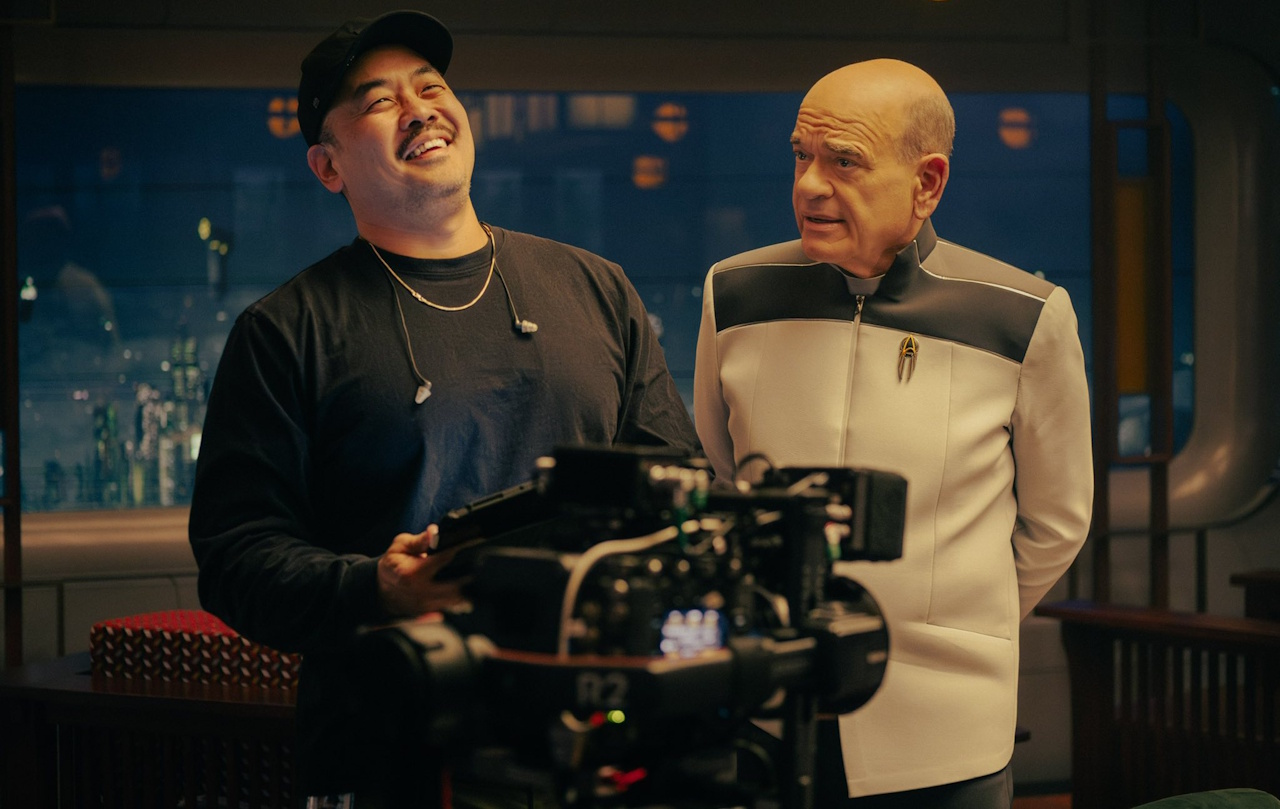
Behind-the-scenes photo from Starfleet Academy S01 showing Larry Teng and Robert Picardo
Robert Picardo (right) with director Larry Teng on the set of Series Acclimation Mil earlier in the season.

I was excited when Robert Picardo announced that the Doctor was coming back. And I wondered what might lie in store – this is a character I first fell in love with some thirty years ago, so to see him back in a totally different century for a new adventure… I was on board! I just wish that the end result hadn’t misunderstood something so basic about Star Trek, and that the Doctor’s one real moment in the spotlight could’ve been stronger and more enjoyable. When I can see not one but *two* clear and obvious narrative pathways that could’ve made it happen… it’s an unforgivable mistake, in my view.

Starfleet Academy, as I said in my review, wasn’t really “my thing.” But if there was one storyline that could’ve been more my speed, or that might’ve had something to say that resonated with me, it was this one. And I think that’s why I feel this disappointment all the more – it’s not just what it says about the Doctor, and how he apparently spent centuries sulking over the equivalent of his save file in The Sims. It isn’t even what it says about B’Elanna or other characters who used or reprogrammed holograms for selfish reasons across the TNG era. It’s because it feels like, after Starfleet Academy had already messed up its Sisko story, this was really one of the only storylines I might’ve found relatable or enjoyable. But because the writers – again, in my opinion – didn’t understand or didn’t know enough about holograms… it comes across as completely missing the point, and missing the point so severely that it harms my opinion of the Doctor himself.
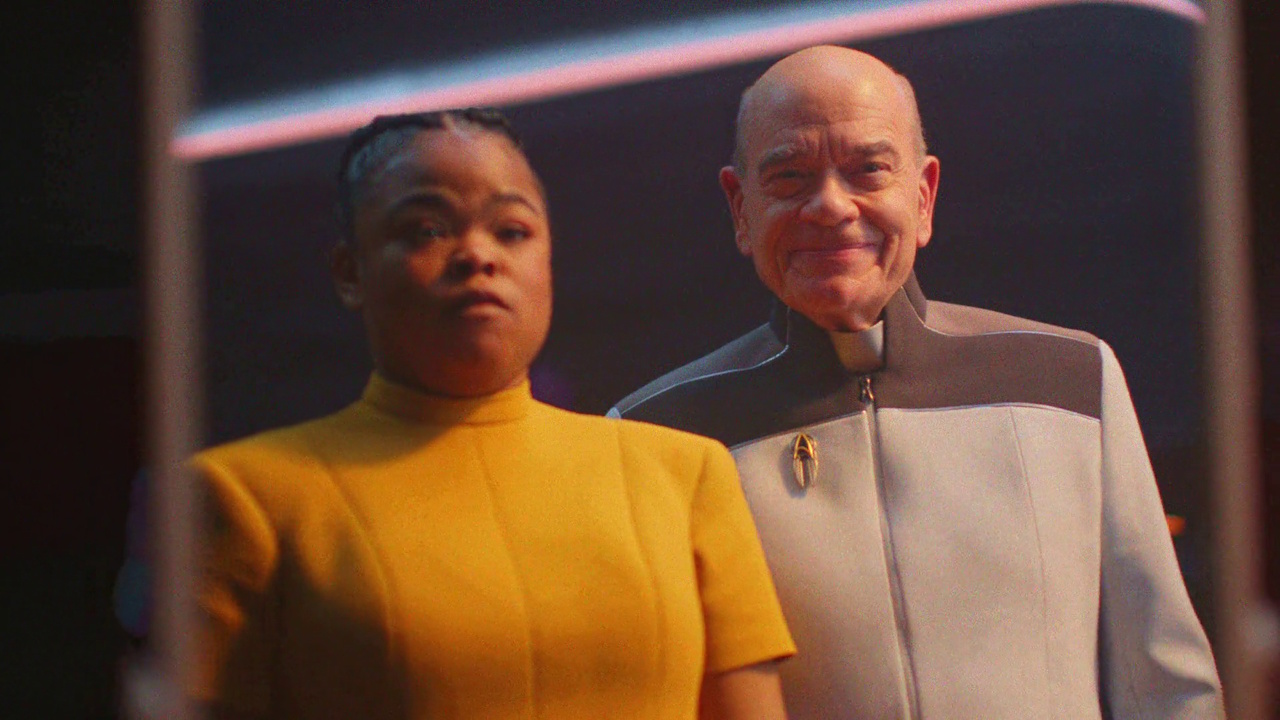
Sam with the Doctor during her second life.

So there we go. That’s my take on the Doctor’s role in The Life of the Stars and what this new information says about his character.

I would say, to the story’s credit, that there were some creative ideas. Kasq existing in a different “plane of existence” felt like a bit of a cop-out; a way to ensure the Doctor and Sam wouldn’t need to take too long to re-grow and get back to normal. But the visuals of Kasq were creative, I liked the ultimate explanation for Sam’s breakdown being mental, rather than physical, and the episode’s attempted message about looking after one’s mental health is arguably executed far better than in comparable stories in Discovery or Picard. So it isn’t that the episode as a whole as no merit; this side of the story, though, completely failed for me.

I hope this has been interesting, and I hope I didn’t come across as too harsh or aggressive. Star Trek is something I’m passionate about and have been for a long time, and as someone who watched and enjoyed Voyager during its original run, bringing the Doctor back felt like a great idea in this latest adventure. I just wish it had been handled better, and that a different reason for the Doctor’s grief and reluctance to help could’ve been written. We came close – *this close* – to one of the best parts of the entire season.
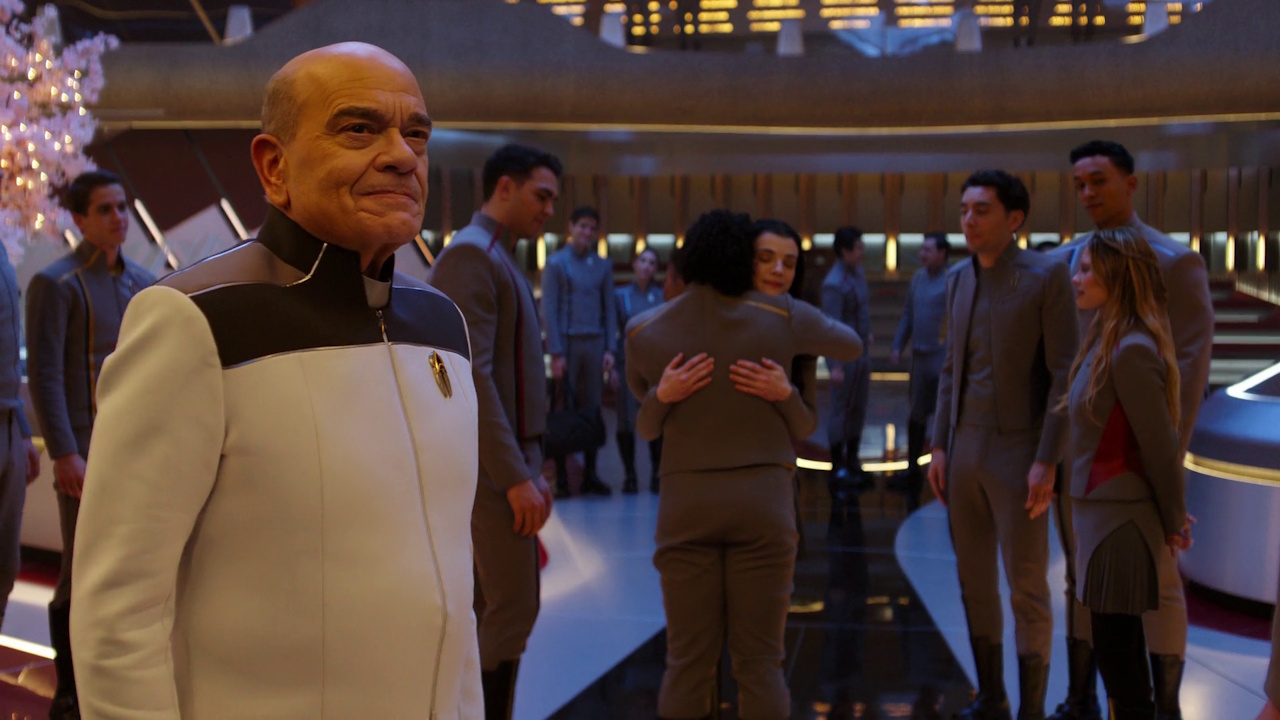
Still frame from Star Trek SFA 1x08 showing the Doctor and the cadets
The Doctor and the cadets at the end of the episode.

Thanks for reading. Despite my feelings about Starfleet Academy as a whole, and this storyline, I can tell you that I genuinely gave the series a fair shake. I always expected it wouldn’t be my favourite part of the franchise – the whole teen/young adult focus, of course, but also the serialised story and the villain with an over-the-top magical macguffin all saw to that. But despite that, I really tried to let Starfleet Academy speak for itself, and to go into the show with an open mind.

This essay concludes my coverage of Starfleet Academy for the foreseeable future. Obviously, if we get major news about Season 2, a third season renewal, or any kind of teasers, clips, or trailers, I’ll do my best to cover that here on the website. But for now… that’s all. I’ve finally said all I wanted to say about the show’s first season.

If you missed them, please check out my reviews of the two-part premiere, the first season as a whole, and episodes 3-10. You can find them by clicking or tapping those links. And as the 60th anniversary year rolls along, I’ll have more to say about Star Trek, so be sure to check back from time to time. Thanks again for reading, and Live Long and Prosper, friends!


Star Trek: Starfleet Academy is available to stream now on Paramount+ in countries and territories where the service is available. The Star Trek franchise – including Starfleet Academy and everything else discussed above – remains the copyright of Paramount/Skydance. This review contains the thoughts and opinions of one person only and is not intended to cause any offence.

Star Trek: Discovery Season 4 – The Story So Far

Spoiler Warning: There are spoilers ahead for Star Trek: Discovery Seasons 1-3 and the trailers and teasers for Season 4.

As we welcome the month of November, Star Trek: Discovery’s fourth season is now only a couple of weeks away! With the season fast approaching I thought it would be a good idea to recap, as succinctly as possible, the story so far. Michael Burnham and the rest of the crew have been on a wild ride that’s seen them face off against militant Klingons, a Mirror Universe impostor, a rogue AI, Section 31, and a journey into a future that none of them expected to find.

If you haven’t re-watched Discovery since Season 3 ended just after New Year, I hope this recap of the story so far will be helpful going into Season 4. If for some reason you haven’t seen Discovery yet, well this recap might help you get acclimated with the show and some of the characters – but there’s still a couple of weeks to watch the show’s forty-two episodes… so you’d better get on with it!

Season 4 is imminent!

As I’ve said previously, the show’s first season didn’t get off to a great start story-wise. As things settled down, though, Discovery told a creditable story over the course of the season, one which hit a lot of the right notes in terms of “feeling like Star Trek.” But Season 2 was leaps and bounds ahead of where Season 1 had been, with noteworthy improvements in writing and characterisation to tell a truly exciting and engaging story.

Season 3 was a risk in some respects, but in others it was clearly designed to answer criticisms from some quarters about the show’s place in Star Trek’s broader canon. Shooting the ship and crew almost a thousand years into the future meant abandoning the 23rd Century – and everything else familiar about Star Trek’s galaxy. However, this decision opened up Discovery to brand-new storytelling ideas, and gave the writers and producers far more creative freedom. The show was pioneering new ground instead of trying to walk an occasionally awkward line between the franchise’s established history and bringing new ideas to the table.

Captain Burnham in a promo image for Season 4.

There were some great successes in Season 3. For the first time we got standalone episodes – or at least semi-standalone episodes in which the main story of the season took a back seat. We also got spotlight moments for more of the ship’s secondary characters, some of whom had barely had more than a line or two of dialogue despite being fixtures on the bridge. Though I have criticised the Burn storyline – which was the most significant aspect of the season’s story – for having a number of issues, overall Season 3 was a success.

Discovery has been “the Michael Burnham show” since its premiere episode – for better and for worse. The first three seasons can thus be viewed as Burnham’s ascent to the captain’s chair, and the rocky road she took to get there. Though there has been development of other characters – Saru, Tilly, and Mirror Georgiou stand out in particular – the show’s focus has often been on Burnham.

So let’s head back to the beginning and run through all three seasons as briefly as possible! I’ll try to hit all of the most important and relevant points as we go to get you ready for Season 4.

Season 1

Michael Burnham at the beginning of Season 1.

Season 1 began with Michael Burnham serving as first officer to Captain Georgiou of the USS Shenzhou. Saru was also a member of the crew, as was helm officer Detmer. After being called to a region of space near the Klingon border, the Shenzhou encountered a new Klingon leader who had a plan to unify all of the Klingon Great Houses by going to war with the Federation. In a moment we’ll charitably call “confusion” (as opposed to other, harsher terms we could use) Michael Burnham attempted to stage a mutiny against Captain Georgiou and fire the first shot at a large Klingon fleet.

After the arrival of Admiral Anderson and Starfleet reinforcements, a battle broke out between the Federation and Klingons – the opening engagement of a year-long war. Georgiou and Burnham led an away mission to attempt to capture the Klingon leader, T’Kuvma, but the mission ended with both Georgiou and T’Kuvma dead and war assured between the two sides.

Season 1 began with Georgiou killed and a Federation-Klingon war breaking out.

The Klingon war led to Starfleet accelerating work on the Spore Drive – a new method of traversing the galaxy that relies on a kind of fungus. The Spore Drive was installed aboard two ships – Discovery and the USS Glenn. Engineer Paul Stamets was in charge of the Spore Drive aboard Discovery under the command of Captain Gabriel Lorca, but the technology wasn’t effective at first.

The crew of the USS Glenn discovered that a tardigrade – a space-dwelling lifeform – could be used to navigate the mycelial network and might be the key to making the Spore Drive operational. However, the crew were killed when the tardigrade got loose, and the ship was destroyed to prevent it from falling into the wrong hands. Initial experiments using the tardigrade were promising, despite the dangers it posed, but when it became clear how painful the process was for the creature, Stamets merged his DNA with the tardigrade’s so the creature could go free. Stamets thus became Discovery’s navigator and the Spore Drive became fully functional.

A space-dwelling lifeform proved key to making the Spore Drive work.

At the same time, Michael Burnham – now a prisoner following her mutiny – had been brought aboard the USS Discovery by Captain Lorca. She was assigned a cabin with Cadet Sylvia Tilly, and employed as a “mission specialist.” Lorca suggested to Burnham that this could be a way to atone for her role in the outbreak of the war, and she played a role in helping get the Spore Drive operational.

Captain Lorca was captured by the Klingons, but was able to escape thanks to the assistance of Ash Tyler – a fellow Starfleet prisoner. Tyler joined the crew of Discovery as Lorca’s new security officer – despite clearly suffering from post-traumatic stress as a result of his abuse and torture by the Klingons.

A war with the Klingons was the focus of large parts of Season 1.

The USS Discovery was sent to the planet Pahvo, where a crystalline transmitter was located. The transmitter could be used, Starfleet believed, to detect cloaked Klingon ships. When the mission went wrong and the native energy-based Pahvans summoned the Klingons to their planet, Captain Lorca disobeyed orders to implement a new plan. Outwardly his plan was to use multiple Spore Drive jumps to unlock the secrets behind the Klingons’ cloaking device – but in reality his plan was to use the Spore Drive to return to the Mirror Universe.

Captain Lorca was later revealed to be a native of the Mirror Universe, having crossed over inadvertently to the Prime Universe. While in the Mirror Universe the crew of the USS Discovery had to try to fit in as soldiers of the Terran Empire. Burnham and Lorca travelled to the capital ship of Empress Georgiou, where Lorca attempted to rally his forces and stage a coup.

Mirror Lorca returned home and attempted to stage a coup.

Lorca was killed during his coup attempt, but Empress Georgiou’s reign was over anyway; other plotters were already eyeing her throne. In a moment of unthinking impulse, Michael Burnham chose to save Georgiou’s life and transported her to Discovery. After investigating how Lorca was able to use the Spore Drive to jump between universes, the crew were able to reverse the process and return home – only to discover that the Klingons had reached the edge of victory in their absence.

A mad plan cooked up by Empress Georgiou and Admiral Cornwell saw a bomb transported to the Klingon homeworld, one which would have devastated the planet if it had been set off. Leading a second, pro-Starfleet values mutiny, Burnham rallied the crew of Discovery against the bomb plot and instead saw the super-weapon turned over to L’Rell – who went on to become the new Klingon Chancellor and ended the war.

Season 2

The crew of the USS Discovery at the end of Season 1.

After the war ended, Burnham and the crew received medals for their roles. Burnham was also reinstated at the rank of commander. Following a computer failure aboard the USS Enterprise, Captain Pike was assigned to the USS Discovery and given temporary command of the ship for his mission to chase down an ambiguous entity known as the Red Angel. The Red Angel had been generating anomalies known as Red Bursts at locations across the galaxy.

The Enterprise’s science officer – and Michael Burnham’s adoptive brother – Spock, had gone missing at the same time. The Red Angel was revealed to be a time traveller – someone with the ability to travel into the past and far into the future. A mysterious figure from Spock’s youth – and who had once intervened to save his life – was revealed as the Red Angel and thus connected to Spock’s disappearance.

Where is Spock?

Meanwhile on the Klingon homeworld, Ash Tyler – whose true identity as a Klingon had been discovered – was able to leave the planet with his “son” thanks to the help of Section 31. The son of Voq and Klingon Chancellor L’Rell was taken away to the Klingon monastery on Boreth to be raised with the monks, and Tyler rejoined Section 31 – which counted ex-Empress Georgiou among its new recruits. Captain Leland tried to maintain the peace aboard a state-of-the-art Section 31 vessel.

Section 31 had come to rely heavily on an artificial intelligence named Control during the Klingon war, and it had become routine for Starfleet admirals to run all of their mission data through Control. Unbeknownst to any of them, Control had aspirations of its own, seeking to become fully sentient and to wipe out its creators. Somehow it discovered the existence of an entity known as the Sphere – a planetoid-sized lifeform that had spent more than 100,000 years studying the galaxy and accumulating vast swathes of data on all of its inhabitants.

The USS Discovery (left) and the Sphere.

By merging its programming with the Sphere data, Control would be able to become fully sentient, and it set out to acquire the Sphere data. Thanks to the time-traveling involvement of the Red Angel, the USS Discovery came to possess the Sphere data, and thus became a target for Control.

After Michael Burnham was able to rescue Spock from Section 31, she took him to Talos IV where the Talosians were able to help “unscramble” his brain, leading to Spock explaining as much as he could about the Red Angel, its origins, and its connection to him. The Red Angel was revealed to be a human.

The Talosians were able to help Spock.

The USS Discovery became a fugitive after rescuing Burnham and Spock from Talos IV; hunted by Control, and thus by Section 31 and all of Starfleet. Control was able to kill off many Section 31 leaders and operatives, and used nanites to “assimilate” or possess the body of Captain Leland – but thankfully left Ash Tyler and Georgiou alone!

The crew of Discovery studied scans of the Red Angel following a mission to Saru’s home planet (in which they rescued his people from subservience to the Ba’ul, a second sentient race present on the planet). Saru underwent a transformation to his “evolved” form, losing much of his fearfulness in the process. Scans of the Red Angel revealed that the time traveller was, to everyone’s surprise, Michael Burnham.

Michael Burnham was believed to be the Red Angel.

After a side-story involving native beings in the mycelial network and Tilly, Dr Culber – who had been killed by Tyler/Voq – was able to be rescued from the mycelial network and brought back to life. Meanwhile a plan to lure the Red Angel and trap her ended up proving that Burnham wasn’t the Red Angel – her long-lost mother was.

Dr Gabrielle Burnham had been using the Red Angel suit to interfere in the timeline after getting trapped in the 32nd Century. She arrived there by accident only to find all sentient life in the galaxy gone thanks to Control, which had acquired the Sphere Data and evolved itself. She began taking action to thwart Control, including giving the Sphere data to Discovery to keep safe. She was later pulled back to the 32nd Century; her presence there ultimately determined the ship’s destination at the end of the season.

Dr Gabrielle Burnham explained why she – as the Red Angel – was interfering with the timeline.

Control was hot on Discovery’s heels, and using Captain Leland attempted to gain access to the Sphere data. Pike and the crew realised the data couldn’t be destroyed – it was protecting itself – so they made a plan to send the data into the far future, securing a time crystal from the Klingon monastery on Boreth in order to build a new Red Angel suit. During the mission to Boreth, Captain Pike made a great sacrifice to acquire the crystal – cementing a future for himself of devastating disability.

While preparing for a last stand against Control and a fleet of Section 31 ships under its command, the crew of Discovery raced to build a second Red Angel suit. After Control arrived and a battle raged, Michael Burnham used the completed suit to travel back in time and set the Red Bursts – making the whole story somewhat circular – before leading the USS Discovery (now under Saru’s command) into the future. Captain Pike and Spock remained behind in the 23rd Century.

Season 3

On the bridge of the Enterprise, Captain Pike, Spock, and the crew watched the USS Discovery disappear.

Arriving 930 years later, Michael Burnham was initially alone and crash-landed on the planet Hima. There she met Cleveland Booker who told her about the Burn: a galaxy-wide catastrophe in which many starships were destroyed. The Federation had also disappeared – at least from the local region of space – and though Book initially appeared antagonistic and out for himself, he eventually agreed to help Burnham and took her to a Federation outpost.

There was no sign of Discovery, however, and it was a full year later before the ship emerged from the time-wormhole. After a rough landing on a planet named the Colony, Acting Captain Saru and the crew came into conflict with Zareh, a courier working for a faction called the Emerald Chain. Thanks to the timely arrival of Book and Burnham, Discovery was rescued and proceeded to Earth using the Spore Drive.

After a year in the future with Book, Michael Burnham was able to find Discovery again.

In the 125 years since the Burn, however, many changes had taken place. Earth was just one of many planets to have quit the Federation, retreating to an armed isolationist stance that even saw the planet unwilling to communicate with human colonies inside the Sol system. Searching for a Starfleet Admiral named Senna Tal seemed fruitless at first, but Tal’s Trill symbiont had been transferred to a human named Adira.

After helping the people of Earth reconnect with their fellow humans on Titan, Discovery visited the Trill homeworld to help Adira – and to learn the location of Federation HQ, which was no longer on Earth. Burnham and the crew were able to help the Trill, who had been suffering from a shortage of suitable candidates for their symbionts, and also helped Adira in the process. Discovery was then able to travel to Federation HQ – a cloaked space station that housed the remnants of both the Federation government and Starfleet.

The USS Discovery docked at Federation HQ.

Having peaked at around 350 members, by the time of Discovery’s arrival the Federation was down to a mere 38 remaining worlds, some of which were out of contact due to the Burn’s lingering effects and damage to subspace communications. The ship undertook a short mission to recover some seeds from the USS Tikhov – a Starfleet seed vault – in order to provide medical care. Nhan, a Barzan officer, remained behind on the Tikhov.

The USS Discovery then underwent a retrofit, one which kept the familiar interior look of the ship but which upgraded many of its systems to 32nd Century standards, including detached nacelles and programmable matter. The crew were permitted to remain together under Captain Saru’s command, but Discovery was seconded to Federation HQ as a “rapid response vessel” thanks to its Spore Drive.

Admiral Vance was the head of Starfleet in the 32nd Century.

Michael Burnham and Georgiou undertook an off-the-books mission to rescue Book, who had been captured by the Emerald Chain. The upshot of Book’s rescue was the discovery of a Starfleet black box, and the data inside proved that the Burn did not happen everywhere simultaneously, as had been theorised. Instead it had a point of origin – but without more information it wasn’t possible to pinpoint it.

SB-19 was a project run by Ni’Var – the renamed planet Vulcan following reunification between Vulcans and Romulans – in the years before the Burn. Ni’Var had come to believe that SB-19 was responsible for the Burn and were unwilling to share any details about the project, even though Burnham asked them to share it to help pinpoint the Burn’s source. Eventually, however, the reappearance of Dr Gabrielle Burnham, who was now a member of the Qowat Milat, an order of armed Romulan nuns, showed Burnham the way to get the information and recommit herself to Starfleet following a year away from the ship.

A holographic depiction of SB-19.

After acquiring the SB-19 data, Discovery undertook a mission to Book’s home planet of Kwejian. Threatened by the Emerald Chain and its leader, Osyraa, Book’s brother attempted to turn him over to the faction in exchange for protecting the harvest and thus Kwejian’s food supply. Piloting Book’s ship, Lieutenant Detmer was able to damage the Emerald Chain flagship while the crew of Discovery found a way to protect Kwejian’s food supply without the need to rely on the Emerald Chain.

Mirror Georgiou had fallen ill, and a mysterious Federation figure named Kovich knew why – travelling through time and travelling across from a parallel universe leads to a painful and fatal condition which he believed to be incurable. The USS Discovery undertook a mission to a planet near the Gamma Quadrant to help Georgiou, and she was able to travel to a parallel universe very similar to the Mirror Universe.

Burnham and Georgiou travelled to this planet to seek help for her illness.

While in the Mirror Universe, Georgiou attempted to make changes. Having spent time with Burnham and the Federation she had become more compassionate and less quick to violence than before, and though she ultimately failed to bring about major reforms to the Terran Empire, she was deemed “worthy” of a second chance by the entity which sent her there – an entity which subsequently revealed itself to be the Guardian of Forever.

Georgiou was able to use the Guardian’s portal to leave the 32nd Century and thus save her life – but she had to say goodbye to Saru, Burnham, and the rest of the crew. Her destination isn’t clear – but if the Section 31 series gets off the ground in future we may just find out! Don’t hold your breath for that, though… it’s feeling less and less likely as time goes by!

The Guardian of Forever sent Georgiou to an unknown destination in order to save her life.

With the data from the black boxes and SB-19, Burnham and the crew were able to triangulate the source of the Burn: the Verubin Nebula. Inside the nebula was a crashed Kelpien starship, the KSF Khi’eth, and a life-form was detected on board despite the dangerous radiation from the nebula. Discovery made another jump to the nebula, and Captain Saru left Ensign Tilly in charge while he went to save the lost Kelpien.

The Emerald Chain took advantage of this situation to capture the USS Discovery, wanting to keep the Spore Drive technology for themselves. Leader Osyraa then set course for Federation HQ, keeping Discovery’s crew hostage while she tried to force the Federation into an alliance. Admiral Vance called her bluff, and Osyraa attempted to escape. In the meantime, though, Michael Burnham had jettisoned poor Stamets off the ship, and without him to control the Spore Drive Discovery was forced to rely on warp.

Stamets was ejected into space – but don’t worry, he’s okay!

Following a battle with the Emerald Chain both in space and aboard Discovery, Book was able to kill Osyraa’s lieutenant Zareh and Burnham was able to kill Osyraa herself, while Tilly and other members of the bridge crew regained control of the ship. Book’s empathic abilities allowed him to use the Spore Drive, transporting Discovery back to the Verubin Nebula just in time to save Saru, Culber, Adira, Gray, and Su’Kal – the Kelpien who was accidentally responsible for the Burn all those years ago.

Su’Kal had developed a telepathic link with dilithium thanks to the Verubin Nebula’s radiation and because the Khi’eth had crashed on a planet composed largely of the valuable fuel. When Su’Kal’s mother died while he was still a child, a telepathic shockwave that Su’Kal accidentally unleashed led to the Burn. By taking him away from the Verubin Nebula, any prospect of a repeat of the Burn was nullified.

Saru was able to rescue Su’Kal and prevent a reoccurrence of the Burn.

A short epilogue to the season showed us that Trill had rejoined the Federation and that the Federation was hoping to use the dilithium in the Verubin Nebula to bring hope back to the galaxy. Ni’Var was considering rejoining too, and Saru took a leave of absence to go to Kaminar with Su’Kal. In his absence, Burnham had been promoted and assumed command of Discovery.

And that’s the story so far!

We now know that Captain Burnham and the crew will have to contend with a gravitational anomaly in Season 4; an uncharted, never-before-seen phenomenon that appears to be threatening the Federation and all of known space. How that will play out isn’t clear at all right now, but we don’t have to wait too much longer to find out!

The USS Discovery in the Season 4 trailer.

I hope that this recap of the story so far has been useful. I didn’t include everything – this article would have been far too long if I’d tried to include every character moment and side-story. But I think I hit the most important story beats from all three seasons. I’d encourage you to check out other story recaps from other places to make sure you’re getting a full picture, though! Or you could just go back and re-watch Discovery… two episodes per day will get you pretty close, and then binge-watch the final few!

Going back to the stories of earlier seasons was a bit of fun, and it’s helped get me back into a Star Trek mood in time for Season 4, which will be upon us before you know it! I’m currently not writing up reviews of Prodigy episodes, as you may have noticed – the series is unavailable here in the UK and I see no point in covering a show that ViacomCBS doesn’t see fit to make available to Trekkies internationally. However, I will cover Discovery’s fourth season in-depth, including weekly episode reviews and theory posts, as well as other occasional articles on topics of interest while the season is ongoing. So I hope you’ll stay tuned for all of that here on the website in the weeks ahead.

Star Trek: Discovery Seasons 1-3 are available to stream now on Paramount+ in the United States and on Netflix internationally. Season 4 will begin on the 18th of November in the United States and the 19th of November internationally. The Star Trek franchise – including Discovery and all other properties mentioned above – is the copyright of ViacomCBS. This article contains the thoughts and opinions of one person only and is not intended to cause any offence.