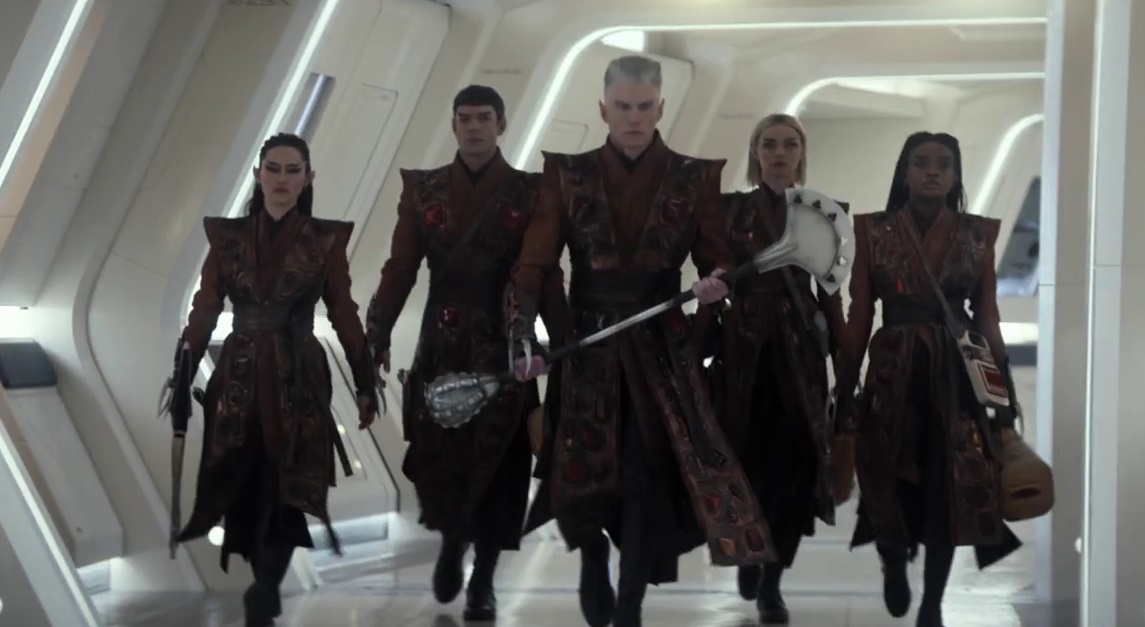
Spoiler Warning: There are spoilers ahead for Star Trek: Starfleet Academy Season 1. Spoilers are also present for the following Star Trek productions: The Next Generation, Deep Space Nine, Voyager, Discovery, and Prodigy.
I’d like to focus on one individual storyline from Starfleet Academy’s first season today – specifically from the episode The Life of the Stars. This was only one part of the episode, so if you want to get my thoughts on other aspects of The Life of the Stars, I have a brief review in my Starfleet Academy Season 1 episodes piece – click or tap here to check it out. And if you want to see what I thought of Starfleet Academy’s first season as a whole, check out my full review by clicking or tapping here.
We’re going to get into some serious spoiler territory today, so if you ignored my little spoiler warning above, consider this your last chance to nope out before I talk about storylines impacting not only Starfleet Academy, but also Voyager, Prodigy, and other parts of the Star Trek franchise, too.
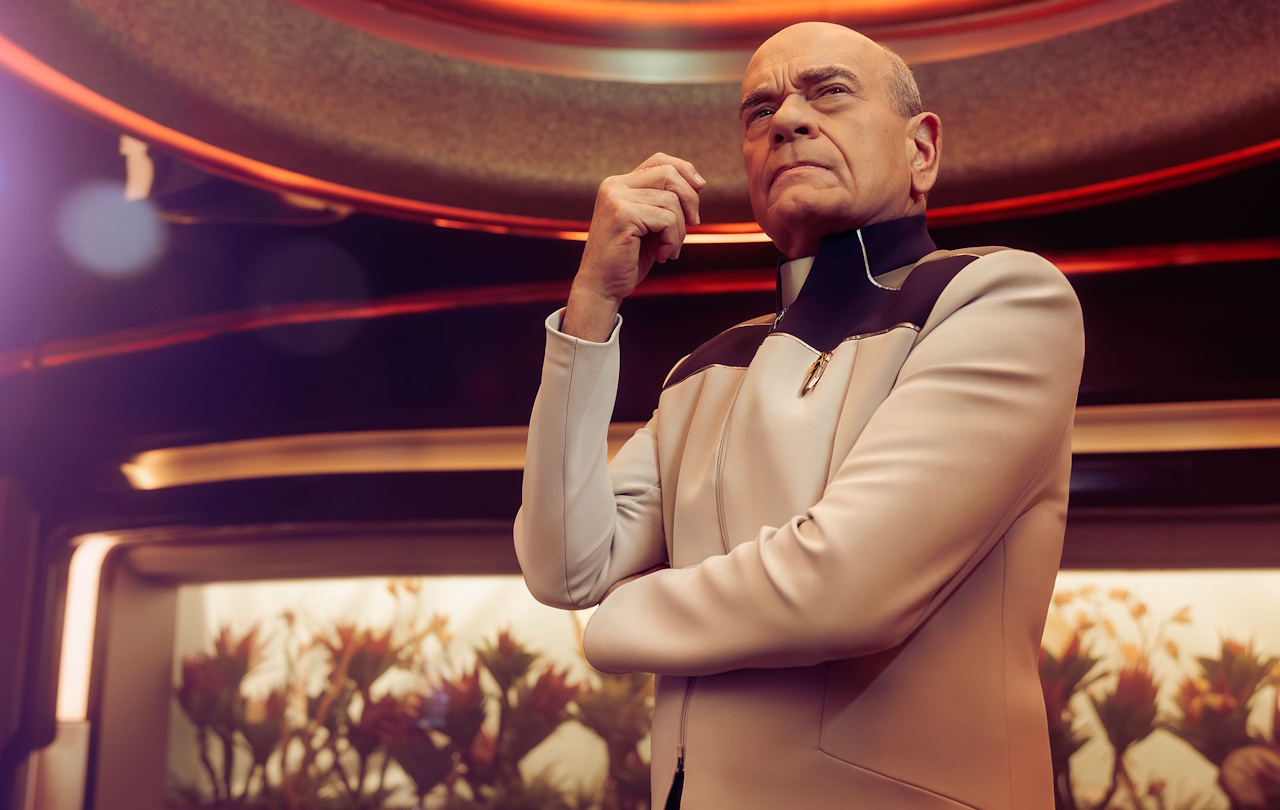
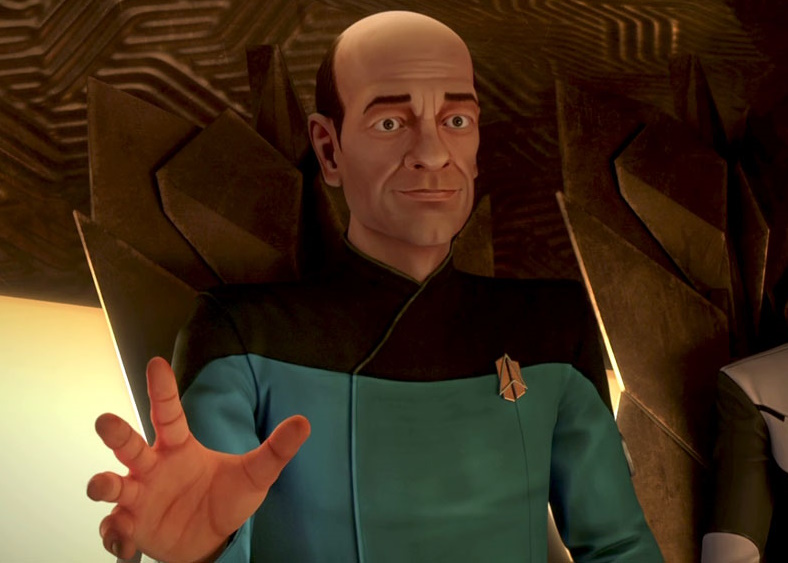
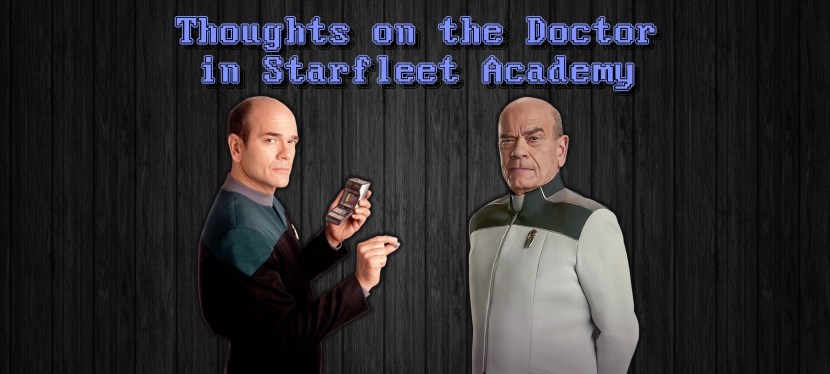
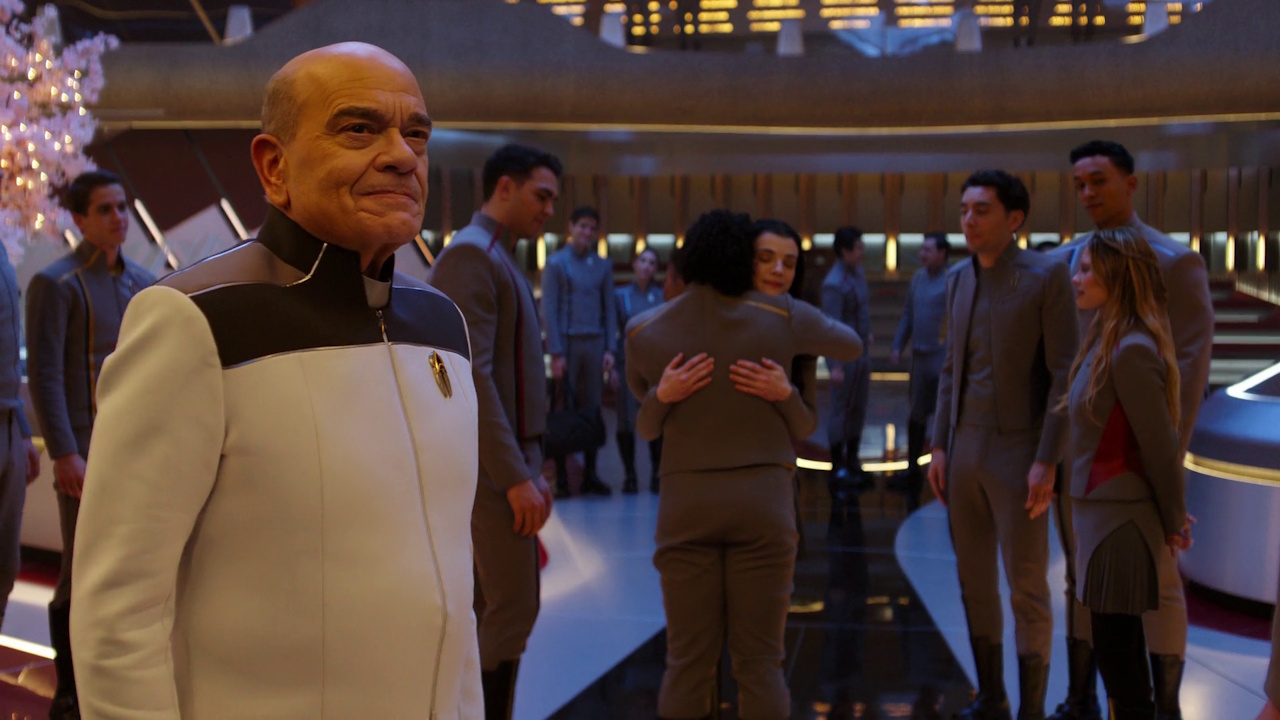
Today, we’re going to focus on the Doctor: Voyager’s Emergency Medical Hologram. The Doctor was a surprising inclusion in Starfleet Academy’s cast when the announcement was made a couple of years ago, but I genuinely thought it was a fun idea. I’d speculated for a long time that the Doctor – or perhaps a backup copy of him – could have survived to the 32nd Century, but we didn’t get to see him in Discovery. A teaching role sounded perfect for a being who’s now more than 800 years old; Robert Picardo, who plays the character, described this version of the Doctor as being akin to Yoda over in the Star Wars franchise! I thought that sounded like an apt comparison.
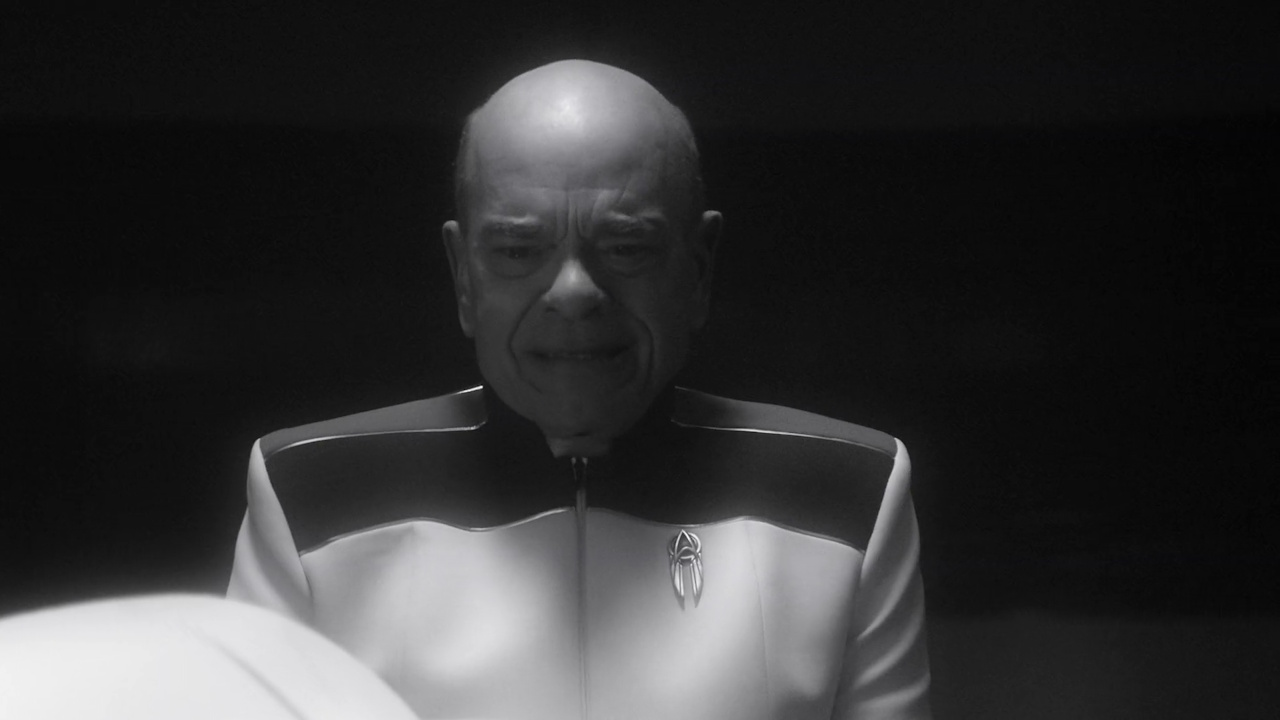
The Doctor appeared in almost all of Starfleet Academy’s episodes this season, but his role in The Life of the Stars was by far the biggest. This storyline explored the Doctor’s history, his family, his memories, and why he struggled to make a genuine connection with Sam – Starfleet Academy’s holographic cadet.
And… I really didn’t like what this storyline had to say, unfortunately.
Before we go any further, let me give my usual caveat: everything we’re discussing today is the *subjective, not objective* opinion of just one old Trekkie. If you disagree with me about the Doctor (or any other element of Starfleet Academy), if you think I’ve totally got the wrong end of the stick, or if our views don’t align… that’s okay. There’s enough room in the Star Trek fan community for differences of opinion and respectful disagreement, and I share my thoughts with you in that spirit. I’m not trying to say “I’m right and that’s that;” I’m well aware that other Trekkies may completely disagree – and that’s totally fine.
There are always going to be a range of opinions on works of art and media in general, and just because I personally didn’t like what this storyline had to say doesn’t mean other people won’t find it interesting or entertaining. The story was clearly written this way for a reason, so at least *someone* out there must’ve thought it was a good idea!
Finally, this is my second time criticising the way in which Starfleet Academy handled the legacy of a character from The Next Generation era. The show only did two storylines which really focused in on legacy characters, so for me to come away feeling that *both of them* weren’t enjoyable and I didn’t like what they said… that’s pretty disappointing, to be honest. It’ll go down as a real black mark against Starfleet Academy, at least in my book.
Starfleet Academy, in my view, already had several challenges to overcome: its teen/young adult focus, its serialised storytelling, its unimpressive villain, and the simple fact that it’s the sixth new Star Trek series to come along in just nine years. Solid, well-written, enjoyable callbacks to Deep Space Nine and Voyager could’ve done a lot to boost the show’s prospects, at least for an old Trekkie like myself, and could’ve made it more entertaining and just more memorable. I didn’t want to be in this position of having to criticise two of the storylines that *should*, in a sense, have been just the kind of thing I’d have wanted or hoped to see in a series like this. But… here we are.
If you want to check out what I thought of Starfleet Academy’s connection to Captain Sisko and DS9, by the way, you can find that article by clicking or tapping here.
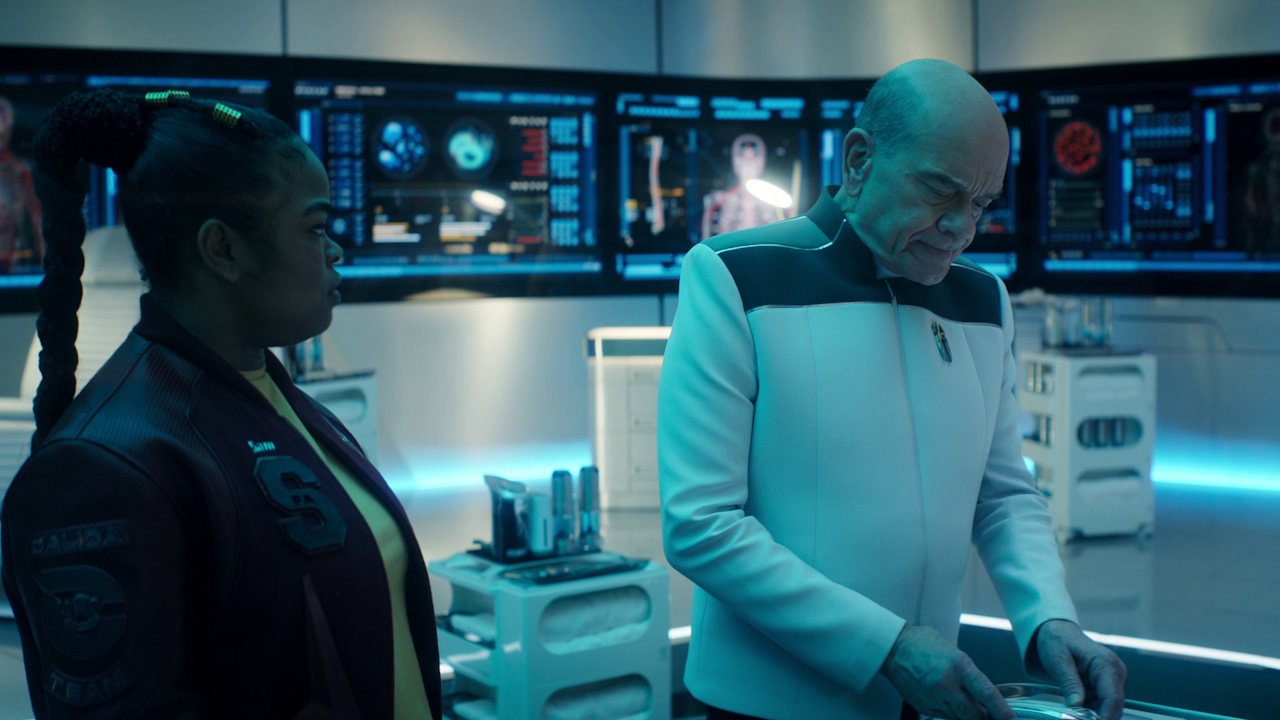
Alright, now that that’s out of the way, let’s set the scene. Cadet Sam – short for Series Acclimation Mil – is only a few days old, but she’s been programmed by her holographic race to have the maturity and appearance of an Academy-aged individual. The Life of the Stars follows on from Sam’s role in the episode Series Acclimation Mil, in which we learned why her people wanted to create her and send her to the Academy in the first place.
Sam had been injured (or “damaged,” I guess) a couple of episodes earlier in Come, Let’s Away, and her injuries progressed to such an extent that the Doctor couldn’t find a treatment. The Doctor and Captain Ake agreed to take Sam back to her homeworld, Kasq, where there was hope that Sam could be repaired. There were stakes not only for Sam herself, but also for Kasq’s potential to come out of isolation and to spend more time with organic life-forms. Sam’s mission, at the end of the day, was to better understand organic life and convey that understanding to her makers.
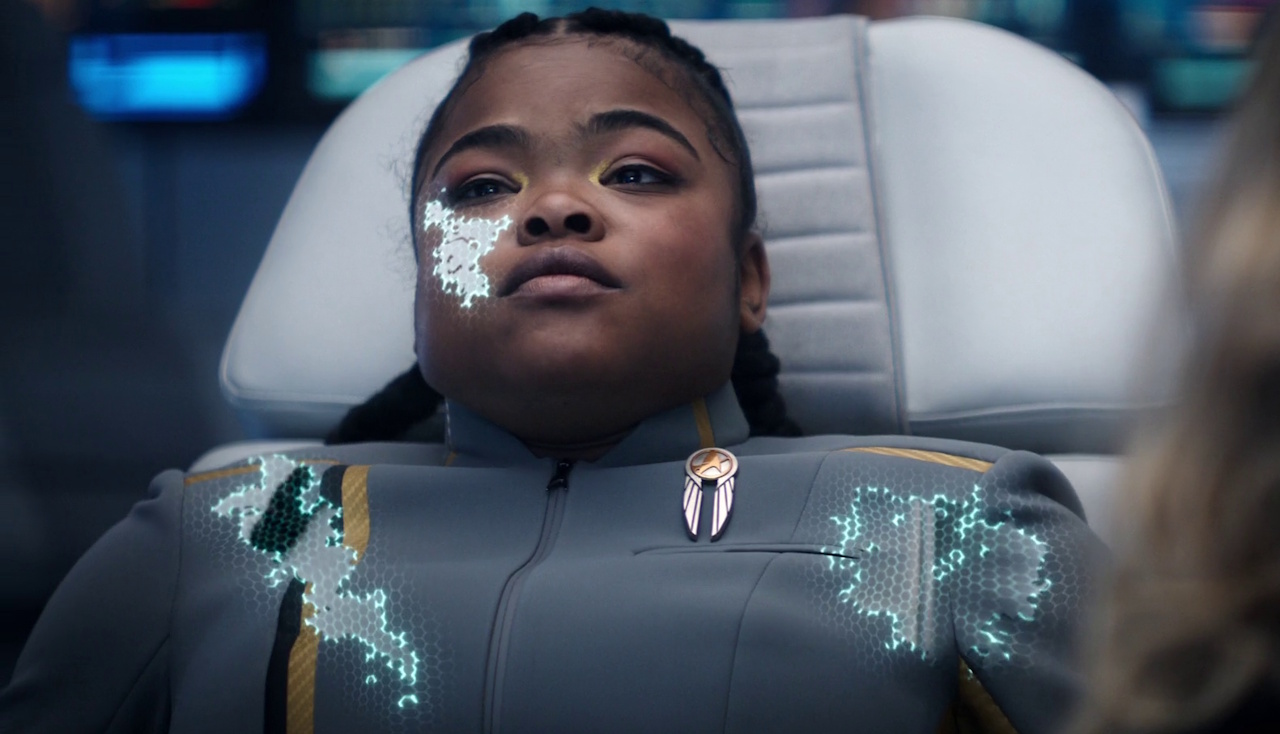
And then we come to the Doctor.
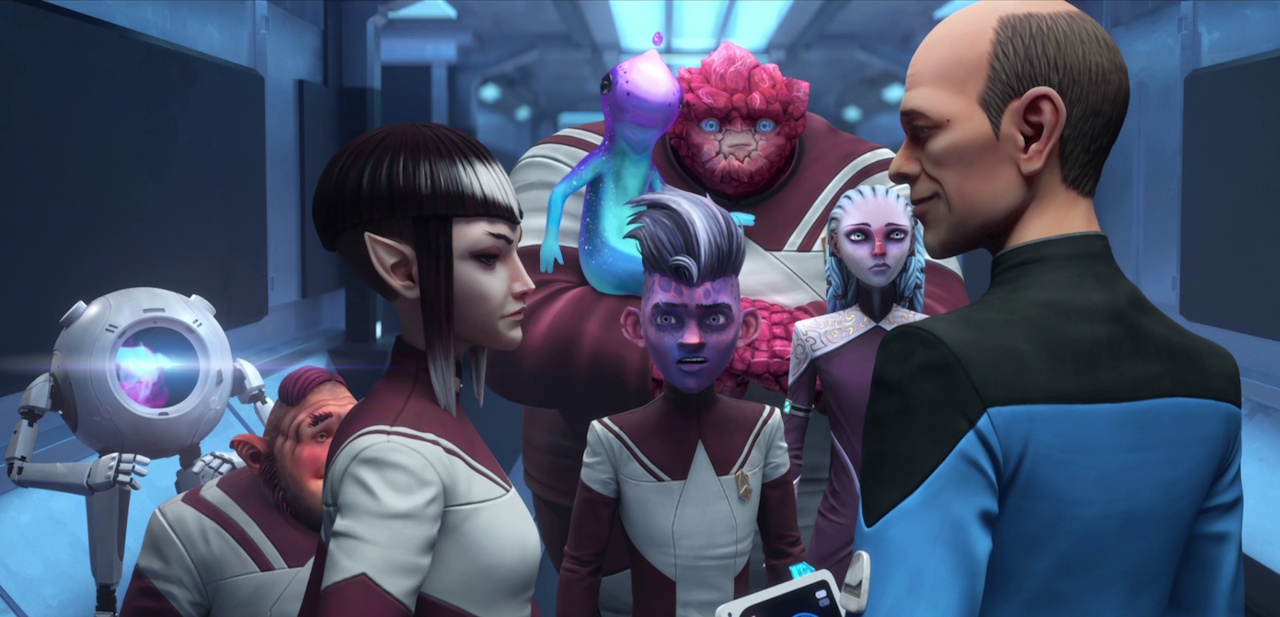
The Doctor had been quite standoffish with Sam when they first met, back in the series premiere. When Sam tried to bring up the Doctor’s past life – the crews of the USS Voyager and Protostar – he quite quickly shut her down. I speculated that the Doctor could be struggling with having lived such a long life, and having seen potentially many generations of organic friends live and die. I said that, while I was glad the Doctor didn’t overwhelm Starfleet Academy in the show’s premiere, I was curious to see if that angle would be explored further.
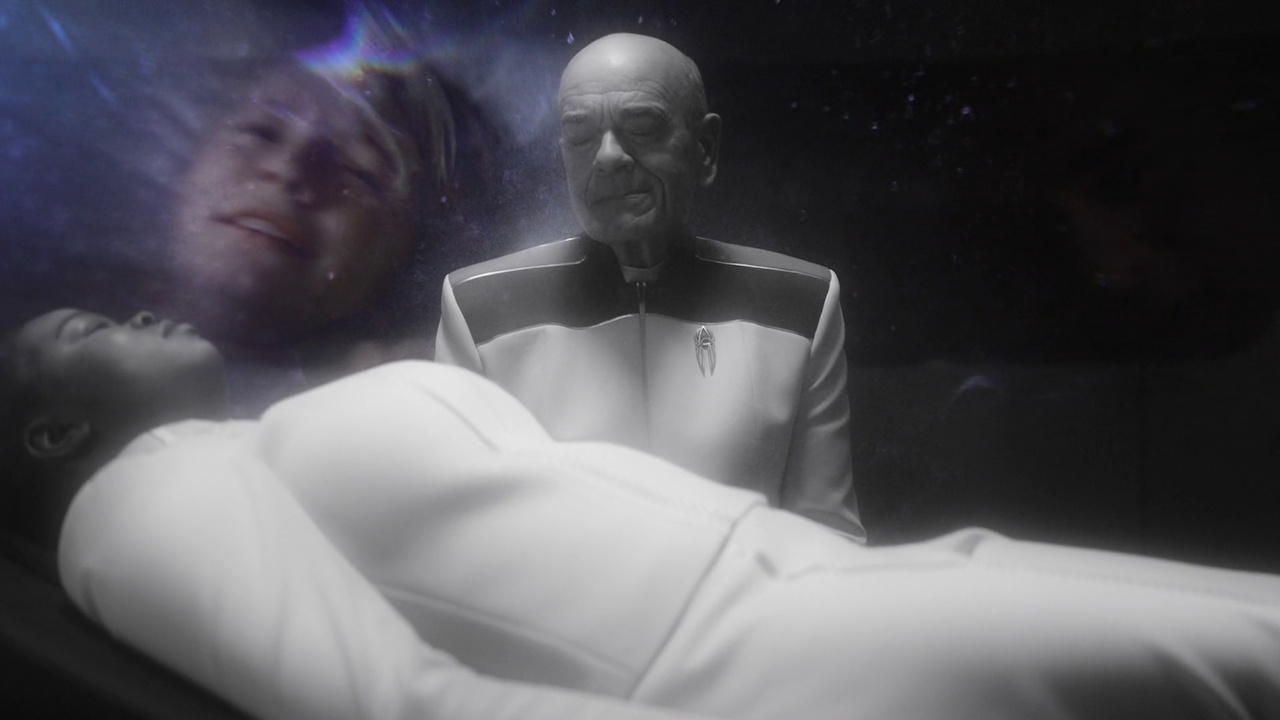
The Life of the Stars was that explanation – after a fashion. It turns out that the Doctor was, as I theorised, struggling with life and loss… but not in the way I’d have thought or expected. Rather than mourning his friends from the USS Voyager or the cadets of the Protostar, the Doctor had, instead, spent close to eight centuries grieving for his holographic family from the Voyager Season 3 episode Real Life.
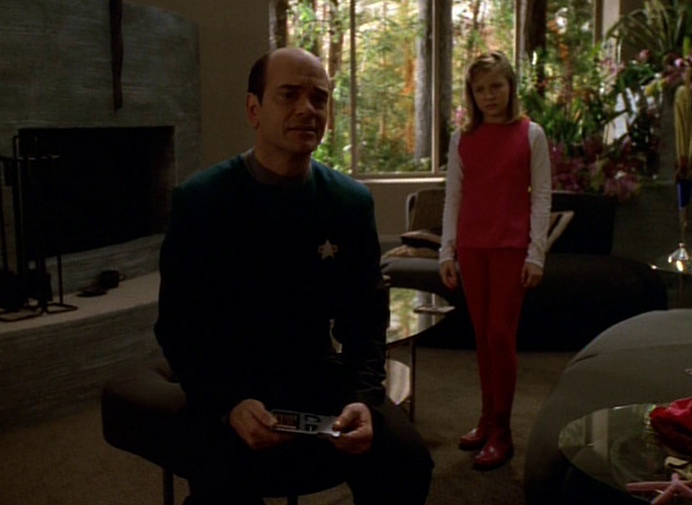
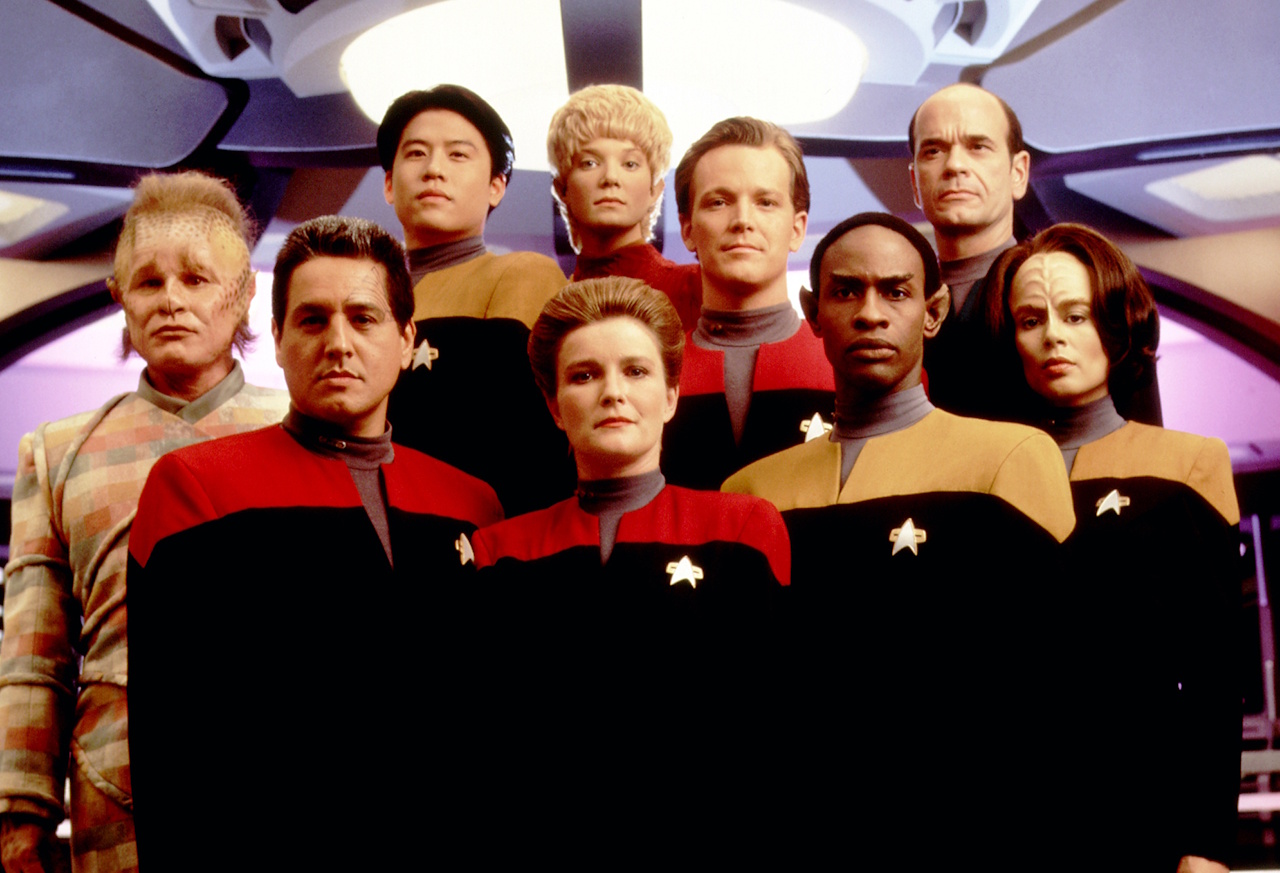
According to The Life of the Stars, it wasn’t Janeway or Seven of Nine that the Doctor missed and lamented outliving. It wasn’t lil’ Harry Kim, the fresh-faced ensign who was one of the first people the Doctor ever met. Nor was it Dal, Gwyndala, or Rok-Tahk, the young kids he came to know – and perhaps the first cadets he ever really “mentored.” The Doctor, according to this story, loved none of them as much as his holographic family from Real Life, and it was the simulated “death” of his holographic daughter in particular that caused him to become withdrawn and unwilling to risk loving anyone ever again.
What the actual fuck?
Let’s talk about holograms, as defined by Star Trek – and specifically, what their capabilities were in the 24th Century. The Next Generation was the first series to introduce holograms, and according to that show, as well as to Deep Space Nine and Voyager, practically all holograms at that time *were not sentient*. They’re characters in a story, computer programmes, pieces of code. Their lack of sentience is such an important point that holograms which become genuinely self-aware were almost always treated as unique, special, or even dangerous, in some cases.
The first sentient hologram we met in Star Trek was Professor Moriarty, in Elementary, Dear Data. He was inadvertently created by the Enterprise-D’s computer following a misunderstanding, and seemed – at that time, anyway – to be the only sentient holoprogramme in existence. The next self-aware hologram is arguably the EMH programme – i.e. the Doctor’s original programme. And then we come to the likes of Vic Fontaine. But in between we saw countless examples of holograms that were basically – to use some modern lingo – akin to video game NPCs.
This is how we get away with stories like Hollow Pursuits, which saw Barclay recreating members of the Enterprise-D crew on the holodeck as part of his escapist power fantasy. Or the countless references to holosuites at Quark’s being used for… adult activities. Or holograms created entirely for the purposes of being killed in training simulations. The list goes on.
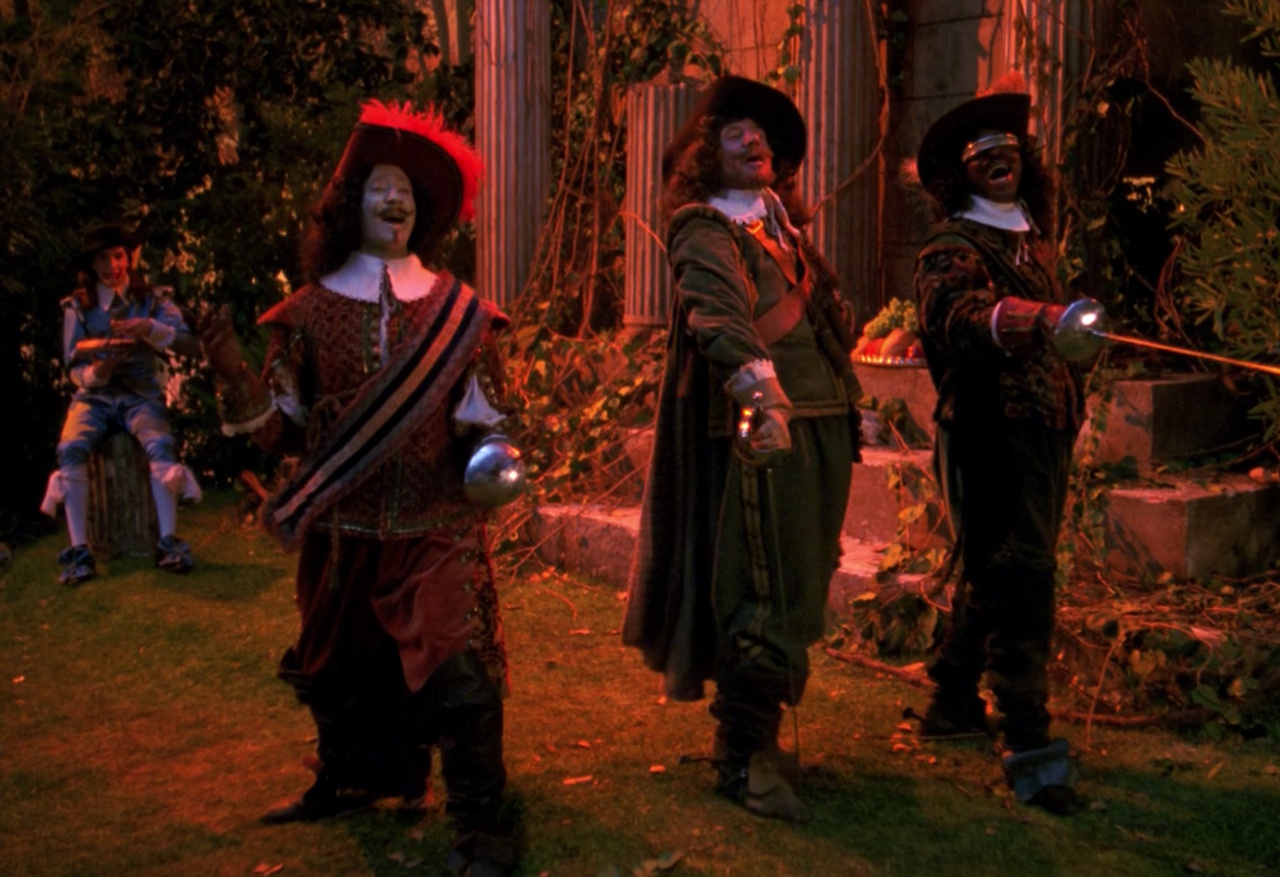
What The Life of the Stars is effectively saying, in my opinion, is that the Doctor spent hundreds of years of his life refusing to get too close to anyone ever again because… he had a particularly emotional reaction to a character from a video game. It would be like if you or I refused to get married or have kids because “this one time, my family in The Sims all died, and it made me really sad… I don’t think I could put myself through that again.” Do you get my point? These holograms are, according to everything we know about Star Trek, holodecks, and the 24th Century, not sentient, not self-aware, and not… alive. At least, not by any conventional definition.
I don’t want to downplay the power of entertainment to evoke strong emotions. Heck, I run a website all about films, games, TV shows, and the Star Trek franchise. I can’t even count the number of incredible titles – interactive and non-interactive – that have given me “the feels.” Just the other day, I talked about the intense bittersweet feelings of nostalgia that I got from a single twenty-minute episode of an anime. So I’m not calling out Starfleet Academy because the writers wanted to show the Doctor having a reaction to a holoprogramme that he participated in. If that was the intention of the story, and if it was handled differently, I might’ve been willing to praise an interesting take on the power of interactive media. But that wasn’t the intention, and it’s not the way it comes across.
I’m afraid I have to come to the conclusion that one of the episode’s writers (two writers are credited, but Starfleet Academy also had a writers’ room, I believe) just didn’t understand how holograms worked in past iterations of Star Trek. They looked at their character, Sam, and they looked at the Doctor – two sentient, self-aware, alive holograms – and concluded that *all* holograms must be like that. Even though, during TNG, DS9, and Voyager, sentience was the exception, not the norm. And the result is a massively confused storyline that seriously harms the Doctor’s characterisation.
The sad thing is that this exact same storyline, had it adopted one of two possible changes, could have been one of the best of the entire season. In a season which, in my view, was drowned out by a silly, hammy villain and a little too much teen/young adult drama, a story about an older man coming to terms with loss, grief, and what it means to outlive the people you love… that could’ve been incredibly powerful. I’ve lost people close to me – friends as well as close family – and getting a storyline that touched on that, on what it means to be the one left behind… I really think there’s a lot of potential there, and the Doctor’s unique status and age presented a golden opportunity.
But Starfleet Academy’s writers pissed it away on a story they clearly thought was clever… but that completely misunderstands a very basic piece of the franchise’s history.
I am not, despite how parts of this piece may be coming across, a stickler for “the tiniest minutiae of canon.” If holograms were relatively new to Star Trek, or if Real Life had been one of the only episodes in The Next Generation era to feature holograms, I’d have been willing to accept this as a bit of a retcon; a change, but one that could lead somewhere narratively interesting. But I believe that there are a few fundamental building blocks to writing a coherent story in a long-running franchise, and one of those is basic internal consistency. It’s been established on dozens, or perhaps even hundreds, of occasions across TNG, DS9, Voyager and beyond that most holograms – like those in Real Life – are not alive and are not sentient. So new writers have to be bound by that; making an arbitrary change to it this late in the game is not something I can accept.
The consequences of such a change ricochet across the entire 24th Century, if that’s the case. It makes B’Elanna into a murderer, first and foremost, since she reprogrammed the Doctor’s idealistic family life in such a way that his daughter died. It makes a lot of other characters into killers, into sex pests, and more… and while I really like the idea of using the holodeck as a way to critique things like fantasising excessively, relying too much on the computer, or – in the modern day – as an analogy for A.I. chat bots, perhaps… that isn’t how this story was intended, and it doesn’t come across that way, either.
There were, as I mentioned, two ways to salvage this story, so let’s go over them in turn.
Firstly, rather than going back to Real Life and Voyager, The Life of the Stars could’ve simply introduced new holographic characters to fill that role. Let’s say that, sometime in the 25th Century, the Doctor settled down with his holographic husband or wife. But, because of some technobabble, his partner or one of his holographic offspring ended up being damaged beyond repair and couldn’t be reset or saved. This could even be tied to the Burn – the massive, galaxy-altering event that underpins Starfleet Academy’s 32nd Century setting.
That gets us to the exact same narrative place, but in a way that makes it clear that the Doctor is grieving someone who was actually alive to begin with. It wouldn’t have the same connection to Voyager, but I mean… is Real Life an especially memorable episode for a lot of folks? I don’t think that one random deep cut to a single episode would’ve been as effective as the writers hoped, even without this glaring narrative fault.
Secondly, there’s the more obvious solution: the Doctor finds it difficult to accept friendships of any kind because of the toll outliving so many friends has taken on him.
This kind of story could see the Doctor lamenting the deaths of people like Chakotay, Harry Kim, or Seven of Nine. It might’ve even been possible to bring back one of those characters for a brief scene – perhaps their funeral or even their deathbed. The Doctor gained sentience and self-awareness around these people; they were the first friends he ever knew, and they had his back on multiple occasions when he was in jeopardy, when he was distressed, or just when he needed to talk. Seeing him grieve for Captain Janeway or Tuvok, remarking that it’s a terrible tragedy to outlive all of one’s friends… that could’ve been incredibly powerful.
And then, to hammer it home, the Doctor would explain that this didn’t just happen once… but over and over again. Generations of organic friends came and went, and he remembers – and mourns – all of them. But after the Burn, perhaps the Doctor felt he’d lost too much, and for his own mental health and wellbeing he needed to start keeping things professional. He keeps Sam (and others) at arm’s length not because he misses his video game family from one random episode… but because he’s grieving the loss of countless friends across eight centuries.
Maybe the writers thought that was “too obvious,” and wanted to be a bit subversive. Unless we get them on the record, I guess we’ll never know for sure. But I think that kind of story would’ve got the Doctor to the same place with the same mindset, ready to have that experience on Kasq with Sam, but in a much more powerful, emotional, and enjoyable way – and a way that makes narrative sense based on our understanding of holograms in past iterations of Star Trek.
As I’ve said before on quite a few occasions with modern Star Trek: it isn’t that the core idea was bad, but the way it was executed just… fucked it up. A story about the Doctor coming to terms with grief and having to make the incredibly brave decision to put his heart on the line one more time to save the life of a child? That’s powerful stuff. But because of the way it was handled, and the decision to make the root cause of his grief these one-dimensional characters from the 24th Century equivalent of a video game? It ruined it, and it turned what should’ve been one of the best storylines of the entire season into one of the worst.
I was excited when Robert Picardo announced that the Doctor was coming back. And I wondered what might lie in store – this is a character I first fell in love with some thirty years ago, so to see him back in a totally different century for a new adventure… I was on board! I just wish that the end result hadn’t misunderstood something so basic about Star Trek, and that the Doctor’s one real moment in the spotlight could’ve been stronger and more enjoyable. When I can see not one but *two* clear and obvious narrative pathways that could’ve made it happen… it’s an unforgivable mistake, in my view.
Starfleet Academy, as I said in my review, wasn’t really “my thing.” But if there was one storyline that could’ve been more my speed, or that might’ve had something to say that resonated with me, it was this one. And I think that’s why I feel this disappointment all the more – it’s not just what it says about the Doctor, and how he apparently spent centuries sulking over the equivalent of his save file in The Sims. It isn’t even what it says about B’Elanna or other characters who used or reprogrammed holograms for selfish reasons across the TNG era. It’s because it feels like, after Starfleet Academy had already messed up its Sisko story, this was really one of the only storylines I might’ve found relatable or enjoyable. But because the writers – again, in my opinion – didn’t understand or didn’t know enough about holograms… it comes across as completely missing the point, and missing the point so severely that it harms my opinion of the Doctor himself.
So there we go. That’s my take on the Doctor’s role in The Life of the Stars and what this new information says about his character.
I would say, to the story’s credit, that there were some creative ideas. Kasq existing in a different “plane of existence” felt like a bit of a cop-out; a way to ensure the Doctor and Sam wouldn’t need to take too long to re-grow and get back to normal. But the visuals of Kasq were creative, I liked the ultimate explanation for Sam’s breakdown being mental, rather than physical, and the episode’s attempted message about looking after one’s mental health is arguably executed far better than in comparable stories in Discovery or Picard. So it isn’t that the episode as a whole as no merit; this side of the story, though, completely failed for me.
I hope this has been interesting, and I hope I didn’t come across as too harsh or aggressive. Star Trek is something I’m passionate about and have been for a long time, and as someone who watched and enjoyed Voyager during its original run, bringing the Doctor back felt like a great idea in this latest adventure. I just wish it had been handled better, and that a different reason for the Doctor’s grief and reluctance to help could’ve been written. We came close – *this close* – to one of the best parts of the entire season.
Thanks for reading. Despite my feelings about Starfleet Academy as a whole, and this storyline, I can tell you that I genuinely gave the series a fair shake. I always expected it wouldn’t be my favourite part of the franchise – the whole teen/young adult focus, of course, but also the serialised story and the villain with an over-the-top magical macguffin all saw to that. But despite that, I really tried to let Starfleet Academy speak for itself, and to go into the show with an open mind.
This essay concludes my coverage of Starfleet Academy for the foreseeable future. Obviously, if we get major news about Season 2, a third season renewal, or any kind of teasers, clips, or trailers, I’ll do my best to cover that here on the website. But for now… that’s all. I’ve finally said all I wanted to say about the show’s first season.
If you missed them, please check out my reviews of the two-part premiere, the first season as a whole, and episodes 3-10. You can find them by clicking or tapping those links. And as the 60th anniversary year rolls along, I’ll have more to say about Star Trek, so be sure to check back from time to time. Thanks again for reading, and Live Long and Prosper, friends!
Star Trek: Starfleet Academy is available to stream now on Paramount+ in countries and territories where the service is available. The Star Trek franchise – including Starfleet Academy and everything else discussed above – remains the copyright of Paramount/Skydance. This review contains the thoughts and opinions of one person only and is not intended to cause any offence.