
Spoiler Warning: Beware of spoilers for the following Star Trek productions: The Original Series, The Search for Spock, The Next Generation, First Contact, Deep Space Nine, Voyager, Discovery, Lower Decks, Picard, and Strange New Worlds.
It’s Star Trek’s big 60th anniversary year, and since January, I’ve been poking a bit of fun at the franchise! We’ve talked about some truly awful fan theories, some “unpopular opinions” shared by Trekkies, and I’ve even published another of my “what if?” alt-history pieces, postulating about the outcomes of some major storylines. This time, though, I want to get way darker! We’re going to talk about some of the very *worst* things that characters in Star Trek have ever done.
As always, a couple of caveats! Firstly, and most importantly, everything we’re going to discuss today is the *subjective, not objective* opinion of just one person. There’s room within the Trekkie community for a spectrum of different opinions, so if your take on a character, storyline, or episode doesn’t align with mine, that’s okay! We don’t need to get into an argument about it. Secondly, this is meant to be a bit of fun, and an opportunity to talk Trek. If I say that a character acted immorally or that I disagree with their actions, that shouldn’t be taken as me “hating” that character, that episode, or that part of Star Trek. If anything, it’s testament to the power of media – and the power of the Star Trek franchise – to evoke such strong opinions. And it *definitely* shouldn’t be taken as criticism or hate for any individual actors, writers, directors, or behind-the-scenes folks!
Next, let’s briefly talk about the format. I’ve picked ten storylines or character moments from across the franchise’s history where one character – or, in a couple of cases, multiple characters – did something truly awful… when you think about it from an in-universe perspective. I’ve deliberately excluded villains, because it should be obvious that villains would do bad things! I’m instead focusing on immoral or questionable actions taken by characters we’re meant to see as protagonists, heroes, or at least allies. I’ve also chosen, on this occasion, to focus on main and major recurring characters rather than one-off guests – though this may be a subject I’ll revisit in the future, so watch this space!
With all of that out of the way, this is your final chance to jump ship if you don’t want to get into some potentially controversial Star Trek opinions!
Number One:
Sabotaging Starfleet’s next major technological leap for selfish reasons.
Scotty in The Search for Spock.
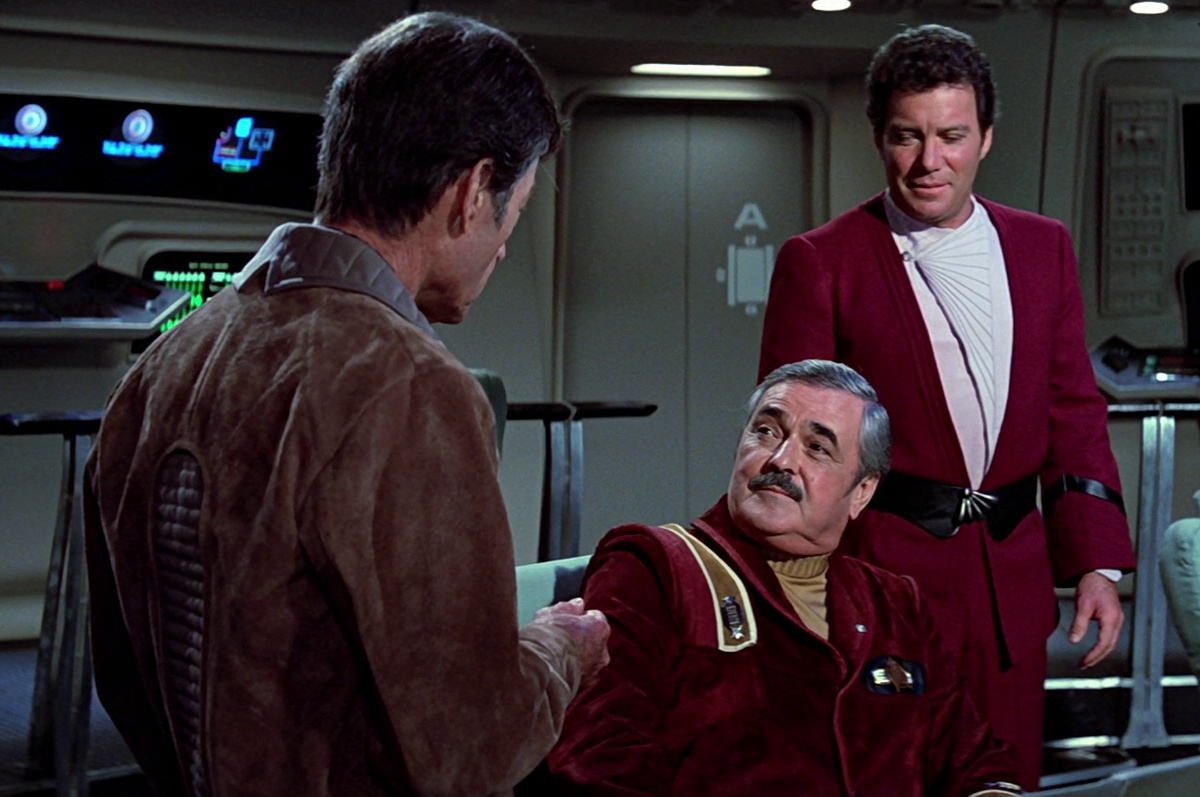
The Search for Spock sees Kirk and his friends deciding to steal the badly-damaged USS Enterprise from Spacedock to rescue Spock from the Genesis Planet. But standing in their way is the USS Excelsior, commanded by Captain Styles. The Excelsior was the testing ground for Starfleet’s new “transwarp” programme, and it was a functional technology that could have utterly transformed Starfleet’s missions of exploration and defence. Until Scotty sabotaged it.
Because Starfleet’s “transwarp” was never mentioned again after The Search for Spock, that seems to imply that the programme was abandoned or never moved forward. Putting two and two together strongly implies that Scotty’s sabotage was at least a contributing factor, and could be the reason why Starfleet and the Federation still rely on warp drive into the 25th Century… and beyond.
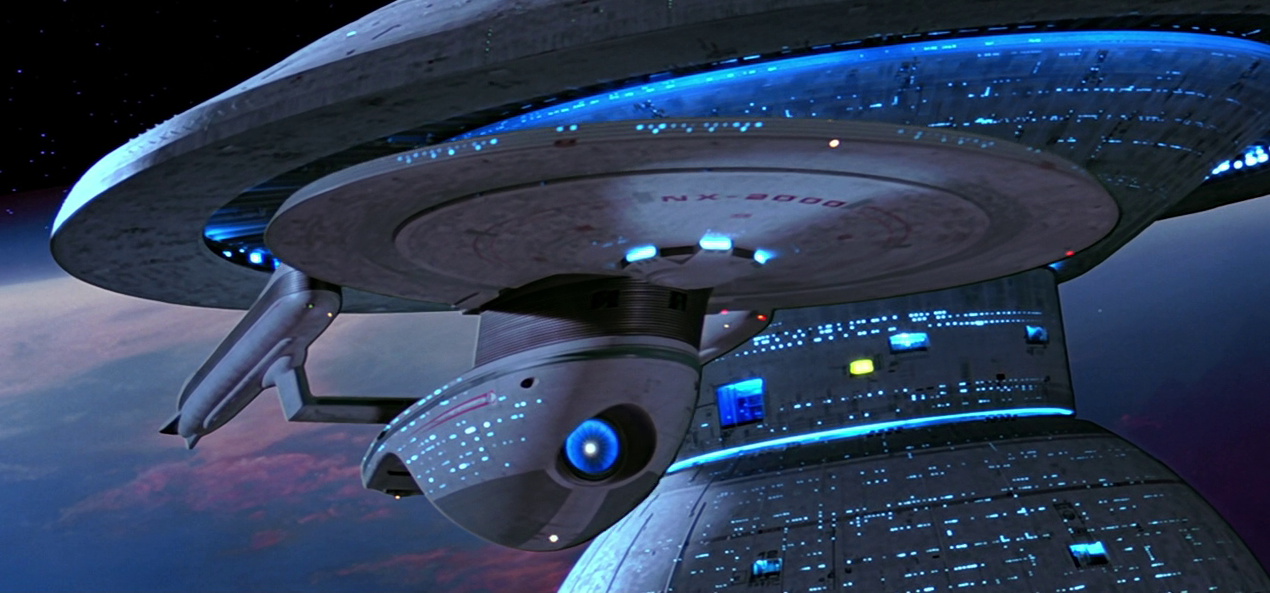
There are counterpoints to this, though. My personal head canon has, for a long time, been that Starfleet simply re-designates warp factors as new engines are designed, rather than continually adding decimals to Warp 9.99 or new numbers beyond Warp 10. So it could be that “transwarp” was a success, and Excelsior’s engines were rolled out to the fleet. I also believe Scotty would, after the events of The Voyage Home, have come clean about what happened – or even that the Excelsior’s engineering staff would’ve been able to figure out what happened. So I offer those rebuttals!
However, none of that has ever been shown on screen to my knowledge, and the absence of the term “transwarp” after The Search for Spock could mean that the Excelsior was considered a failure. Given how much more powerful its engines were when contrasted with the Enterprise and other ships at the time… that one act of sabotage may have set back Starfleet’s exploration by literally decades! That’s almost as bad as Starfleet choosing to abandon the Spore Drive.
Number Two:
Dating a one-year-old.
Neelix in Voyager’s first couple of seasons.
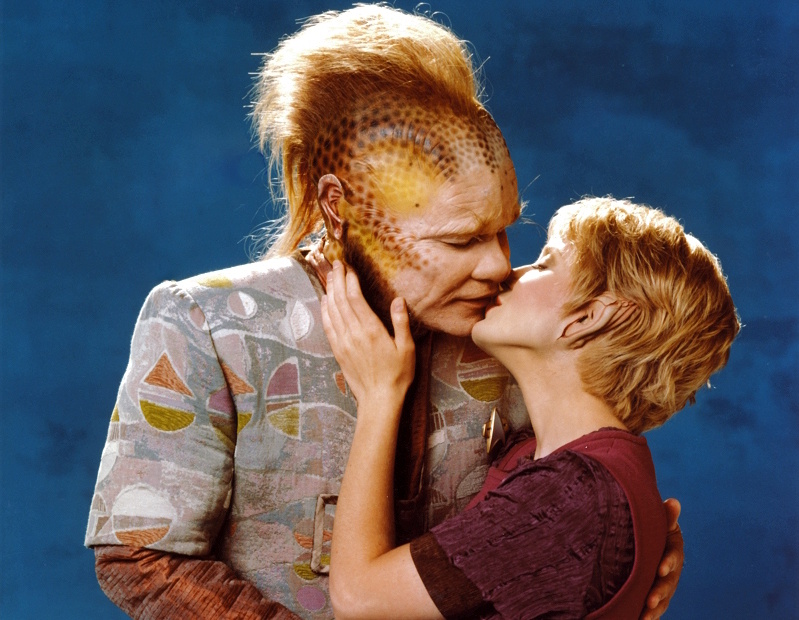
I know what you’re gonna say: Ocampans age at a different rate when compared to other species, so Kes wasn’t *really* a “one-year-old” in the way I’ve implied. Okay, granted. But she was, at the time we met her, around the Ocampan equivalent of age eighteen, whereas Neelix was already well into middle age. Even if you completely set aside the fact that Kes is literally one year old, you’ve still got a creepy-ass middle-aged man dating a teenager. And that’s really icky.
I’ve said this before, but I’m really glad that the Neelix-Kes relationship wasn’t in focus more in Voyager’s first couple of seasons. If it had been, I think it would’ve been detrimental to both characters and even to the series as a whole. Perhaps, to be incredibly generous, you could say that attitudes to large age gaps in relationships have hardened in the thirty-plus years since Voyager premiered, making this relationship a bit of a product of its time, and something we’re less likely to see replicated today. Even with that in mind, though, I remember seeing it being discussed on Star Trek sites in the ’90s, when Voyager was airing, so I don’t think that fully excuses it.
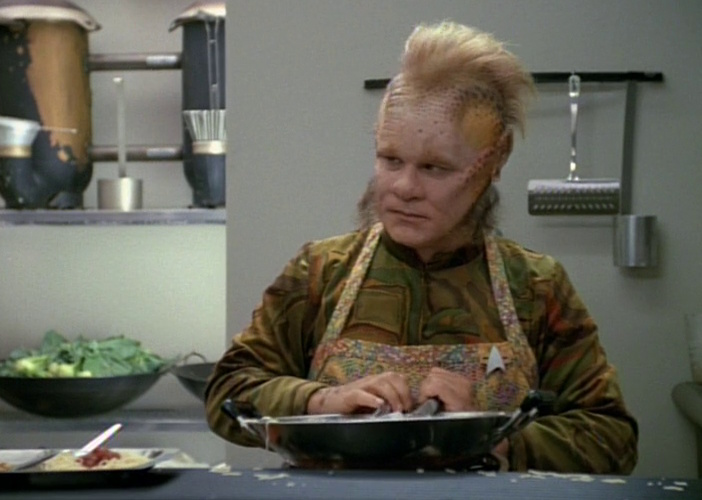
Some episodes, like Parturnition, also saw Neelix displaying very jealous, possessive, controlling, and I would argue abusive behaviour towards Kes. And that’s also something that really detracted from his characterisation. Neelix was a lot of fun as the happy-go-lucky guide to the Delta Quadrant… but he also clearly has a darker side when it comes to his personal relationships.
Fortunately, this wasn’t the main focus of Voyager, nor even of Kes and Neelix’s arcs on the show. But just because it was only in focus on a few occasions doesn’t mean we can or should ignore it, and Neelix dating a literal one-year-old – or the equivalent of a high-schooler, if you prefer – when he’s a middle-aged man is still insanely creepy and unsettling, no matter how you slice it.
Number Three:
The moron’s mutiny.
Michael Burnham in the Discovery series premiere.
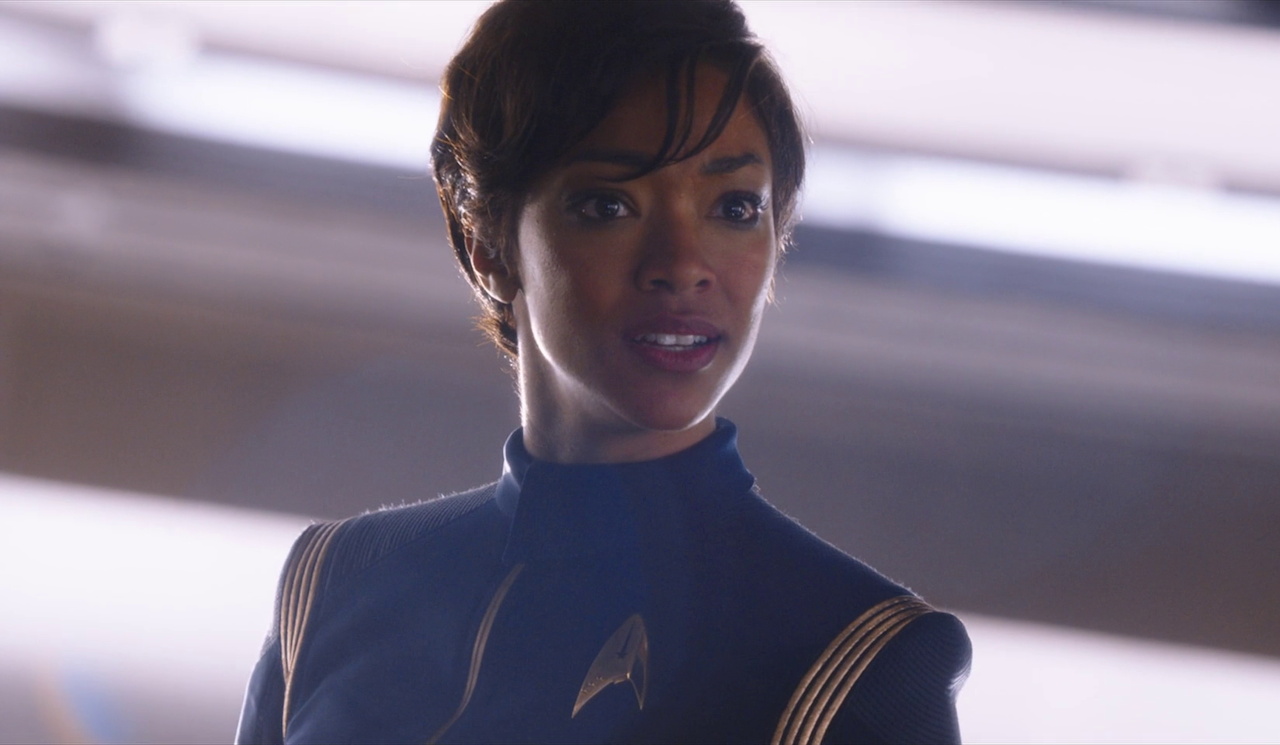
As I said a few years ago, when I re-watched The Vulcan Hello and Battle at the Binary Stars, I’ve never seen a TV series – inside or outside of the Star Trek franchise – do so much to present its own protagonist as an arrogant idiot. Because that’s how Burnham comes across in the premiere: a complete and utter moron. Burnham misunderstands the advice given to her by Sarek, decides that she knows best and everyone around her is stupid, and tries to stage a one-person mutiny against her captain and entire bridge crew when she doesn’t get her way. It isn’t hard to see why some Trekkies soured on the character immediately, and weren’t willing to give her a chance to redeem herself.
Think about where Burnham and the USS Shenzhou were when she decided to mutiny. On a far border of Federation space, staring down a fleet of powerful Klingon vessels. Sarek told her about the way the Vulcans treated the Klingons *before* first contact had been made, but the circumstances were completely different. If Burnham did manage to get her way and shoot first, the only thing that would’ve happened would’ve been the loss of the Shenzhou and her own death; obliterated in a hail of disruptor fire.
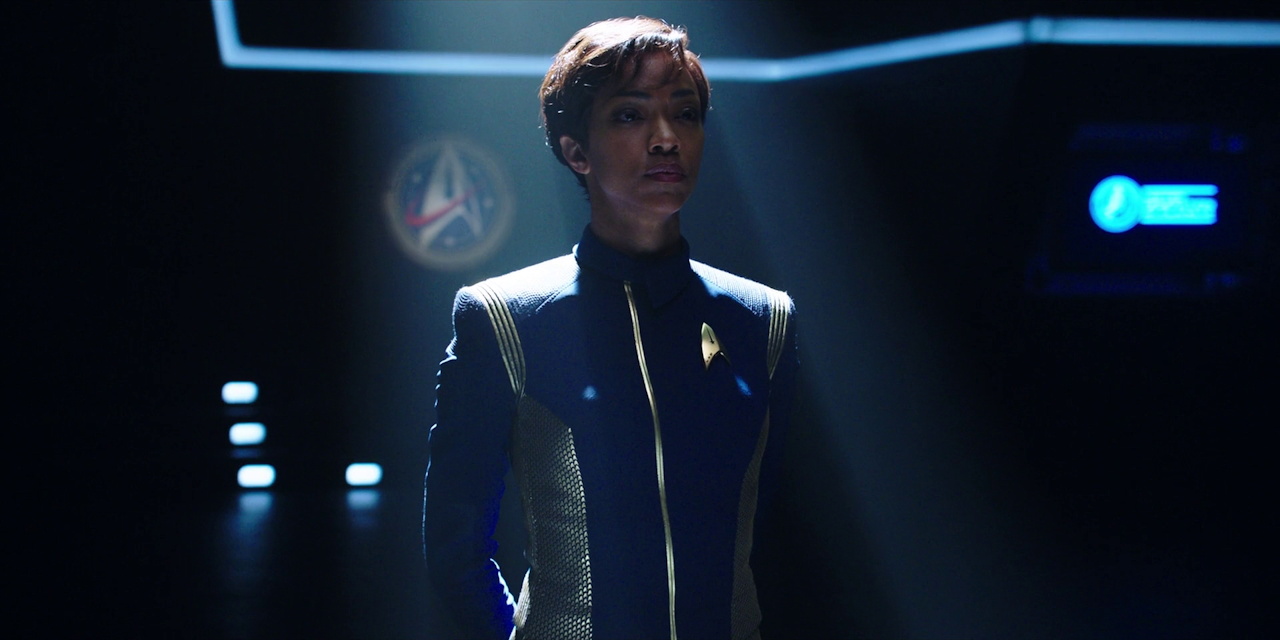
The sensible thing to do – as proposed by Captain Georgiou, Saru, and others – was to wait for backup. The Shenzhou was outmatched and outgunned, so waiting for Starfleet reinforcements, and the arrival of a senior officer who hopefully has more diplomatic sway, is the only sensible move under the circumstances. Burnham’s decision didn’t directly cause the Klingon War; we as the audience know this because we’re privy to what the Klingons discussed with each other. But *Burnham* doesn’t know that – she didn’t see those conversations. There’s no evidence for or against her claim that the Klingon ships are here because they want to unite and declare war, so the sensible course of action, once again, is to wait – not shoot first.
I love the idea of a redemption arc, and I think a flawed character who learns what they did was wrong and actively works to overcome their faults can be fun to root for. But… is that how we’d describe Michael Burnham, either in Discovery’s first few episodes or, really, across the entire five-season run of the show? She softens a bit, later on, and settles into her relationship with Starfleet a bit more. But she never really loses that arrogant, single-minded streak. And she never really has to confront her own actions in the premiere or come to terms with what she did wrong. Her statement at the end of Battle at the Binary Stars hammers this home: she doesn’t lament the loss of her captain or her crewmates, nor the war that broke out. She talks about herself and how sad she is that she’s lost the opportunity to one day command a starship.
Number Four:
Creating holographic facsimiles of real people without their consent.
Reginald Barclay and Geordi La Forge in The Next Generation.
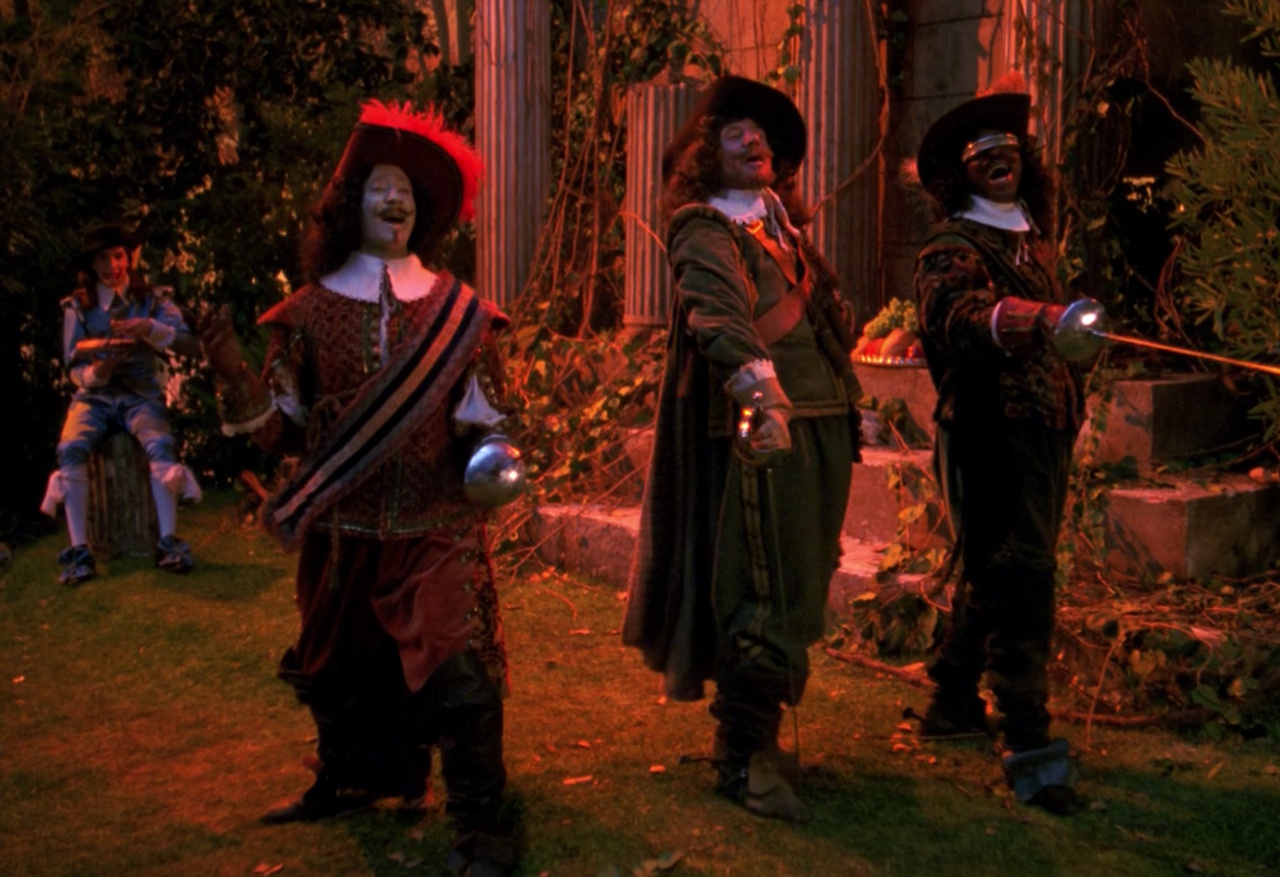
The holodeck is an awesome piece of technology! And it’s something that, as Trekkies, I think we’d all love to be able to play around with one day! But Starfleet and the Federation seem to have absolutely no safeguards when it comes to the holodeck being used to potentially abuse real people. The ease with which seemingly anyone can just create holographic replicas of their friends and crewmates is… well, it’s pretty weird, if you stop to think about it. And two of the best examples of this come from The Next Generation.
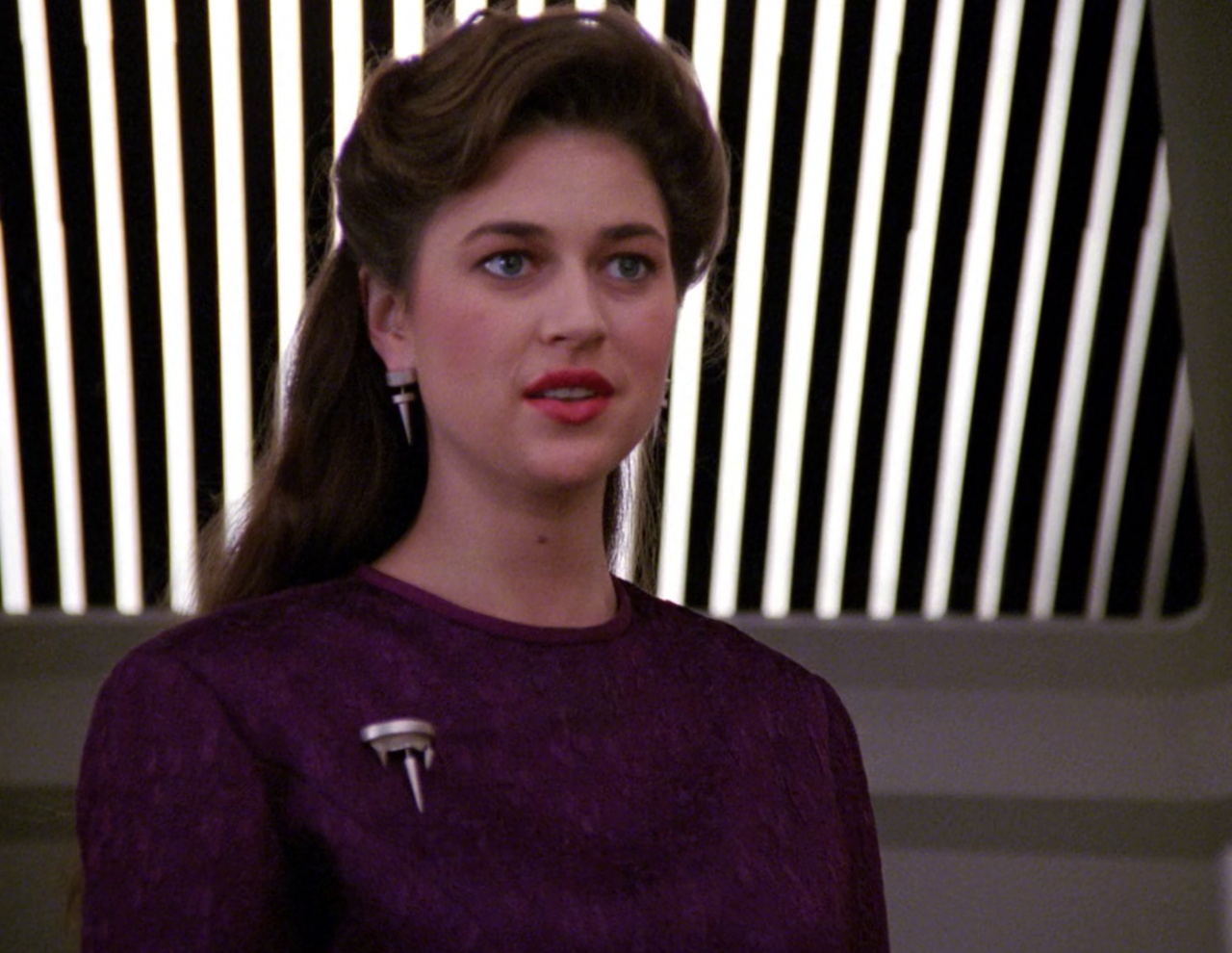
While working on an engineering problem, Geordi recreates Dr Leah Brahms, one of the designers of the Enterprise-D, on the holodeck. And he soon falls in love with her – something that the *real* Dr Brahms berates him for when she discovers the truth. Her reaction is pitch-perfect, showing how violated she feels by being digitally created in this fashion.
Then we have Barclay. Barclay created for himself a kind of “Walter Mitty” power fantasy on the holodeck. And… let’s be honest, that kinda thing is perfectly fine in a lot of cases. But Barclay did it using real people – the officers and crew of the Enterprise-D, people he hated, people he respected, and people he was crushing on. Again, the reactions of those depicted, upon discovering what Barclay had done, showed how wrong and violating this behaviour was… but Starfleet clearly took no action to discipline Barclay *or* to prevent that kind of thing from happening again, because we’ve seen similar behaviour from characters in Deep Space Nine, Voyager, and beyond.
Think about it like this: if you found that one of your friends had created an AI chatbot based on an interpretation of your personality, using a photo of you, and they’d been using that bot for role-play and fantasising… you’d feel sick to your stomach, right? I know I would. And the holodeck is massively more immersive than one of today’s chatbots could ever be. So using it to recreate real people – to date them, fight duels with them, kill them, presumably have sex with some of them… it’s abhorrent.
Number Five:
Polluting and changing the timeline.
Riker and the away team from the Enterprise-E in First Contact.
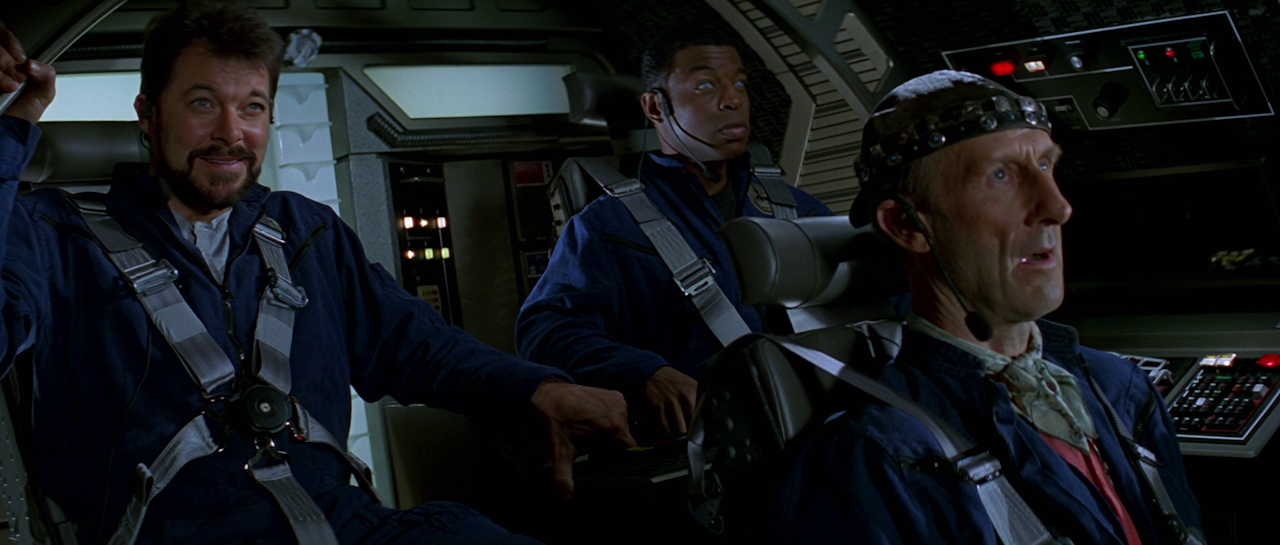
It’s fair to say that human-Vulcan first contact is one of the most significant events in the history of the Federation. So if there was *one* event to which the Temporal Prime Directive should apply, it’s this one. And I know what you’re gonna say: the Borg attack means there are mitigating circumstances, and Picard and his crew had to get involved to *preserve* the timeline and ensure first contact happened on schedule.
But did they have to do it in such an obvious and ham-fisted way?
Geordi and Barclay told Dr Cochrane that he was going to have a statue built and that his entire launch site would be a museum. Even if they had to reveal limited knowledge of the future to convince Dr Cochrane to accept their help, did they need to go that far? No, of course not! And did they need to be present aboard the Phoenix when it launched? Also no!
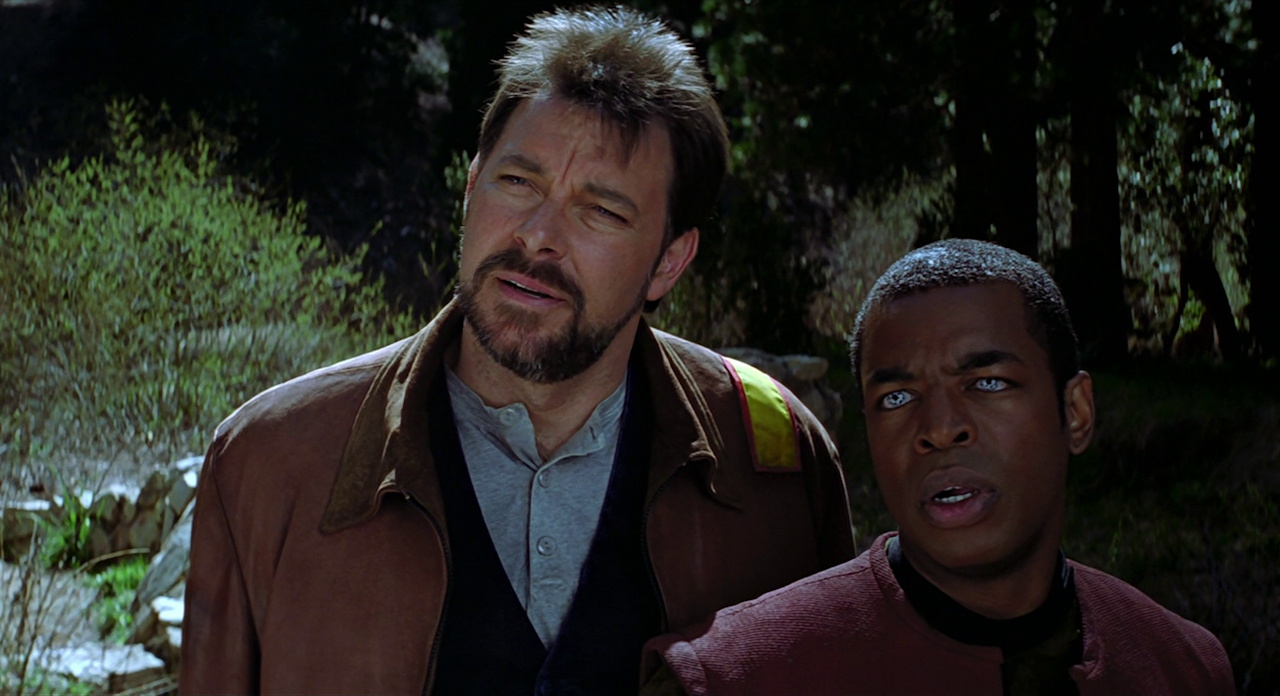
Given the nature of the Borg attack and the damage to the Enterprise-E, some amount of interference with the timeline was inevitable. But there must’ve been more subtle and less damaging ways for the away team to have involved itself with the events leading up to first contact, ways which would’ve limited the contamination the timeline suffered. And, given Enterprise’s semi-sequel episode Regeneration, we also know that Picard and the crew were downright incompetent and negligent when it came to cleaning up the multiple messes that they left behind.
At this point, Star Trek’s timeline is a bit of a mess – and that’s putting it mildly! Between Kirk, La’an, Picard, and the Soongs, the history of Khan’s birth and rise to power is completely screwed up. Sisko had to trigger the Bell Riots after accidentally getting the real Gabriel Bell killed. Kirk and his crew literally abducted a woman from the 20th Century and brought her to the 23rd. But of all the events in Star Trek’s timeline, first contact is one of the most important in the creation of the Federation and the “correct” version of the future. For Picard, Riker, and the others to have contaminated it so thoroughly, and to have not been so much as reprimanded for it after… it beggars belief!
Number Six:
Kidnapping a sentient energy life-form for a laugh.
Beckett Mariner in Lower Decks Season 1.
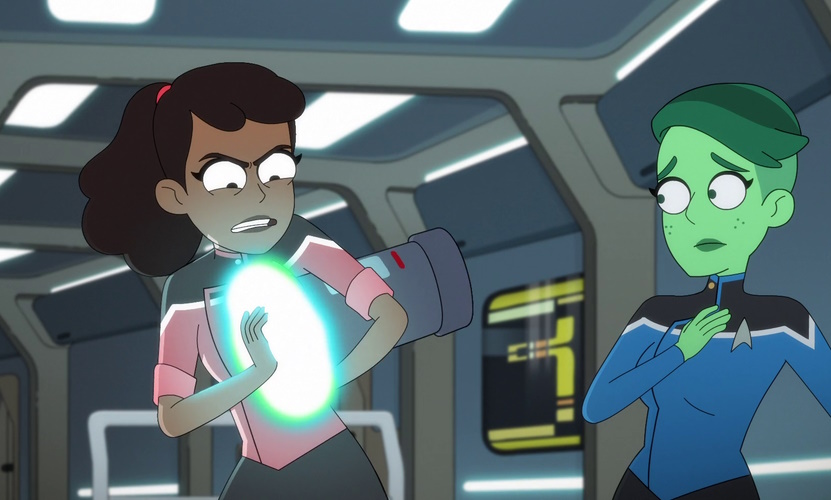
You might remember this from my review of the episode Envoys, if you’re a regular reader. That episode’s opening moment sees Ensign Marniner trying to kidnap a sentient energy-based life-form that she encounters aboard the USS Cerritos. Why? Because she thinks it’ll be funny, and maybe she can force it to grant her a wish. There are very few moments in the entire six-decade history of the franchise that see Starfleet personnel behaving in a worse way than that, in my view.
Starfleet’s mission is to seek out new life and new civilisations. Mariner’s mission was to put herself first at the expense of one of those new life-forms. It’s inherently un-Starfleet in a way that I struggle to put into words, and while I absolutely concede that it was meant to be a joke and not taken too seriously… I think I’m glad that *this* kind of joke, and that this way of characterising Mariner, weren’t the main focus of Lower Decks. Where the show succeeded was how it made the regular goings-on in Starfleet humorous. Where it failed, in my view, was in trying to emulate the likes of South Park’s Eric Cartman or Rick and Morty’s Rick Sanchez, using Mariner as a stand-in for that kind of character.
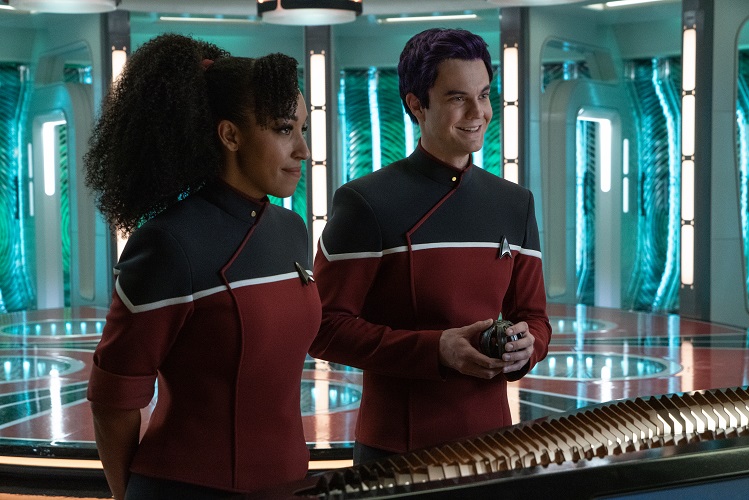
Think about what Mariner does in this moment. She sees a brand-new life-form for the first time, and her first instinct isn’t “woah, that’s so unusual and interesting,” it isn’t “I better tell the captain or a senior officer,” and it isn’t to introduce herself or offer help and support. Instead, she thinks it’ll be funny to violate one of the most fundamental ethical rules that Starfleet has, to kidnap a sentient life-form against its clearly-expressed wishes, and then to force it to perform for her or grant her some kind of gift in exchange for its freedom. If the Cerritos’ senior officers found out… surely that would mean not only her expulsion from Starfleet, but also perhaps a period of incarceration.
Fortunately, this was the only time Mariner did something this egregious – at least, across the first half of Lower Decks’ run, which is all I’ve seen of the series so far! And there are moments in every Star Trek show that we basically have to write off or ignore in order for character arcs or other storylines to make sense. So I’m content, in a way, to set the opening minutes of Envoys aside. But that doesn’t mean I have to like it!
Number Seven:
Erasing an entire timeline, decades’ worth of people’s lives, and genociding untold millions or billions of people.
Admiral Janeway in Voyager’s finale.
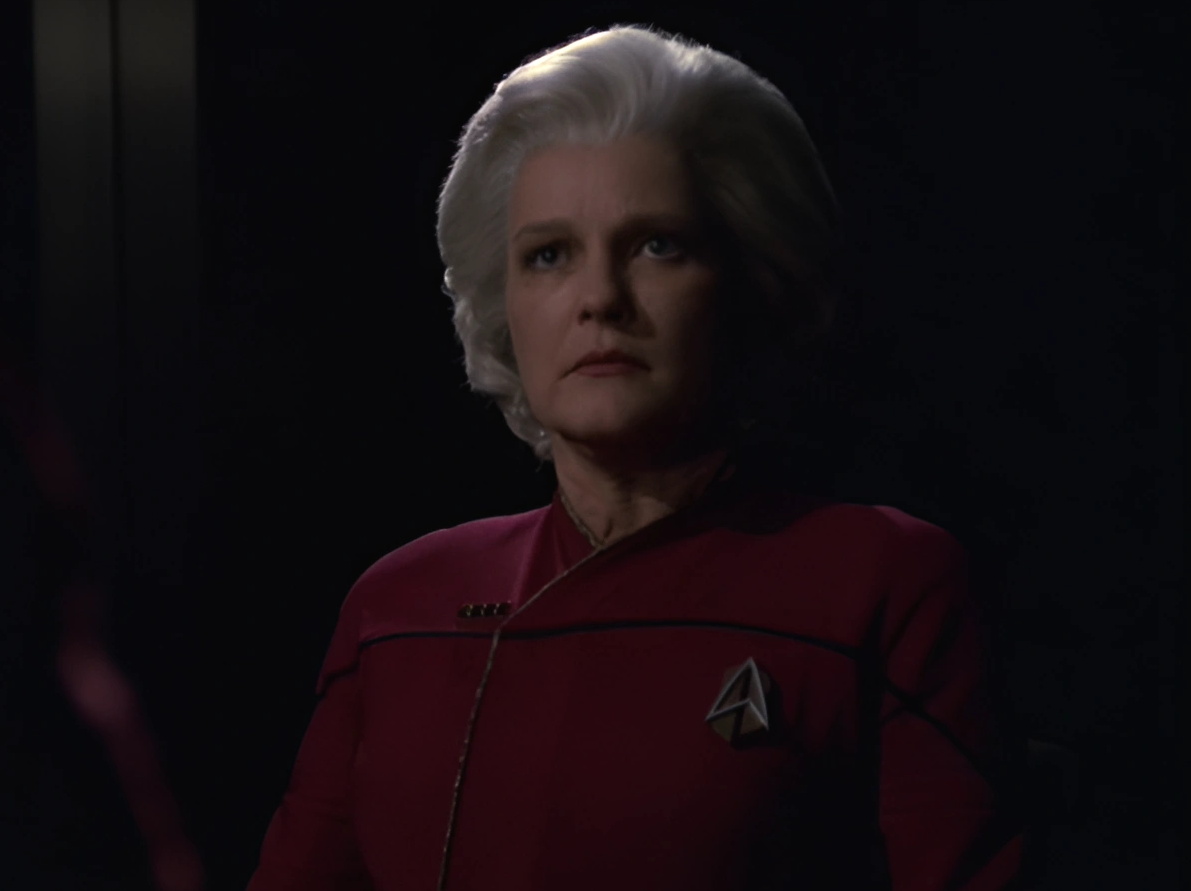
Some fans argue that the worst thing Janeway ever did was murdering Tuvix. I disagree! The way Admiral Janeway’s actions are presented in Endgame leads to one conclusion and one conclusion only: she committed a war crime of almost unimaginable proportions. The Temporal Prime Directive, if it exists at all, exists to prevent actions like those taken by Admiral Janway. By travelling back in time, she wiped out almost three decades’ worth of people’s lives and memories, and erased or “un-made” millions (or perhaps billions) of people who were born and lived in the timeline she wiped out. That is… beyond horrific.
If the future that Admiral Janeway came from was awful, perhaps devastated by a Borg conquest of the galaxy, then we could reframe her choices. But because, for basically everyone except Tuvok and Seven of Nine, the future was at least tolerable – the least-bad version of events, considering how long it took Voyager to make it home – her actions are incredibly selfish, narrow-minded, and immoral.
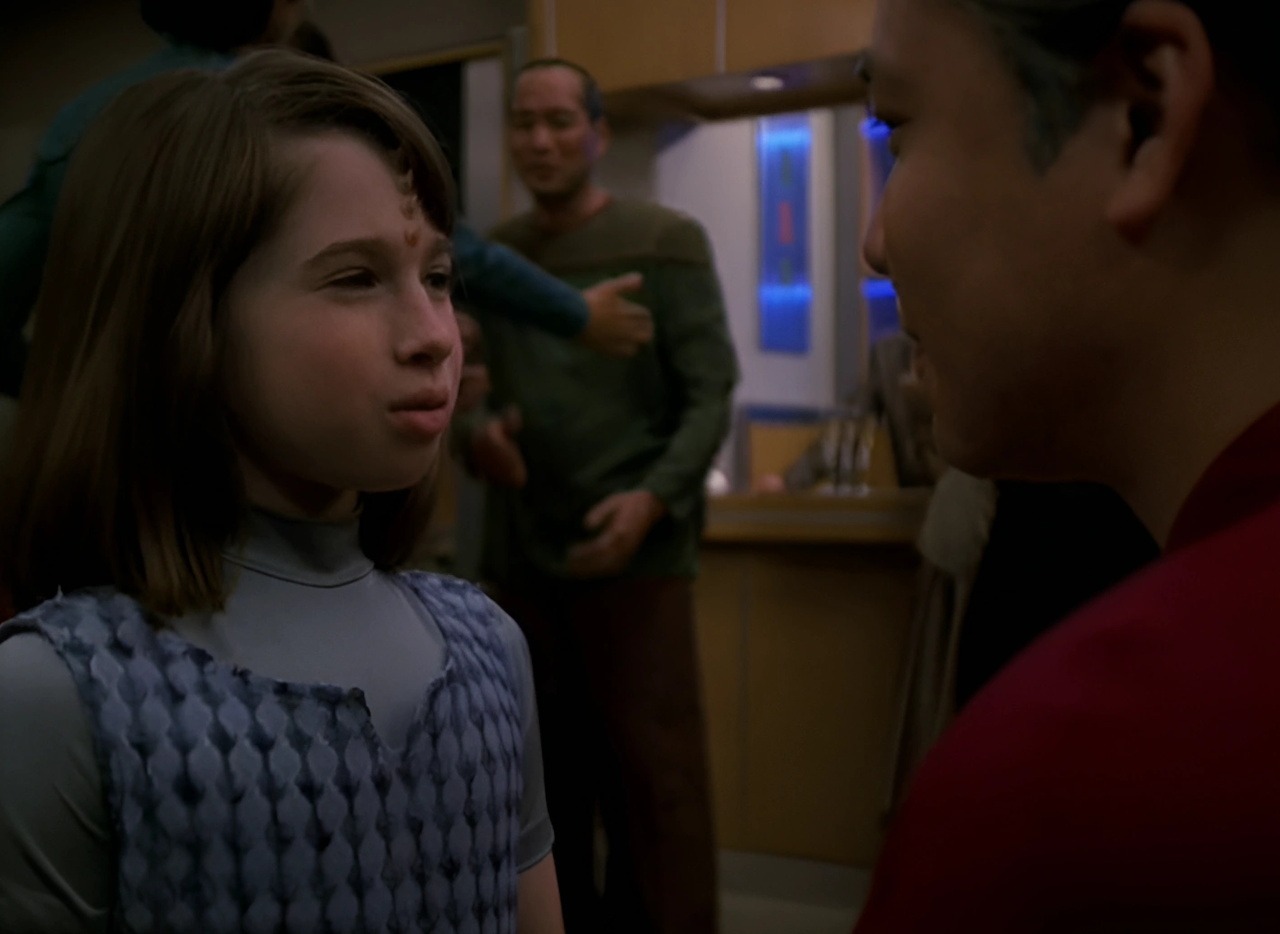
It was Spock who famously said that “the needs of the many outweigh the needs of the few,” so in this case… Seven and Tuvok kinda have to take one for the team. Admiral Janeway’s actions may have saved Seven’s life and helped the elderly Tuvok live a little longer without succumbing to Vulcan dementia, but what are two lives when stacked up against the millions or billions who were erased – genocided, in effect – when the timeline was reset? Sabrina, the young daughter of Naomi Wildman, is one such individual – someone we actually get to meet in the episode. The circumstances of her birth, conception, and parents’ meeting are completely changed by Janeway’s actions, so unless we subscribe to some notion of fate or destiny, Sabrina was un-made – murdered, really – by Janeway.
This isn’t a ranked list, but if it were… I think this would be number one. What Admiral Janeway did is a war crime, by the definitions we have within Star Trek of how time travel can be used as a weapon. It’s mass murder if not genocide, thanks to the changes to the timeline un-birthing countless numbers of people and preventing them from ever living. And it’s a complete betrayal of one of Star Trek’s core philosophies. Admiral Janeway may have felt that her voyage home was unfairly difficult. But… them’s the breaks. Destroying reality to save one or two lives? That’s not acceptable by anyone’s standards.
Number Eight:
Torturing Odo.
Garak in The Die Is Cast.
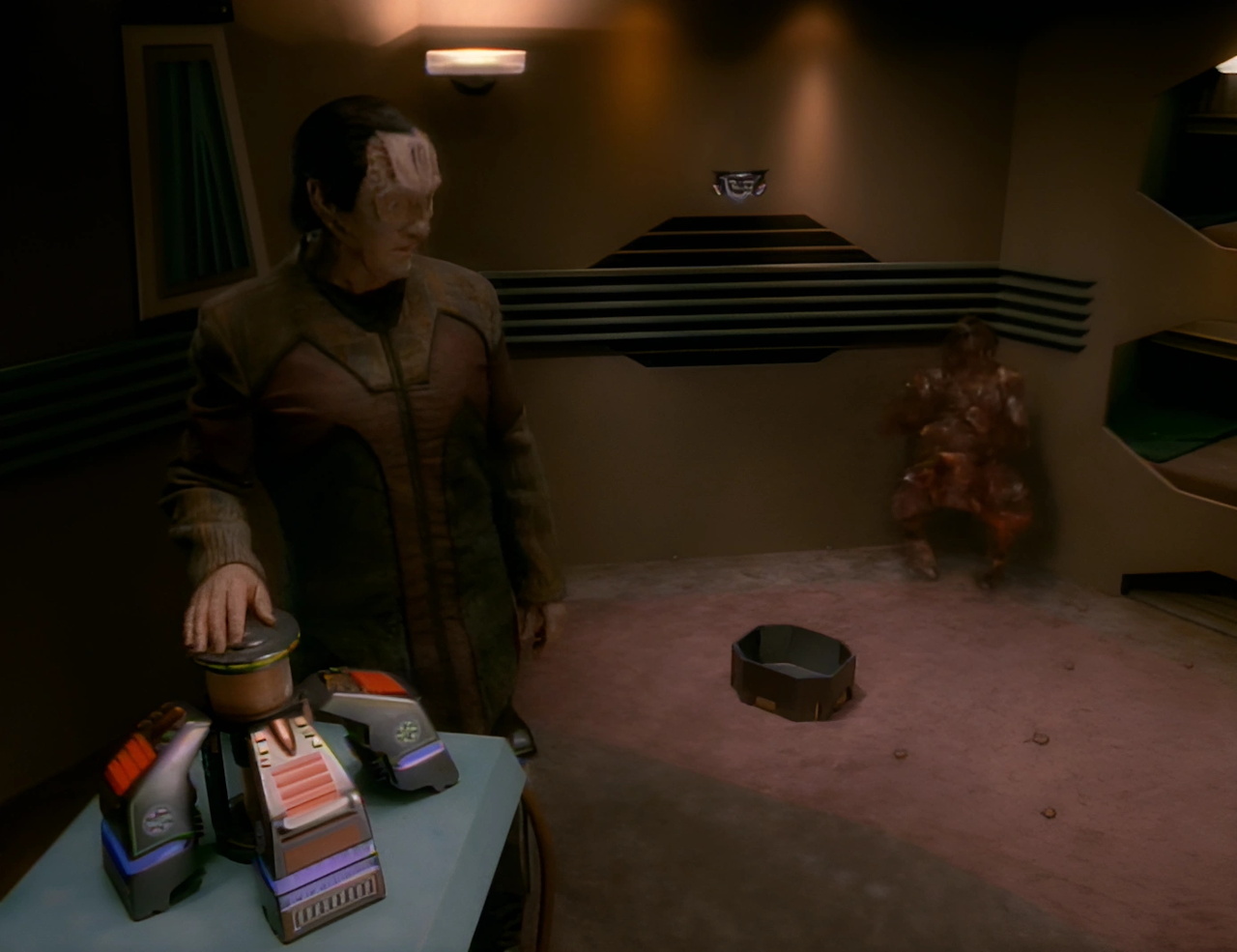
When Garak agreed to team up with his old mentor, Enabran Tain, for a mission to the Gamma Quadrant… things quickly went off the rails. A joint Tal Shiar-Obsidian Order plot to attack the Founders of the Dominion on their homeworld was infiltrated by the Founders themselves, paving the way for the destruction of Cardassia’s intelligence agency and Dukat’s rise to power. But Garak himself crossed a line during that journey to the Gamma Quadrant.
Odo began by investigating what appeared to be an attempt on Garak’s life – though this was later revealed to be a feint by Garak to attract attention. But with a *real* plot to kill Garak in the offing, Odo joined the Cardassian on a venture away from DS9 that led them to Enabran Tain. Odo didn’t *have* to do that; he could’ve concluded his investigation, blaming Garak, or remained aboard DS9, leaving Garak to confront Tain alone. They were never “friends,” but Odo went above and beyond to aid Garak in the first half of this story.
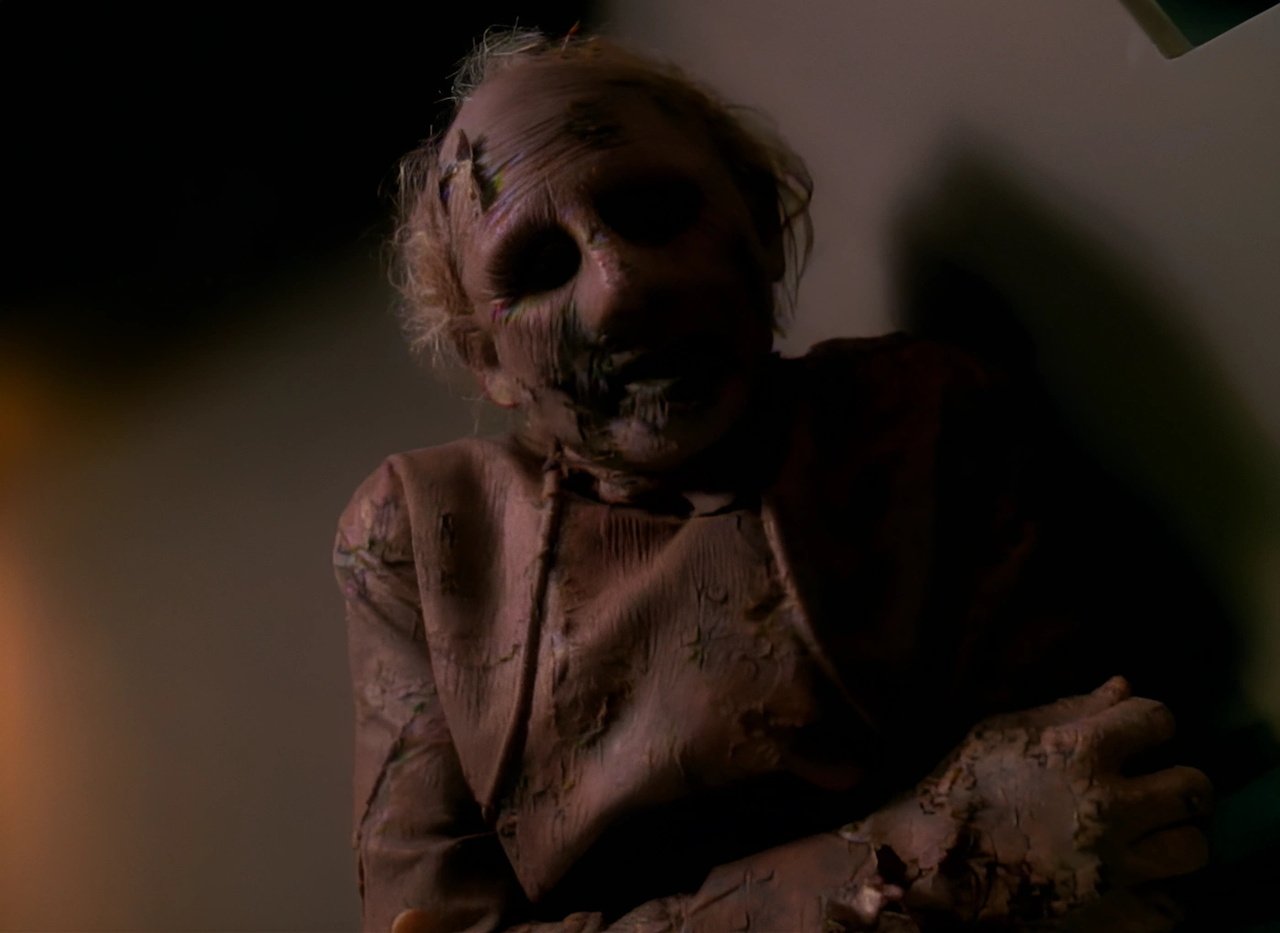
But when Garak agreed to join Tain on his crusade against the Founders, Odo became a suspect and an enemy. Garak was assigned to “interrogate” him – and was given the use of an experimental device that could prevent changelings from shape-shifting. A side-effect of this device was extreme pain and discomfort, and Garak used that, intentionally, to try to force Odo to give up information about his people. There’s a word for that: torture.
To be fair to Garak, he feels bad about the torture, and even tries to prompt Odo to share *something* with him; some new information that isn’t on file so he can call the interrogation a success and turn off the device. But… feeling sad about something, while still continuing to do it, doesn’t erase or justify what’s been done. And yes, you could try to make a case for Garak being under duress with the Tal Shiar and Obsidian Order demanding results. But again, that doesn’t justify literal torture. Odo’s subsequent reaction to what happened, helping Garak escape and later suggesting that the whole torture thing is something “best forgotten” is… incredibly generous, under the circumstances.
Number Nine:
Declaring Talos IV to be off-limits and banning all contact with the Talosians.
Captain Pike et al., after the events of The Cage.
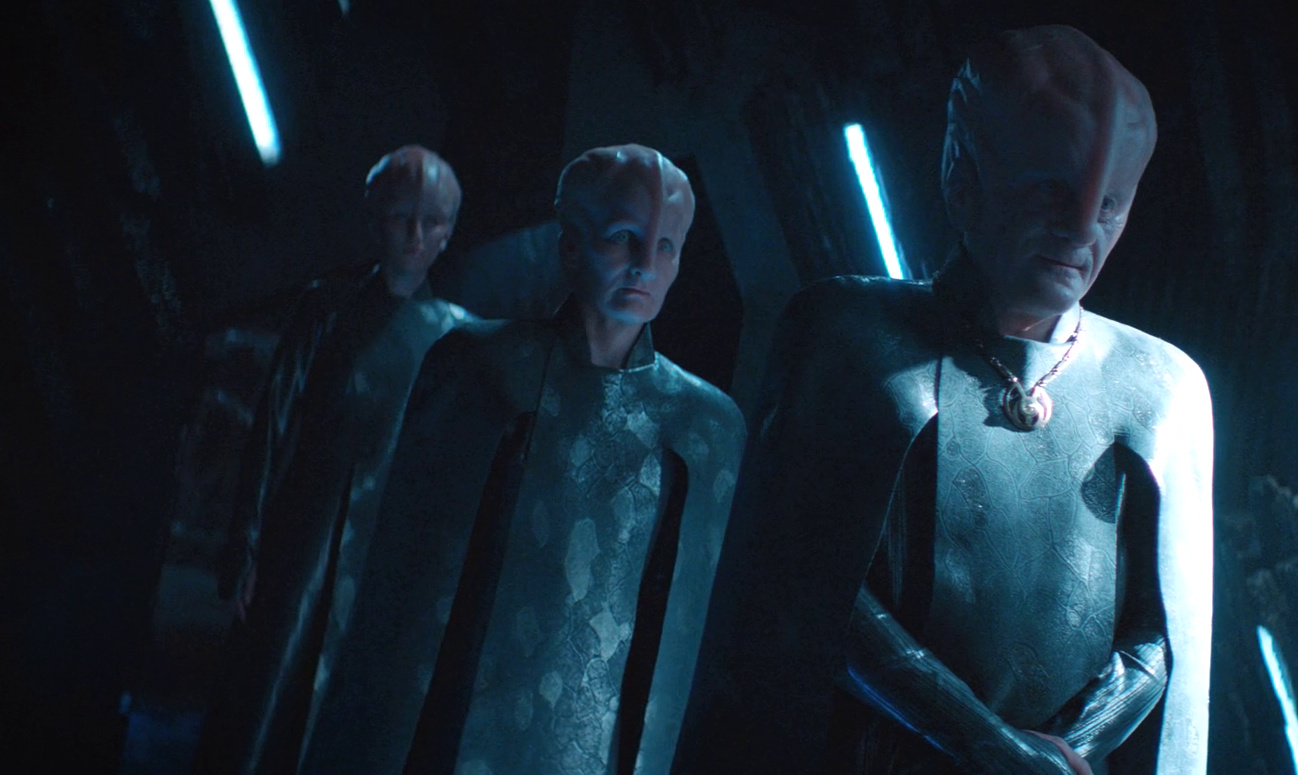
Think about where The Cage (and The Menagerie) end. The Talosians were deceptive, sure, and they did use their impressive mental and telepathic powers to trick Pike and the crew of the Enterprise. That ability should not be forgotten. But the Talosians also came to accept, however reluctantly, that enslaving humans and Vulcans was not acceptable – and, more to the point for them, simply not practical. So this raises a question: why would Starfleet, an organisation dedicated to seeking out new life and rendering aid, go on to ban all contact with Talos IV and the Talosians?
How many Star Trek stories start with an alien being adversarial or even villainous, but end with communication and understanding? The Talosians in The Cage are the original archetype of that familiar trope; Pike’s story in the episode sees him overcome their telepathy, but moreover, open the first genuine reciprocal dialogue between the Federation and Talos IV. Both sides come to an understanding: that enslaving humans is, if nothing else, not worthwhile for the Talosians. And subsequent events see the Talosians willingly helping both Spock and Pike, without really demanding anything in exchange.
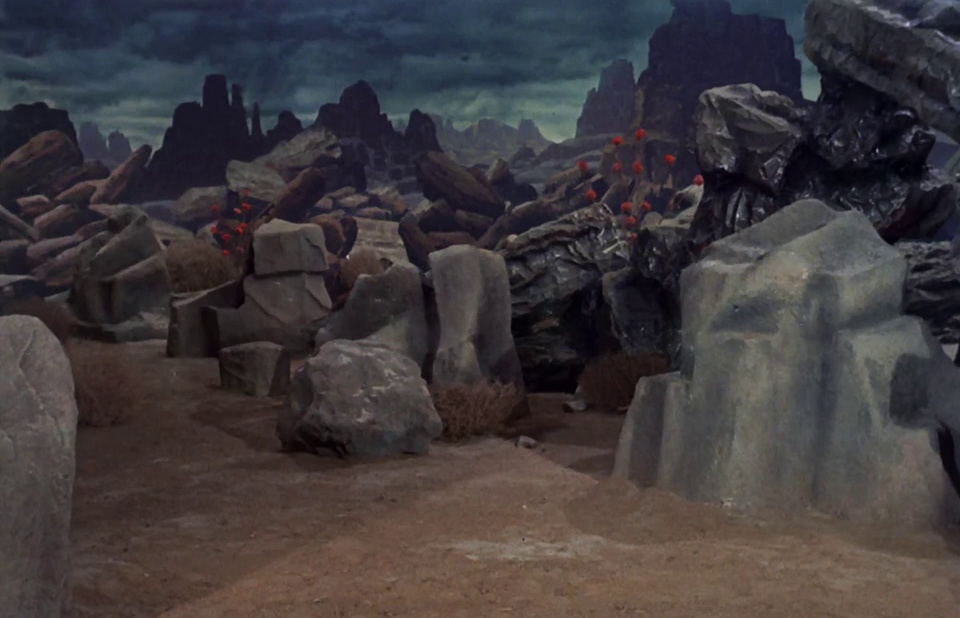
So why should Talos IV be off-limits to everyone? The Talosians possess the ability to deceive, using their mental powers to trick people. But is ability alone enough to warrant such a ban? Given the Federation’s resources, helping the Talosians rebuild, or at least stabilise their population, is well within their capabilities, and surely having the Talosians as a friend, or at least being on positive terms, is better than a blanket ban. Especially for an organisation like the Federation, with its mission of peaceful exploration and co-existence.
Cutting off the Talosians will, in the longer-term, likely condemn the entire race to death. Without the ability to maintain their planet, their machines, and their underground home, the Talosian population will continue to decline, resulting in their extinction. This is not a “Prime Directive” kind of situation, either; the Talosians already know about Starfleet and humanity, so offering assistance in some form, even if it’s just resources and materials at first, is surely the right call. Condemning an entire race to extinction based on *one* interaction – an interaction which, to be honest, didn’t end all that badly – just doesn’t feel right based on everything we know about Starfleet. And as the Enterprise’s captain, the leader of the away mission, and the man who spent the most time with the Talosians, I have to assume that it was at least partly Pike’s idea to recommend cutting off Talos IV.
Number Ten:
Resurrecting Data after he very clearly expressed a desire to die.
Picard in Picard Season 3.
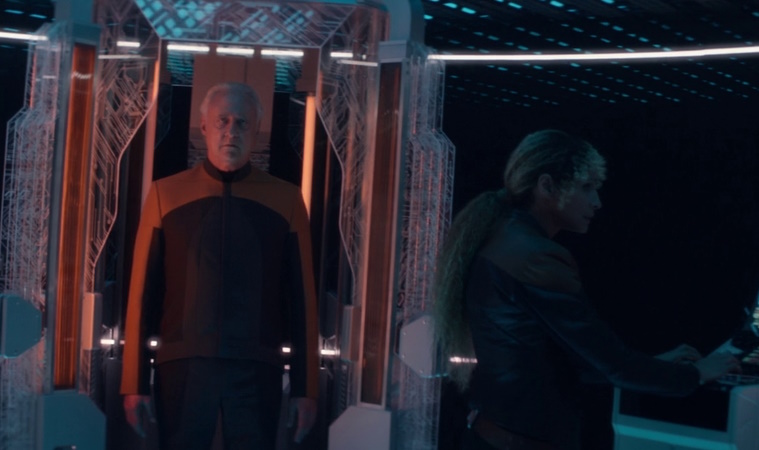
One of the few genuine highlights of the rough and rushed Picard Season 1 finale was the sequence in which Picard laid Data to rest. I wrote at the time that I could finally see how a sequence like this was missing from Nemesis, and how it was a beautiful way for fans to get closure all these years later. Season 1 had its issues, sure, but the way in which Data was finally able to die – achieving his goal of becoming as close to human as possible in the process, because what could be more human to a machine than mortality? – was not one of them. In fact, it *should* have been left alone, remaining one of the best parts of the entire show.
But Terry Matalas, the showrunner for Picard’s third and final season and who also directed the final two episodes of the show, desperately wanted to reunite the *entire* cast of The Next Generation. He wanted to “play with his action figures,” and the set wouldn’t have been complete without Data… so Data needed to be brought back somehow. Even though, in-universe, Data was as dead as it was possible to be, with both his physical body destroyed *and* his remaining neurons having been shut down.

So Picard, who sat with Data in the “digital afterlife,” went against Data’s expressed wishes, resurrecting him again in a new body, using a different set of memories or neurons. He should’ve known that what he was doing was wrong, and that it completely betrayed Data’s own clear instructions for what should happen. But this was really only acknowledged very briefly, and well after the fact, before Picard and the crew just pressed on with the rest of the mission.
I like to believe that, by the 24th and 25th Centuries, a lot of diseases and health conditions will have been totally cured. But there will be some that won’t have been, and there will be some cases where assisted dying or discontinuing treatment will be the least bad option for some folks. Data was in that position in Picard – being forced to exist in the digital afterlife was, for him, akin to being in a coma, vegetative state, or worse. So he asked Picard to help him; to shut down the small part of him that remained and finally allow him to die with some degree of dignity. And it was a powerful, deeply emotional sequence. For Picard to go back on that mere weeks or months later… it doesn’t sit right. And when the storyline found no real narrative justification beyond “hey, look at the shiny thing! Isn’t nostalgia great?” it feels all the worse.
So that’s it… for now!
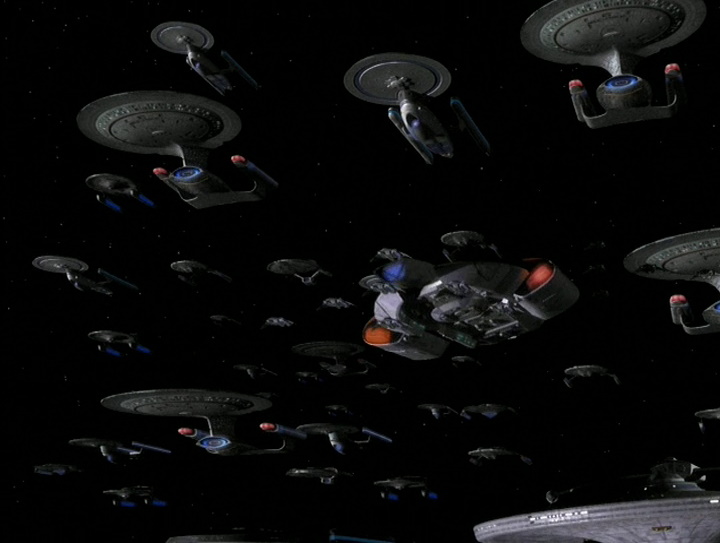
Stay tuned, because I have another set of “the worst things” that I’d like to write up one day. If your favourite (or least-favourite, I guess) didn’t make the list this time… well, be sure to check back the next time I do this. Because I may already have it under consideration!
I hope this has been interesting, and as I said at the beginning, not something to get too worked up or upset over! If I called out one of your favourite characters for their misbehaviour, or you think what they did was either totally okay or justified by circumstances… well, that’s okay. There will always be a range of different opinions on stories and media, and one of the things I love the most about the Star Trek fan community is how passionate folks can be in defending their favourite characters and episodes!
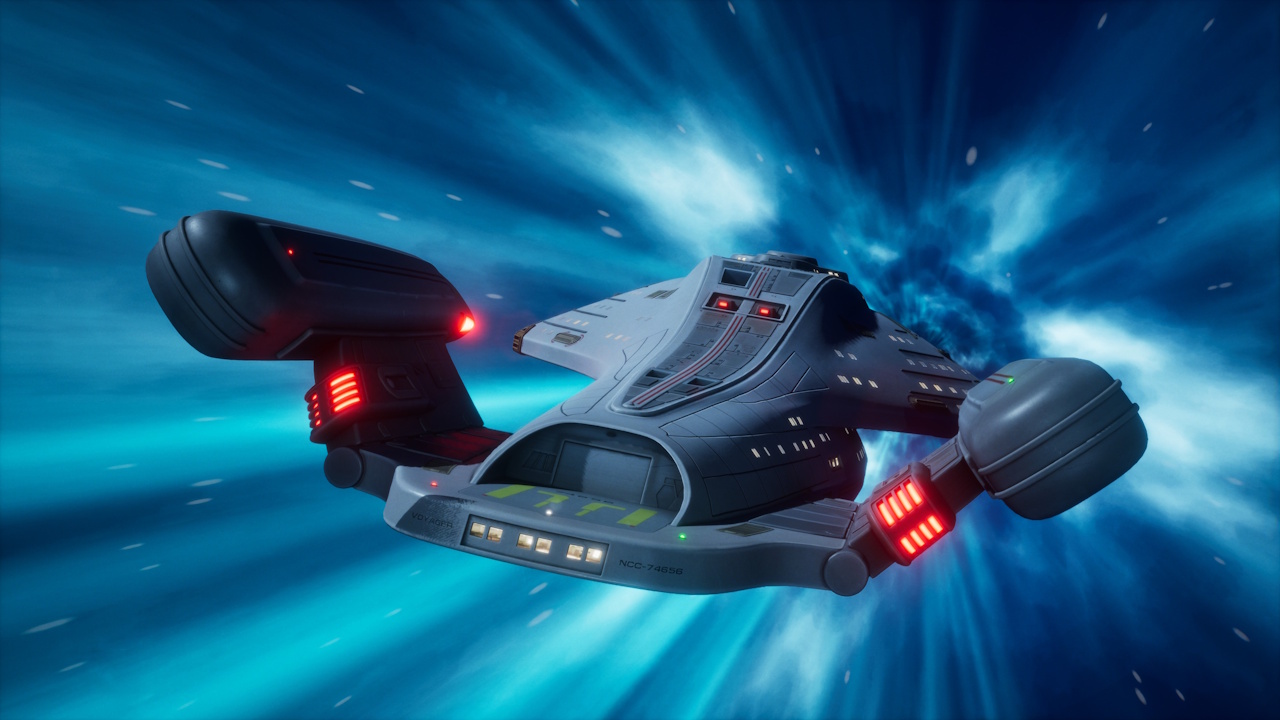
Although this was intended to be just for fun, these are opinions I genuinely hold. I’m not making stuff up for the sake of clickbaiting you, and I think there are genuine moral and ethical issues with what each of these characters did in the stories discussed above. But again, one of the great things about Star Trek is that it’s *never* really been a purely black-and-white, good-versus-evil kind of franchise. There are shades of grey in many different characters and stories, and even the most virtuous heroes can have flaws or make mistakes.
I know I haven’t been as active on the website over the past couple of months, but I still have some ideas in the pipeline as the 60th anniversary nears. We’ve also got Strange New Worlds to look forward to in the summer, and I’m planning weekly episode reviews as those new episodes air. I hope you’ll join me for some of that! And if you missed it, I had the incredible good fortune to be able to meet William Shatner – Captain Kirk himself – at a recent Comic-Con event, so click or tap here to read about that experience.
Until next time… and Live Long and Prosper, friends!
The Star Trek franchise – including most films and TV series discussed above – can be streamed now on Paramount+ in countries and territories where the platform is available. Many are also available on DVD and/or Blu-ray. The Star Trek franchise is the copyright of Skydance-Paramount. Some still frames used above were upscaled using A.I. tools. This article contains the thoughts and opinions of one person only and is not intended to cause any offence.

