

The first part of this review is free from major story spoilers. The end of the spoiler-free section is clearly marked.
Civil War is a film I’d been looking forward to in 2024. It seemed like a picture that had the potential to be serious and timely – and perhaps the kind of film that could’ve ended up as a dark horse when awards season rolls around! While I’m not sure that Alex Garland’s tale of a fractured America quite reached that level, it was an interesting watch nevertheless.
War films can often be brutal in their depictions of violence, as can post-apocalyptic fiction. Civil War leaned into both of these genres at different times, using established tropes of both – while occasionally putting its own spin on some of them. By presenting the violent nature of a dystopian world and the harsh realities of war through the lenses of unarmed journalists, Civil War could feel tense, frightening, and dark. Its four principal characters could often feel vulnerable; caught in an environment where survival was the most important thing – but without any kind of weapon save their press badges.
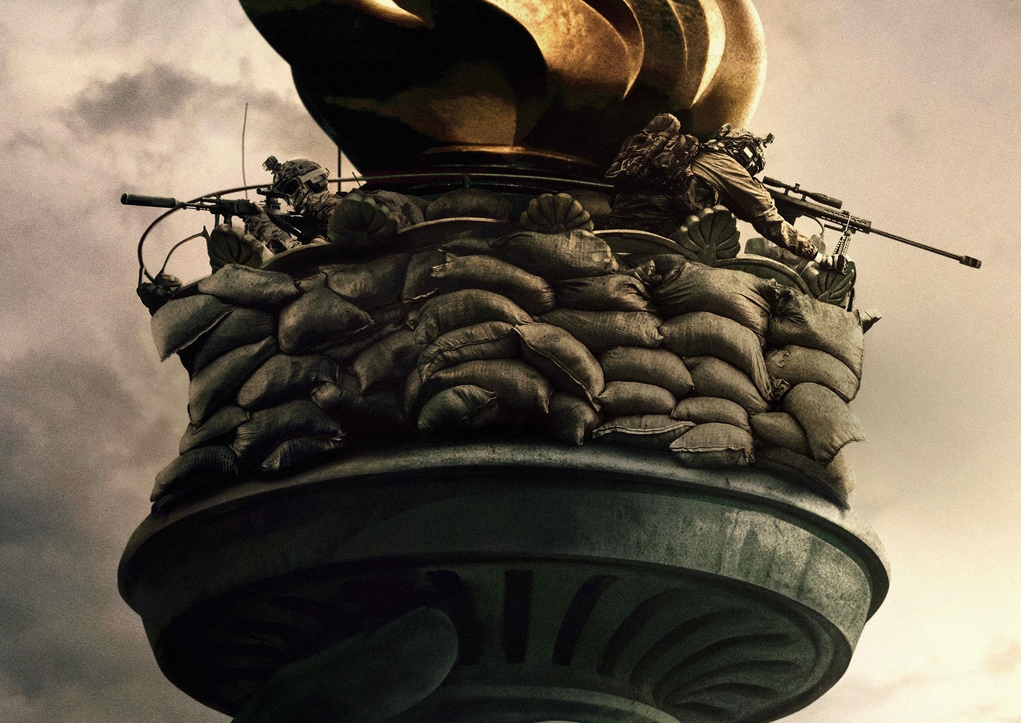
Civil War was also a film that didn’t have the political edge that I was expecting. Given the events of the past few years in the United States – deepening political polarisation, the January 6th insurrection, and so on – I was worried that Civil War might come across as preachy; arguing in favour of one party or candidate over another. Instead, the film basically ignored the president, the causes of the war, and even the soldiers fighting in it for the most part, keeping a tight focus on its journalist protagonists. I can see both sides of this argument, and when we get into spoilers we’ll talk a bit more about politics and possible analogies to current events. But for now, suffice to say that the film was far more interested in the journeys of individual characters rather than taking a wider look at societal divisions and the potential causes of a civil war in the United States.
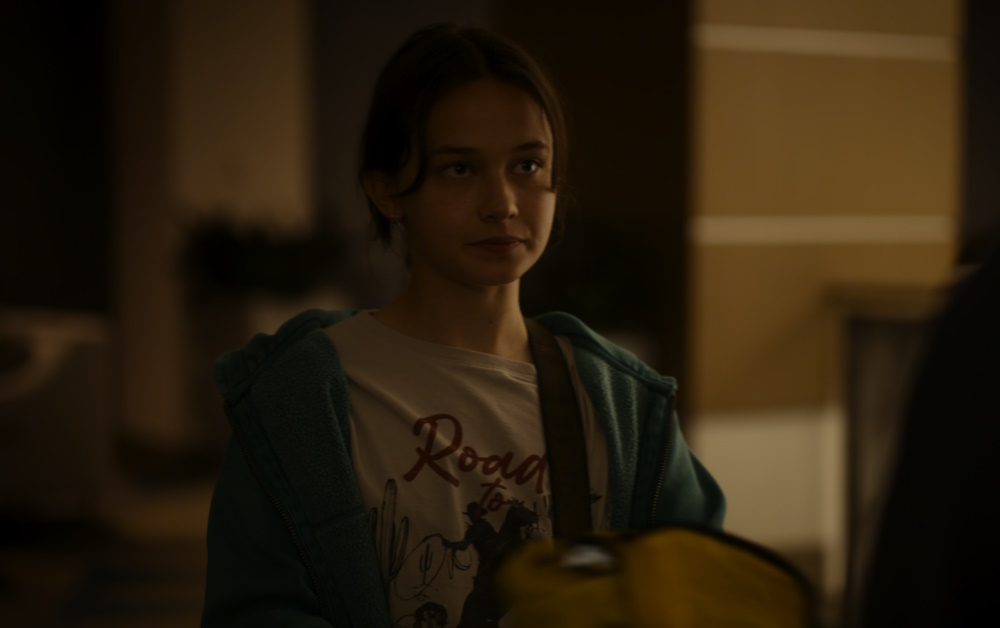
In fact, one character in particular was front-and-centre, even when the story wasn’t being told from her perspective. Golden Globe-nominated actress Cailee Spaeny took on the role of Jessie, a young photographer who tags along with the more experienced journalists in the group. And to me, Civil War feels like her story – a tale of a young person experiencing the brutal realities of a world torn apart by war, losing her naivety or innocence as she journeys deeper into the warzone. The concept of a character’s growth and changes being reflected in a real-world journey from one place to another is something war films like Apocalypse Now have used to great effect. Civil War does something similar as Jessie’s transformation from fresh-faced wannabe to battle-hardened veteran journalist plays out.
Civil War feels like a modern film thanks in part to its soundtrack. Silence is used to great effect at a couple of key moments, but the juxtaposition of upbeat pop tracks with some of the imagery of war – or the eeriness of locales unaffected by the conflict – is something we’ve seen other modern titles do. There’s something unsettling about hearing some of these tracks playing as the film is rolling on – and that was exactly the director’s intention.
So I think that’s all I can say for now without getting into story spoilers. If you haven’t seen the film and don’t want to know what happens – including at the very end – then this is your chance to jump ship! If you’re ready to get into narrative spoilers, though, stick with me and we’ll dissect Civil War in more depth.

This is the end of the spoiler-free section of the review. There are story spoilers from here on out!
First of all, I’m surprised at how little attention Civil War paid to the conflict at its core. Perhaps this is a result of the film’s marketing emphasising the secession of certain states and the fictional backdrop to the war, but I really expected to get a lot more about the different factions involved, some indication of the root cause or causes of these apparently separate breakaway states, and what led to all-out war being declared. There was very little about this in the film itself, yet that side of it was definitely hyped up in pre-release marketing material.
Such a storyline could easily descend into arguments about modern politics, and from that point of view I can see why writer and director Alex Garland may have chosen to side-step the issue. Civil War is ambiguous enough that both sides of the aisle in American politics could project themselves onto the rebels and their opponents onto the seemingly corrupt and unpopular president – and that may have been the intention. However, it also opens up the film to a different kind of criticism – that it isn’t political enough. If there’s a message about the danger of corrupt politicians, or a politician attempting to usurp democracy for their own ends, why not be bold and call them out – if not by name then with a more obvious analogy?
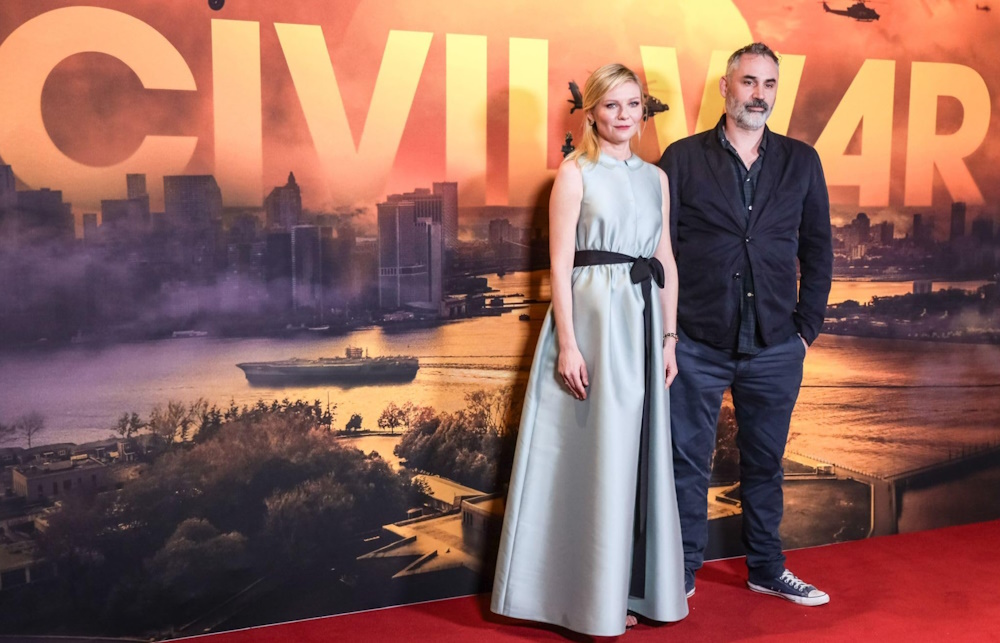
Image Credit: IMDB
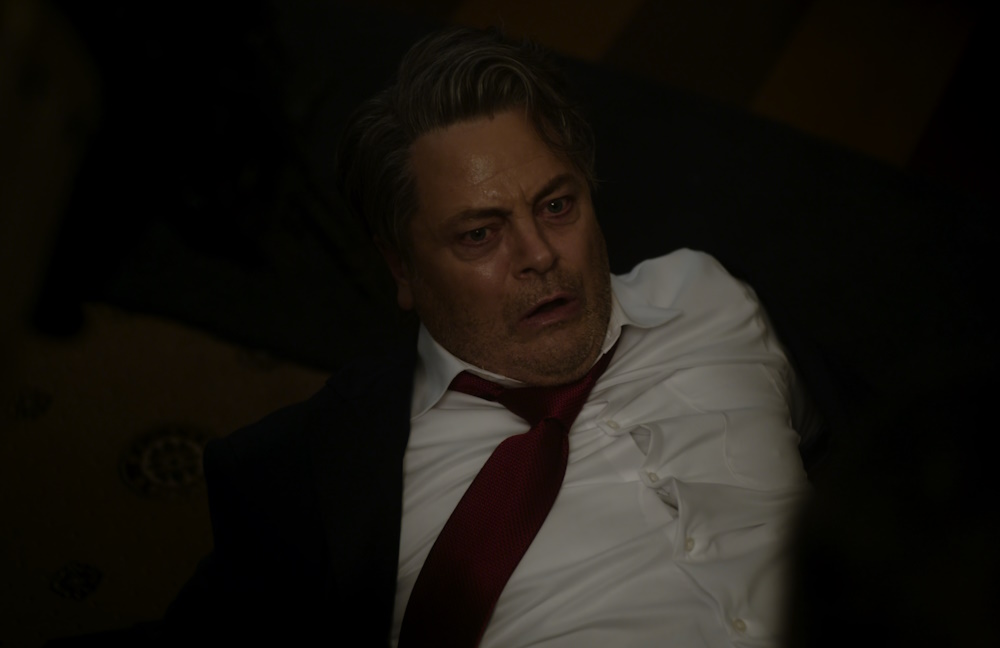
That being said, I personally read Civil War’s president as being based on or inspired by Donald Trump. The brief mention of the president having sought a third term, the way in which he was made up to look – for want of a better term – more orange and with more fake tan, the way he spoke in such exaggerated terms at the beginning of the film, and actor Nick Offerman’s mannerisms all led me to that conclusion. The president was not a major figure in the film, appearing briefly at the beginning and the end only, but he was an important character and seemingly the main cause or at least a major contributor to what had gone wrong in America.
Despite the president’s death at the end of the film not being presented as a particularly heroic moment – from our protagonists’ perspective, at any rate – I can’t help but wonder if there’s a degree of fantasising or wish-casting in the way those final moments unfolded. Some politicians – Trump in particular – evoke incredibly strong feelings, and I daresay that Alex Garland wouldn’t be the first person to fantasise about storming the White House and having him killed.
Let’s stick with this idea of the film as a “fantasy,” because I think the backstory of Civil War speaks to a curiously American kind of narrative. The idea of a “rag-tag” group of rebels being able to take on and defeat the incumbent government is a trope of American filmmaking and American storytelling in general. And it’s easy to see why: the United States was founded in such circumstances, when a group of colonists fought against the biggest and most powerful empire of their time to win their independence. Ever since, this notion of the virtuous rebel fighting against the corrupt establishment has been a core foundation of storytelling in America.
We see this theme in cinema – from the earliest films like 1916’s The Crisis through Star Wars’ Rebel Alliance and beyond, continuing into the present day. The conflict in the background of Civil War is very much in this American tradition of rebellion, and underdogs taking the fight to the powers that be. In the 18th Century that might’ve worked… but it’s a total fantasy in today’s world, where UAVs can drop bombs on even the most well-organised militia at a second’s notice. Civil War tried to sidestep what is a pretty glaring narrative flaw for any story that wishes to appear realistic. It does so by ignoring the buildup to the conflict and its early days, showing only the final, climactic battle as rebel forces storm Washington DC. Does that work? Does that contrivance overcome the inherent impossibility of the film’s premise? I’m not convinced – but I’m also not convinced that it matters all that much in a story that’s primarily about a handful of characters and their response to the war. The war itself is the catalyst, not the focus – if it were, this premise would trip up the story a whole lot more.
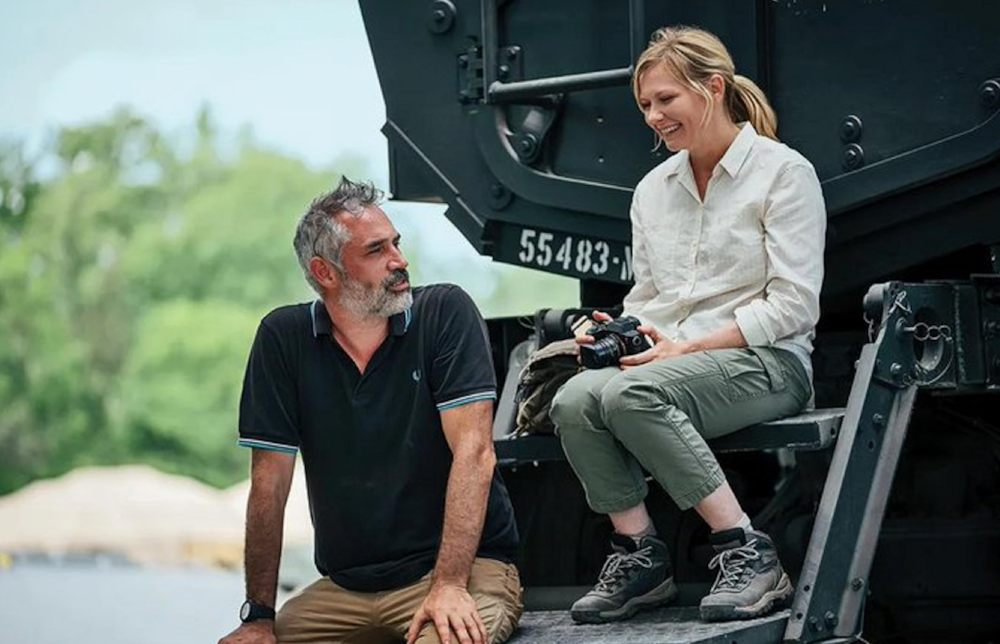
We talked about Jessie’s journey in the spoiler-free section, and how she changed over the course of the film. Even though Civil War wasn’t always shot from her point of view, I see it as really being her story. The other journalists in the group were more or less fixed characters – they saw horrible things, including the death of their friends – but they didn’t undergo the same transformation as Jessie did. In that sense, Civil War is her story more than anyone else’s.
The character of Lee was interesting – but I would argue that Civil War didn’t give her the in-depth look that it really needed to. Lee’s story seemed to be one of post-traumatic stress, and how a character that everyone thought was emotionless and detached was actually suffering on the inside, but struggling to tell anyone. Her interactions with Jessie came closest to hinting at that, but no one else really picked up on what was going on inside Lee’s mind. As the audience, we got to see it – literally, through the use of some creative camera work and sound design that pulled Lee out of the action at a few key moments, and that used stretched-out colours to symbolise the damage that trauma was doing to her. But the film didn’t really expand upon this; we saw it, but Lee’s travelling companions never did. Right up to the moment of her death, Lee was left alone with her struggle.
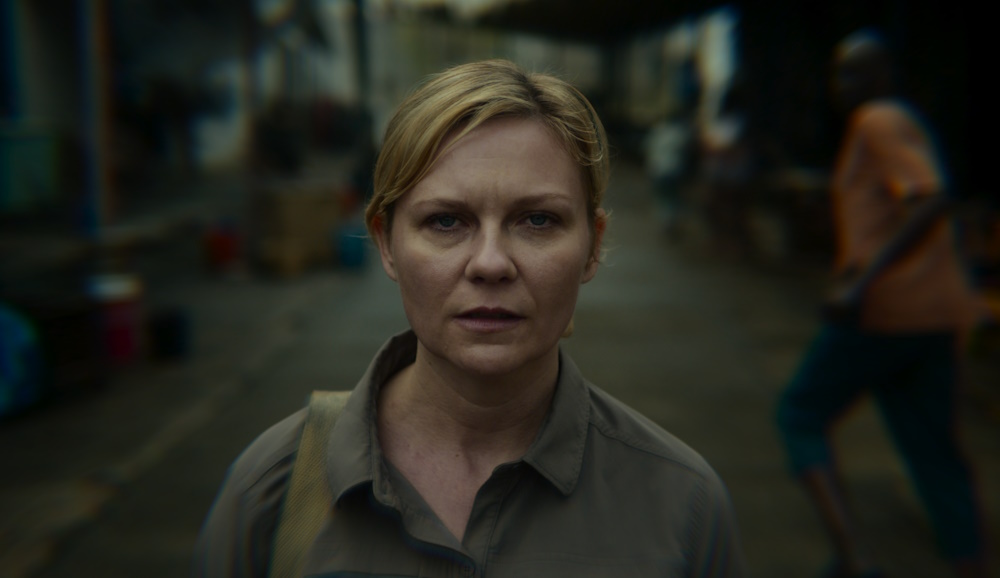
And perhaps that’s part of the point: Lee represents the kind of person Jessie is becoming. Through her, we catch a glimpse of Jessie’s future – one of trauma and silent struggle. She wanted to be a war photographer no matter what, and Lee shows us what Jessie will become at the end of that road.
One thing I didn’t like, speaking of photography, was how Jessie used an old film camera. Film might be the preference of a few hipsters and artists, but in a fast-paced medium like journalism, it really doesn’t have much of a place any more. As Lee remarks to Jessie at one point in Civil War, only one photo out of every few dozen is a keeper – and when a roll of film might let Jessie take 32 photographs… that’s one usable picture per roll. There’s also the process of developing the negatives and so on… and it just felt like an unrealistic and unnecessary inclusion. Civil War itself was shot on digital cameras, which I think is worth noting. If the director had a preference for film or wanted to make a point about film being somehow “better” than digital… well, it starts to look a bit silly. It doesn’t make a lot of sense in-universe for a character intent on becoming a war photographer to rely on film in a world where digital cameras exist, and the story didn’t have much to say about it, either. It’s not like the film-versus-digital debate even really came up, nor served as a metaphor for something else.

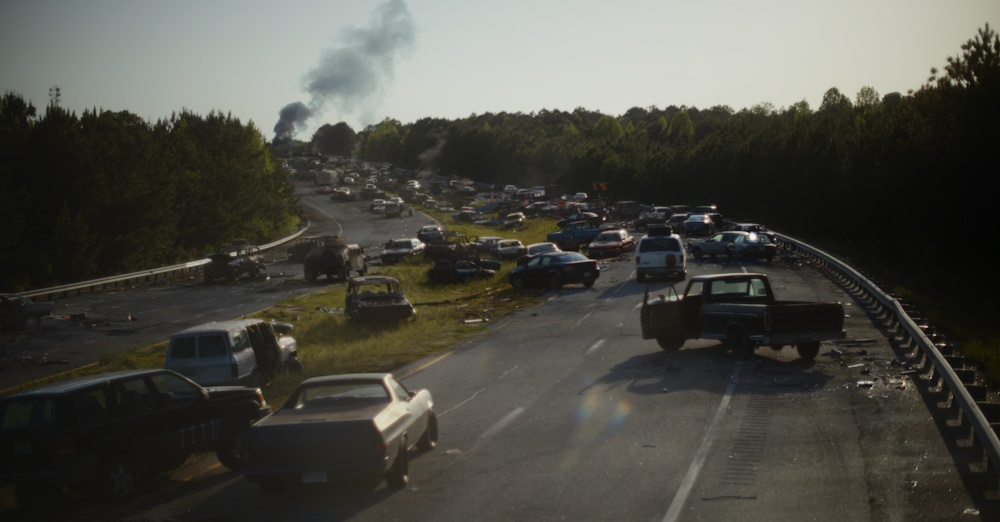
Parts of Civil War felt like a road trip – and indeed the film’s working title was “Road Trip” when it first entered production. We caught little glimpses of the film’s post-apocalyptic-inspired world as our characters drove from place to place, with things like random fires, furniture dragged outdoors, and abandoned vehicles on the highway all having become tropes of post-apocalyptic fiction. Civil War leaned into this with some of its secondary characters – the group at the gas station and the racist soldiers in particular. There was a lawlessness to the world that these characters successfully embodied, and the occasional moments of light-heartedness that Civil War gave to its main characters were ripped away in brutal fashion as the reality of the world they now inhabited hit them.
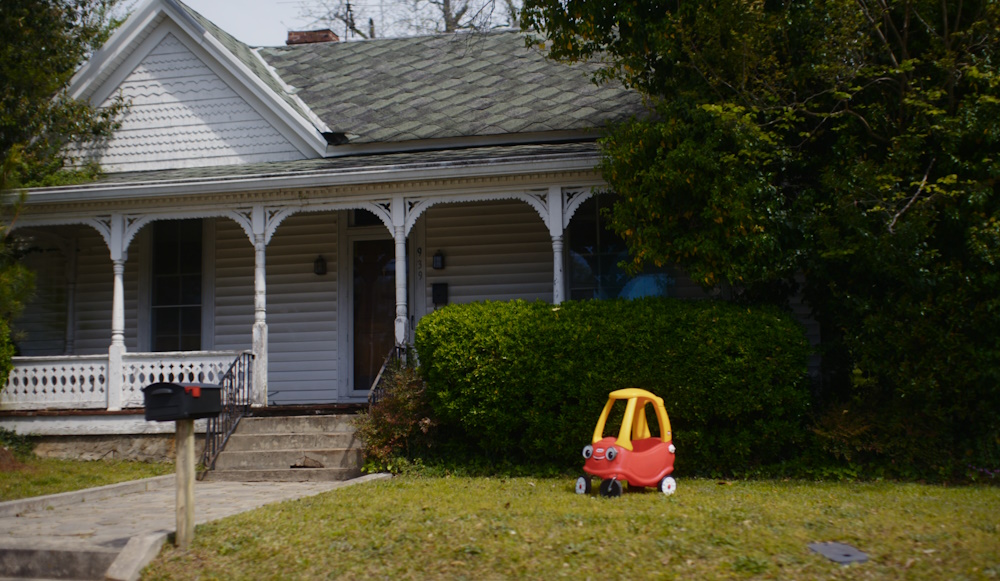
Even when there were moments of joy, playfulness, or a visit to a town that the war seemed to have passed by, there was still a distinct eerie sensation in the air that things weren’t right and our characters were in danger. Civil War used this quite well, meaning that even when the main characters let their hair down or found themselves relaxed, the feeling of danger was never very far away. Even the moments where nothing bad happened – such as at the refugee encampment or in the quaint little town – that sensation was always present. In a way, parts of Civil War almost developed a psychological horror tone, where the sense of danger never fully let up. Any background character, shopkeeper, driver, soldier, or whoever felt like they could be a potential risk.
It’s relatively unusual for a film to make photographers and journalists into its protagonists. All four main characters expressed different degrees of detachment from the conflict they were documenting, as if they had no real political leanings or views on the war. There was some initial criticism of the president – particularly from Sammy at the beginning of the film – but the others mostly avoided sharing their thoughts or opinions. We tend to see journalists in this way, as being impartial observers – even though many of them aren’t! But it made for an interesting viewpoint for a war film to take – particularly for a film that, as mentioned above, didn’t really go into much detail about what had happened or why this conflict was raging.
Civil War had some creative cinematography and camera work that leaned into quite an artistic style. Shots would linger over things like a sprinkler spraying water or an empty road, as well as use exaggerated or faded-out colours to depict Lee’s mental state. The camera would also fade to a grainy black-and-white at times, representing the way Jessie’s photographs would look. I liked most of these, and they felt tasteful and creative without being overused. The long shot of Jessie falling into the mass grave was also particularly well done.
So that was Civil War. It was an intense, brutal film – but one that didn’t have the political edge I’d been expecting. That made it more interesting in some ways as a work of characterisation and a road trip movie through an interesting series of war-torn environments, but it rendered much of the potential social commentary rather impotent. However, by leaving the causes of its war ambiguous, Civil War allows its audience to reflect on the consequences of such a conflict regardless of who may have been “right,” which is arguably a more important message given the political polarisation that has been present for years in the United States.
For my part, I enjoyed Civil War. It’s rare these days for a film to stick in my mind for hours and days after I’ve watched it, but I found a few of Civil War’s most intense sequences playing in my head on repeat after only watching it a single time.
There were some great acting performances from the entire main cast, special effects that hit the mark and didn’t get in the way, creative cinematography and sound design, and all in all, an interesting narrative that hooked me in and kept me engaged throughout. Definitely one to watch if you haven’t seen it already!
Civil War is available now on video-on-demand on Apple TV and Amazon Prime. Civil War will be available for streaming on Max in September 2024 and may also be released on DVD/Blu-ray at a later date. This review contains the thoughts and opinions of one person only and is not intended to cause any offence.
 Trekking with Dennis