


Spoiler Warning: There are spoilers ahead for Star Trek: Strange New Worlds Seasons 1-3. Spoilers are also present for the following Star Trek productions: The Original Series Season 1, The Next Generation, Voyager, and Picard Season 2.
After an explosive and action-packed season premiere, Strange New Worlds opted for a complete change in tone in Wedding Bell Blues. There were some lighthearted sequences, a callback to a fan theory that’s been kicking around for literally decades, and, unfortunately, a bit too much cringe humour for my taste. Despite that latter point, Wedding Bell Blues had its moments, and the apparent confirmation of that decades-old fan theory was worth the price of admission alone!
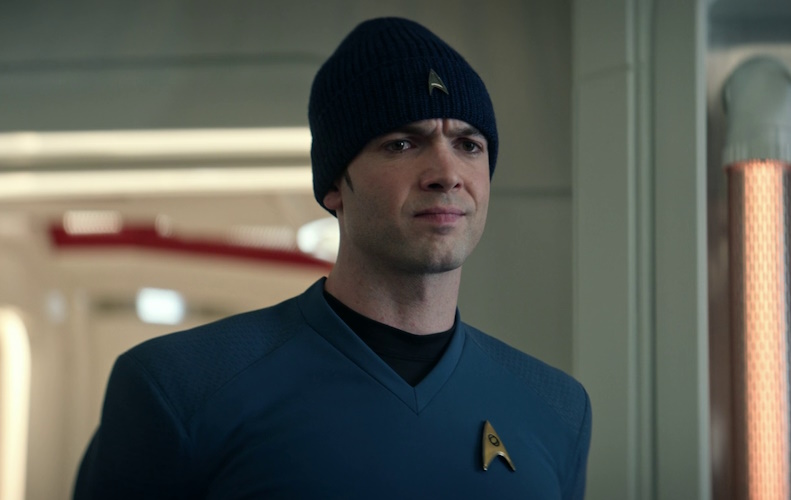
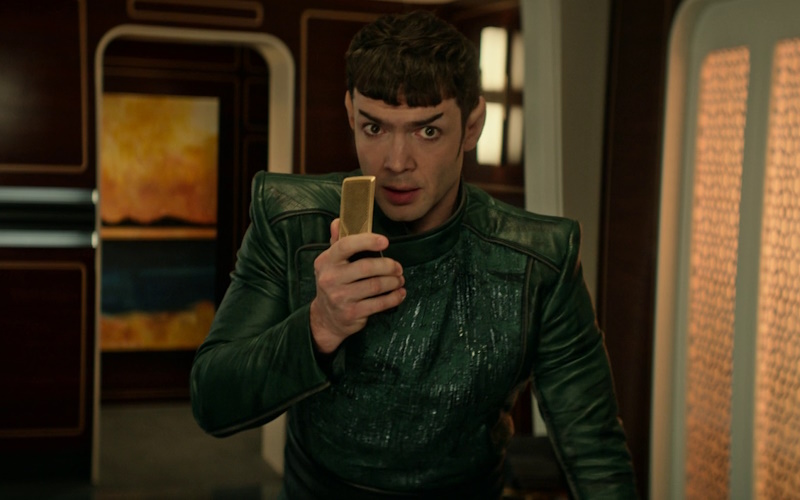
For me, though, I suppose Wedding Bell Blues is going to be another episode that I don’t revisit very often. This obsession that the show’s writers have with putting Spock in situations that are emotional or just wacky and cringeworthy… it’s overstayed its welcome. And while I will happily admit that there can be humour in that premise… I’m thoroughly done with it at this point. Spock Amok, The Serene Squall, The Elysian Kingdom, Charades, and Subspace Rhapsody all included some kind of “Spock comedy” or “Vulcan comedy,” and I just think that we’ve really reached the end of the line with it. Any joke – even great ones – stop being funny when they’re repeated too often, and this whole “Vulcans are stuck up and rigid, so let’s turn that into comedy” idea wasn’t especially strong to begin with. At this point… well, let’s just say I hope we don’t get too much more of that going forward. And yes, I’m aware that we have Four-and-a-Half Vulcans still to come later this season.
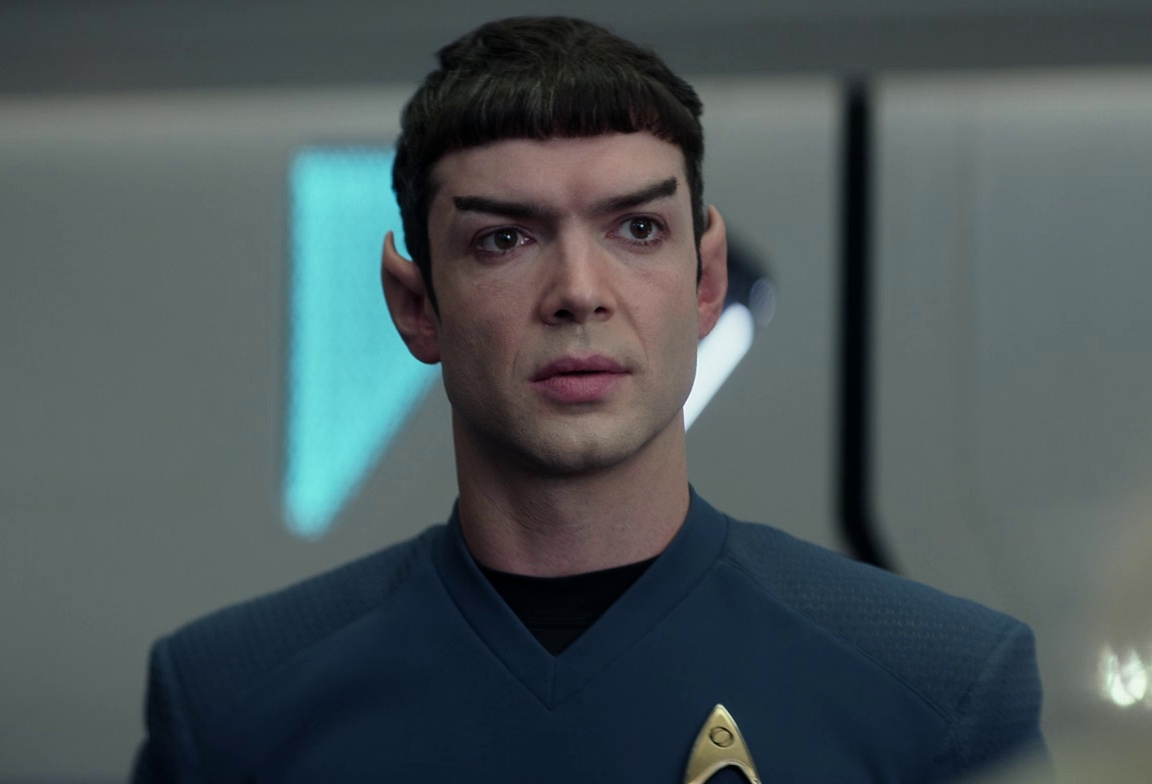
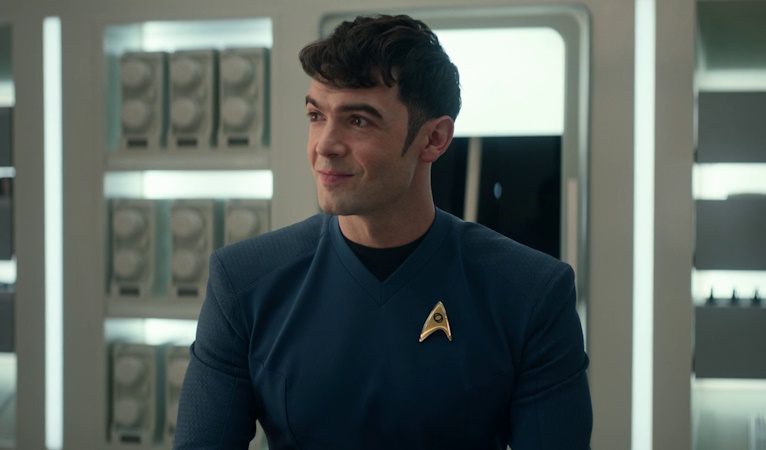
That being said, there were some interesting and entertaining moments in Wedding Bell Blues, and when the episode switched to Spock and Dr Korby trying to undo the damage, things largely improved. Dr Korby made for a fun character, even though his introduction as Spock’s rom-com/Hallmark movie dating rival wasn’t spectacular! Dr Korby originally appeared in The Original Series first season episode What Are Little Girls Made Of? where Kirk and the crew encounter him – after a fashion – on a frozen planet.
It’s been a while since I re-watched What Are Little Girls Made Of?, so my recollections of that story are a little fuzzy! But from what I remember, the “Dr Korby” that the crew – and Nurse Chapel – encountered wasn’t quite the same, either due to the mind-transferring process he went through or, perhaps, because of years in isolation and the traumatic experiences he went through. I’m not sure if Strange New Worlds’ version of Dr Korby is going to appear again after this episode. If he doesn’t, I think we’ll look at Wedding Bell Blues as a bit of mildly interesting backstory. But if he does come back, I think there’s potential to expand the character further, and perhaps show us a glimpse of a darker side, something that might inform his TOS appearance. Because I didn’t really get much of that from Wedding Bell Blues, to be honest. If Dr Korby had been substituted for a brand-new character, it wouldn’t have made any real difference to this particular script.
We’ll come back to Chapel, Korby, and Spock, because I really want to get into this Trelane and Q connection!
For some background information: Trelane was a character who first appeared in the episode The Squire of Gothos, also from the first season of The Original Series. He was portrayed as a trickster, capturing and toying with Kirk and the crew – before being reprimanded by his parents. When Q appeared at the beginning of The Next Generation some twenty years later, fans immediately made the connection. Q and Trelane felt so similar that “Trelane is a Q” became a popular theory in the Trekkie community. But it was never confirmed, despite Q making repeated appearances in The Next Generation, Deep Space Nine, and Voyager. Even a visit to the Q Continuum itself didn’t confirm it!
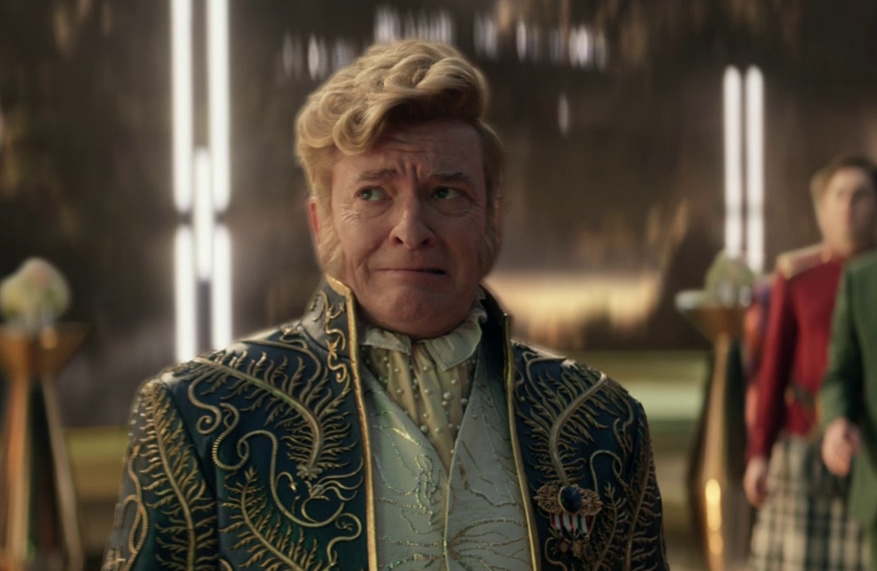
The character in Wedding Bell Blues is credited simply as “Wedding Planner,” and John de Lancie – Q from The Next Generation – is credited as voicing “Wedding Planner’s father.” However, ahead of the season we were told that Rhys Darby – who played the “Wedding Planner” – was playing the role of a familiar character, and after Wedding Bell Blues aired, showrunner and executive producer Akiva Goldsman confirmed that the two are the same character. With that in mind, I shall be treating the “Wedding Planner” as Trelane and the other energy life-form as Q.
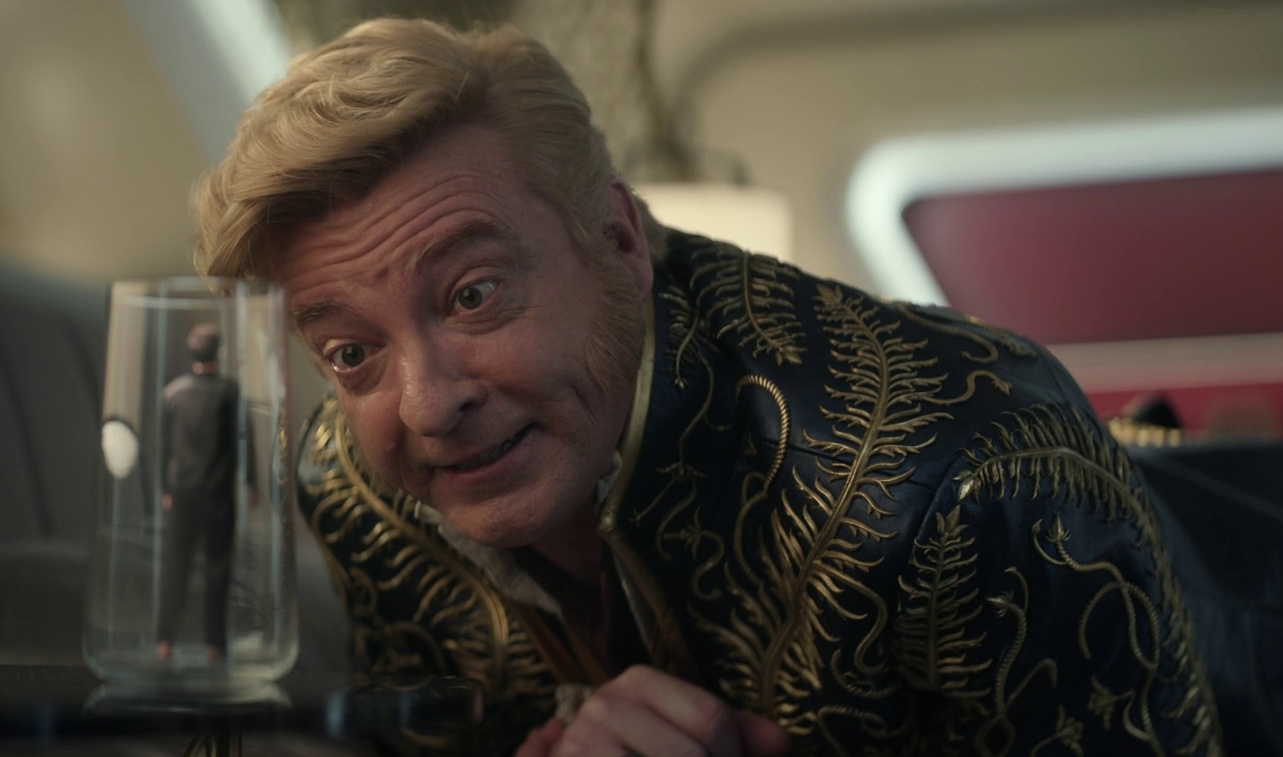
I love that Strange New Worlds went out of its way to confirm this old fan theory and really lean into the Trekkie community. Moments like this connect disparate parts of Star Trek together, and while we can argue the toss about changes to the Gorn from one show to the other, Trelane’s appearance here was pitch-perfect. It was right in line with The Squire of Gothos, and the fact that John de Lancie returned to voice Q at the end of the story just made it so much better.
As an aside: have we finally seen the Q in their “true” form? Q has always been able to change his form, but in all of his appearances – and the appearances of other members of the Continuum – we never got confirmation of what the race actually looks like in its native form. I think there’s a case to be made that the energy cloud from The Squire of Gothos and Wedding Bell Blues is what members of the Q Continuum look like when they aren’t deliberately assuming another form. And that’s kind of cool!
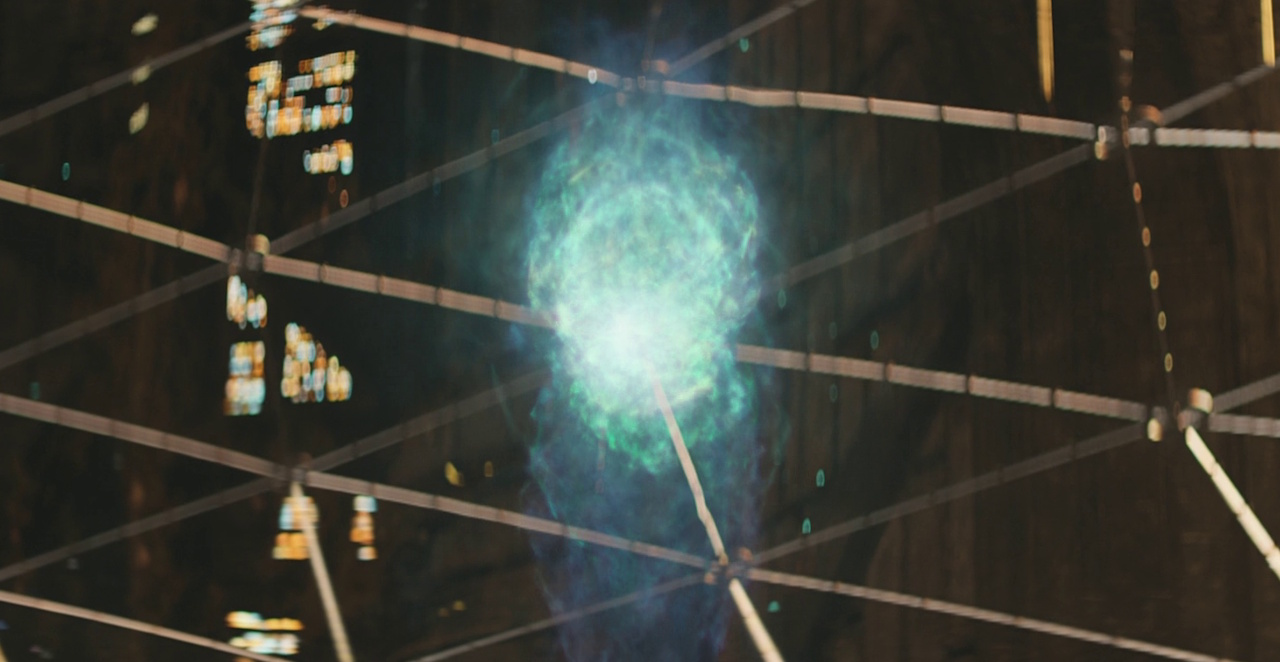
So after almost forty years, we’ve gotten an explicit connection between Trelane and the Q! I don’t know about you, but I think that’s exceptionally cool, and a great little wink to fans of both The Original Series and The Next Generation. It was also subtle enough that new viewers who aren’t familiar with any of those shows wouldn’t have been left scratching their heads. The ending to The Squire of Gothos was repeated in a pretty similar way, and the meaning behind it – that this entity was little more than a child, toying with living beings – still works even without any of that prior knowledge of Star Trek. It works just as well in 2025 as it did in 1967!
After such a long time, with fans speculating about Trelane and Q since before there was the world wide web… there were risks to this storyline. And I just love that there was enough boldness in the writers’ room to go there. I can see this point being contentious with some older fans, perhaps; not everyone was on board with the “Trelane is a Q” theory. You don’t have to look too far to find old forum threads and blog posts denouncing the notion! But for me, this storyline was well-executed, it doesn’t really prevent you from enjoying any of the Q episodes or The Squire of Gothos in isolation, and given that Trelane seems to have been in disguise most of the time, we can even argue that Spock, Uhura, and Scotty not remembering this encounter makes sense. Heck, if you need a head canon explanation for that: Trelane used his Q powers to make everyone forget about this by the time of The Squire of Gothos!
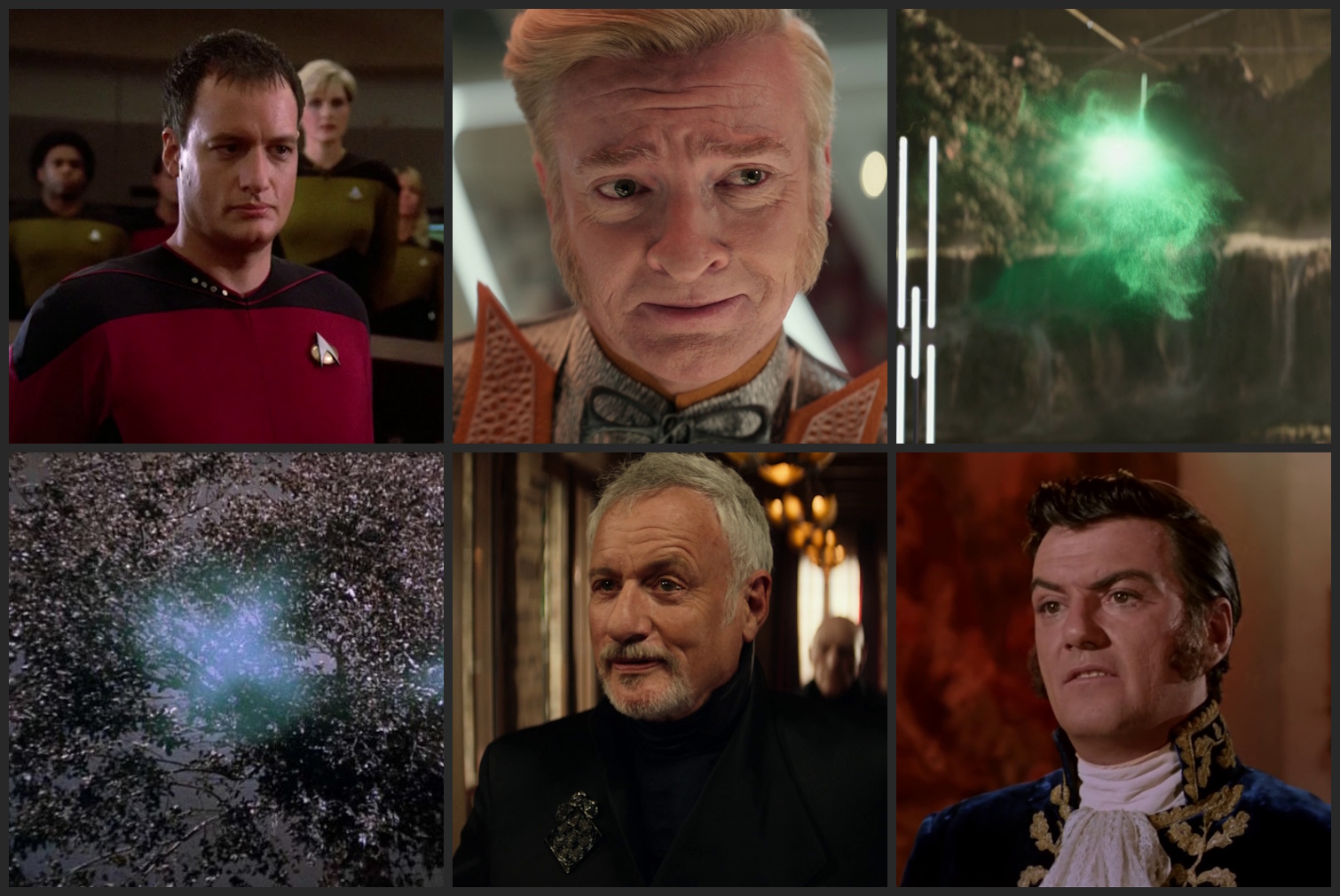
Star Trek was one of the entertainment landscape’s first real “shared universes;” pioneering the idea before the name even existed. And it’s nice to get little reminders, now and then, of storylines set in other eras or of fun episodes we remember from older Star Trek shows. There are good ways and bad ways to do this; Wedding Bell Blues, for me, stayed on the right side of the line. There’s enough wiggle-room for people who hate this idea to say that, well, maybe the Wedding Planner and Trelane aren’t one and the same, or that nothing we saw on screen explicitly proves that it was The Next Generation’s Q who showed up at the end. But for fans who’ve bought into the Trelane-Q connection over the years, I think it’s great to see that theory finally confirmed.
Rhys Darby was fantastic as Trelane, too. Informed, perhaps, not only by the original performance of the character by William Campbell in The Original Series, but also by John de Lancie’s Q, I felt we got a complex take on the character. Trelane’s lighthearted, positive energy masked some truly dark impulses and urges, and his total disregard for forms of life he considered “inferior” or beneath him really shone through. There was a distinct creepiness to Trelane, even when he was mincing around, talking about wedding dresses and cake samples. Darby put in a fantastic performance to bring the character to life and make him believable, despite the very unusual situation.
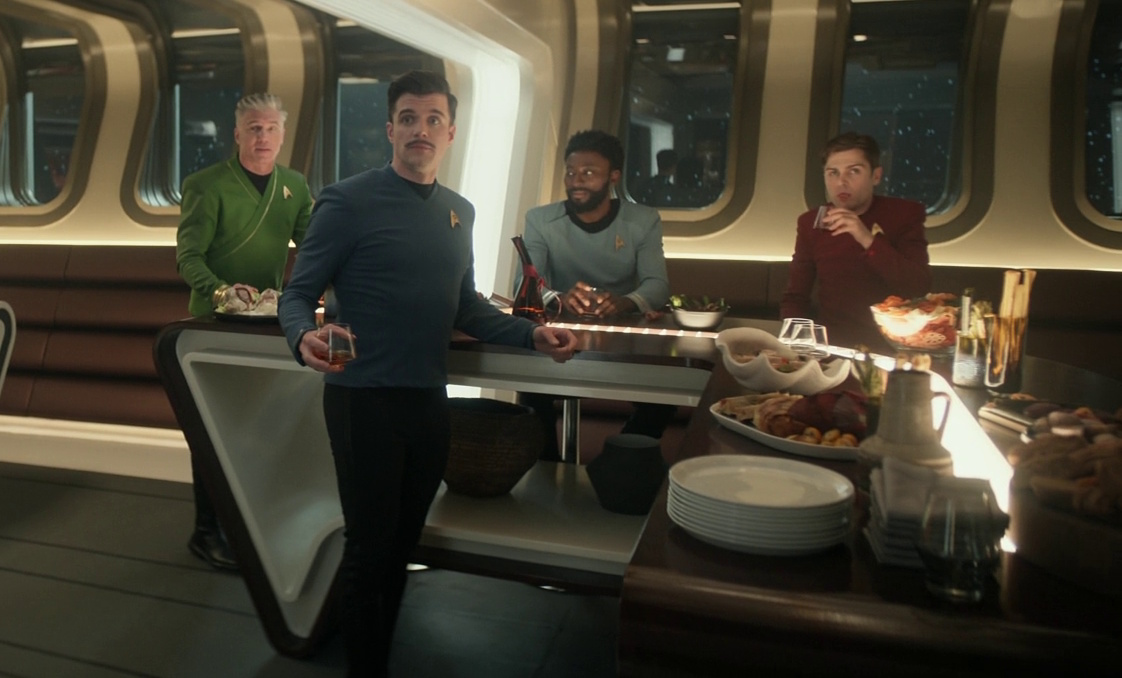
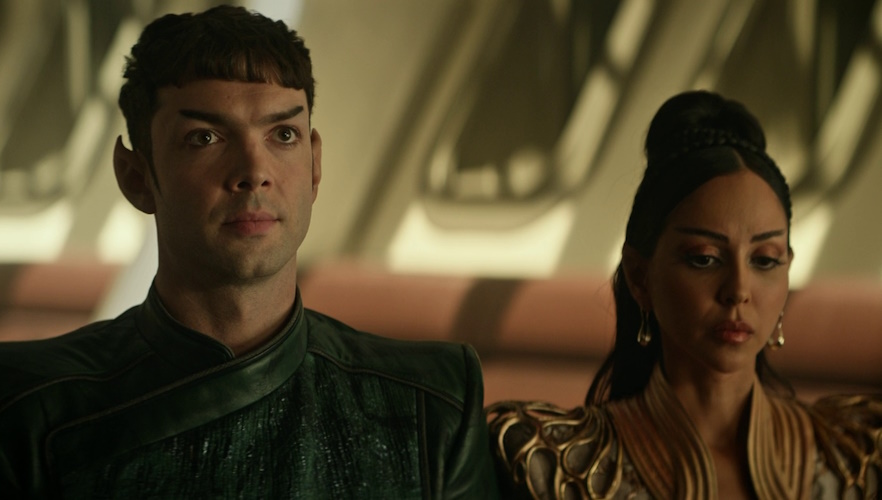
Speaking as we were of head canon, here’s one that I think makes some character moments in Wedding Bell Blues flow better! When Spock and Dr Korby approached various characters to explain the “mass delusion” phenomenon, even people who should be receptive to that conversation completely brushed them off. Worse, people like Captain Pike even seemed to ignore or forget what Spock was telling them moments later, and just generally acted out-of-character. When Spock left his own bachelor party, for instance, none of the other attendees – his friends – bothered to go after him or find out what was wrong.
So my head canon is that Trelane’s magic wasn’t just causing the delusion, it was also forcing everyone to react in this way. They were all 100% wedding-focused, and anything that didn’t gel with Trelane’s new scenario was either not retained or pushed aside. That’s really the only way I think we can account for people like Pike behaving the way they do; refusing to listen to his science officer and a prominent, well-respected doctor when confronted just doesn’t fit his character otherwise. For me, this head canon explanation fits pretty well, but I can understand why some viewers might not like the behaviours of Captain Pike and some of the other characters in the episode.
The idea that only strong emotions – like anger or love – could break through Trelane’s spell was interesting, and it’s an idea which feels very “Star Trekky,” if that makes sense. It’s a bit of a cliché, sure; love being this supremely powerful emotion capable of saving the day can feel like a worn-out trope. But here, I think it worked well enough. Perhaps if we’d got just an extra line or two between Korby and Spock to technobabble some nonsense about love generating strong brainwave frequencies or something, maybe that would’ve been an improvement. Not essential, perhaps… but an improvement.
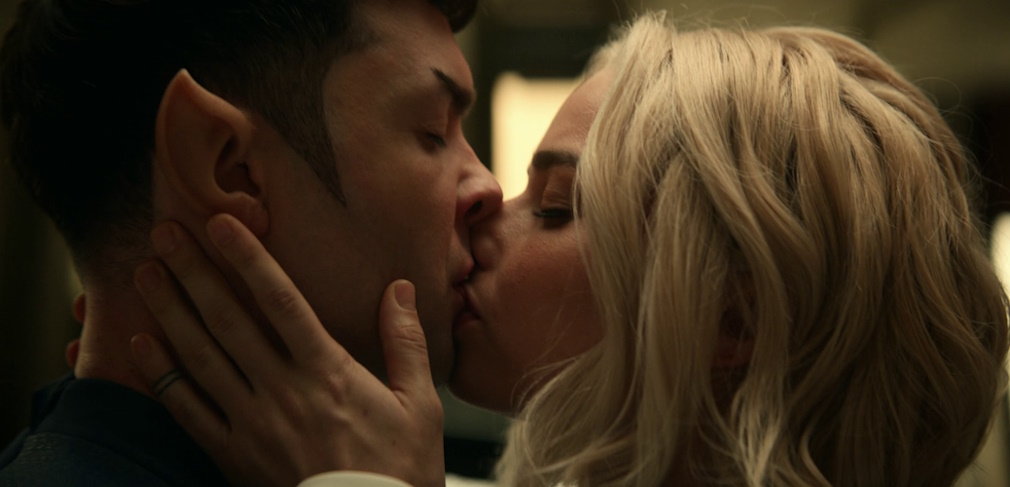
Love breaking through the delusion also set up the end of the episode, and Spock being able to get through to Chapel. Calling back to the story about her and Dr Korby climbing a mountain and looking out over the stars was creative and also cute, and despite my overall feelings about Spock being pushed into this love rivalry story that felt like something out of a low-budget Hallmark movie, this moment worked. Spock knew what he had to do; he took a chance on what he felt was the only way to break the illusion for Chapel, and hoped that doing so would shatter it for everyone else.
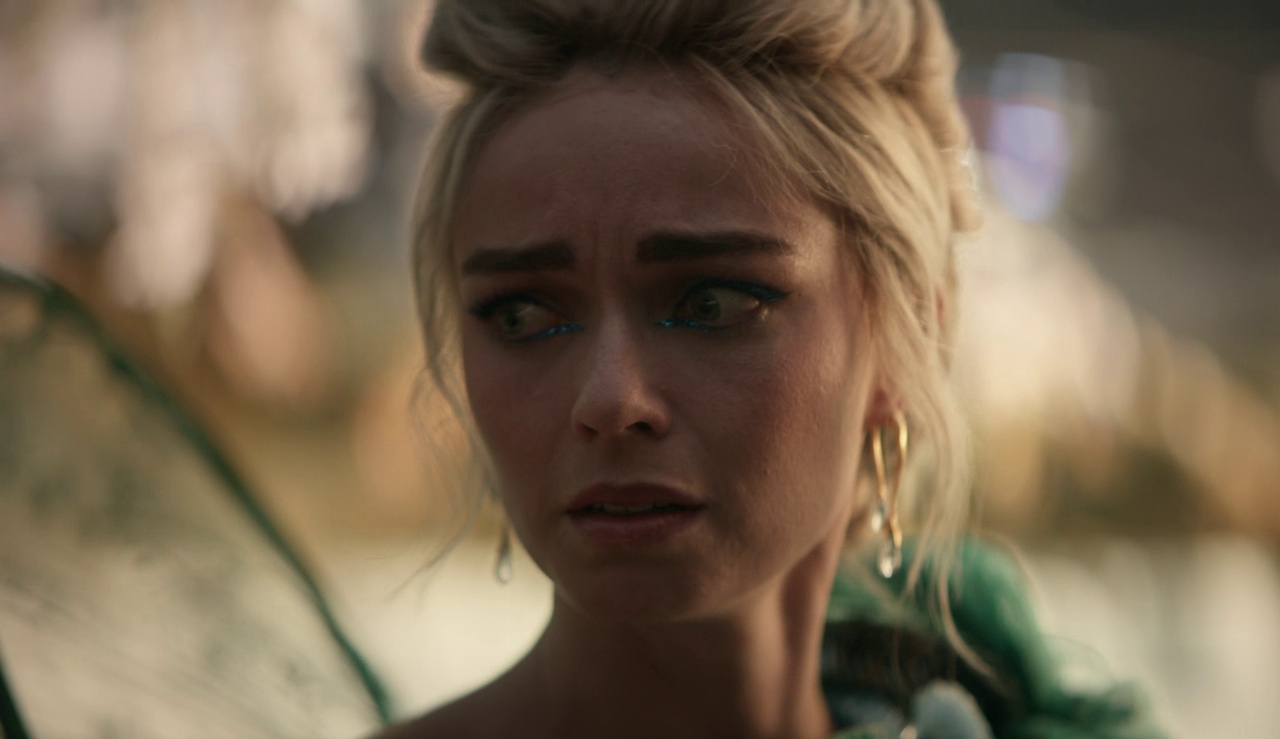
In The Squire of Gothos, the crew of the Enterprise arrive at a planet where Trelane is already present. Yet here, in Wedding Bell Blues, it appears as if Trelane has travelled to Earth… and I wish we’d learned a little about that. Why was Trelane interested in Earth, and why did he feel drawn to Spock when he had ten-plus billion people to potentially toy with? I just didn’t feel we got a satisfactory explanation for that, really. Yes, Trelane is a trickster and a child, but at least encountering him where he is – out in space – made a degree of sense. And for Q, he set puzzles and challenges for Picard, Janeway, and Sisko… but they always served some kind of purpose. Trelane is just playing around, which is the point of the story, but even kids who are playing have reasons for choosing the games they play.
One other thing I liked about Trelane, though, is how we can read his story of wanting to help people fall in love through the lens of what we know about Q. If you know me, you know I generally disliked Star Trek: Picard’s second season, in which Q prominently features. But at the end of that story, we learned that Q cares, in his own way, about things like love – and he has some kind of innate desire to help people fall in love. Or at least he does for certain select people! But this kind of connects with Trelane in Wedding Bell Blues; he saw how down Spock was about losing Chapel and he wanted, in his own somewhat twisted way, to “help.” That interpretation is there, even if it’s built on less solid foundations.
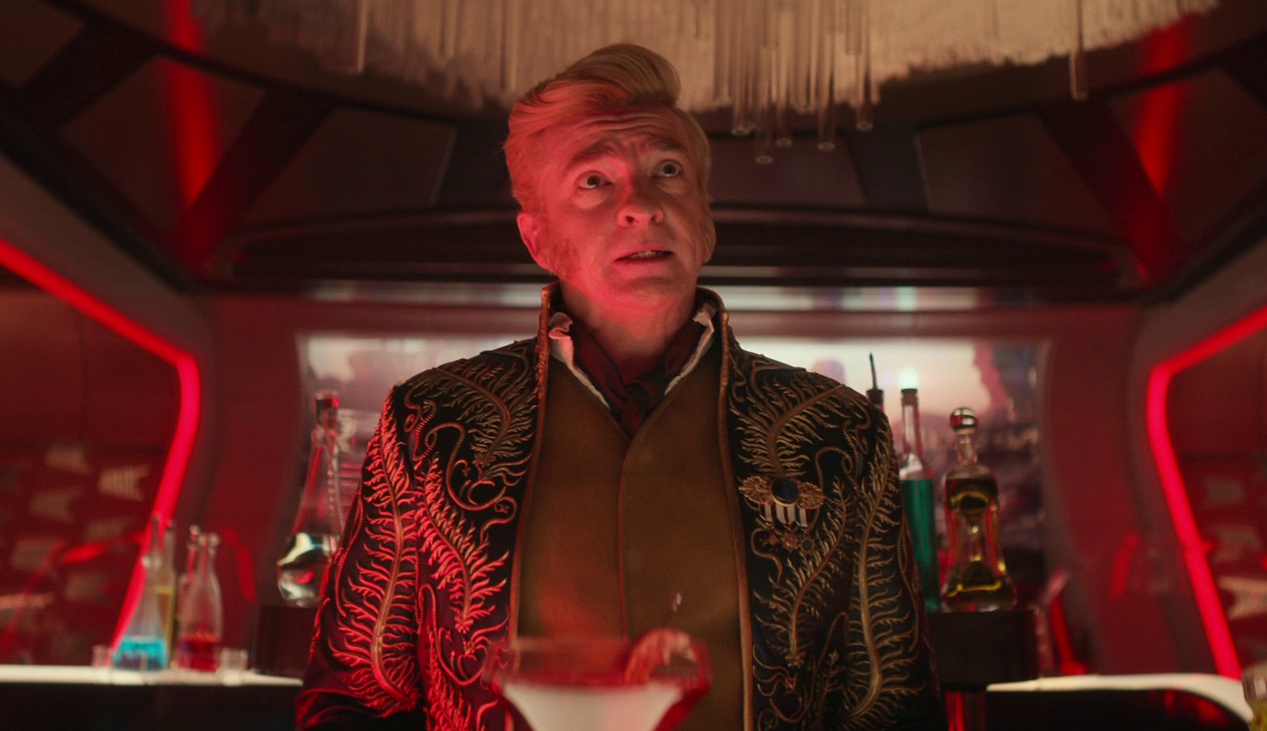
Love could be blossoming in Strange New Worlds this season. Spock and La’an seemed to share a moment towards the end of the story, dancing together. I interpreted their earlier scenes as purely friendly, with La’an – who apparently has a hidden talent for dancing – helping Spock learn to dance ahead of the Federation Day celebrations. But their moment at the end of the story, with La’an joining Spock as he sat alone, then asking him to dance? Maybe I’m reaching… but in the kind of rom-coms that Wedding Bell Blues borrowed from, those sorts of moments can lead to big romantic entanglements!
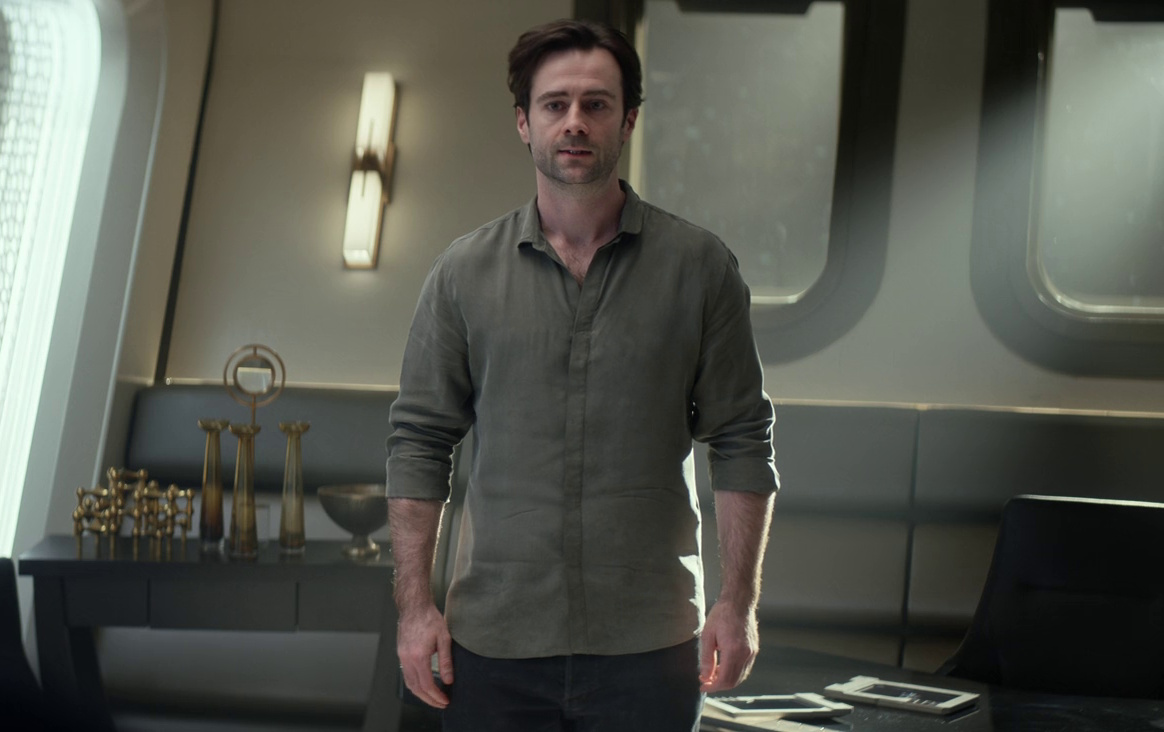
In addition, we also have the clearly burgeoning relationship between Uhura and Beto – Lieutenant Ortegas’ brother. When I saw Uhura and Beto in a pre-season promo photo, I thought he might’ve been some kind of villain; perhaps the photo wasn’t a particularly flattering one, but he was giving me a bit of a creepy vibe! In the episode itself, though, we got plenty of flirty banter between the two. Unlike with Spock, Chapel, and Korby, which I found way too cringeworthy, I generally enjoyed this sub-plot. Giving Uhura a love interest, particularly one with a connection to another member of the crew, could be a lot of fun.
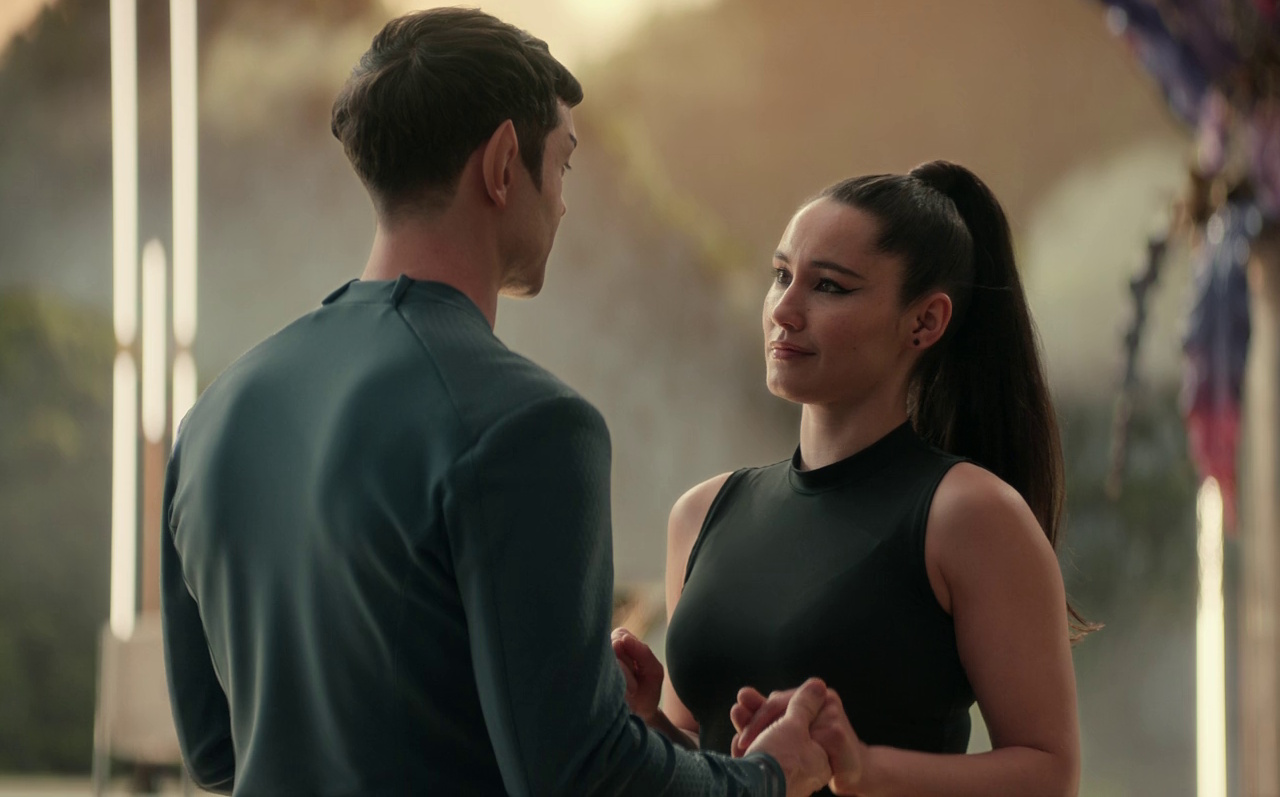
Could Beto’s drone-camera and his filmmaking job become plot points in another story? I wondered if he might’ve had a role to play in Wedding Bell Blues while I was watching the episode; his camera, I suspected, might be able to see through Trelane’s disguise even if no one else could, and that could’ve led to the mystery unravelling. In any case, Wedding Bell Blues set up this hobby/job of Beto’s, and then called back to it to reinforce it, so I can’t help but think we might get something out of it further down the line. Watch this space, I guess.
Uhura got one of the best costumes in this episode! Not at the wedding/Federation Day party… her very 1960s-inspired outfit that she wore to the bar earlier in the story. Strange New Worlds has leaned into a ’60s aesthetic in a way that Enterprise and Discovery never really did. There are still a ton of thoroughly modern trappings, but the show has those connections to The Original Series. Uhura’s outfit was fantastic – but I wouldn’t say it looked out of place aboard this version of the Enterprise. That isn’t an easy line to walk, and generally I think Strange New Worlds gets it right most of the time. Uhura’s new hairstyle, which debuted in this episode, looks fantastic, too.
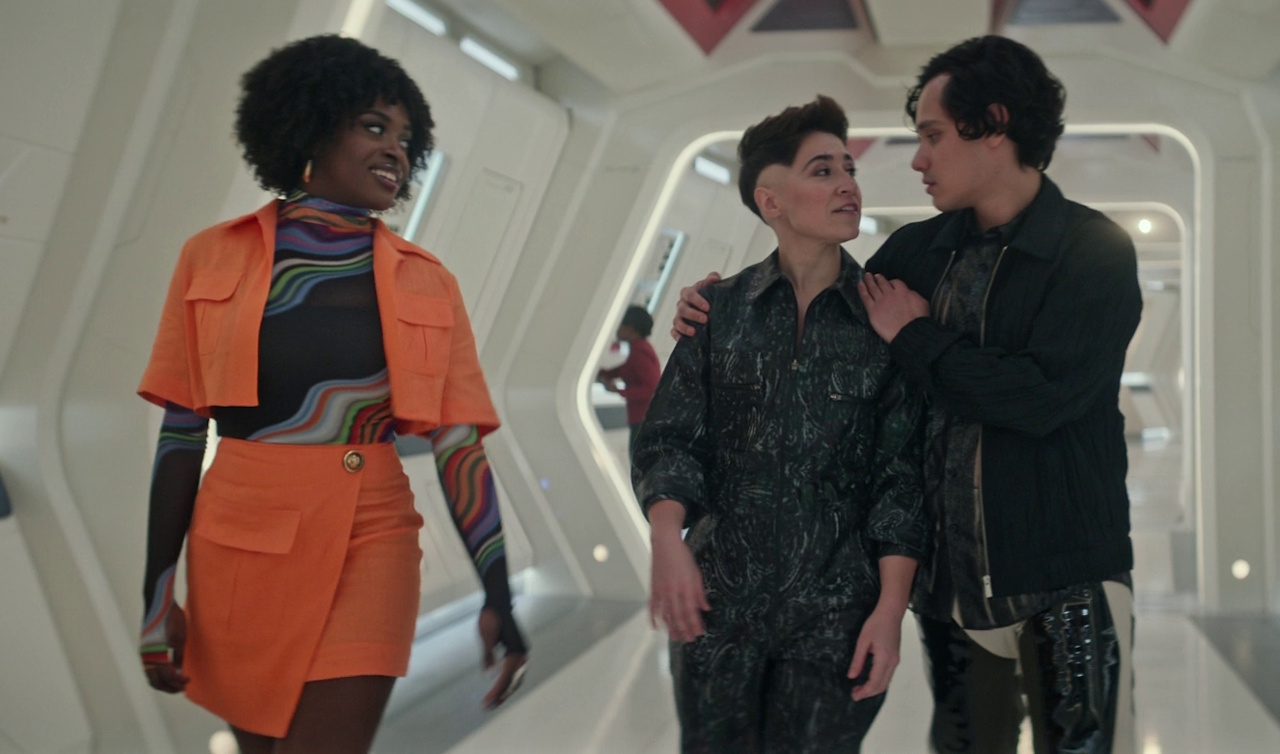
After the dust settled on the wedding/Federation Day, there are still a couple of lingering Gorn-related questions. I noted last time that Spock and Chapel’s plan to save Captain Batel didn’t involve removing her Gorn infection, but changing how they approached it so that the Gorn would be “re-absorbed” by her body. That line didn’t stick out too much at the time, but the fact that “re-absorbtion” and Captain Batel’s ongoing treatment was mentioned again here? It raises some questions! Is she going to be suffering some kind of ongoing Gorn-related health issue? And if so, could we see the Gorn return in a future story? Could the Gorn infection ultimately still claim her life?
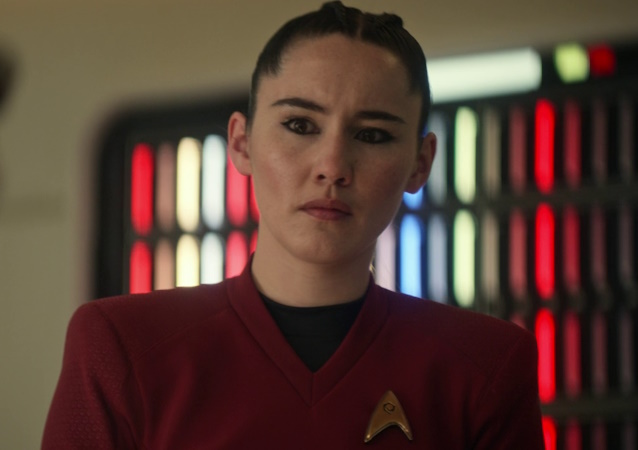
I was surprised to see La’an so casually brushing off her Gorn encounter. I get why it had to happen for narrative reasons – with Ortegas clearly suffering after her near-death experience, having another character going through a similar Gorn PTSD-type situation might be too much. But La’an is a character who has been thoroughly defined by her encounters with the Gorn, both in the show and as part of her backstory. Yes, there’s a three-month time-jump at the beginning of Wedding Bell Blues, and we can argue that La’an might’ve processed some of what happened off-screen. But something about her line to Spock about the Gorn threat being over now… it didn’t sit quite right.
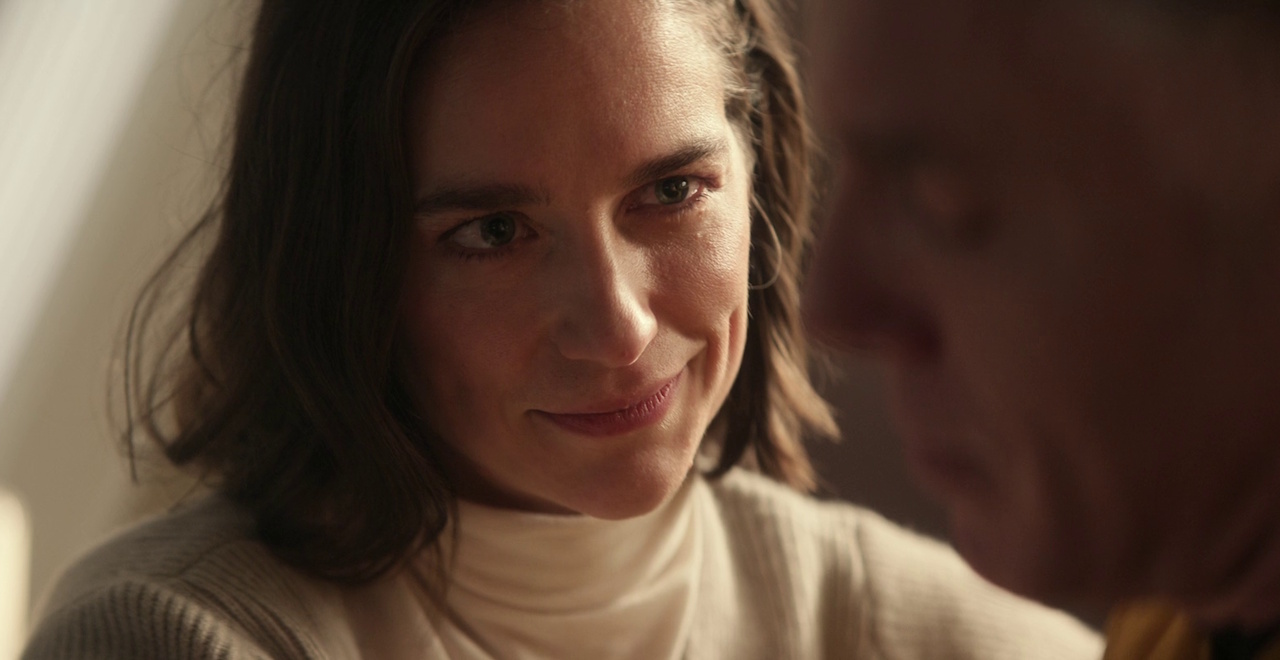
However, as mentioned it’s Lieutenant Ortegas who seems to be in focus for a lingering Gorn storyline. Although she seems to have physically recovered, there’s a psychological toll that she doesn’t seem to have addressed yet. She may not have even admitted to anyone that she feels haunted by the Gorn and by her experiences in captivity. This is clearly going to run for more than one episode, perhaps blowing up later in the season in a big way – or conversely, with Ortegas seeking help from someone like Captain Pike, Dr M’Benga, or even La’an. I felt that, if La’an had been the one to get this kind of PTSD-type storyline, she had a great connection already with Una, so she could’ve been someone to turn to.
Ortegas hasn’t been in focus as much across the first couple of seasons, and I don’t think it’s unfair to say that she doesn’t have a “bestie” in the same way as some of the other main characters do! That’s a limitation in some respects, but it also means that she could potentially talk to anyone – so maybe it’s better to say it opens up different possibilities. Dr M’Benga would be interesting both for his medical expertise as well as his own traumatic backstory from the Klingon war. Captain Pike could be very sympathetic, too. And La’an, I think, might make a particularly compelling character for Ortegas to seek out. Not only does La’an have that Gorn experience, but she was the one who rescued Ortegas from captivity, saved her life, and then carried her to the ship they used to make their escape.
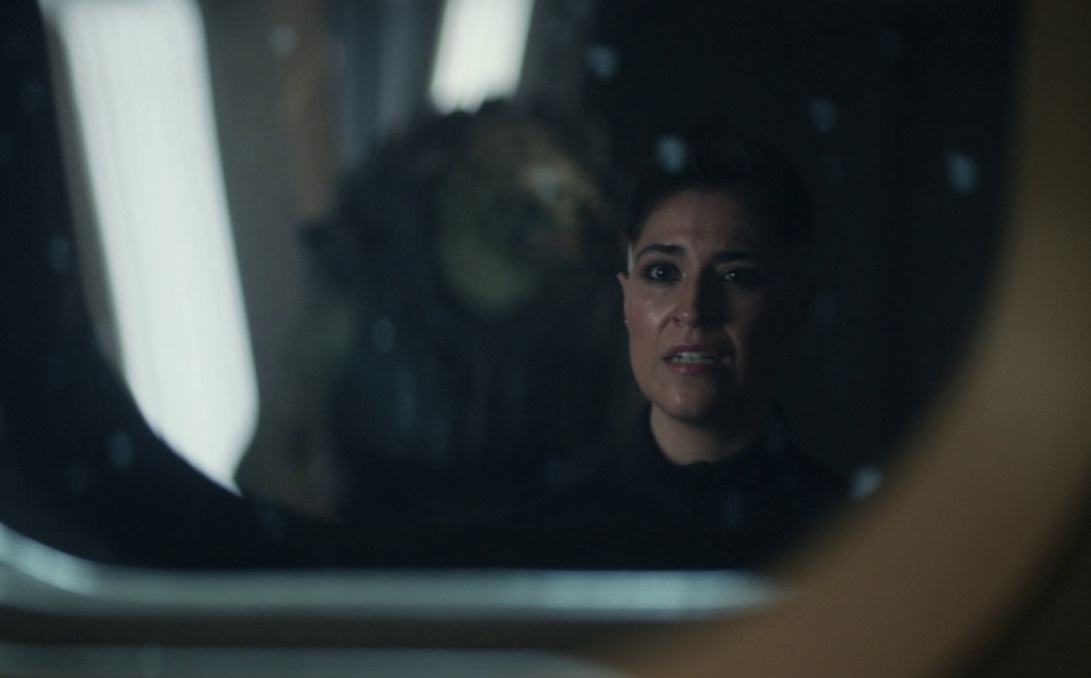
As an aside: Wedding Bell Blues was creative in its use of reflections creative camera shots. We caught a glimpse of Trelane through the window before he first appeared, we saw the view directly from Beto’s camera-drone, and at the end, Ortegas’ feelings of being haunted by her Gorn experience were shown through a reflection in the window.
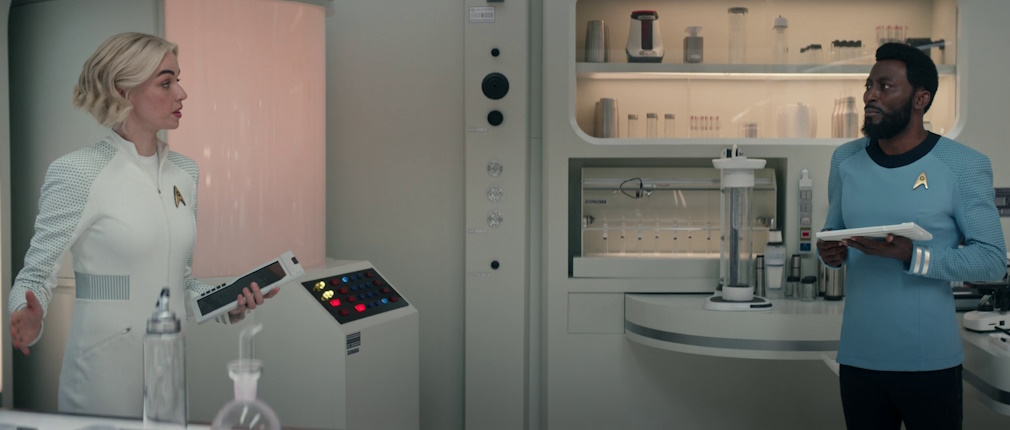
What do we make of the new nurse? The ensign that Una and Dr M’Benga went out of their way to keep aboard the Enterprise? Is he – as I suspect – going to take a villainous turn? Or is he being set up as a glorified redshirt; a Discovery-esque secondary character with minimal backstory, being fattened up to be slaughtered? Those are my two guesses!
Some of that may come later in the season… or not, if I’m totally overreaching. For now, it’s sufficient to say that I liked some of what Wedding Bell Blues had to offer – but I was less keen on its Hallmark movie plot. Spock and Chapel have run their course as a couple, and I’m glad that the series is finally seeming to put that idea to bed. But I’m not wild about all of these “emotional Spock” and “comedic Spock” storylines. There are other ways to include the character, other ways to demonstrate his growth, and other things to do with Vulcans besides joke about how formal and stuck-up they are.
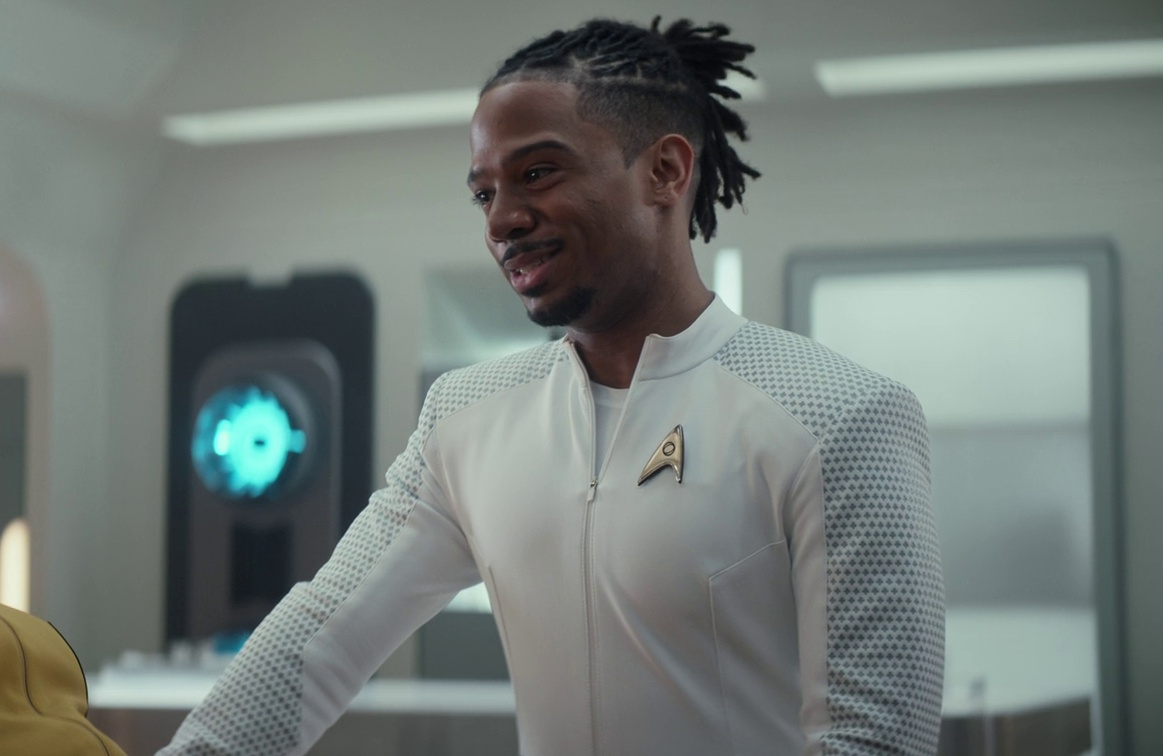
I’m glad that Strange New Worlds doesn’t double up its episodes every week. Don’t get me wrong: I’d love to pay less for Paramount+, and a shorter season would help with that! But two episodes at once is a bit much; binge-watching some shows is a ton of fun, but for a brand-new season of Star Trek? I like to give the episodes room to breathe. A nice week-long gap is what I need!
So we’ve reviewed both of the Season 3 premiere episodes. They were pretty different, and obviously my preference would be Hegemony, Part II by quite a long way! But I did enjoy the Trelane-Q fan theory being confirmed all these years later, and it was fun to get a kind of Q-ish or Q-adjacent storyline for Spock. Dr Korby, despite a pretty disappointing love triangle story and a weak introduction, was a fun character, and a good foil for Spock as he was forced to team up with arguably his least-favourite human! And we got some fun moments with Sam Kirk, Uhura, Chapel, Ortegas, and her brother, too.
Not my favourite episode, thanks to its cringe humour and Spock-Chapel-Korby love triangle. But an episode with plenty of redeeming features.
Star Trek: Strange New Worlds Seasons 1-3 are available to stream now on Paramount+ in countries and territories where the platform exists. The first two seasons are also available on DVD/Blu-ray. The Star Trek franchise – including Strange New Worlds and all other properties discussed above – is the copyright of Paramount Global. This review contains the thoughts and opinions of one person only and is not intended to cause any offence.
 Trekking with Dennis